Around the Bikan Historical Area in Kurashiki, many tourists flock during the Golden Week.
And the famous major event in the Bikan Historical Area during Golden Week is "Heartland Kurashiki."
However, spending a long time in the crowded area can be tiring before you can enjoy it.
For those with small children or seniors, it might be preferable to enjoy sightseeing and events at a leisurely pace.
In such cases, the recommended event is the Fujimi no Kai.
The Fujimi no Kai is an event held every year during Golden Week at Achi Shrine, located to the north of the Bikan Historical Area, alongside Heartland Kurashiki.
The Fujimi no Kai was previously called the Fuji Matsuri.
It is an event to enjoy the flowers of the "Achi no Fuji" located on the northern side of Achi Shrine, featuring various activities.
The location of the Fujimi no Kai, Achi Shrine, sees a modest number of visitors compared to the townscape of the Bikan Historical Area, making it a point to enjoy at a relaxed pace.
Additionally, on Children's Day on May 5, events for children are also held, making it an attractive event for families.
In fact, since 2018, the Achi no Fuji has been undergoing restoration treatment, and the blooming of the wisteria in 2019 was not expected.
However, when I actually visited, to my surprise, about one-quarter to one-third of the flowers were blooming!
Here, I will introduce the situation of the "Fujimi no Kai" held on May 5, 2019.
What is Fujimi no Kai? An event to enjoy the flowers of Japan's best "Achi no Fuji"
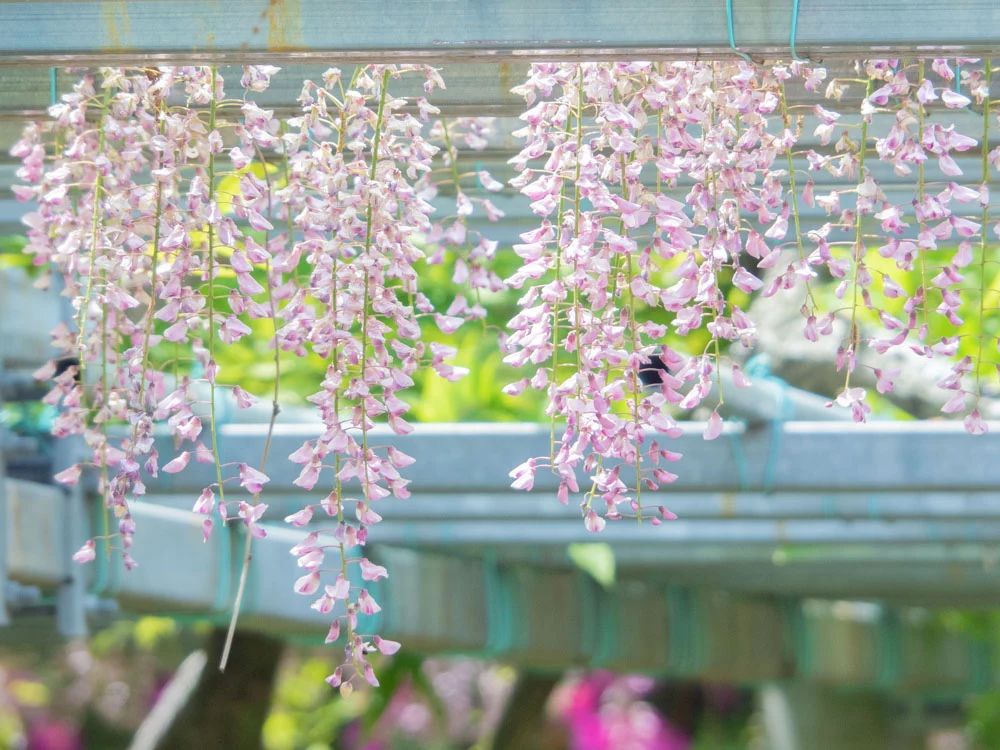
Fujimi no Kai is an event to enjoy the wisteria flowers of "Achi no Fuji," located on the northern side of Achi Shrine.
Since 2019, it has been renamed from Fuji Matsuri to Fujimi no Kai.
Held every year during the May holidays, it is known as one of the representative events of the Bikan Historical Area in May, attracting many tourists.
During Fujimi no Kai, various activities are held over three days around the wisteria trellis and within the shrine grounds.
Participation and admission are free, so you can easily drop by.
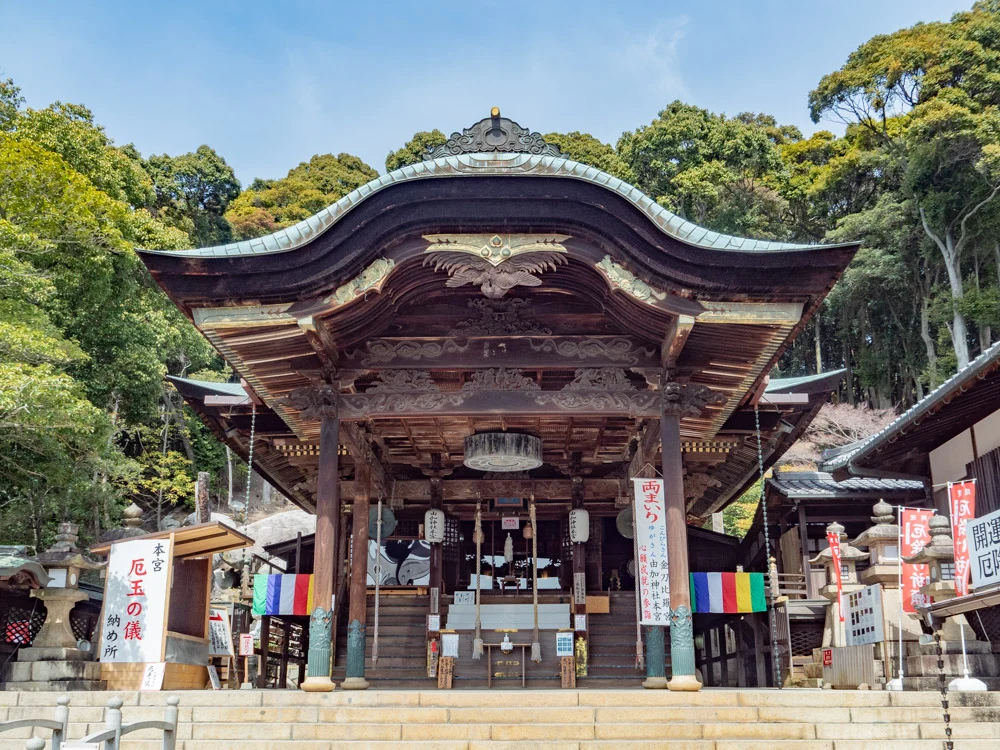
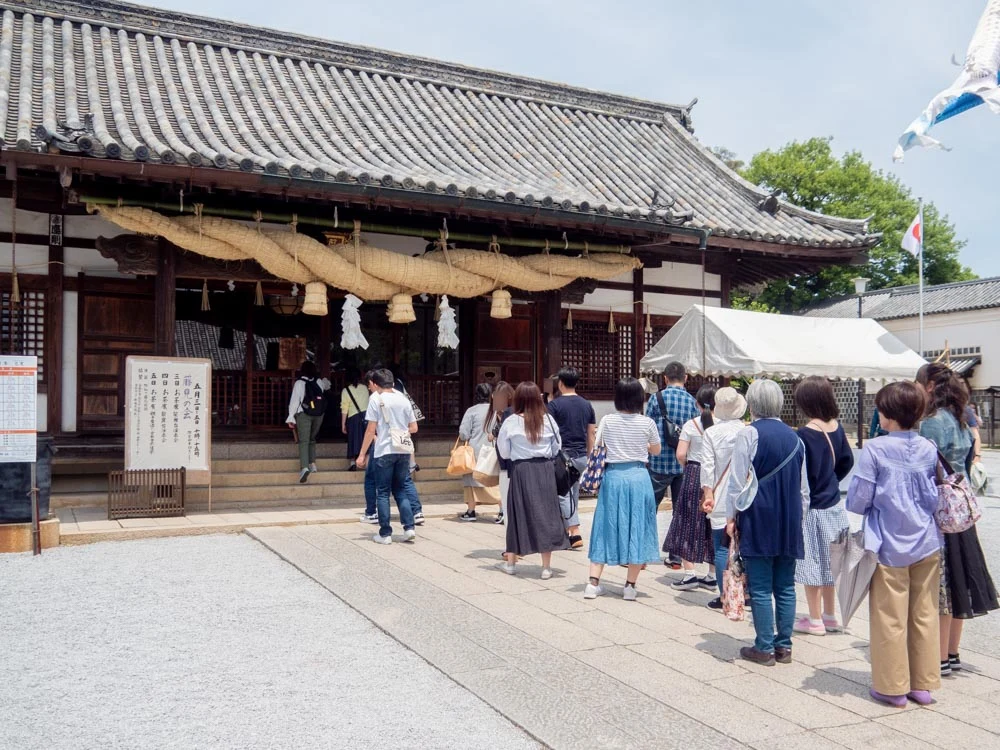
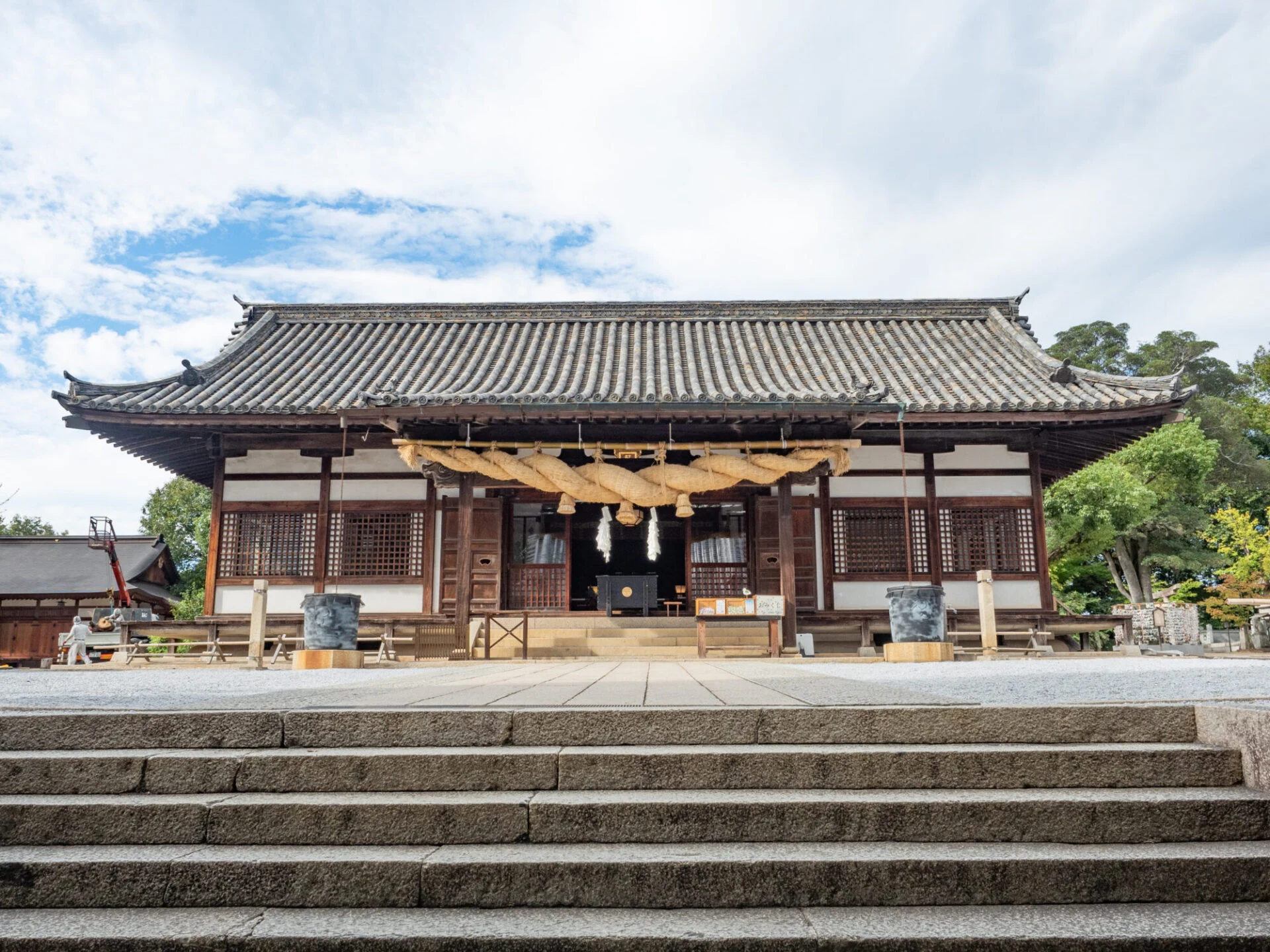
▼ Since Fujimi no Kai is held at Achi Shrine, be sure to visit the worship hall of Achi Shrine.
What is Achi no Fuji? The oldest and largest Akebono Fuji, a natural monument. Best viewing is from late April to early May
Achi no Fuji is a wisteria trellis located on the northern side of Achi Shrine.
The variety is called Akebono Fuji.
The estimated age of the tree is an astonishing 300 to 500 years!
Furthermore, the circumference of the trunk is about 1.5 meters, and the circumference at the base is about 2.2 meters.
Achi no Fuji is the oldest and largest Akebono Fuji in Japan.
For this reason, Okayama Prefecture has designated Achi no Fuji as a natural monument.
Additionally, due to Achi no Fuji, the city flower of Kurashiki City is wisteria.
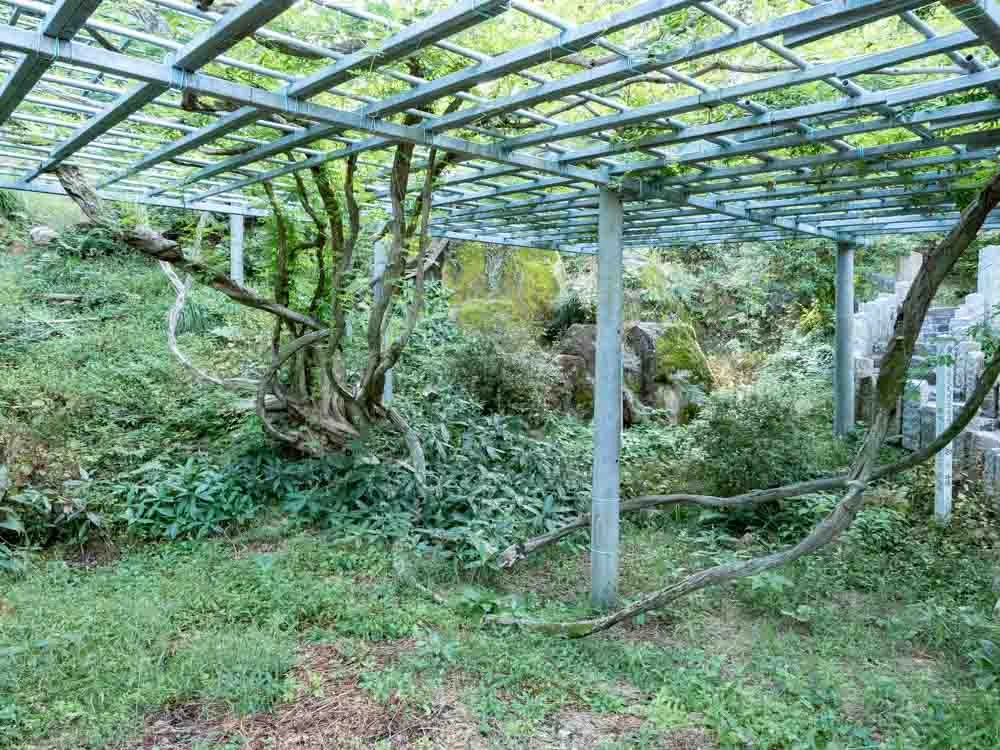
▼ When you see the Achi no Fuji tree up close, you can tell it is quite an old tree. It has many trunks extending like the tentacles of a giant squid.
The best viewing time for Achi no Fuji is from late April to early May.
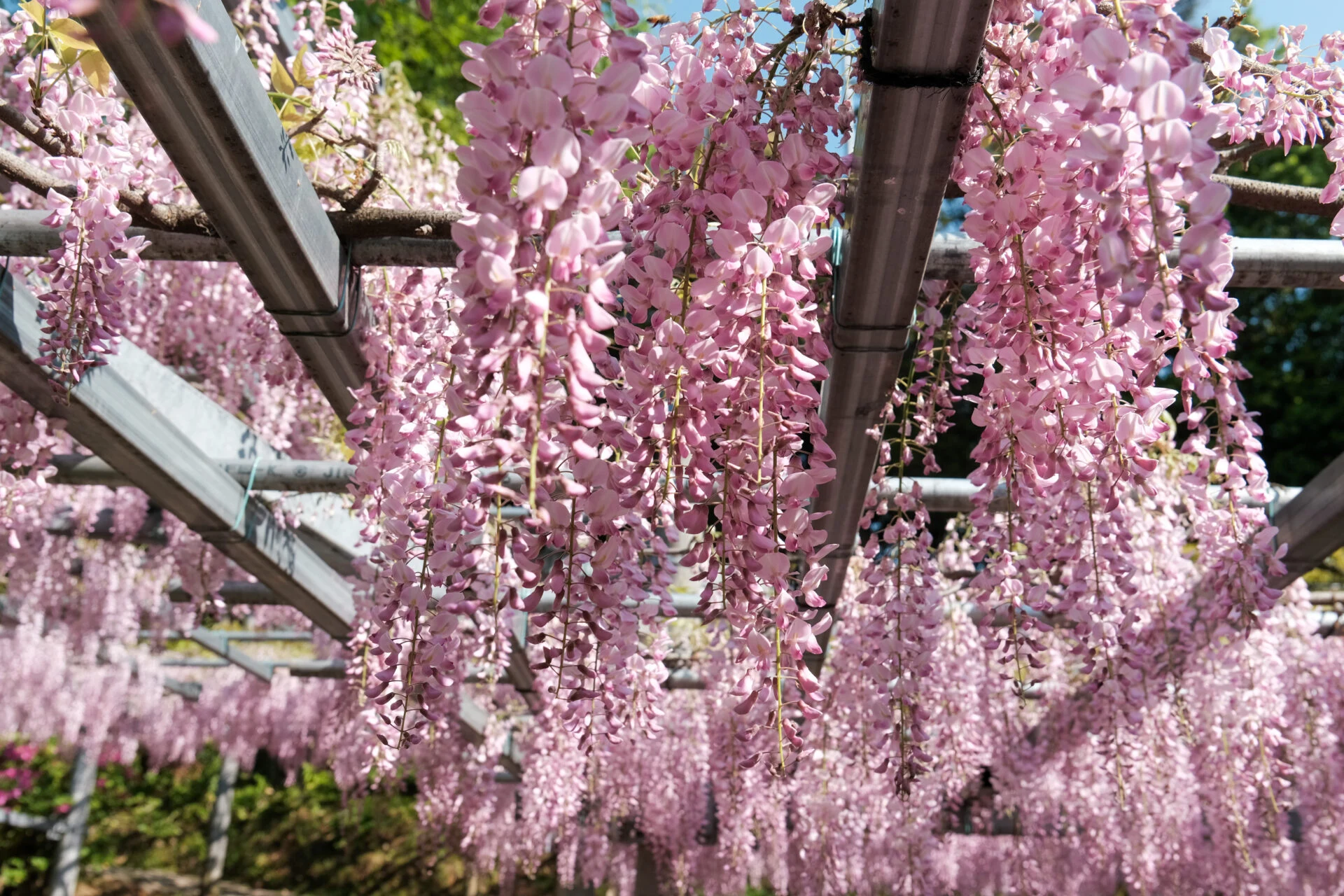
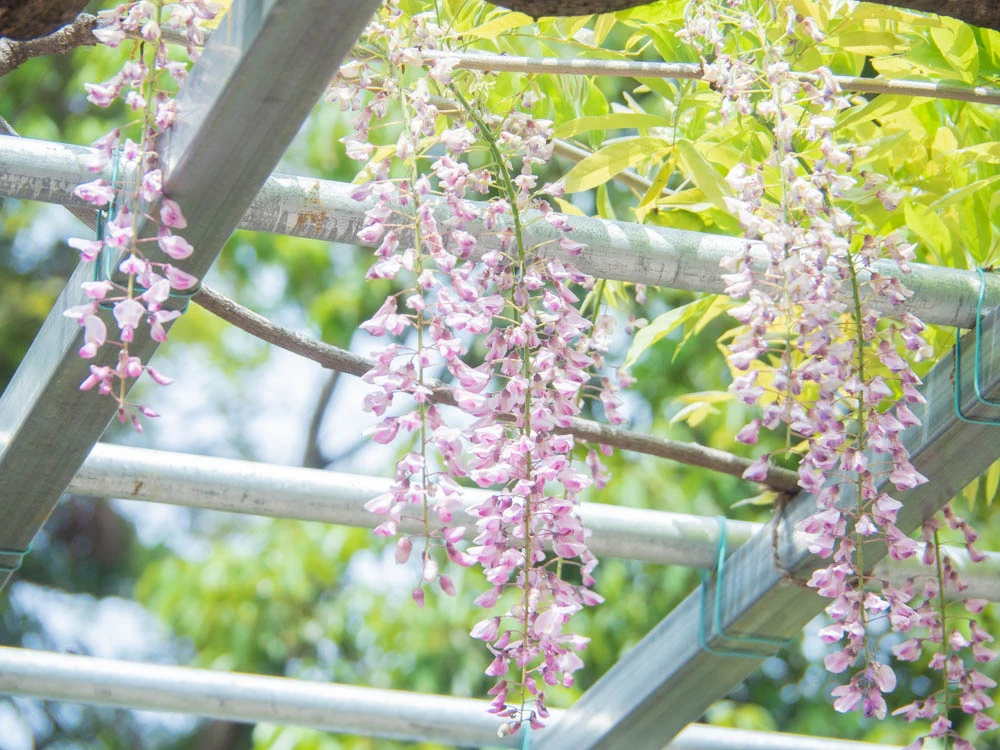
You can enjoy a beautiful view with many clusters of flowers hanging from the wisteria trellis.
Additionally, Achi no Fuji has been undergoing restoration treatment for three years from 2018 to 2020 to recover its vigor.
Therefore, during the treatment period, blooming of the wisteria is not expected.
According to Achi Shrine, there might be some blooming due to the effects of the treatment.
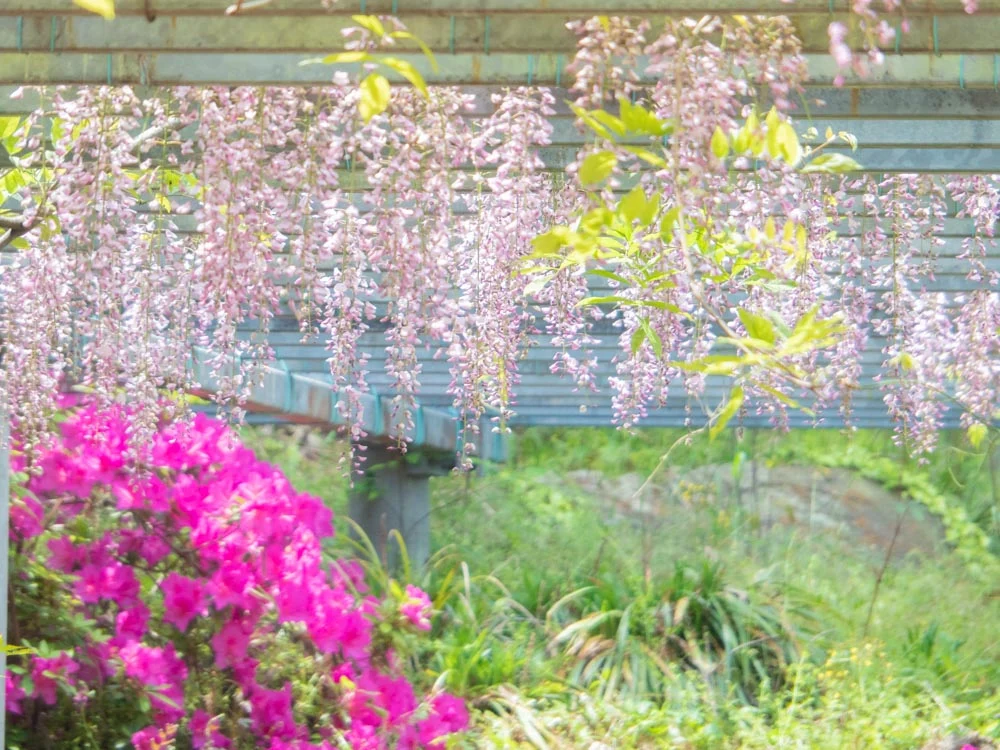
▼ However, contrary to expectations, in 2019, approximately one-quarter to one-third of the wisteria bloomed.
Details of the Fujimi no Kai event. Children's Day events are also held on May 5
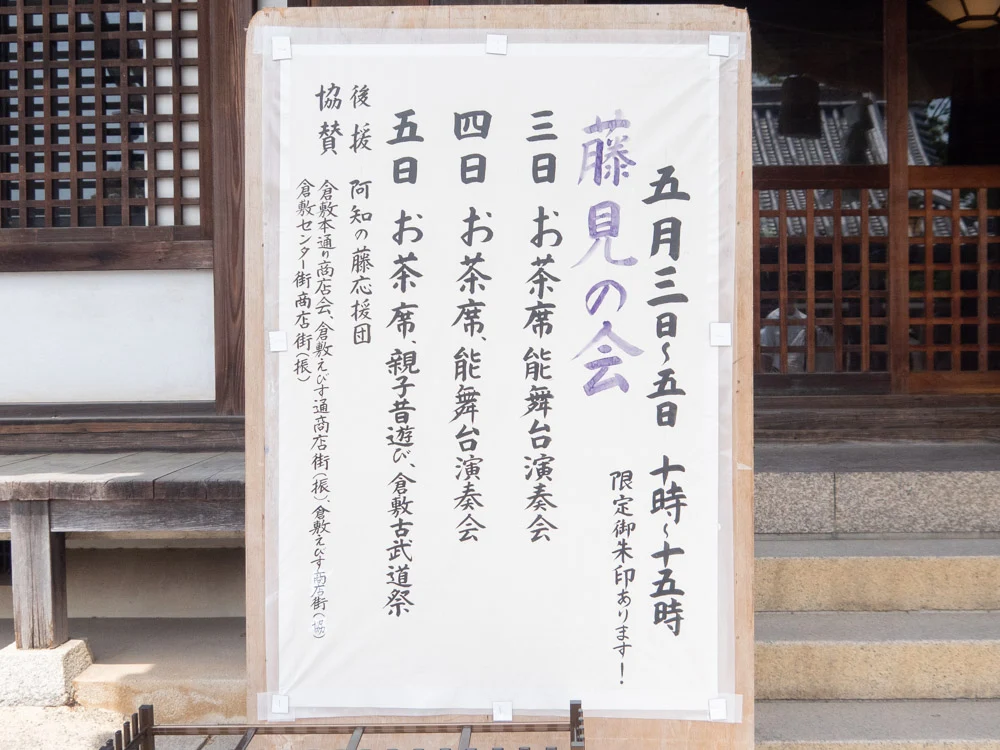
Fujimi no Kai is held over three days.
The Fujimi no Kai in 2019 was held from May 3 to May 5.
The event content of Fujimi no Kai includes activities that take place on all three days and those that occur only on one day.
Some events have set times, so please be careful.
Every year on May 5, a Children's Day event is held.
The details of the Children's Day event held in 2019 are as follows.
- Traditional games for parents and children
- Offering of iris, yomogi, and iris sake
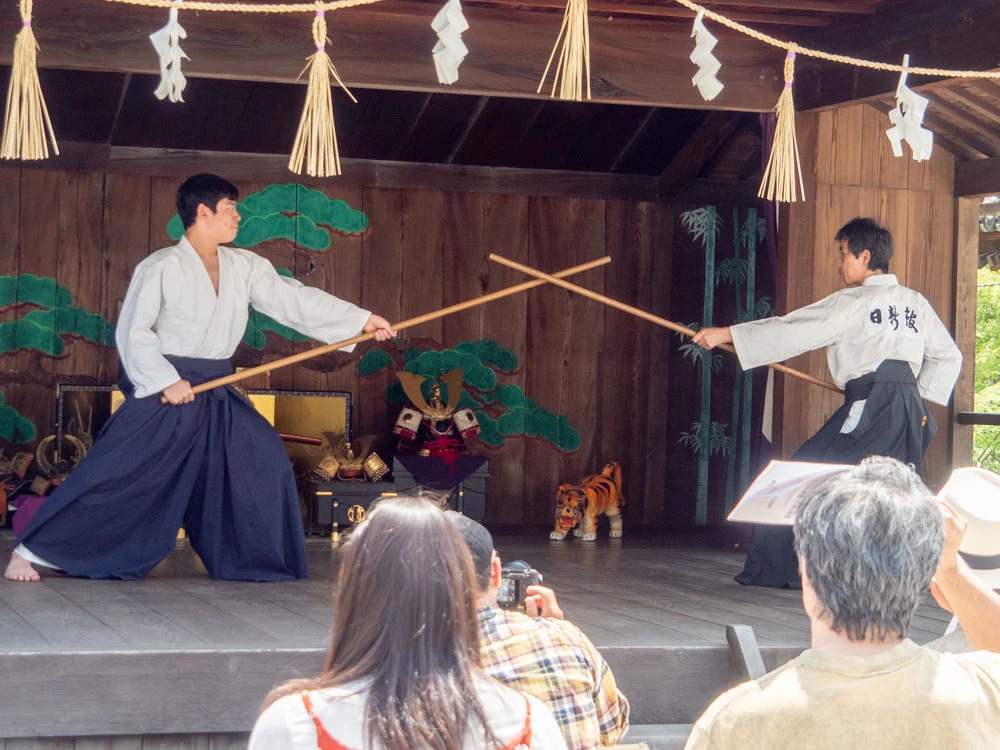
- Kurashiki Koryu Budo Festival
Additionally, while participation in Fujimi no Kai is free, some of the activities may have fees, so please check in advance.
For more details about the Fujimi no Kai held in 2019, please refer to the following page.
Blooming status of Achi no Fuji
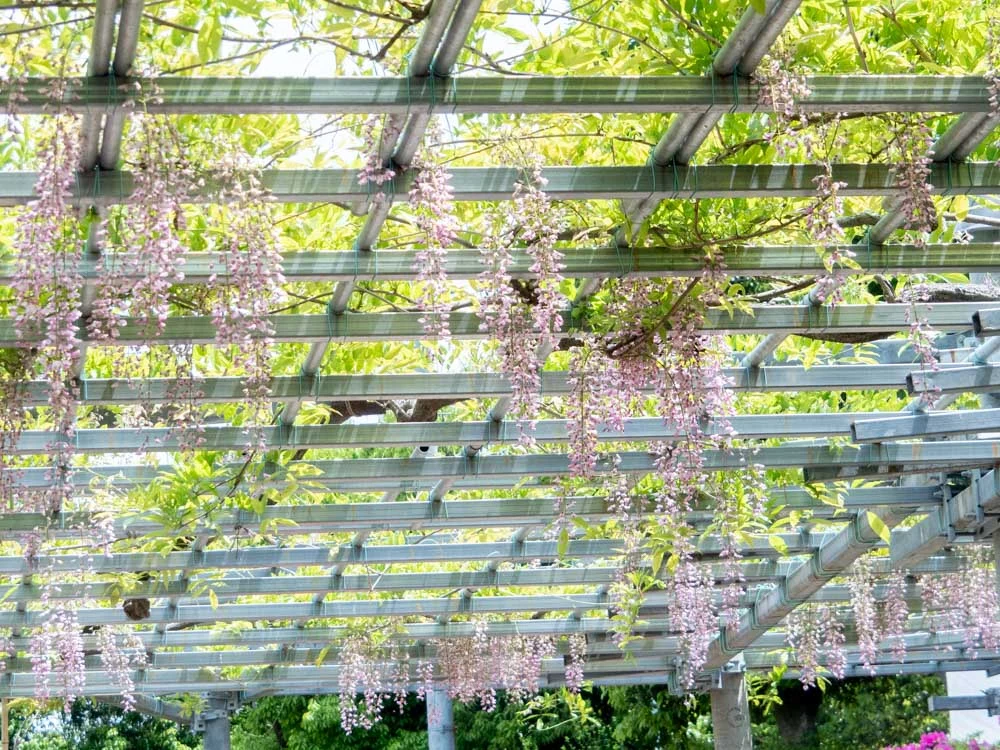
First, let me introduce the state of the wisteria trellis, the star of the Fujimi no Kai, Achi no Fuji.
As mentioned earlier, Achi no Fuji was expected to either not bloom or bloom very little due to the ongoing treatment.
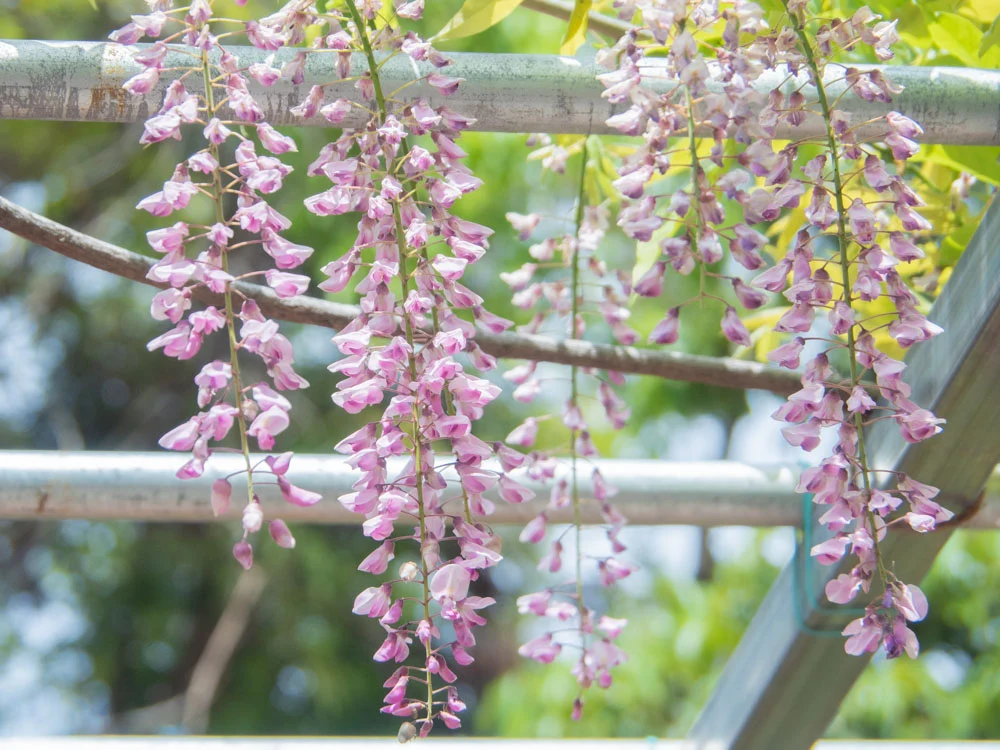
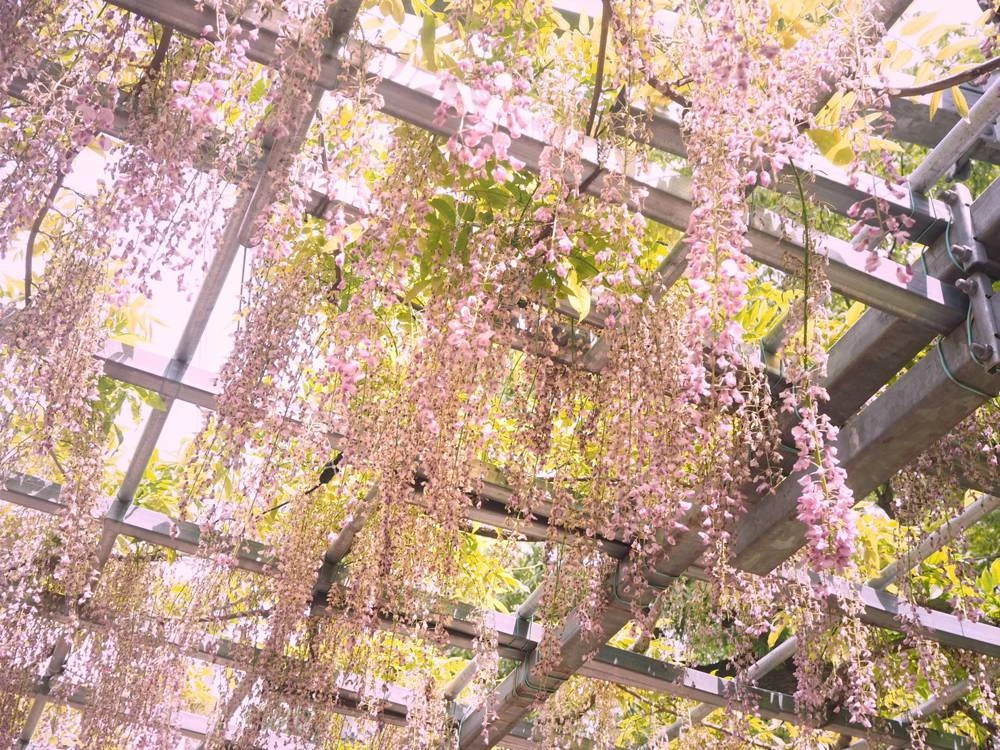
▼ However, the blooming situation exceeded expectations, with about one-quarter to one-third of the wisteria flowers hanging down.
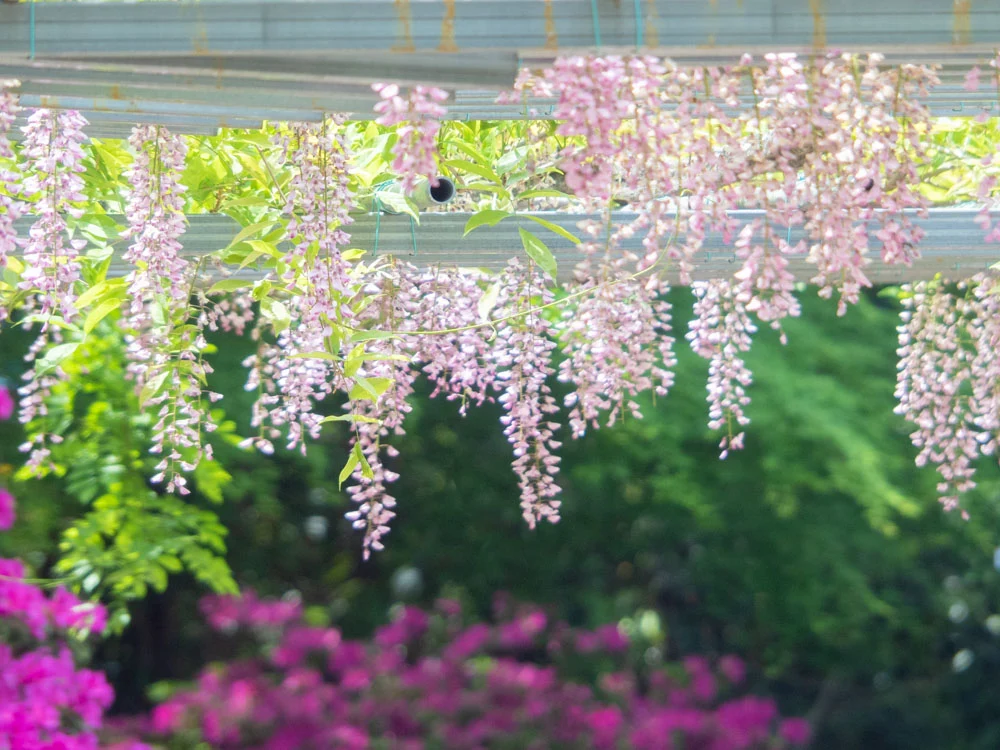
I knew in advance that blooming of the wisteria was not expected, but when I actually went, I was surprised to see many more flowers blooming than expected, and I couldn't help but keep clicking the camera shutter.
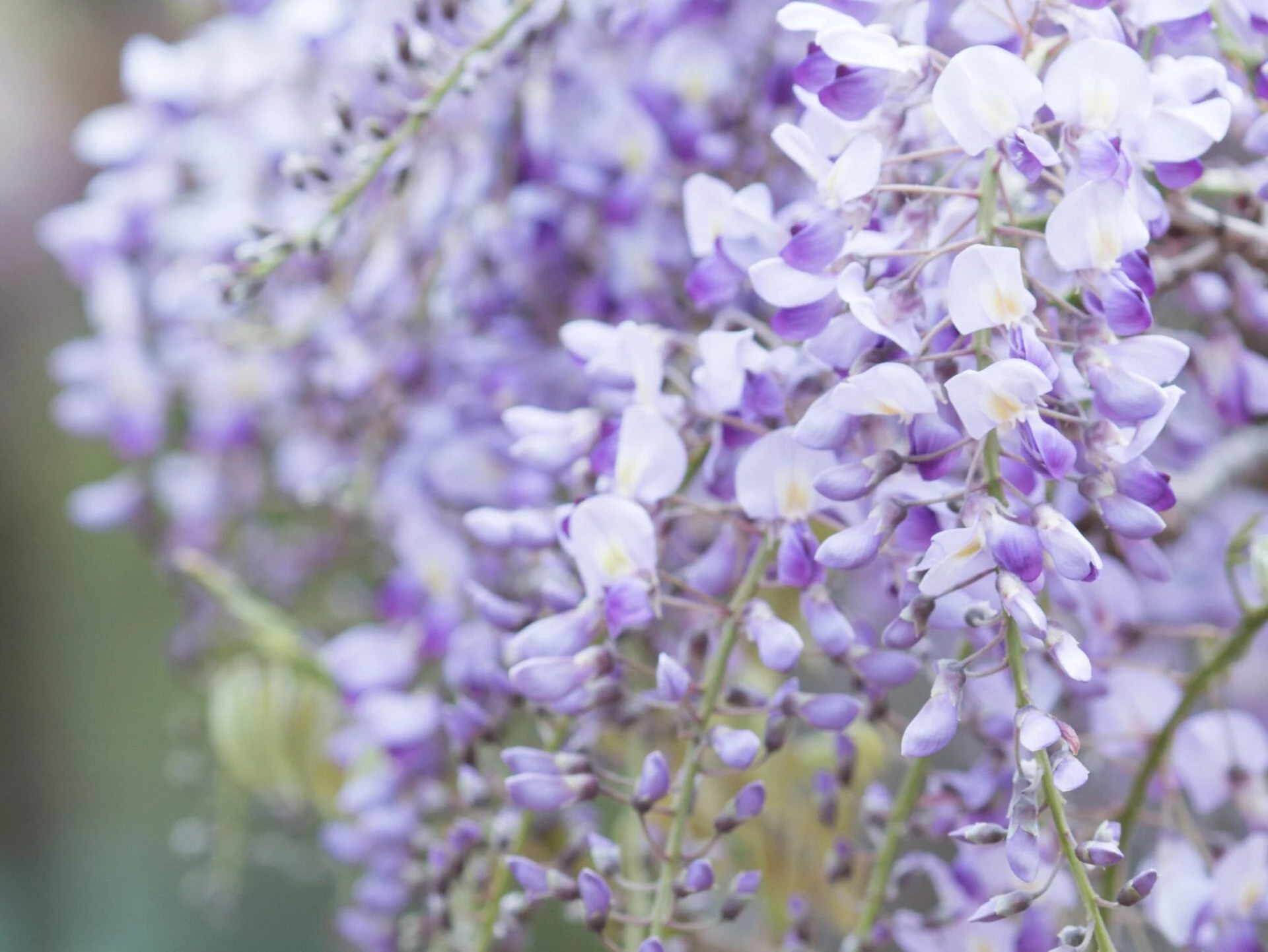
▼ The pale reddish-purple flowers are incredibly beautiful, creating a fantastical beauty.
Gagaku performance and tea ceremony under the wisteria trellis
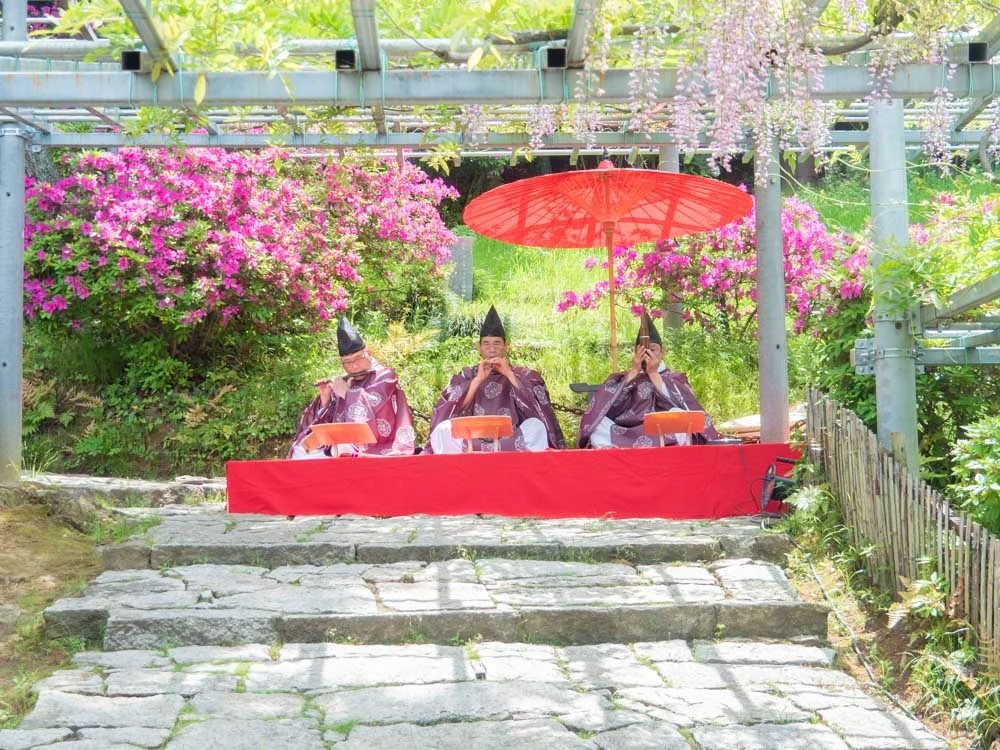
Under the wisteria trellis of Achi no Fuji, Gagaku is performed.
▼ Listening to Gagaku along with the surrounding wisteria flowers adds to the fantastical atmosphere.
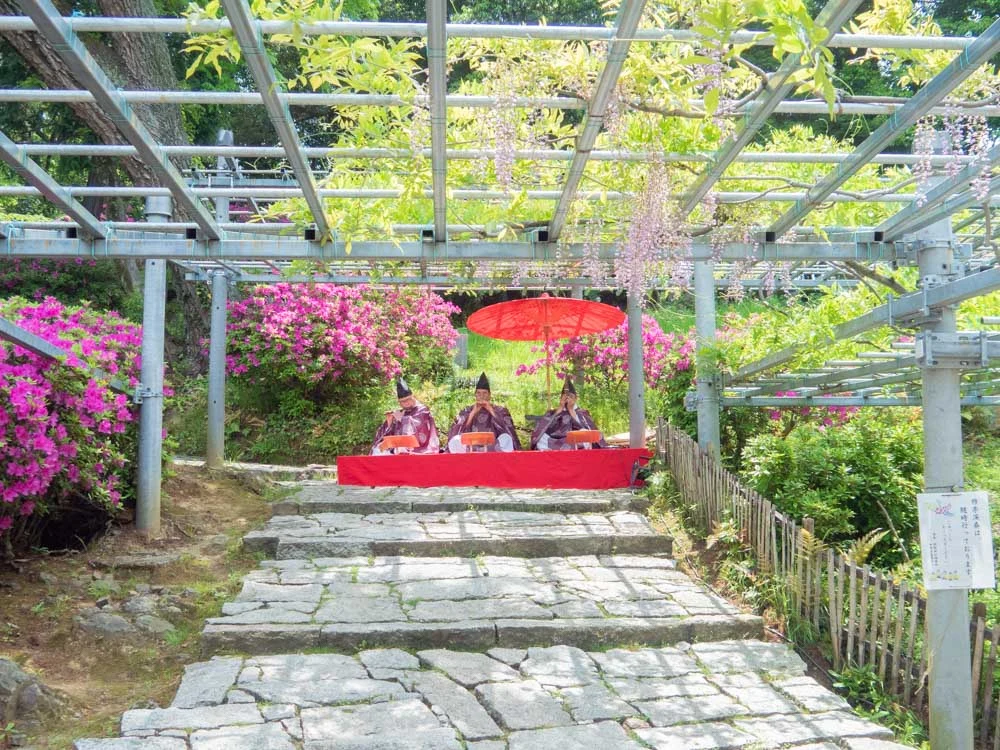
▼ Additionally, matcha and wagashi are served.
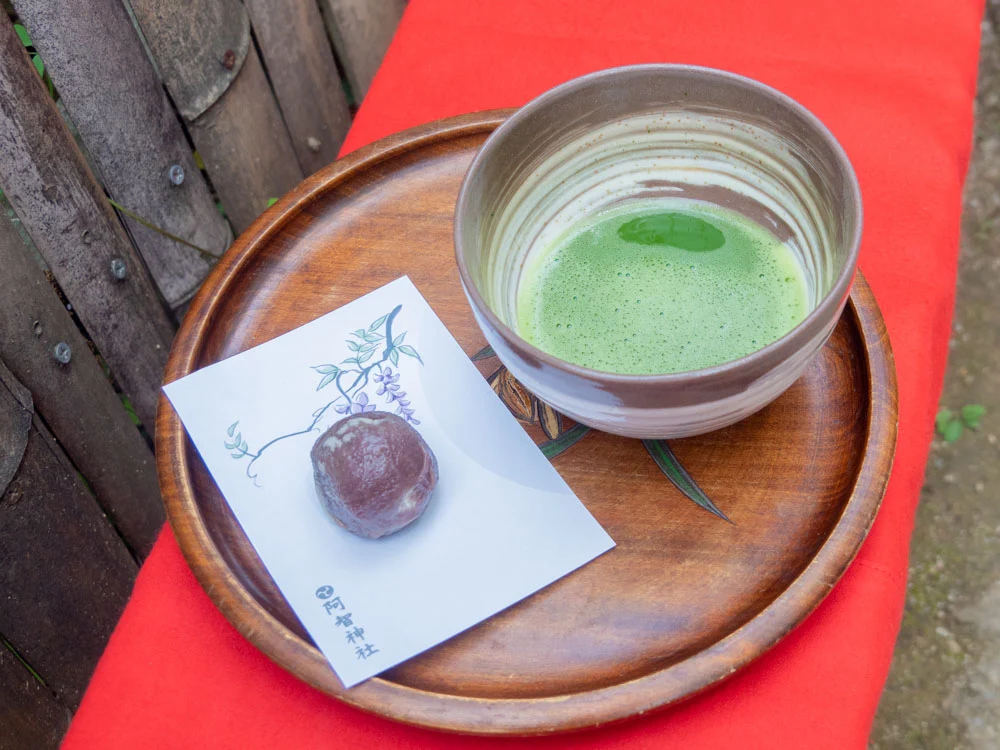
▼On the day of the coverage, the famous sweet of Kurashiki, Fujito Manju, was served.
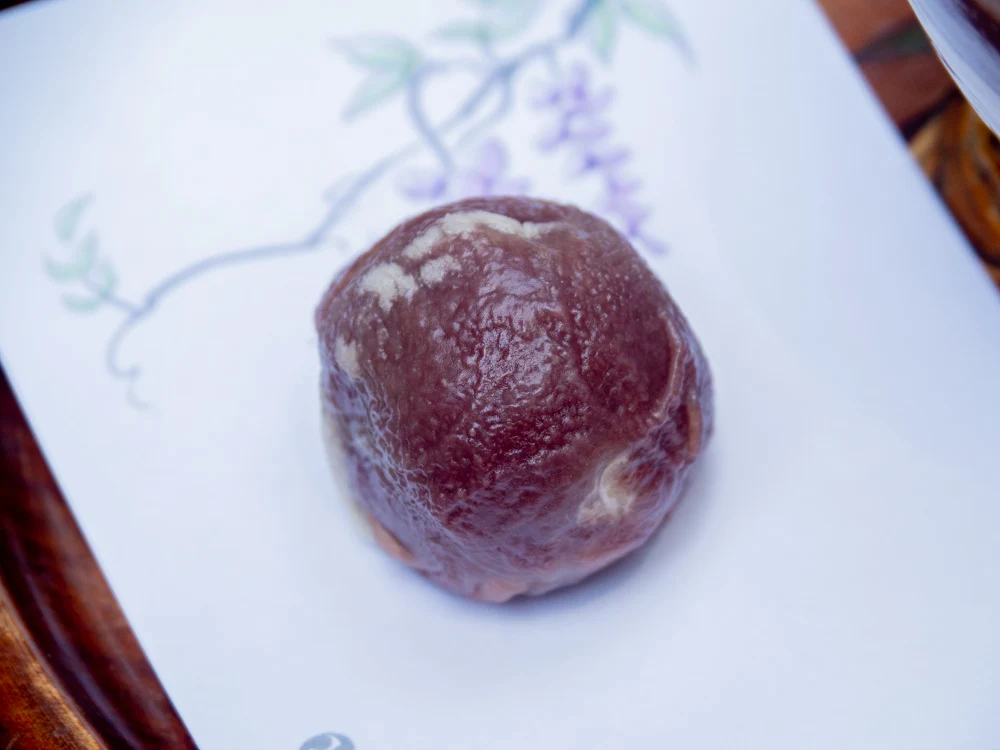
Additionally, the wagashi served may not only be Fujito Manju.
To enjoy matcha and sweets, please pay an initial fee of 300 yen.
▼There were seats available, and many people were enjoying the wisteria flowers of Achi and the Gagaku music.
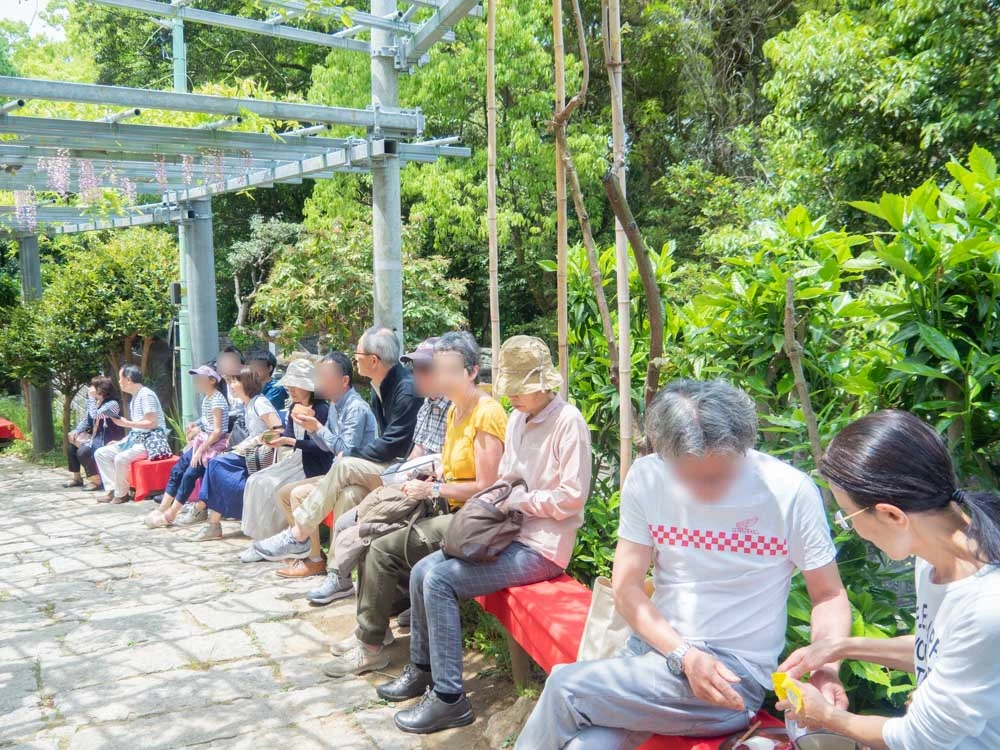
Surrounded by wisteria flowers, enjoying Gagaku and the tea ceremony.
It feels like being a noble or a courtier.
The Gagaku performance and tea ceremony are held every day during the event period.
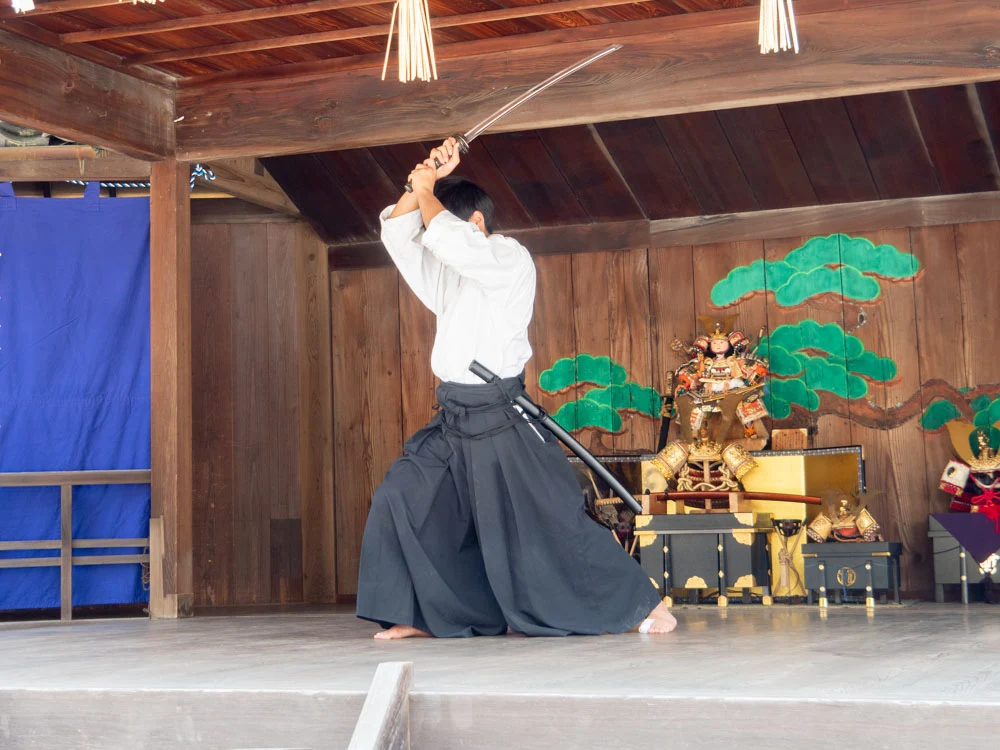
Kobudo Demonstration on the Noh Stage (Kurashiki Kobudo Festival)
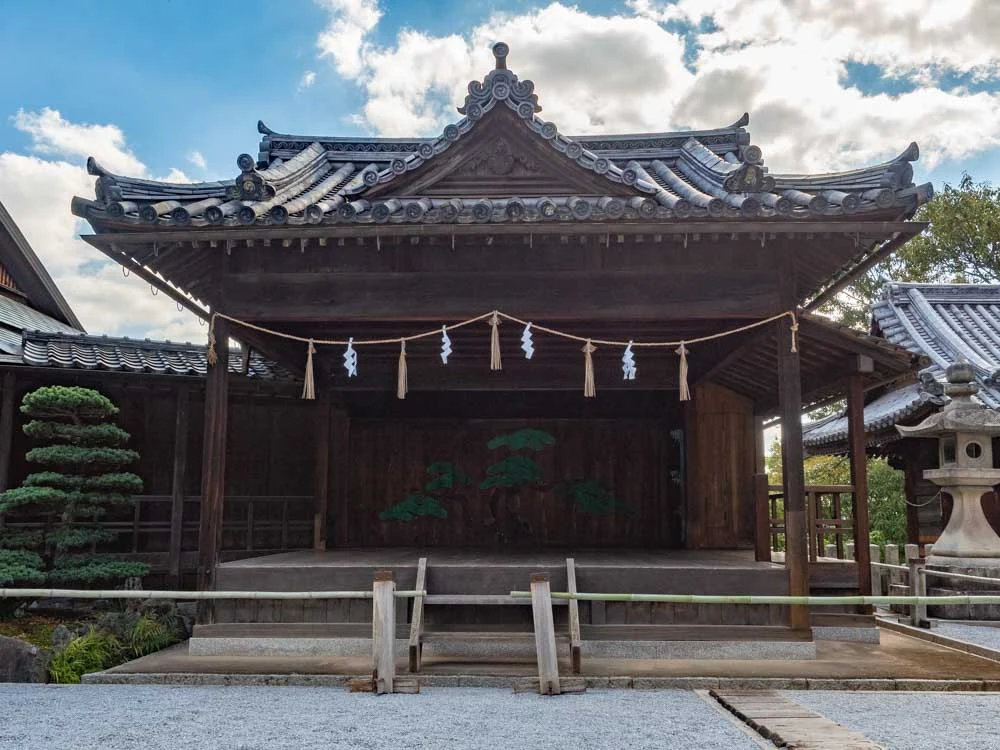
During the Fujimi no Kai event period, various performances are showcased on the Noh Stage at Achi Shrine.
The Noh stage is located just east of the Zuishin Gate.
▼On May 5, when the coverage was conducted, a Kobudo demonstration was held on the Noh stage.
▼Various schools demonstrate their techniques.
Offering of Iris, Mugwort, and Iris Sake Next to the Honden
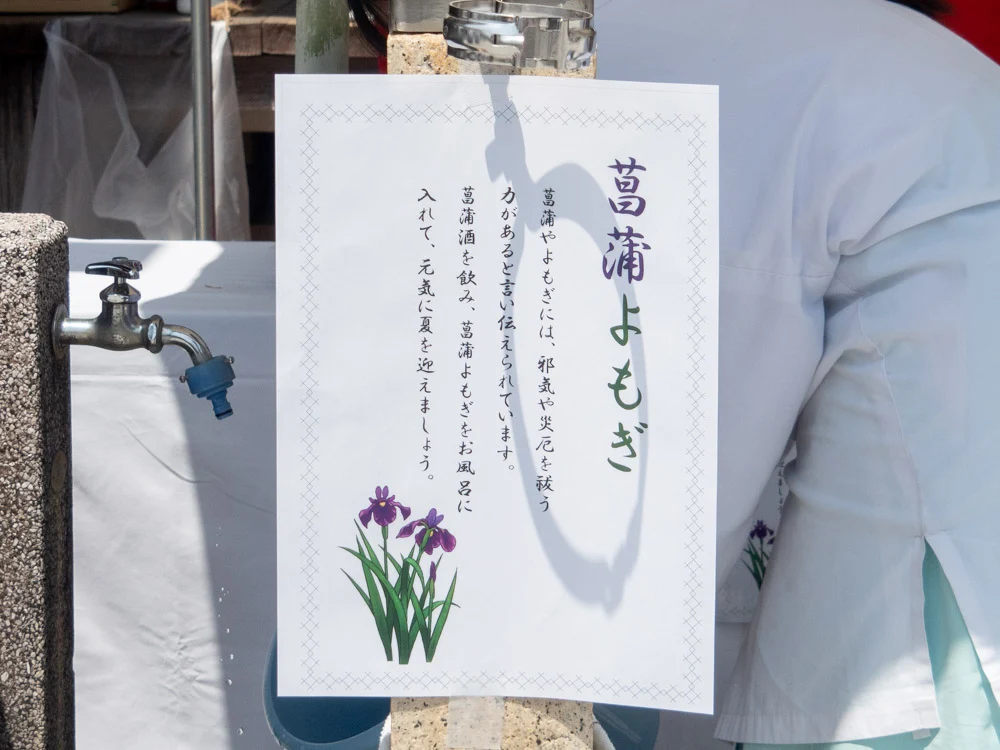
Next to the Honden, on May 5 only, iris (shobu), mugwort, and iris sake are offered.
This is because, during the Tango no Sekku (Children's Day), iris and mugwort, which have the power to ward off evil spirits, have been displayed since ancient times.
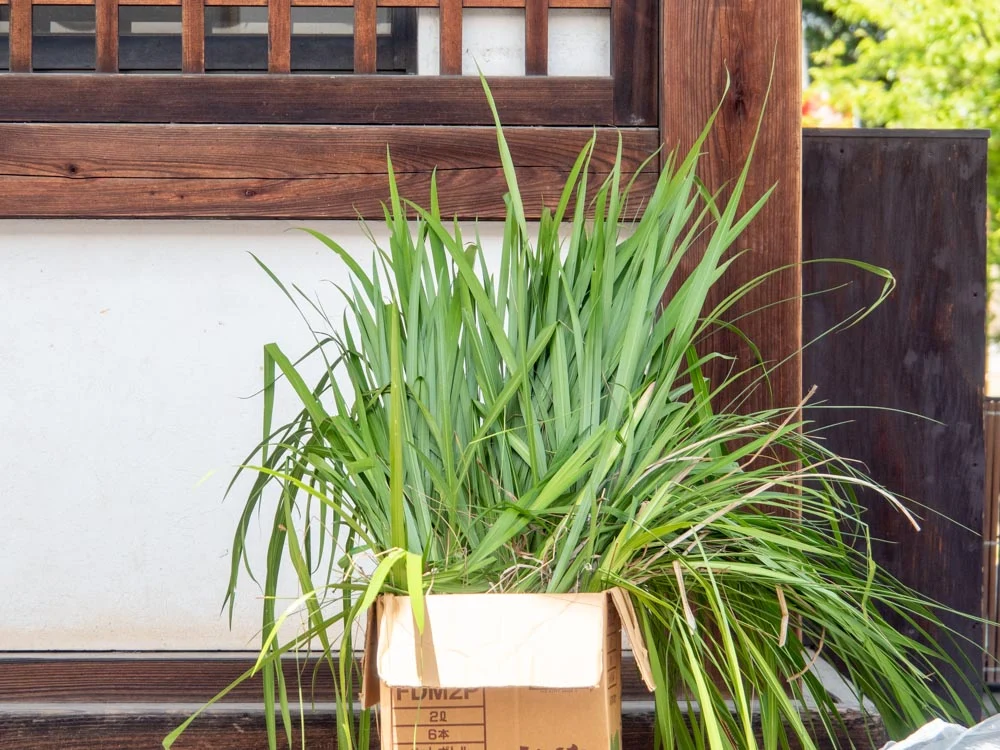
▼There were also leaves of iris used for iris baths.
Achi Wisteria Vine Craft Contest at the Kito-den
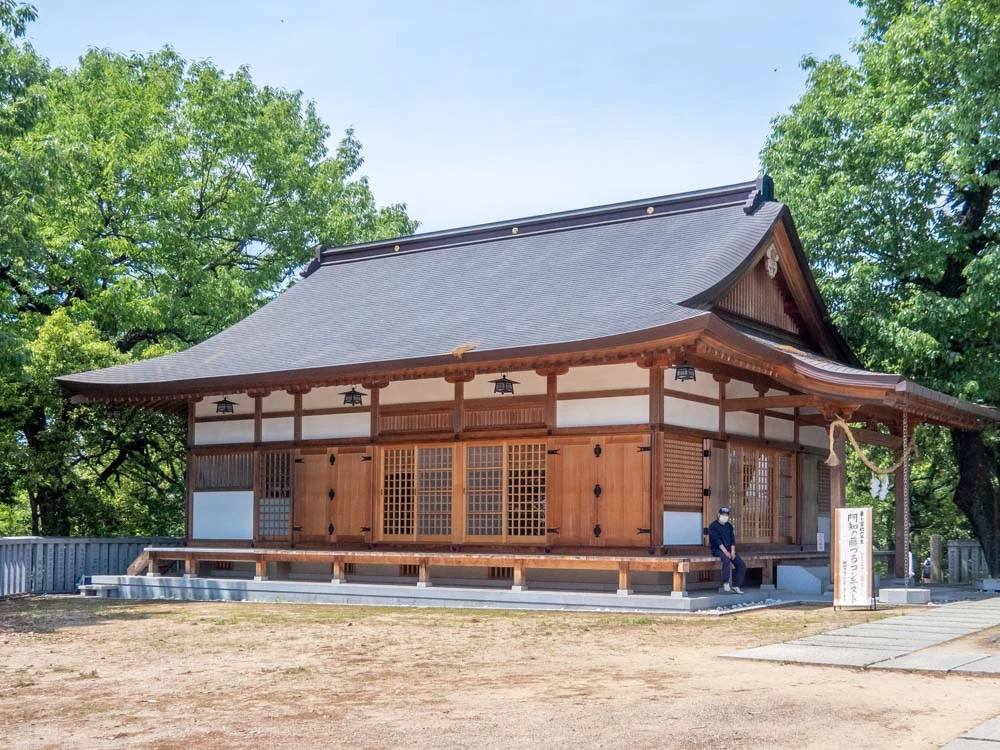
Inside the Kito-den, located to the left rear of the main hall, the "Achi Wisteria Vine Craft Contest" was being held.
▼Works made by children from the nearby Kurashiki-Higashi Elementary School using wisteria vines are on display.
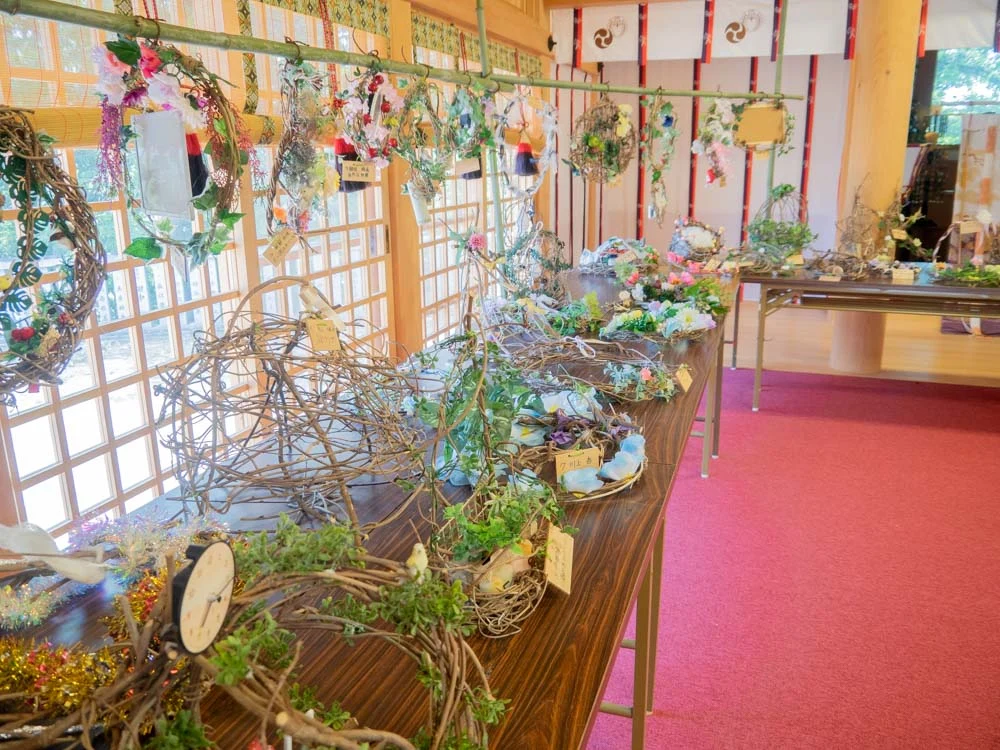
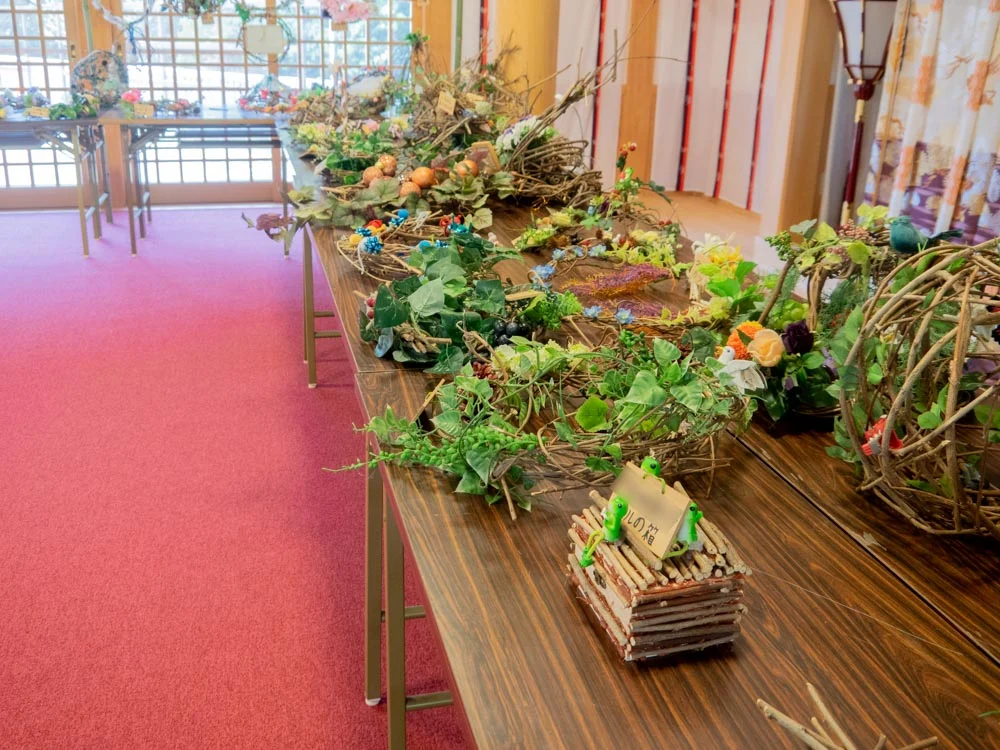
▼All the works are impressive, and some had ideas that were quite unique and enjoyable.
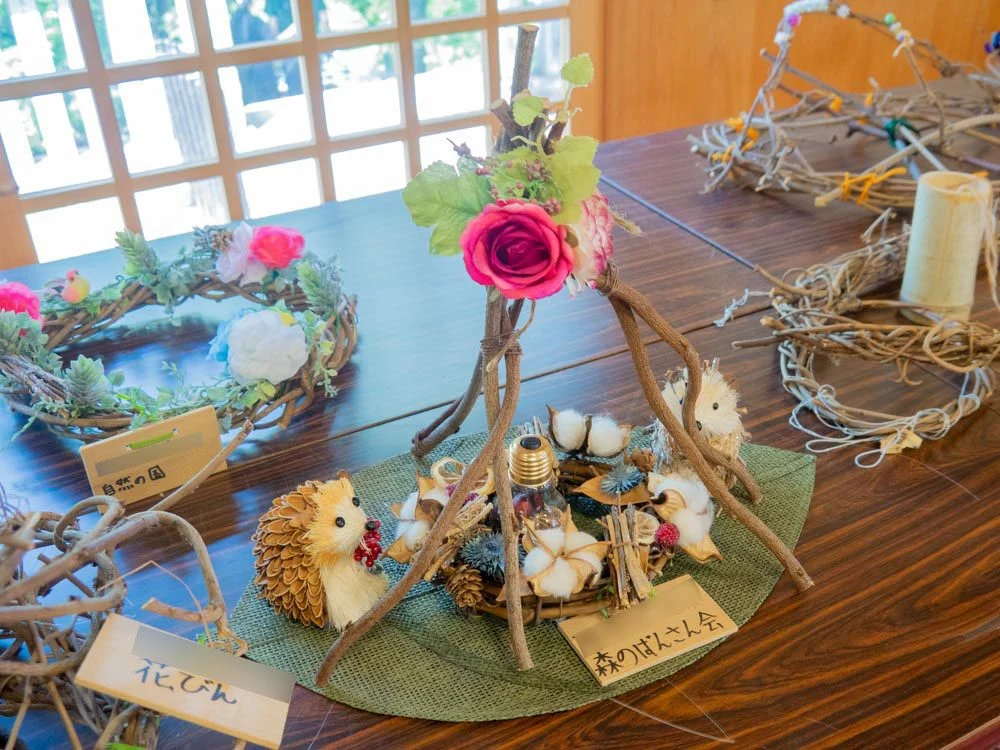
▼After enjoying the works, let's choose one that you like and vote for it.
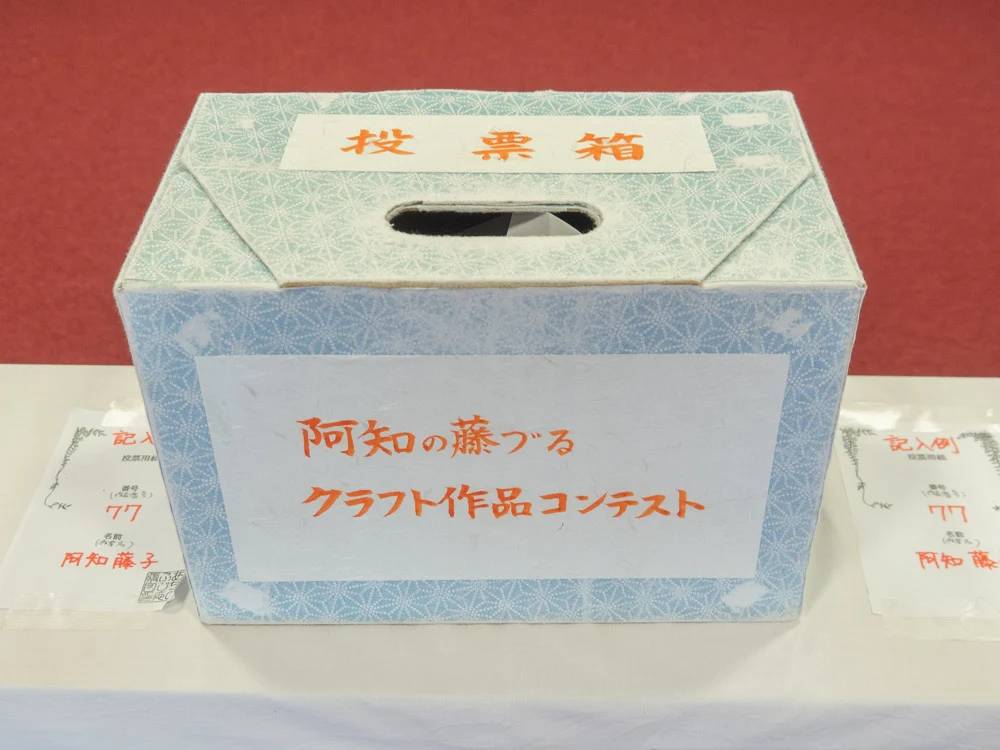
The Achi Wisteria Vine Craft Contest is held every day during the Fujimi no Kai event period.
Parent-Child Traditional Games Event at the Ema-den and West of the Honden
▼At the Ema-den located to the west of the precincts and around the west side of the Honden, a Parent-Child Traditional Games event was held exclusively on May 5, Children's Day.
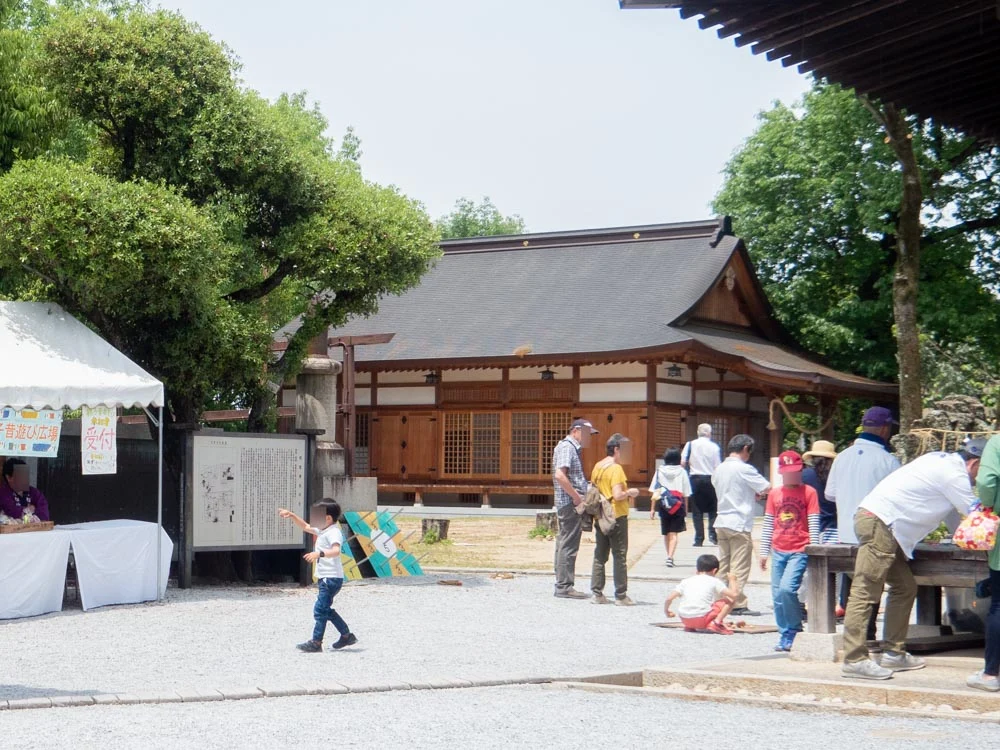
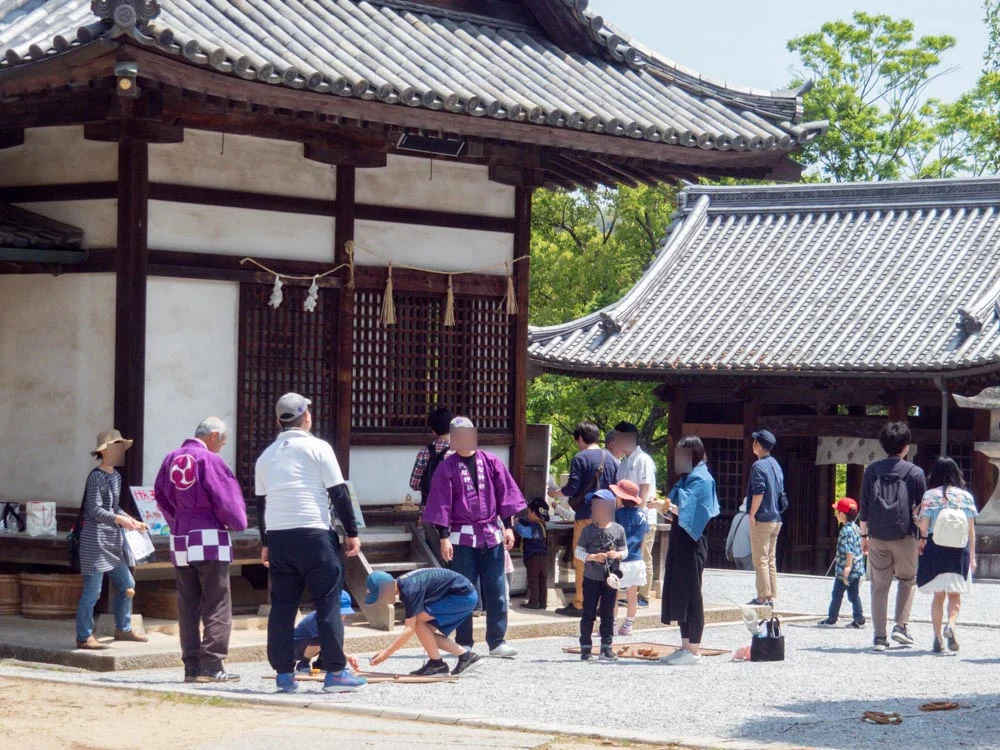
The Parent-Child Traditional Games event is aimed at small children.
▼You can experience various nostalgic games.
- Top spinning
- Beigoma
- Bamboo stilts and Pokkuri
- Kendama
- Otedama
- Ayatori
- Ring toss
- Ohajiki
- Rubber gun
- Art class
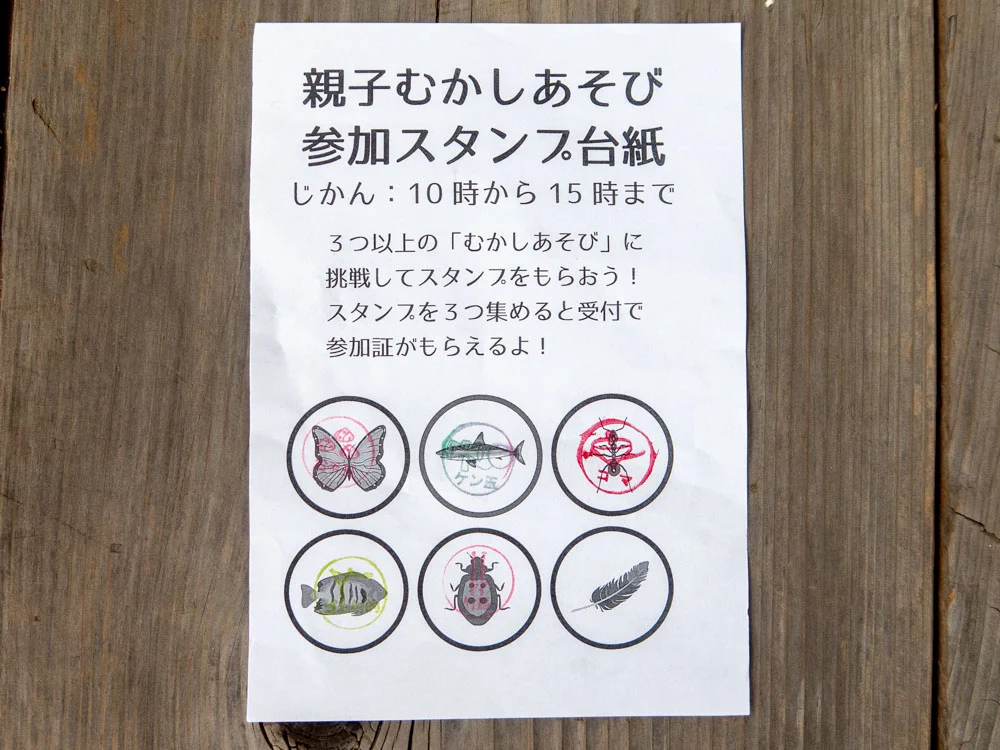
▼First, please register at the reception to participate.
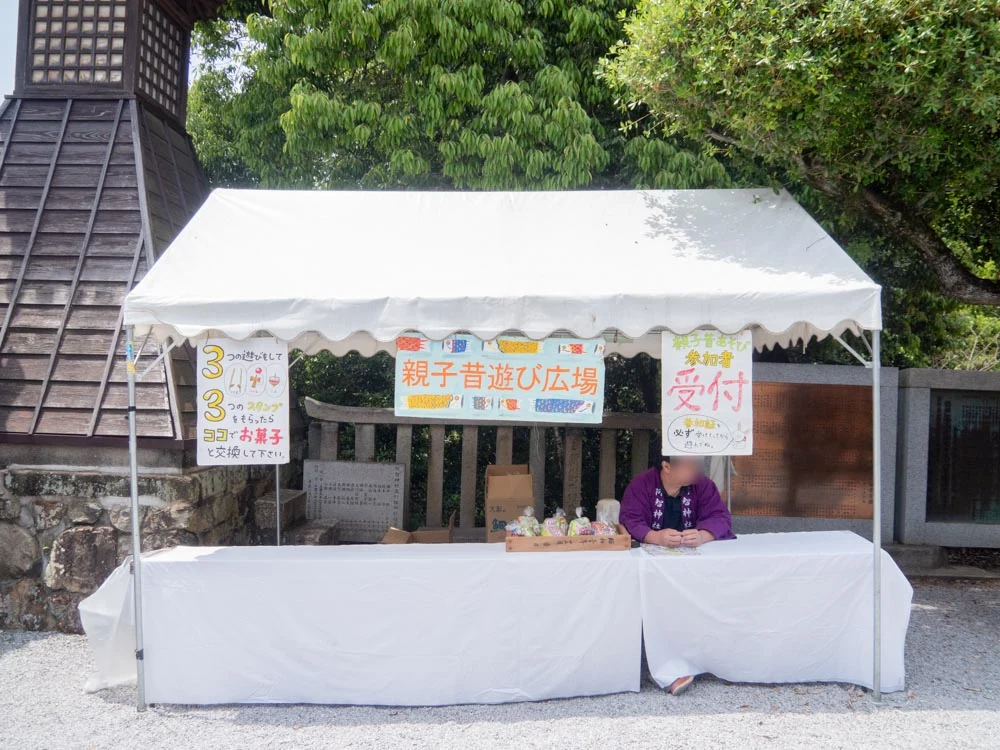
Upon registration, you will receive a stamp card.
▼After experiencing one game, a stamp will be given, and if you collect 6 stamps, you will receive a participation prize. The participation prize is for the first 120 people.
▼This is a spinning top.
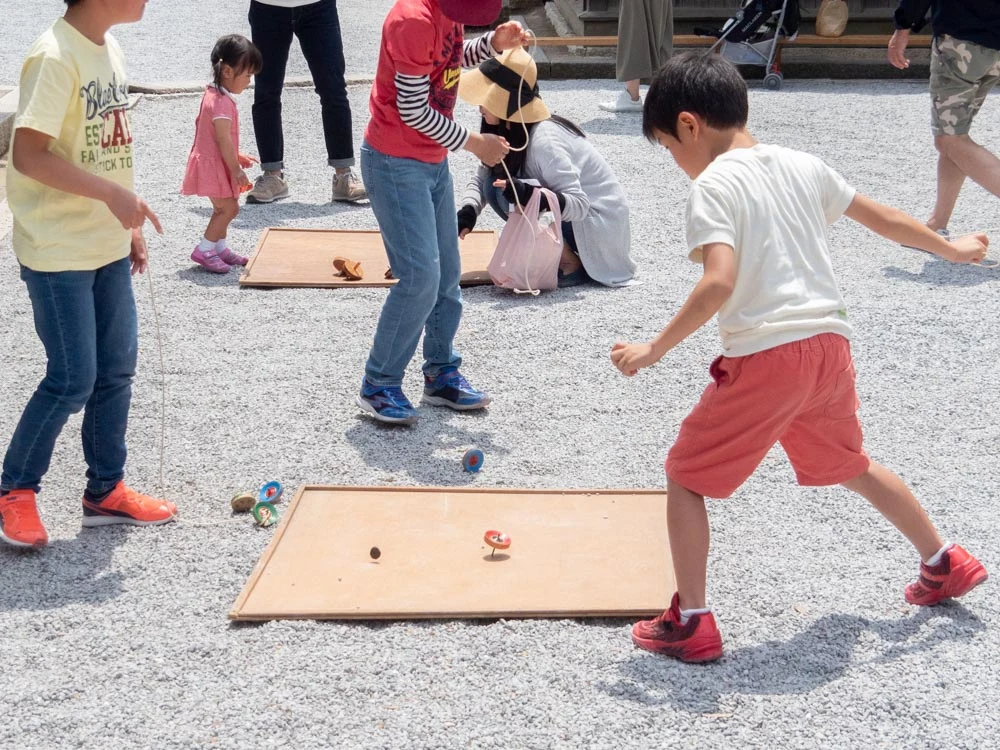
After not doing it for a long time, I forgot the technique and couldn't do it well.
After a few attempts, I finally regained my sense and was able to spin it.
Also, there was a beyblade.
▼There are also stilts.
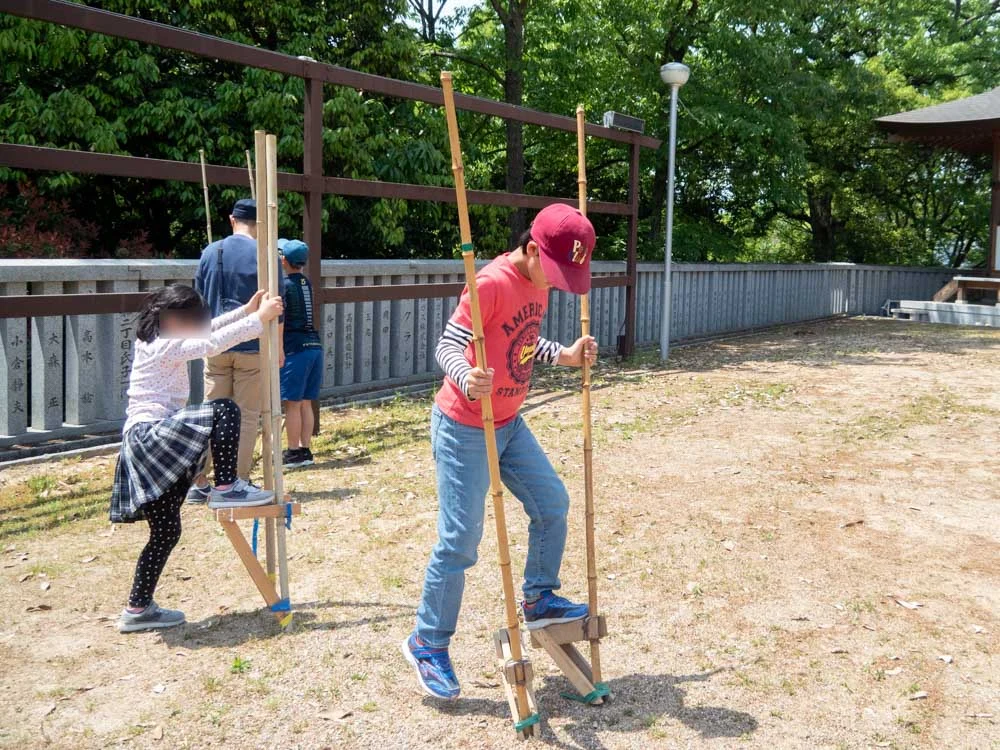
Just like with the spinning top, I couldn't ride it well until I regained my sense.
It has probably been since elementary school that I last rode stilts.
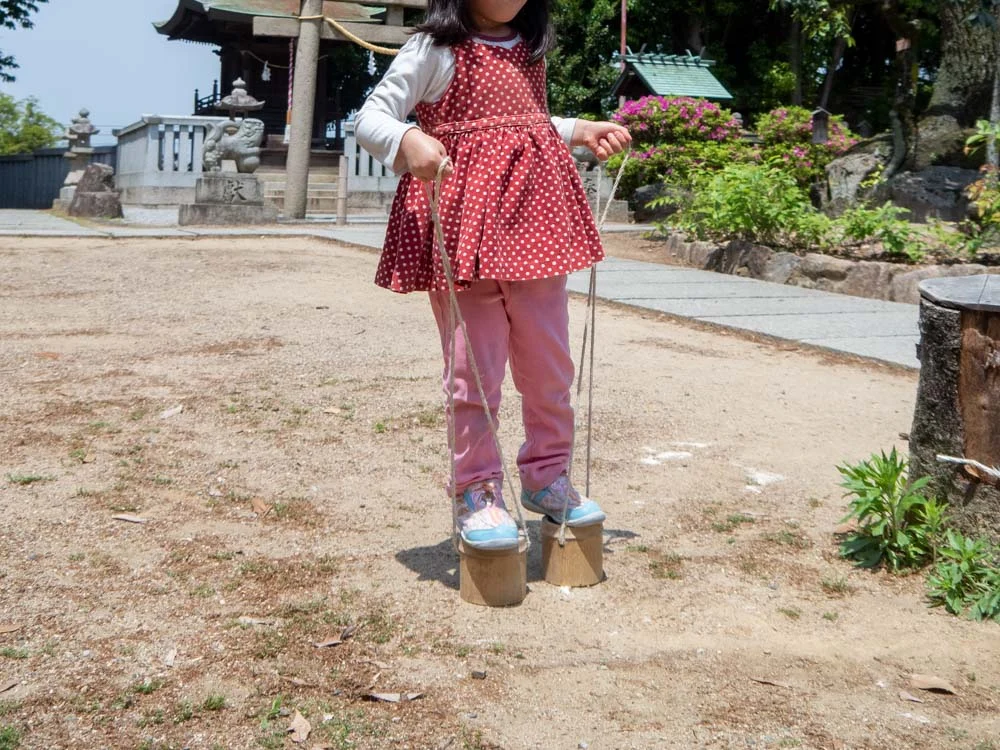
▼There are also "pokkuri" (wooden clogs), so even young children who can't ride stilts seem to be having fun.
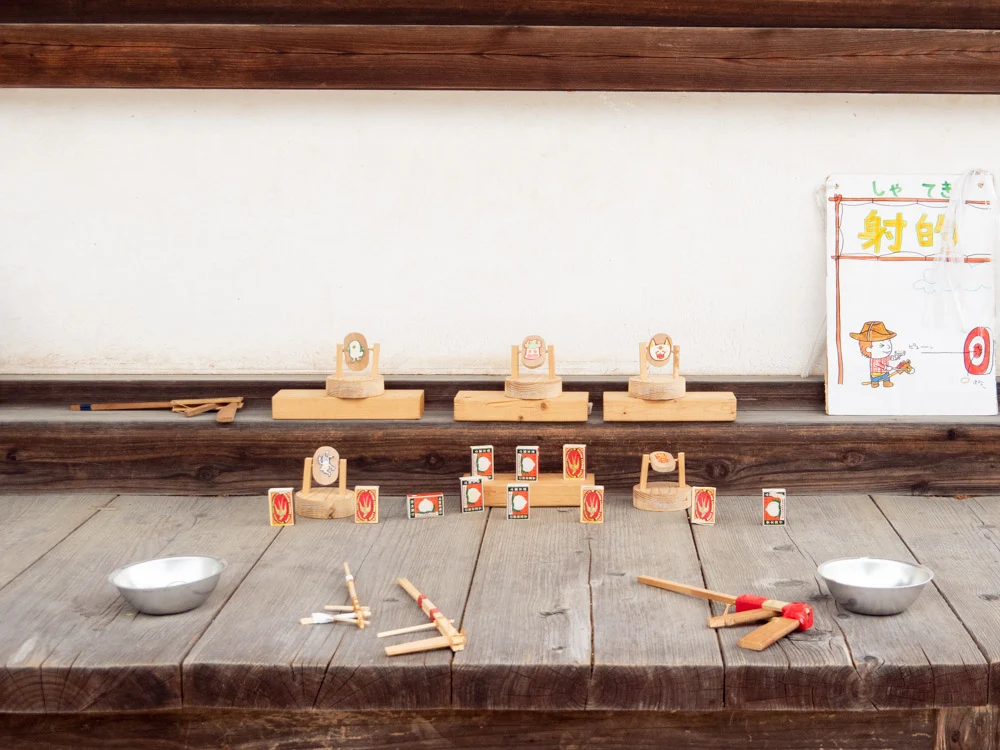
▼Rubber guns are fired at targets.
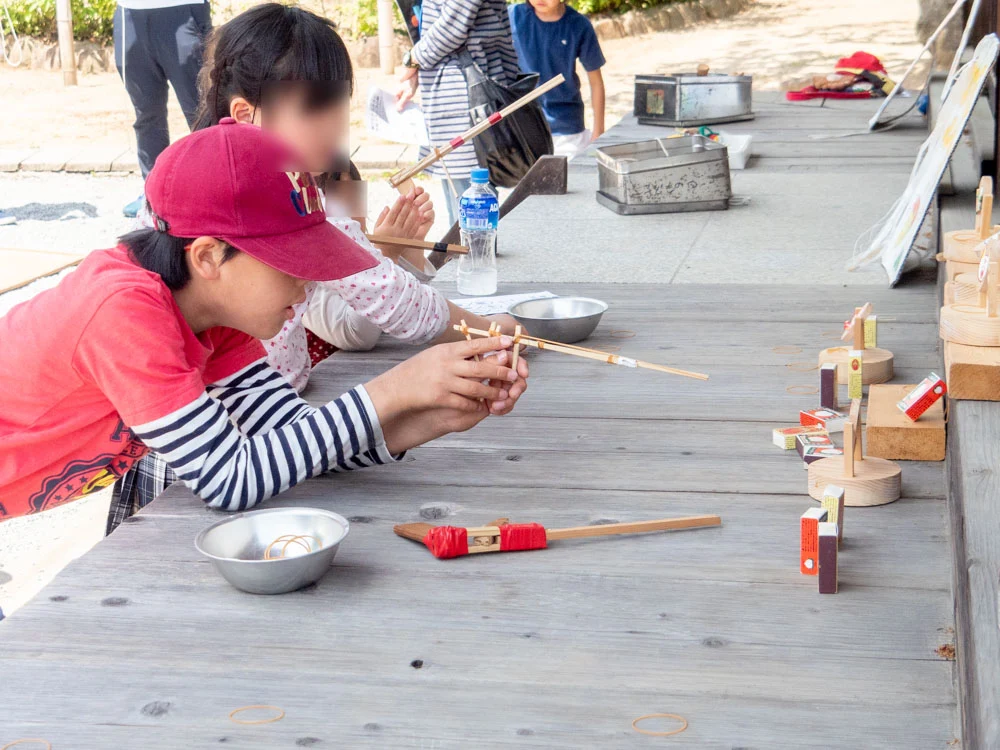
The targets are matchboxes and such.
▼The targets are set at a close distance, making it easier for small children to hit.
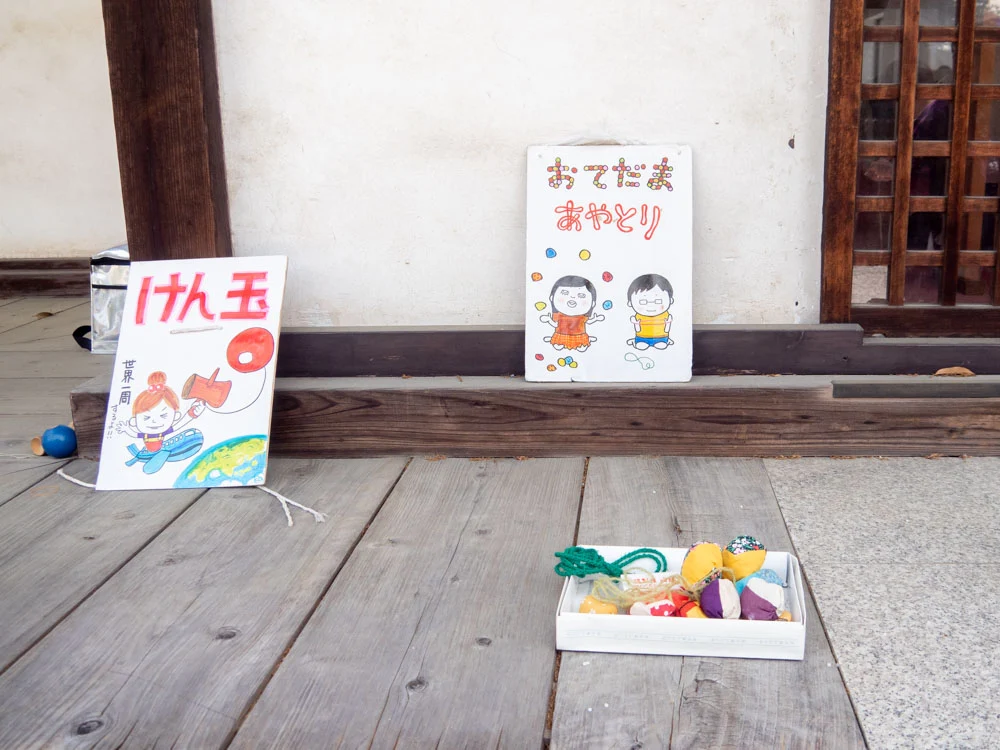
▼There are also kendama, ayatori (string figures), and otedama (beanbags).
▼There were also ohajiki (traditional Japanese game pieces).

▼The rings for the ring toss are made of rope.
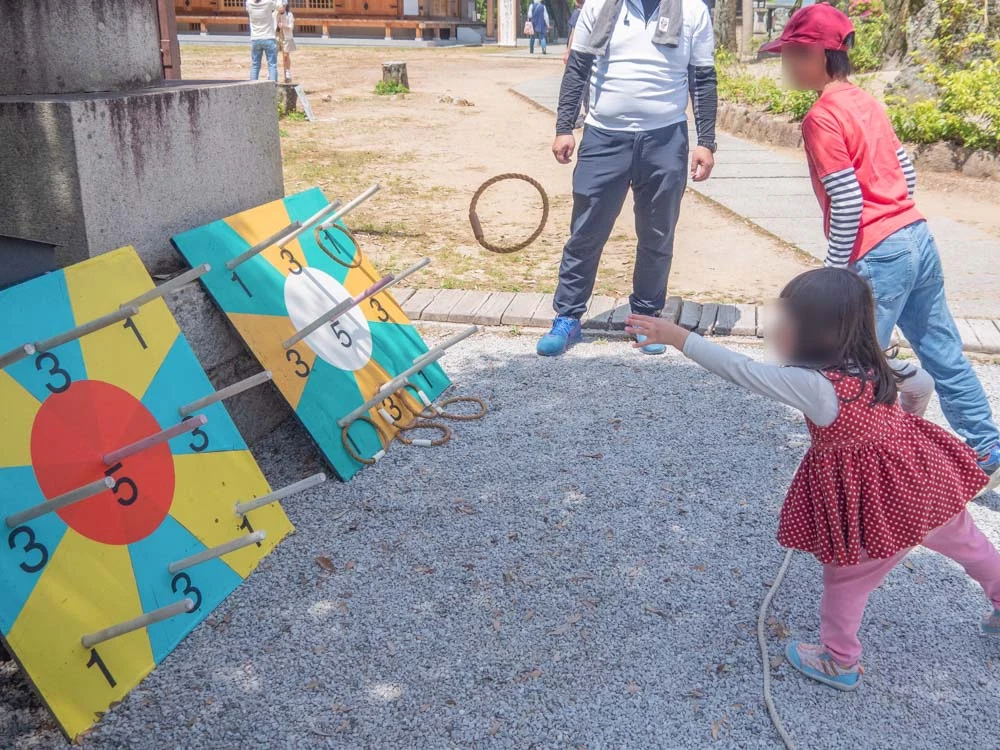
This is my first experience with rope ring toss.
It has a heavy weight, but that might make it more stable to throw, making it easier to succeed.
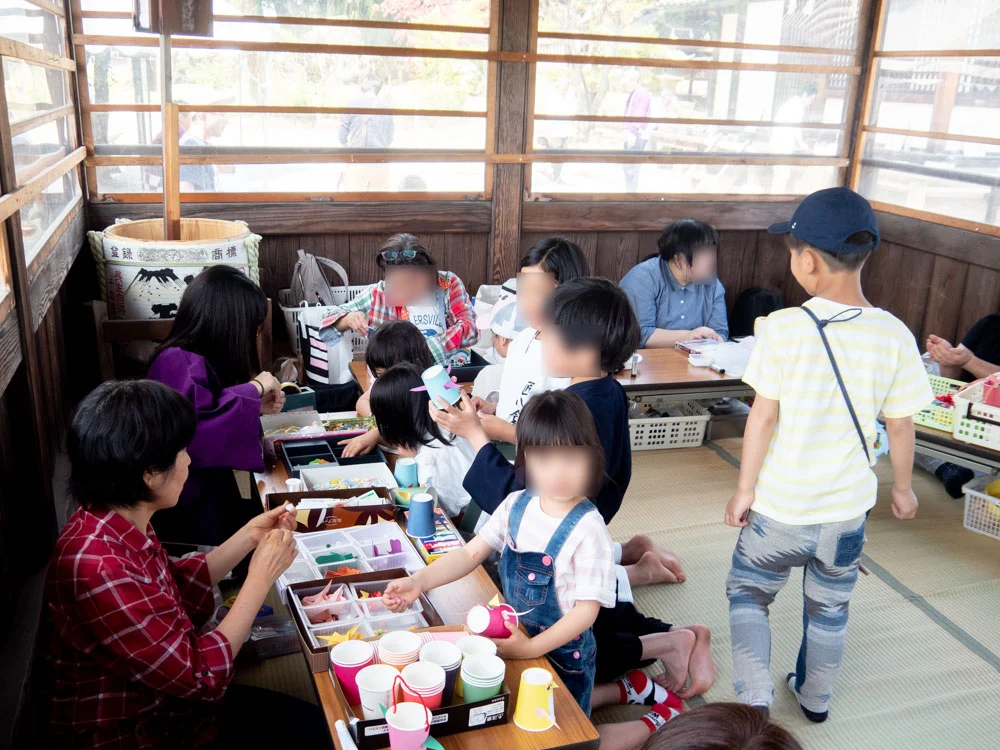
▼During the ema (votive tablet) event, an art class was held.
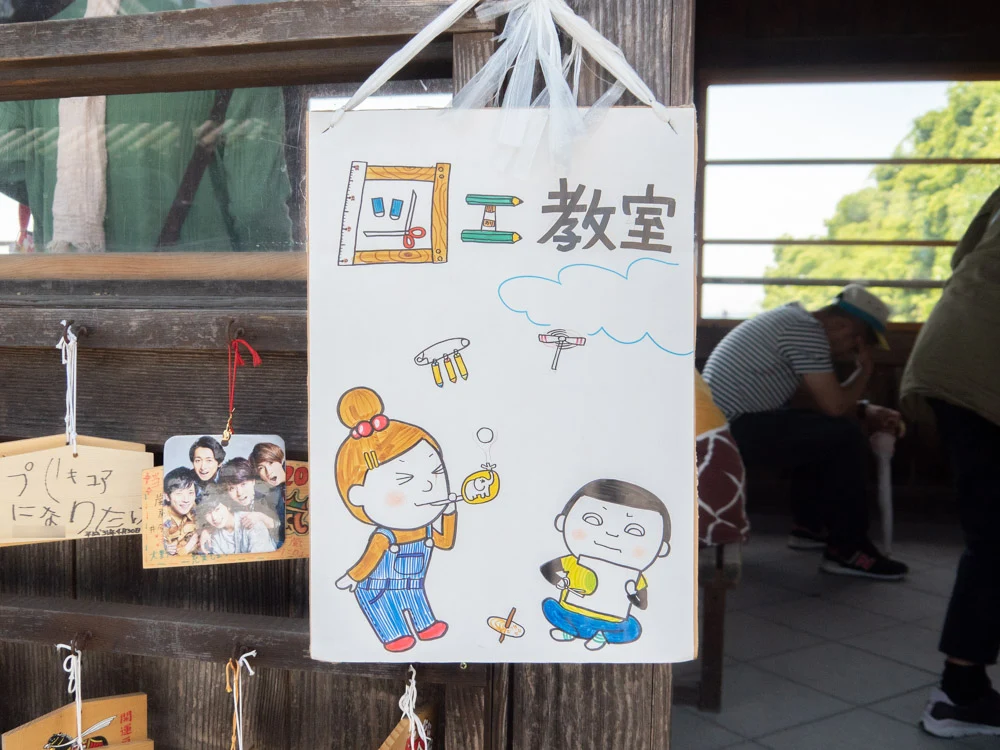
▼With guidance from the staff, we create our works.
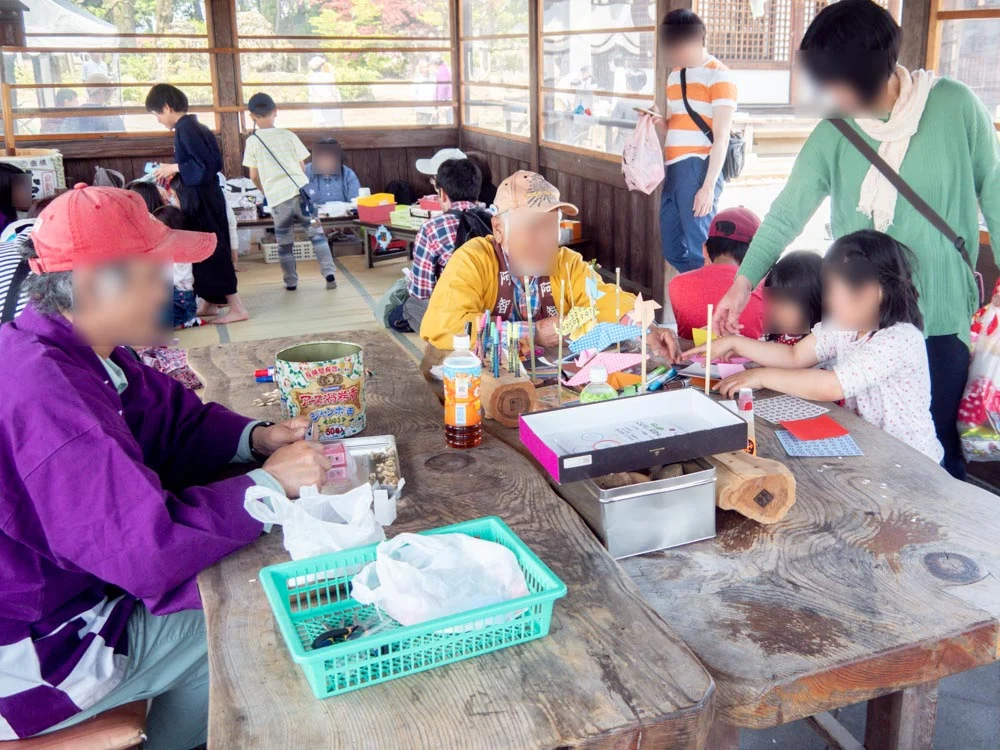
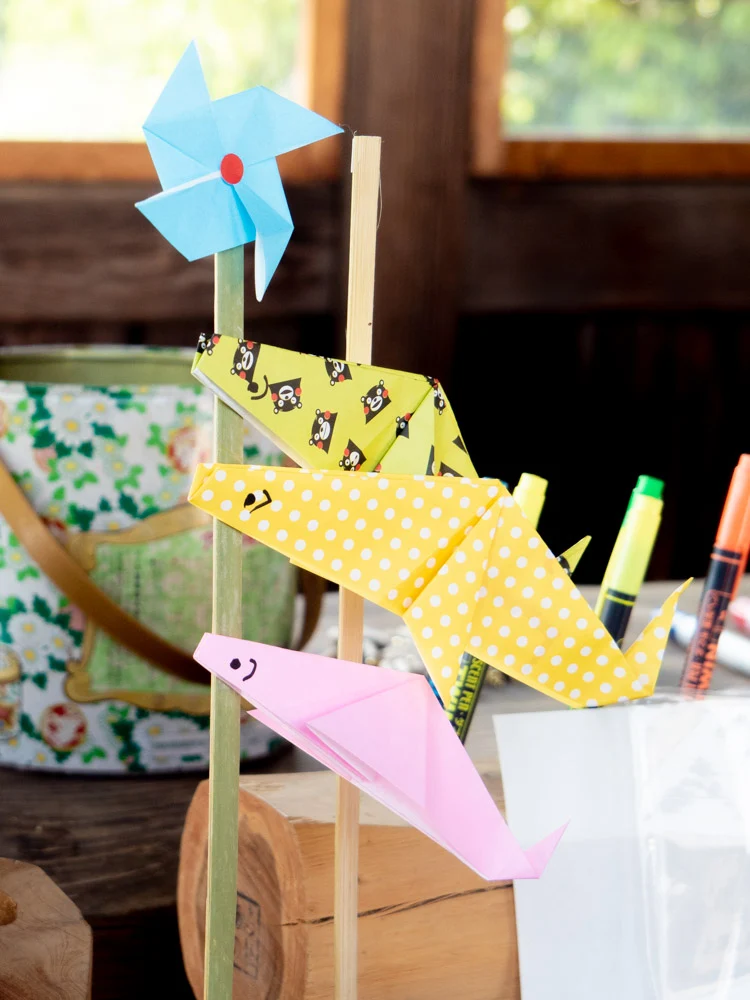
▼The completed work was a carp streamer made with origami and bamboo sticks and wood.
▼Once you collect enough stamps, show your stamp sheet at the reception to receive a participation prize.
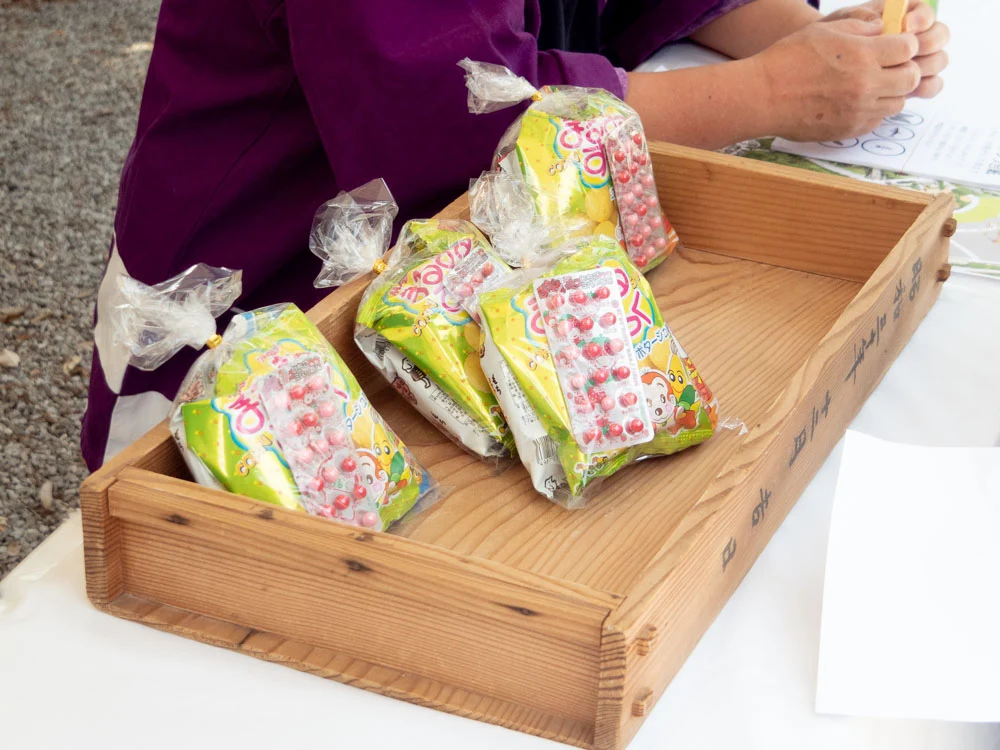
By the way, the participation prize was a set of snacks.
Even though these are traditional games from the past, many of them were games that I had few opportunities to play even when I was small, as someone in my forties.
I felt that it was an event that both parents and children could enjoy.
Limited Edition Goshuin of Fujimi no Kai
If you are interested in shrines, you may receive a goshuin (shrine stamp) when you visit a shrine.
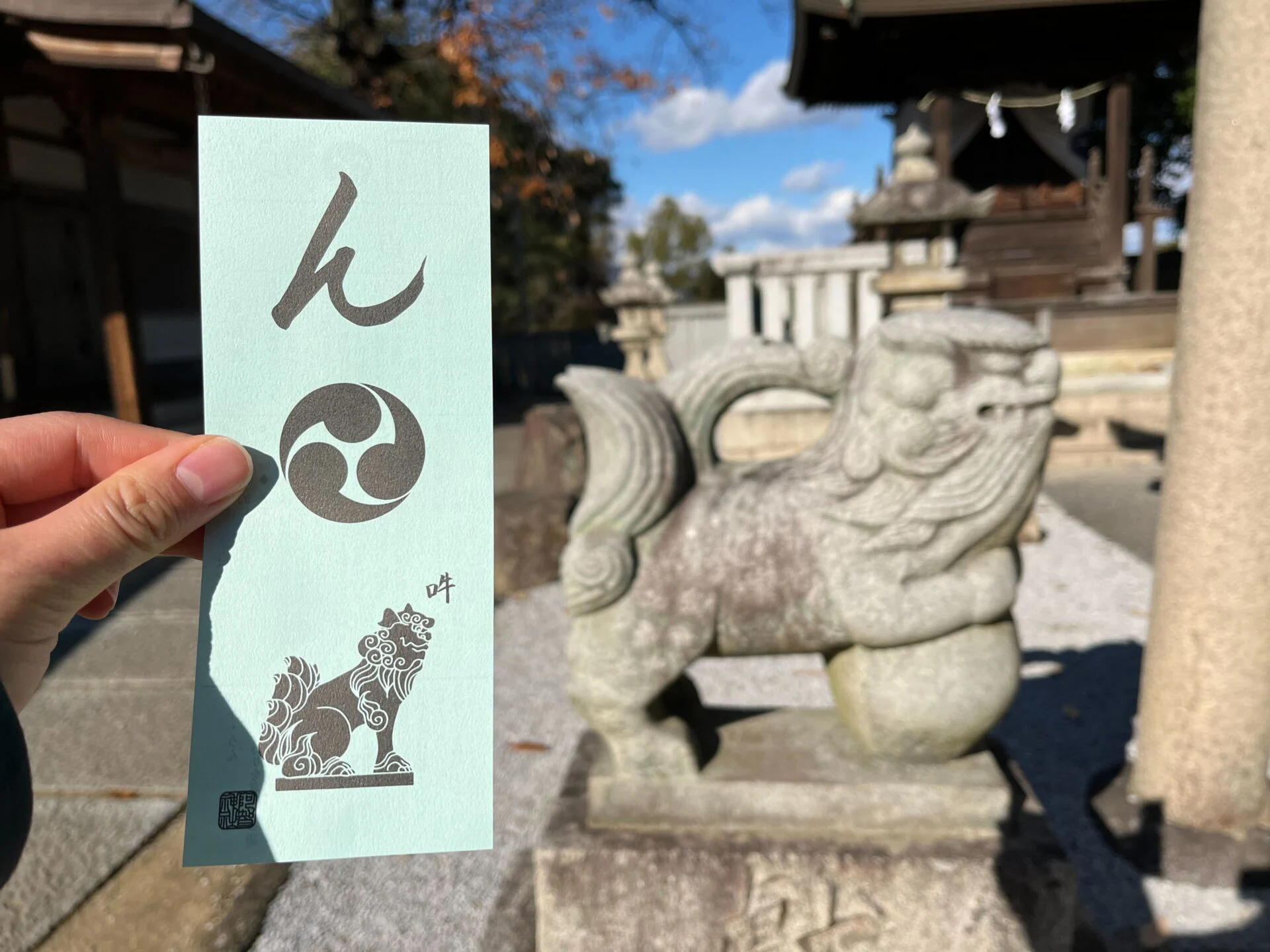
▼During the Fujimi no Kai event period, you can receive a Fujimi no Kai Limited Edition Goshuin at the Achi Shrine office.
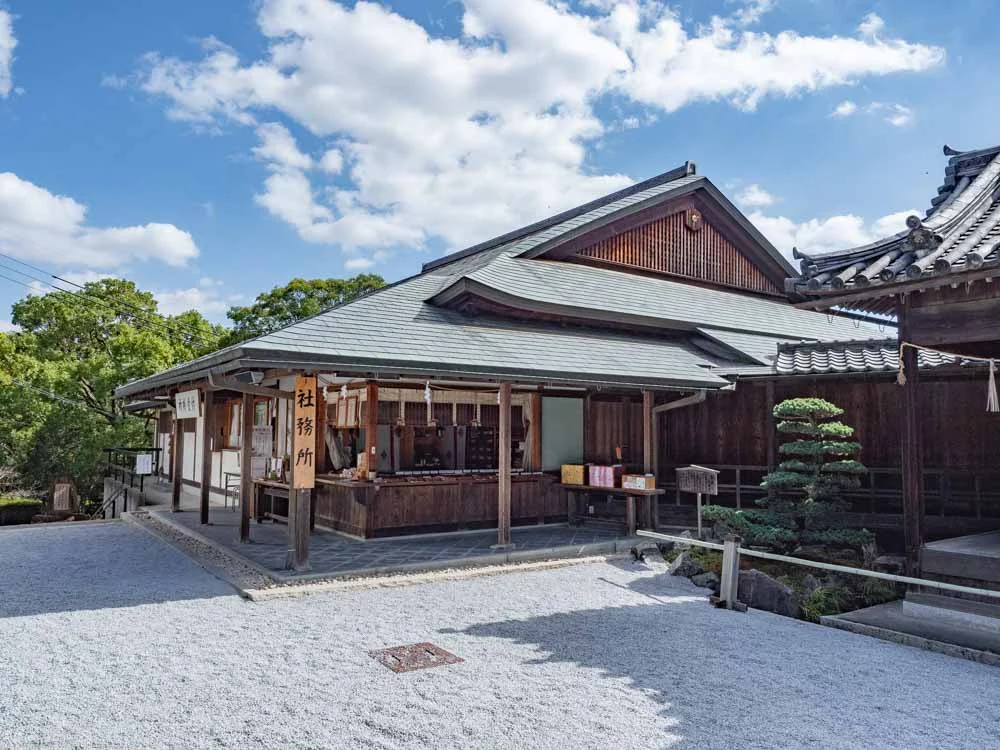
▼The Fujimi no Kai Limited Edition Goshuin features illustrations of the wisteria flowers of Achi and scenes of Gagaku (ancient court music) performance, which are different from the usual goshuin of Achi Shrine.
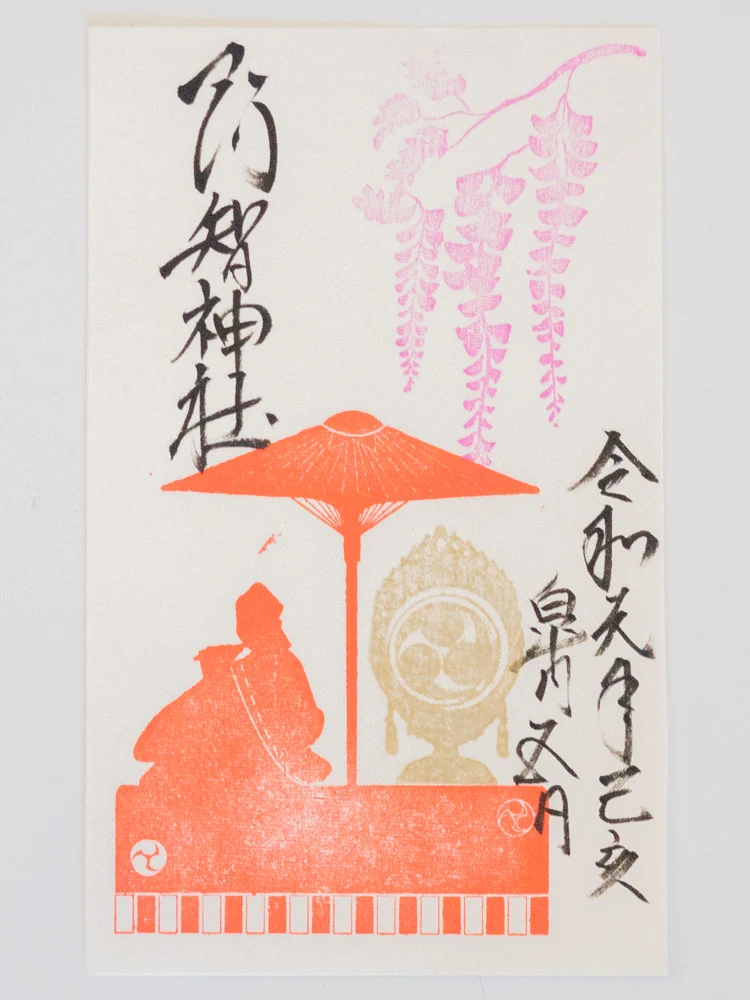
The initial fee for the Fujimi no Kai Limited Edition Goshuin is 500 yen.
Additionally, the limited edition goshuin can only be received on special goshuin paper (the paper with the goshuin stamped on it).
You cannot receive the limited edition goshuin in your own goshuin book, so please be aware of this.
This also applies to the original Achi Shrine goshuin book.
However, if you receive the Fujimi no Kai Limited Edition Goshuin at the same time as obtaining a new original Achi Shrine goshuin book, you can receive the limited edition goshuin stamped in the goshuin book.
If you receive the original Achi Shrine goshuin book along with the limited edition goshuin, the initial fee will be 2,000 yen.
Additionally, you can also receive the limited edition "Wisteria Ema" (initial fee 500 yen).
Typically, ema are hung after writing wishes on them at the ema racks or ema hall in the shrine, but the wisteria ema can also be taken home as a keepsake if desired.
Conclusion
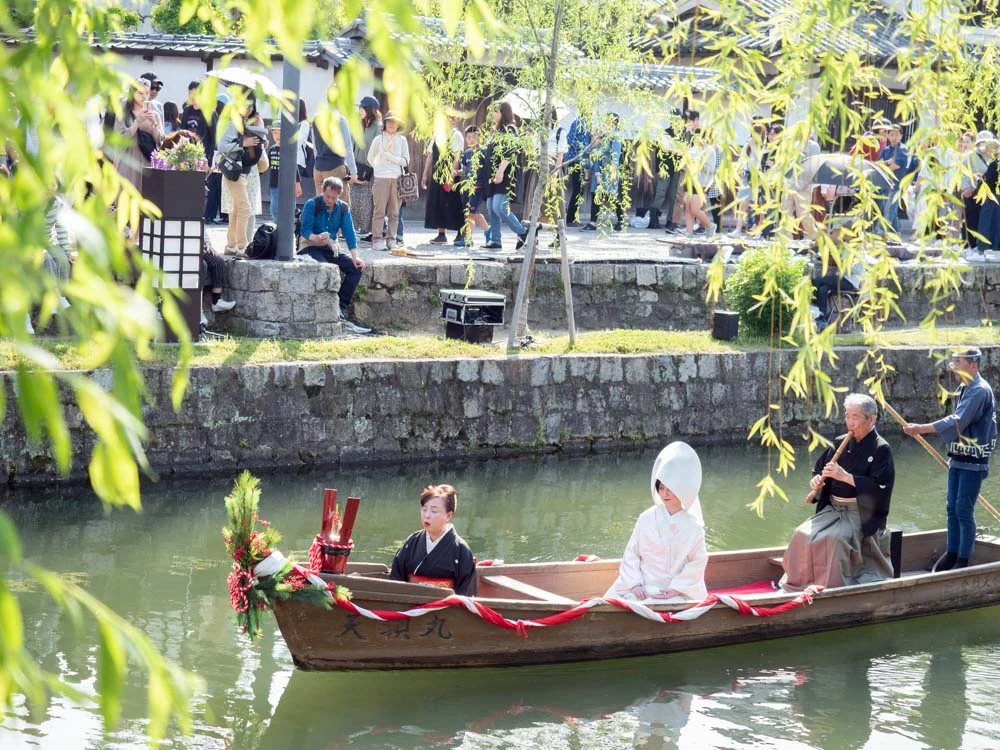
The Bikan Historical Area during Golden Week is extremely crowded.
While the lively Heartland Kurashiki is great, how about visiting Achi Shrine's Fujimi no Kai with your family or with fellow seniors?
You can enjoy a relaxed atmosphere with elegant Gagaku music performances, tea ceremonies, and various performances on the Noh stage, offering a different kind of fun compared to the hustle and bustle of Heartland Kurashiki.
Currently, the wisteria at Achi is undergoing recovery treatment, but even so, the beauty of the wisteria flowers was delightful.
After the treatment is completed in 2021, we can surely expect to see a beautiful sight.
I am really looking forward to it.
Also, I hope that families with children will definitely participate in the children's day traditional games at Fujimi no Kai.
It will be a valuable opportunity to experience games that modern children rarely get to play.
I was very impressed by how all the participating children were completely absorbed in the games.
Articles about Achi Shrine

![[Achi Shrine Hatsumode] West Approach](https://media.kuratoco.com/wp-content/uploads/2020/01/23051054/achijinja-hatsumoude_01.jpg)
Fujimi no Kai (Wisteria Festival) Data
| Name | Fujimi no Kai (Wisteria Festival) |
|---|---|
| Date | May 3 (Friday) to May 5 (Sunday), 2019 From 10:00 AM to around 2:30 PM |
| Location | 12-1 Honmachi, Kurashiki City, Okayama Prefecture (Achi Shrine grounds) |
| Participation Fee (including tax) | Free (A separate offering fee is required for event participation and receiving items) |