The omikuji (fortune slip) drawn at shrines is a good old Japanese culture that allows for a casual test of luck.
Since it can be drawn for a reasonable initial offering fee of 100 to 300 yen, I always use omikuji to predict my fortune when I visit a shrine.
Especially at the beginning of the year, the shrine grounds become lively with people trying to predict their fortunes for the year.
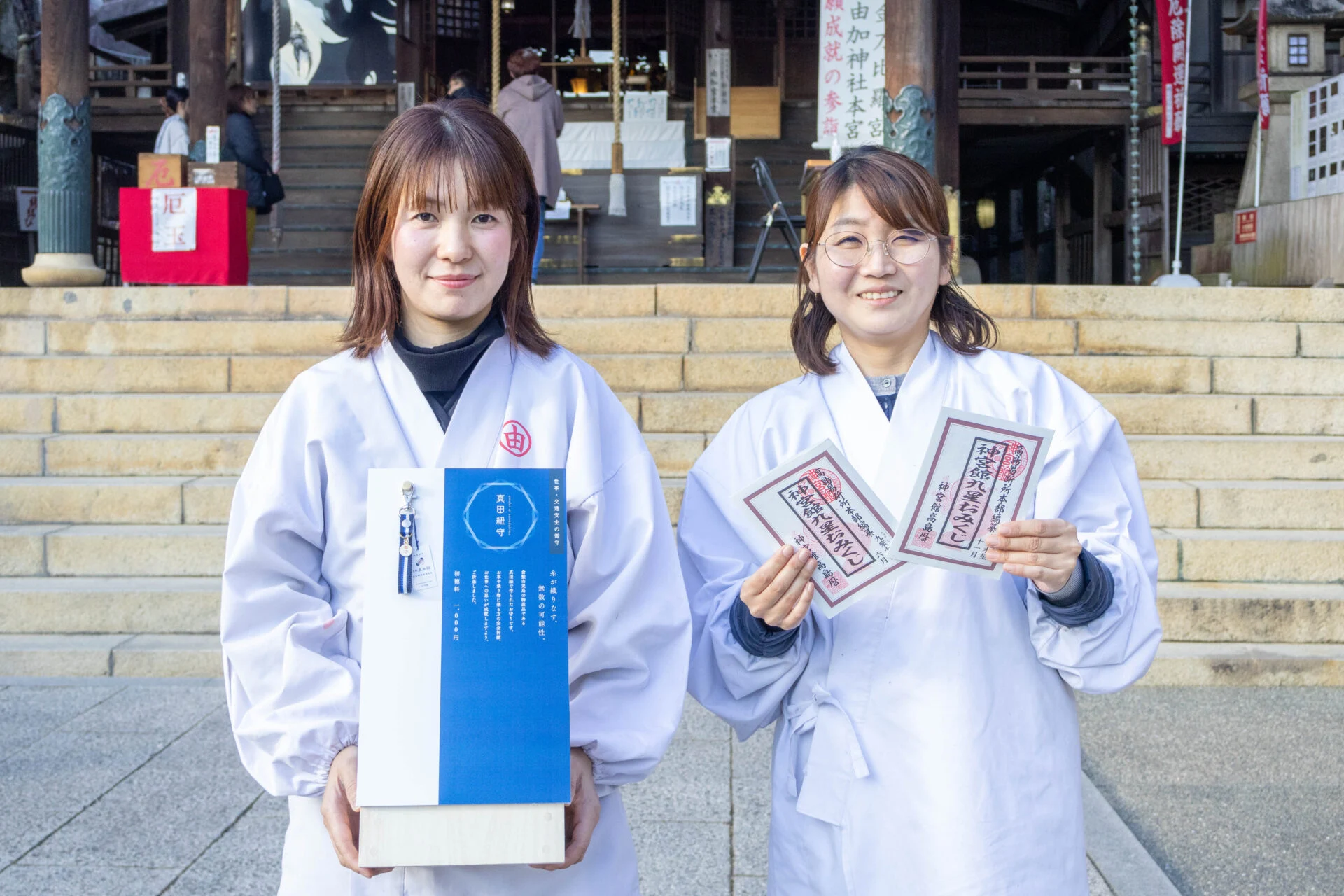
At Achi Shrine in Kurashiki, it seems that there is an original omikuji called Irohaura.
Hearing that it is a limited omikuji from Achi Shrine, I wondered, "What is different from a regular omikuji?" and promptly visited Achi Shrine.
I will introduce "Irohaura," which is packed with many mechanisms beyond just a test of luck.
About Irohaura
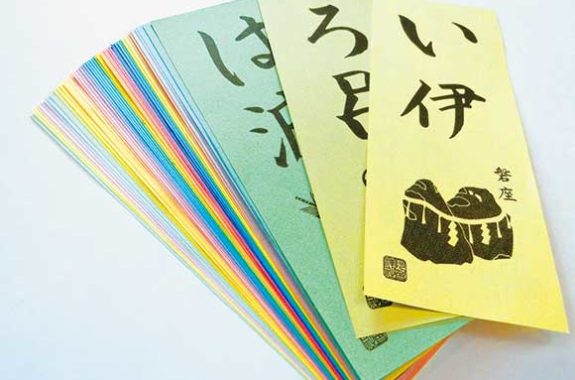
Irohaura is an omikuji that started being distributed at Achi Shrine from January 2023.
I learned from the people at Achi Shrine about the motivation behind creating Irohaura and its contents.
The creation of Irohaura began with the idea of "making a more enjoyable shrine visit and creating an omikuji that would become a memory for those visiting as tourists."
Irohaura is a name that combines "Iroha uta" and "uranai" (fortune-telling).
There was also a proposal to use the order of "aiueo" (the Japanese syllabary), but it was decided to use "Iroha uta" as it feels new to younger people and nostalgic to older people.
In line with the Iroha uta, there are 48 different types of omikuji.
As of December 2023, Achi Shrine offers three types of omikuji, including Irohaura.
- Irohaura
- Tonbo-dama omikuji
- Hato omikuji
The office hours of the shrine office are from 9 AM to 5 PM.
Drawing Irohaura at Achi Shrine
Achi Shrine is located about a 15-minute walk from JR Kurashiki Station.
After passing through the Kurashiki Ebisu Shopping Street on the way to the Bikan Historical Area, you will find the stairs leading up to Achi Shrine.
Although there are a few steps, you can enjoy the streets of the Kurashiki area while taking a break, making it a perfect exercise for a stroll.
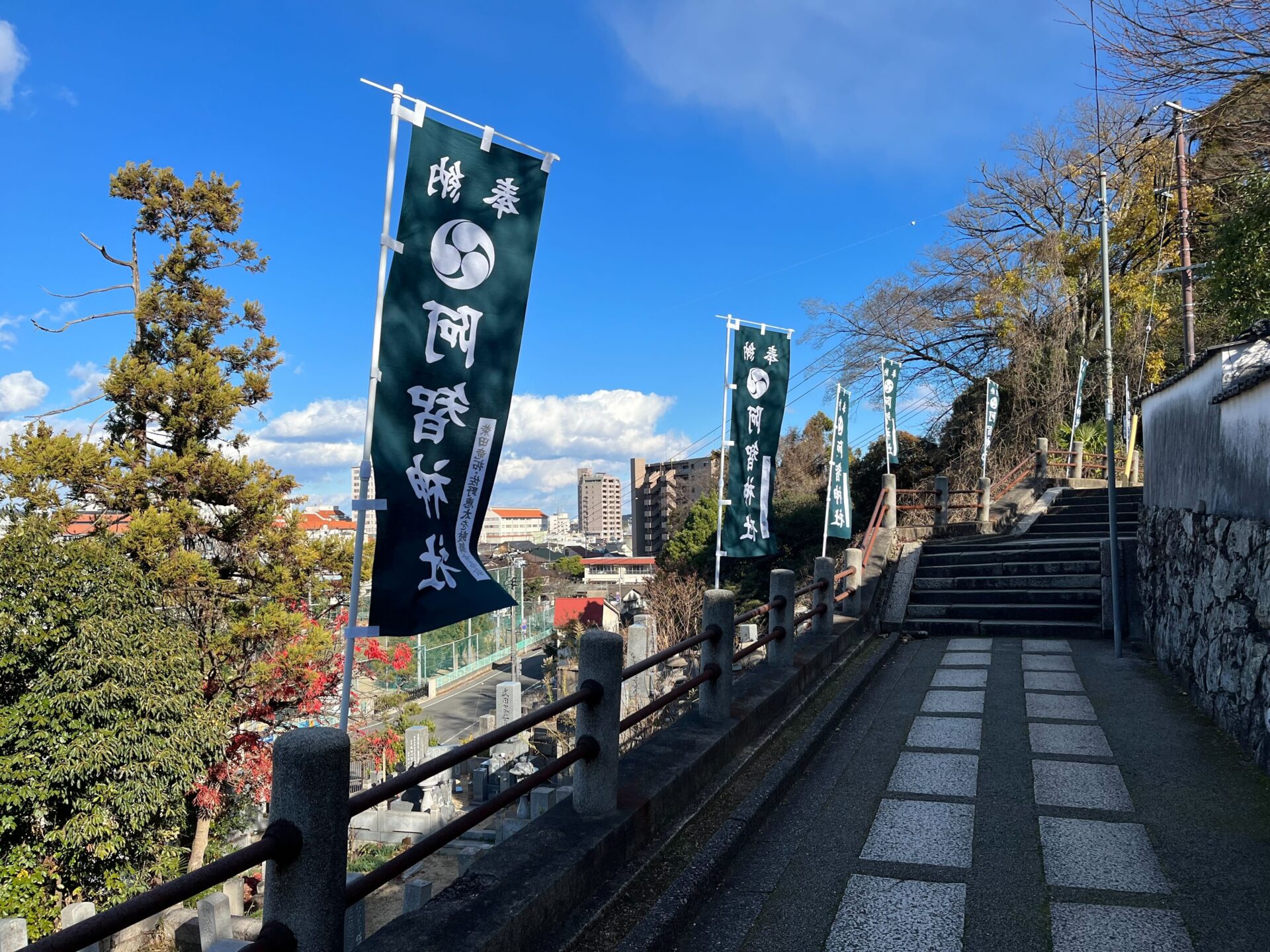
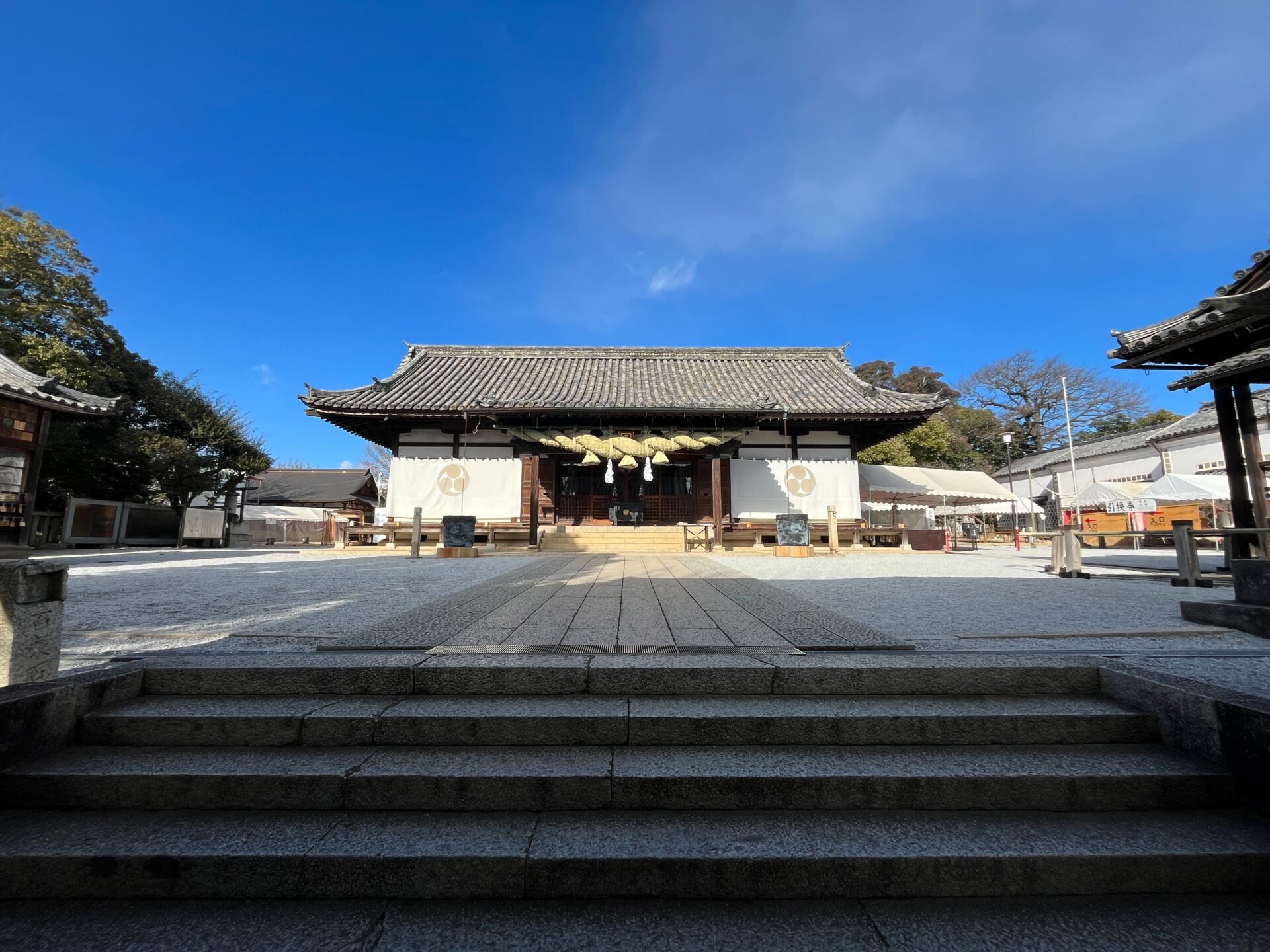
I have arrived at the shrine grounds. First, I will pay my respects, and then head to the shrine office on the right.
Irohaura was set up in front of the shrine office.
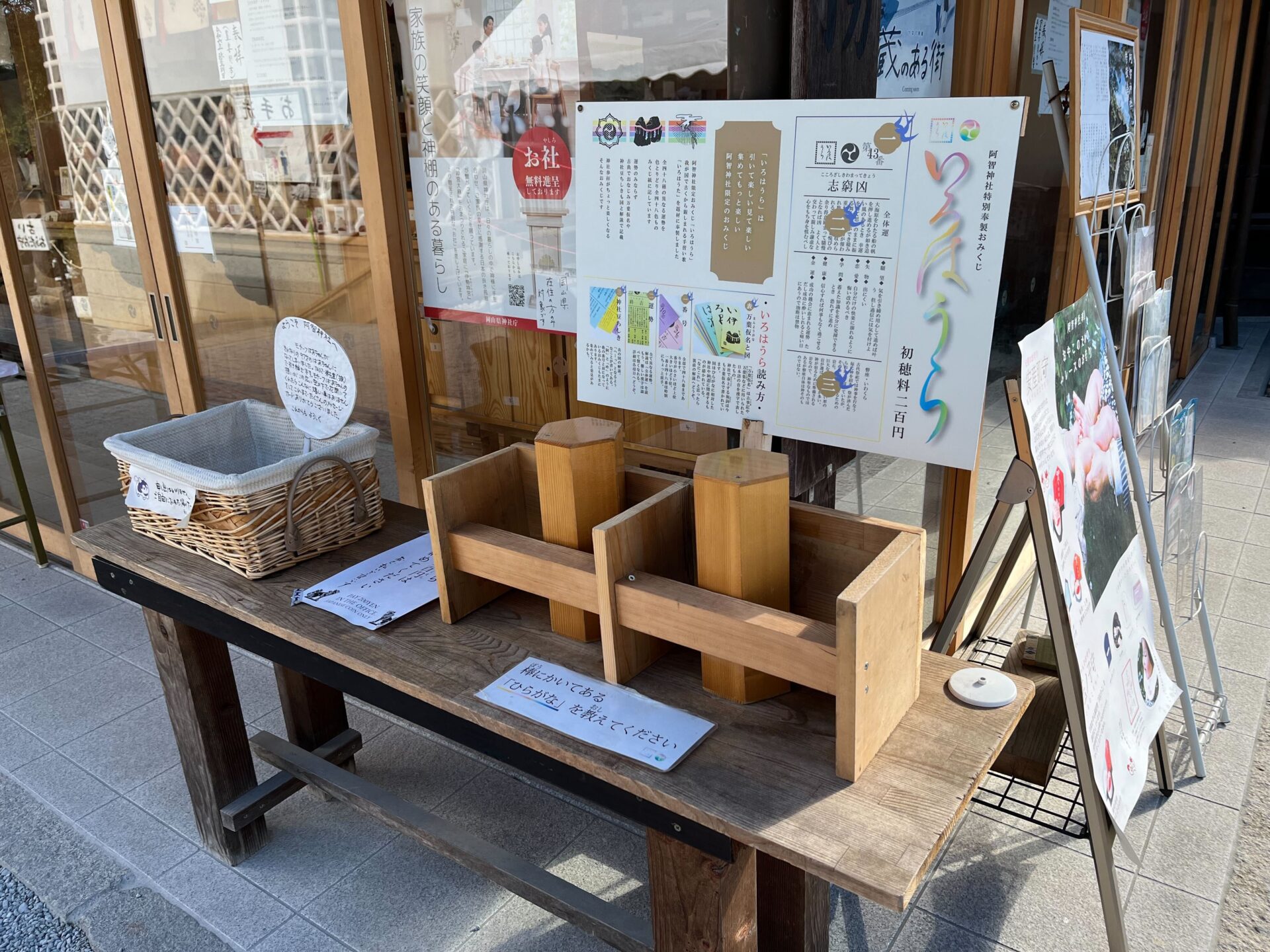
Let's draw one right away.
Contents of Irohaura
The stick that came out after shaking the wooden box had "ki" written on it.
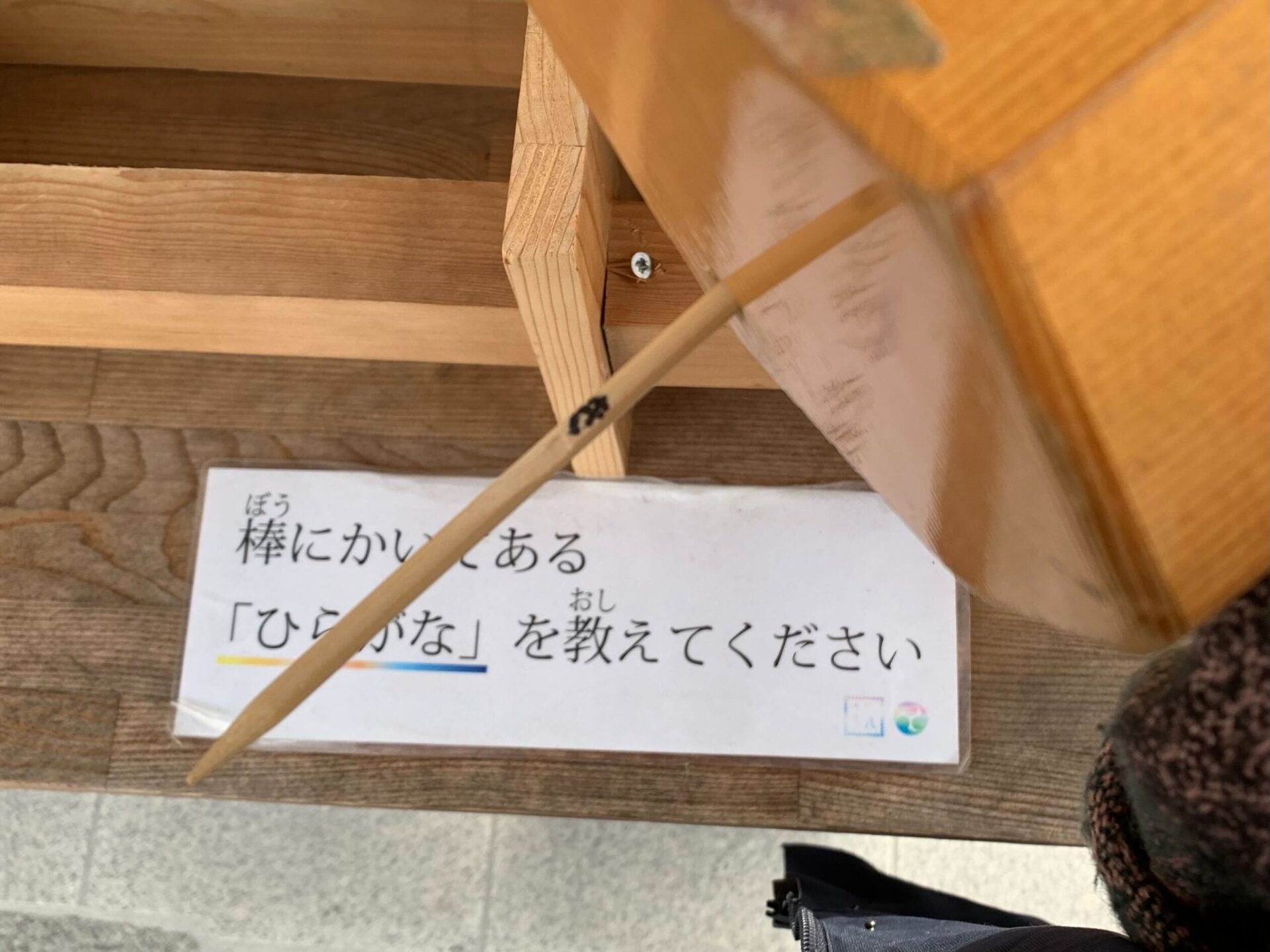
I will convey this hiragana to the person in the shrine office and receive Irohaura. I will also pay the initial offering fee of 200 yen at this time.
What kind of content is written for "ki"?
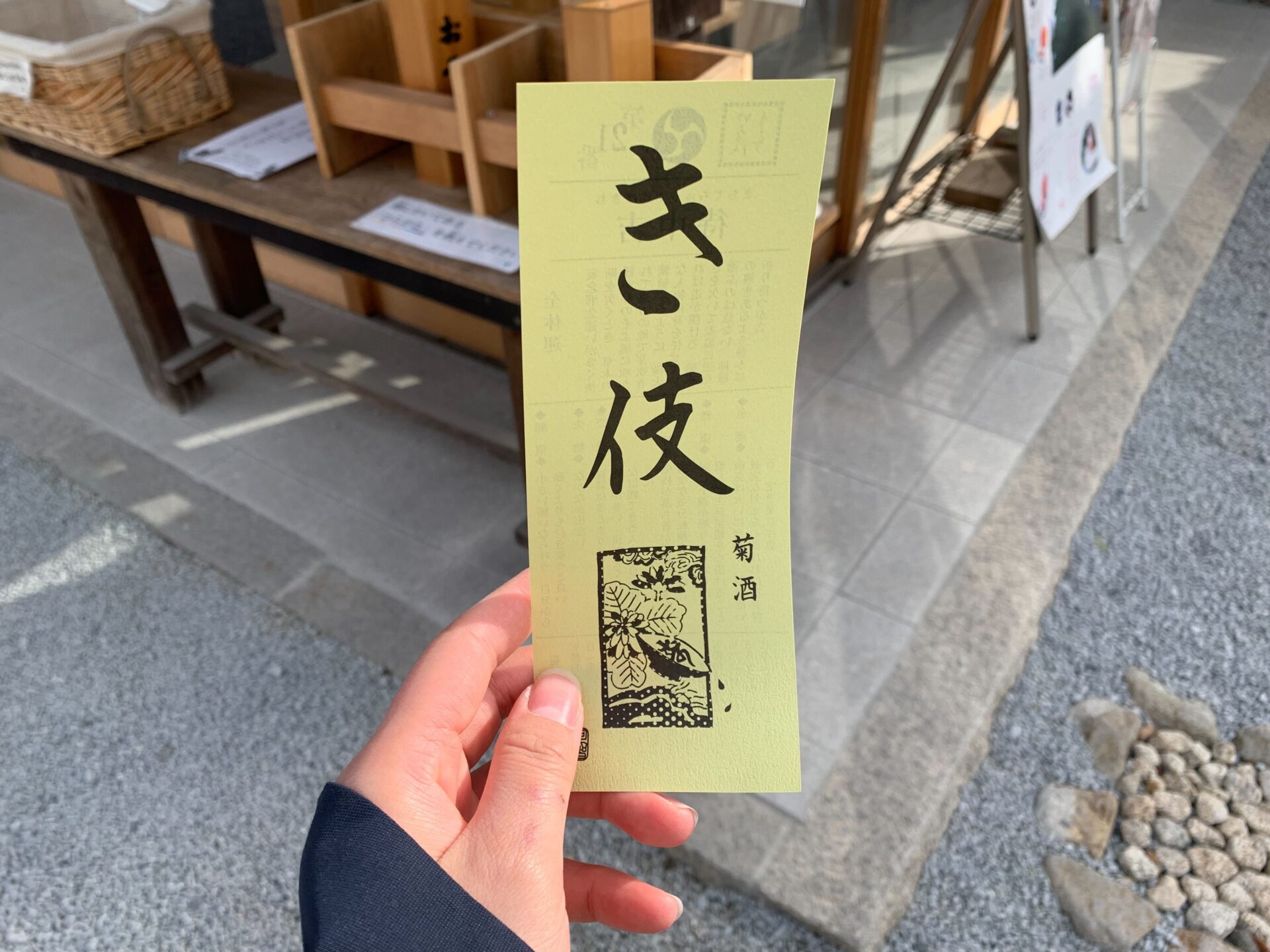
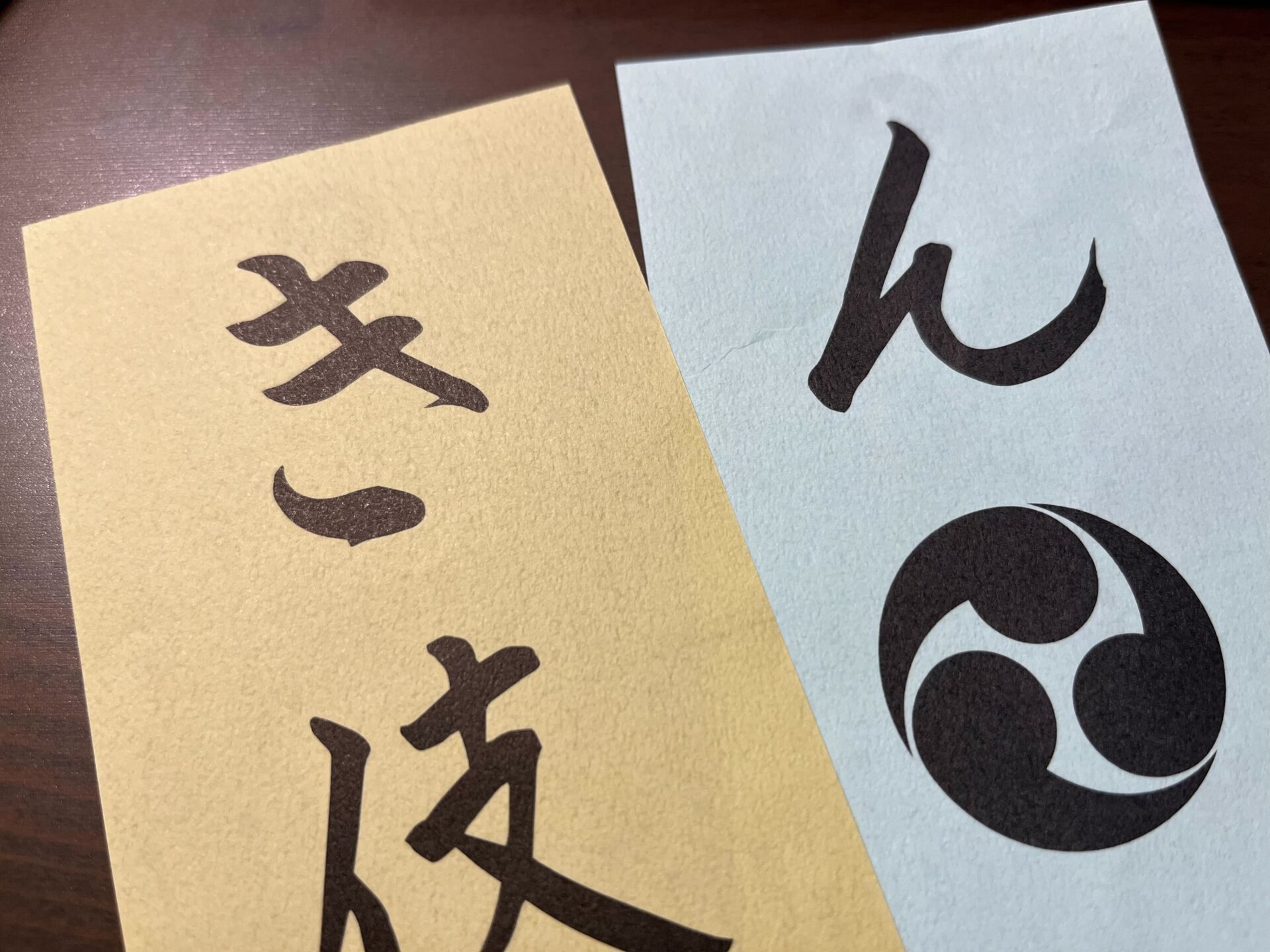
First, on the surface of Irohaura, there were the hiragana "ki," the kanji "伎," and an illustration of "kikusake" (chrysanthemum sake).
The kanji "伎" seems to be a man'yōgana (ancient phonetic script), and there is a new discovery that this character is used for "ki".
The illustration of "kikusake" is cute, resembling a hanafuda (flower card).
Next, let's look at the back side.
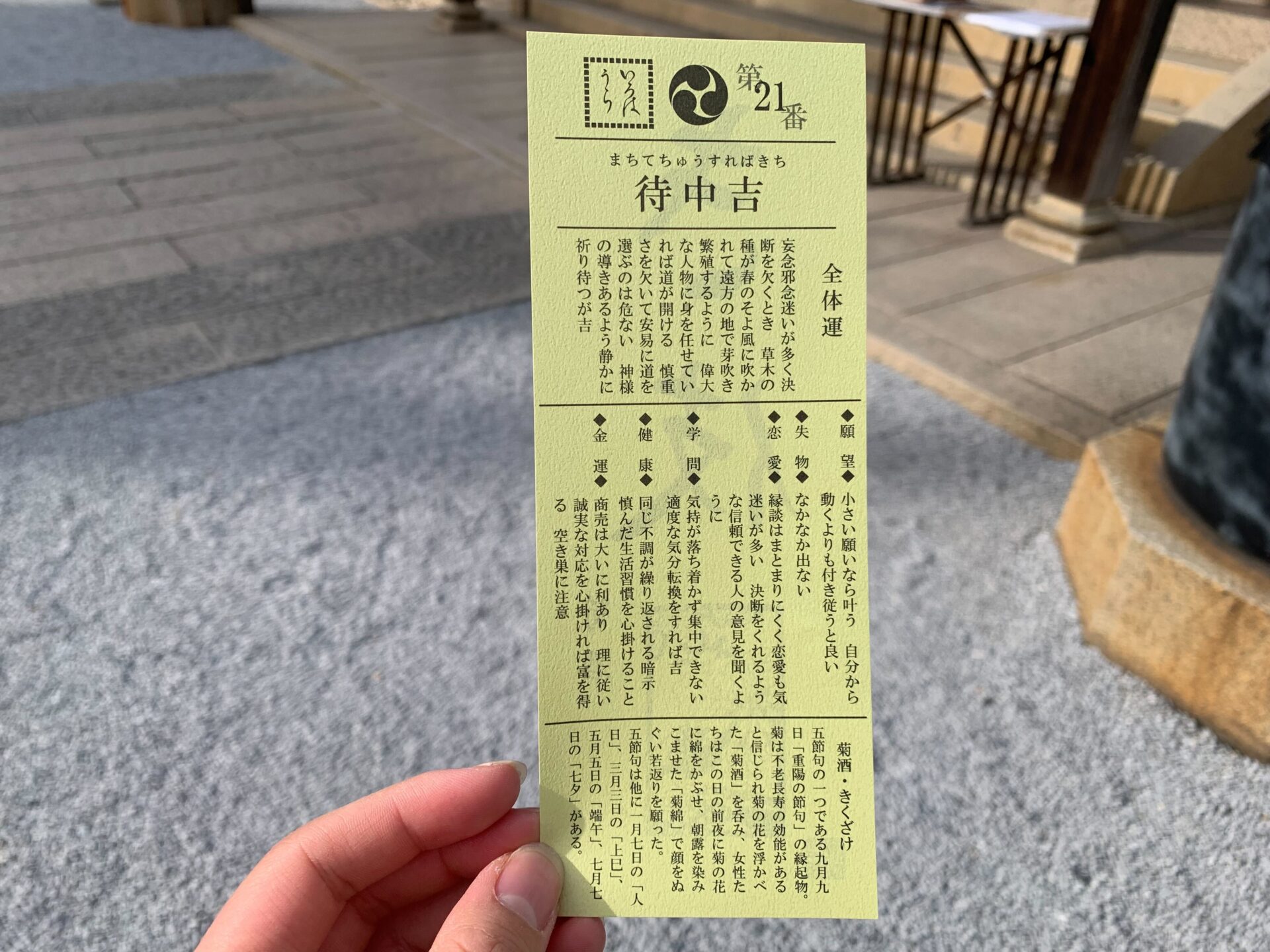
On the back, there was a fortune written, as expected for an omikuji. However, instead of the usual "Chukichi" (middle fortune), it was a fortune I had never seen before called "Machichukichi" (if you wait, good fortune will come).
When I spoke with the people at Achi Shrine, they mentioned that there are many types of fortunes, and rather than judging fortunes solely by the characters like "kichi" (good) or "kyō" (bad), it is designed to be carefully read as a guide from the gods.
Indeed, since it is a fortune I have never seen in a regular omikuji, I feel compelled to read it thoroughly.
At the bottom of Irohaura, there was trivia related to the illustration on the front.
From the story of auspicious "kikusake," one can glimpse the lives of women in the past.
Since there are a total of 48 types of Irohaura, I want to read various patterns.
I can't help but want to collect them.
Rare 48 colors of colored paper nationwide
There are a total of 48 types of Irohaura. Remarkably, the colors of the paper also have 48 variations.
Omikuji made with different colored paper for each type is quite rare even nationwide.
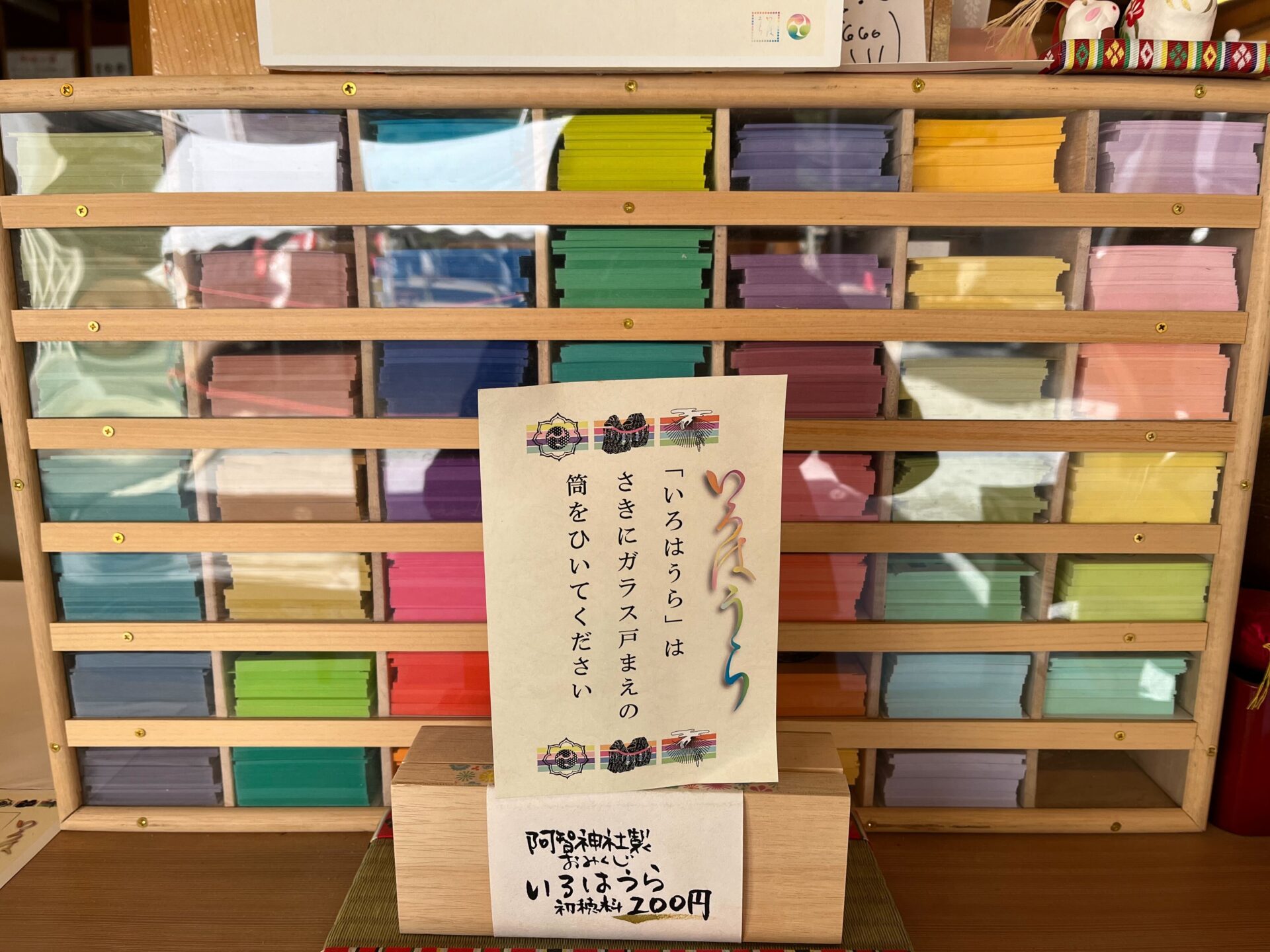
The "ki" that I drew this time was a light yellow.
I wonder if this color is because of the yellow "ki," or if it came from the color of the chrysanthemum... various thoughts come to mind.
During the New Year, a temporary tying place is set up, and colorful Irohaura are tied all over. If you encounter a vibrant scene at the start of the new year, it seems like a wonderful start to the year.
Additionally, another thing that caught my attention was the texture of the paper.
Irohaura uses paper with a slight texture, unlike regular omikuji. It has a washi-like texture that feels very nice to touch, making you want to take it home carefully.
How to enjoy Irohaura
Irohaura is worth reading even just for a test of luck, but I learned a new way to enjoy it from the people at Achi Shrine.
First is the illustration hunt.
The motifs depicted in the illustrations are scattered throughout the grounds of Achi Shrine, so you can explore the shrine while searching for the motifs.
On another day, I also tried this illustration hunt.
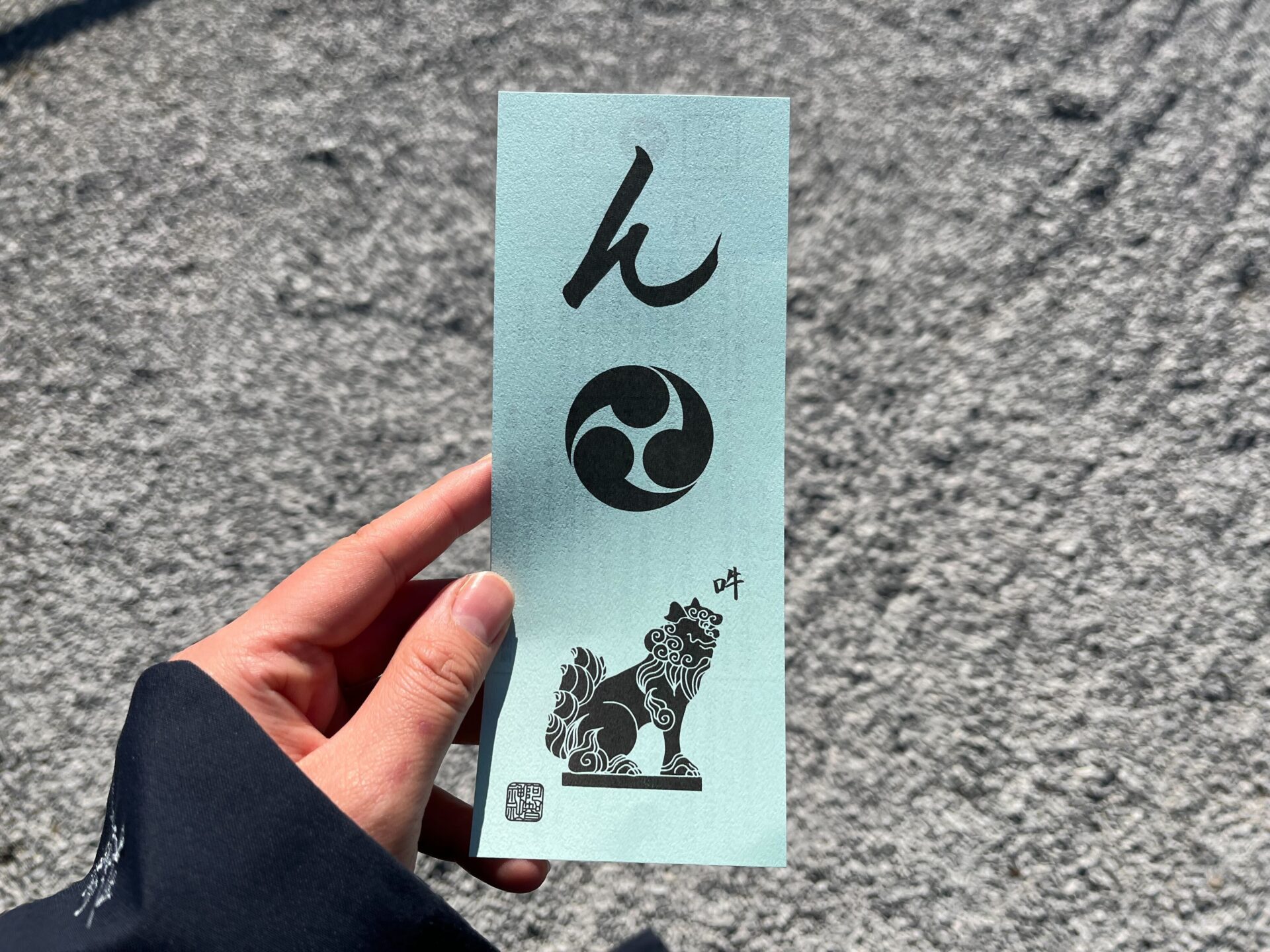
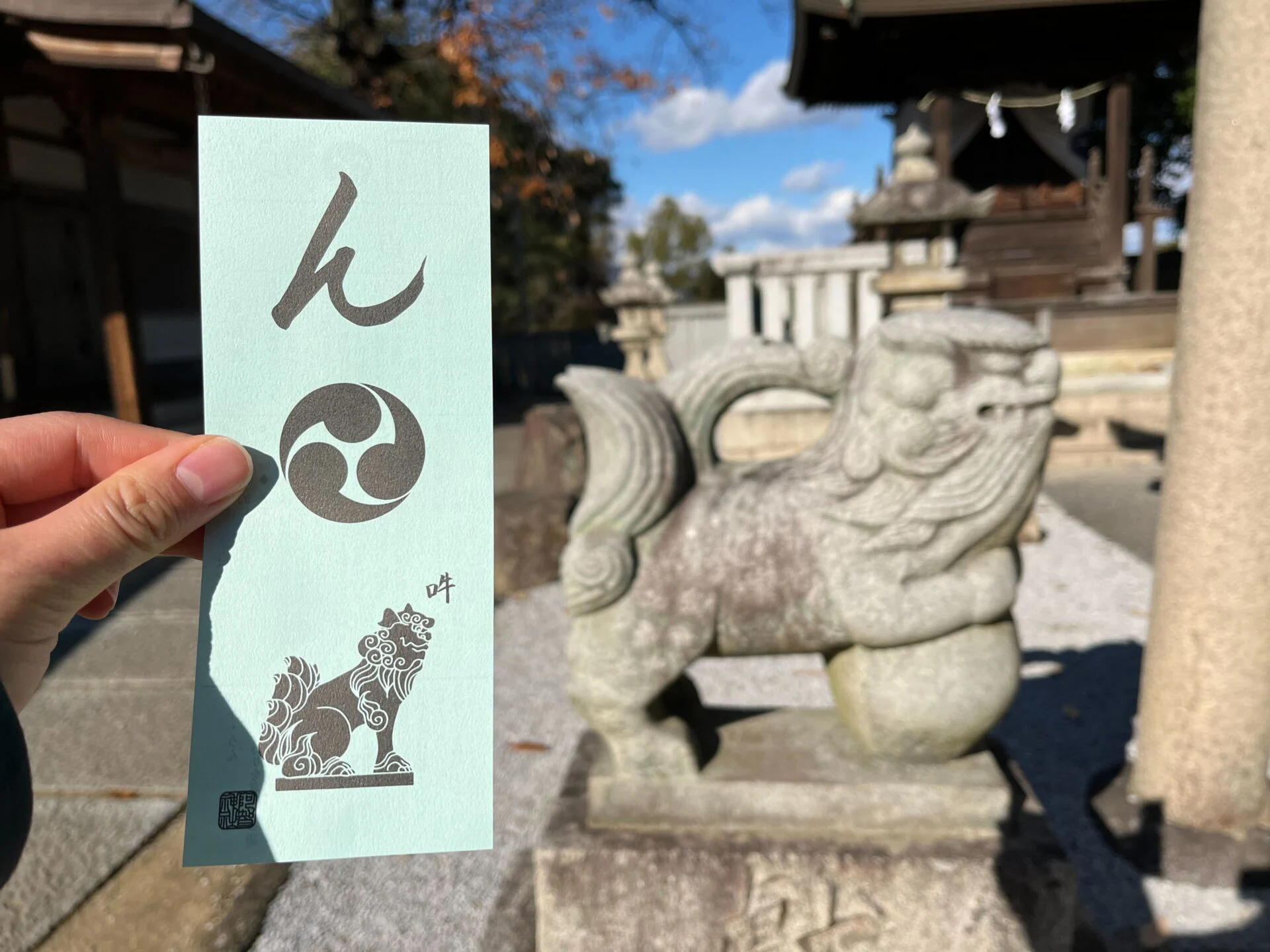
The one I drew that day was "n." The "n" has a komainu (guardian lion-dog) with its mouth closed depicted on it.
When I looked for the komainu near the torii gate, I found it right away.
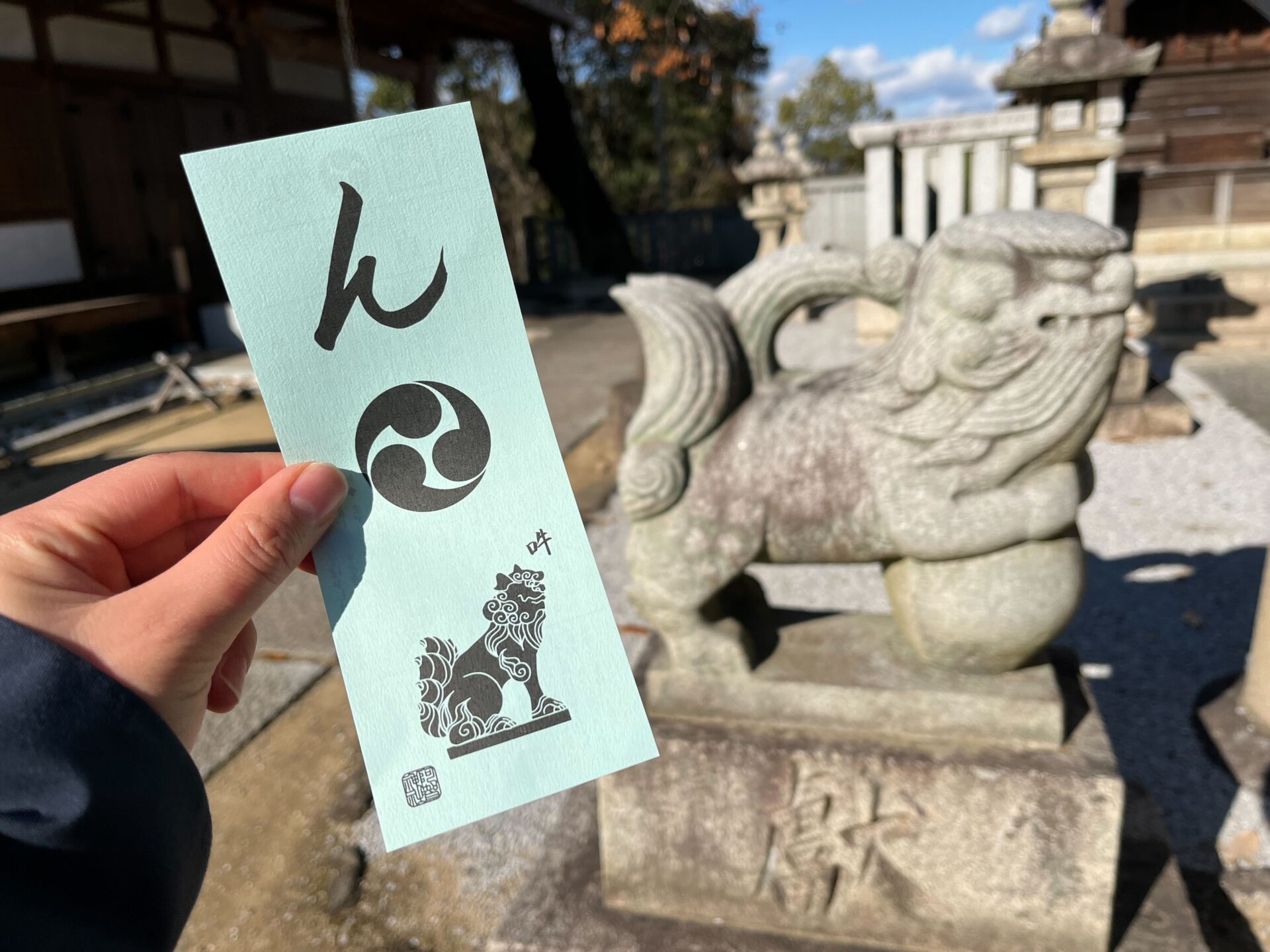
However, when I checked with the people at Achi Shrine, it turned out to be a komainu located under the Zuishin-mon gate.
By the way, the "n" has a divine crest depicted on it instead of man'yōgana, which I also discovered in the shrine grounds.
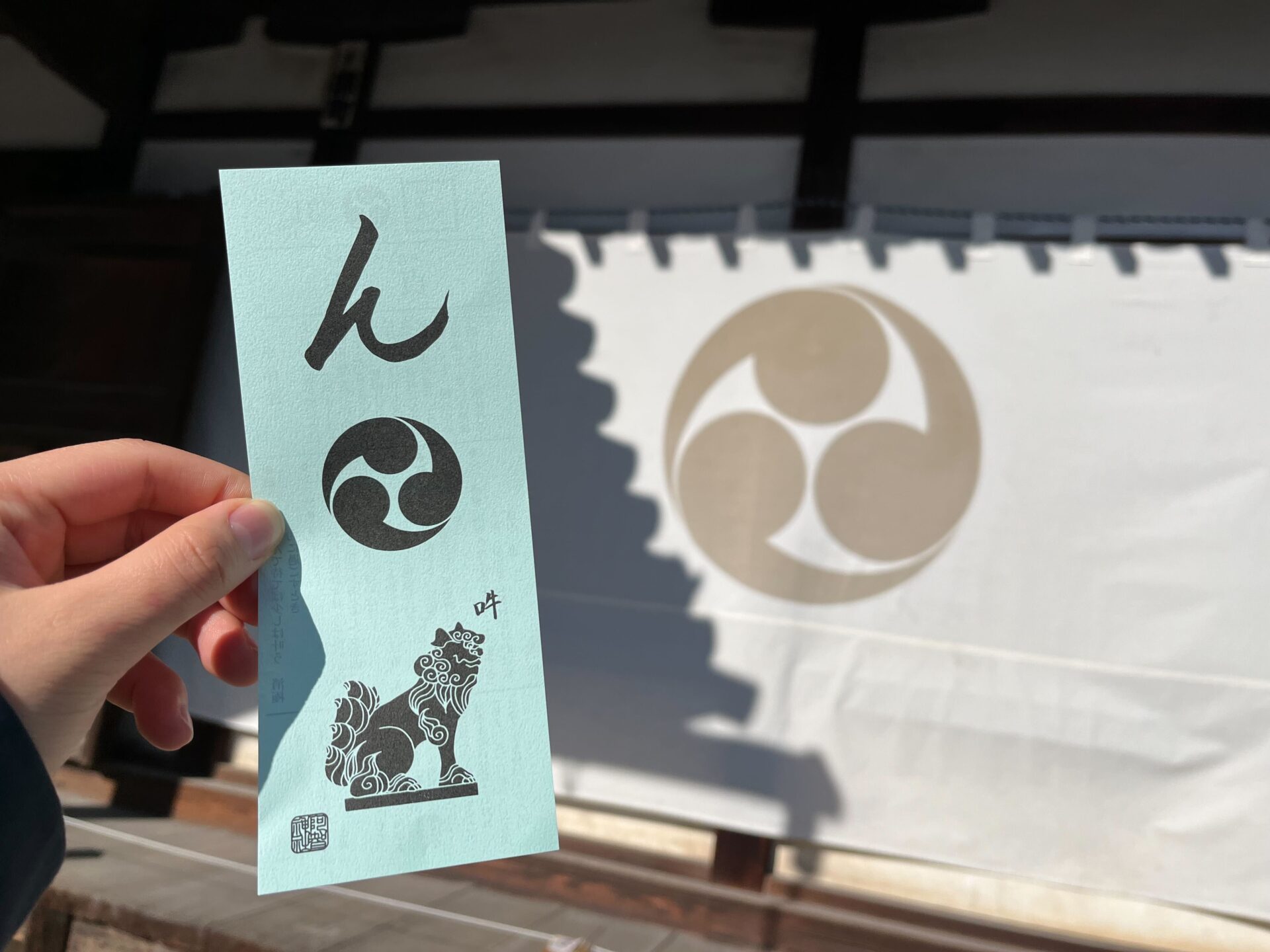
You can walk around the shrine while observing, so it's nice to take your time alone, or it could be interesting to search while discussing with someone. You might notice parts you usually overlook, and perhaps discover something new.
Also, drawing Irohaura and comparing them with family or friends seems to be quite exciting.
Some people might find that the combinations of hiragana form words like "achi" or "osushi," while others might find that the kanji from man'yōgana matches their names, leading to various topics of conversation just from the characters.
Since I drew "ki" and "n," I secretly wished that my fortune would improve...
Conclusion
The Irohaura, with its various clever designs, was a fortune slip that made visiting Achi Shrine more enjoyable and accessible.
For the author, Shinto and shrines are areas that are not often encountered in daily life, but I was able to learn about Manyogana, trivia, and fortunes that are rarely seen, providing a unique experience.
With a rich variety available, it makes you want to collect them.
For those who visited for sightseeing, I recommend drawing one as a memento of Kurashiki.
While you can enjoy it on the spot, reading it carefully after taking it home offers a different kind of fun.
Drawing, seeing, collecting, and enjoying Irohaura.
Why not try your luck in the new year with the Irohaura, filled with many details?
Articles about Achi Shrine
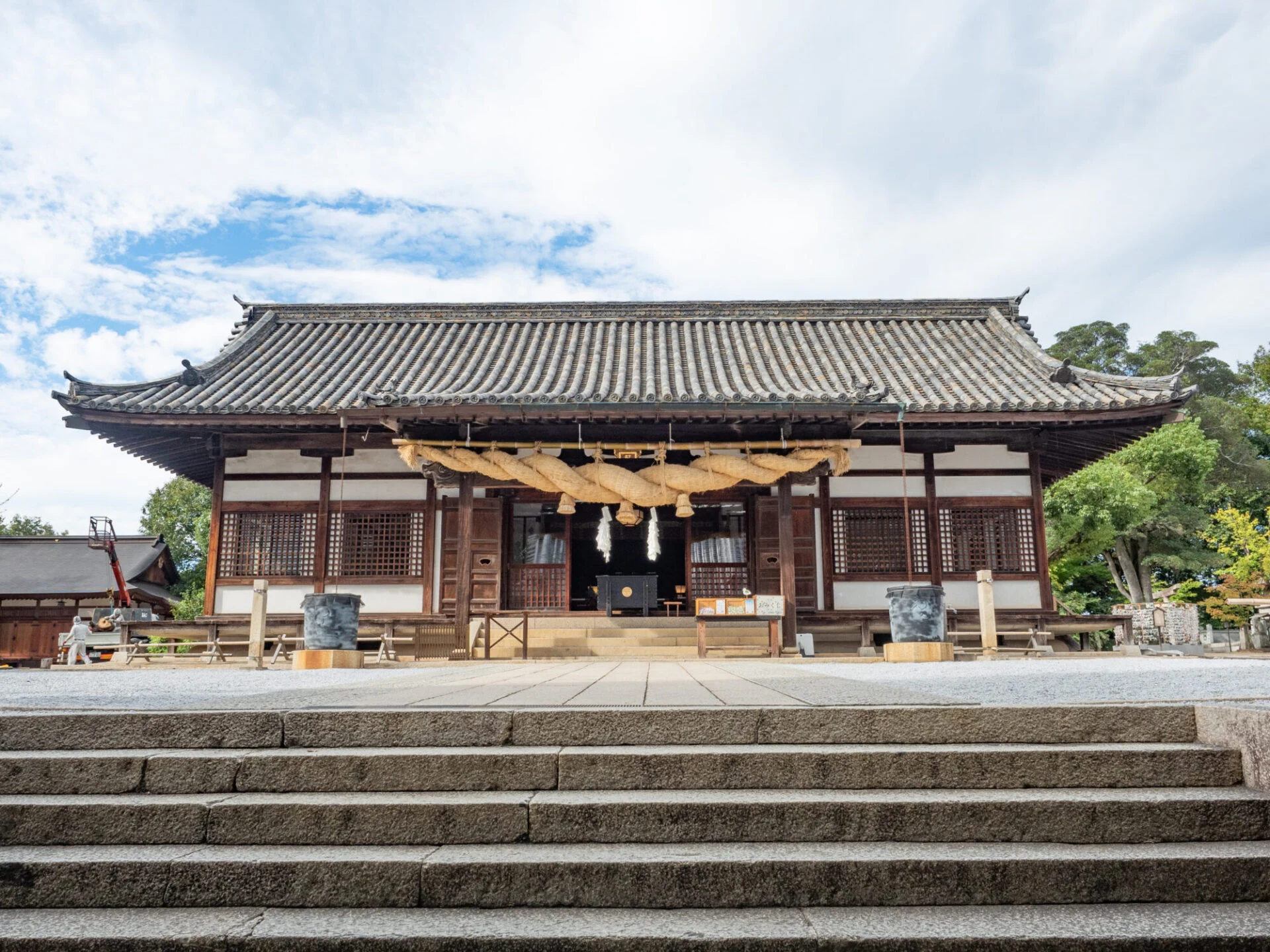

![[Achi Shrine Hatsumode] West Approach](https://media.kuratoco.com/wp-content/uploads/2020/01/23051054/achijinja-hatsumoude_01.jpg)
Data on Achi Shrine Irohaura
| Name | Achi Shrine Irohaura |
|---|---|
| Location | 12-1 Honmachi, Kurashiki City, Okayama Prefecture |
| Contact | 086-425-4898 |
| Parking | Available 15 parking spaces for worshippers on the east side of the precinct. |
| Deities | Takiri-hime Takitsuhime Ichitsushima-hime |
| Benefits | Safe navigation Traffic safety Improvement in performing arts Skill enhancement Business prosperity Beauty and health |
| Goshuin (offertory fee) | Available (500 yen) |
| Visiting Hours | Open for visits at any time |
| Reception Hours | Gift shop: 9 AM - 5 PM Worship: 9 AM - 4 PM |
| Closed Days | None |
| Admission Fee | None |
| How to Pay Admission and Offertory Fees |
|
| Restroom | Barrier-free restroom |
| Website | Achi Shrine | Located in Honmachi, Kurashiki City, Okayama Prefecture |