The cherry blossom viewing season, which began with the Kawazu cherry blossoms that reached their peak in early March, has come to an end, and the season of "Wisteria" (the city flower of Kurashiki City) has arrived.
At Achi Shrine, located in the Bikan Historical Area, the "Wisteria Viewing Association" is held every year to enjoy the Akebono wisteria, a natural monument designated by Okayama Prefecture, known as "Achi no Fuji".
This year's (2024) "Wisteria Viewing Association" will take place over two days, on April 20 (Saturday) and April 21 (Sunday), slightly earlier than usual.
Having moved to Kurashiki as a regional revitalization cooperation team member in December 2023, I participated in the "Wisteria Viewing Association" on the 21st to enjoy the wisteria flowers I had been looking forward to.
What is the "Wisteria Viewing Association"?
The "Wisteria Viewing Association" was held over two days, on April 20 (Saturday) and April 21 (Sunday), at Achi Shrine in the Bikan Historical Area.
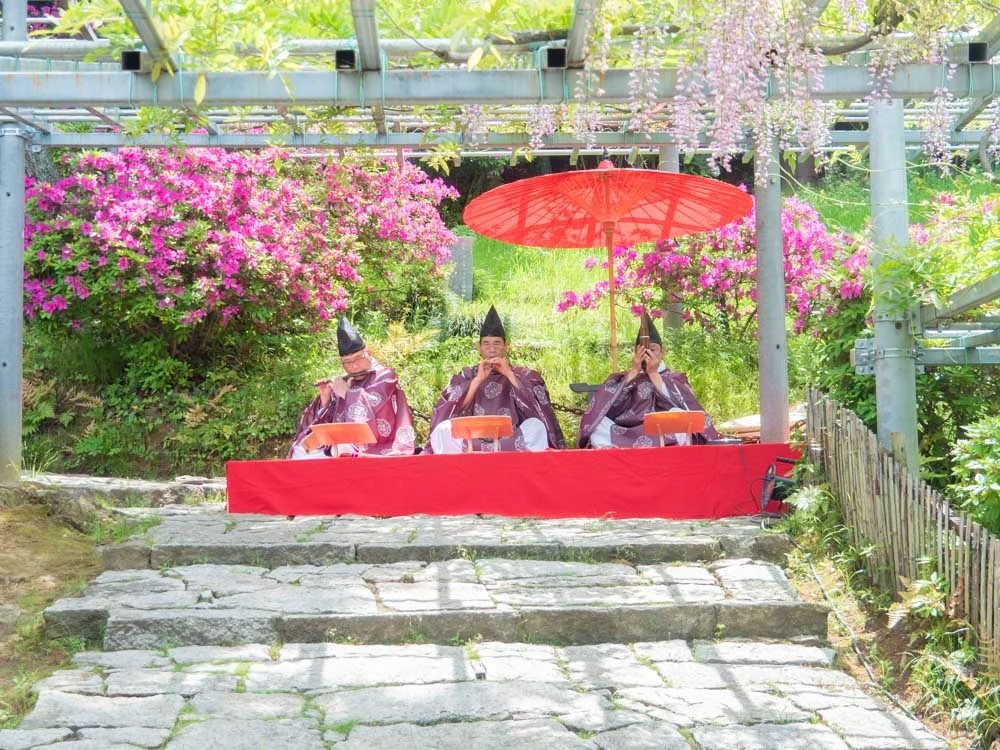
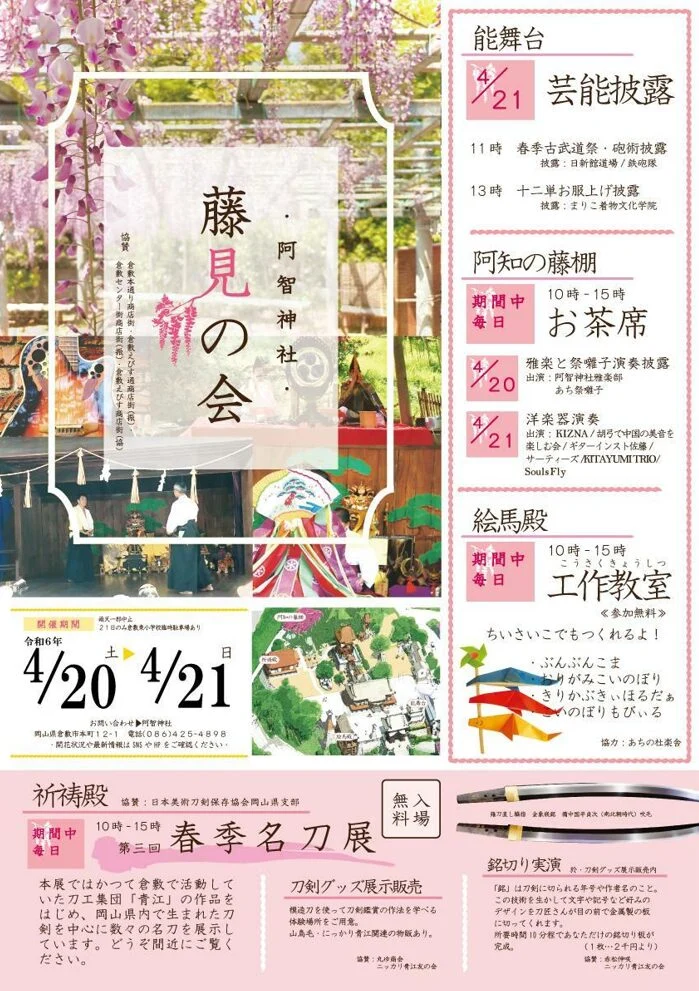
On the day of the event, visitors enjoyed tea under the wisteria trellis while admiring the "Achi no Fuji" within the shrine grounds, and they could also watch performances on the Noh stage.
Please check the following images for details of the program.
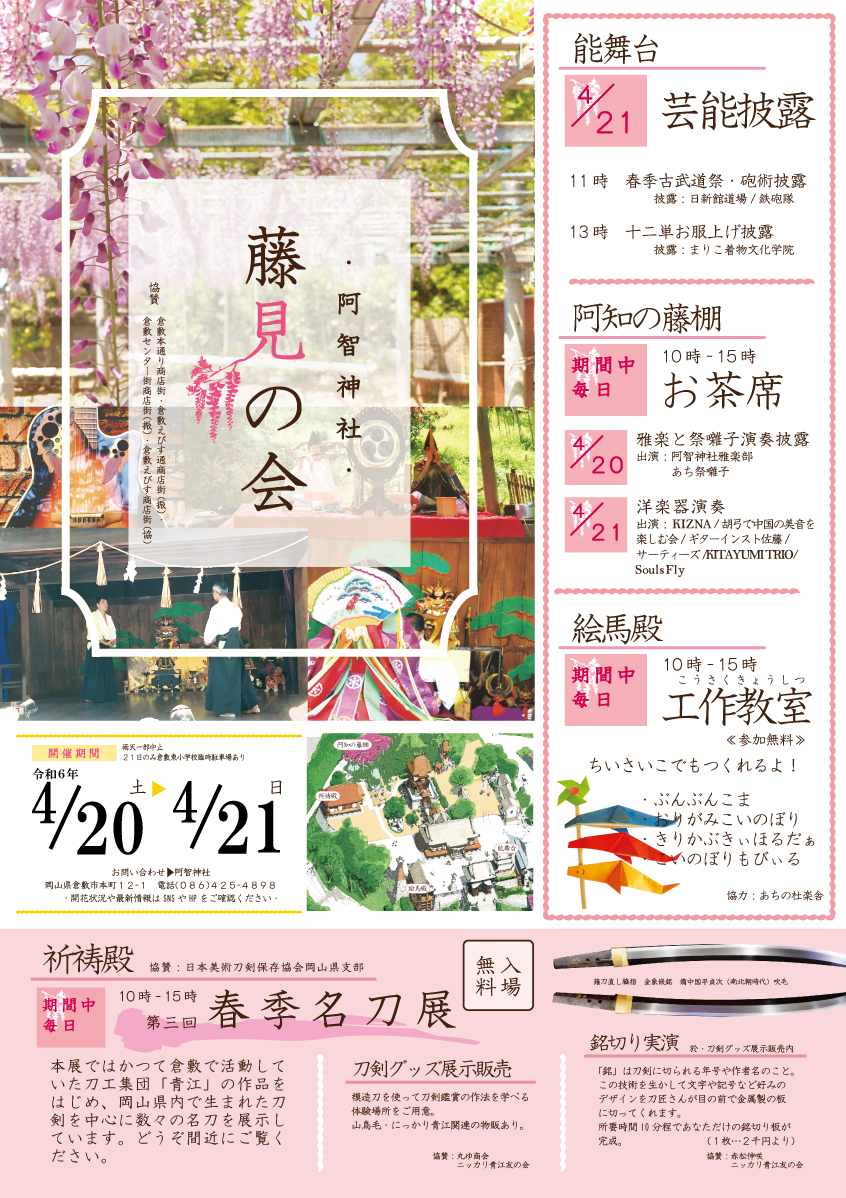
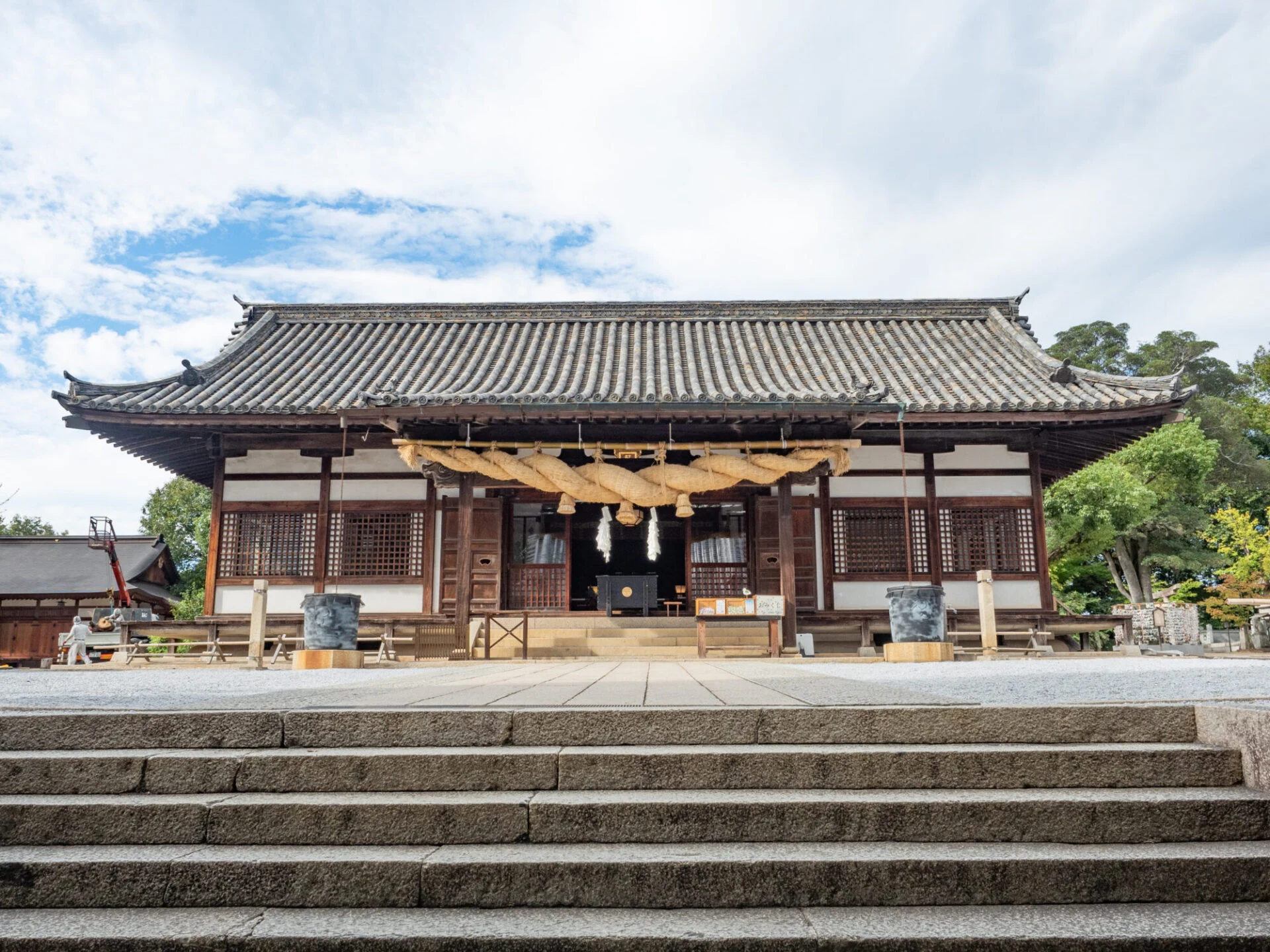
Venue Overview
On April 21 (Sunday), a Spring Traditional Martial Arts Festival was scheduled to be held on the Noh stage starting at 11 AM, so I headed to Achi Shrine in time for the start.
It was a cloudy day with occasional light rain, but the program proceeded as planned. The area in front of the Noh stage and the wisteria trellis was always bustling with people, many of whom were seen taking photos and videos with cameras and smartphones.
Performance
Upon arriving at the Noh stage, the Spring Traditional Martial Arts Festival by the Nisshinkan Dojo had just begun.
Performers wielding Japanese swords demonstrated their skills one after another.
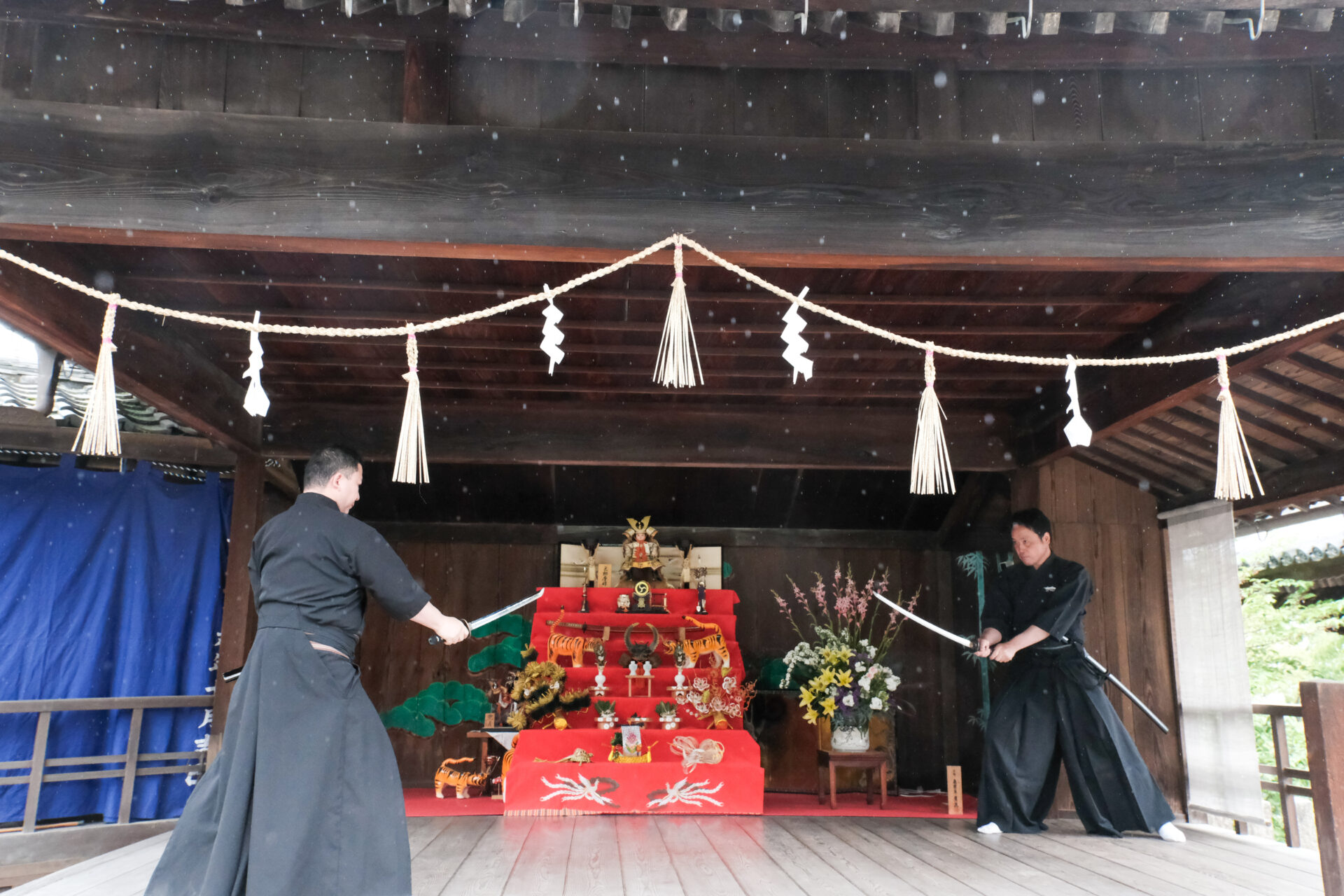
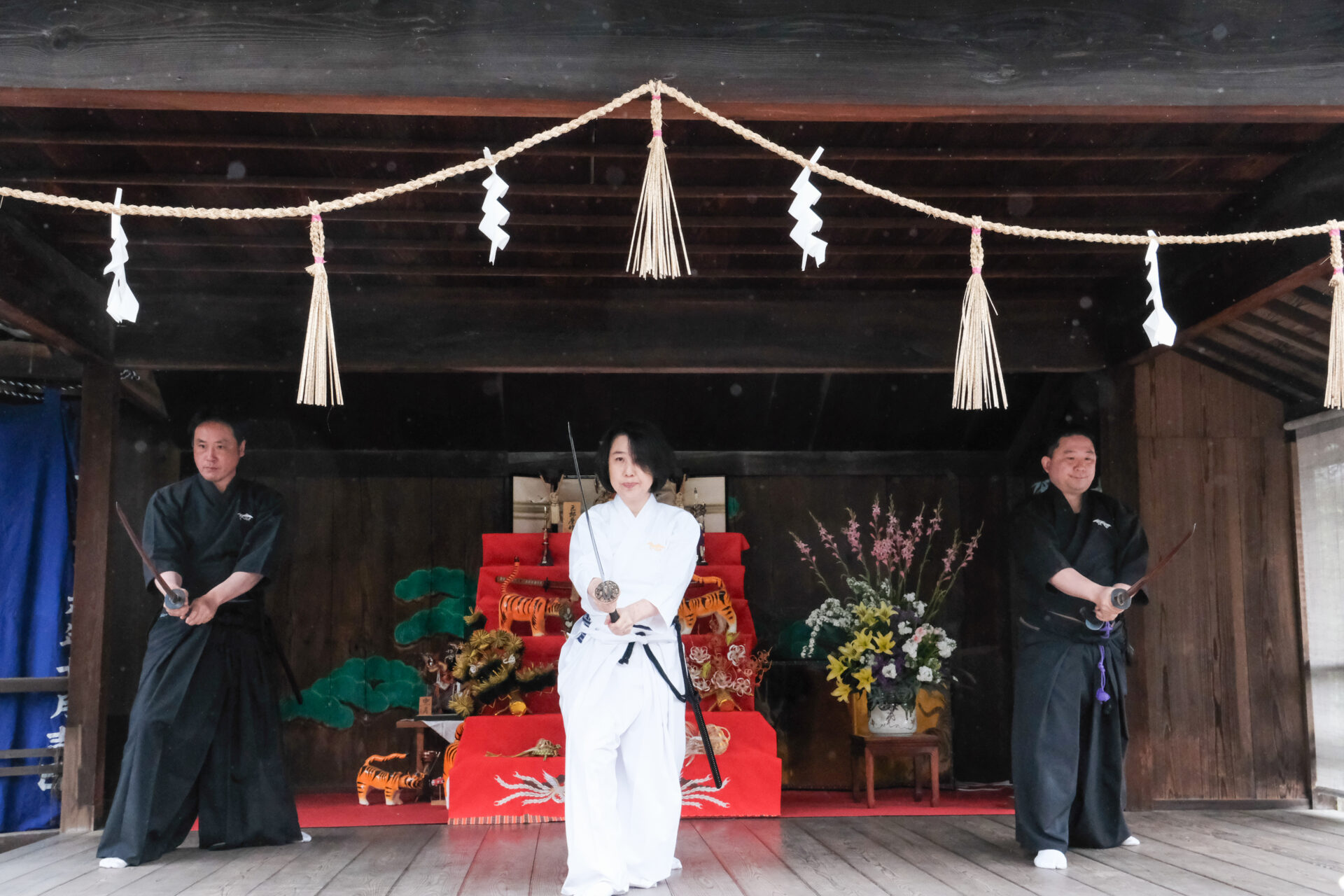
The Noh stage displayed May dolls, which matched well with the powerful performances.
Next, three women dressed in armor appeared, each holding a matchlock gun.
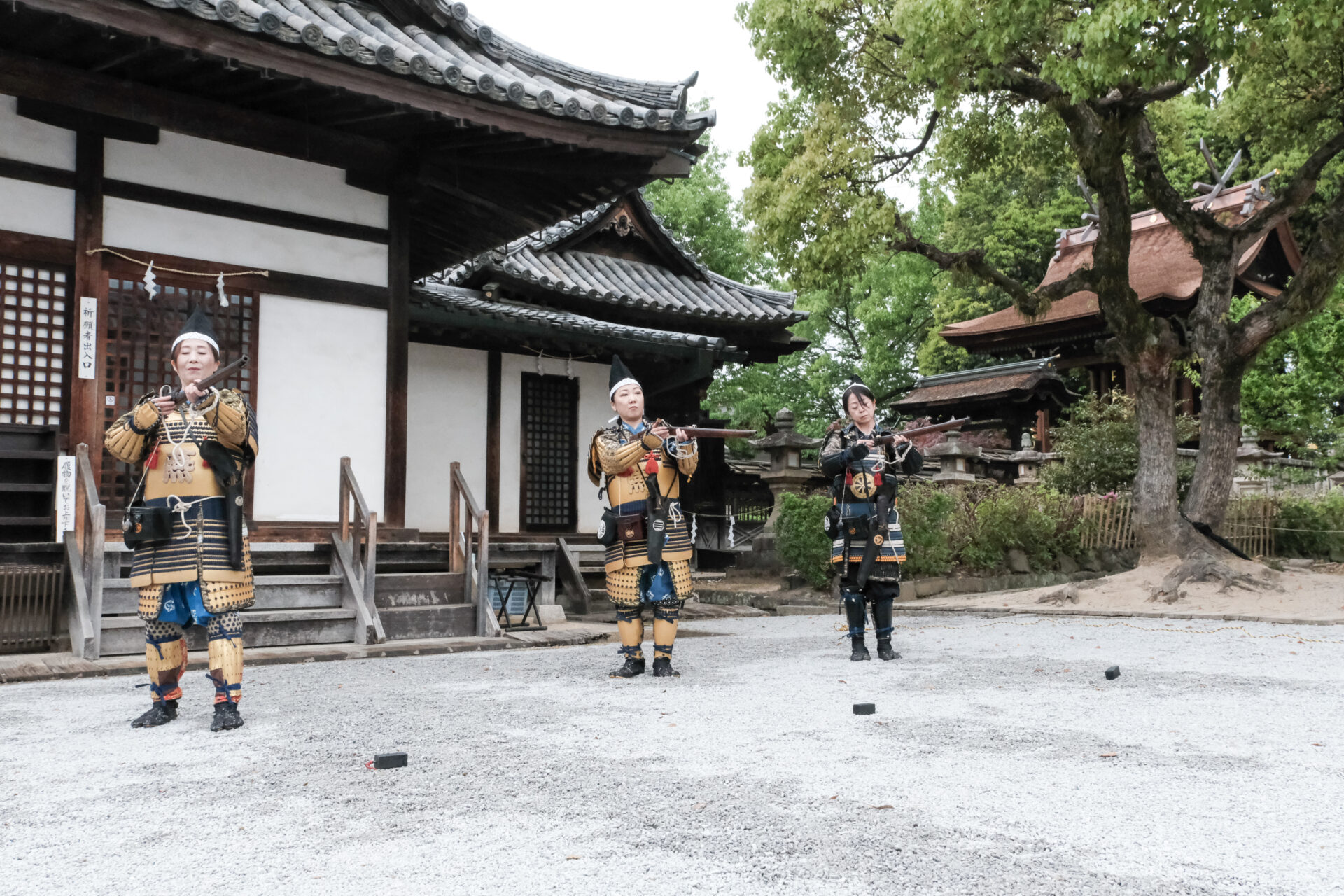
It was my first time seeing a real matchlock gun, so I wanted to take a closer look and watched from the front.
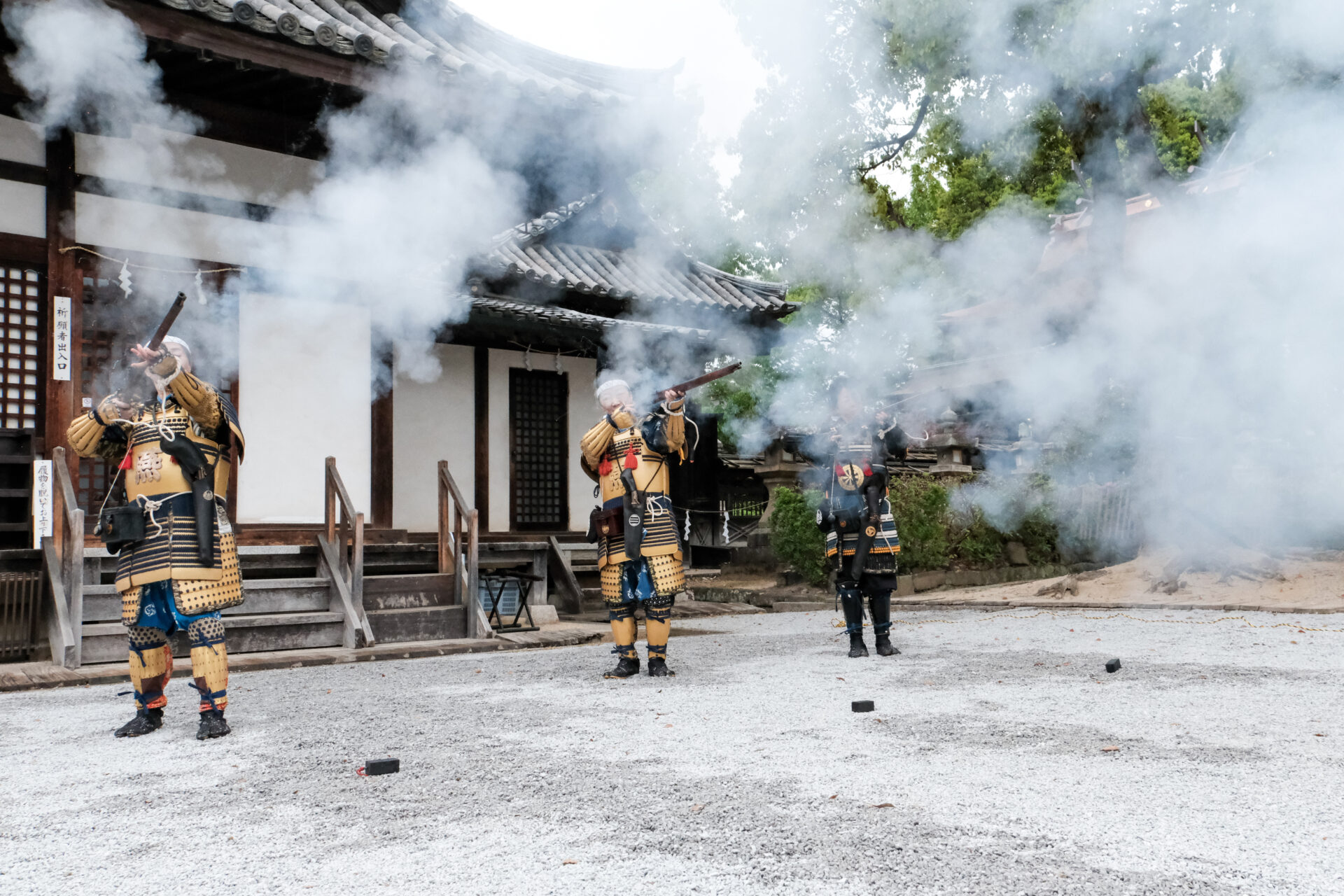
With a shout, the matchlock gun was fired with a "bang." A large vibration resonated throughout my body, and I was surprised.
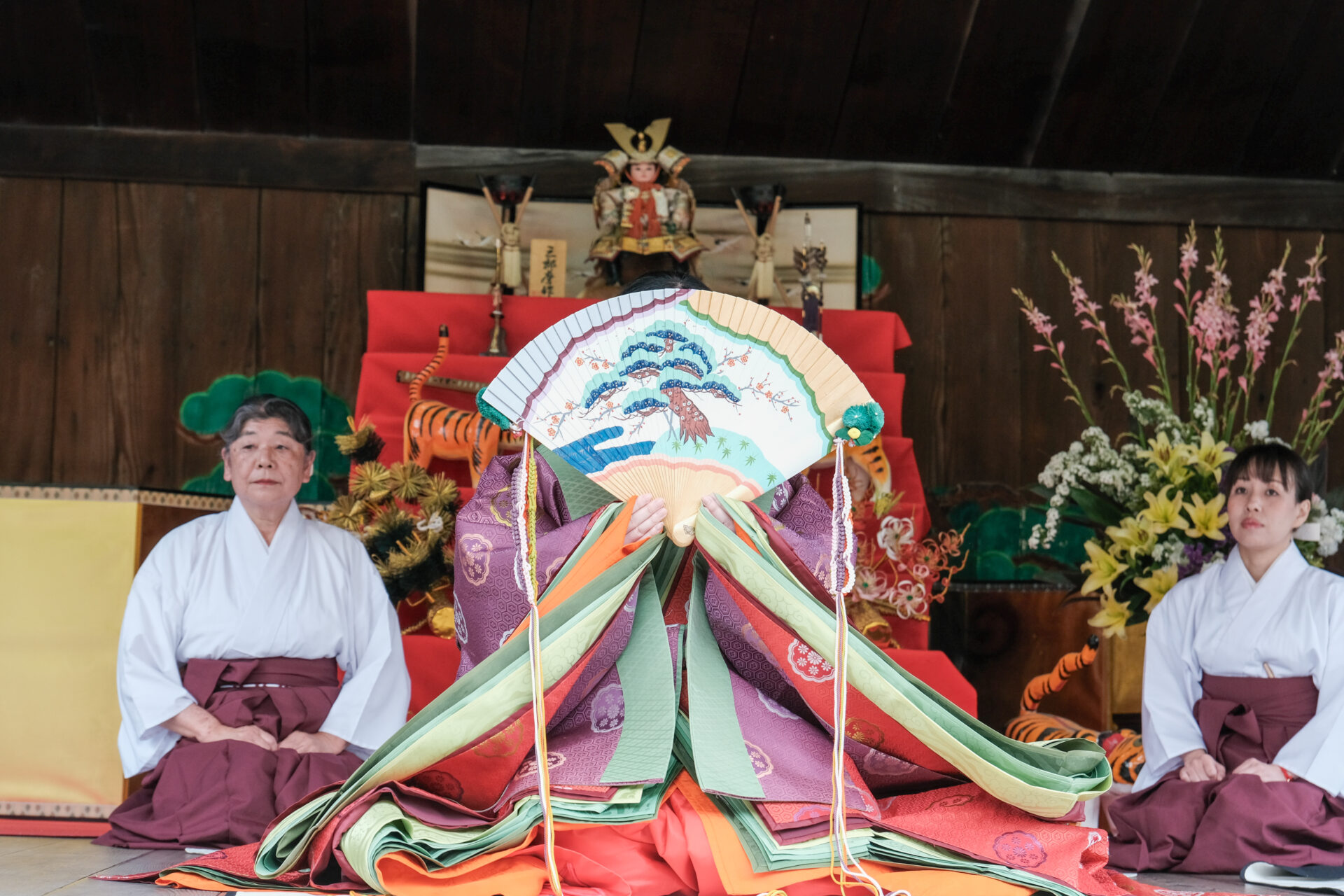
After a short break, at 1 PM, a demonstration of the Juni-hitoe (twelve-layered ceremonial kimono) dressing was held.
This "dressing" refers to the process of dressing someone in a Juni-hitoe.
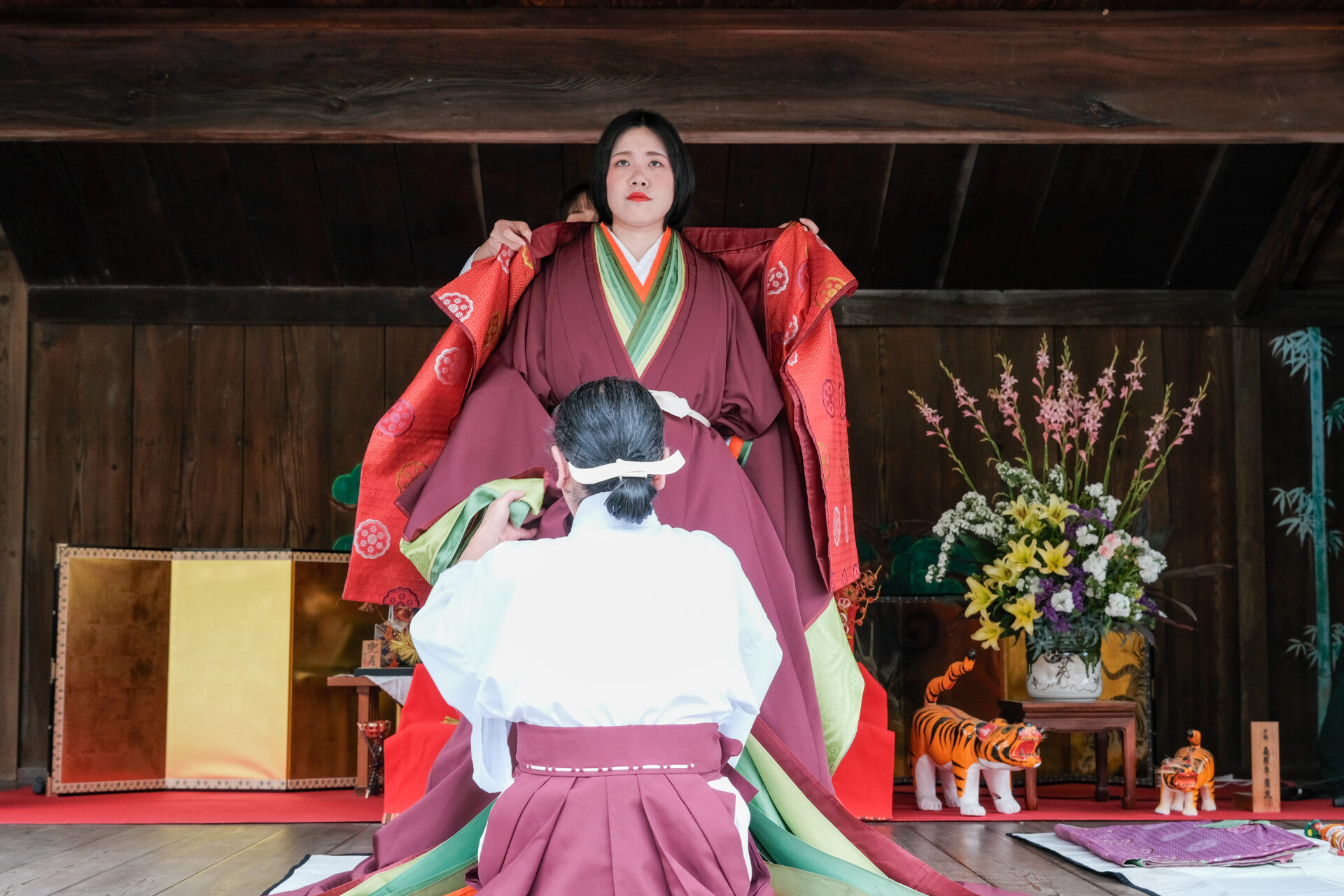
The person playing the role of the noble was a shrine maiden from Achi Shrine. The dressing was handled by the Mariko Kimono Culture Academy. We enjoyed the dressing demonstration for about 30 minutes, along with trivia and explanations about the Juni-hitoe.
The 2024 NHK Taiga drama "Hikaru Kimi e" is set in the Heian period, which was the peak of the Juni-hitoe, so the explanations about the types of kimonos and dressing were very easy to understand, using characters from the drama as examples.
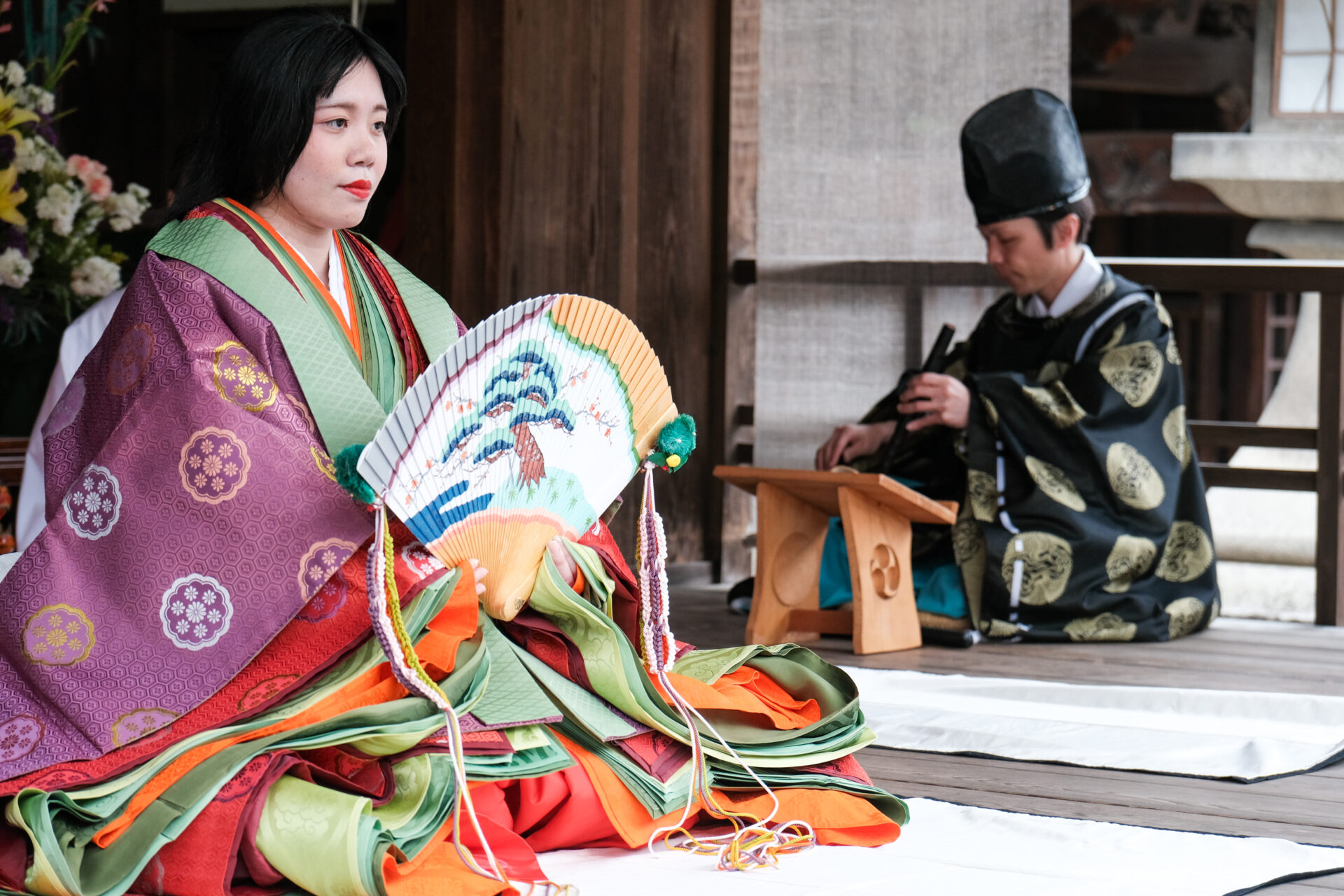
The Juni-hitoe weighs over 15 kg in total, and the shrine maiden playing the noble role also mentioned, "It's heavy."
All the performances provided a rare opportunity to see authentic traditional arts up close.
Workshop & Spring Sword Exhibition
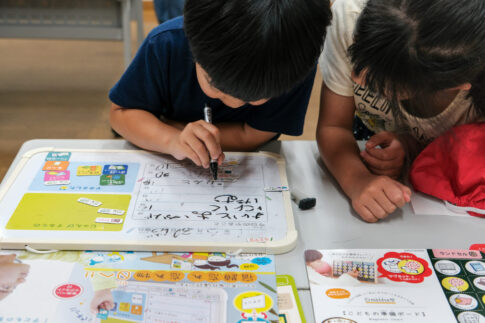
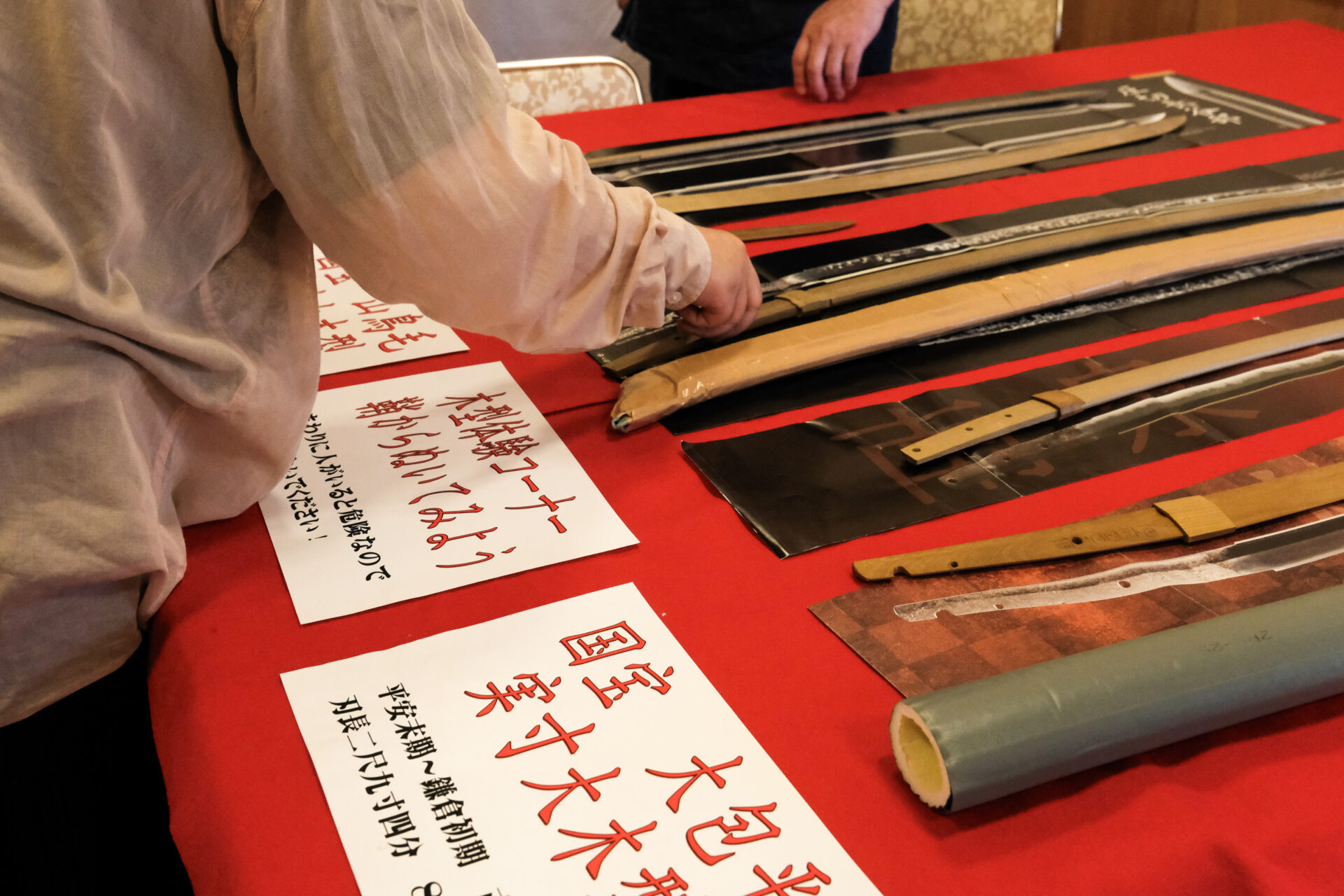
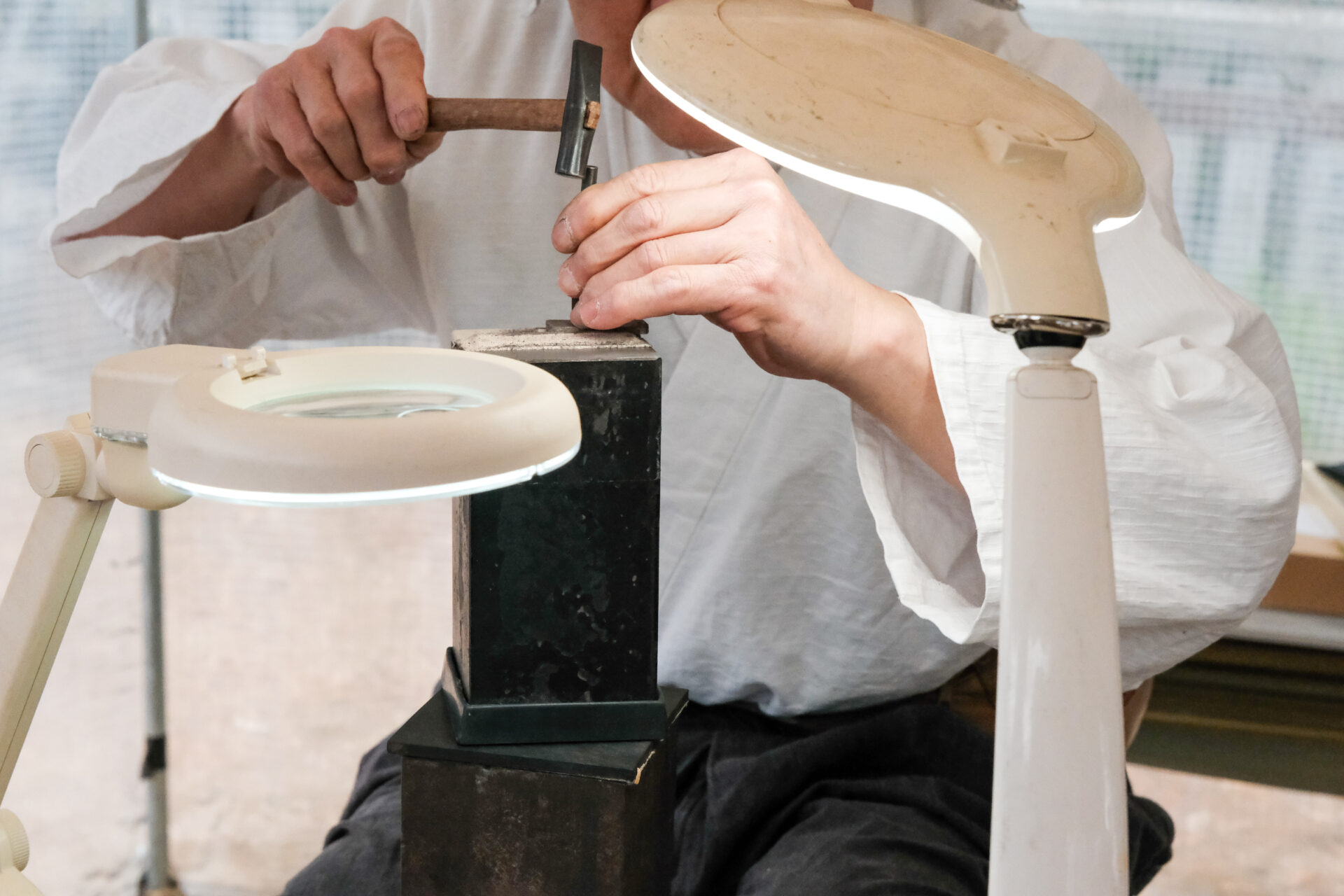
In the ema hall heading towards the wisteria trellis, a workshop was held, and in the prayer hall, the Third Spring Sword Exhibition took place.
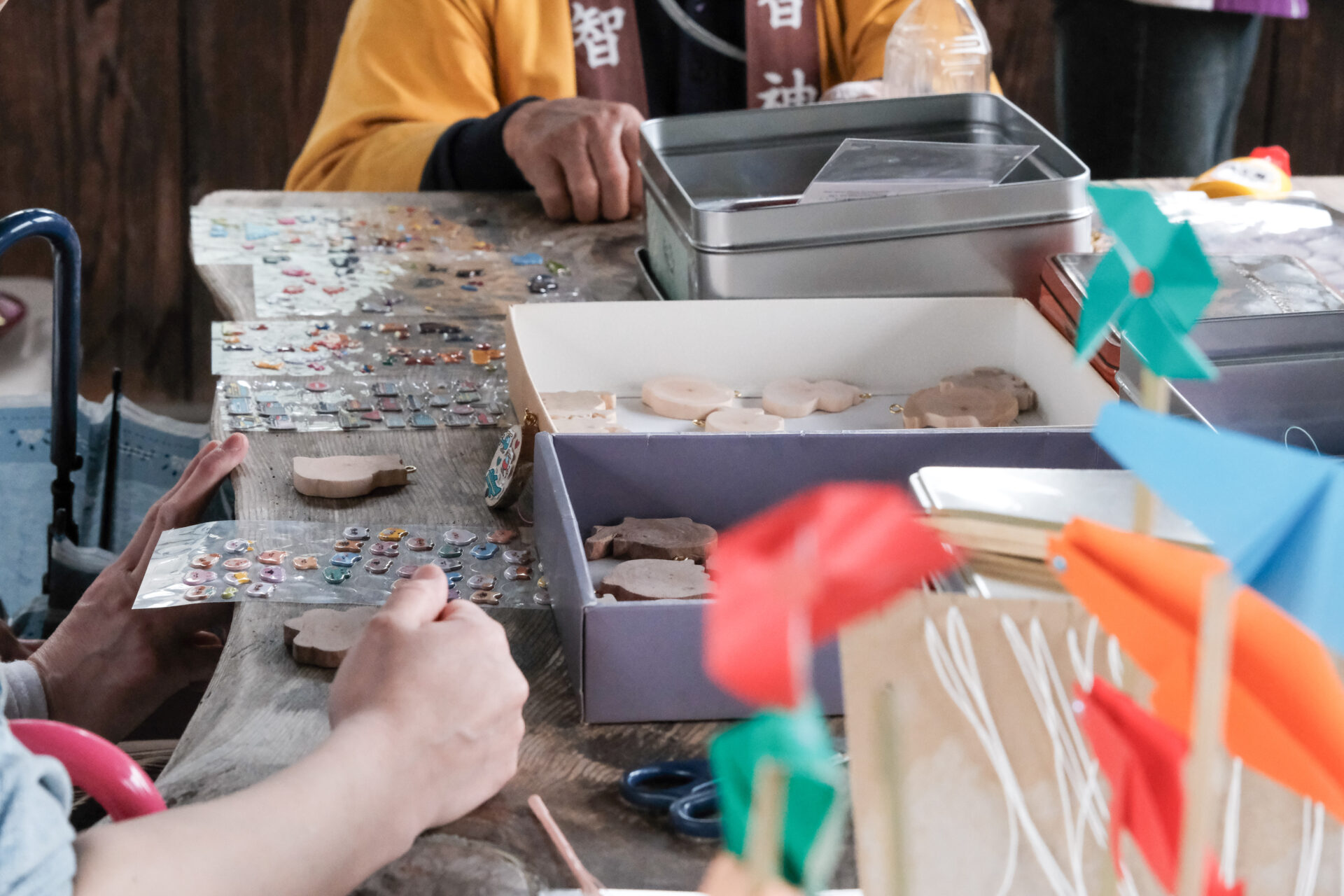
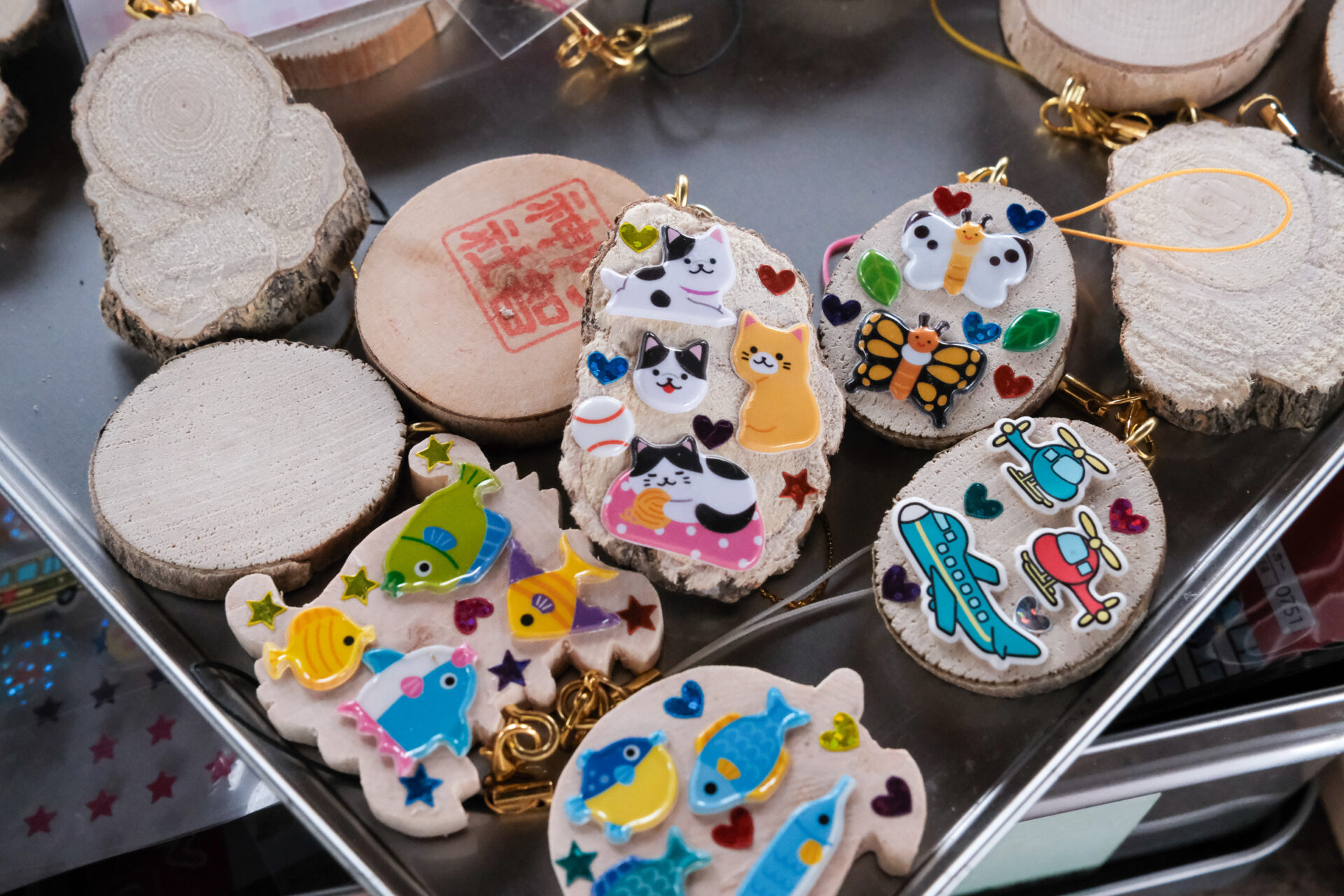
The Aoe district of Kurashiki City is also known as the Home of Swords, where many famous swords were produced in Okayama Prefecture.
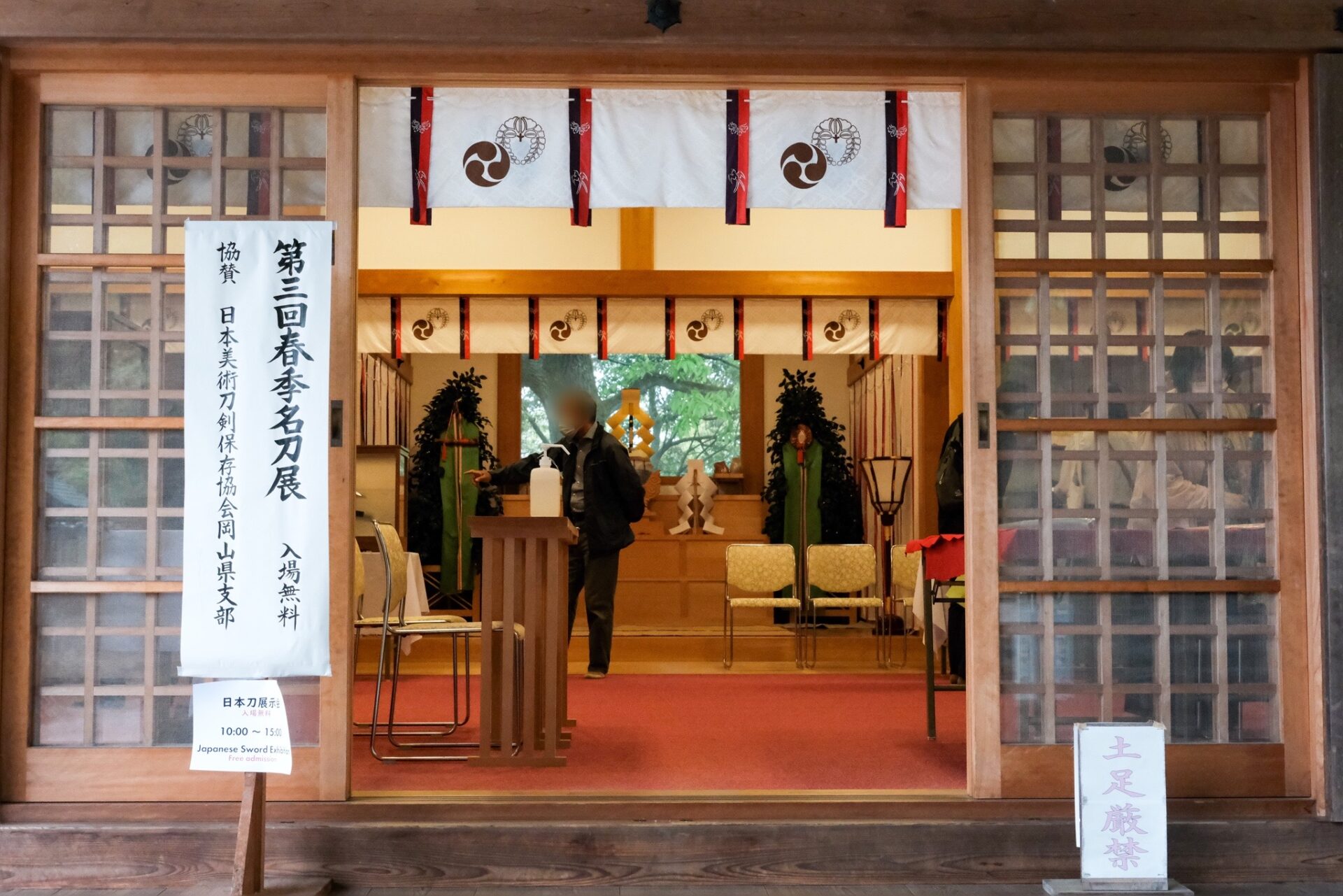
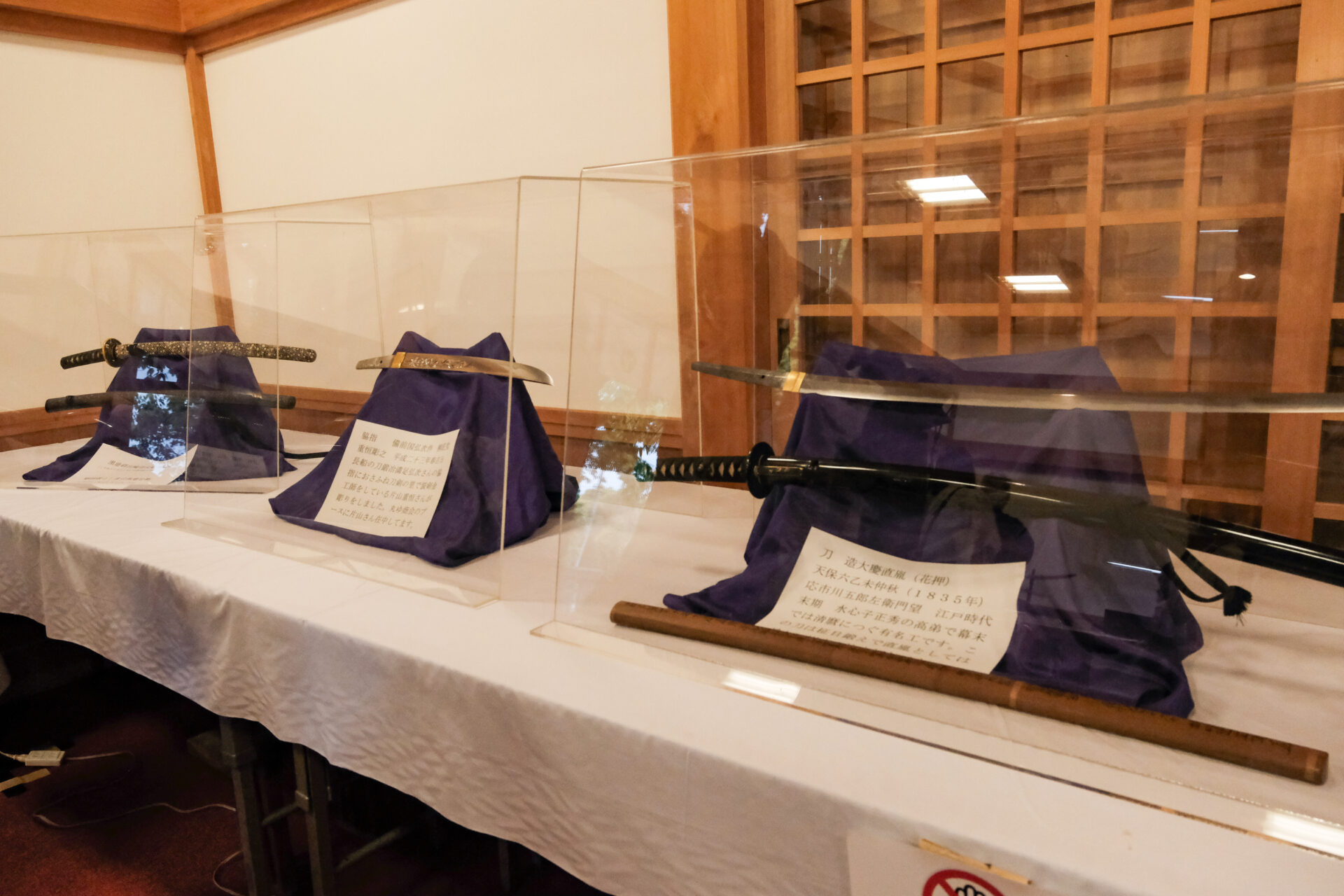
On this day, in addition to being able to see Japanese swords up close, there was also a corner where visitors could handle full-size wooden swords of "National Treasure swords," and a demonstration area for engraving names, which was also very lively.
Achi Wisteria
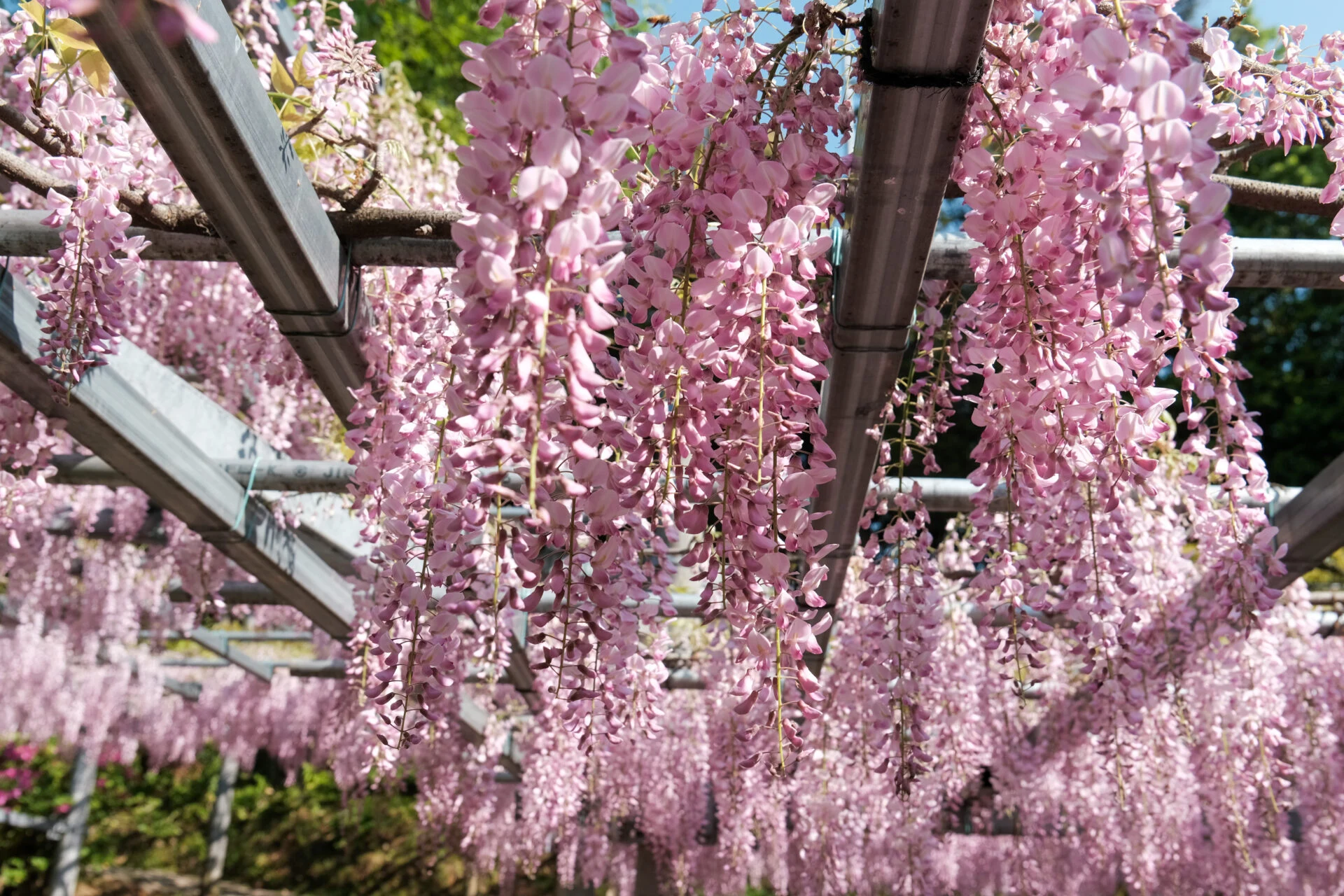
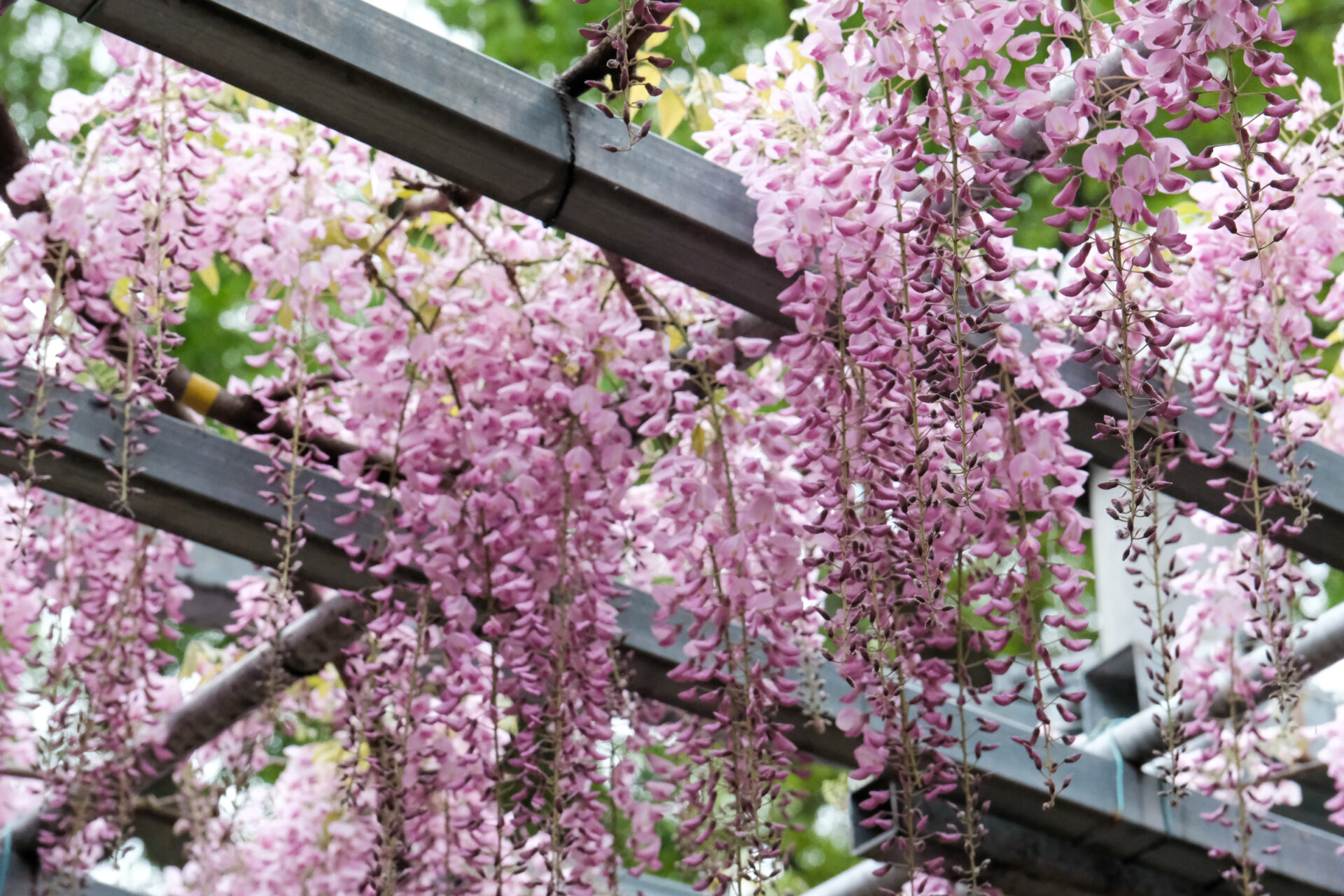
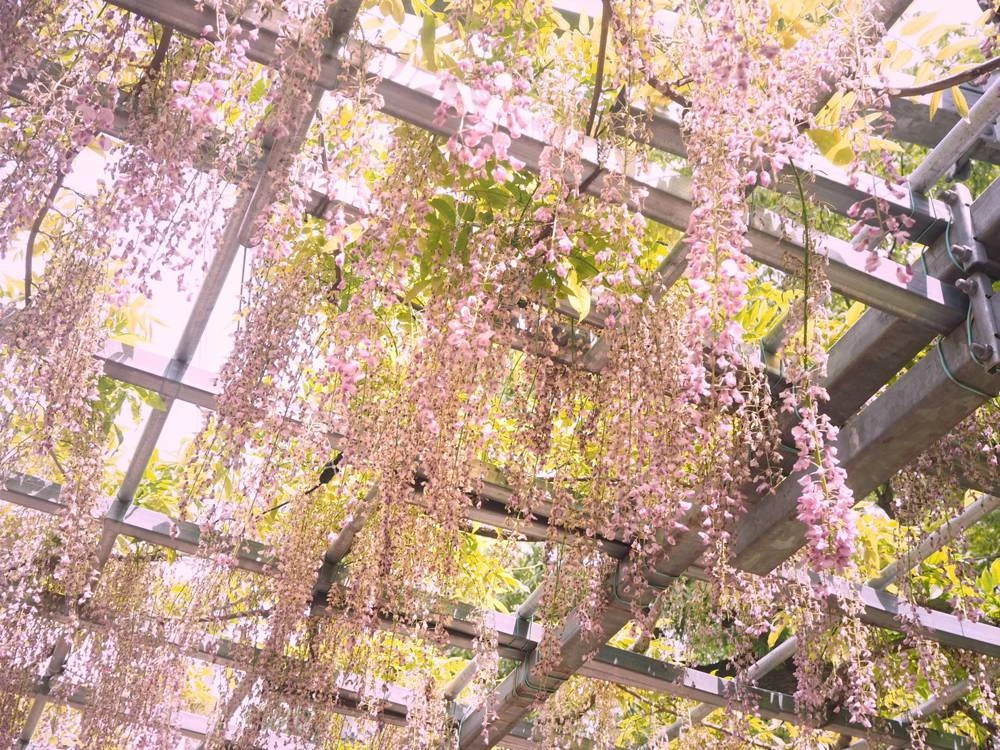
Upon arriving at the wisteria trellis, we were welcomed by the Achi wisteria, which seemed to bloom just in time for the "Wisteria Viewing Association."
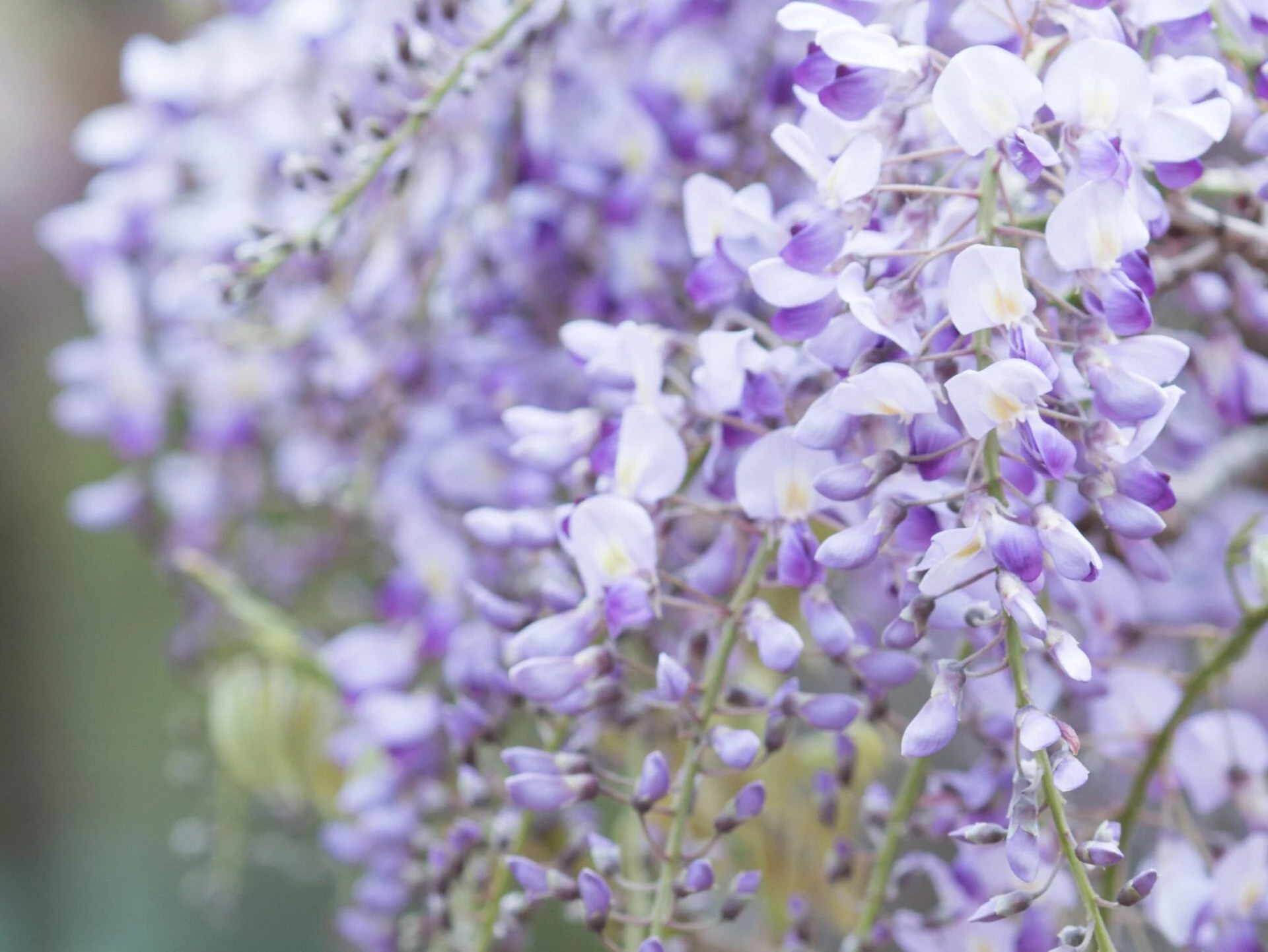
The pale and gentle-colored wisteria flowers are truly magnificent.
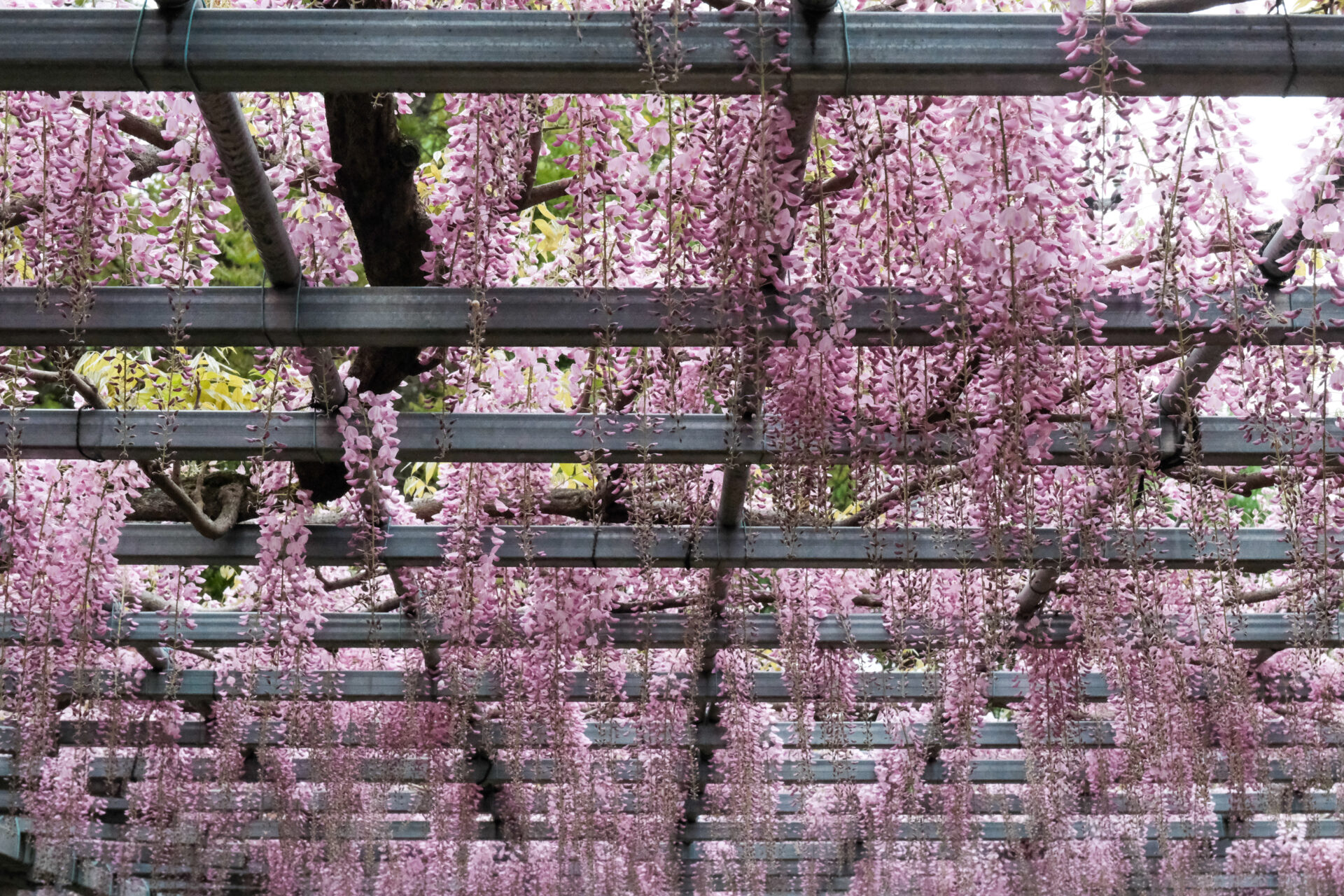
This "Achi Wisteria" is a variety called Akebono Fuji, which is between 300 and 500 years old, and was designated as a natural monument designated by Okayama Prefecture in 1956 (Showa 31).
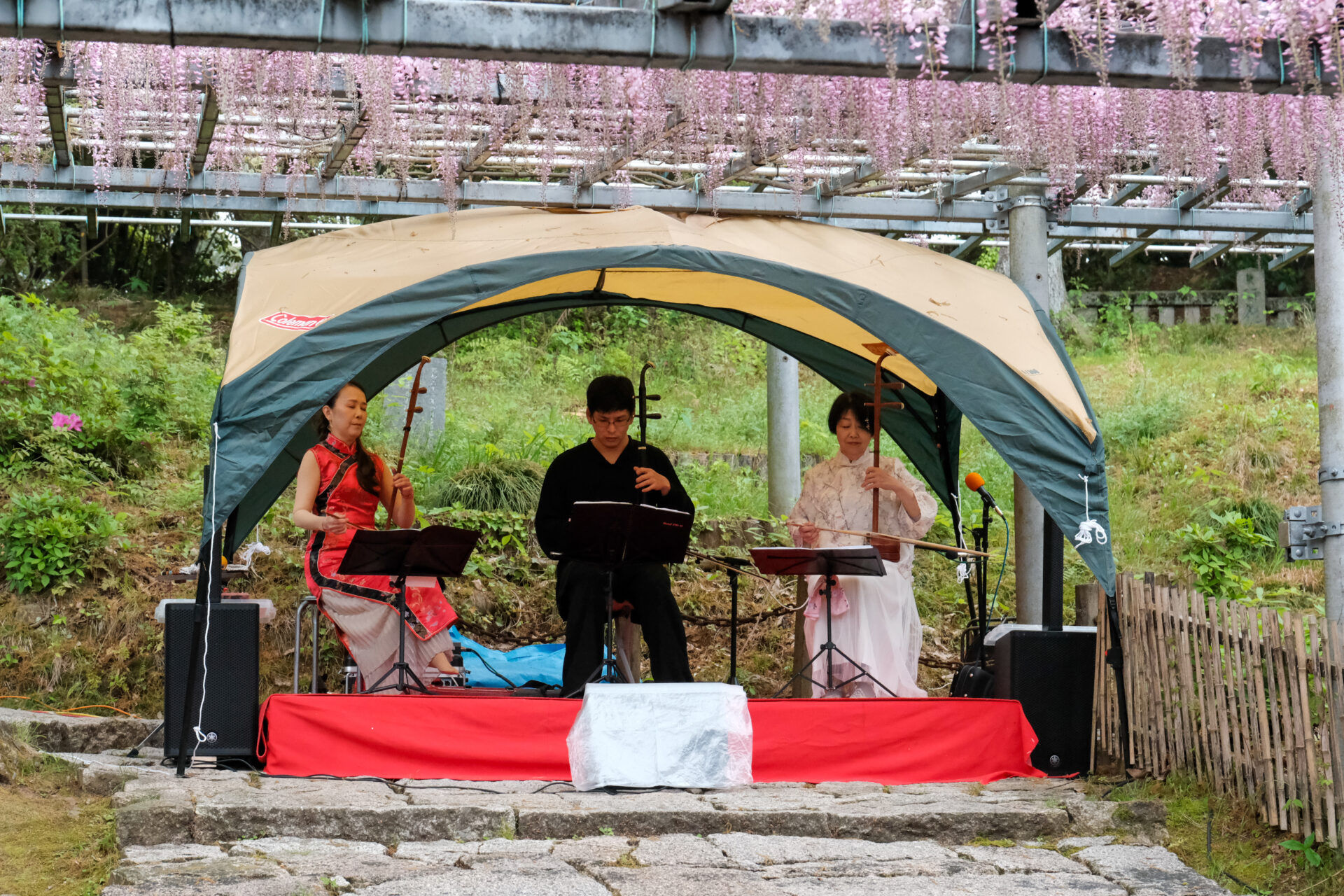

Under the wisteria trellis, performances of Western instruments, including the kokyu, and a tea ceremony were set up.
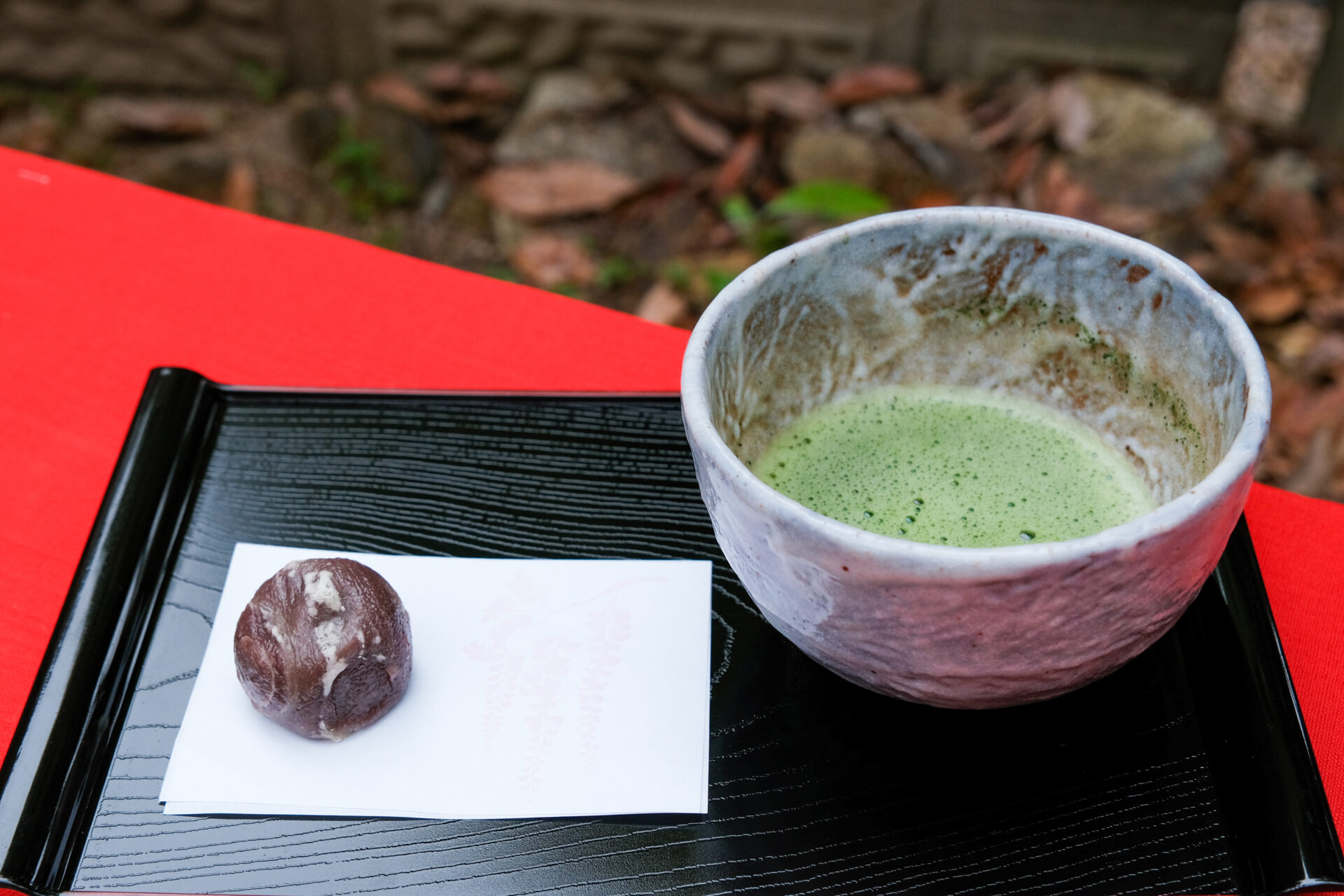
The tea sweets were Fujito Manju, a famous sweet from Kurashiki.
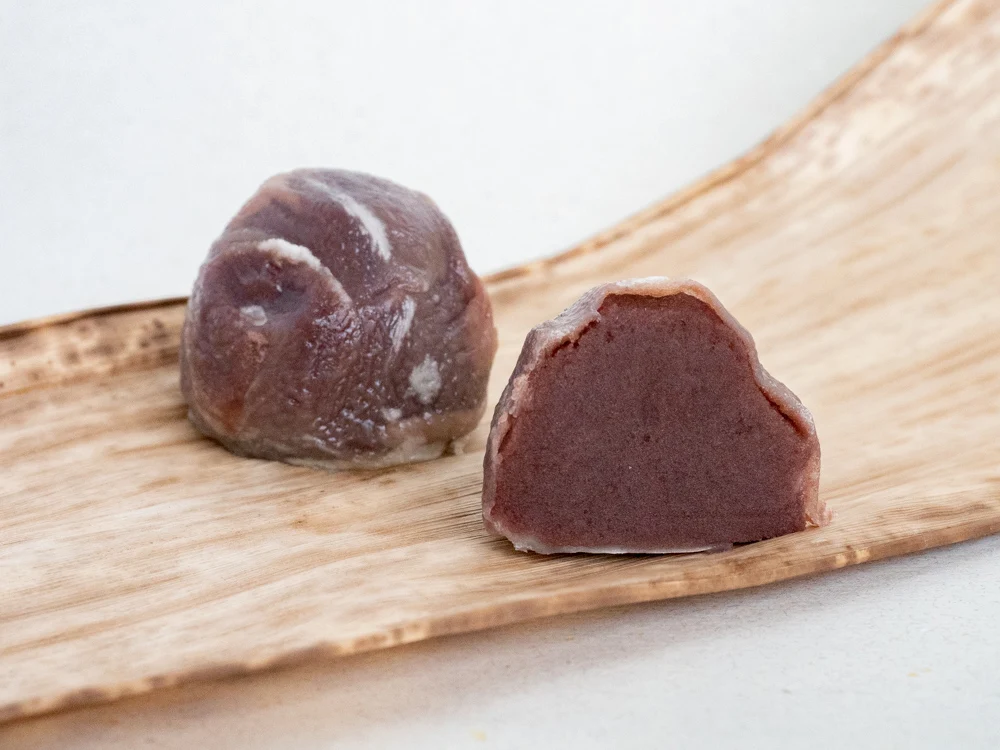
While enjoying the Fujito Manju, which is filled with sweet red bean paste and has a faint aroma of sweet sake, I leisurely savored the Achi wisteria.
Conclusion
The "Wisteria Viewing Association" was held amidst occasional light rain, but everything concluded safely without the rain intensifying until the program ended.
This historic festival allows you to experience the traditional performing arts that have been passed down in Kurashiki, and I felt it is an event that should continue in Kurashiki.
The wisteria in Kurashiki City is said to be approaching its peak bloom.
I also want to continue exploring the streets with my camera in hand, searching for wisteria trellises.
Articles about Achi Shrine
![[Achi Shrine Hatsumode] West Approach](https://media.kuratoco.com/wp-content/uploads/2020/01/23051054/achijinja-hatsumoude_01.jpg)
Fujimi no Kai Data
| Name | Fujimi no Kai |
|---|---|
| Date | April 20 (Saturday) and 21 (Sunday), 2024, from 10 AM to 3 PM |
| Location | 12-1 Honmachi, Kurashiki City, Okayama Prefecture |
| Participation Fee (Tax Included) | Free |
| Website | Achi Shrine |