There are many wisteria trellises around the Bikan Historical Area.
Kurashiki City's city flower is wisteria, so the trellises are apparently maintained every year for people to enjoy the blooms.
After being captivated by the wisteria at the “Fujimi no Kai” at Achi Shrine, I took my camera and strolled around the wisteria trellises near the Bikan Historical Area on Thursday, April 25, 2024, on a sunny day. Here, I’ll share what I saw through photos.
The information provided was accurate when this article was published in April 2024. Please note that it may differ from current information.
In front of Kurashiki Kokusai Hotel
At the entrance to the Bikan Historical Area stands a large concrete building.

This is Kurashiki Kokusai Hotel.
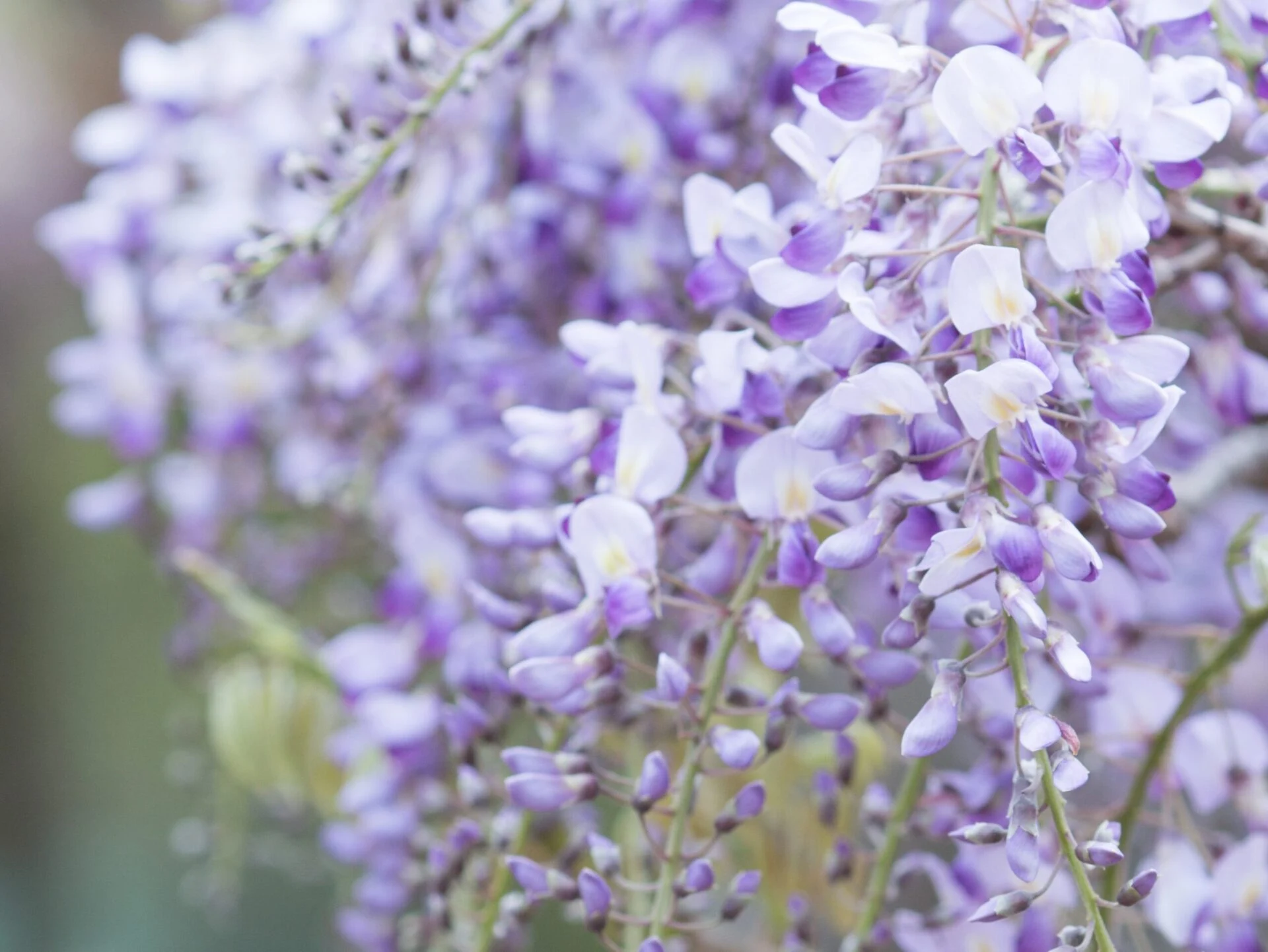
There is a wisteria trellis with purple flowers hanging down in front of Kurashiki Kokusai Hotel.

Some parts had begun to wither by April 25, but several flowers were still in full bloom.
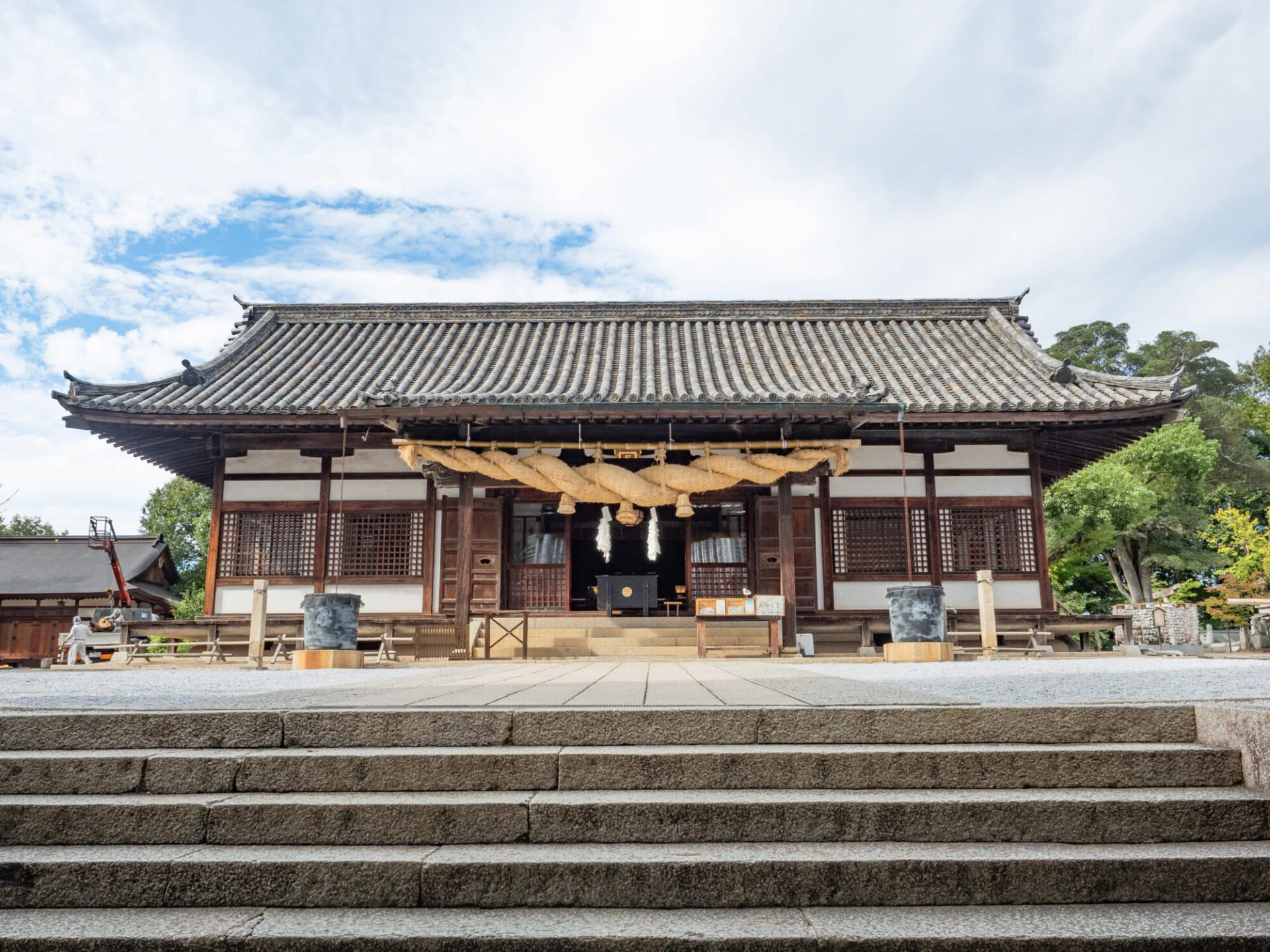
Achi Shrine
Leaving Kurashiki Kokusai Hotel and walking for about five minutes through the Bikan Historical Area, I came to Achi Shrine.
Achi Shrine is home to the Akebono wisteria, Japan’s largest wisteria tree, known as “Achi Wisteria.”

This Akebono wisteria is estimated to be 300 to 500 years old and has been designated a Natural Monument of Okayama Prefecture. On April 20 and 21, 2024, the “Fujimi no Kai” was held at Achi Shrine.


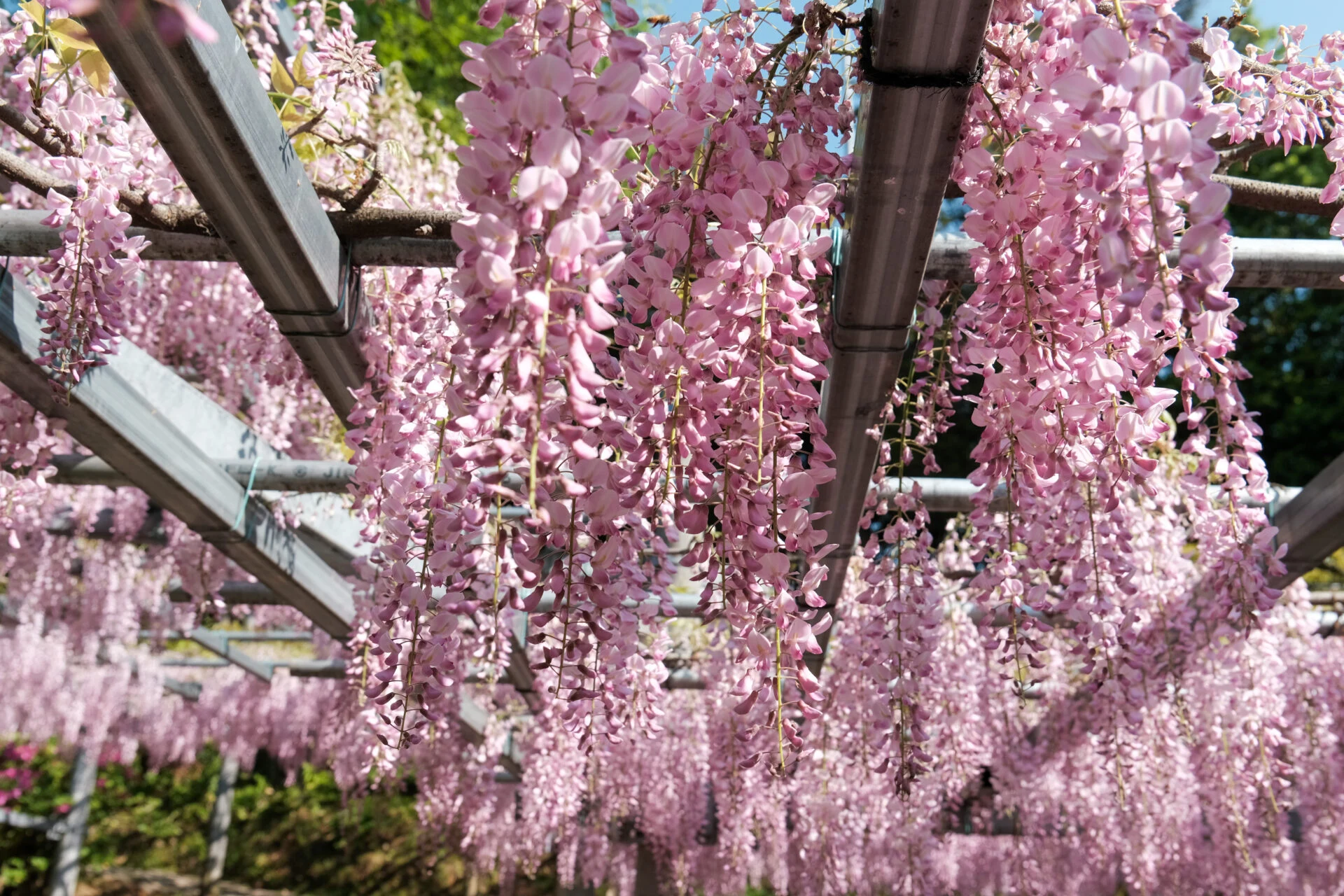
Although Achi Wisteria had only just begun blooming on the day of the “Fujimi no Kai,” it was in full bloom on April 25.

Azaleas were also blooming beside Achi Wisteria. Achi Shrine, bright with color, was filled with the pleasant fragrance of wisteria, and many people came to see Achi Wisteria despite it being a weekday afternoon.
It looks like the flowers will remain at their best for a little while longer.
Kurashiki Ivy Square
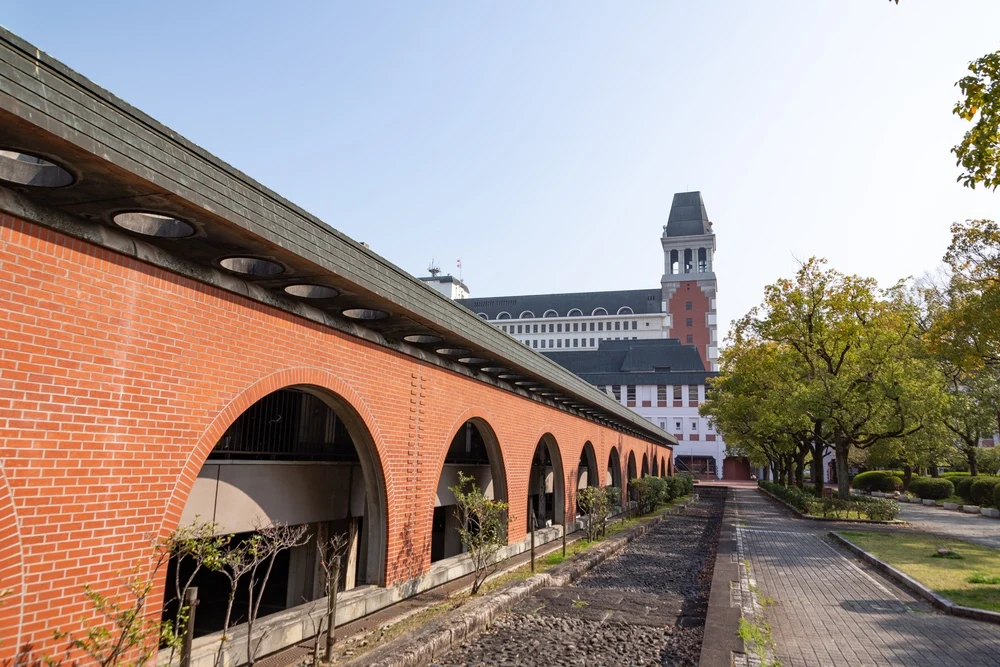
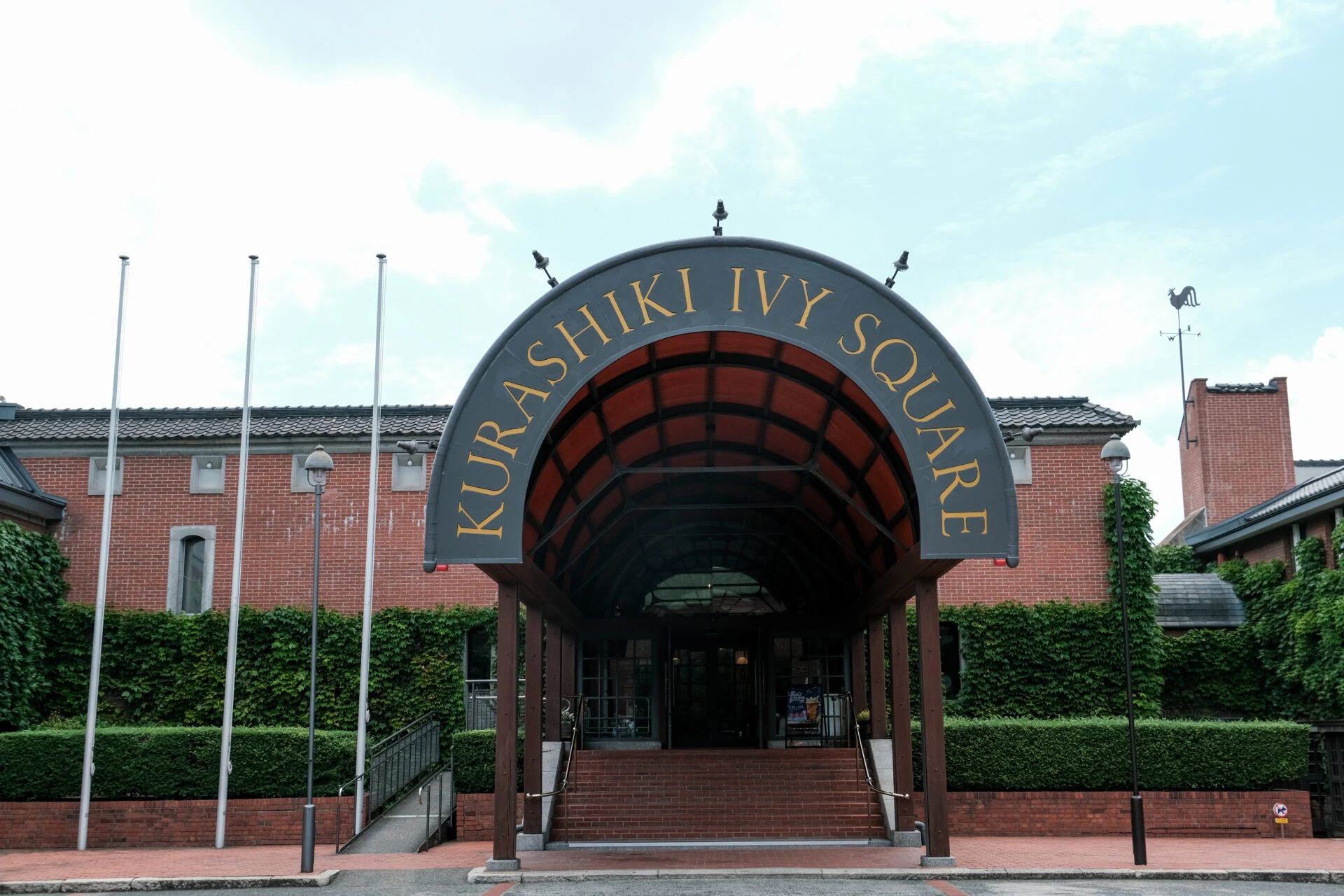
After walking down the steps from Achi Shrine and heading toward Higashimachi for about 10 minutes, I came upon a red-brick building.

This is Kurashiki Ivy Square.

There is also a wisteria trellis beside the Kurashiki Ivy Square parking lot, next to Shiroyama Inari Daimyojin.

This wisteria is a variety called yamafuji (Japanese wisteria). Ordinary wisteria vines twine clockwise, while yamafuji vines twine counterclockwise, so special care is needed to adjust their exposure to sunlight.
It usually reaches its peak around Golden Week, but on April 25, 2024, most of the flowers had withered, with only a few still visible.
According to a staff member who manages the plants at Kurashiki Ivy Square, this year the flowers bloomed much earlier than usual and reached their peak around April 17.
Geibunkan Hall
After walking for about five minutes from Kurashiki Ivy Square toward the Bikan Historical Area, I came to a concrete building resembling Kurashiki Kokusai Hotel.

This is Geibunkan Hall, a facility beloved by local residents as a venue for classical concerts and theatrical performances.
In fact, Geibunkan Hall, Kurashiki Kokusai Hotel, and Kurashiki Ivy Square were all designed with the involvement of Shizutaro Urabe, an architect from Kurashiki, and Urabe Sekkei Co., Ltd., the firm he founded.
There are also two large wisteria trellises in front of Geibunkan Hall.

On April 25, both trellises were adorned with flowers, mostly small ones.
Kurashiki City Office
It is a little farther away, about a five-minute bike ride from the Bikan Historical Area, but there is also a wisteria trellis at the Kurashiki City Office Main Building.

There are two locations: in front of the indoor parking lot and in front of the east parking lot.
On April 25, perhaps due to the heavy rain the previous day, some of the flowers had fallen, but, as you can see in the photo, there were still beautiful blooms.

Although the wisteria trellis in front of the indoor parking lot does not have many flowers, you can photograph the wisteria blooms together with the tower of Kurashiki City Office’s main building, which stands 66 meters tall.
This building, known for its red brick, has a design similar to Kurashiki Ivy Square.
Remarkably, the main building of Kurashiki City Office was also designed by Shizutaro Urabe. Perhaps the architectural consistency is part of why you can sense a certain “Kurashiki character” throughout the city.
From the Writer
This time, I went on a wisteria tour to coincide with the blooming of Achi Shrine’s “Achi Wisteria.” However, because the wisteria varieties and the amount of sunlight differ from one trellis to another, by April 25, 2024, the flowers were past their peak in some locations.
However, looking at it another way, the wisteria in Kurashiki reaches its peak at different times, so I think it can be enjoyed over a long period.
Next year, I’d like to time my visits to each trellis for the best season and enjoy the wisteria in full bloom alongside Kurashiki’s distinctive architecture and scenery.
Details: Kurashiki City Office Main Building, Geibunkan Hall, Kurashiki Kokusai Hotel, Achi Shrine, and Kurashiki Ivy Square
| Name | Kurashiki City Office Main Building, Geibunkan Hall, Kurashiki Kokusai Hotel, Achi Shrine, and Kurashiki Ivy Square |
|---|---|
| Address | Around the Bikan Historical Area, Kurashiki City |


What would you like to know about Kurashiki?
Enter a search term to find articles on this site