
When you go sightseeing, choosing souvenirs is one of the pleasures, right?
When you think about buying souvenirs, the local specialties of the area you visited often come to mind.
In Kurashiki, "Murasuzume" is known as a local specialty.
Alongside Murasuzume, there is another long-loved local sweet.
That is Fujito Manju Honpo's "Fujito Manju (Fujito Manju, Fujito Manju)."
Fujito Manju is characterized by its elegant sweetness of smooth red bean paste and a subtle flavor of sweet sake.
In fact, Fujito Manju and Fujito Manju Honpo have a history of over 830 years, originating in the late Heian period.
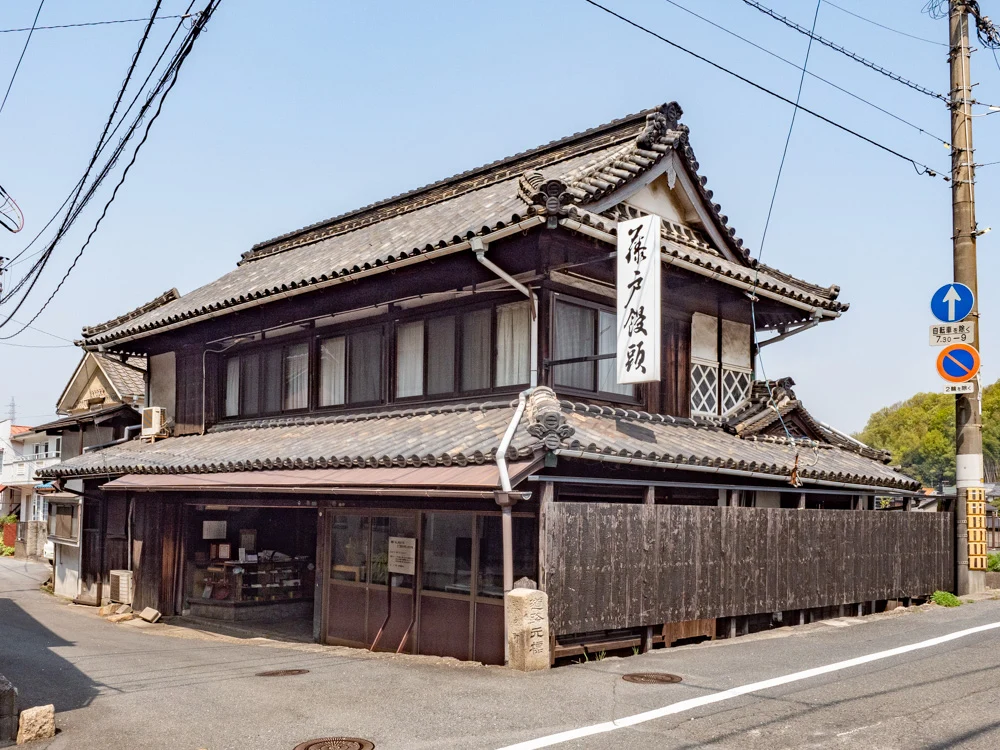
Additionally, the main store of Fujito Manju Honpo is located in a building with a history of over 100 years.
Let me introduce Fujito Manju and Fujito Manju Honpo, which can truly be said to be "a part of Kurashiki's history"!
Fujito Manju Honpo is the oldest company in the Chugoku region, continuing since the late Heian period
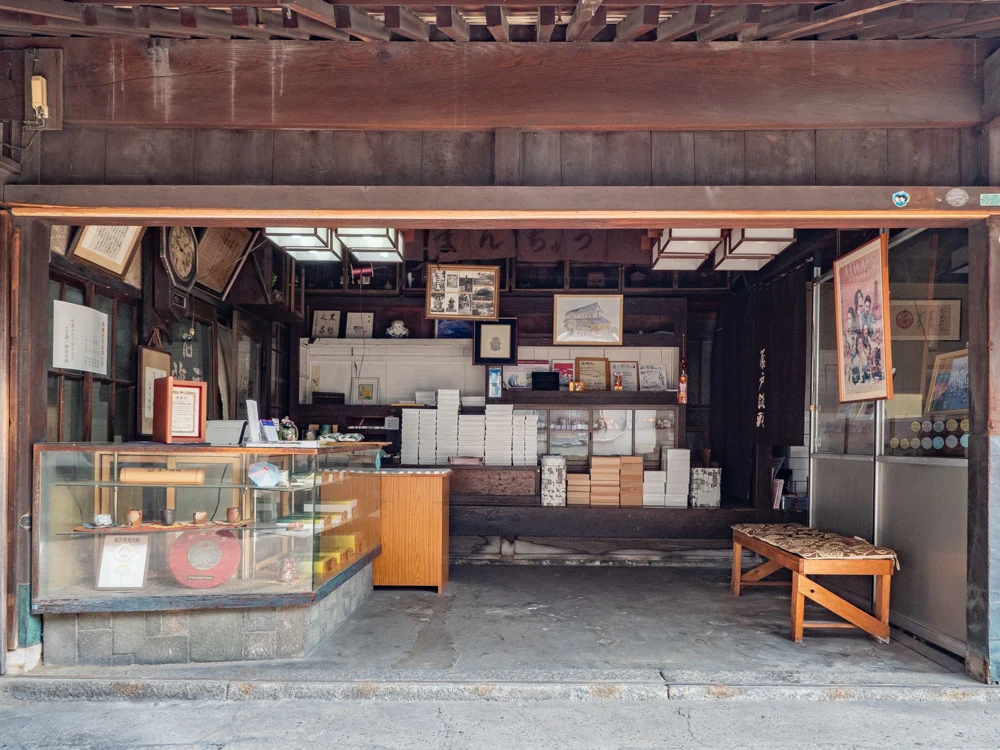
Fujito Manju Honpo manufactures and sells the representative local sweet of Kurashiki, "Fujito Manju."
If you lived in Okayama or Kagawa Prefectures, you might remember the TV commercial song as well.
This commercial song can be heard on the official website of Fujito Manju Honpo and on official YouTube.
Fujito Manju Honpo has a main store and a Kushida store, with the main store located in Fujito-cho, Kurashiki City, as the name suggests.
The main store of Fujito Manju Honpo is located about 5 kilometers southeast of the Bikan Historical Area.
Fujito is along the Kurashiki River, which flows from the Bikan Historical Area, and prospered as a town along the "Konpira Kaido," which connected the river port and Okayama Castle with Mt. Konpira during the Edo period.
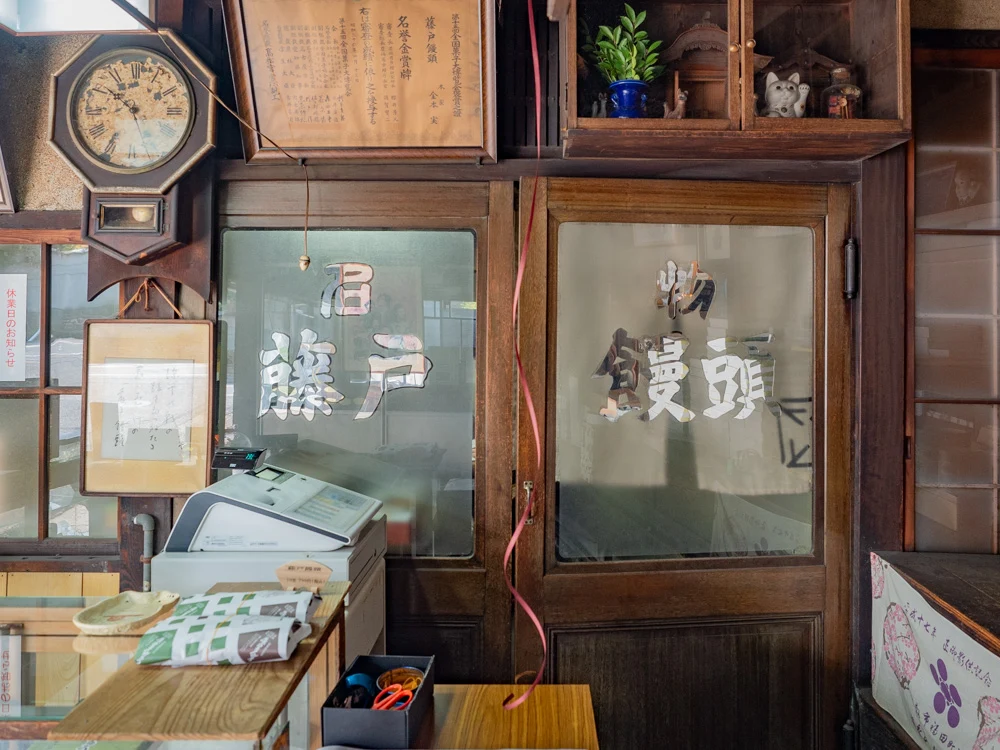
Fujito Manju Honpo, located in Fujito, has a history that dates back much further than the Edo period, all the way to the late Heian period.
The founding year is Juei 3 (1184).
It has a history of over 830 years!
According to a survey by Tokyo Shoko Research, it is the oldest company in Kurashiki City, as well as in Okayama Prefecture and the Chugoku region!
Initially, it was sold to worshippers in the precincts of Fujido Temple, which is very close to the main store.
Eventually, in the early Edo period, it began selling in stores, and in the late Edo period, in Man'en 1 (1860), it built a store at its current location.
The only product handled is the specialty "Fujito Manju"!
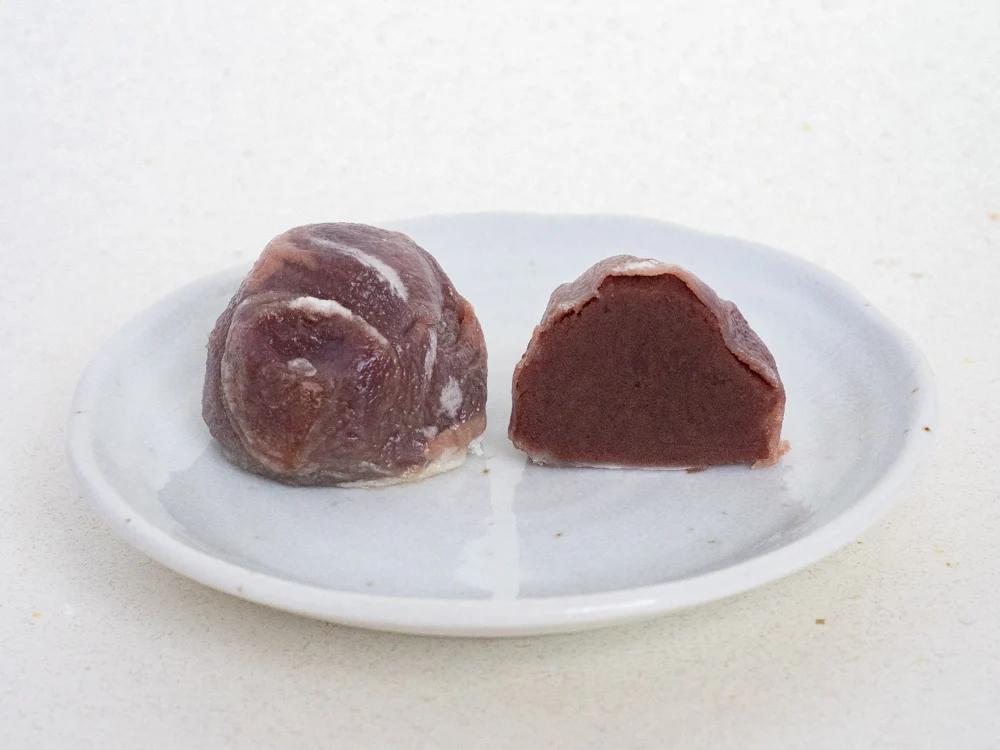
The only product handled by Fujito Manju Honpo is "Fujito Manju."
In the past, there were times when they sold red and white manju and monaka, but now they only sell Fujito Manju.
They continue to make a product that has been around since the late Heian period.
The main store's building has a history of over 100 years! Also a filming location
As mentioned earlier, Fujito Manju Honpo established its store at its current location in the late Edo period.
In fact, the current building of Fujito Manju Honpo's main store was built in the early Meiji period.
It is a building with a history of over 100 years!
Fujito Manju Honpo has not only a history of its products and company but also a historical building.
▼ The main store's building evokes a sense of history.

▼ The interior of the store also has a charming atmosphere.
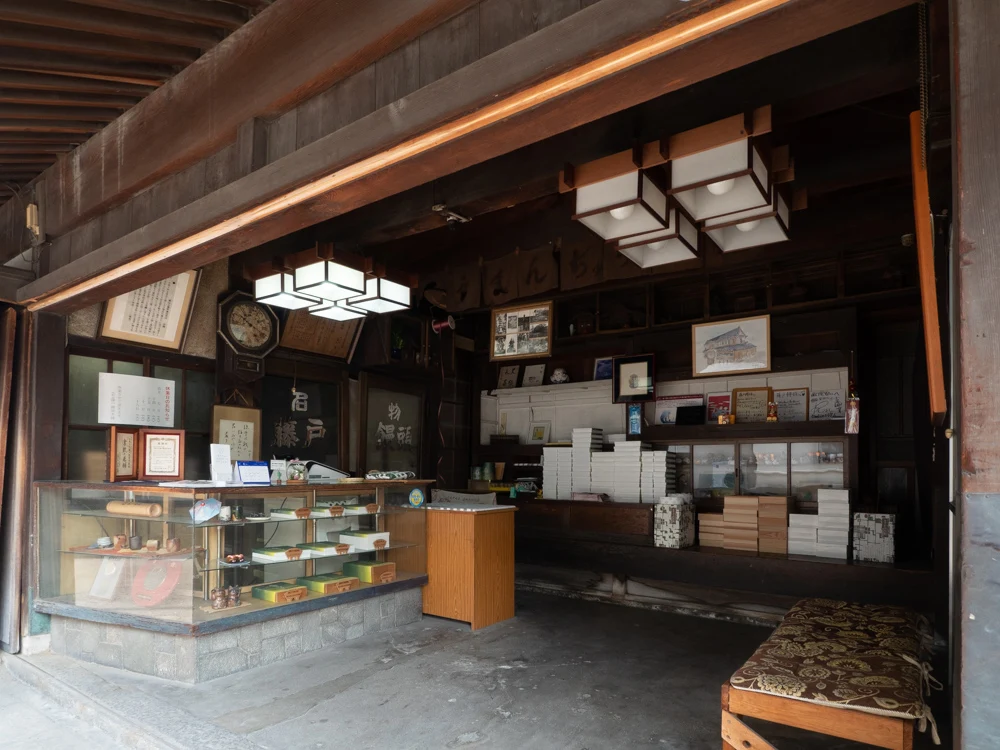
▼ The antique clock displayed in the store is a very valuable item.
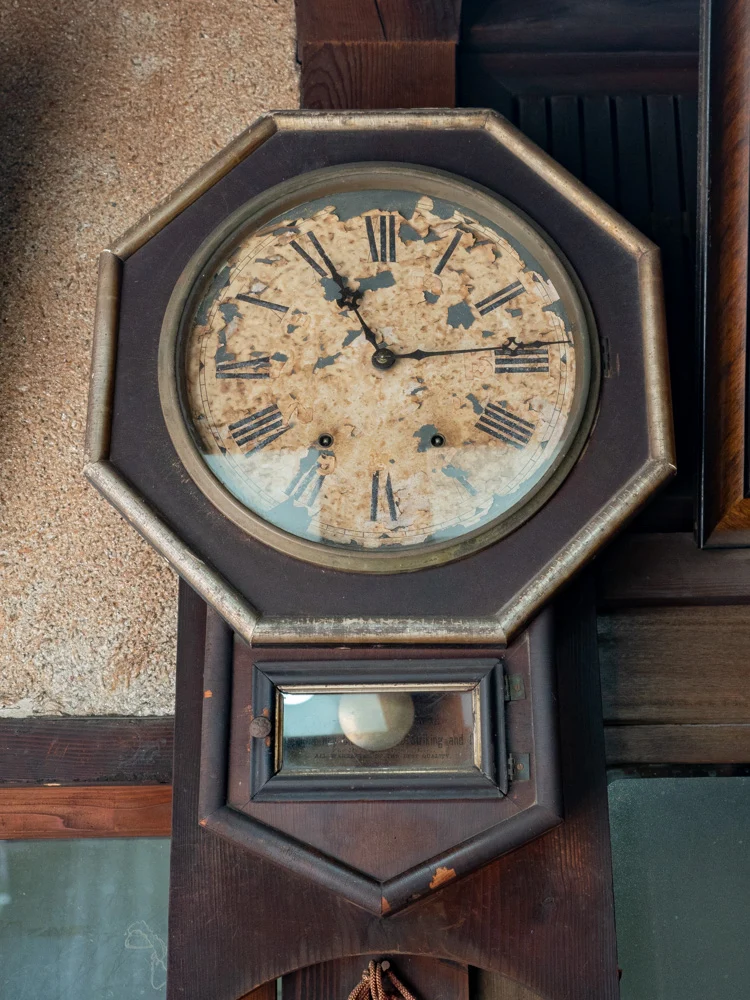
In Meiji 3 (1871), it is said to have been manufactured by one of the seven major clock manufacturers in the United States, New Haven Clock Company.
It is not just for decoration; it is still in active use.
The historical Fujito Manju Honpo main store, with its exterior, interior, and furnishings, has also been a filming location for movies.
▼ It was featured in the film "ALWAYS (Always) Sunset on Third Street" released in 2005.
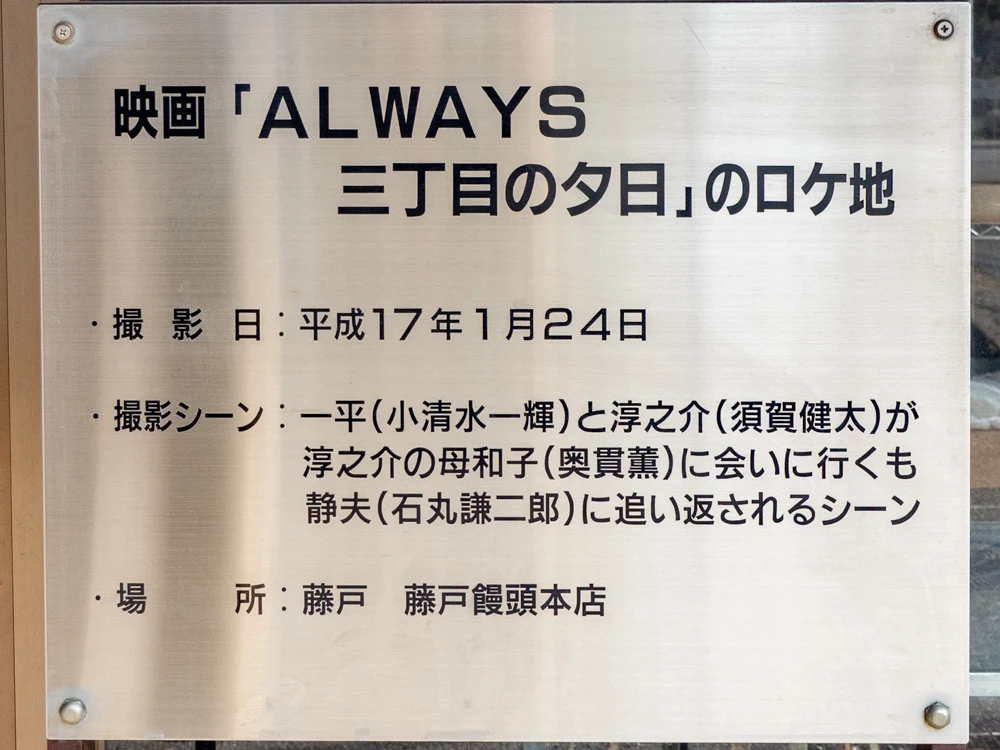
Even now, there are items related to the movie displayed in the store.
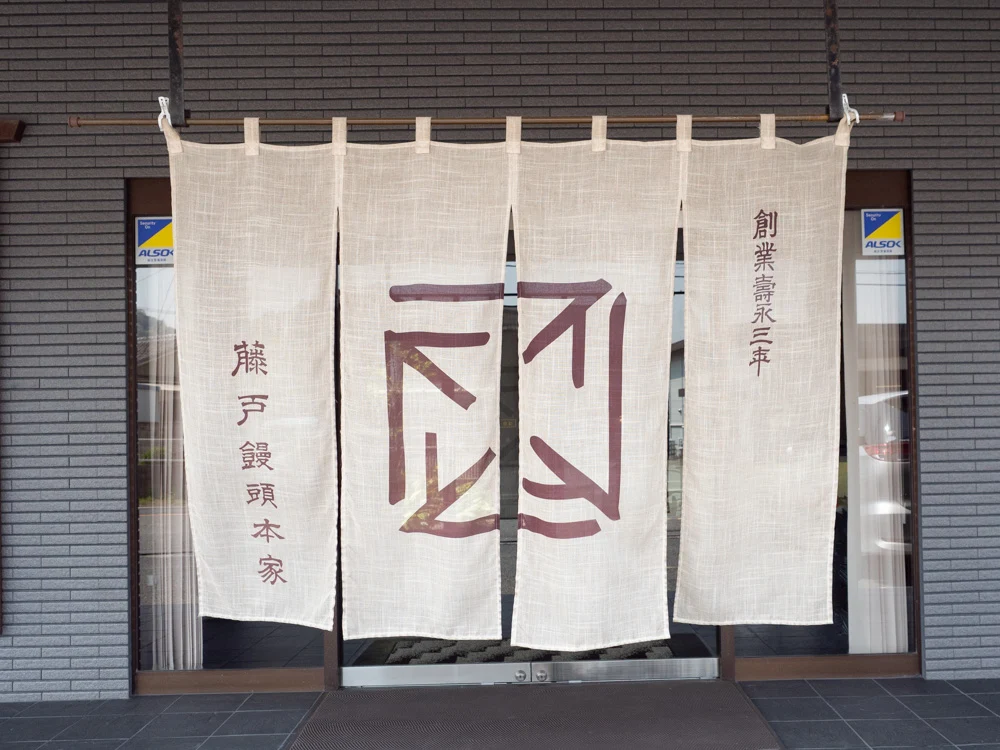
▼ The noren (traditional shop curtain) used in the film is still used in the store.
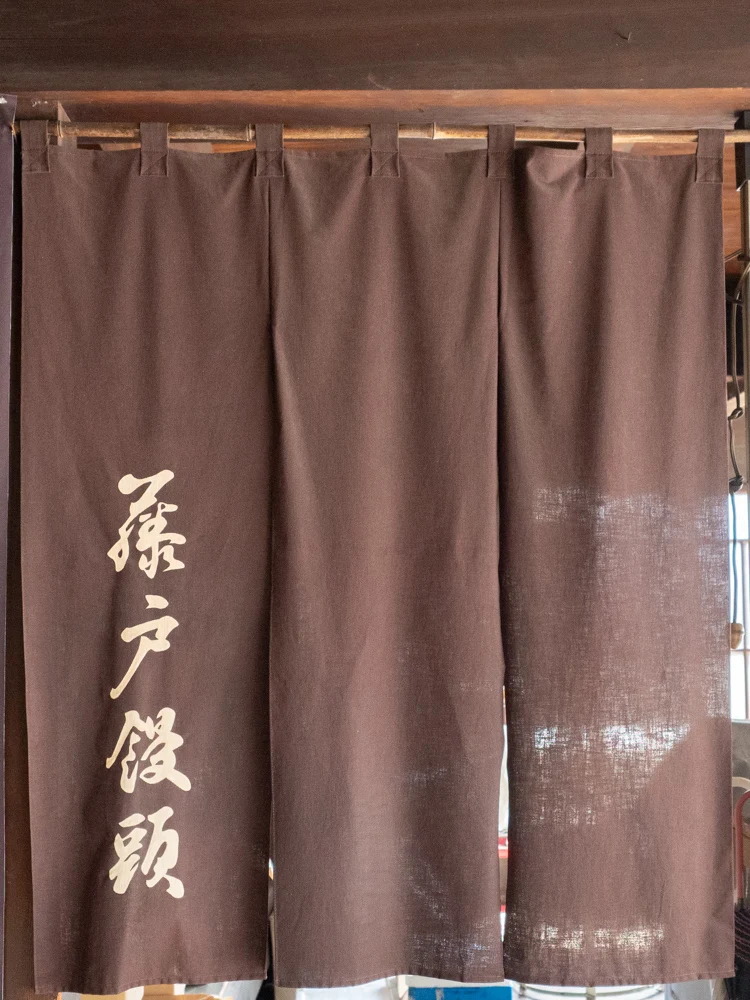
Actor Kenjiro Ishimaru has reportedly visited Fujito Manju twice for filming, in addition to the movie shoot.
Moreover, it seems that many movie fans visit for location tours.
Additionally, there are still occasional recordings for TV programs.
Fujito Manju is a thin-skinned manju with plenty of smooth red bean paste and sweet sake flavor
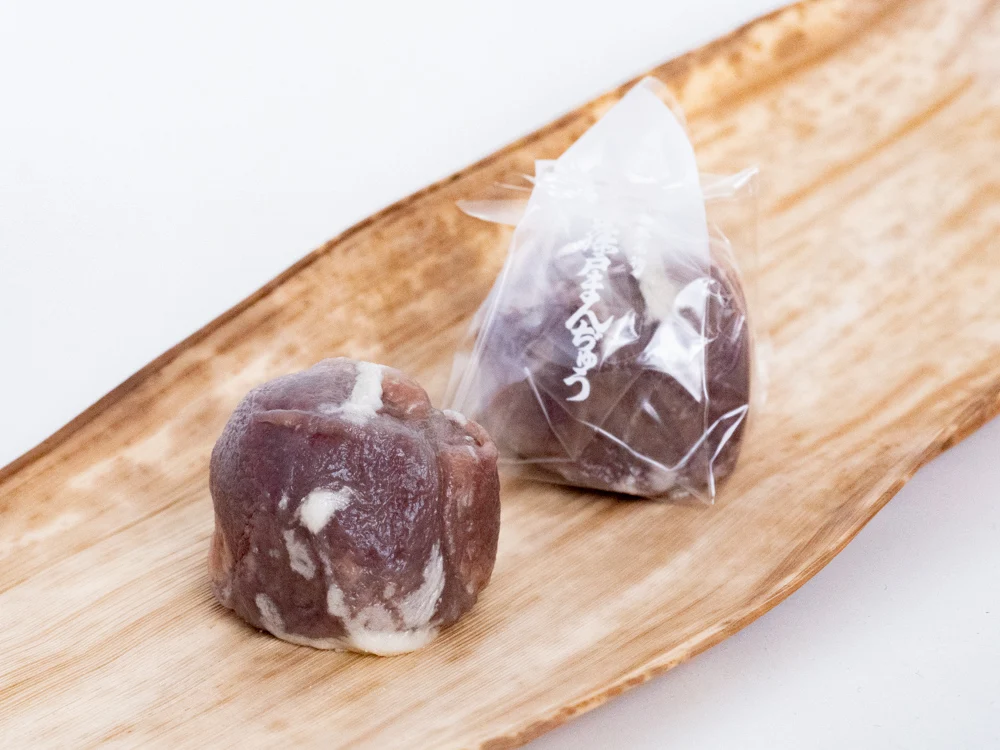
To briefly introduce the points of Fujito Manju, they can be summarized in the following three points.
- Smooth red bean paste
- Thin skin
- Flavor of sweet sake
Fujito Manju has a very thin skin.
Therefore, over 90% of Fujito Manju is smooth red bean paste.
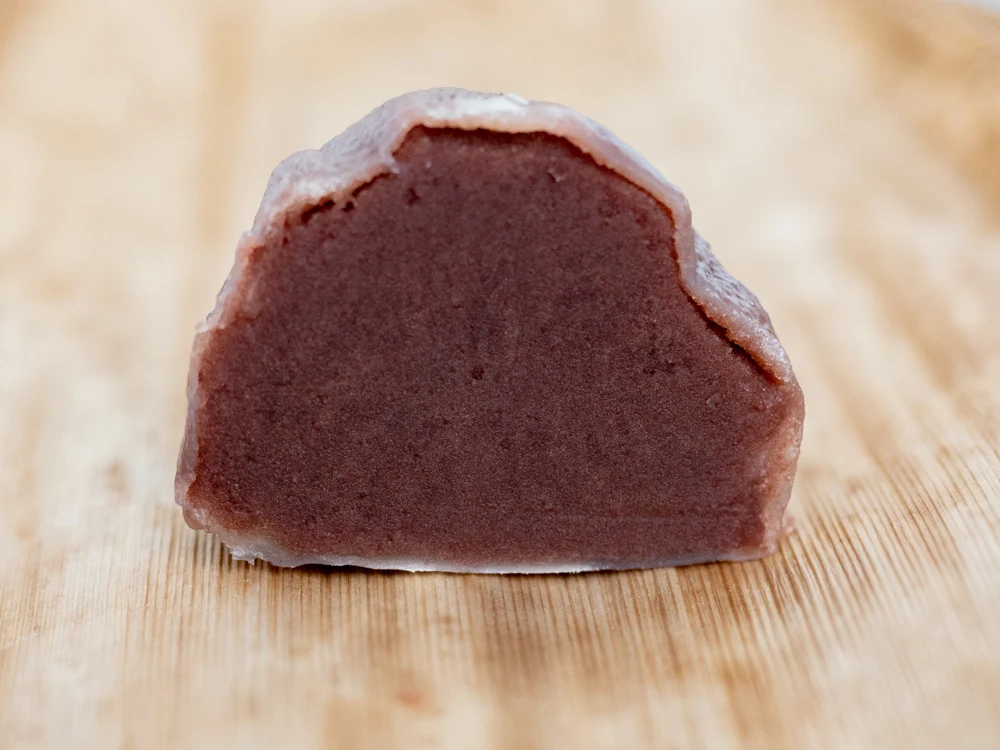
Fujito Manju = smooth red bean paste is such an important point that it could be said.
The smooth red bean paste in Fujito Manju is made from azuki beans from Tokachi, Hokkaido.
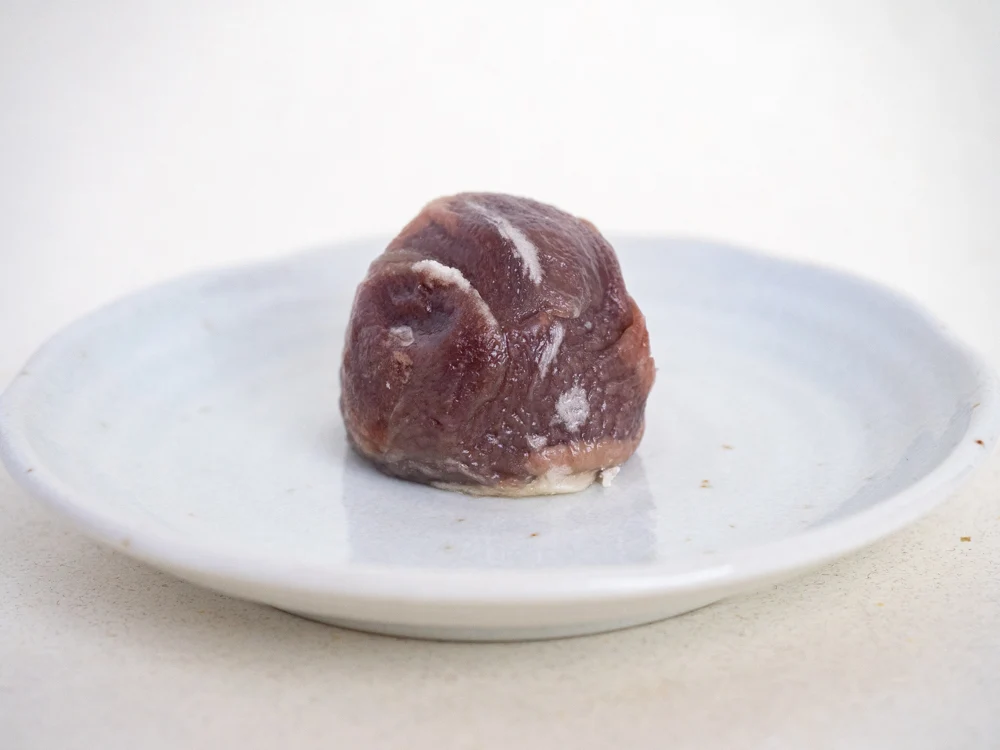
The next point is thin skin.
The skin of Fujito Manju is characterized by being very thin.
Moreover, the skin is translucent enough to see the smooth red bean paste inside.
In fact, the skin of Fujito Manju is made from sweet sake and wheat flour.
The flavor of sweet sake is also a characteristic of Fujito Manju.
The sweet sake is made by pressing sake lees made from locally produced koji every morning.
The sweet sake and wheat flour are kneaded together, fermented, rolled out to make the skin, and then wrapped around the smooth red bean paste.
After steaming, it becomes Fujito Manju.
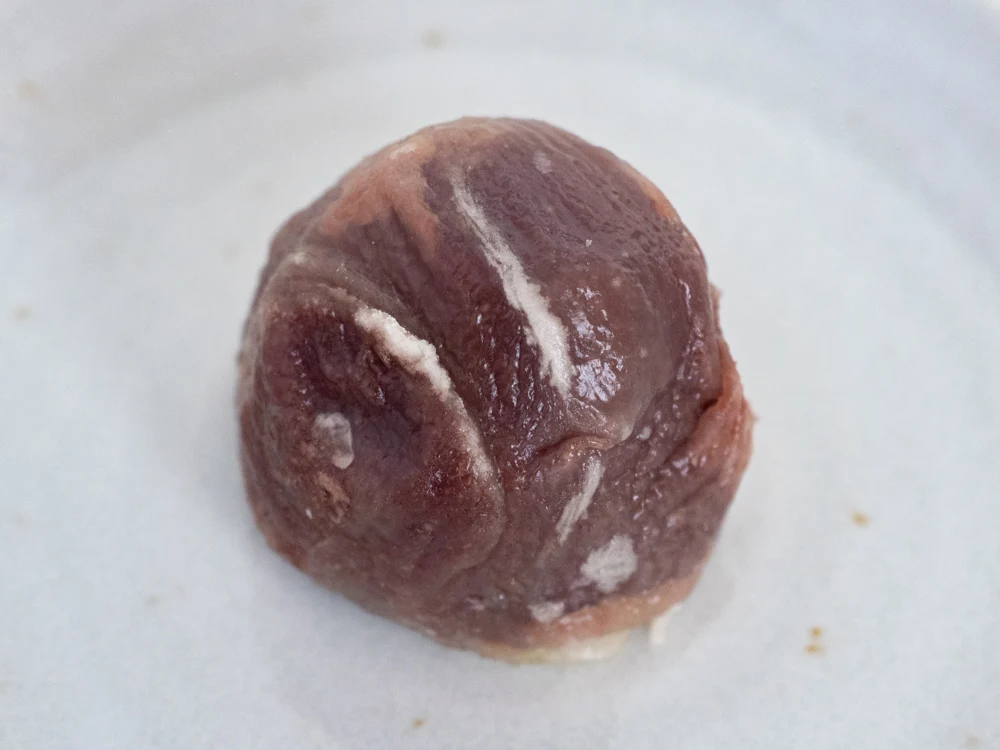
Fujito Manju may appear to have no skin at first glance.
Additionally, the mottled white patterns here and there are also striking.
The original skin has a whitish color.
However, it becomes translucent when steamed!
By the way, the white mottled patterns are traces of fermented sake lees.
It is very mysterious that the whitish skin becomes transparent when steamed.
I was curious about the skin of Fujito Manju, so my long-standing question has been answered.
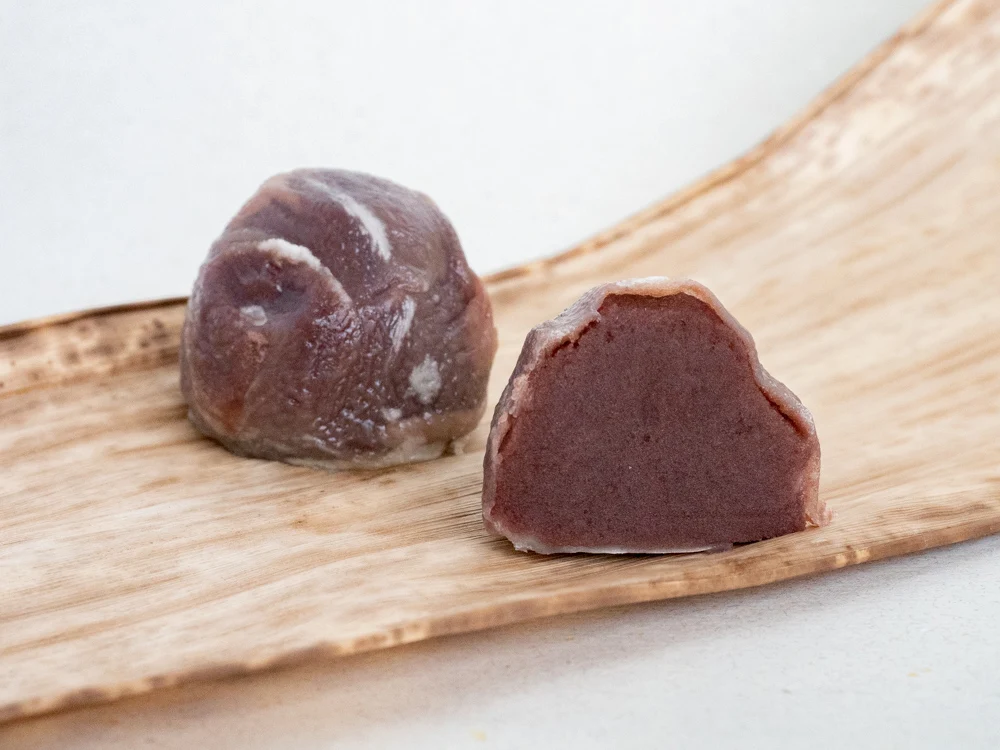
When I actually tried Fujito Manju, the skin was thin and transparent, yet I felt a plump elasticity when biting into it.
In the next moment, I experienced the smooth and moist texture of the red bean paste.
The taste is very refined with a mild sweetness.
However, I could also distinctly taste the flavor of azuki beans, making it just the right sweetness.
While feeling the sweetness of the red bean paste, I also faintly sensed the flavor of sweet sake.
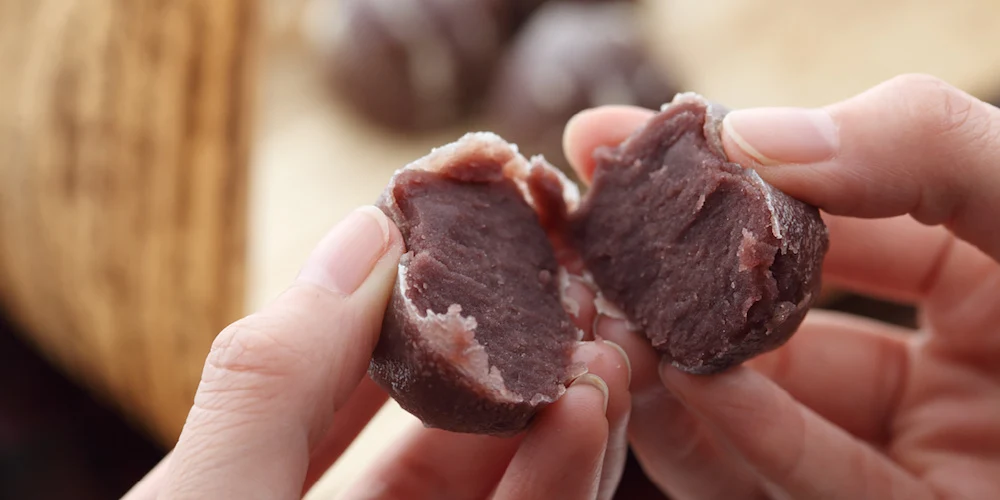
Even those who are not fond of the flavor of sweet sake can enjoy it, and for those who love sweet sake, the subtle flavor is irresistible.
The sweetness and flavor are just right, so I easily devoured one, and unconsciously reached for a second.
I thought the charm of Fujito Manju lies in its non-greasy sweetness that makes it seem like you could eat as many as you want.
Fujito Manju is additive-free and preservative-free.
Therefore, it does not have a long shelf life, so please be careful.
The expiration date of Fujito Manju is three days from the date of manufacture.
Fujito Manju Lineup
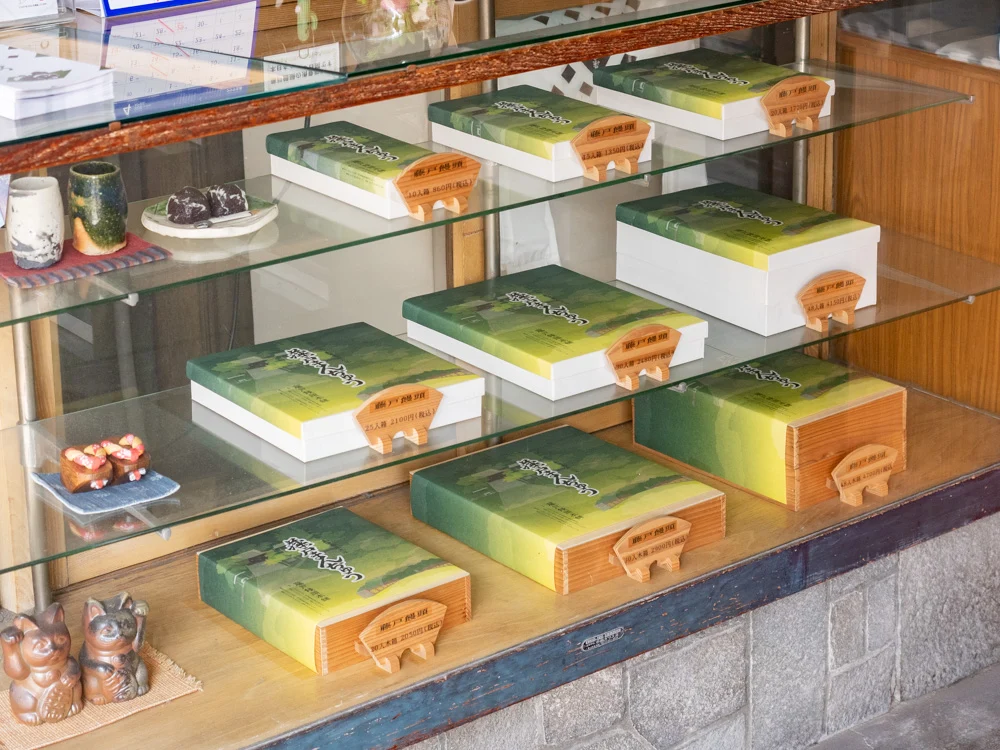
The products of Fujito Manju Main Store consist only of Fujito Manju, but there are the following lineups based on packaging and quantity.
| Packaging | Quantity | Price (including tax) |
|---|---|---|
| Individual sale (only at the main store and Kushida store) | 1 piece | 76 yen |
| Bamboo leaf wrap | 5 pieces | 400 yen |
| 10 pieces | 790 yen | |
| Boxed | 10 pieces | 860 yen |
| 15 pieces | 1,350 yen | |
| 20 pieces | 1,720 yen | |
| 25 pieces | 2,100 yen | |
| 30 pieces | 2,480 yen | |
| 48 pieces | 4,150 yen | |
| Wooden box | 20 pieces | 2,050 yen |
| 30 pieces | 2,900 yen | |
| 48 pieces | 4,700 yen |
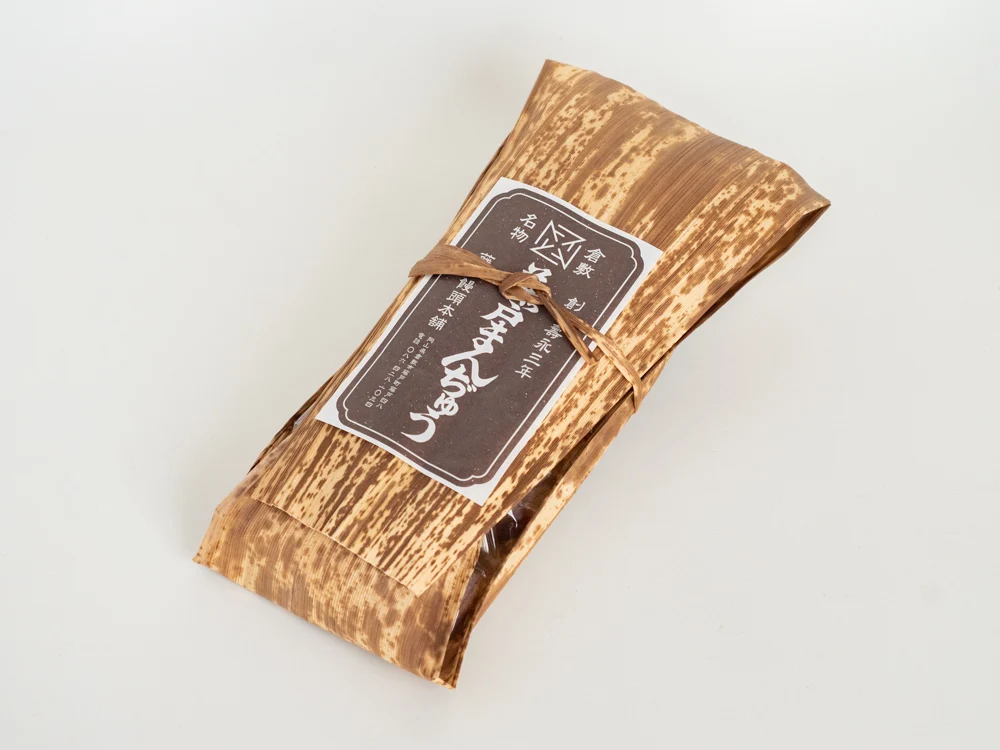
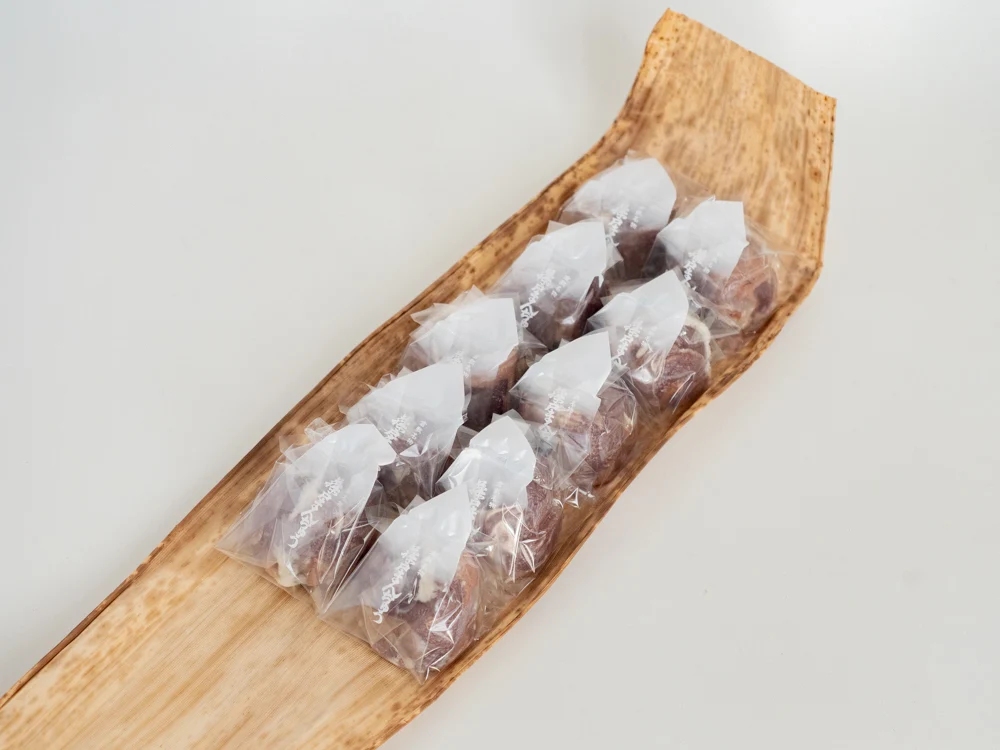
▼Bamboo leaf wrap (10 pieces)
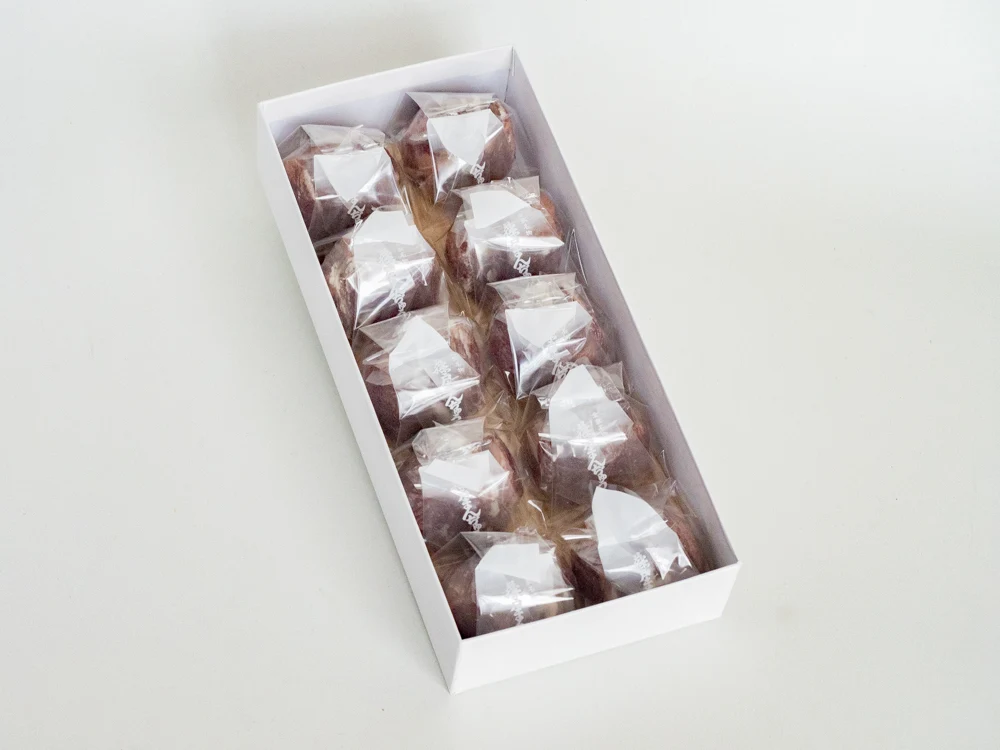
▼Boxed (10 pieces)
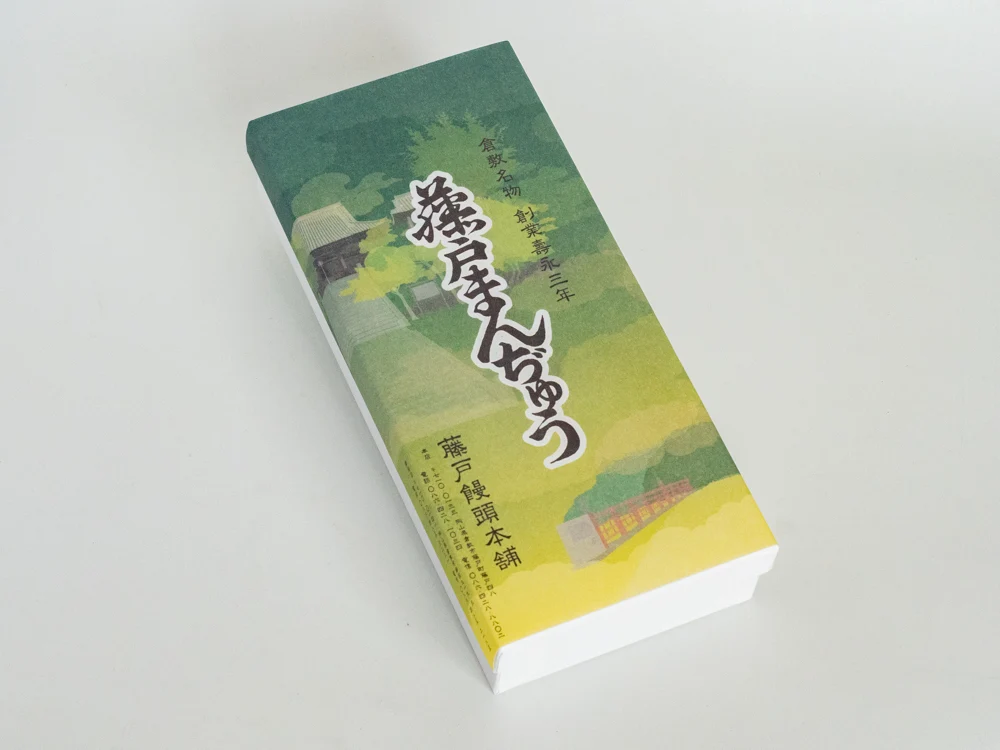
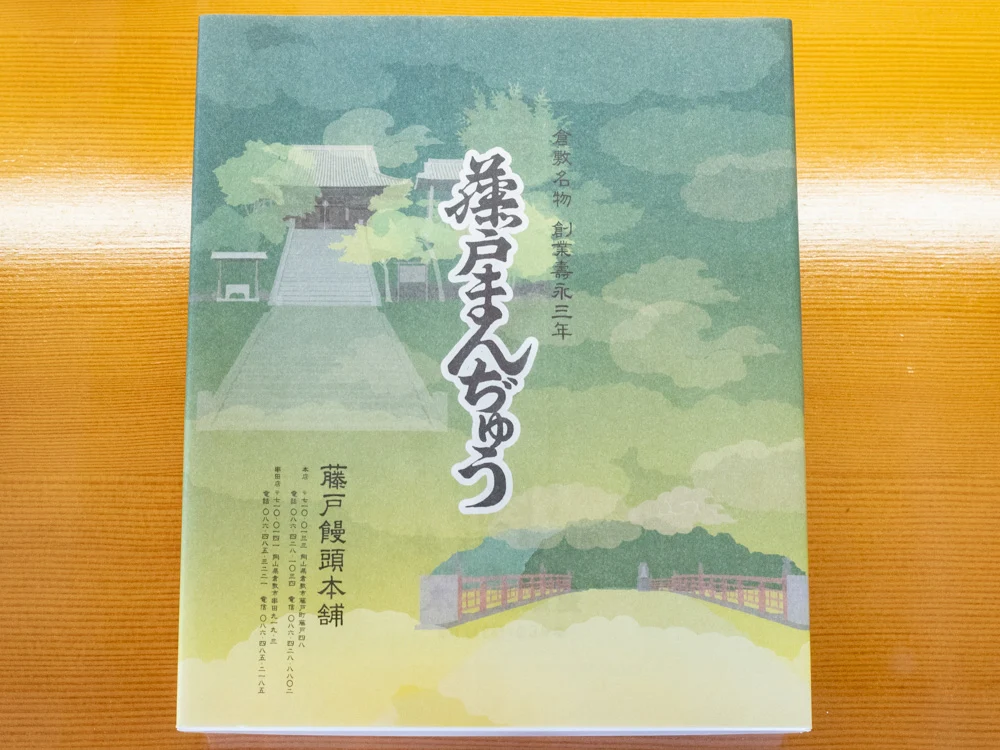
▼The wrapping paper for the boxed version features illustrations of Fujito Temple and Moritsuna Bridge, showcasing the character of Fujito Town.
▼Wooden box (20 pieces)
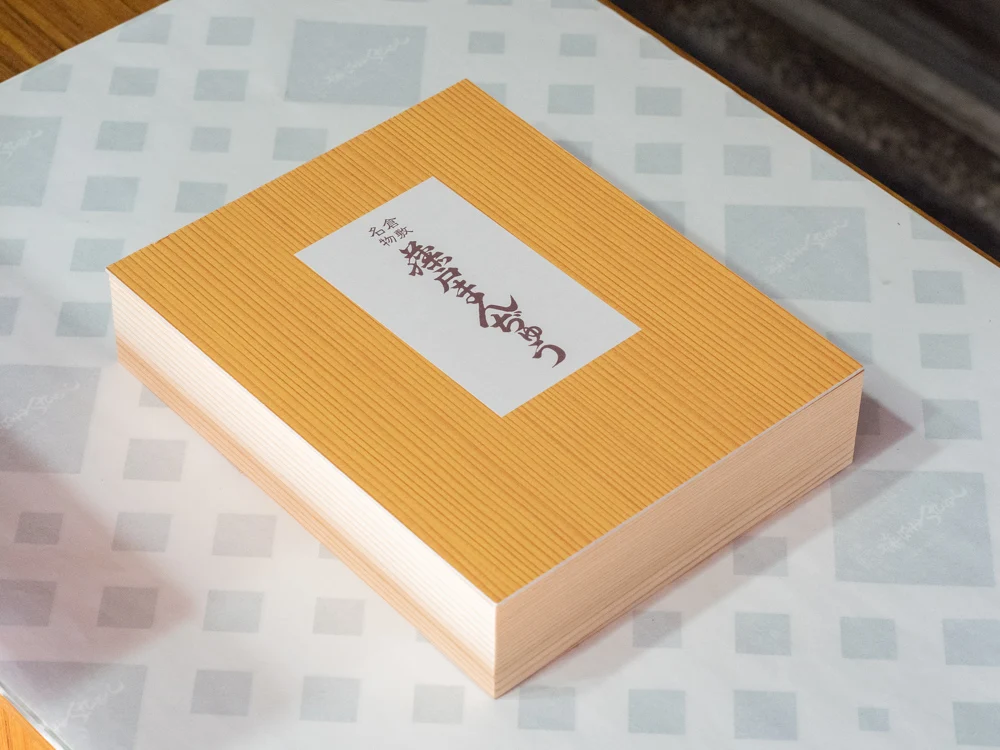
The bamboo leaf wrap is popular among those who want to feel the traditional atmosphere or for those eating at home.
On the other hand, the boxed version is for souvenirs.
The wooden box is often used for offerings at memorial services or as gifts.
Individual sales are only available at Fujito Manju Main Store (main store and Kushida store).
They are not sold at souvenir shops, supermarkets, or department stores.
Individual sales are sometimes purchased by local students as snacks on their way home.
Red bean paste is also sold separately
Fujito Manju Main Store also offers red bean paste for sale separately.
Of course, it is the same red bean paste used in Fujito Manju.
During the equinox and year-end seasons, some locals use our red bean paste to make rice cakes!
However, red bean paste is sold only at the main store and Kushida store.
Places to purchase Fujito Manju other than Fujito Manju Main Store
Fujito Manju Main Store has only the main store and Kushida store located in Fujito.
However, Fujito Manju is sold at several stores around Kurashiki City, so you can buy it without going to Fujito Manju Main Store.
The main stores selling Fujito Manju in the center of Kurashiki City (around JR Kurashiki Station and Bikan Historical Area) are as follows.
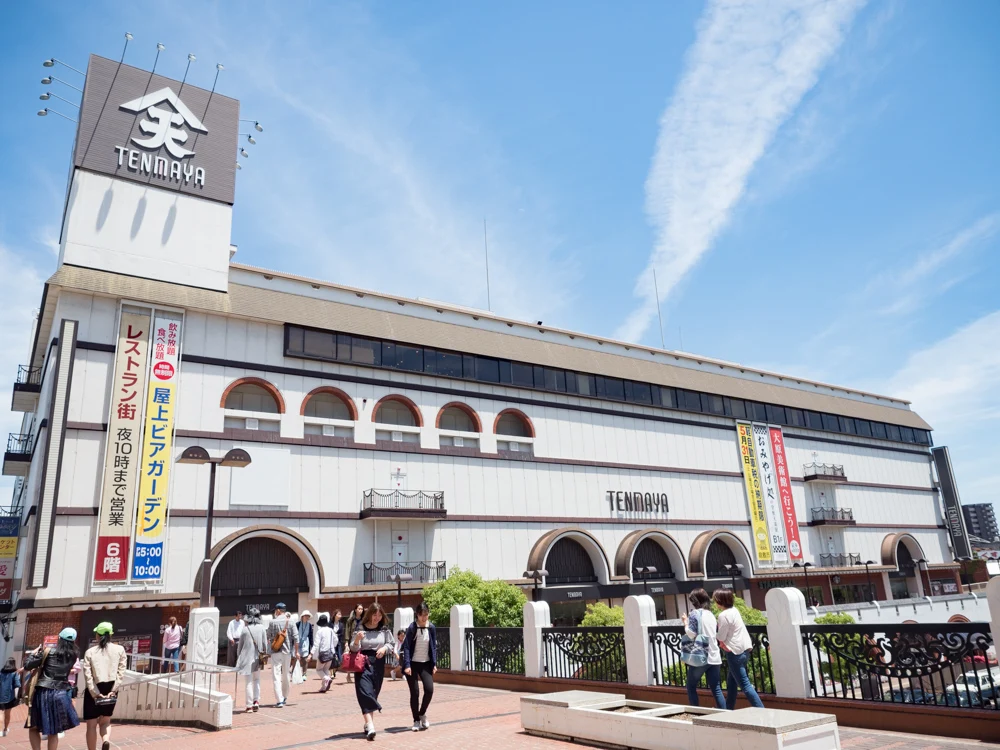
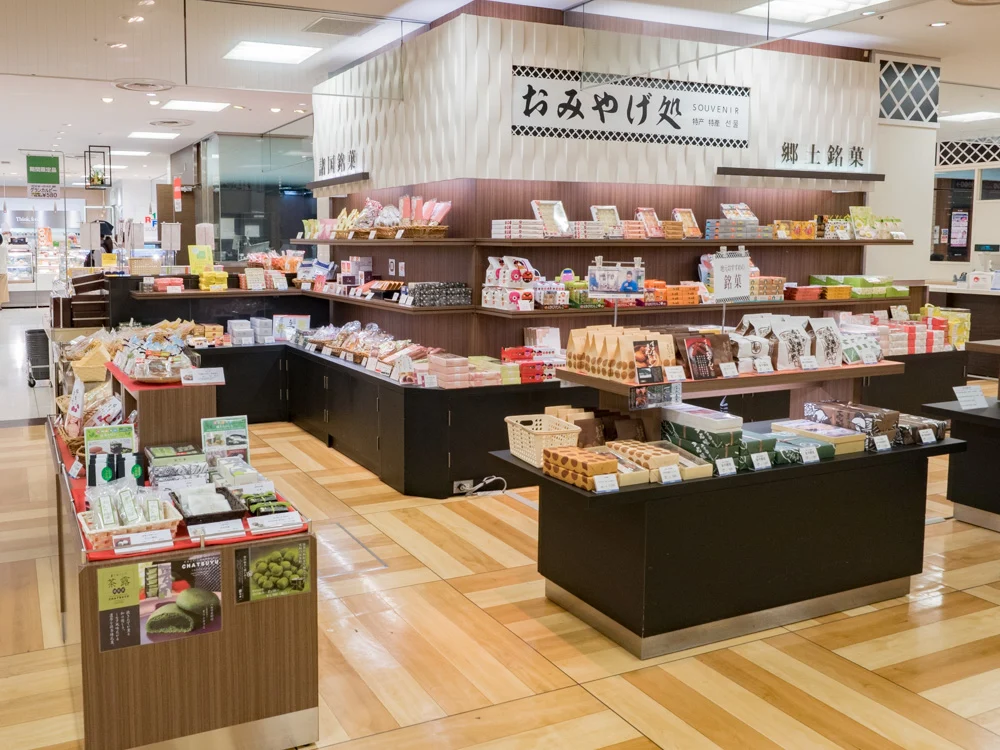
- Tenmaya Kurashiki Store (B1F Souvenir Shop)
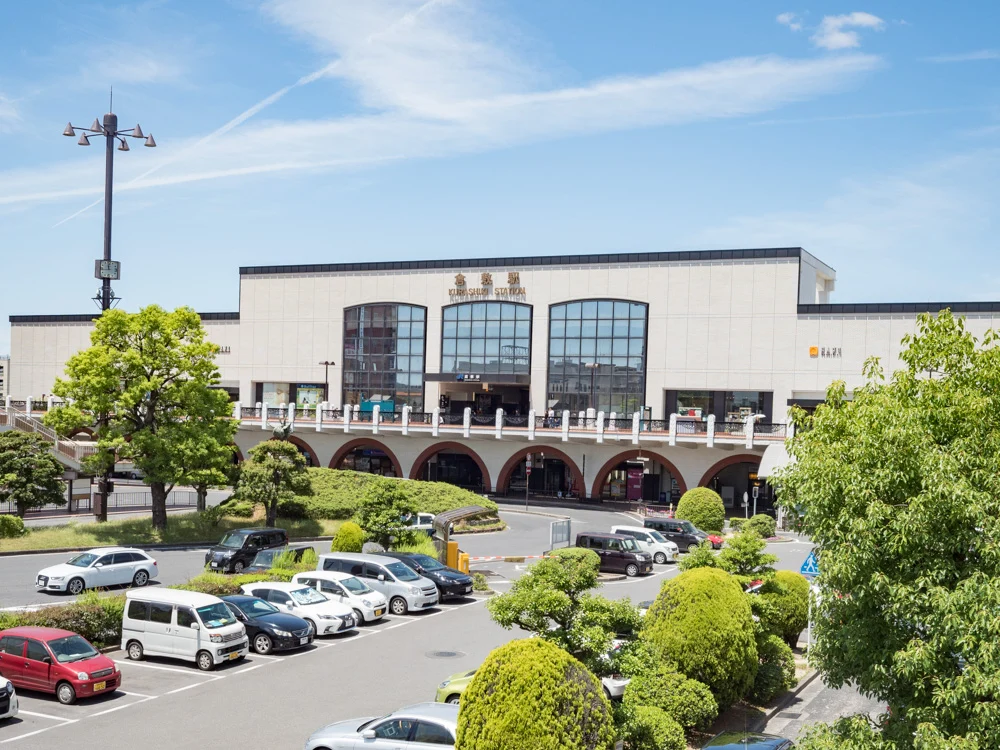
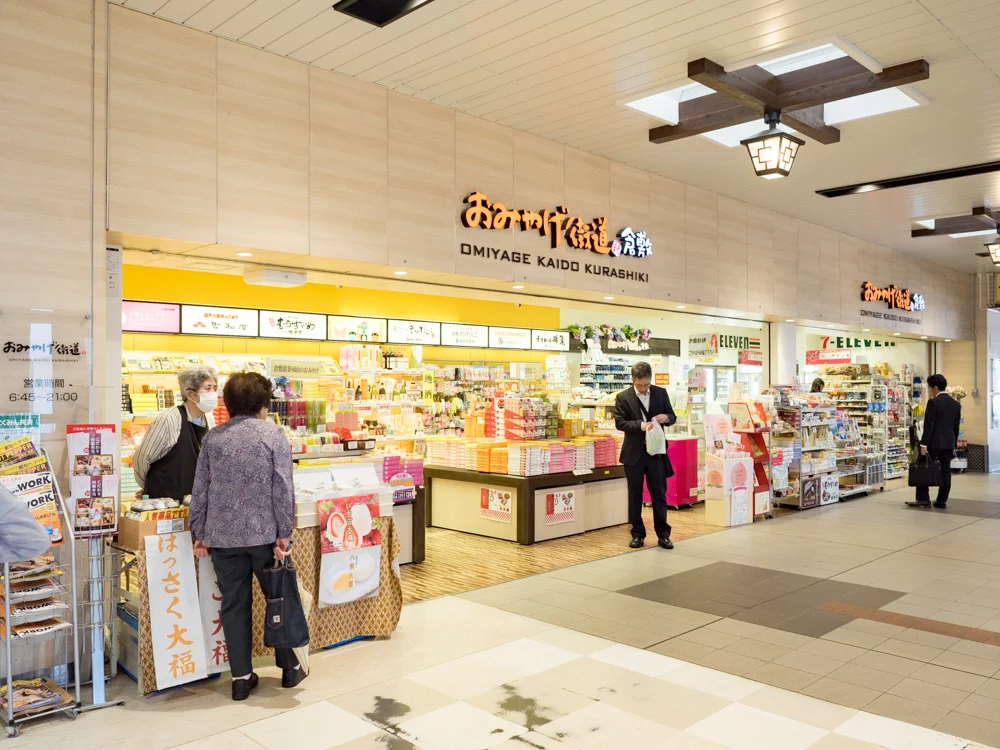
- Souvenir Street Kurashiki (inside JR Kurashiki Station)
- Tenmaya Furusato-kan (1F Ario Kurashiki)
▼Tenmaya Kurashiki Store Souvenir Shop
▼Souvenir Street inside JR Kurashiki Station
▼Ario Kurashiki 1F Tenmaya Furusato-kan
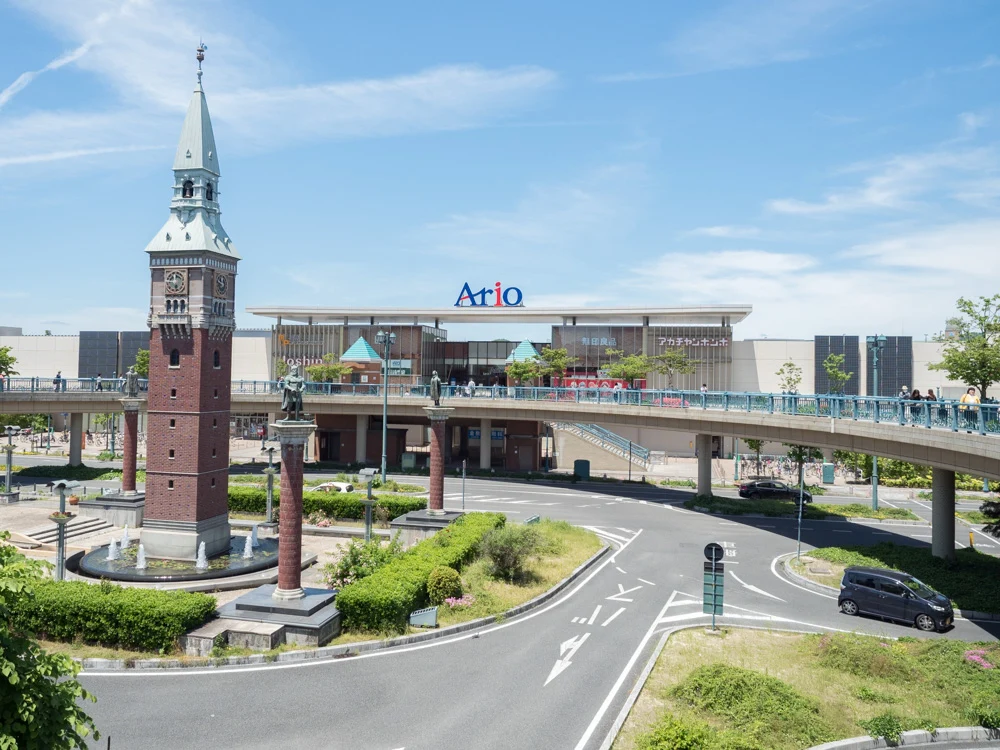
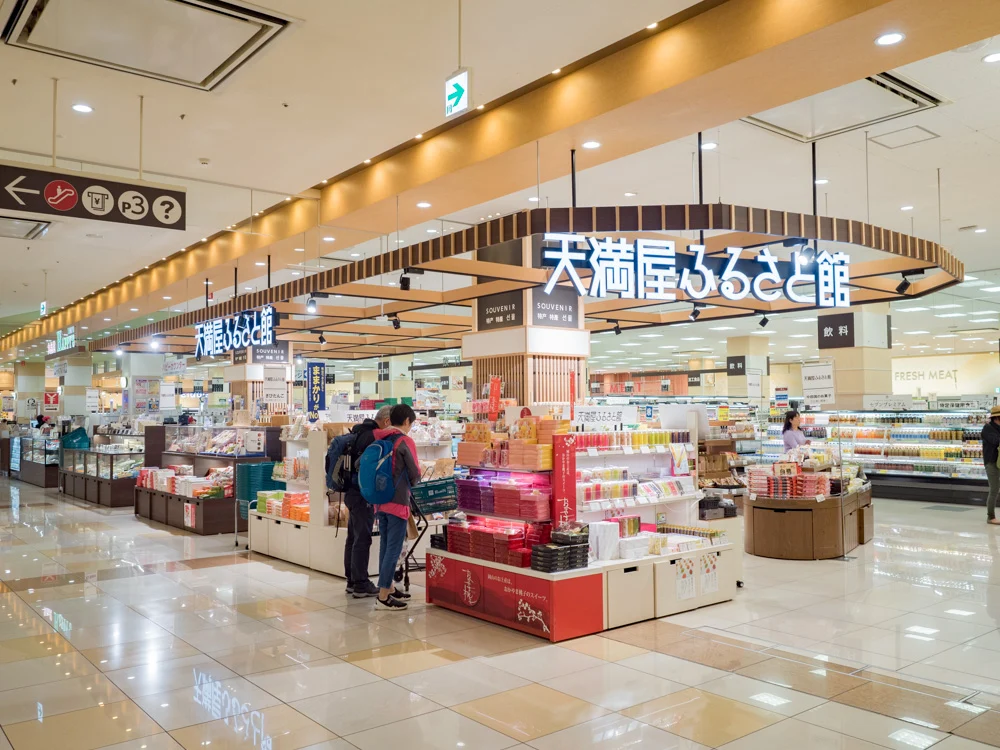
Additionally, the supermarket "Nishina" has various stores in the city, and some stores of the supermarket "Sanyo Marunaka" also carry it.
Furthermore, it is sold at souvenir shops "Souvenir Street" inside JR Okayama Station and Chayamachi Station.
However, since Fujito Manju is a popular product, it may be sold out at any of the stores.
If you want to ensure you get it, it is best to call ahead to either the main store or Kushida store to reserve it, and then go to buy it.
For more details on sales locations, please refer to the official website of Fujito Manju Main Store.
The History of Fujito Manju - Its Origin in the Genpei War
Earlier, it was introduced that Fujito Manju has been around since the late Heian period.
Therefore, I would like to briefly unravel the history of Fujito Manju.
The Villager Murder by Minamoto General Sasaki Moritsuna
Originally, the Fujito area where the current Fujito Manju main store is located was part of an island called "Kojima", situated along the coast.
The Kurashiki River, which flows through the current Fujito area, was once a strait known as the "Fujito Strait".
During the late Heian period, the battle between the Minamoto and Taira clans, known as the "Genpei War", turned the Fujito area into a battlefield, leading to the "Battle of Fujito".
At the time of the Battle of Fujito, the Minamoto general Sasaki Moritsuna plotted to cross the Fujito Strait from the mainland (thought to be near the current Kurashiki City Arishiro) to invade Kojima, where the Taira army was stationed.
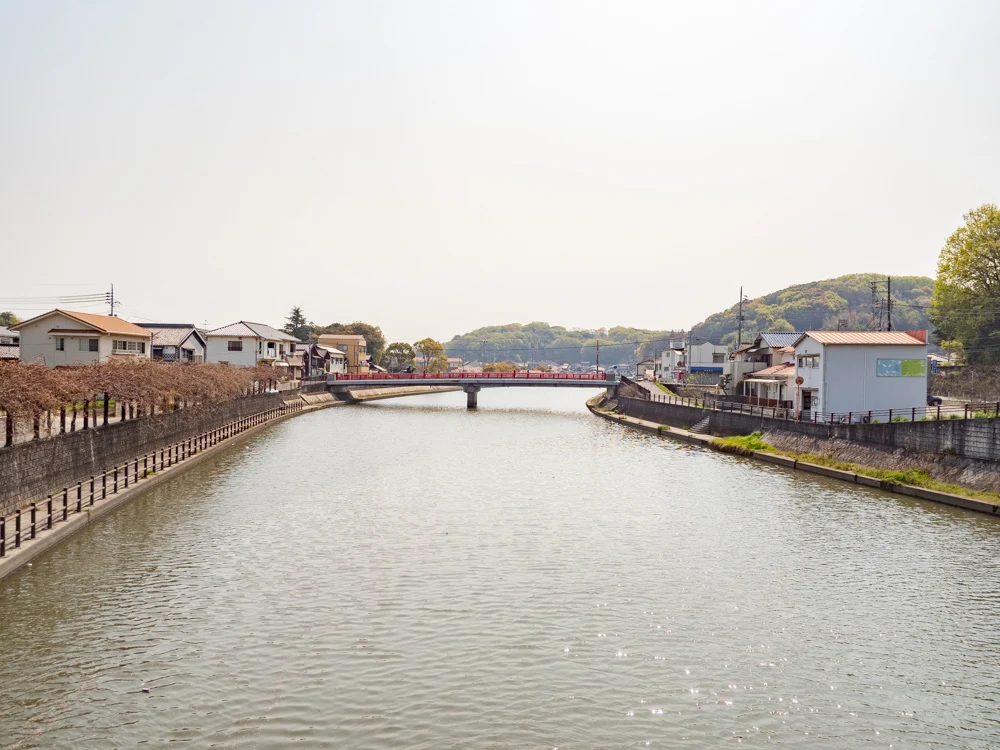
Moritsuna learned from a young local fisherman that there were shallow areas where horses could cross the strait.
With the fisherman's guidance, Moritsuna successfully crossed the Fujito Strait and, just after arriving on the Kojima side, he brutally murdered the fisherman who had guided him by cutting off his head with a sword.
After crossing to Kojima, Moritsuna attacked the castle of the forces led by Taira no Yukimori and achieved great merit.
Due to this achievement, Moritsuna later acquired the territory of Kojima in Bizen Province and became known as a trusted retainer of Minamoto no Yoritomo.
It is said that Moritsuna killed the fisherman to prevent him from revealing his plans to the Taira side, or to claim the victory over the Taira as his own without his allies knowing.
This story is also depicted in the "Heike Monogatari".
Furthermore, it has become a Noh play titled "Fujito", making it well-known as a performance.
The Offering for the Deceased Villager Became the Origin of Fujito Manju
The villagers of the fisherman who was killed held a memorial service at the nearby Fujito Temple to honor the spirit of the fisherman.
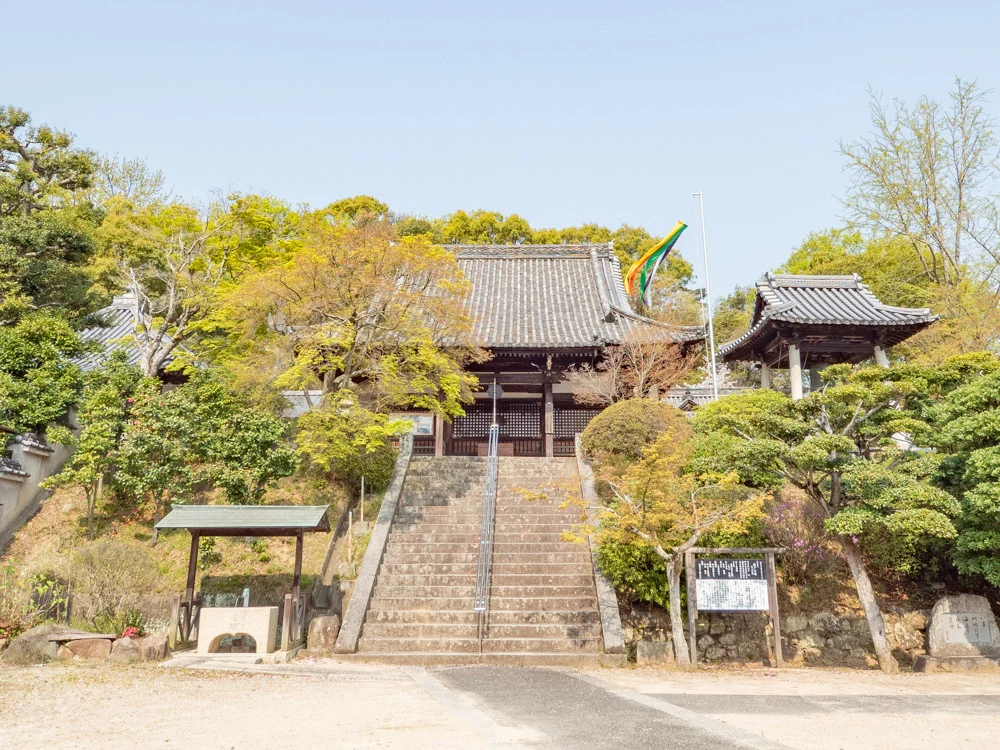
The manju offered during that memorial service is the origin of Fujito Manju.
Eventually, this manju began to be served to worshippers at a tea shop within the grounds of Fujito Temple, gaining popularity.
During the early Edo period, in the Genroku era, a sales shop called "Manza Goya" was established by the family that made the manju.
This Manza Goya is said to be the origin of Fujito Manju Main Store.
Records show that during a memorial service held at Fujito Temple in 1785, Fujito Manju was distributed to worshippers.
By the late Edo period, during the Bunka era, it had taken on a form and flavor similar to the current Fujito Manju.
Then, in 1860, the store was established at the location of the current main store.
▼ Fujito Temple is still located just south of the Fujito Manju main store today.
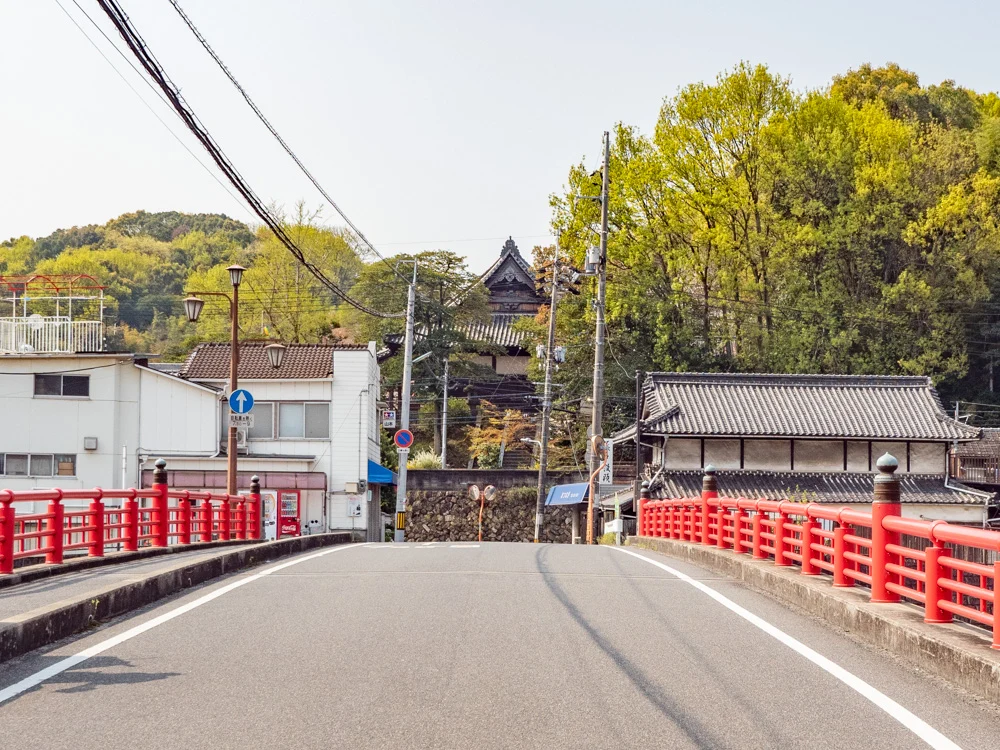
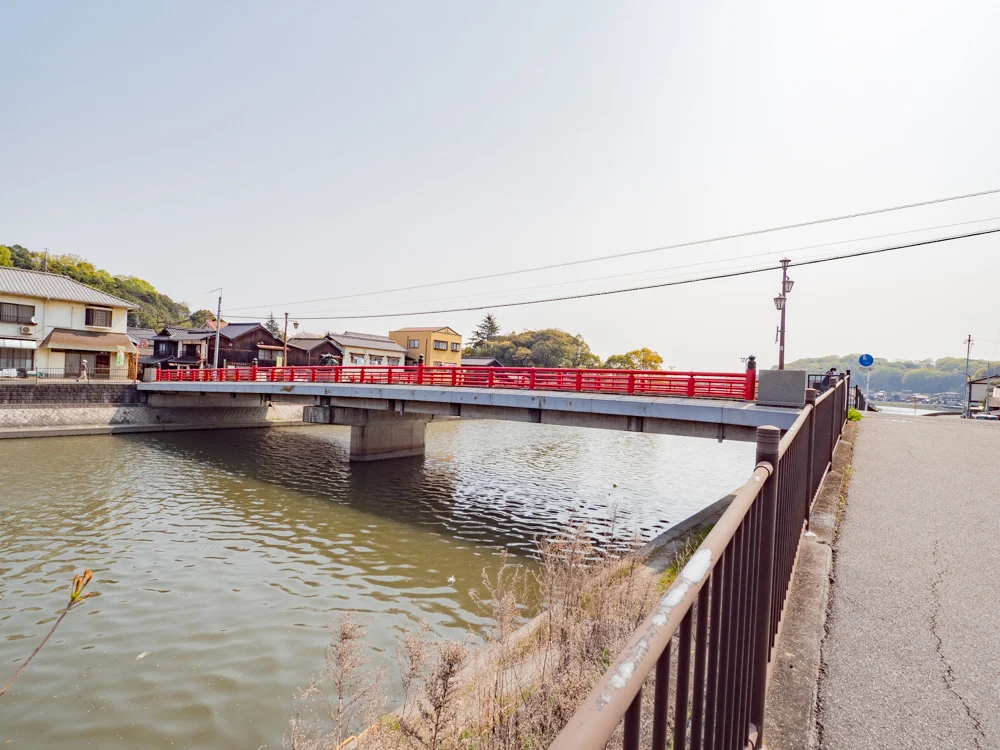
▼ On the back (north) side of the main store, there is a bridge called "Moritsuna Bridge" with striking red railings.
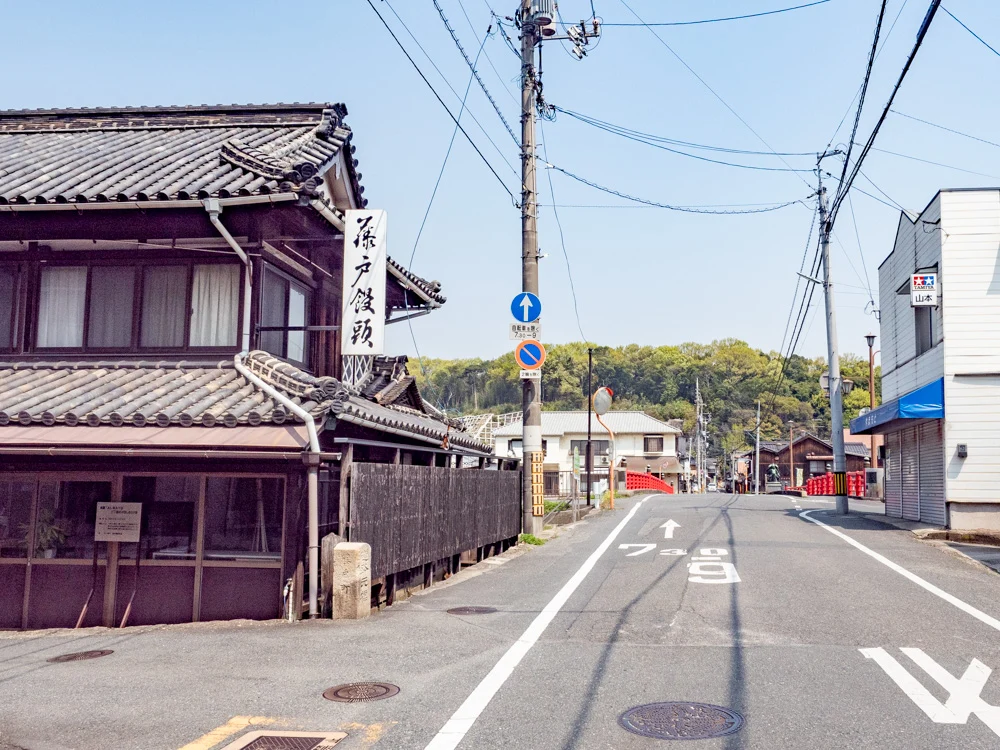
▼ A large statue of Sasaki Moritsuna has been erected on Moritsuna Bridge.
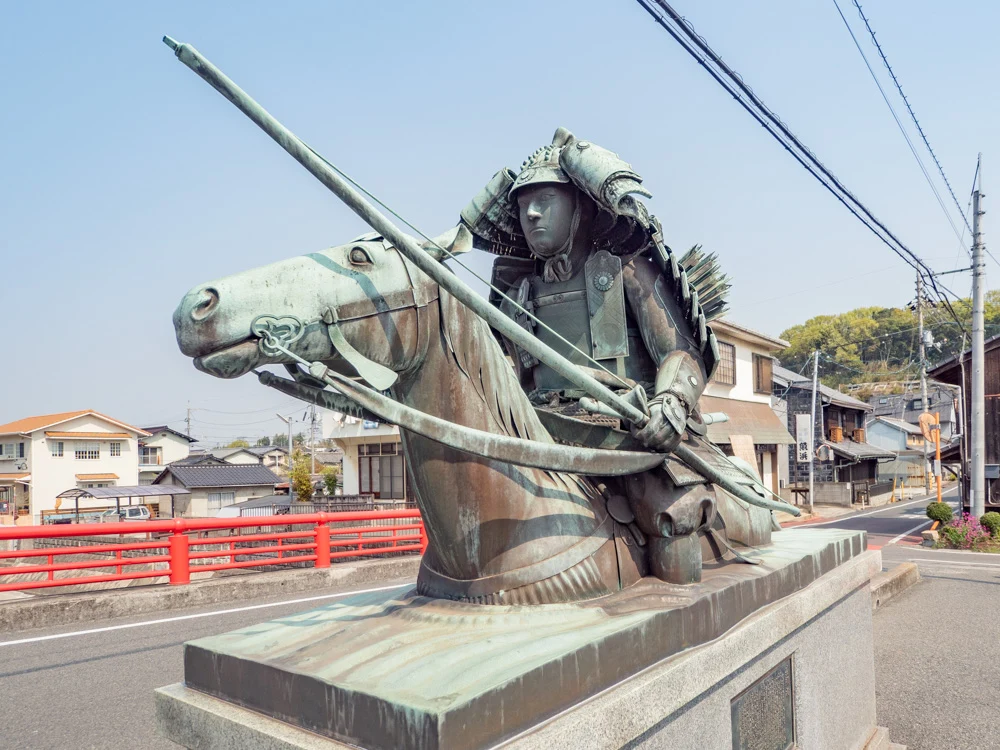
This statue depicts the scene of crossing the Fujito Strait on horseback.
Incidentally, Moritsuna Bridge was constructed in 1926.
The current Moritsuna Bridge was newly built in 1989.
About Fujito Manju Main Store Kuritada Branch
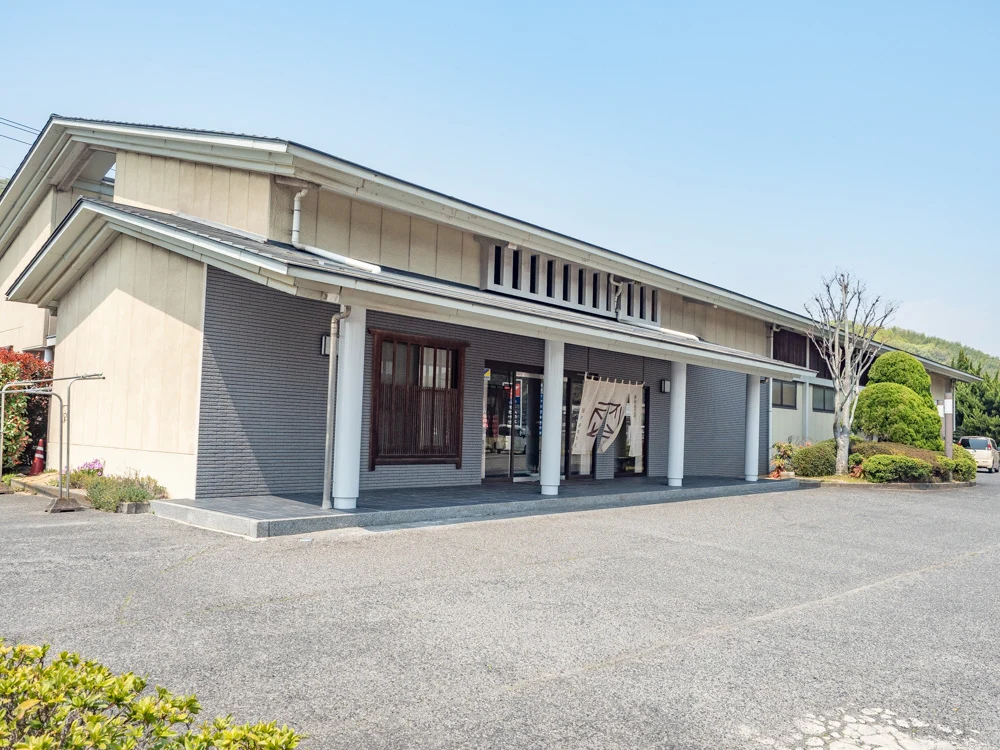
Fujito Manju Main Store has another branch, the Kuritada Branch.
The Kuritada Branch is located about 1.5 kilometers south of the main store, along Prefectural Route 165 (Fujito Hayashima Line) that runs right next to the main store.
The Kuritada Branch is a large store with an attached factory.
▼ The interior is spacious and clean.
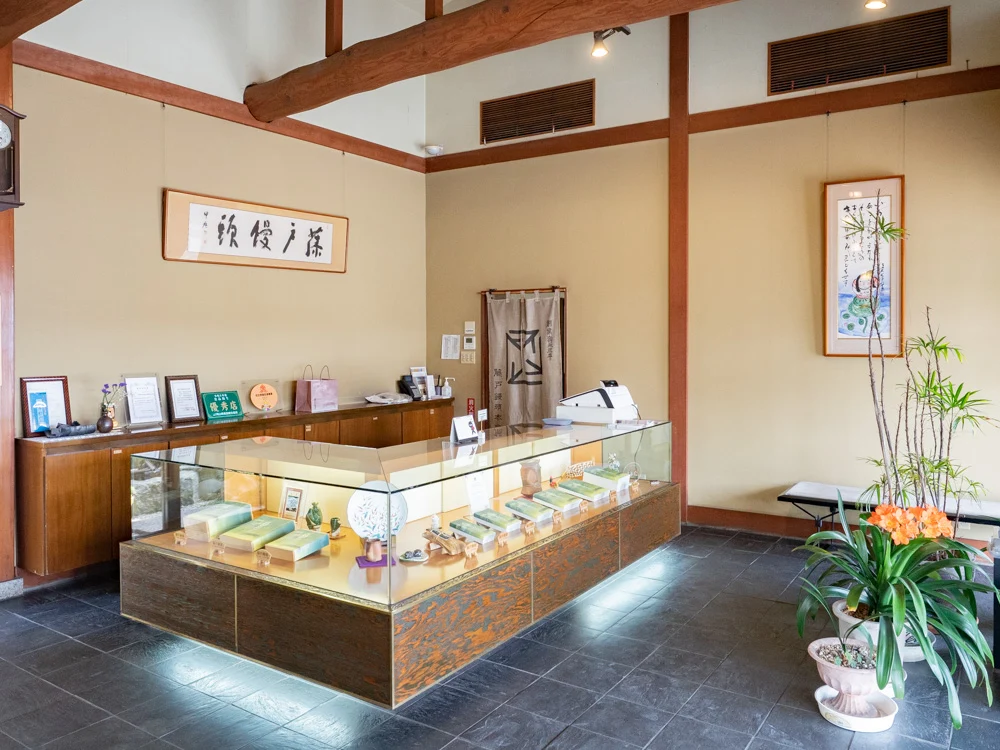
▼ There is a Japanese-style resting area inside the store.
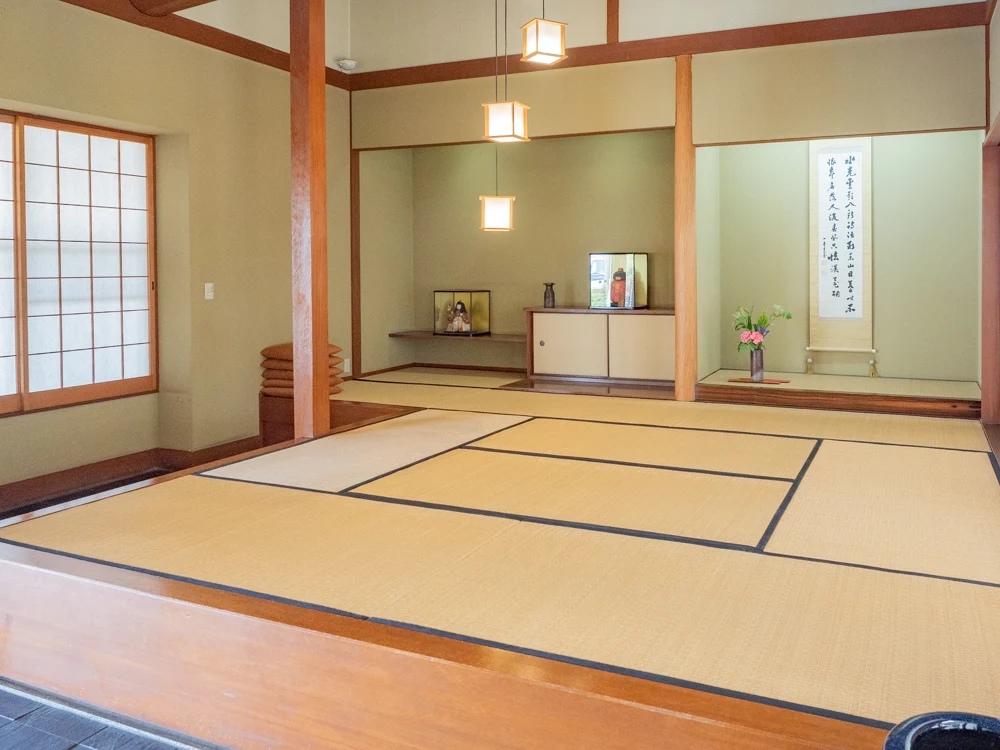
In the resting area, you can eat the Fujito Manju you purchased.
If you want to eat, please let the staff know.
Additionally, because the Kuritada Branch has a factory attached, you may be able to enjoy freshly made Fujito Manju, which is an attractive feature.
Note that the main store does not have a parking lot, but the Kuritada Branch has parking available.
Store Information for Kuritada Branch
| Name | Fujito Manju Main Store Kuritada Branch |
|---|---|
| Address | 919-3 Kuritada, Kurashiki City, Okayama Prefecture |
| Phone Number | 086-485-3221 |
| Parking | Available |
| Business Hours | 8:00 AM - 5:00 PM |
| Closed | Tuesday Second Wednesday ※ If a holiday falls on a regular closing day, we will be open and closed on Thursday |
| Payment Method | Cash |
| Smoking | Completely non-smoking |
| Childcare | Strollers allowed |
| Barrier-Free | Wheelchair accessible |
With over 800 years of history, Fujito Manju is still loved by the people of Kurashiki.
We interviewed the representative director of Fujito Manju Main Store, Kanamoto Hiroyuki.
Data for Fujito Manju Main Store
| Name | Fujito Manju Main Store |
|---|---|
| Address | 48 Fujito-cho, Kurashiki City, Okayama Prefecture |
| Contact | 086-428-1034 |
| Parking | None (Kuritada Branch has parking) |
| Business Hours | 8:00 AM - 5:00 PM |
| Closed | Tuesday Second Wednesday ※ If a holiday falls on a regular closing day, we will be open and closed on Thursday |
| Payment Method |
|
| Website | Fujito Manju |




The smooth red bean paste of Fujito Manju is very popular.
Some customers even want just the paste!