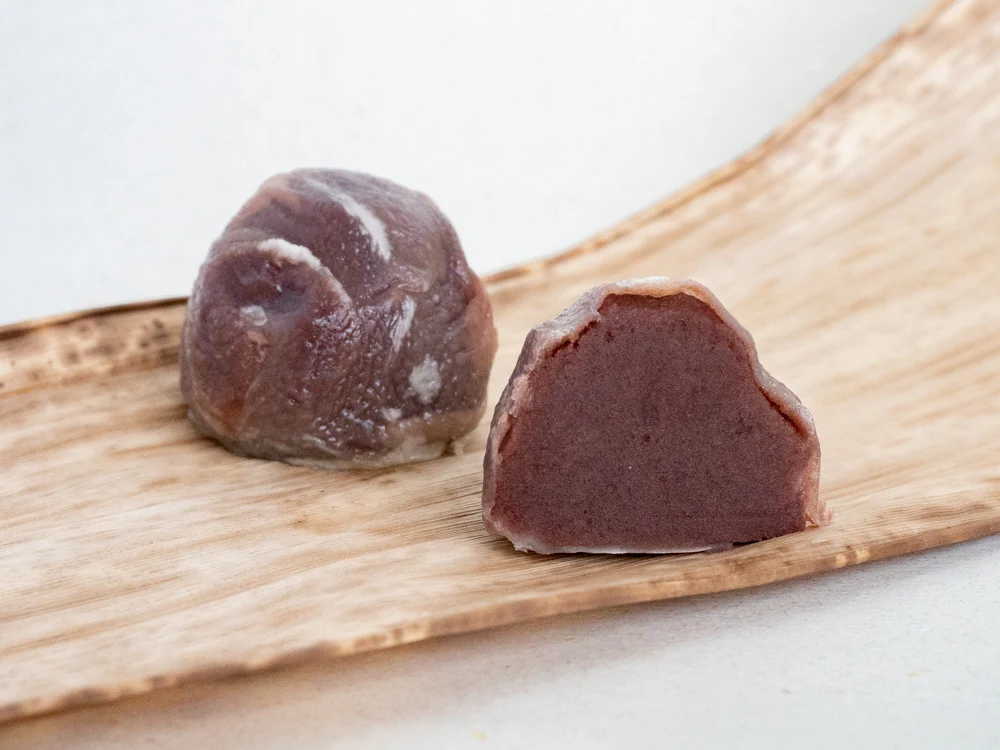
Interview with Hiroyuki Kanamoto, President and Representative Director of Fujito Manju Honpo

Fujito Manju Honpo is one of Kurashiki’s most venerable long-established shops, making the Kurashiki specialty “Fujito Manju” since the Heian period.
We spoke with Hiroyuki Kanamoto of Fujito Manju Honpo about taking over the long-established business, what makes the shop distinctive, its commitment to its products, and its future plans.
Fujito Manju is part of Kurashiki’s history

Fujito Manju Honpo has an exceptionally long history, even by Kurashiki standards.
Kanamoto
Our history goes back to the Genpei War at the end of the Heian period, so we have been around for more than 830 years.
It’s so long ago that there’s a lot we don’t know about the past.
However, some records remain from the Edo period onward.
During the Edo period, our manju were handed out during Buddhist memorial services at nearby Fujito-ji Temple.
The area around Fujito is rich in historic sites connected to the Genpei War.
In fact, Fujito Manju Honpo is included among the sites on the Genpei War heritage trail.
I believe “Fujito Manju” has now become part of Kurashiki’s history, and we manufacture and sell it with a sense of responsibility.
How many do you sell in a day at your busiest?
Kanamoto
At our peak, we make around 20,000 a day.
Our busiest times are around the equinoxes, Obon, and the year-end and New Year holidays.
What’s the best way to eat them?
Kanamoto
I think they taste best freshly made.
At our Kushida store, which has a factory on-site, you may be able to get them fresh depending on the timing, so please ask the staff.
They’re also delicious chilled in the refrigerator.
Customers seem to come up with all kinds of ways to eat them, and some know more about it than I do (laughs).
For example, some freeze them and eat them like azuki bean ice cream, put them in sandwiches, or make tempura with them…
It seems everyone has their own way of enjoying them.
Many customers still insist on buying it at the main store

The building has a historic feel to it. How old is it?
Kanamoto
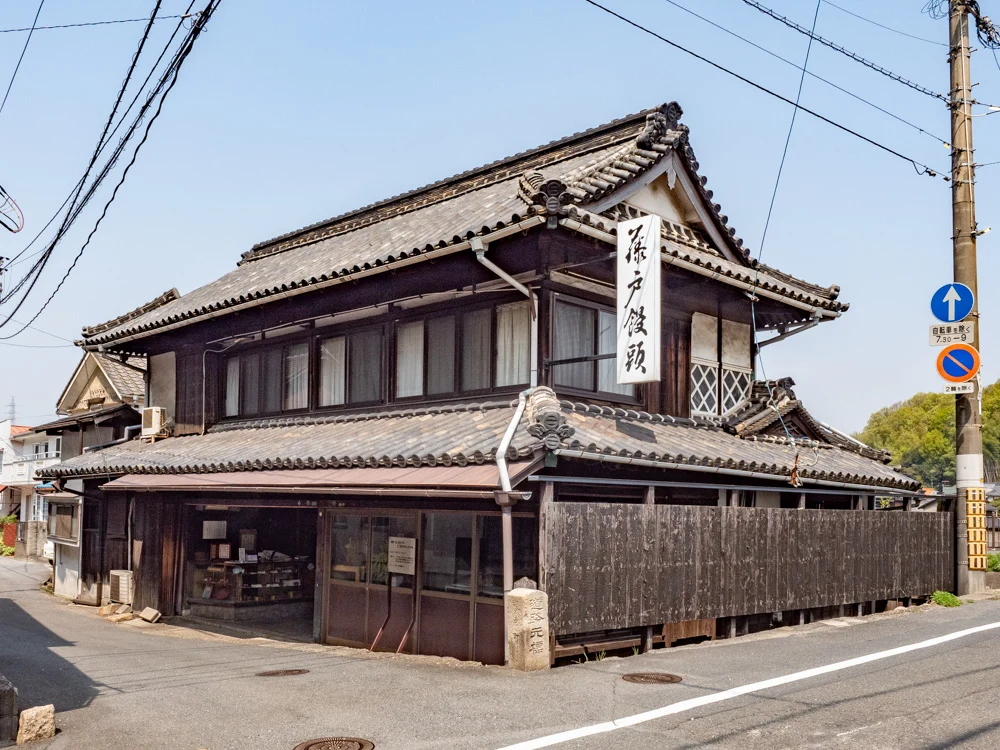
It was built in the early Meiji period, so it has a history of more than 100 years.
Its atmospheric appearance made it a film location, which came as a surprise when we were approached.
The film directors themselves visited all the candidate locations before choosing Fujito Manju Honpo, so we were very honored.
People who have seen the film sometimes visit as part of a tour of its filming locations.
What other kinds of customers do you get?
Kanamoto
Many local customers go to our Kushida store, which has a parking lot.
On the other hand, some customers make a point of coming to buy from the main store. They insist, “Fujito Manju has to be bought at the historic main store.”
There are many older customers like that.
We’ve also been getting a lot of young tourists lately.
They come to the main store to buy Fujito Manju and take photos of the store, hoping to get pictures that will look good on social media.
The Fujito Manju wrapped in bamboo leaves is also popular for the same reason.
They don’t expand too much, but adopt what they need

Fujito Manju Honpo has been around for a very long time. What do you, as president, focus on?
Kanamoto
Not expanding too much, and running the business at a scale that suits us.
At one point in the past, we also sold red-and-white celebratory manju and monaka. Since I took over, we’ve focused solely on Fujito Manju.
We’re focused on continuing to sell the product that has been made here for generations.
We have two stores: the main store and the Kushida store.
Originally, there was a workshop and a storehouse behind the main store.
However, they had to be demolished to make way for bank protection work along the Kurashiki River, so in 1990 we built the Kushida store, with a factory on-site.
So we have no plans to open more than two stores.
Wouldn’t there be demand for souvenirs if you had a store near tourist spots such as the station or the Bikan Historical Area?
Kanamoto
Although we don’t have stores near the station or the Bikan Historical Area, our products are available at department stores, local supermarkets, and souvenir shops inside the station.
You can buy them near the station or the Bikan Historical Area by shopping at those places.
Have you considered selling by mail order, such as online?
Kanamoto
We haven’t considered mail order.
Fujito Manju contains no additives, so it has a relatively short shelf life.
We’re committed to making it without additives and want people to eat it while it’s fresh, so mail order is difficult.
We hope you’ll come to Kurashiki, try it, and experience the city’s history.
Some customers actually visit Kurashiki as tourists because they’re looking forward to trying Fujito Manju.
Fujito Manju has changed with the times to become what it is today

Fujito Manju has a long history. Have its flavor and production methods remained unchanged?
Kanamoto
No. They’ve changed with the times.
I’ve heard that the original Fujito Manju was more like a rice cake.
Of course, that was a long time ago, and there are no records, so I’ve only heard it as an oral tradition and don’t know the details.
Fujito Manju took on its current flavor and shape during the Edo period.
Since then, while keeping the ingredients, flavor, and shape the same, we’ve introduced machinery and made other changes so we can produce delicious Fujito Manju consistently and hygienically.
We also introduced packaging machinery when we built the Kushida store.
I believe that tradition cannot be preserved unless we retain what has been good from the past while also adopting new things to help preserve it.
Speaking of new initiatives, it seems you’ve made collaborative products with other companies.
Kanamoto
That’s right. To be precise, we provide our smooth red bean paste for use in their products.
They’re the sandwich shop “Motoya” in the West Building at JR Kurashiki Station, and Hotel Granvia at Okayama Station.
Motoya’s product was created as part of a Tenmaya project: a fruit sandwich with Fujito Manju’s smooth red bean paste and strawberries.
It was sold for a limited time at Tenmaya Kurashiki, and apparently it was well received.
Since then, Motoya has sold it regularly, and Tenmaya Kurashiki sells it once a week.
Please give it a try!
Hotel Granvia, meanwhile, made a parfait.
It was topped with yokan made from Fujito Manju’s smooth red bean paste, as well as ice cream with the paste mixed in.
It was sold for a limited time in the lounge in the first-floor lobby of Hotel Granvia, and apparently it was well received too.
Both products came about because the companies wanted to make something using Fujito Manju’s smooth red bean paste.
That makes us very happy.
The pressure and sense of duty involved in protecting a historic name

What are your plans for the future?
Kanamoto
Above all, it’s about passing down Fujito Manju, a product with a long history, and the shop to future generations.
I feel a sense of duty to do that.
The weight of that history also brings a lot of pressure (laughs).
As I said earlier, I believe Fujito Manju is part of Kurashiki’s history and a treasure of the community.
To that end, we need to avoid expanding too much while adopting new things when necessary.
We need to keep doing that.
To keep going for a long time, “perseverance is strength.”
Also, my daughter is helping out with the business now.
Gradually handing things over to the next generation is another important goal for the future.
From the Writer
Fujito Manju is filled with smooth red bean paste, making it irresistible for fans of the filling.
It also has a lovely, subtle amazake flavor.
The smooth, refined red bean paste is not too sweet, and I think it’s easy to enjoy even if you don’t usually like sweets.
Fujito Manju is sold at a limited number of locations and has a relatively short shelf life.
Perhaps part of its appeal is that you can only buy it by coming to Kurashiki.
With its very long history, Fujito Manju is the perfect souvenir from Kurashiki.
Be sure to try it when you visit Kurashiki.
Fujito Manju Honpo (Main Store) Information
| Name | Fujito Manju Honpo (Main Store) |
|---|---|
| Address | 48 Fujito, Fujito-cho, Kurashiki City, Okayama Prefecture |
| Contact | 086-428-1034 |
| Parking | None (Parking available at the Kushida store) |
| Hours | 8:00 a.m.–5:00 p.m. |
| Closed | Tuesday Second Wednesday ※ If a regular closing day falls on a public holiday, the store is open and closes on Thursday instead |
| Payment methods |
|
| Website | Fujito Manju |

What would you like to know about Kurashiki?
Enter a word to search articles on this site