Before the COVID-19 pandemic, the “Kurashiki Eighty-Eight Temple Pilgrimage” was held twice a year. It resumed on November 16, 2022.
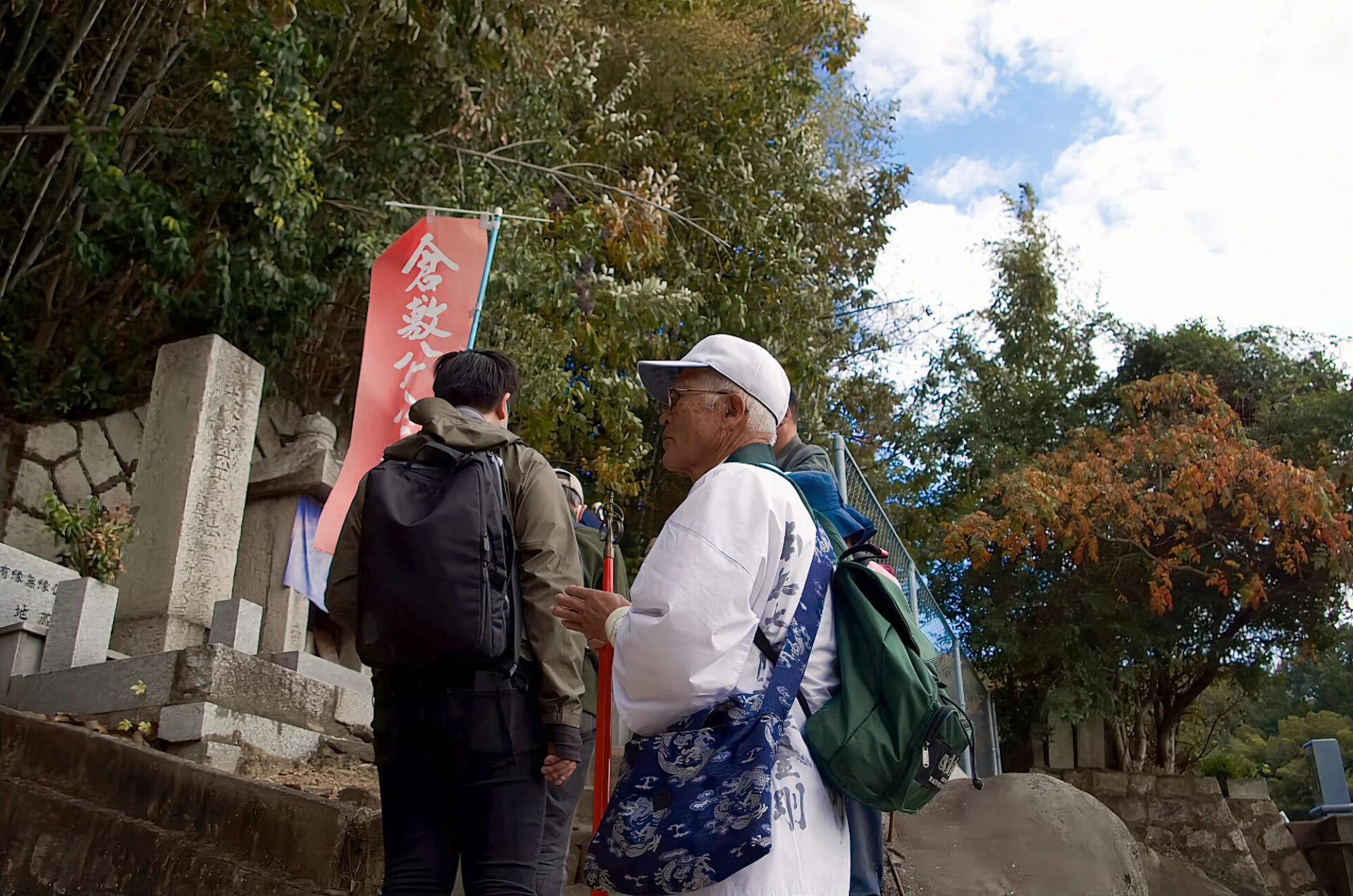
Despite it being a weekday, more than 30 people gathered to take part, setting out from Kanryuji Temple, the meeting point, and visiting the Bikan Historical Area, Mukoyama, downtown Kurashiki, and other places.
Here, we introduce the “Kurashiki Eighty-Eight Temple Pilgrimage,” which offers a sense of cultural heritage dating back to the Edo period, with a focus on photographs.
The information presented was accurate when this article was published in December 2022. Please note that it may differ from current information.
What is the “Kurashiki Eighty-Eight Temple Pilgrimage”?
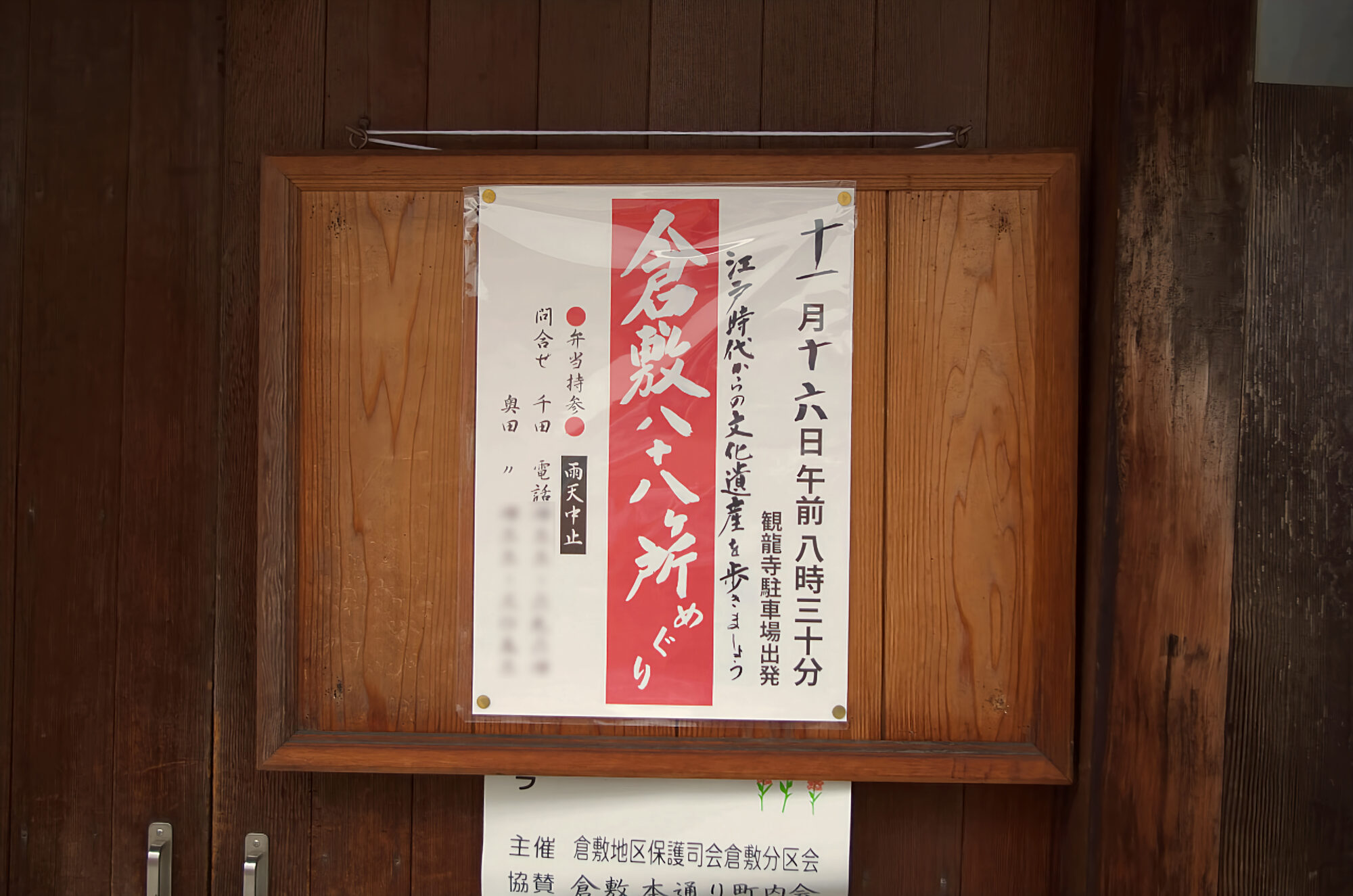
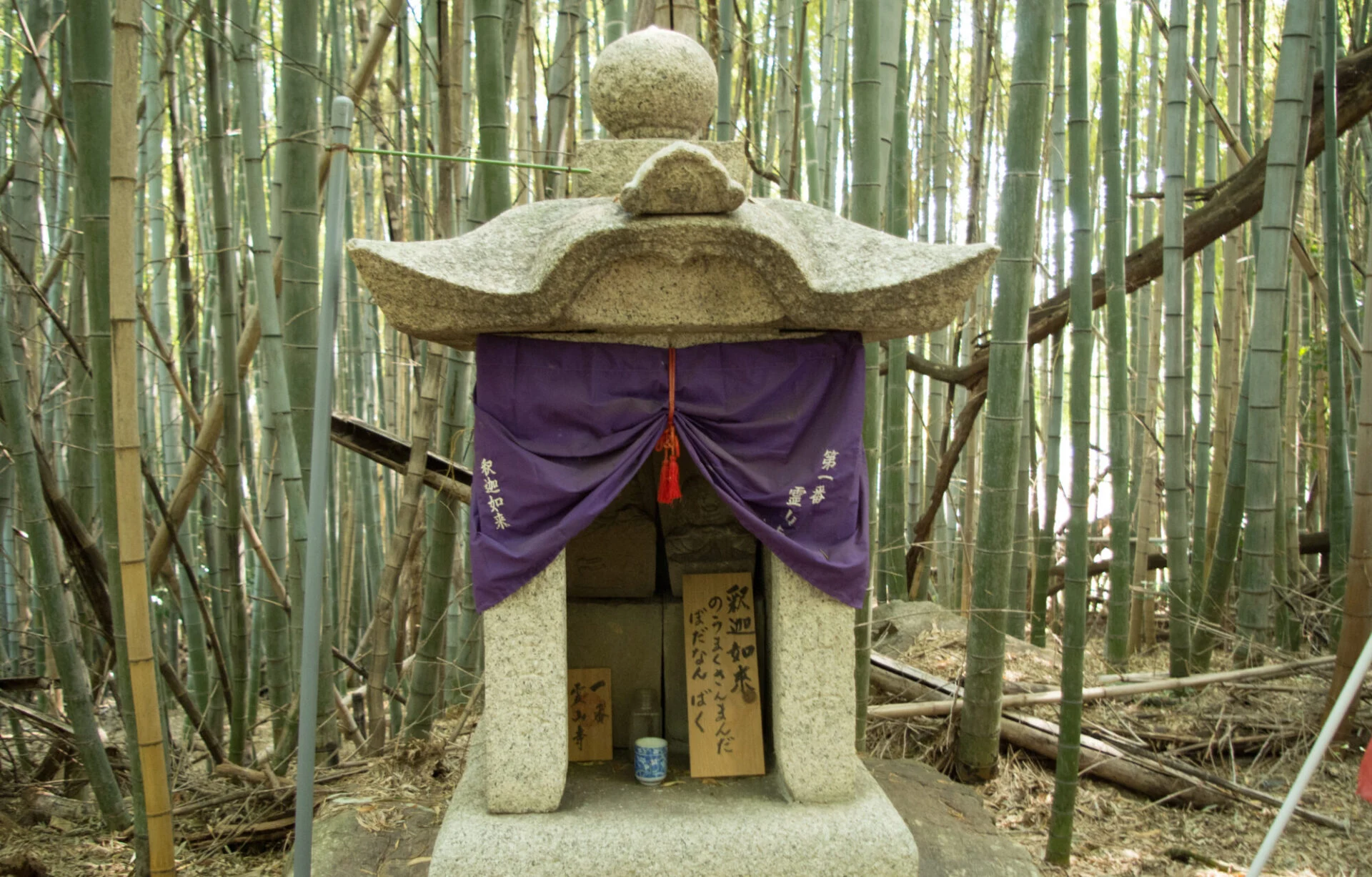
The “Kurashiki Eighty-Eight Temple Pilgrimage” is based on the “Shikoku Eighty-Eight Temple Pilgrimage,” which visits temples associated with Kobo Daishi (Kukai).
In the past, traveling to Shikoku alone was not easy because of the distance, time, and expense involved. As a result, “replica pilgrimages” were created throughout Japan as small-scale versions of the Shikoku pilgrimage.
The “Kurashiki Eighty-Eight Temple Pilgrimage” is one such replica pilgrimage in downtown Kurashiki.

Now, let’s make the pilgrimage together!
No advance reservation is required to take part in the “Kurashiki Eighty-Eight Temple Pilgrimage.”
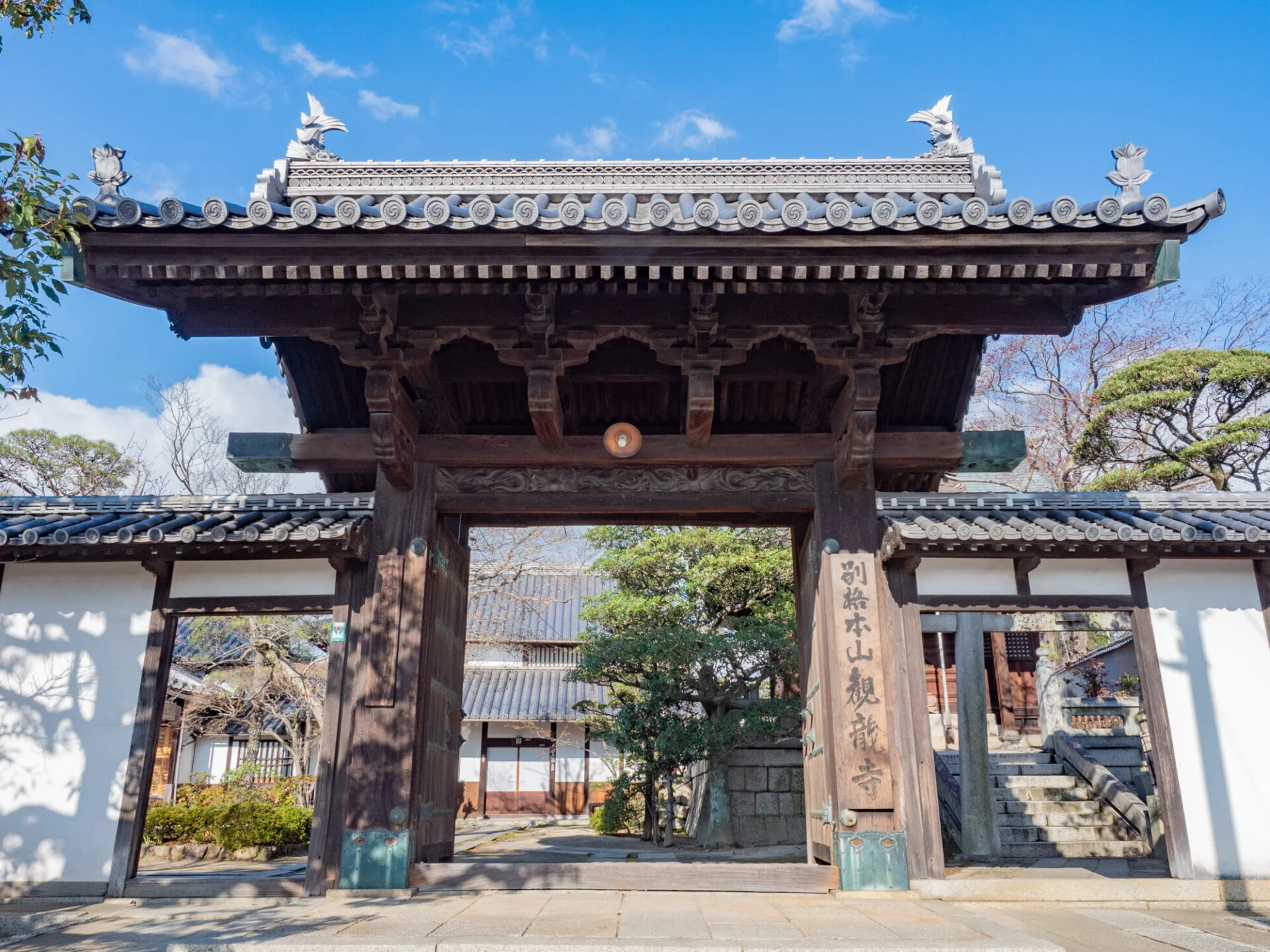
You can join by going to the Kanryuji Temple parking lot by the meeting time on the day.
Meet at the Kanryuji Temple parking lot
Despite the early hour of 8:30 a.m., many participants (about 30 people) gathered in the Kanryuji Temple parking lot.
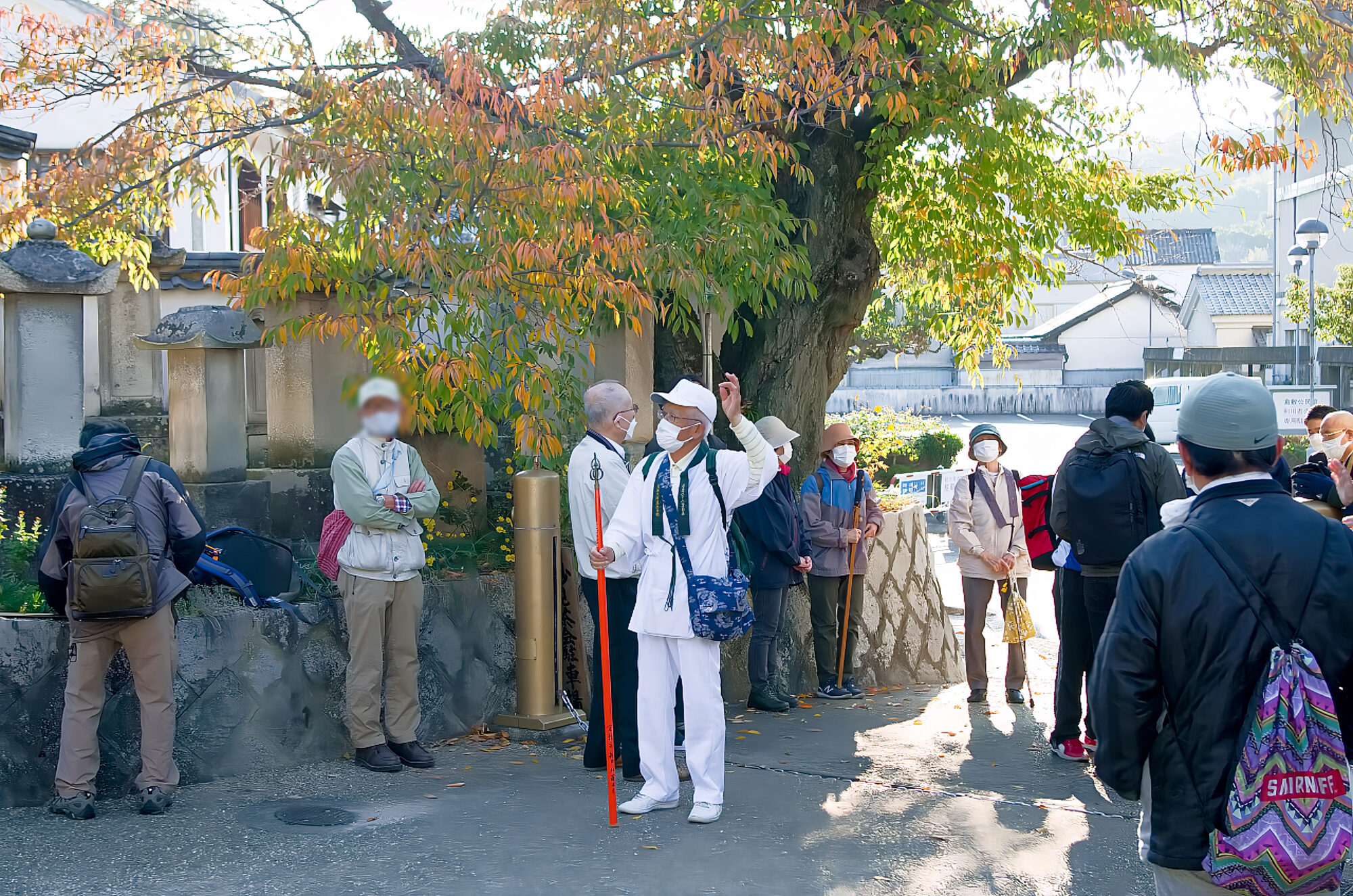
Participants making the pilgrimage for the first time walk in Group 1, while those taking part for the second time or more walk in Group 2.
▼Mr. Kato, an official guide for the Kurashiki Eighty-Eight Temple Pilgrimage, leads Group 1, while Kanryuji’s Chushun leads Group 2.
▼The group sets out from the Kanryuji Temple parking lot.
The first pilgrimage site is No. 74, just to the right as you head from the Bikan Historical Area toward Tsurugata Tunnel.
It is tucked away behind houses and may be difficult to find if you are not looking for it.
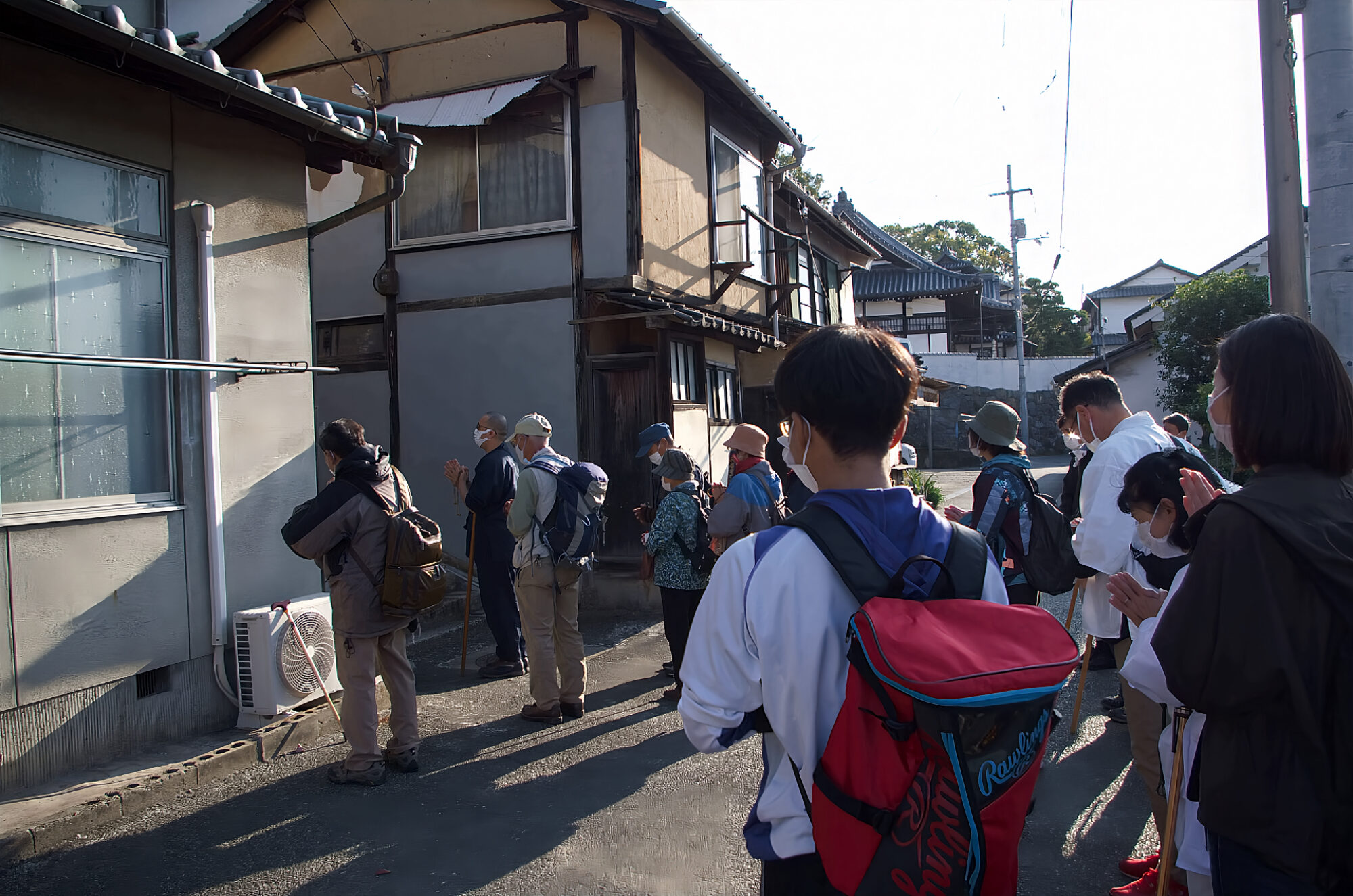
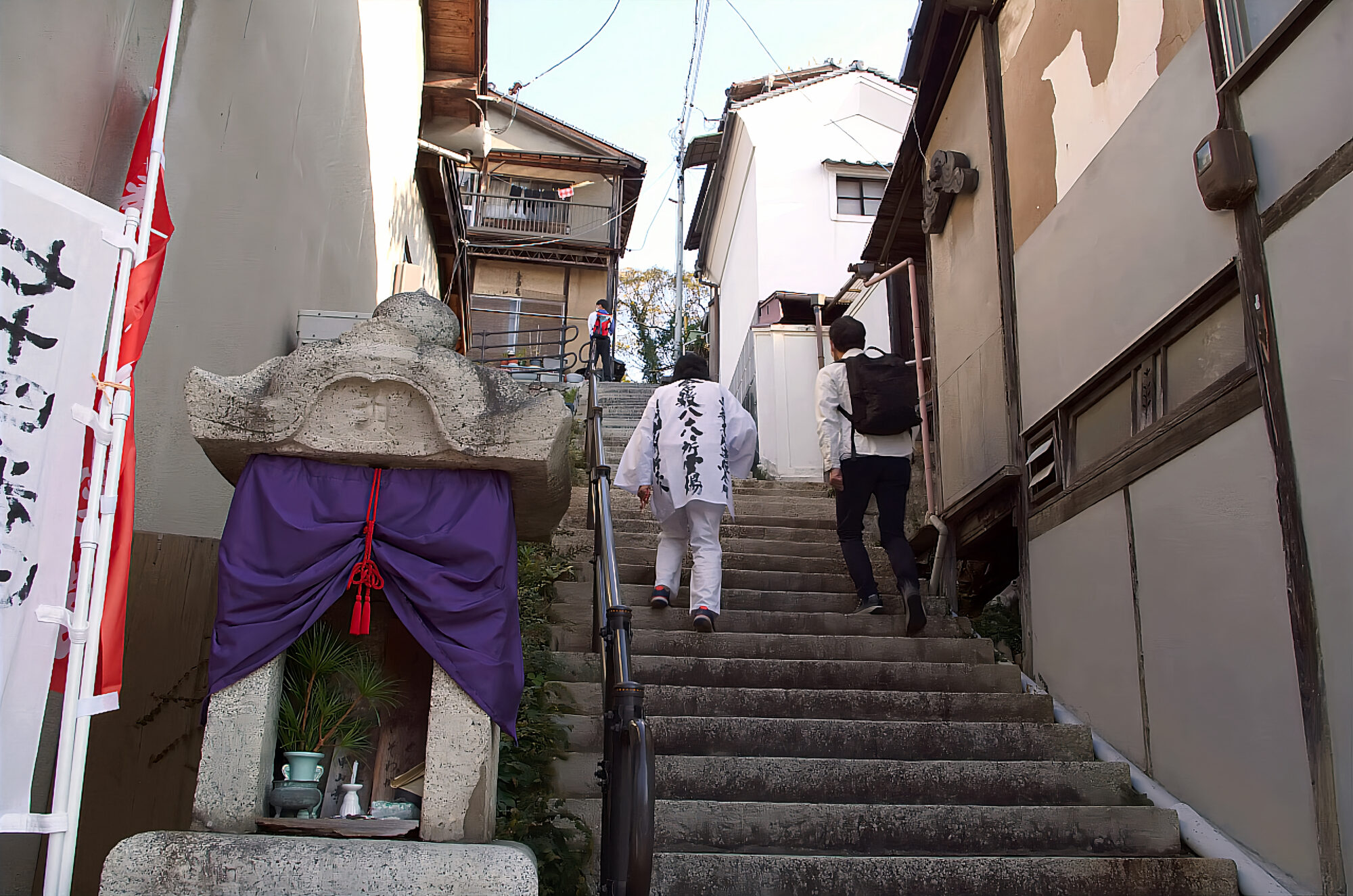
▼This is pilgrimage site No. 74.
Red and white banners and the stone structure mark the site.
Go up the stone steps on the right, turn left, and then return to Kanryuji Temple.
Introductions to the guides and others, and Chida’s retirement from the secretariat
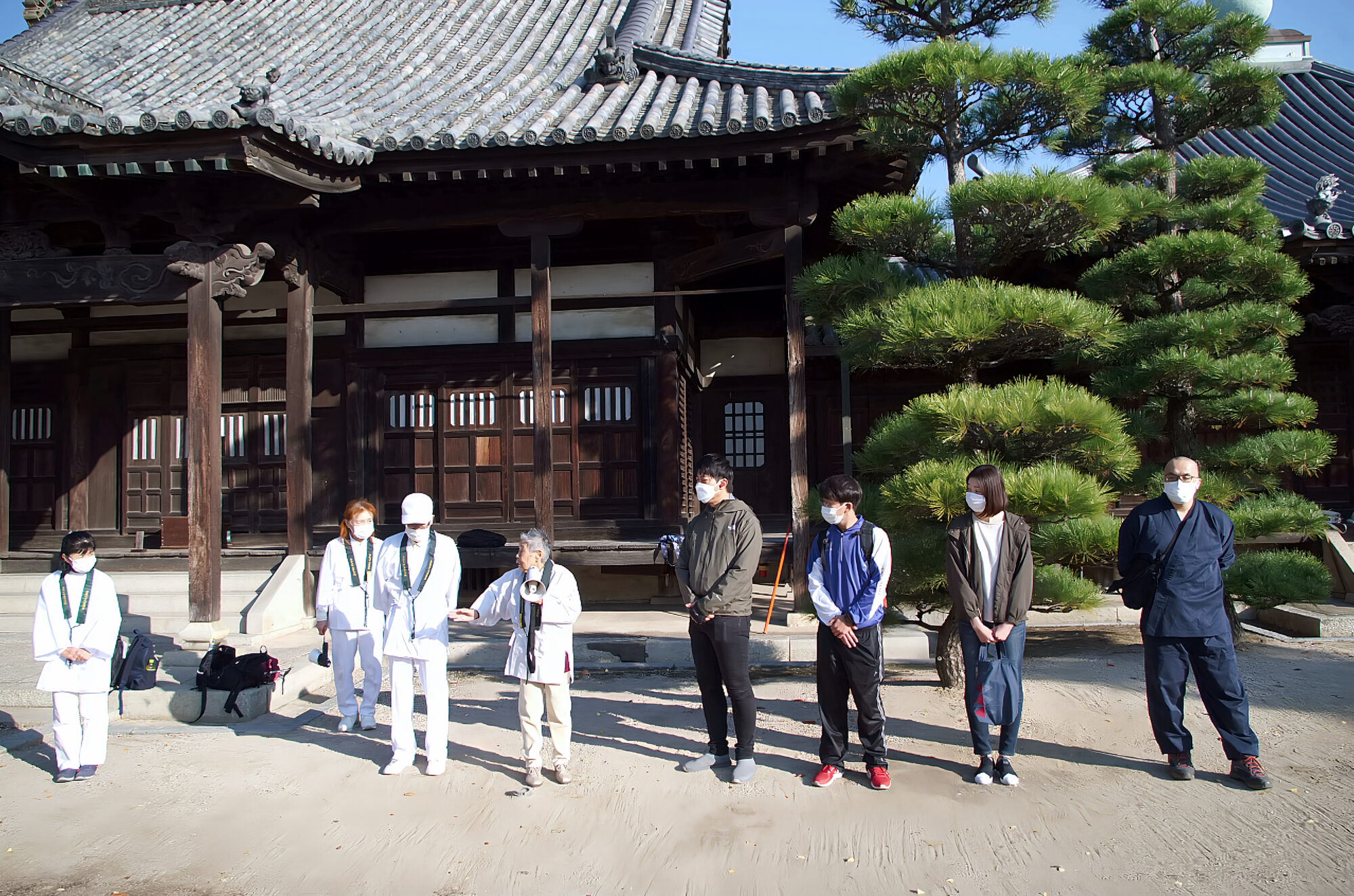
After returning to Kanryuji Temple, the guides and others are introduced before the main walk begins.
▼From the left: Mr. Okuda, Mr. Uchida, Mr. Kato, Mr. Chida, three representatives of Nakahara Sanpodo, and Kanryuji’s Chushun.
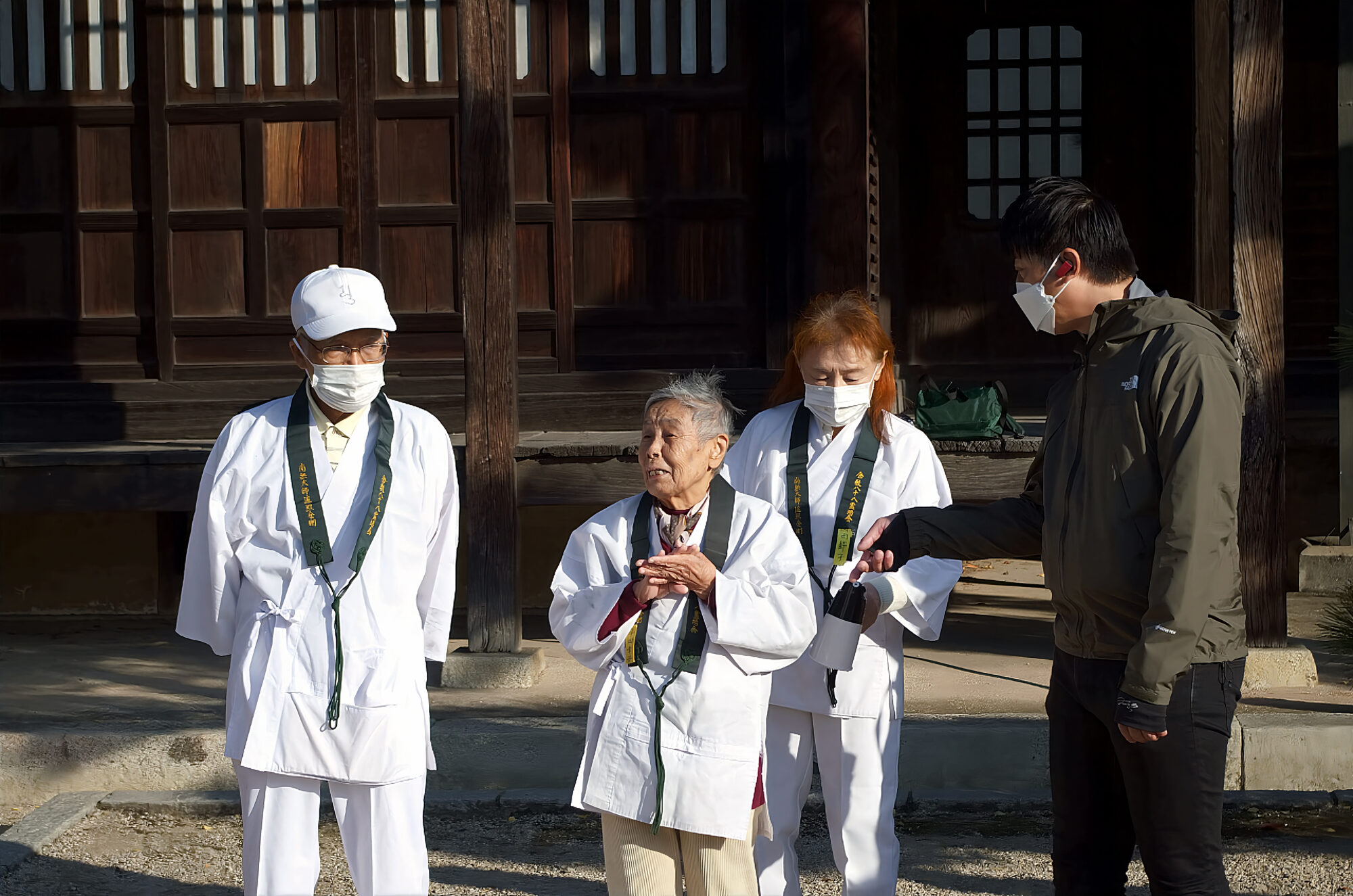
It was announced that Mr. Chida would be retiring after having devoted himself to the secretariat of the “Kurashiki Eighty-Eight Temple Pilgrimage” for many years.
As of 2022, Mr. Chida was 90 years old and had served the secretariat for an impressive 30 years.
While we feel sad that Mr. Chida, a deeply devout person who has supported this group for many years, is retiring, we cannot help but hope that the “Kurashiki Eighty-Eight Temple Pilgrimage” will continue to be protected and passed down in the years to come.
It was also announced that the Kurashiki Chuo Rotary Club and others would provide assistance going forward.
▼Mr. Chida gives a greeting. He is so alert and energetic that it is hard to believe he is 90. Perhaps he is blessed by Kobo Daishi.
Around Tsurugatayama: through the Bikan Historical Area and on to Mukoyama
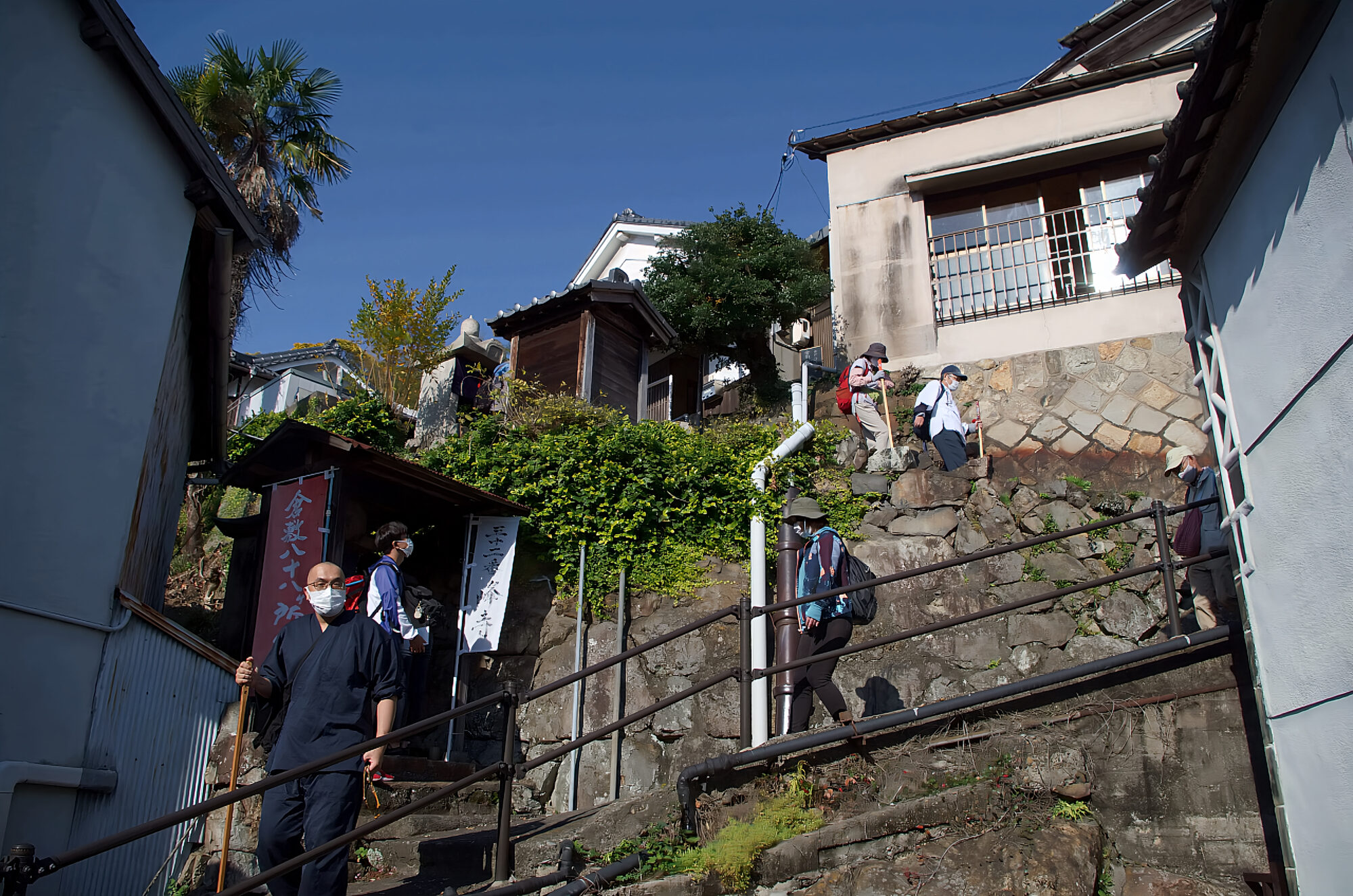
▼The writer joined the group near pilgrimage site No. 32. The route also takes you along narrow, winding, steep paths like this one.
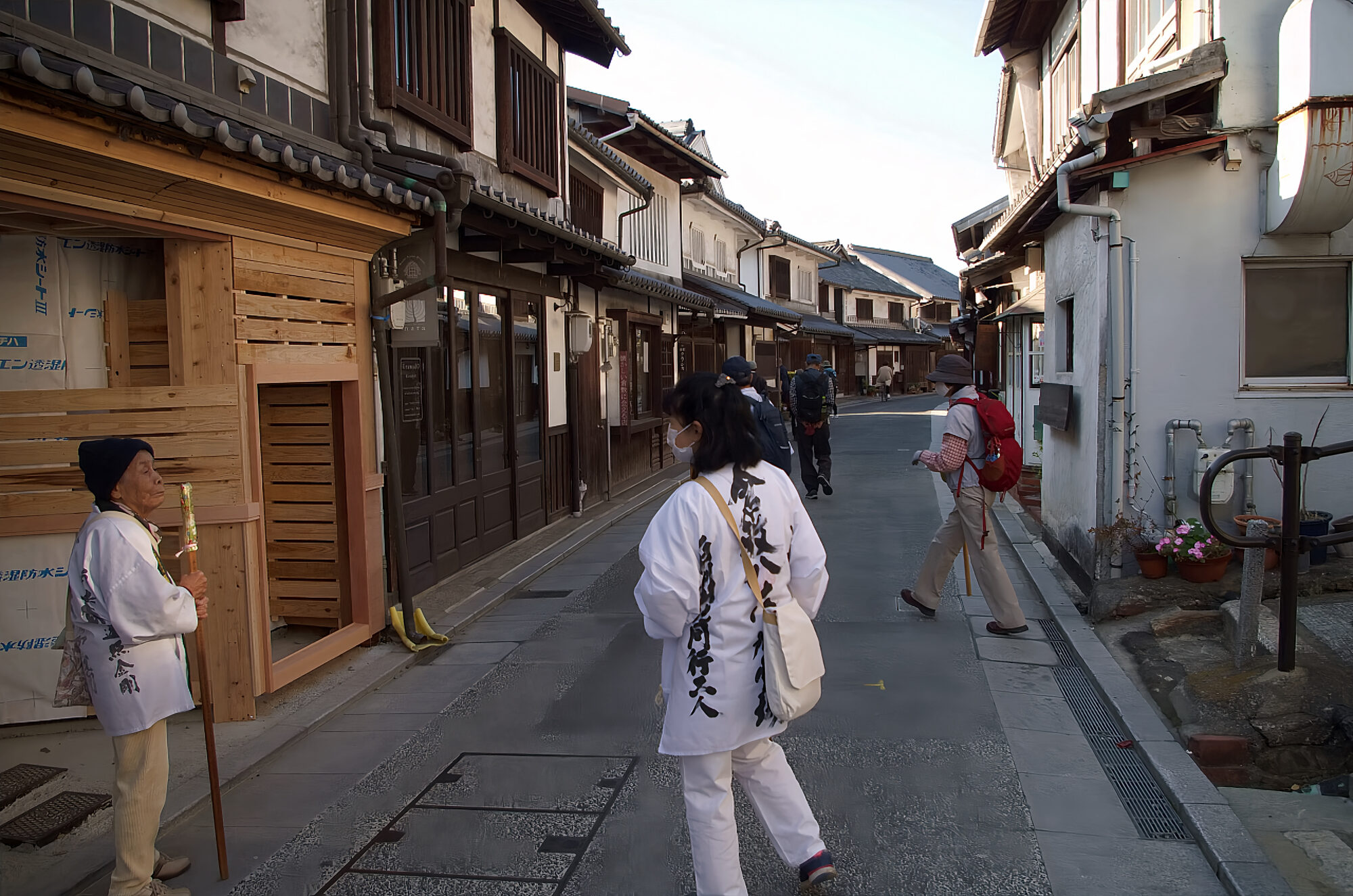
▼Descending from pilgrimage site No. 32 brings you to Honmachi Street in the Bikan Historical Area. There, we met Mr. Chida, who was making the pilgrimage with the group separately.
His dignified presence lifted our spirits.
Let’s head south from the Bikan Historical Area toward Mukoyama, visiting pilgrimage sites No. 66 and No. 85 along the way.
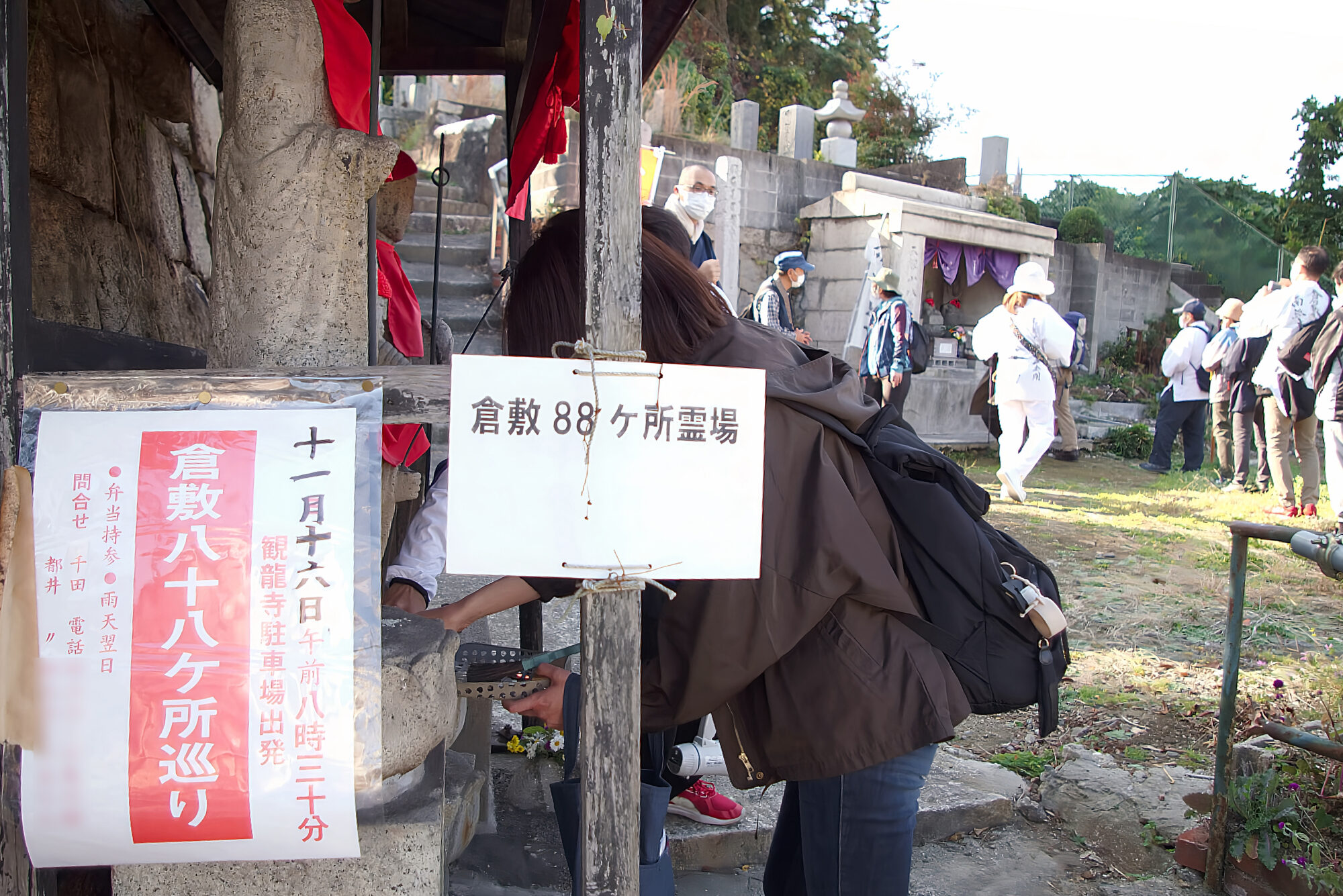
▼As participants pray at each pilgrimage site, staff members organize offerings and other items.
Rather than leaving offerings of rice and monetary donations in place, each site also needs to be carefully cleaned.
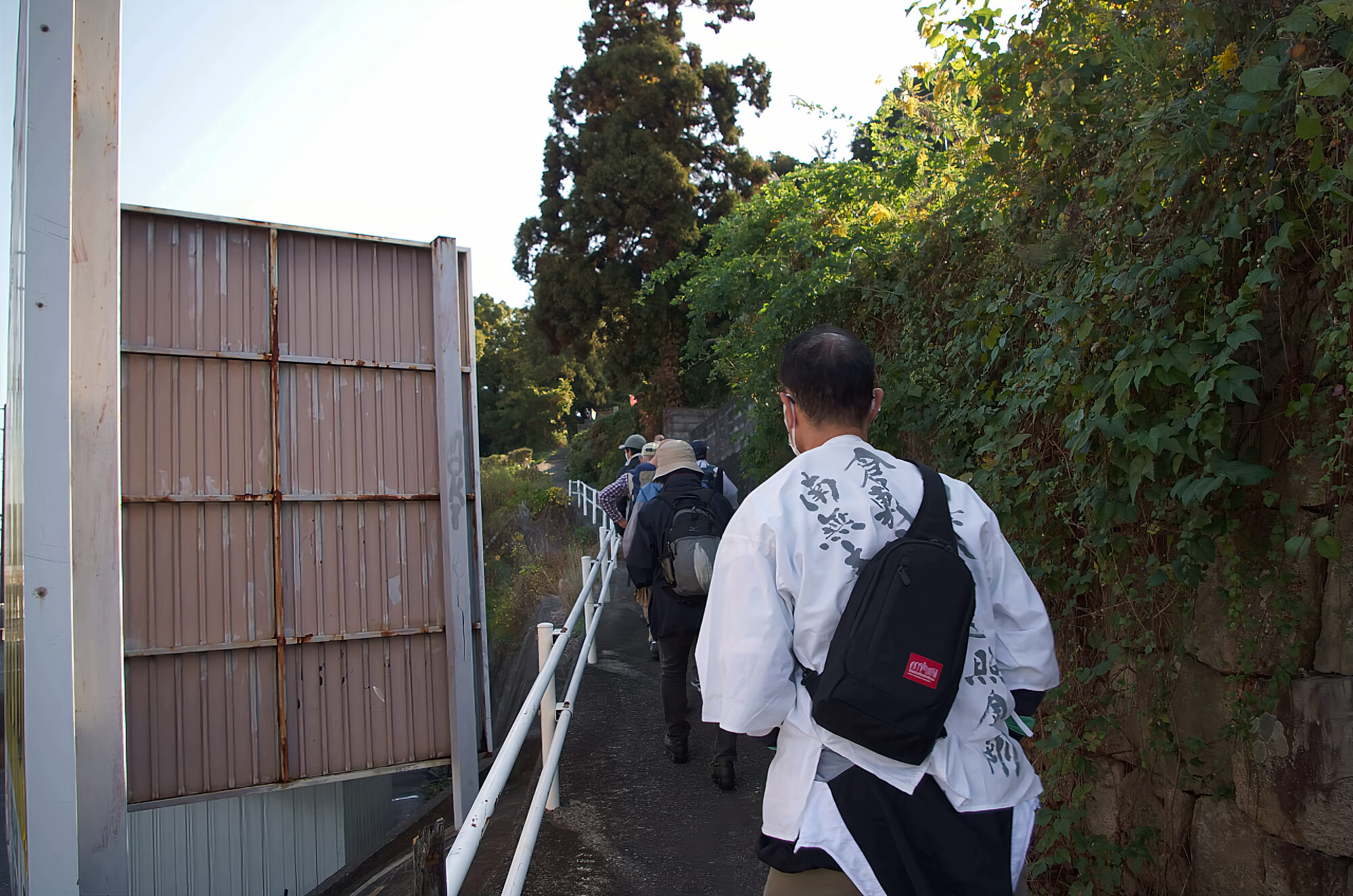
▼From here, we begin the steep climb up Mukoyama.
The steep mountain path continues, so walk slowly at a pace that suits you, without rushing.
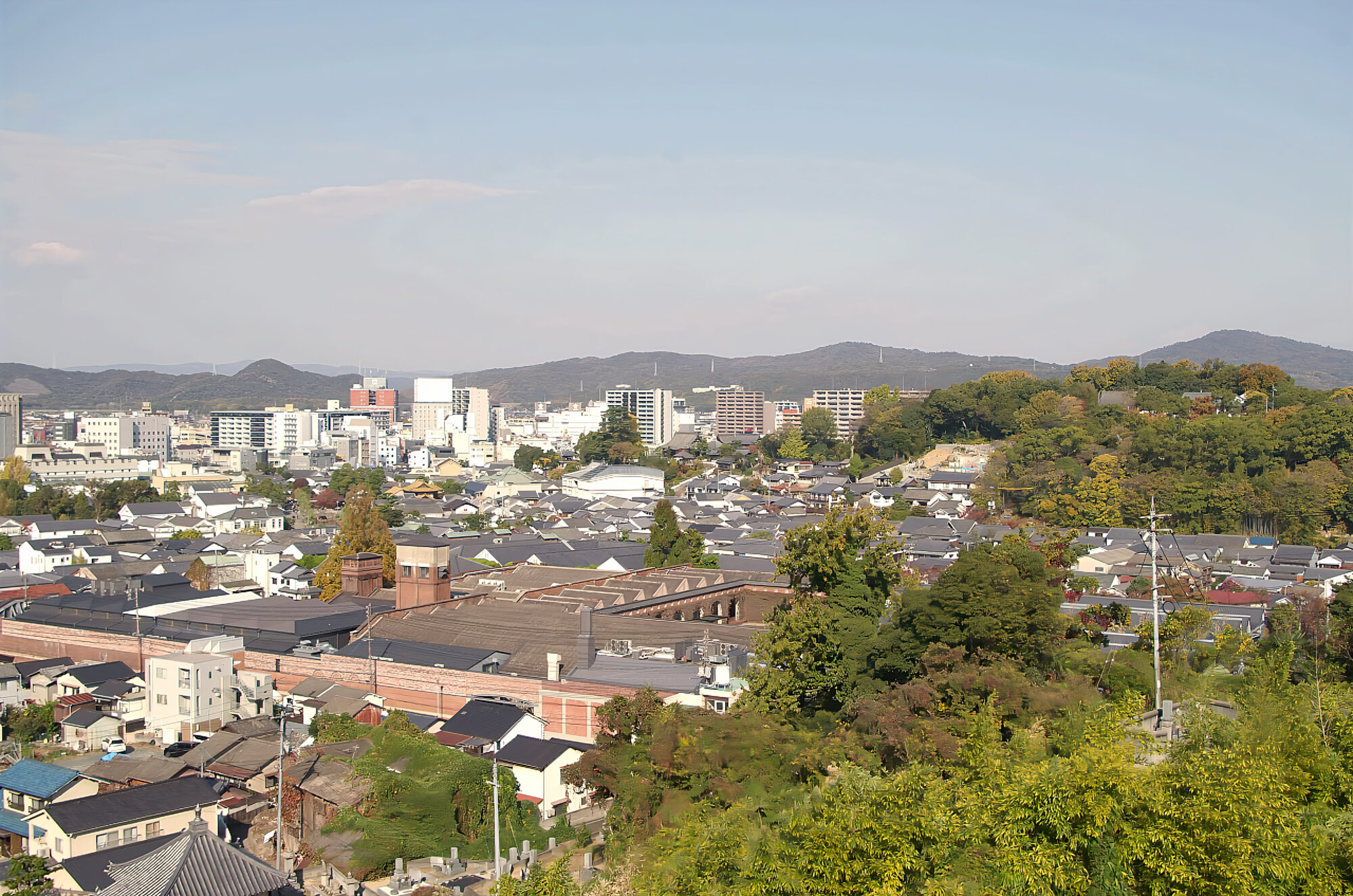
▼One of the spectacular views the writer recommends.
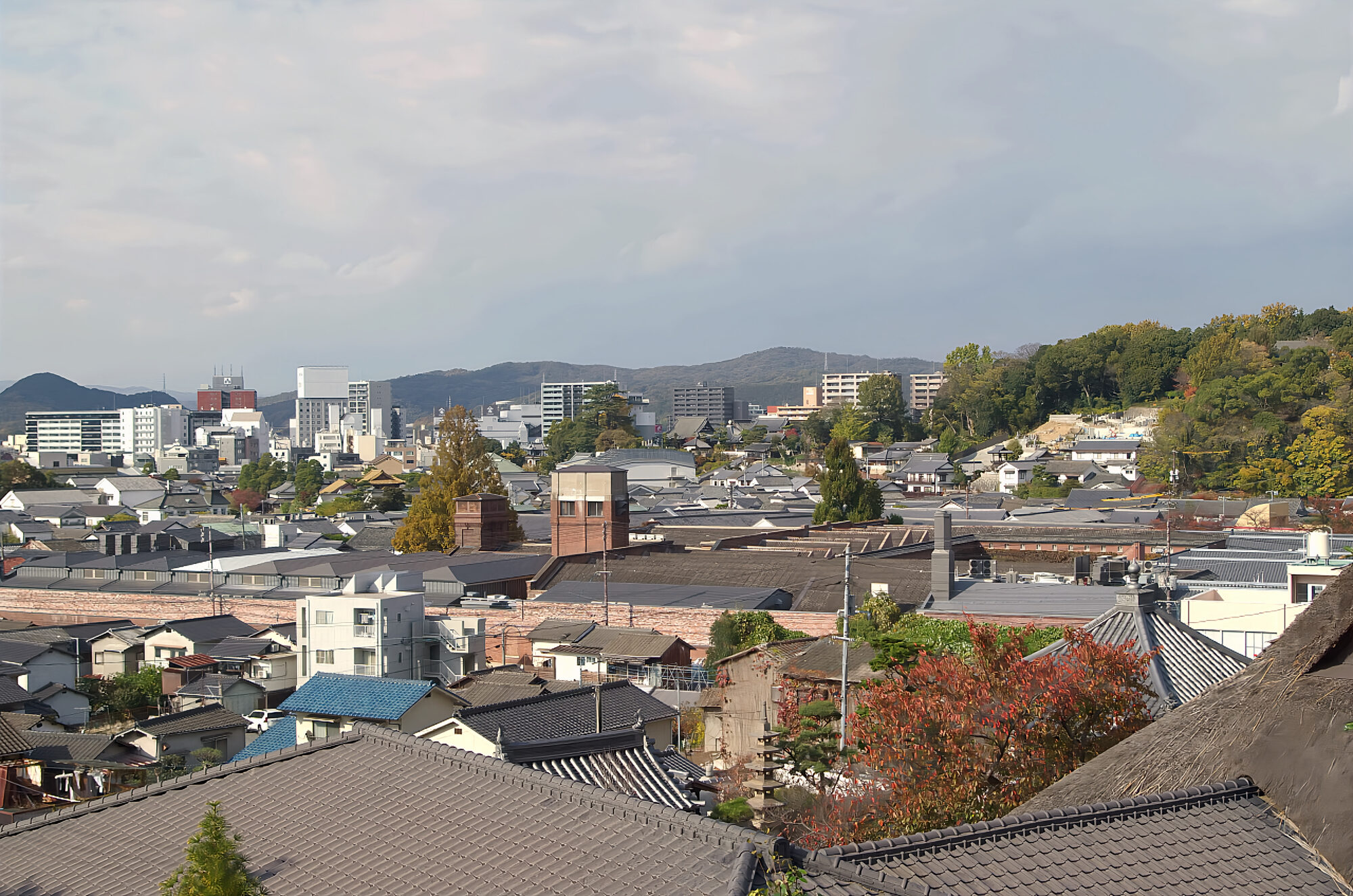
From the middle of Mukoyama, you can take in a panoramic view of central Kurashiki.
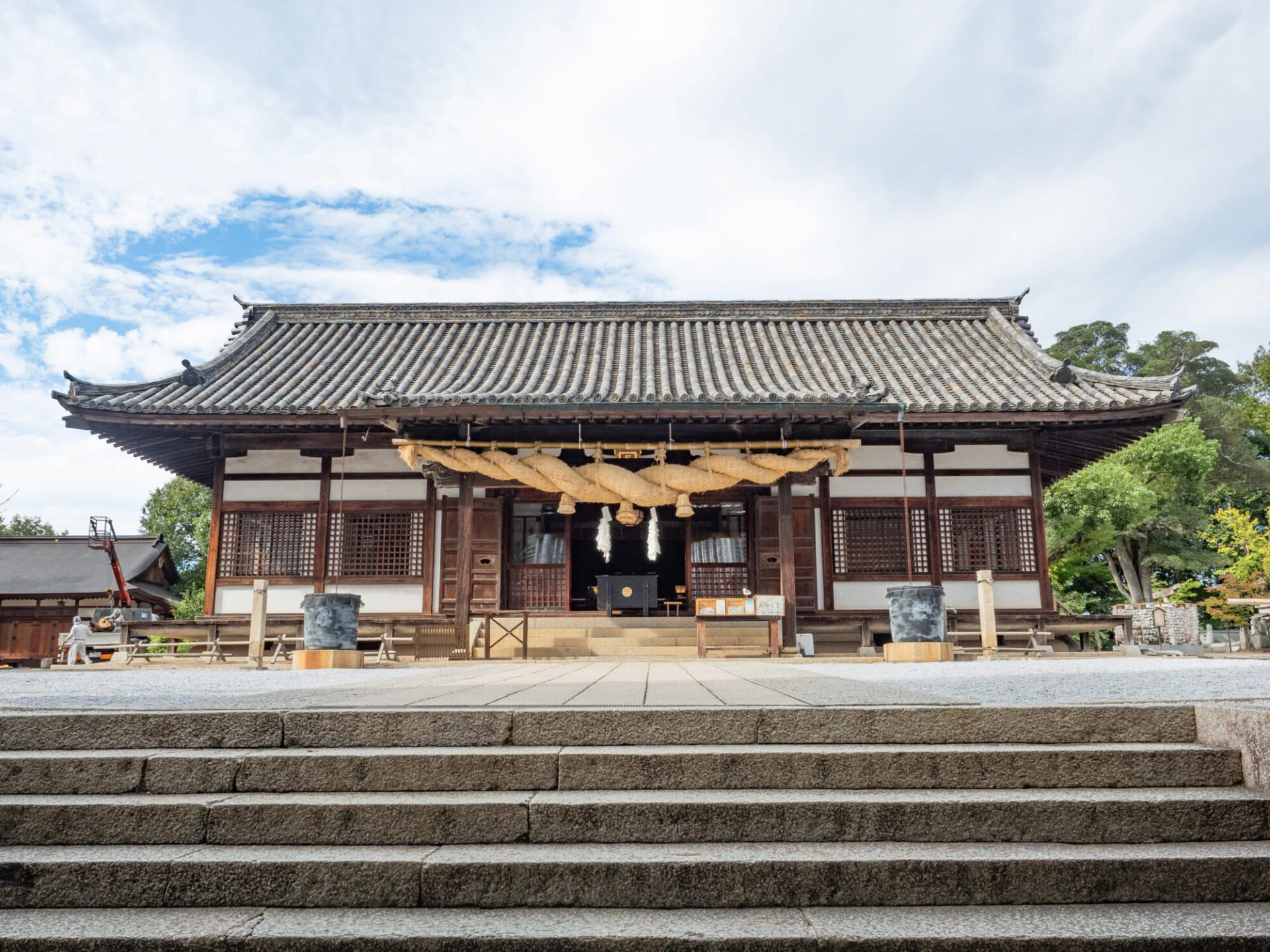
Near the center, you can see Kanryuji Temple, the starting point; in the foreground is Kurashiki Ivy Square, with its red-brick buildings; and atop the mountain on the right (Tsurugatayama), you can clearly see Achi Shrine.
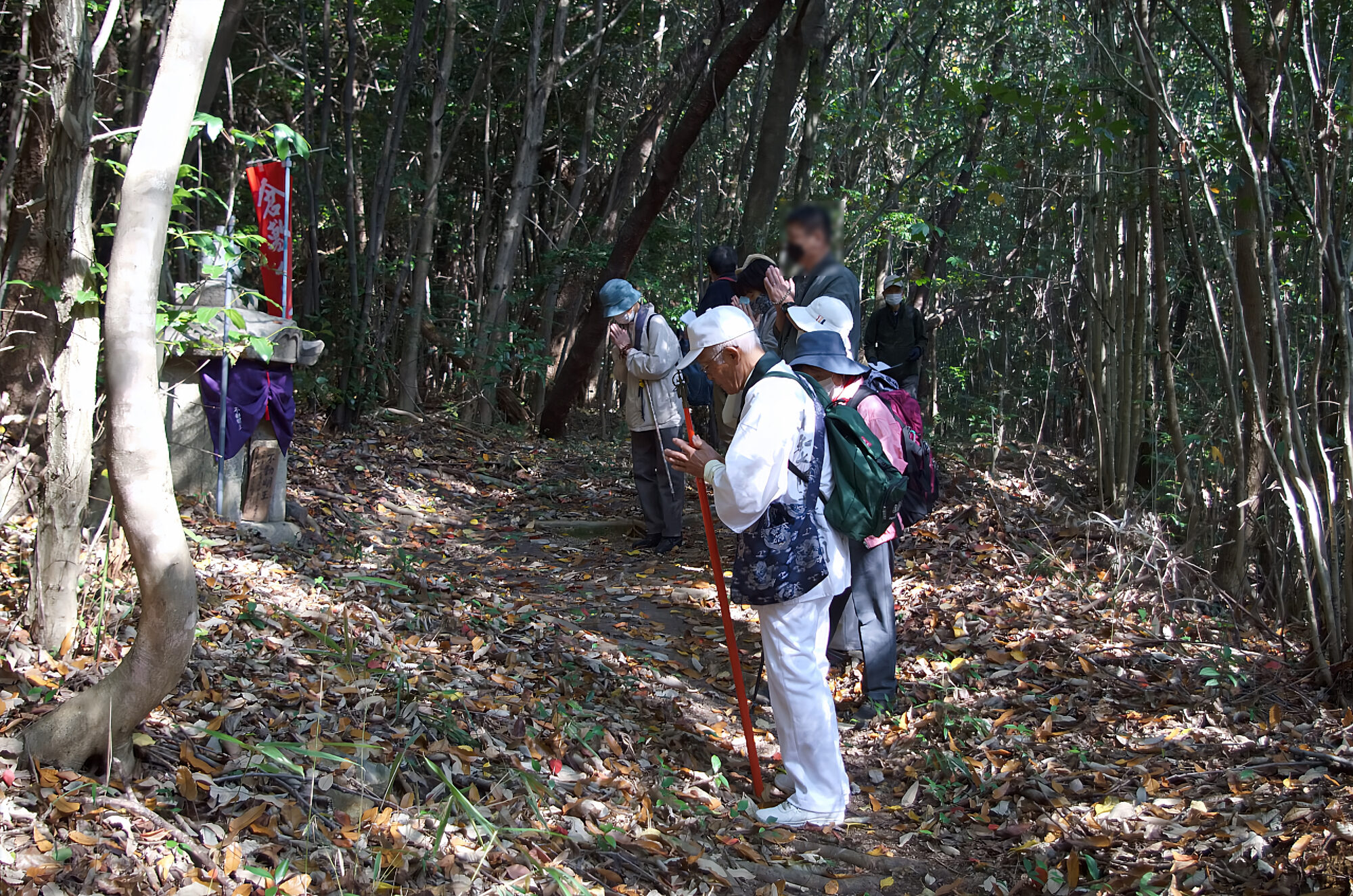
▼The 50th pilgrimage site stands amid the mountains of Mukoyama.
Without a guide, it is not easy to make your way around without getting lost. Once again, you are struck by the depth of the mountains visible from central Kurashiki City.
We are also grateful that the mountain path, once lost, was rediscovered and has been maintained and protected ever since.
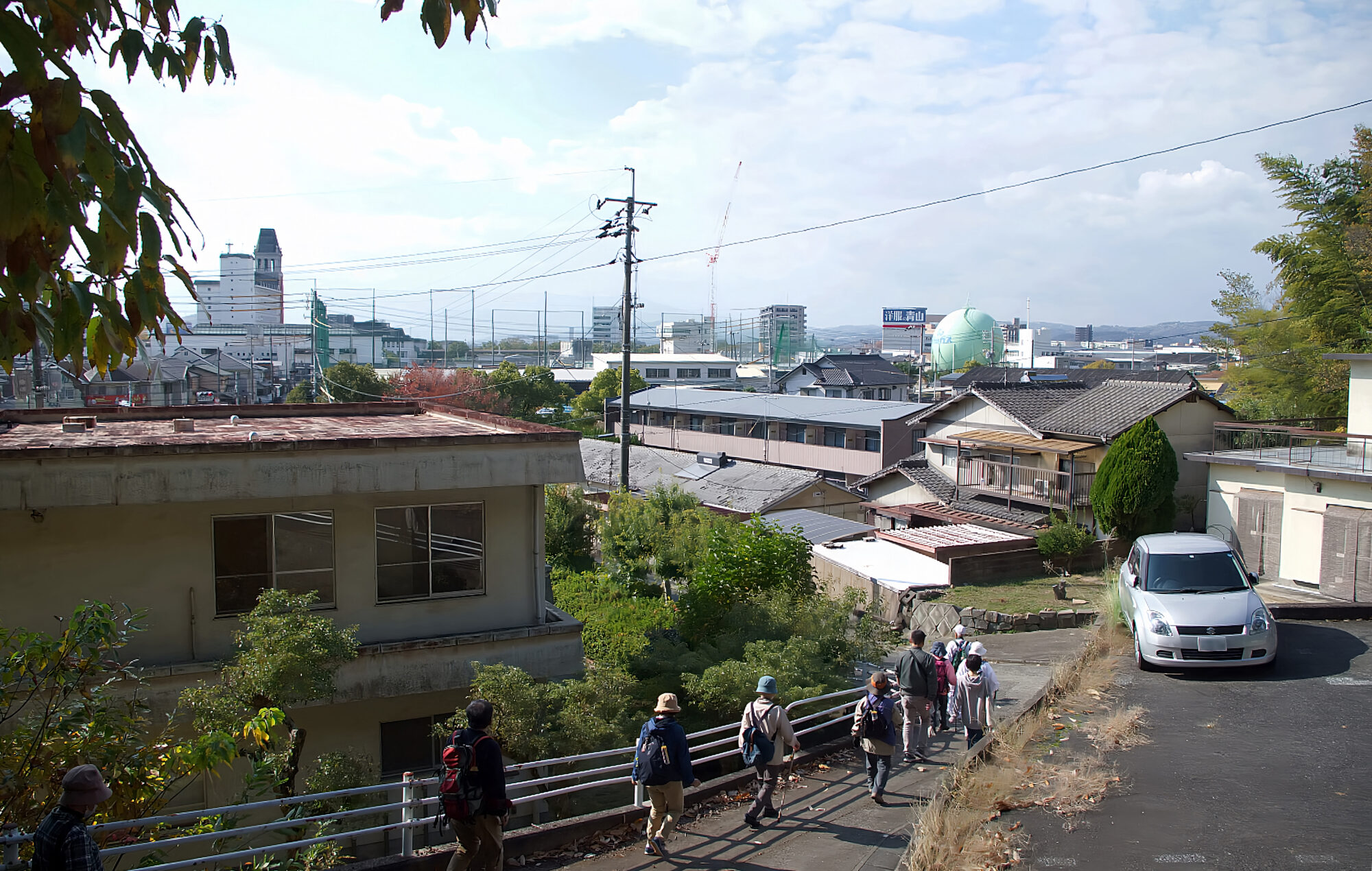
▼The pilgrimage to the sacred sites of Mukoyama, mainly along mountain paths, is over, and we have come down into the city.
Kurashiki City Office is also visible on the left.
▼The 60th pilgrimage site.
Doesn’t it look like “the principal image watching over the participants”?

▼The 59th pilgrimage site.
Along the way, we saw many ginkgo trees turning yellow. They brought to mind the autumn season.
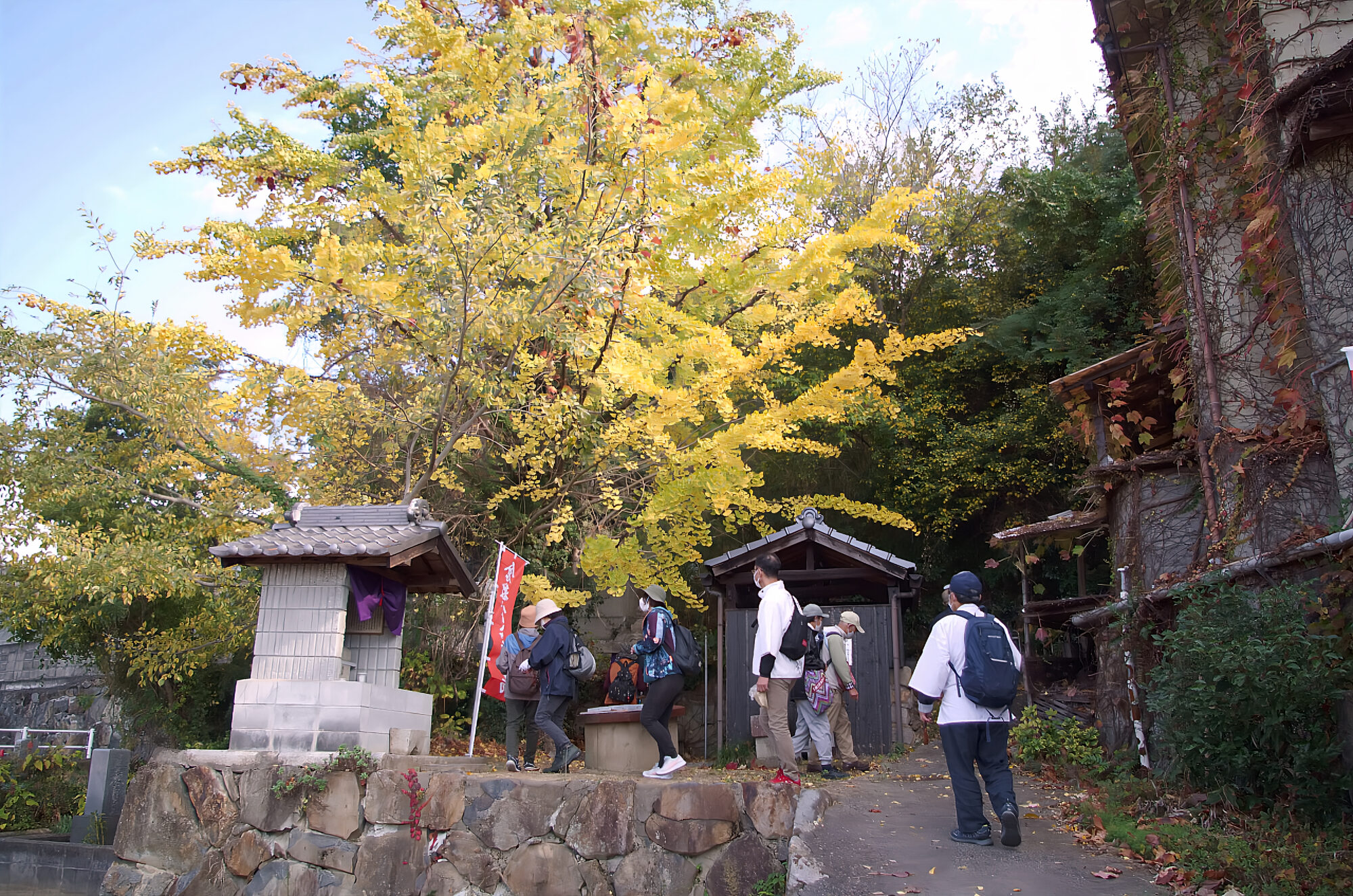
▼Kanryuji Temple, the place where the pilgrimage is completed, has come closer.
However, we cannot head straight to Kanryuji Temple from here; we still have to make a wide detour to the west.
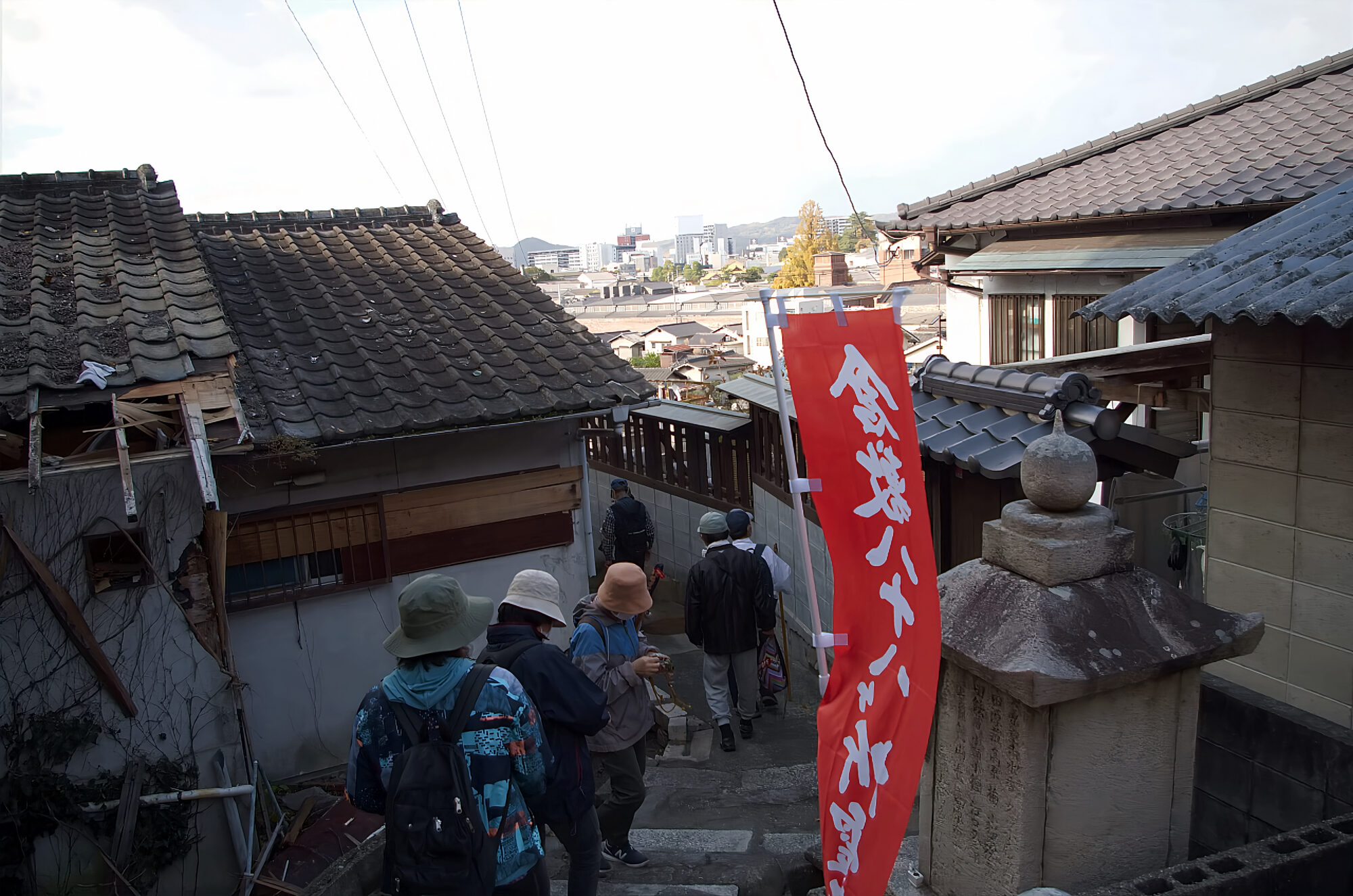
▼The 63rd pilgrimage site.
As you approach the Bikan Historical Area within Mukoyama, you walk along narrow roads lined with closely packed homes.
It makes you imagine that these are both everyday roads and pilgrimage routes that have probably changed little over the centuries.
Toward the Bikan Historical Area and central Kurashiki
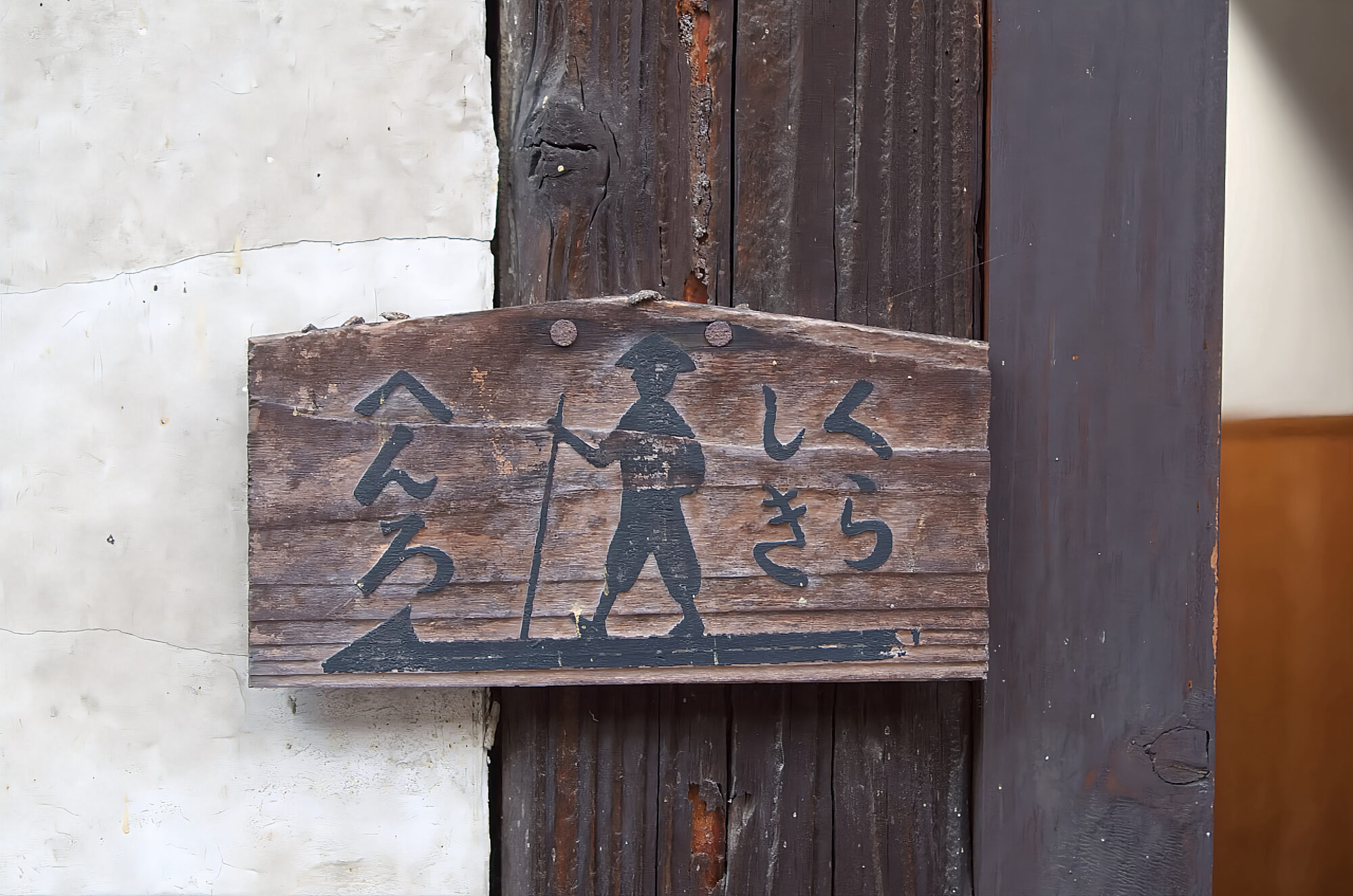
▼A signpost at the 48th pilgrimage site.
Until now, the author had not noticed the “Kurashiki Pilgrimage” signposts. Don’t you think their handmade feel and simplicity suit this pilgrimage?
Looking for them as you make your way around is one of the pleasures.
▼The 68th pilgrimage site.
A pilgrimage site north of the Kurashiki Museum of Natural History and Kurashiki Central Library. Even here in the city, it has a well-secured site enclosed by a block wall, with lanterns and stone pillars in place. It is one of the sites that gives you a sense of how carefully it has been protected by the local community.
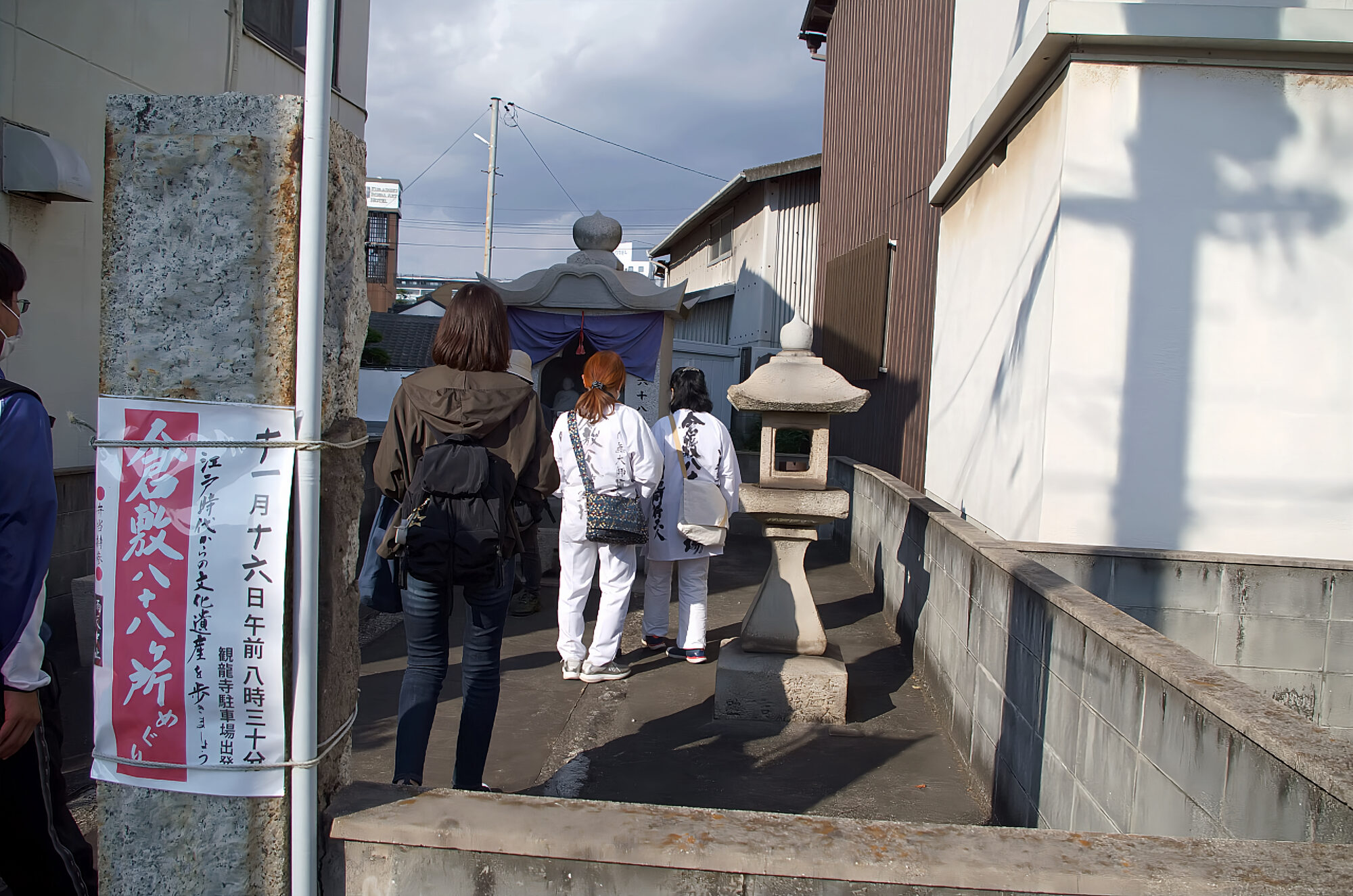
▼We took a photo of the moment Groups 1 and 2 passed each other on the way to the 70th pilgrimage site. The participants look a little tired, too.
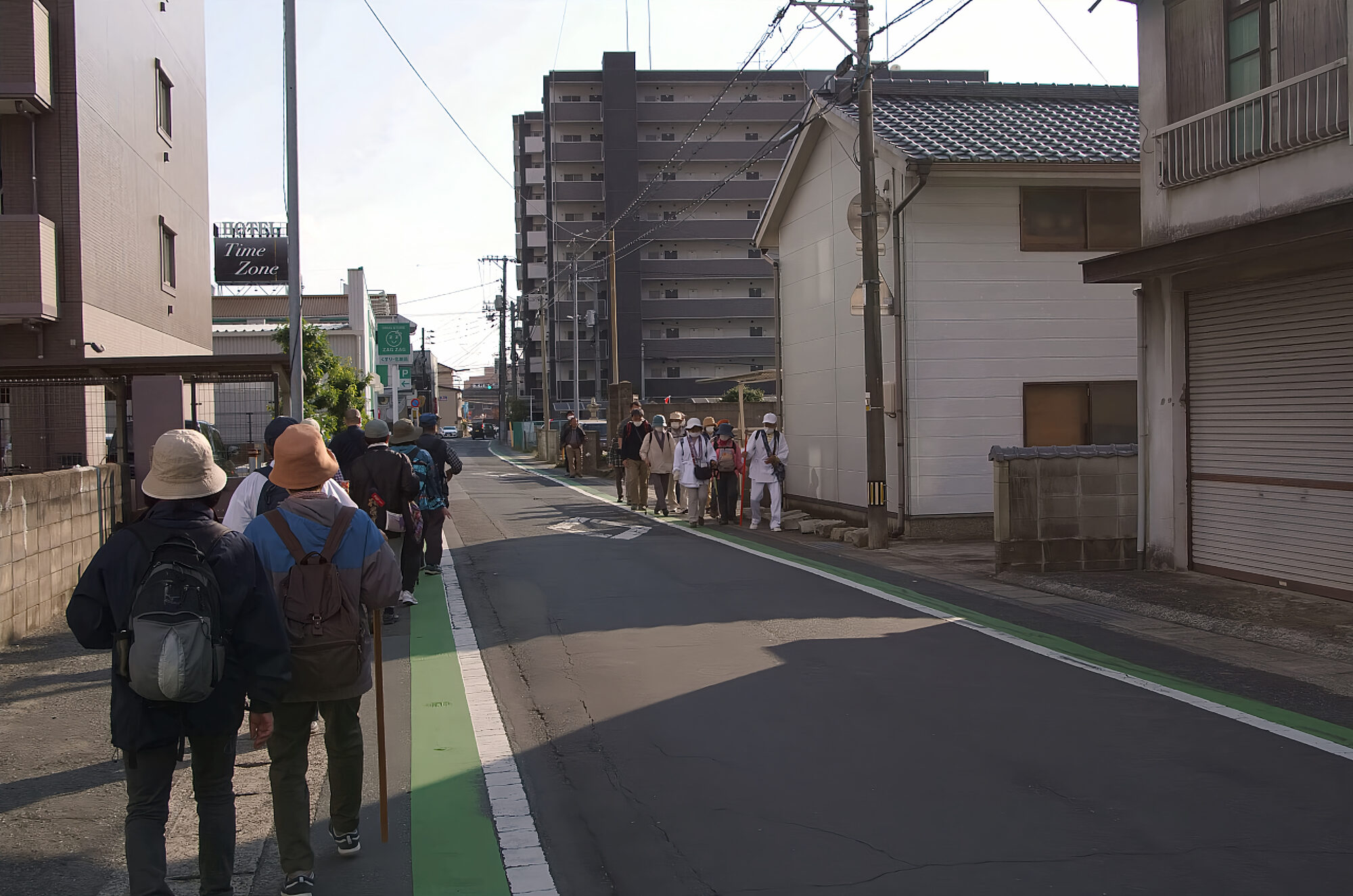
▼The 49th pilgrimage site.
We had not noticed the entrance to this site because it is usually closed, but on closer inspection, we could see that the place where the image is enshrined has its own distinctive character.
It is enshrined in a cave-like place enclosed by beautiful curves.
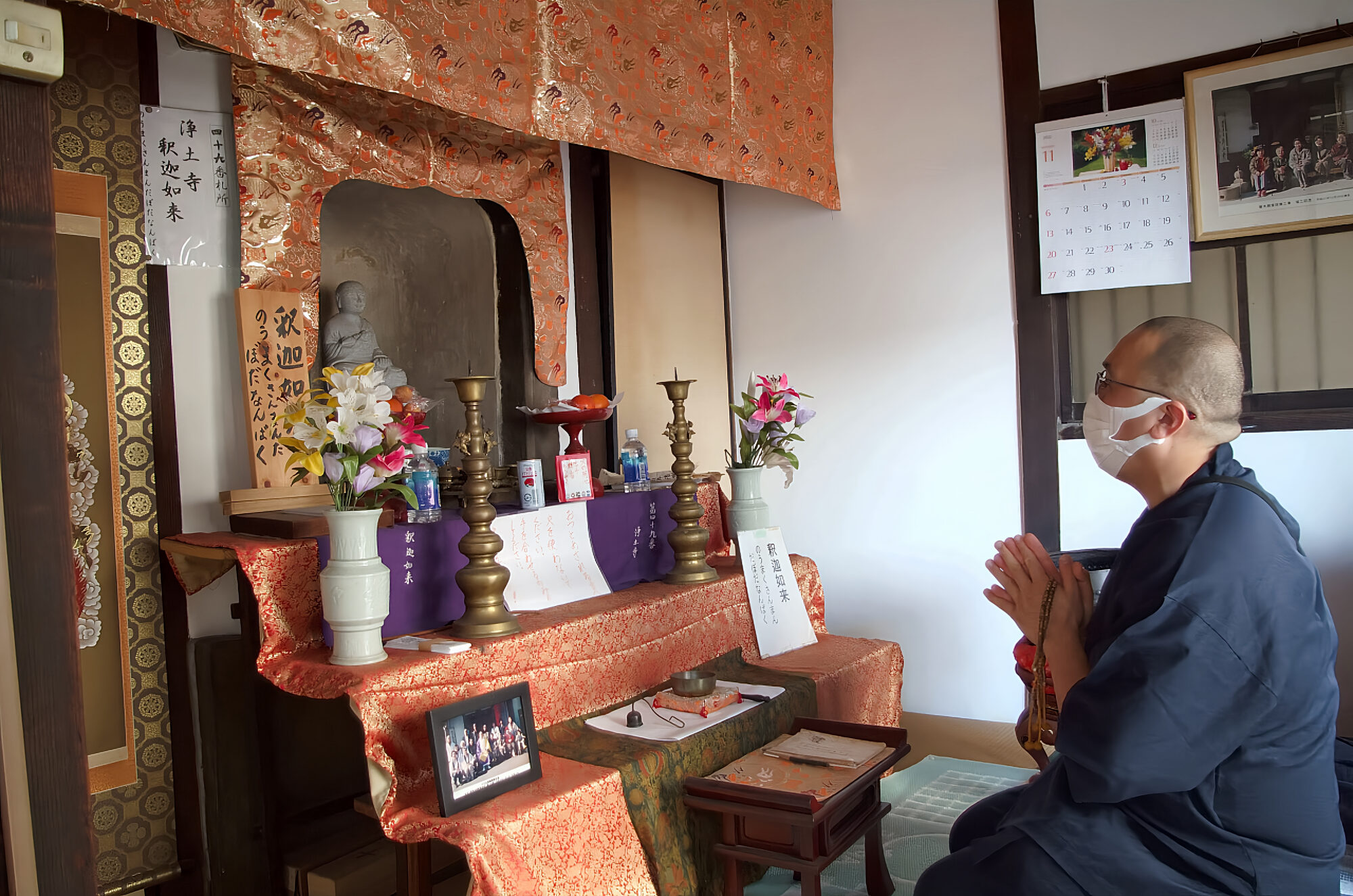
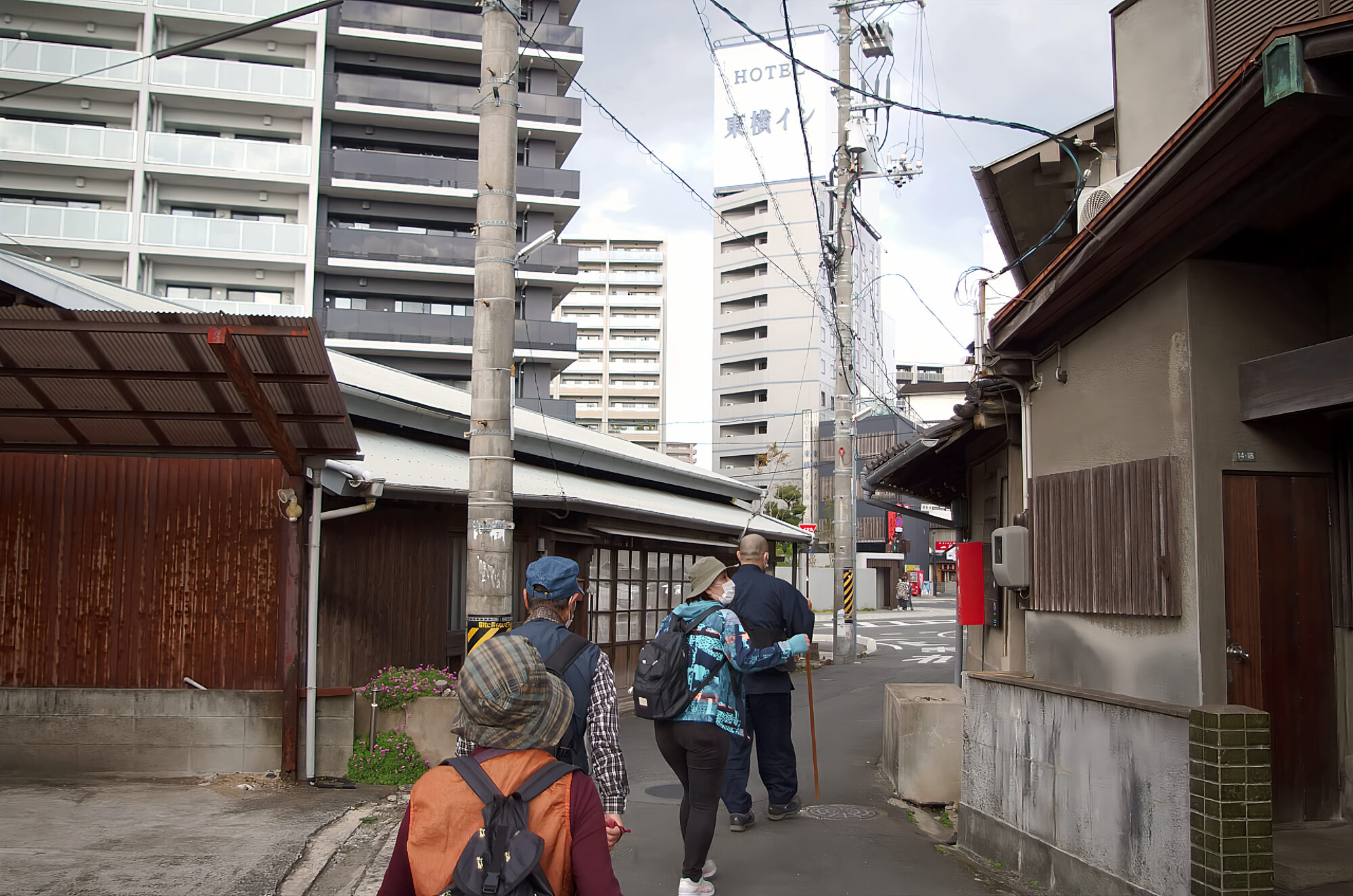
▼On the left, we can see Achi Terrace Kurashiki, a large commercial complex that opened in 2021, and we have made our way back to JR Kurashiki Station.
Near Achi Terrace Kurashiki, old streetscapes that evoke the Showa era still remain, and we head toward Kanryuji Temple while feeling the passage of time.
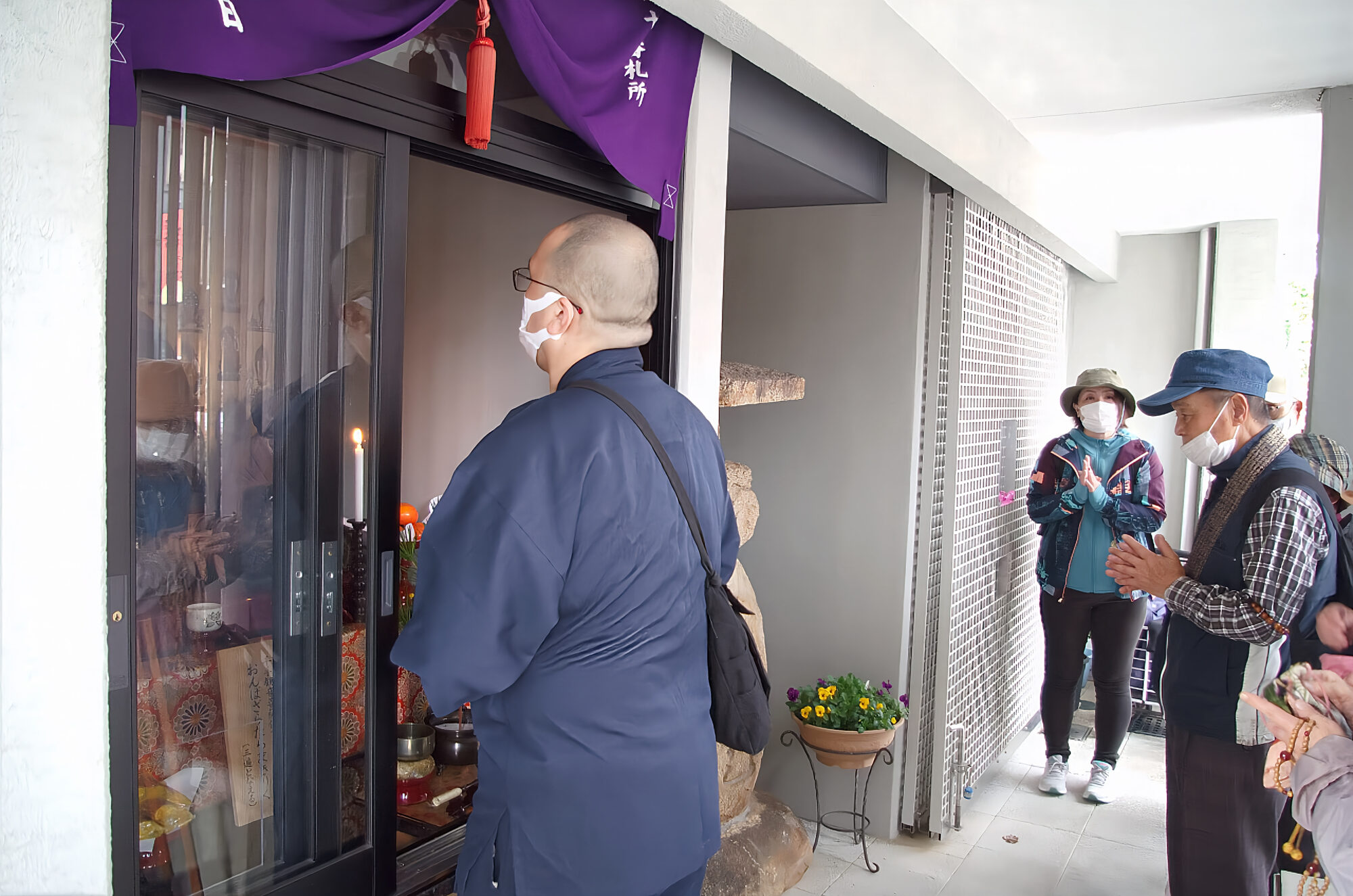
▼The 80th pilgrimage site.
Reconstructed on the grounds of Achi Terrace Kurashiki, this is a particularly refined pilgrimage site. This site is also usually closed, but during the “Kurashiki Eighty-Eight Sacred Sites Pilgrimage,” you can pray there up close.
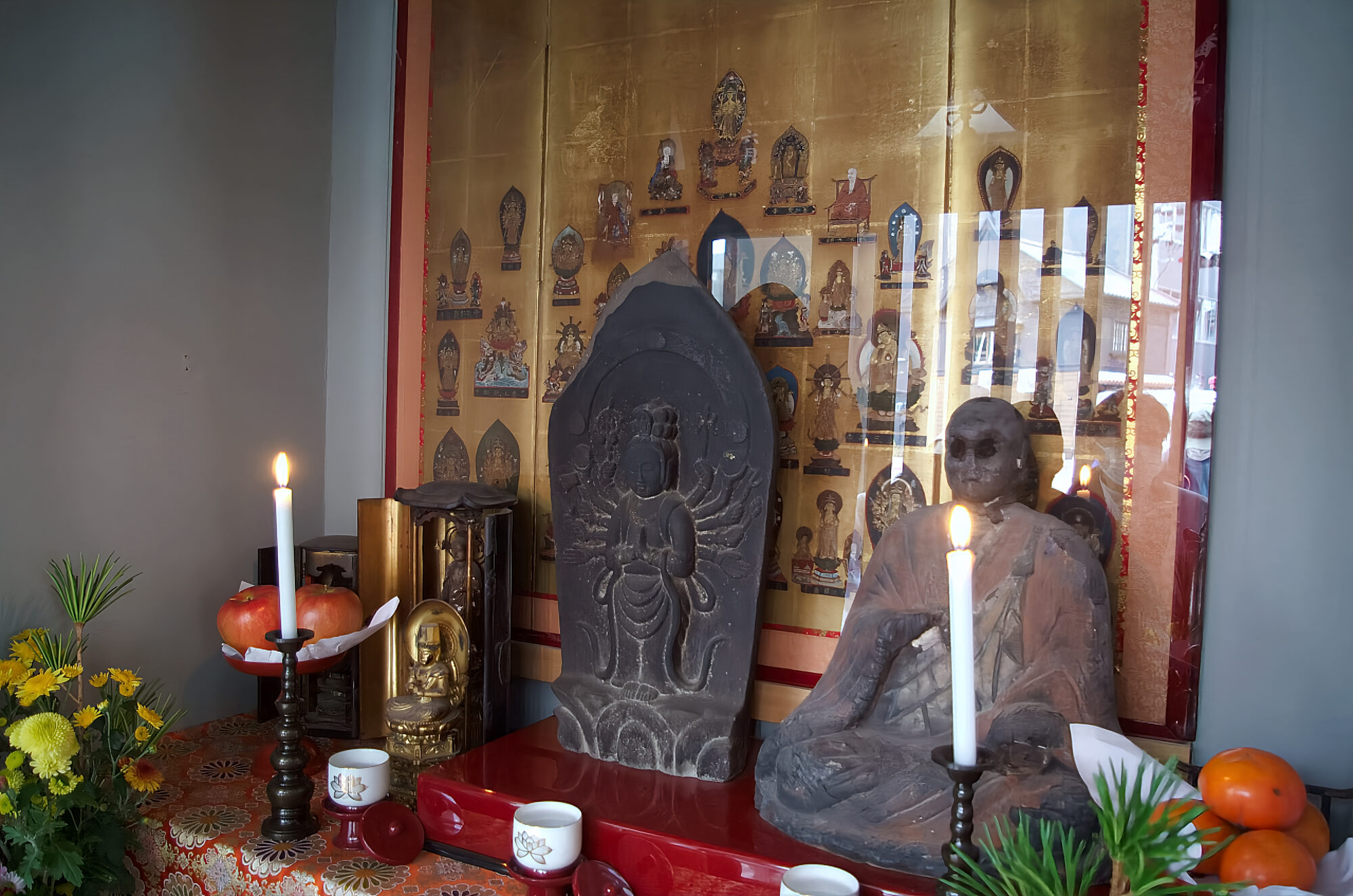
▼The principal image and the Substitute Daishi (80th pilgrimage site).
Inside the site are enshrined the principal image, the Thousand-Armed Kannon, and the Substitute Daishi.
In particular, when I look closely at the Substitute Daishi on the right, I feel such an intense, compelling force—perhaps because only its face is more heavily scorched—that I cannot keep staring at it.
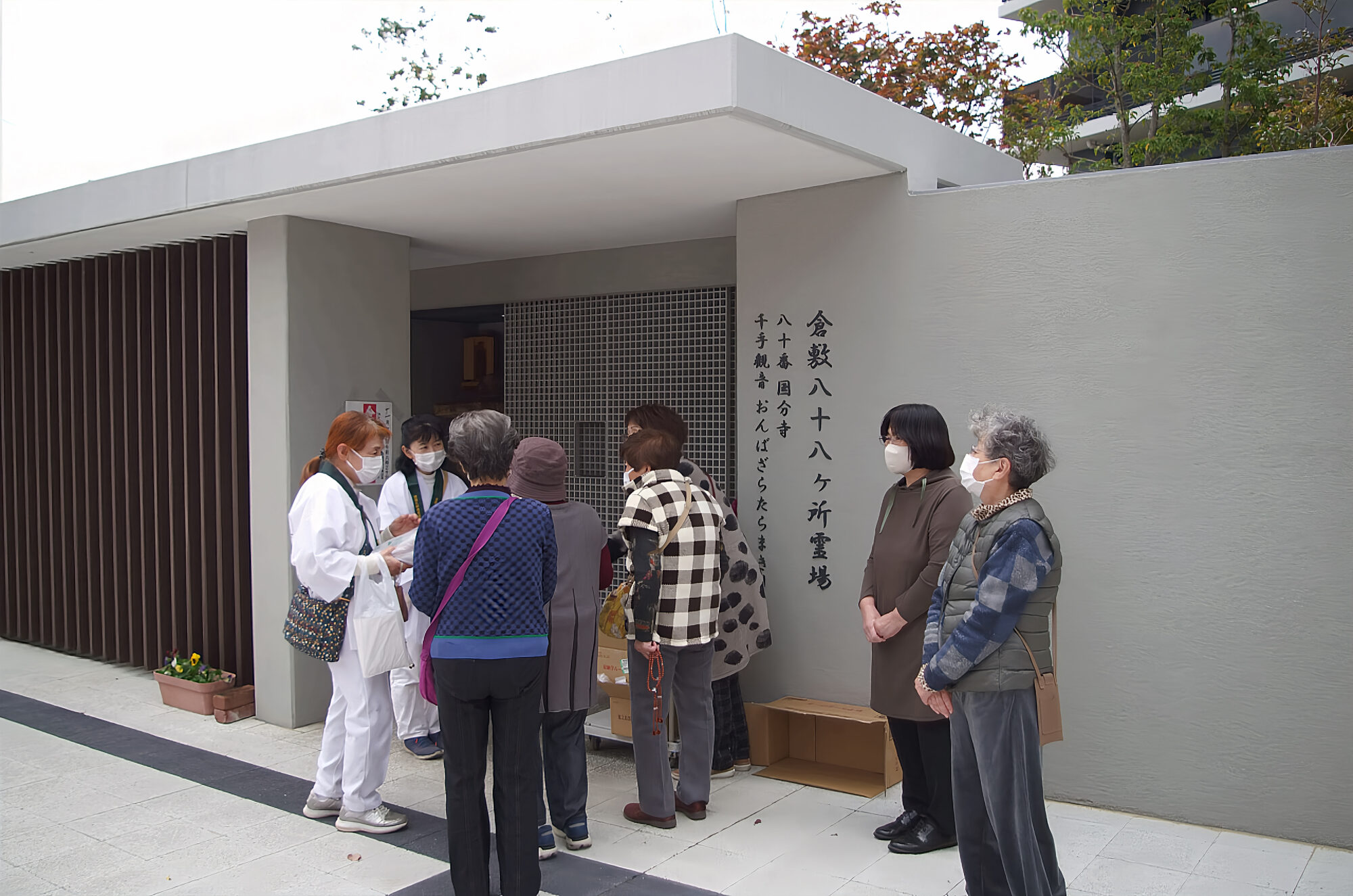
▼Hospitality at the 80th temple.
We also received the warm hospitality of settai. We were truly touched by the thoughtfulness behind it, including all the preparations.
Kanryuji Temple, the final pilgrimage destination
▼From the western approach to Achi Shrine, we climbed Mt. Tsurugata and headed for Kanryuji Temple.
Perhaps it was just my imagination, but the participants seemed relieved, as if to say, “We’re almost at the finish line.”
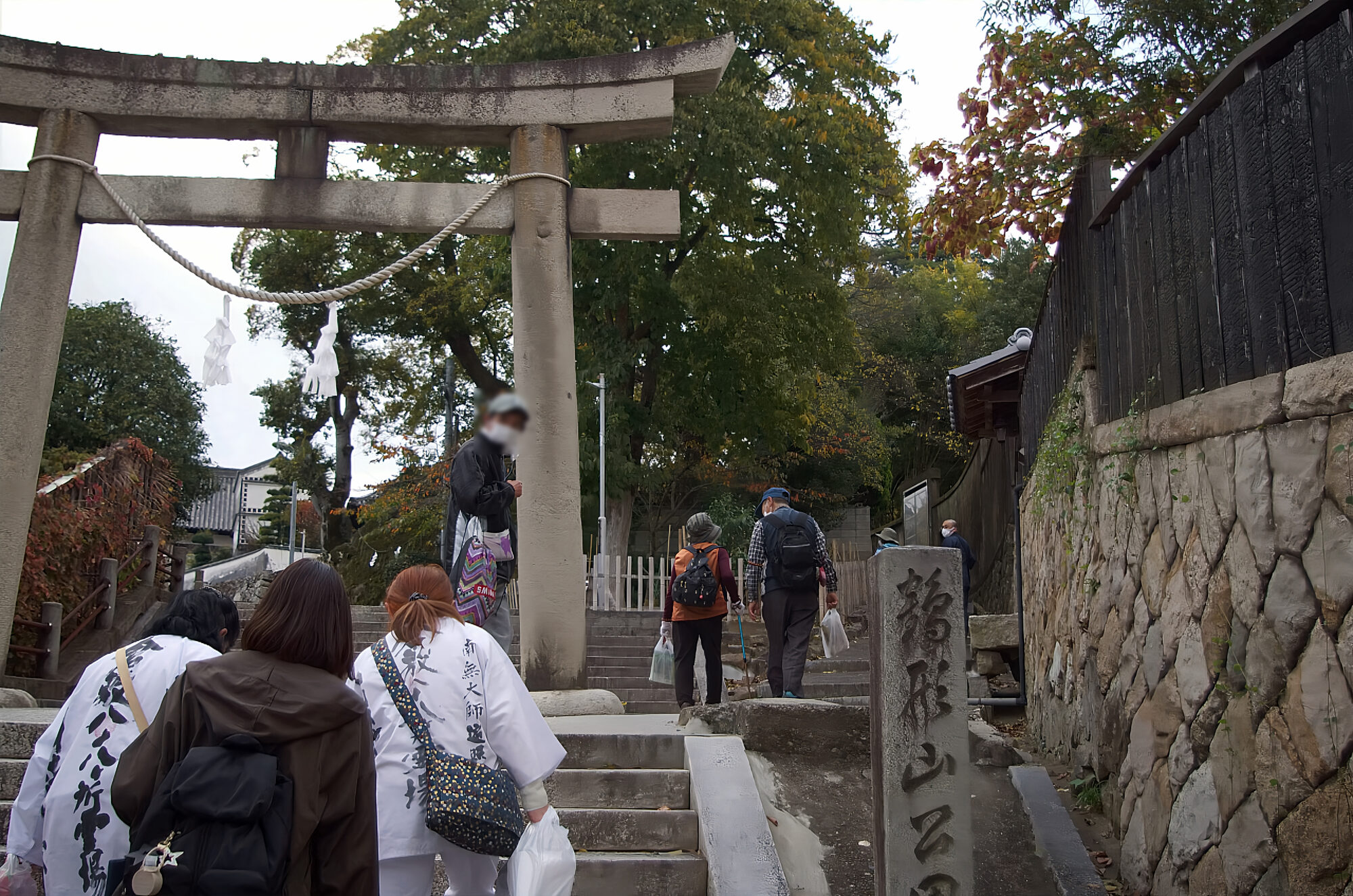
We arrived at Kanryuji Temple, the final destination of the Kurashiki 88-Temple Pilgrimage.
Completing the pilgrimage means visiting all the temples.
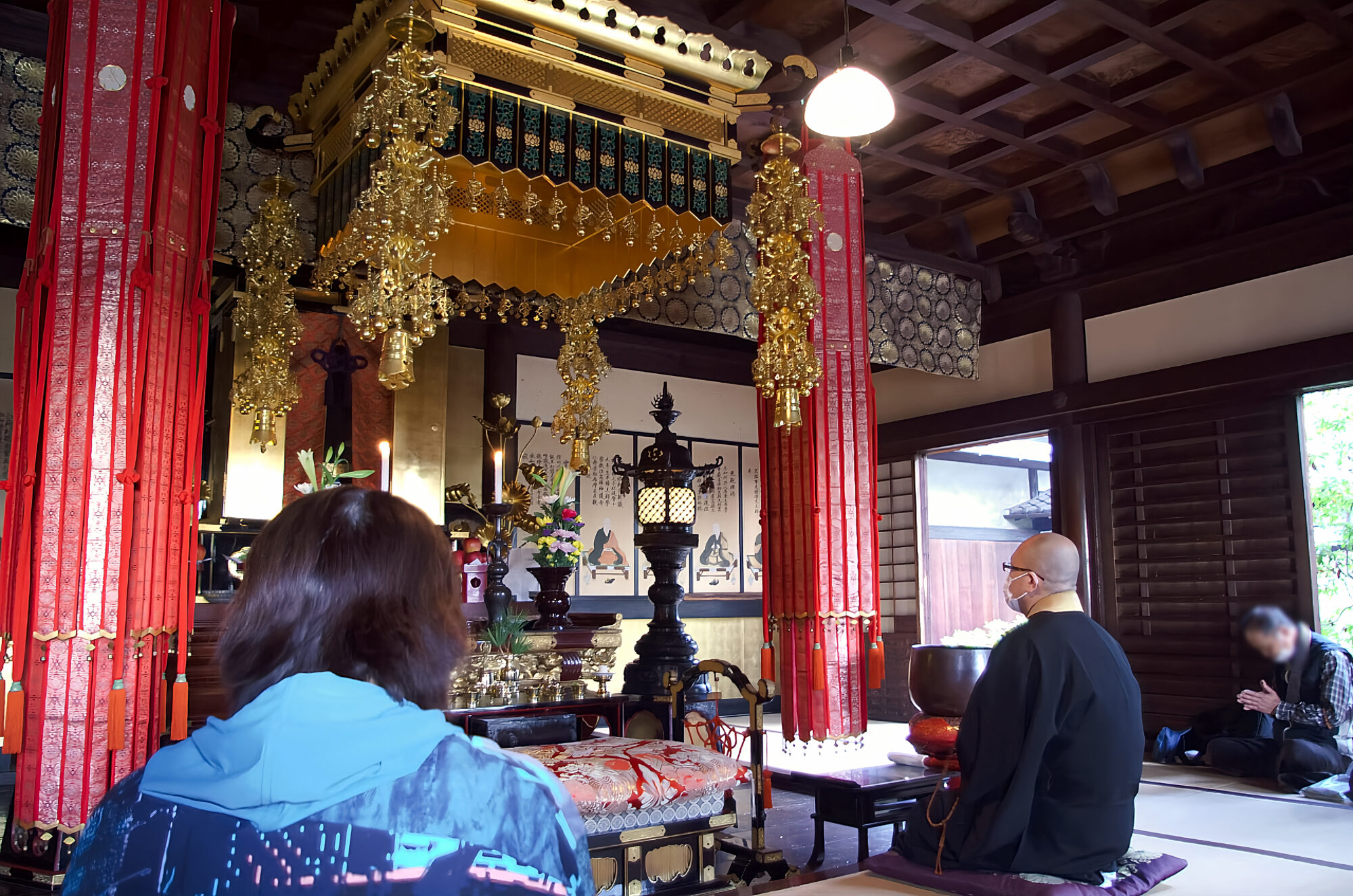
We entered the Daishido Hall, and after the deputy head priest of Kanryuji and the participants chanted the Heart Sutra, we were also treated to settai.
The story of how the “Kurashiki 88-Temple Pilgrimage” is cared for in everyday life, thanks in part to the dedication of local people such as Kato, the pilgrimage leader, left a lasting impression on me.
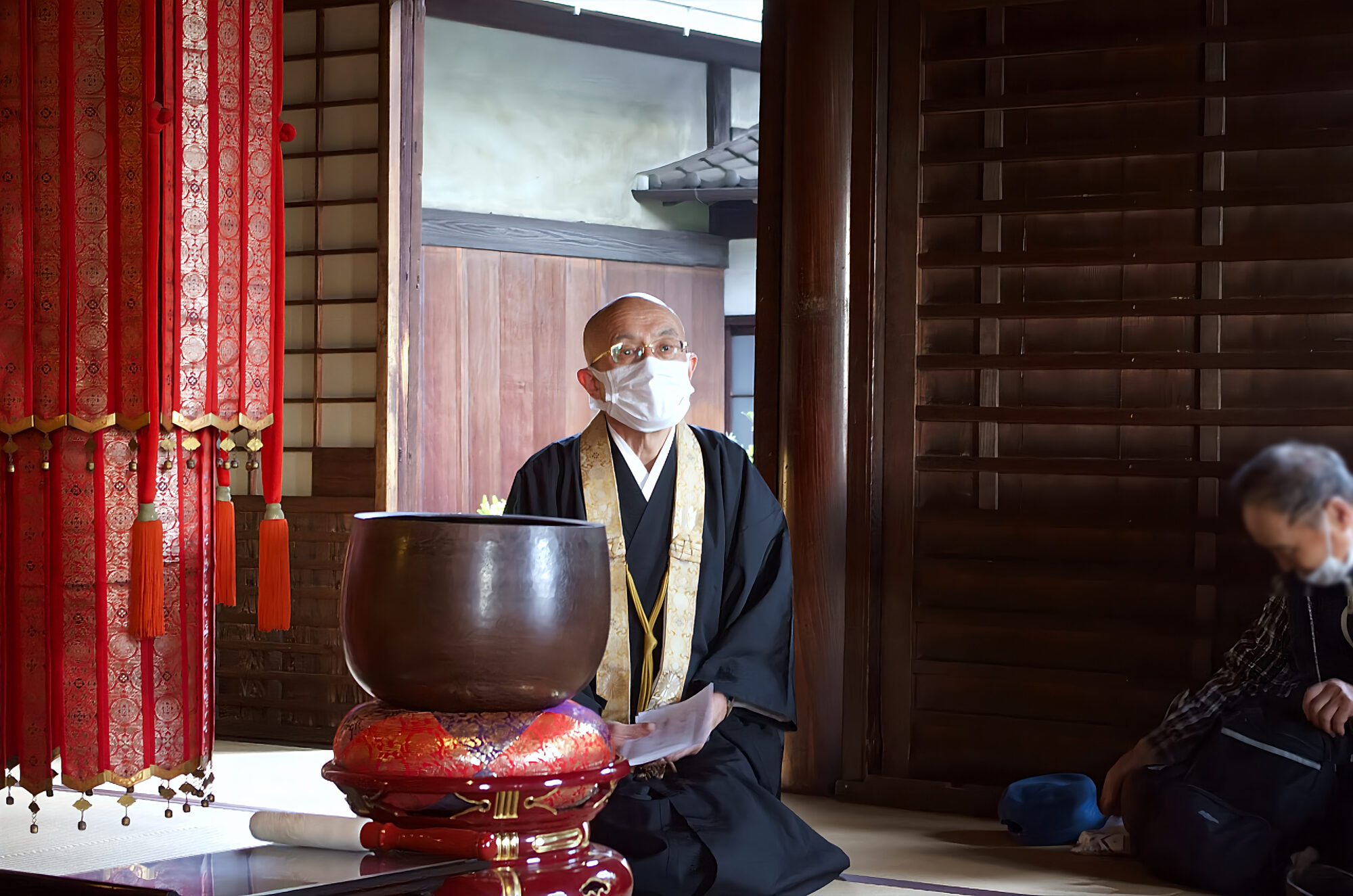
After hearing from Kanryuji Temple head priest Murata, the “Kurashiki 88-Temple Pilgrimage” finally came to an end, after about seven hours, from 8:30 a.m. to 3 p.m.
From the Writer
It was striking that many of the participants who completed the pilgrimage had bright, refreshed expressions that showed a sense of accomplishment, despite their fatigue.
- To receive the protection of Kobo Daishi
- Because they love pilgrimage
- Because they love Kurashiki
- To learn more about the lesser-known side of Kurashiki
- For their own health, and so on
Each person may have had a different reason for taking part.
But even if their reasons differed, taking part and walking the route lets you notice Kurashiki scenery you don’t usually see—that is the appeal of the “Kurashiki 88-Temple Pilgrimage.”
I believe that the more people who have this experience, the more it will help preserve the “Kurashiki 88-Temple Pilgrimage” for the future.
The writer last took part in spring 2022.
Unfortunately, I couldn’t visit every temple this time, but I spent a fulfilling day feeling the blessings of Kobo Daishi.
The next event is scheduled for Friday, March 10, 2023.
Next time, rather than as a writer, I hope to enjoy the “Kurashiki 88-Temple Pilgrimage” as “one of the participants.”
Come walk with us through this cultural heritage dating back to the Edo period!
The “Kurashiki 88-Temple Pilgrimage” is managed and operated with the support of local residents, including those who have served as pilgrimage leaders.
However, the secretariat’s officers are facing challenges due to their advanced age and a shortage of members, and they are looking for people to help out and even serve as officers. If you are interested, please contact them below.
Okuda Toy Store
2-23-7 Achi, Kurashiki City, Okayama Prefecture
TEL: 086-422-3052
Kurashiki 88-Temple Pilgrimage Information
| Name | Kurashiki 88-Temple Pilgrimage |
|---|---|
| Event dates | Every year in March and November; meet at 8:30 a.m. for departure (*The next event is scheduled for Friday, March 10, 2023) |
| Location | Kanryuji Temple, adviser to the Kurashiki 88-Temple Pilgrimage Association |

What would you like to know about Kurashiki?
Enter a word to search articles on this site