
The Kurashiki 88 Sacred Sites is said to have been established in the mid-Edo period and is located in the central area of Kurashiki, around Bikan Historical Area, Tsurugata Mountain, and Mukaiyama.
If you have walked in front of JR Kurashiki Station or in the Bikan Historical Area, you may have seen it at least once.
It is part of the scenery that we usually see without thinking.
Why not rediscover the landscapes of Kurashiki that have been preserved through the thoughts of those who wish to convey their meaning and history to the next generation?
What is the Kurashiki 88 Sacred Sites?
You may not immediately understand what the "Kurashiki 88 Sacred Sites" refers to.
Now, how about changing your perspective to "Shikoku 88 Sacred Sites Pilgrimage" or "Shikoku Henro"?
As pilgrimages like the Shikoku Henro became widespread, it became difficult to visit each sacred site due to distance and financial reasons.
As a result, small-scale "copy pilgrimages" modeled after them began to be created in various places.
The "Kurashiki 88 Sacred Sites" is one of those copy pilgrimages.
Shrines (hokora) modeled after the temples visited in the Shikoku sacred sites have been created, and they can be found in places like the Bikan Historical Area and Achi Terrace Kurashiki.
The third sacred site is believed to be the oldest stone hall.
It is inscribed on a stone pillar: "Established in the 11th year of the Kansei era, March, Higashimachi," leading to the belief that the sacred site was opened in the late 18th century (Kansei era).
Many of the sacred sites have been relocated or disappeared due to town development and maintenance.
However, thanks to the efforts of local residents and those who wish to protect the sacred sites, restoration and reconstruction have been progressing in recent years.
Before the COVID-19 pandemic, pilgrimages were held twice a year in spring and autumn.
▼ About 15 years ago (in the 2000s), this was the first place where I learned about the Kurashiki 88 Sacred Sites.
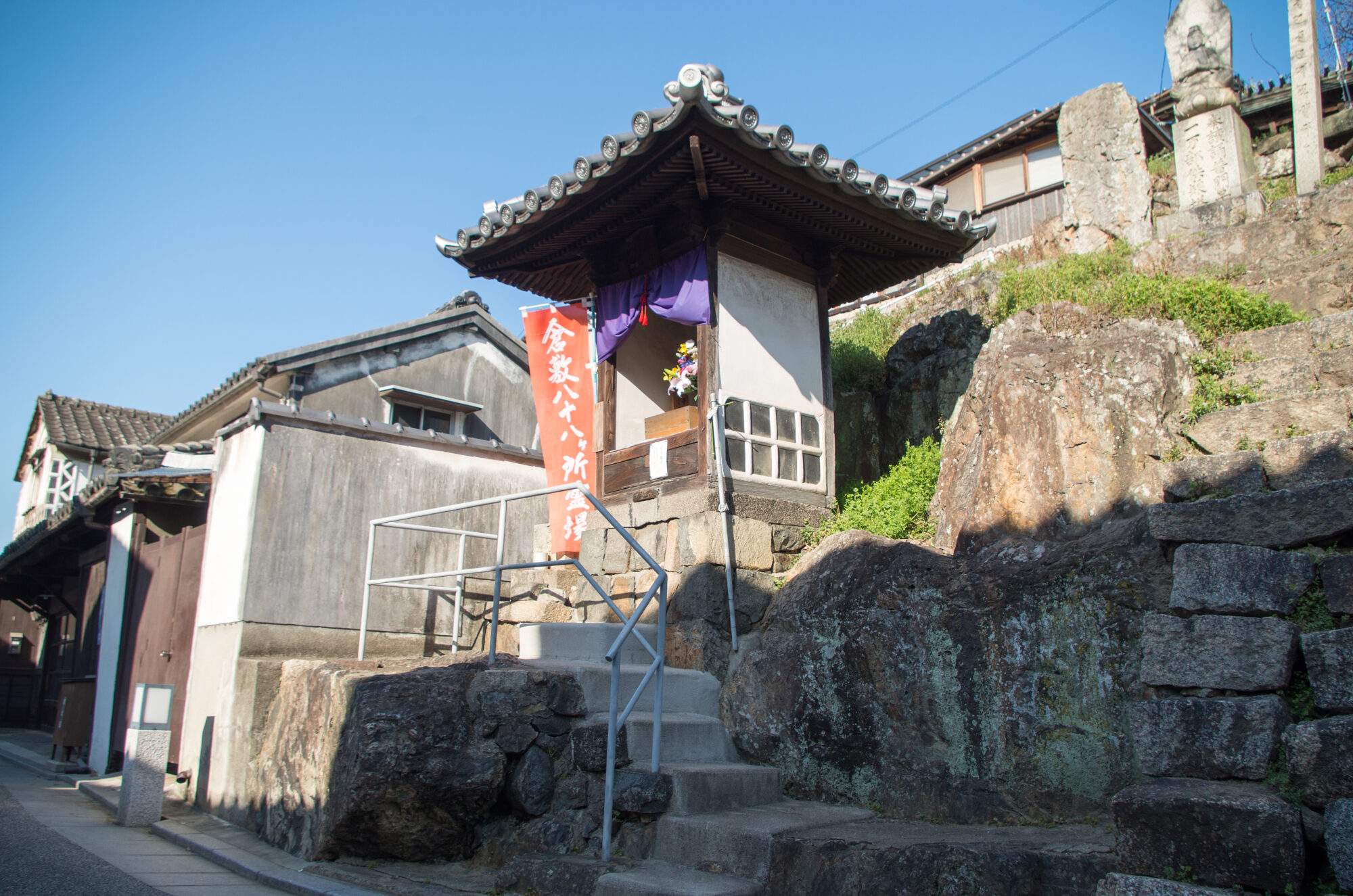
It is located near "Jotakudo" in the Bikan Historical Area.
I had thought, "I will casually visit it someday," but even after 15 years, I had not been able to do so.
However, there are wishes that can be realized without forcing them.
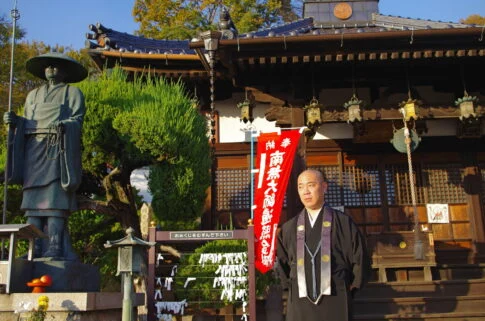
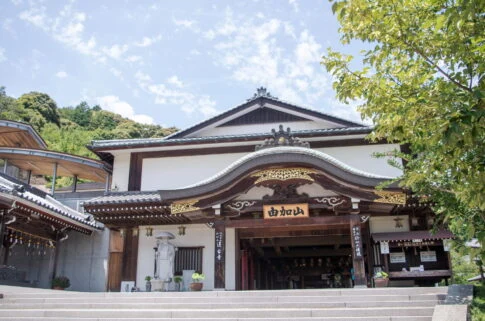
Rev. Takashi Murata of Kanryuji Temple serves as an advisor for the "Kurashiki 88 Sacred Sites," and through this connection, I was fortunate to join a pilgrimage with the caretakers who protect the sacred sites.
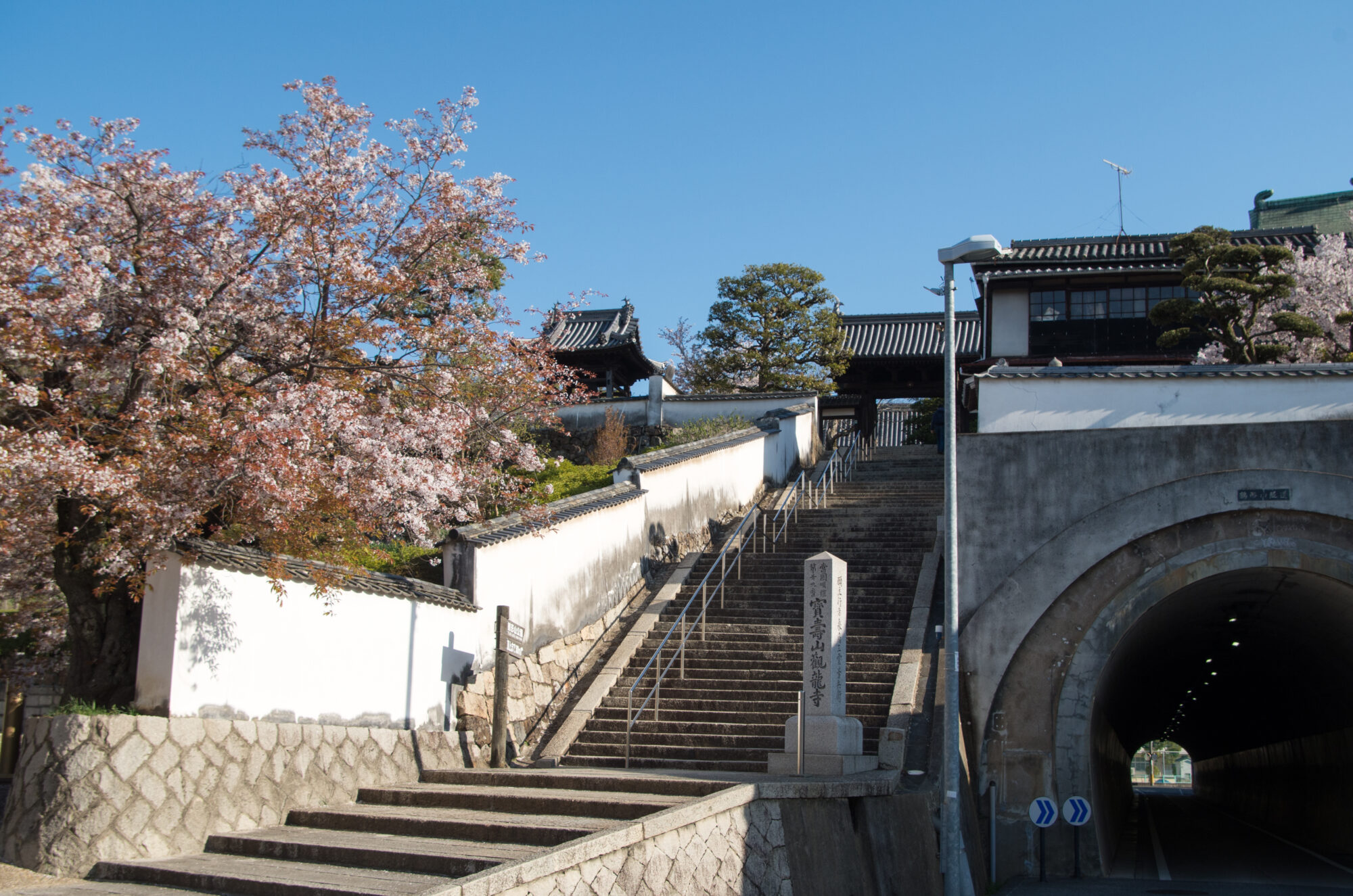
▼ Kanryuji Temple, located on Tsurugata Mountain. It is the starting and ending temple of the pilgrimage.
▼ This is a sacred site located within the grounds of Achi Terrace Kurashiki, which had its grand opening on October 10, 2021.
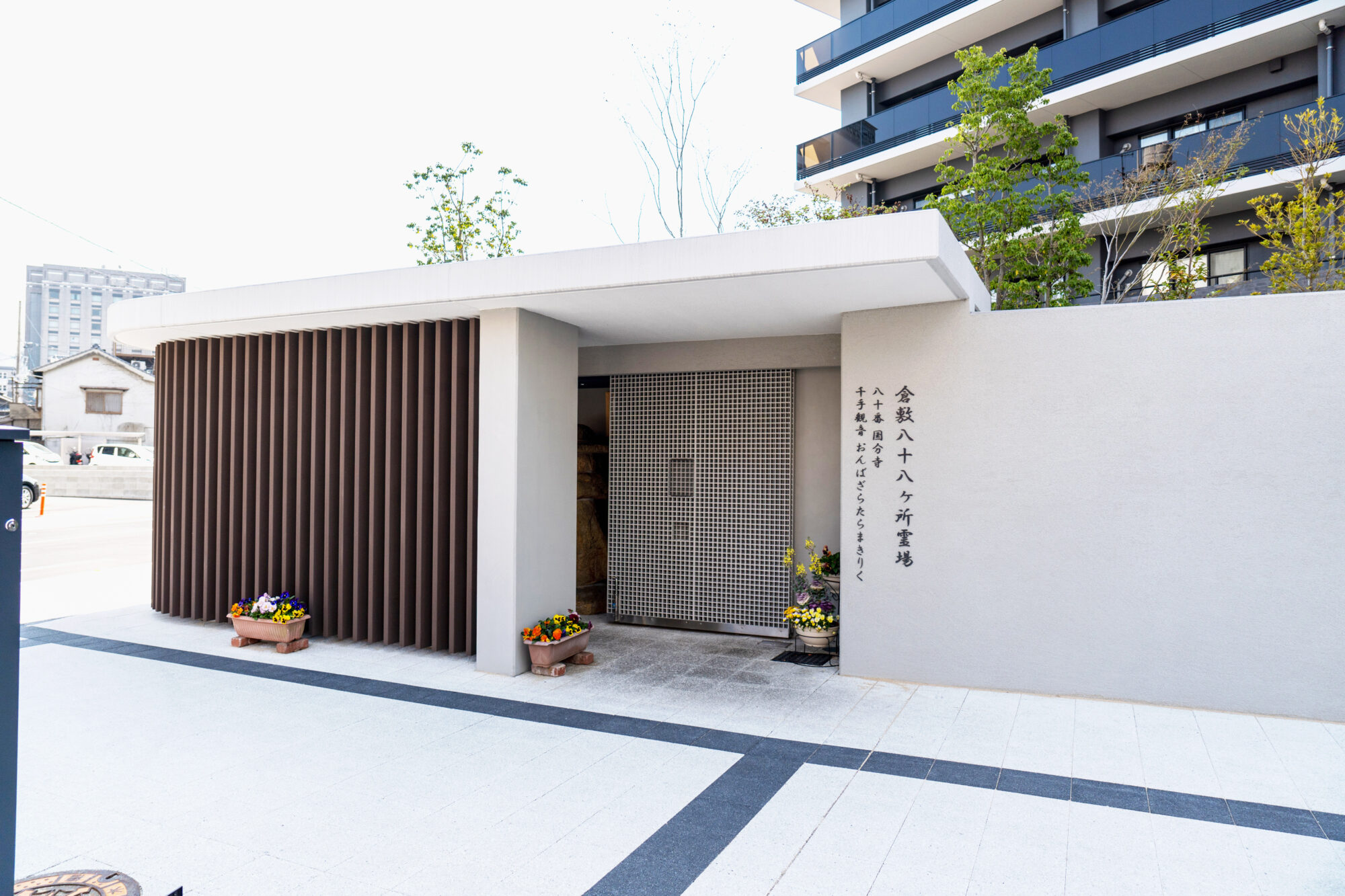
Among the restored sacred sites, this is the most stylish one. Many of you may have seen it, right? It is sophisticated!
▼ This is the cover of a pamphlet created by the "Kurashiki Central Rotary Club" that I had obtained previously.
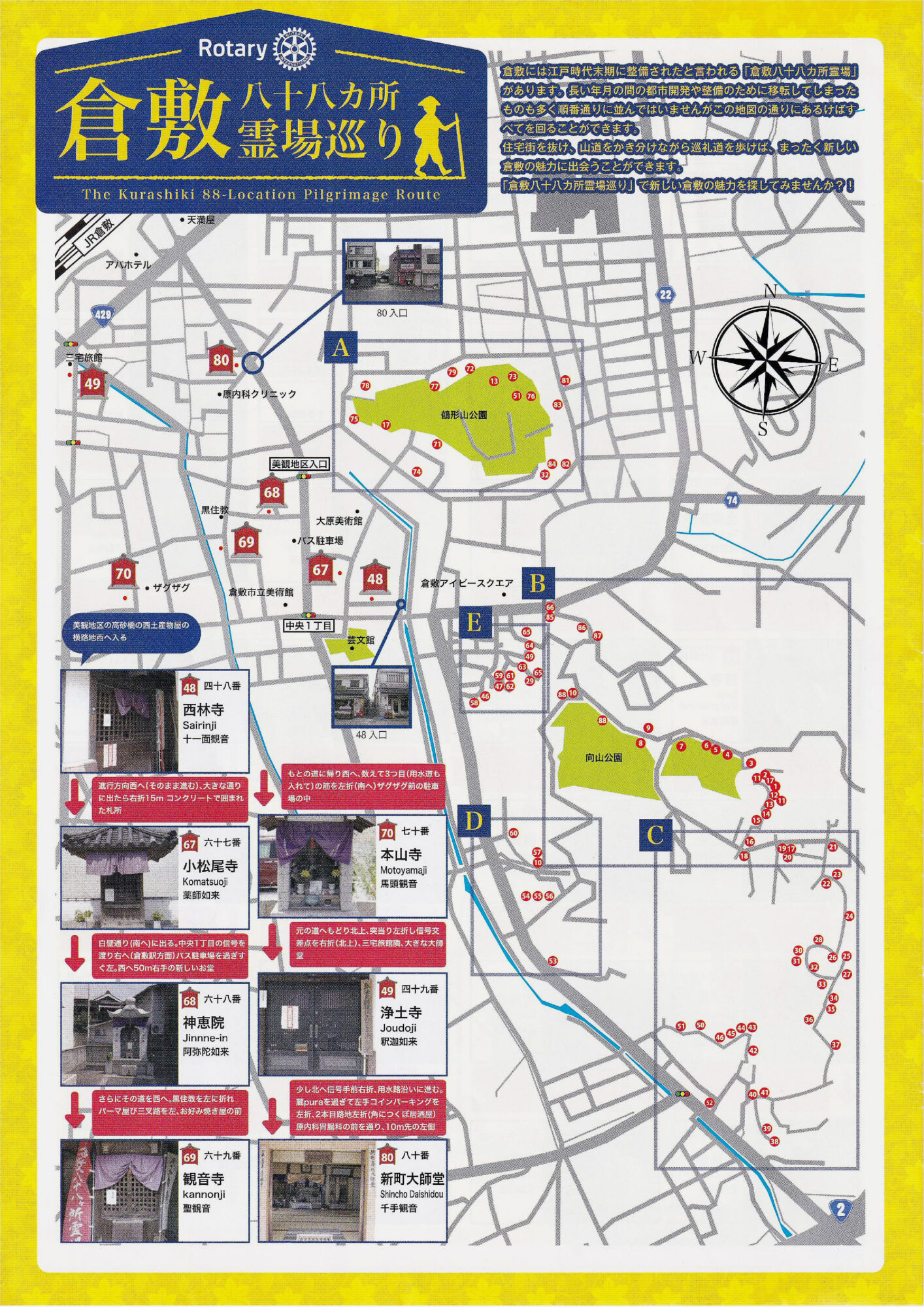
It is an easy-to-understand material mainly consisting of a map and photos of the sacred sites.
It is composed of an overall view and detailed maps divided into areas A to E.
The pamphlet can be obtained from Mr. Chida at Bizen-yaki Nagayama.
We want to preserve and pass on the sacred sites
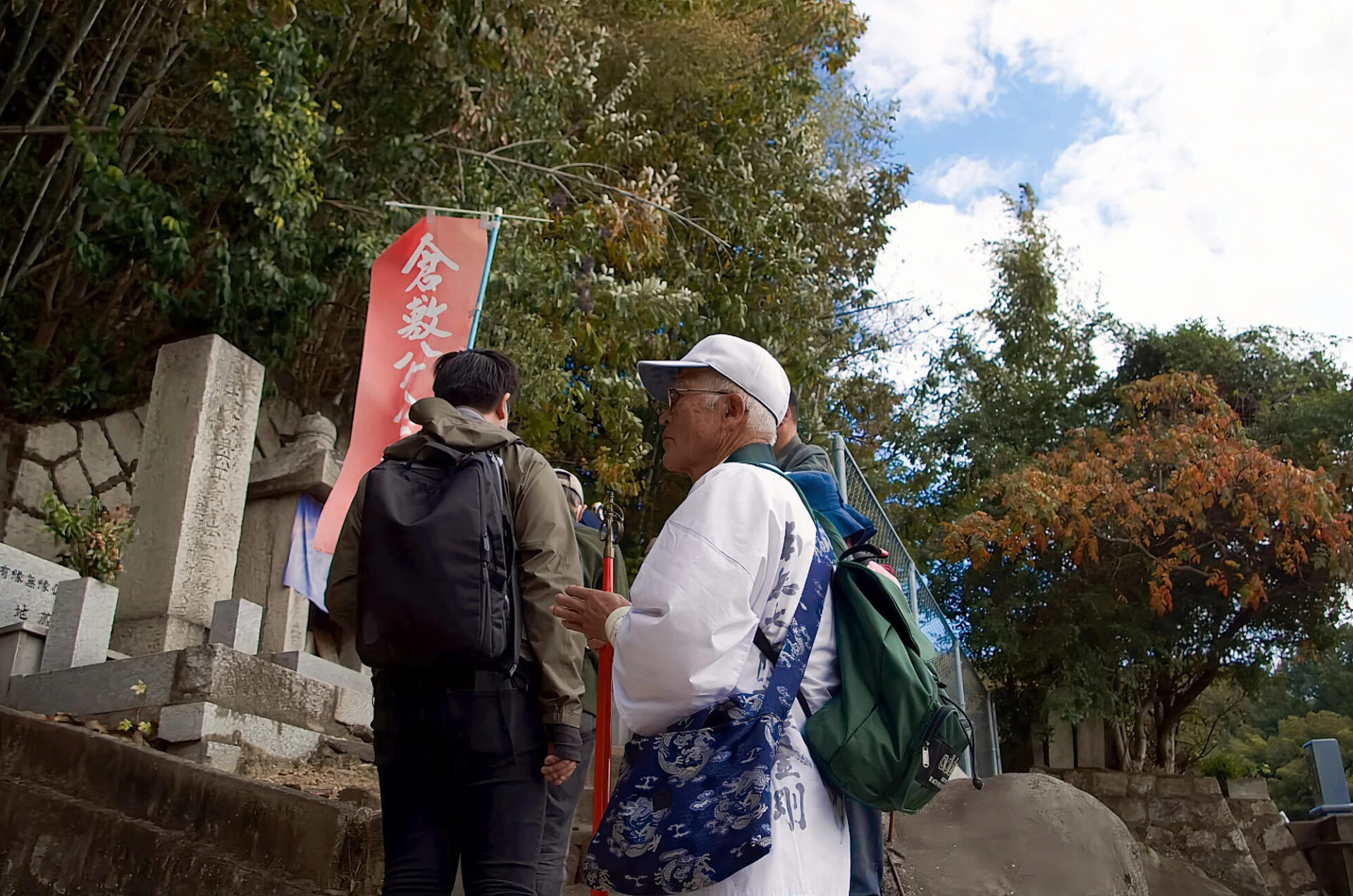
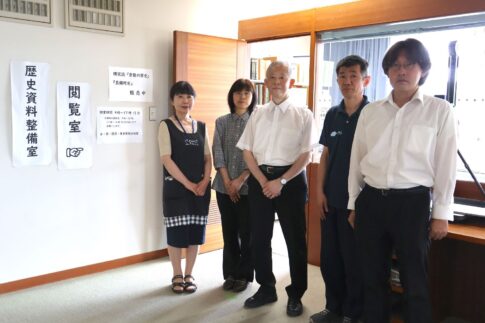
I will join five people introduced through Rev. Murata of Kanryuji Temple to visit the Kurashiki 88 Sacred Sites together.
I never thought I would complete the entire pilgrimage.
We walked together to all the sacred sites, resulting in about 18,000 steps in approximately 6 hours.
After completing the pilgrimage, more than the sense of achievement or the blessing of Kobo Daishi, I felt the wishes of everyone who wants to protect the sacred sites, and I had a fulfilling day.
▼ I will introduce one of the most impressive stories I heard from Mr. Kato, a guide for the Kurashiki 88 Sacred Sites.
Mr. Kato is 80 years old (as of 2022).
After retiring from his company, he became interested in the Kurashiki 88 Sacred Sites and local activities and history.
He mentioned that if you convey what you have heard to someone, you can remember it.
I learned a wide range of knowledge from him, but it is unfortunate that I cannot introduce everything.
▼ After finishing the pilgrimage, I heard about the Kurashiki 88 Sacred Sites from the assistant priest of Kanryuji Temple.
Until about 40 years ago, in the 1980s, the "Kurashiki 88 Sacred Sites" were not maintained as they are now.
Some shrines were protected by local groups called "ko," while others were in a state of disrepair, and some locations were even hard to identify.
The impetus for the current maintenance began about 40 years ago when Rev. Murata of Kanryuji Temple and Mr. Kotaro Uchida started searching.
They conducted research on old documents and interviews with local residents, finding each site one by one.
Although it is called the Kurashiki 88 Sacred Sites, now including the inner sanctum, there are 99 sacred sites that have been established.
First, let's find the sacred sites
Let's try to find the sacred sites using maps such as bookmarks!
▼ This is the "Kurashiki 88 Sacred Sites Pilgrimage" I received on the day of the pilgrimage. Before the COVID-19 pandemic, we used to gather and walk twice a year, every March and November.
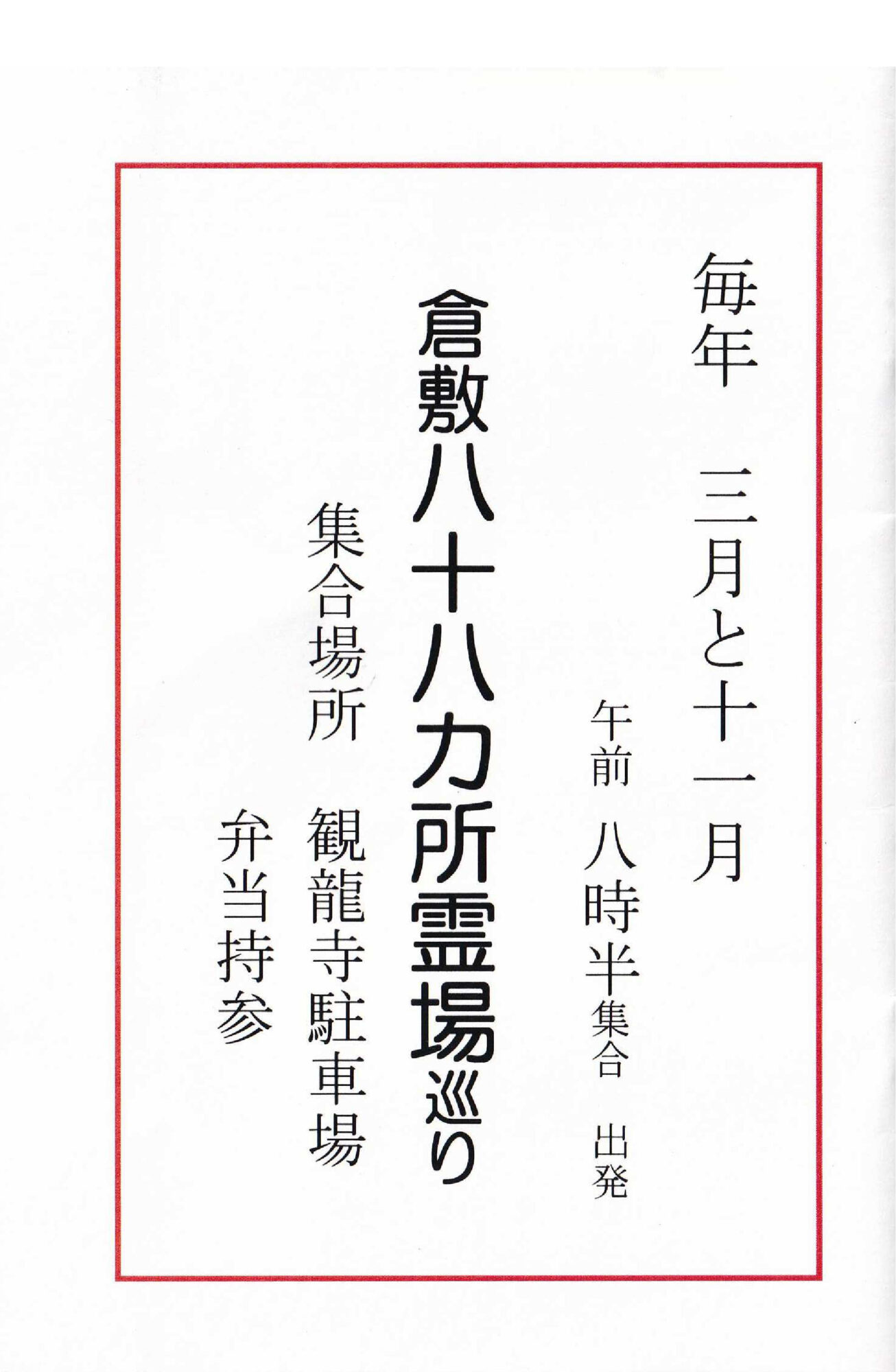
Like the pamphlet, the bookmark can also be obtained from Mr. Chida at Bizen-yaki Nagayama.
▼ The bookmark clearly introduces the sacred sites, organizing the site numbers, temple names, principal images, mantras, and simple routes.
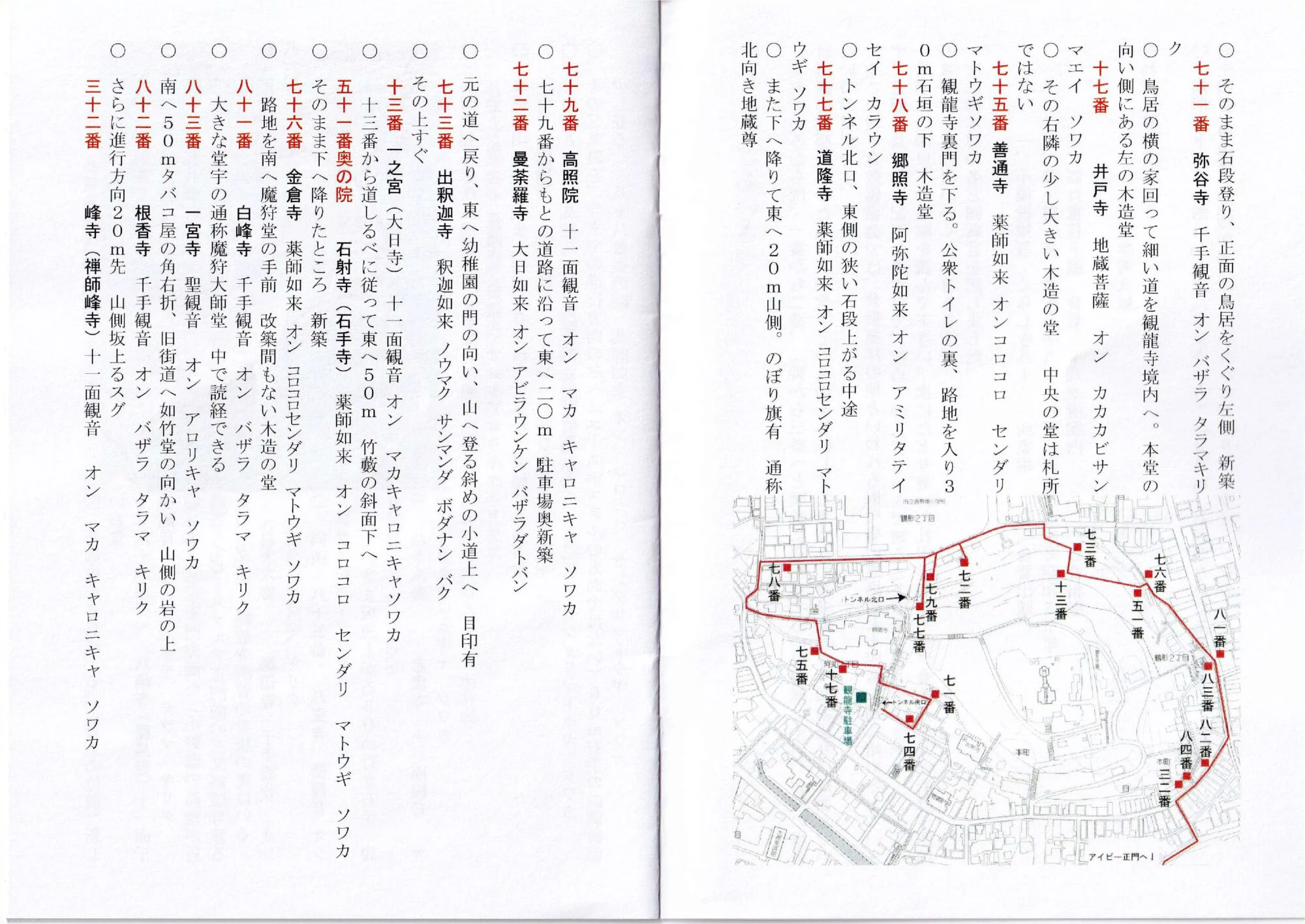
With the bookmark, you can easily find the locations and walk around.
However, caution is necessary. I realized while walking that it is quite difficult to find all the sacred sites using just this map.
Especially in mountain paths, please be careful not to go alone.
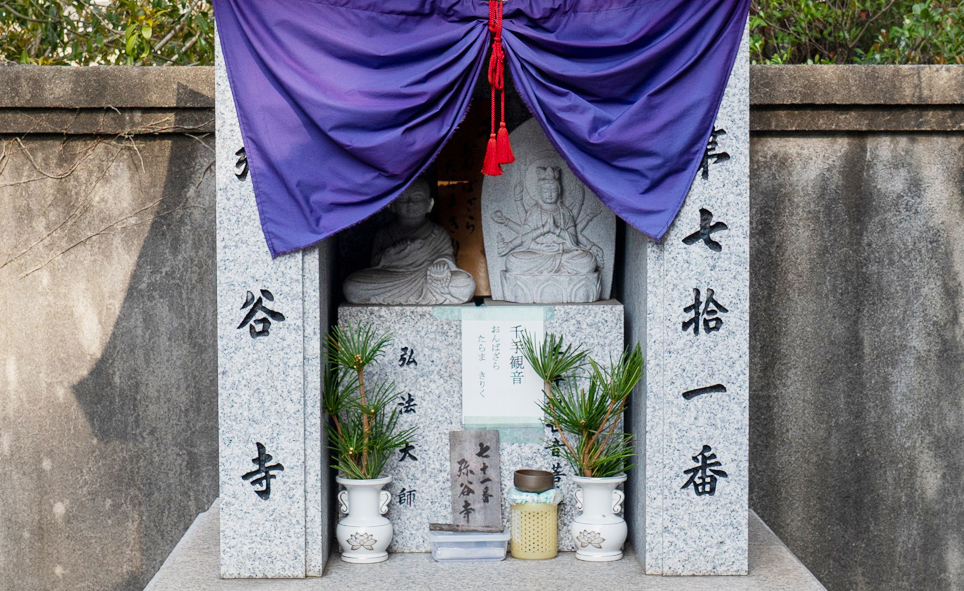
▼ At the sacred sites, the first thing that catches your eye is the red banner that says "Kurashiki 88 Sacred Sites."
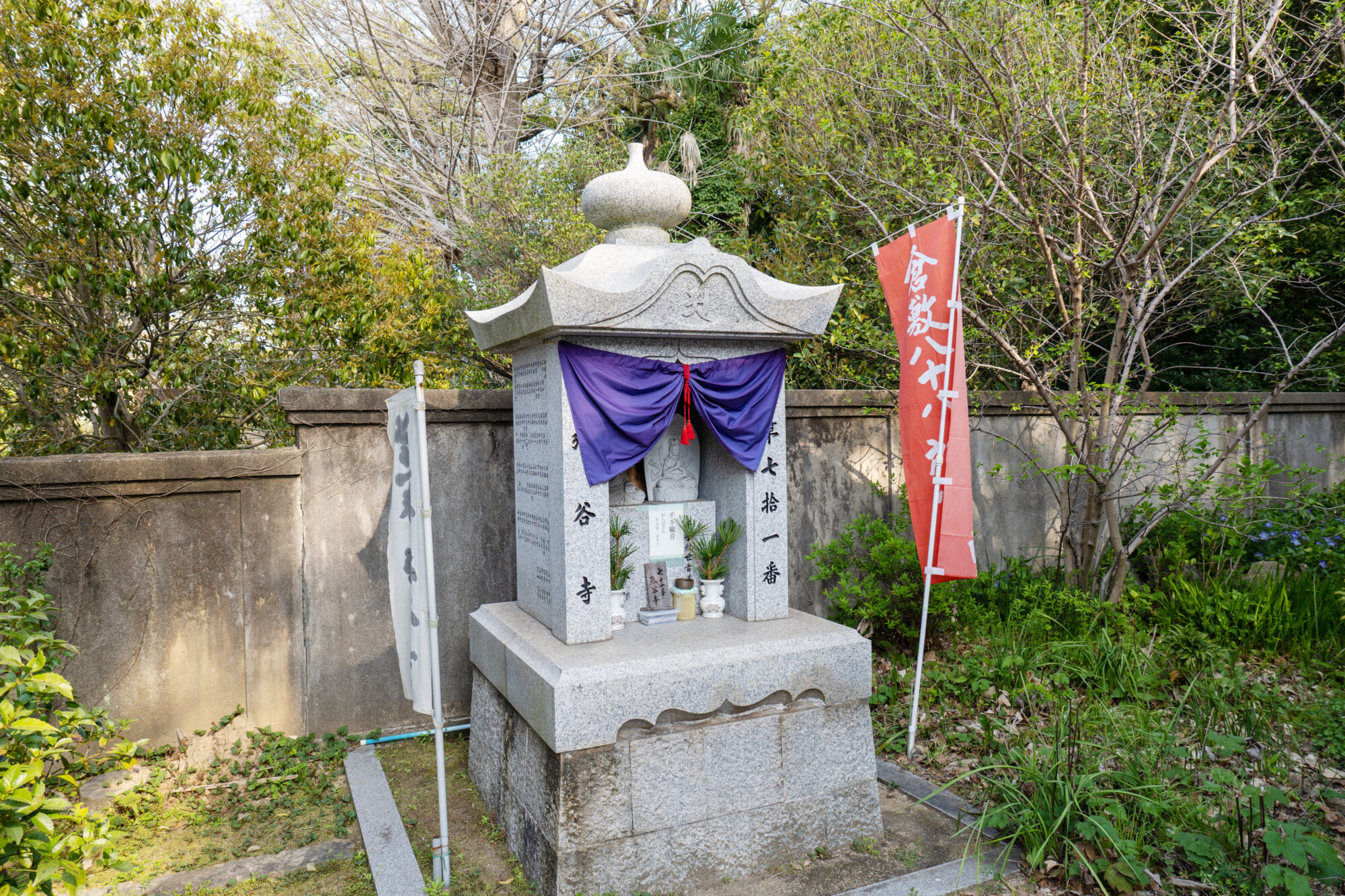
On the right stone pillar is the site number (No. 71). On the left stone pillar is the name of the temple (Yadani Temple).
The names inscribed on the left stone wall are those of the donors when the sacred site was newly established.
What is inside the sacred sites?
When you go on a pilgrimage, why not take a look inside the sacred sites?
Since each sacred site is not standardized, they are not necessarily the same, but I will introduce what is inside a new sacred site.
▼ The earlier mentioned No. 71 Sacred Site. Inside the sacred site, on the left side is Kobo Daishi, and on the right side is the principal image (the principal image at No. 71 Sacred Site is Senju Kannon) of the two deities.
For reference, the principal image refers to the principal deity of each sacred site in the Shikoku 88 Sacred Sites. The "Kurashiki 88 Sacred Sites" also enshrines them in accordance with the Shikoku sacred sites.
What are the rituals for visiting the sacred sites?
As the rituals for visiting the sacred sites, I will introduce the order of prayers at each sacred site. The steps 1 to 6 of the prayers are repeated for each sacred site.
Step 1. Gassho (palms together) and worship
Step 2. Opening Sutra (Kaihyo-ge): Chant once.
The supreme, profound, subtle law
(mujoujinjinmimyouhou)
Is difficult to encounter for hundreds of thousands of kalpas
(hyakusenmangou nansougou)
I now see, hear, receive, and hold
(gakonkemon tokujyuji)
May I understand the true meaning of the Tathagata
(gange nyorai shinjitsugi)
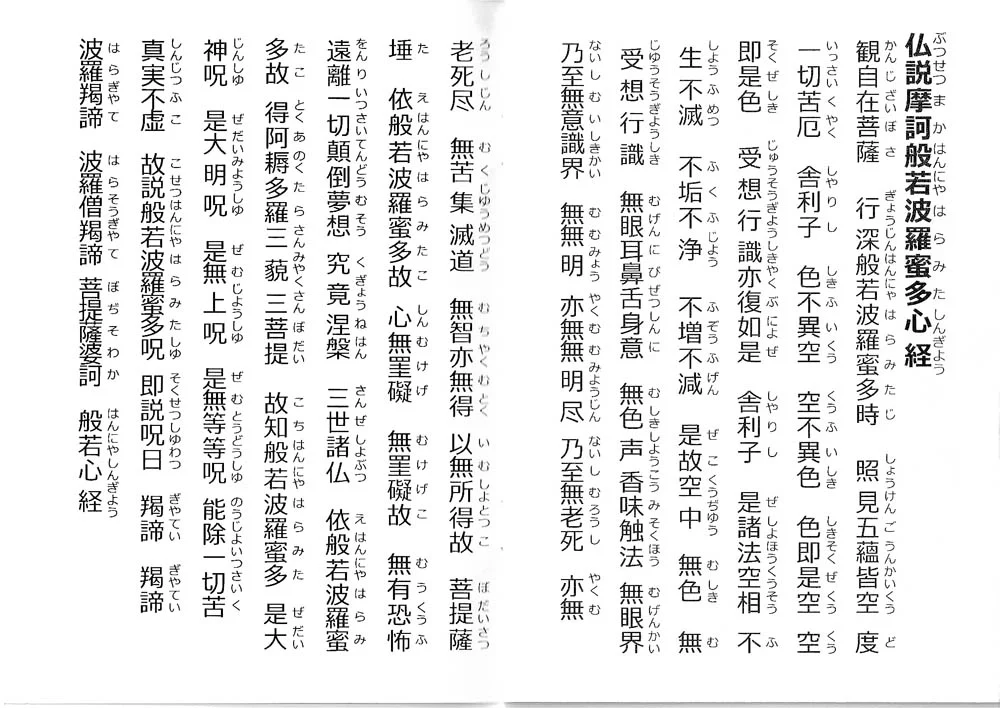
Step 3. Heart Sutra (Hannya Shingyo): It may be omitted due to time constraints. (If there is a small group or time is sufficient, it is preferable to chant it.)
▼ The bookmark includes the Heart Sutra, so it's okay if you don't remember it.
Step 4. Mantra: Chant three times according to the principal image enshrined at each sacred site.
Tap to display
| Principal Image | Mantra | Reference |
|---|---|---|
| Yakushi Nyorai | Onkorokorosenndarimatougi sowaka | No. 74 Koyasan Temple, etc. |
| Senju Kannon | On bazara taramakiriku | No. 71 Yadani Temple, etc. |
| Jizo Bosatsu | On kakakabisanmaei sowaka | No. 17 Idodera Temple, etc. |
| Amida Nyorai | On amiritateisei karahun | No. 78 Goshouji Temple, etc. |
| Juuichimen Kannon | On maka kyaronikya sowaka | No. 79 Takashouin Temple, etc. |
| Dainichi Nyorai | On abiraunkengen bazaradatoban | No. 72 Mandara-ji Temple, etc. |
| Shakyamuni Nyorai | Nomaku sanmanda bodanan baku | No. 73 Shushakadera Temple, etc. |
| Shou Kannon | On arorikya sowaka | No. 83 Ichinomiya Temple, etc. |
| Kokuzou Bosatsu | No-bou akyashagyarabaya onarikyamariborisowaka | No. 12 Yakiyama Temple, etc. |
| Miroku Bosatsu | On maitareiya sowaka | No. 14 Jyougakuji Temple, etc. |
| Monju Bosatsu | On arahashanou | No. 31 Chikurinji Temple, etc. |
| Fudou Myouou | Nomaku samandara bazaradan sendamakaroshadasowataya untarata kanman | No. 36 Seiryuji Temple, etc. |
| Batou Kannon | On amiritu dohanba unpatta | No. 70 Honyama Temple, etc. |
Step 5. Namu Daishi Henjo Kongou (namu daishi henjou kongou): Chant three times. This means to take refuge in Kobo Daishi.
Step 6. Eko-mon (offering prayer): Chant once.
May this merit
be shared with all
sentient beings
and may we all attain Buddhahood.
It can be quite challenging until you get used to it.
Let's visit Koyasan Temple and Yajima Temple (around Tsurugata Mountain)
▼Departing from Kanryuji Temple. This is the first temple (No. 74).
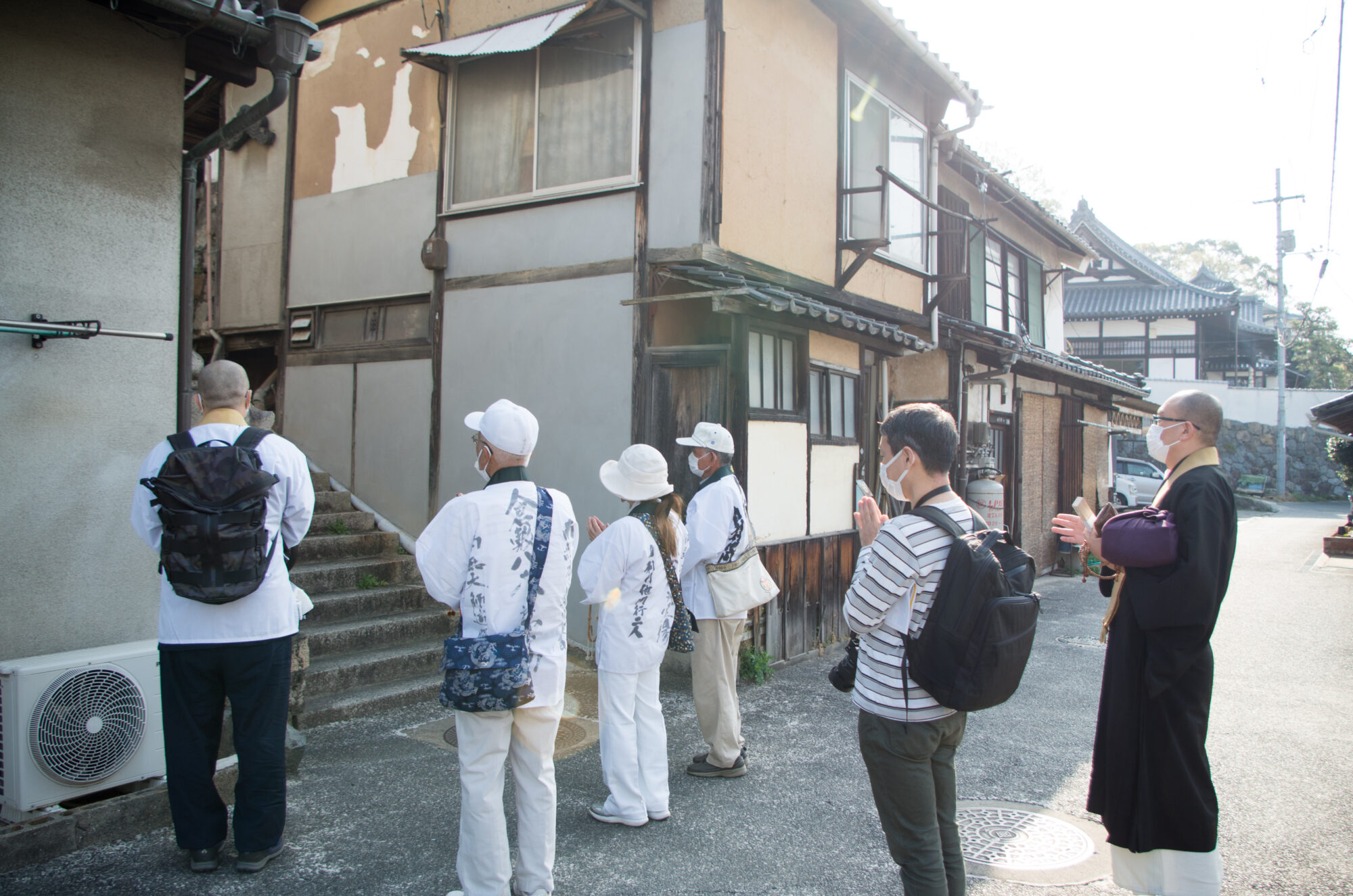
It is located southeast of the Tsurugata Mountain Tunnel. At this time, I did not think I would visit all the temples, so I started walking while wondering, "How far will I walk, and when will I finish?"
▼The assistant priest of Kanryuji Temple will explain about the actual temple (No. 74).
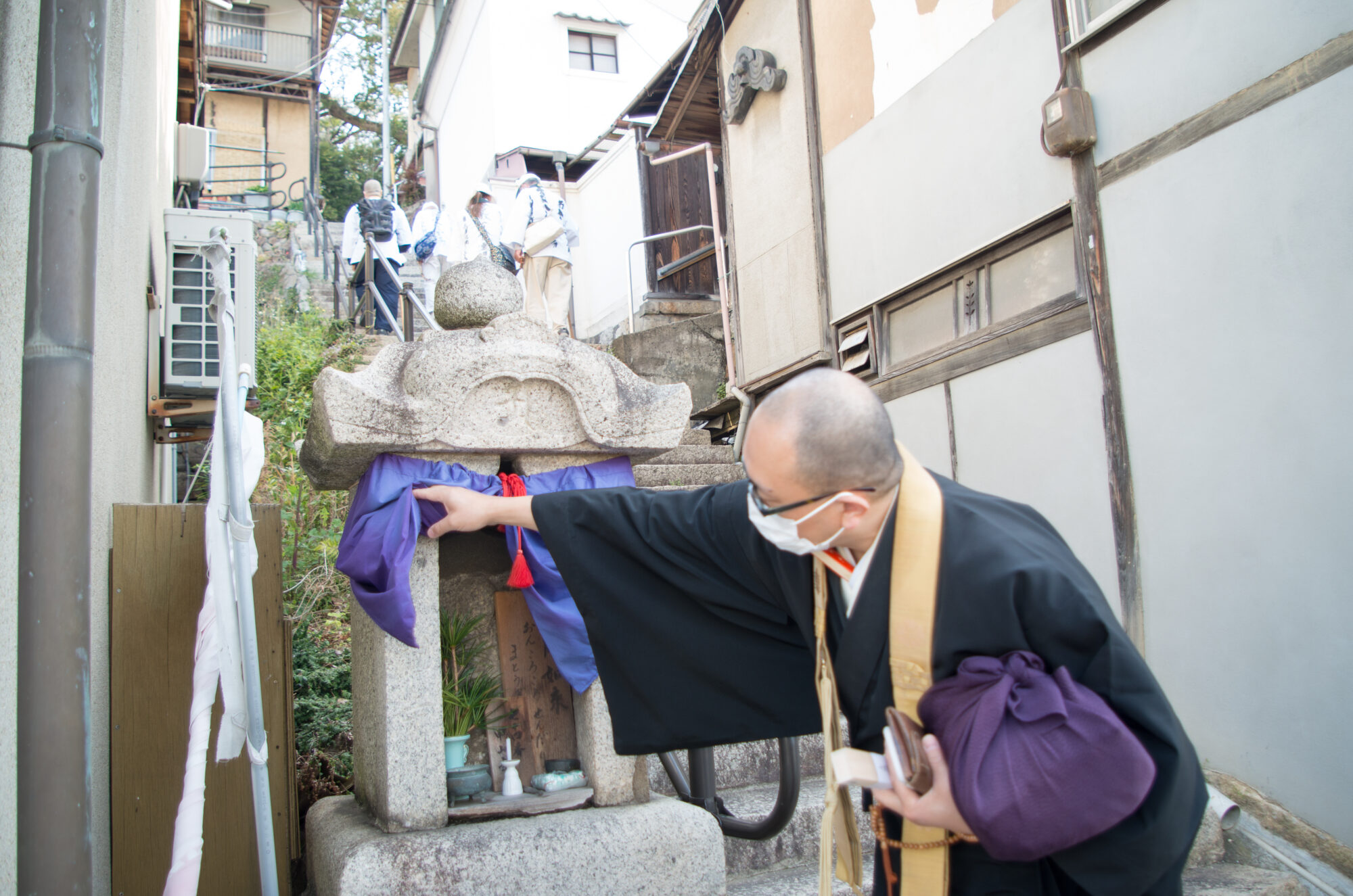
▼During the pilgrimage of the 88 sacred sites of Kurashiki, I was shown Gion Shrine. The 71st temple is located to the west of here.
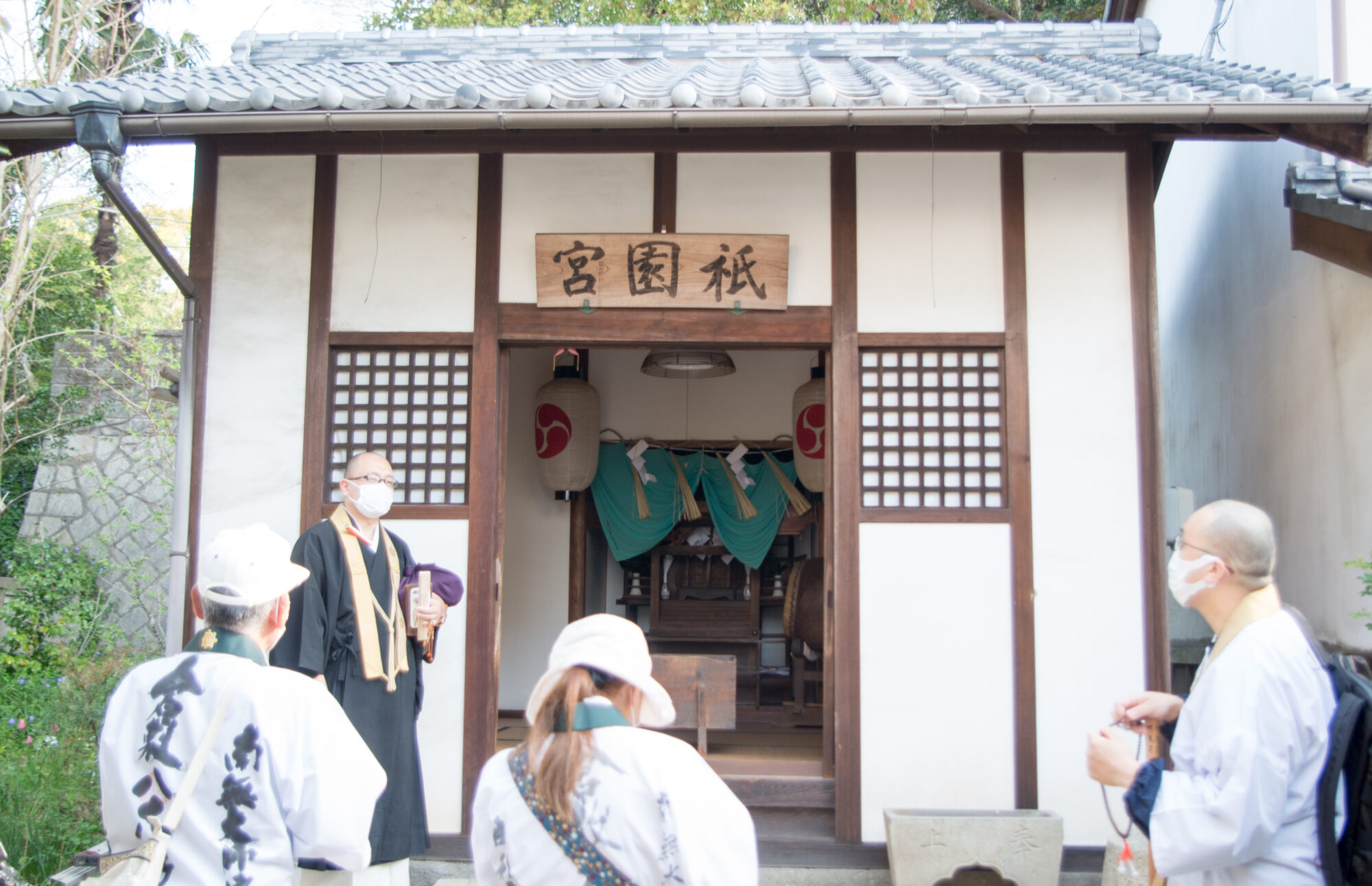
Gion Shrine is separate from the sacred sites and was built in the 4th year of Bunsei (1800s) as a guardian deity of the town (the former town name was Yuba). It was rebuilt in 1992. I was specially allowed to view the interior.
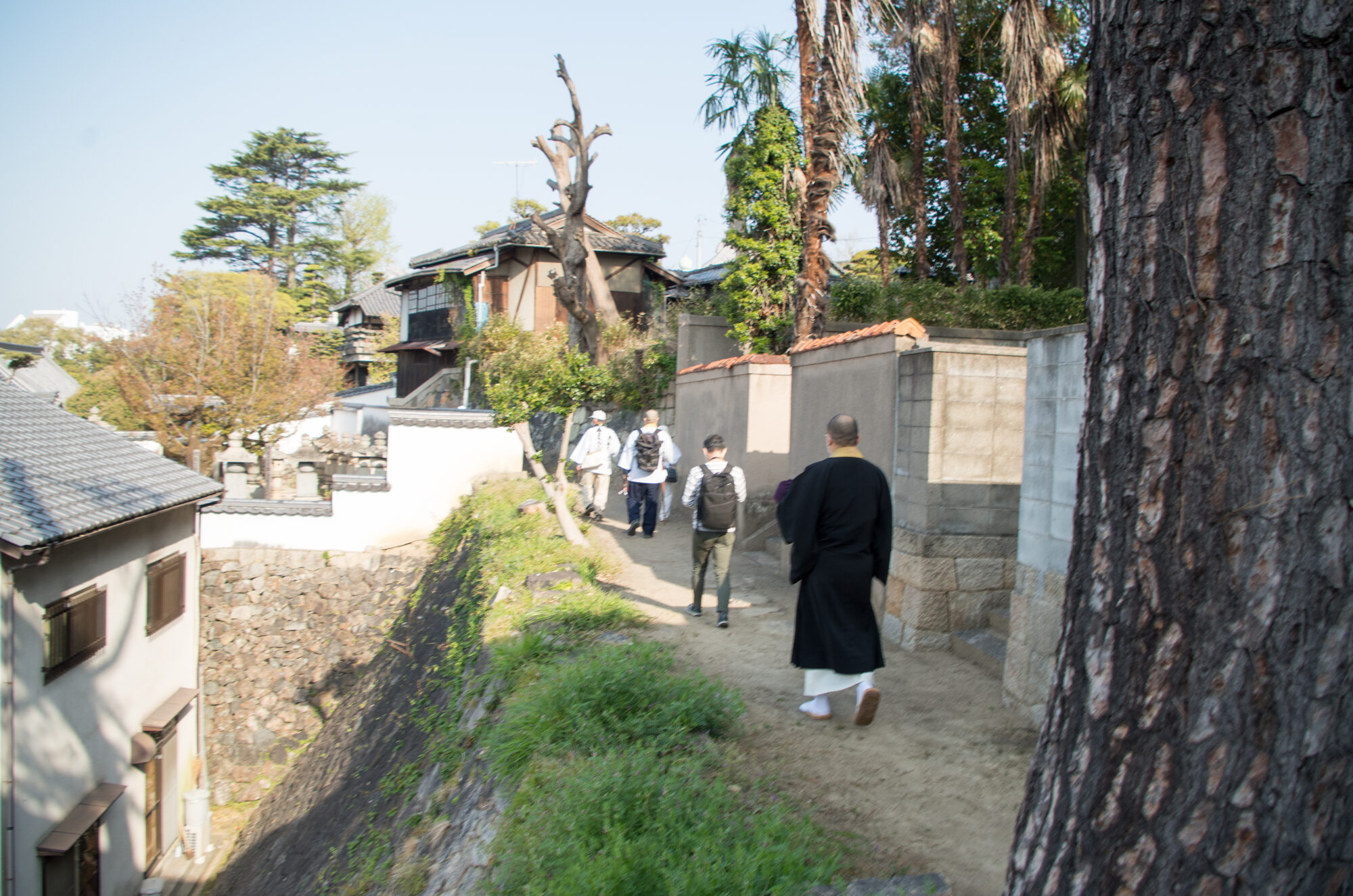
▼I will return to Kanryuji Temple from the 71st temple, but exploring narrow alleys like this is one of the attractions.
I enjoy wandering through narrow back streets, which stirs my sense of adventure. Of course, this is a path I am walking for the first time.
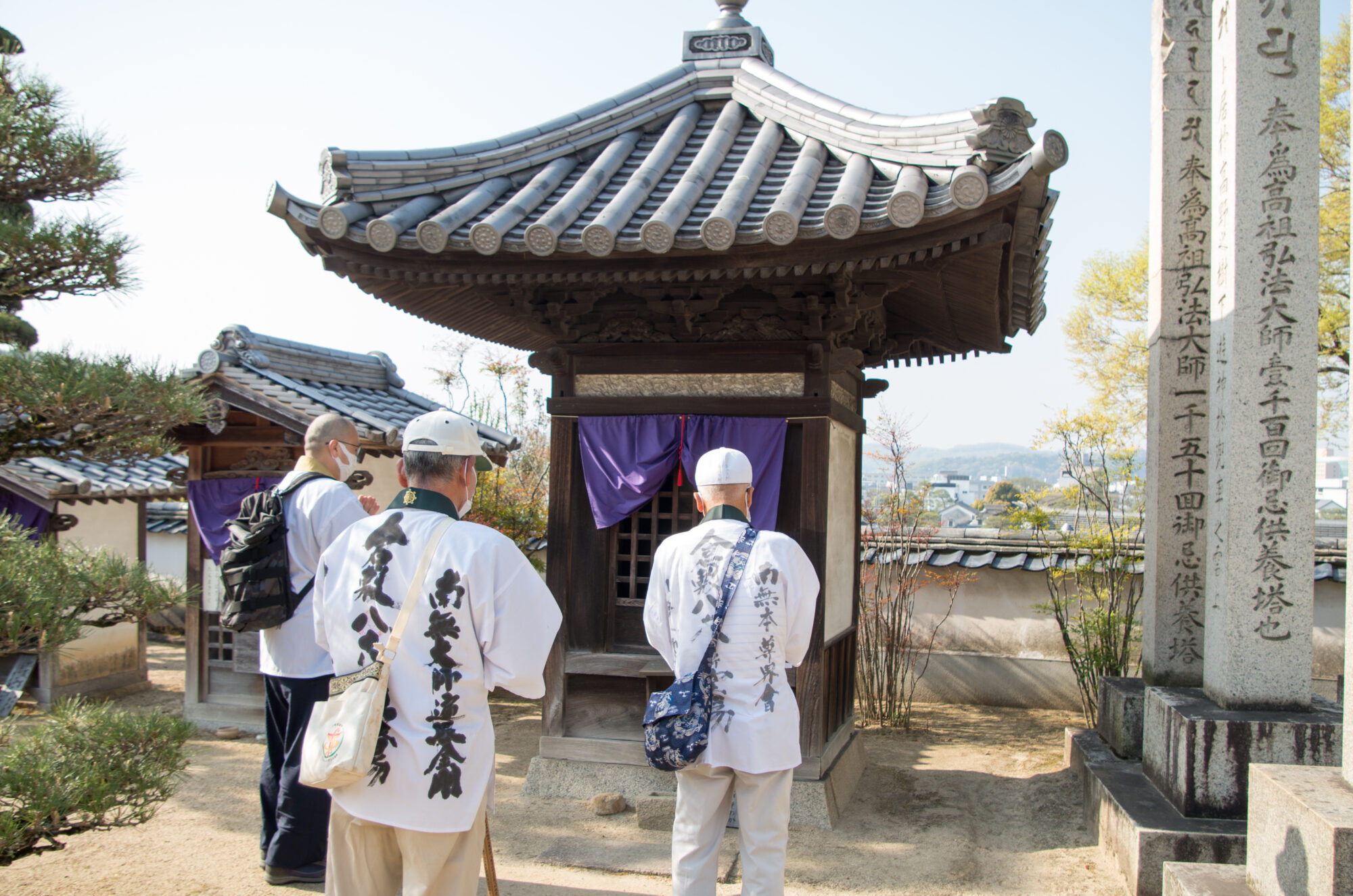
▼The wooden 75th temple located within the grounds of Kanryuji Temple. There is also the 17th temple within the grounds of Kanryuji Temple.
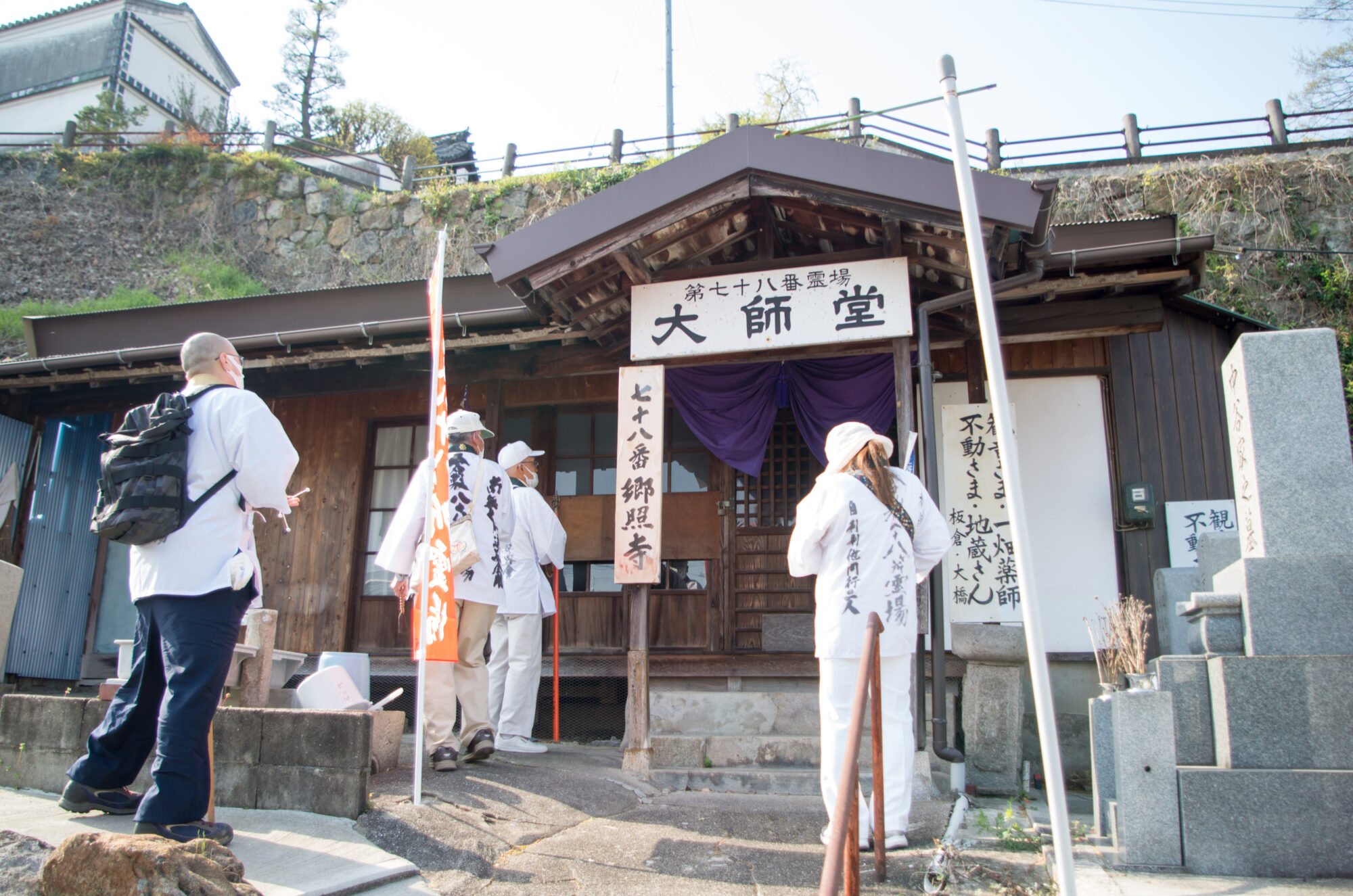
▼The 78th temple, Goshouji, located to the north of Kanryuji Temple. It is well organized and maintained, and you can feel that it is cherished and protected by the local community.
▼The 77th temple, Doryuji, is located just east of the Tsurugata Mountain Tunnel. It has recently been restored as a previously lost temple, so it is very clean.
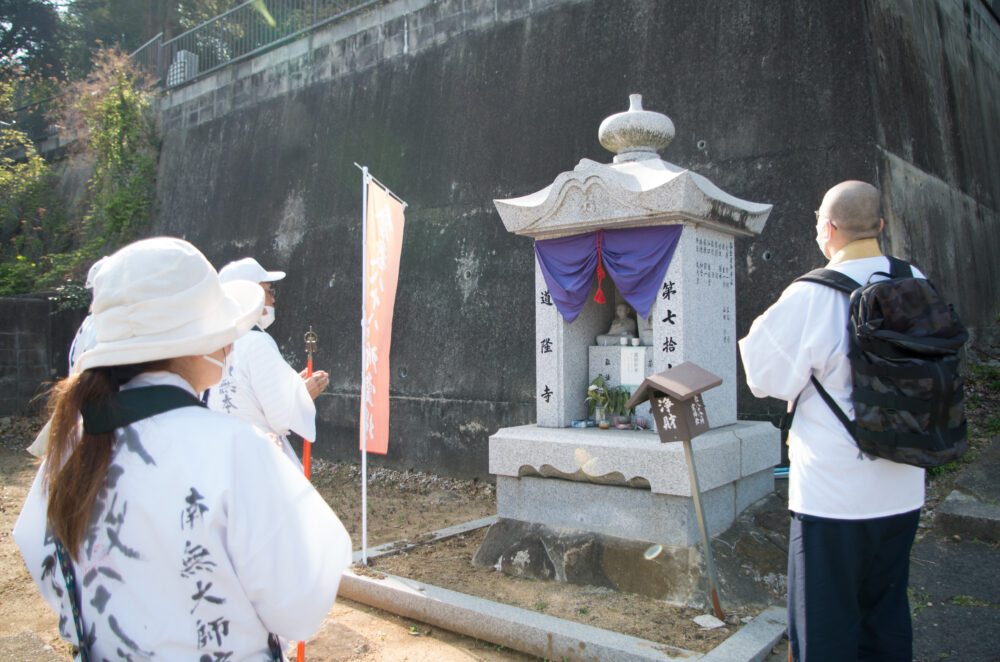
It is said that many people cooperated in securing the land and preparing the stone buildings, the deity, and the main object of worship for the restoration of the temple.
▼The 79th temple, Takushoin.
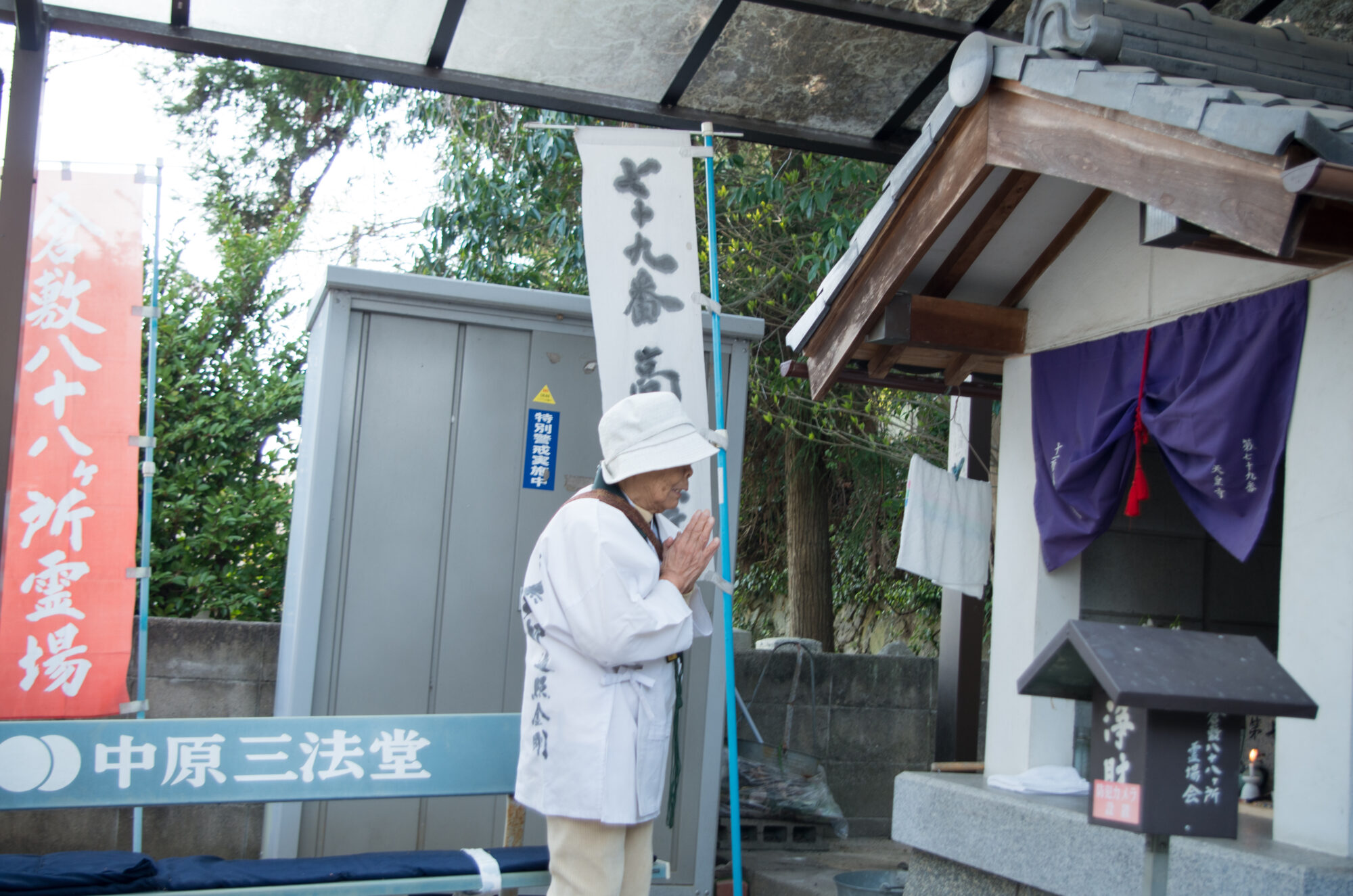
Here, Mr. Chida, who is 90 years old, was waiting for us on his bicycle.
"Unfortunately, I can't walk with you because my legs have become weak," he said, but I was moved to see him join us for the visit. I found beauty in the sight of Mr. Chida participating in the visit.
Please also pay attention to the walls of this temple. They have been restored with block walls. You might not notice it easily, but the restoration methods differ from temple to temple depending on the era and the person restoring them.
The spirit of "it doesn't have to be uniform" and "it's okay to be different" is a characteristic of individuality that Mr. Kato speaks of.
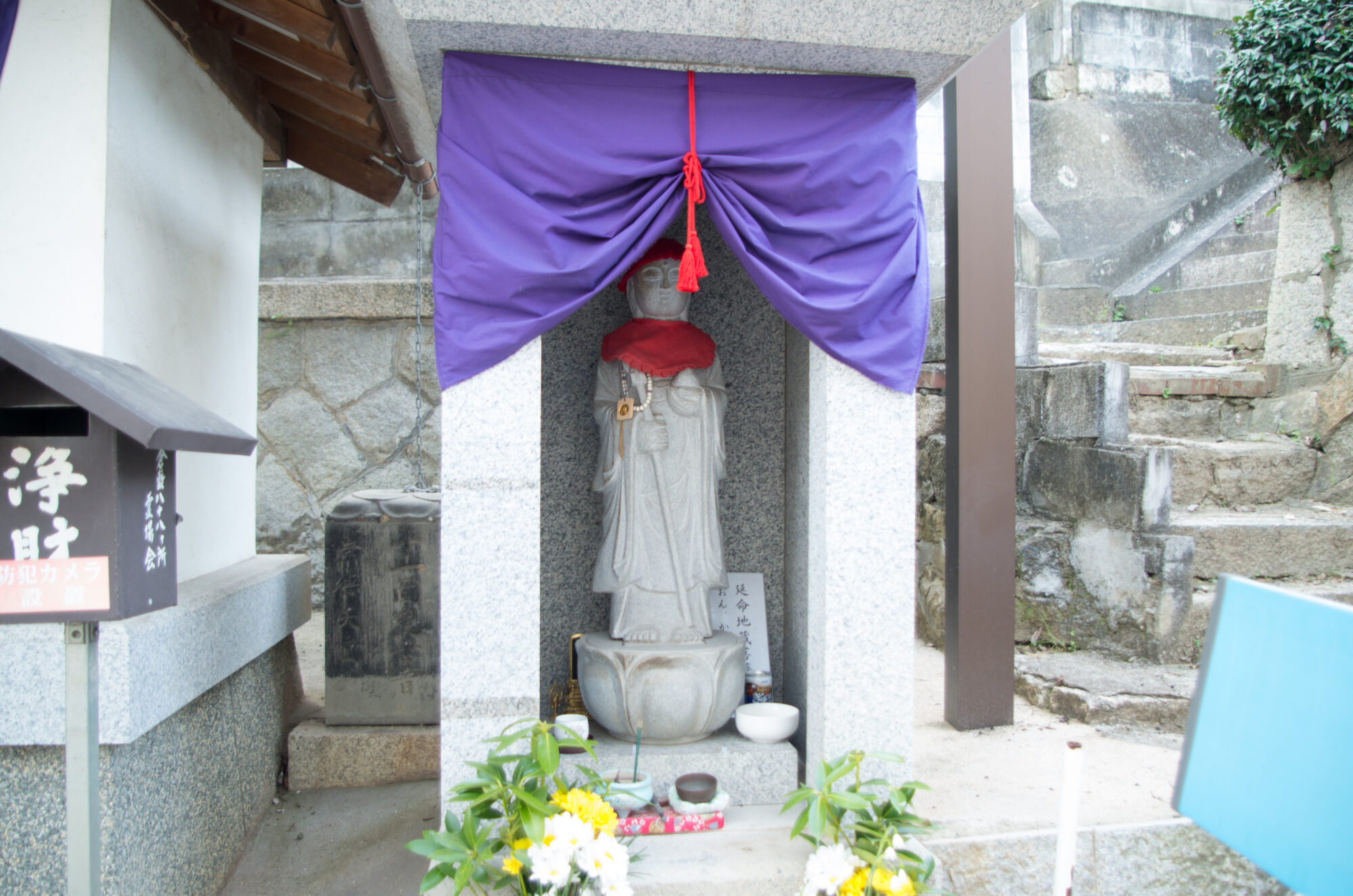
▼Adjacent to the west side of the 79th temple is a Jizo statue facing north.
It is said that north-facing Jizo statues are rare even nationwide.
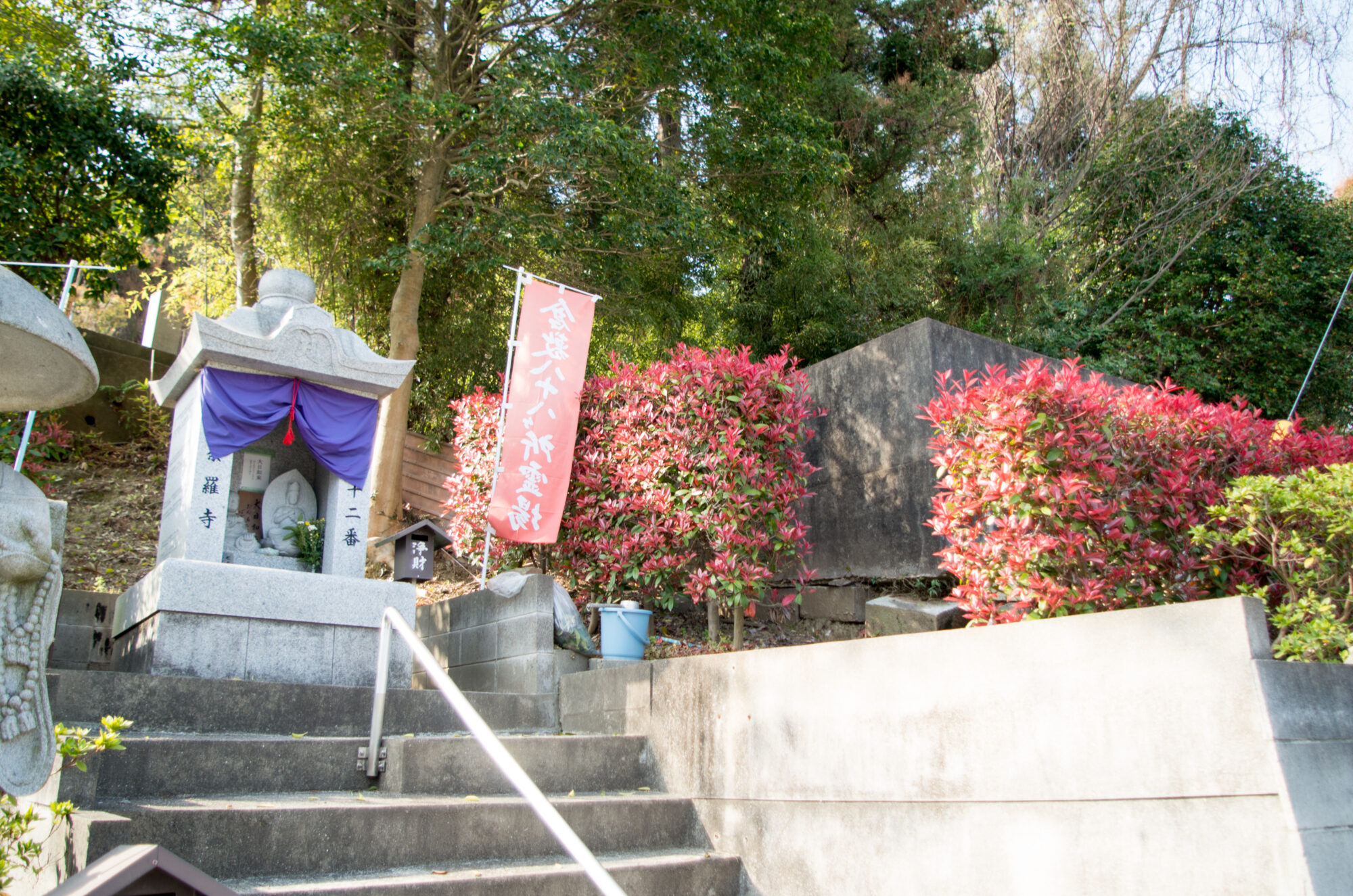
▼The 72nd temple, Mandara-ji.
While I also notice the new temples, I particularly want you to pay attention to the brand new hedge on the right.
Mr. Kato regularly maintains it.
▼Let's head from the 73rd temple to the 13th temple.
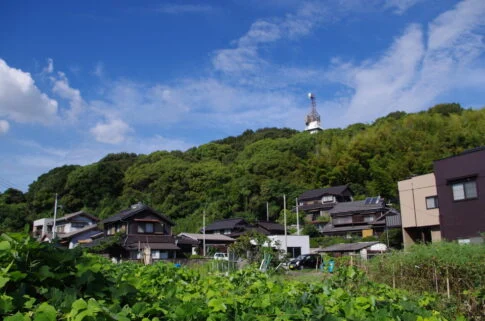
We will climb the mountain path on the north slope of Tsurugata Mountain. There are such mountain paths within Tsurugata Mountain, which is surprising for a pilgrimage route.
Before the pilgrimage, I thought it would just be a walk around the town of Tsurugata Mountain. Although there isn't much elevation change, I find myself a bit out of breath.
Please also pay attention to the stairs. They have been maintained by the local community using wooden boards and rebar, making them easier to walk on than ordinary mountain paths.
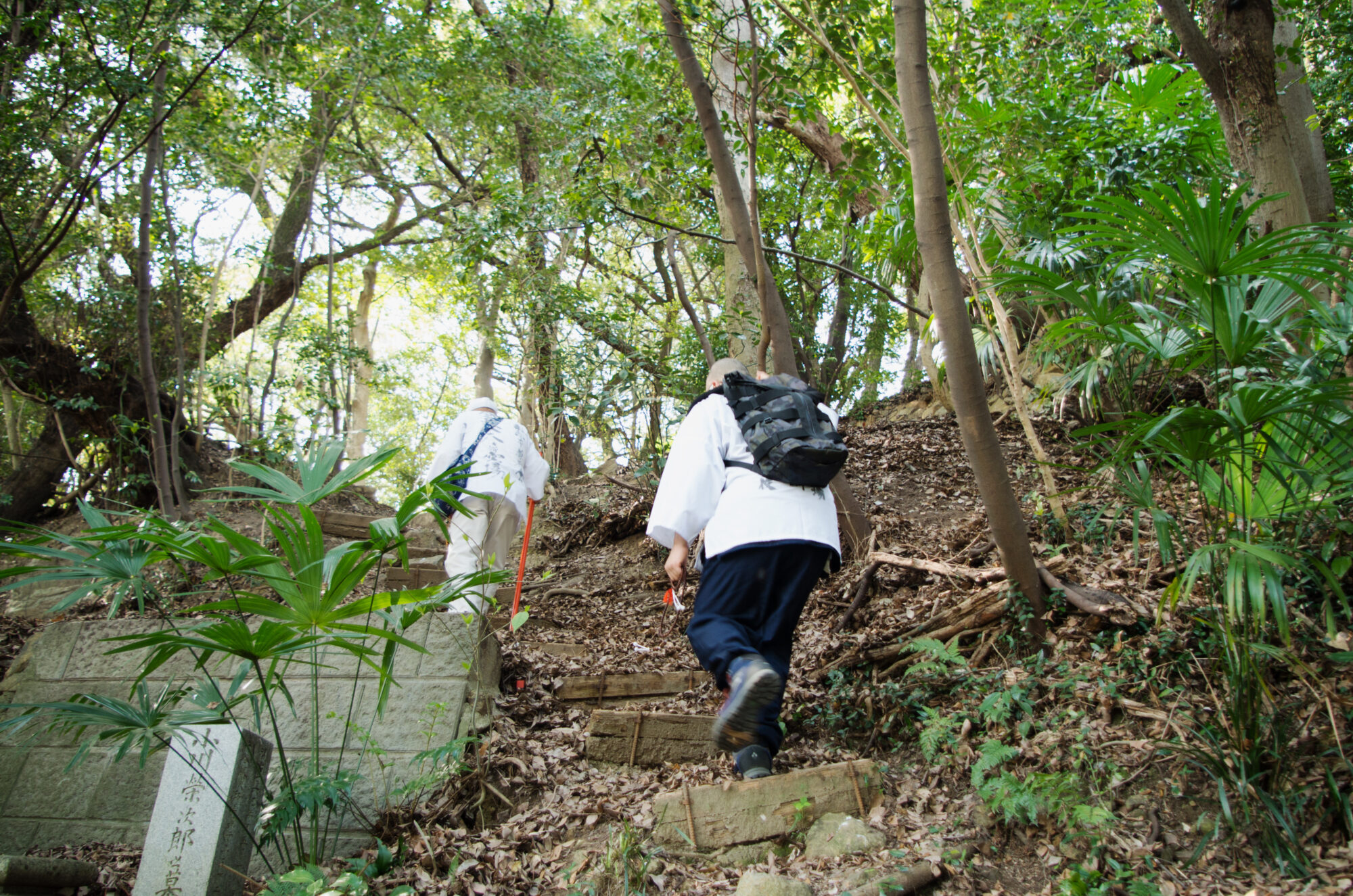
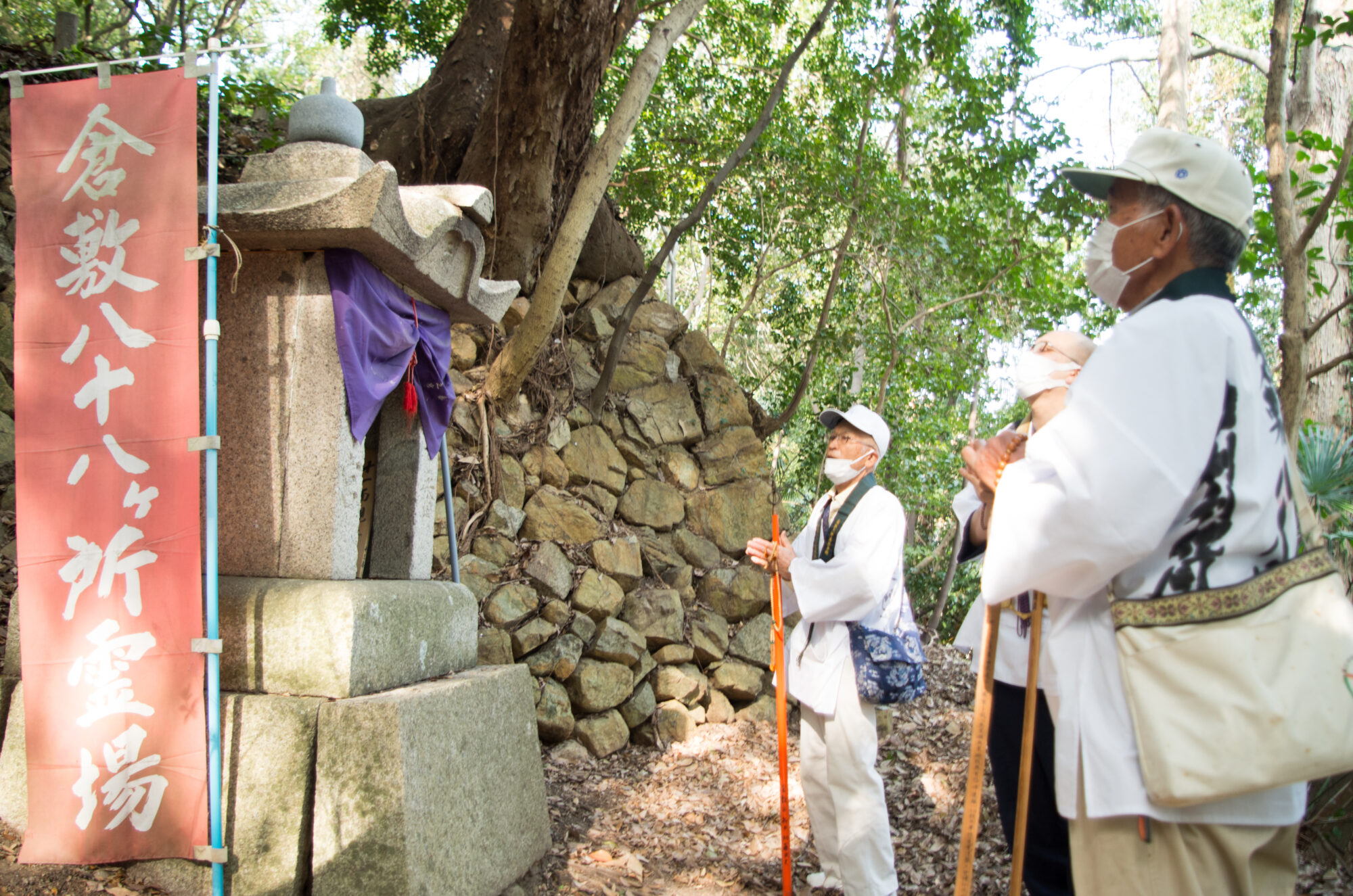
▼The 13th temple, Ichinomiya, quietly stands in the mountains.
I never expected to find such scenery in the center of Kurashiki. It is too scary to go alone.
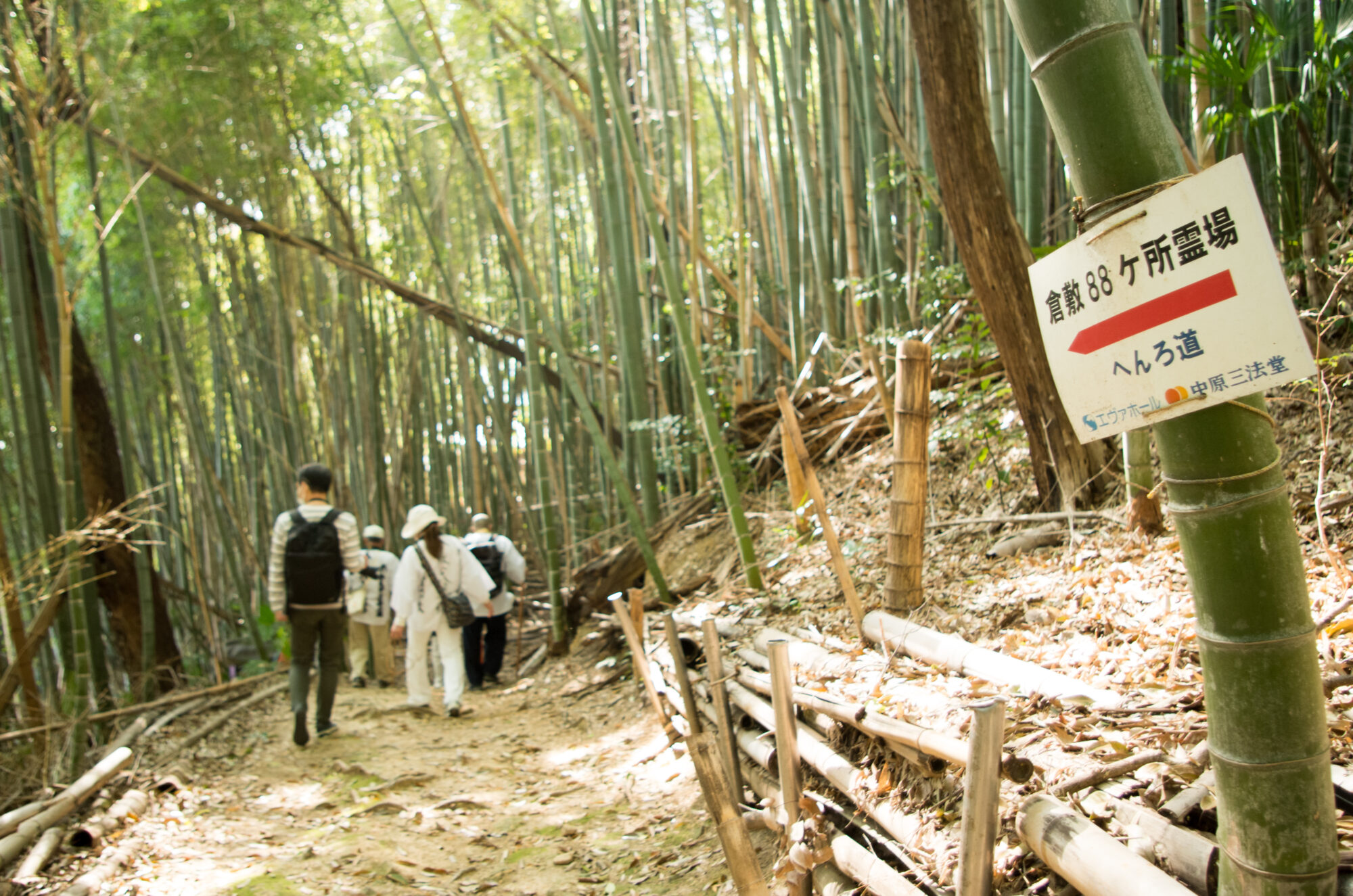
▼Let's head from the 13th temple to the 51st temple.
The sign for the "Kurashiki 88 Sacred Sites Pilgrimage Path" has also been set up. We slowly descend a relatively gentle slope on a wide mountain path.
I was surprised to find such a well-established bamboo grove within Tsurugata Mountain.
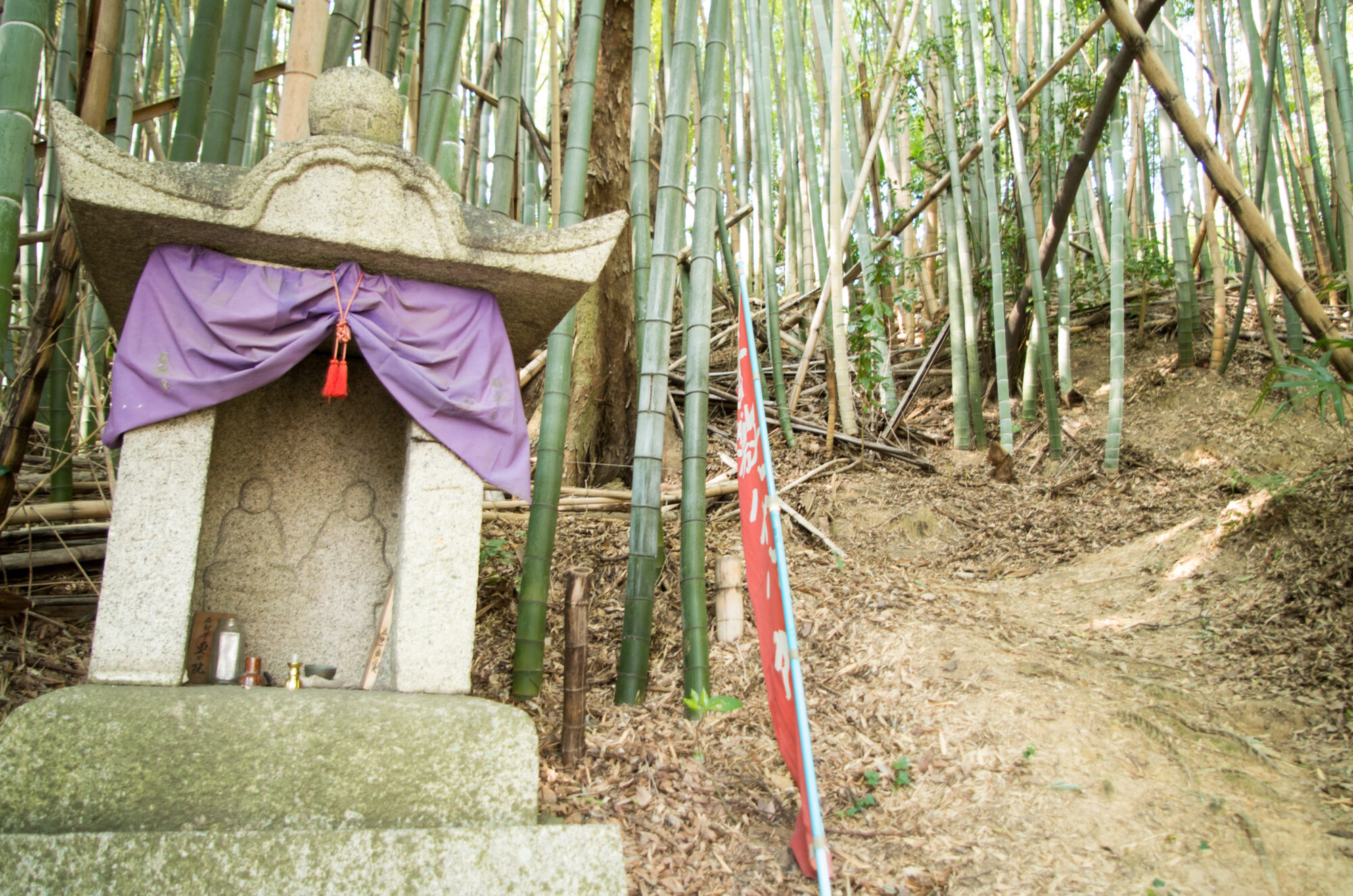
▼The 51st temple, Okunoin Ishidaji.
Please pay attention to the deity and the main object of worship as well. The fact that they are carved into a single rock is also a uniqueness.
▼The 76th temple, Kinkura-ji, is a newly restored temple.
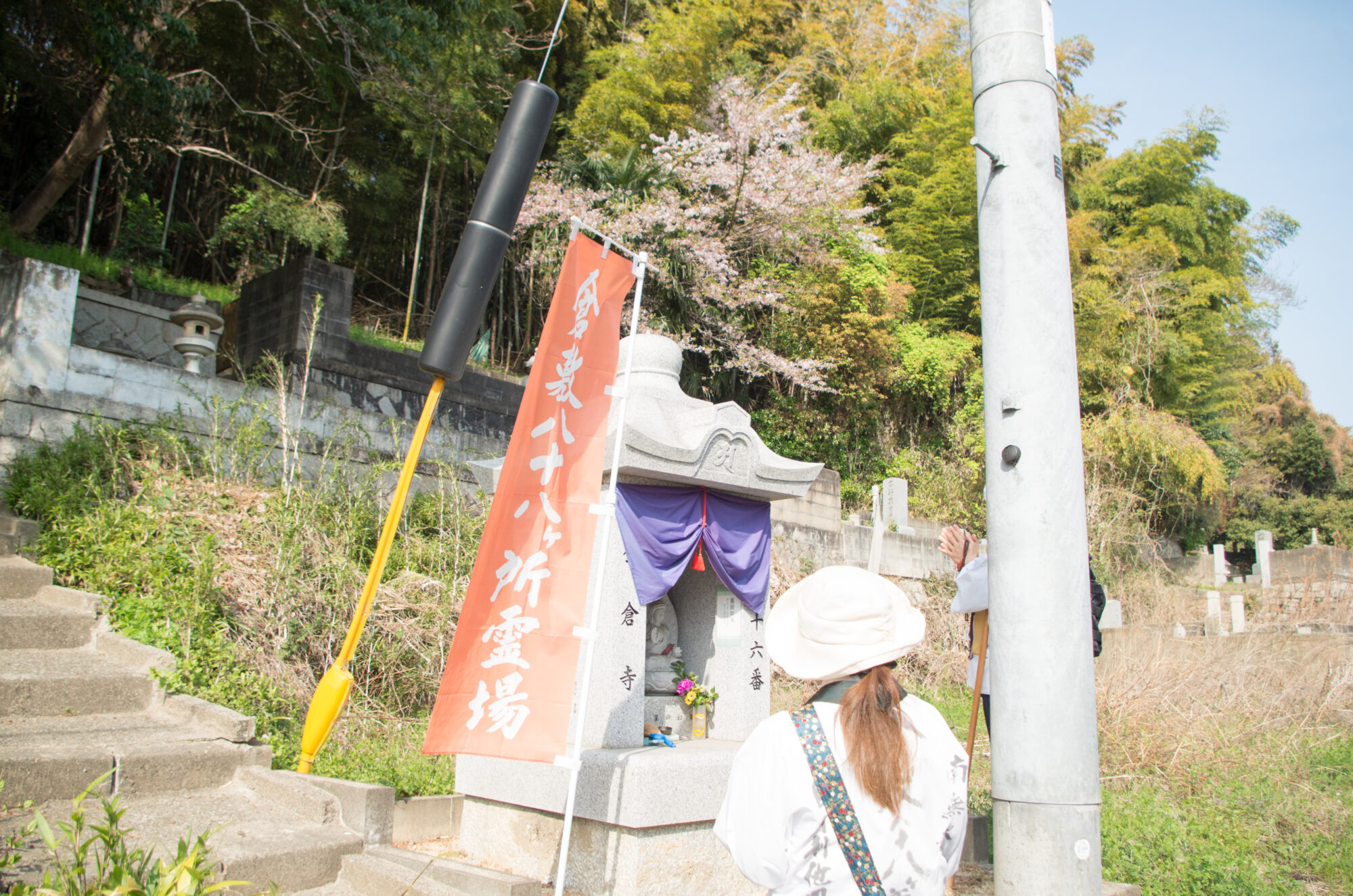
▼No. 81 Temple, Shiramine-ji. Among the relatively few wooden temples, there are two stone statues lined up.
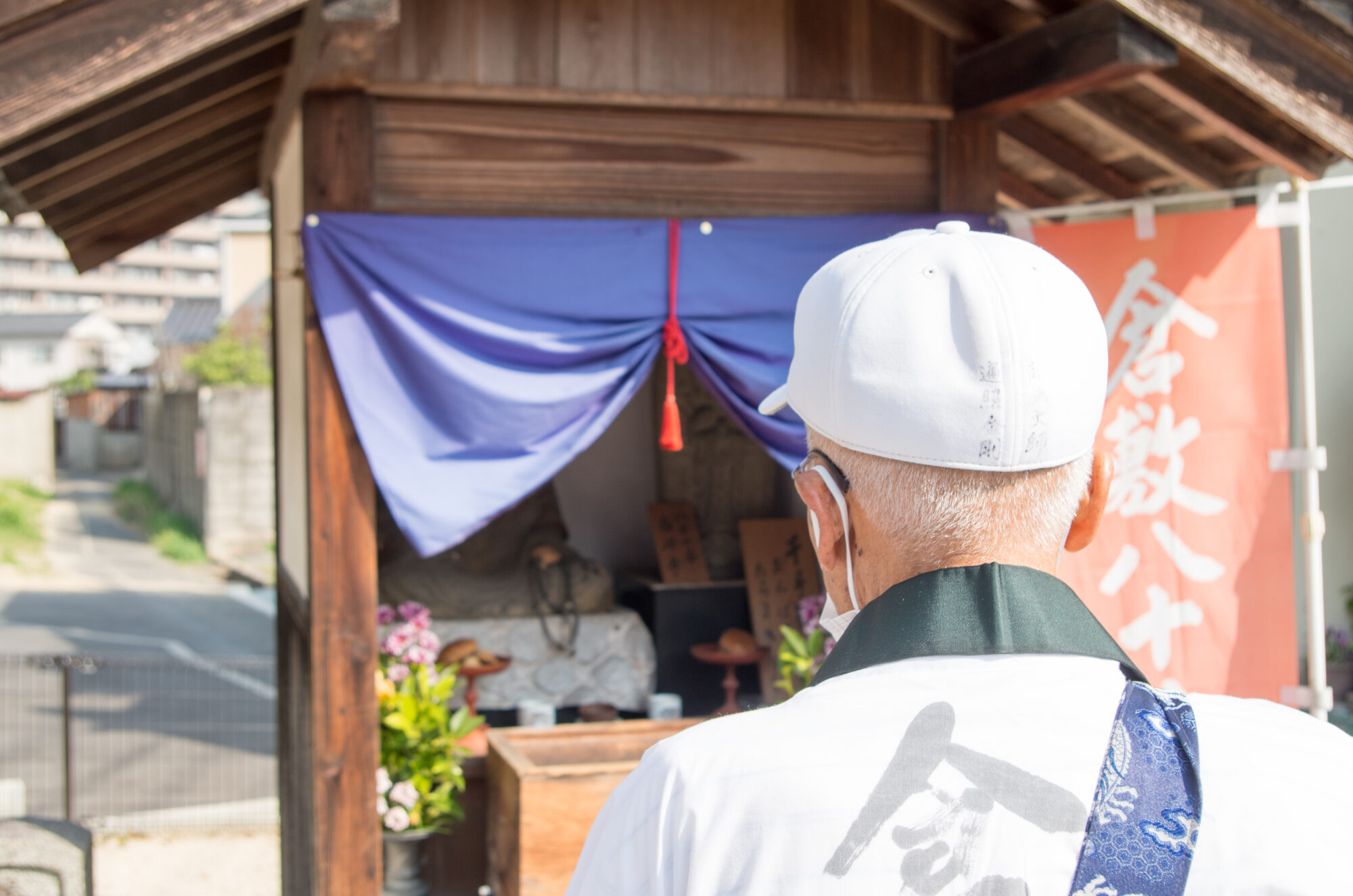
▼No. 83 Temple, Ichinomiya-ji.
Here, Mr. Chida, who was with us at No. 79 Temple, has gone ahead. He provided us with hospitality.
Mr. Chida, who is 90 years old, has hand-sewn bags filled with various sweets. Such thoughtfulness is truly appreciated.
It is said that hospitality is also provided during the pilgrimage held every spring and autumn.
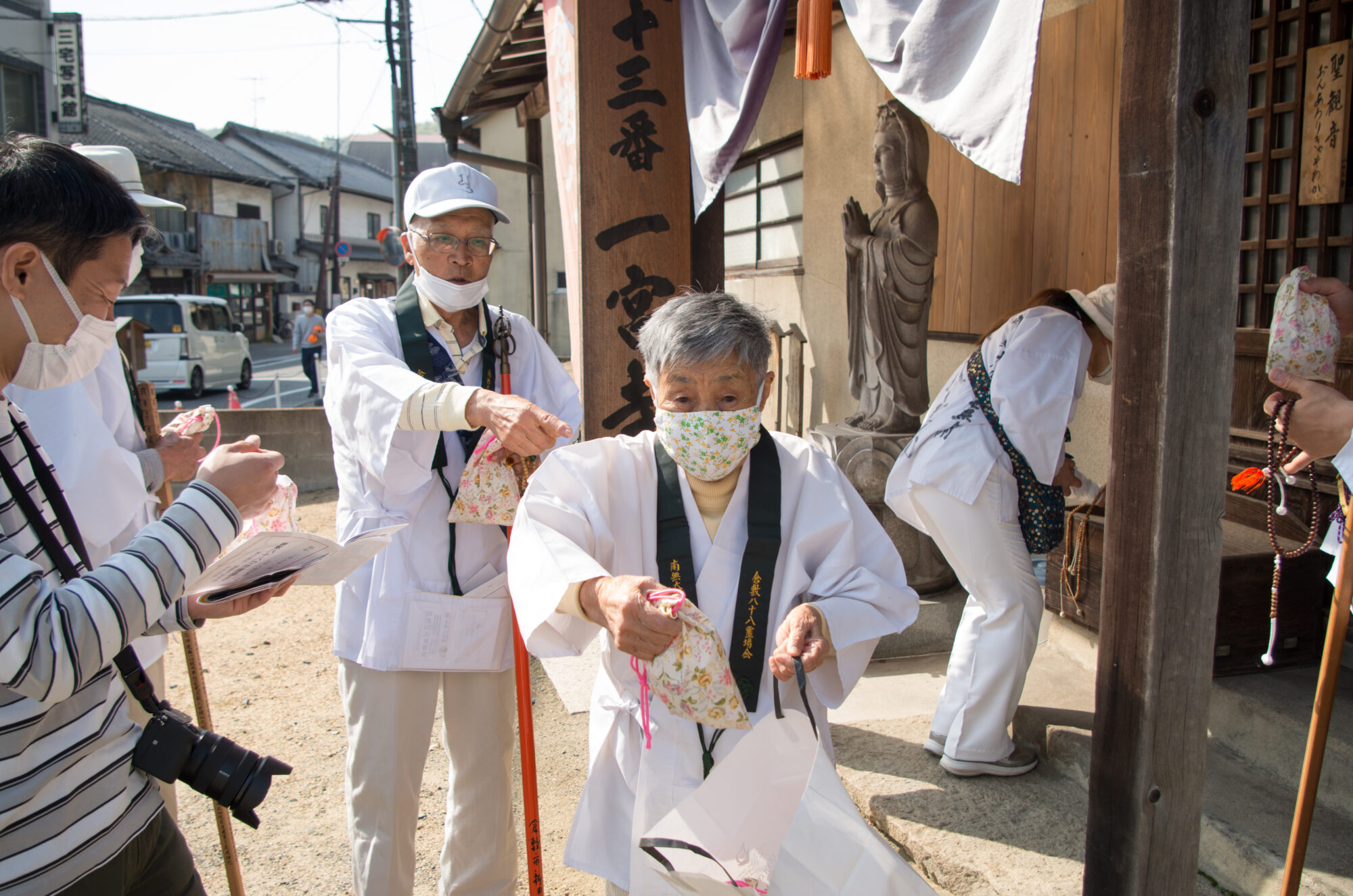
▼No. 82 Temple, Nekoji-ji.
It is located near Jotakudo, which sells masking tape. You might think, "I know that!" or "I've seen that before!"
I hope you also take a look at the surrounding rocky surfaces in the photo. It is said to be a remnant of the waves that hit Tsuru-gata Mountain when it was an island before the land reclamation in the Edo period.
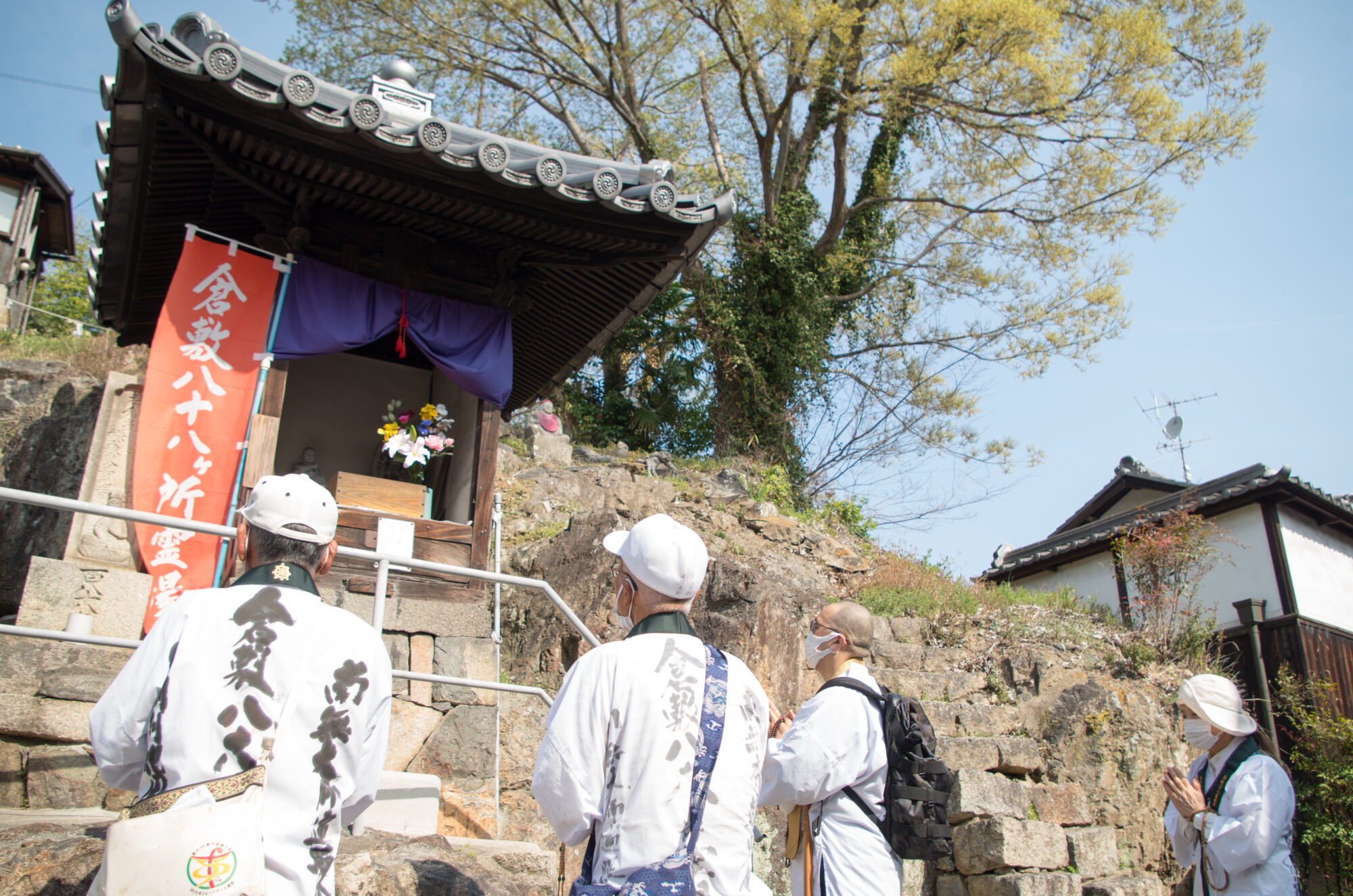
▼No. 32 Temple, Mine-ji.
It is located halfway up the stairs next to No. 82 Temple. You can also see No. 84 Temple a little higher up.
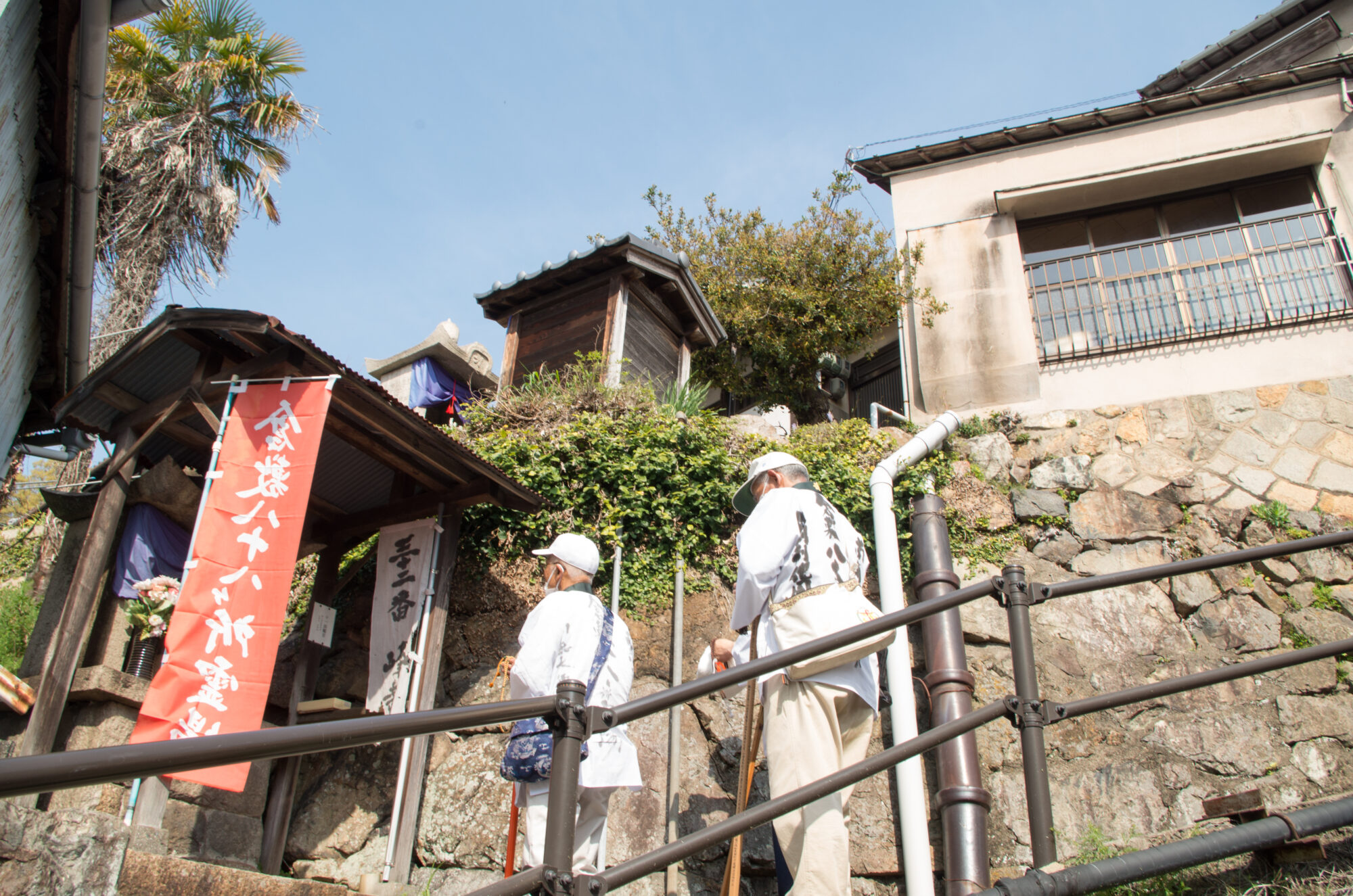
▼No. 84 Temple, Yajima-ji.
It is located right next to a slightly set-back private house.
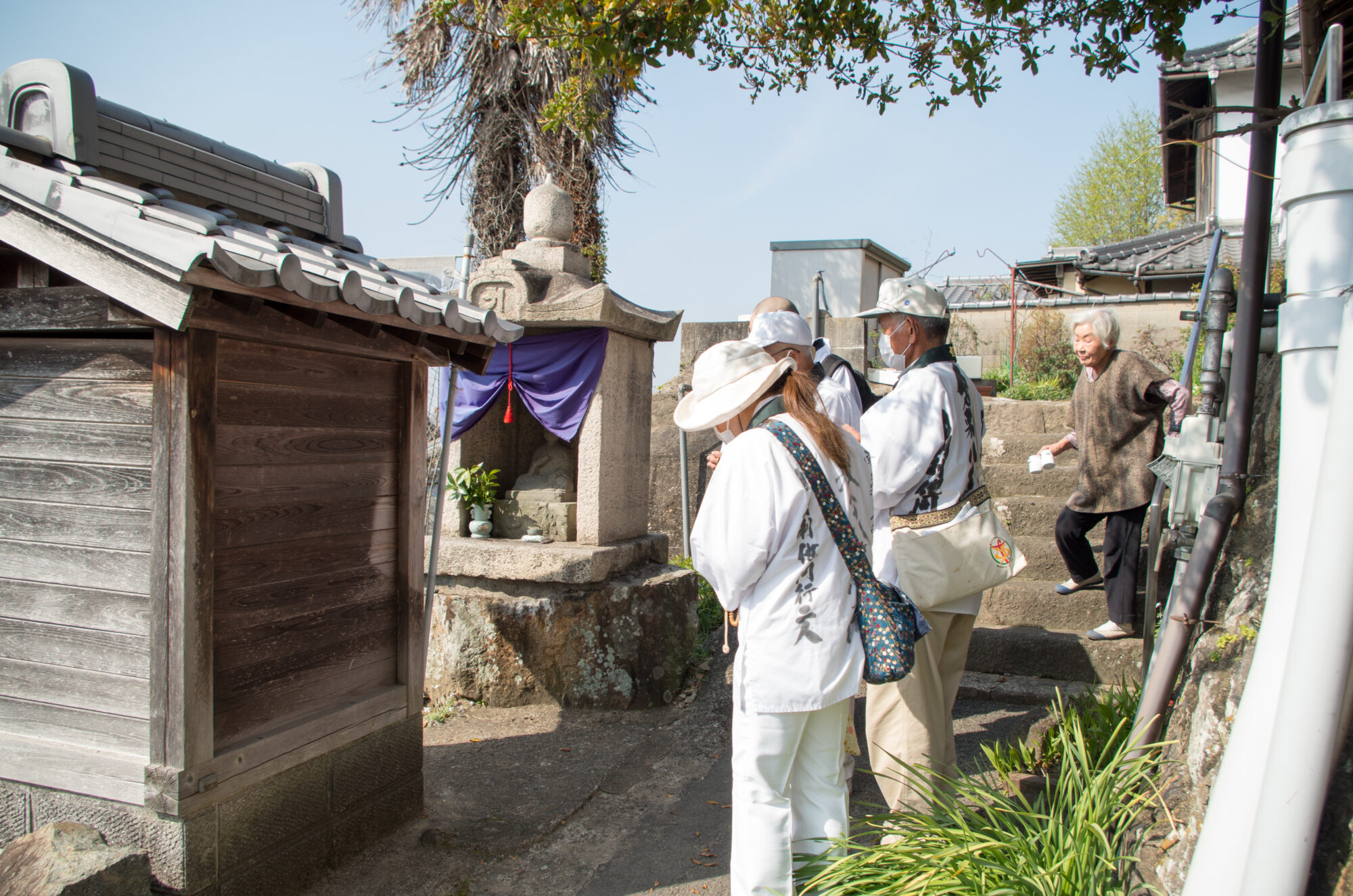
▼Around Tsuru-gata Mountain, this is the end at No. 84 Temple. From here, we will head towards Mukoyama.
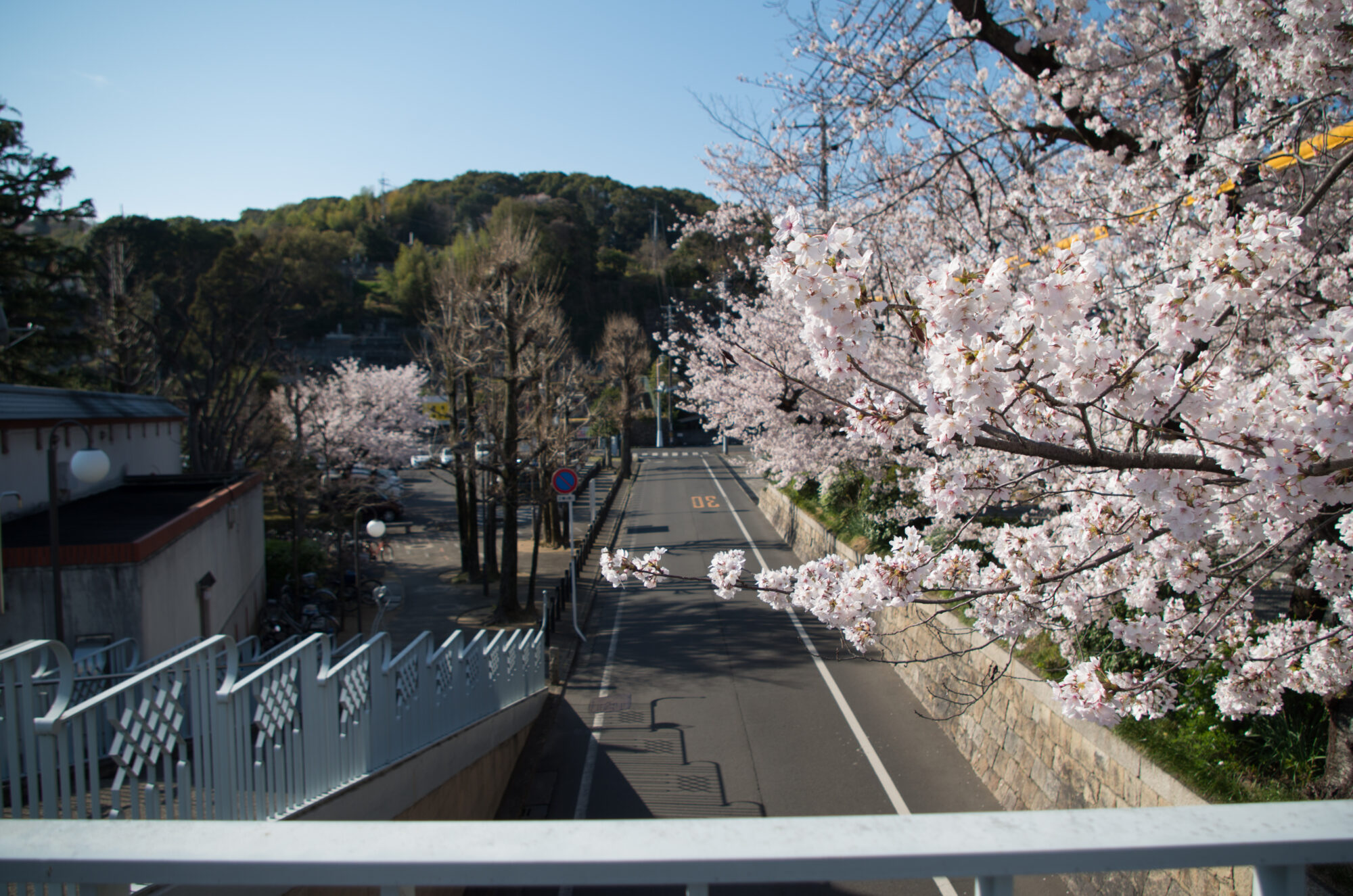
If the timing is right, why not take a walk while enjoying the cherry blossoms east of Kurashiki Ivy Square?
Conclusion
I introduced some trivia about the "Kurashiki 88 Temples Pilgrimage" in the central urban area of Kurashiki City, and the people who protect it centered around Kanryuji Temple.
I hope this article sparks some interest in the tradition of "pilgrimage," which has continued since the mid-Edo period.
However, while I casually participated, there are some steep and unmaintained mountain paths along the way, and there is a good chance of getting lost.
Therefore, even for those who are interested, please do not casually go without a map; first, please try participating in the twice-a-year pilgrimage (in March and November). I plan to participate as well.
Next time, I will introduce the course from Mukoyama down to the vicinity of Kurashiki City Office, passing through in front of JR Kurashiki Station, to the goal at Kanryuji Temple.
I will share the wonderful scenery I experienced and the unexpectedly steep slopes.
I will convey the charm of Kurashiki that is usually not seen, focusing on the stories of everyone I walked with!
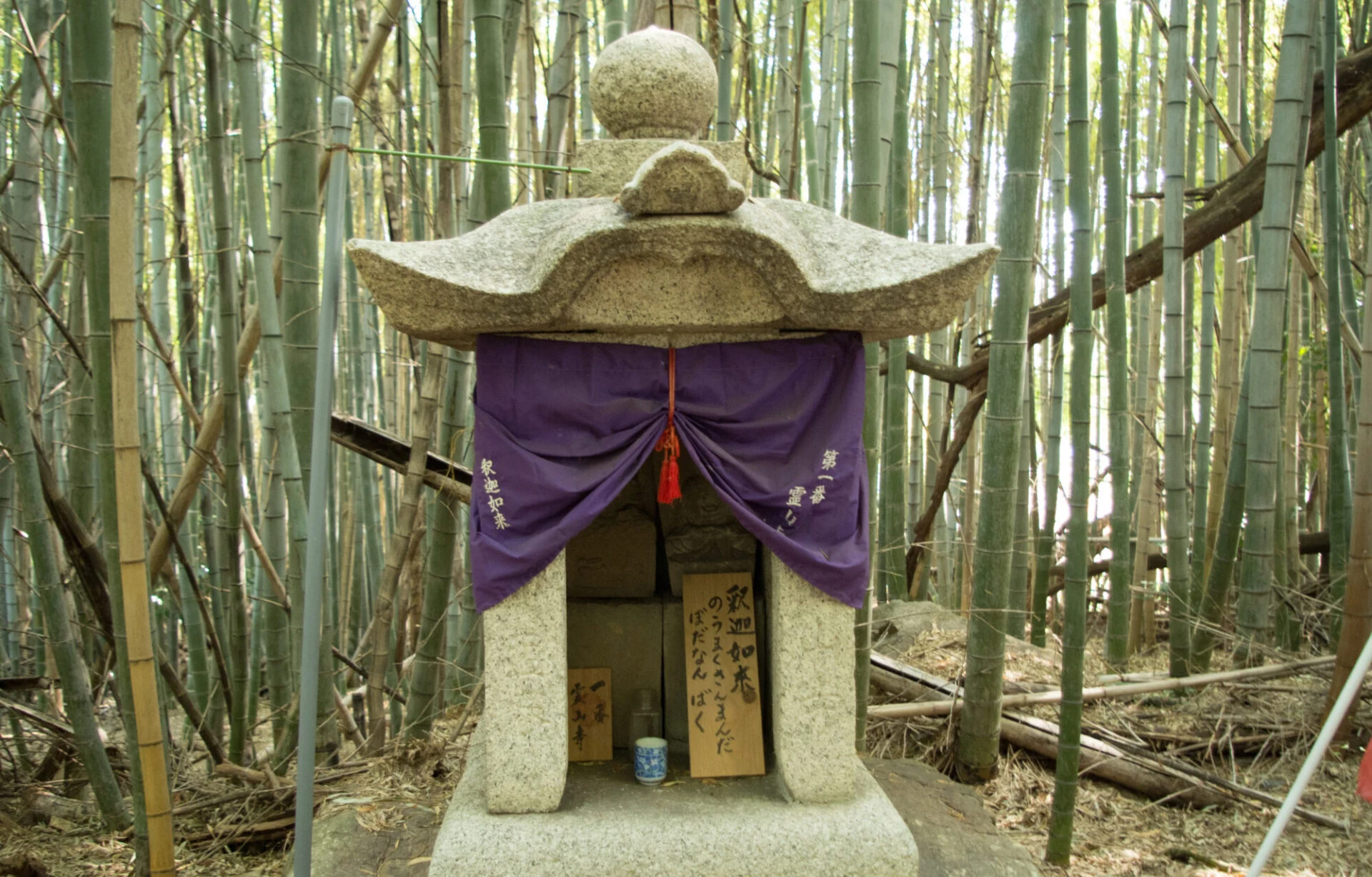
Data on the Kurashiki 88 Temples Pilgrimage

| Name | Kurashiki 88 Temples Pilgrimage |
|---|---|
| Date | Every year in March and November, gathering at 8:30 AM for departure |
| Location | Advisor of Kurashiki 88 Temples Pilgrimage, Kanryuji Temple |












The good thing about the Kurashiki 88 Sacred Sites is that each has its own individuality.
The way the shrines are made, the materials used, and even the way Kobo Daishi and the principal images are carved are all different. There is not a single one that is the same.
I think this resonates with the current society that respects individuality.