A screening and stage greeting for the fourth film, “Charihen♪,” directed by filmmaker Koichi Kuwata, was held on October 16, 2022, at the Jeans Hall (Kojima Civic Exchange Center).
Tickets for all three sessions sold out in advance, and about 900 people watched the film.
It was a day when we felt the excitement in Kojima, and saw the director’s feelings of “I love Kojima” spread, creating a connection to the next generation.
Here, we introduce the screening of “Charihen♪,” focusing mainly on the stage greeting.
We received special permission from director Koichi Kuwata to publish the images in this article.
The information presented was current when this article was published in November 2022. Please note that it may differ from current information.
Introducing the screening of “Charihen♪”
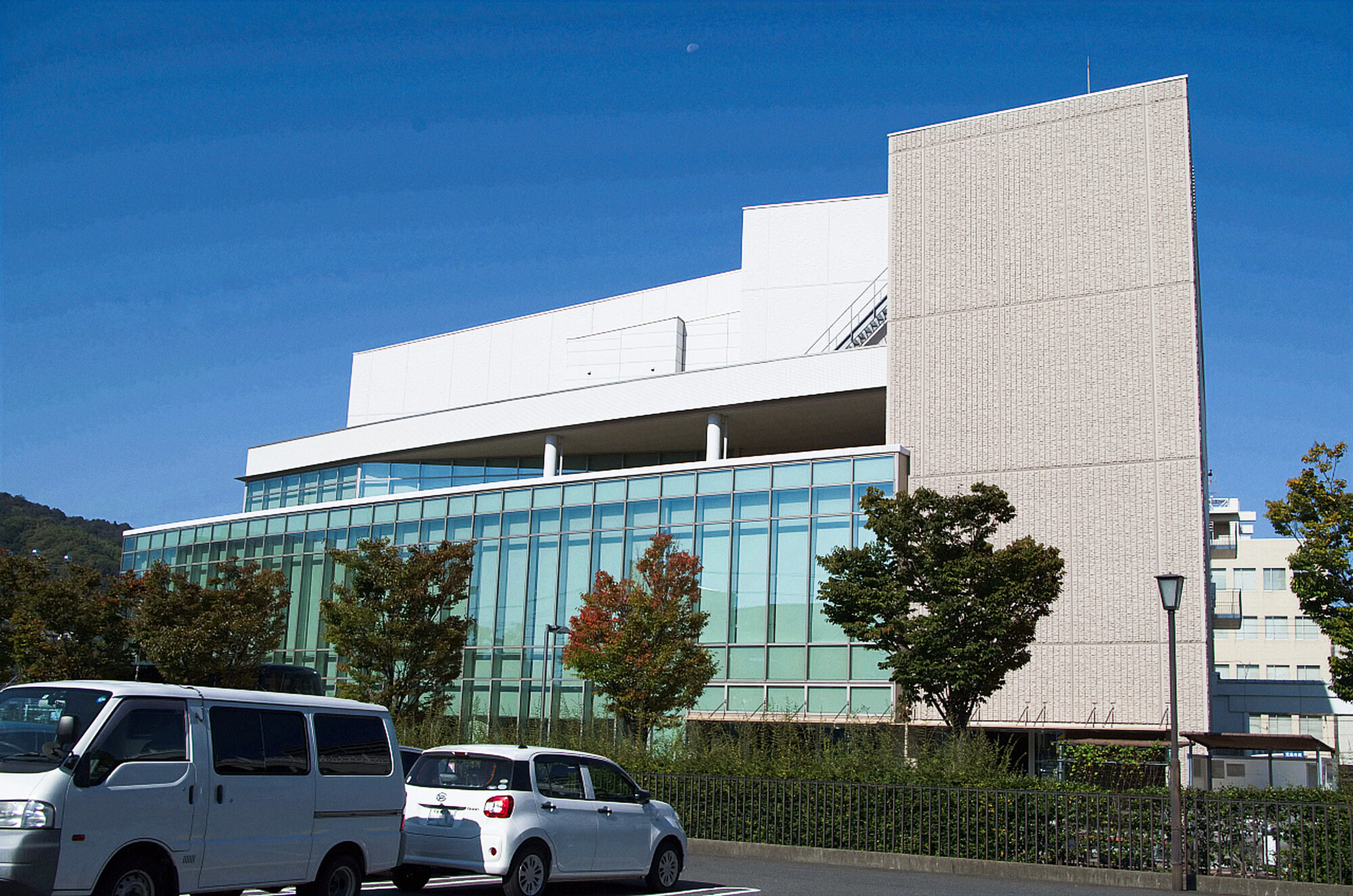
The screening of “Charihen♪” was held in Jeans Hall, on the third floor of the Kojima Civic Exchange Center.
The day brought glorious clear skies that seemed to herald the success of the screening.
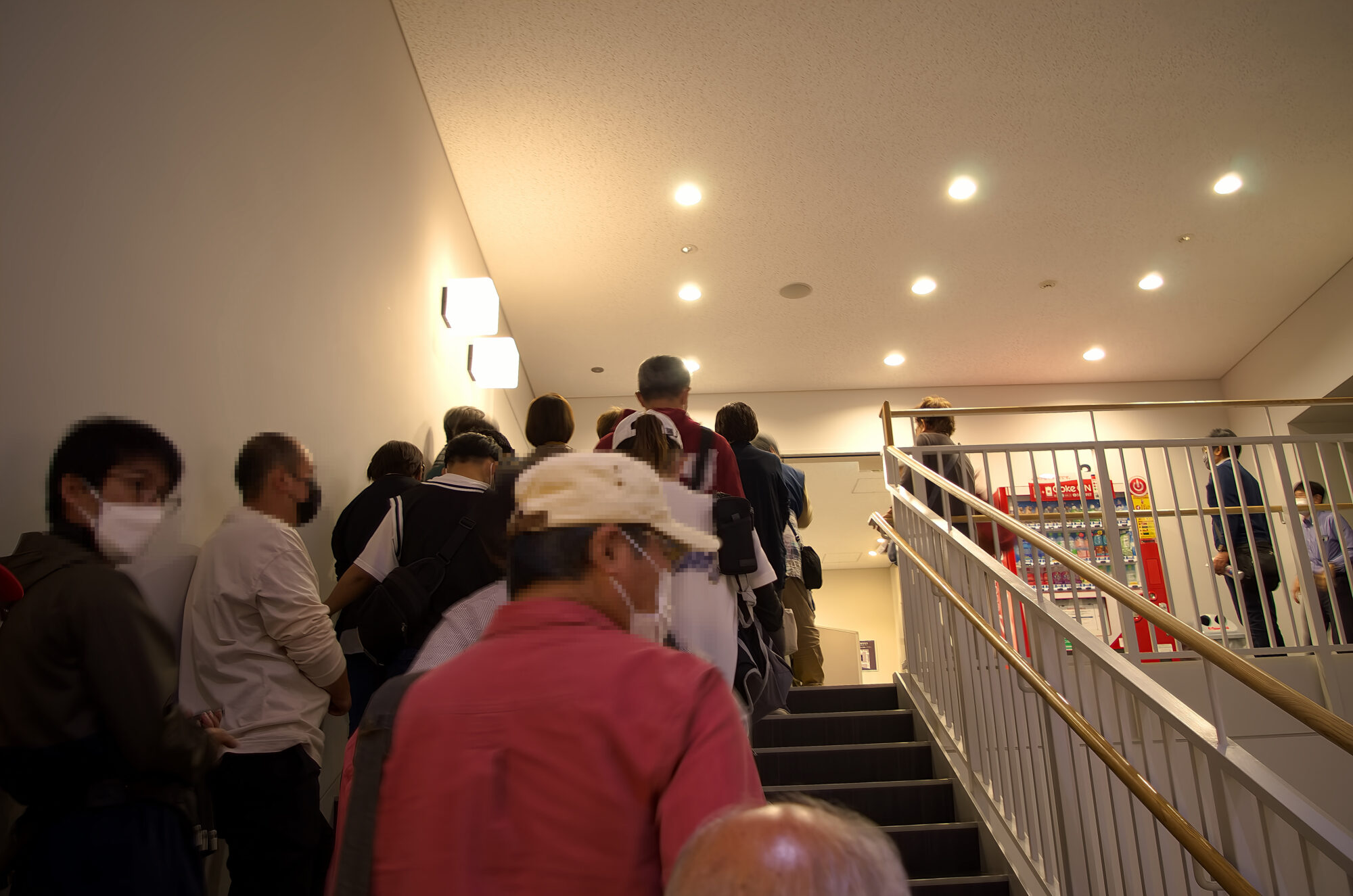
I arrived 30 minutes before the doors opened, and was surprised to see many people already waiting on the stairs leading to the screening venue.
Along with the high expectations for “Charihen♪,” I could feel the momentum from the previous film, “Ishidan,” carrying on.
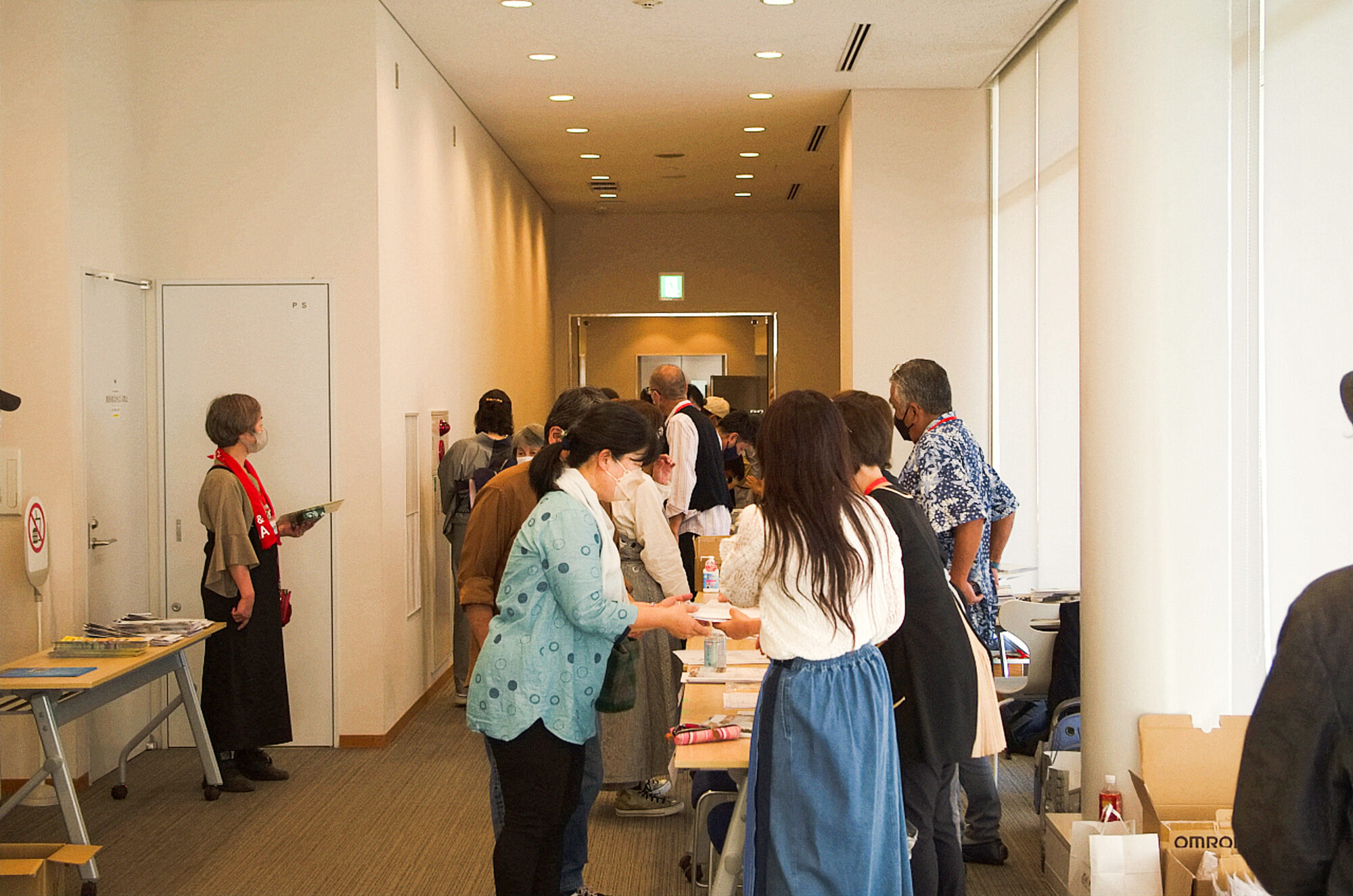
The event was being handled smoothly by the volunteer staff.
We’re grateful to all the staff who helped make it possible for us to enjoy the screening.
By the time I entered the venue and caught my breath, it was almost full.
A little ahead of where I was sitting, I spotted special guest Hiroko Sakurai (Hiroko Sakurai) and Hiroshi Watari (Hiroshi Watari).
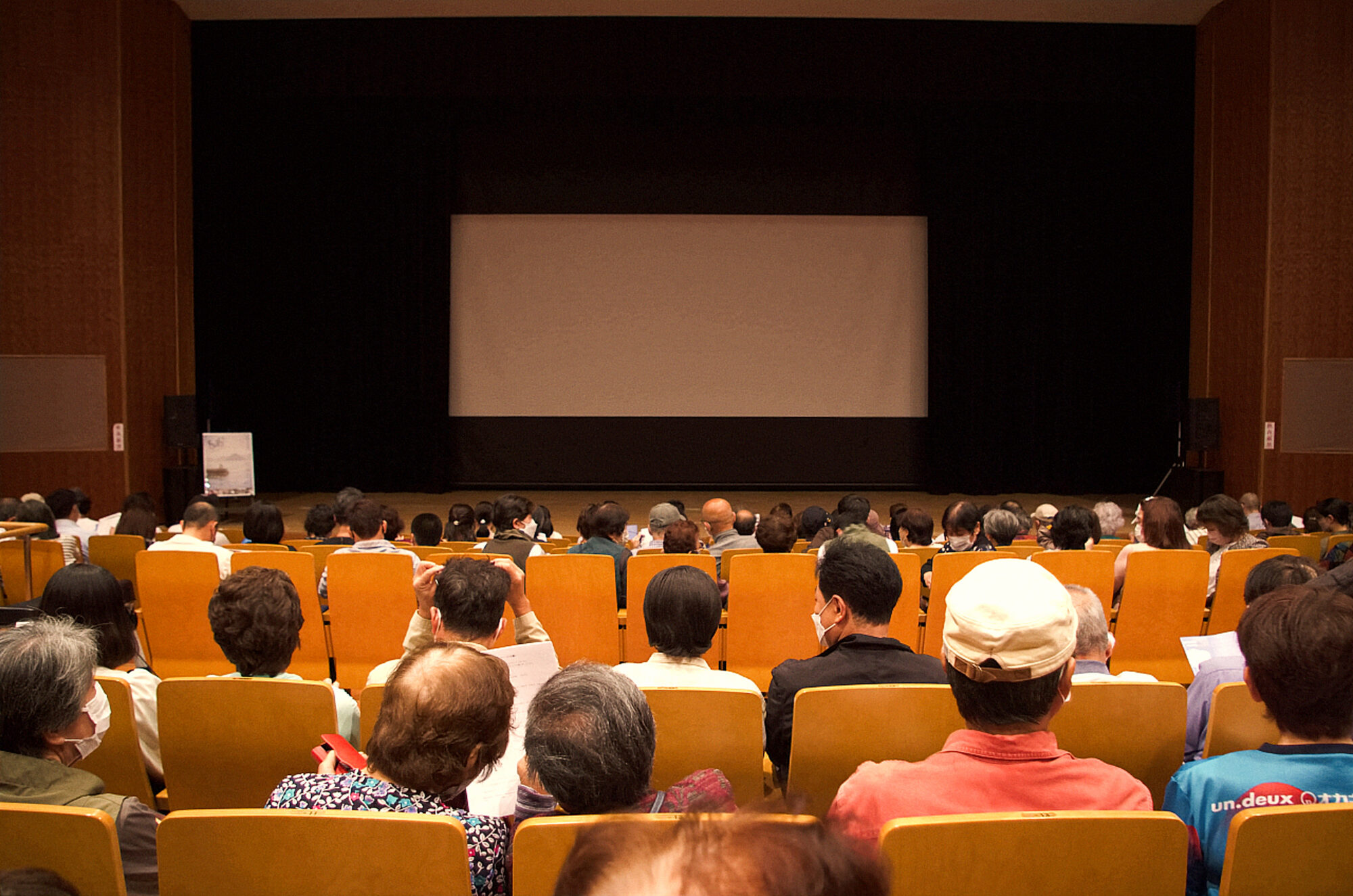
At last, the long-awaited screening of “Charihen♪” was about to begin.
“The sea of Setouchi. The islands floating on the sea. People seeing Kojima’s scenery for the first time are captivated by it in an instant. But for people like me, who look at it every day as we go about our lives, it’s just an ordinary everyday scene.”
The film opens with narration by lead actor Hayato Nishiyama (Hayato Nishiyama), and tells a story that evokes a miracle in the near future close to home in its ending.
▼ Here are the scenes I recommend:
- Lead actor Nishiyama’s voice
The opening narration mentioned earlier is a highlight - Chokori’s performance (an 11-year-old female toy poodle)
How does Chokori manage to sit still and act in a bicycle basket? A talent she was born with! - Scenes with Sakurai and Watari
The bus stop scene is breathtaking. The atmosphere changes unmistakably - The cherry trees at Hieda Park
One of the cherished, proud landscapes of my hometown. It’s an ordinary everyday scene I used to see on my way to middle and high school
Cast stage greeting (Session 1)
Following the screening, it was time for the cast stage greeting (Session 1).
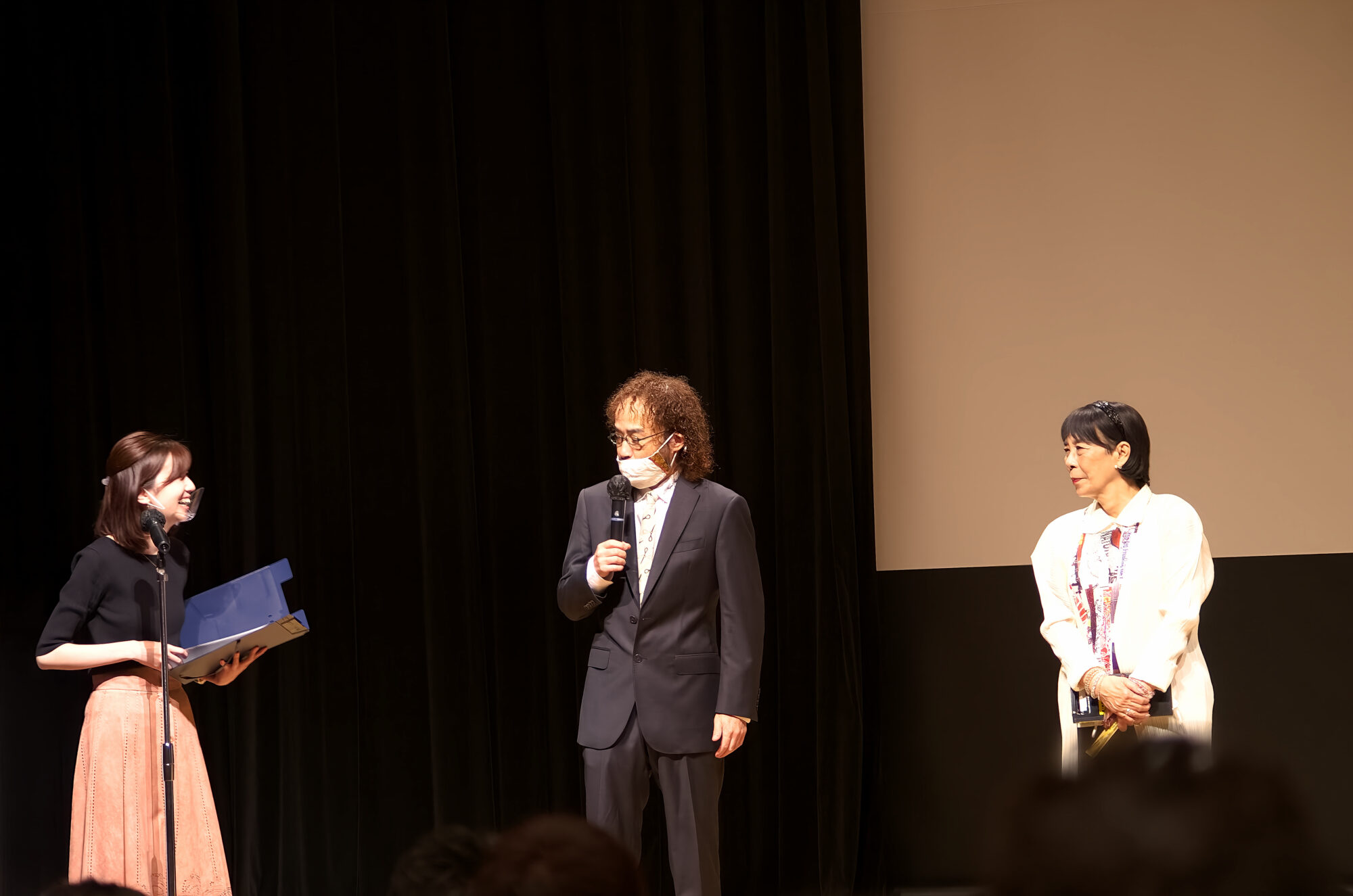
The host was Kyoko Fuchimoto, a former OHK announcer.
Here are some highlights from the cast stage greeting (Session 1).
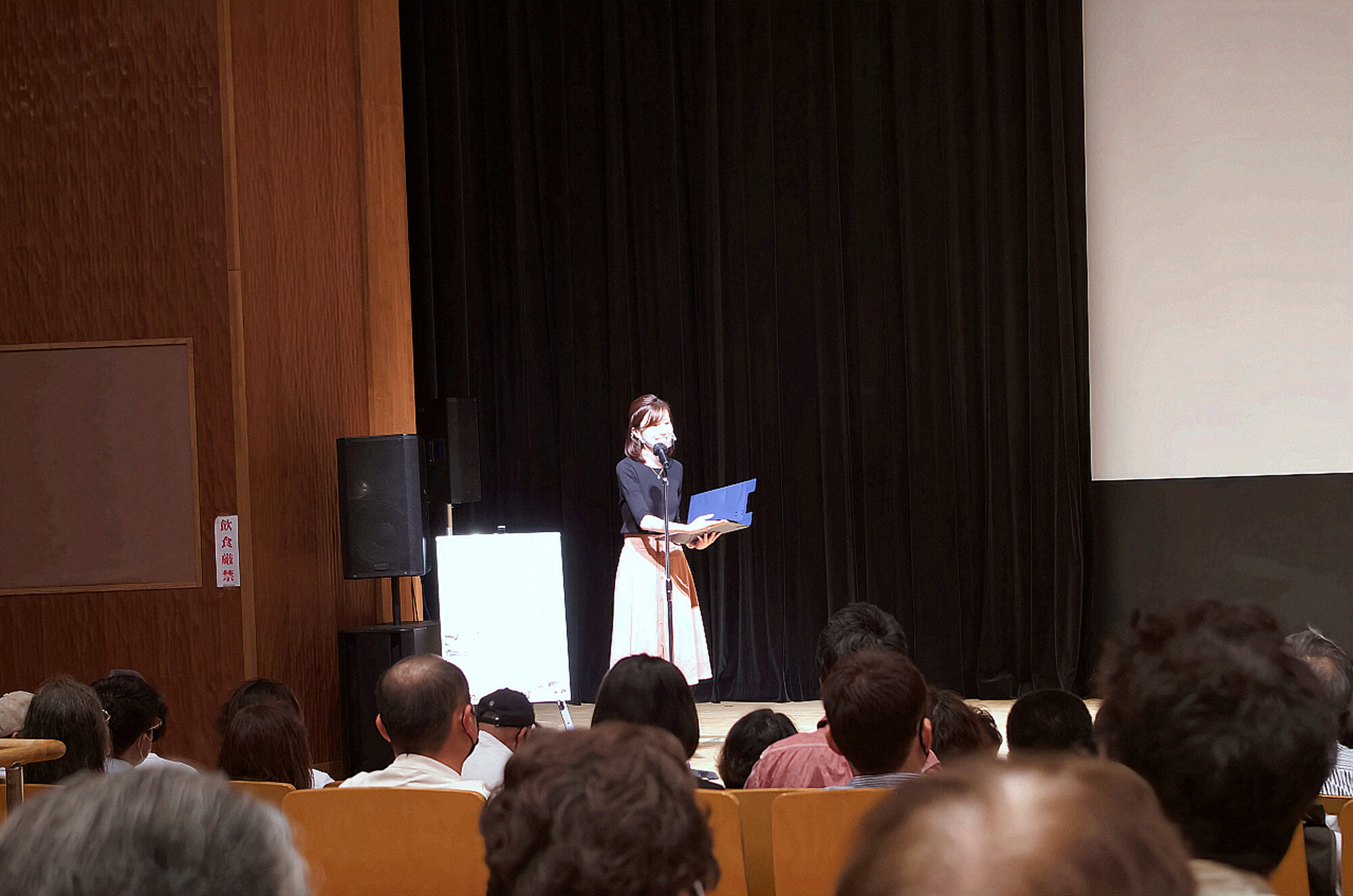
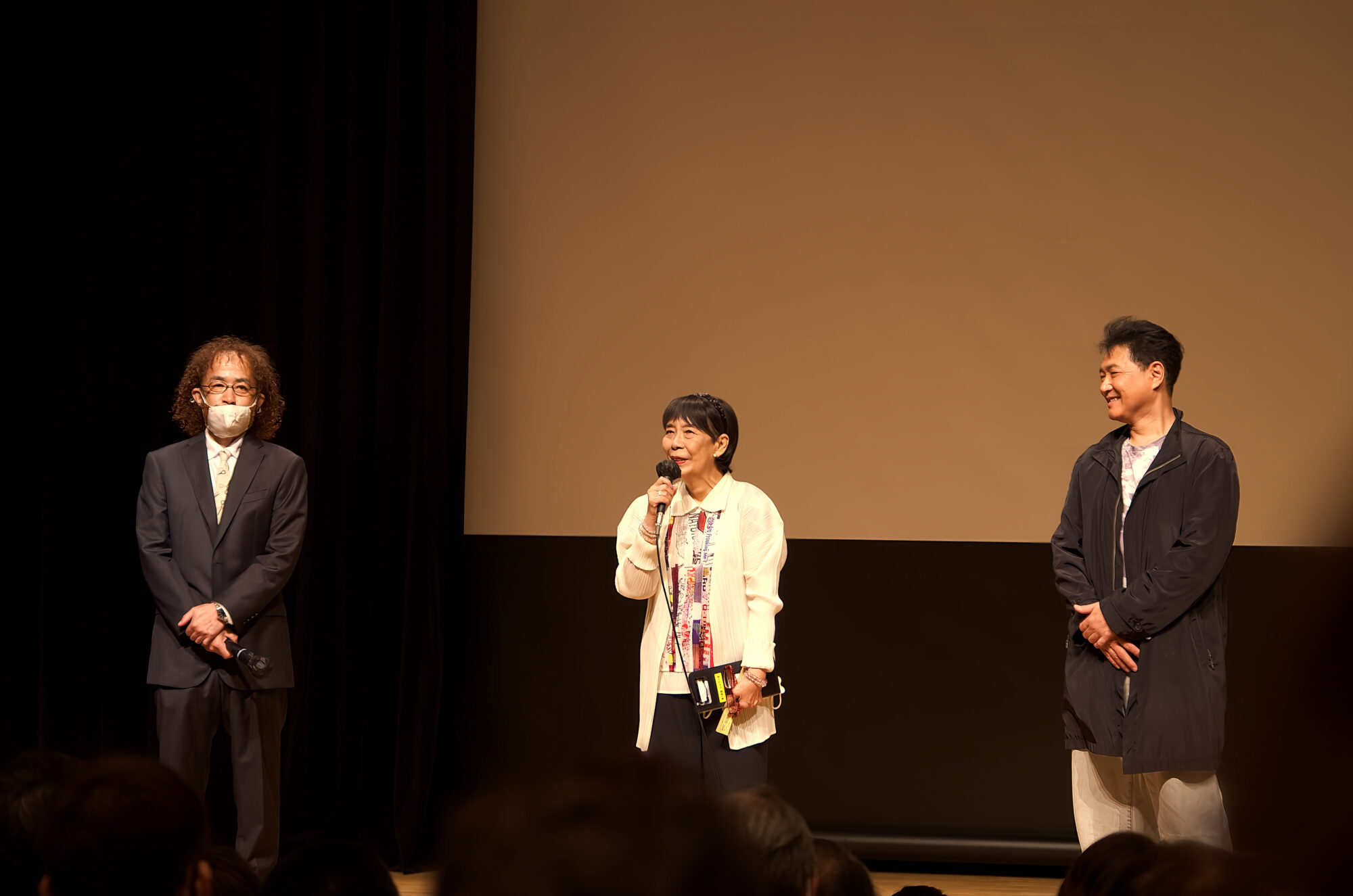
Director Kuwata appeared with the following cast members.
- Hiroko Sakurai
- Hiroshi Watari
- Hayato Nishiyama
- Aria Aoki
- Miki Yosoi
- Akitoshi Otaki
Seeing them all lined up like this, you’re reminded just how impressive this cast is.
Kuwata (honorific omitted)
I’m overwhelmed. Today, Ms. Sakurai, Mr. Watari, and Mr. Otaki have also come all the way from Tokyo.
It’s probably rare for nationally known actors to come to Kojima from Tokyo for a stage greeting like this.
Thank you so much for coming today.
Now, I’d like everyone on stage to introduce themselves.
Nishiyama (honorific omitted)
I’m Hayato Nishiyama, and I play Hayato Kurimiya.
Otaki (honorific omitted)
I’m Akitoshi Otaki, playing the father of the lead character, Hayato Kurimiya.
Shogo Aida was originally supposed to be here, but he couldn’t attend because of work. So I’ll be greeting you just for Session 1.
Aoki (honorific omitted)
I’m Aria Aoki, and I play Aria Aoki.
Yosoi (honorific omitted)
I’m Miki Yosoi, and I play the protagonist Hayato’s younger sister, Miki Kurimiya.
It’s a great honor to share the stage with Ms. Sakurai, Mr. Watari, and Mr. Otaki.
Watari (honorific omitted)
I’m Hiroshi Watari, and I play Takashi Mori.
I’m very excited to be standing here alongside everyone.
Sakurai (honorific omitted)
I’m Hiroko Sakurai.
I cried watching my own performance. Did everyone enjoy it?
Chokori gave such a sincere performance that I was outdone.
Thank you very much for coming today.
Hayato, this was your first leading role. How was it playing the lead?
Nishiyama
It was my first leading role, and there were lots of lines in the script and lots of difficult parts. I was nervous talking with so many different people.
As I kept practicing, I gradually got used to it and stopped feeling nervous. I had fun playing the lead on the day of filming.
Mr. Watari also played his first leading role in “Space Sheriff Sharivan” (broadcast March 1983–February 1984). Do you remember what it was like?
Watari
I remember. It was my first leading role, after all. (Looking at Nishiyama) You get nervous, right? I was nervous too.
Is it really that different?
Watari
Being the lead is different, after all. Everyone around you helps build you up.
I wasn’t as young as Hayato, but I entered this industry at 18, after graduating from high school, and played the lead at 19.
I’m sure I was nervous too.
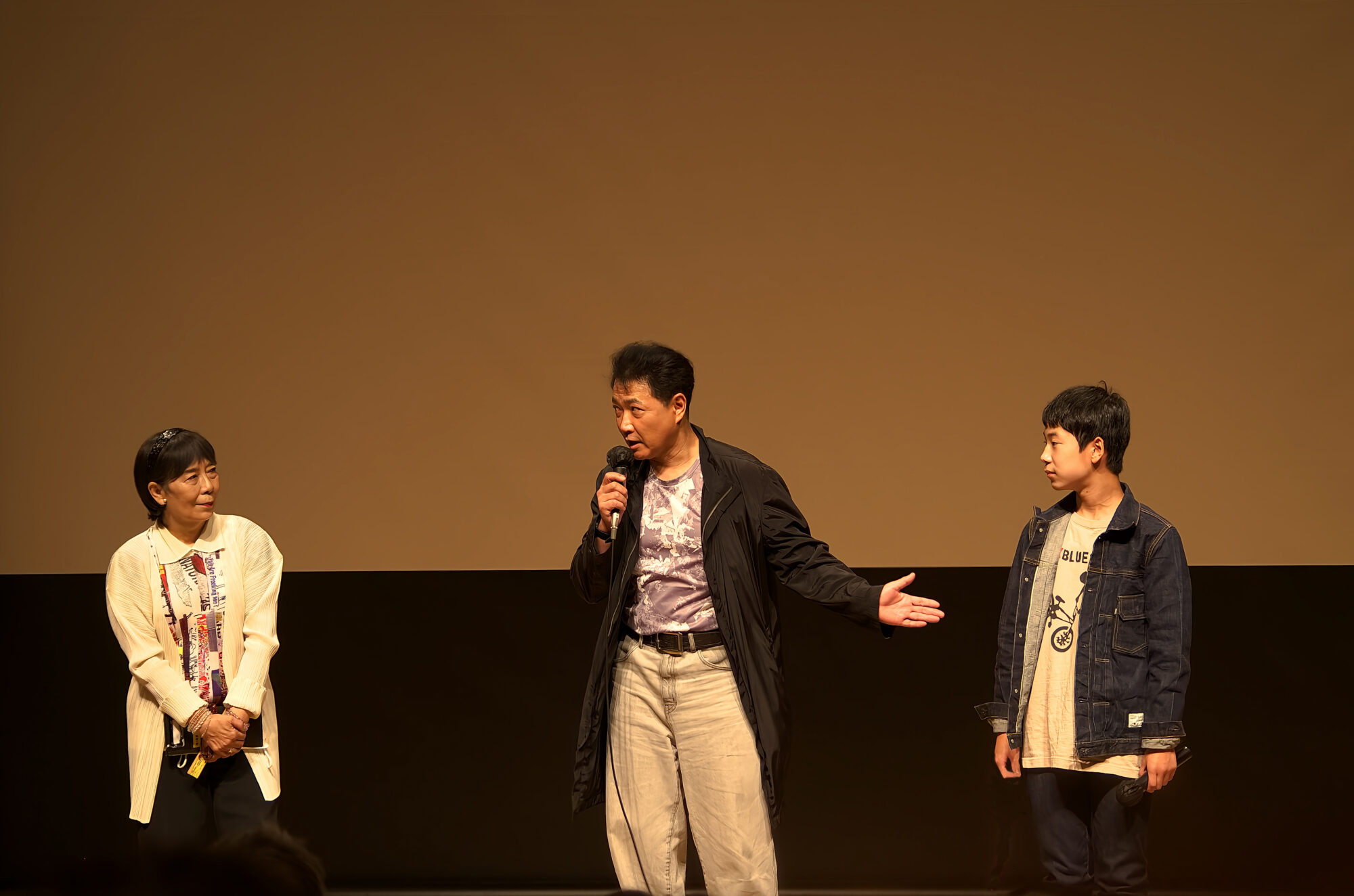
Miki, could you tell us which scene in “Charihen♪” is your favorite?
Yosoi
My favorite scene was when I got to eat a lot of manju. I got to eat lots of delicious sweets from places like Kangetsudo and Fujito Manju.
Thank you, Director Kuwata. (Bows toward Mr. Kuwata.)
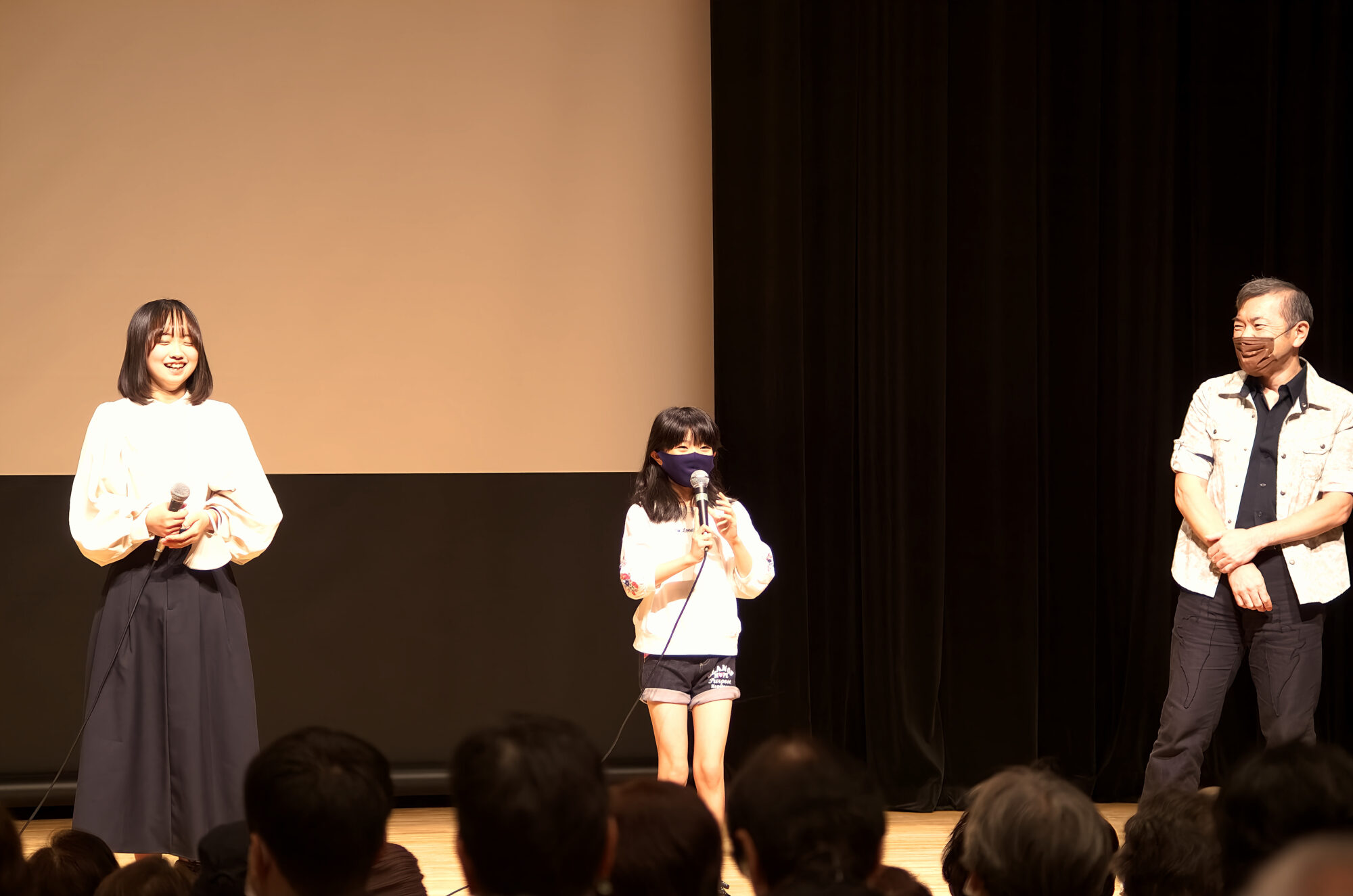
(Looking at Mr. Kuwata) Adding “Mr.” when talking about a sponsor—that’s very grown-up of you.
Kuwata
Miki came to audition for the previous film, “Ishidan.” She was one of more than a hundred people.
We were actually planning to announce the results about a week later, but her performance was so incredible that she got the part on the spot.
That’s why we also had her appear in “Charihen♪.”
Changing the subject, what I most wanted to portray was Kojima, where the population continues to decline.
I wanted to “show this area to many people through film, and encourage them to come on a pilgrimage to the 88 Sacred Sites of Kojima.”
When I made “Ishidan,” I thought maybe one in a hundred people knew about the 88 Sacred Sites of Kojima, but hardly anyone had heard of them.
After “Ishidan” was screened, many people watched it and became interested in going on the pilgrimage.
The temples have also told me, “The number of people going on the pilgrimage has increased tremendously.”
One temple said, “It’s increased fivefold.”
Are there any of you who watched “Charihen♪” for the first time today and now feel like going on the pilgrimage?
(Many audience members raise their hands.)
I hope you’ll go on the pilgrimage, help revitalize the area, and visit the 88 Sacred Sites of Kojima.
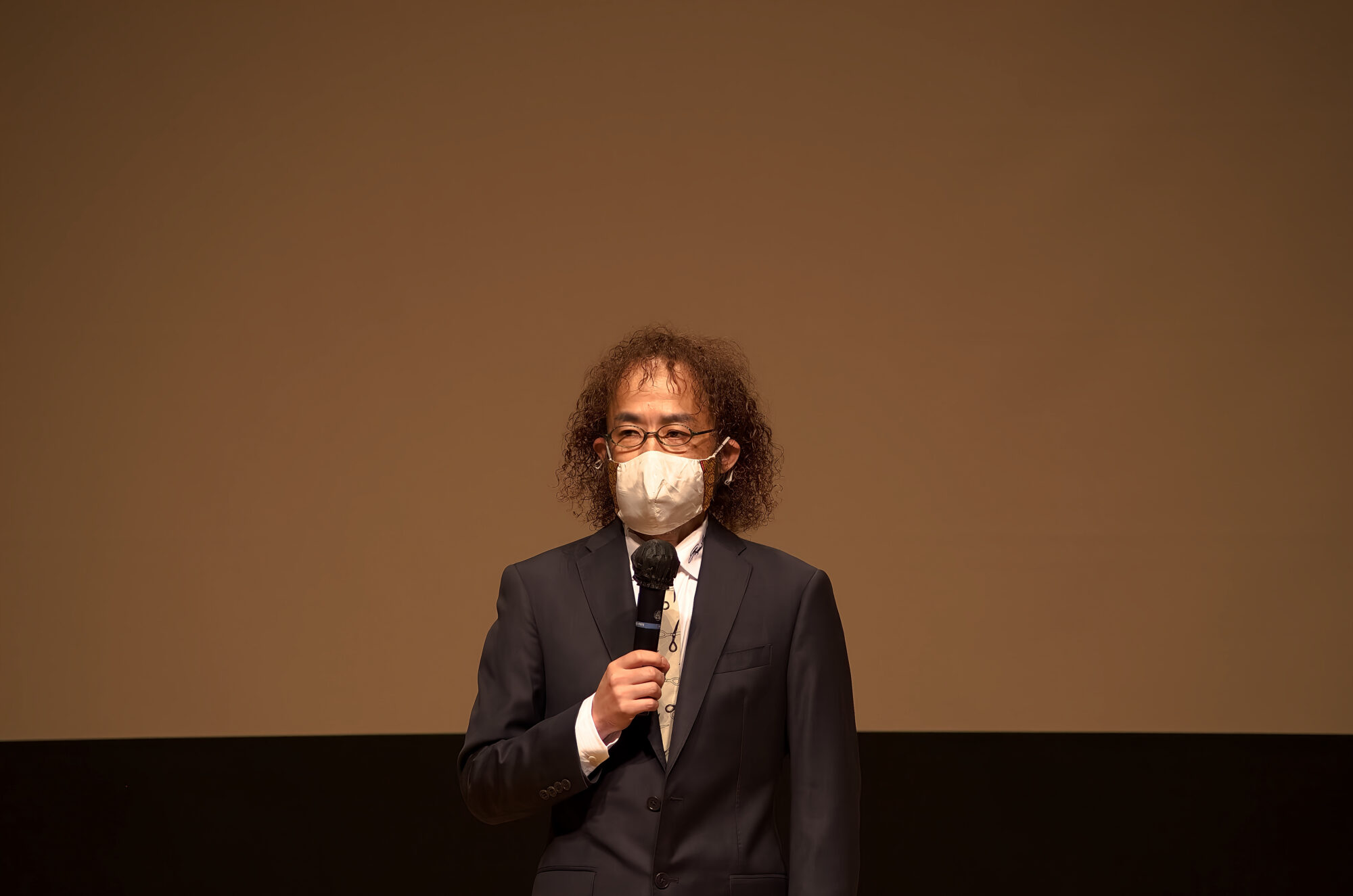
Thank you. Next, Mr. Otaki, could you tell us how you feel about the film?
Otaki
I’d like to share one detail that will help you enjoy “Charihen♪” even more.
Aria had a globe amaranth flower. Does anyone know what it symbolizes?
No one? It’s not very well known, is it?
The flower language of globe amaranth is “immortality, unfading love.”
Why was Aria holding that flower? I think it really conveys the feelings behind her entrusting the flower to Hayato at the end.
Ms. Sakurai, what was it like appearing in Director Kuwata’s film in Kojima?
Sakurai
I’d stopped by Okayama Prefecture when I was a newcomer, but I’d never really seen the town. All I knew about Kojima was that it was famous for jeans.
It was my first time meeting Director Kuwata, and through my connection with Mr. Otaki, he brought me the project and asked, “What do you think of this kind of work?”
As I wrote in the flyer, the reason I accepted the role was that my mother had the same illness.
I’d actually seen it up close. So I thought, “I can do this role,” and agreed to take it.
Kuwata
Fuchimoto, you were in the film too, weren’t you? How was it?
I thought, “I wish I’d had a little more screen time.”
Wataru
I cried so much my eyes got swollen, but they cut it out. I really did cry a lot.
Kuwata
It wasn’t cut. If you look closely, you can see the tears.
We shot the film in about 10 days, and the bus-stop scene with Sakurai and Wataru gave the entire crew goosebumps.
It was a truly wonderful scene. It made me realize how wonderful actors are.
You might be able to add tears during editing, but when actors cry, they really shed tears.
They didn’t use eye drops; the tears came naturally right there, and we were able to capture a truly beautiful scene. Thank you.
Q&A (Part 1)
After the cast’s stage greeting, there was a Q&A session with the audience.
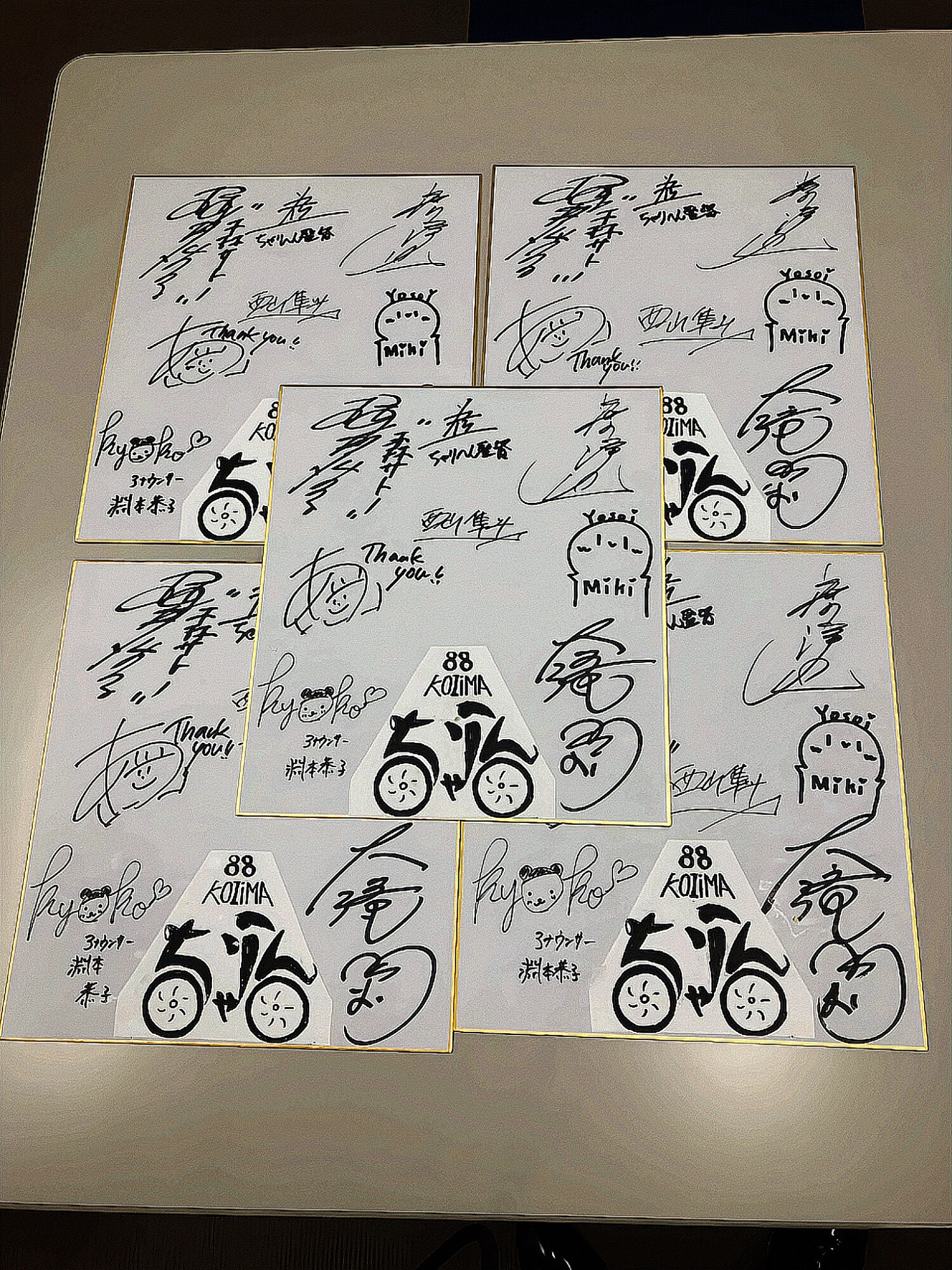
The first five people to ask a question received a signed autograph board from the cast.
There were many questions that got the audience excited, but here are two selected by the writer.
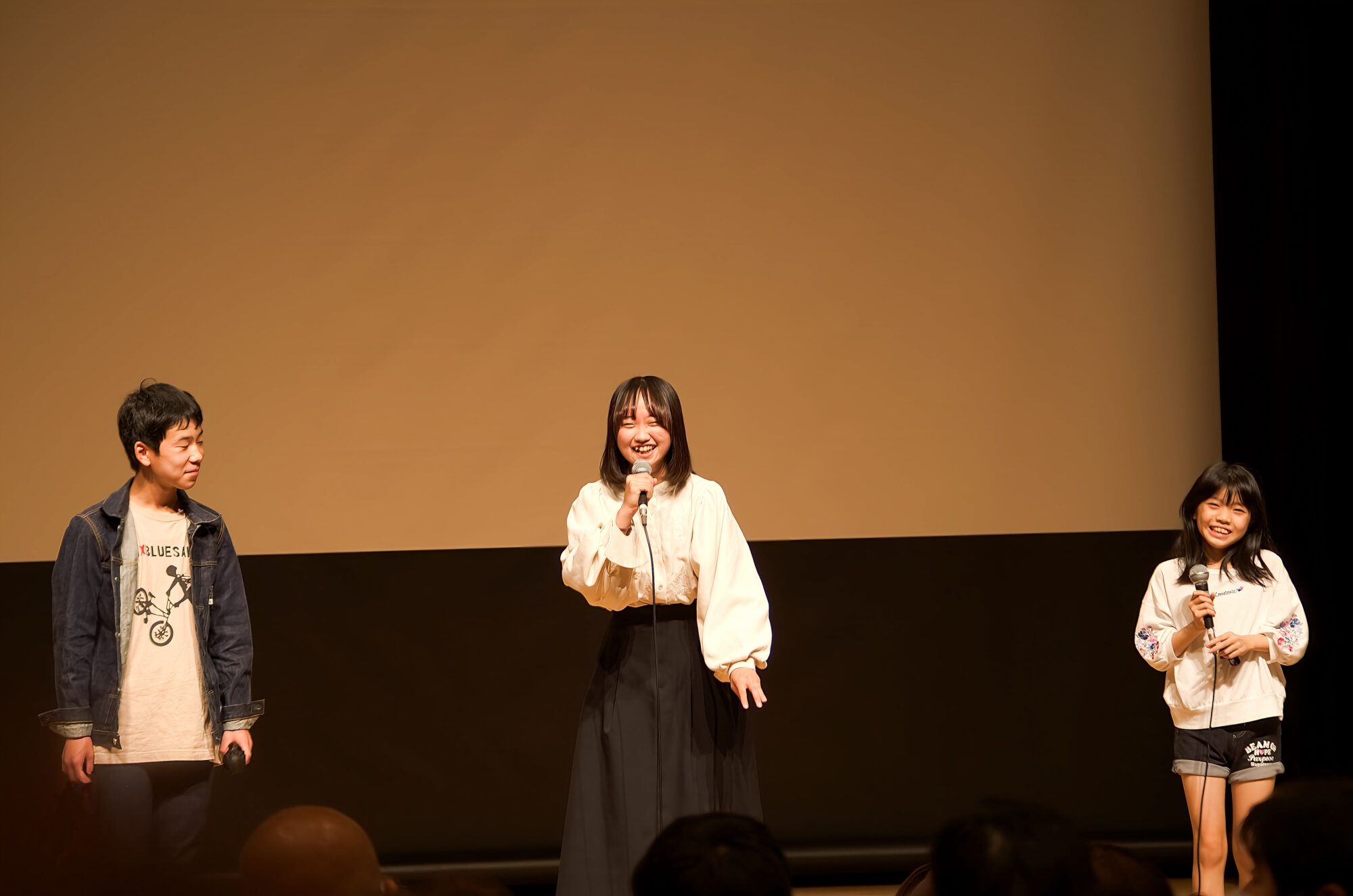
Audience member (a girl about kindergarten age): I have a question for Aria. Were you nervous?
Aoki
I was nervous. You’re so cute. Thank you.
Audience member: I have a question for Director Kuwata. I was wondering if you could have featured the Okayama dialect a little more prominently.
Kuwata
In dramas and NHK morning dramas (NHK serial television novels), it seems some people feel the dialect spoken by the actors sounds unnatural.
I really wanted to give it a try, but I thought it would be quite difficult.
The lead actor is from Okayama, but he doesn’t speak much Kojima dialect.
For example, someone was born and raised in Kojima, but speaks standard Japanese.
I wondered why that was. Maybe if you really get into it, the Kojima dialect comes out, but if you just carry on as usual, standard Japanese comes out.
So in “Charihen♪,” we went with the latter.
I’ll keep that in mind for the future. Thank you.
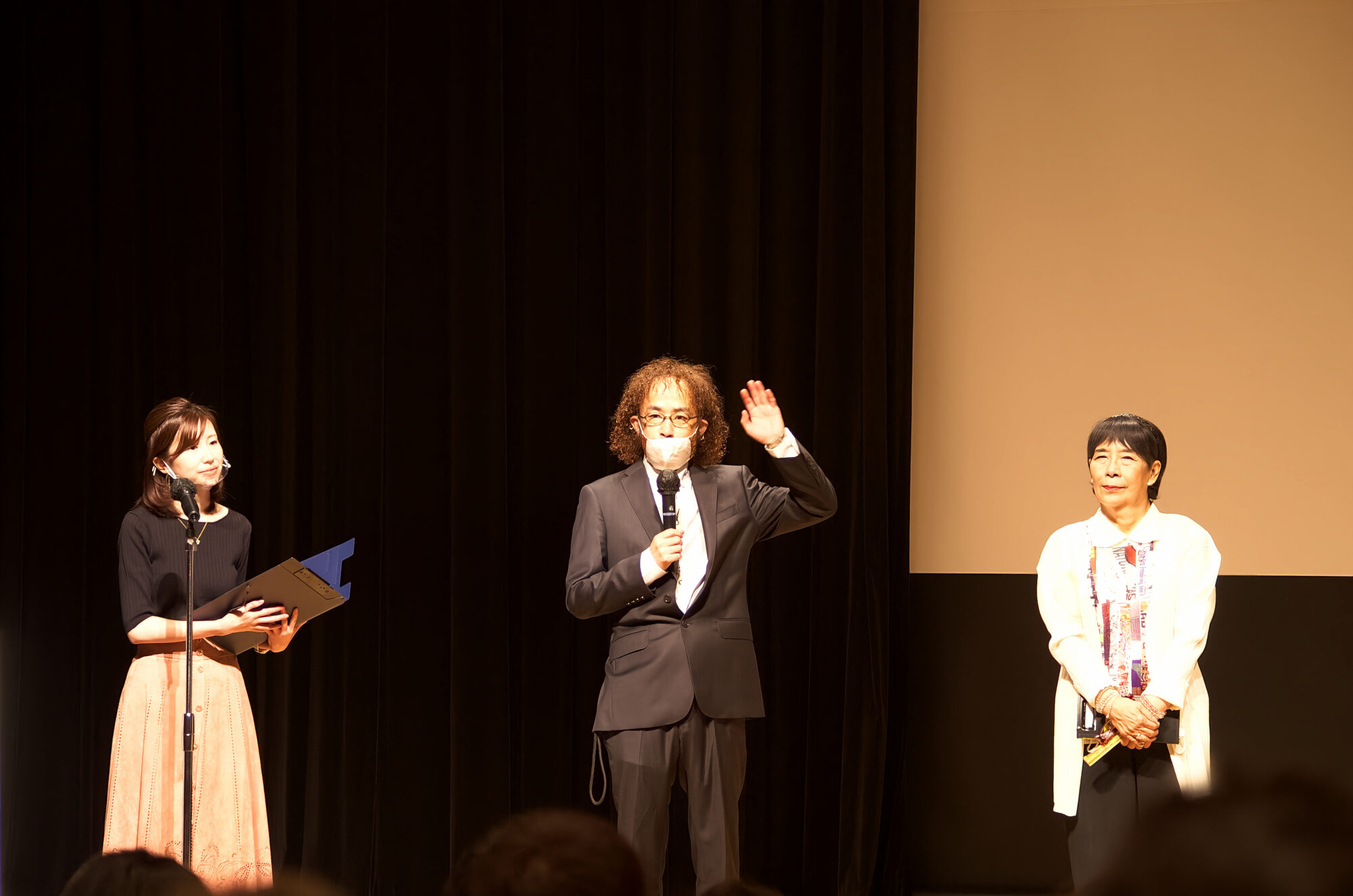
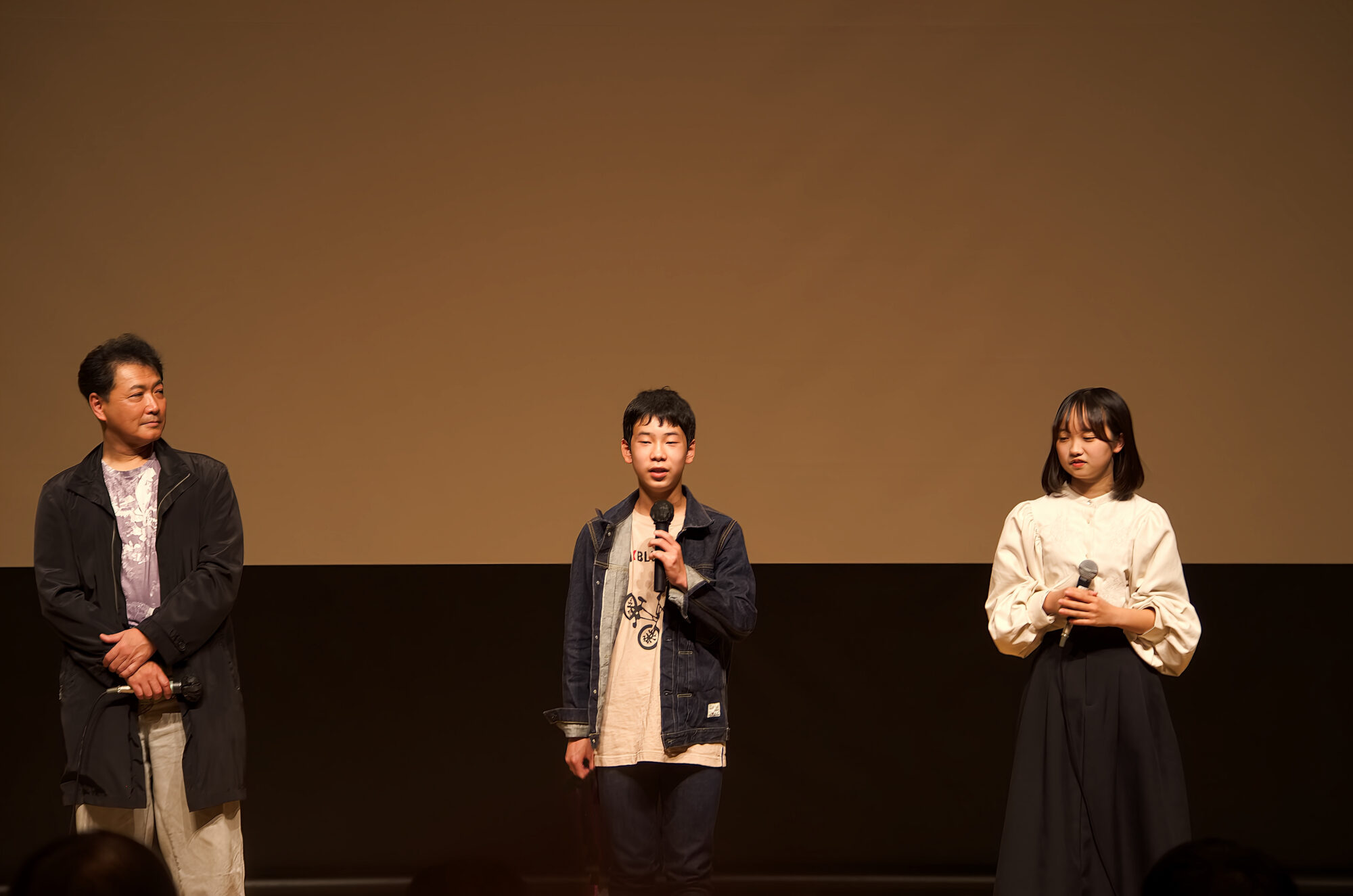
After the cast’s stage greeting and the Q&A session ended, lead actor Nishiyama gave a greeting.
Nishiyama
Thank you for coming to see “Charihen♪” today.
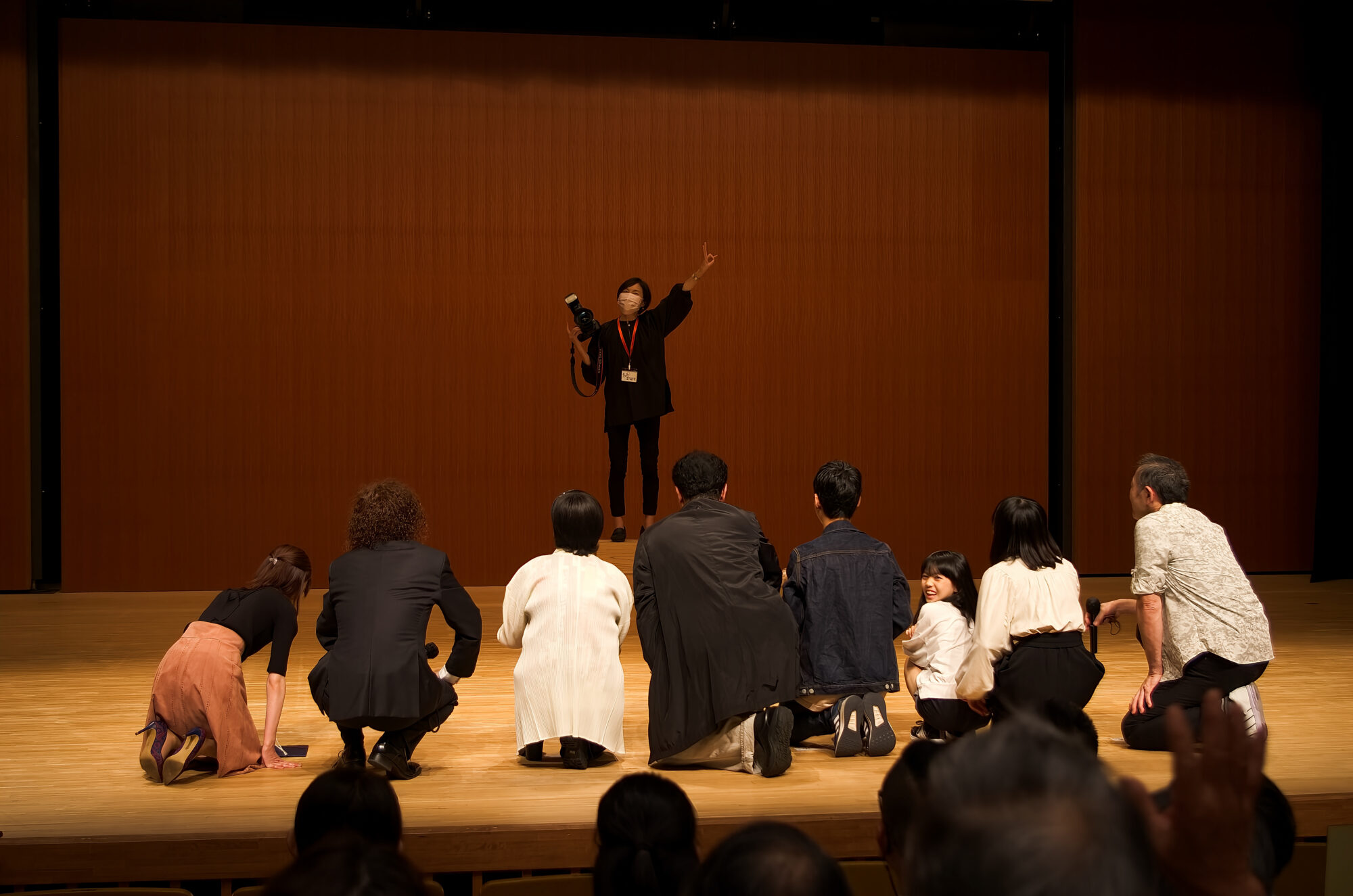
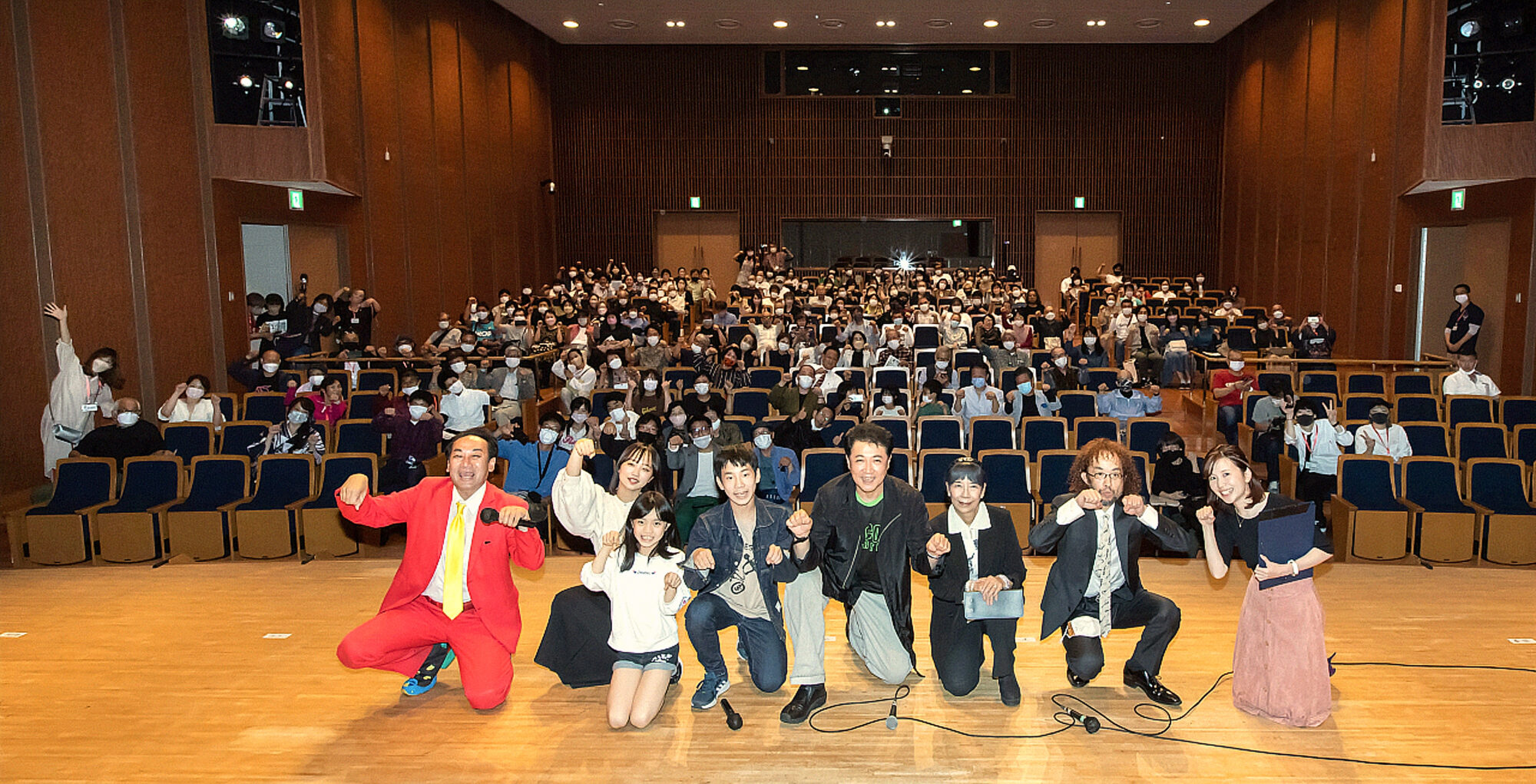
At the end of the event, the cast and audience took a commemorative photo.
Photographed by Kuwata’s team photographer Chieko Katayama, the first screening event came to a close amid great excitement.
From the Writer
“Charihen♪,” the film Kuwata made as the culmination of his work.
- He loves Kojima.
- He wants to help revitalize Kojima.
- Above all, he wants many elementary school students to see this film.
The words “Eirin” and “Agency for Cultural Affairs,” which had not appeared before, have been added to the poster and flyer, where you can see them.
In keeping with Kuwata’s wishes, we hope the film will be screened more widely at elementary and junior high schools, where students can watch it with peace of mind.
This article also focused mainly on the stage greeting and Q&A session during the screening event.
We hope you could feel the excitement in the venue, where laughter and applause never let up, and the momentum that has carried over from the previous film, “Ishidan.”
The momentum of “Charihen♪” and Kuwata’s passion are still spreading.
Starting at Jeans Hall, screenings are also planned for Tamano City and Fukuyama City, Hiroshima Prefecture.
If you have time, please watch the scenery of the Kojima area, its temples and shrines, and the cast’s performances on the big screen at a cinema.
It’s packed with scenes that will make you laugh out loud, even more than the previous film, “Ishidan.”
At each screening venue, why not experience for yourself Kuwata’s love for Kojima, which he hopes to pass on to the next generation?
“Charihen♪” Screening Event Information
| Name | “Charihen♪” Screening Event |
|---|---|
| Date | [Fukuyama venue: Screening + stage greeting] ・Date and time: Sunday, November 20, 2022 ・Location: Fukuyama Ekimae Cinema Mode ・Time: 1:30 p.m. *Doors open 30 minutes before the screening. [Tamano venue: Screening + stage greeting] ・Date and time: Sunday, December 18, 2022 ・Location: Tamano Industrial Promotion Building ・Time: 10:30 a.m., 2:00 p.m., and 6:00 p.m. *Doors open 30 minutes before the screening. |
| Admission (tax included) | Adults: ¥1,500 Children: ¥1,000 (junior high school age and under) |
| Website | “Charihen♪” Official Website |


What would you like to know about Kurashiki?
Enter a search term to find articles on this site