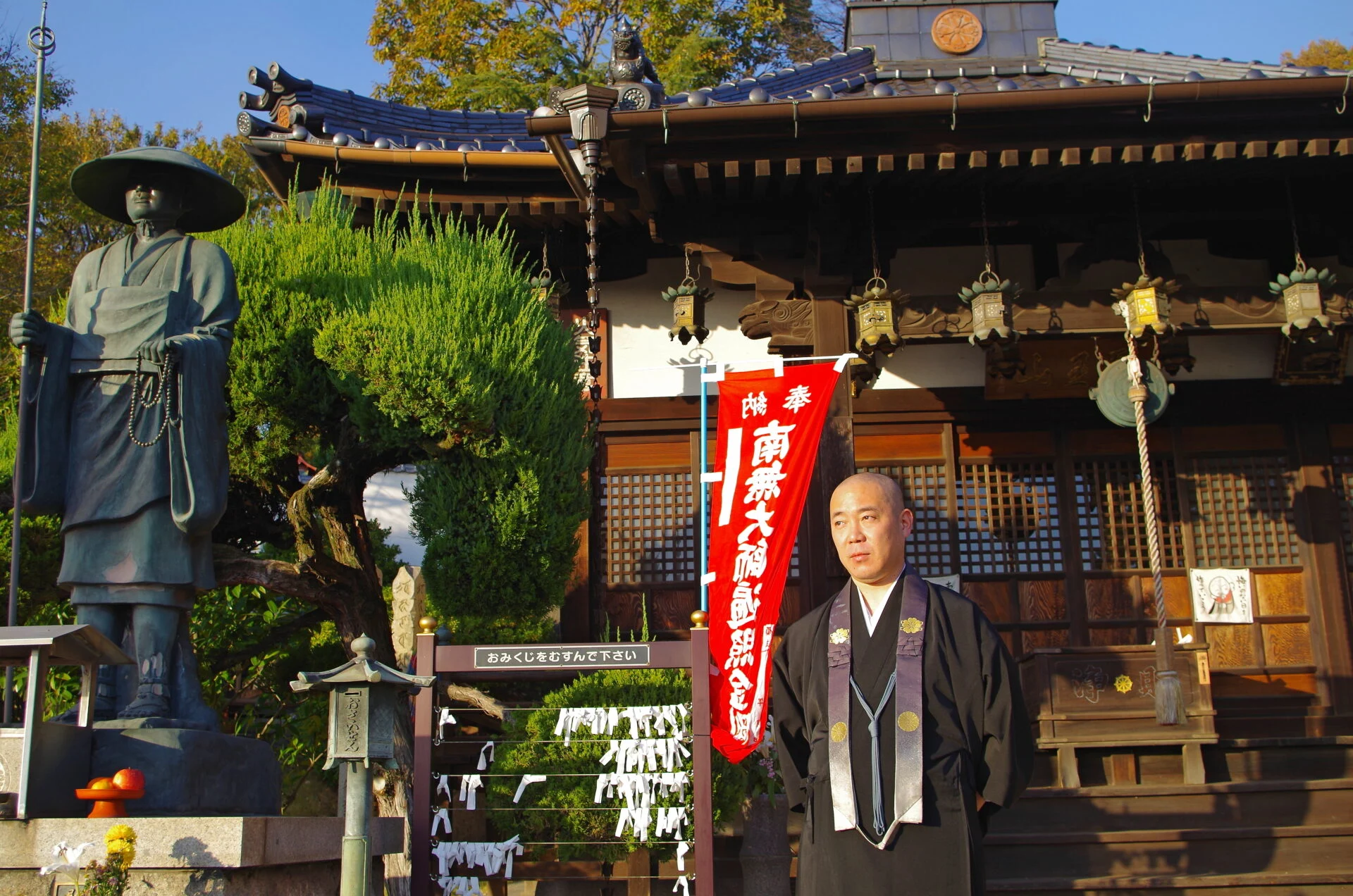
Interview with Chief Priest Motoyama Kaihan
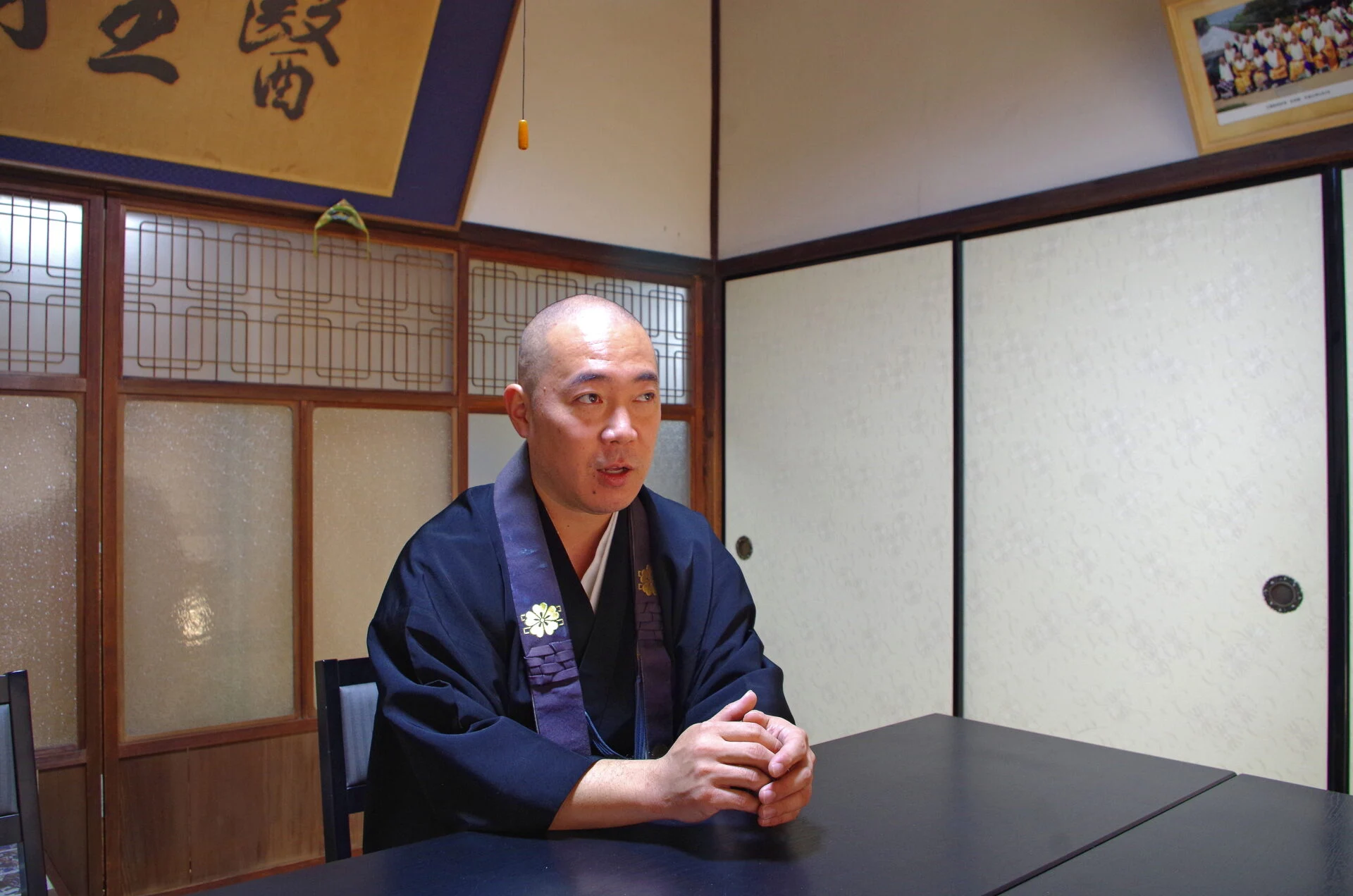
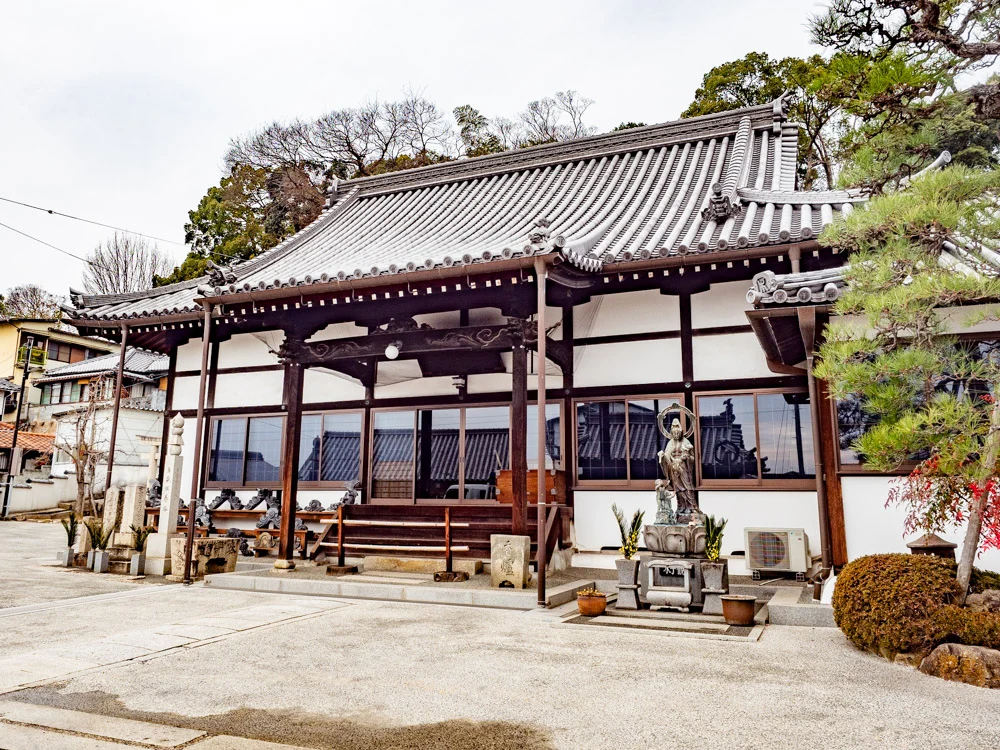
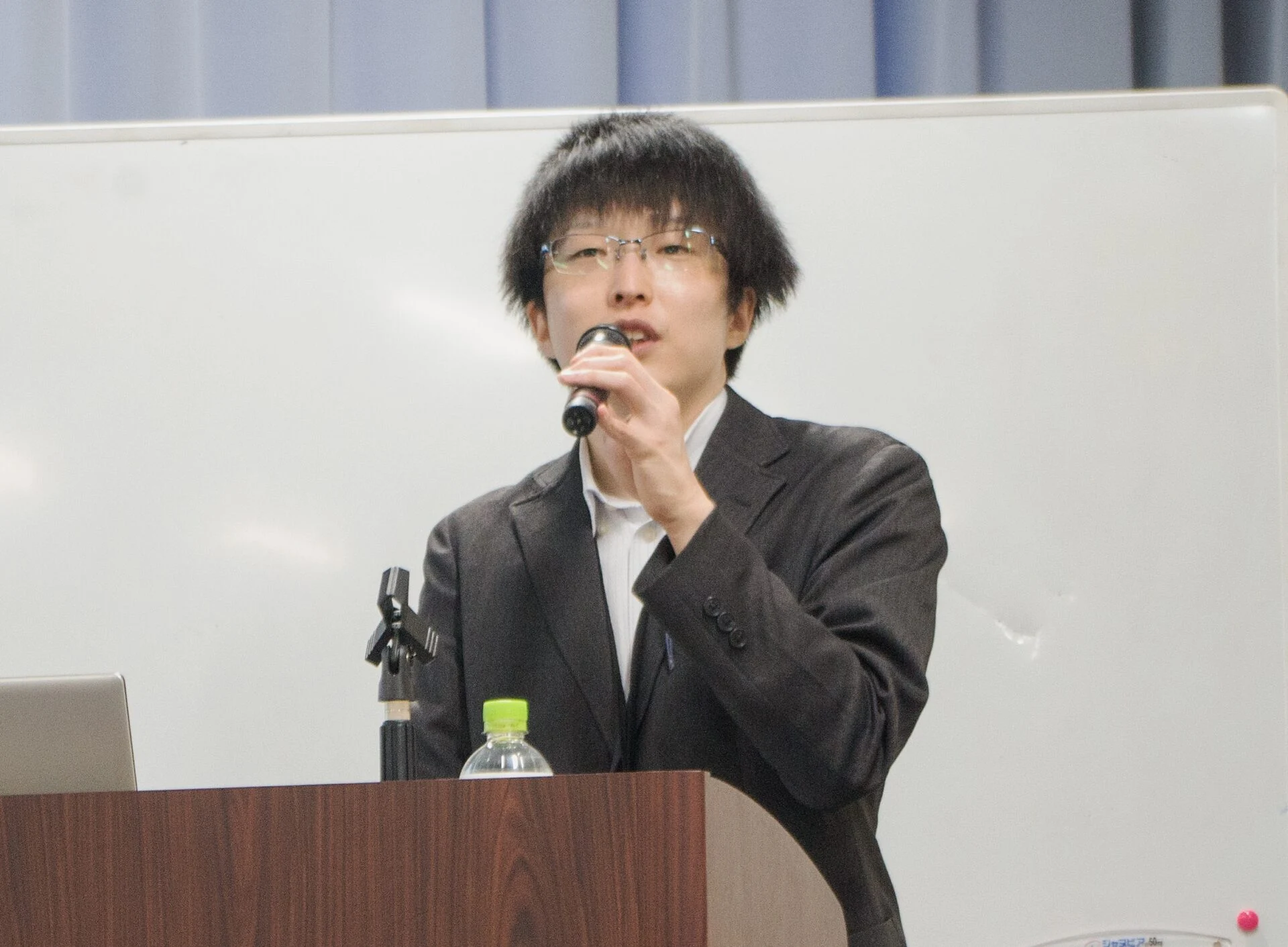
I spoke with Chief Priest Motoyama Kaihan of Kichijo-in.
I heard that various events are planned at Kichijo-in.
Chief Priest Motoyama
From the feeling of wanting not only the parishioners but also participants to "enjoy life", we hold friendly gatherings that anyone can join.
- Goeika (Buddhist Chanting) Class (2nd Thursday, 7 PM)
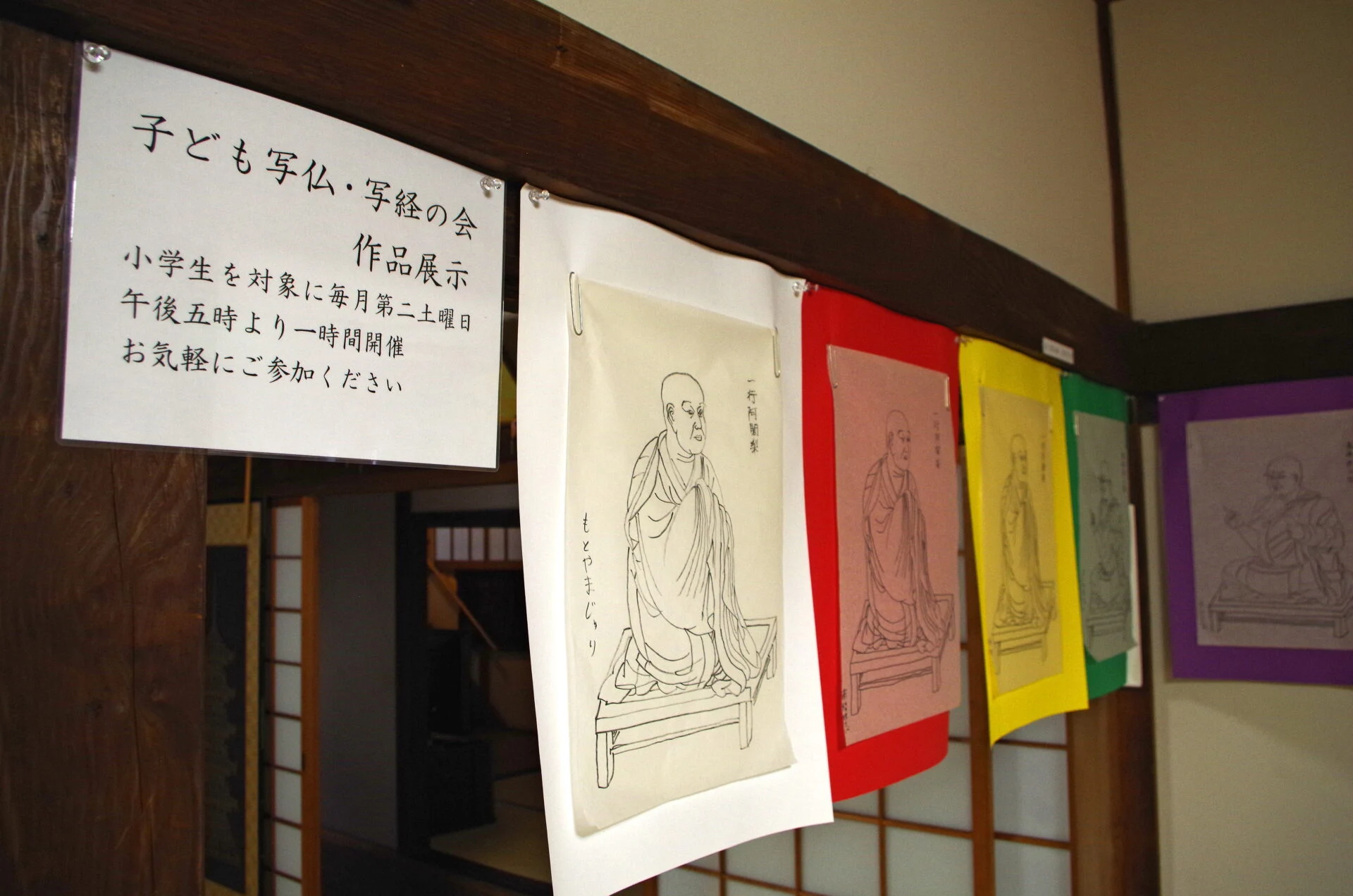
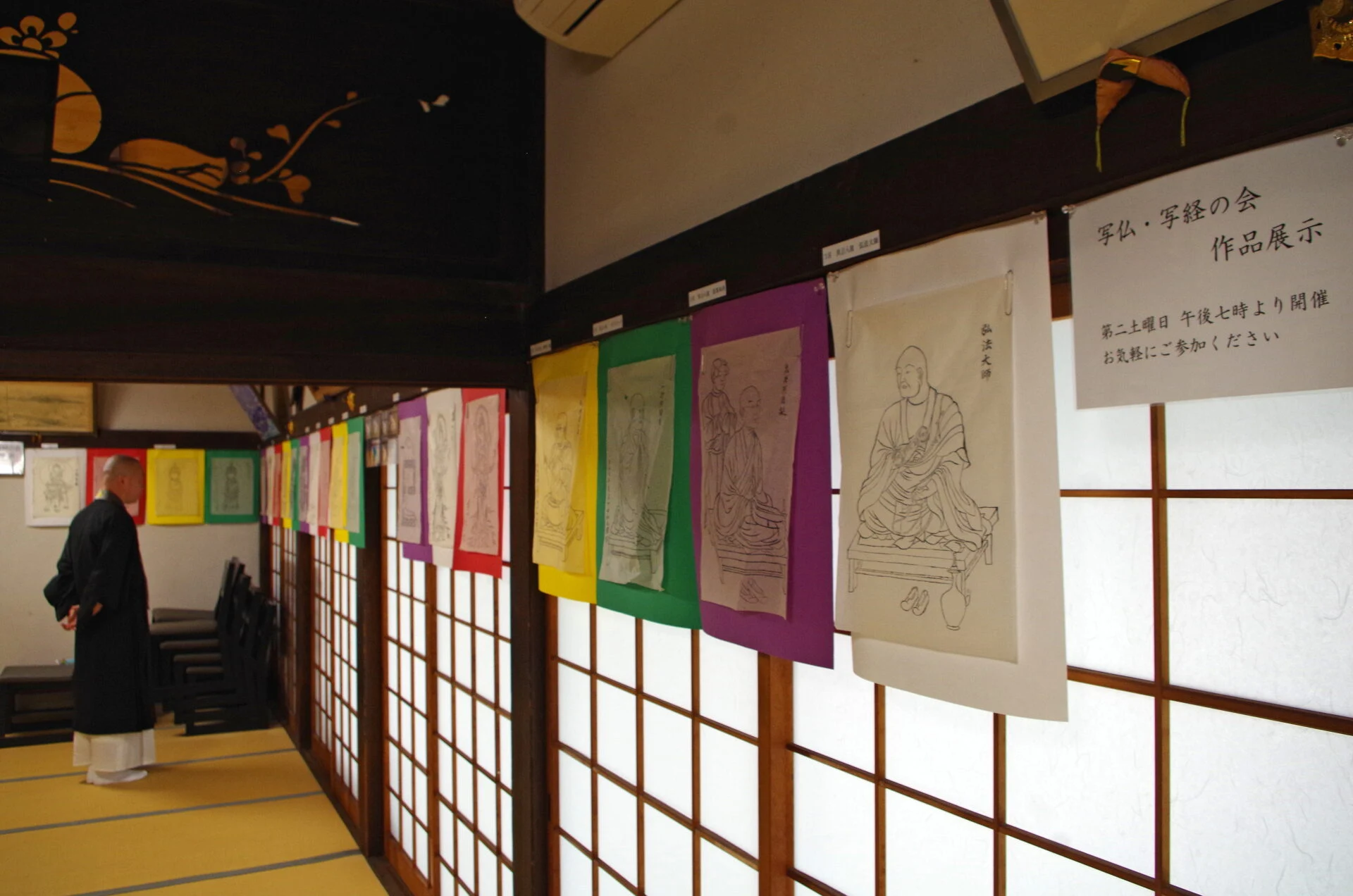
- Children's Shabutsu (Buddhist Drawing) and Shakyo (Copying Sutras) Class, Adult Shabutsu and Shakyo Class (2nd Saturday, 5 PM)
The Children's Shabutsu and Shakyo Class is aimed at elementary school students, while the Adult Shabutsu and Shakyo Class includes participants mainly from among housewives to the elderly, all of whom are earnestly engaged in Shabutsu.
The completed Shabutsu works are displayed once a year in the guest hall for local residents to view.
Why are there photos of the Mizushima Industrial Complex in the guest hall?
Chief Priest Motoyama
These photos show Takashima, which can still be seen to the west of Kichijo-in, depicting its transformation from when it was an island to when it was reclaimed and turned into an industrial area.
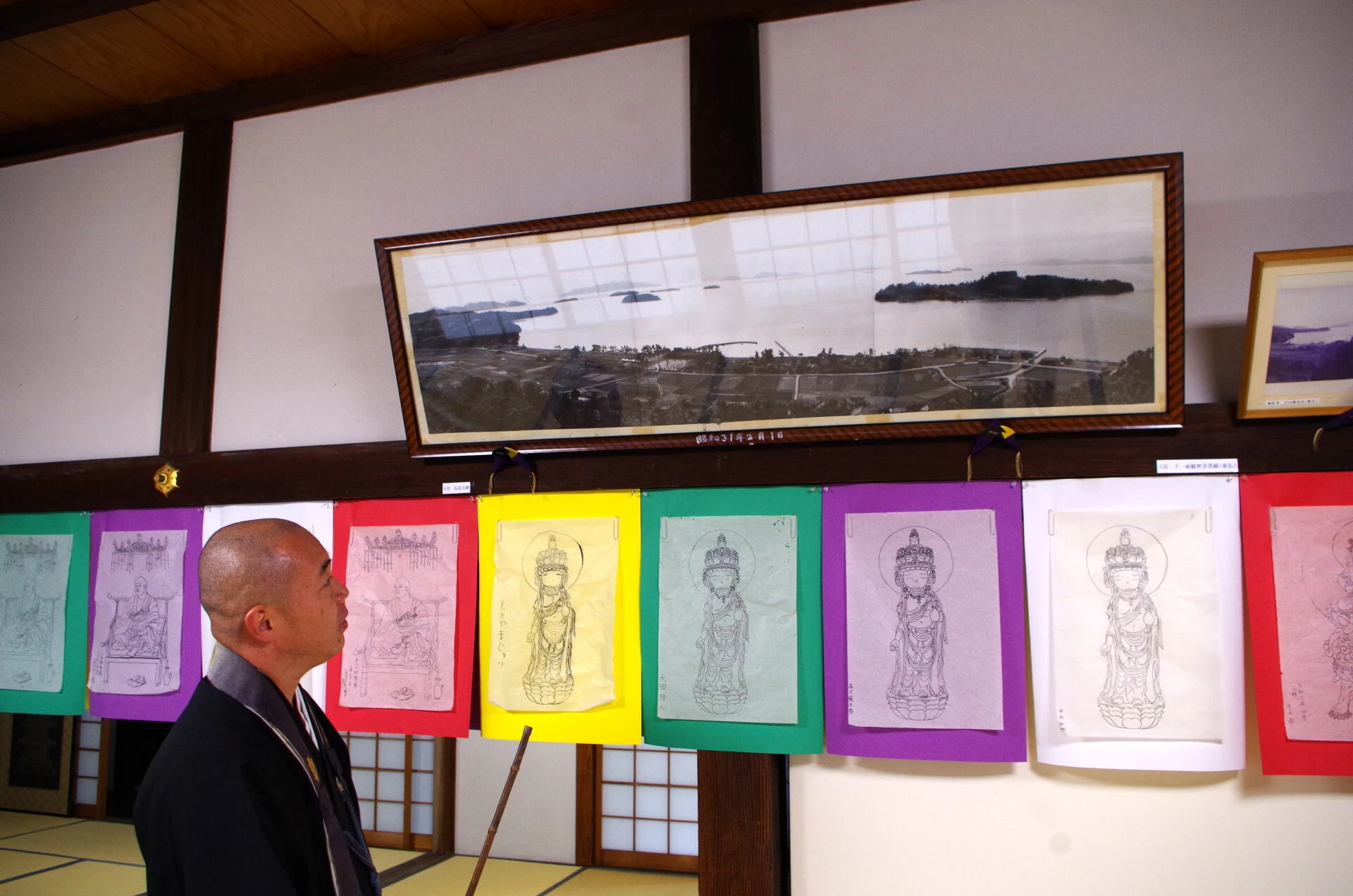
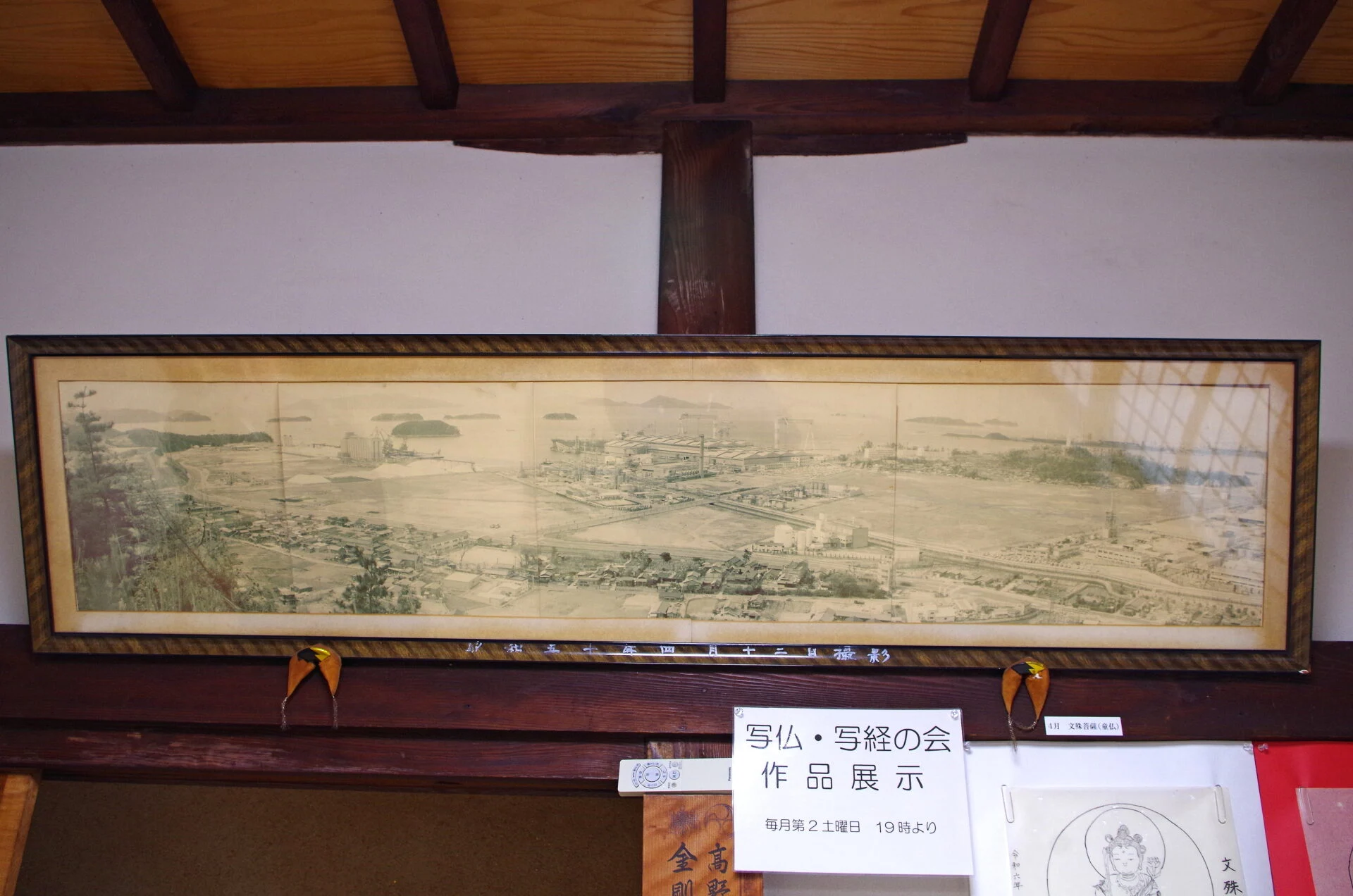
Every year, second graders from a local elementary school come to Kichijo-in for a "town exploration," and I often see their surprised expressions when they look at the photos. I would be happy if they could "learn about the local area properly and cherish it."
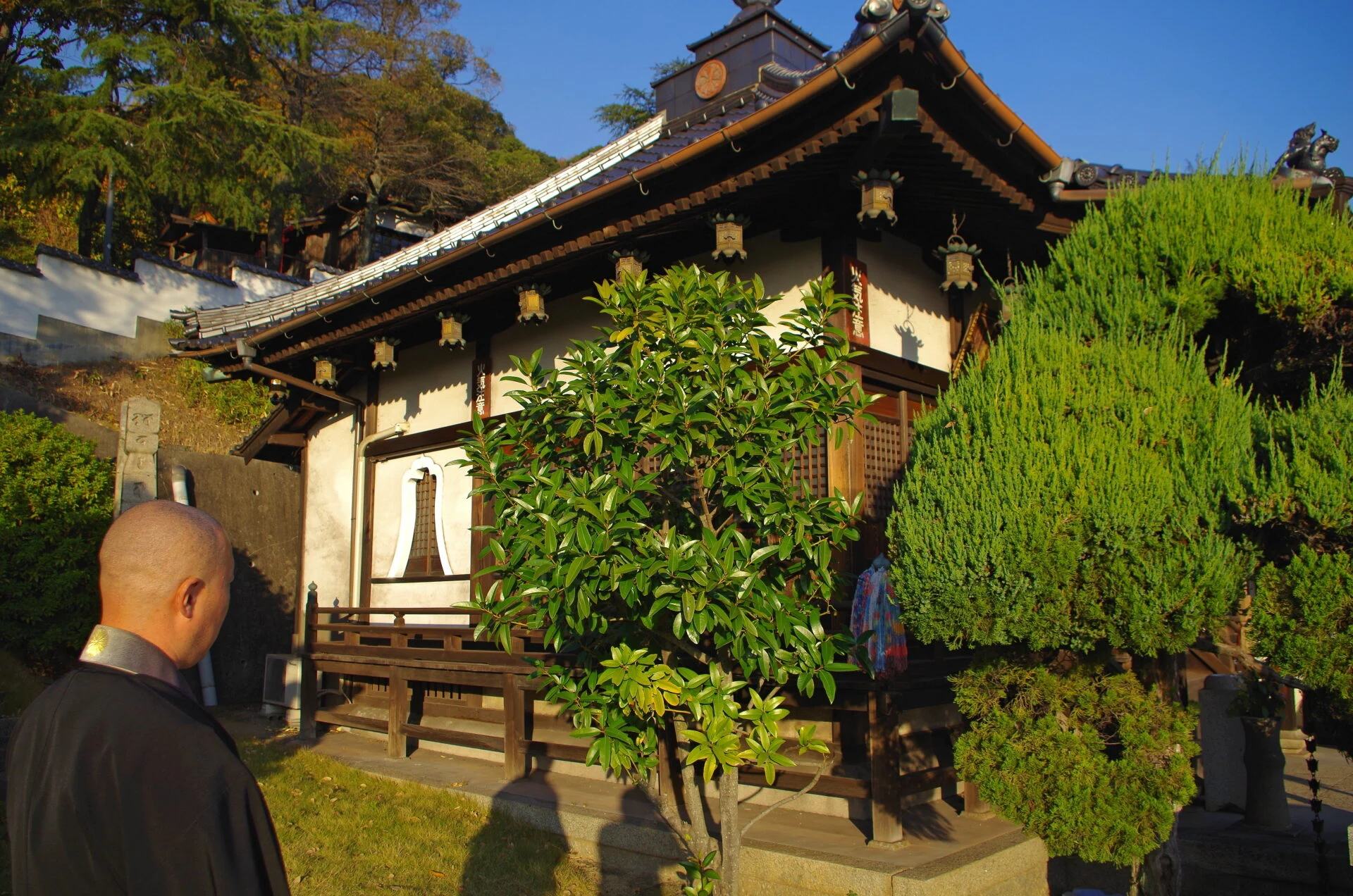
Additionally, there is a tree called "Tarayou" planted next to the main hall, and when I tell elementary school students that "scratching the underside of this leaf leaves a black mark, and it was used as a letter," they are surprised.
I hear that Kichijo-in has some rare Buddhist paintings.
Chief Priest Motoyama
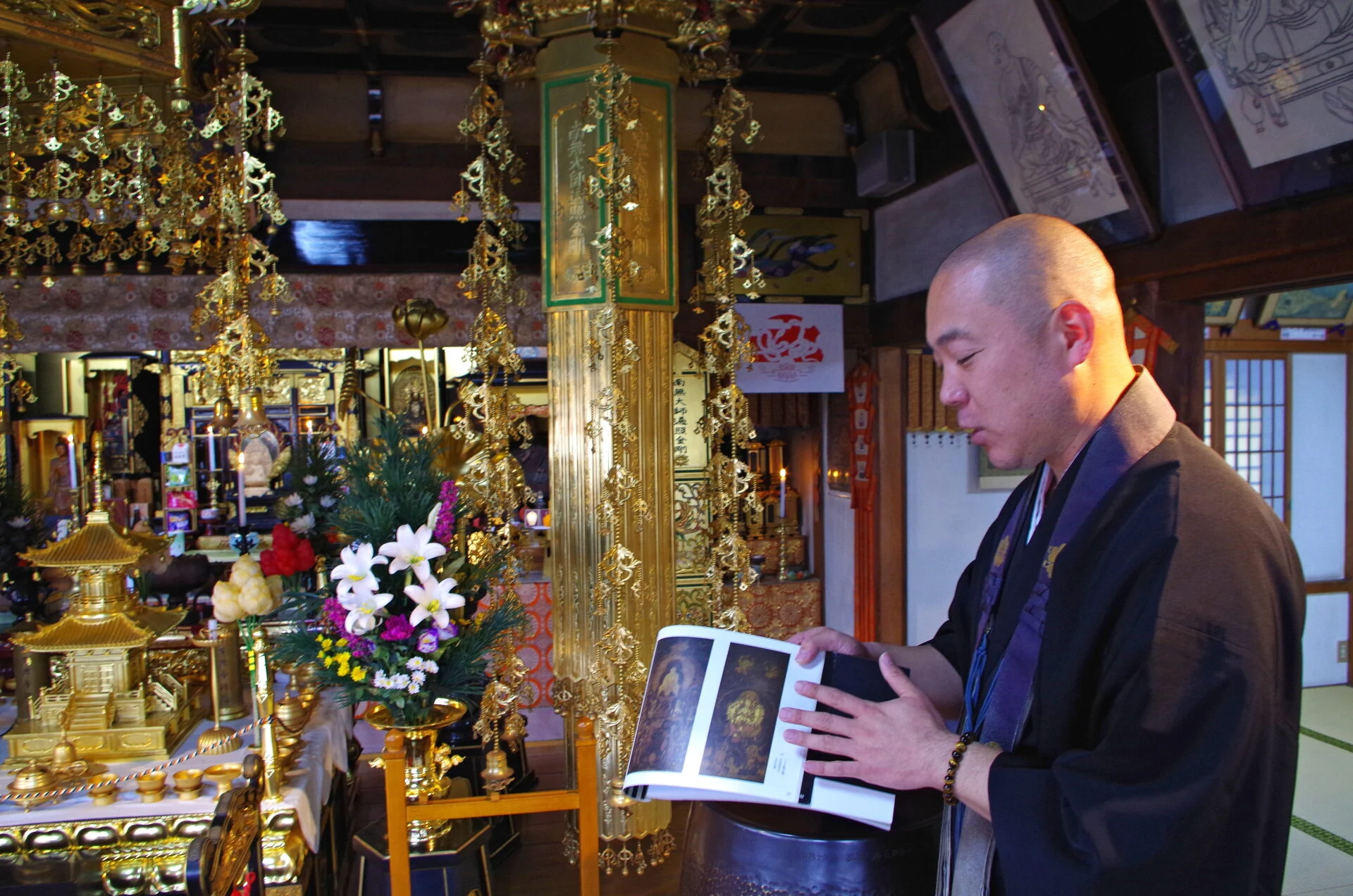
These Buddhist paintings are Shakyo Buddhist paintings by Yamamoto Kanji.
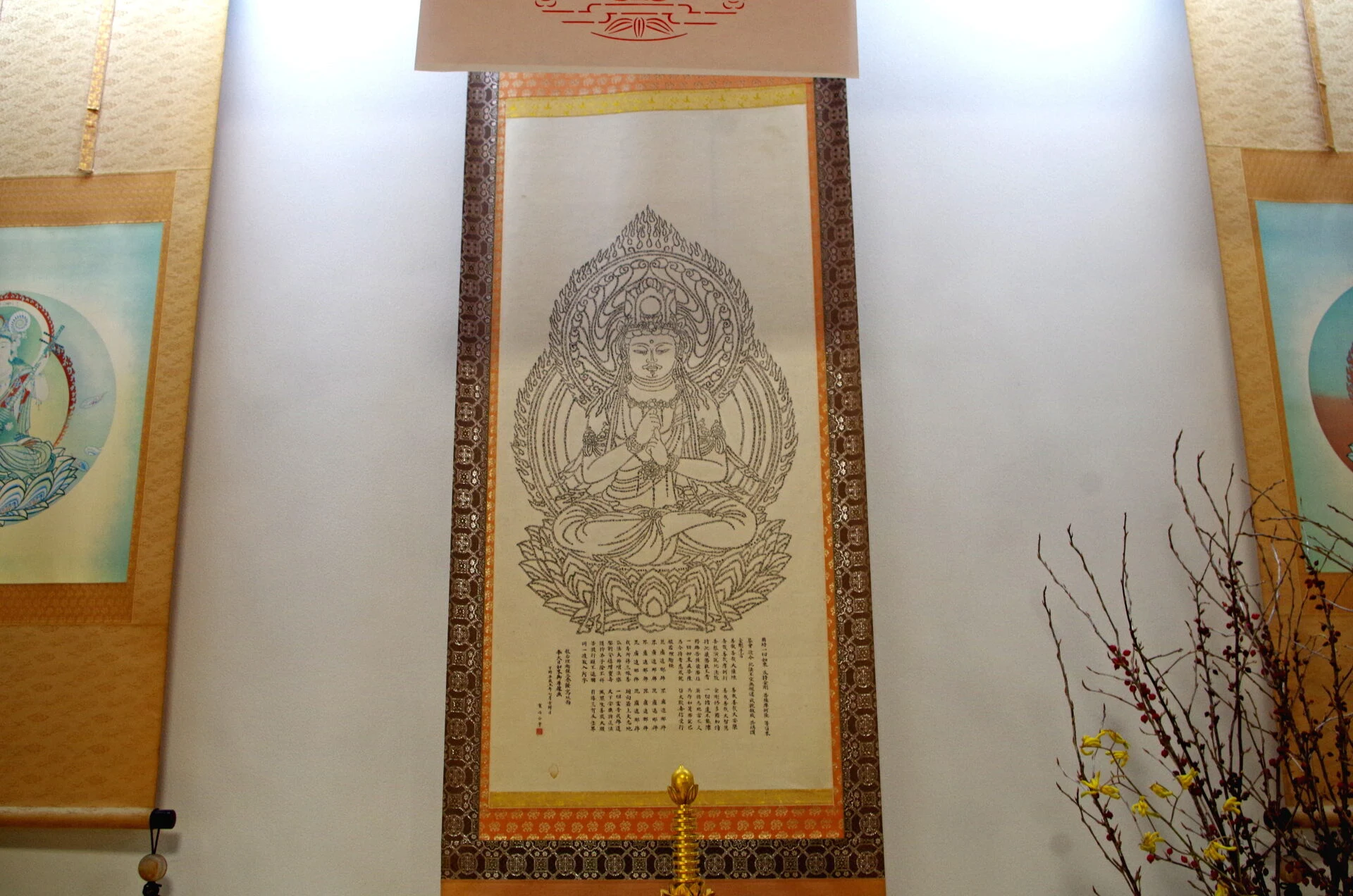
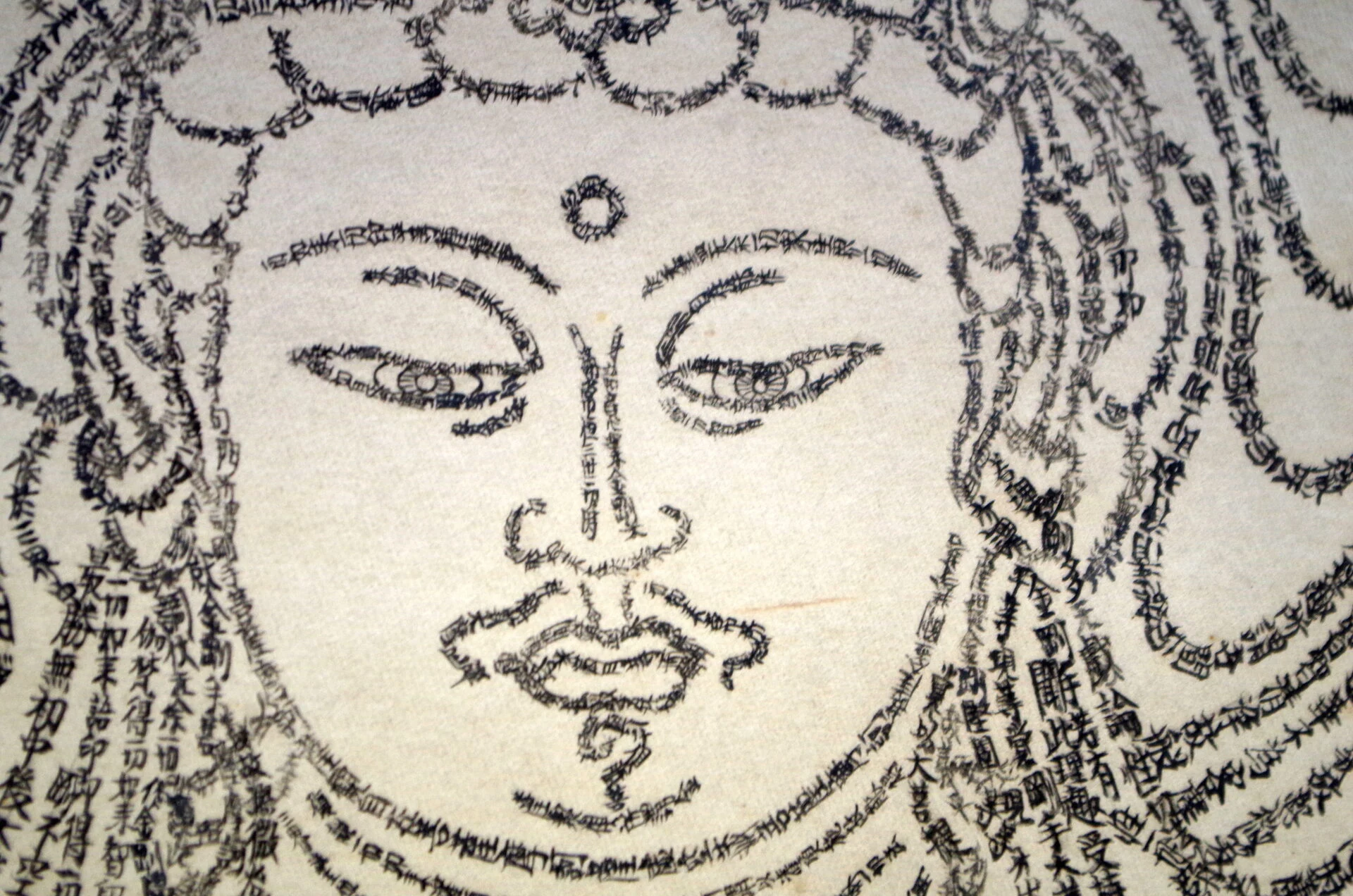
It is very rare to depict Dainichi Nyorai using a technique that connects approximately 13,000 sutra characters into a single line.
At Kichijo-in, there are also offerings of Kannon and the statues of the Eight Patriarchs, making it a valuable Buddha painting. I have heard that it is also offered at Hourinji Temple in the city.
Please tell us about the annual events planned for the future.
Head Priest of the Main Temple
There are four annual events planned.
- December 31 night
New Year's Eve Bell and Year-End Thanksgiving Festival - February 3
Setsubun: We will perform a prayer for those who apply for talismans. - May 8
Buddha's Flower Festival - Second Saturday in November
Chinju Oinari-san Grand Festival
At Kichijo-in, we hope that not only parishioners but also many people will visit and feel happy when they leave. On New Year's Eve, it is also possible to ring the bell, so please come and visit.
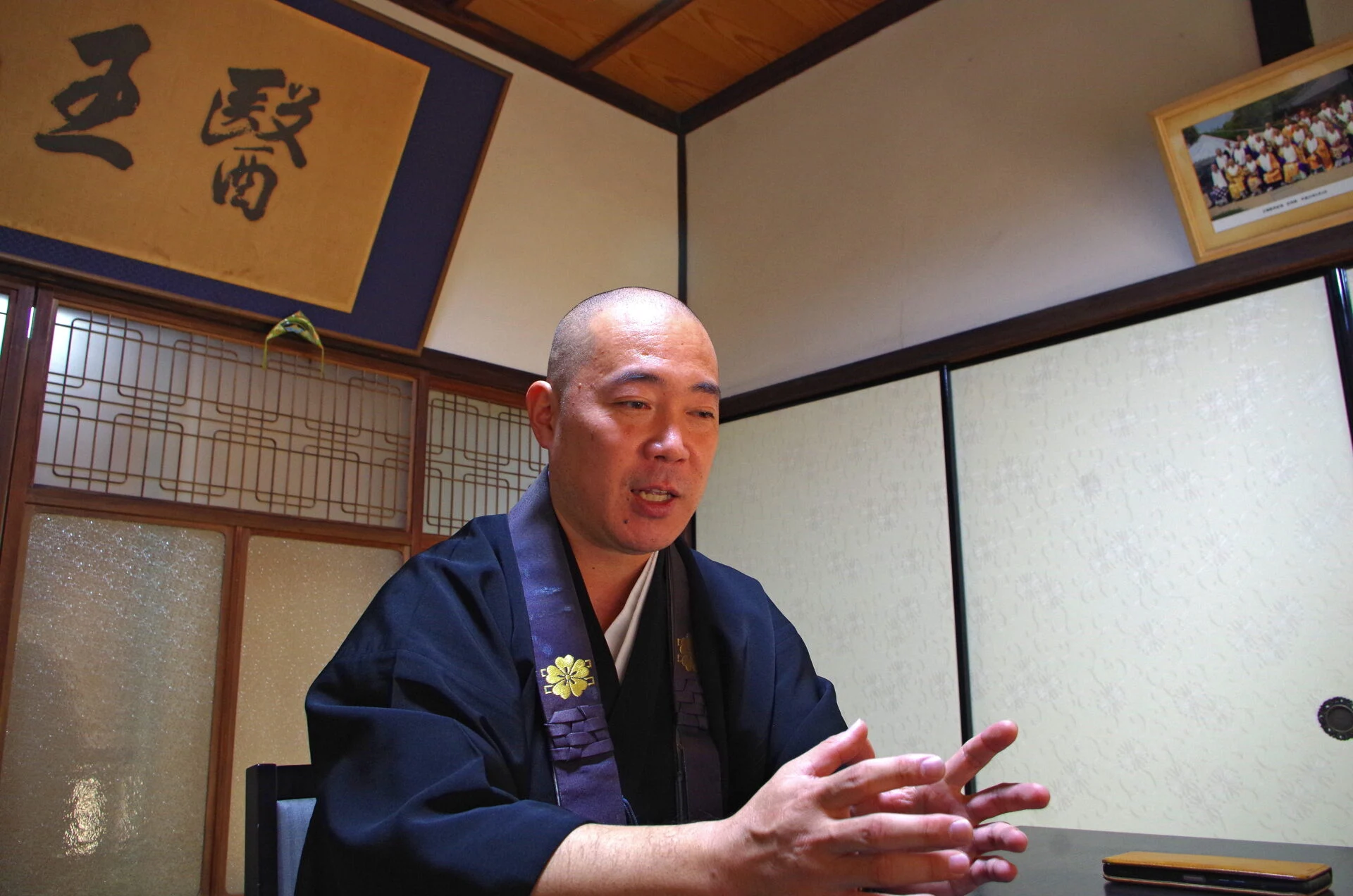
I have heard that it has become difficult recently to ring the New Year's Eve bell.
Head Priest of the Main Temple
On New Year's Eve, many people visit as it has become difficult to find a temple where you can ring the New Year's Eve bell. The New Year's Eve bell and the first shrine visit event, called the "Year-End Thanksgiving Festival," have been continued for over 40 years.
Starting at 11:45 PM, we will begin the first strike, and thereafter, please strike the bell every 20 seconds in turns. Those who strike the bell at the moment the year changes (0:00:00 AM) will receive a Perfect Prize, and those who strike it just before or after will receive a Before and After Prize.
As for the first shrine visit, we will perform blessings with the Daihannyakyo (Great Heart Sutra), and starting around 1 AM at the Chinju Oinari-san, we will light the first goma (fire offering) and pray for everyone's health and longevity.
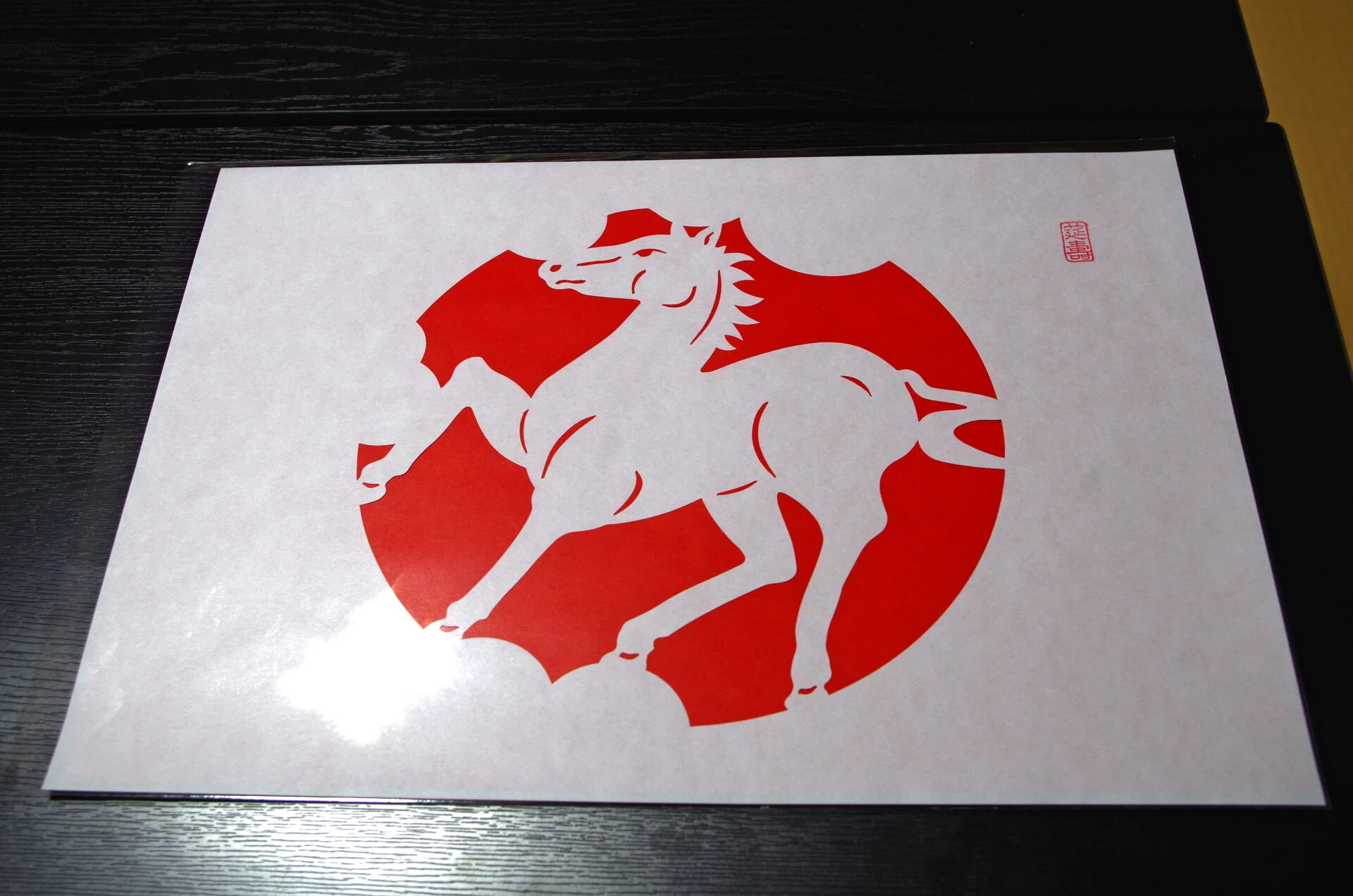
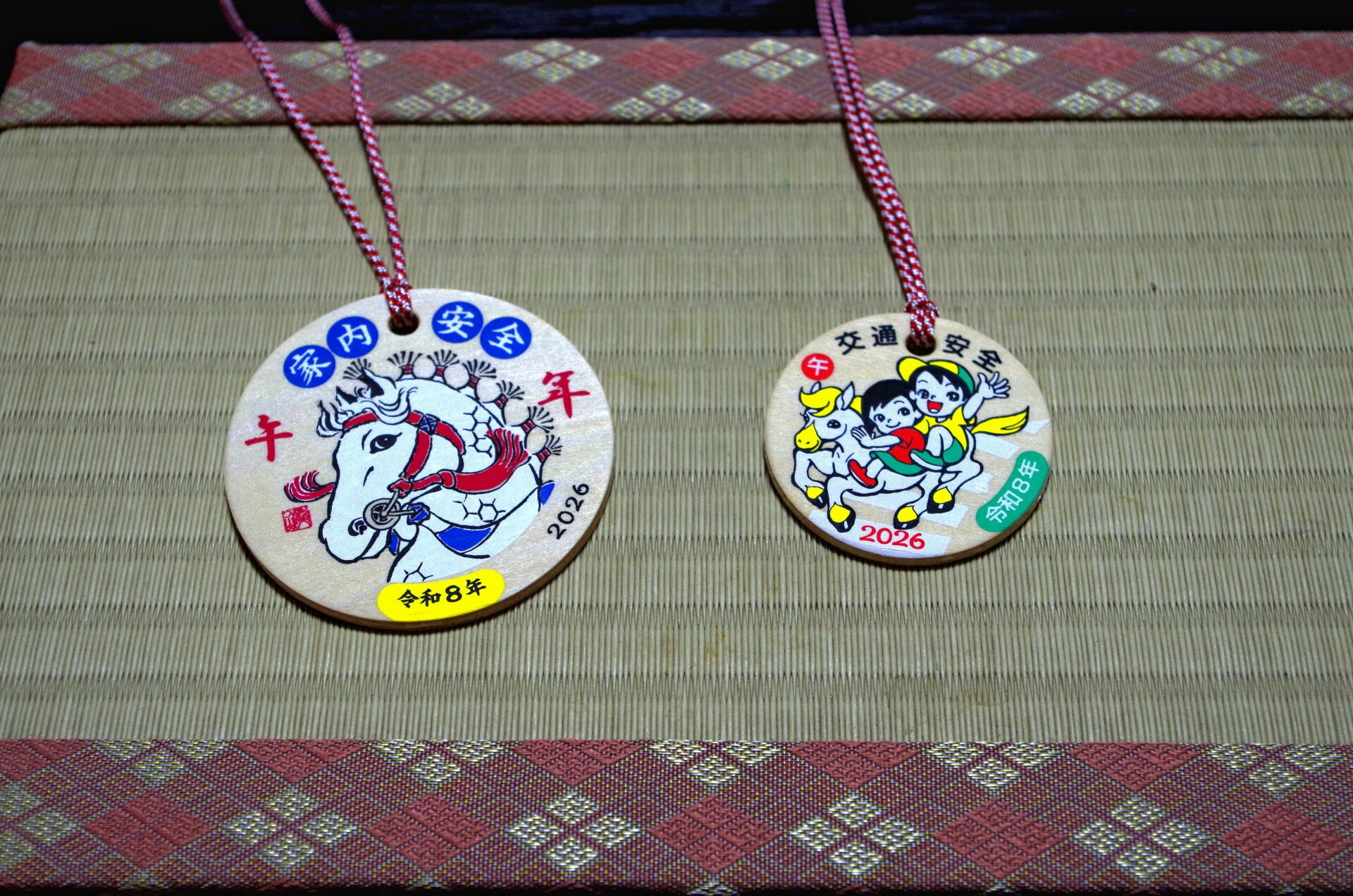
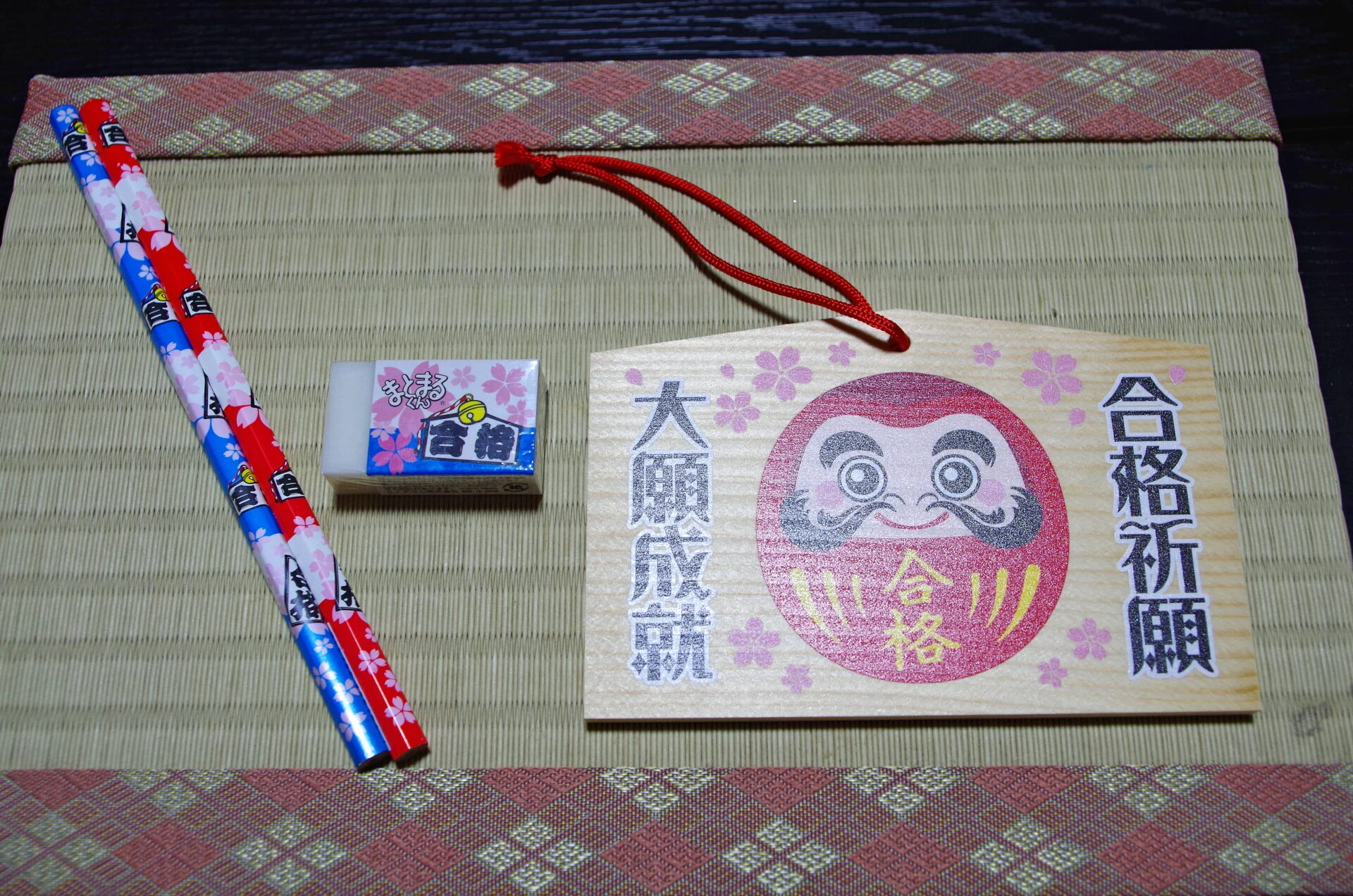
Additionally, as usual, we will prepare zodiac decorative papers and round-shaped ema (votive tablets), so please take them home as a memento of your first shrine visit.
Additionally, when students visit to pray, we support them by giving them pentagonal ema and pentagonal pencils that lead to success.
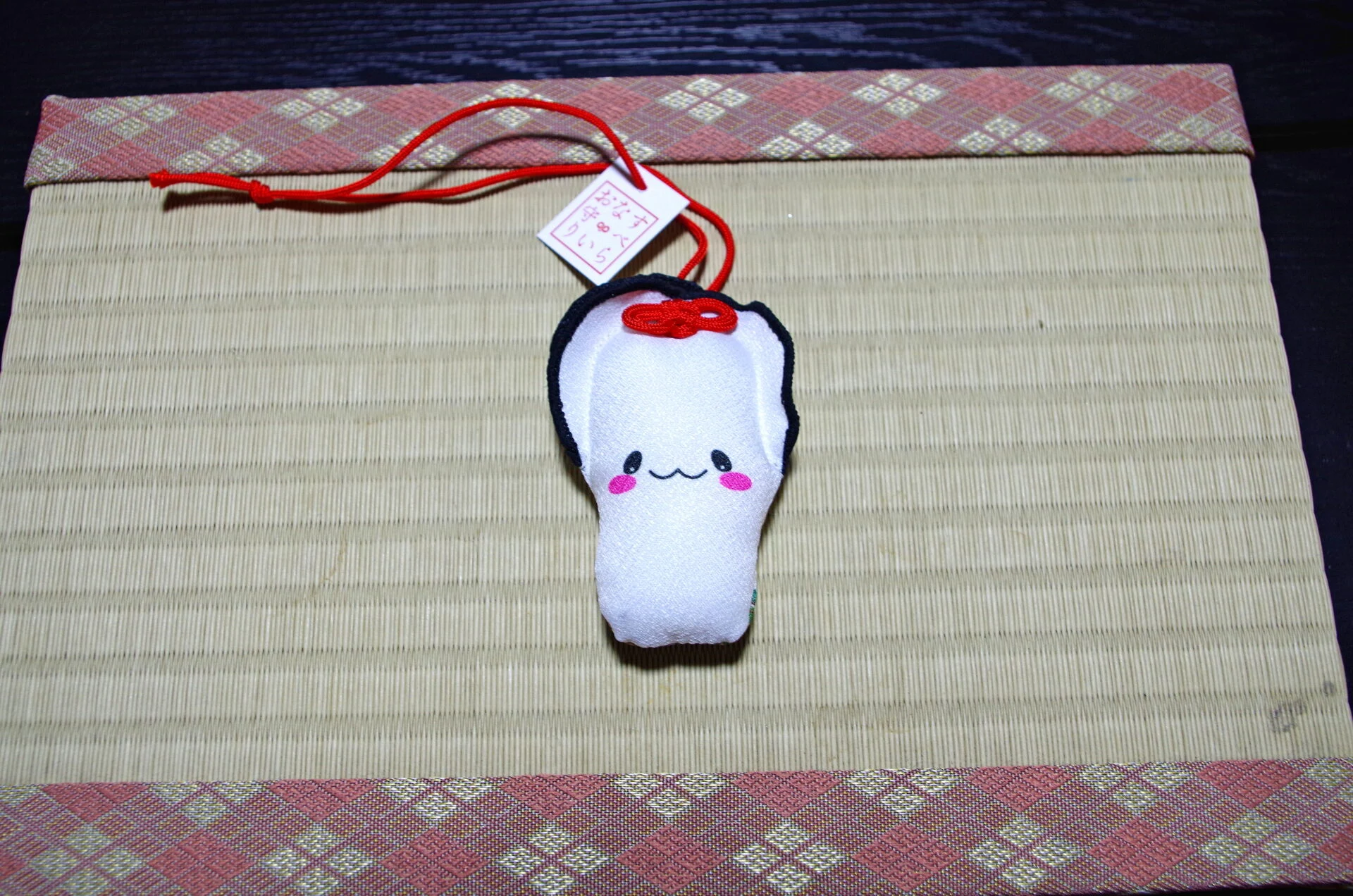
This year, for the first time, we have also prepared a non-slip talisman.
It is a talisman for success, imbued with the hope that you will overcome adversity and difficulties like a koi nobori (carp streamer) and climb the wall with non-slip powder. It is available for 500 yen each.
The "non-slip talisman" was created in collaboration with Sanyo Clay Industry, which produces climbing grip powder from cultivated oyster shells in Okayama Prefecture, and Tokunaga Koinobori, a koi nobori manufacturer in Okayama Prefecture.
The fabric is made of high-quality cloth used for koi nobori, sewn into a bag resembling an oyster, and filled with capsules containing non-slip powder.
Conclusion
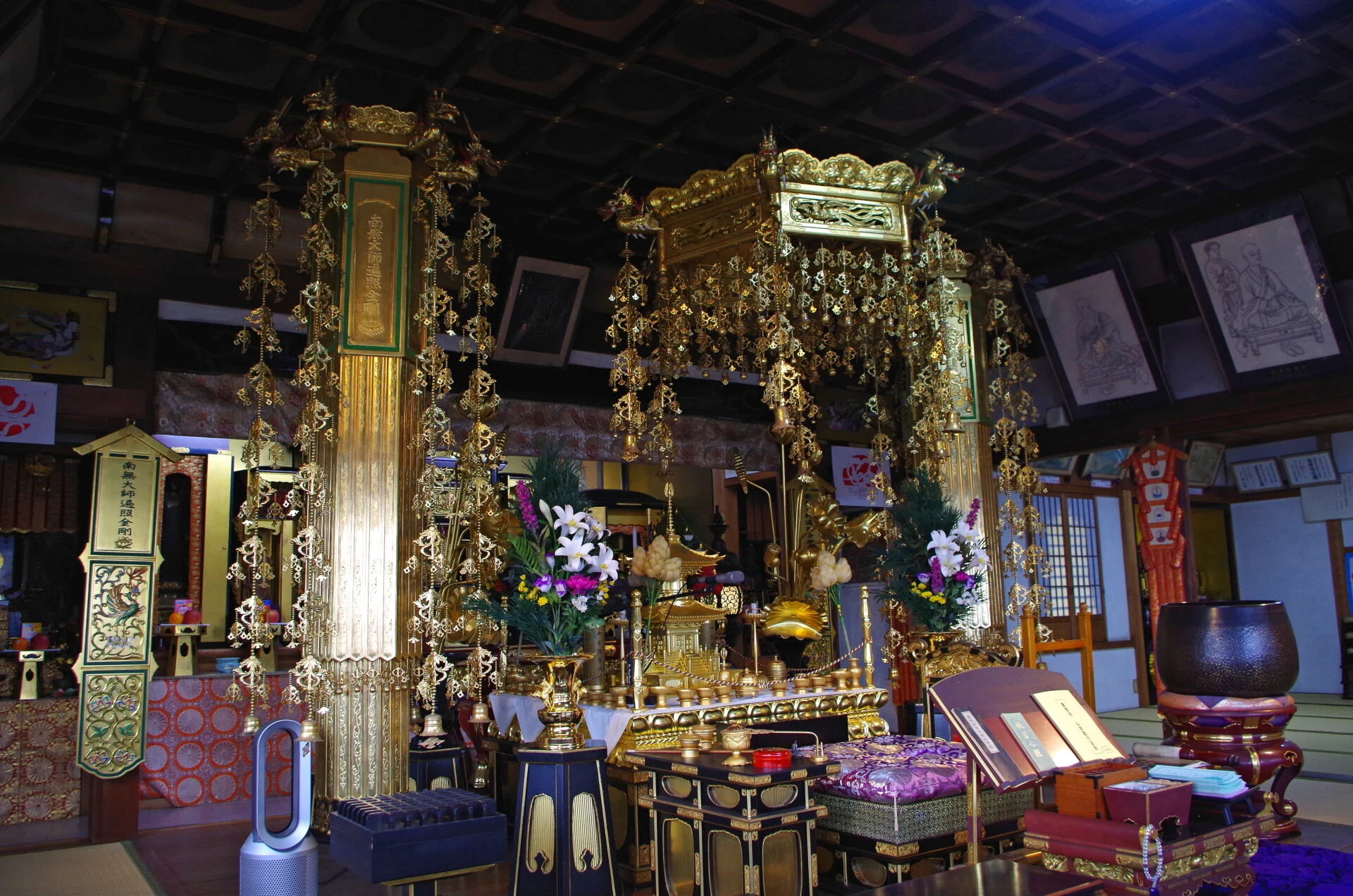
I felt the spirit of hospitality in many places, as mentioned by the head priest of the main temple: "I want many people to visit and feel happy when they leave."
On New Year's Eve and New Year, there will be widely open events, so please come and visit, not just from the nearby area.
Data on Kichijo-in
| Name | Kichijo-in |
|---|---|
| Alternate name | Io-san Jofuku-ji Kichijo-in |
| Sect | Shingon Sect Omuro School |
| Location | 2349 Shio, Kojima, Kurashiki City |
| Contact | 086-475-0758 |
| Parking | Available In addition to the main gate, there is a second parking lot The second parking lot can accommodate 9 cars (including light vehicles). |
| Main deity | Yakushi Nyorai |
| Benefits | Peace for those entering through the main gate, happiness for those leaving |
| Goshuin (offertory fee) | 36th and 37th of the 88 places in Kojima; Kichijo-in only goshuin is also available Offertory fee (200 yen). |
| Visiting hours | Please feel free to visit at any time. |
| Closed days | None |
| Admission fee | No admission fee is required |
| How to pay admission and offertory fees | Please place the offertory fee in the Jizo statue in front of the main gate. It makes a nice sound. |
| Restroom | Available |