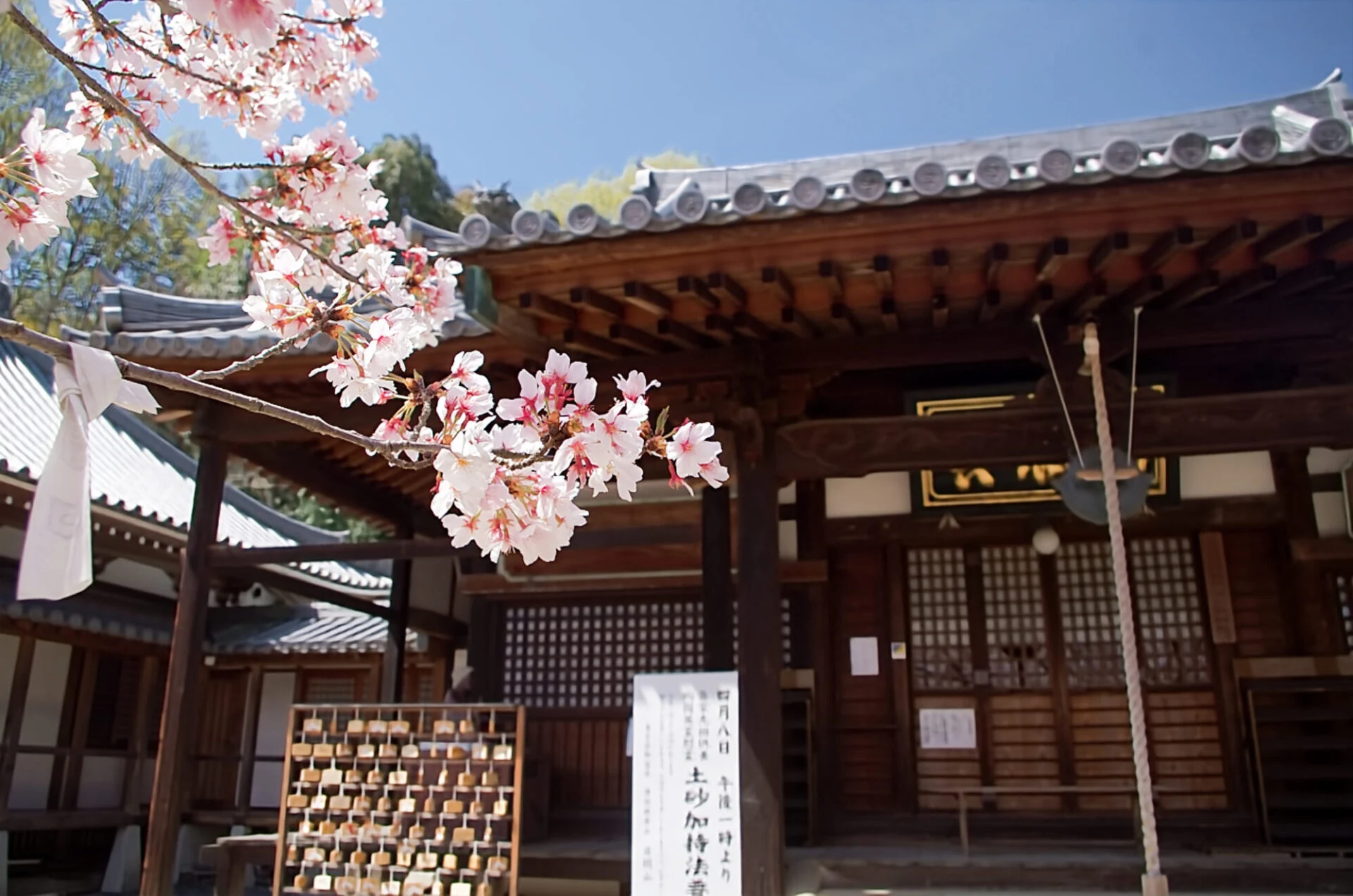
Hirumayama Yakushiin (Hirumayama Yakushiin) Horin-ji Temple (Horin-ji) is a Shingon sect temple located in Hashima, Kurashiki City.
Tenpyo Shōhō (around 754) has a history that is said to date back to the reign of Emperor Kōken, who was the son of Emperor Shōmu.
Additionally, it is famous as the place where the Genji established their main camp during the Battle of Fujito, fought between the Genji and the Heike on December 7, Juei (1184).
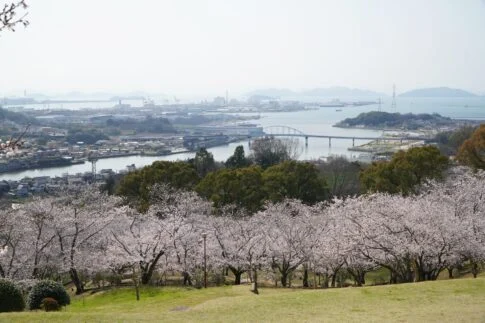
Horin-ji Temple is also known as a famous cherry blossom spot.
We will introduce the history of the temple and the cherry blossom scenery at Horin-ji Temple, as introduced by the chief priest.
Horin-ji Temple is not a tourist destination, and there are no goshuin (temple seals) available. Therefore, please visit quietly to avoid any breaches of etiquette during your visit to the temple.
What is Horin-ji Temple
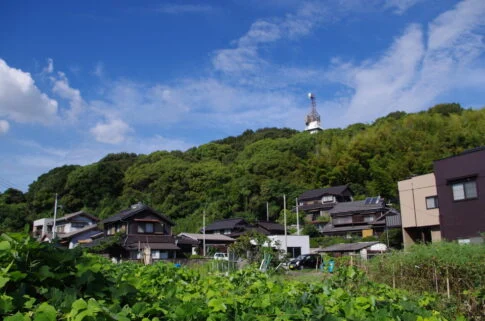
Horin-ji Temple is located in the Hashima area of Kurashiki City, situated to the southeast of the Bikan Historical Area on the eastern side of Mukuyama.
It is also known as a cherry blossom spot, so during the cherry blossom blooming season, it becomes lively with families coming to see the full bloom.
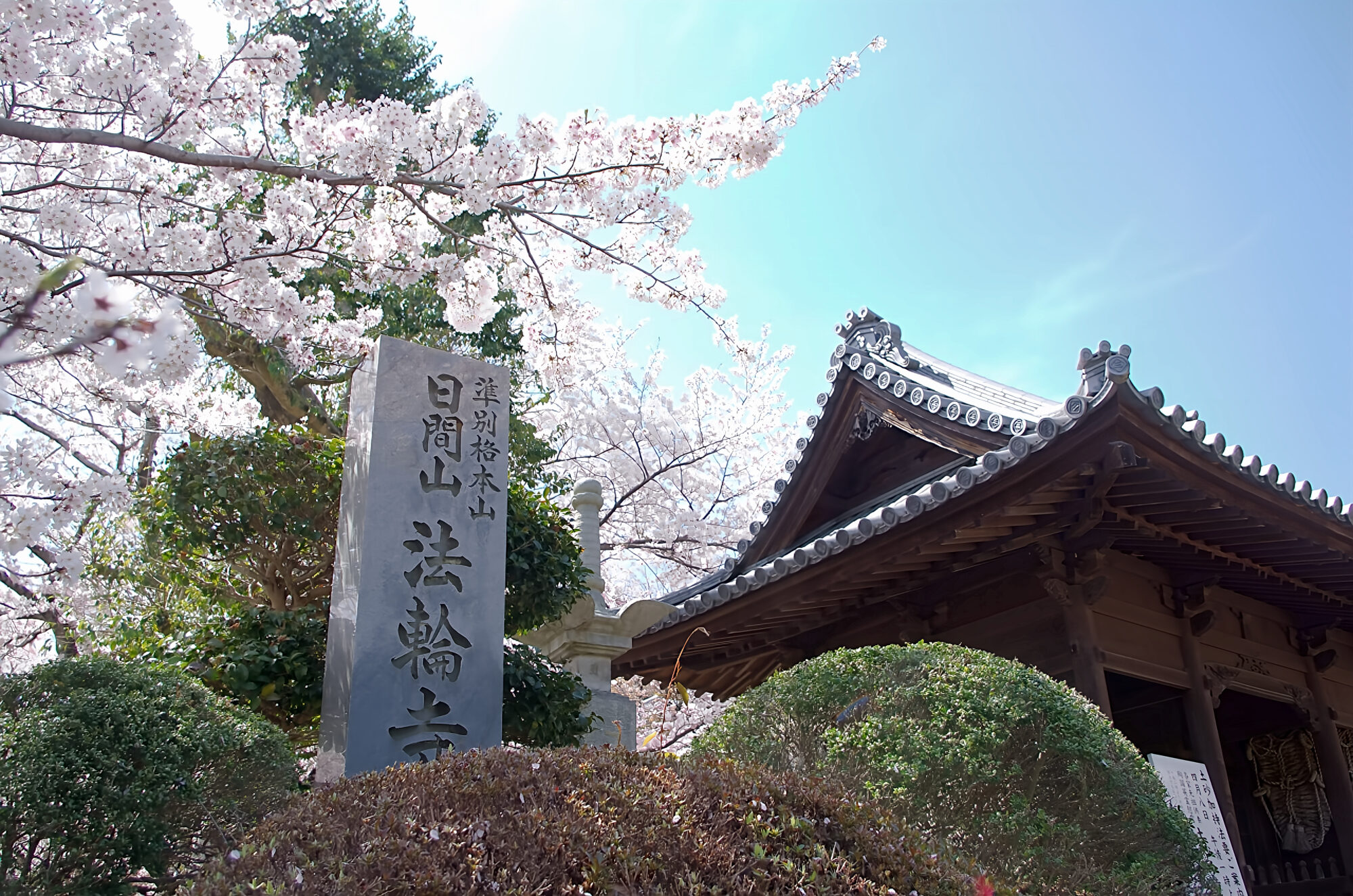
The mountain name of Horin-ji Temple is Hirumayama, the temple name is Yakushiin, and it belongs to the Shingon Sect Omuro School, currently referred to as Shingon Sect Omuro School, Jun-Bekkaku Honsan Hirumayama Horin-ji Temple.
Historically, it was known as one of the three Yakushi in Bichu.
In addition to Hirumayama Yakushi, there were also Asama Yakushi and Yuma Yakushi.
Unfortunately, I could not find detailed information about the current Asama Yakushi and Yuma Yakushi, but it is interesting that such stories have been passed down.
| Yakushi Name | Location |
|---|---|
| Asama Yakushi | Yada, Mabi-cho, Kurashiki City |
| Hirumayama Yakushi | Hirumayama Horin-ji Temple |
| Yuma Yakushi | Renge-ji Temple, atop Mt. Yosho in Asakuchi District |
Highlights of Horin-ji Temple
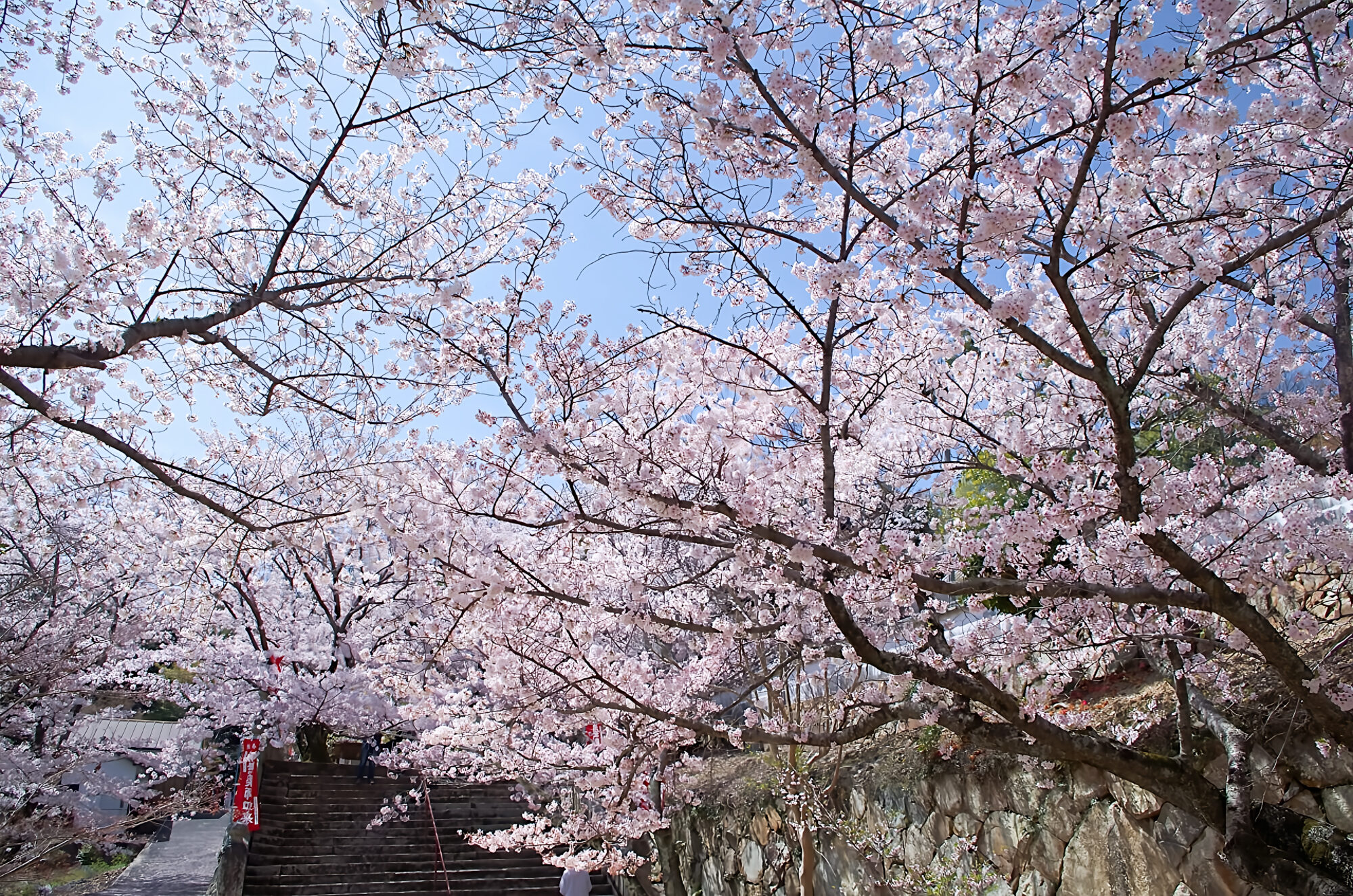
During my visit to Horin-ji Temple in early April, cherry blossoms were blooming everywhere, and the cherry trees beyond the Nioh Gate were magnificent.
On another day, under the guidance of the chief priest, I was able to see the Kurogane-mochi (giant trees in Kurashiki City) located in the residential area that is usually off-limits.
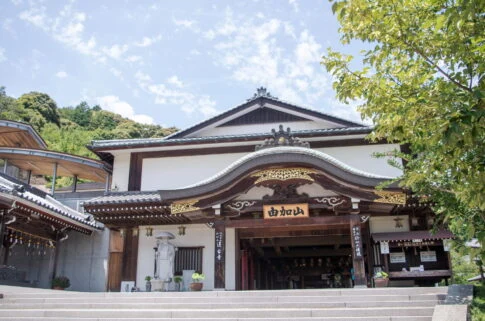
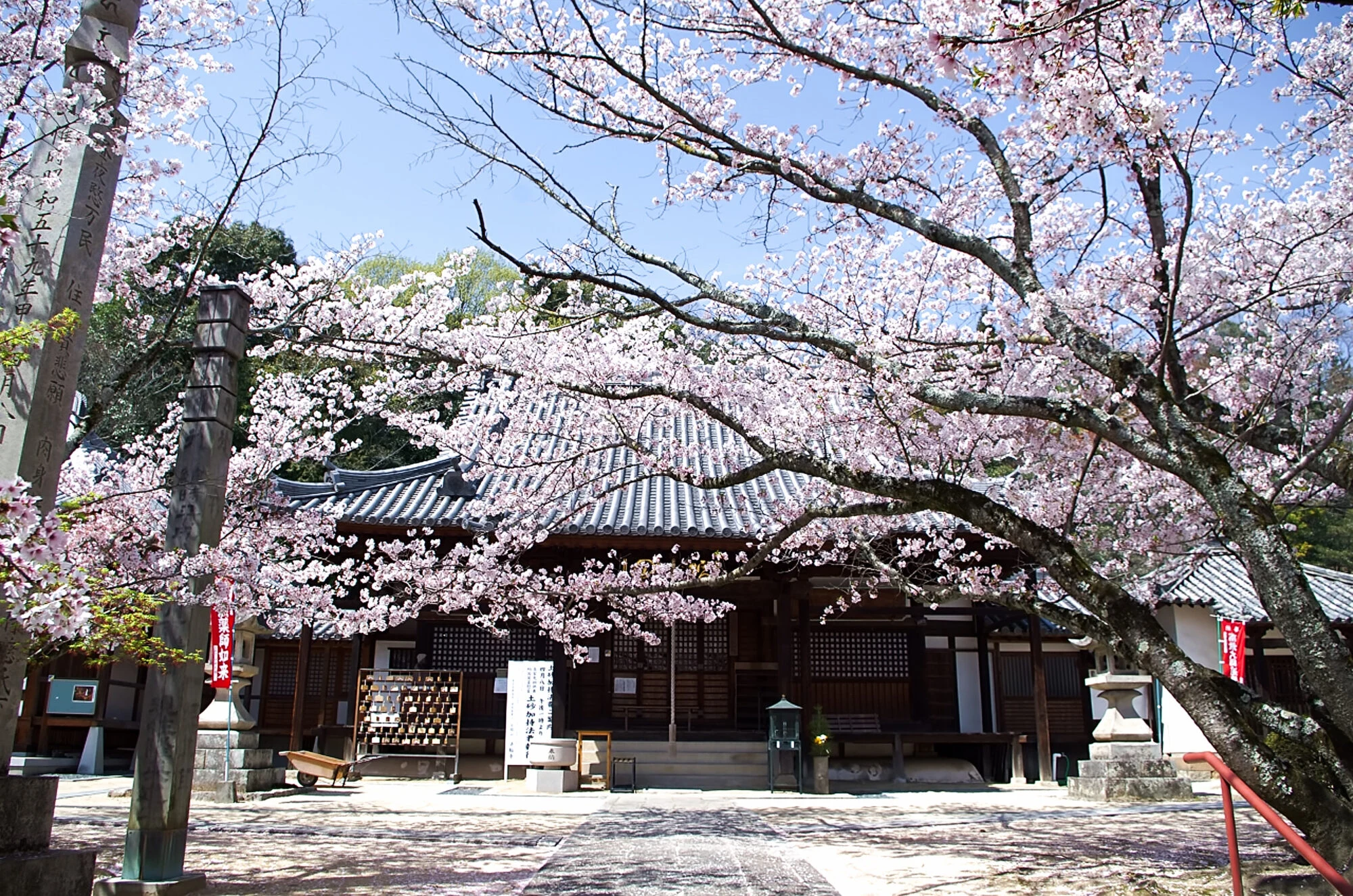
Main Hall
The principal deity of Horin-ji Temple is Yakushi Nyorai, who is said to have emerged from the sea.
It is known for its miraculous efficacy, and there are always visitors. It is said that during the ceremonies held on the 4th day of the 3rd month and the 15th day of the 7th month of the lunar calendar, more than ten thousand people come to pay their respects, not only from nearby areas but also from as far as the Kansai and Shikoku regions.
The principal deity, Yakushi Nyorai, is considered a secret Buddha, and the doors are opened every 33 years.
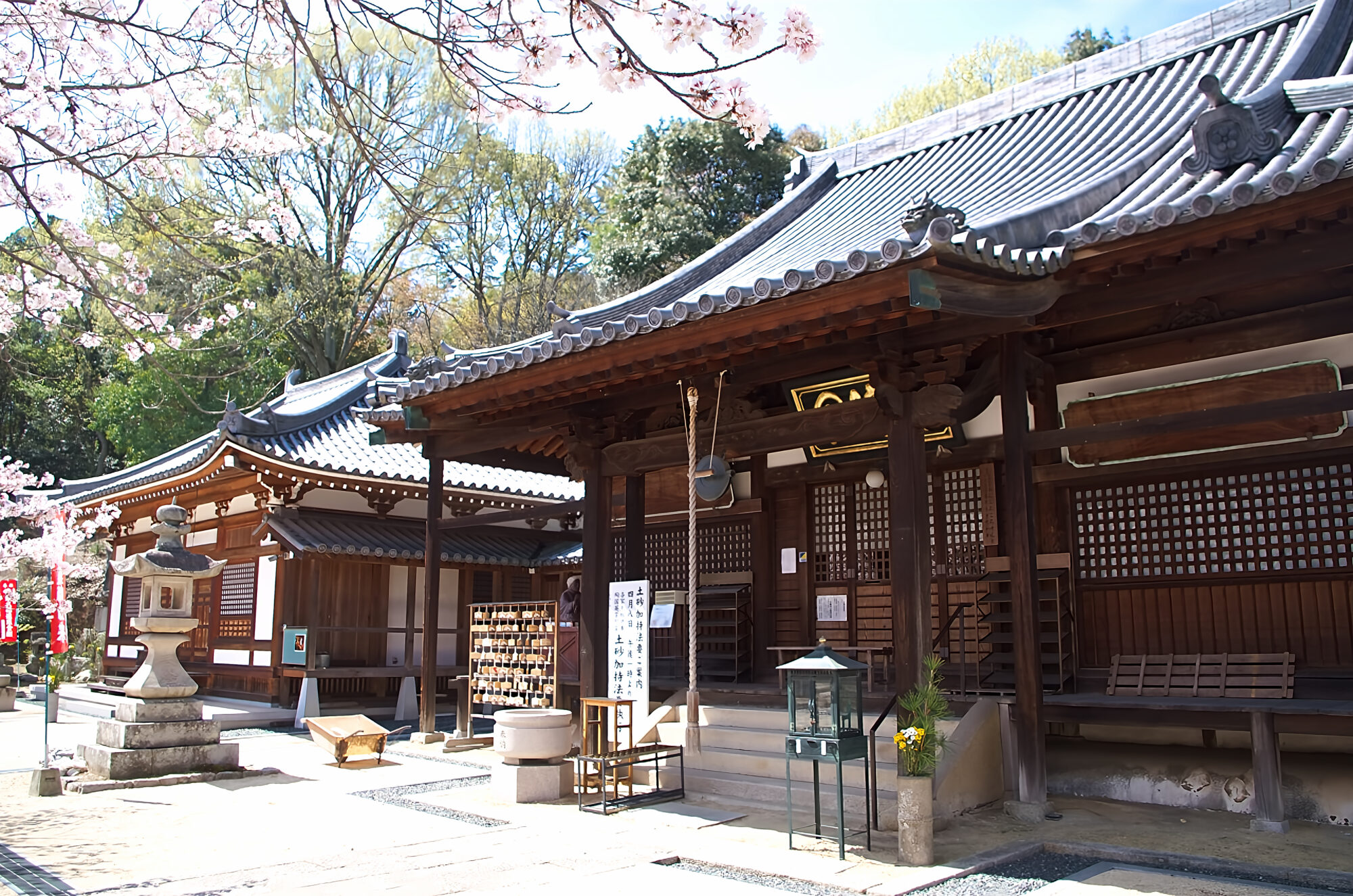
According to temple tradition, it is said to have had five temples and twelve halls throughout the entire mountain, flourishing as a prominent temple in the Sanjo Garan of southern Bichu.
The five temples refer to the following:
- Jojū-in, Monju-in, Iō-in, Jōkō-in, Yakushiin
The twelve halls refer to the following:
- Shōko-bo, Hōshaku-bo, Gyokusen-bo, Anraku-bo, Matsumoto-bo, Shin-bo, Nakanobo, Nishinobo, Bettō-bo, Minami-no-bo, Daigaku-bo, Shinzō-bo
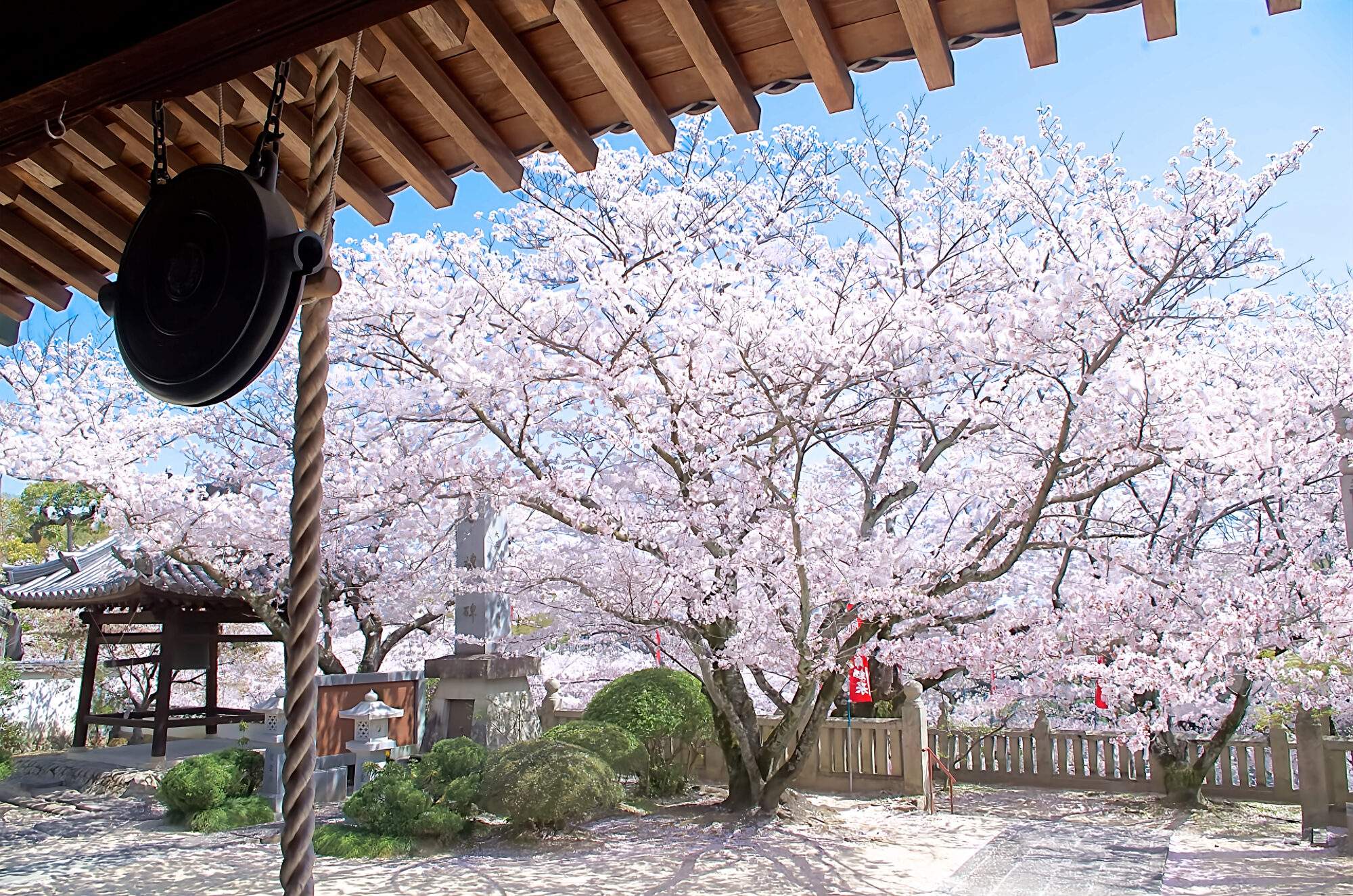
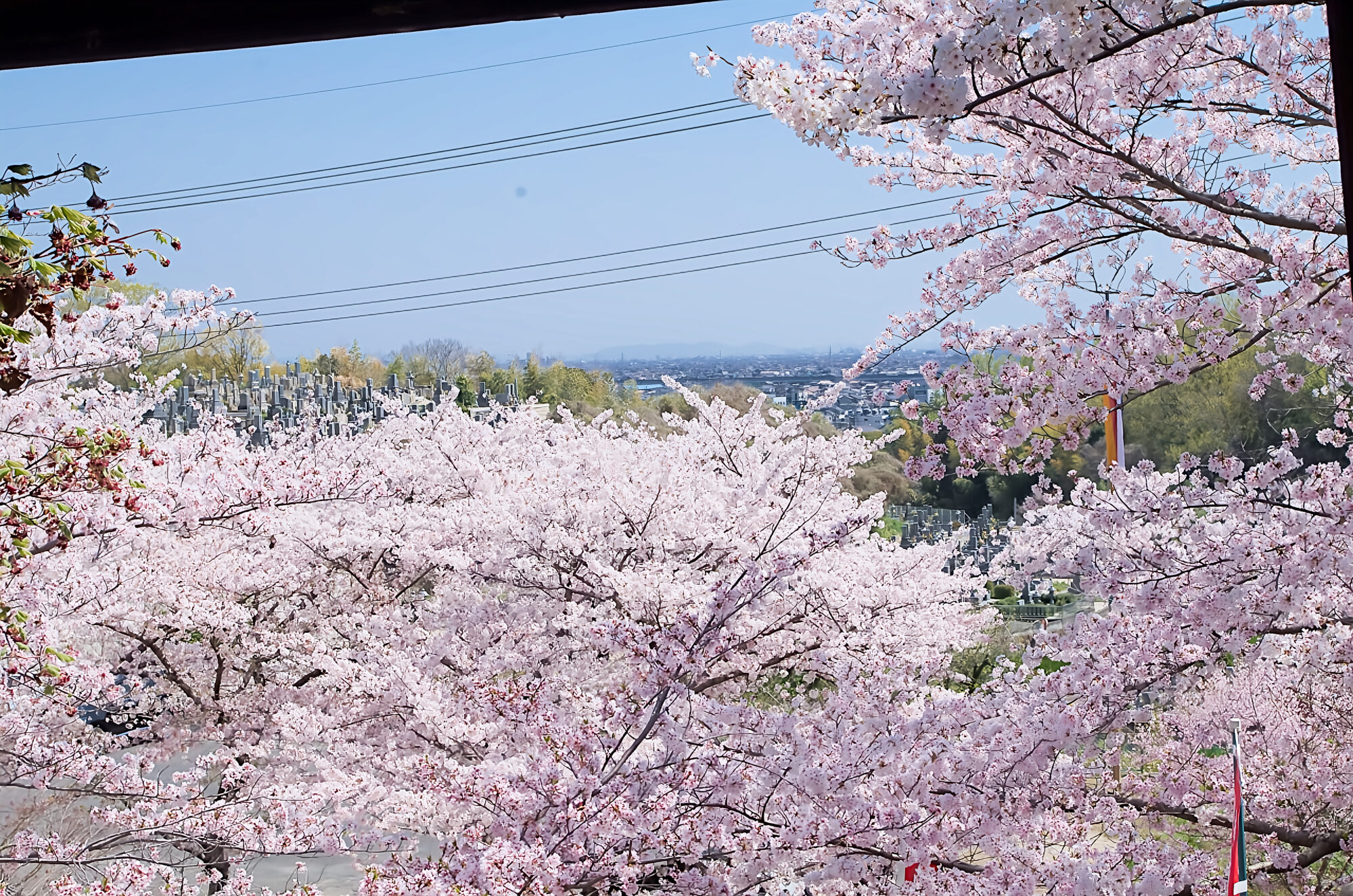
Additionally, the view of the cherry blossoms from the main hall is also a highlight.
You can witness the cherry blossoms in full bloom.
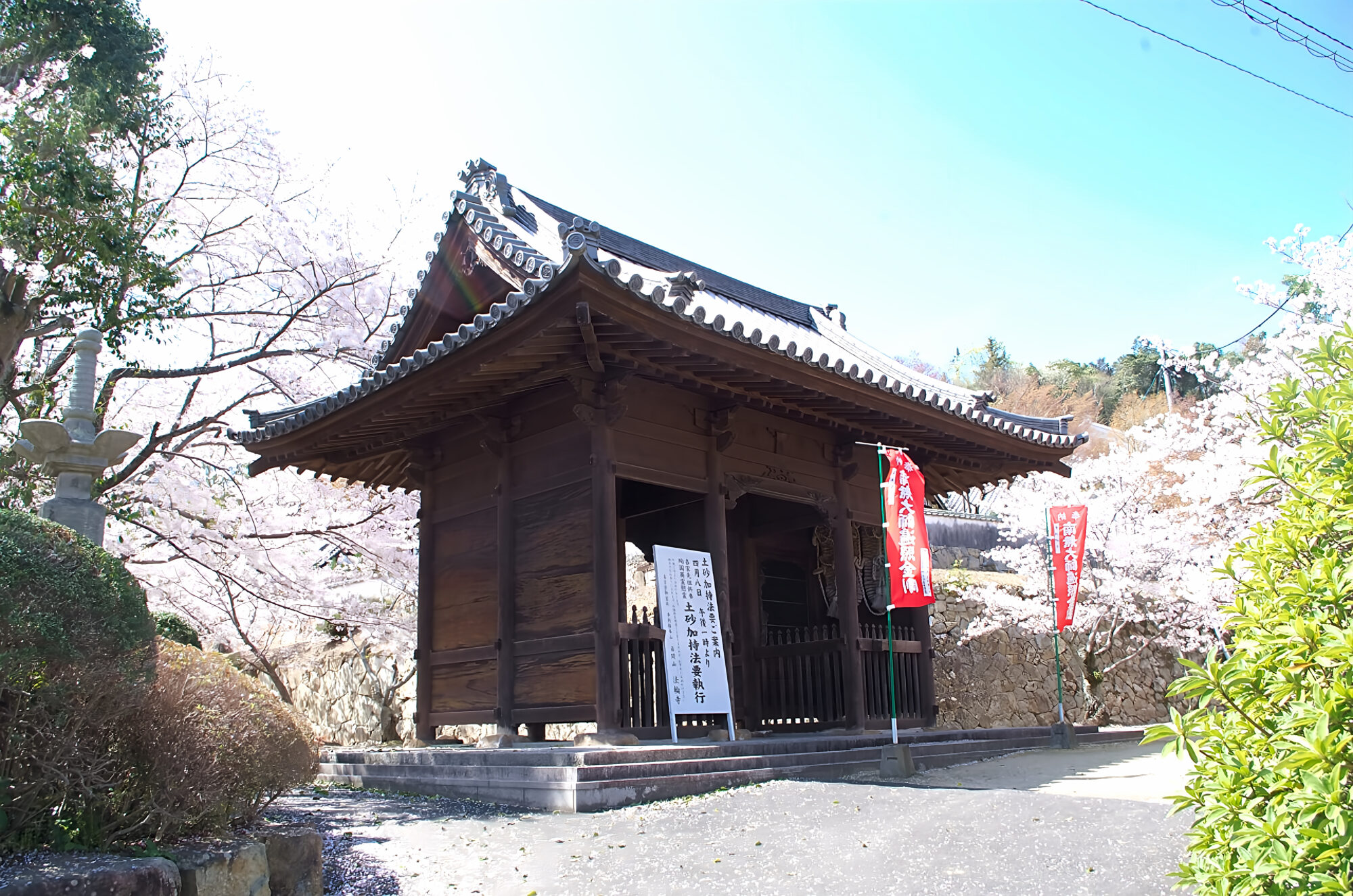
Nioh Gate
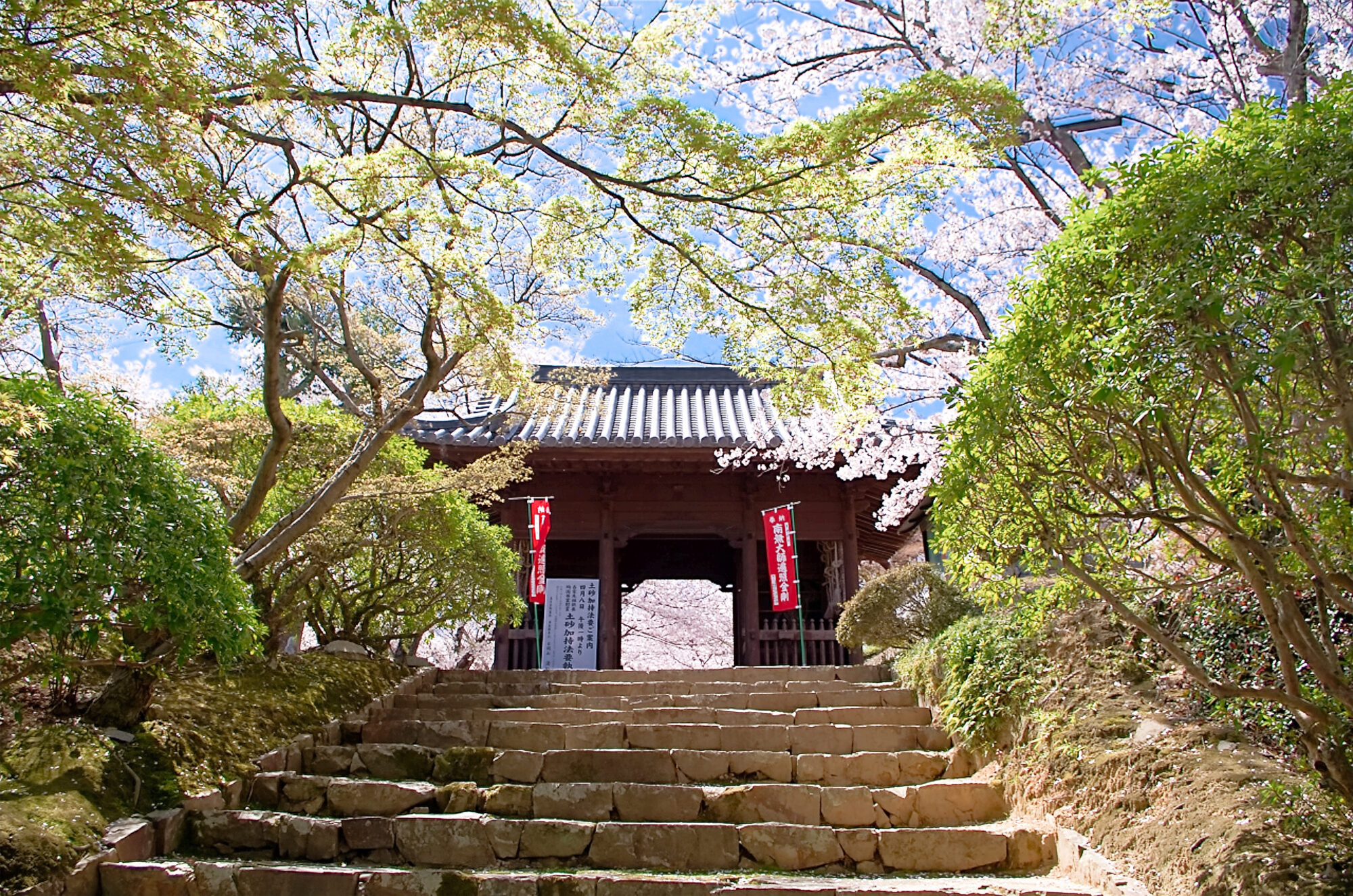
The Nioh Gate is located at the entrance of Horin-ji Temple.
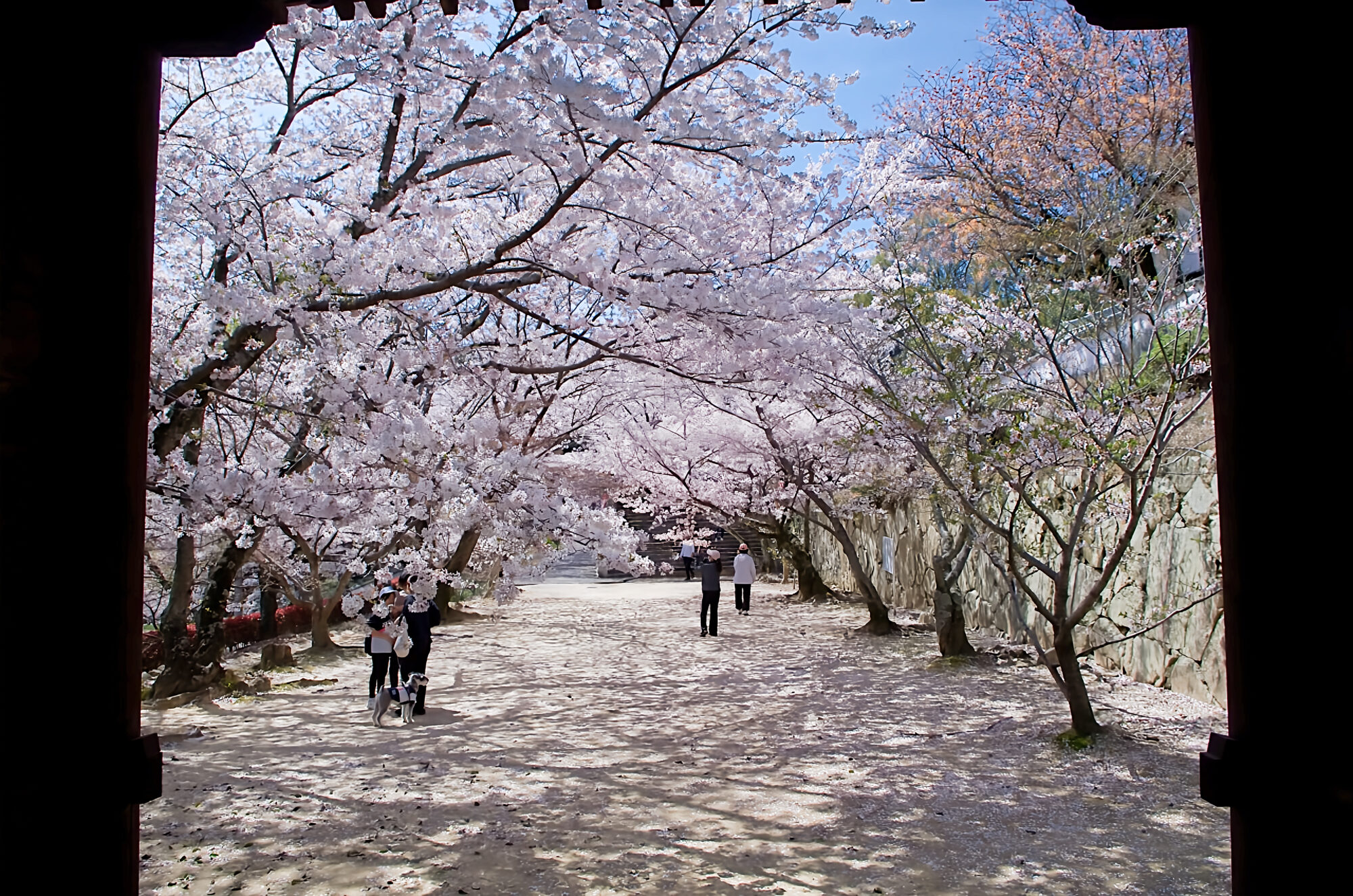
As you pass through the Nio-mon, a tunnel of cherry blossoms welcomes you. You can see many families enjoying the full bloom of the cherry blossoms.
After passing through the Nio-mon, take a moment to look back. This is one of the recommended views by the author.
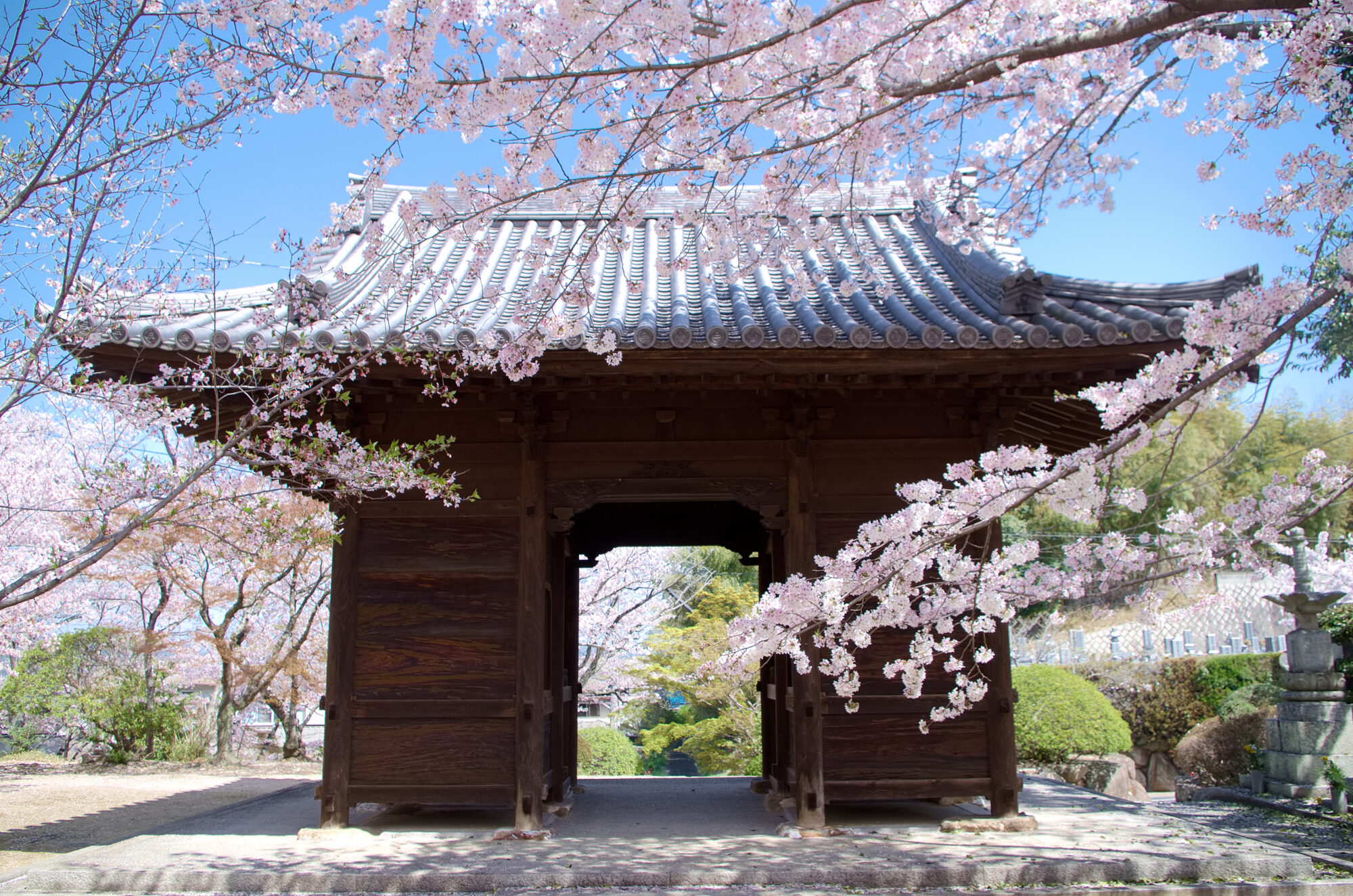
Highlights of the Nio-mon.
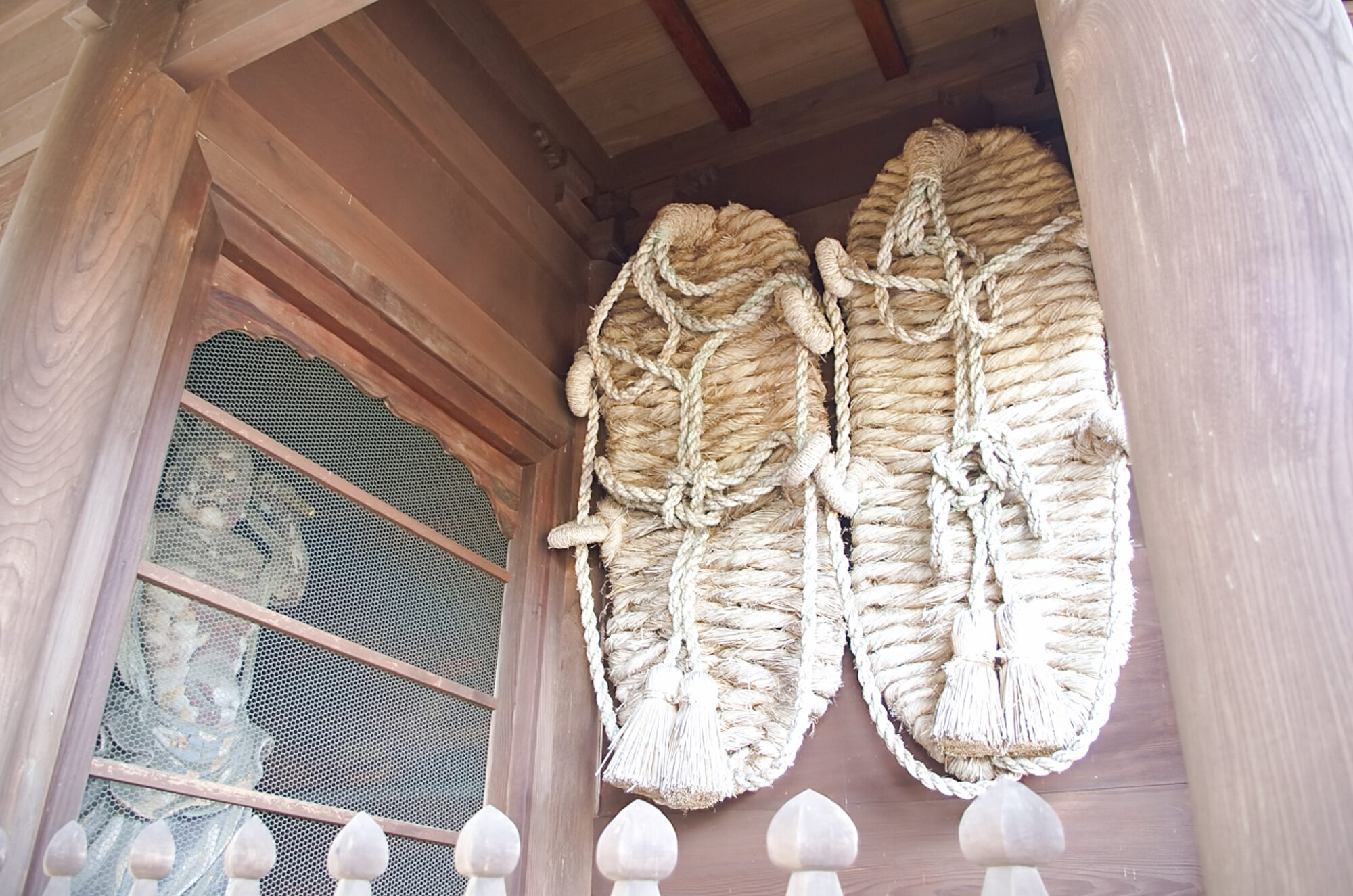
On either side of the Nio-mon stand impressive Nio statues, and your attention is also drawn to the large straw sandals.
You may wonder why such large straw sandals are displayed. It's intriguing.
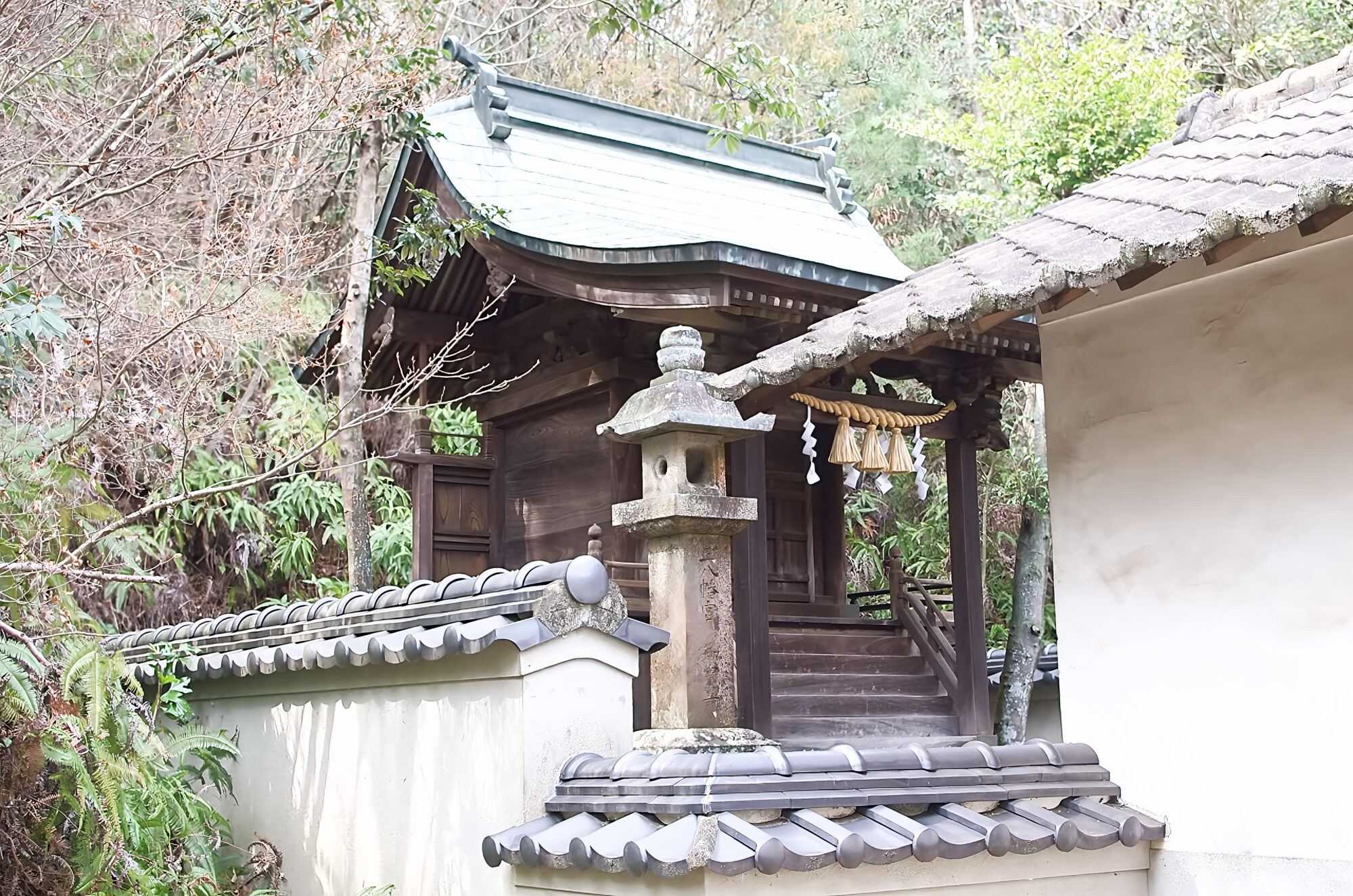
Chinju Hachiman Shrine
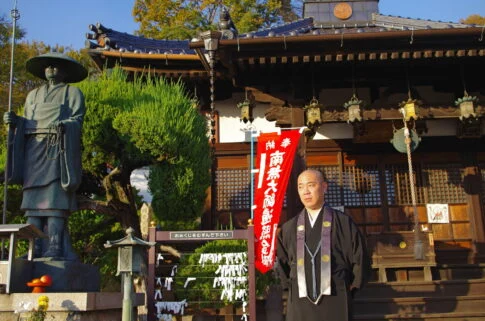
According to the head priest, Horin-ji has been serving as the Betto (chief priest) for the Chinju Hachiman Shrine, overseeing its rituals and ceremonies.
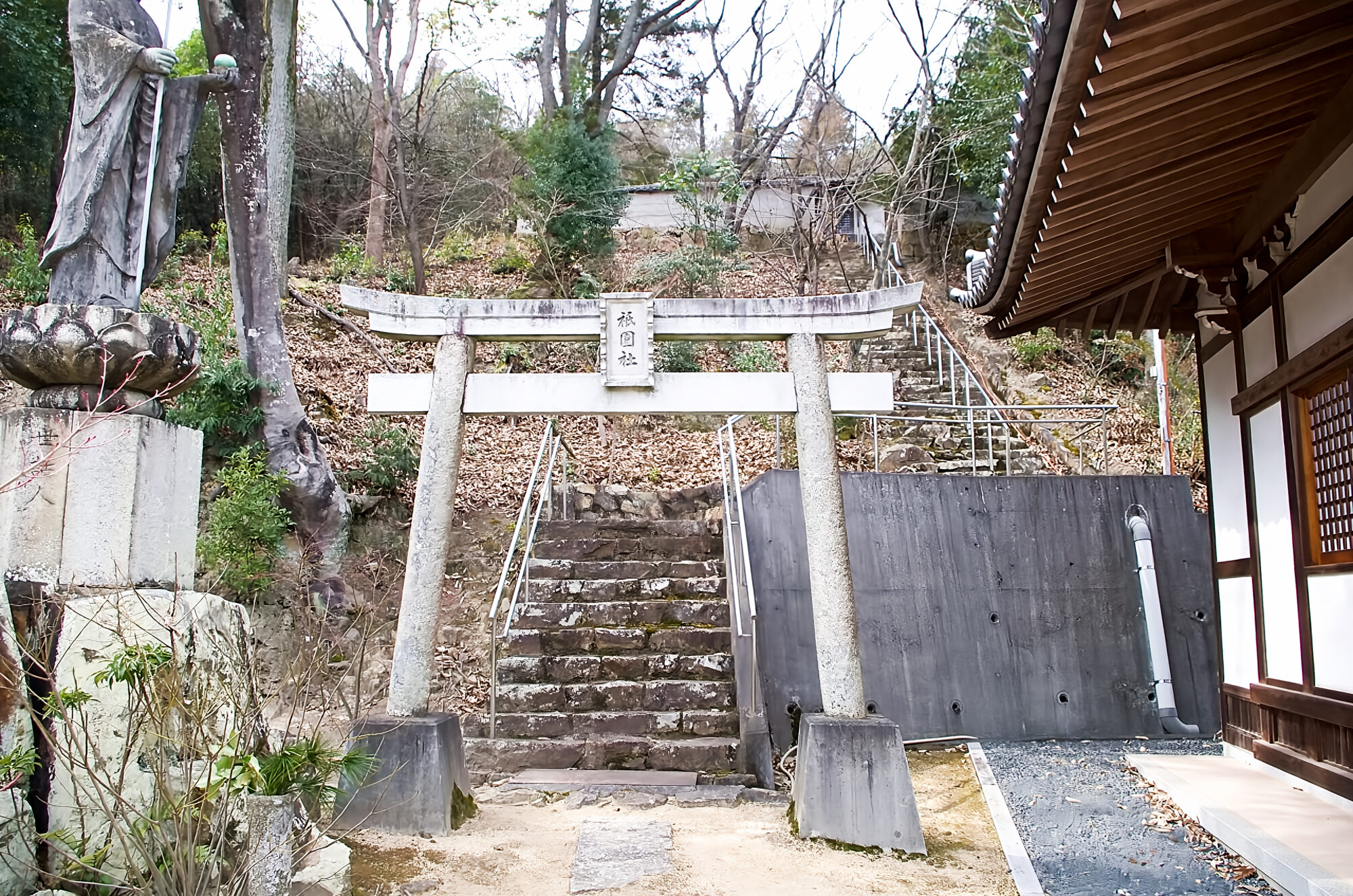
As you ascend the stairs, you will find the worship hall, and beyond that is the main hall.
Bell Tower
The view from the bell tower located to the right of the main hall is also recommended.
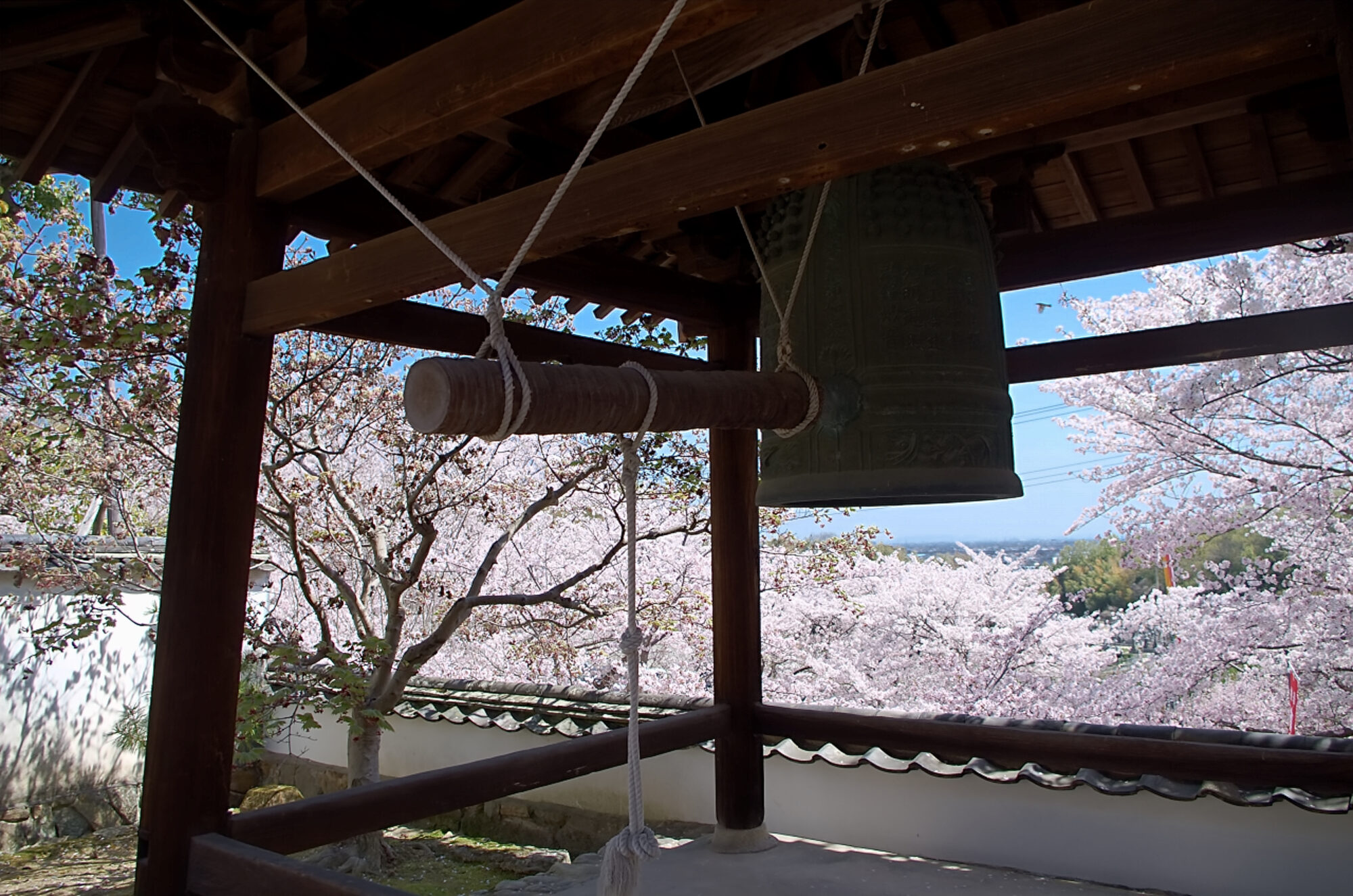
Perhaps due to the clear weather, the contrast between the darkness of the bell tower and the expansive view of cherry blossoms and townscape beyond creates a pleasant sense of openness.
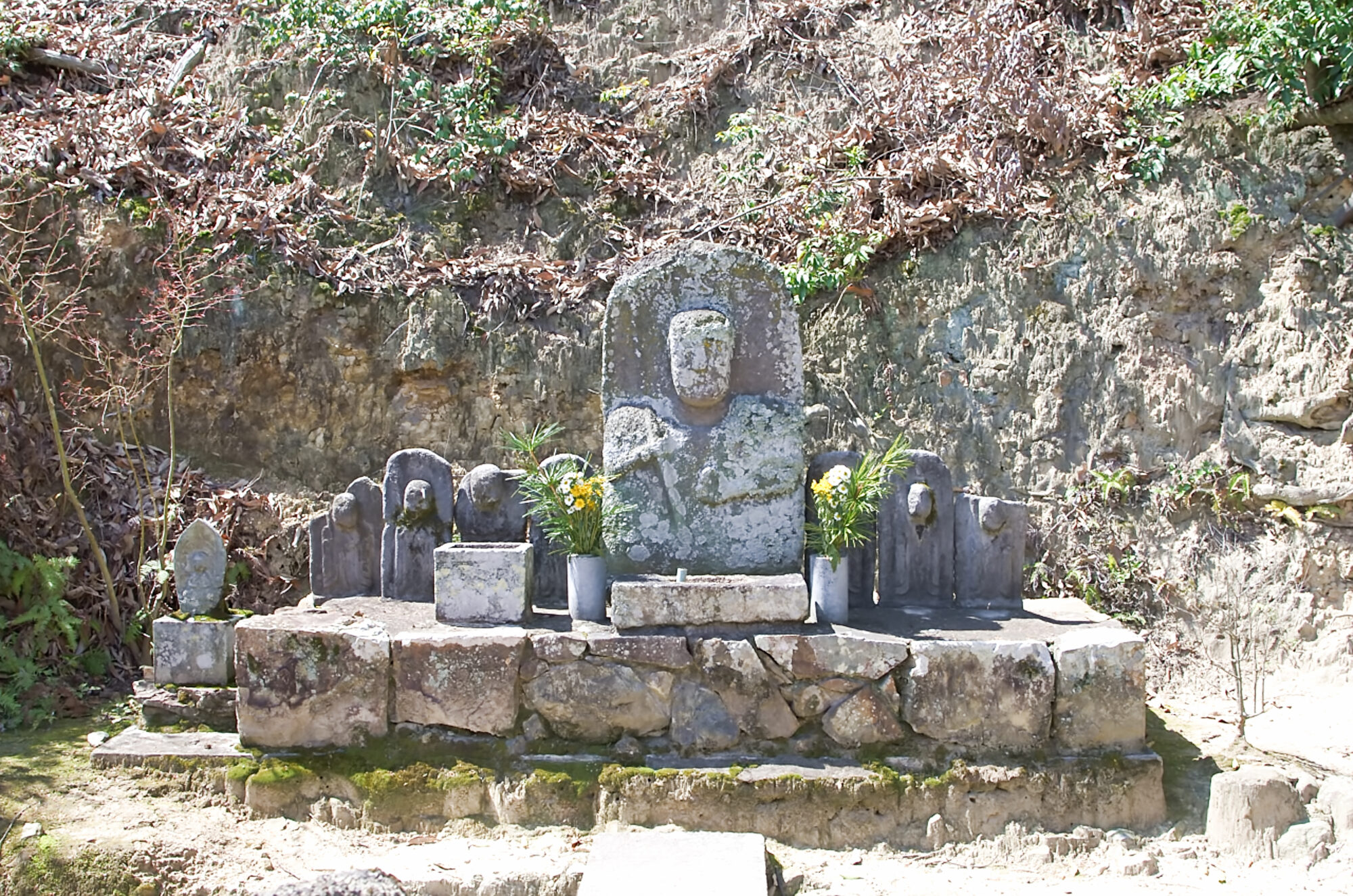
Rokujizo and Nurez no Jizo
To the left of the main hall, there is Rokujizo.
Although it is called Rokujizo, it is interesting to note that there are a total of 9 statues, both large and small.
The largest statue in the center is Nurez no Jizo.
It is also called "Kao Nurez no Jizo" and is worshipped as the Jizo of longevity.
It has an inscription stating it was established in the 10th year of Eiroku (1567).
The facial features are not round but rather close to square, which is characteristic.
Additionally, there is an inscription indicating that Rokujizo was established in October of the 4th year of Tensho (1576).
The period from 1567 to around 1576 was an era when Oda Nobunaga, a famous warlord, was active, giving a sense of history.
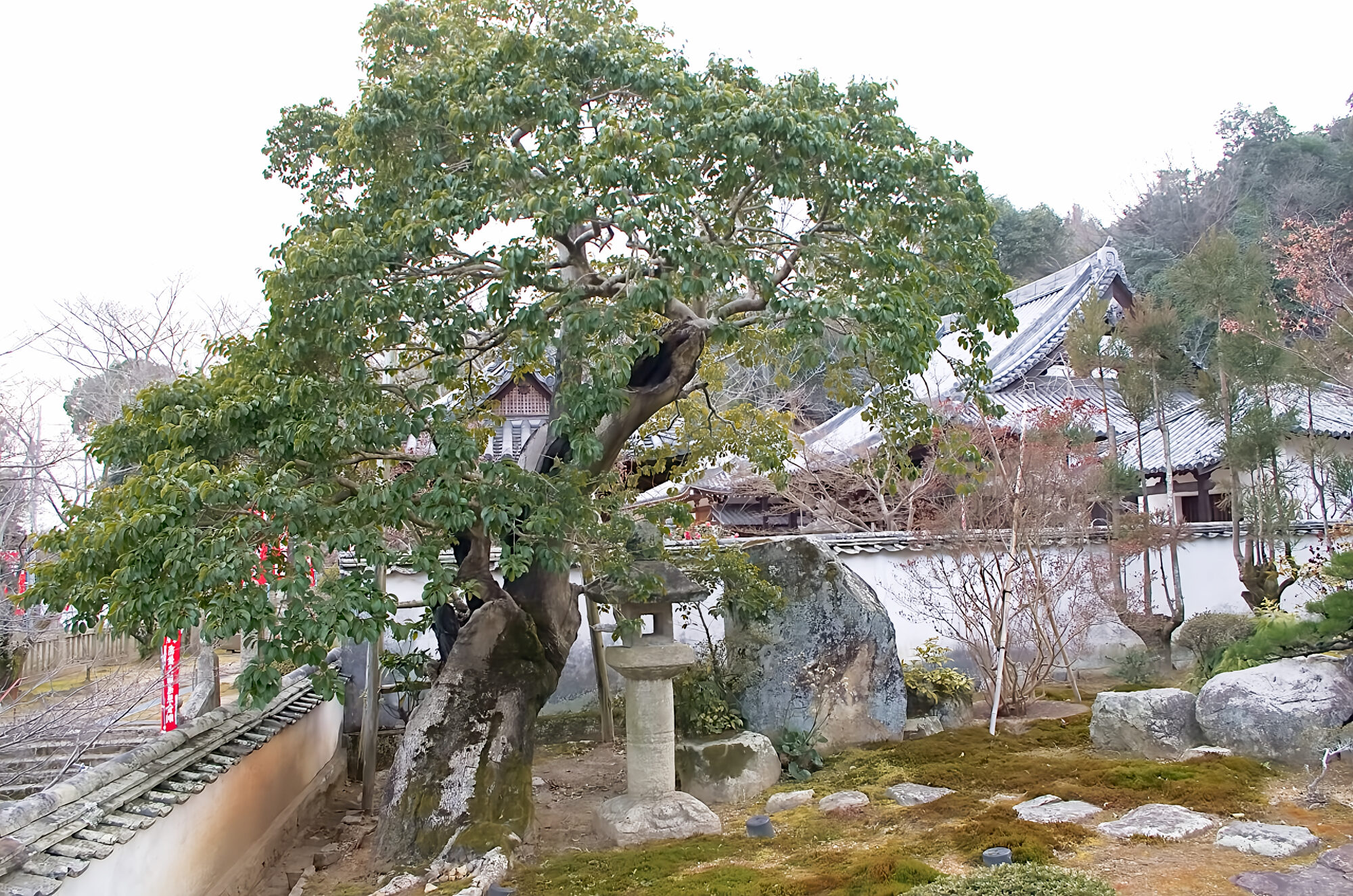
Giant Trees in Kurashiki City (Kurogane-mochi)
In the residential area that is usually inaccessible, the Kurogane-mochi, registered as a giant tree of Kurashiki City, is being carefully preserved.
According to the Kurashiki City website, it is introduced as follows.
For hundreds of years, these giant trees have continued to live within our lives, serving as symbols of the region and supporting the hearts of the people. Investigations have been conducted since the 3rd year of Heisei (1991).
Kurashiki City: Giant Trees and Old Trees of Kurashiki
This time, I was allowed to enter specially and see it up close.
It is growing lush and does not seem out of place, but I feel that its height is about 8 meters.
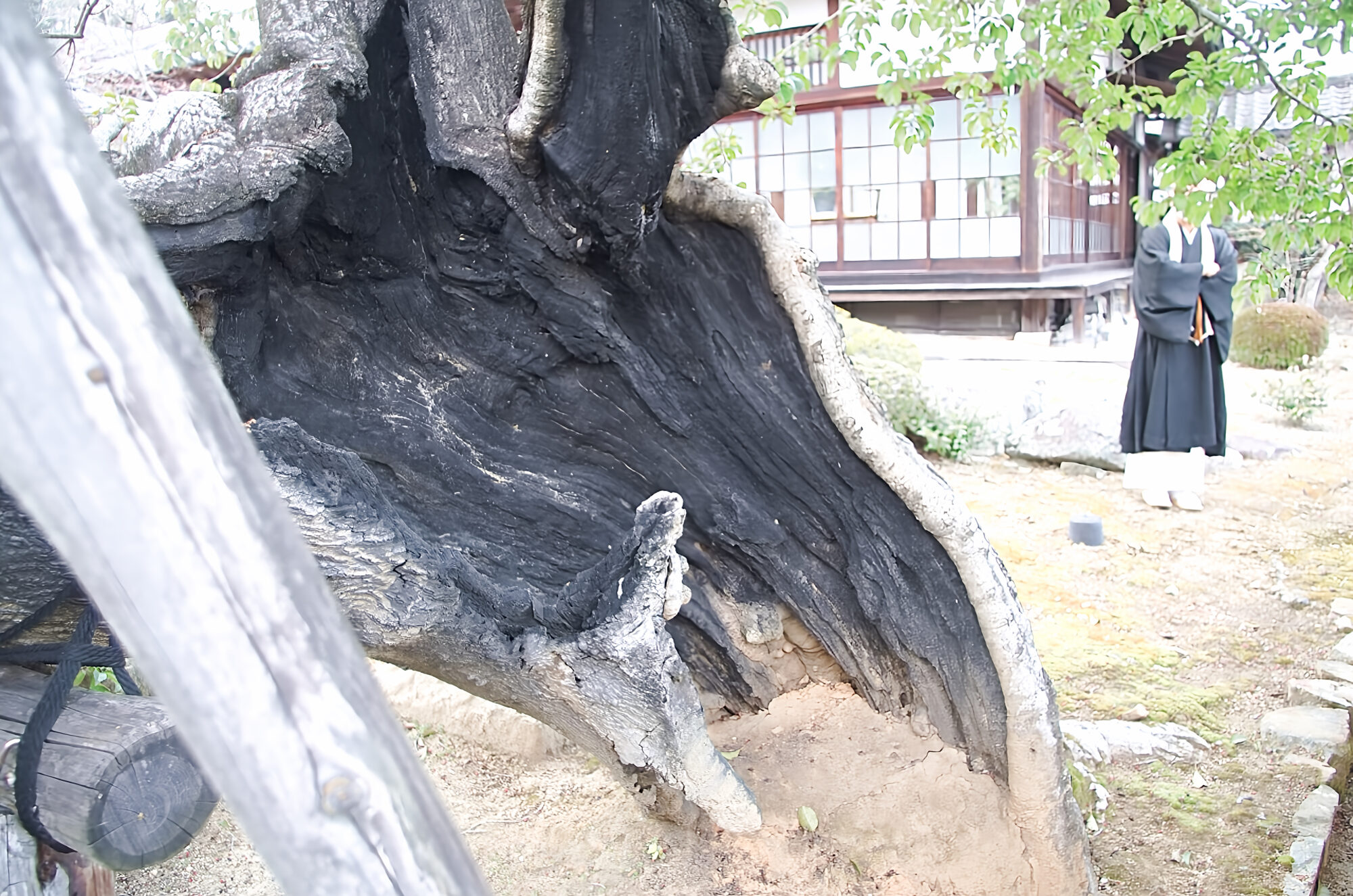
I was able to enter between the Kurogane-mochi and the fence to see it up close.
The thick trunk has almost no interior, giving the impression that it is living only on its bark, which is surprising.
According to the head priest, "The Kurogane-mochi, which was about 8 meters tall, fell a few years ago due to damage. After that, tree treatment and preservation were carried out, allowing it to maintain its current appearance."
I feel the importance and difficulty of preserving these giant trees, which are both historical and living beings.
Genji Headquarters Monument
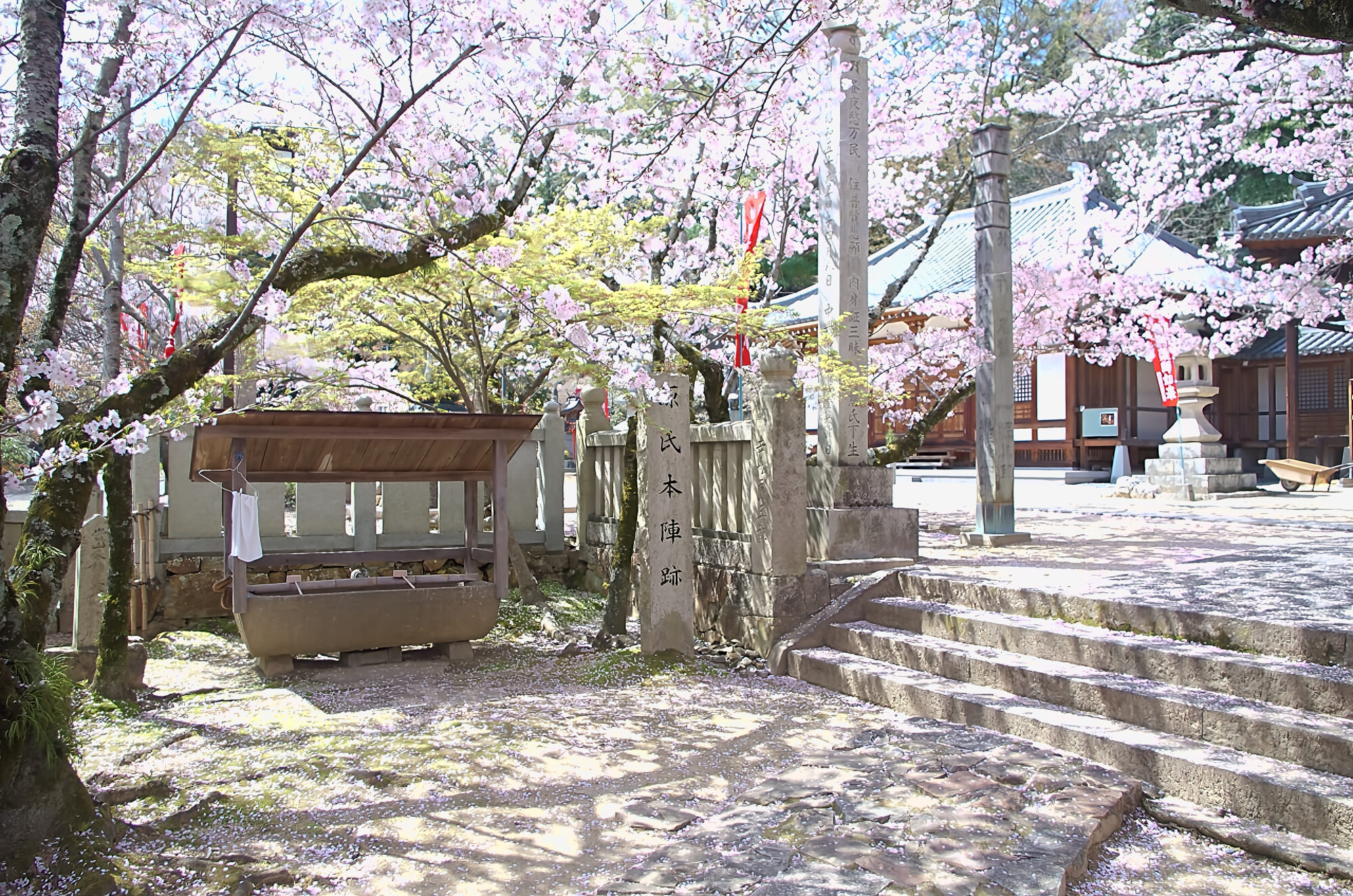
The Genji Headquarters Monument is quietly built beside the temizuya (water purification basin) facing the main hall of Horin-ji Temple.
During the Genpei War, the headquarters of the Genji, led by Mikawa no Kami Minamoto no Noriyori, was established at Horin-ji Temple.
Therefore, it was established by the Fujido Historical Preservation Society in 1984 as a commemoration of the 800th anniversary of the Genpei War.
History of Horin-ji Temple
Horin-ji Temple is a historic temple founded during the Tenpyo Shōhō era (around 754). Here is an introduction to the main history of Horin-ji Temple.
| Period | Event |
|---|---|
| Tenpyo Shōhō era (around 754) | Established by Ono Harumichi under the imperial decree of Emperor Kōken. It flourished as a major temple in the southern part of Bitchu, with one mountain, five halls, and twelve sub-temples. |
| December, 3rd year of Kyōroku (1530) | Fire broke out from the Kannon Hall, completely burning down the hall. |
| March, 15th year of Genroku (1702) | Another fire occurred. The local lord, Togawa Hinata no Kami Yasuhiro, called upon the monk Ryugo (a disciple of the temple's custodian, Ryuko) to restore it. |
| 1st year of Hōei (1704) ※There is also a theory that it was completed in the 3rd year of Hōei (1706) | Completion due to restoration. |
| 16th year of Meiji (1883) | Merged with Joko-in and continues to the present day. ※In the 5th year of Meiji, the education system was established, and Joko-in was used as an elementary school. |
Conclusion
I introduced Horin-ji Temple, which has a history dating back to the Tenpyo Shōhō era (around 754) and is a famous cherry blossom spot.
Horin-ji Temple is located on Mukoyama in the Hashima area, so visiting by car is recommended rather than walking up.
Please enjoy the cherry blossom tunnel and the cherry trees on the grounds quietly during the season when the cherry blossoms are in full bloom as you pass through the Nio Gate.
Data of Horin-ji Temple
| Name | Horin-ji Temple |
|---|---|
| Alternate Name | Hiruma-yama Yakushi-in |
| Sect | Shingon Sect |
| Location | 468 Hashima, Kurashiki City |
| Contact | 086-422-5705 |
| Parking | Available There is a parking lot on the east side of Horin-ji Temple. * Please do not park in front of the main hall or on the south side. |
| Principal Deity | Yakushi Nyorai |
| Temple Seal (Offering Fee) | None |