With a domed shell and a sharp tail, the horseshoe crab is one of the creatures that represents Kasaoka City, Okayama Prefecture.
Horseshoe crabs need clean water and tidal flats, so their numbers have fallen rapidly in today’s heavily developed world, and they have been designated an endangered species.
We don’t want horseshoe crabs to disappear. We want to keep moving forward together with them.
People who love horseshoe crabs have taken action to increase their numbers.
Anyone can take part, as long as they have a “heart that loves horseshoe crabs.”
Here is a report on the release of young horseshoe crabs into tidal flats, a rare event even by national standards.
The information presented was current when this article was published in August 2024. Please note that it may differ from current information.
What Are Horseshoe Crabs?
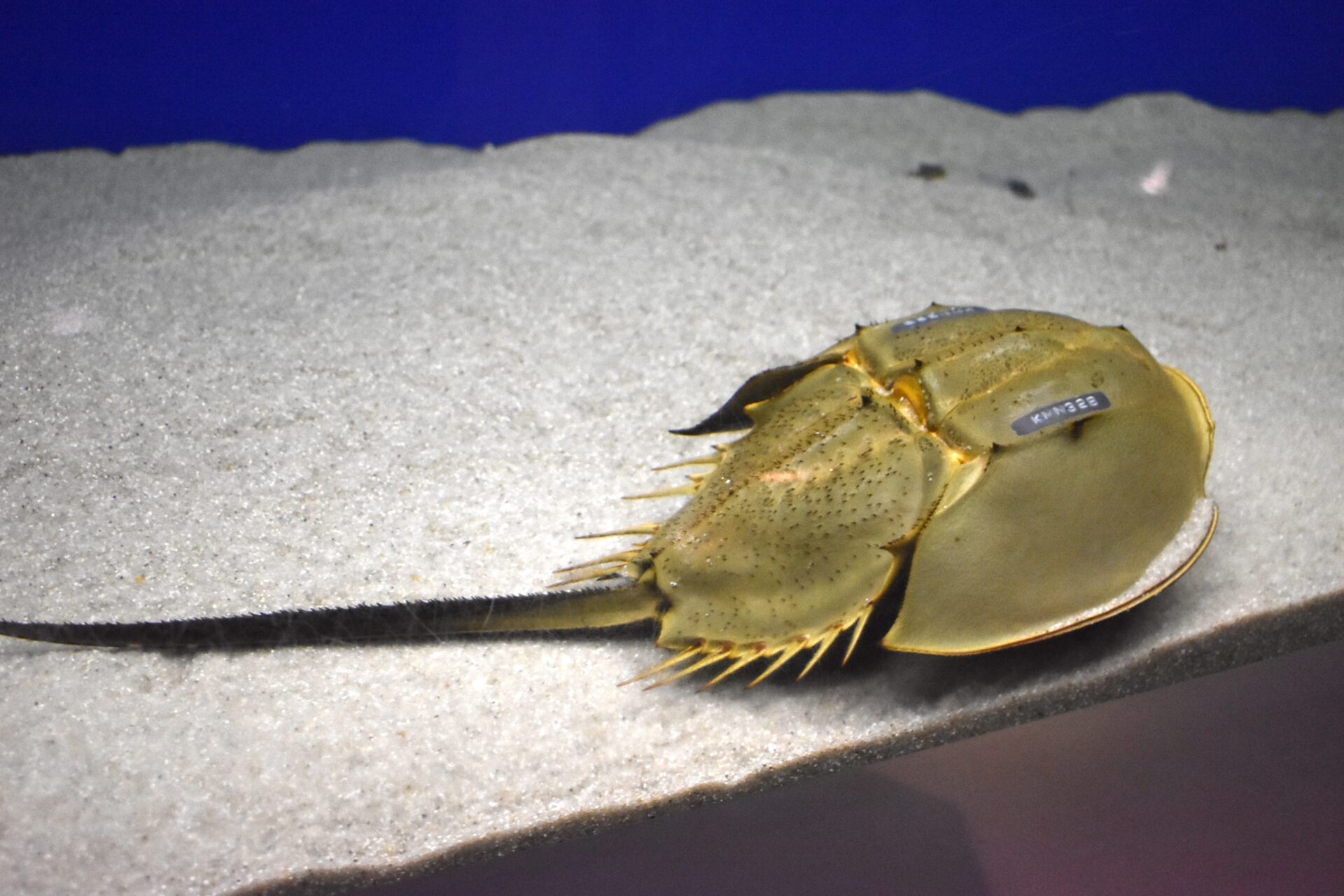
Horseshoe crabs are one of the creatures known as “living fossils,” having changed very little in appearance since the age of the dinosaurs.
They live on tidal flats and feed on polychaete worms (marine relatives of earthworms) and shellfish.
Kasaoka City was once said to have had 100,000 horseshoe crabs. Land reclamation for development and water pollution disrupted the ecosystem of the tidal flats where they breed. They were also disliked by fishermen because their sharp claws tore fishing nets. As a result, their numbers began to fall rapidly around 1985.
Today, horseshoe crabs are listed as Category I Endangered Species on the Red Lists of Japan’s Ministry of the Environment and Okayama Prefecture, meaning they are considered to be at high risk of extinction in the near future.
What Is the Release of Young Horseshoe Crabs?
With horseshoe crab numbers continuing to decline, Kasaoka City took action. In 1990, the Kasaoka Municipal Horseshoe Crab Museum was established to protect and breed horseshoe crabs. It is the only museum in the world dedicated to horseshoe crabs.
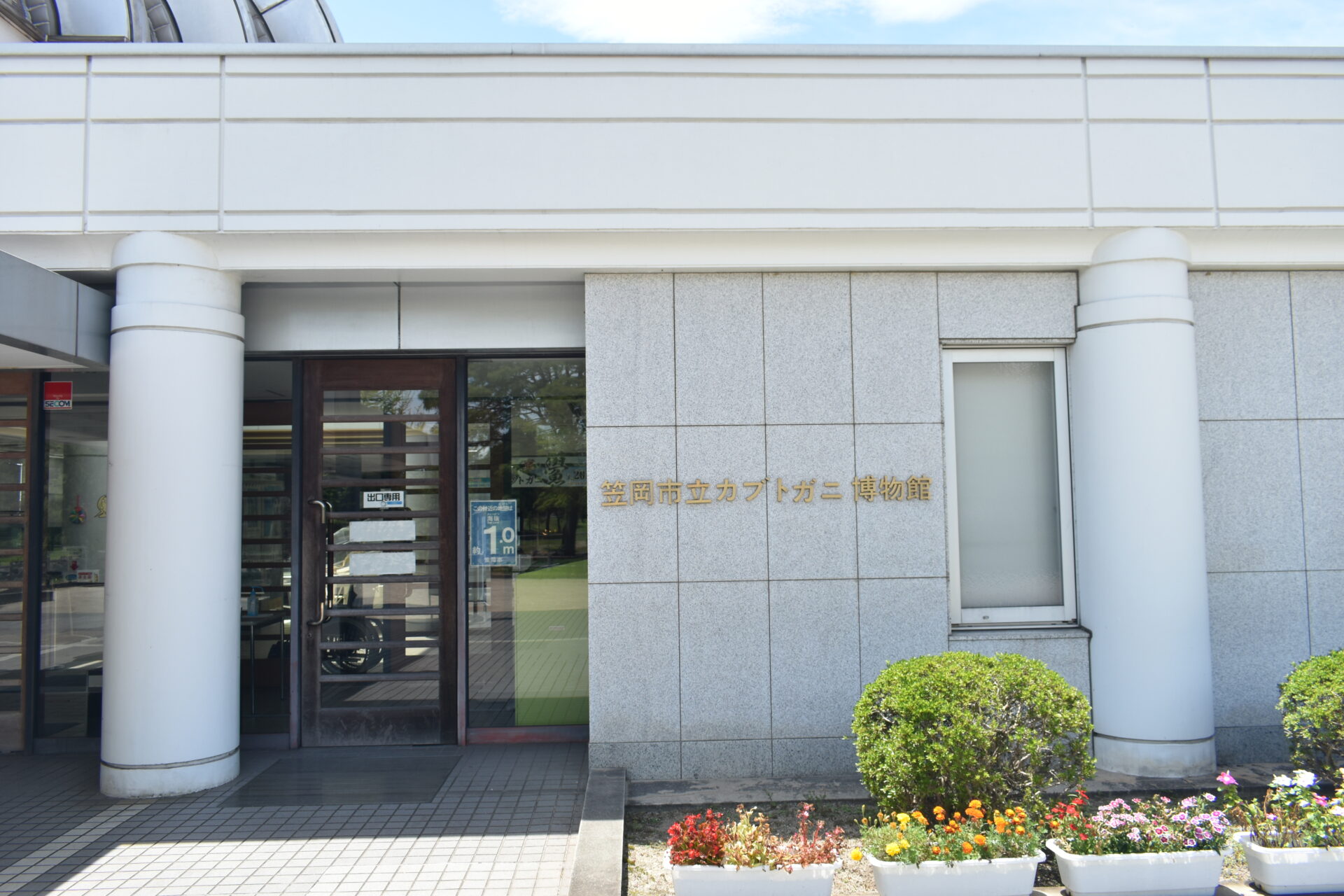
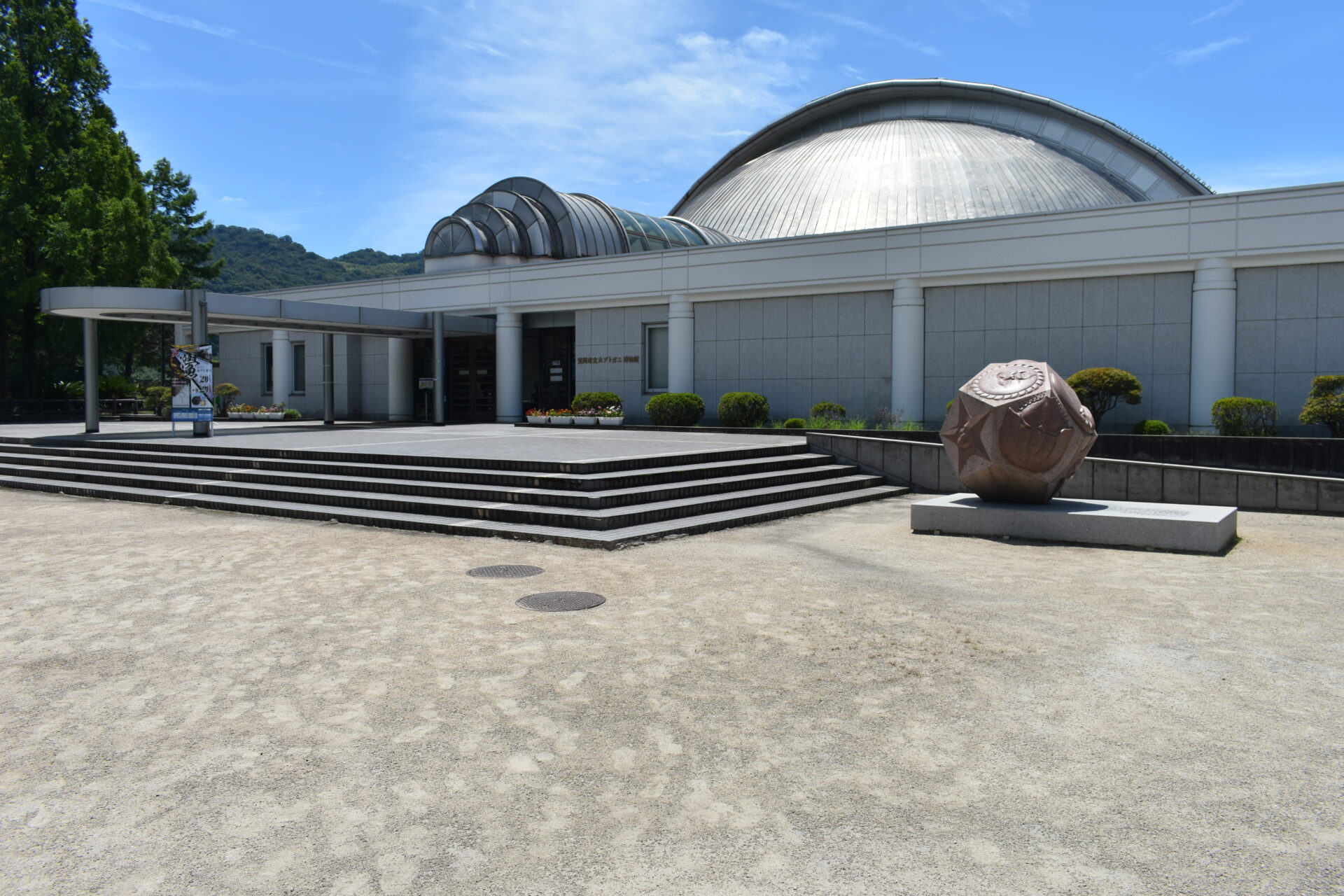
In July 1995, the museum began raising horseshoe crabs in captivity to increase their numbers. It also began hatching eggs and releasing the young crabs the following July.
It takes a year from spawning to release. The museum wants local people to learn about horseshoe crabs, a symbol of Kasaoka City. It also wants to protect the beautiful tidal flats that nurture them. The young crabs are released to raise awareness of horseshoe crabs.
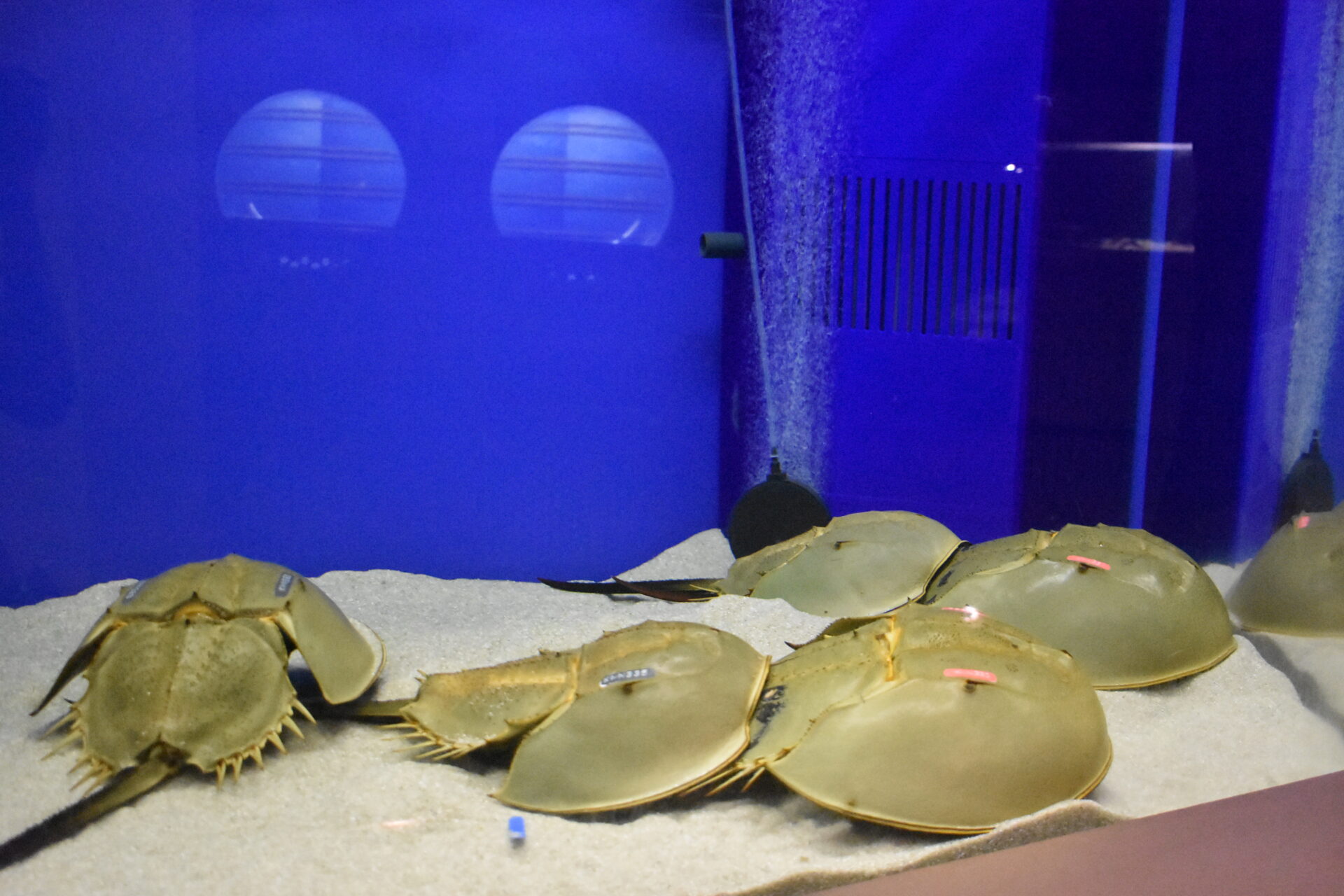
In 2022, the museum was unable to secure adult horseshoe crabs to breed, so no eggs were laid and the release planned for 2023 could not take place.
In 2024, the release of young horseshoe crabs took place for the first time in two years.
When applications opened, so many people applied that the 100 available places were filled in just five days.
It seems many people had been eagerly awaiting the release of young horseshoe crabs. Some even came all the way from Tokyo. This shows the attention the event had attracted as a rare one nationwide.
Participants needed to bring rubber boots, clothes they didn’t mind getting dirty, and, above all, a heart that loves horseshoe crabs.
People who love horseshoe crabs came together in Kasaoka City, Okayama Prefecture, from all over Japan.
Research by the Kasaoka Municipal Horseshoe Crab Museum has shown that horseshoe crabs raised on tidal flats differ in size and shape from those raised in captivity.
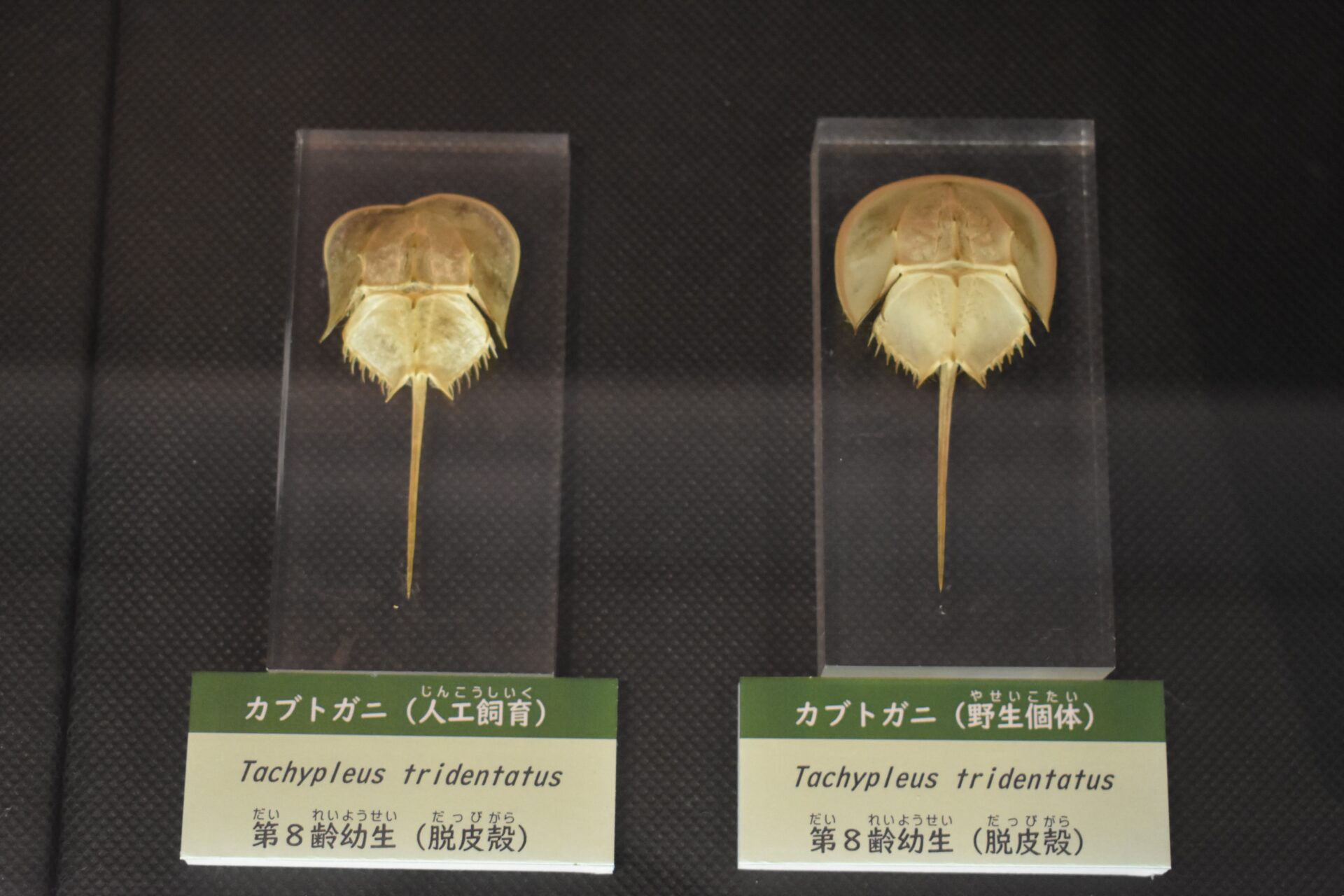
Much about the conditions needed to raise horseshoe crabs remains unknown. To increase the wild population, the Kasaoka Municipal Horseshoe Crab Museum avoids keeping them in captivity for long periods and releases them while they are still young.
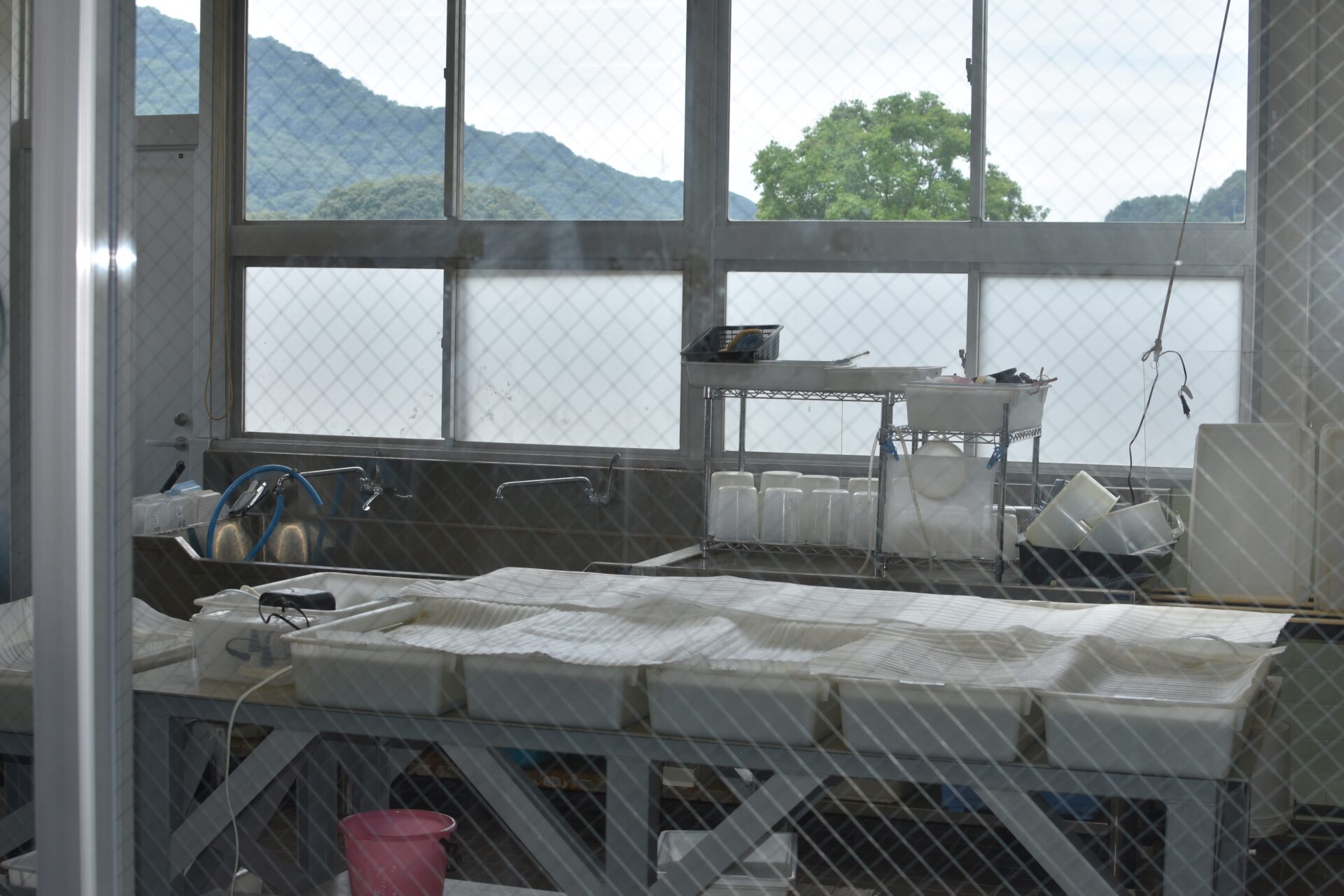
The horseshoe crabs released in 2024 hatched in September 2023. These baby horseshoe crabs have been carefully raised in the breeding room for about 10 months.
The release of young horseshoe crabs is an effort to increase their numbers and ensure they have a future.
How Young Horseshoe Crabs Are Released
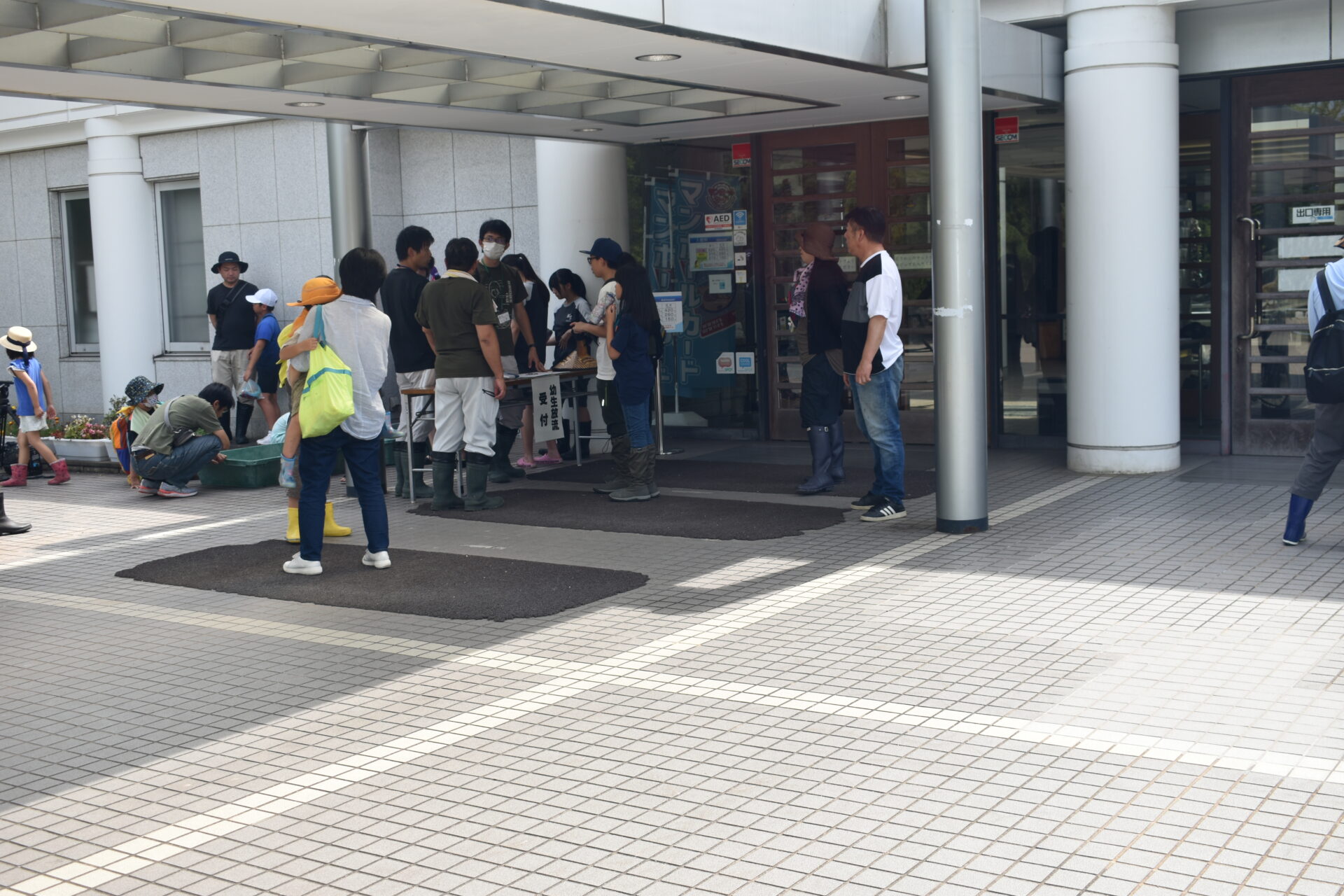
Participants first check in outside the Kasaoka Municipal Horseshoe Crab Museum. Behind the check-in desk are rows of buckets containing baby horseshoe crabs. The children’s eyes lit up at the sight of the tiny crabs.
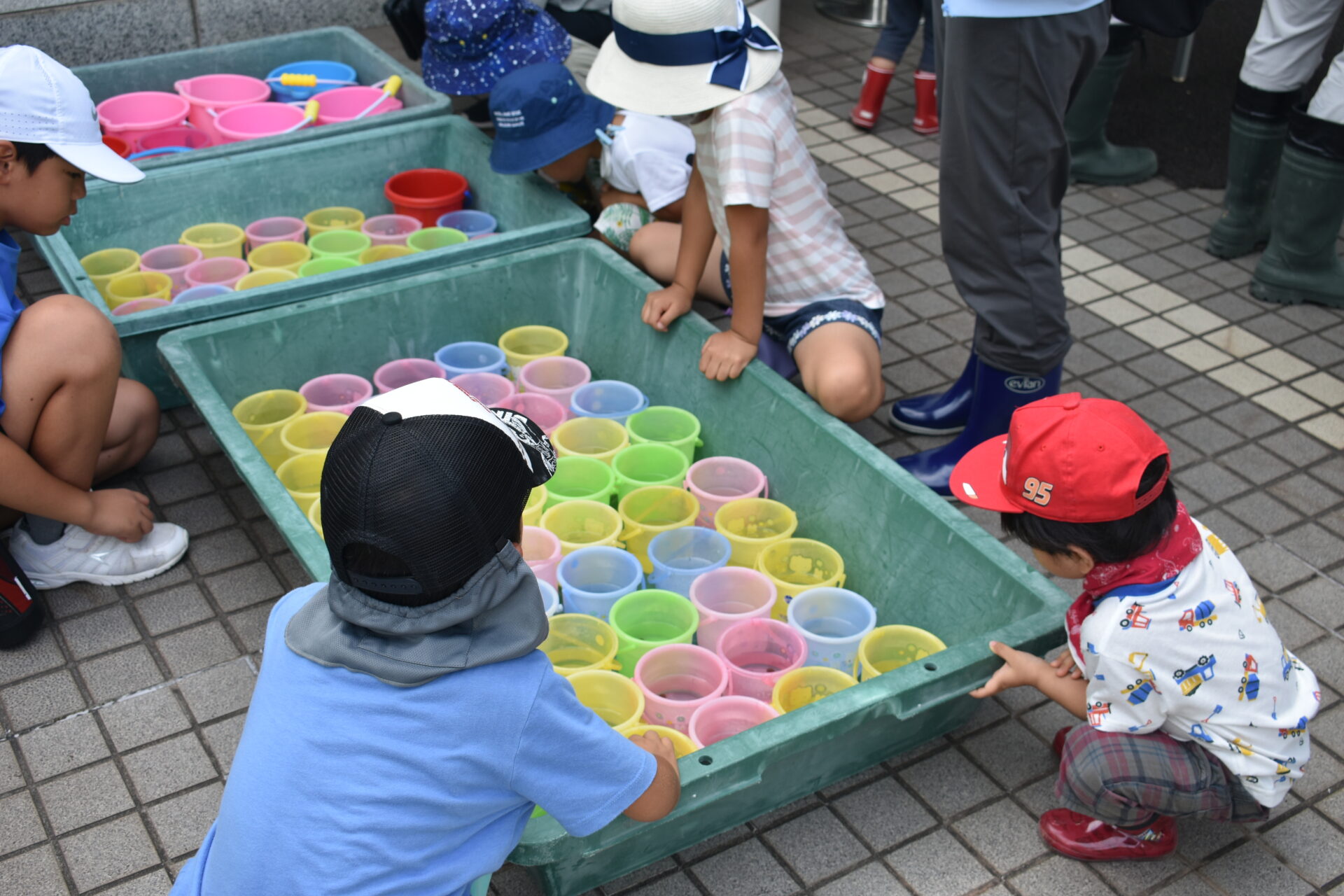
Cheers of “So tiny!” and “So cute!” rang out as the crabs drifted through the water. Touching them is strictly prohibited, as it could weaken them.
Each bucket contains three horseshoe crabs, each about one centimeter long.
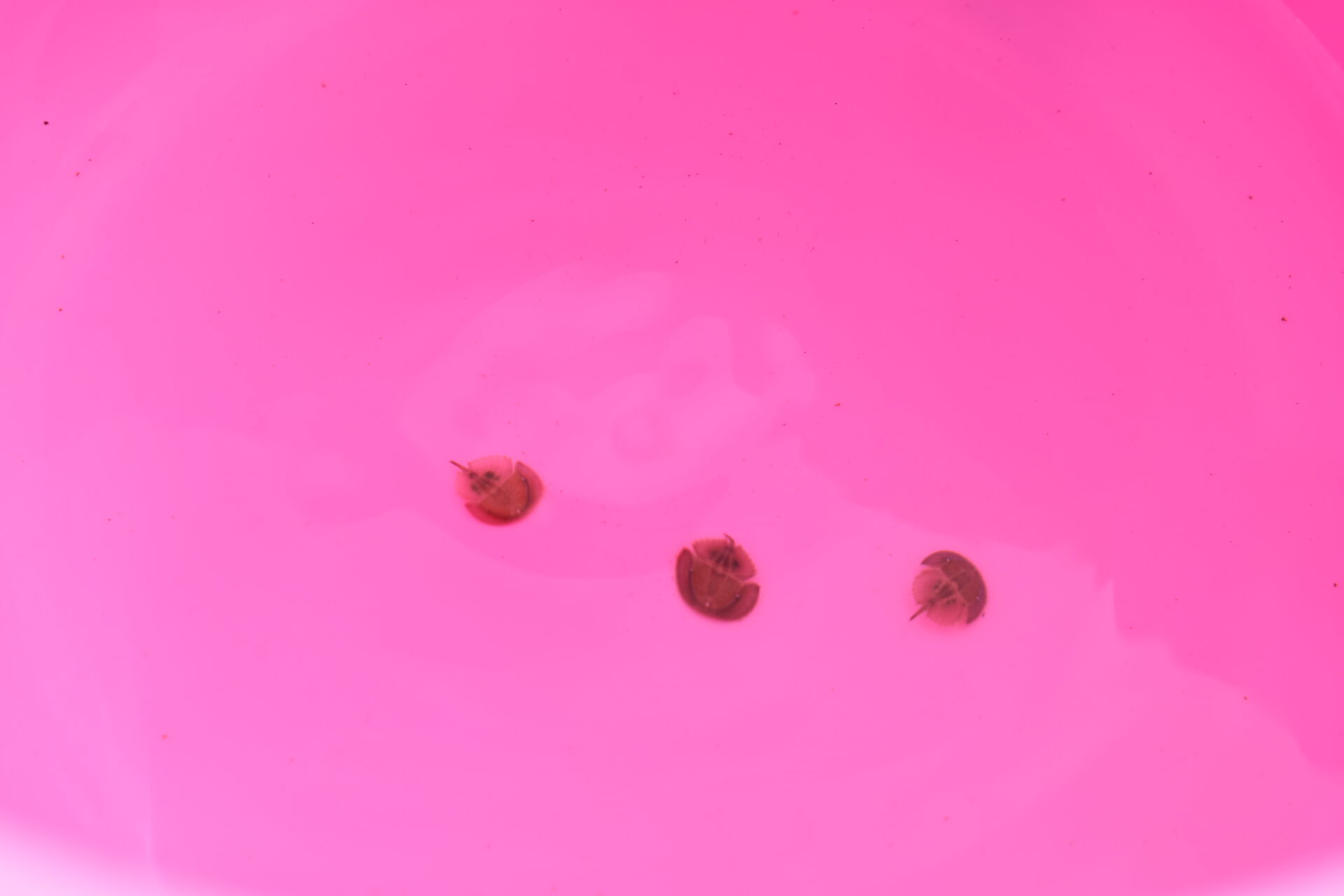
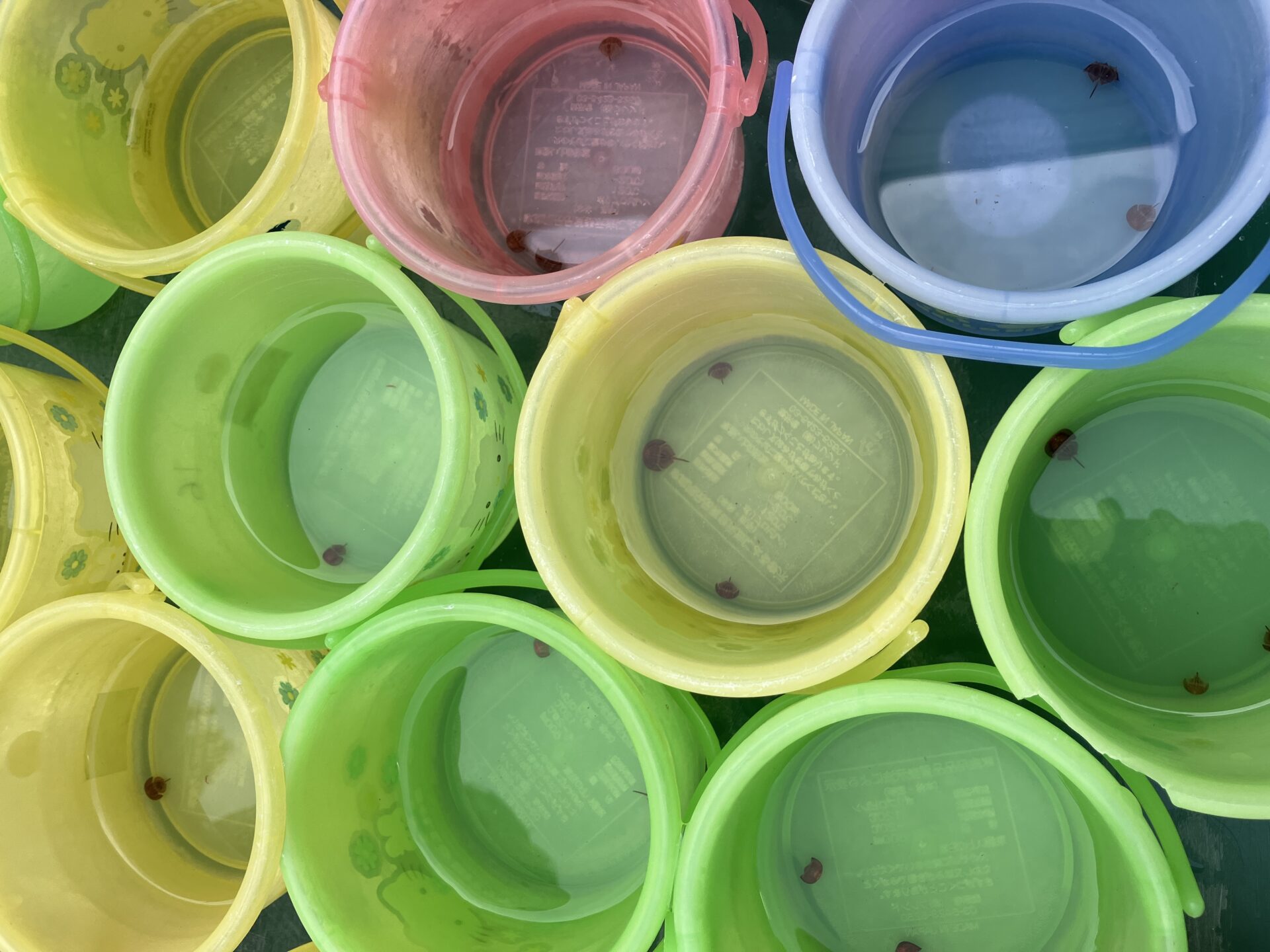
These are second-instar horseshoe crabs, which have molted once since hatching, and third-instar crabs, which have molted twice. Horseshoe crabs grow to about 1.3 times their size with each molt. Even crabs born in the same month can differ in size depending on how many times they have molted.
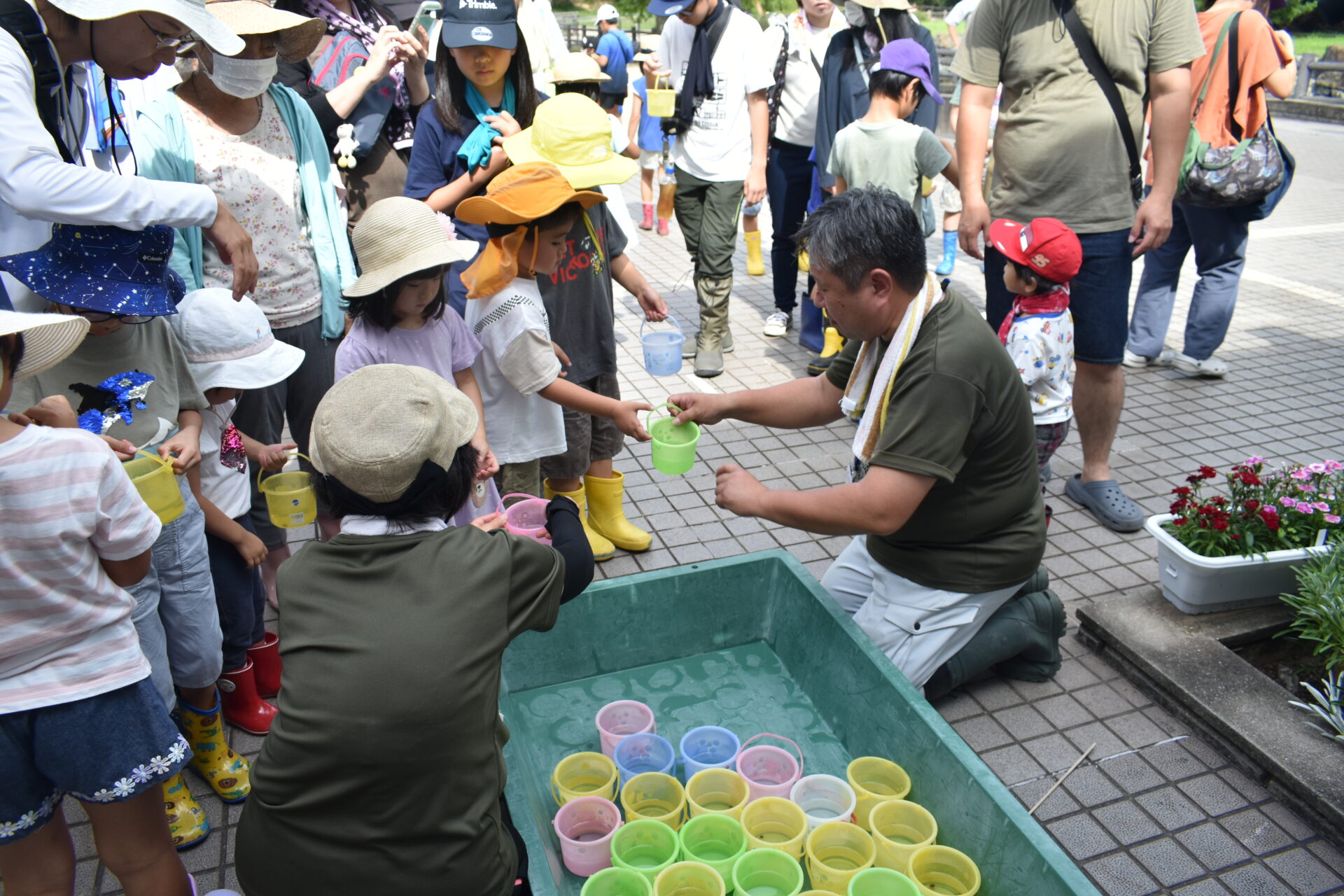
Participants received the buckets from museum staff and gazed intently at the horseshoe crabs. They took care not to jostle the buckets, carrying them carefully so as not to weaken the crabs.
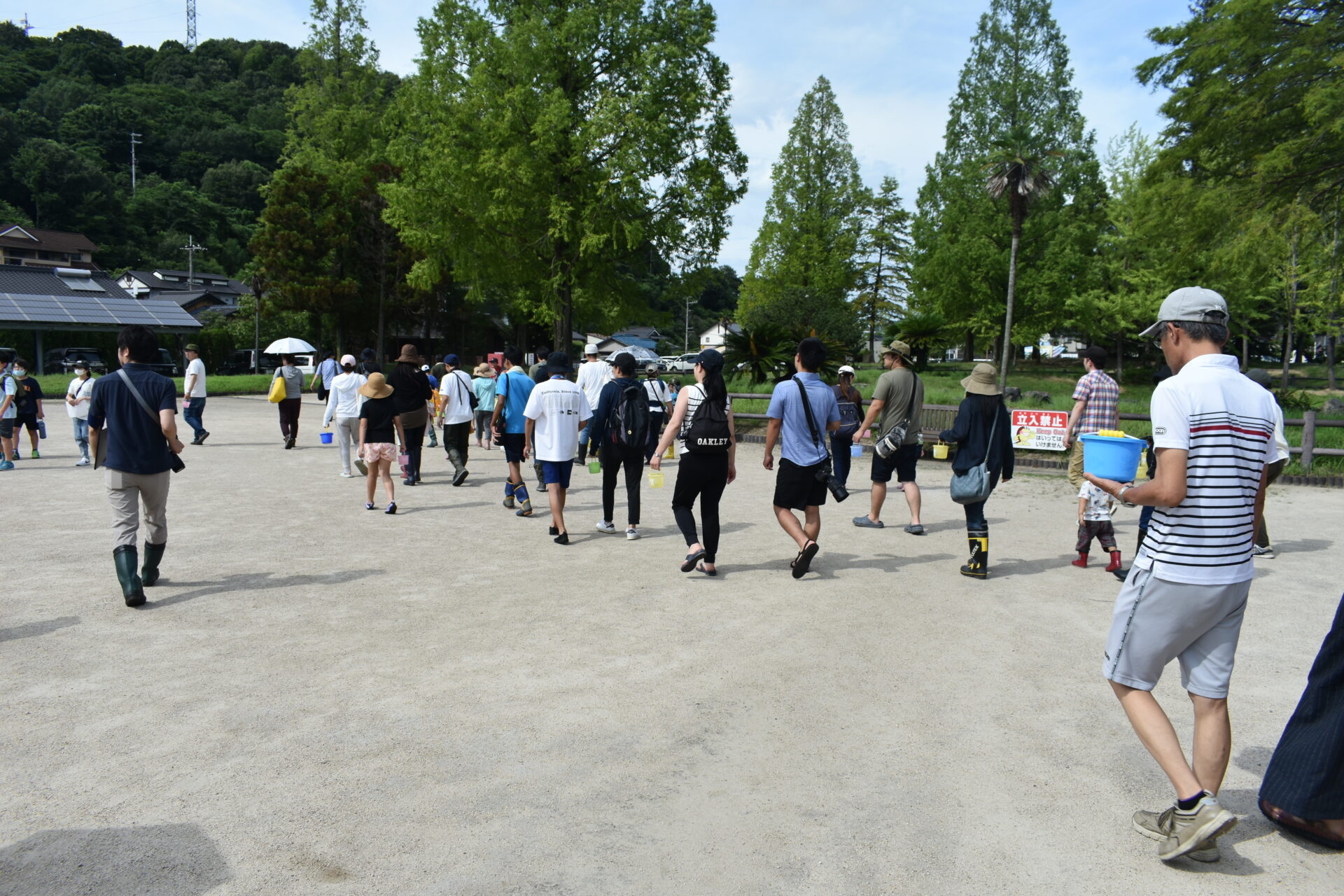
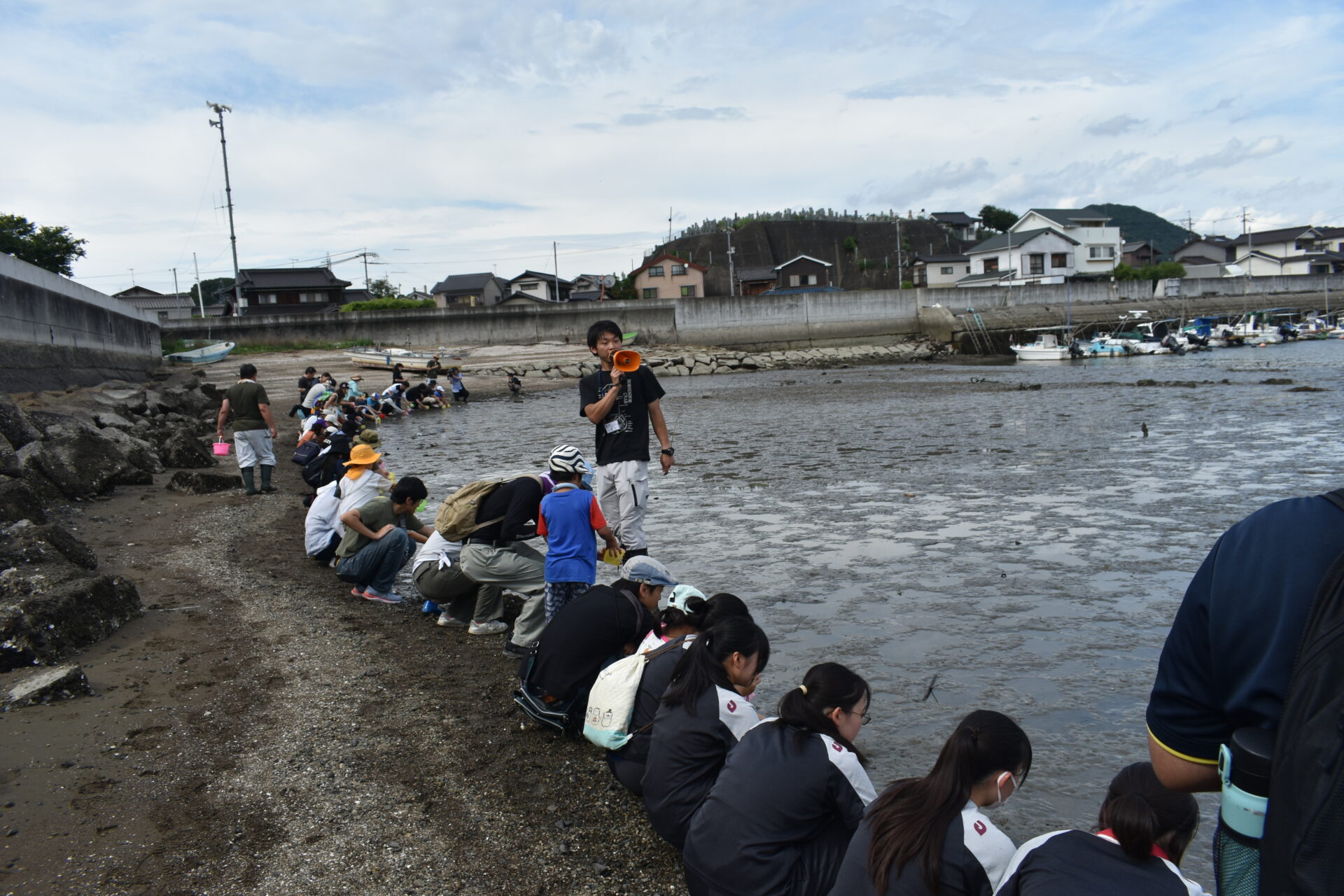
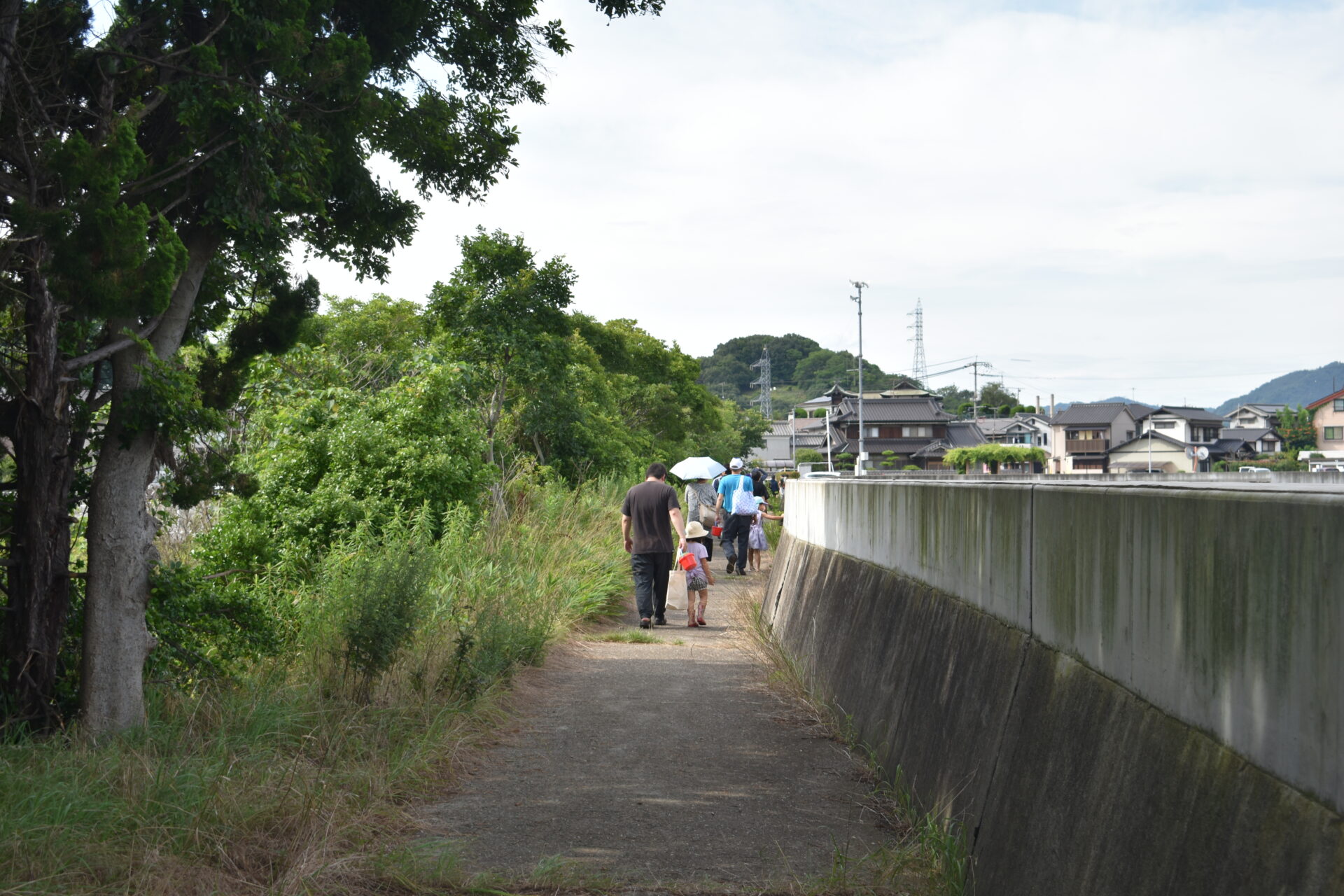
They walked slowly for five minutes from the museum to a nearby tidal flat, taking care not to slosh the buckets.
After passing alongside the woods and descending a flight of stairs, they arrived at the tidal flat.
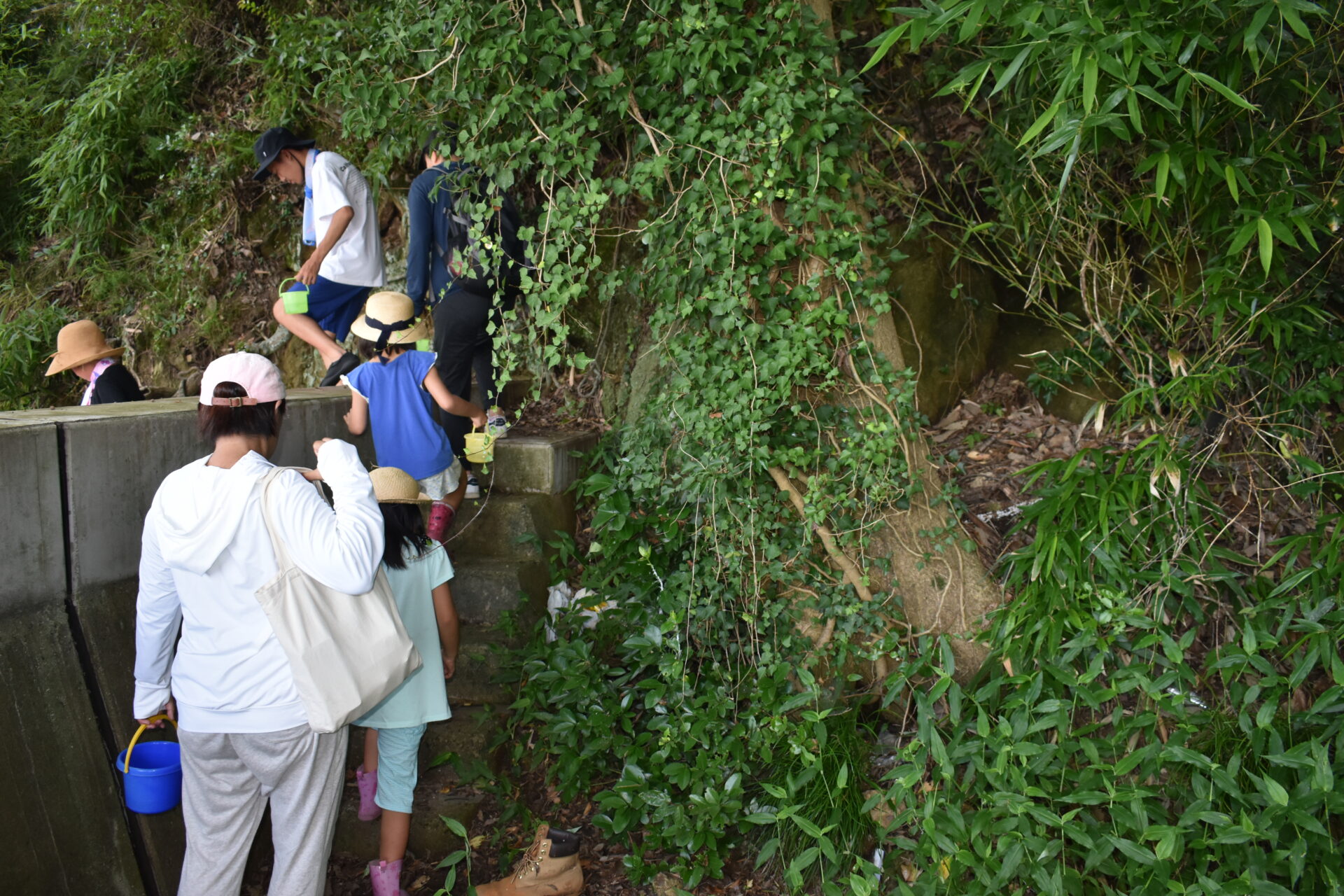
The participants slowly walk along the rugged coast, avoiding the tidal flat.
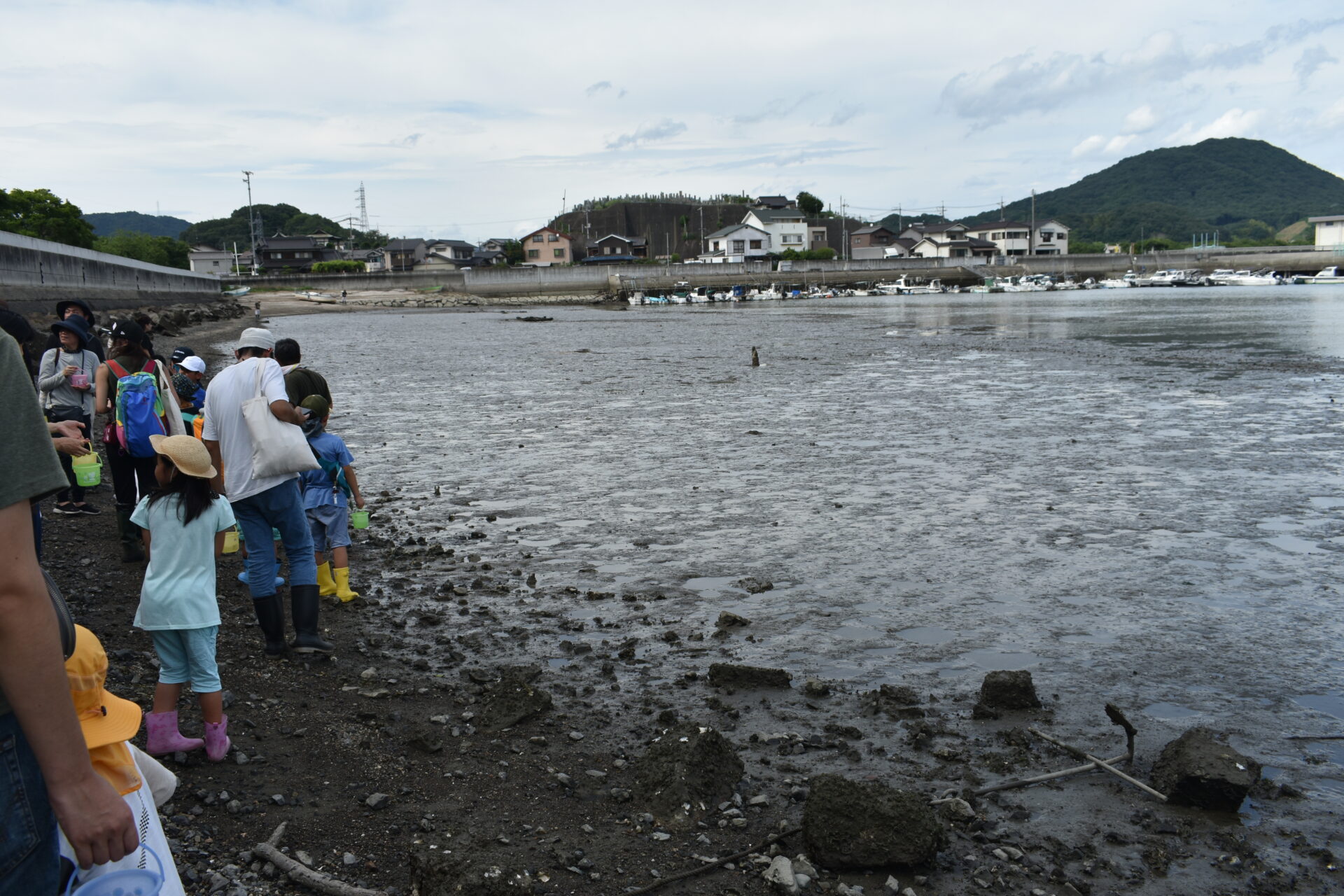
At the museum staff member’s call, everyone releases the contents of their buckets onto the tidal flat at once.
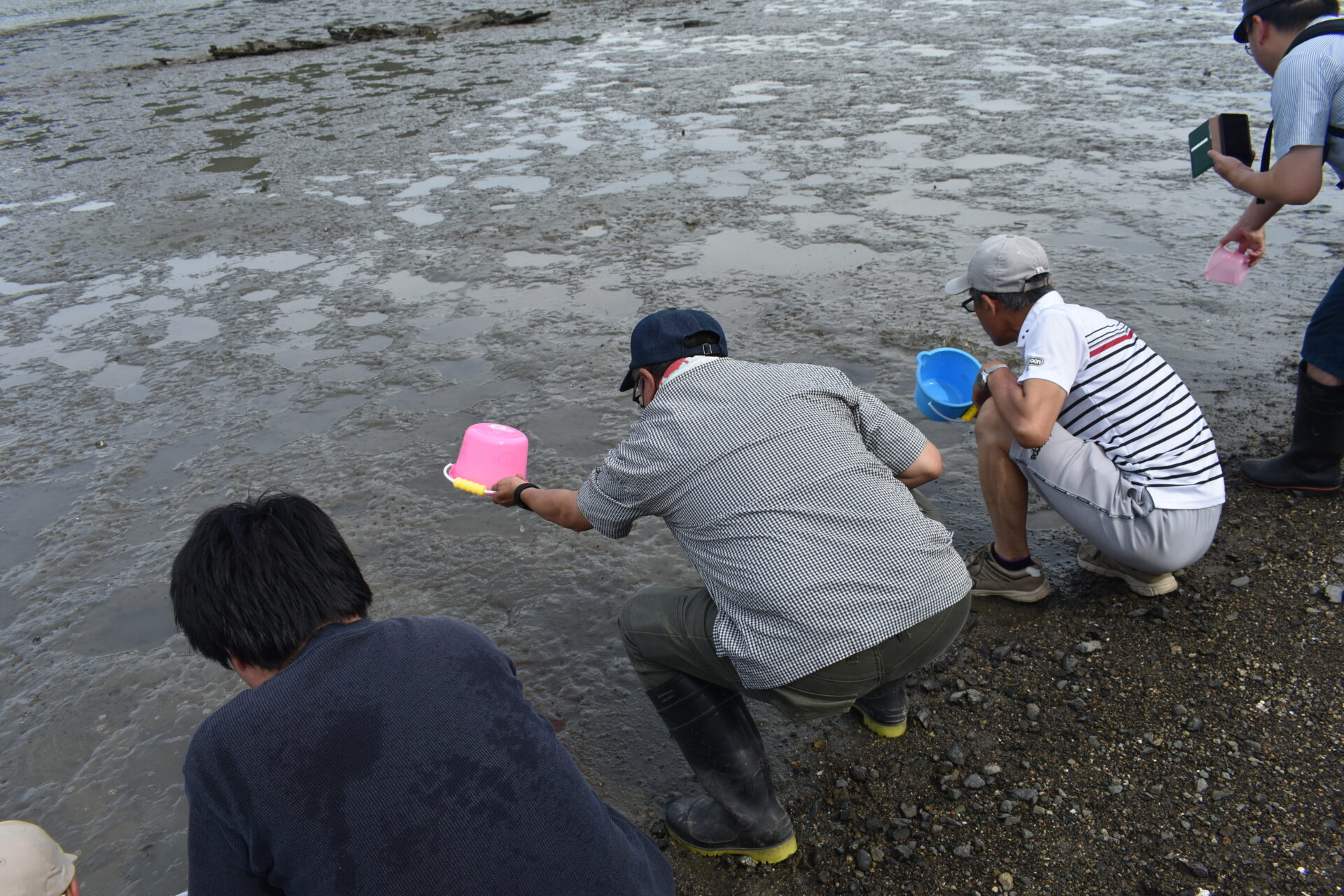
Apparently, if they try to gently pour out only the horseshoe crabs, some may be left behind in the bucket. To avoid putting any extra strain on the horseshoe crabs, they pour the water and crabs onto the tidal flat with a strong rush.
The participants called out warmly to the horseshoe crabs, “Grow big and come back!”
Some horseshoe crabs failed to land properly and ended up upside down. The participants watched over them anxiously.
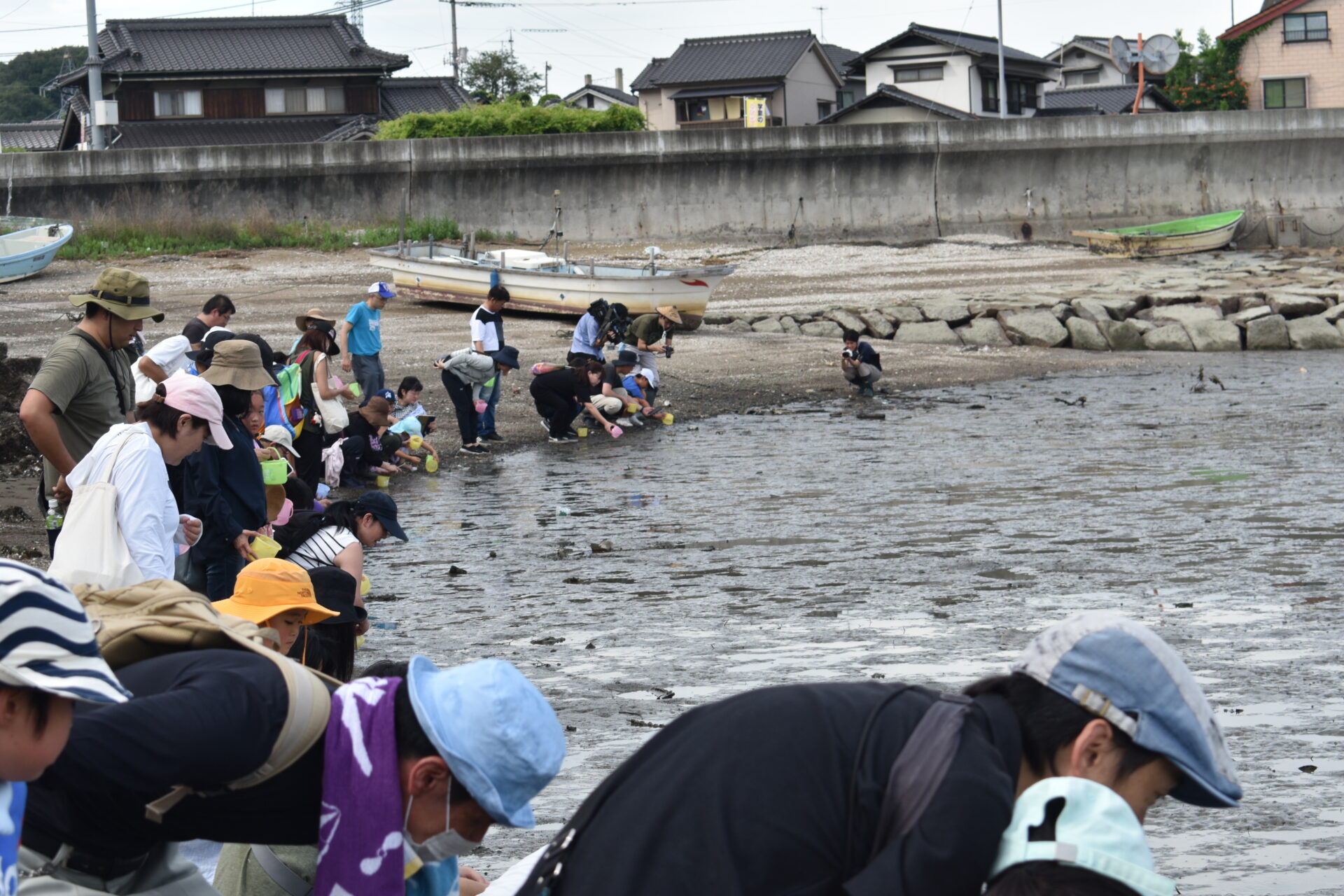
After righting themselves, the horseshoe crabs released onto the tidal flat quickly burrowed into the mud.
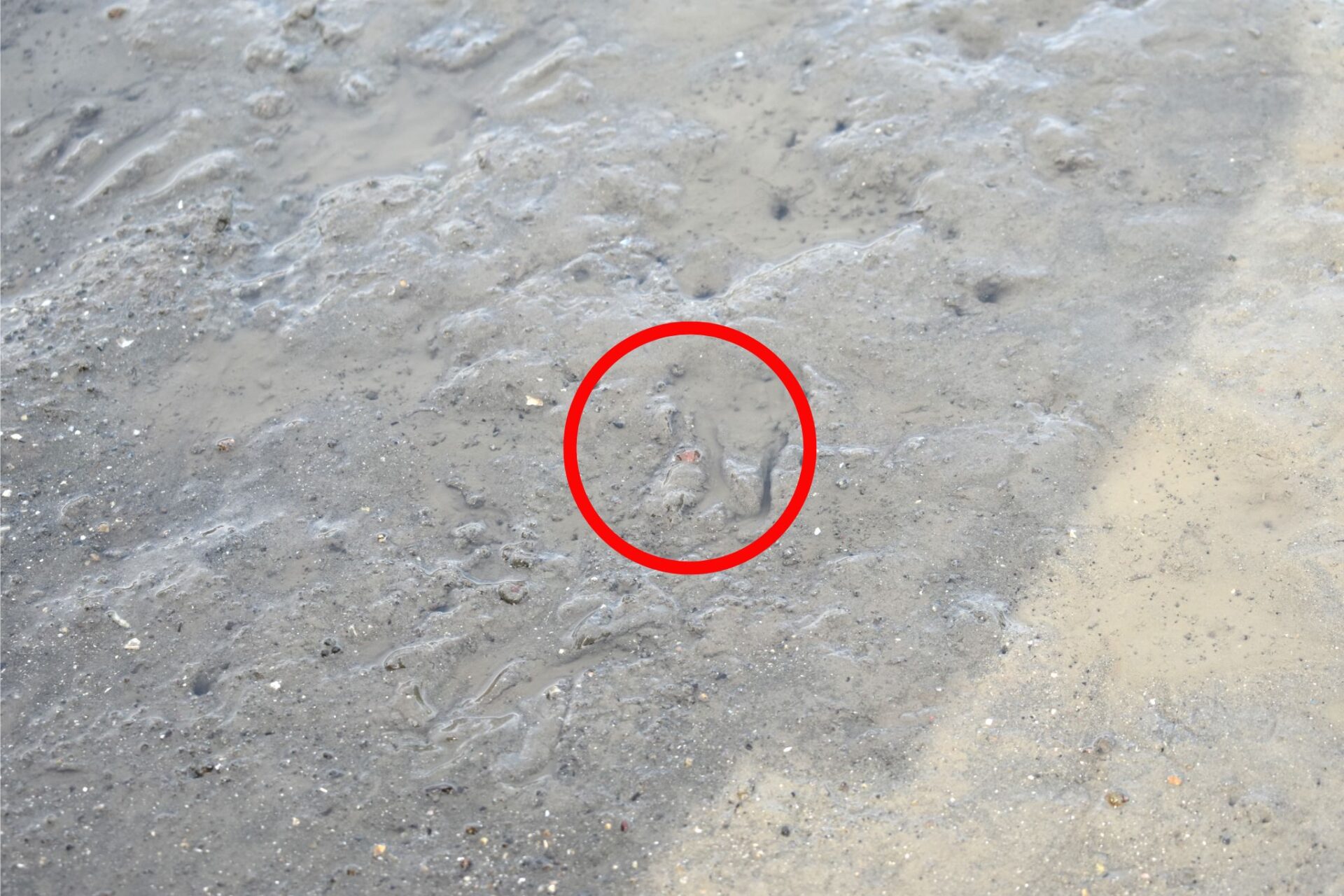
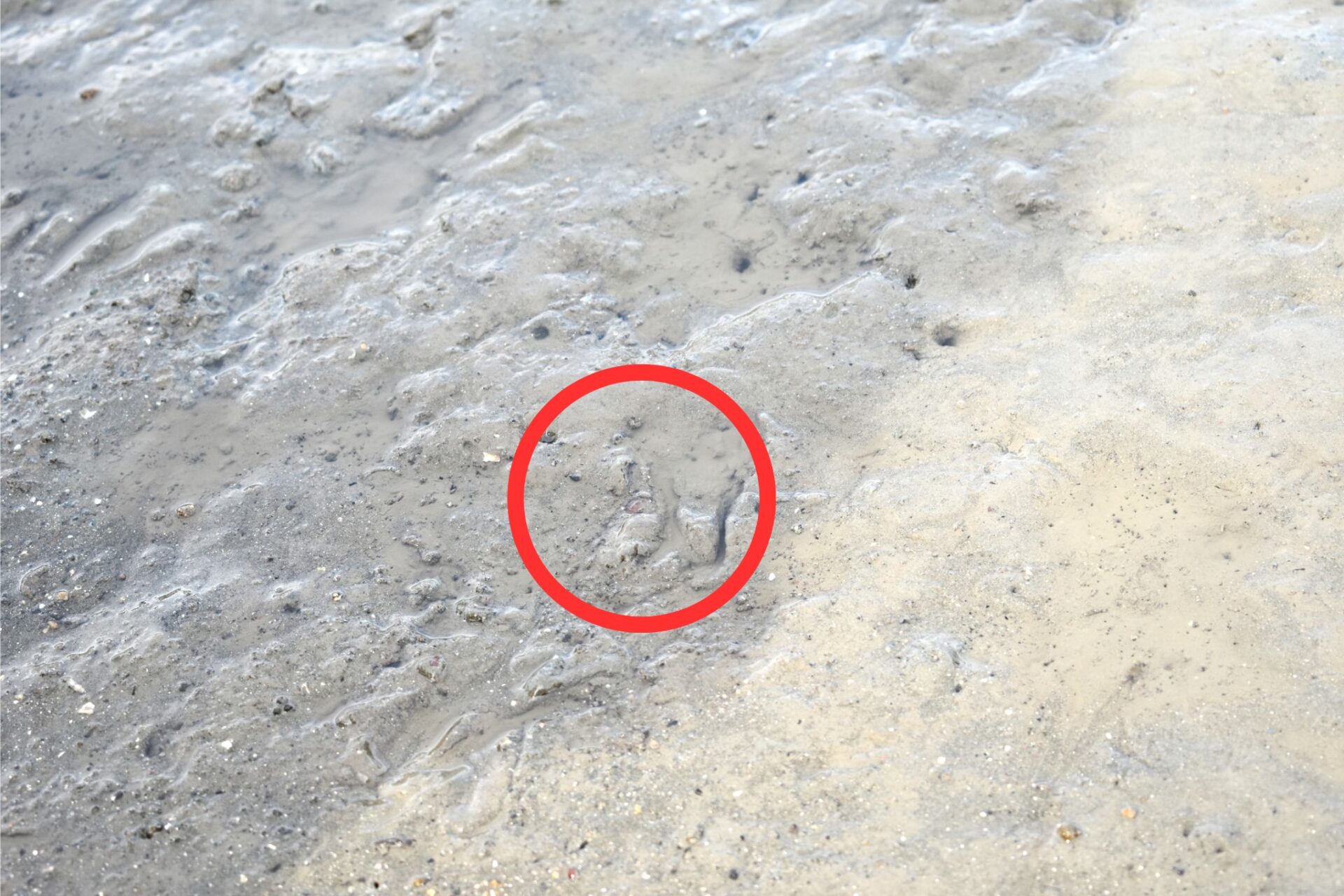
After seeing the horseshoe crabs off, the participants walk back along the rugged coast, taking care not to step on the creatures living on the tidal flat.
They return their buckets, and the release of the horseshoe crab juveniles is over.
What participants in the juvenile release had to say
We spoke with the members of the Okayama Prefectural Kasaoka Commercial High School Kasa SHOP Research Group, who took part in the horseshoe crab juvenile release.
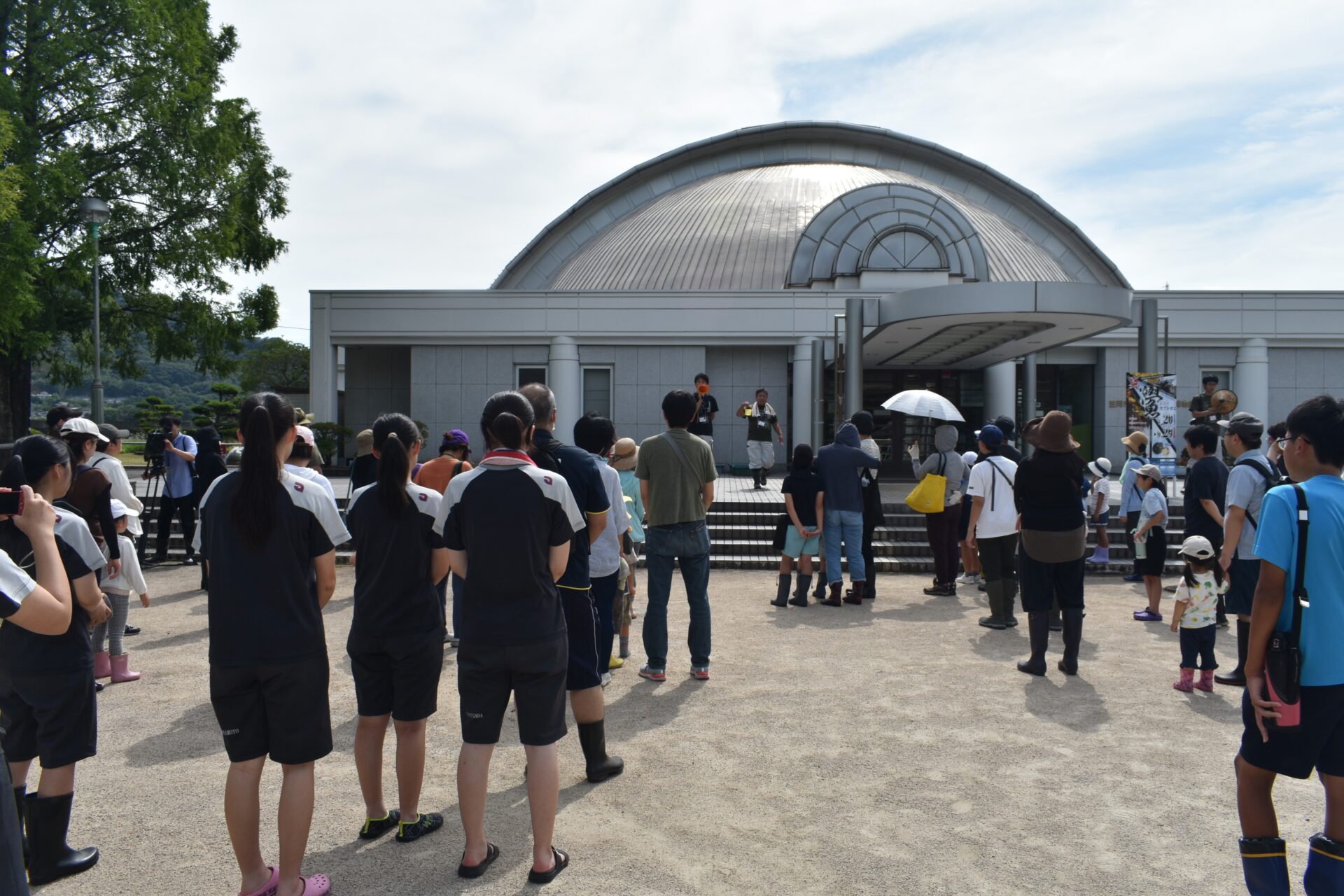
“You don’t often see horseshoe crabs around Kasaoka City in everyday life. There are especially few opportunities to interact with small horseshoe crabs, so I thought this was a very valuable event. Many of the participants were young children, so I think it’s a great way for parents and children to develop an awareness of environmental conservation together.”
Schools in Kasaoka City apparently study horseshoe crabs and raise their juveniles as part of integrated studies and other classes. Even students who are involved with horseshoe crabs regularly seemed fascinated by the rare opportunity to release them.
“This was my first time taking part in a horseshoe crab juvenile release. The horseshoe crabs are so cute when they’re tiny, and I was amazed to think they grow to be that big.
I also enjoyed talking with the other participants, and I think the juvenile release is a great activity that brings people together through horseshoe crabs.”
They were also surprised to learn that horseshoe crabs, which grow to over 50 cm as adults, are only about 1 cm long in their first year.
We also asked Morinobu Satoshi, director of the Kasaoka Municipal Horseshoe Crab Museum, what he thought of this year’s horseshoe crab juvenile release.
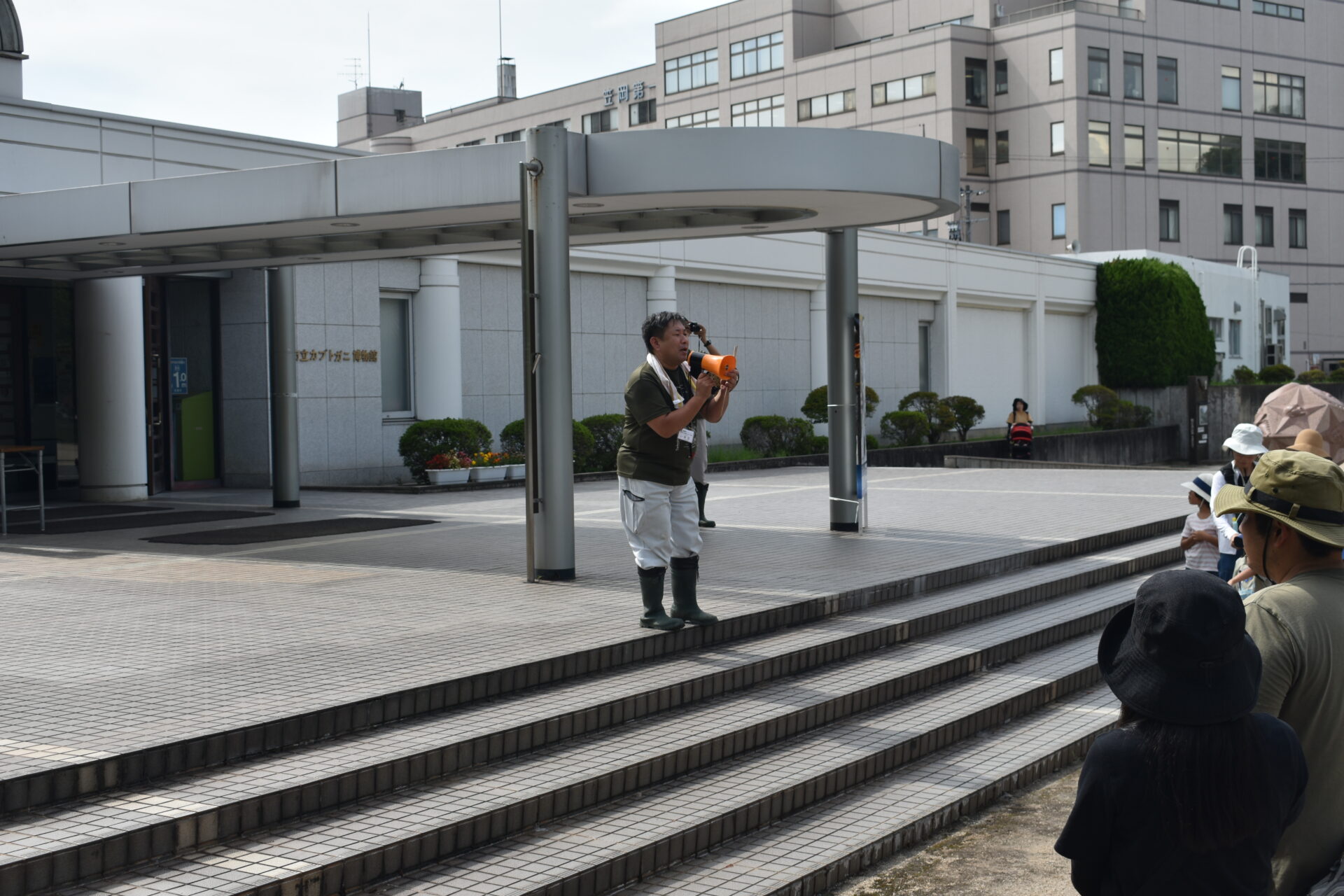
“We couldn’t hold the horseshoe crab juvenile release last year (2023), so I’m very happy to be able to do it with everyone again after two years. Seeing the children’s happy faces as they called the horseshoe crabs cute made me feel that it was well worth doing.
This year, too, we were able to secure adult horseshoe crabs to serve as parents and confirm that they had laid eggs. If all goes well, we’ll be able to hold the juvenile release again next year.”
Sowing seeds for the future through the horseshoe crab juvenile release
Apparently, local residents cleaned the tidal flat before the juvenile release. However, many pieces of litter had appeared again by the time of the release.
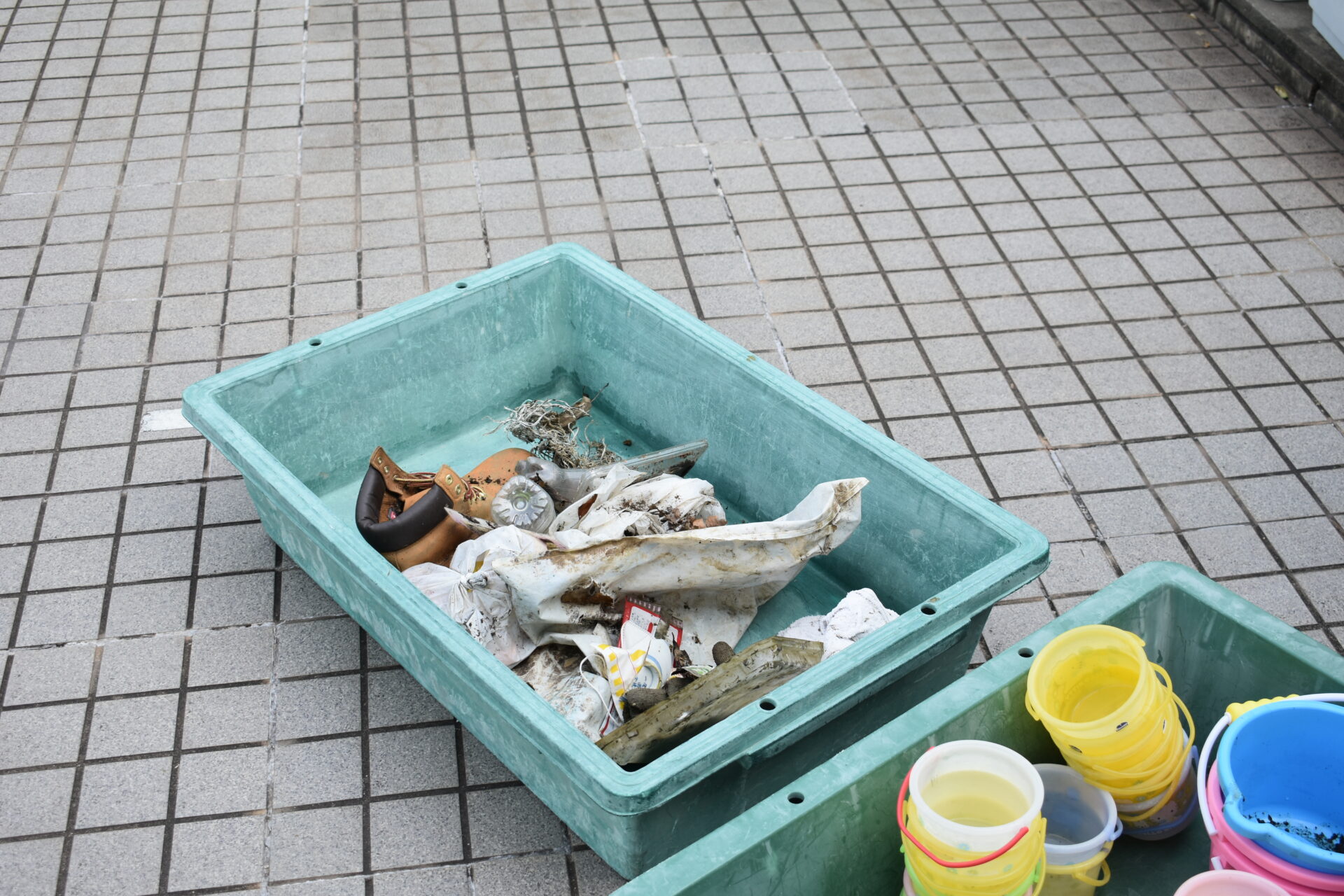
It takes more than ten years for horseshoe crabs to grow up and become able to reproduce. Until then, creating a beautiful environment where horseshoe crabs can grow safely may be a responsibility entrusted to us.
From July 20, 2024 (Saturday) to September 29, 2024 (Sunday), the Kasaoka Municipal Horseshoe Crab Museum is holding a special exhibition exploring the secrets of horseshoe crabs, “The Real Horseshoe Crab.”
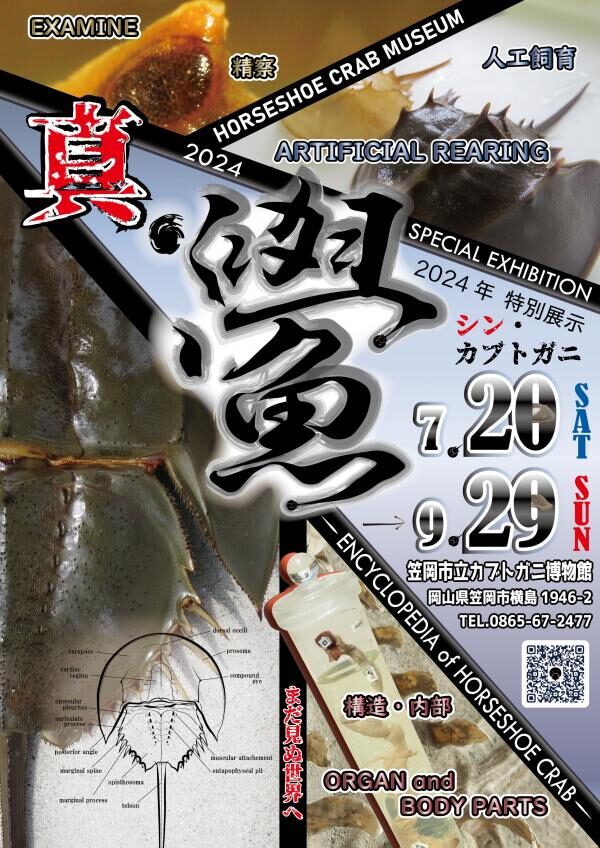
Visitors can observe the mysteries of horseshoe crabs, from the siblings of those released this time to their fascinating biology. Although visitors could not touch the horseshoe crabs directly during the juvenile release, here they can touch a taxidermy specimen.
Why not immerse yourself in the little-known world of horseshoe crabs this summer?
Horseshoe crab juvenile release details
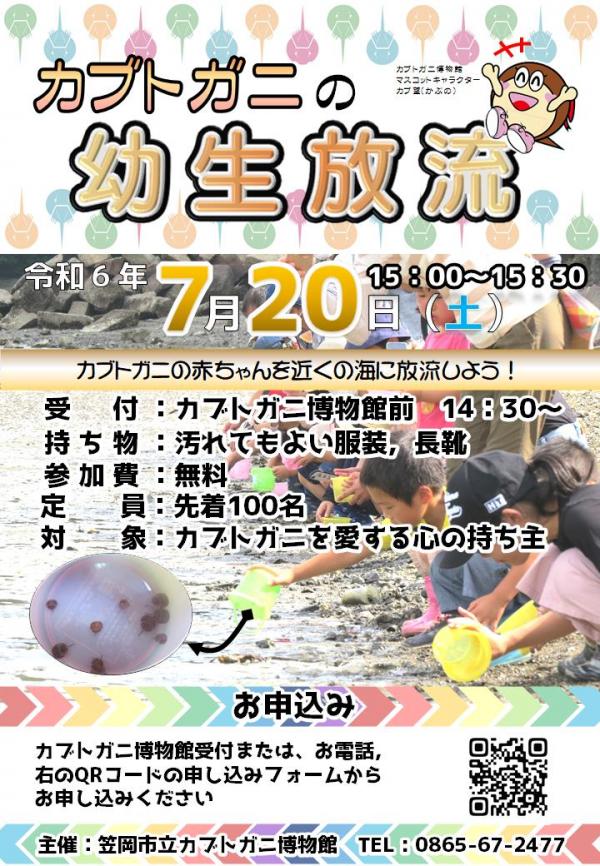
| Name | Horseshoe crab juvenile release |
|---|---|
| Date | July 20, 2024 (Saturday), 3:00 p.m.–3:30 p.m. |
| Location | 1946-2 Yokoshima, Kasaoka City, Okayama Prefecture |
| Admission (tax included) | Free Registration required |
| Website | Kasaoka Municipal Horseshoe Crab Museum |


What would you like to know about Kurashiki?
Enter a search term to find articles on this site