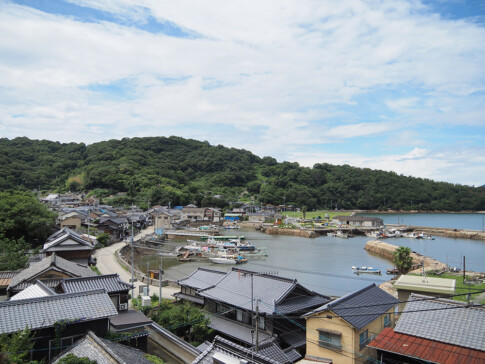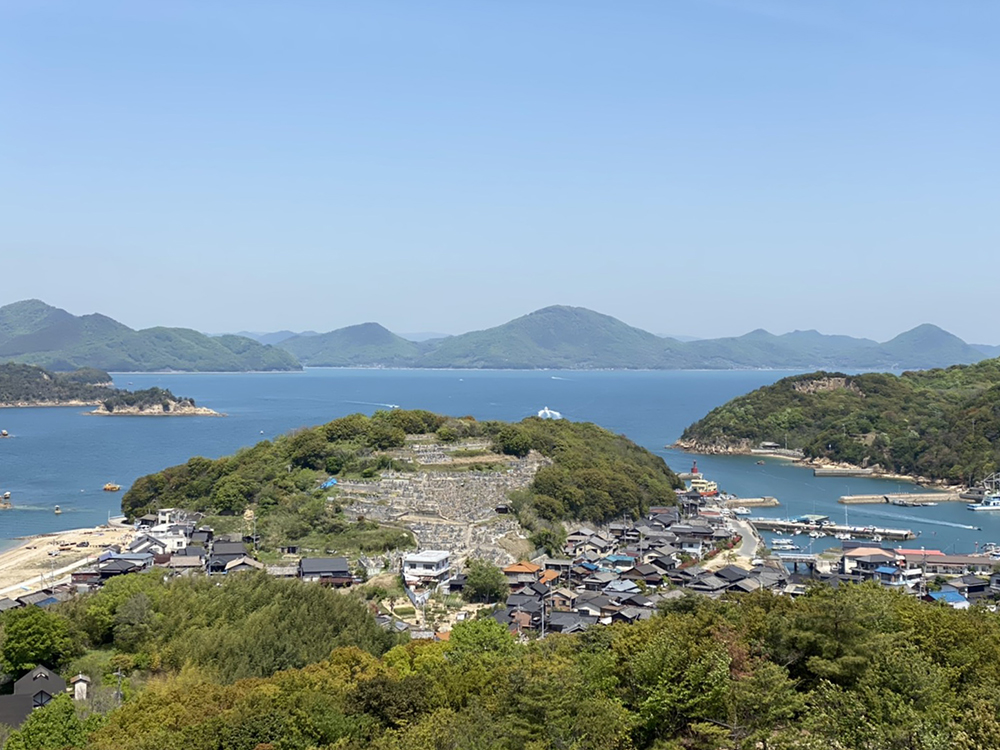
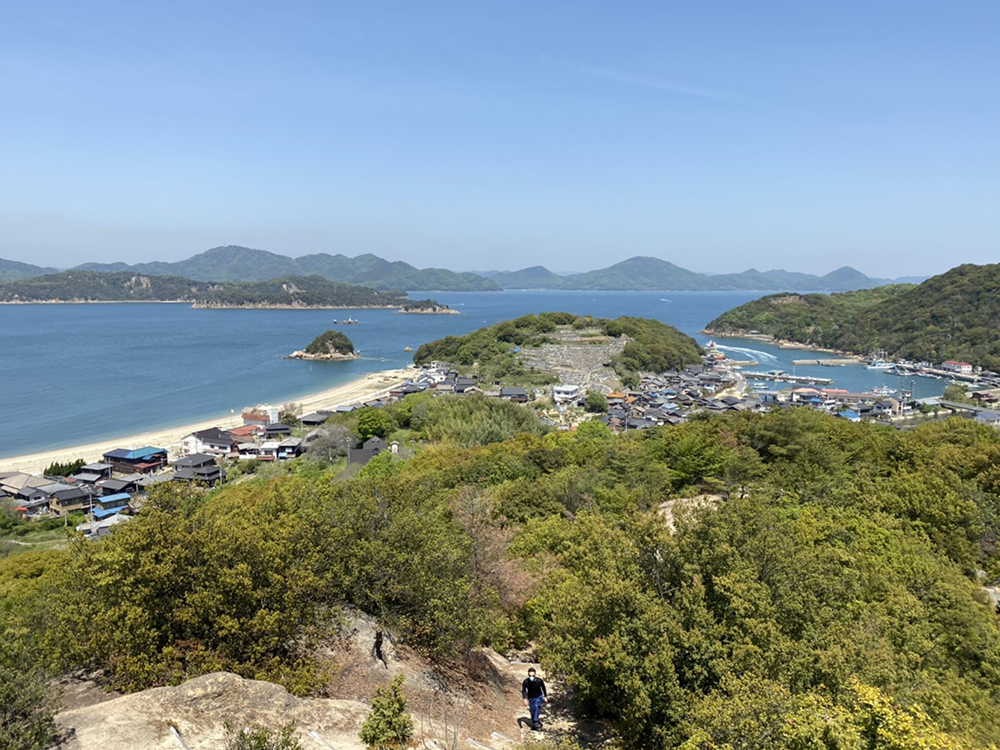
White granite is visible everywhere, giving Shiraishi-jima Island a landscape worthy of its name.
Shiraishi-jima Beach, with a sandy shore stretching for about 500 meters, is a popular summer leisure spot bustling with tourists.
A trekking trail runs along the ridge at an elevation of about 150 meters, offering enjoyable hikes with spectacular views of the Seto Inland Sea.
The island is also famous for Shiraishi Odori, a Bon dance designated as an Important Intangible Folk Cultural Property of Japan, and for its specialty mulberries.
Here we introduce an overview of Shiraishi-jima Island and its highlights, where you can enjoy the natural beauty of the sea and mountains.
The information presented here was current when this article was published in July 2022. Please note that it may differ from current information.
About the Kasaoka Islands
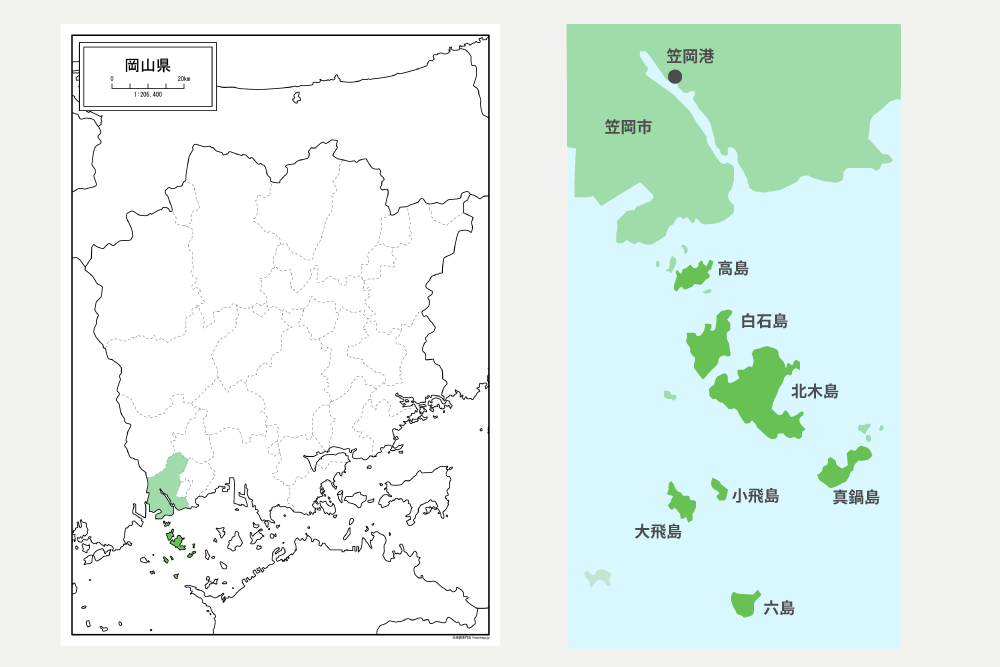
The Kasaoka Islands are a group of 31 large and small islands off Kasaoka City, at the southwestern tip of Okayama Prefecture. Seven of them are inhabited:
- Takashima
- Shiraishi-jima Island
- Kitagi-shima Island
- Manabe-shima Island
- Obishima Island
- Kobishima Island
- Mushima Island
Obishima and Kobishima together are called Hishima.
There are no bridges connecting the islands, so they are reached by boat from the ports of Kasaoka City.
The islands have a peaceful, laid-back atmosphere.
Together with the islands of Marugame City, Shodoshima Town, and Tonosho Town in Kagawa Prefecture, they have also been designated Japan Heritage under the title “The Islands of Stone, Where Time Flows On: The Bisan Islands of Setouchi—Crossing the Sea to Build the Foundations of Japan.”
About Shiraishi-jima Island
Among the Kasaoka Islands, Shiraishi-jima Island is the second largest after Kitagi-shima Island.
It is also the second closest island to mainland Kasaoka City, after Takashima.
| Item | Details |
|---|---|
| Population (as of April 30, 2021) | About 420 people |
| Area | 2.95 square kilometers |
| Circumference | 10 kilometers |
| Specialties | Shiraishi Odori and mulberries |
| Transportation on the island | On foot / private car |
Highlights such as Shiraishi-jima Beach, the entrance to the trekking trail, Kairyuji Temple, and the island shops are all within a 15-minute walk of Shiraishi-jima Port, so getting around on foot is recommended.
Getting to Shiraishi-jima Island
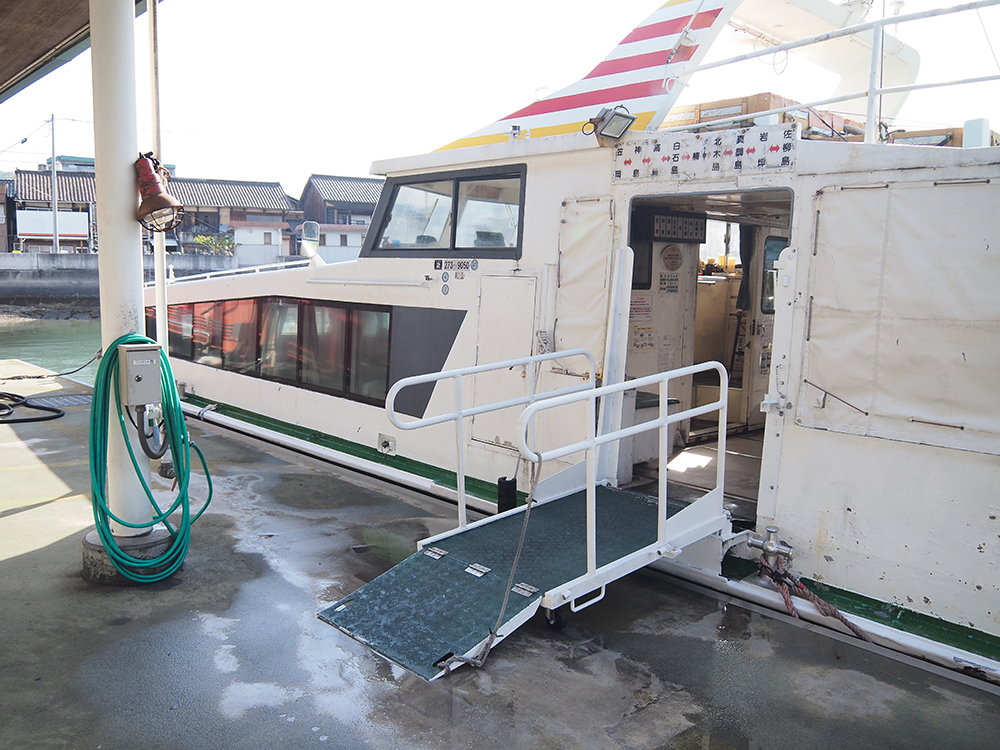
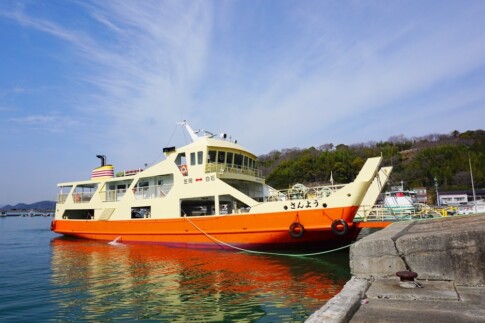
Boats to Shiraishi-jima Port depart from Sumiyoshi Port or Fushikoshi Port in central Kasaoka City.
The trip takes about 35 minutes (about 25 minutes by high-speed boat). You can really enjoy your island journey along the way.
| Departure port | Type of boat |
|---|---|
| Sumiyoshi Port | Passenger boat (regular or high-speed) |
| Fushikoshi Port | Ferry |
| By water taxi | By water taxi |
If you take a passenger boat on the way there and a ferry on the return trip, be careful not to buy a round-trip ticket.
We recommend checking departure times in advance.
▼For details, see the article below.
Shiraishi Odori
Shiraishi-jima Island is famous for Shiraishi Odori, a Bon dance designated as an Important Intangible Folk Cultural Property of Japan.
Along with Omiyadori, passed down in Hiruzen, Maniwa City, and Bitchu Matsuyama Odori, passed down in Takahashi City, it is counted among Okayama Prefecture’s three major dances.
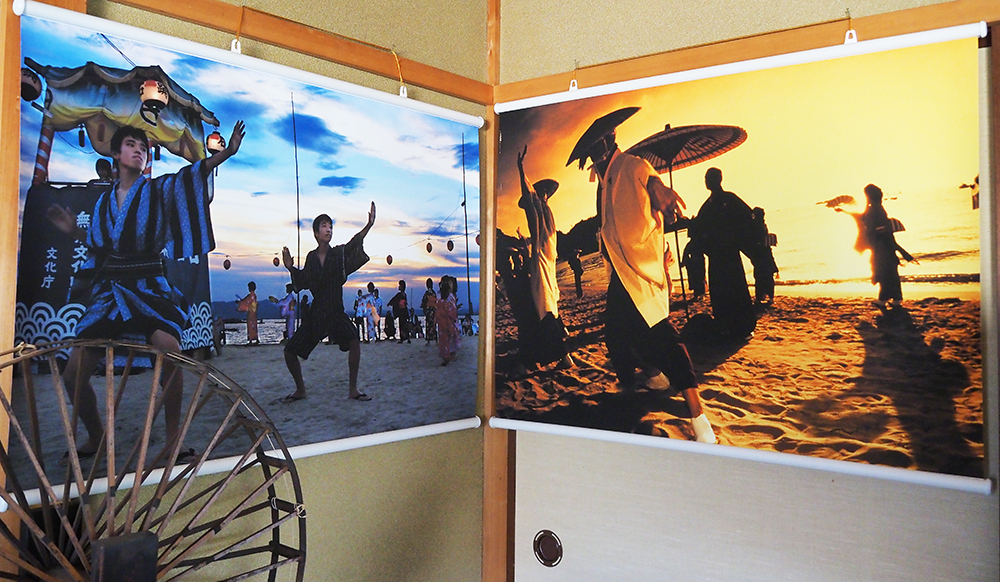
This traditional dance is said to have originated when islanders held memorial services for fallen soldiers whose bodies washed ashore after the Genpei Battle of Mizushima, fought in the Seto Inland Sea in the late Heian period.
One of its distinctive features is that many dance forms are performed to a single chant. Thirteen different choreographies—including men’s dances, hat dances, women’s dances, and fan dances—have been passed down, making it a rare dance even by national standards.
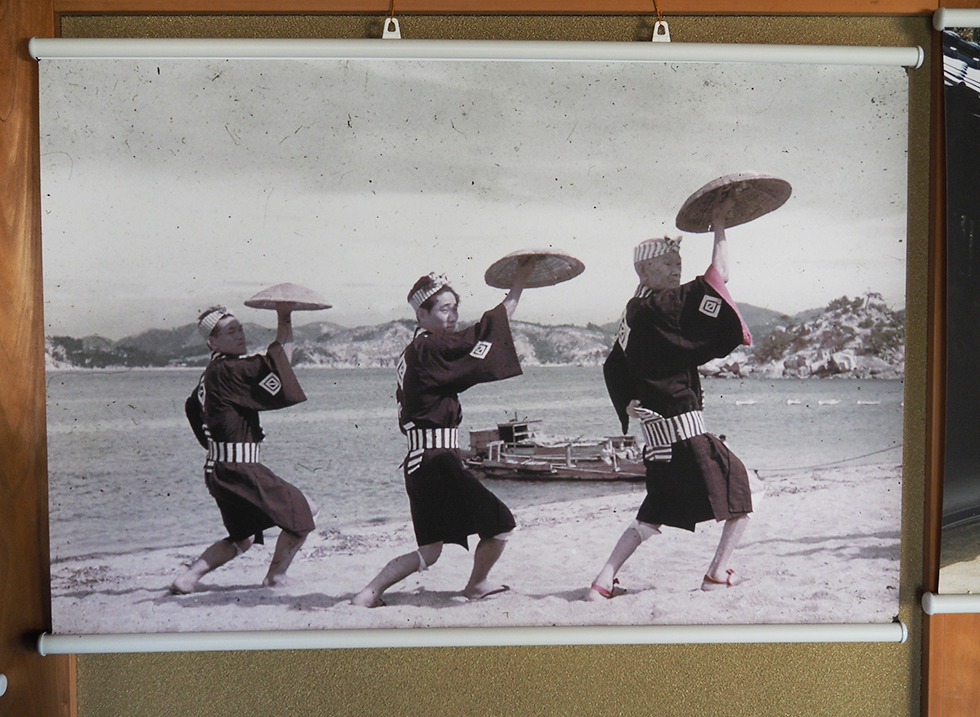
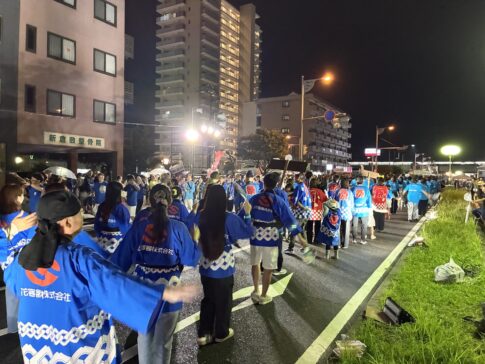
The dance was canceled in 2020 to prevent the spread of COVID-19, but the Bon tradition of performing Shiraishi Odori every year from August 13 to 16 at the Community Center plaza and Shiraishi-jima Beach continues.
From the 13th to the 15th, people reportedly dance at the Community Center plaza until late at night.
Canceled in August 2022 to prevent the spread of COVID-19
On the 16th, after the floating of lanterns at the beach, visitors can usually join in the dancing.
Canceled in August 2022 to prevent the spread of COVID-19
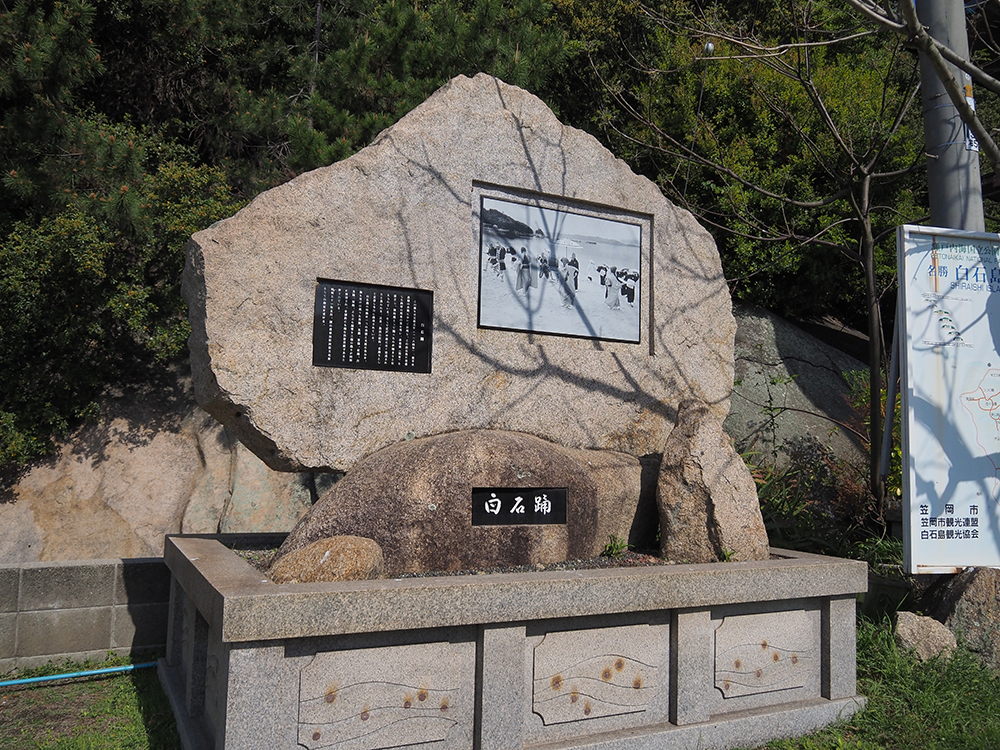
Although Shiraishi Odori has been passed down through generations, it faces a shortage of successors.
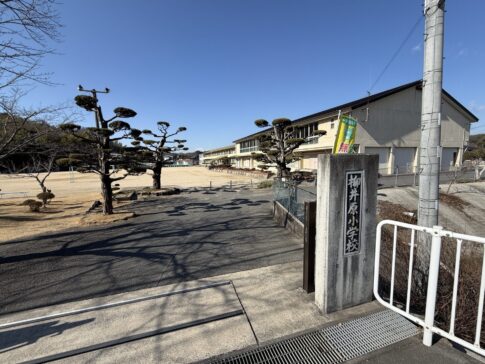
The island’s depopulation and aging population are progressing. Shiraishi Elementary School is currently closed, and Shiraishi Junior High School is set to close after the sole remaining student graduates in the 2022 school year.
The Kasaoka branch of the Shiraishi Odori Association was established in 2017 to train successors.
To make it possible to learn Shiraishi Odori without going to Shiraishi-jima Island, free classes are held twice a month on mainland Kasaoka City.
Classes were held as scheduled as outreach lectures through July 2022.
Classes were suspended in August 2022. Whether they will be held in September is undecided.
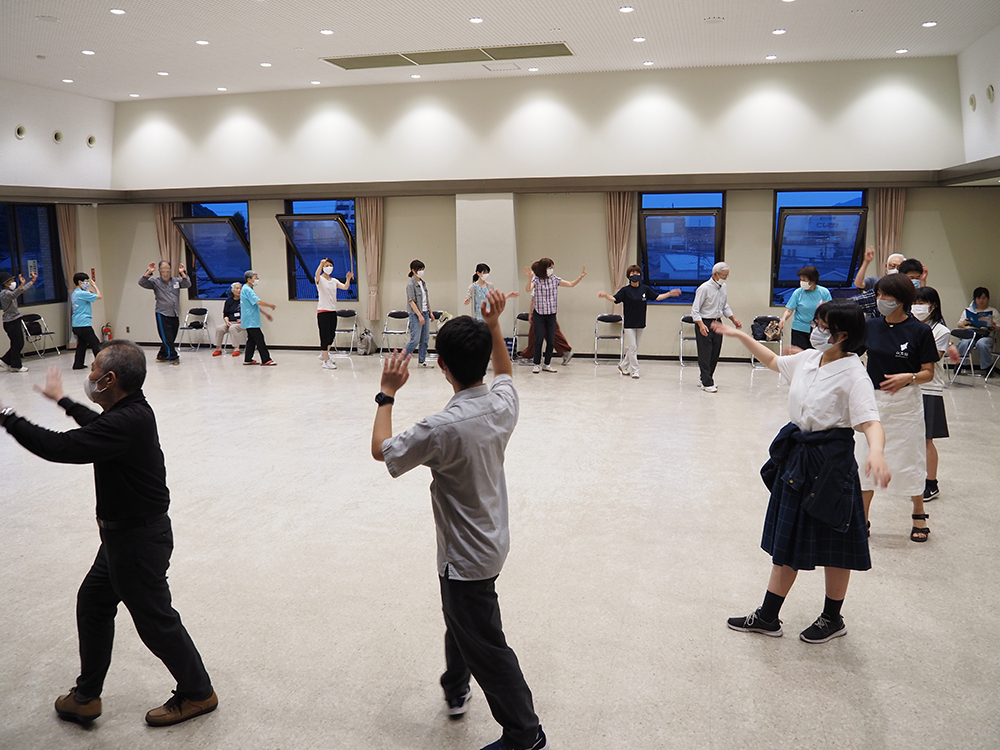
There were reportedly no young people when the classes first began, but when we visited a Shiraishi Odori class in summer 2020, we saw high school and university students who had started attending from Kasaoka City and beyond after learning about it through a high school inquiry-based learning class.
Shiraishi Odori is gradually gaining popularity among young people as well.
Mulberries
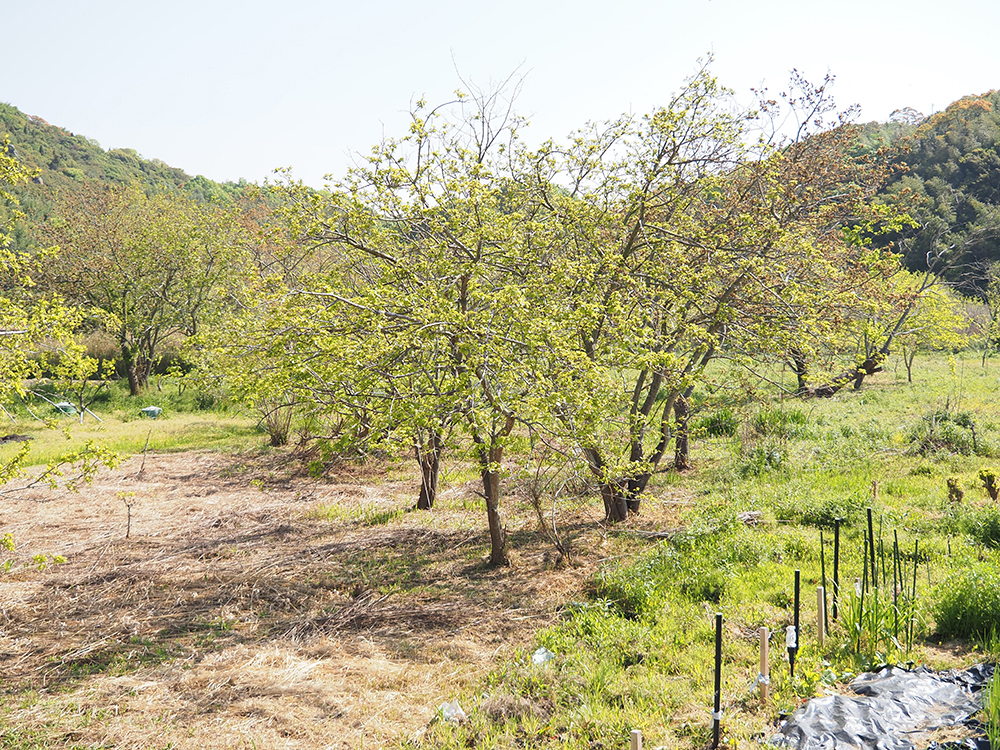
Many mulberry trees have grown wild on Shiraishi-jima Island for a long time.
Walking around the island, we came across a mulberry field. The mulberries are cultivated there to help restore abandoned farmland.
Mulberry leaves are used to make tea, while the dark purple fruit, called mulberries, is processed into products such as jam.
Mulberries have the refreshing tartness typical of berries and are rich in nutrients such as vitamins and potassium.
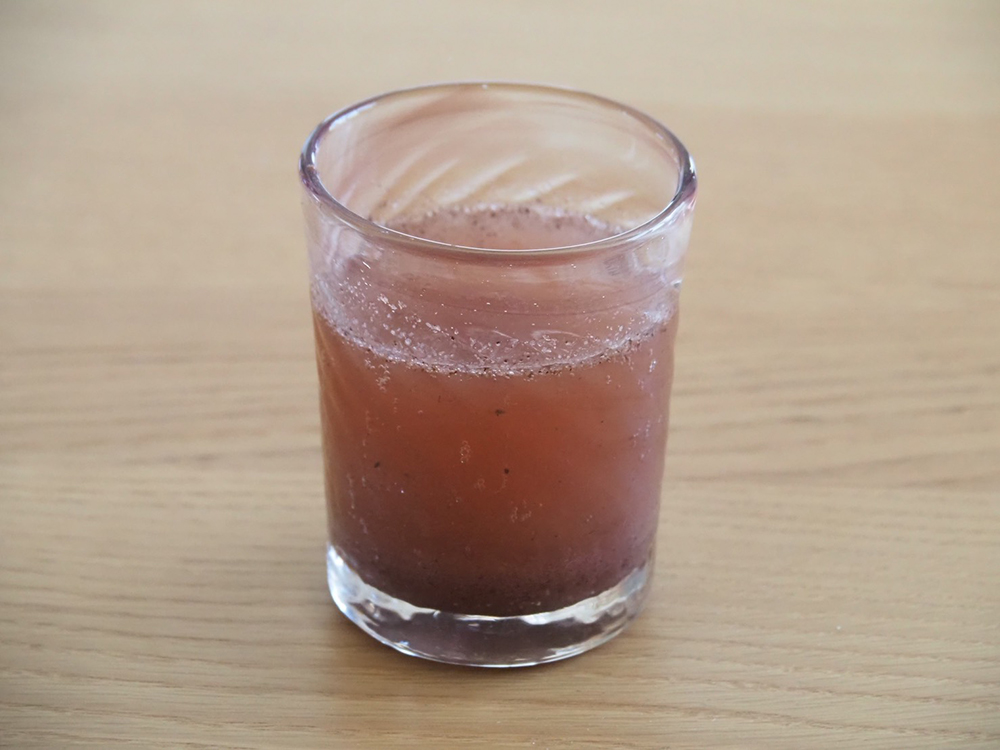
Mulberries are harvested every year from mid-May to around June.
Mulberry leaves are also well known as food for silkworms.
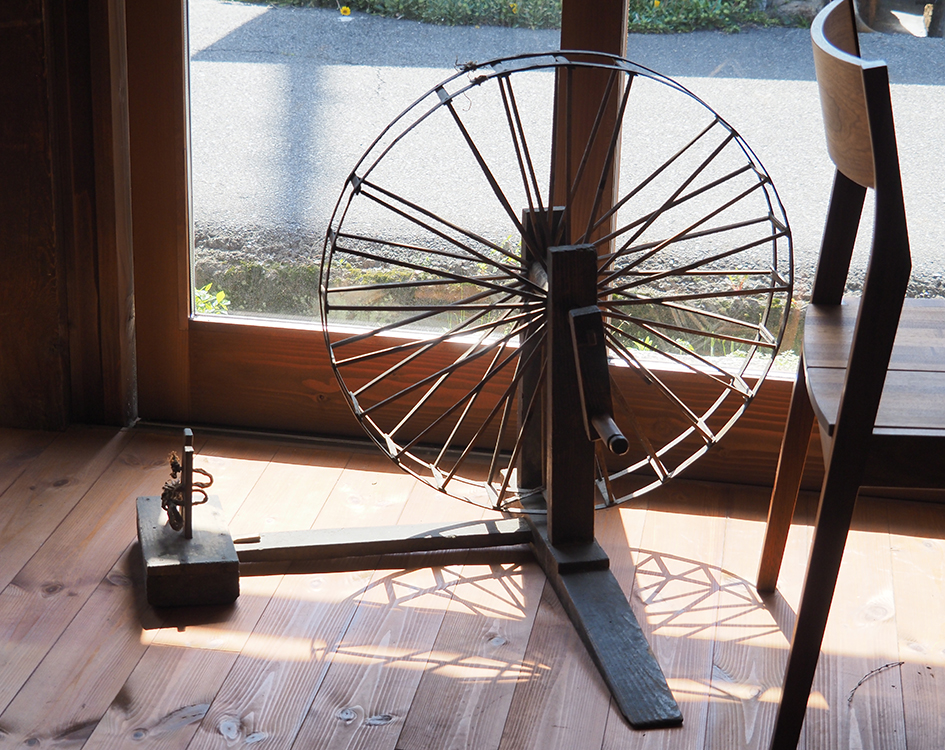
Sericulture and cotton cultivation were once thriving on Shiraishi-jima Island, and it is said that each household spun and dyed thread and wove it into clothing.
Although they are no longer used, many households reportedly still have spinning wheels.
Main attractions and things to do on Shiraishi-jima Island
Here are some of the main attractions on Shiraishi-jima Island.
Shiraishi-jima Beach
Walk right along the coastal road from Shiraishi-jima Port, and you’ll reach Shiraishi-jima Beach in about seven minutes.
Along the way, there is a stone monument bearing the poem, “On Shiraishi-jima, at the misty shore, a jellyfish.”
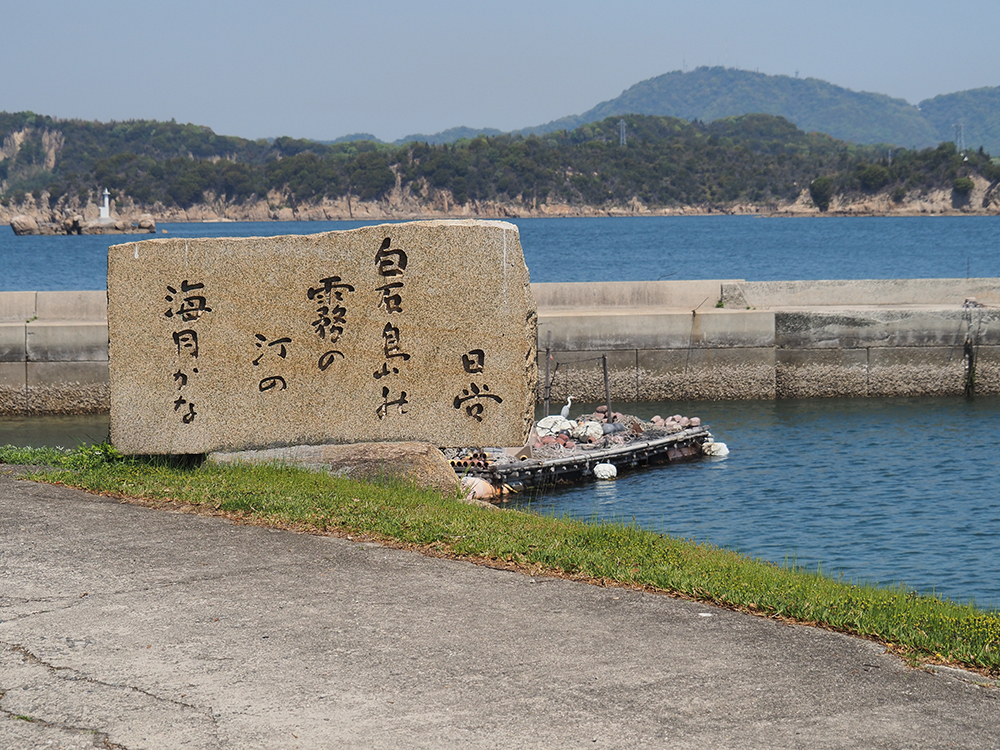
“Nagisa” means the water’s edge. The poem seems to describe a jellyfish at the calm water’s edge, in a verse about the end of summer.
“Bentenjima Island” comes into view at the entrance to Shiraishi-jima Beach. Benzaiten is enshrined on this small island.
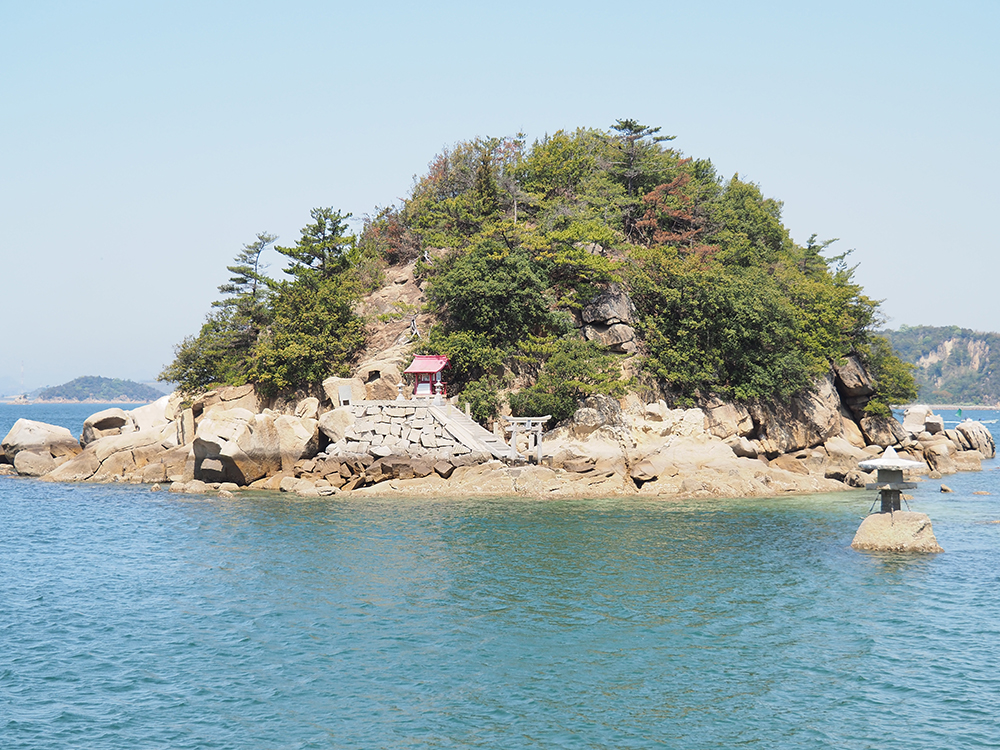
Benzaiten is a deity of wealth, but is also often enshrined in places associated with water, such as the sea and rivers.
Perhaps it has watched over the peace of the sea around Shiraishi-jima Island.
At low tide during a spring tide, you can apparently walk across to it. It is said to be called the Mont Saint-Michel of Shiraishi-jima Island.
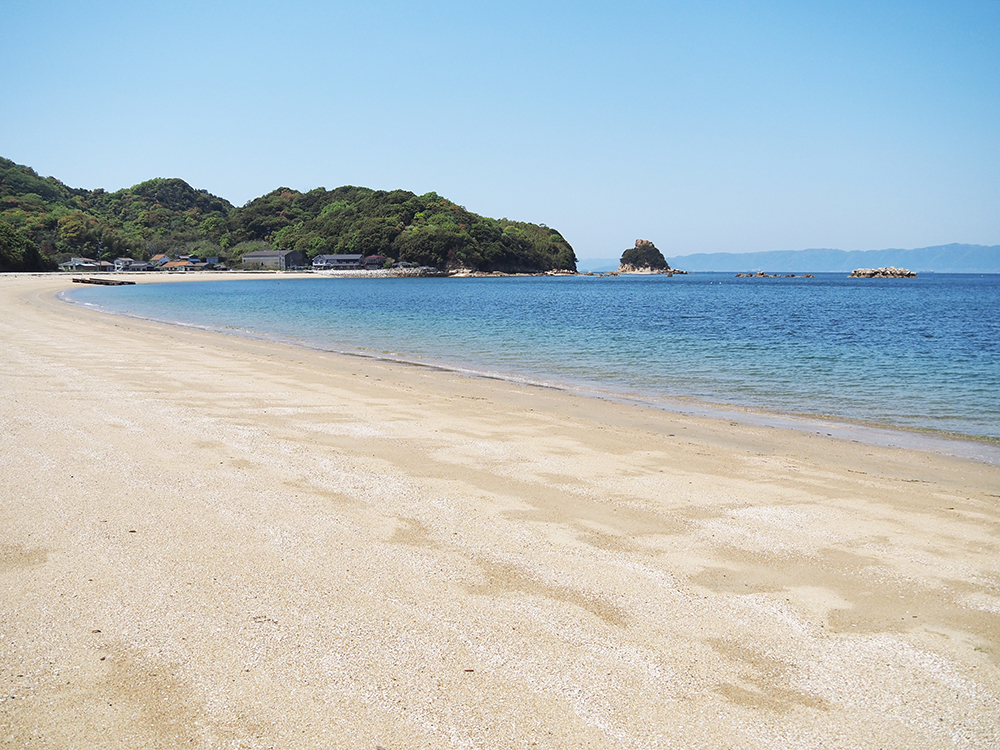
A white sandy beach stretches for about 500 meters. The sea is blue and clear.
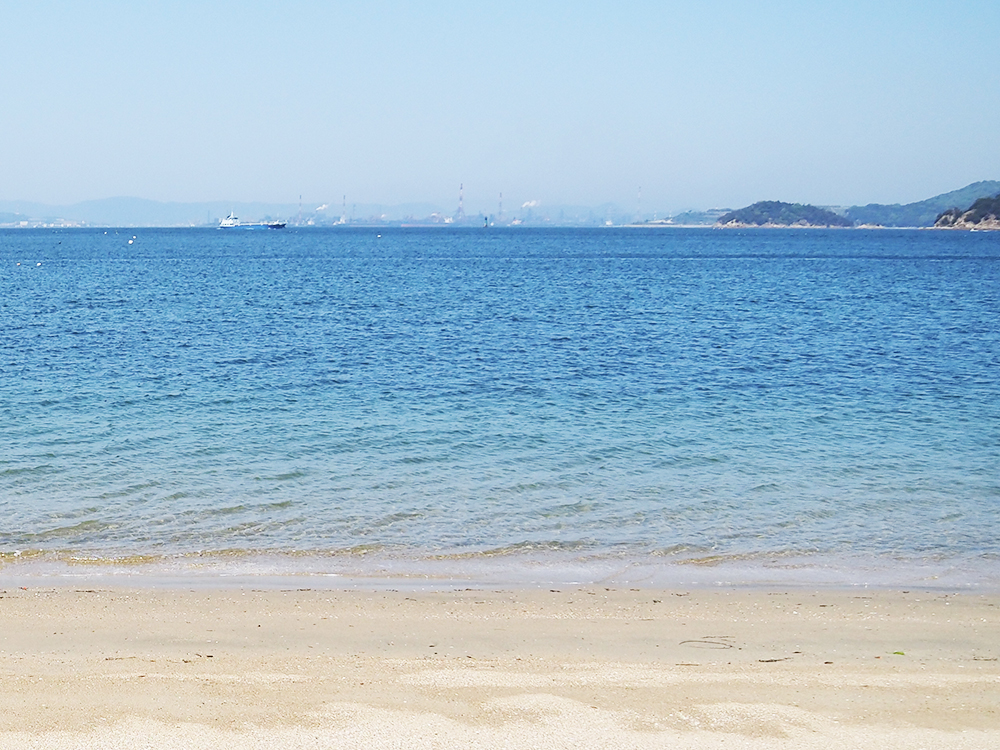
The cityscape of Fukuyama can be seen across the water in the distance.
The beach has toilets and showers. Guesthouses and beach huts line the shore, and it gets busy with families in summer.
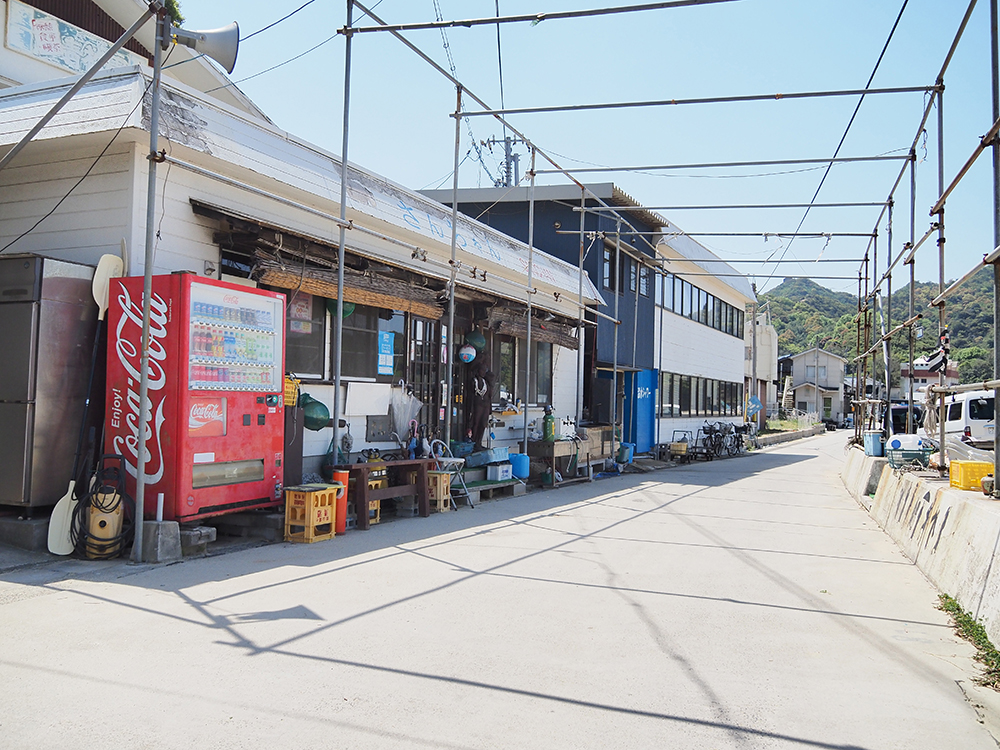
You can also enjoy activities such as sea kayaking and windsurfing.
| Activity | Details |
|---|---|
| Season | Year-round (June to October recommended) |
| Fee | 1,000 yen per hour (tax included) |
| Inquiries | Shiraishi-jima International Exchange Villa 090-4294-1993 |
Trekking
Trekking means walking while enjoying mountain scenery.
Unlike mountain climbing, where the goal is to reach the summit, trekking is about enjoying a walk in the mountains without necessarily aiming for the top.
A ridge about 150 meters above sea level runs through the center of Shiraishi-jima Island, offering great views and making it ideal for trekking.
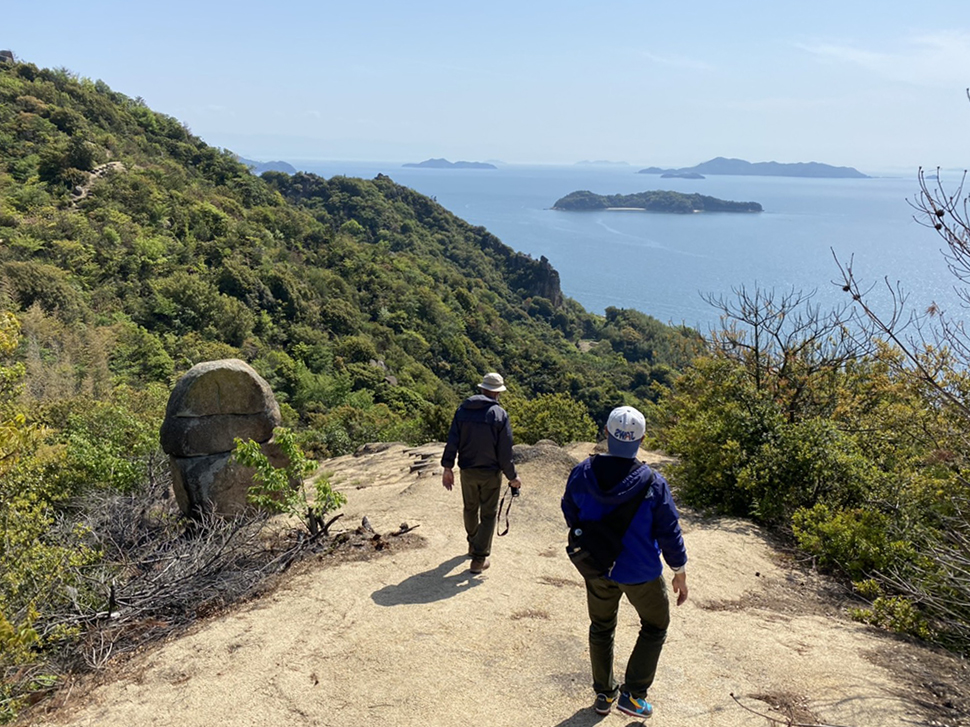
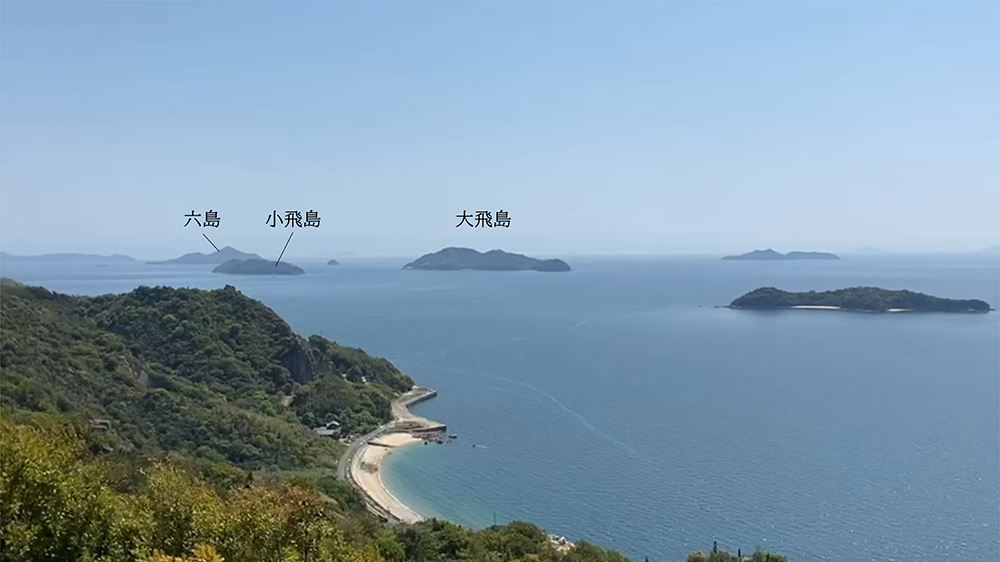
Enjoy spectacular views of the Seto Inland Sea in every direction.
On clear days, the excellent views extend as far as Mt. Daisen in Tottori and Mt. Ishizuchi in Shikoku.
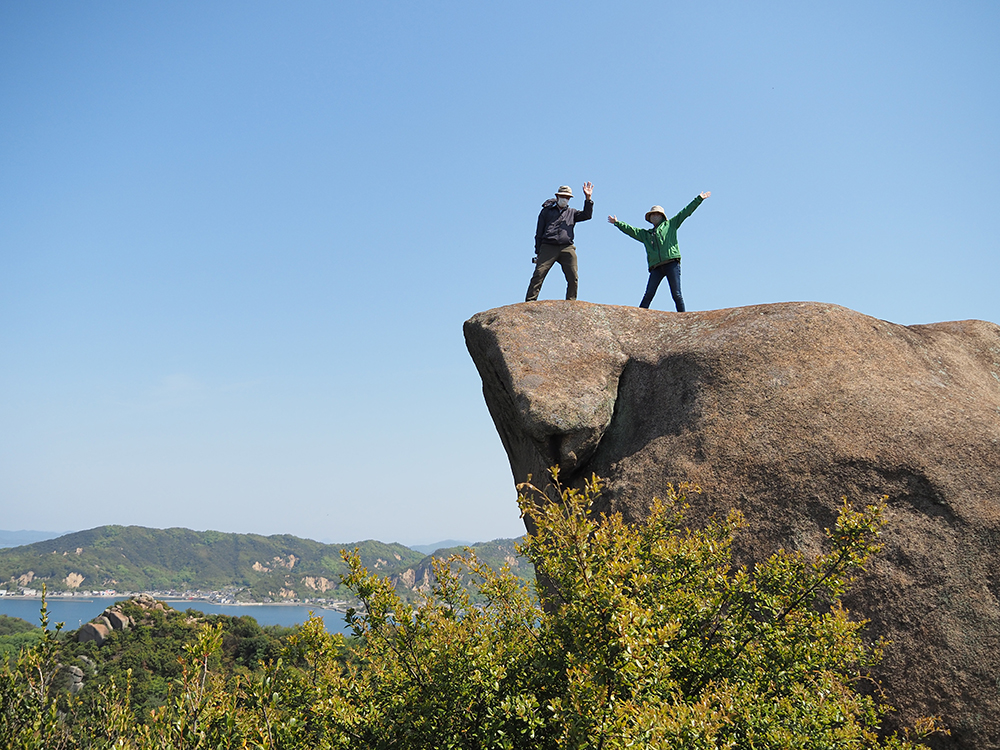
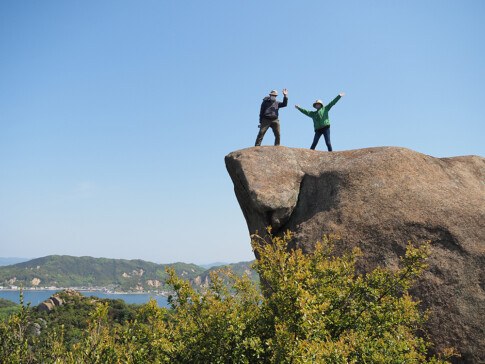
The trekking route also features a giant rock large enough for about 30 people to climb onto, as well as unusual mountain slopes with grid-like cracks. The beauty of these natural formations is astonishing.
Keep the following points in mind when trekking on Shiraishi-jima Island:
- Wear shoes with good grip and comfortable clothing
- Many paths have little shade, so take precautions against the sun, such as wearing a hat and applying sunscreen
- Bring something to drink
- There are no toilets on the mountain, so use one before setting out
▼For more details, see the article below.
Kairyuuji Temple
About a 15-minute walk from Shiraishi-jima Port, at the foot of the mountain beyond the village lanes, stands Kairyuuji Temple, a Shingon Buddhist temple.
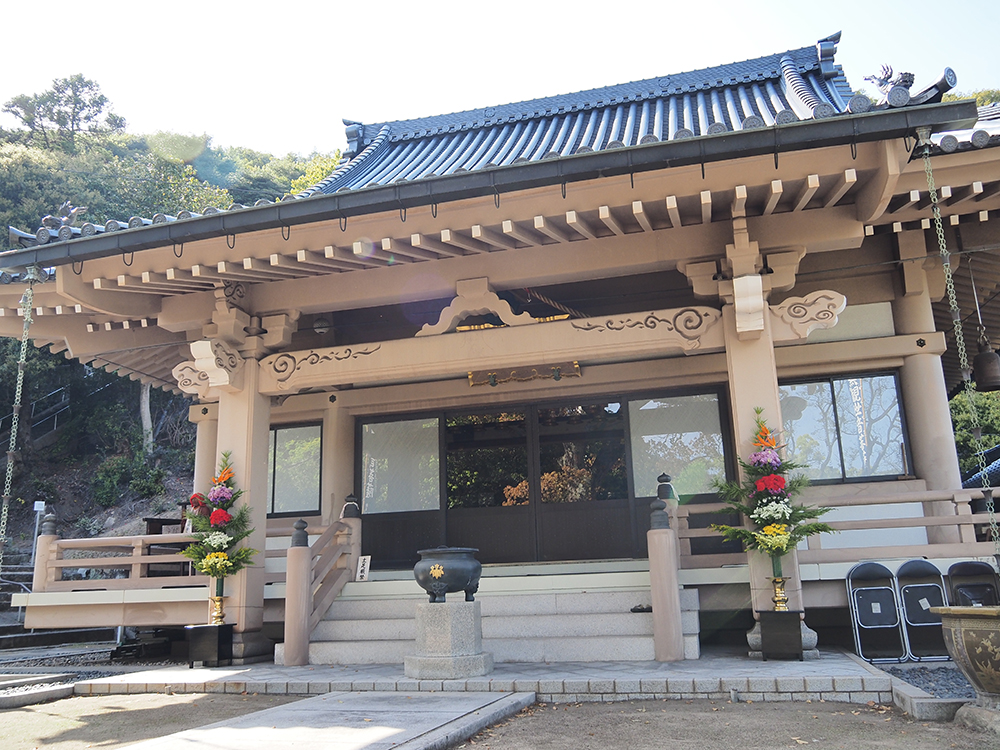
It is said to have originally been founded as “Kobozan Jigenji Temple” at the end of the Heian period to comfort the spirits of those killed in the 1183 Battle of Mizushima between the Minamoto and Taira clans.
In the early Edo period, Shiraishi-jima Island became the territory of the Mizuno family of the Fukuyama Domain in Bingo, and the temple flourished as their place of prayer.
At the back of the temple grounds is a statue of Kobo Daishi (Kukai).
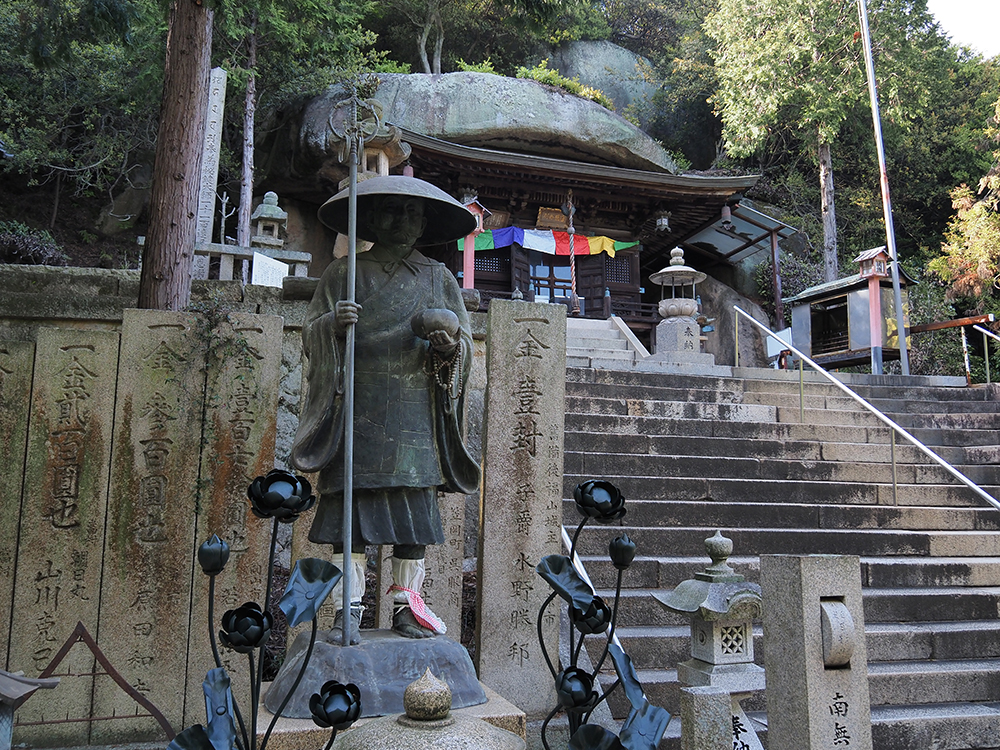
It is said that Kobo Daishi (Kukai) stopped at Shiraishi-jima Island in 806 on his way back from Tang China and trained there for 37 days.
The Daishido Hall enshrines a statue he left on the island at that time. The hall, nestled among enormous rocks against a backdrop of majestic nature and faith, is breathtaking.
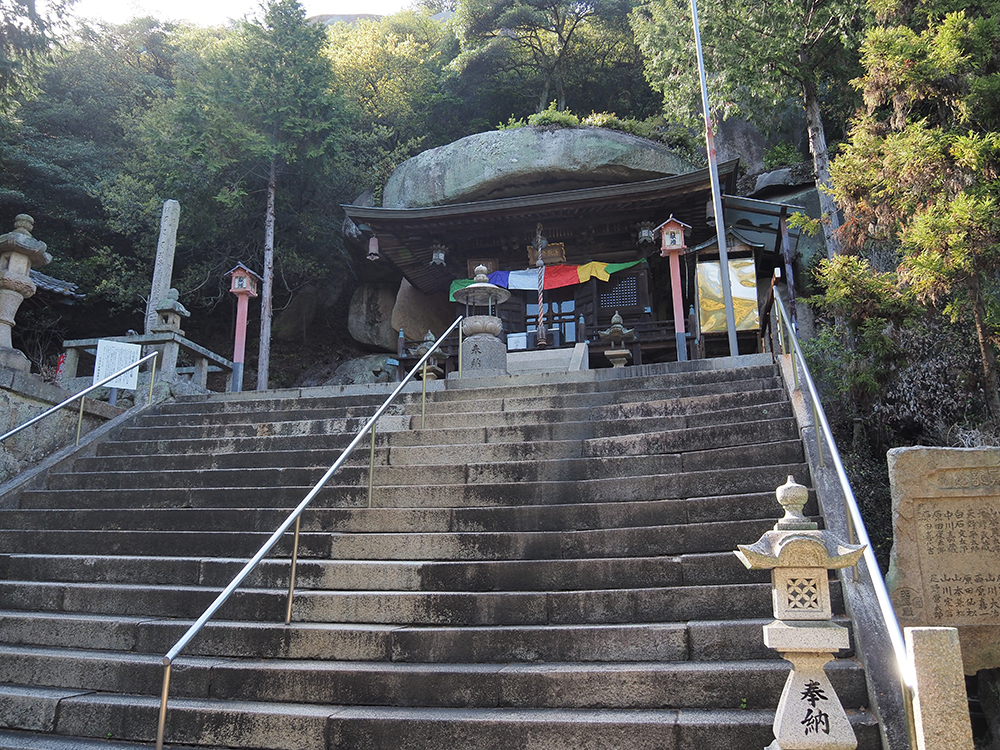
The Daishido Hall is the inner sanctuary of the Kamishima 88-Temple Pilgrimage.
The white tower rising from the grounds of Kairyuuji Temple is a stupa. It was built in 1970.
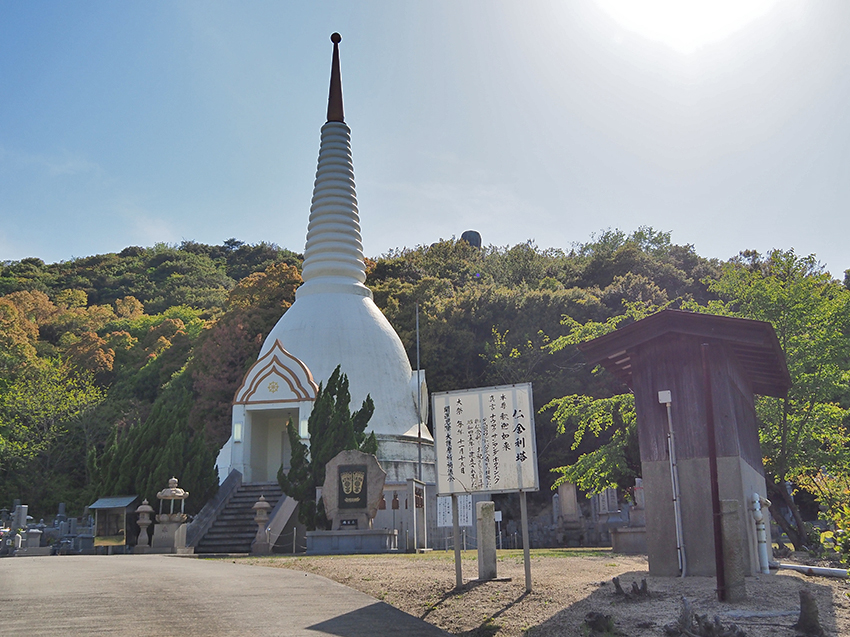
This Thai-style tower, called a pagoda, enshrines Buddhist relics (the bones of Buddha) and a statue of Shakyamuni Buddha donated by Wat Paknam Temple in Bangkok, Thailand.
International Exchange Villa
Of the several accommodation options on the island, we introduce the International Exchange Villa.
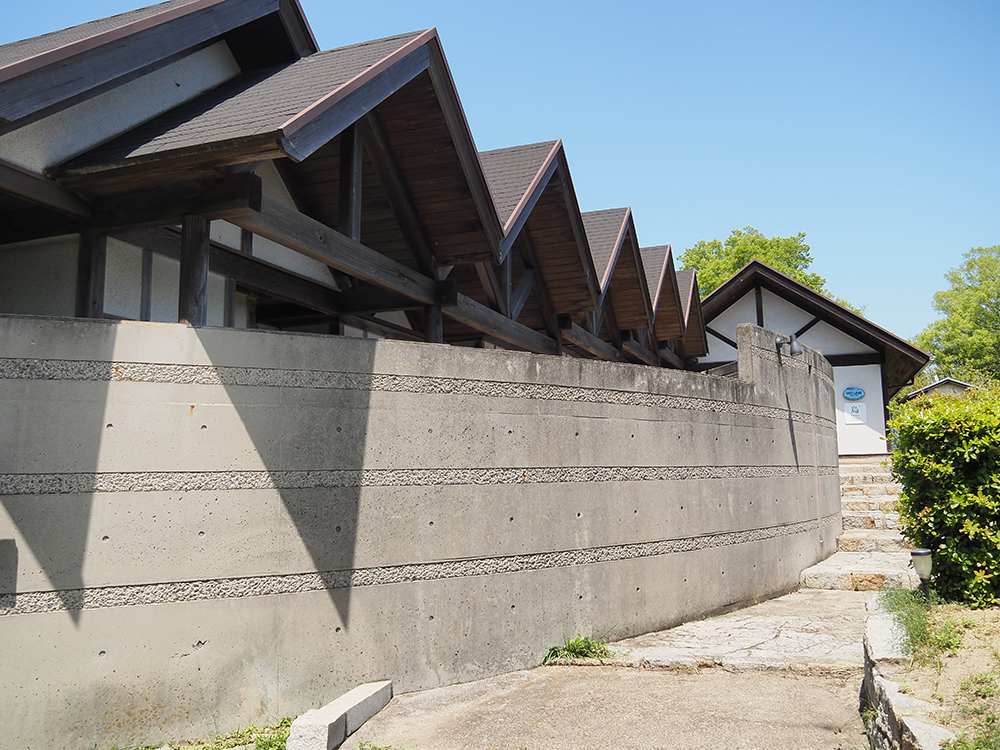
Located on high ground about a six-minute walk from Shiraishi-jima Port, the facility was established mainly to give foreign visitors a chance to experience life on a remote Japanese island.
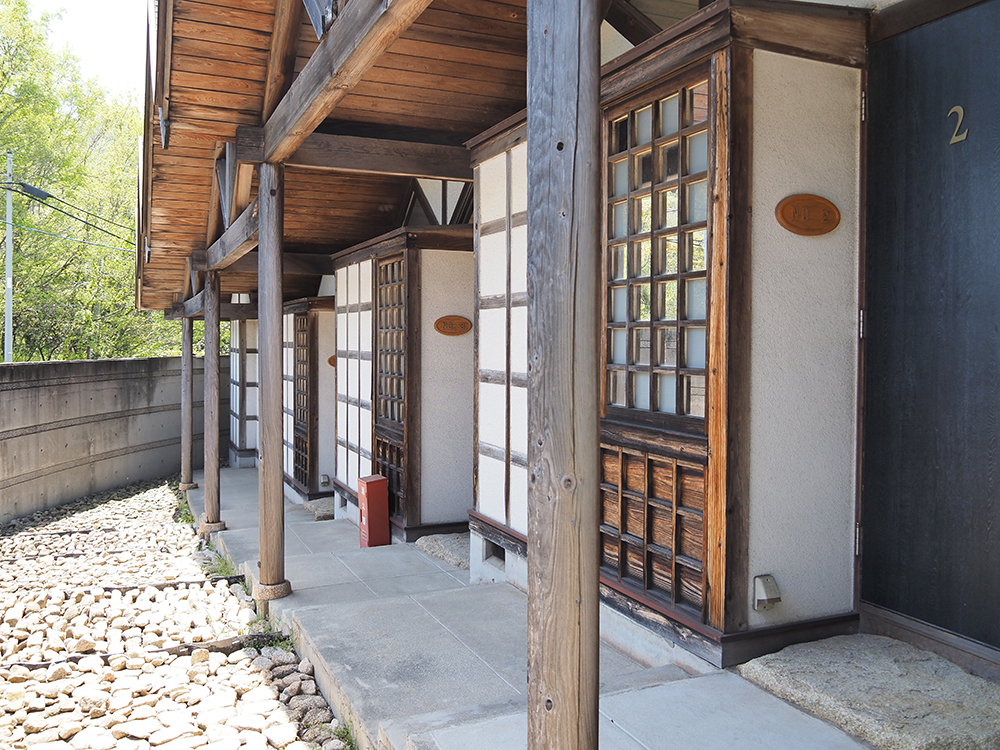
It was reserved exclusively for foreign guests until April 2018, but is now open to Japanese visitors as well as foreign tourists.
It has a shared kitchen and bathroom, so you can prepare your own meals. Enjoying exchange with other guests in the shared spaces is another highlight.
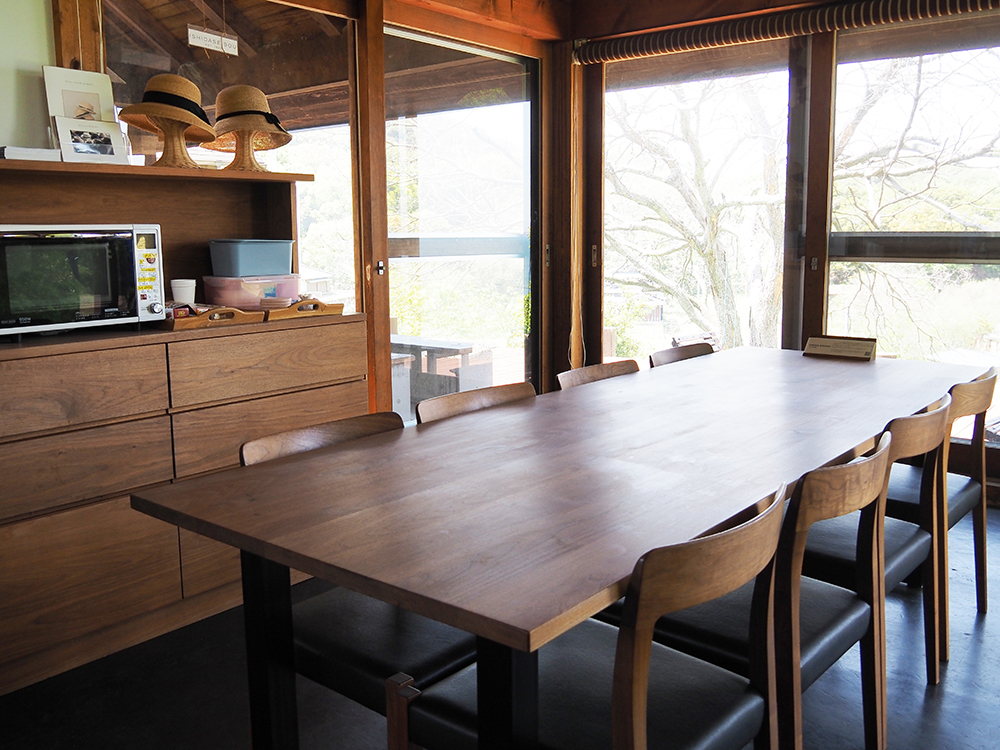
The spacious deck offers beautiful views of the Seto Inland Sea.
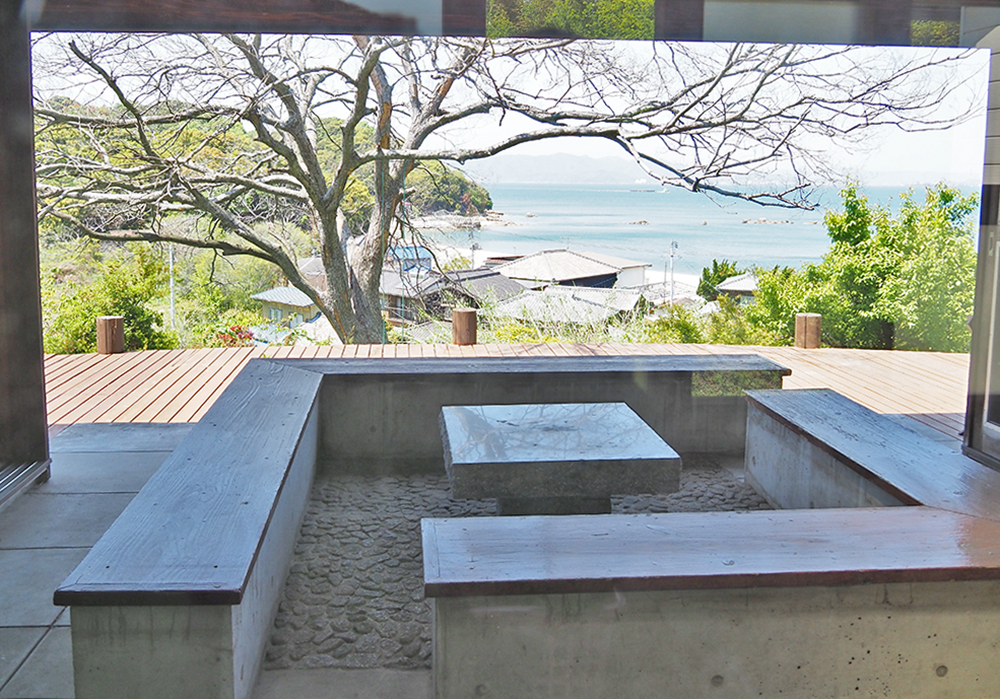
The entrance to the trekking route is just nearby. You can also reach the sea in about three minutes, making this an ideal location to experience the nature of Shiraishi-jima Island.
The furniture is from “Masterwal,” a popular brand by Akase Mokko Co., Ltd., headquartered in Satosho Town, Okayama Prefecture. It was donated by the company.
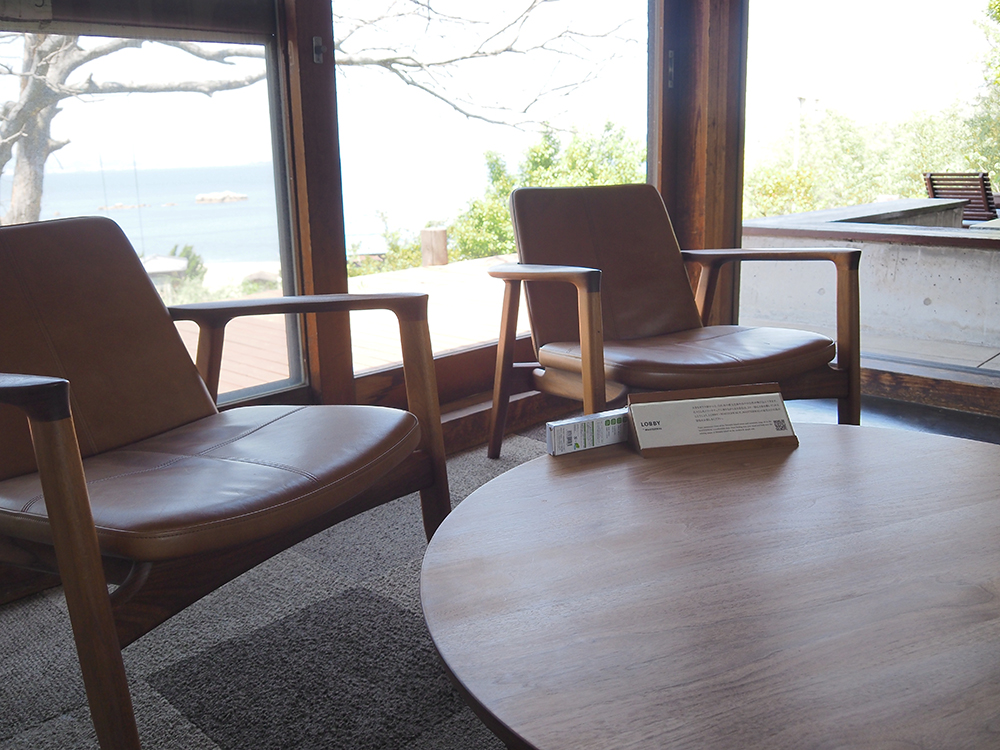
Masterwal uses solid walnut, one of the world’s three great hardwoods, and is built around the concept of “creating antique furniture for 100 years from now.”
Its simple design has a timeless beauty that could still be appreciated 100 years from now. It seemed to blend into the natural surroundings of Shiraishi-jima Island.
▼Accommodation rates are as follows:
- One room, one person: 4,500 yen per night (tax included)
- One room, two people: 8,000 yen per night (tax included)
- Ages 0–2: Free when sharing a bed with an adult
- Ages 3–7: 1,000 yen per night when sharing a bed with an adult (tax included)
- Ages 8 and up: Adult rate
A visit to Shiraishi-jima Island
On April 20, 2021, we visited Shiraishi-jima Island.
We boarded a regular ferry departing from Sumiyoshi Port in central Kasaoka City and arrived at Shiraishi Port about 35 minutes later.
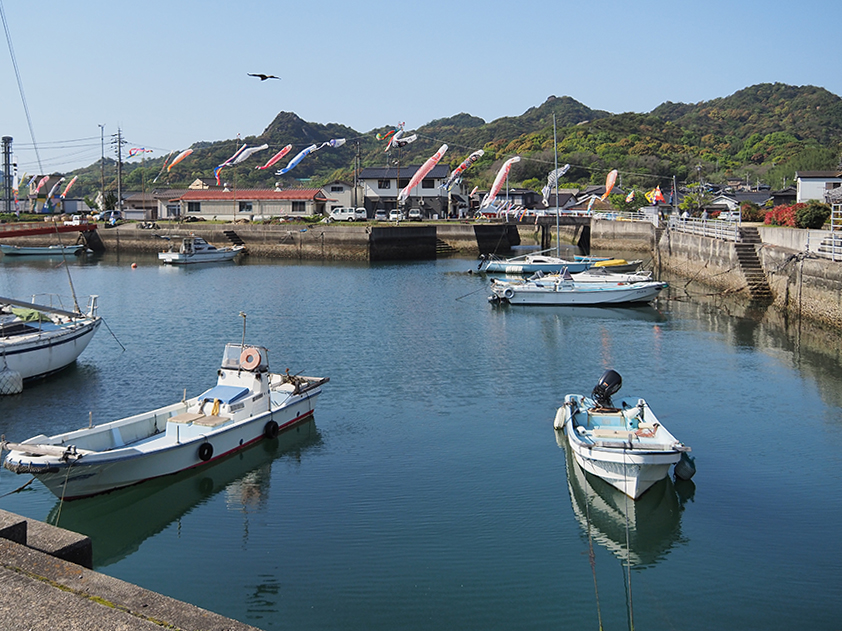
Just before Golden Week, we were greeted by a large number of carp streamers.
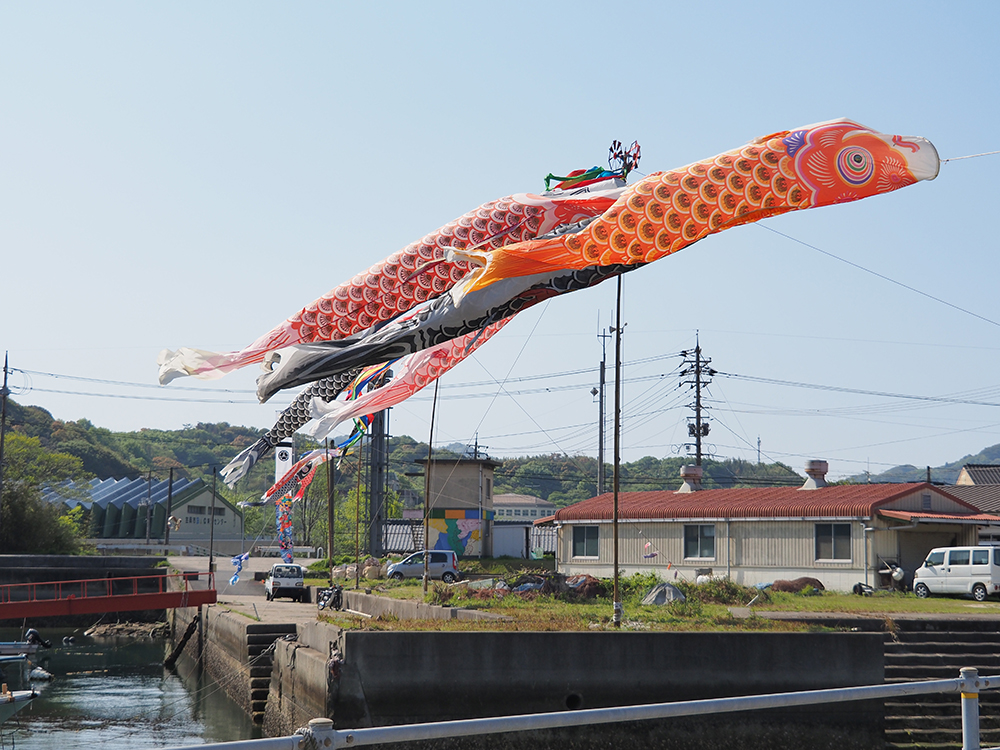
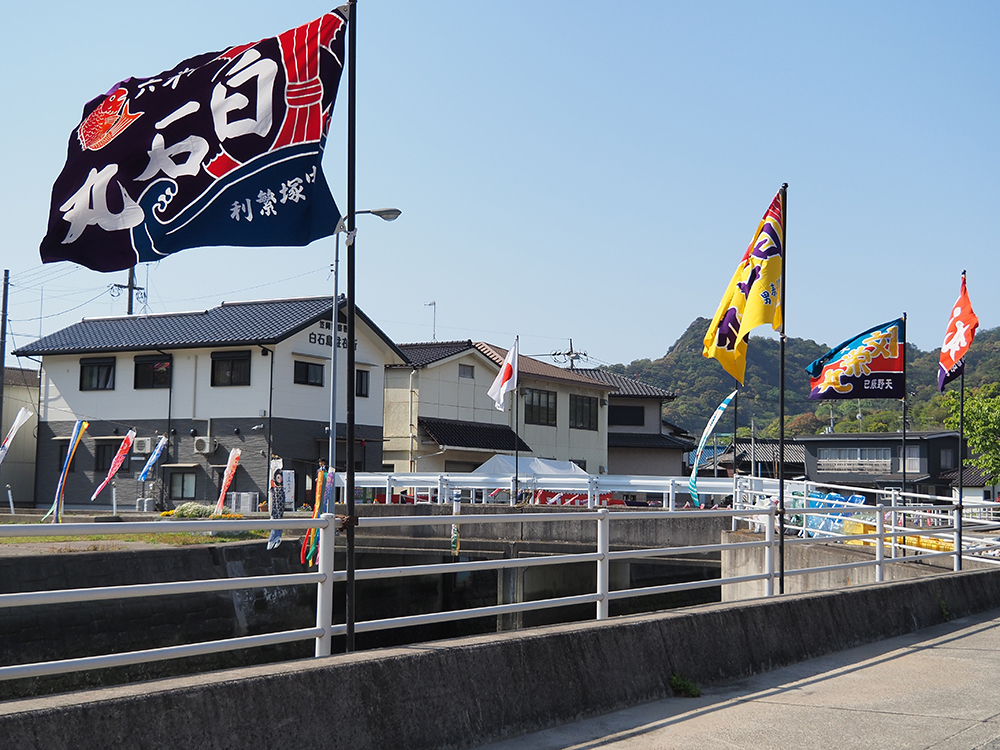
The carp streamers fluttered alongside large fishing flags, creating a spectacular sight.
At one house, a sign read, “We have Boys’ Day dolls on display. Please come and see them.” Through the window, we could see an impressive set of Boys’ Day dolls.
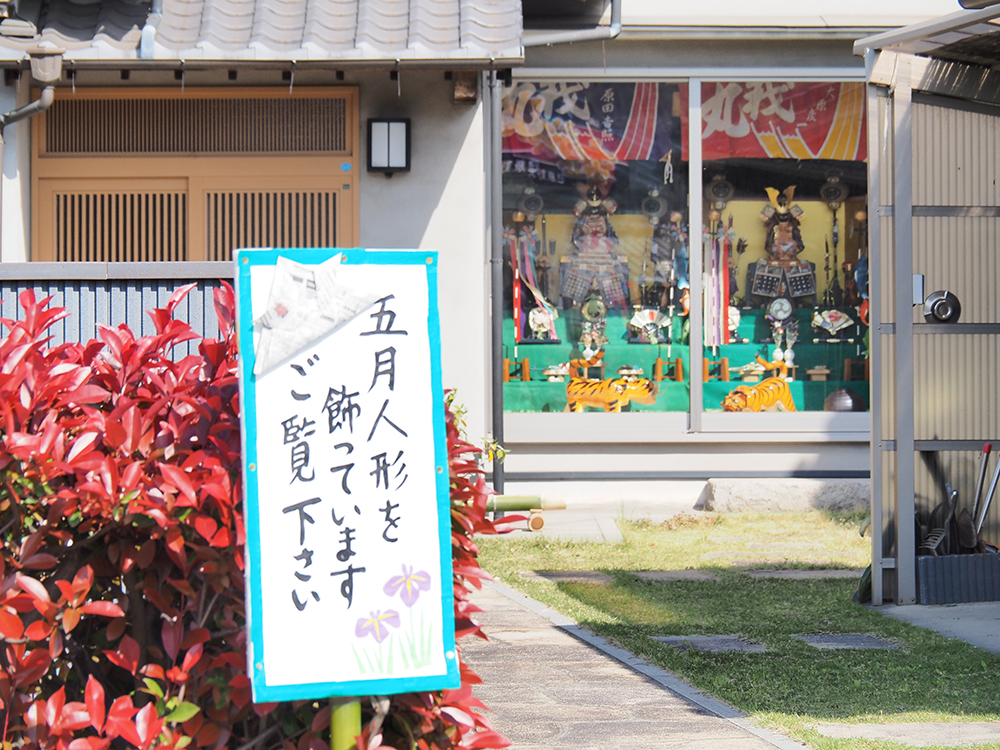
The welcoming atmosphere made us happy.
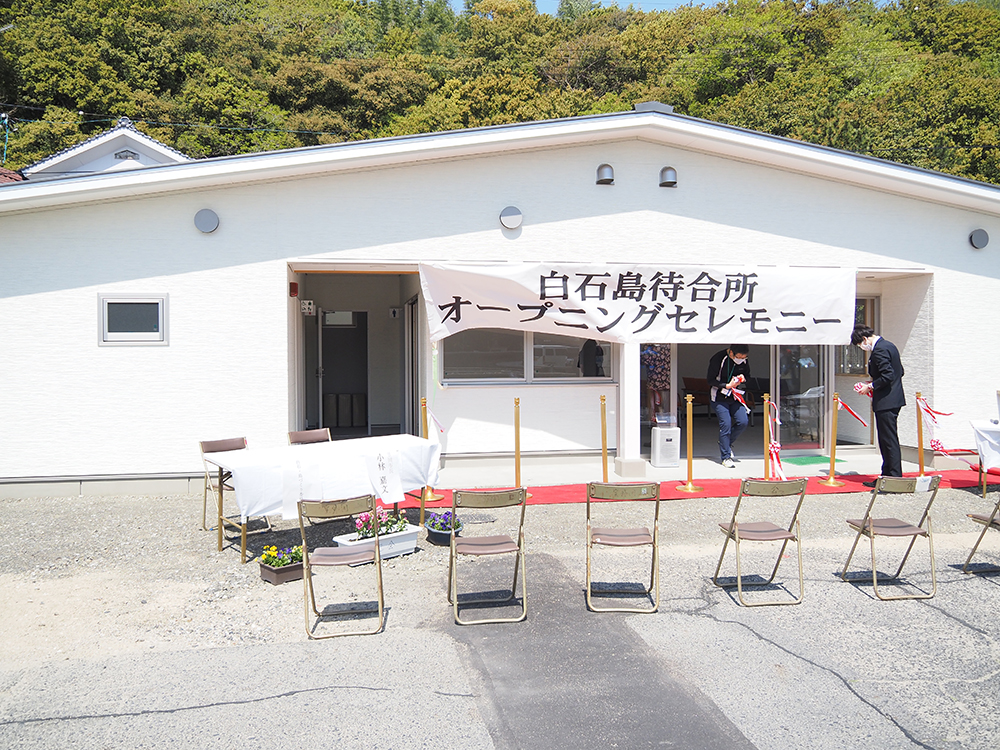
That day, an opening ceremony was held for the Shiraishi-jima Island Waiting Room near Shiraishi-jima Port.
There was also a renovation ceremony for the Shiraishi-jima Island Police Substation of Kasaoka Police Station.
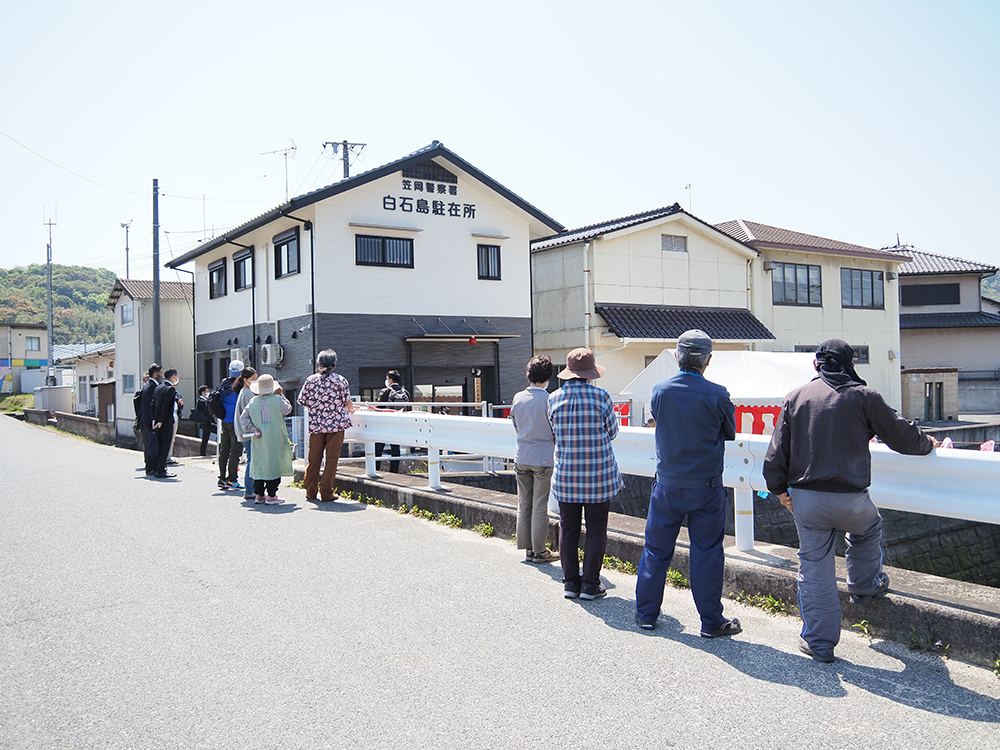
Island residents stopped by, and it was lively.
The fire station in front of Shiraishi-jima Island Community Center is decorated with a mural.
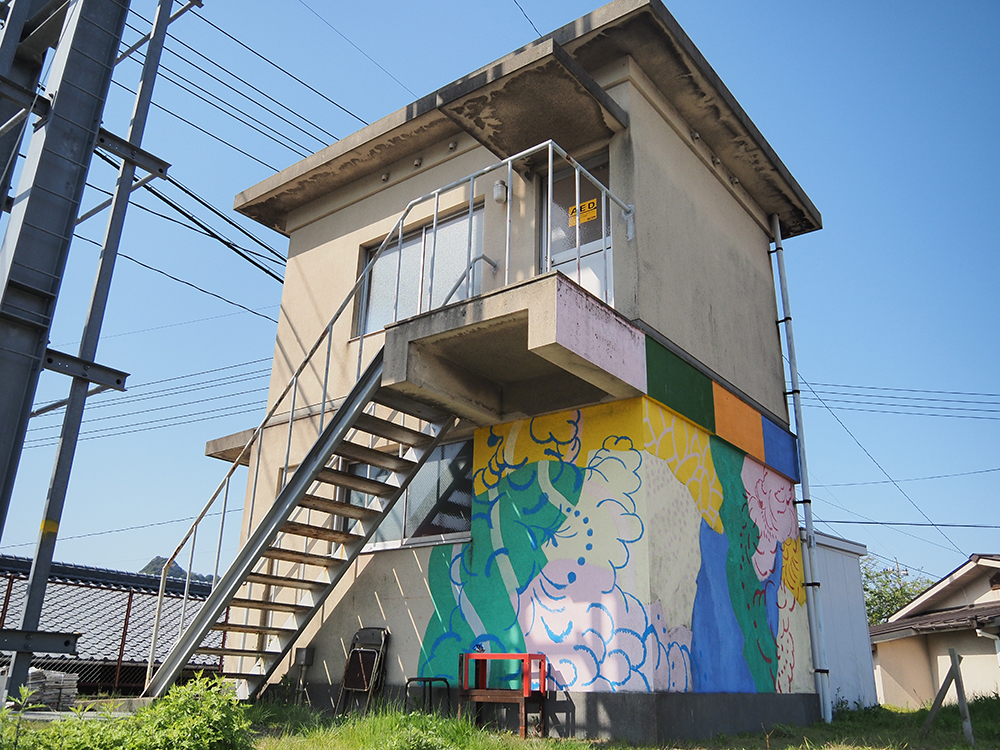
The work, titled “Island of Paradise,” is by artist Radek Predygier, who was born in Poland in 1973.
It is one of the works created for “Kasaoka Islands Art Bridge 2017,” held in August 2017 as part of an artist residency and exchange program.
For Kasaoka Islands Art Bridge, artists stayed for short periods on Shiraishi-jima Island, Takashima, and Mushima, and worked with island residents to create works inspired by island life and everyday experiences.
The colorful mural, in harmony with the tranquil scenery, reminded me of the people of Shiraishi-jima Island, who warmly and naturally welcome visitors.
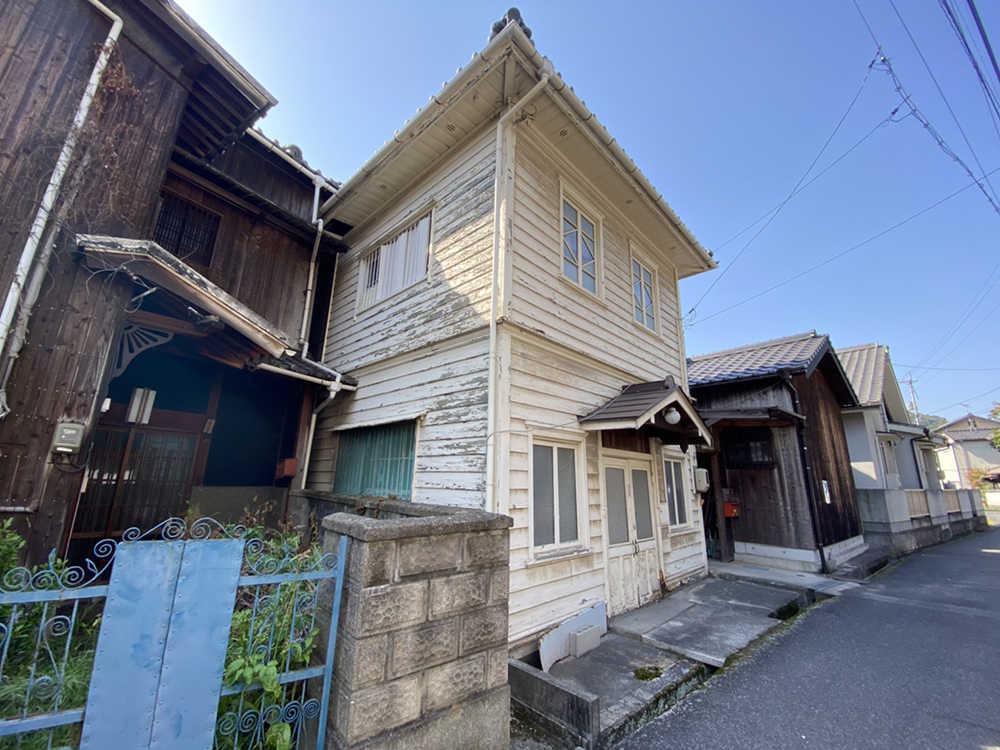
Turning off the coastal road into an alley, you’ll find old-fashioned buildings still standing.
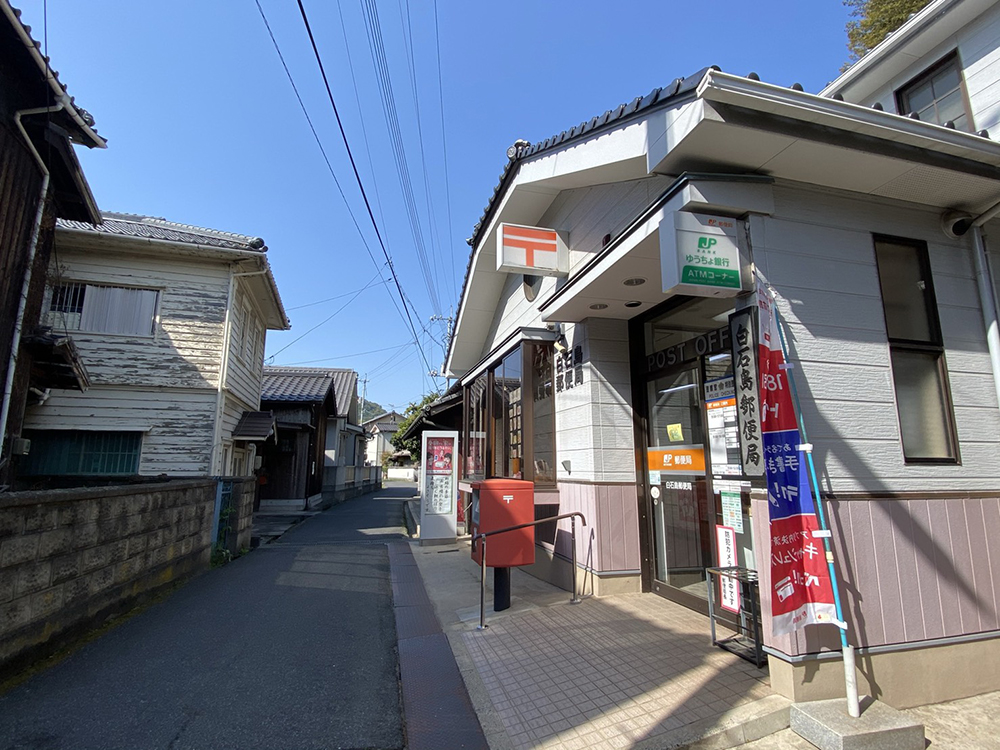
This building used to be a post office. It has a retro charm.
A new post office had been built across the street.
Apparently, Shiraishi-jima Island once had a movie theater.
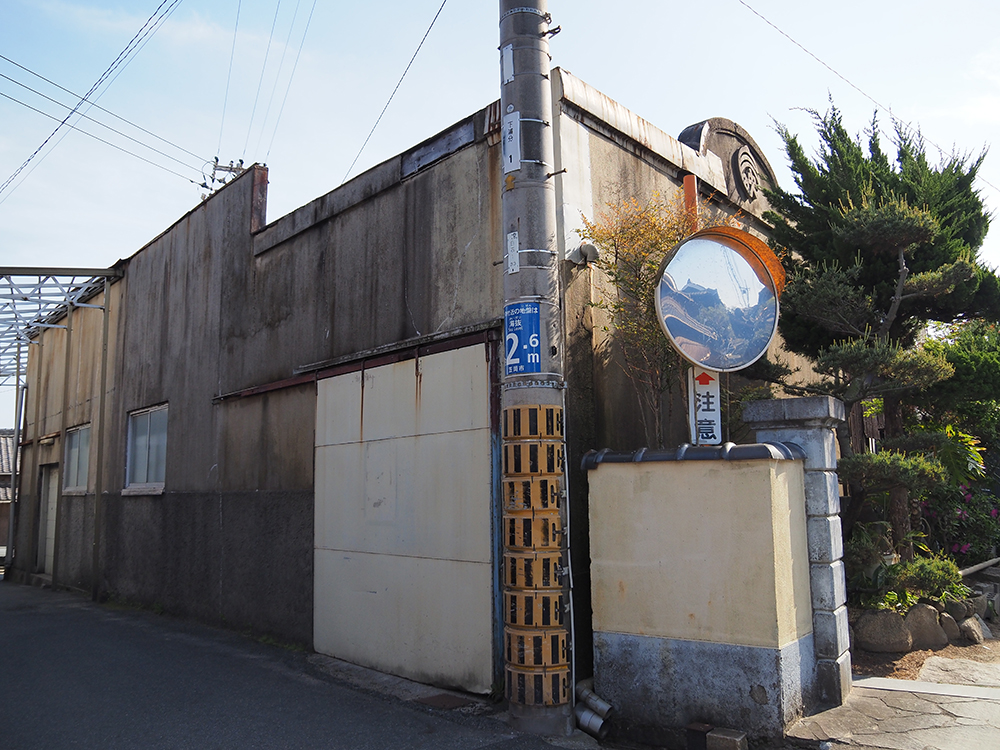
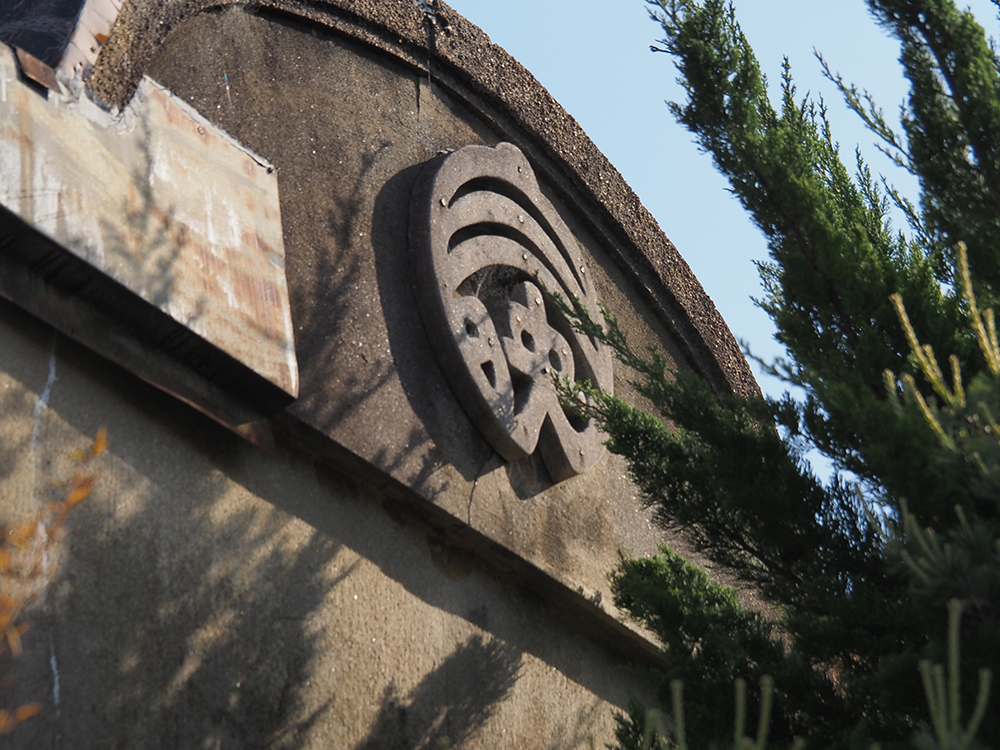
The building with the character “映” displayed on it is the former movie theater. See if you can find it.
We stopped by “Amano Store Food Shop,” the largest store on the island.
It stocks a full range of everyday necessities, including vegetables, food, seasonings, stationery, and medicine.
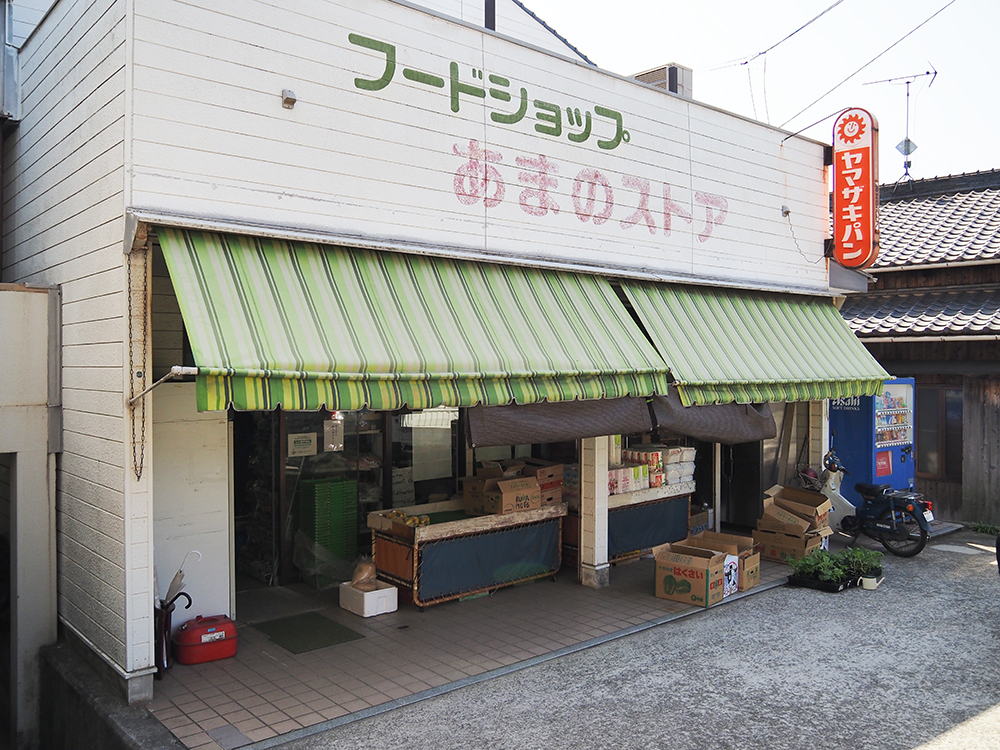
The streetscape on Shiraishi-jima Island is well maintained and made a very clean impression. The island’s peaceful atmosphere made walking around a pleasure.
Behind the tea fields, where mulberry trees are being grown on abandoned farmland, we saw Shiraishi-jima Elementary School, currently closed, and Shiraishi-jima Junior High School, which will close from the 2022 school year.
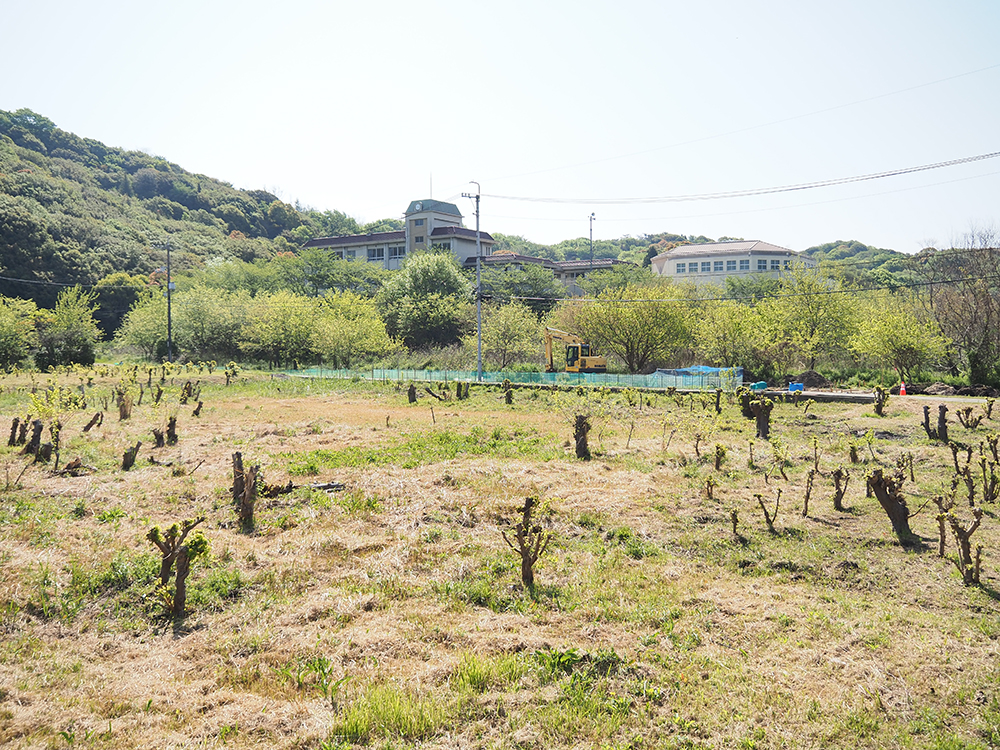
Compared with the mainland, which is reached by ferry, life here may not be as convenient.
Even so, more and more people are choosing to live on Shiraishi-jima Island, drawn by the great appeal of living in harmony with nature.
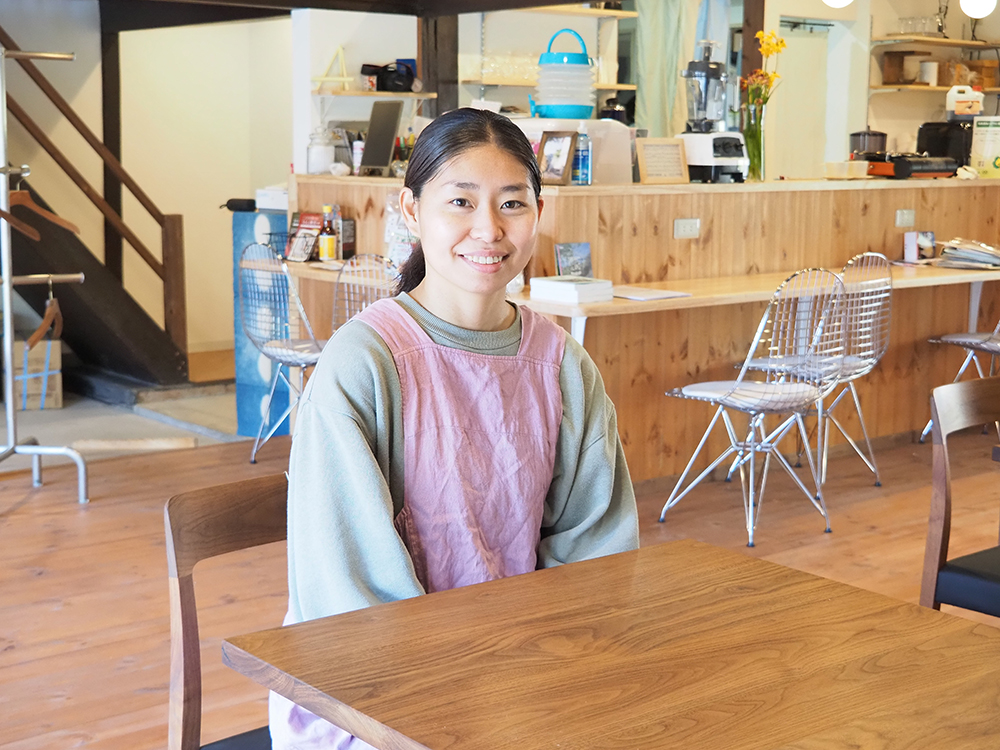
We spoke with Muya Ayumi, who moved to Shiraishi-jima Island with her family because they wanted to live there. In 2021, it had been three years since their move.