The Kasaoka Islands, specifically Mukushima, is an island located at the southernmost tip of Okayama Prefecture.
From late January to mid-February, the daffodils planted mainly by the islanders bloom all over the island, filling the area with a sweet fragrance.
To the south of Mukushima lies Shikoku. The strait between them is an important shipping route for large passenger ships crossing the Seto Inland Sea, yet it is a difficult area due to the swift tidal currents.
To protect this shipping route, the first lighthouse established in Okayama Prefecture was the Mukushima Lighthouse.
At the end of January, I crossed over to Mukushima to see the collaboration of the island's symbol, the Mukushima Lighthouse, and the daffodils.
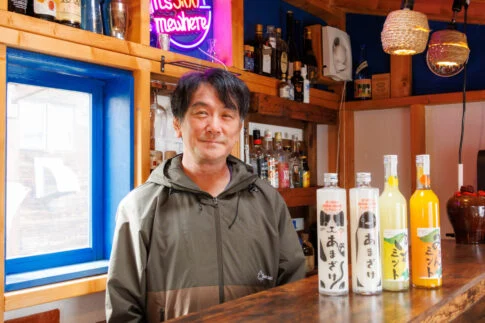
I will introduce an overview and highlights. I also spoke with Ryuuhei Iseki, who has lived on Mukushima for six years and runs the Mukushima Brewery.
The information provided is from an article published in February 2022. Please note that it may differ from current information.
What are the Kasaoka Islands?
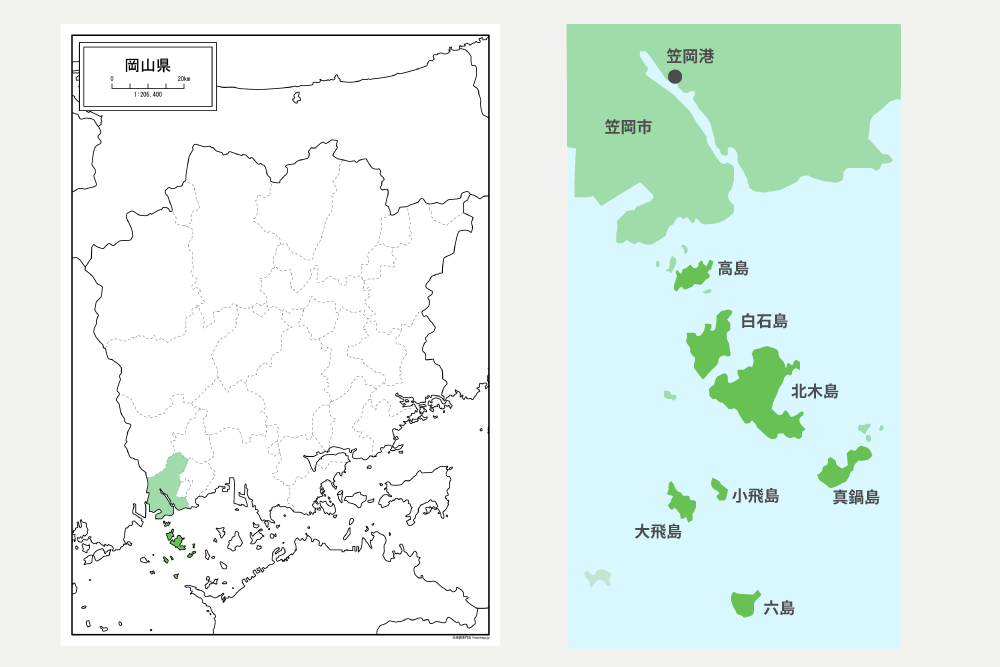
The Kasaoka Islands are a group of 31 islands, large and small, located off the southwestern tip of Okayama Prefecture, near Kasaoka City. Among them, there are 7 inhabited islands as follows:
Oobishima and Kobishima are collectively referred to as Hishima.
There are no bridges to the islands, and travel is done by boat from the port of Kasaoka City.
The islands have a tranquil and calm atmosphere.
Along with the islands of Marugame City, Shodoshima Town, and Tonosho Town in Kagawa Prefecture, it is designated as a Japan Heritage under the title "Do You Know!? The Stone Islands Where Eternal Time Flows - The Bisan Islands That Built the Foundation of Japan Across the Sea."
What is Mukushima?
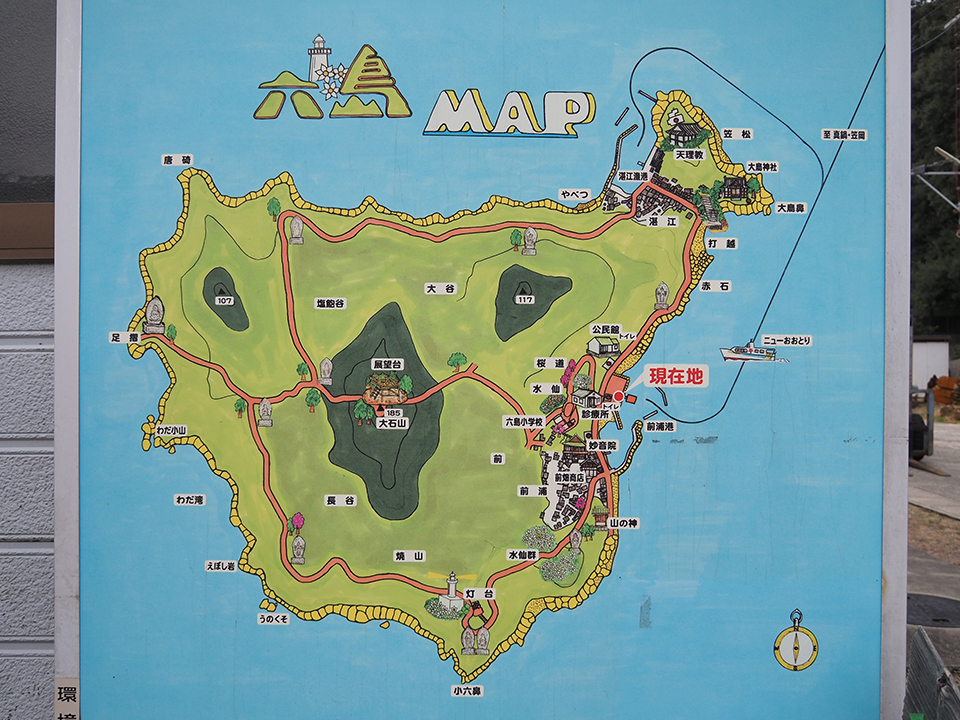
Mukushima is the southernmost island of the Kasaoka Islands. It is also the southernmost point of Okayama Prefecture.
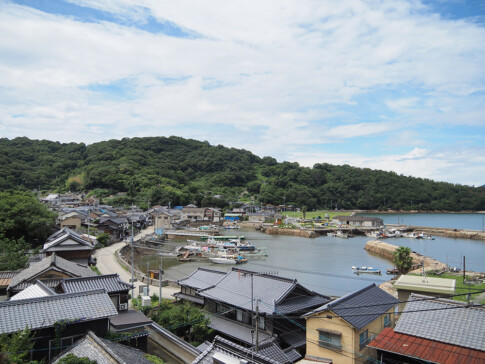
There are two districts, Tatae and Maeura, and two ports.
| Item | Content |
|---|---|
| Population (as of December 31, 2021) | About 50 people |
| Area | 1.02 square kilometers |
| Perimeter | 4.3 kilometers |
| Features | Mukushima Lighthouse, Daffodils, Hijiki |
| Transportation on the island | On foot / Private car |
There is a road for vehicles only around the area of Maeura Port, which is less than 1 kilometer. The rest is pedestrian paths. Walking is recommended for getting around.
Access to Mukushima
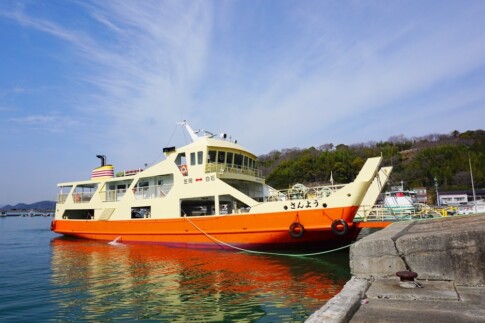
Boats depart from Minato Kobanshi at Sumiyoshi Port in Kasaoka City to Mukushima's Tatae Port and Maeura Port.
The journey takes about 1 hour by passenger boat.
Make sure to board the boat for Mukushima, not the one for Manabe-shima.
▼ For more details, please see the article below.
Representative Spots and Activities on Mukushima
Here are the representative spots and features of Mukushima, a small island with a perimeter of about 4.6 kilometers, located at the southernmost point of Okayama Prefecture.
Mukushima Lighthouse
The Mukushima Lighthouse is located on a hill overlooking the Seto Inland Sea on the southern side of Mukushima.
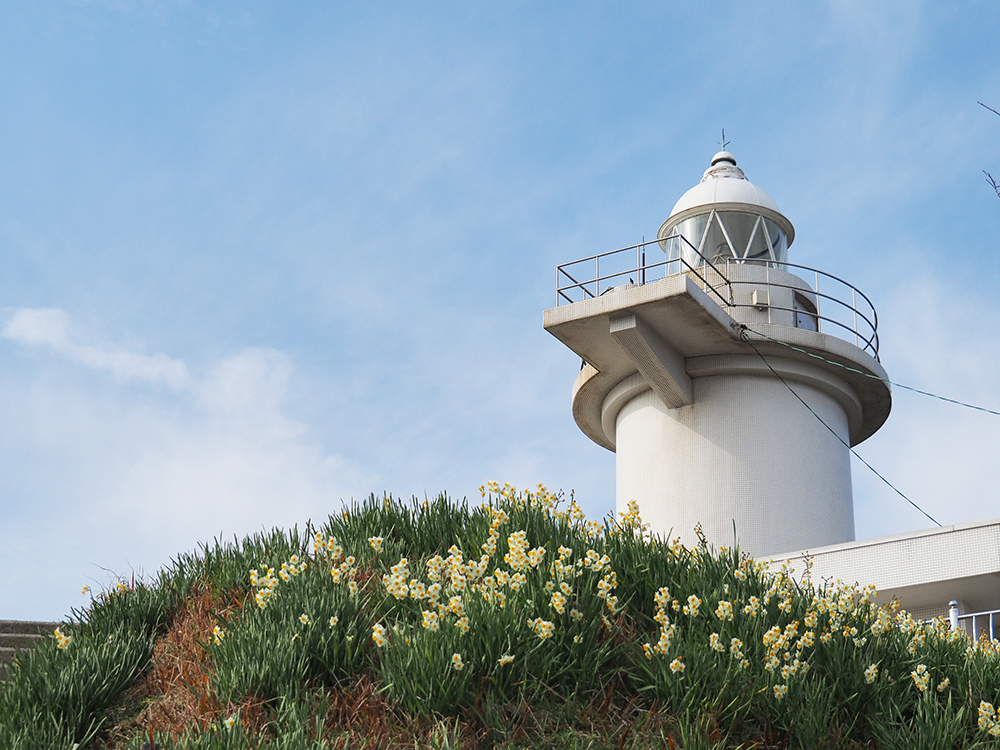
It is the first lighthouse established in Okayama Prefecture, with its first lighting in 1922.
It was renovated in 1984 and has been watching over the sea for about 100 years.
In 2016, it was recognized as one of the "Lighthouses in Love," making it a romantic spot.
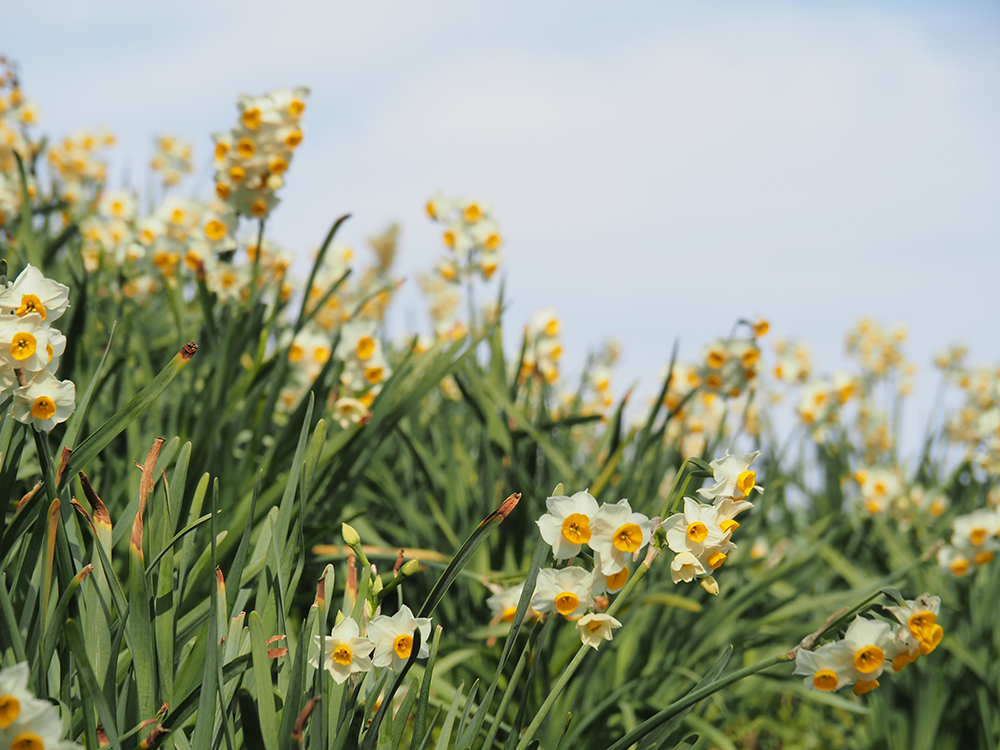
From late January to mid-February, it becomes a photo spot surrounded by blooming daffodils.
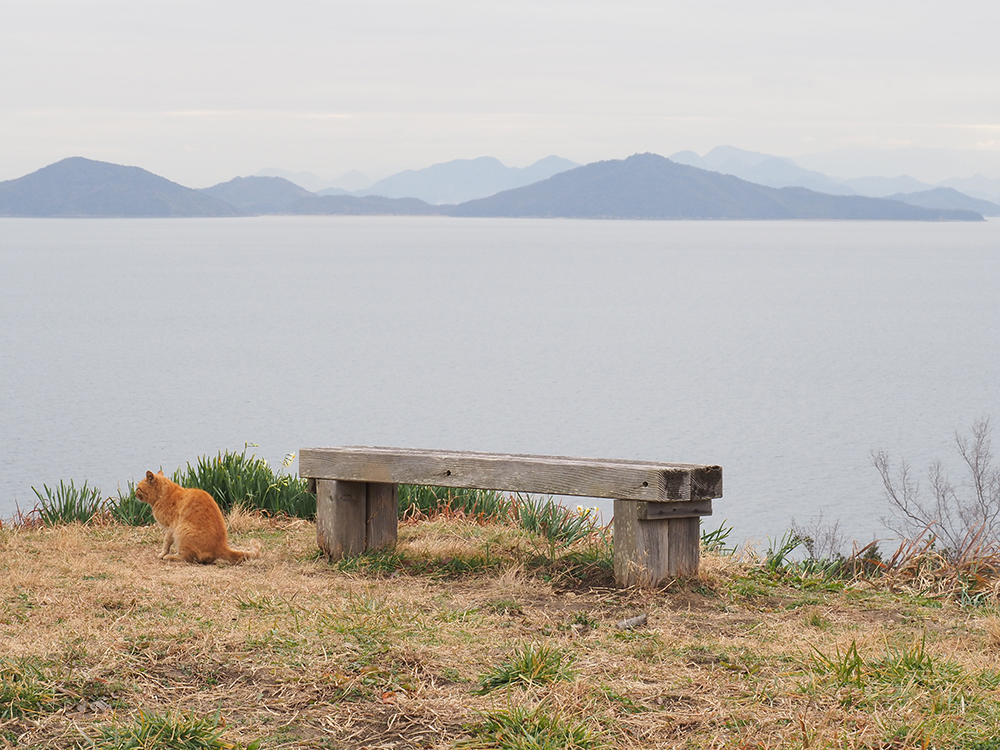
There are benches available, allowing you to relax and enjoy the view.
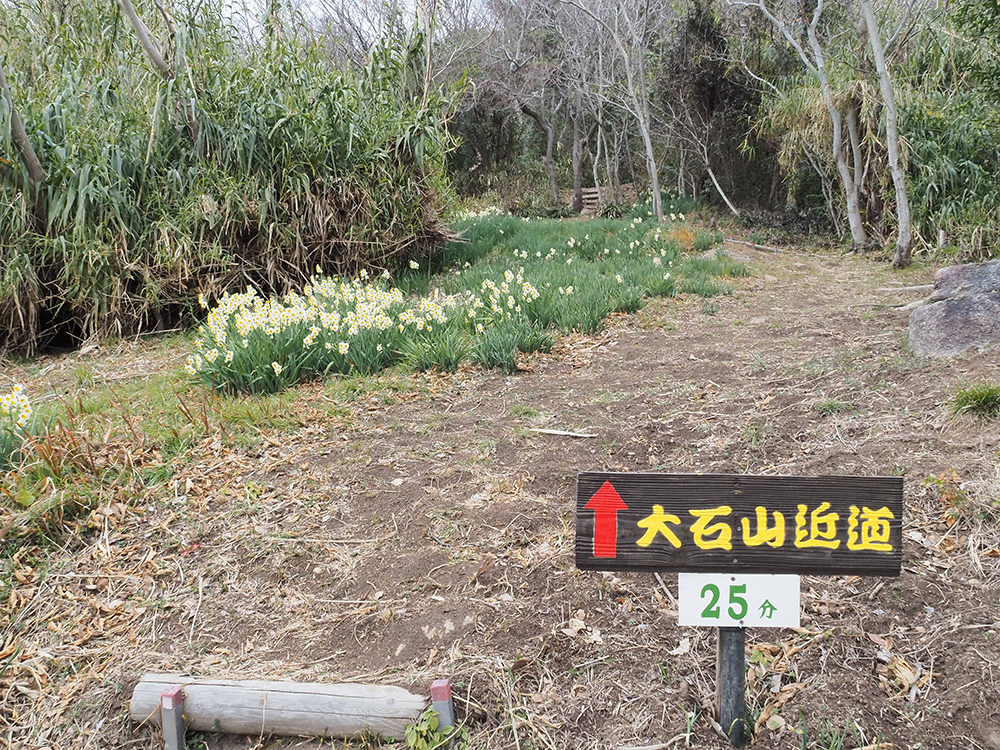
To the north of the Mukushima Lighthouse is Oishi-yama, which has an elevation of 185 meters and an entrance to a hiking trail.
Daffodil Road
Daffodils can be seen not only around the Mukushima Lighthouse but also in various places throughout the island.
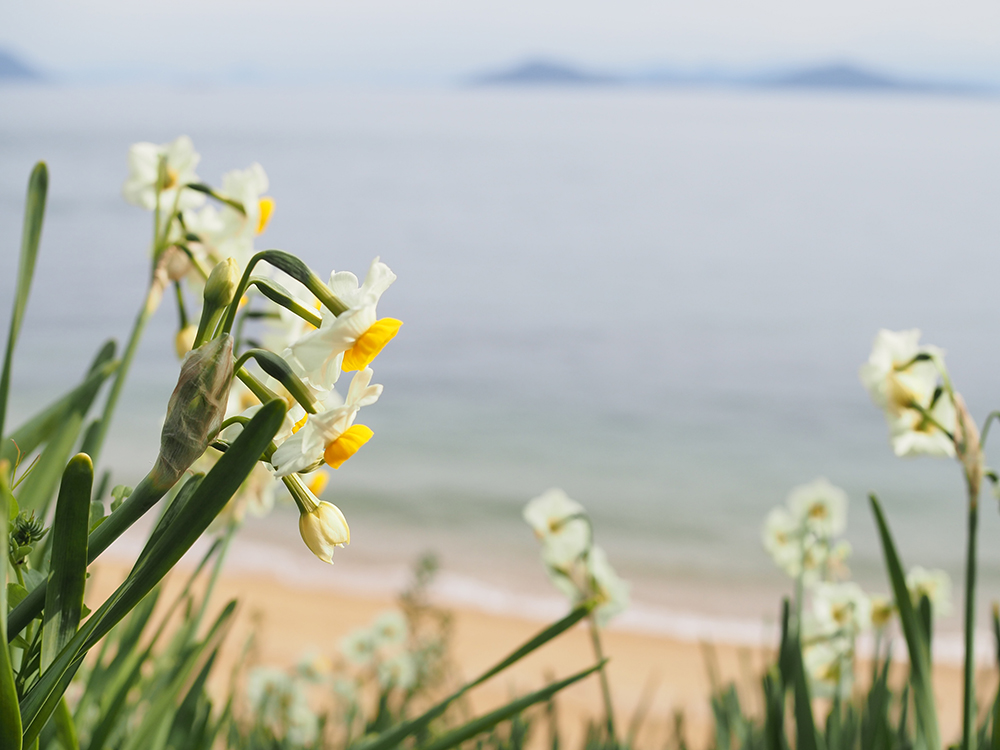
Among them, the Daffodil Road, located on the way from Maeura Port to Mukushima Lighthouse, has a wide range of blooming daffodils.
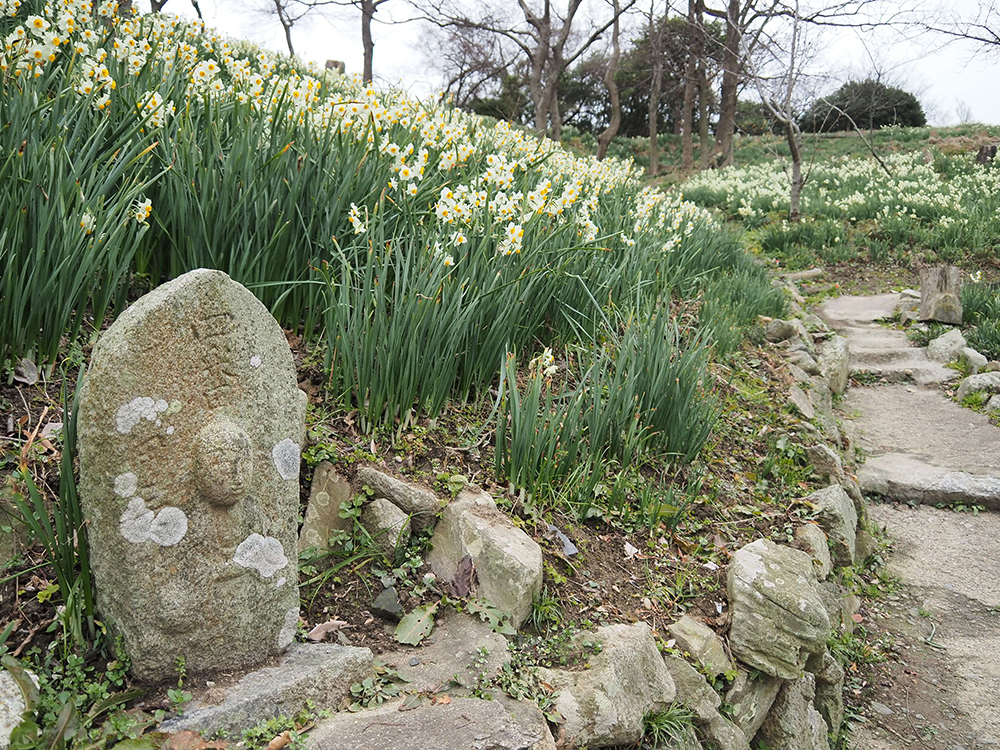
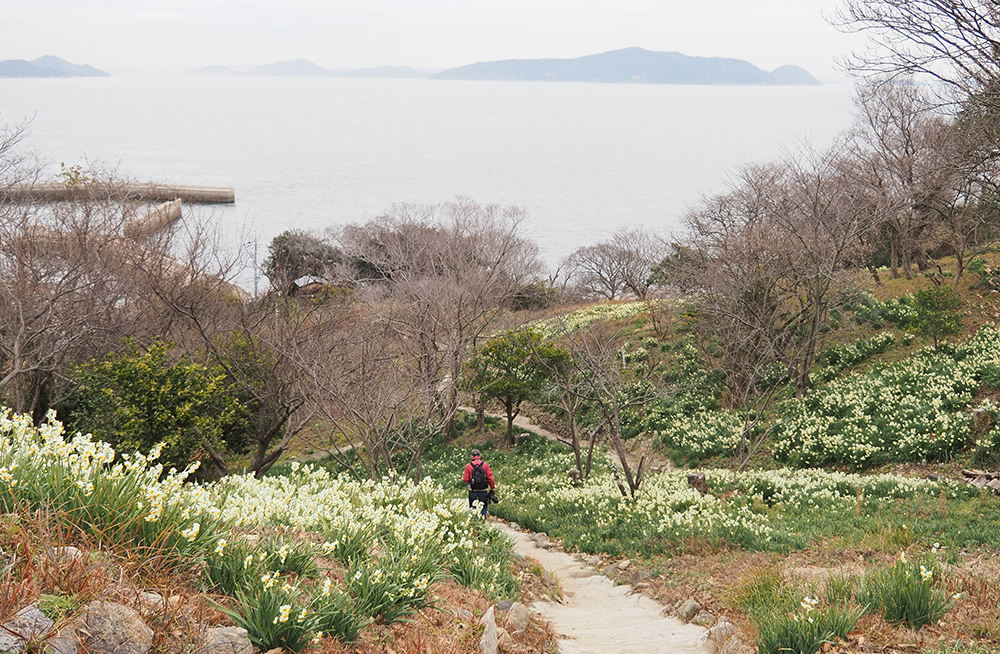
The collaboration of Mukushima's houses, the Seto Inland Sea, and the narrow paths is beautiful.
There are benches and handmade playground equipment by the islanders, making it feel like a small park.
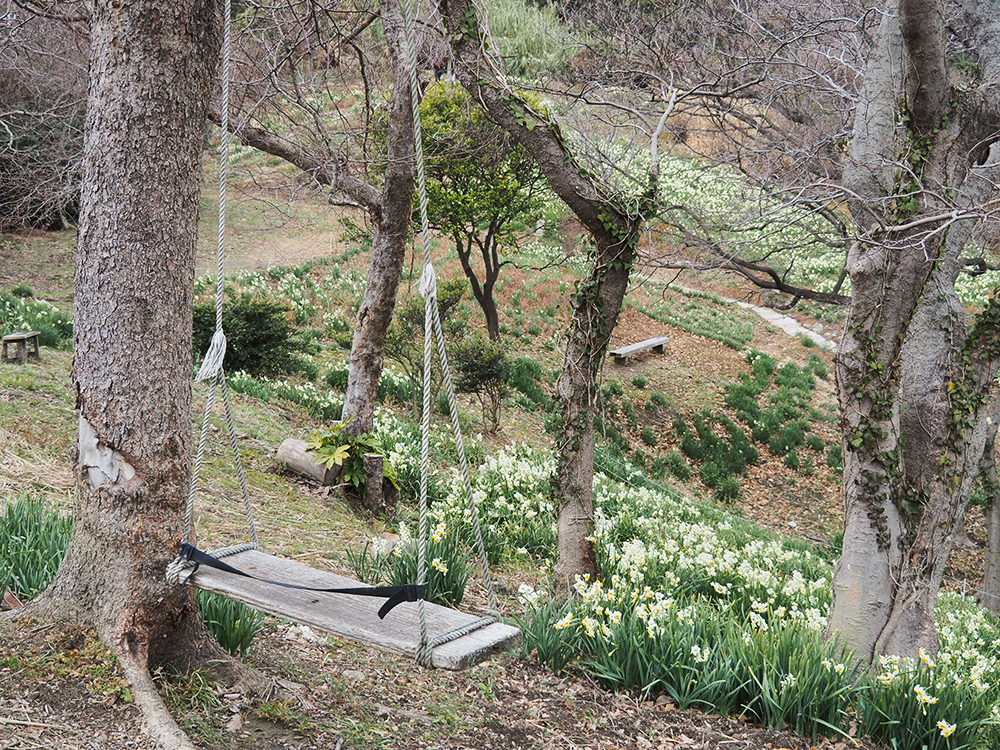
It is a perfect place to take a break.
Ootori Shrine
Located between Maeura Port and Tatae Port, at the northern tip of the island, is Ootori Shrine.
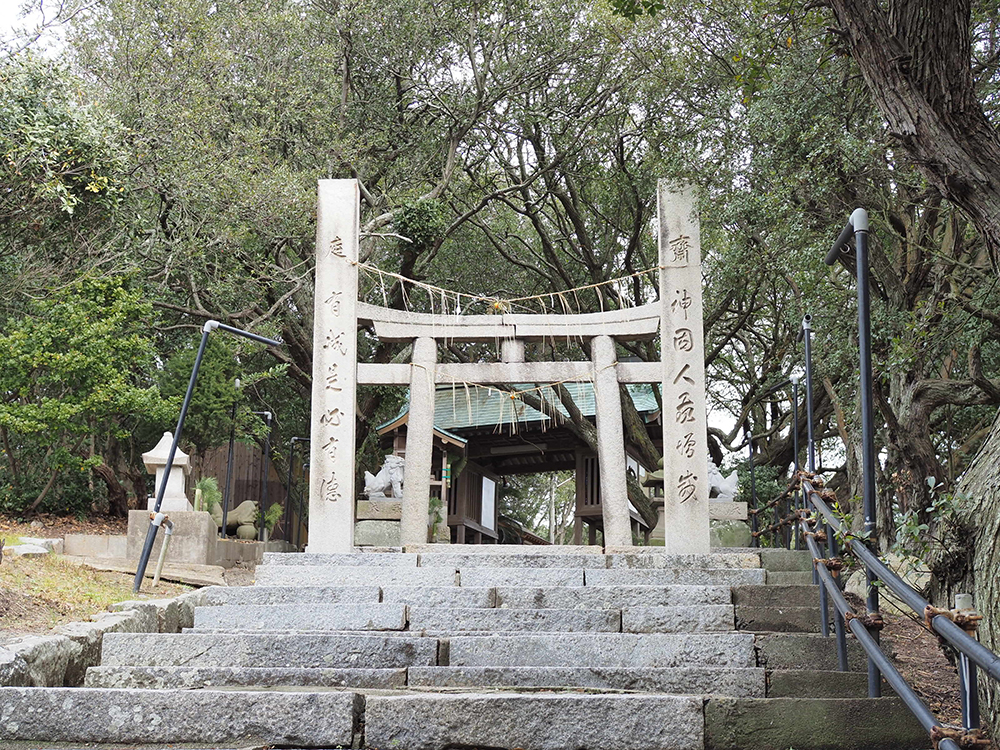
The deity enshrined is the Arakami deity. It is said that the festival prefers rough weather, and during the annual festival, the "Mikoshi" (portable shrine) is famously spun around with the shout of "Yo-masse!" (Let's turn it around) at various locations on the island.
It is said that in the past, they even spun the Mikoshi in the sea.
The festival used to be held every year during the Golden Week in May, but it has been canceled due to the COVID-19 pandemic.
Hijiki
The rich marine life nurtured by abundant plankton and swift tidal currents is not limited to fish.
The hijiki seaweed that grows on the rocky shores of the island is exquisite.
The "Hifumi-chan Natural Hijiki" made by Hifumi Miyake is prepared by boiling it in an iron pot after harvesting and then sun-drying it.
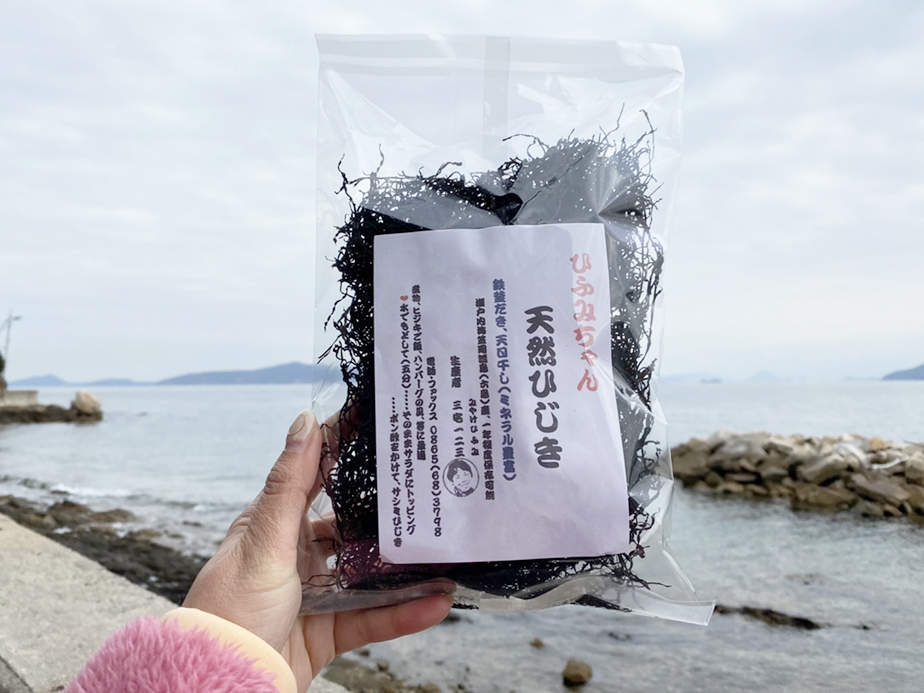
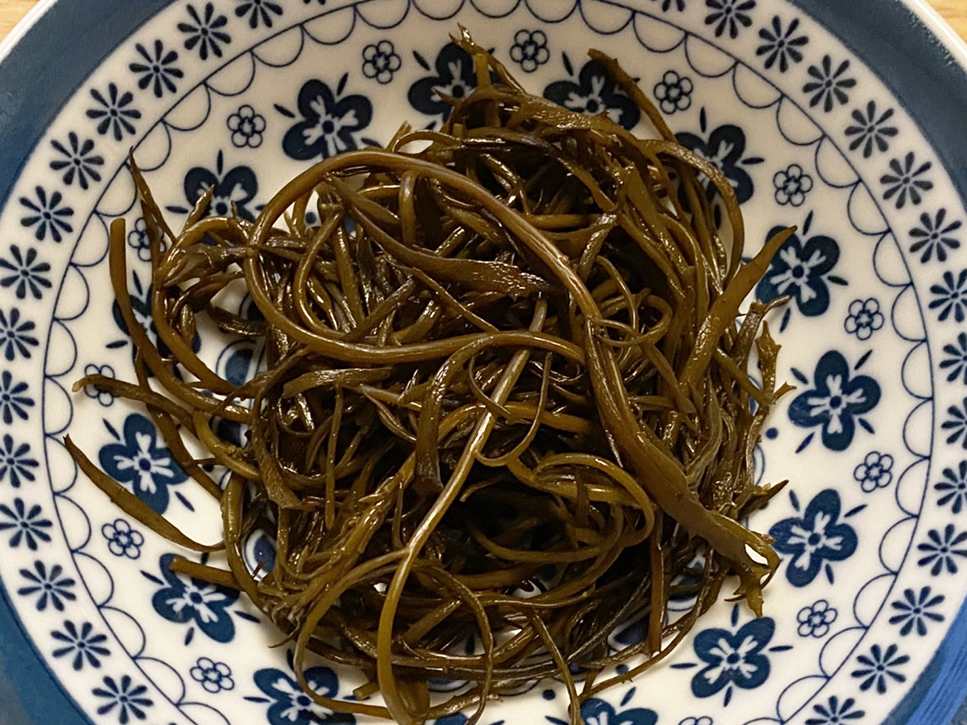
You can eat it by soaking it in water for about 5 minutes without boiling and adding ponzu sauce.
It has a crunchy texture! The aroma of the sea fills your mouth, making it exquisite!
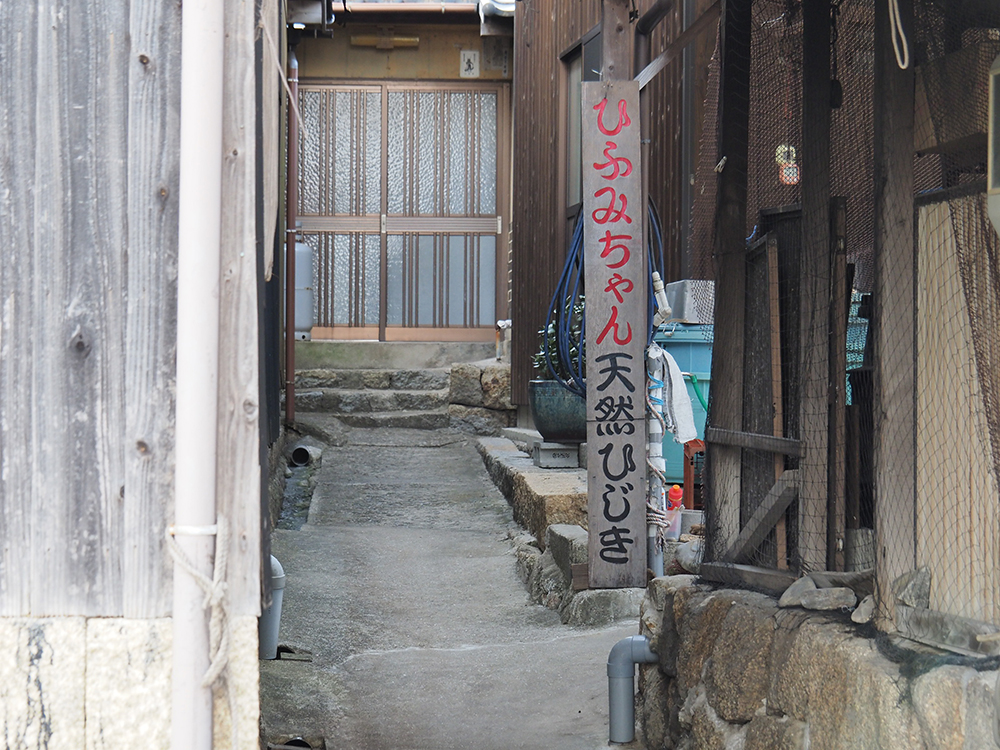
You can purchase "Hifumi-chan Natural Hijiki" at the workshop near Maeura Port, as well as at souvenir shops in Kasaoka City.
Mukushima Brewery
The Mukushima Brewery, established in 2019, is located near Maeura Port, where Ryuuhei Iseki, a former Community Revitalization Cooperator, brews craft beer.
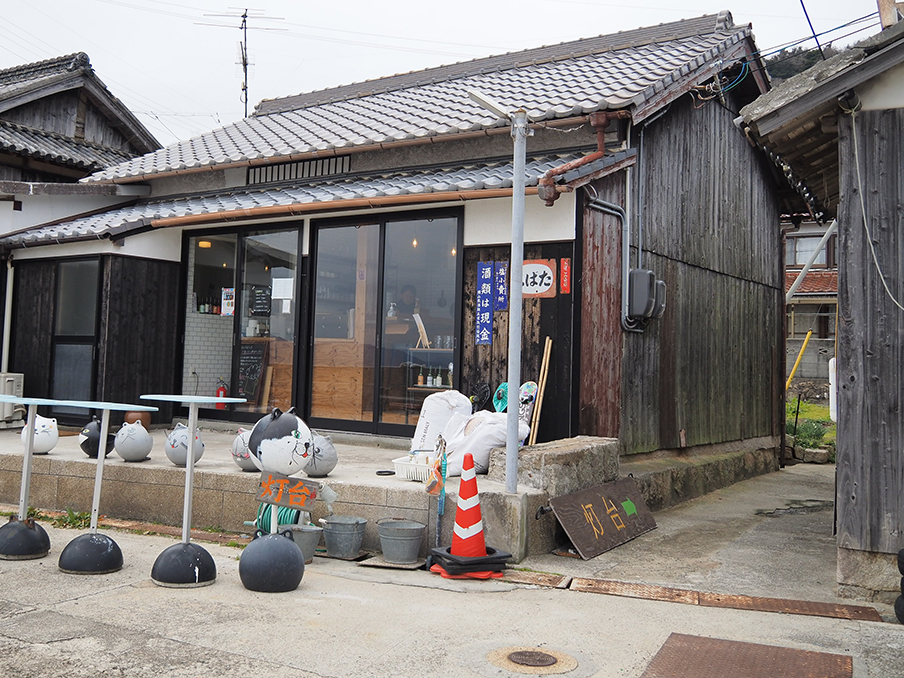
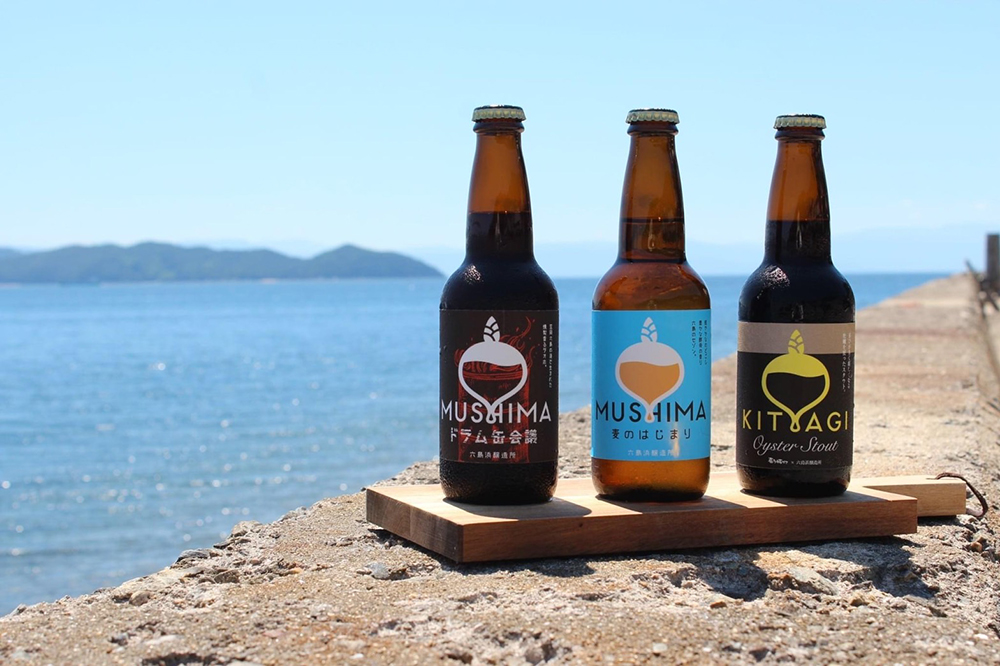
The "Mukushima Barley Beginning," named after the revival of the barley fields that existed decades ago on Mukushima, the "Kitagi-shima Oyster Stout," characterized by the gentle umami of oysters, and the "Mukushima Drum Can Meeting," which features the flavor of smoked hijiki, are the standard products.
Additionally, there is a bar space where you can drink the beer made at the brewery.
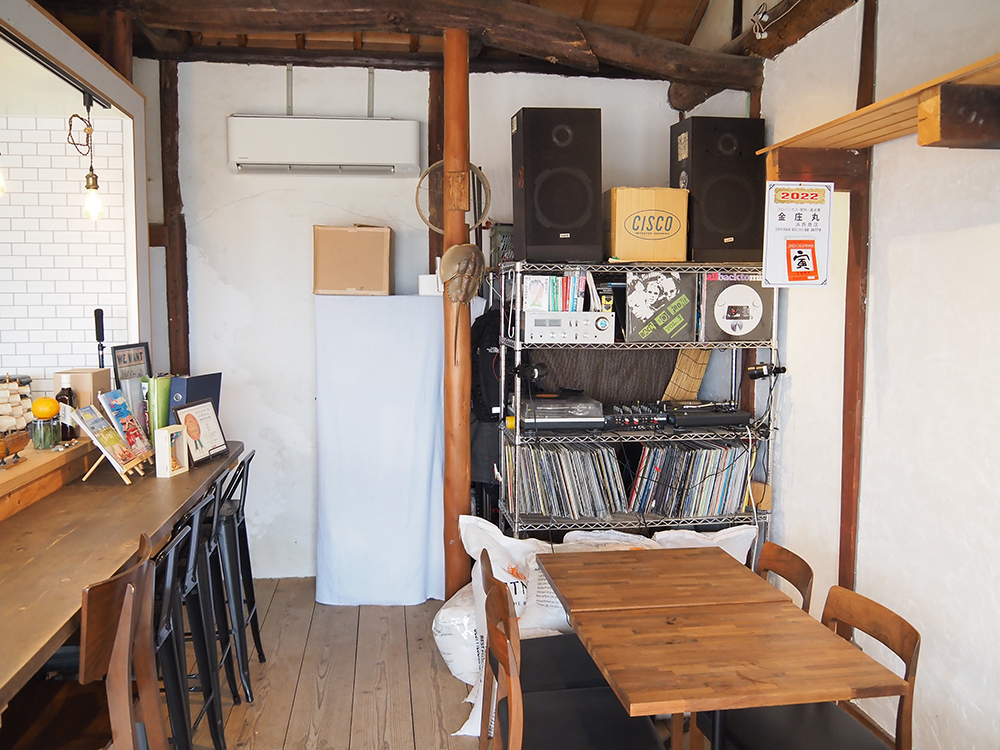
For those who cannot drink beer, there are also coffee and other menu options available.
Beer can be purchased not only at Mukushima Brewery but also at souvenir shops in Kasaoka City.
I Actually Walked Around Mukushima
At the end of January 2022, I visited Mukushima.
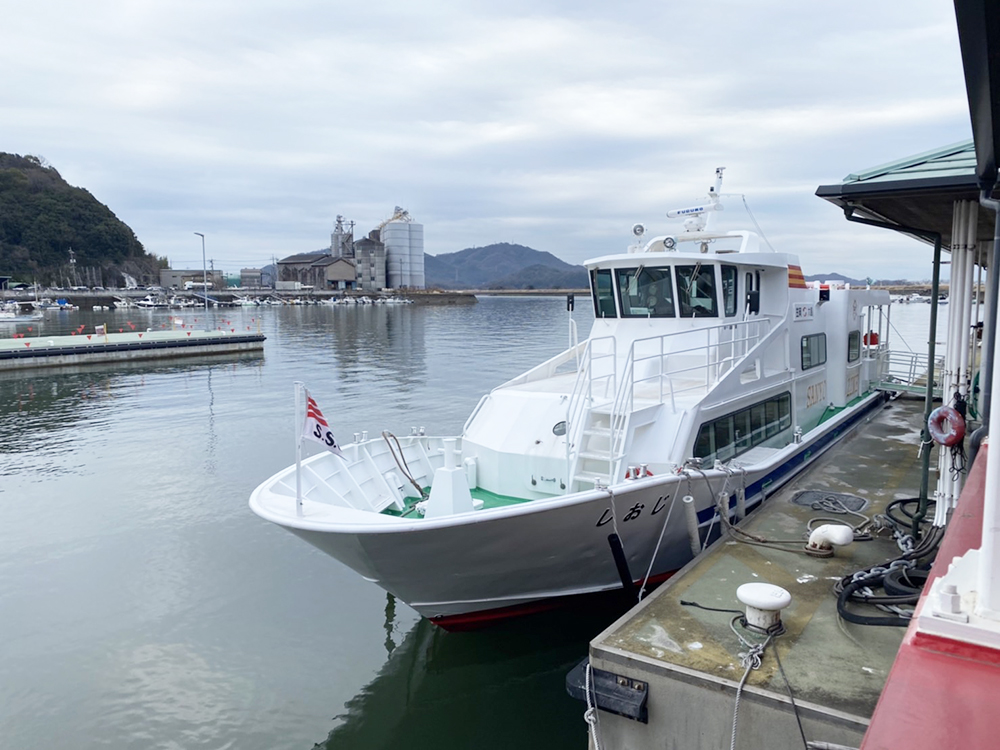
I boarded a passenger boat departing from Sumiyoshi Port in Kasaoka City.
It was a new boat, and both the exterior and interior were shiny.
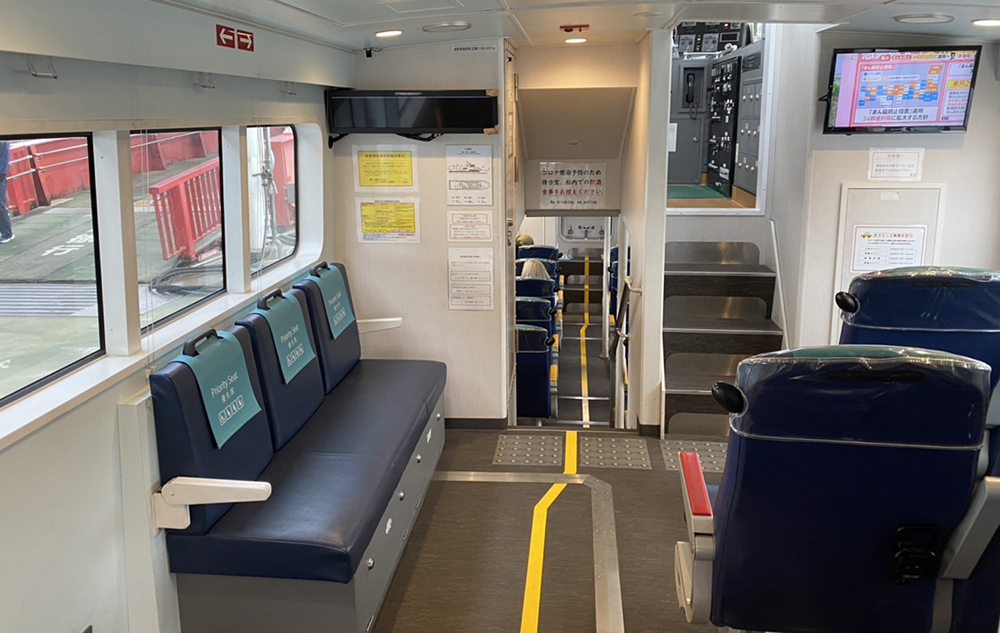
Upon boarding, the crew member asks, "Will you disembark at Tan'ei Port or Maeura Port on Rokushima?"
Maeura Port is closer to Rokushima Lighthouse, but even if you mistakenly disembark at Tan'ei Port, it's within walking distance, so don't worry.
At 9:50 AM, about an hour after boarding at 8:50 AM, we arrived at Maeura Port on Rokushima.
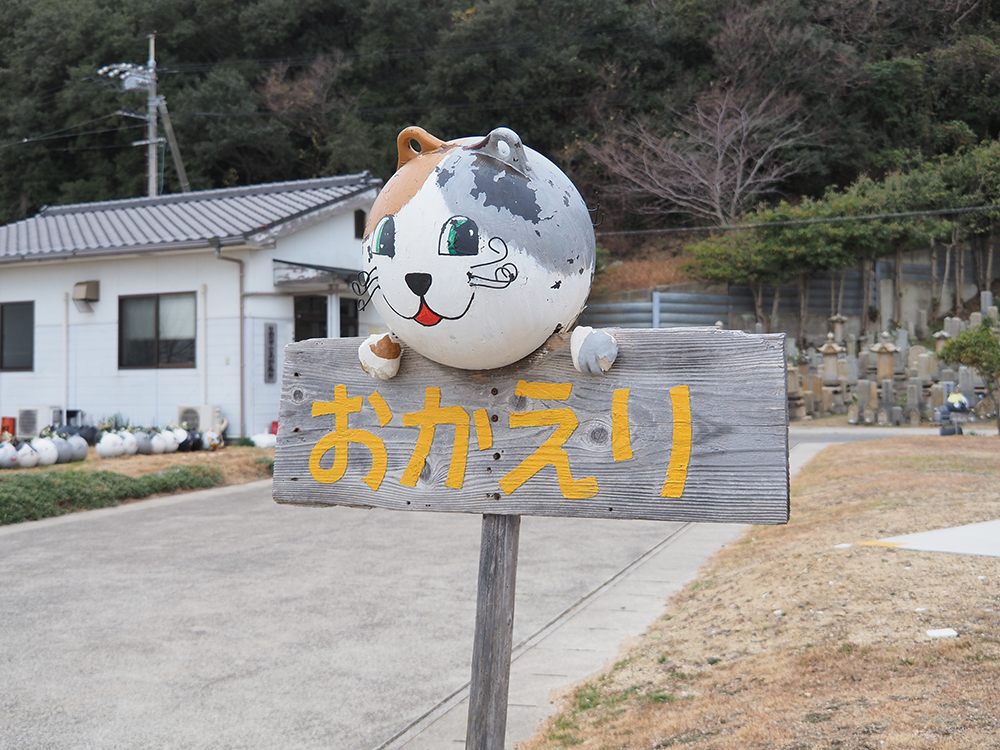
The first thing that catches your eye is a sign that says "Welcome back."
Decorative buoys with cat faces could be seen everywhere on the island, serving as landmarks.
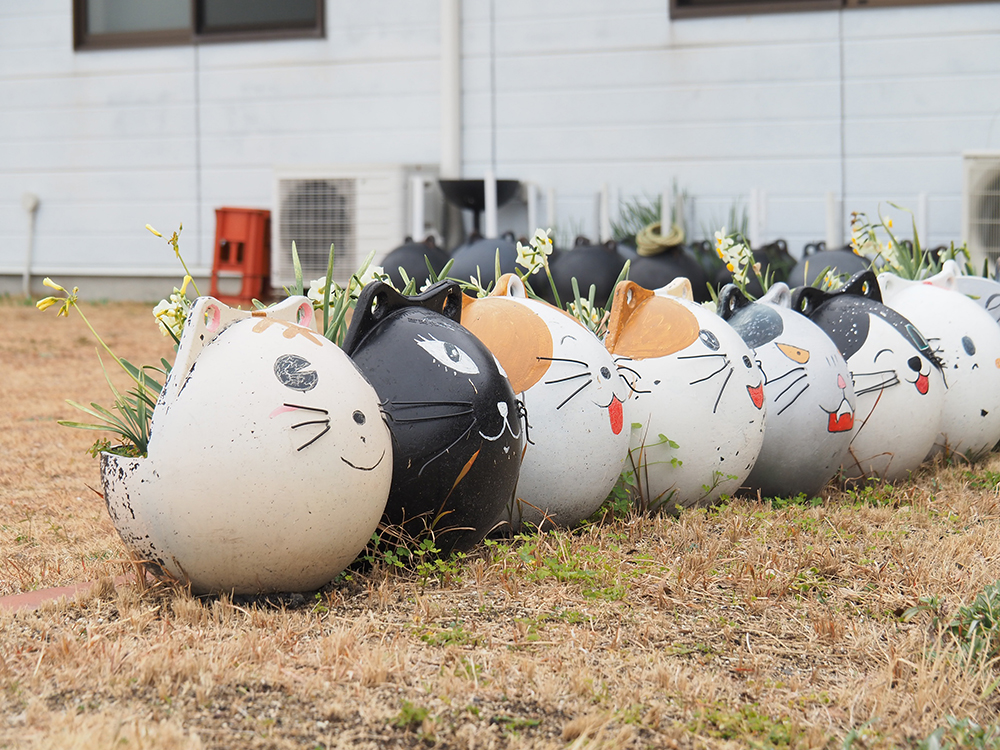
They are said to be handmade by the islanders.
After disembarking, while looking at the map at the port, a woman living on the island told me, "Did you come to see the lighthouse? There are no restrooms near the lighthouse, so please use the port or Myoin-in just ahead."
I immediately felt the warmth of the islanders.
Using the "Mushi Map" I got from the landmark and the waiting area at the port, let's walk towards Rokushima Lighthouse.
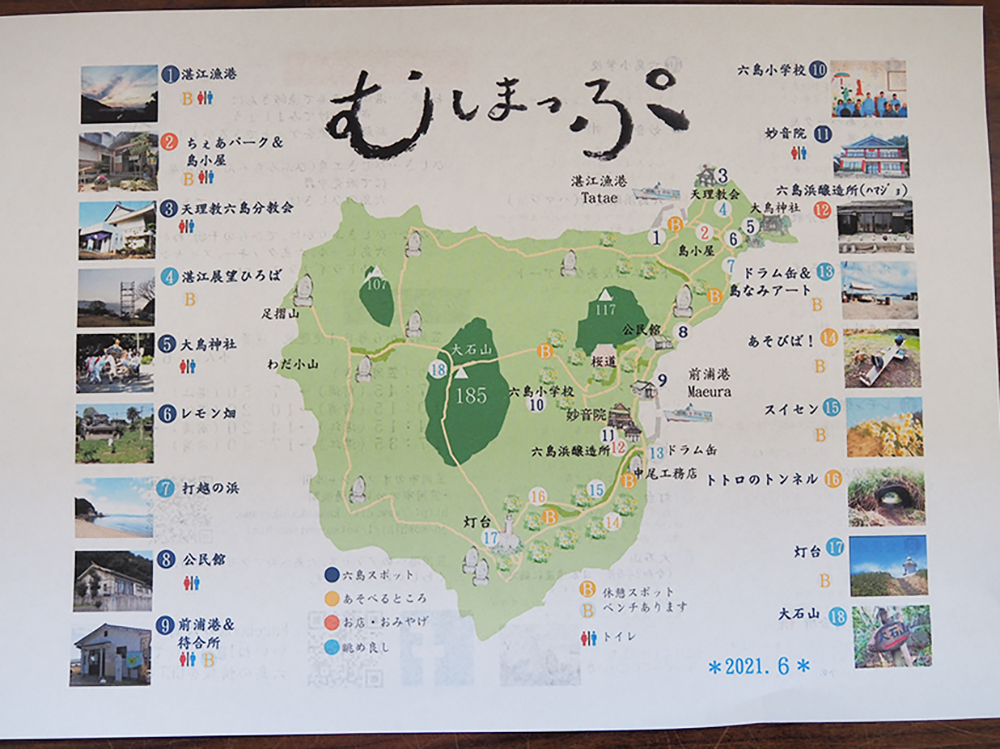
It takes about 15 minutes to walk from Maeura Port to Rokushima Lighthouse.
Suddenly, a ginger cat appeared and guided me along the way while saying "Meow, meow."
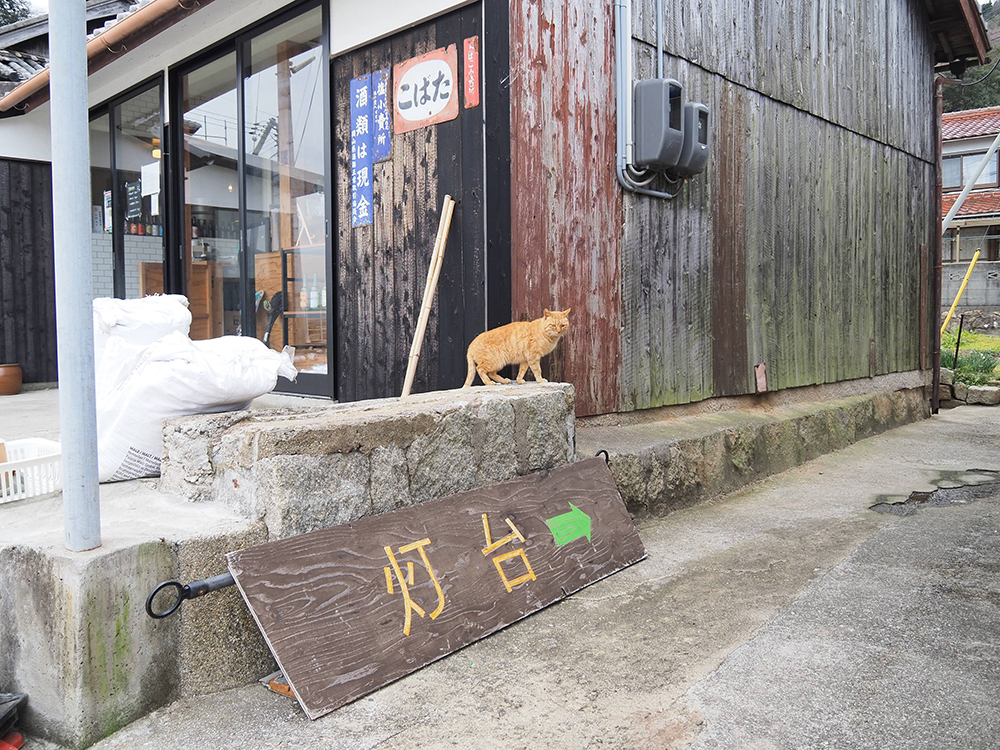
I entered a narrow alley where cars couldn't go and climbed the stairs in the residential area.
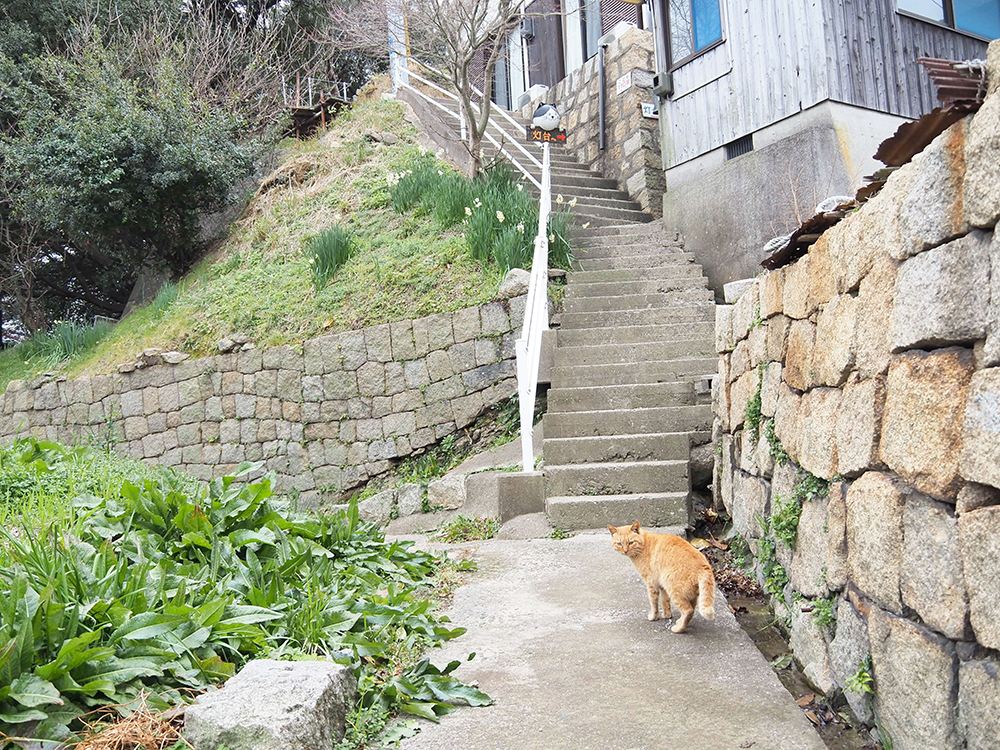
Then, I was surrounded by blooming daffodils!
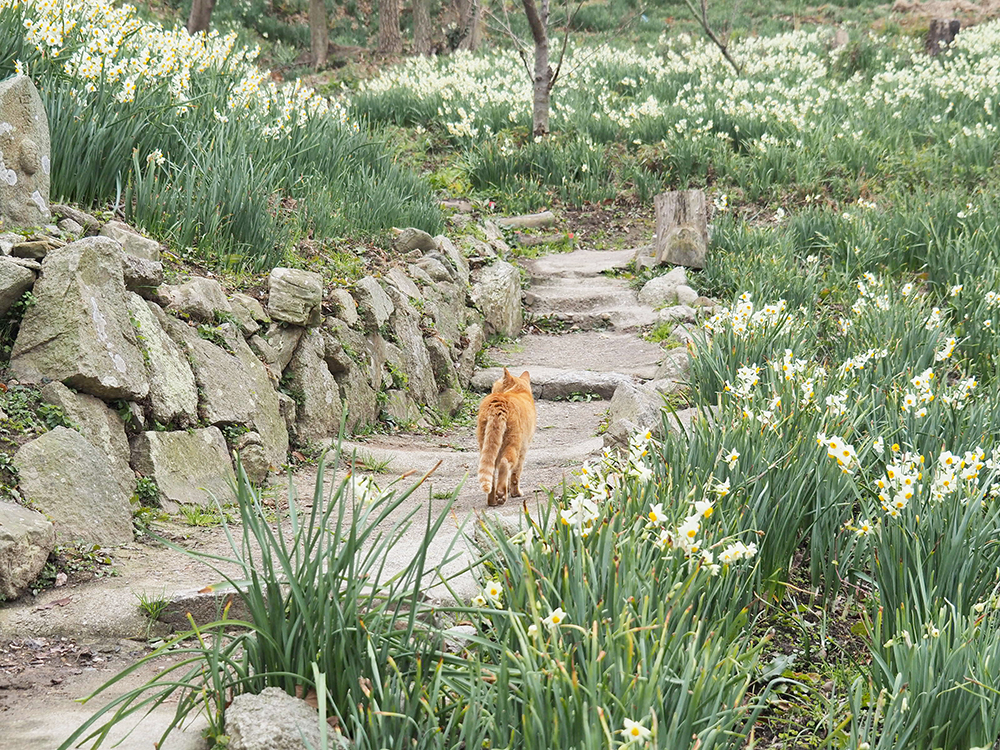
The view was excellent, overlooking Maeura Port and the Seto Inland Sea.
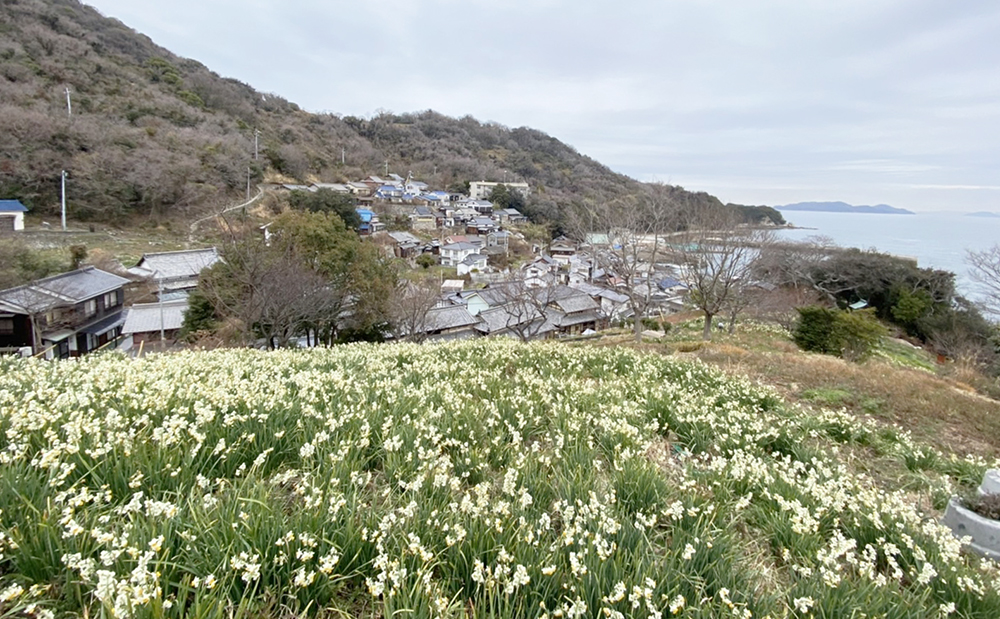
Daffodils can be seen all over Rokushima, but the Daffodil Road had the most blooms.
What amazed me was the fragrance. When the wind blew, a sweet scent wafted through, truly a fragrant breeze!
The ginger cat proudly told me, "There are benches too."
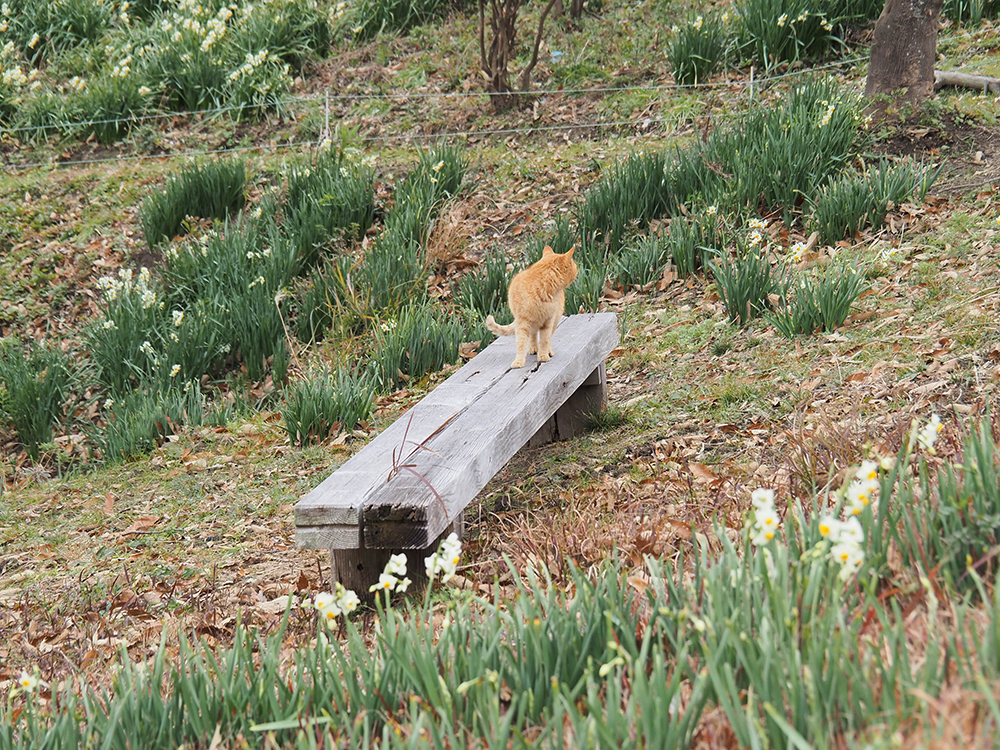
Beyond that, there are playground equipment like swings. It's a park handmade by the islanders.
We are still halfway to the lighthouse. Let's take a break and enjoy the view of the sea.
Following the ginger cat's guidance, we proceed through thickets and along the paths.
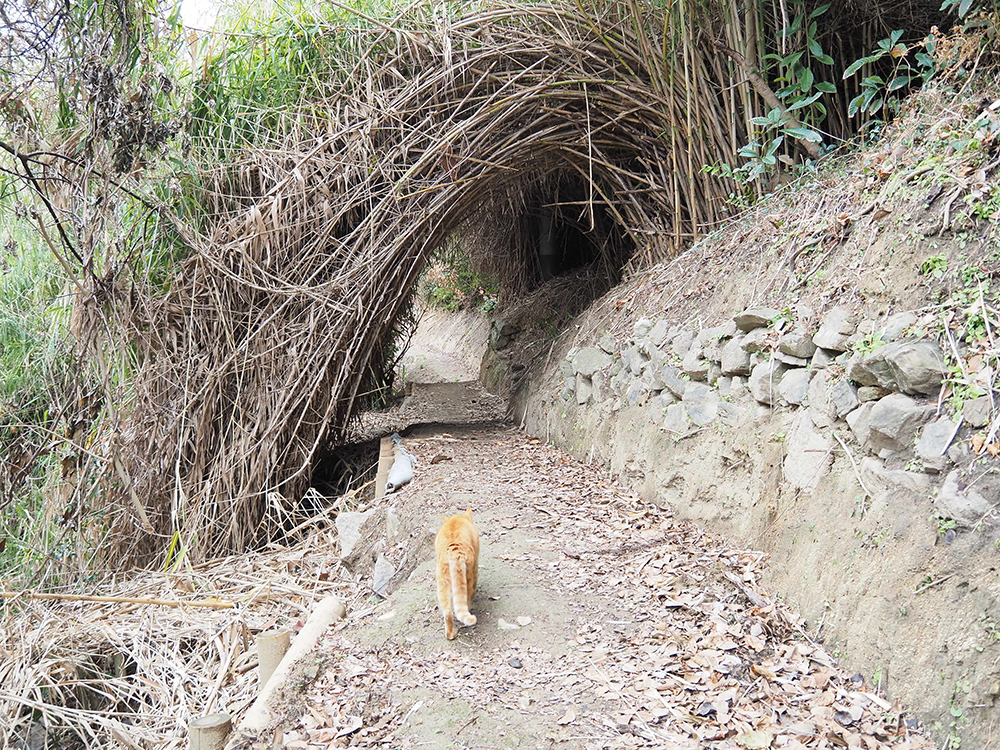
We have arrived! The white lighthouse stands majestically facing south; this is Rokushima Lighthouse.
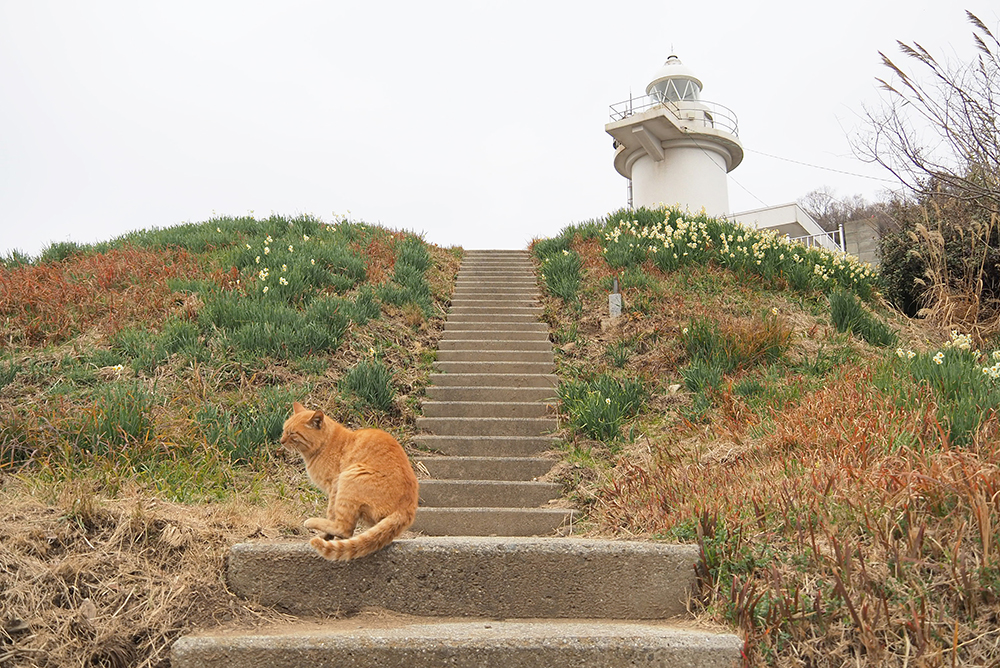
Surrounding it are many daffodils in bloom, and I was enchanted by the collaboration of the daffodils and the white lighthouse.
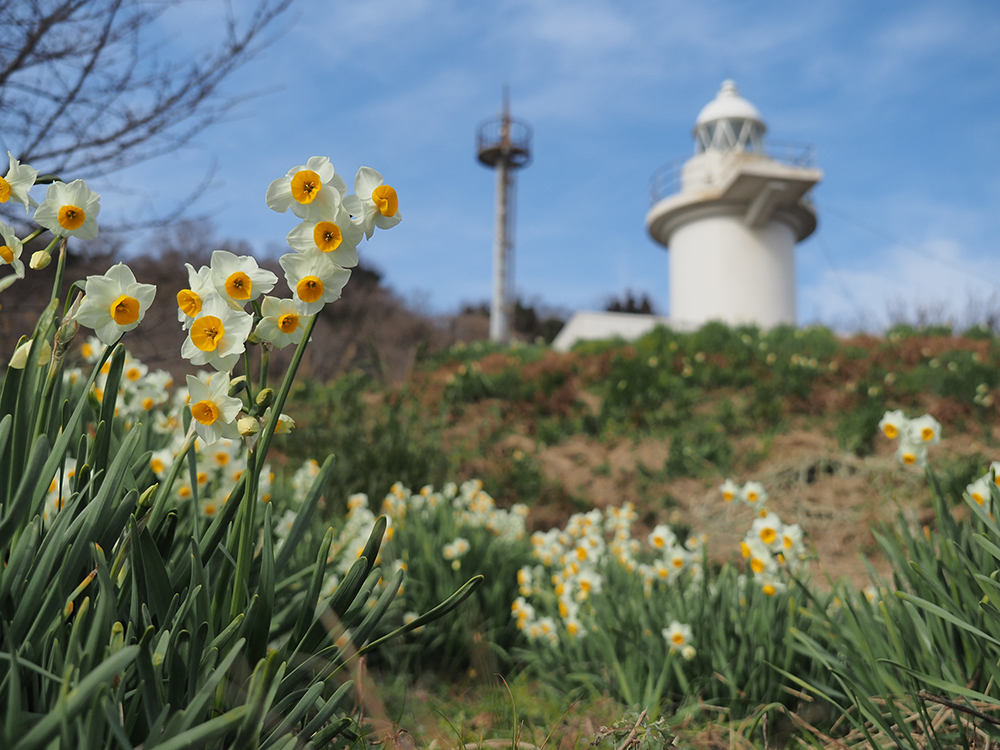
It was a weekday, but there were several groups besides me busy taking photos.
From the hill where Rokushima Lighthouse is located, I could see the islands, Shikoku, and the passing boats.
"How is it? Isn't it a nice place?" the ginger cat seemed proud.
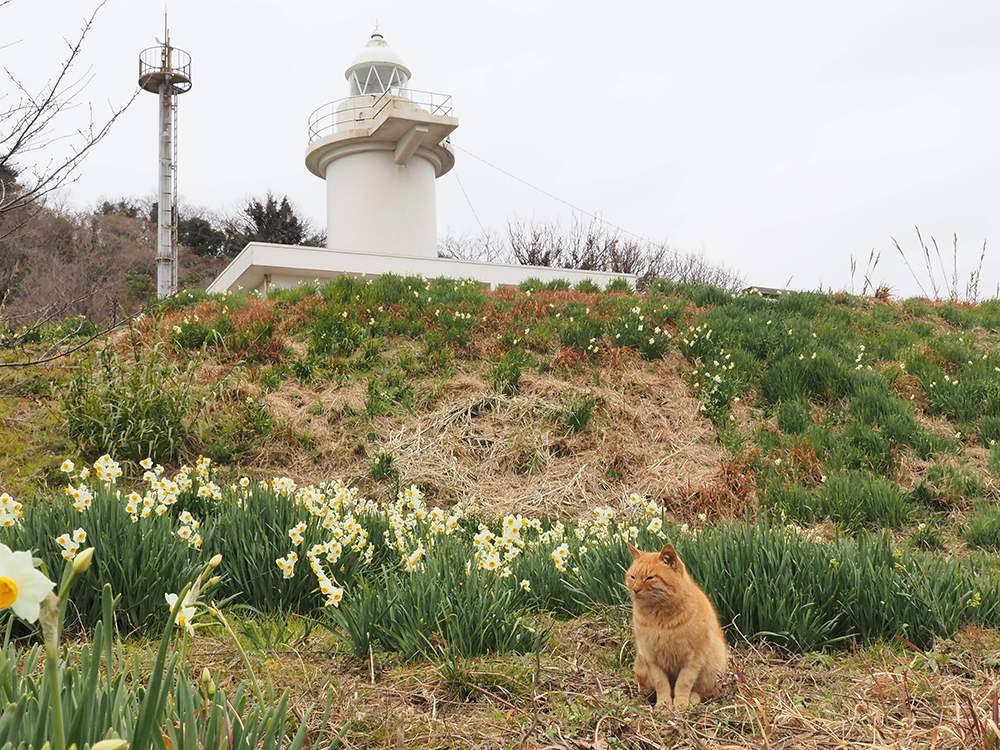
I also visited the northern side of the island, the Tan'ei area. I climbed the stairs to Ootori Shrine.
It was a pleasant shrine overlooking the sea.
As I walked through the narrow alleys, I found a small park called "Chea Park" with rows of chairs.
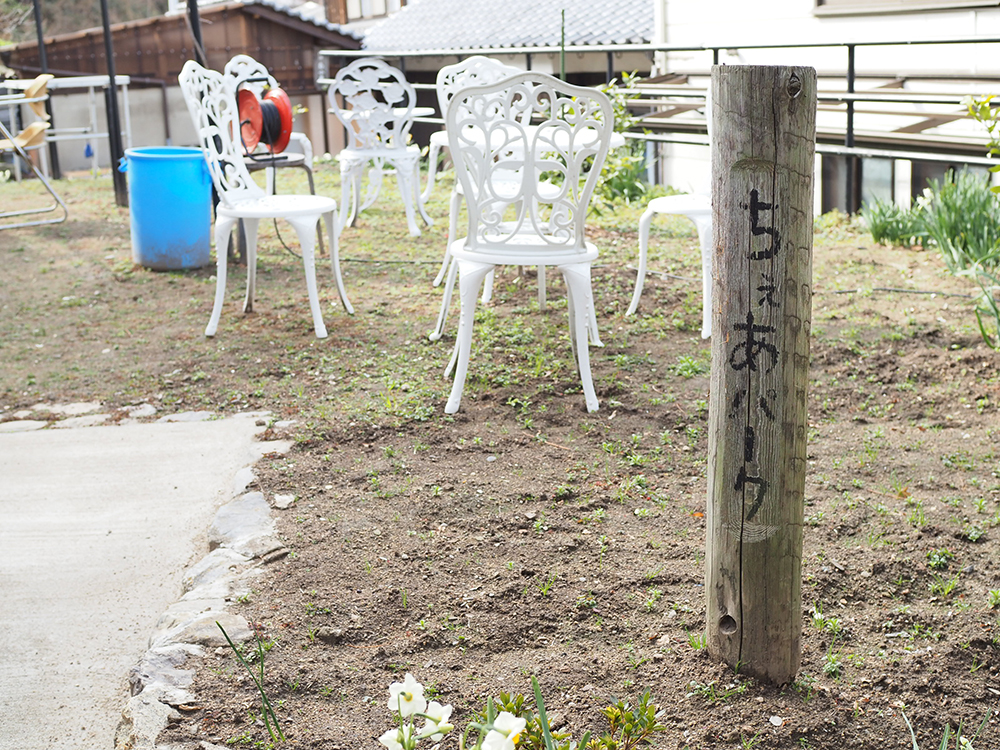
Nearby, there is a guesthouse called "Shimagoya."
Then, as I went down the slope, I arrived at Tan'ei Port.
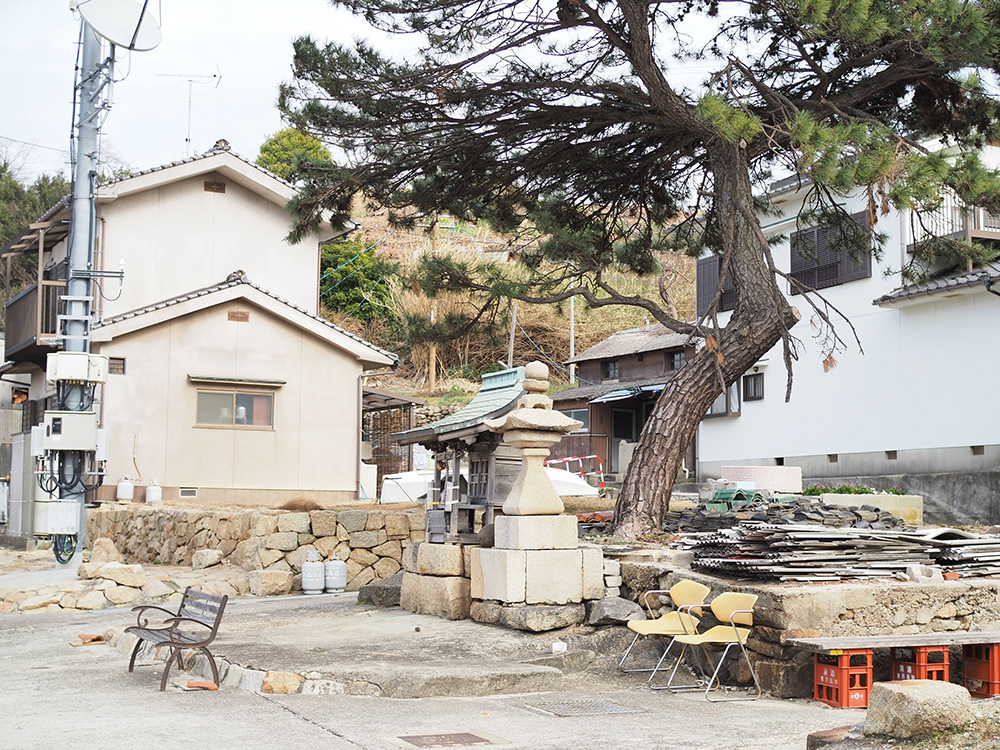
Even if I tried to get lost, it would be difficult; it's a small island. I was able to walk freely while feeling the sea breeze.
Although it cannot be seen now, it is said that in the past, the slopes of the island were covered with fields of barley and other crops.
Golden ears of barley swaying in the wind, the blue sky, and the calm Seto Inland Sea.
It was Ryuuhei Iseki from Rokushima Hama Brewery who started brewing beer on Rokushima with the desire to "regain such scenery."
I spoke with Mr. Iseki, who moved from Osaka to Rokushima in 2016, about his life on Rokushima and the challenges at the brewery.

What do you want to know about Kurashiki?
Enter a word to search articles from this site