Takashima is located at the northernmost point among the inhabited islands of the Kasaoka Islands and can be reached by a short boat trip from the mainland.
It is an island where fishing and shipping industries are thriving.
Additionally, there is a theory that Takashima served as a temporary palace (angū / karimiya) during the eastern expedition of Emperor Jimmu, as recorded in the "Chronicles of Japan" and "Nihon Shoki," and there are many spots related to Emperor Jimmu.
Let’s introduce an overview of Takashima and its attractions.
The information provided is as of the article published in August 2021. Please note that it may differ from current information.
What are the Kasaoka Islands?
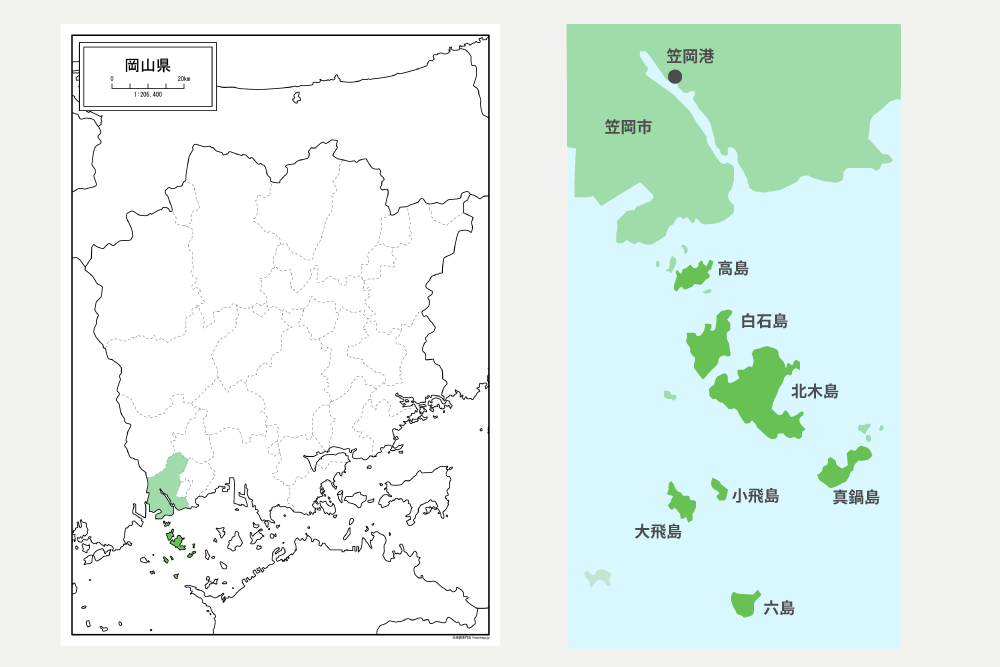
The Kasaoka Islands are a group of 31 islands, large and small, located off the southwestern tip of Okayama Prefecture, near Kasaoka City. Among them, there are 7 inhabited islands as follows:
Oobishima and Kobishima are collectively referred to as Hishima.
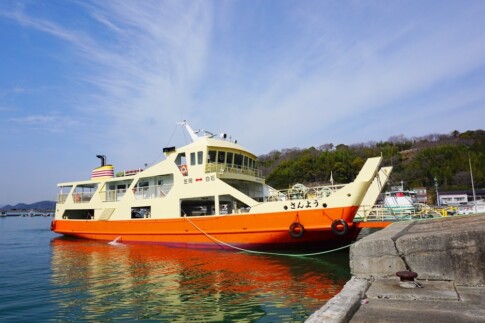
There are no bridges to the islands, and travel is done by boat from the port of Kasaoka City.
The islands have a tranquil and calm atmosphere.
Along with the islands of Marugame City, Shodoshima Town, and Tonosho Town in Kagawa Prefecture, it is designated as a Japan Heritage under the title "Do You Know!? The Stone Islands Where Eternal Time Flows - The Bisan Islands That Built the Foundation of Japan Across the Sea."
What is Takashima?
Takashima is the northernmost inhabited island of the Kasaoka Islands and the closest island to the mainland.
It is the fourth largest island, following Kitagi-shima, Shiraishi-jima, and Manabe-shima, and can be circled in about 2 hours, making it compact.
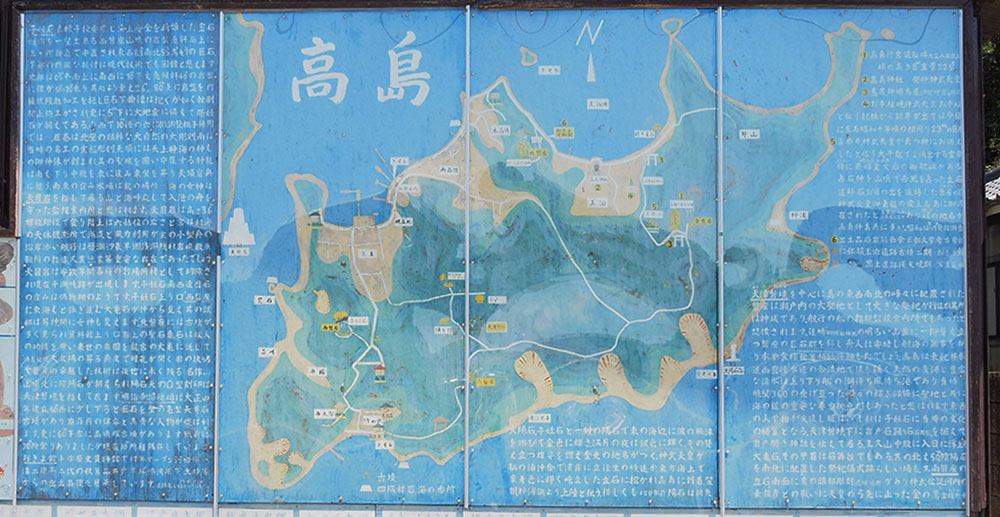
| Item | Content |
|---|---|
| Population (as of June 30, 2021) | About 70 people |
| Area | 1.05 square kilometers |
| Perimeter | 5.9 kilometers |
| Features | Legends of Emperor Jimmu, azaleas, kumquats |
| Transportation on the island | On foot / private car |
There is only about 1 kilometer of roadway around Takashima Port, and the rest is pedestrian paths. Walking is recommended for getting around.
Access to Takashima
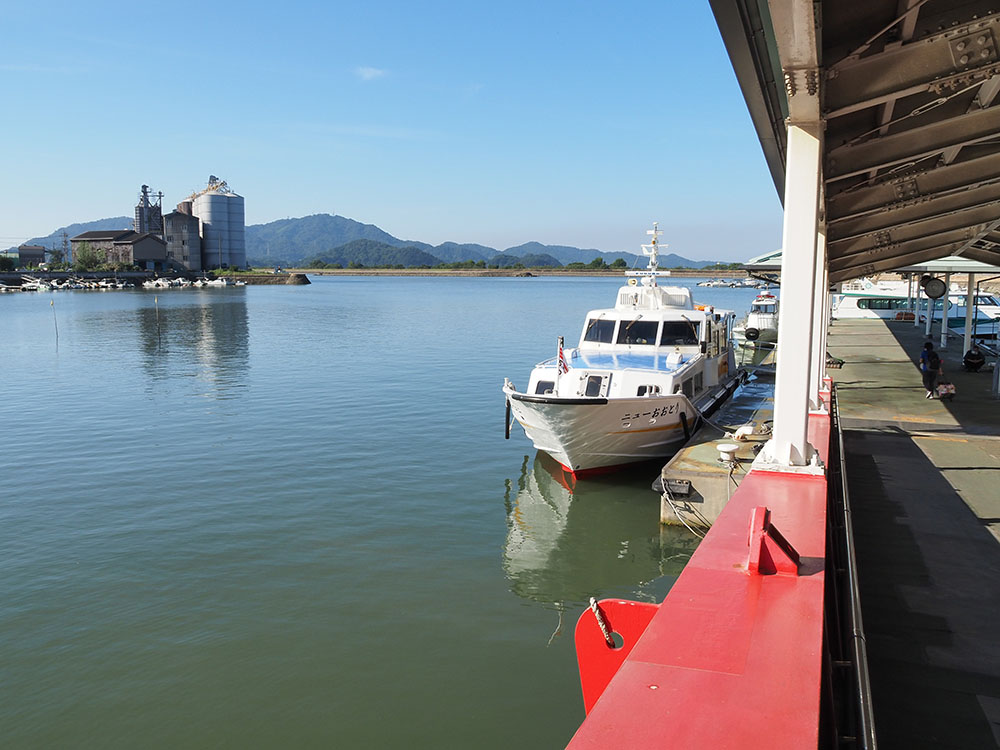
Boats depart from Minato Kobanashi at Sumiyoshi Port in Kasaoka City to Takashima Port. The journey takes about 25 minutes.
If you depart from Kōshima Sotōura Port, which is further south on the mainland, you can arrive in just about 6 minutes.
There are 4 passenger boats each day in both directions. Be sure to check the departure times in advance and plan your visit accordingly.
▼ For more details, please see the article below.
Representative Spots and Activities on Takashima
When you hear the name "Takashima," you might think of the temporary palace (angū / karimiya) of Emperor Jimmu during his eastern expedition, as recorded in the "Chronicles of Japan" and "Nihon Shoki."
Emperor Jimmu is said to have departed from Hyuga (Miyazaki Prefecture) by boat towards Yamato (Nara Prefecture).
After crossing the Bungo Strait and passing through Chikuzen and Aki provinces, it is recorded that he built a temporary palace (angū / karimiya) in "Takashima of Kibi Province" and stayed there for several years.
Where exactly is "Takashima of Kibi Province"? There are various candidate locations, with Takashima in Minami Ward, Okayama City being a strong contender, but it has long been believed that Takashima in the Kasaoka Islands is the true Takashima Shrine.
Let’s introduce some representative spots related to the legend of Emperor Jimmu and other attractions on Takashima.
The Highest Peak of Takashima: Kamiura-yama
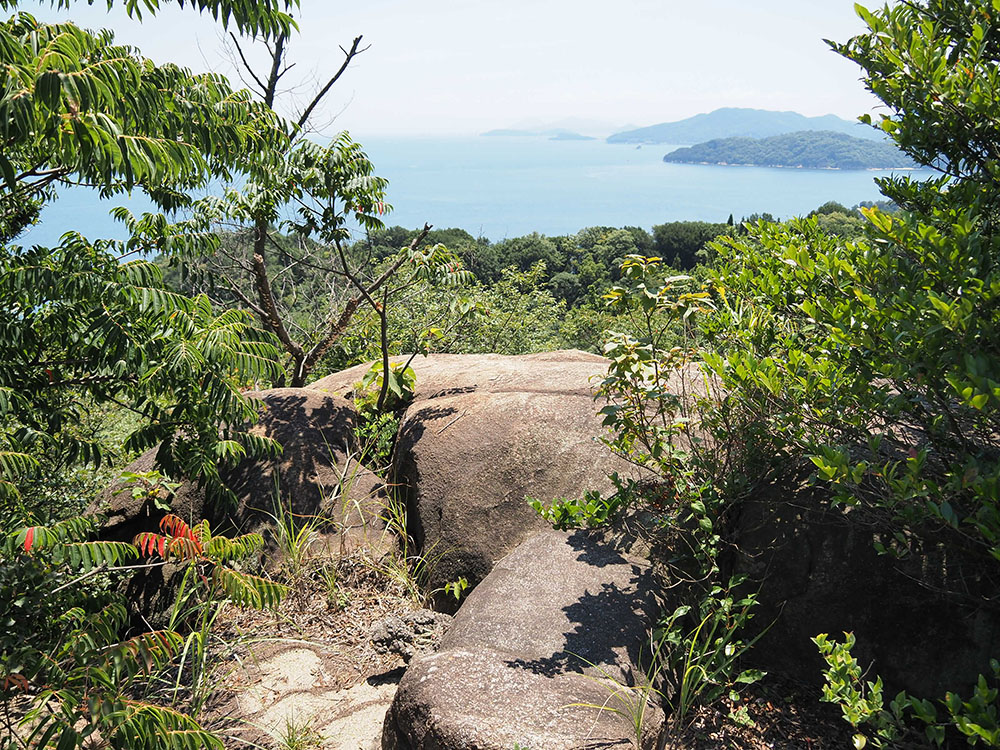
The highest peak of Takashima, Kamiura-yama, is said to be the place where Emperor Jimmu divined good and bad fortune.
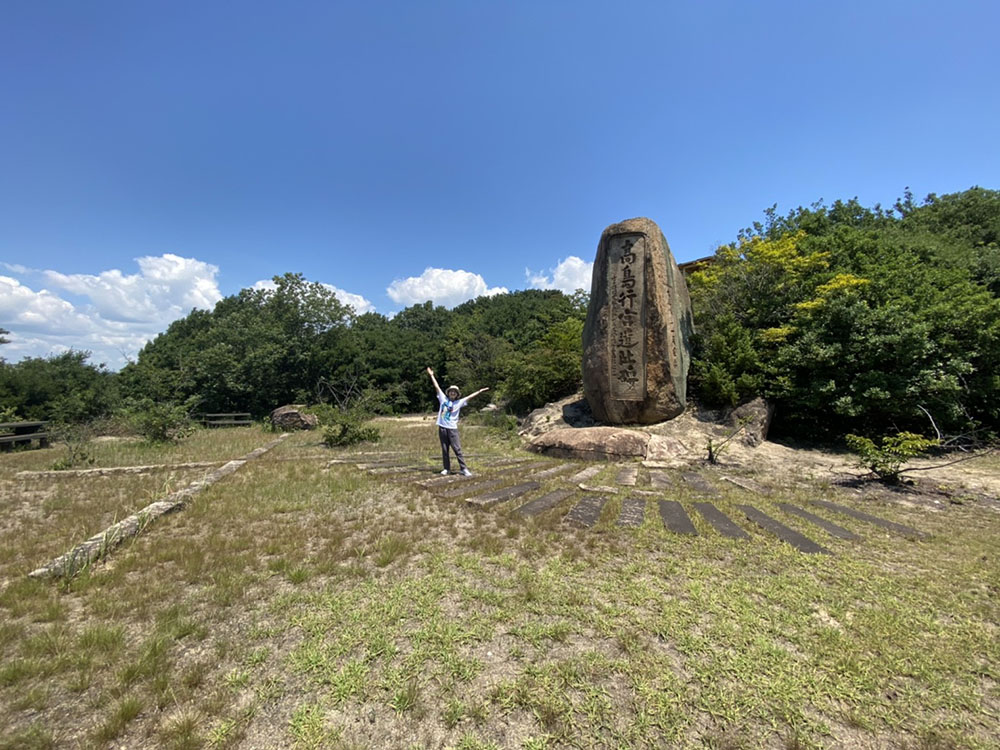
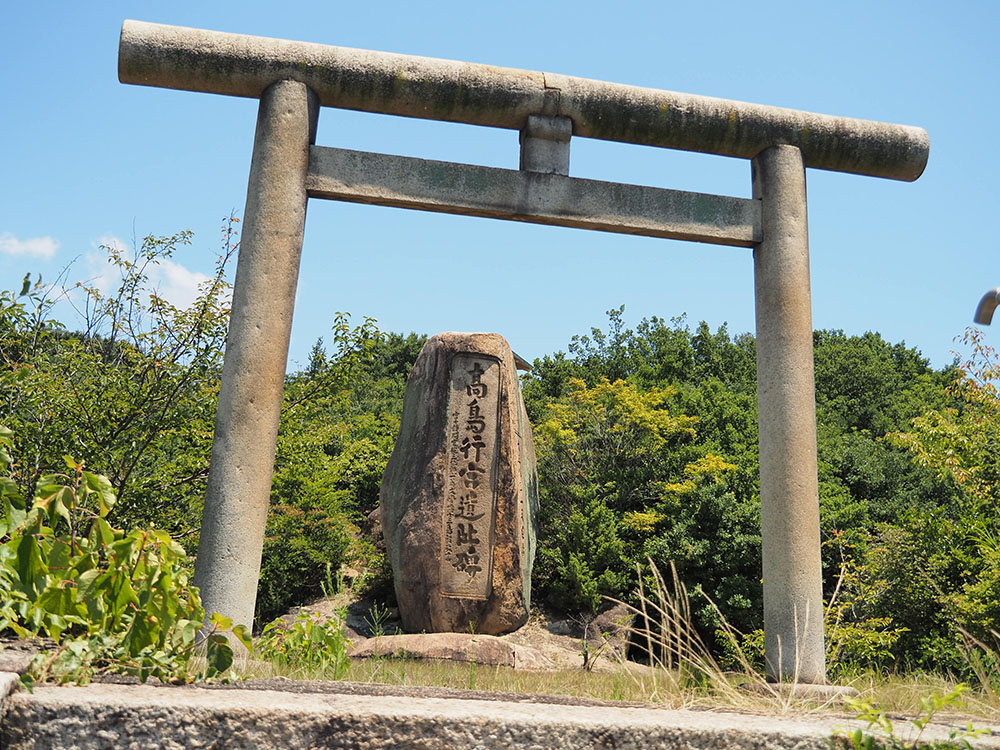
Near the summit, there is a giant "Takashima Temporary Palace Monument" that stands 8 meters tall.
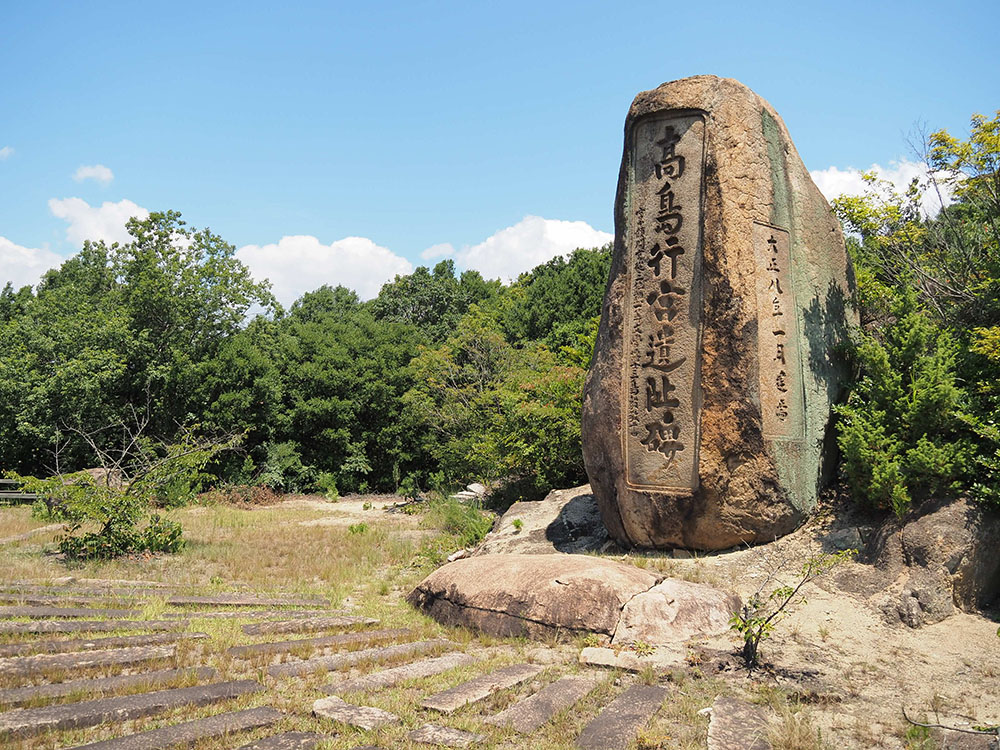
It was established in 1919 by a stone contractor from Kitagi-shima and is said to be one of the largest natural stone monuments in Japan.
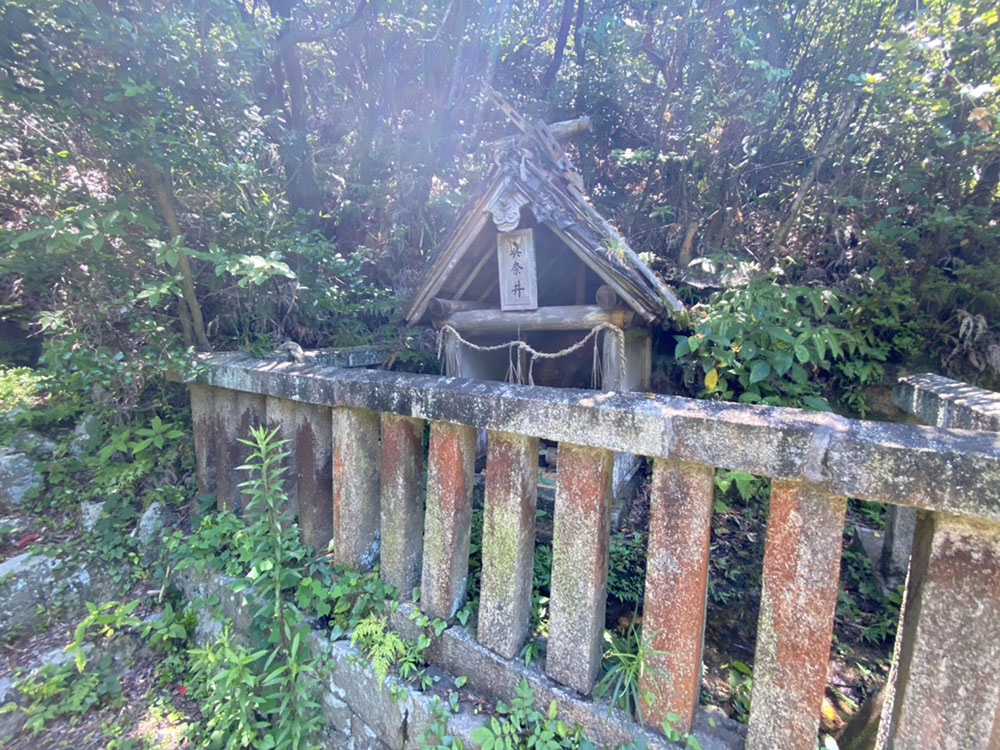
On the slopes of Kamiura-yama, there is a well called Manai no Ido, where it is said that Emperor Jimmu drew water to offer to the heavenly gods.
Takashima Shrine
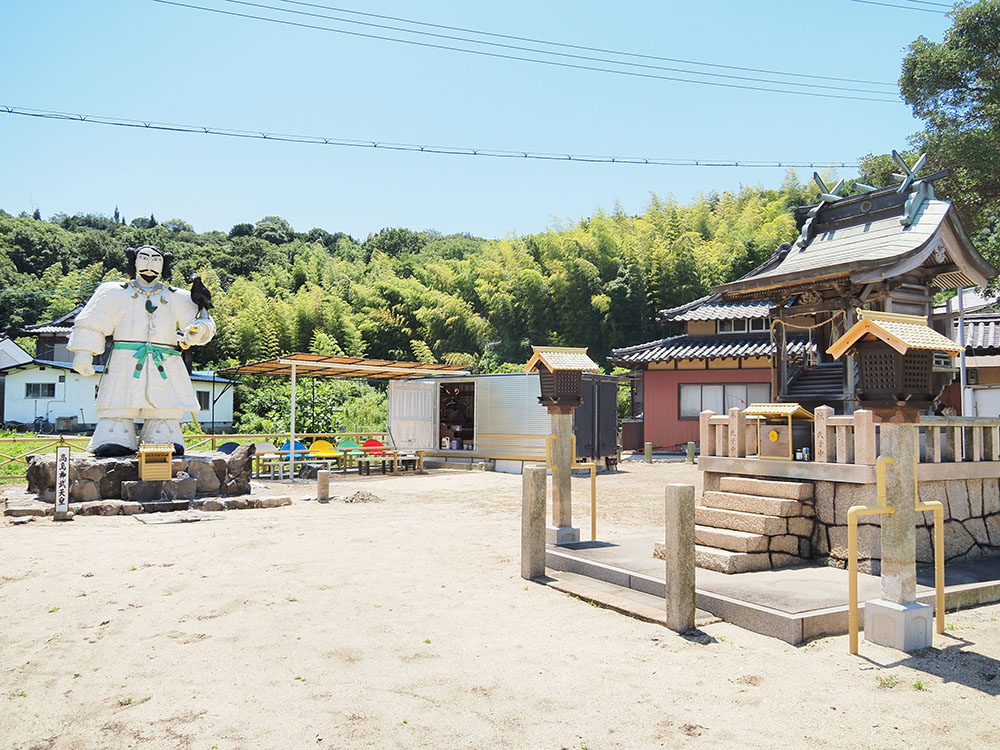
At Takashima Shrine, a giant statue of Emperor Jimmu, about 5 meters tall, welcomes visitors.
It was handmade and completed by the island's residents in 2020.
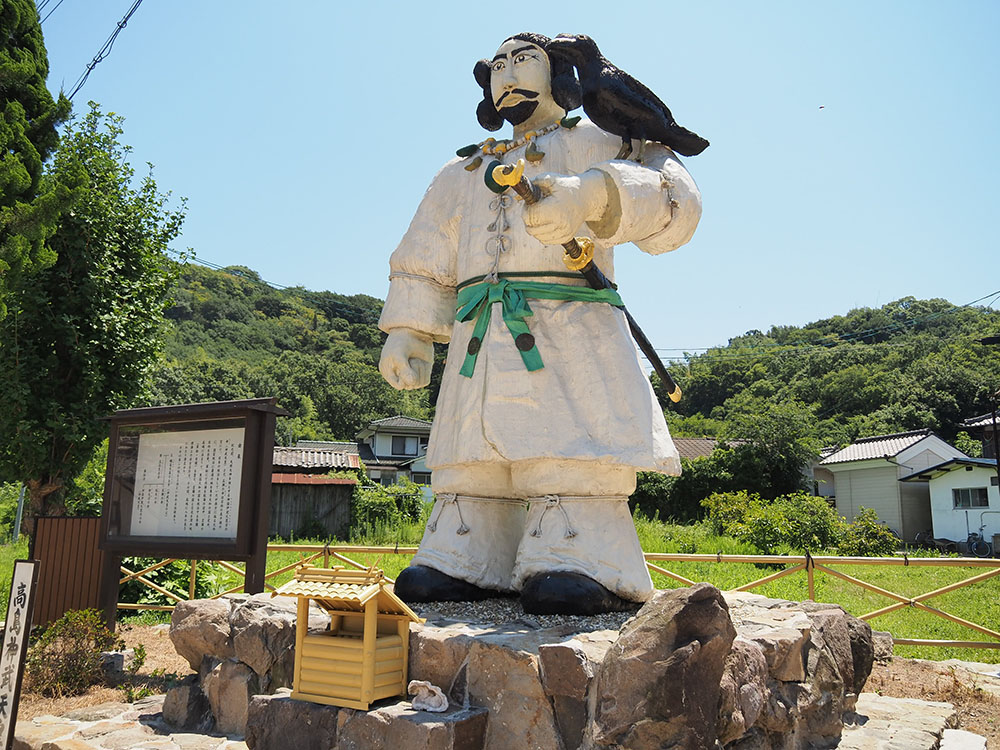
It conveys how important the legend of Emperor Jimmu is to the island.
Window Rock and Beautiful Beaches
On the western beach of the island, there is a large rock known as Window Rock.
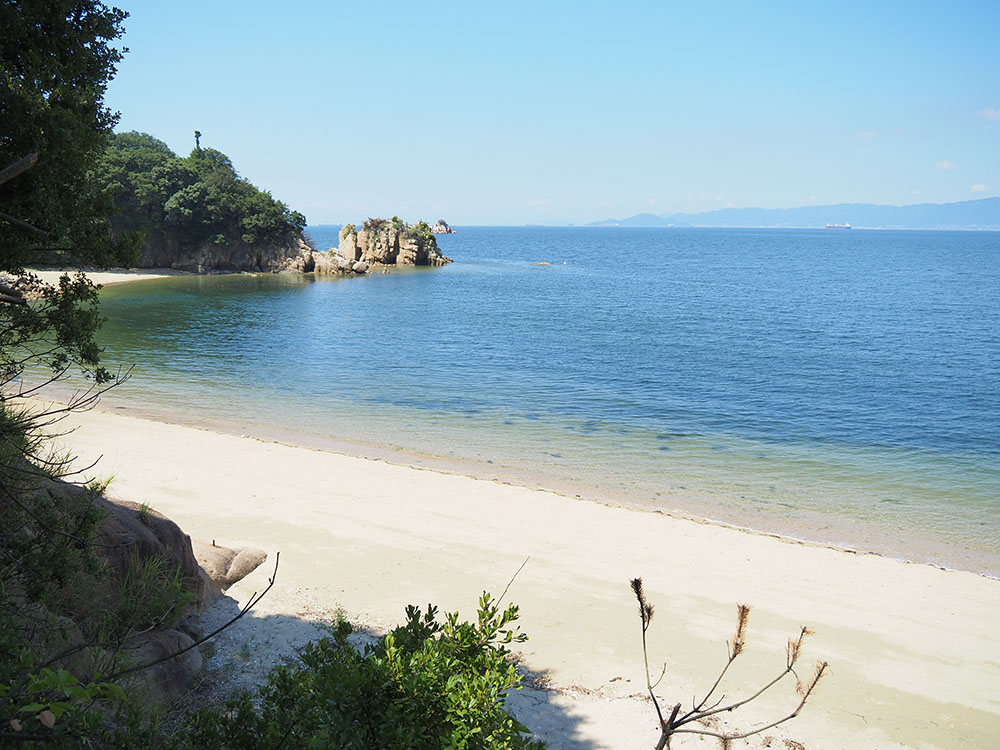
When the tide is low, you can get close and take photos that look like you are looking at the sea through a window.
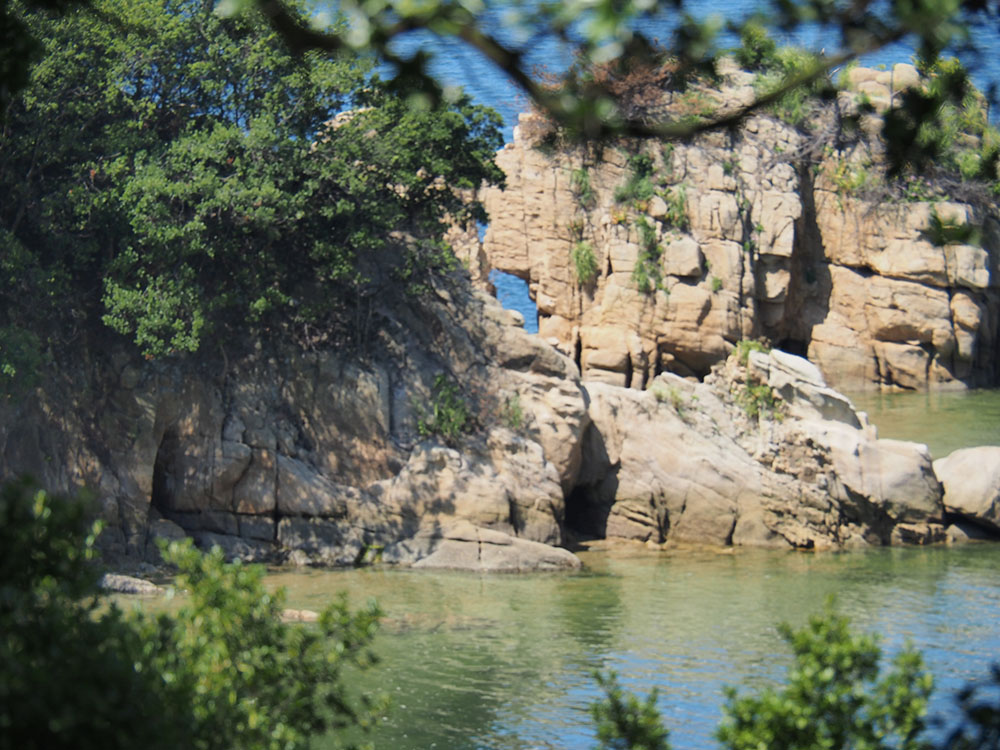
Since the tide was not low and I couldn't get close, this photo was taken with a telephoto lens.
Fishing is possible on the northern half of the island's beach. I saw people fishing on this day as well.
Ko-haramishi
Ko-haramishi is described in pamphlets as "one of the largest陰石 (inishi) in western Japan."
It is not a "meteorite" that fell from space, but rather an "陰石 (inishi)," which refers to a stone shaped like a female genitalia.
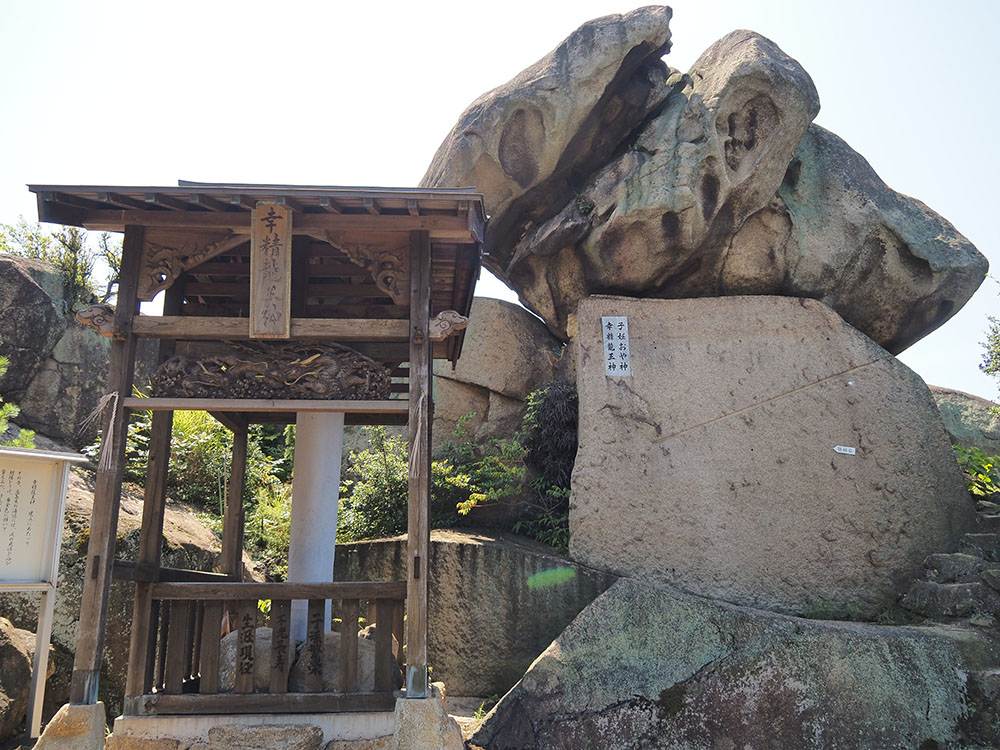
When viewed from below, Ko-haramishi has a large crack and has been regarded as a spiritual deity for good relationships, childbirth, safe delivery, and women's diseases.
Conversely, a stone shaped like a male genitalia is called "yōseki," and it is said that both陰石 and陽石 are sometimes enshrined together.
Next to Ko-haramishi, there is a statue of "Kōsei Ryūō God," which realistically represents the male symbol.
The signboard states, "Welcoming Kōsei Ryūō God, we prayed for the prosperity of descendants, marital harmony, healthy longevity, and the development and peace of the island. From the island's volunteers, February 2001," indicating that the islanders dedicated it in 2001.
If you walk around the large Ko-haramishi, you will find a "birth canal" in the center.
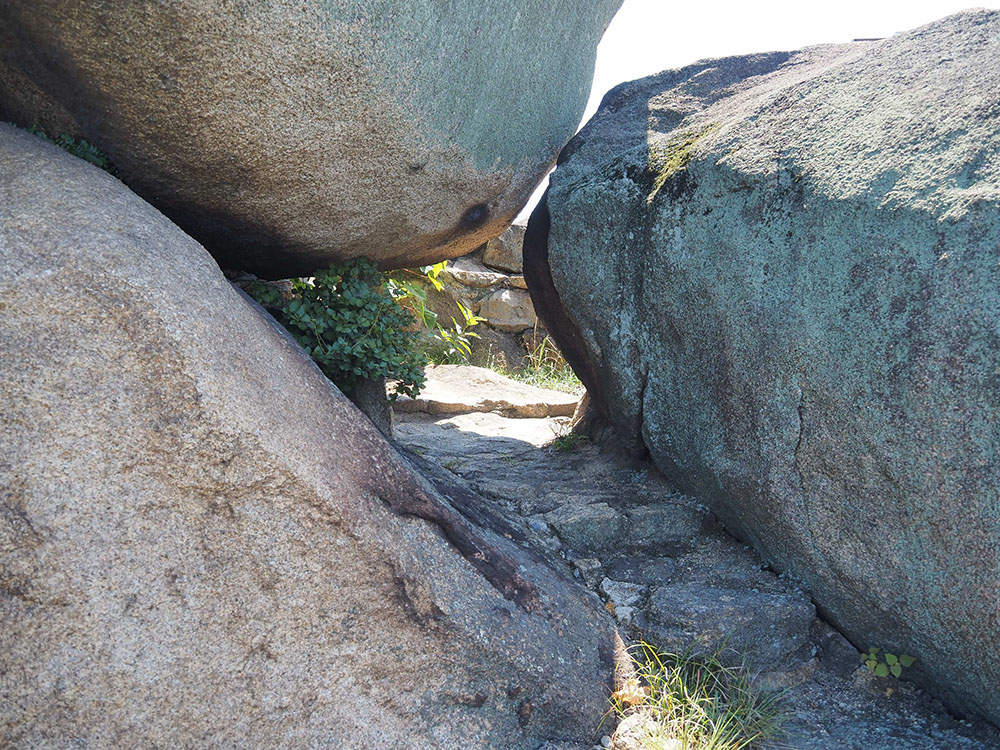
You can pass through the birth canal.
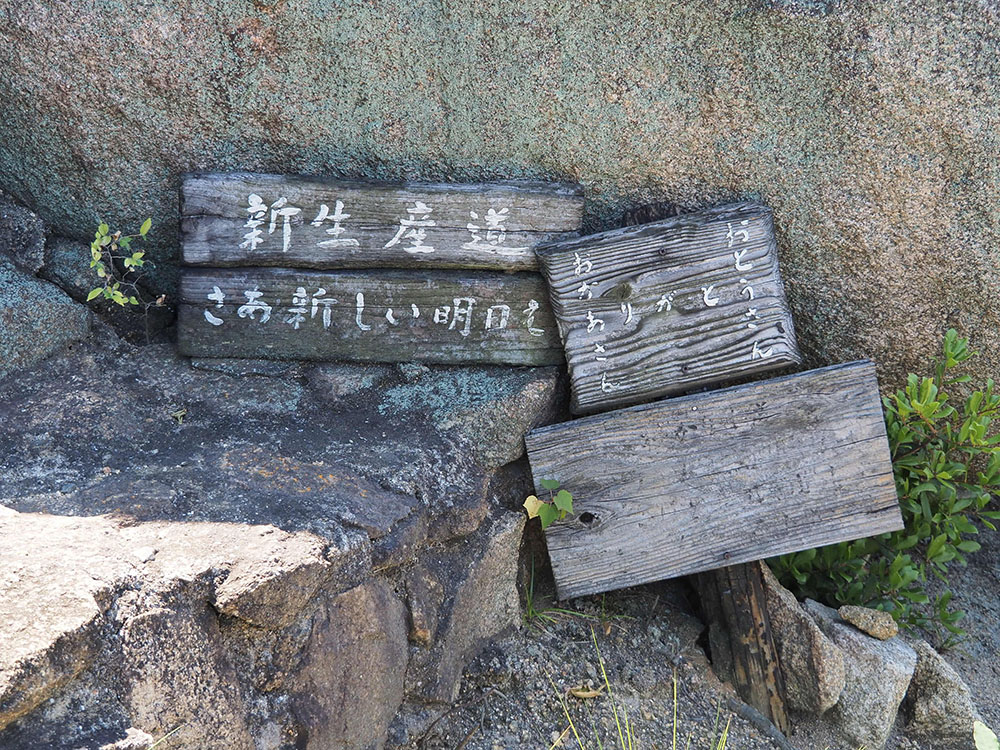
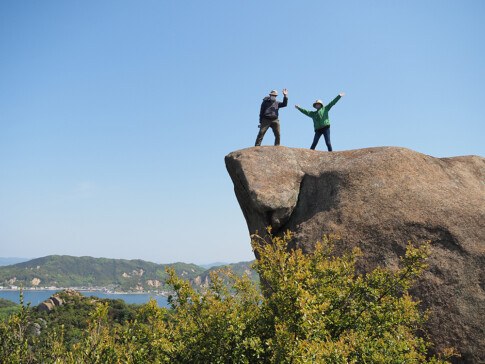
If you are confident in your physical strength, please try climbing on top of Ko-haramishi.
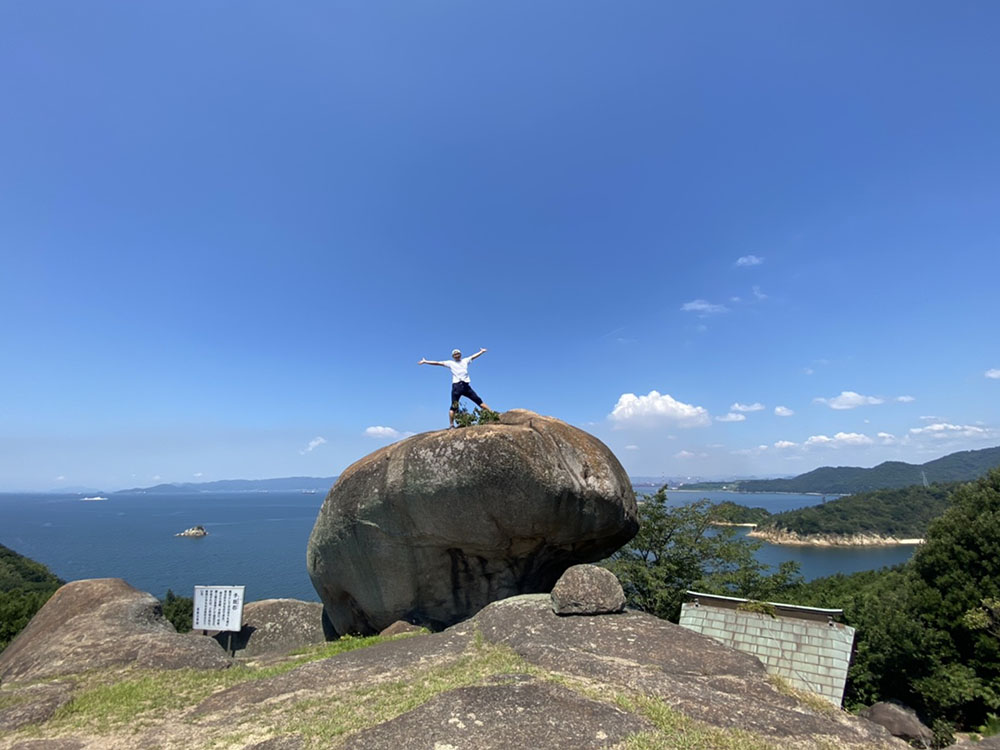
The view is outstanding!
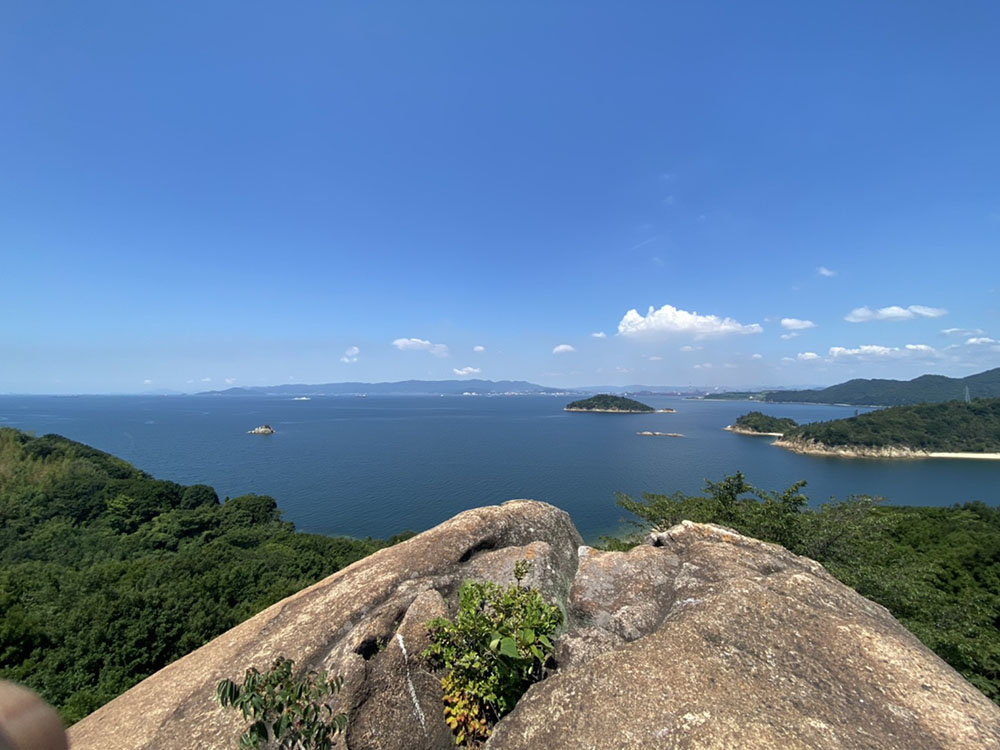
To the south, you can see Shiraishi-jima, and to the west, Fukuyama.
Casa Takeda
Casa Takeda is an inn located on the west side of Takashima Port.
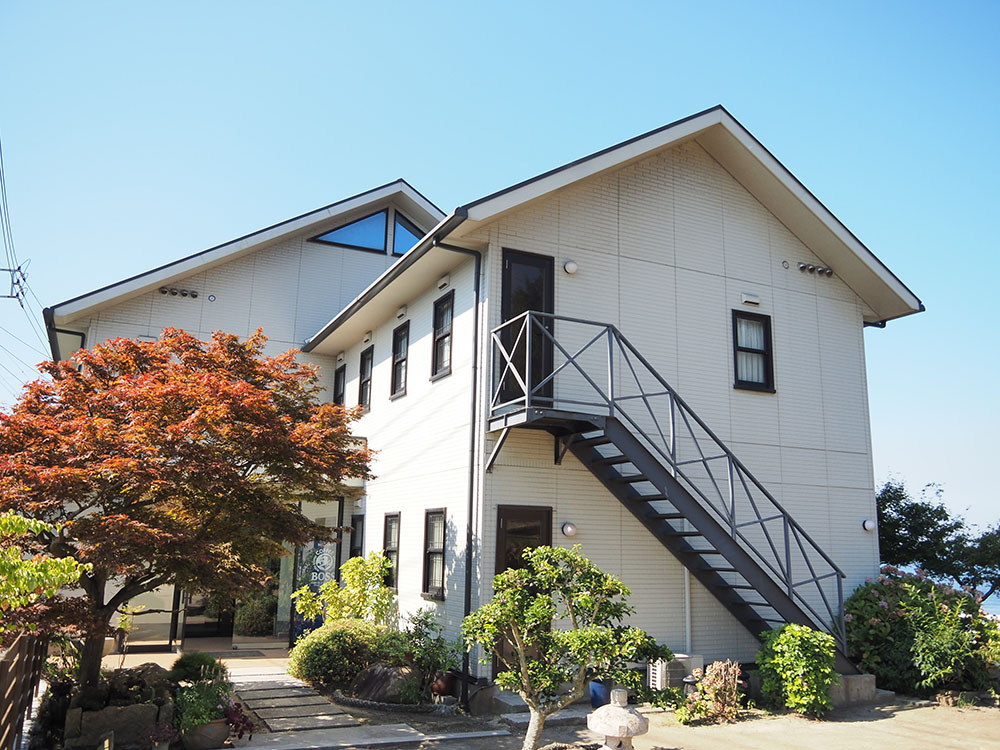
It is situated on a small hill and offers excellent views!
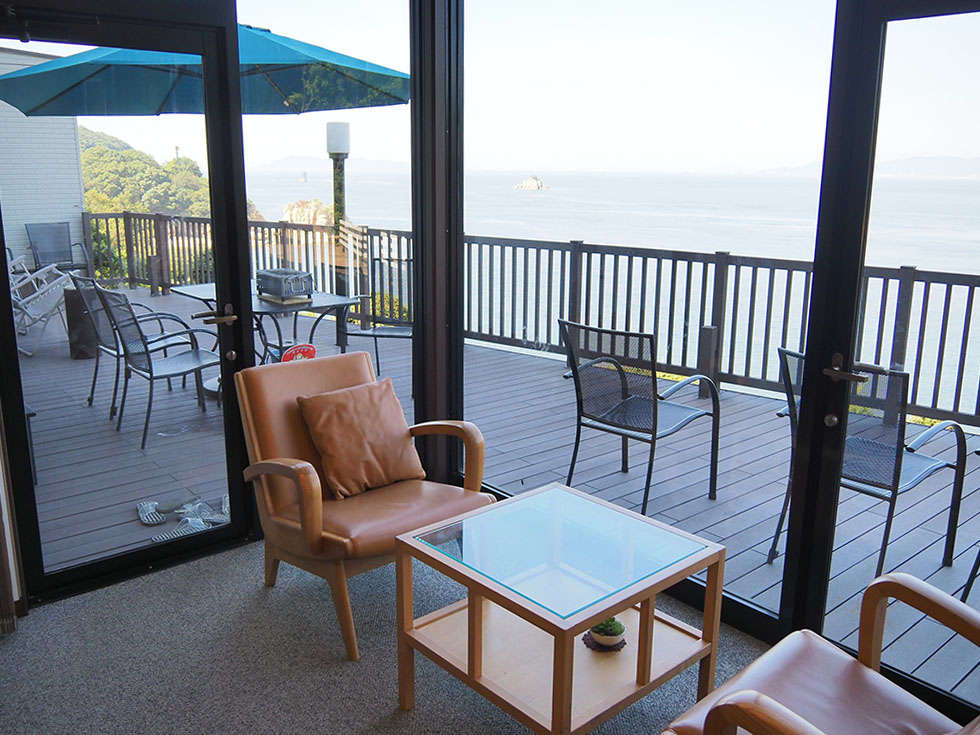
From the homey lobby hall, you can enjoy a panoramic view of the Seto Inland Sea. It is said that the sunset viewed from here is particularly spectacular!
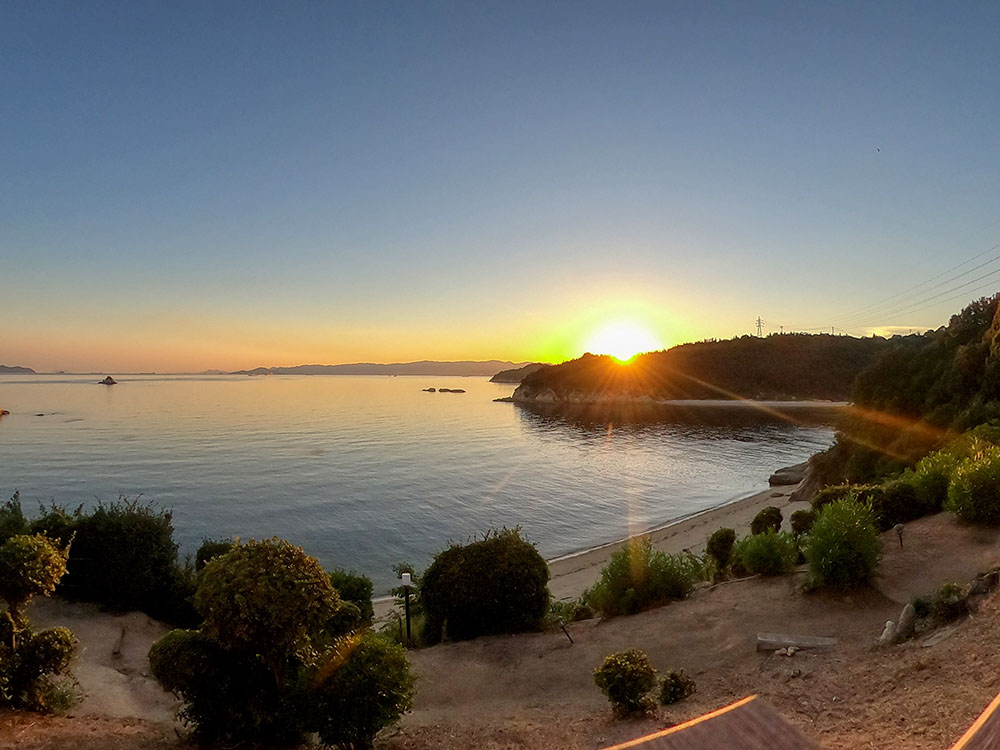
You can also enjoy seafood barbecues on the deck or lunch courses featuring seafood raised around Takashima.
Casa Takeda is an inn run by the Takeda family. They also engage in fishing and seaweed farming as Takeda Suisan Co., Ltd.
In 1992, they opened the inn with the desire to "not just sell the fish caught but to serve it as a dish."
Managed by three generations, Kohei Takeda, the third generation and also a fisherman, serves seasonal fish caught in the Seto Inland Sea. The fish prepared by a professional fisherman is exquisite.
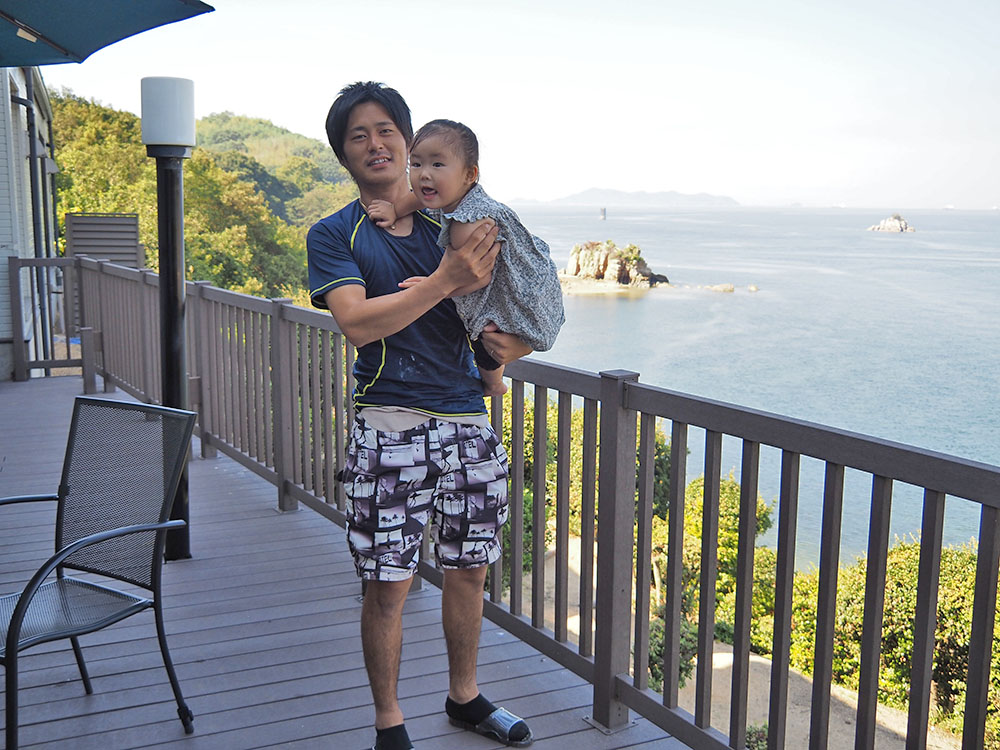
This inn is loved by a wide range of customers, from long-time regulars to young people.
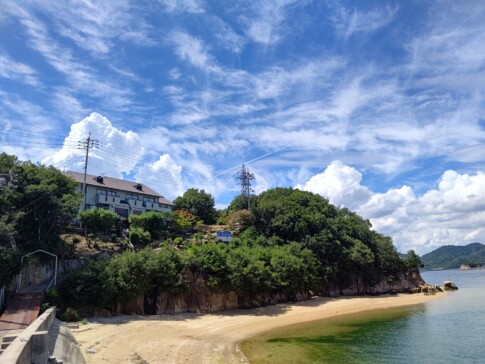
I Walked Around Takashima
On July 27, 2021, I visited Takashima.
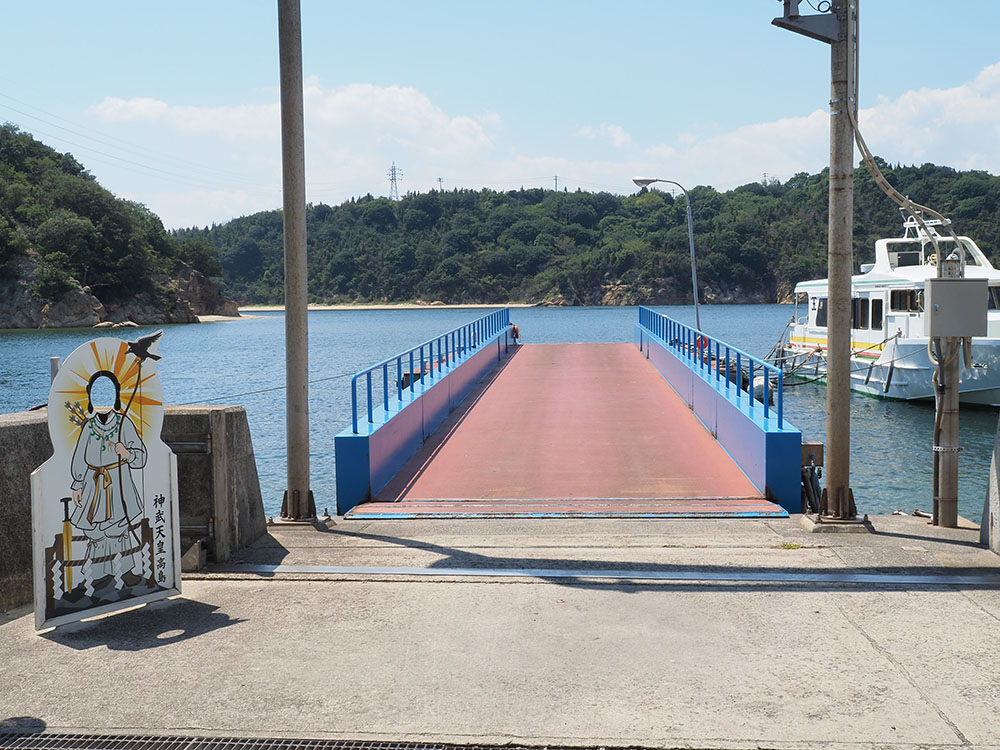
I took a regular ferry departing from Sumiyoshi Port in Kasaoka City, and about 25 minutes later, I arrived at Takashima Port.
A signboard featuring the face of Emperor Jinmu welcomed me.
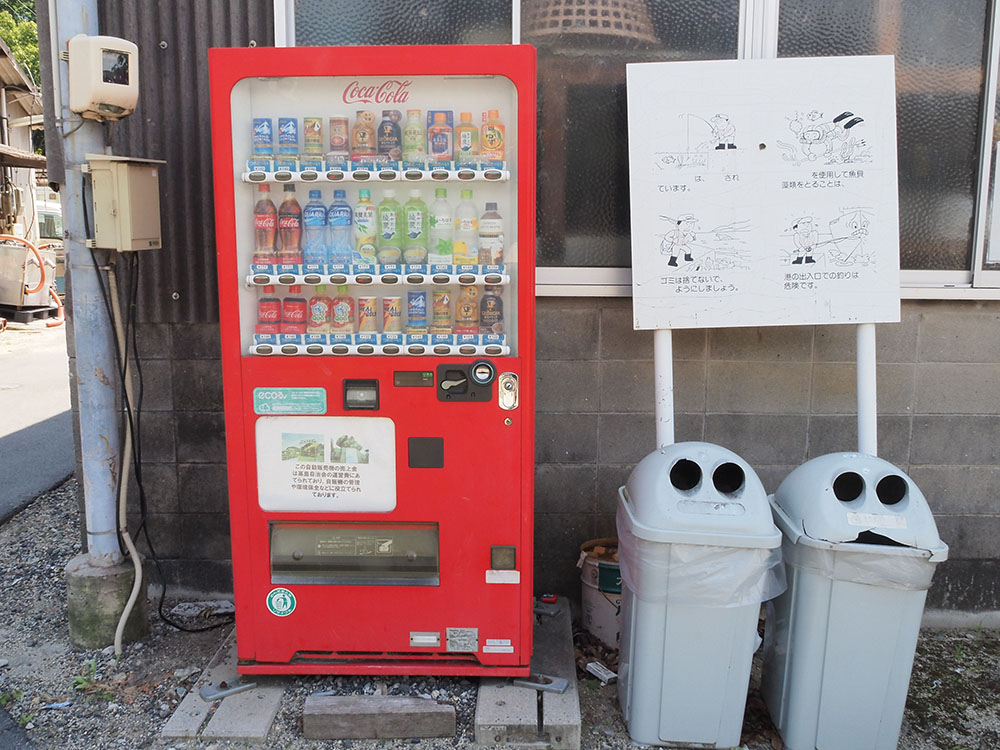
Near Takashima Port, there is a vending machine, which is the only one on the island. Let's prepare for hydration here.
Guiding us is Hiraoka Kenji, who took office as the Community Revitalization Cooperator in charge of Takashima in June 2020.
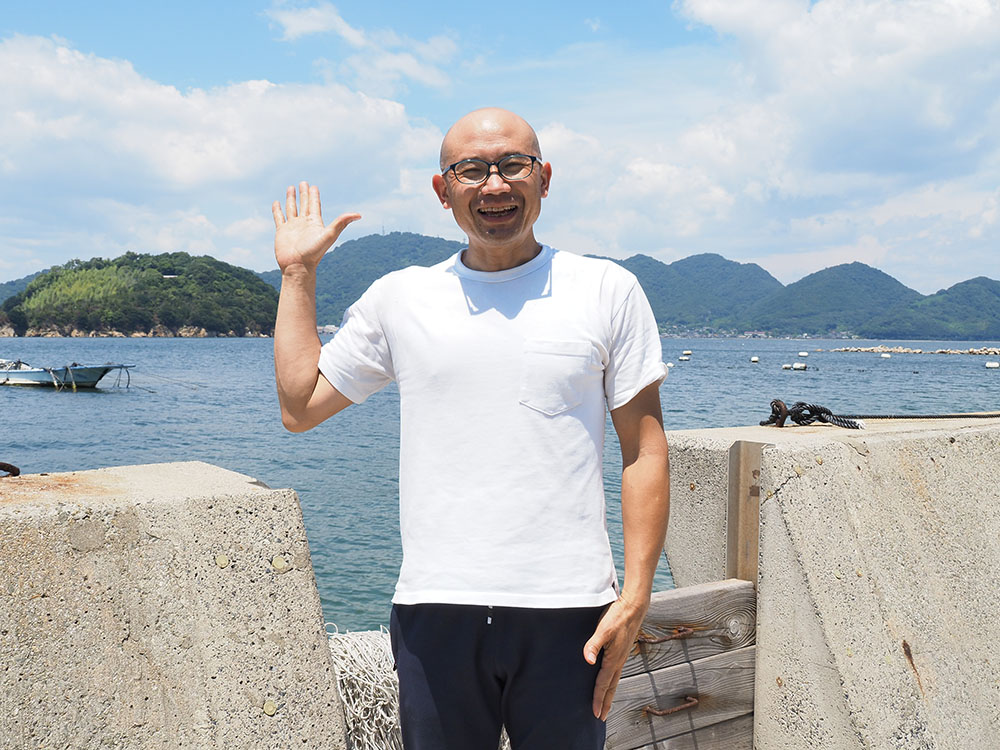
Hiraoka-san is also active in Fukuyama, managing the NPO Hitomachi Studio, which promotes the utilization of IT with the concept of "IT that is kind to everyone."
He emphasizes the importance of "talking a lot with the people living on the island" and engages in activities to promote exchange in the Bingo area and to showcase the charm of the Kasaoka Islands using drones.
With Hiraoka-san leading the way, we walked around Takashima on foot.
First, we headed to the sea on the west side of the island. Over the hill, it felt like a private beach!
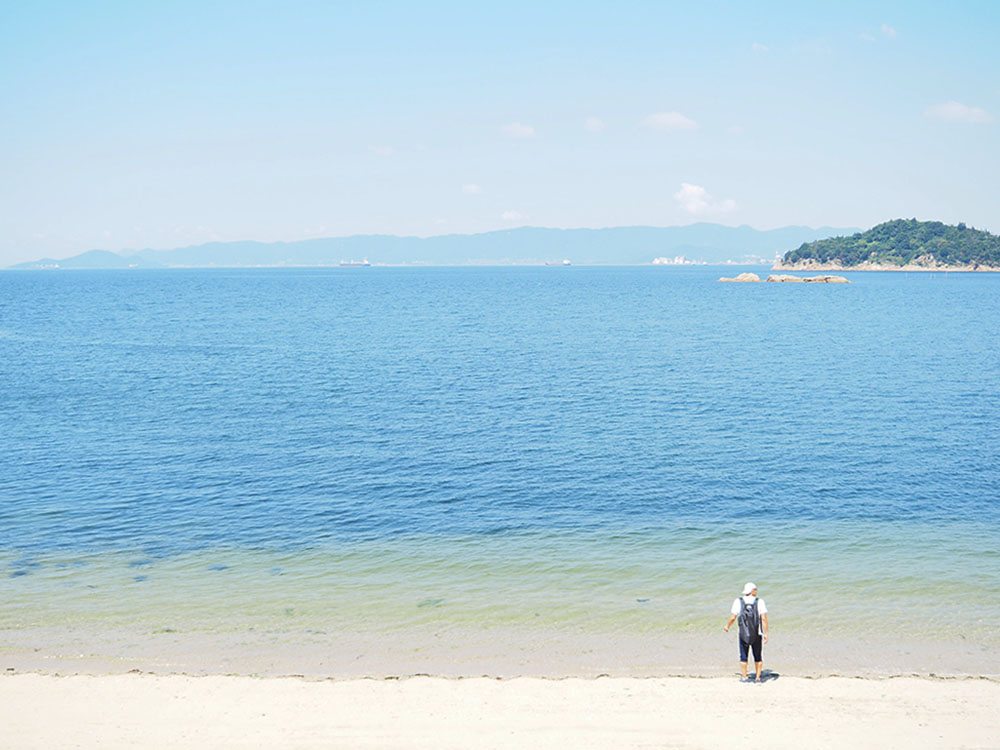
Due to the high tide, we couldn't get close to the Window Rock.
On the way to Koharamishi, there is a stone structure called Yamamiishi that resembles an observation deck.
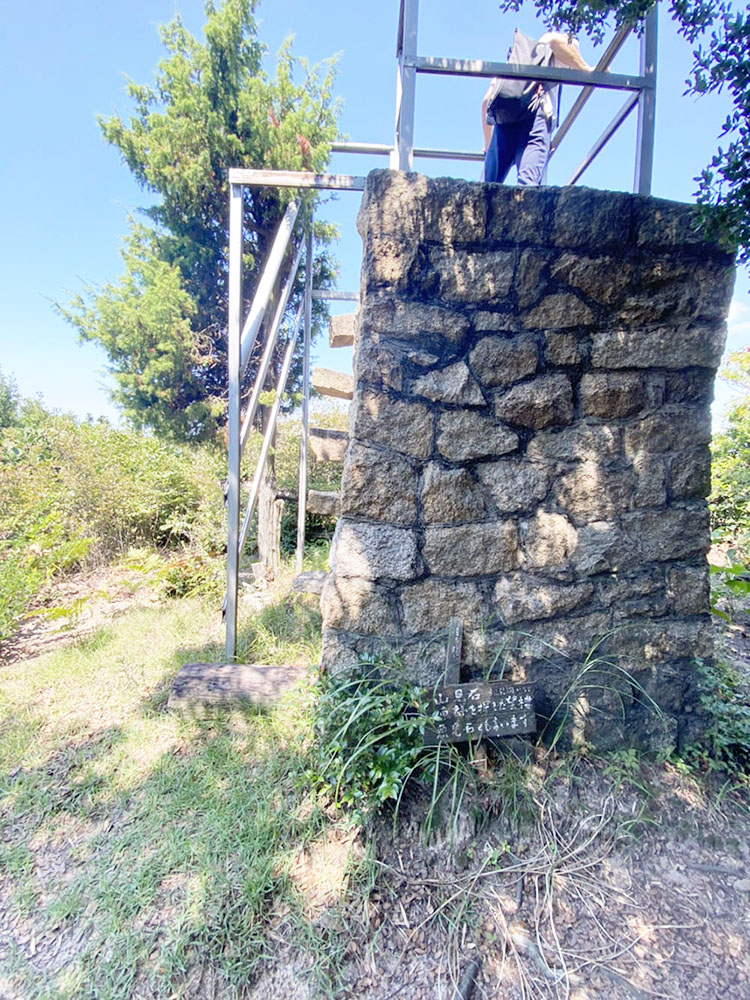
Climbing the unique stone stairs leads to a breathtaking view!
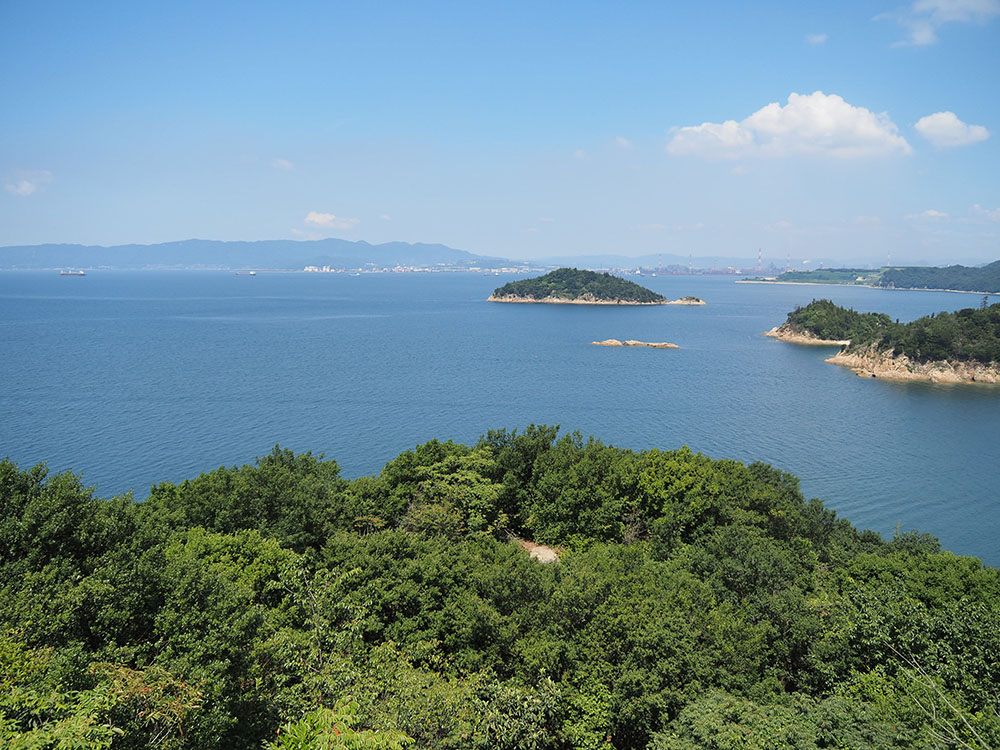
In the past, it is said that people watched the movements of fish schools from here and signaled to the fishermen at sea.
Koharamishi has been reached.
I was surprised by the "Shoseiryuuoujin" that was not mentioned in the pamphlets. Be sure to take a look from below when you visit.
Hiraoka-san easily climbs onto Koharamishi.
Looks refreshing!
I thought, "I want to climb too!" but I lost my nerve as I couldn't muster the strength in my legs and gave up.
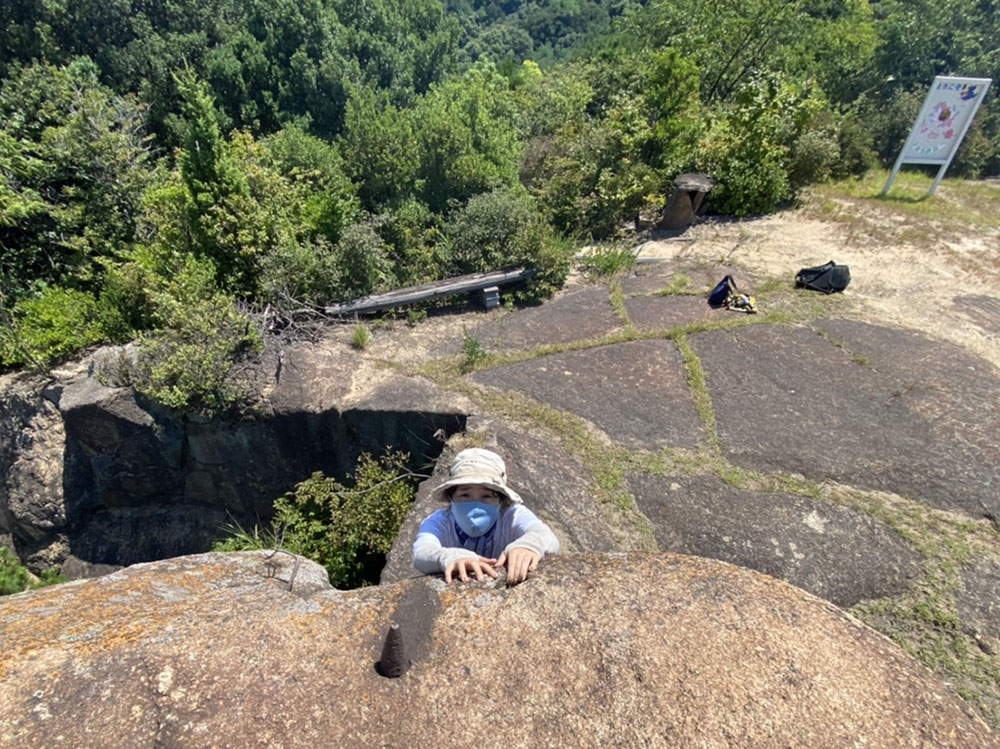
There are holes carved into the giant rock for gripping with hands and feet, so if you have the strength and courage, please give it a try.
A breathtaking view awaits!
Instead, I took a commemorative photo with the face board nearby.
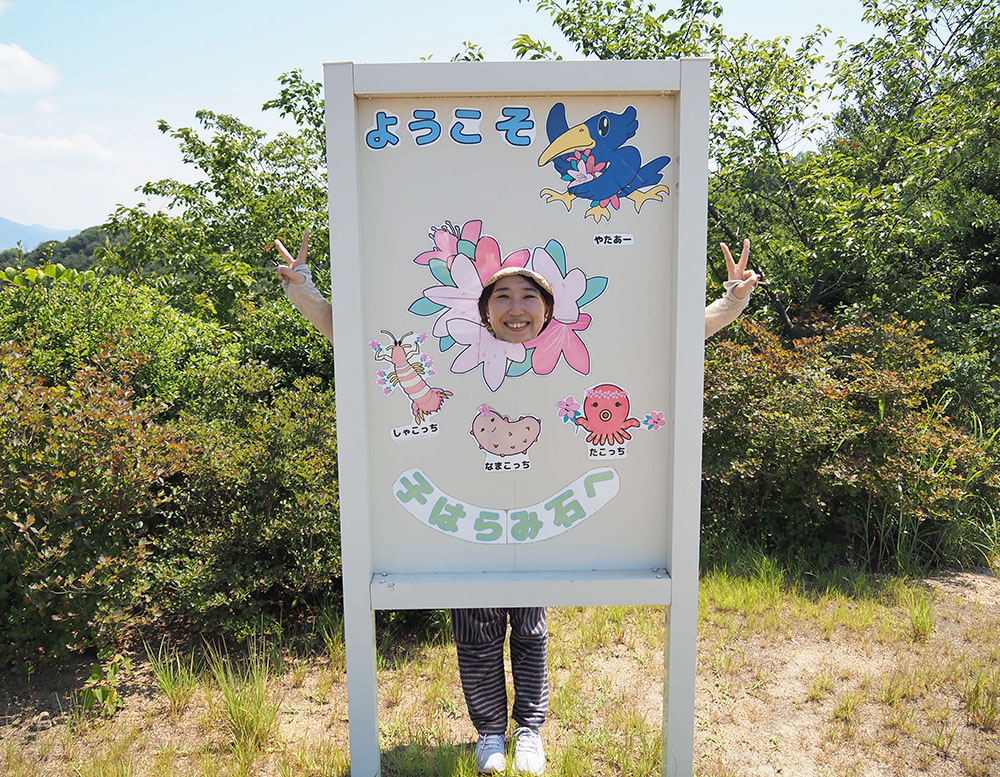
In the upper right, there is an illustration of the three-legged crow "Yatagarasu" that guided Emperor Jinmu.
Yatagarasu can be found in various places on the island, so be sure to look for it.
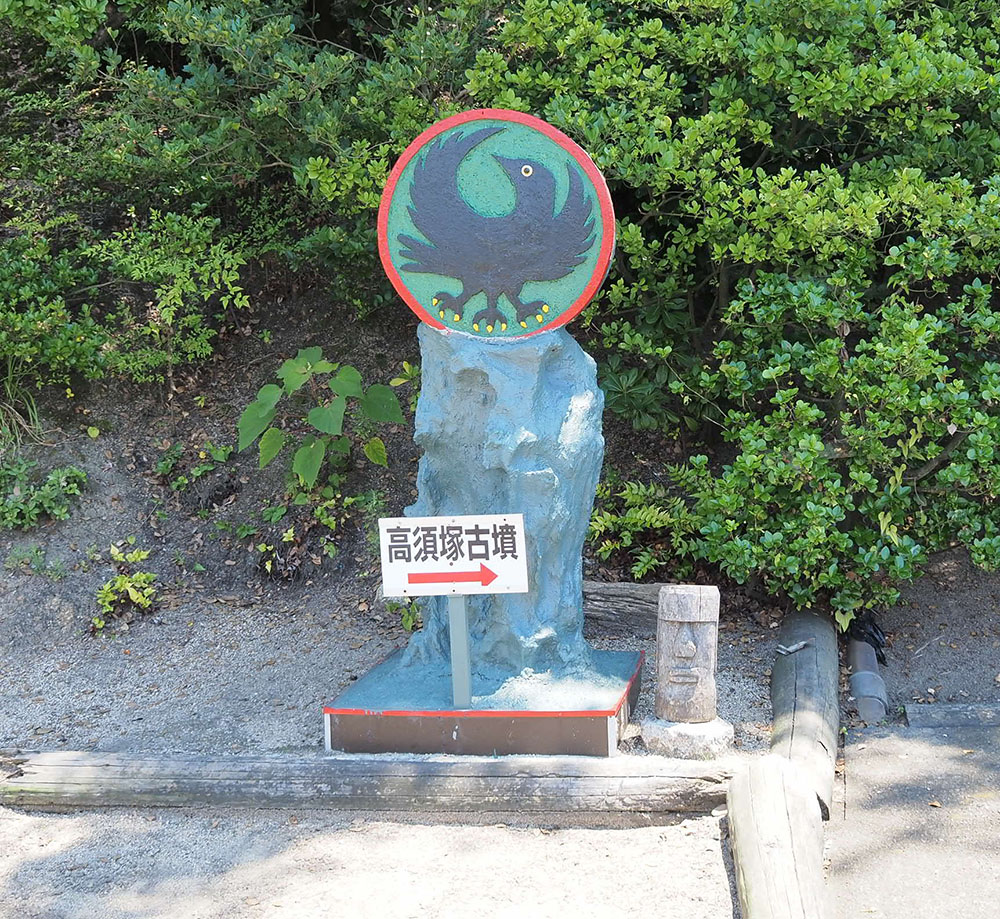
After that, as I walked through the forest, I arrived at the southern beach of the island, "Takenohama." The locals call this place "Yotarou."
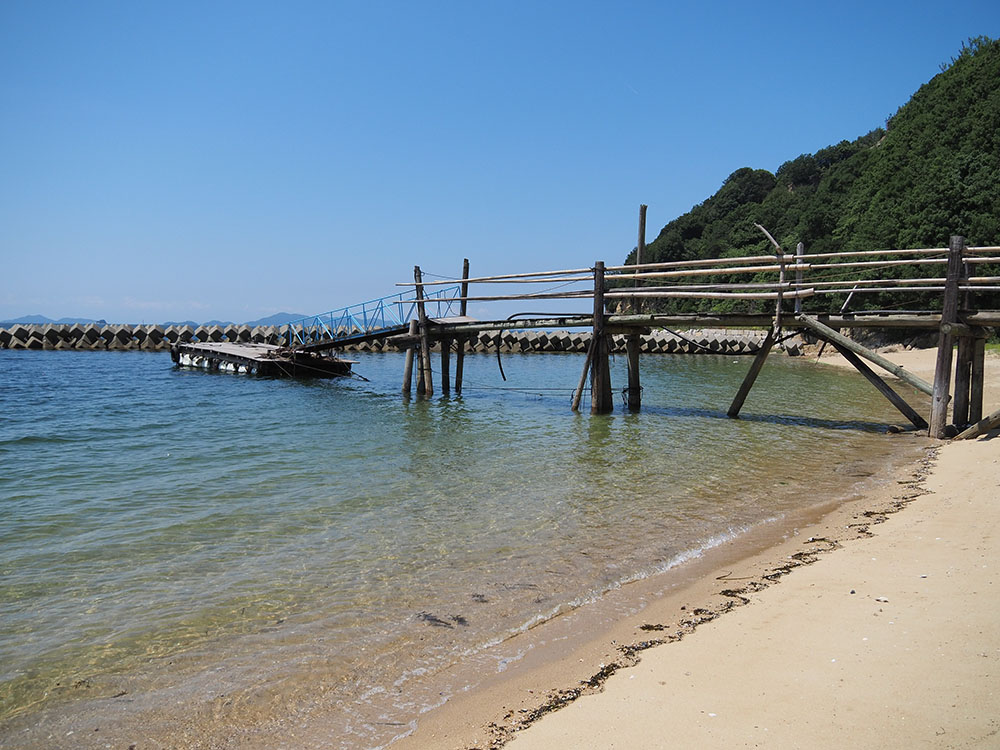
A magnificent handmade pier catches the eye. As I walked on it, I felt the waves of the Seto Inland Sea gently rocking it.
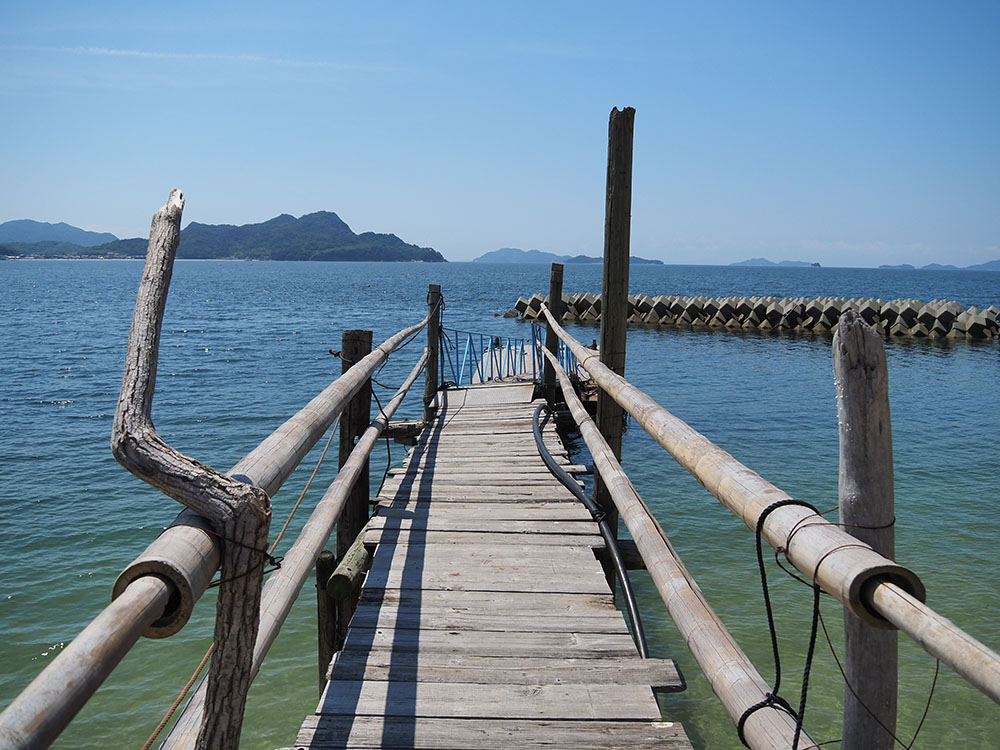
The day I visited was a weekday, but it happened to be summer vacation. Shiraishi-jima Beach across the sea was bustling with activity.
In contrast, Takenohama seemed like a place where one could enjoy leisurely beach activities.
As I walked further, I arrived at an open observation deck on the southern side.
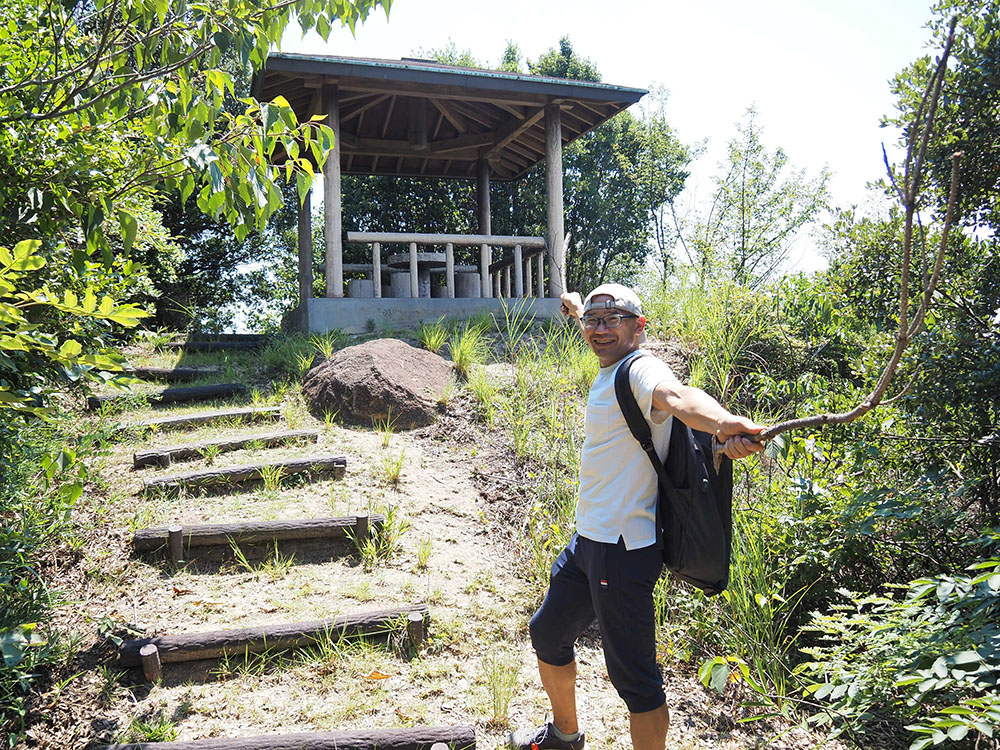
Takashima is a compact island, so walking around it was enjoyable as I realized I was surrounded by the sea in all directions.
After resting under the roof, the next stop was "Minami-Iwaza".
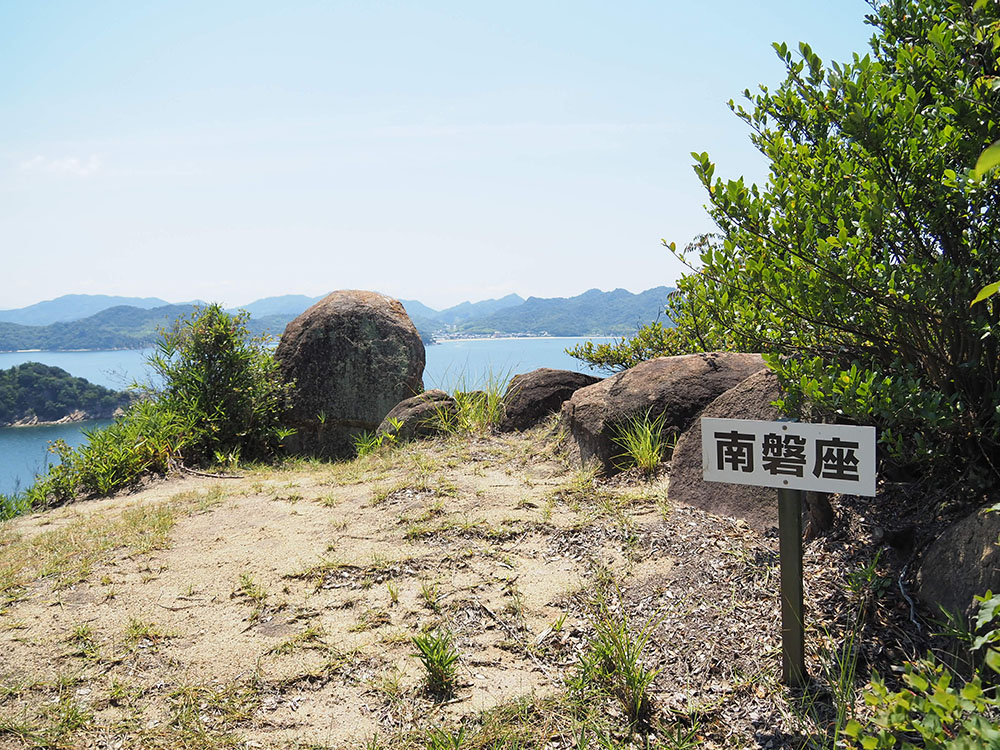
What I want you to see is the stone that juts out into the sea.
There is a legend that a golden kite led Emperor Jinmu to victory when he was struggling during his eastern expedition.
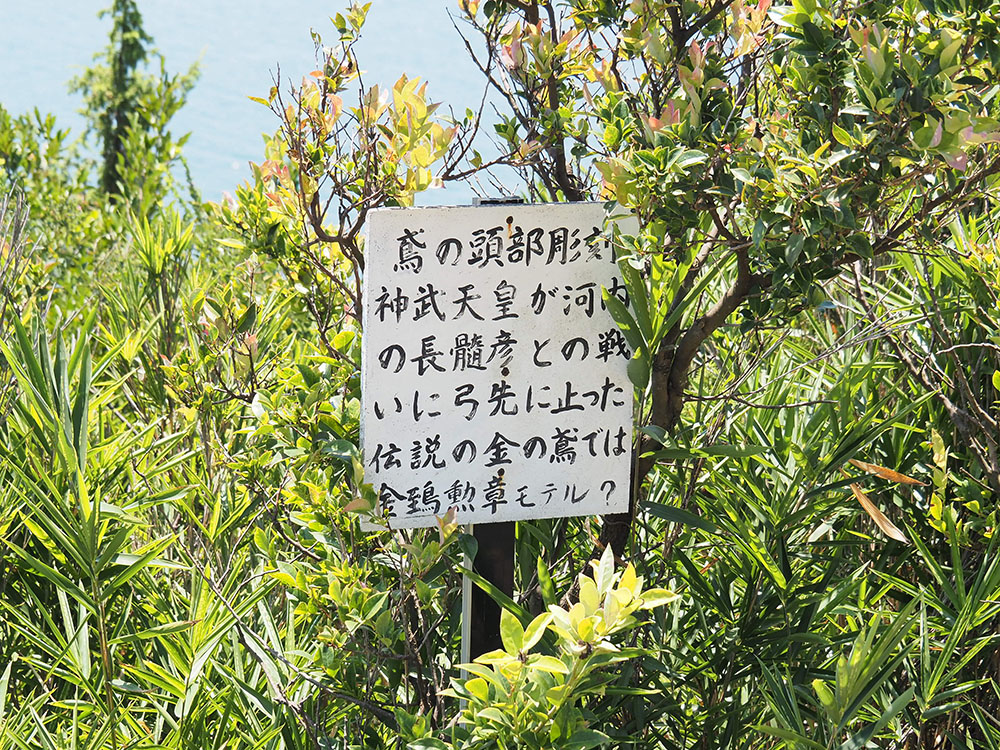
With sharp eyes and a beak.
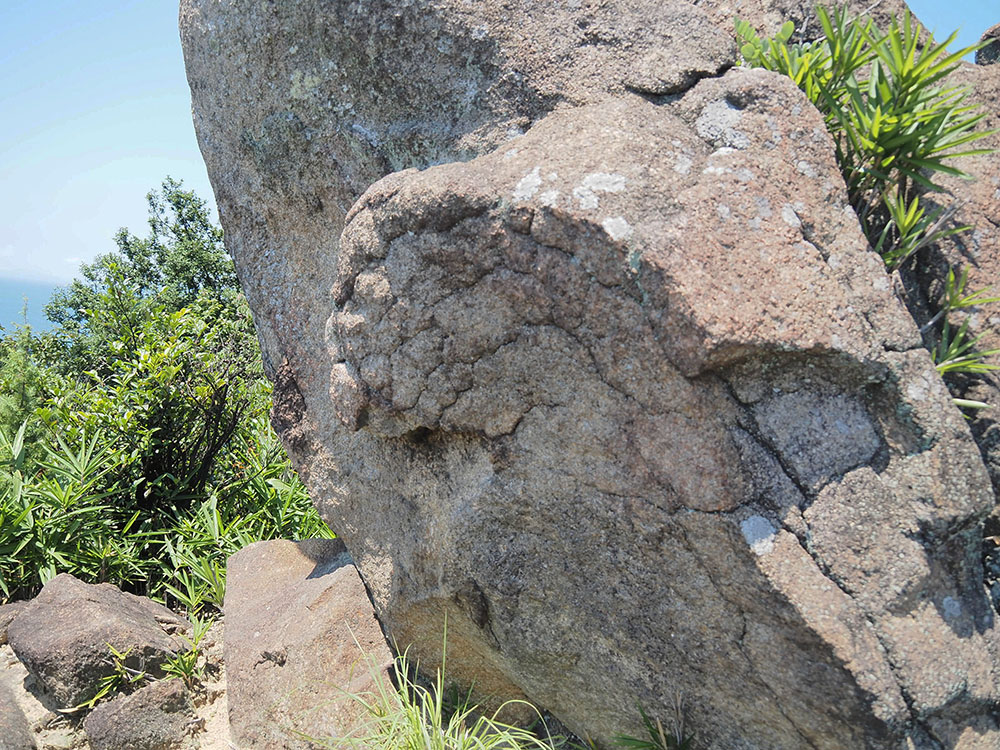
Does it look like the head of a kite to you?
As I continued deeper into the forest, I arrived near the summit of Takashima's highest peak, "Kamiurayama," which is about 77 meters high.
A pleasant spot where you can see the shape of the island at a glance!
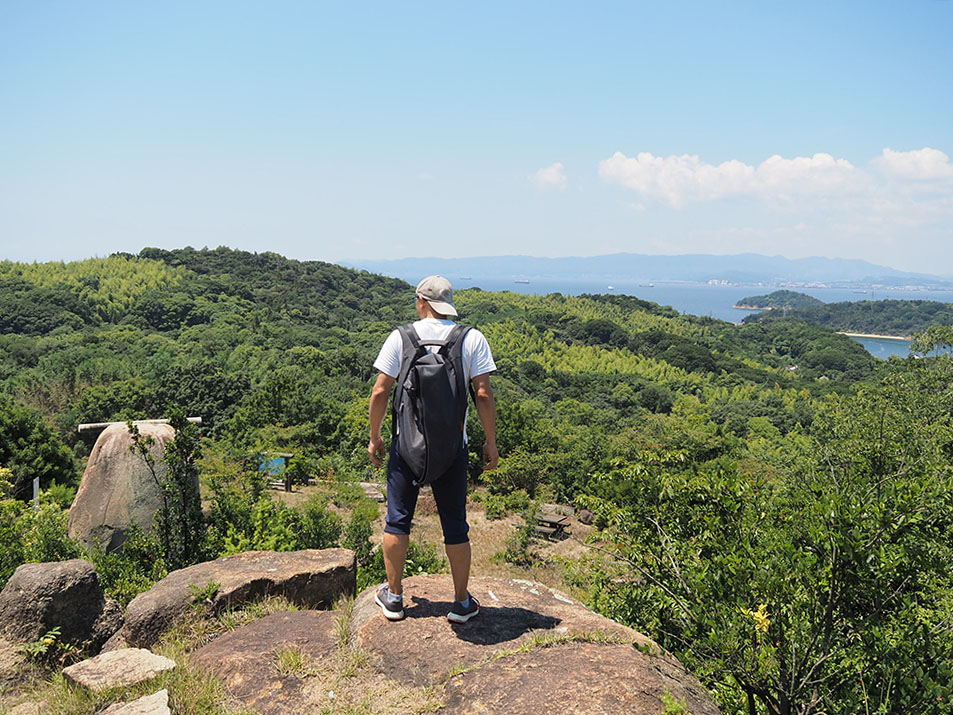
The stone where Emperor Jinmu is said to have divined good and bad fortune is called "Urasuishi."
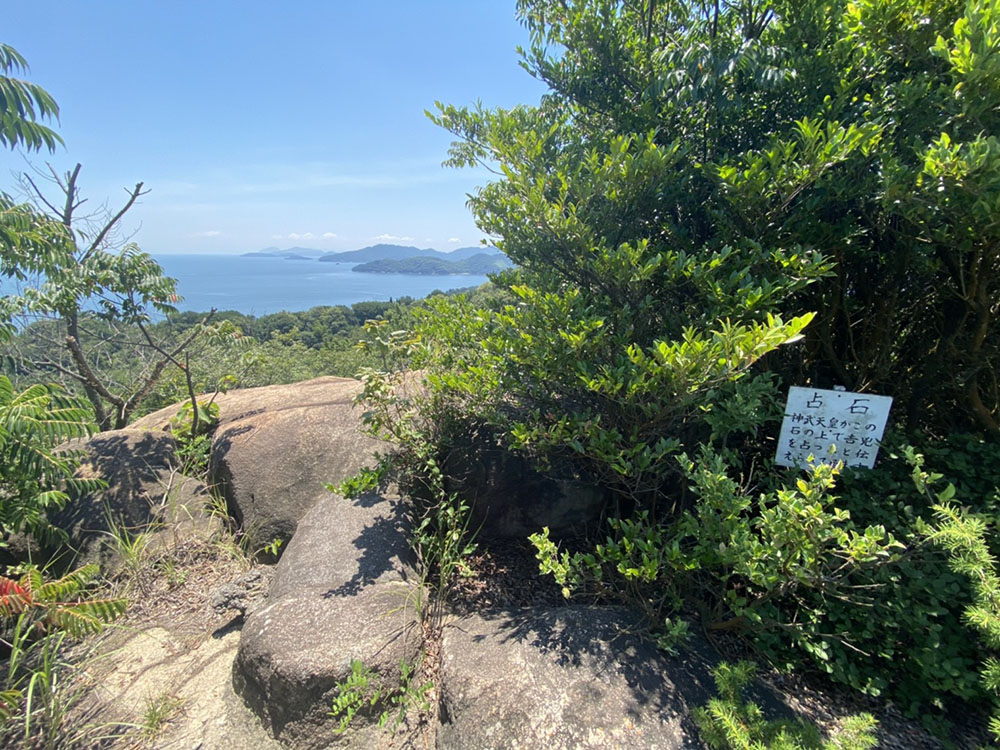
It is also said to be a spot where you can see the sunrise.
A little below the summit, there is a "Takashima Gyokyu Ruins Monument" about 8 meters tall.
It is impressive and surprisingly large! I wonder if it was transported up the mountain or if it was carved and installed from a stone that was already here.
This time, I reached Kamiurayama from the south, but if you walk from the northern side where the port is located, you should see the "Takashima Gyokyu Ruins Monument" beyond a long staircase and a torii gate.
I descend to the "Manai Well" located on the middle slope of Kamiurayama.
Near the well, there are two crabs!
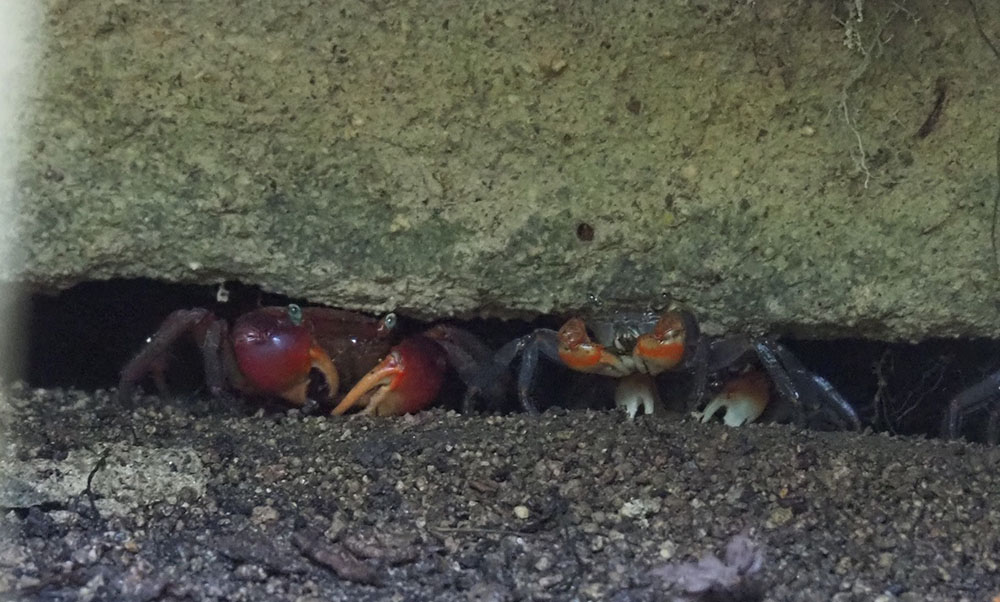
According to Hiraoka-san, there are always crabs here. They might be guarding something.
Next to the well, there is a poem monument that reads, "Chihayaburu, the ancient times of the gods are far away, but can I know by drawing water from the pure spring?"
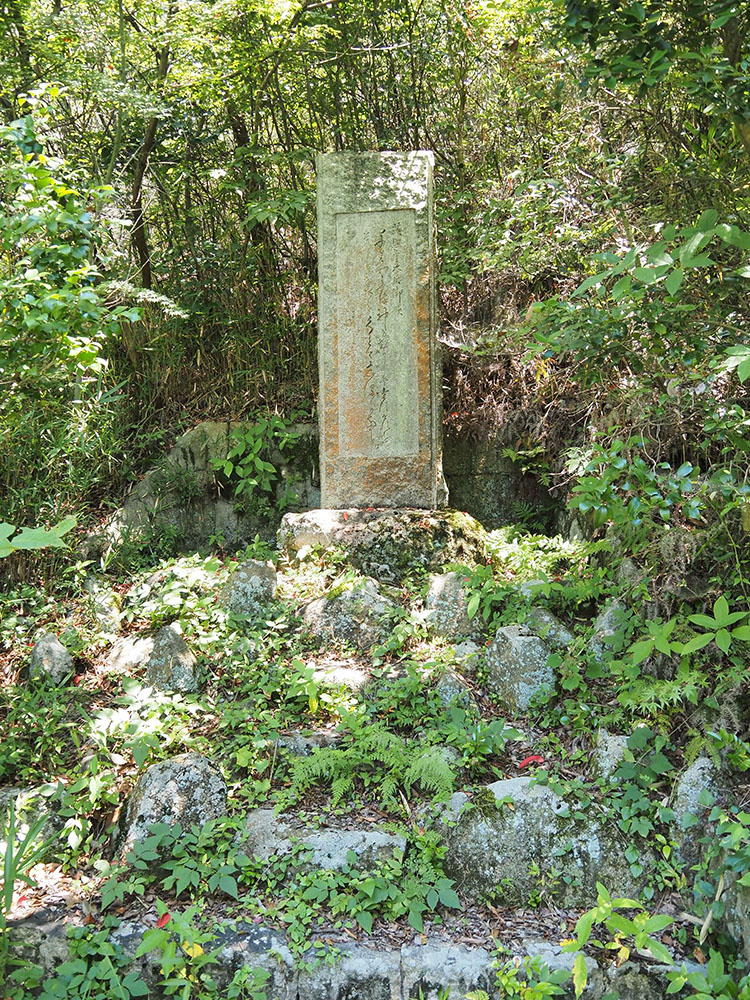
I reached the car road along the northern sea.
When I visited the Takashima Shrine overlooking the sea, I was surprised by the gigantic statue of Emperor Jinmu!
Its height is about 5 meters. I was amazed by its three-dimensional and intricate design.
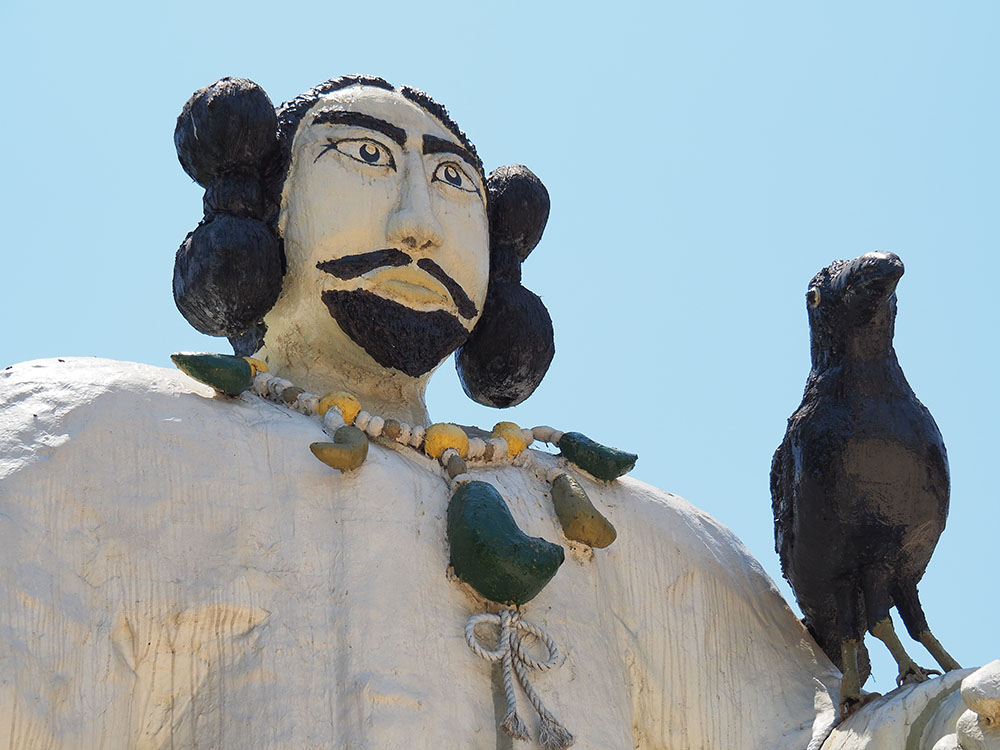
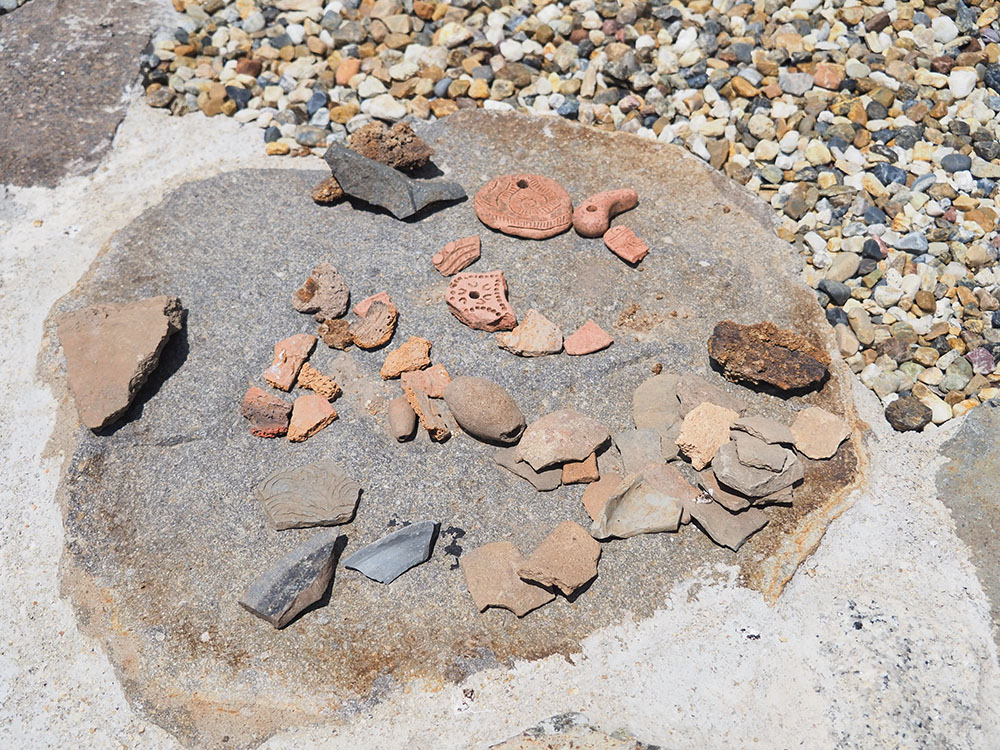
The grounds of Takashima Shrine are also a historic site and the remains of an ancient dwelling. It is said that artifacts from the Kofun period and remnants of hearths have been discovered.
Behind the statue of Emperor Jimmu, there were items resembling fragments of pottery and what appeared to be magatama (curved beads).
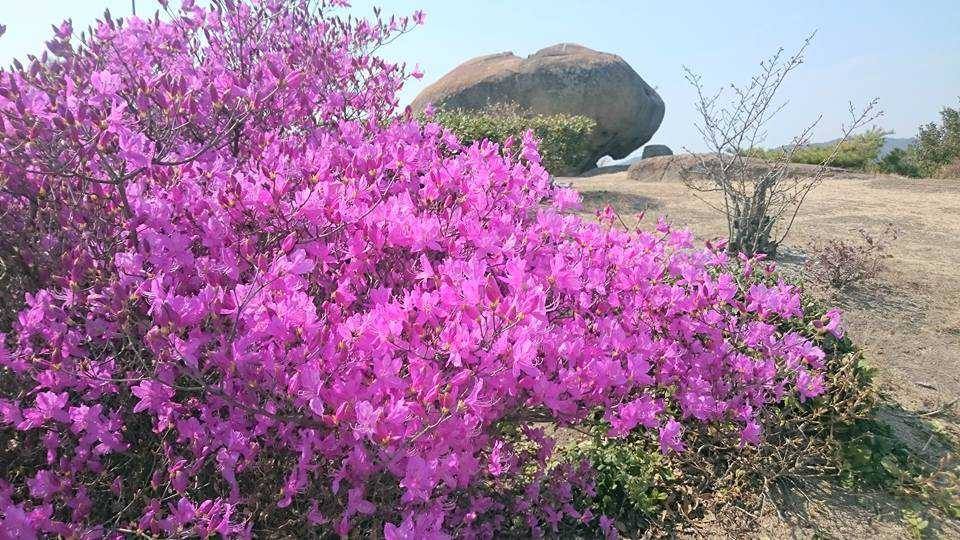
Takashima has many other mystical spots, so please take your time to walk at your own pace.
In early April, it is said that azaleas bloom all over the walking paths.
On the way back, I took a boat from Takashima Port to Kamishima Sotoura Port. The ride took about 6 minutes. I arrived in no time!
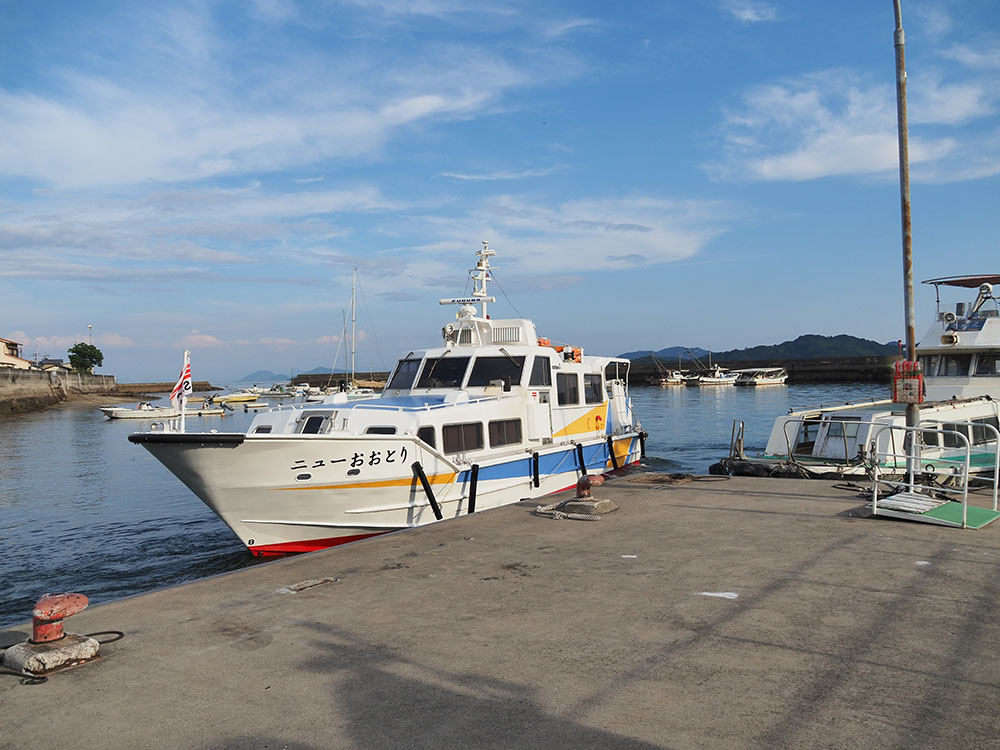
People traveling between Takashima and the mainland often use Kamishima Sotoura Port. It’s convenient, so that makes sense.
I wonder how the islanders feel about the charm of Takashima.
I spoke with the head of the Takashima community, Senoo Toshio, and Kawata Koji, who worked on the giant statue of Emperor Jinmu at Takashima Shrine.

What do you want to know about Kurashiki?
Enter a word to search articles from this site