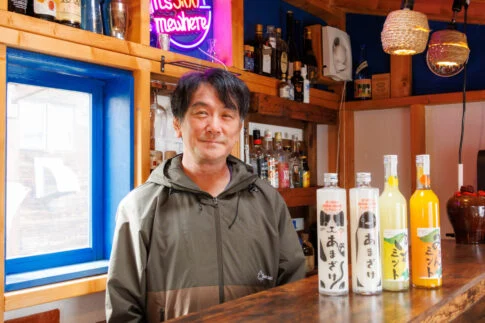
Interview with Fujimoto Shinji
What SIRUHA means to Fujimoto.
And what manufacturing means.
He shared his thoughts on that.
“SIRUHA,” the sound is really beautiful, isn’t it? Can you tell us the origin of the name?
Fujimoto (honorifics omitted)
I decided from the beginning to use 3 characters.
It sticks in your ear, so to speak.
So, I picked up all the sets of 3 characters from the 50 sounds without leaving any out and wrote them all down on paper in small letters.
I went through them roughly from “aaa” to “nnn” and checked the combinations that caught my interest.
Later, I also referred to a Japanese dictionary and an English-Japanese dictionary.
I wanted to align it with what I wanted to do and give it meaning as a brand.
It was really just a repetition of that.
Among them, the 3 characters that felt the most fitting in terms of sound and memorability were “shi,” “ru,” and “ha.”
The meanings were somewhat added later, as “know” and “leaf.”
By knowing, new ideas sprout like leaves, that’s the image I had.
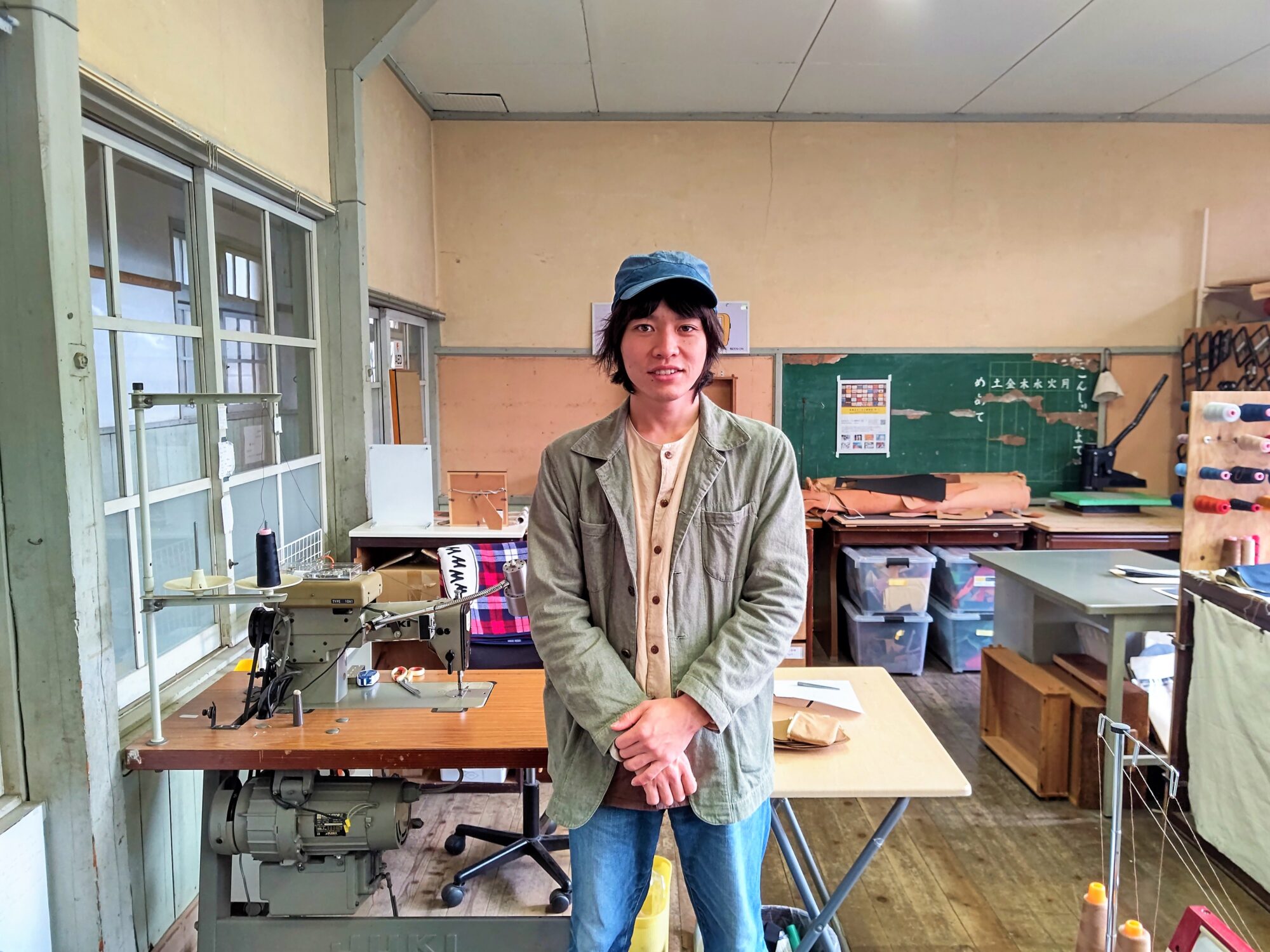
Please tell us about yourself, Fujimoto. What prompted you to start SIRUHA?
Fujimoto
Right after graduating from industrial high school, I got a job at a major manufacturer.
My hometown is Kanoura in Kasaoka, but for about a year after starting work, I lived in a dormitory in Mihara City, Hiroshima.
After that, I commuted from my family home.
I chose a large company because I wanted stability in terms of income.
However, I didn’t know when or where I would be transferred.
In that sense, I felt that it was quite unstable as a way of life.
When I thought about what kind of life would bring me closer to the stability I sought, I felt that the flow of the times would become extremely rapid.
If that’s the case, I should have various options and be able to change my lifestyle according to the flow of the times.
I decided to become self-employed and increase my skills as much as possible.
I thought that might be more stable.
I was about 23 years old.
I quit my job and started SIRUHA.
What happened after you started your business?
Fujimoto
I envisioned entrepreneurship as a way to seek a fulfilling life, but I really struggled with what to do specifically.
Since I was at it, I wanted to do something that suited me even a little, something I would enjoy doing.
That’s probably manufacturing.
I had that vague feeling or direction.
Plus, even though I thought about wanting to help someone, I wondered, what does it mean to help others?
In the end, I even thought about the meaning of life, like a philosopher.
It was a circular argument.
In the end, I didn’t really understand.
But at the very core, I simply thought that I need to live while constantly considering how to make society comfortable.
My answer to that part was manufacturing; I wanted to create things like notebooks and bags!
In fact, I submitted the business registration for SIRUHA about 3 years after quitting my job.
Since I was a complete novice in sewing and design and could hardly create any products, I thought of those 3 years as a preparation period.
If I failed during that time, I would just give up.
Starting from scratch with this sense! That’s amazing. Did you design it yourself?
Fujimoto
Thank you very much.
Yes, the image is based on what I thought was good, and I also consulted with my employees from time to time.
The design itself is self-taught.
However, bags tend to have many straight lines, so they are relatively easy to draw plans for, and you can actually make them.
I don’t feel like I could make clothes, which are all curves.
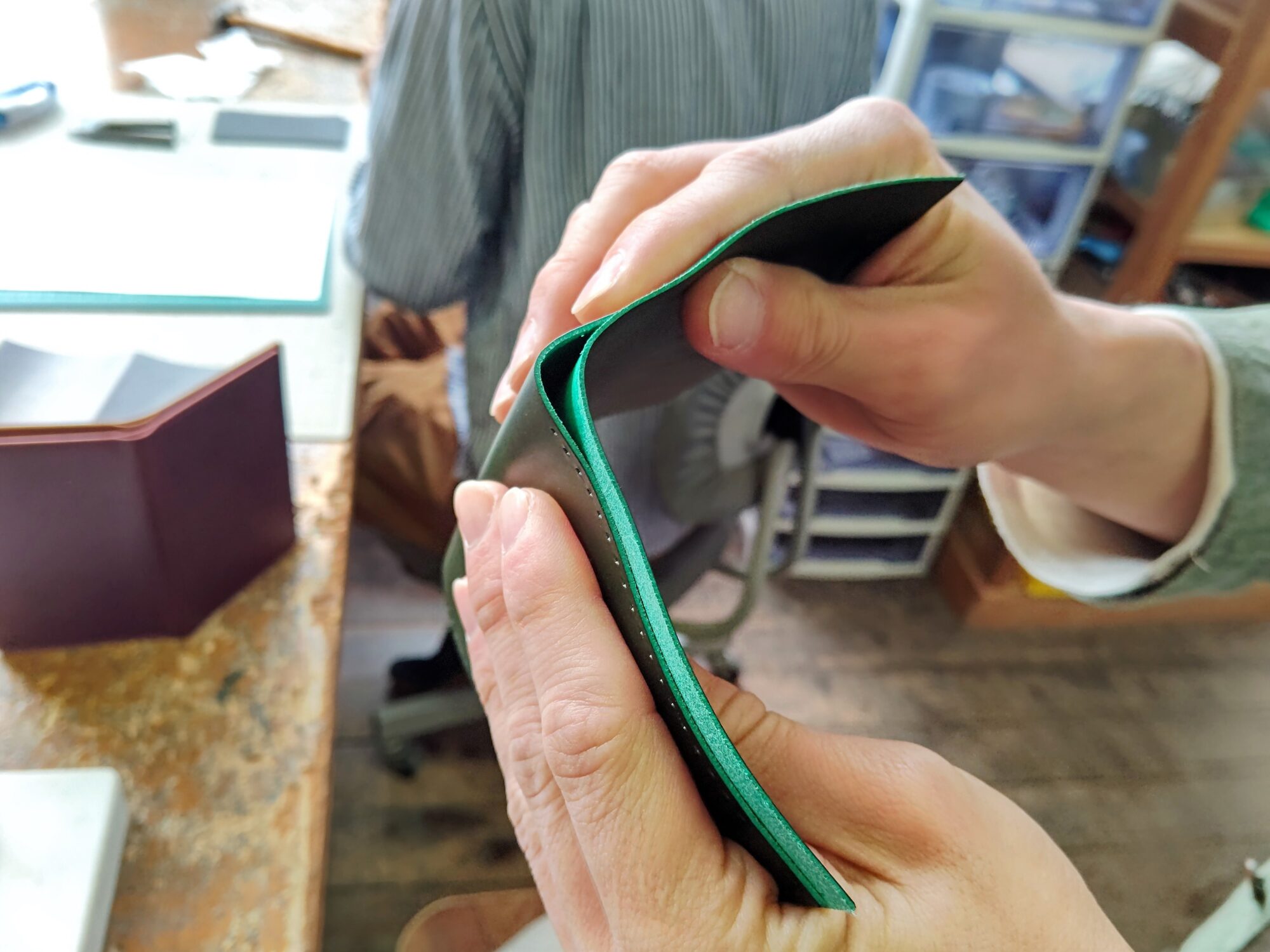
For the first year after quitting my job, I was holed up alone in a 6-tatami mat room.
I spent my days thinking about the lineup of products I wanted to create and the design of each one, and sewing endlessly with the one sewing machine I had to bring them to shape.
I was pursuing the most optimal product that resonated with me.
Finally, please tell us what you value as a craftsman in manufacturing.
Fujimoto
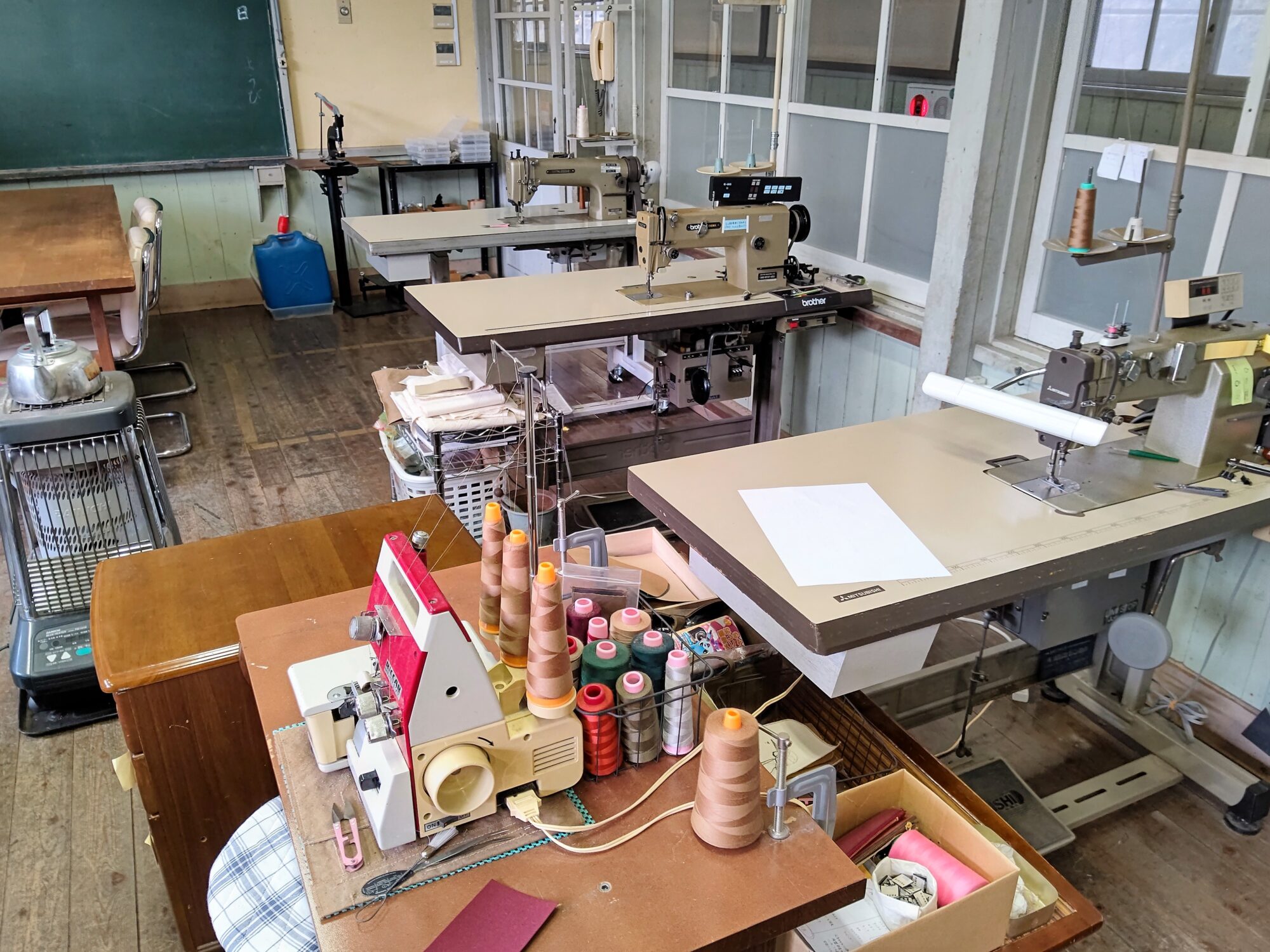
It’s a twisted way of saying it, but while I’m making things using leather, I don’t want to become a leather craftsman.
With notebooks, for example, I first create a prototype that I’m satisfied with, and then I think about what material to use for it.
At that time, the material I thought was good was leather.
I choose the material later.
It’s about committing the material to the purpose and design of the product.
So, the concept of the product comes first, and ultimately, it’s about the person using the product.
The premise is the user’s “going out,” “writing,” and “thinking.”
I don’t like being tied down.
I want to create a product with this design, but I can only work with leather, so I have to do it in leather.
That’s not freedom.
Instead, I want to create with the most suitable material for the product.
I want to do the best manufacturing in the best form that matches what I want to create and deliver.
From the Writer
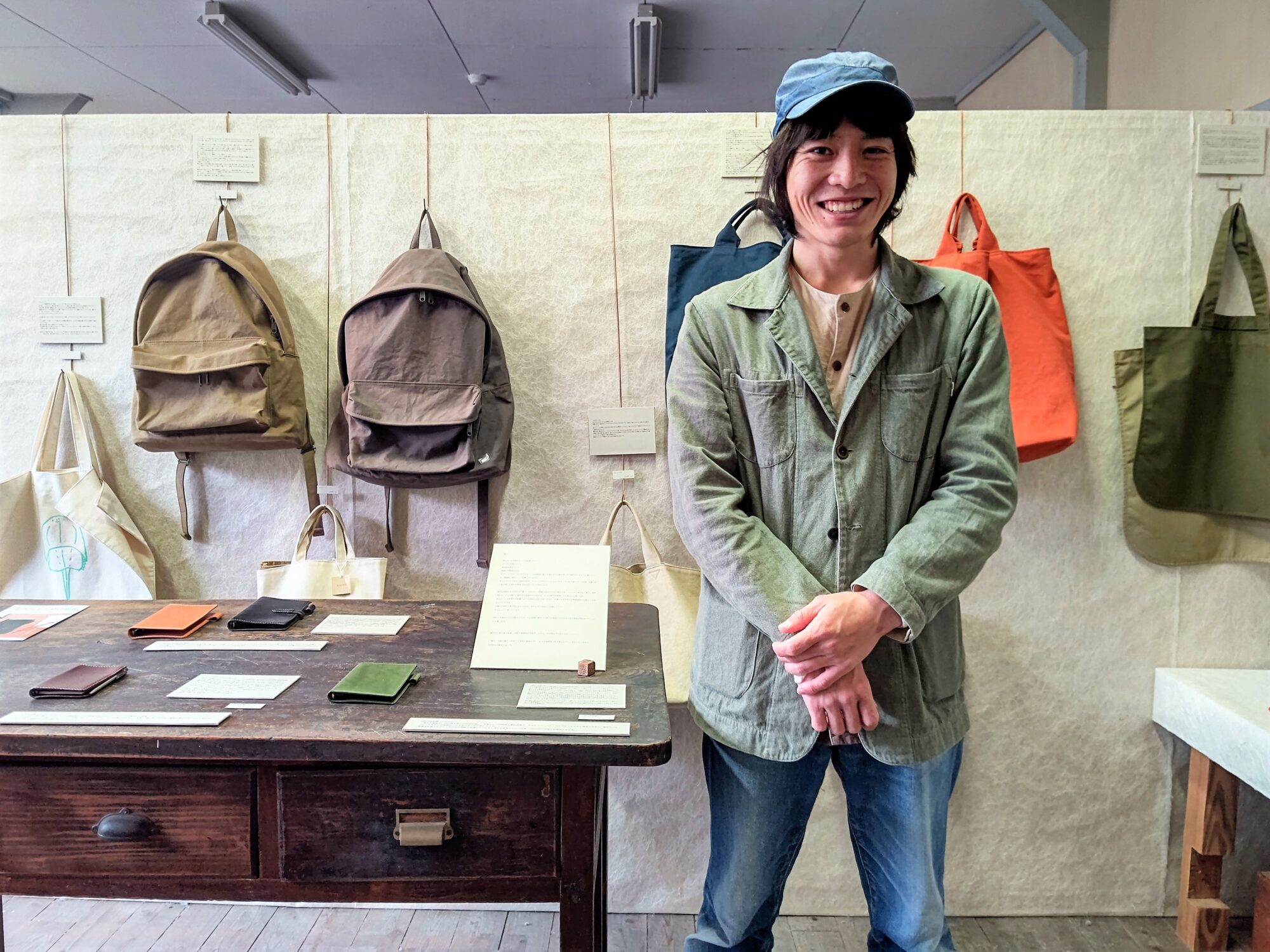
There is a phrase that strongly stands out from the interview.
“I don’t seek my own color too much.”
This is a statement that sharply expresses Fujimoto’s personality and the spirit of SIRUHA.
There is indeed a (fixed) image of people involved in manufacturing as their creative activities being self-expression.
This is what is known as the artisan spirit.
In that context, the products created are not just “goods,” but also carry elements of “artistic works.”
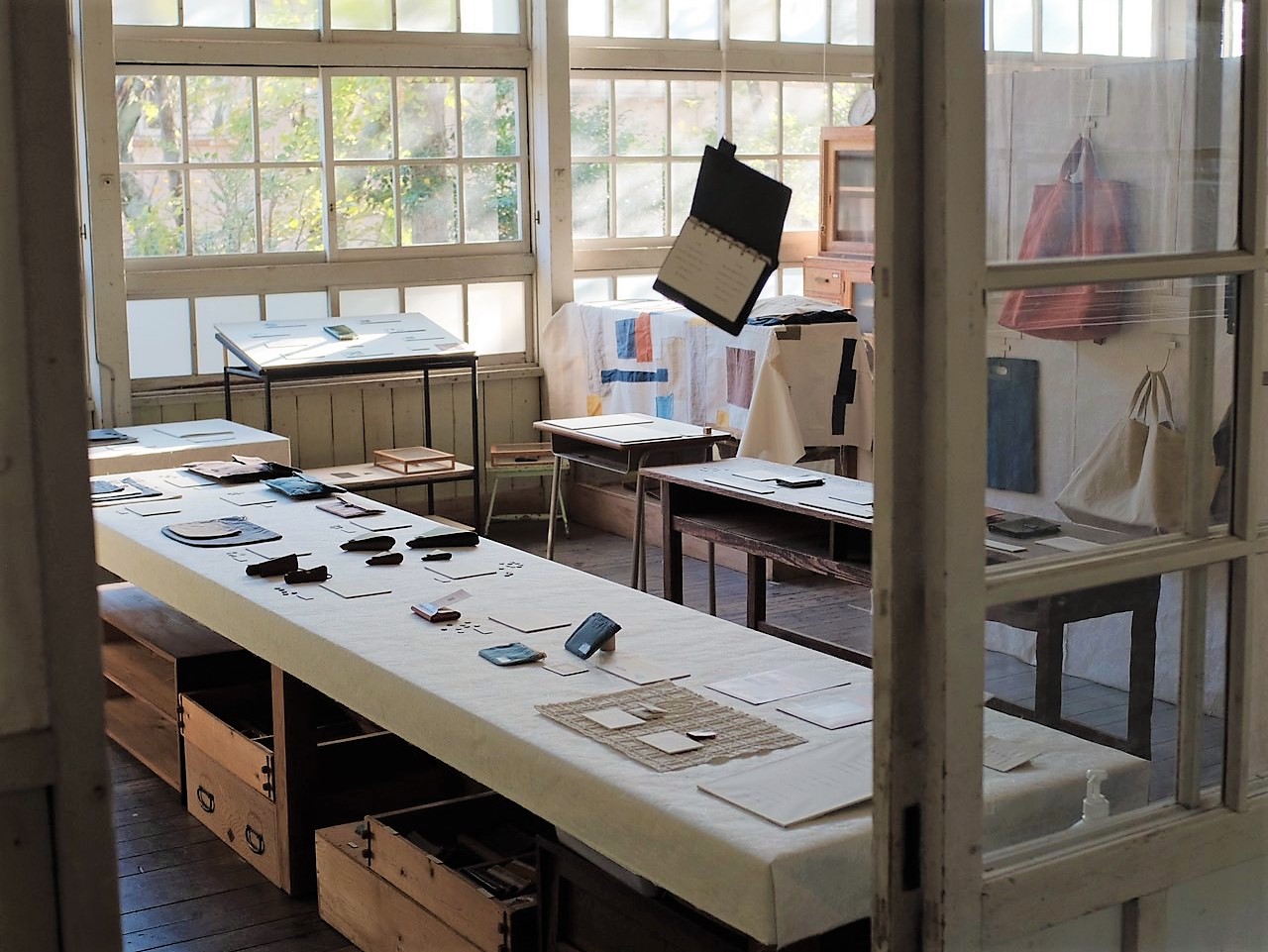
In fact, SIRUHA’s products are very beautiful.
However, there is no ego in Fujimoto’s manufacturing.
The most important thing is, above all, the person using the product.
With notebooks and bags, going out, writing, and thinking.
To support that activity is what should be prioritized the most.
The fact that he doesn’t chase after his own identity is, in a way, very SIRUHA-like.
SIRUHA Information
| Name | SIRUHA |
|---|---|
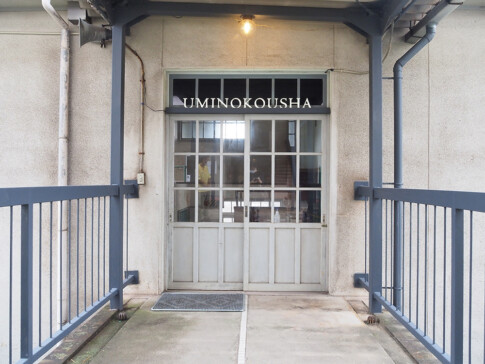
| Location | 2553 Oshima Naka, Kasaoka City, Okayama Prefecture, Share Atelier Umi no Kosha, 1st Floor |
| Contact | 080-1904-8416 |
| Parking | Available |
| Opening Hours | First Sunday of every month 10:00 AM – 3:00 PM *Open day for Share Atelier Umi no Kosha |
| Admission Fee (including tax) | Free |
| Payment Method |
|
| Smoking | Non-smoking (smoking allowed only in designated areas) |
| Toilet | Western-style toilet |
| Website | SIRUHA |

What do you want to know about Kurashiki?
By entering words, you can search articles from this site