
When people think of tourist attractions near Kurashiki Station, the first place that comes to mind is the Bikan Historical Area. It is a popular area with tourists, and is always bustling with people.
But did you know that the area around the station also has other charming neighborhoods, including streetscapes steeped in atmosphere dating back to the Edo period and newly developed areas?
“Achi Fest” is an event planned to draw attention to places like these and bring the bustle back to the town.
We’ll introduce the scenery and people’s thoughts encountered while walking around town, along with the festival’s various activities.
The information presented was current when this article was published in June 2025. Please note that it may differ from current information.
What Is Achi Fest?

Achi Fest was held on June 1, 2025, in the Achi area in front of Kurashiki Station. The event aims to bring bustle back to the town while making use of local shops and buildings.
Until now, events had been held only in Achi 3-chome under the name “Achi-cho Neighborhood,” but in 2025 the area expanded, with Achi 2-chome and Achi Terrace Kurashiki joining in as well.
This was the first memorable edition of Achi Fest, bringing the three areas together.
The Background to Achi Fest
Achi Fest was organized by the Achi-cho Neighborhood Revitalization Executive Committee. We spoke with committee members Uchida Kotaro and Inoue Masao about how the event came about and its background.

“From the Edo period until around the prewar years, Achi-cho was truly a bustling entertainment district. But at some point, fewer people began walking the streets, and it turned into a quiet neighborhood. That’s why we felt so strongly that we wanted to bring the bustle back to the town once again.”
Uchida says.
“Achi Fest is also linked to the revitalization of the area around Achi Terrace Kurashiki, which Kurashiki City is promoting. The idea is to create a natural flow of people walking through town, from Achi Terrace Kurashiki to Achi 3-chome, Achi 2-chome, and then the Bikan Historical Area. That’s the vision behind the event.”
Inoue explained.
Listening to the two of them, you can really feel how deeply the local people care about Achi-cho.
About the Three Areas
Achi Fest is held across three main areas.

It seems there was plenty to see, with events and workshops taking place in each area.
I arrived at the venue at around 10 a.m. The area was so large that I wondered, “Will I be able to see everything?” Feeling a little unsure, I first picked up a map.
Join the Stamp Rally for a Souvenir
At the information desk in the Achi 3-chome area, local volunteers greeted visitors with smiles.
Stamp rally cards were being handed out here.

The entry fee was 200 yen.
Collect stamps at participating shops in each of the three areas—Achi 3-chome, Achi 2-chome, and Achi Terrace Kurashiki—and the first 200 participants would receive a souvenir, so I promptly bought a stamp card too.
Excitedly wondering, “Where should I start?” I set off to explore the town.
Now, I’ll introduce the shops I stopped by, in order.
Achi 3-chome Area
First, I headed to the Achi 3-chome area.
Events at Ogawara House
A short walk from the 3-chome information desk is Ogawara House.
This stately building was constructed in the Meiji period and still operates as a kimono shop.
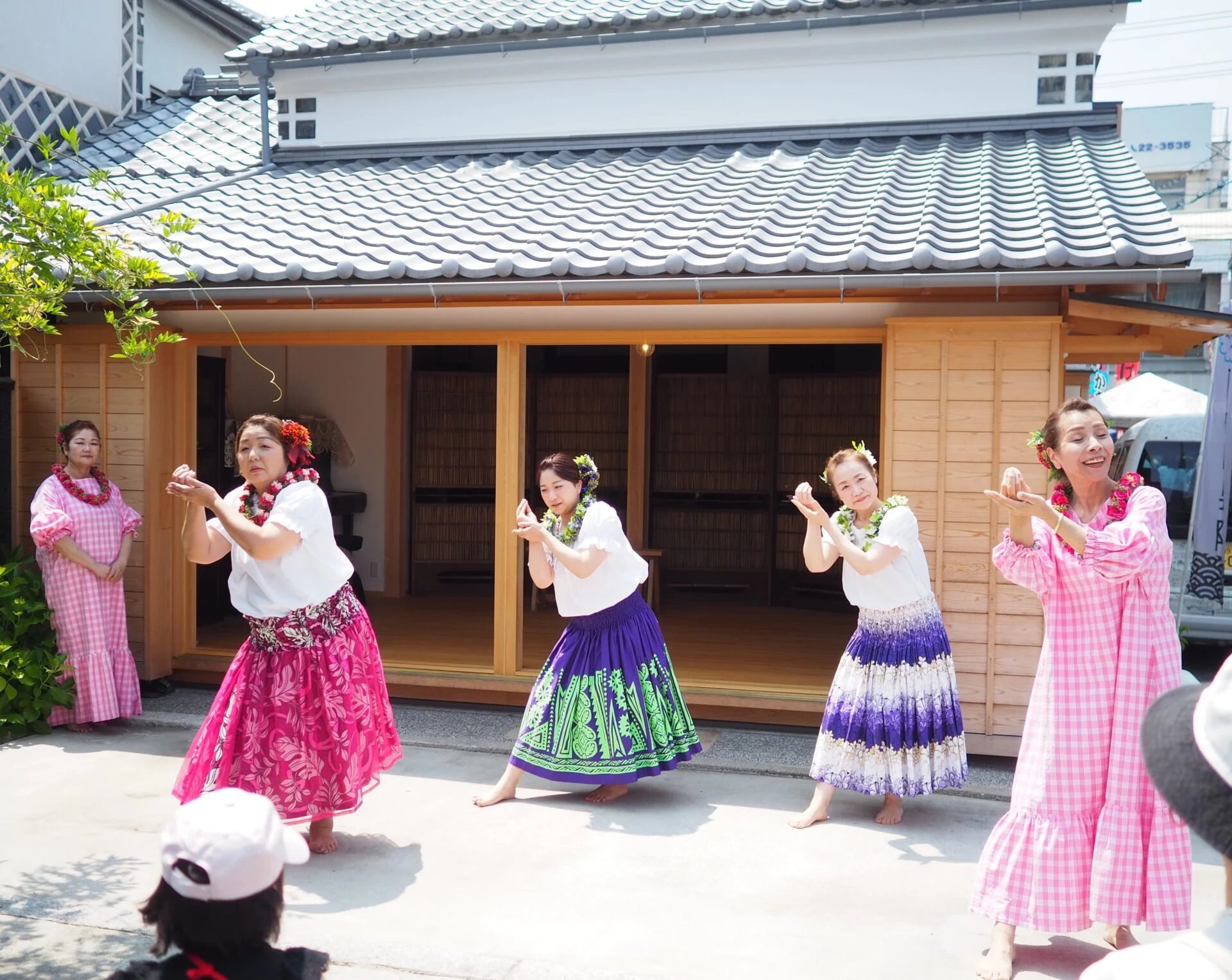
The parking lot at Ogawara House was opened up and used as an event space. The first stage performance was hula dancing.

As the sun grew gradually stronger, Hawaiian music played only here, making it feel just like a resort.
Among the performers on stage were members making their debut that day, and their restrained dancing conveyed their nervousness. The audience watched over them warmly, and for a brief moment, it felt as though a Hawaiian breeze had blown through Kurashiki.
Wagyu Skewers at Trattoria Homemade Soba Takenoya
As I started to feel a little hungry, I heard an energetic “Welcome!” from across the street from Ogawara House.

The voice belonged to a staff member at “Trattoria Homemade Soba Takenoya.”
A popular soba restaurant in Kurashiki, it had even opened its garden for a food stall.
A wonderfully savory aroma wafted from the garden… Drawn in by the scent, I found myself making my way inside.
When I asked a staff member, I learned that skewers of Furano A5 wagyu, also used for their roast beef, were being sold at a price close to cost.
After hearing that, I couldn’t resist trying one.

The skewer, enjoyed in the garden among tables and chairs, was piping hot, with juices oozing out of the meat. It was so delicious it nearly made my eyes pop. Since it was still early, I had the luxurious space all to myself, leaving both my stomach and heart feeling warm and satisfied.


The Grand Pottery Market at Takenoya Bettei
It looked like something was happening in the building at the back of the same garden, too. I was curious, since it’s not usually open to the public.
This is Takenoya Bettei. It is usually an afternoon tea shop that requires reservations, but for Achi Fest, it was opened to the public for a special “Grand Pottery Market”.

Inside, popular tableware actually used at Takenoya was on sale at 30% off, and visitors who love ceramics could be seen carefully picking up pieces and making their selections.

Inside, there were also miscellaneous goods and artworks from various vendors, and I was able to enjoy a quiet, fulfilling time for adults, almost as if I were in an art museum.


Uchida Residence: Sencha Tea Ceremony by Bodaisei Tosen-ryu
At Uchida Residence, right next to the Ogawara Residence, a sencha tea ceremony by Bodaisei Tosen-ryu was being held.

For 500 yen, you can experience an authentic tea-making ceremony, so I decided to join. At reception, a staff member with a lovely smile warmly welcomed me.
I joined the 11 a.m. session. At the venue, participants sat in groups of five or six.
Many people were trying sencha for the first time, and the staff carefully explained the customs and history of sencha.

I had attended matcha tea ceremonies several times, but this was my first experience with a sencha tea-making ceremony.
The teacher from Bodaisei Tosen-ryu spoke gently: “Because everyone is so busy, it’s important to take a relaxing break—enjoying delicious tea and sweets while chatting.”
The ceremony begins with drinking the first infusion, brewed slowly at a low temperature, followed by sweets. The second infusion is served at a higher temperature, and the sencha had a rich, umami-filled flavor.

“Delicious!” participants exclaimed, their smiles spreading naturally.
It was not just a matter of sitting quietly and drinking tea; it was a heartwarming time that also brought a sense of warm connection between people.
Achi Terrace Kurashiki Area
With plenty of spaces still left on my stamp rally card, I headed to the next area, Achi Terrace Kurashiki.
What’s interesting is how the atmosphere changes completely from one area to another, even though they’re all part of the same “Achi Fest.”
If the Achi 3-chome area has the feel of “the good old days,” the Achi Terrace Kurashiki area gives the impression of a lively, energetic space centered around young people.

On the stage set up in the plaza, idol groups gave performances, and dance schools held recitals. The audience’s clapping and cheers were overwhelming.
Sumire Flower Shop, selling flowers in a rainbow of colors
At Kurashiki Ichibangai Shopping Street in the Achi Terrace Kurashiki area, food trucks and stalls lined the street, filling the whole area with energy.
Amid all this, I stopped at a local flower shop, Sumire Flower Shop.
Roses and hydrangeas in a rainbow of colors were on sale at affordable prices, and I found myself seriously wondering, “Should I treat myself?”

In the same corner, a moss terrarium workshop was also being held, where children carefully arranged moss and created tiny worlds. It was incredibly cute to watch, and a cozy, heartwarming moment unfolded amid the bustling shopping street.

Plenty of ripe strawberries at Ichigoya ROSSO
After walking so much, I was thirsty. I glanced toward the food trucks and spotted Ichigoya ROSSO, which I’d been curious about.
I’d had my eye on the shop for a while, so the moment I saw it, I headed straight over.

I ordered a strawberry milk smoothie (500 yen).
When I asked the staff what kind of strawberries they used, they said, “Oi C Berry.”

I took a big sip. It wasn’t too sweet, but the strawberry flavor came through clearly. It also paired perfectly with the milk as the ice melted.
It was a special strawberry treat that was also kind to my skin, perfect for a break during the festival.
Achi 2-chome Area
There were only a few stamps left on my stamp rally card.
With the map in hand, I headed for the final stamp, passing through the Achi 3-chome area once again and making my way to the Achi 2-chome area.
The Achi 2-chome area was divided into three venues.
- Achi 2-chome Plaza
- Achi Space Plaza
- LOGIN Kurashiki

The Achi 2-chome area is within the Bikan Historical Area, with a relaxed, welcoming atmosphere that draws tourists and families.
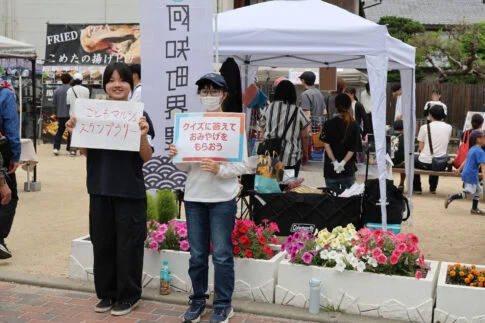
A mini quiz rally popular with children
Among the venues, a mini quiz rally popular with children was being held at Achi Space Plaza.

An event where participants visit shops in the Achi 2-chome area and take on quiz questions.
The prizes vary depending on how many answers are correct, and children enjoy taking part in quizzes created by local residents.
The most popular activity was scooping toys.
A large tub was filled with colorful toys floating on the surface, and children eagerly moved their scoops to fish out the toys they wanted.

It was a space where families could enjoy exchanging with local residents.
ICHIGO “Taiyaki & Coffee”
Right next to the mini quiz rally, we spotted a sign advertising “chewy rice-flour taiyaki.”
Curious, we stopped by and found that the stall was run by ICHIGO WORKS, a Type B continuous employment support facility operated by the social welfare corporation Yotsubakai.

I’ve recently been interested in gluten-free foods and rice flour, so I decided to give one a try.
That day, a limited-time matcha flavor was available, and as I picked one up, I caught a gentle, delicate matcha aroma.

With the first bite, the outer crust was soft and chewy.
Inside was matcha paste with just the right amount of sweetness, making it a snack that was kind to both body and mind.
Taking Part in Achi Fest
After completing the stamp rally, I came away with souvenirs from around Achi-cho, along with many new connections with local residents.

I often visit the Bikan Historical Area, but I had always just passed through Achi-cho.
But being able to take my time and experience the “Achi-cho area” today felt like a precious experience.
The atmosphere was completely different in each area, yet what they all had in common was the warmth of the people and their care for the community.
This Achi Fest was more than just an “event”; it was a memorable day that conveyed the local residents’ desire to “build the town together” from their respective places.
I’m already looking forward to seeing what the scene will be like next year.
Achi Fest Information

| Name | Achi Fest |
|---|---|
| Date | June 1, 2025 (Sunday), 10:00 a.m.–5:00 p.m. |
| Location | Achi-cho, Kurashiki City |
| Website | Achi Fest Instagram |



What would you like to know about Kurashiki?
Enter a search term to find articles on this site








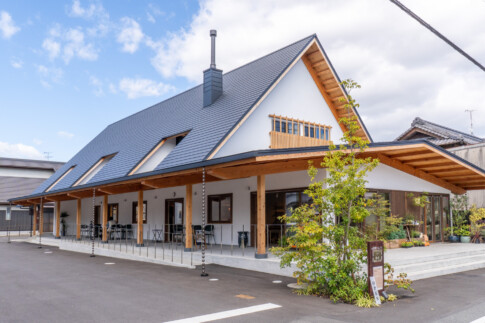

























The area around Achi Terrace Kurashiki and Kurashiki Ichibangai Shopping Street
Around Ogawara House, Uchida House, and Ohashi House
Achi 2-chome Plaza, Achi Space Plaza, and LOGIN Kurashiki