Denim kimono—have you heard of it?
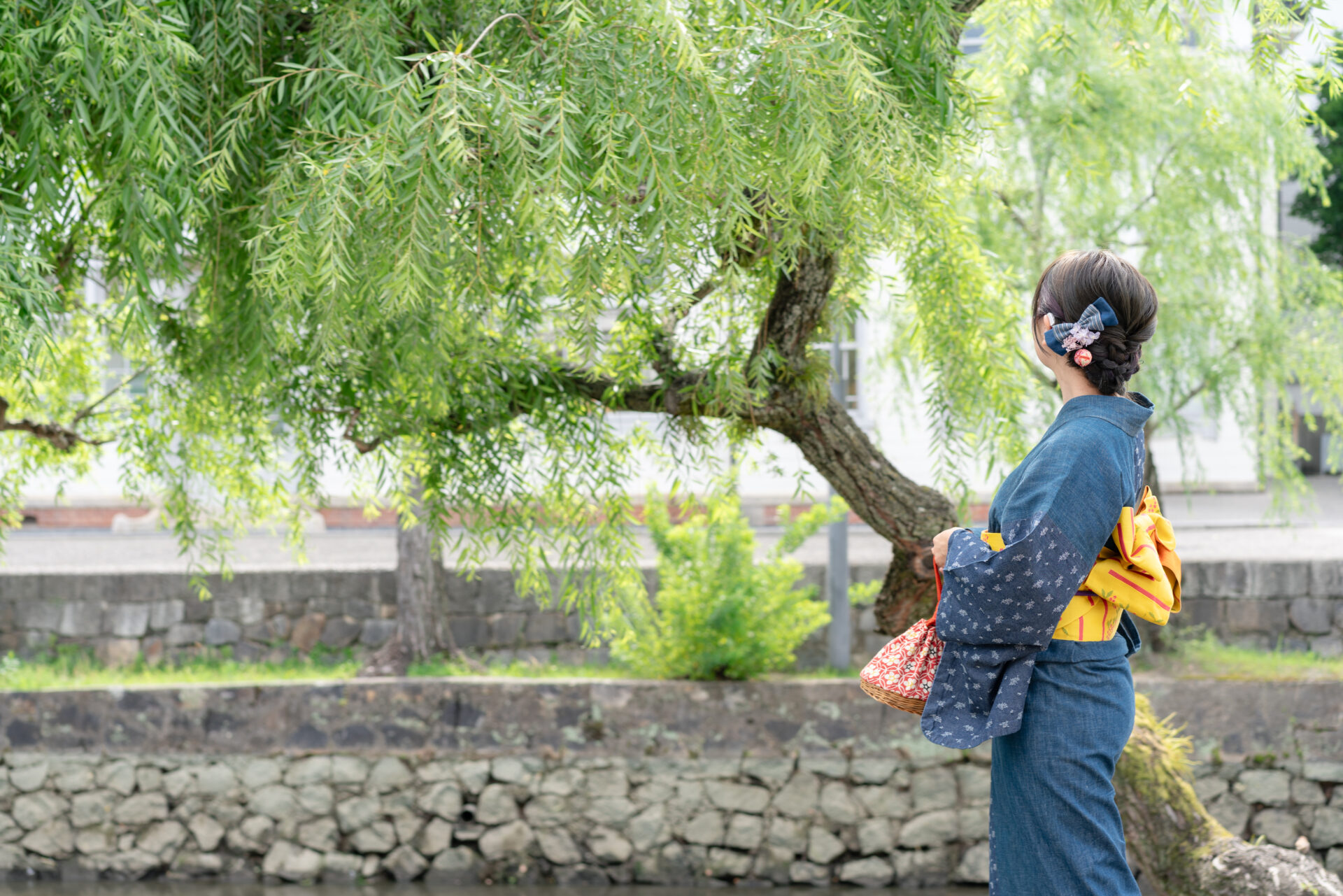
These cotton kimono are made from denim fabric and are essentially unlined, single-layer kimono. They are carefully designed in terms of color, pattern, processing, and the texture of the fabric after fading. They can be worn as various types of Japanese clothing, not just kimono, and can be washed in a household washing machine. Denim kimono can be freely accessorized, and are said to be popular with people of all ages who want to enjoy wearing kimono in their own way.
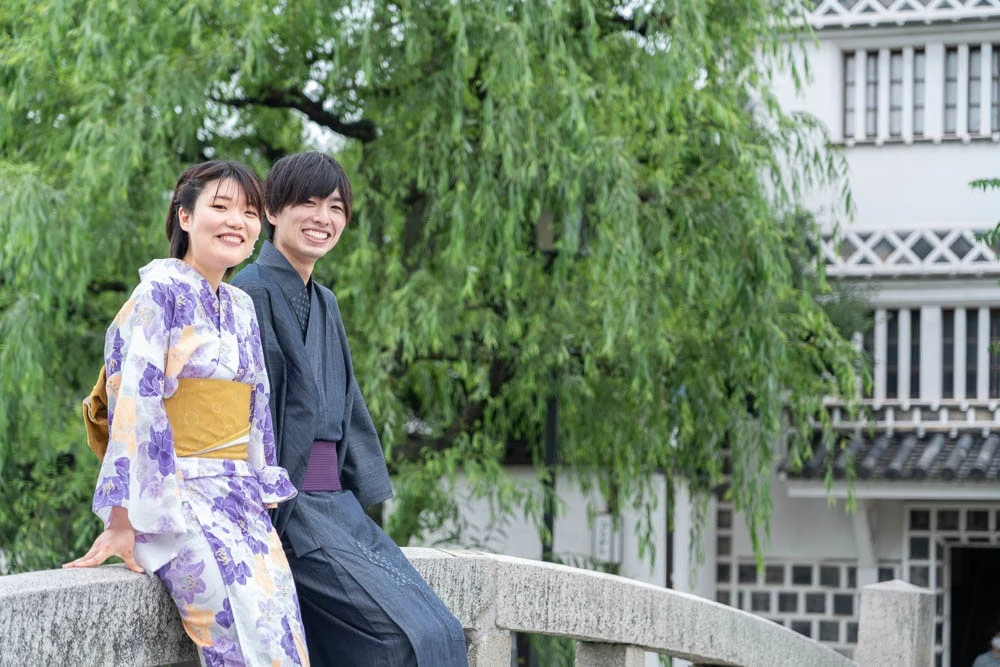
I took a walk through the Bikan Historical Area wearing a denim kimono from Kurashiki Kimono Komachi, the first specialty denim kimono shop in Japan, which rents and sells “denim kimono” made with denim from Okayama, the birthplace of domestically made jeans.
The information in this article was current when it was published in September 2024. Please note that it may differ from current information.
What is Kurashiki Kimono Komachi?
Kurashiki Kimono Komachi is a specialty denim kimono shop in the Bikan Historical Area.
As Japan’s first specialty denim kimono shop, Kurashiki Kimono Komachi rents and sells “denim kimono” made with denim from Okayama, the birthplace of domestically made jeans.
As of September 2024, Kurashiki Kimono Komachi offers the following rental plans, which include not only denim kimono but also komon and kimono for special occasions.
- Denim kimono rental
- Komon kimono and yukata rental
- Formal and special-occasion kimono rental
Denim kimono and komon kimono/yukata rentals are available as a day plan (9:30 a.m.–5 p.m.) or a night plan (3 p.m.–12 p.m. the following day).
For rentals, a photo plan is also available with the day plan only. For an additional ¥3,300 (tax included) on top of the rental fee, a Kurashiki Kimono Komachi staff member with a camera will give you a 40-minute tour of the Bikan Historical Area (for groups of two or more, the additional fee is ¥2,200 per person). In addition to photos taken on the wearer’s smartphone, you’ll receive over 100 photos taken with a camera as data on a DVD, making it a lovely way to preserve your memories.
Kurashiki Kimono Komachi also sells denim kimono, in addition to offering rentals.
The kimono from “komachi,” Kurashiki Kimono Komachi’s original denim kimono brand, are unlined cotton kimono made with denim fabric selected and purchased directly from denim fabric manufacturers in Kojima, Kurashiki City, and Ibara City, the home of denim production.
If you’d like to see and feel the fabric in person, you can visit the shop. You can also rent a kimono before buying one and take a walk through the Bikan Historical Area.
My experience renting a denim kimono
I moved to Kurashiki from the Kanto region in December 2023. I’ve been studying tea ceremony since I lived in Kanto, so I can dress myself in kimono. Ever since moving to Kurashiki, I’d wanted to try wearing a denim kimono unique to the city, so I decided to give renting one a try.
Choose accessories and hair ornaments to suit your taste, not just a yukata
On the day, I went to the shop at my reservation time and was shown to a room on the second floor.
The room had not only denim yukata but also komon yukata (stylish kimono with patterns all over).
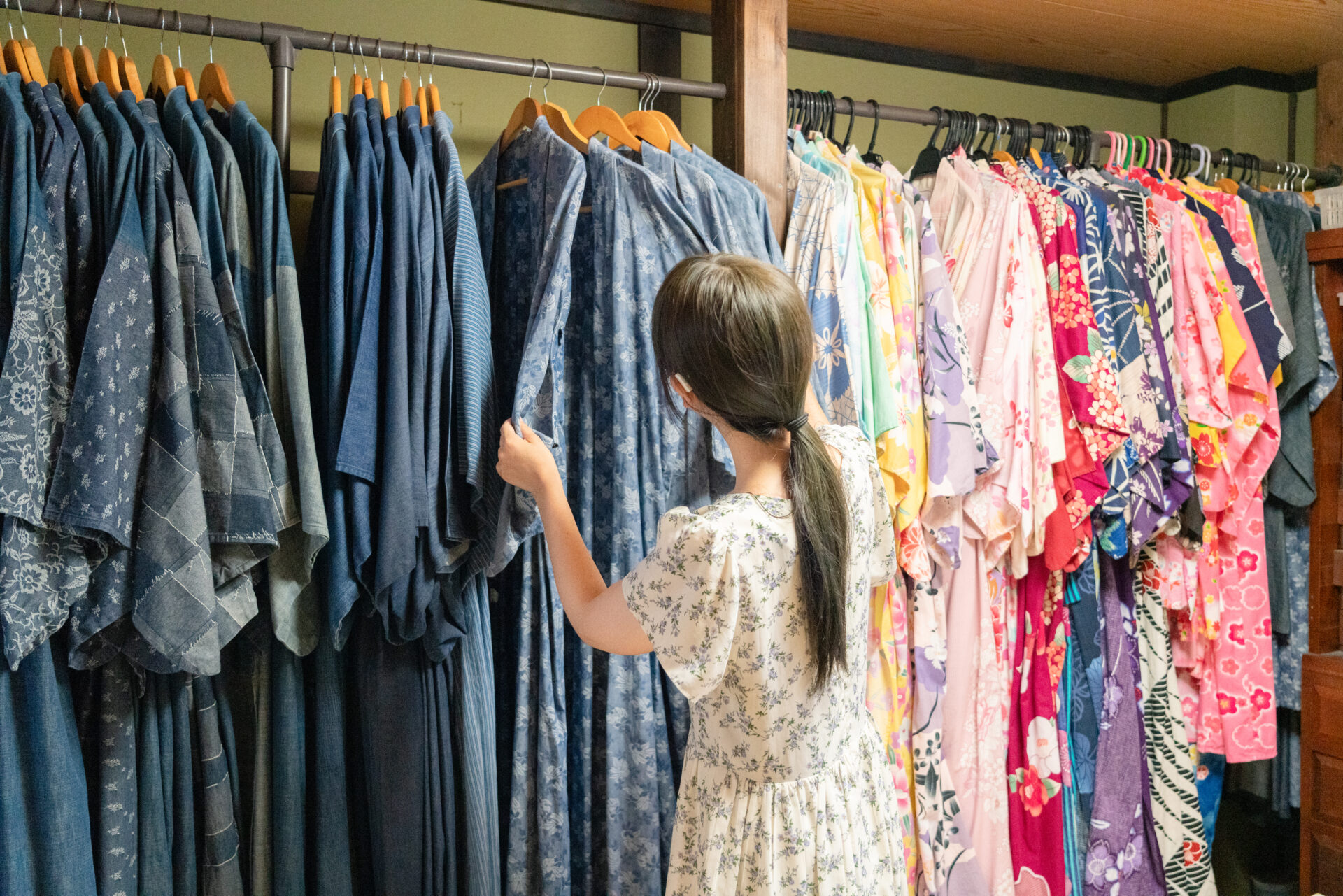
I had said “denim yukata” when making my reservation, but apparently it’s also possible to change to a komon after seeing the actual yukata on the day.
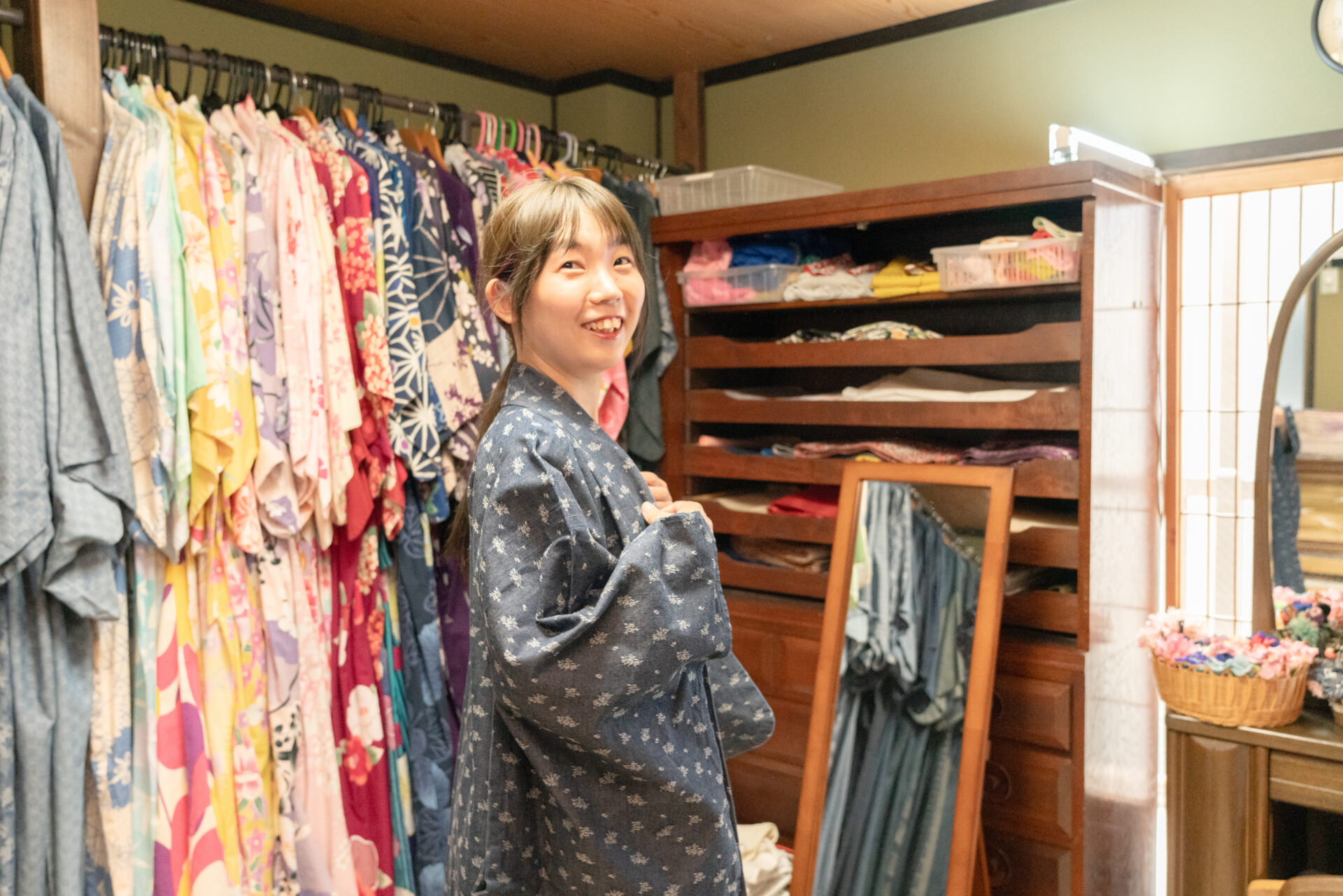
I chose a denim yukata with different patterns on the left and right sides.
Next came hairstyling.
I usually do my own hair when I wear kimono or yukata, but since this was a special occasion, I had my hair styled to go with the yukata.
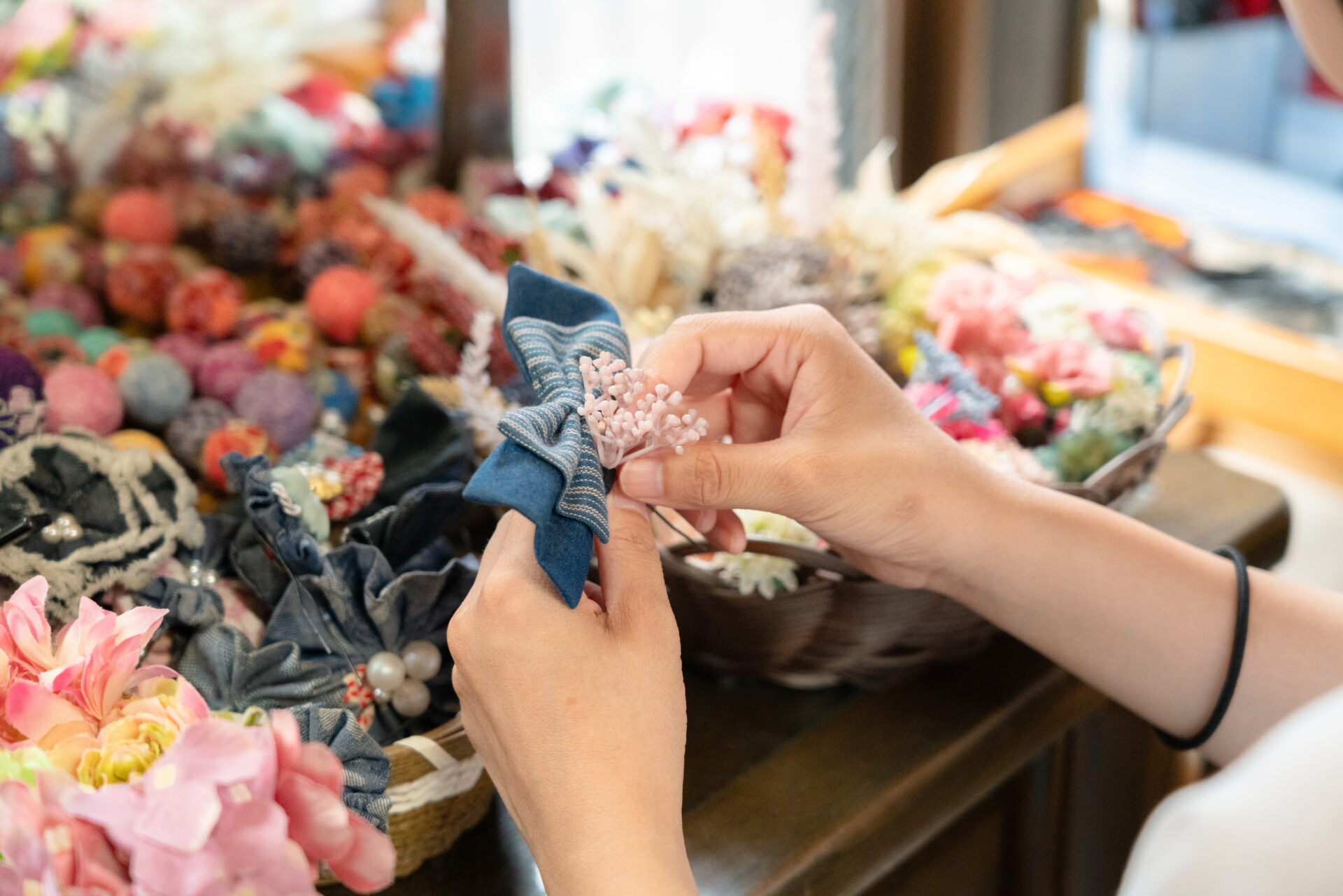
I could discuss the style I wanted and choose a hair ornament, which got me excited.
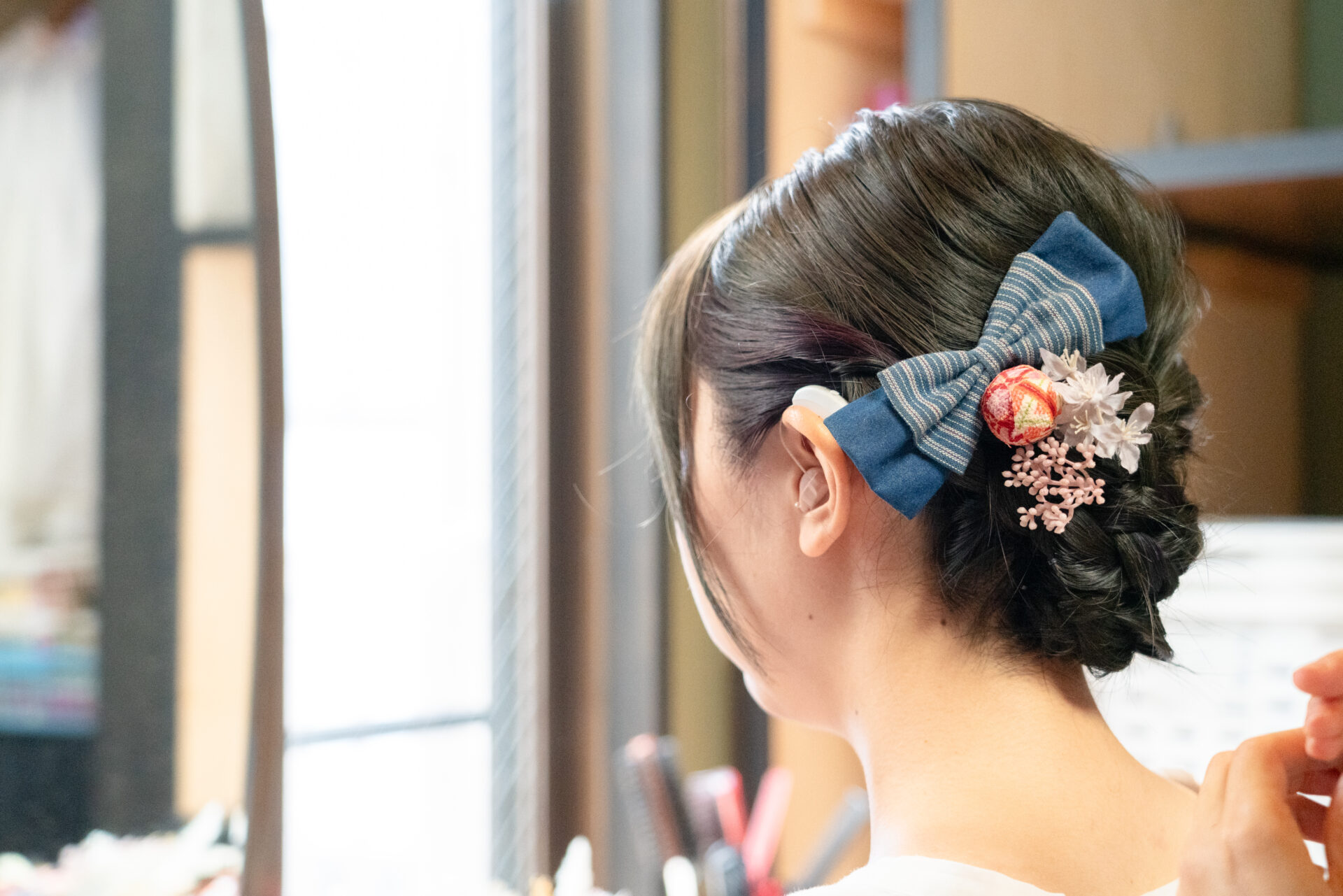
It was hot that day, so they put my hair up and added a denim hair ornament.
Hairstyling costs an additional ¥1,320 (tax included).
Hair ornaments can also be purchased at the reception desk on the first floor.
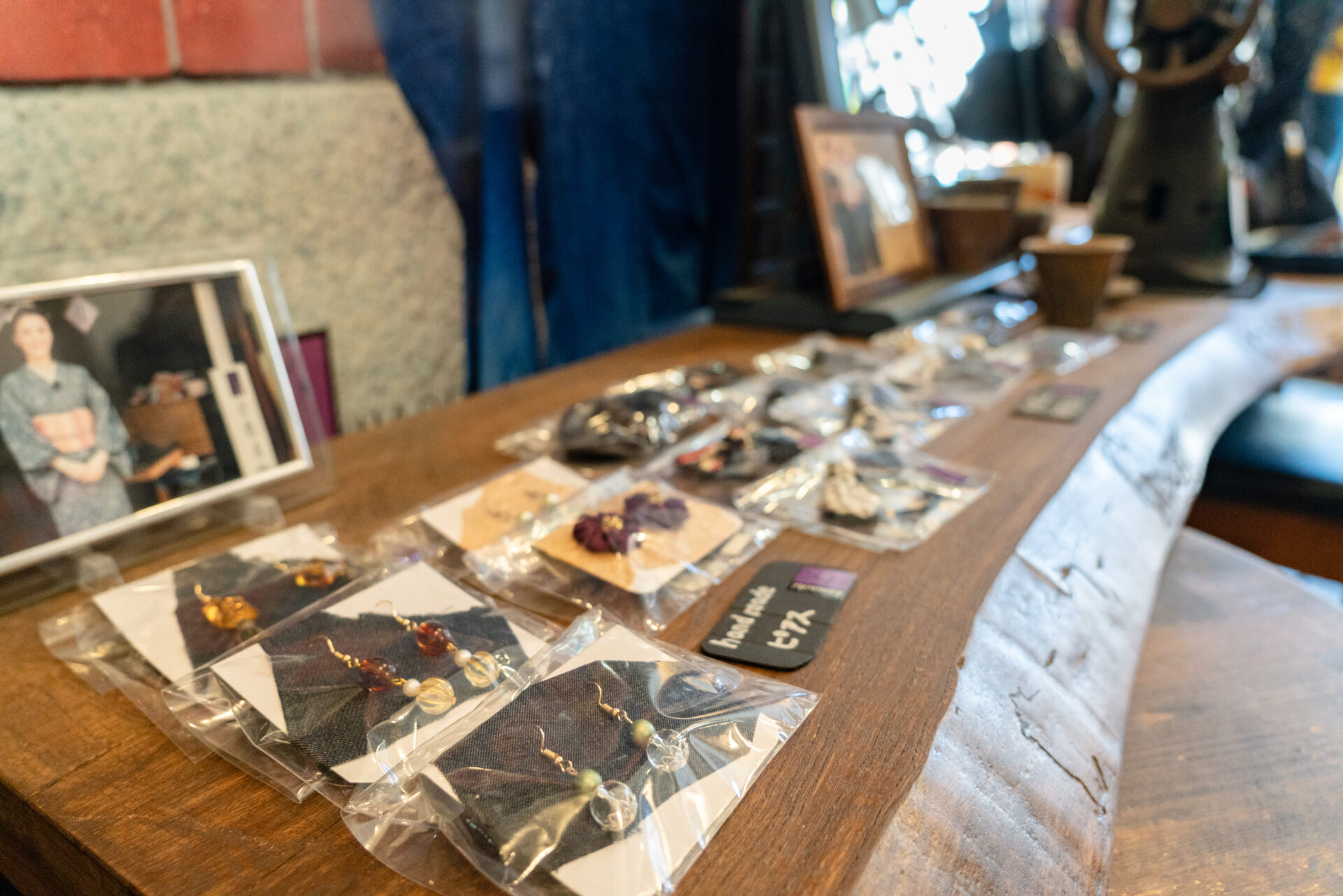
You can also choose your own obi and obijime. I’m indecisive, so I had a hard time choosing, but the staff member tried several of my selections on me in front of the mirror, and I finally made up my mind. The staff work with all kinds of customers every day, so their bold color combinations felt fresh to me.
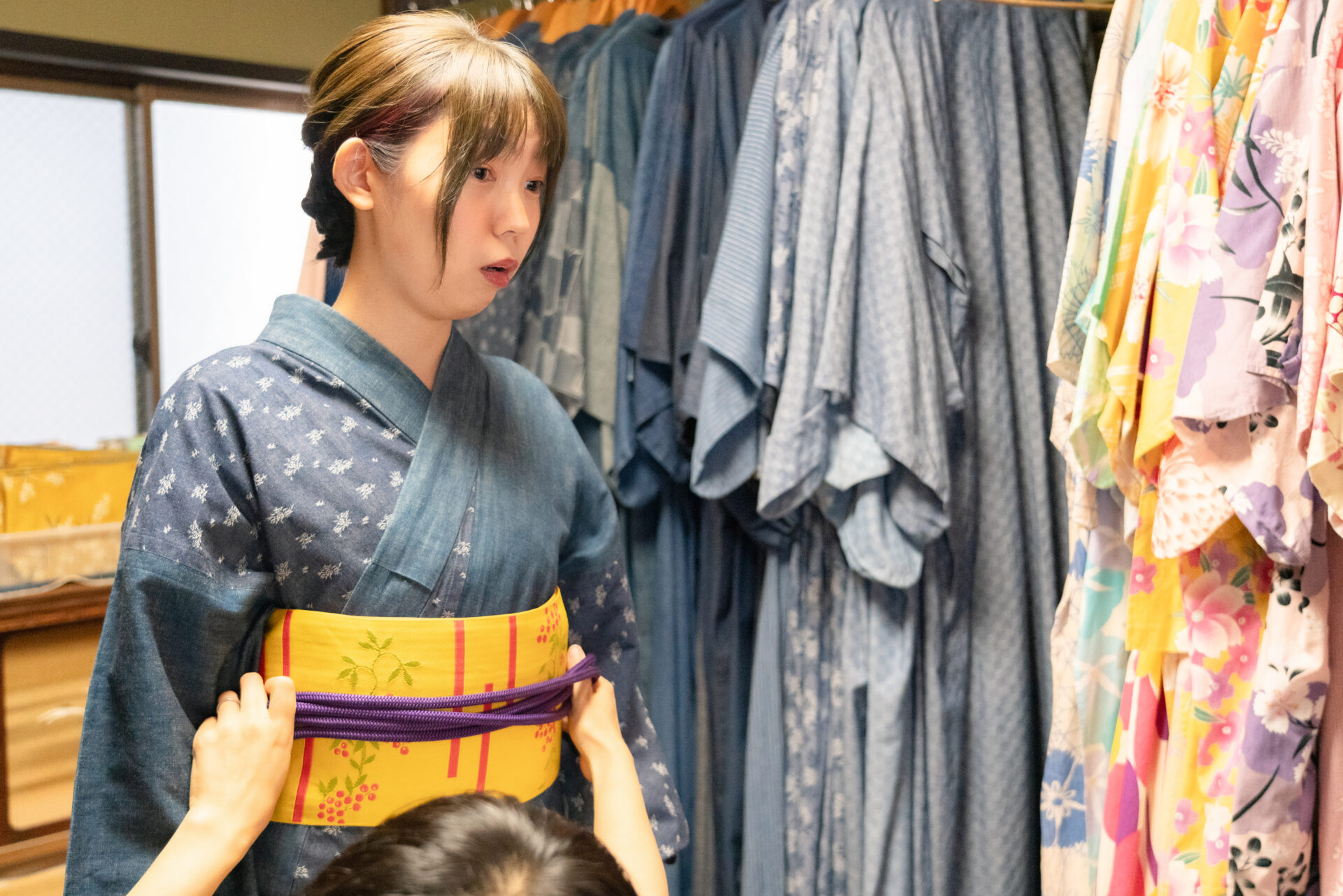
After choosing from several bags and geta, it was finally time to start our stroll through the Bikan Historical Area.
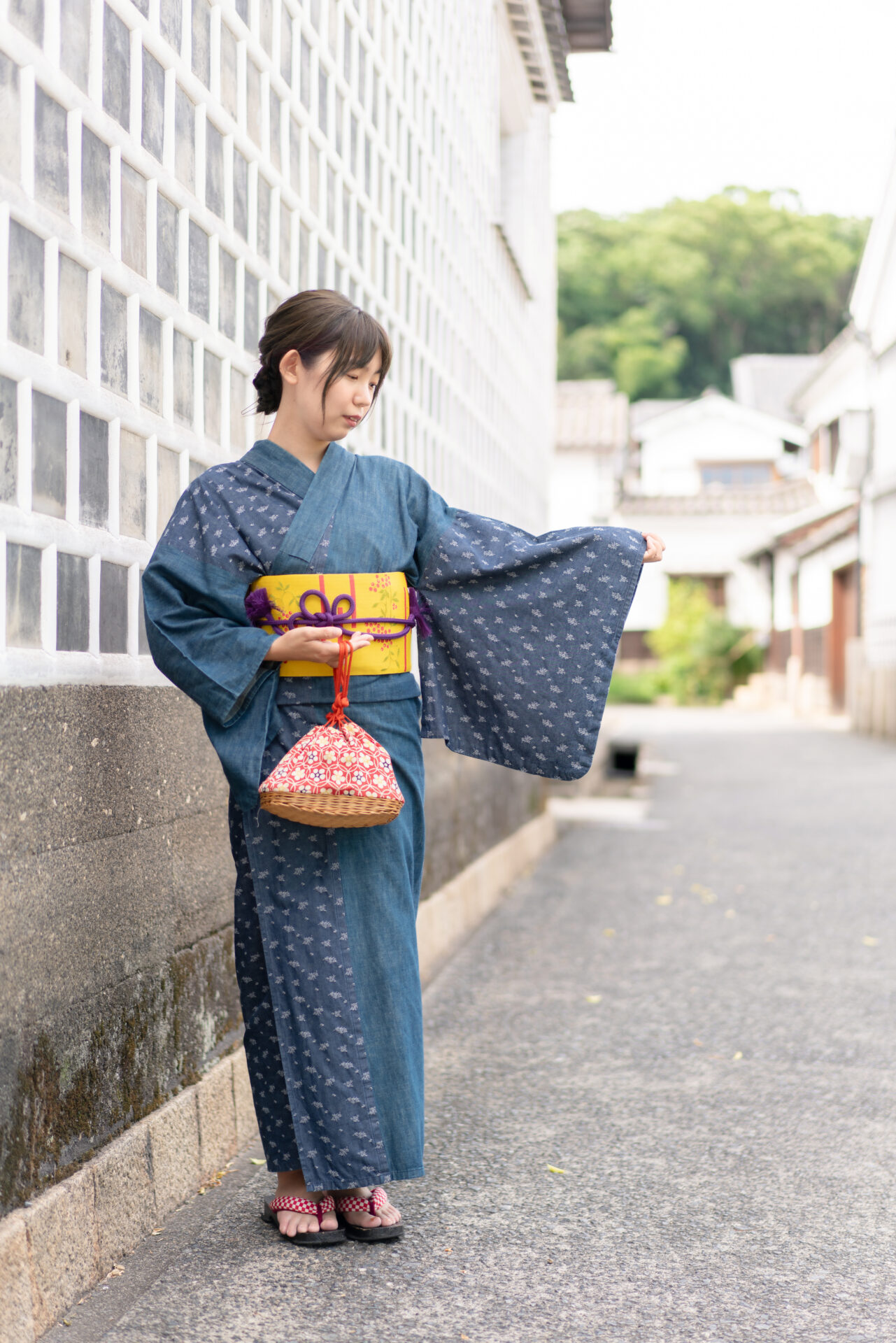
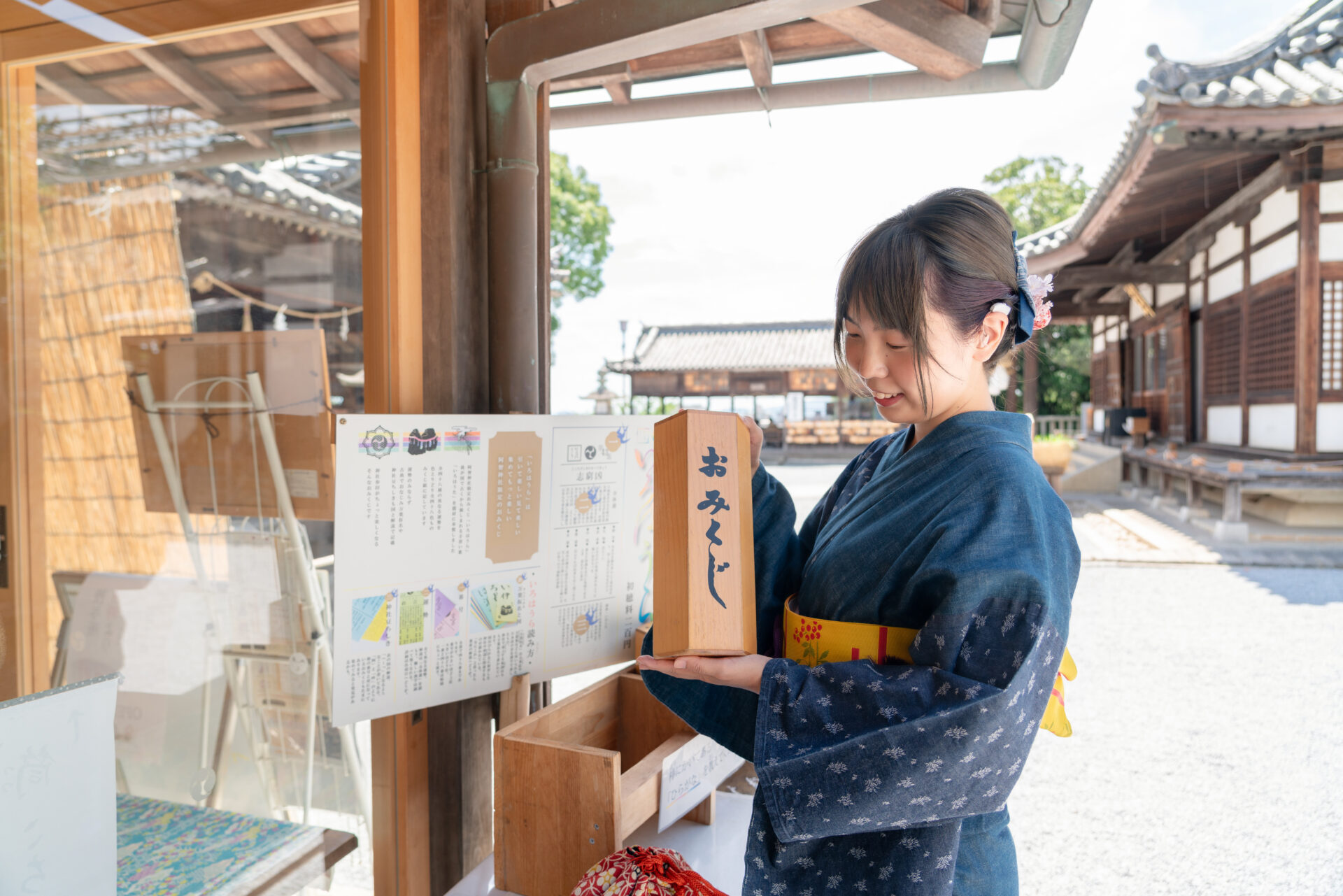
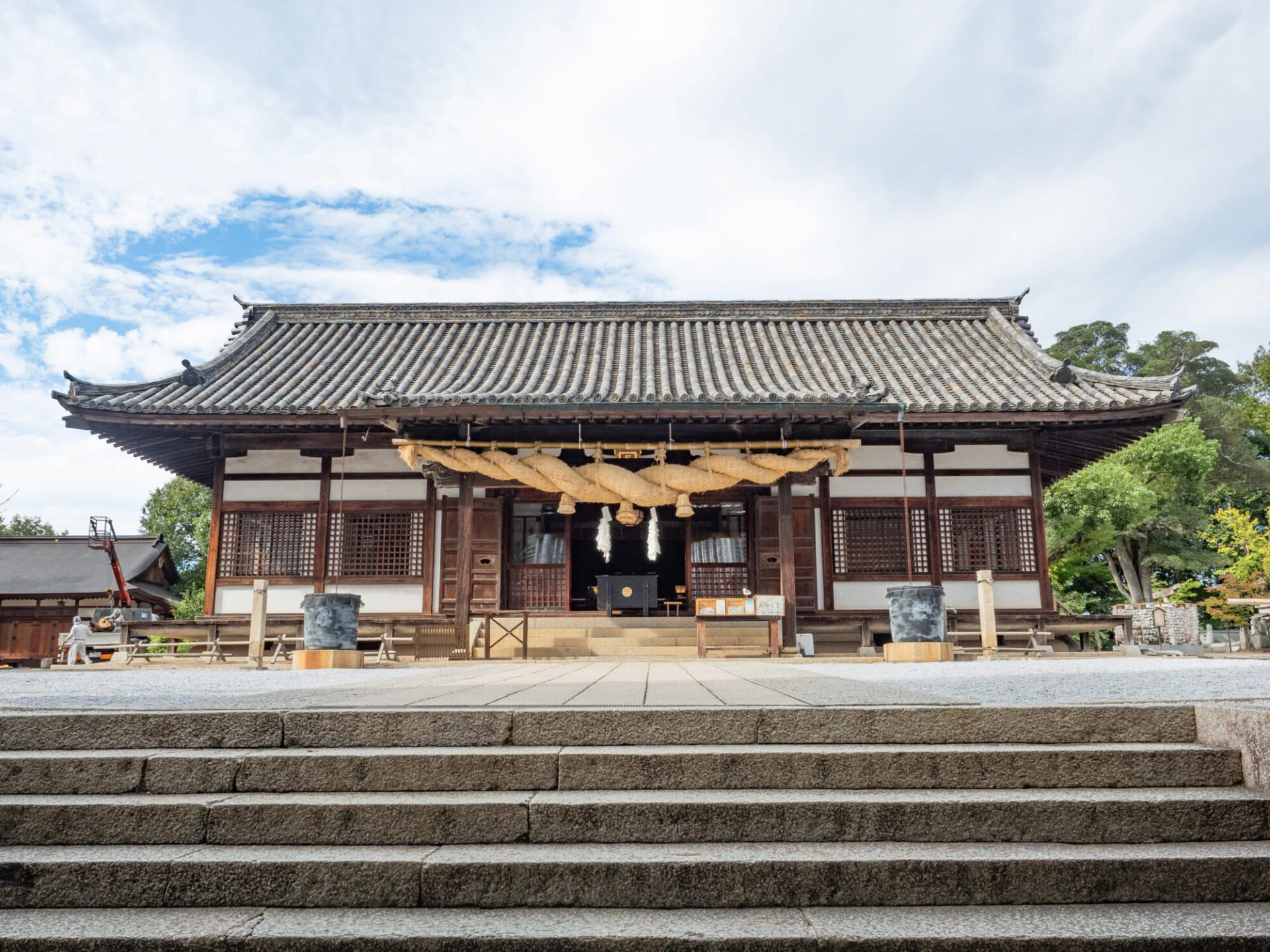
Kimono are a perfect match for historic Achi Shrine
First, while I still had plenty of energy, I headed to Achi Shrine.
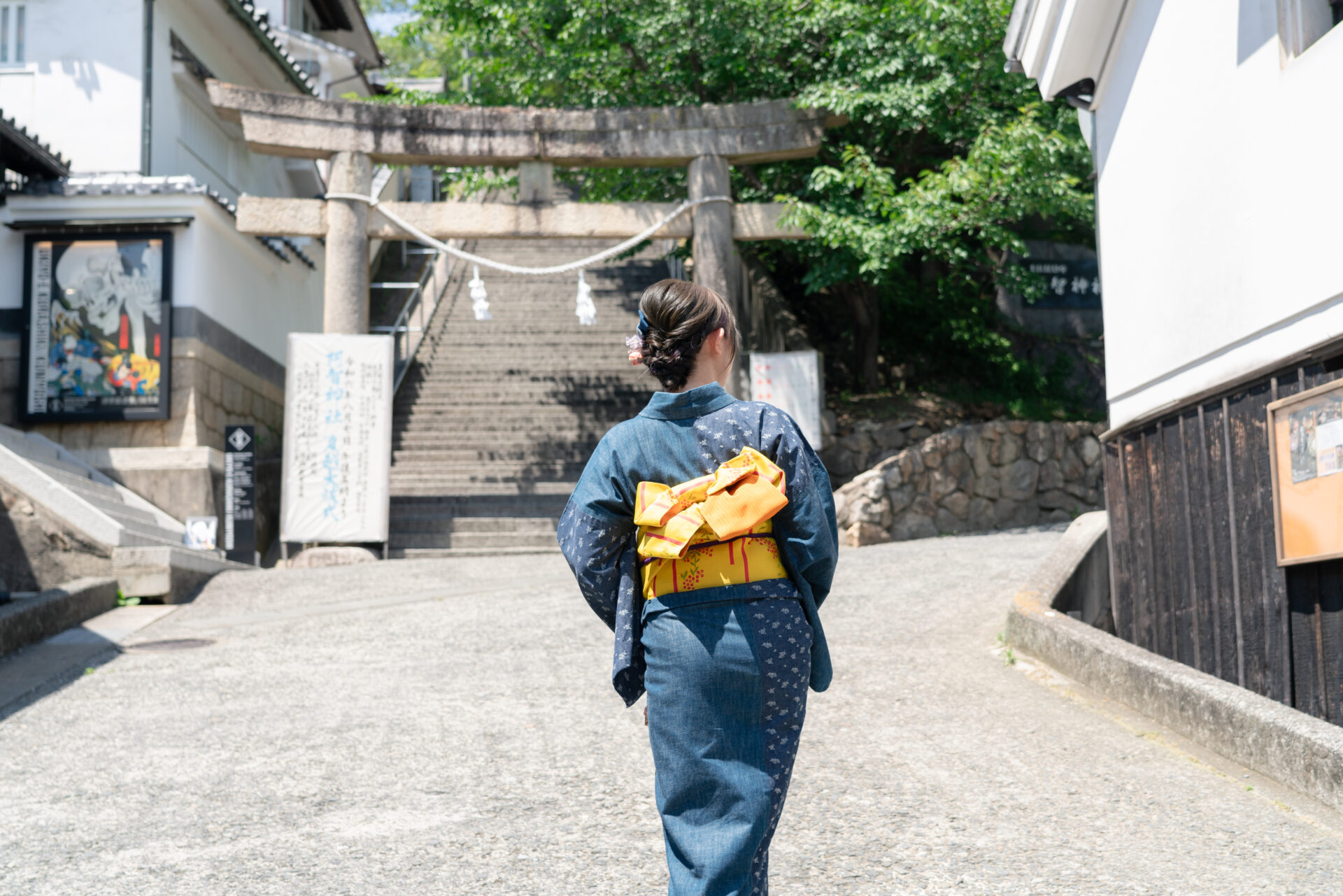
I had thought denim wasn’t very breathable and would trap heat. However, the denim yukata from Kurashiki Kimono Komachi is breathable and feels much like a regular yukata.
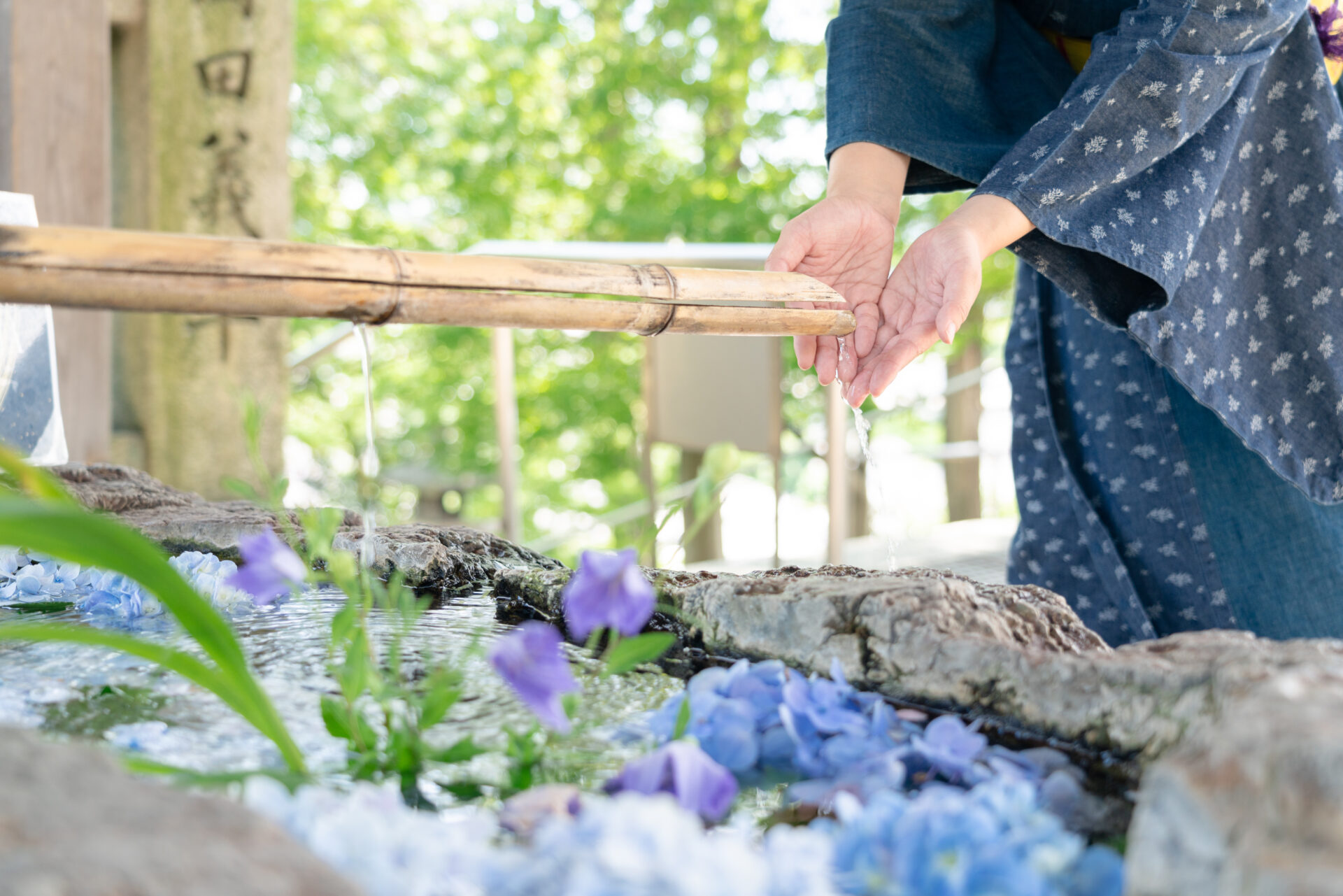
The color of the denim yukata seemed to blend beautifully into the scenery, alongside Achi Shrine’s historic buildings and omikuji fortune slips.
Denim kimono are also a perfect match for cold drinks
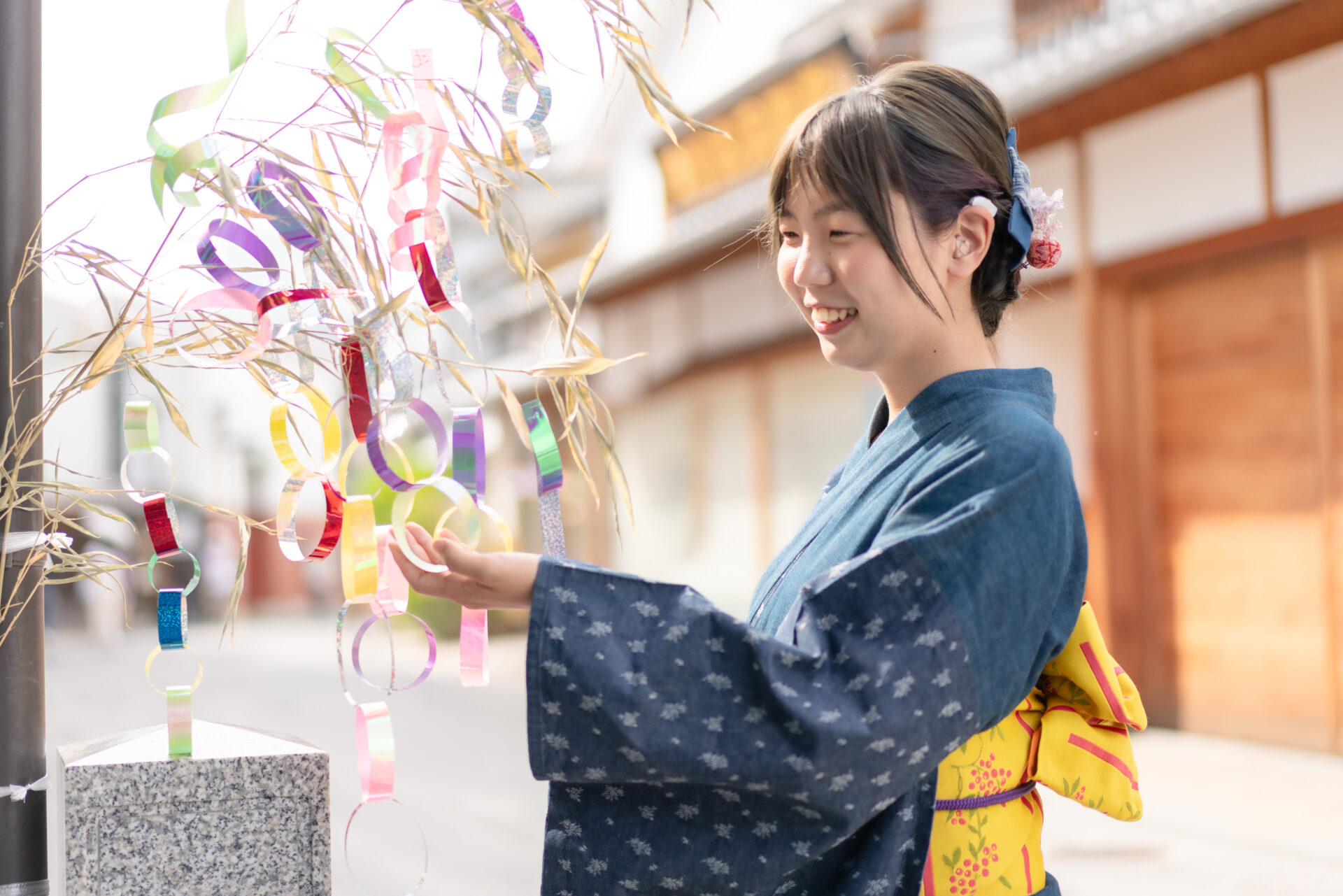
It was extremely hot that day, so I stopped several times to rehydrate.
First, head to koba coffee in the Bikan Historical Area.

The red wall on the first floor of the shop makes the indigo color of the denim kimono stand out beautifully. Together with the coffee float I ordered, it made for a modern-looking photo.
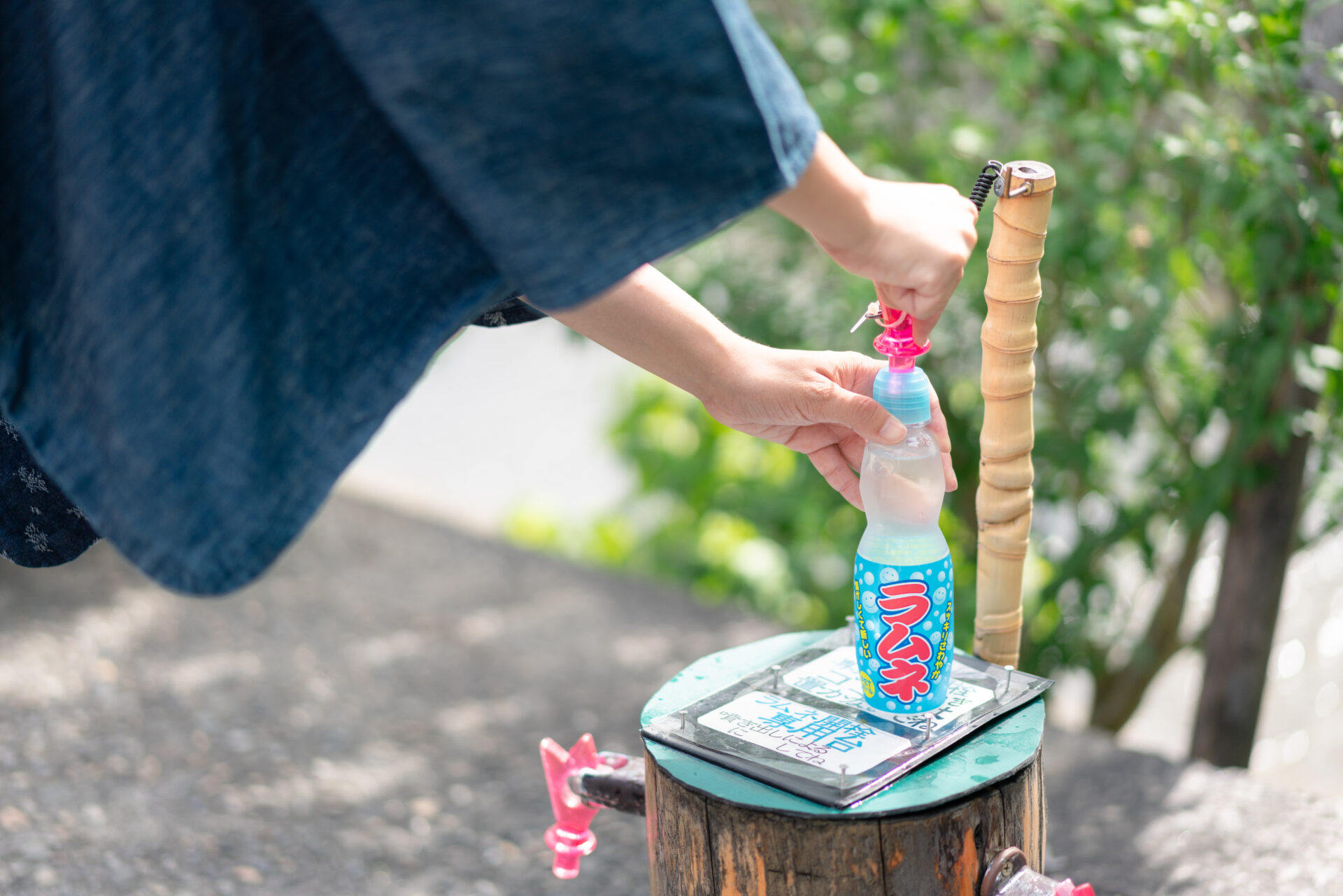
While exploring the town, I also bought ramune at Dotemori, a specialty shop for local sake from Kurashiki and Okayama housed in a building dating back to the mid-Edo period.
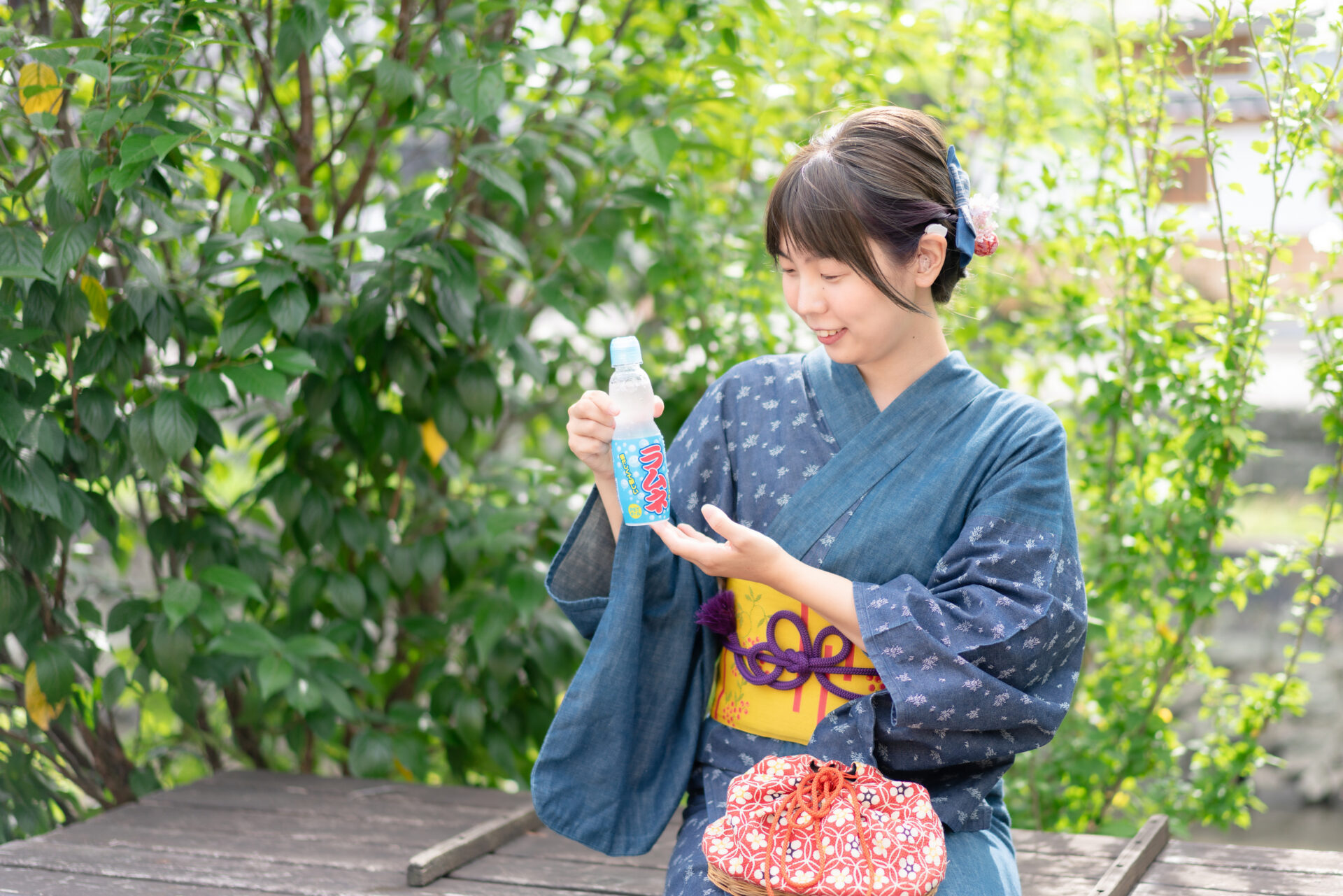
Putting the ramune bottle, denim yukata, and scenery of the Bikan Historical Area together in one photo also creates a wonderfully retro impression.

The Bikan Historical Area is a rare place to stroll in a denim kimono amid Edo-period streetscapes
I love traveling overseas, and when I visit a place, I often try on local clothes and traditional costumes.
That’s because local people sometimes feel a connection and strike up a conversation with me, and it also makes me feel as though I’ve become part of the town.
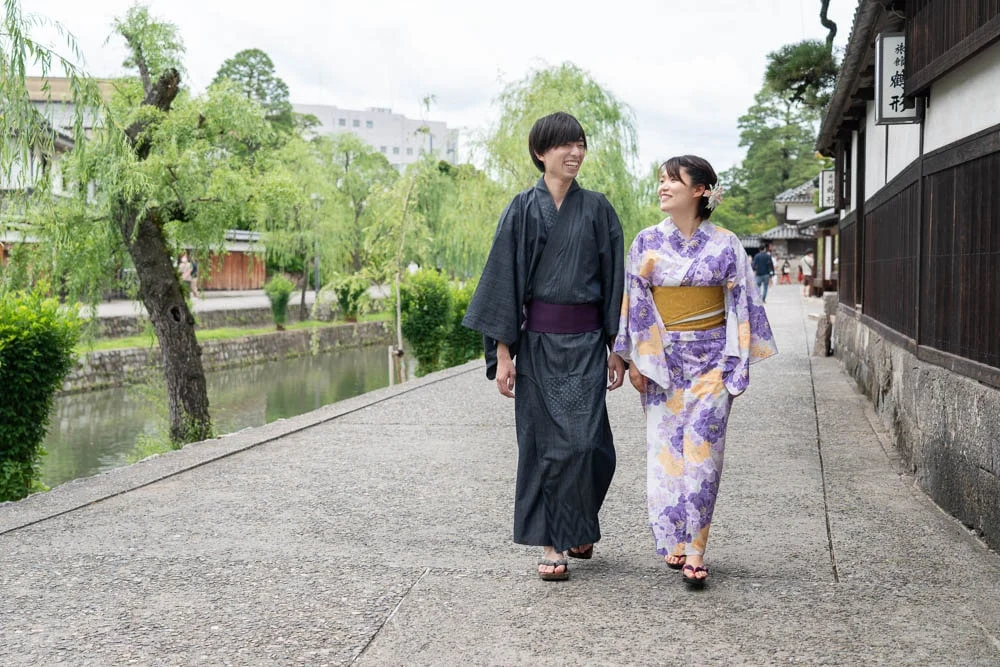
As I walk around the Bikan Historical Area, I see many foreign tourists wearing yukata and kimono.
According to staff at Kurashiki Kimono Komachi, many foreign tourists who visit the Bikan Historical Area are repeat visitors, and some of them make reservations saying, “I didn’t have the courage to wear one last time, but I’d still like to try wearing a kimono.”
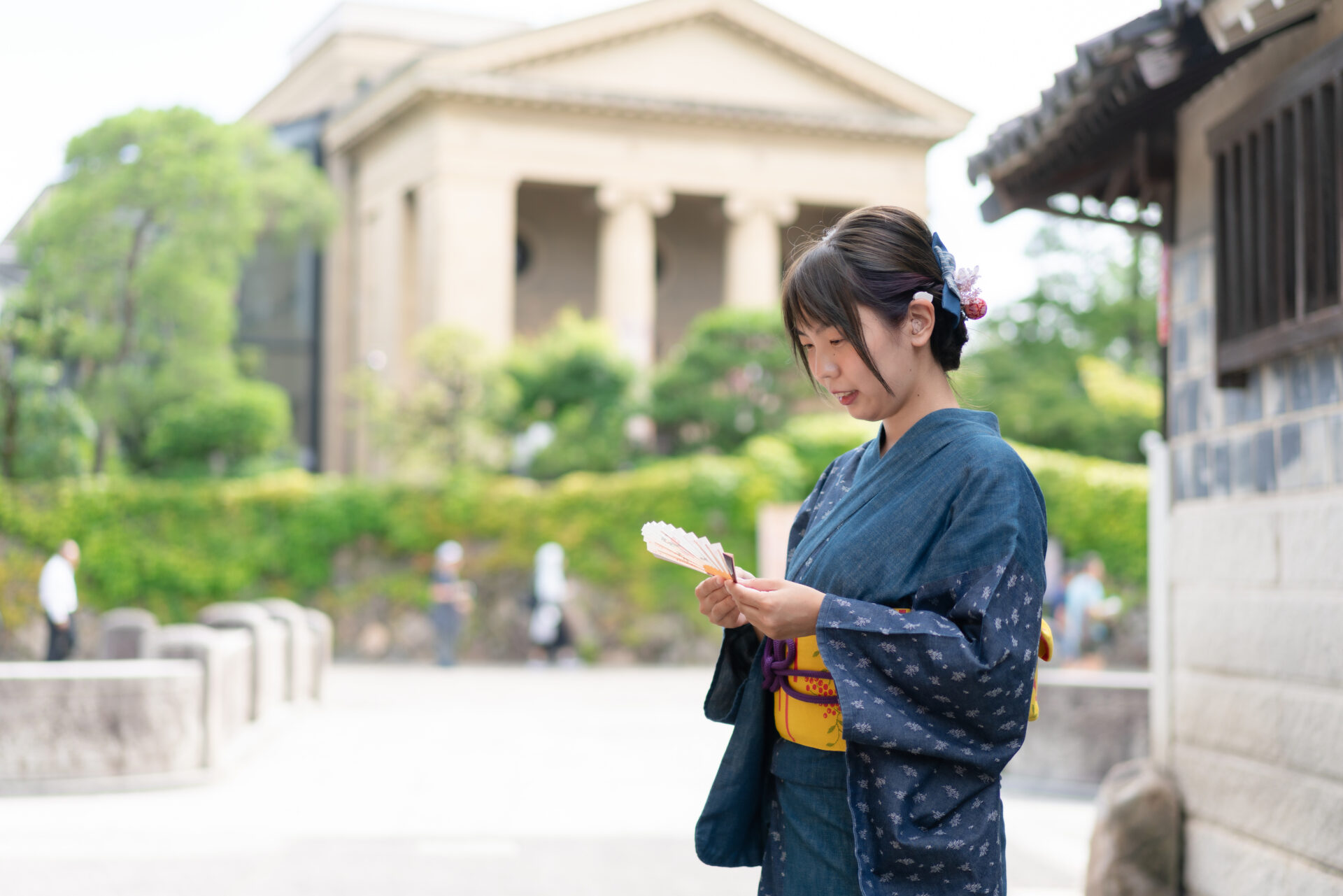
While you can wear a komon yukata or kimono in other towns, there are few places where you can wear a denim kimono made in Okayama Prefecture, such as in Kojima, Kurashiki City, or Ibara City, and stroll through historic streets.
Of course, even for us Japanese, there are few places where we can wear a denim kimono and reflect on historic streetscapes.
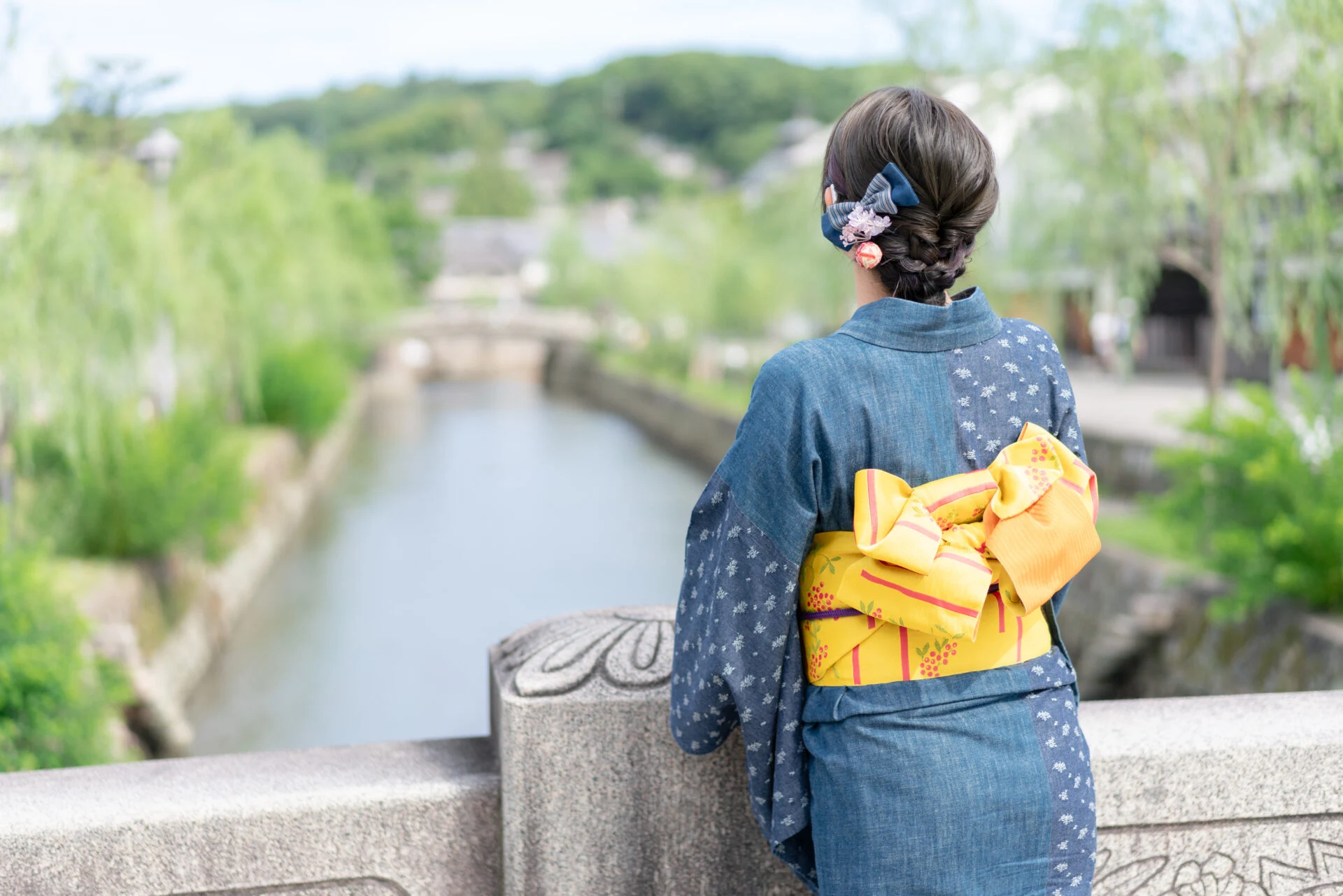
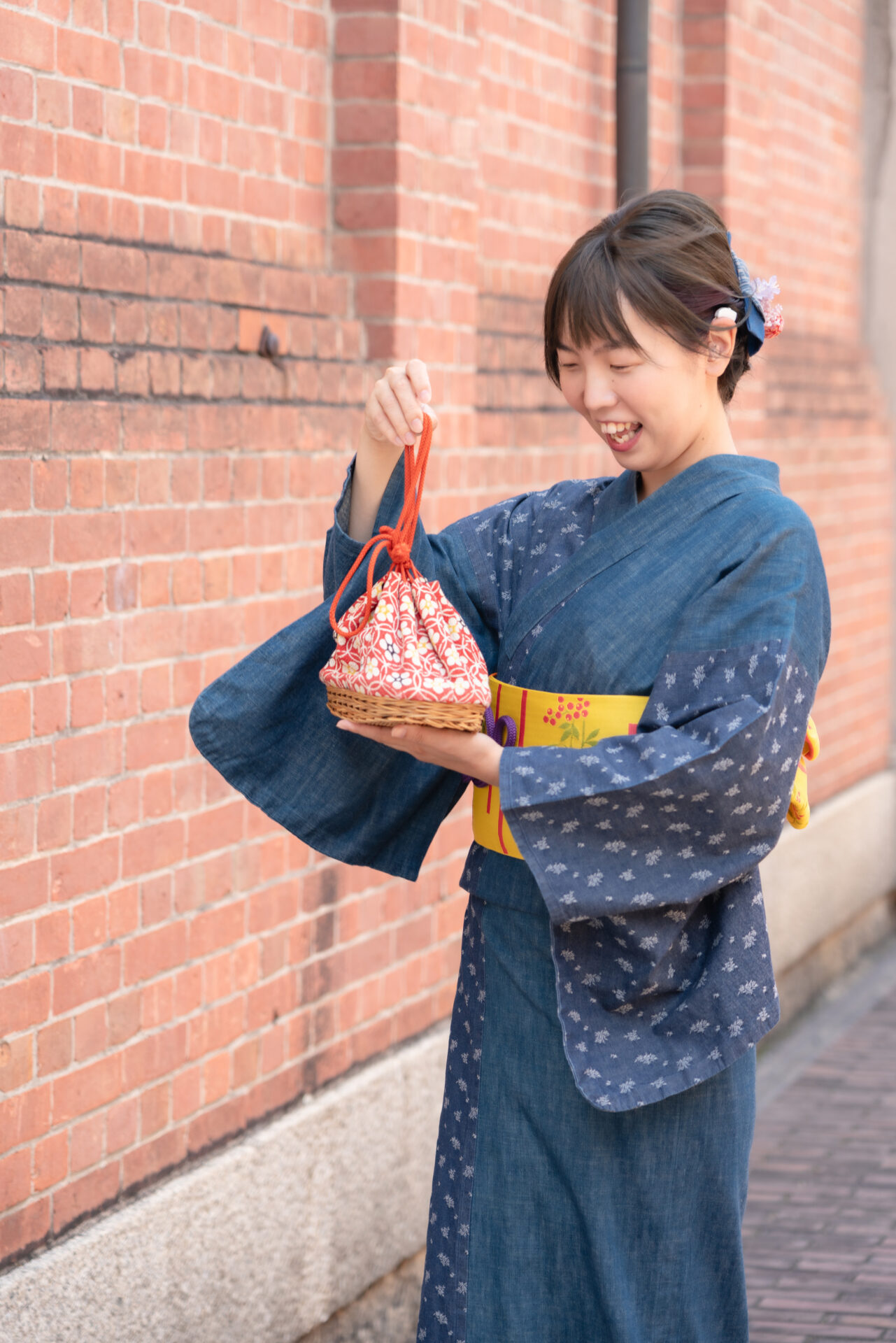
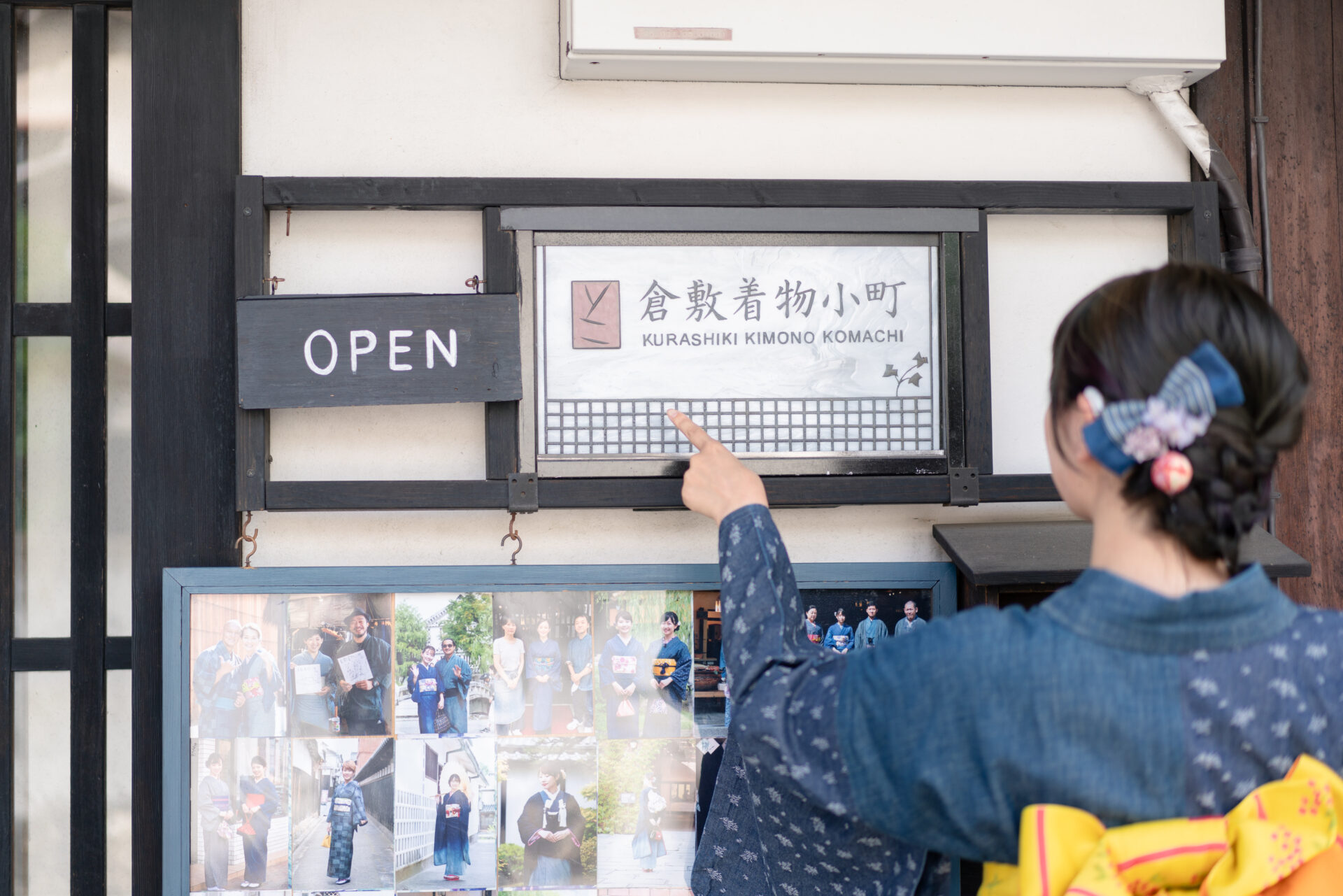
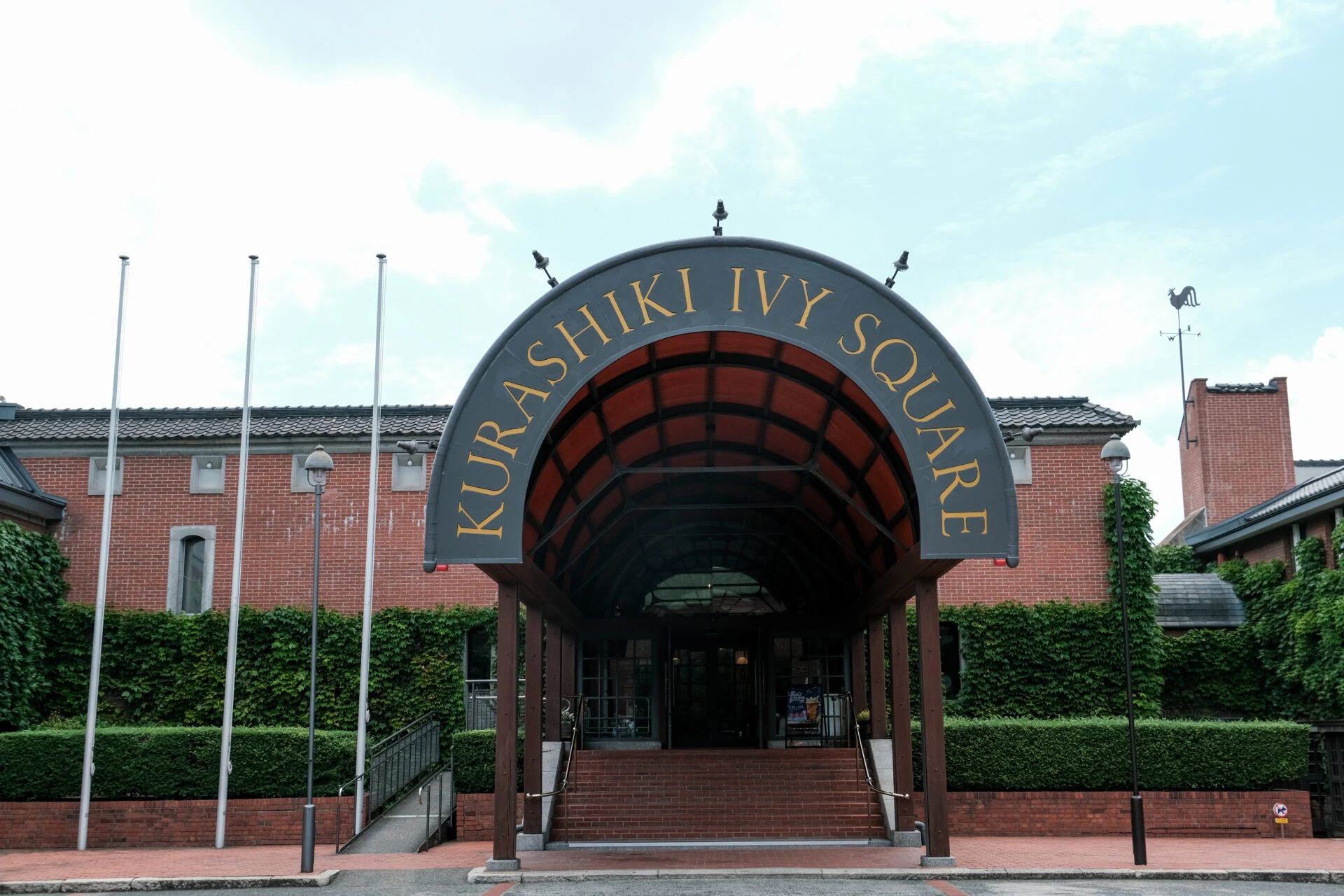
After walking past the townhouses of the Bikan Historical Area, the willows along the Kurashiki River, and Kurashiki Ivy Square—a lodging facility that makes use of buildings from KURABO INDUSTRIES LTD., which supported Kurashiki’s textile industry, including Kojima denim—I was back at Kurashiki Kimono Komachi in no time.
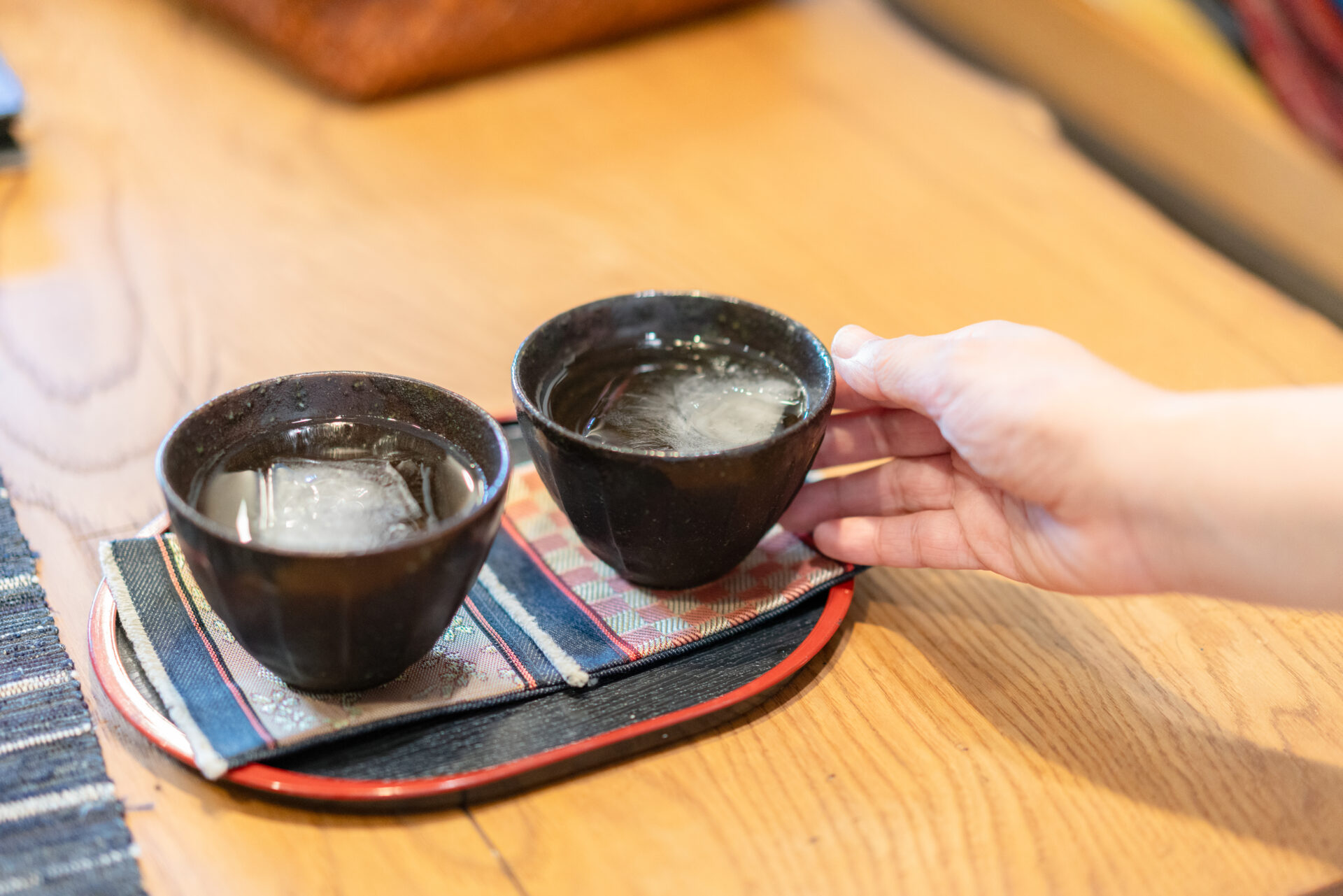
After returning the kimono and changing back into my regular clothes, I was served some cold tea. The kimono had been comfortable to wear, but drinking tea after changing into my regular clothes, without an obi sash, felt refreshing as it flowed right through me.
Stroll through the Bikan Historical Area in a kimono and reflect on its Edo-period past
The Bikan Historical Area is a Preservation District for Groups of Traditional Buildings where the Edo-period streetscape remains intact.
When this townscape first took shape, the people of the Bikan Historical Area must have gone about their lives wearing kimono.
Wear a denim kimono born from Kurashiki’s textile culture, which flourished from the Edo period through the Meiji period, while reflecting on the streets and daily lives of people in the Edo period.
Why not try wearing a kimono in the Bikan Historical Area, an experience made possible precisely because its historic streetscape has been preserved?
- Photography: Yoshino Nako
Kurashiki Kimono Komachi Information

| Name | Kurashiki Kimono Komachi |
|---|---|
| Address | 5-10 Honmachi, Kurashiki City |
| Contact | 086-486-2671 |
| Parking | None |
| Hours | 9:30 a.m.–5:00 p.m. |
| Closed | Irregular holidays See the official website for closing days |
| Fee (tax included) | From ¥3,850 (tax included) |
| Payment methods |
|
| Reservations | Available See the official website for available reservation dates |
| Restrooms | No restroom |
| Families with children | Children’s rental plans available |
| Accessibility | Stairs |
| Website | Kurashiki Kimono Komachi |

What would you like to know about Kurashiki?
Enter a search term to find articles on this site