
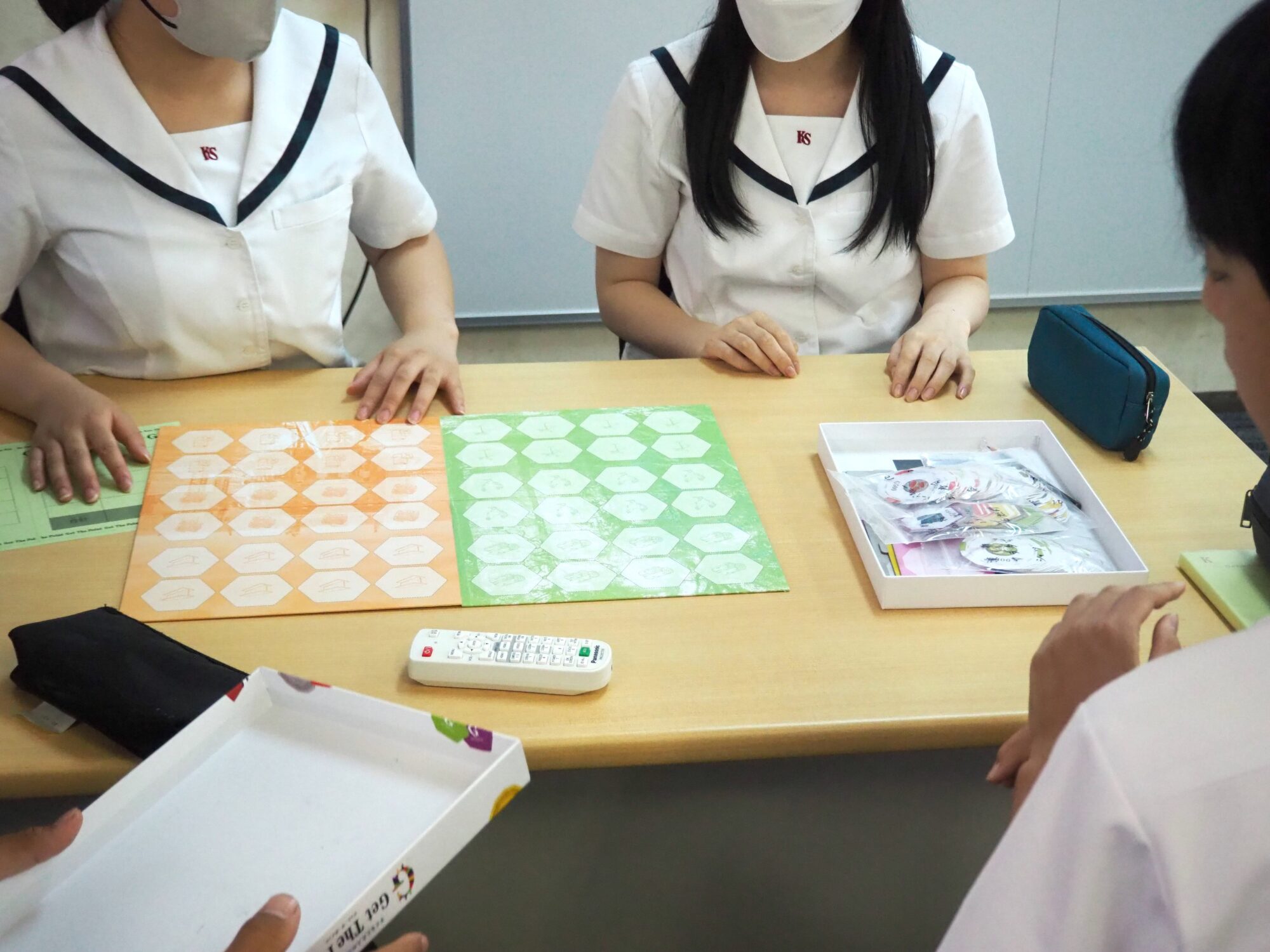
About 120 second-year students from Okayama Prefectural Kasaoka Commercial High School held the “SDGs Board Game - Get The Point -” on July 18 (Tuesday) starting at 10:45 AM.
The board game was conducted during the third and fourth periods of “Comprehensive Inquiry Time.”
The “SDGs Board Game - Get The Point -” helps understand the Sustainable Development Goals (SDGs), which have become familiar keywords.
What does it mean to learn about the SDGs through a board game?
I will report on the very interesting atmosphere of Kasaoka Commercial's “Comprehensive Inquiry Time.”
The information provided is based on the article published in September 2023. Please note that it may differ from current information.
What is the SDGs Board Game - Get The Point -
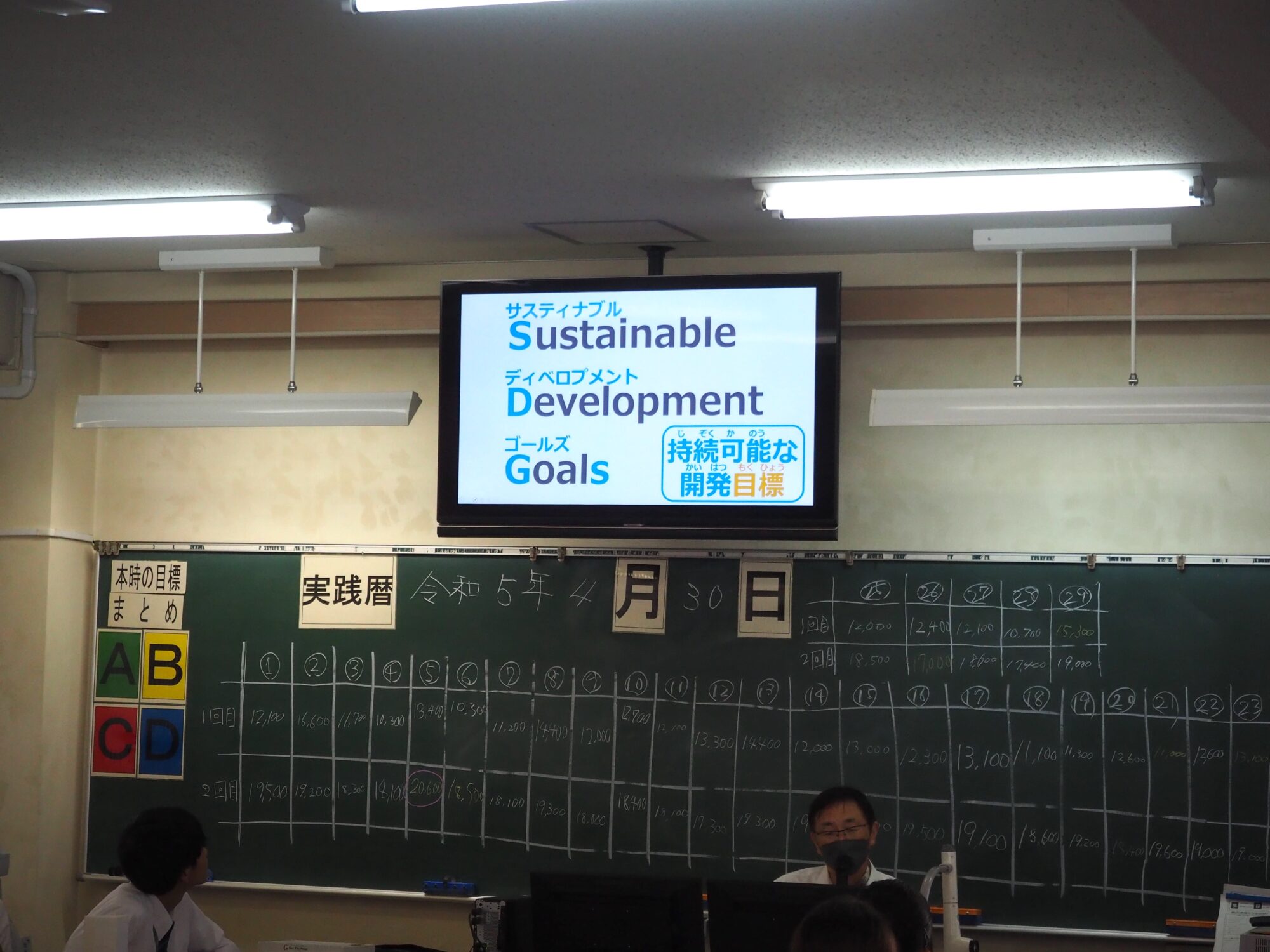
The Sustainable Development Goals (SDGs) were adopted unanimously by member countries at the United Nations Summit in September 2015 as a successor to the Millennium Development Goals (MDGs).
The international goal aims to solve issues such as environmental problems, discrimination, poverty, and human rights issues by 2030, striving for a sustainable and better world.
The SDGs consist of 17 goals and 169 targets.
While the term SDGs has permeated society and become familiar, it is often difficult to explain.
The initiative to learn the essence of the SDGs while enjoying a board game is the “SDGs Board Game - Get The Point -.”
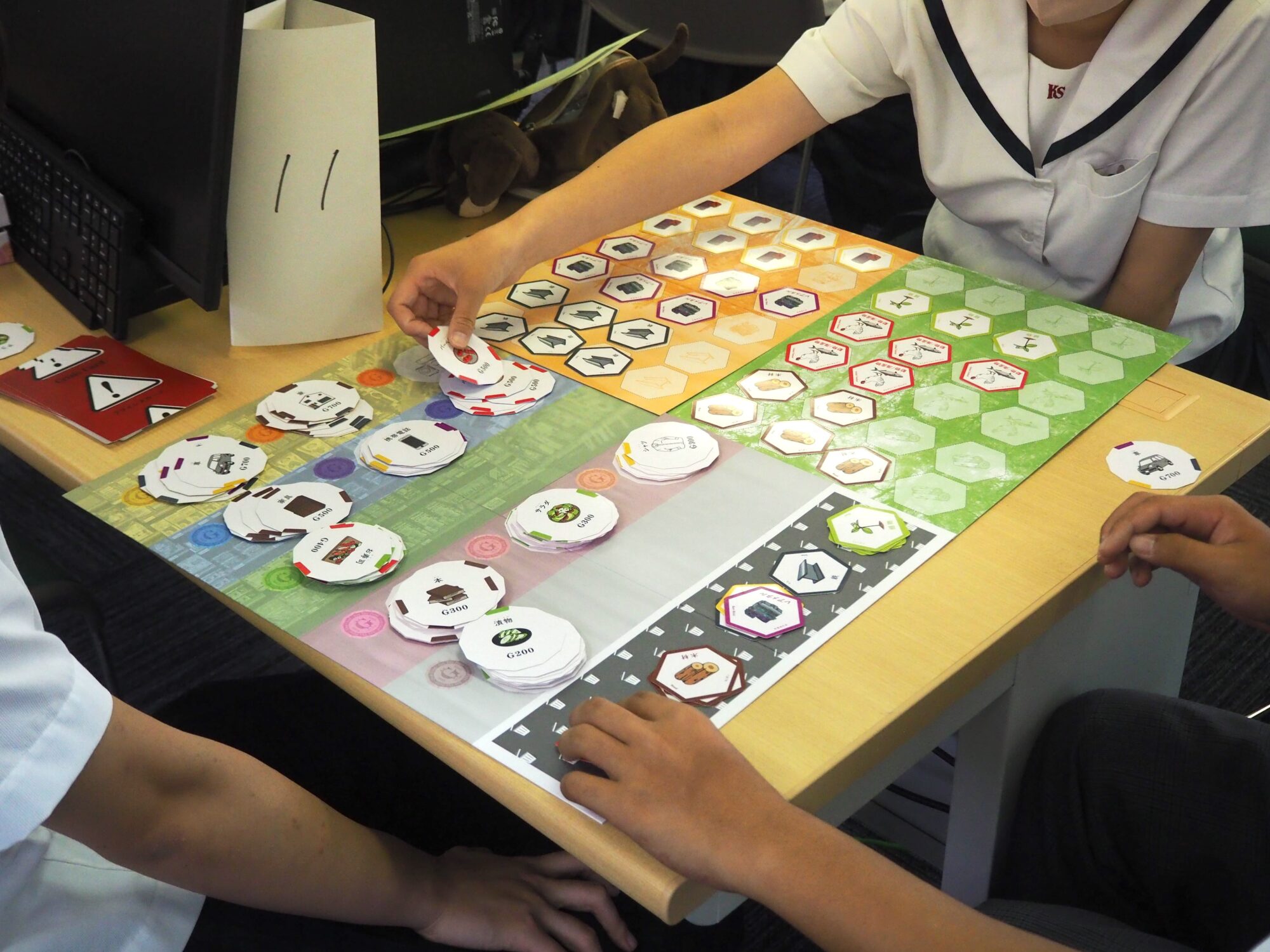
The “SDGs Board Game - Get The Point -” is a simple game where players create items using 6 types of resource cards and compete for the total points set for each created item.
Resource Cards and Items
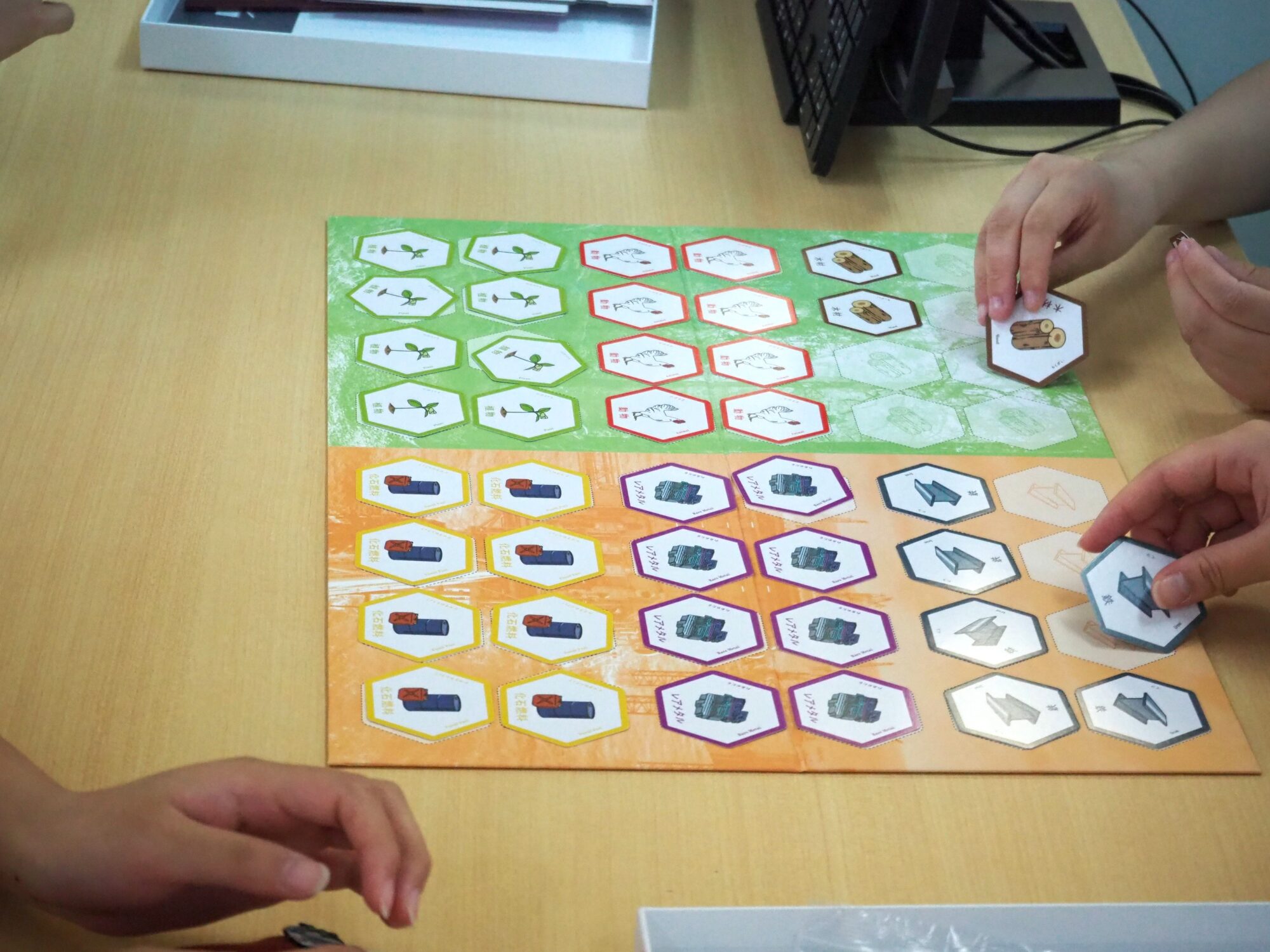
Let’s explain the resource cards and items used in the SDGs Board Game - Get The Point - (hereafter referred to as Get The Point).
There are 6 types of resource cards needed to create items.
- Iron
- Rare Metals
- Fossil Fuels
- Wood
- Animals
- Plants
Items are created by combining resource cards.
There are 10 types of items
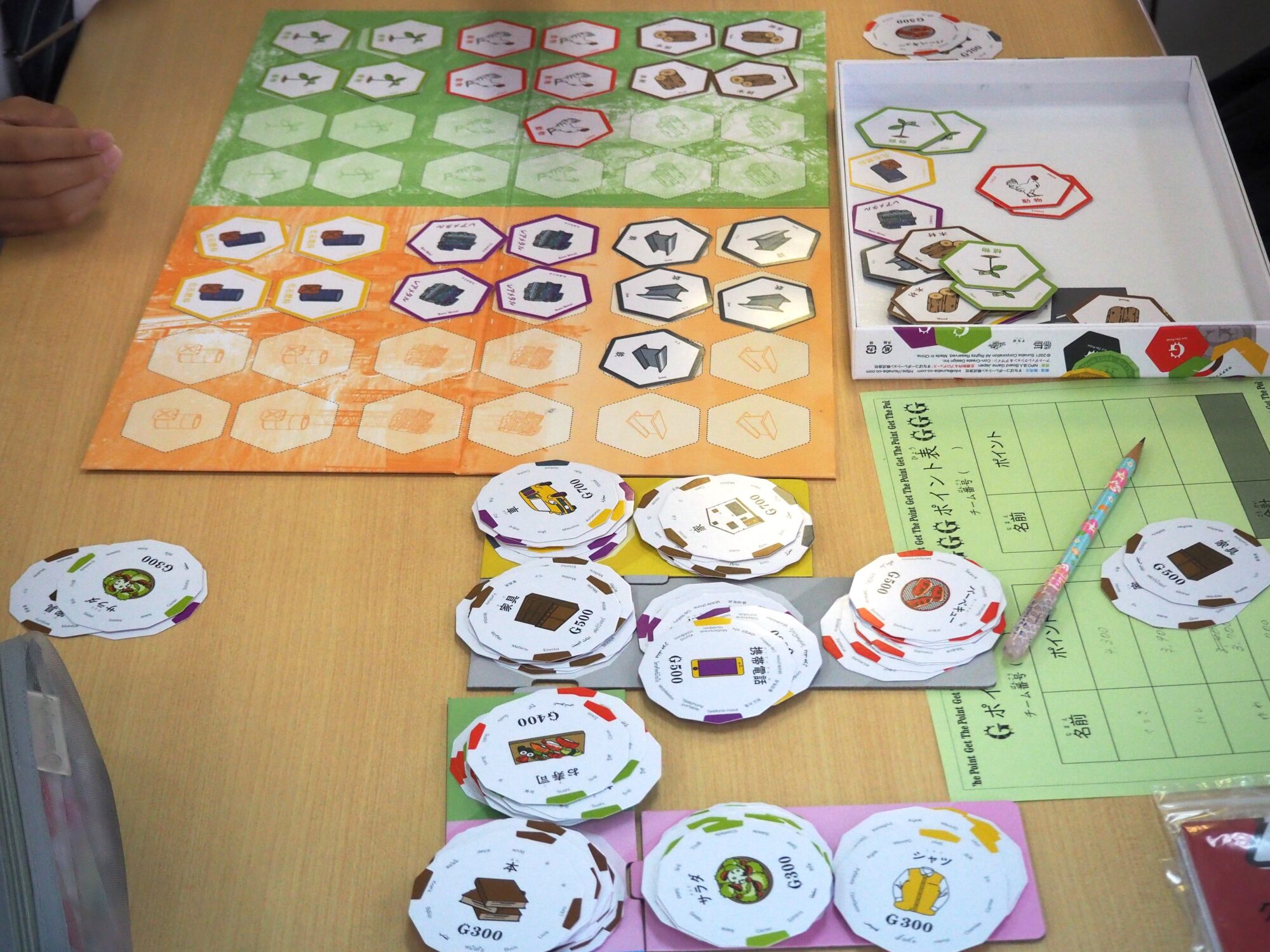
There are a total of 10 types of items that can be created using resource cards.
- Car
- House
- Furniture
- Mobile Phone
- Barbecue
- Sushi
- Book
- Salad
- Shirt
- Pickles
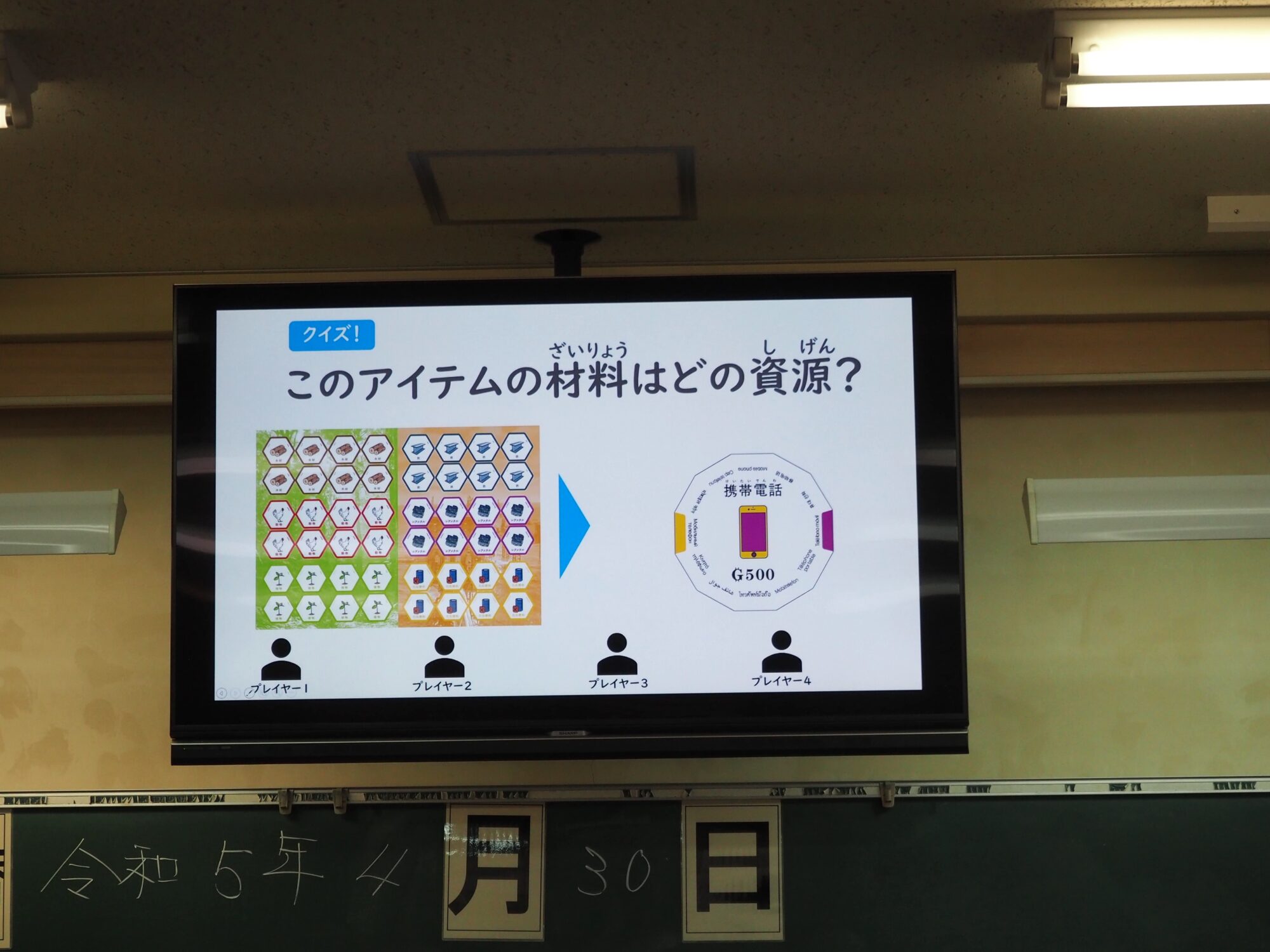
For example, to create a car, the following 3 resource cards are used.
- Fossil Fuels
- Rare Metals
- Iron
The used resource cards are moved to the trash bin and cannot be used again unless they are revived through resource recovery rules.
Play while being aware of the resource recovery rules
Get The Point is played in groups of 4 people.
The 4 players take turns using resource cards to create items.
When it is a player's turn, they take all the resource cards needed for the item they want to create from the board and move them to the trash bin.
The item created by combining the resource cards becomes theirs.
Since the resource cards needed to create items are moved from the board to the trash bin, the number of resource cards decreases after each round.
If the resources keep decreasing, they will soon be depleted, and players will be unable to create items.
This is where an important rule comes into play.
That is the Resource Recovery Rule.
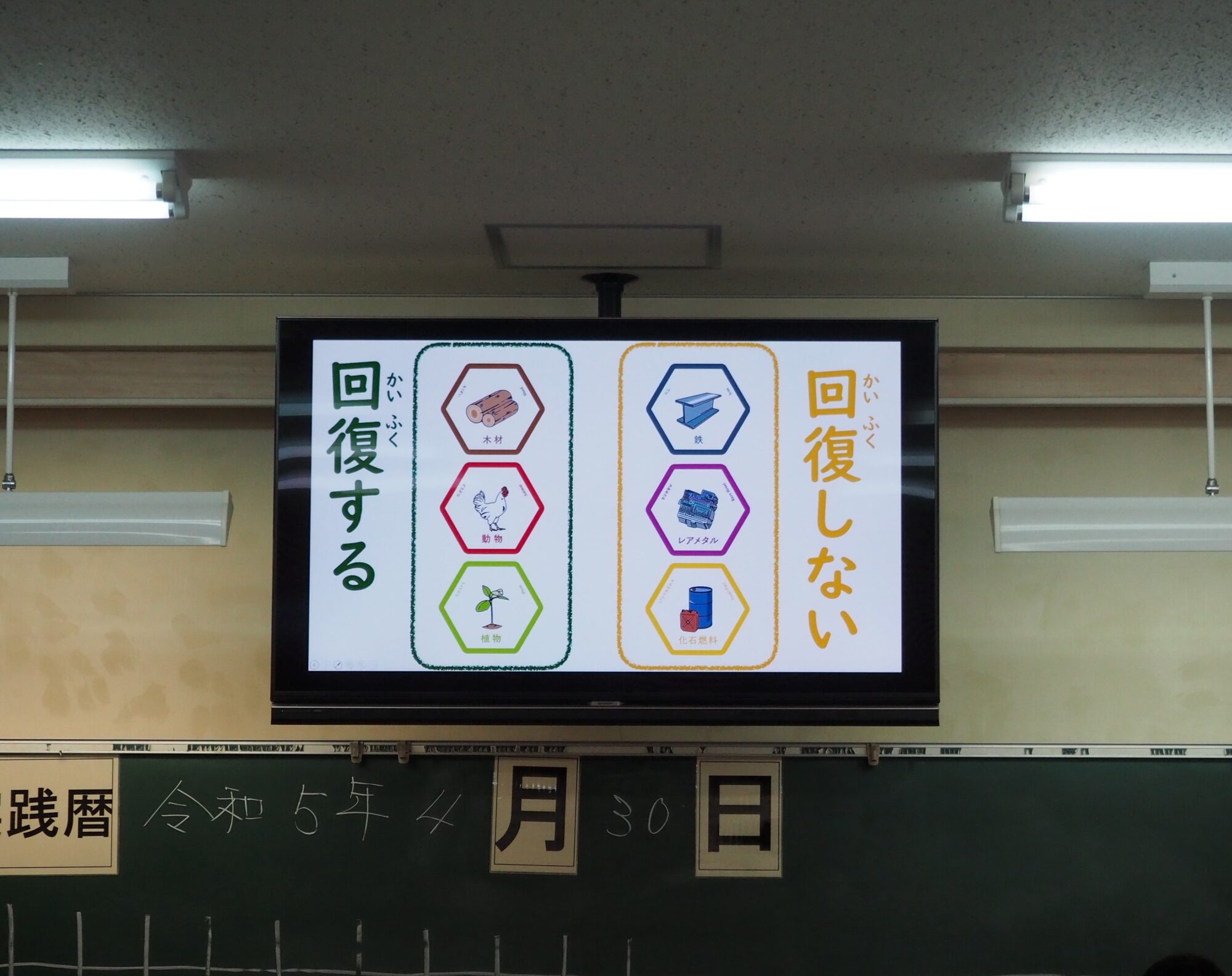
The resources around us can be renewable or non-renewable.
The 6 types of resource cards are divided into 2 groups: renewable and non-renewable resource cards.
According to the resource recovery rules, renewable resource cards are revived (become usable again and return to the board) after each round.
This is the interesting point and consideration point of Get The Point.
Renewable resource cards can be used multiple times as they recover each round, but the points for items made from renewable resource cards are not very high.
Items made from non-renewable resource cards have high points, but since the number of usable cards is limited, players must think carefully about when to use them.
The game ends after 10 rounds.
Get The Point is a simple game where players compete based on the total points of the items they created.
I found out through actual experience that it is more fun than I imagined!
Individual and Team Competitions
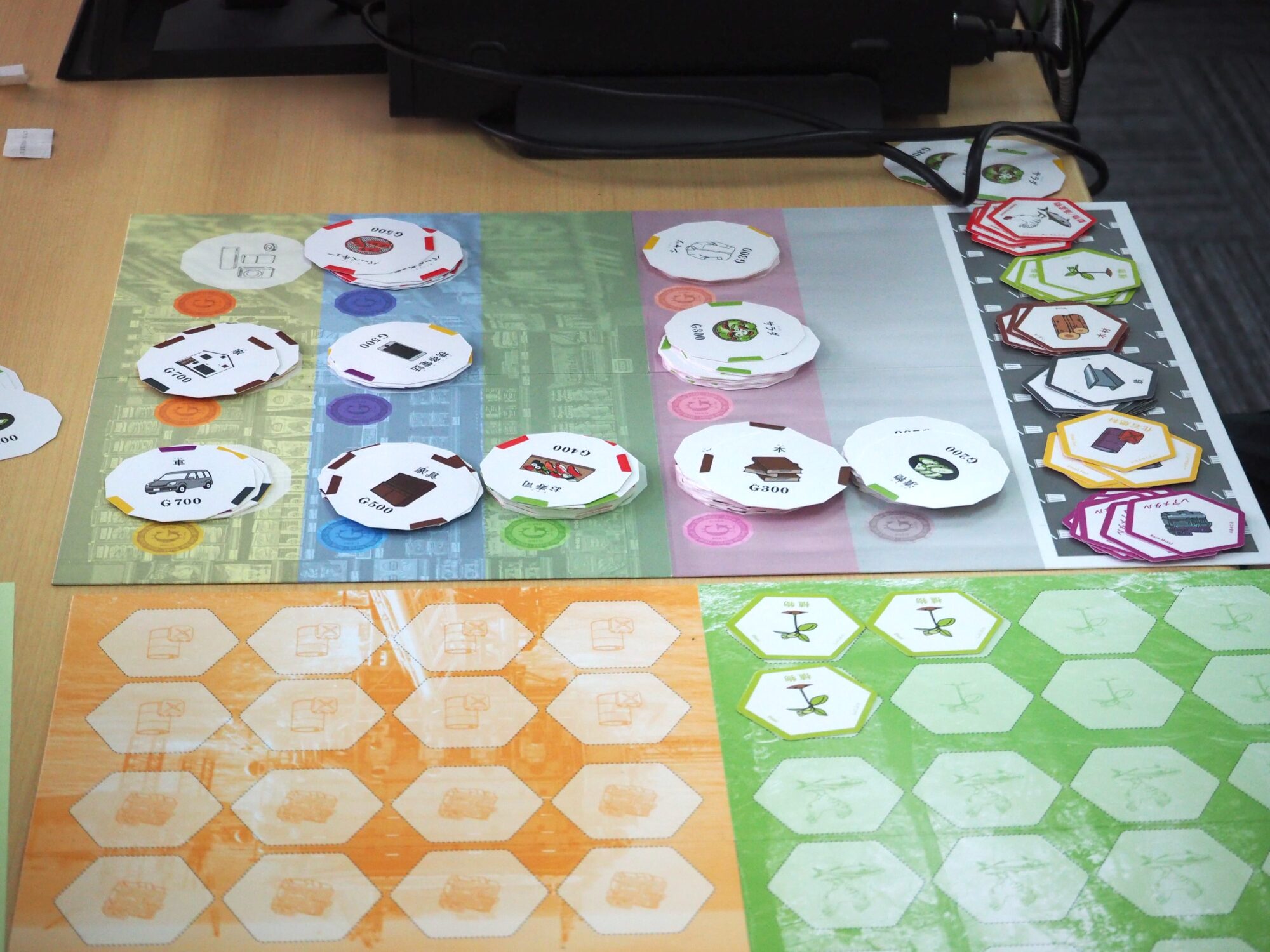
Get The Point offers two types of experiences: individual competition, where players compete for points within their group, and team competition, where multiple teams compete based on the total points of their team.
In individual competition, players think about how to maximize their total item points while creating items.
The interplay with the other 3 group members is crucial.
In team competition, players work together to create items while effectively using resource recovery cards and discussing with group members.
To increase the total points of the team, they must discuss the order in which to create items.
Thinking about how to use resource cards and who will create which item is key.
The essence of the SDGs becomes clear in team competition rather than individual competition.
In individual competition, it is a stage for a “world of competition and rivalry,” while in team competition, it is a stage for a “world of cooperation for sustainability.”
To understand the meaning of this phrase written on the official website, one must experience the game firsthand.
I also experienced the game and began to see this worldview.
The facilitator is Mr. Kurihama from the Consciousness Reform Institute
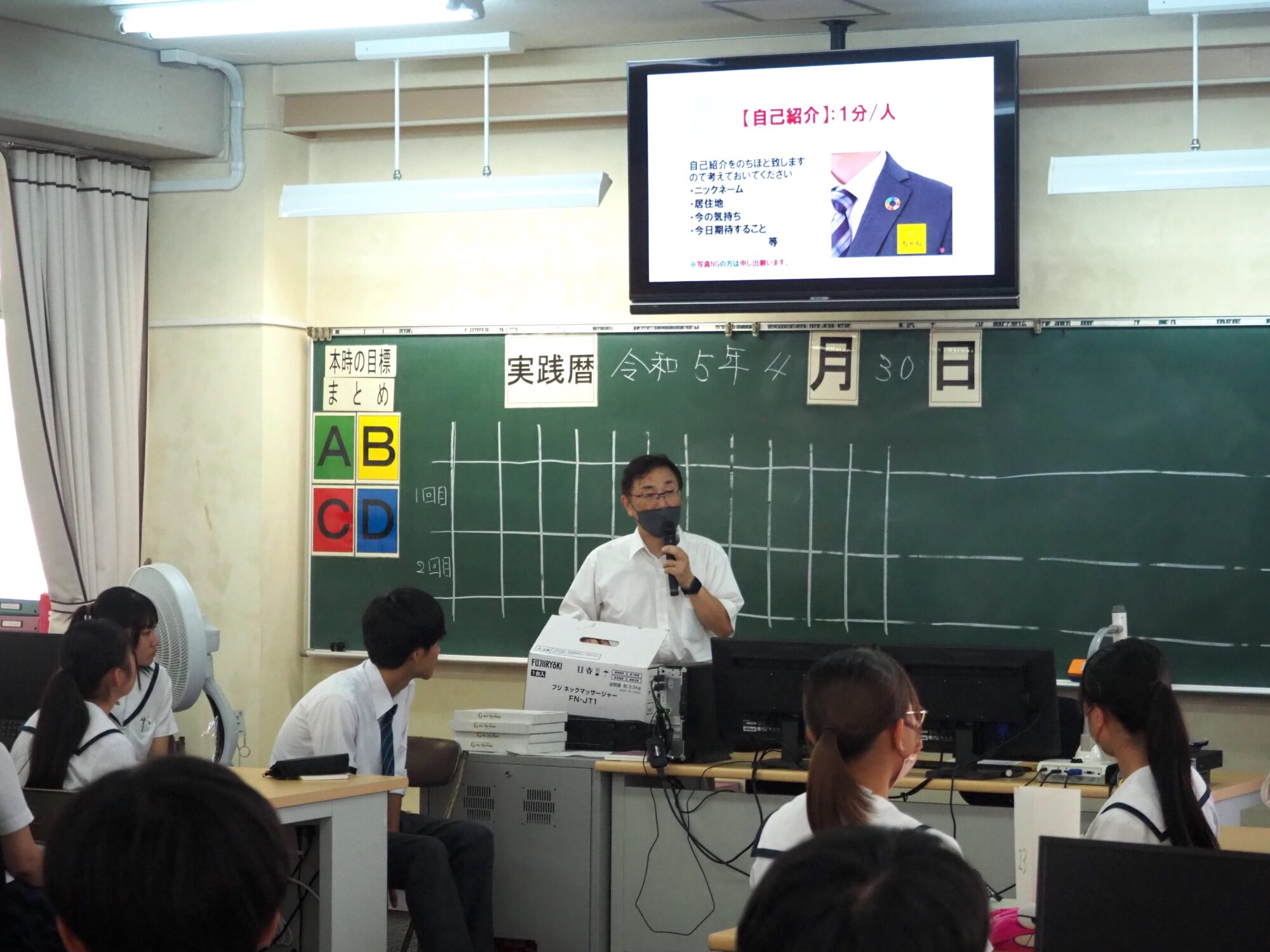
The facilitator for Get The Point, conducted with about 120 second-year students from Okayama Prefectural Kasaoka Commercial High School, is Mr. Hiroyuki Kurihama, the representative of the Consciousness Reform Institute.
Mr. Kurihama, as a certified facilitator of Get The Point, conducts workshops using board games that allow participants to “experience the essence of the SDGs and connect to consciousness reform” for schools and organizations.
Start of the Kasaoka Commercial Second-Year SDGs Board Game - Get The Point -
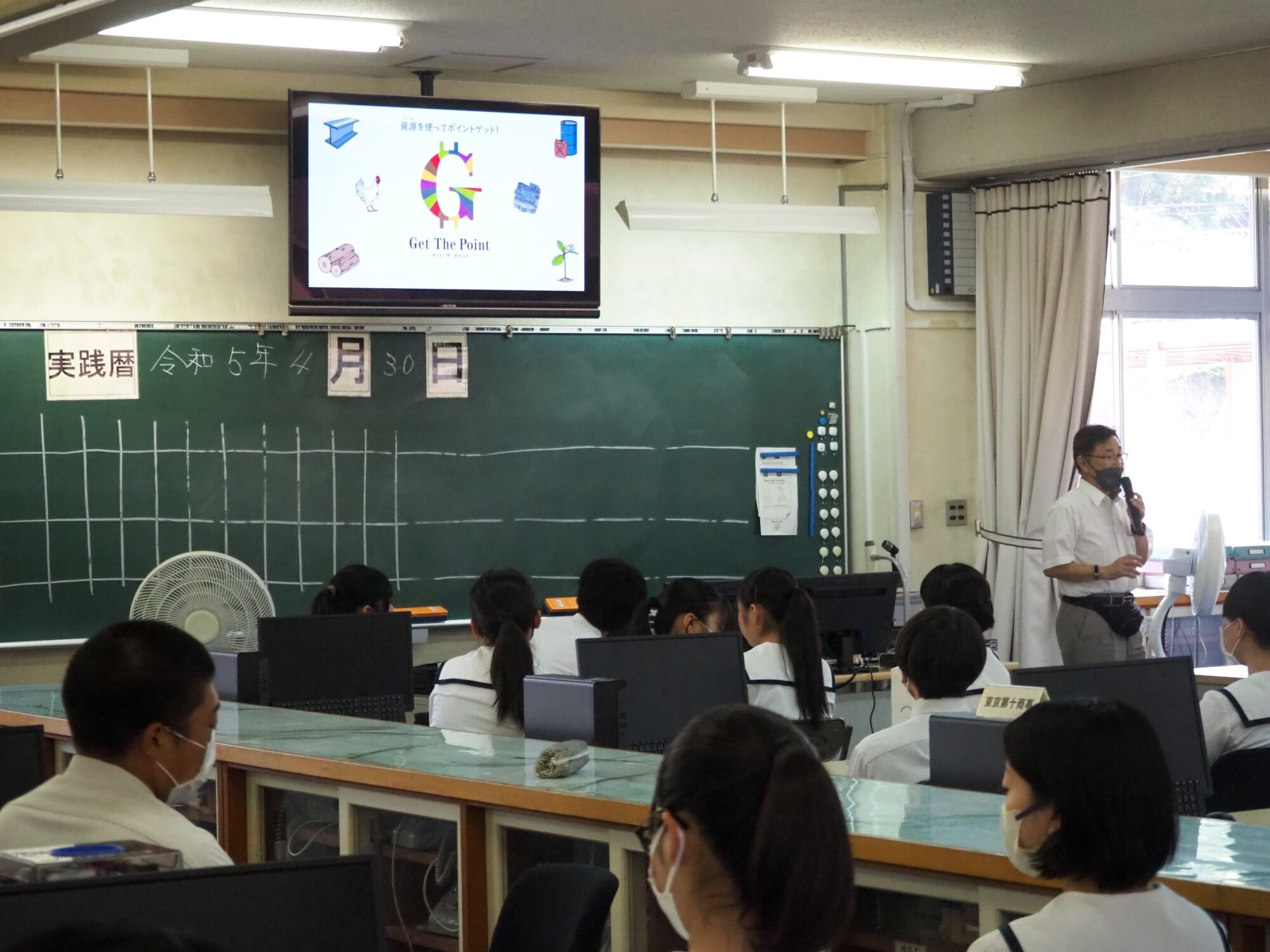
I will report on the Get The Point event held at Okayama Prefectural Kasaoka Commercial High School on July 18, 2023.
Self-Introduction Time
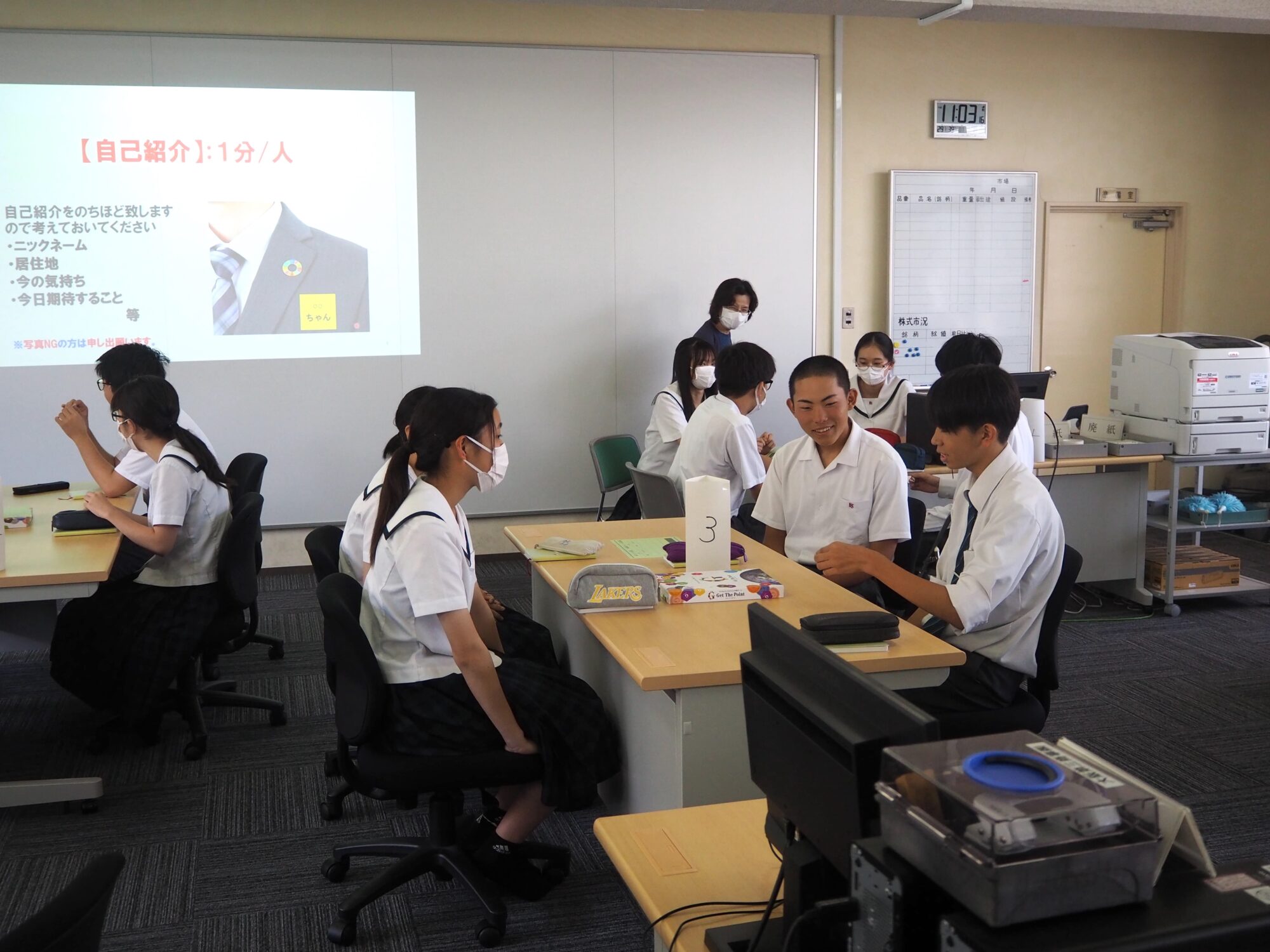
Before starting the board game, each team introduces its members.
It’s a relaxing time.
Each person will talk for 1 minute about the following items.
- Nickname
- Place of residence
- Current feelings
- Expectations for today, etc.
With about 120 participants, there may be some who have never spoken to each other if they are from different classes.
The self-introduction time was quite lively.
Preparation for Get The Point
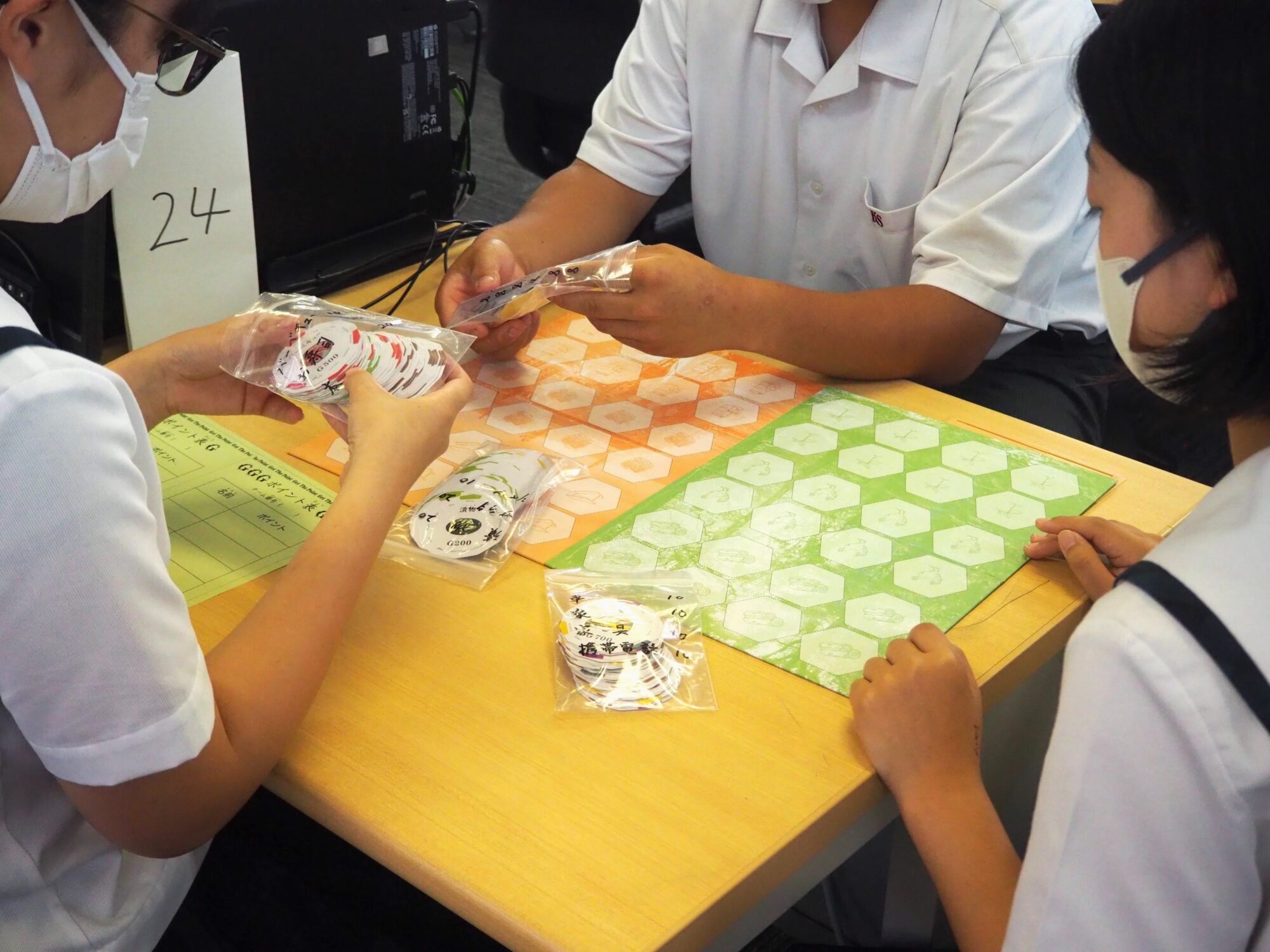
After the self-introductions, it’s time to prepare for Get The Point.
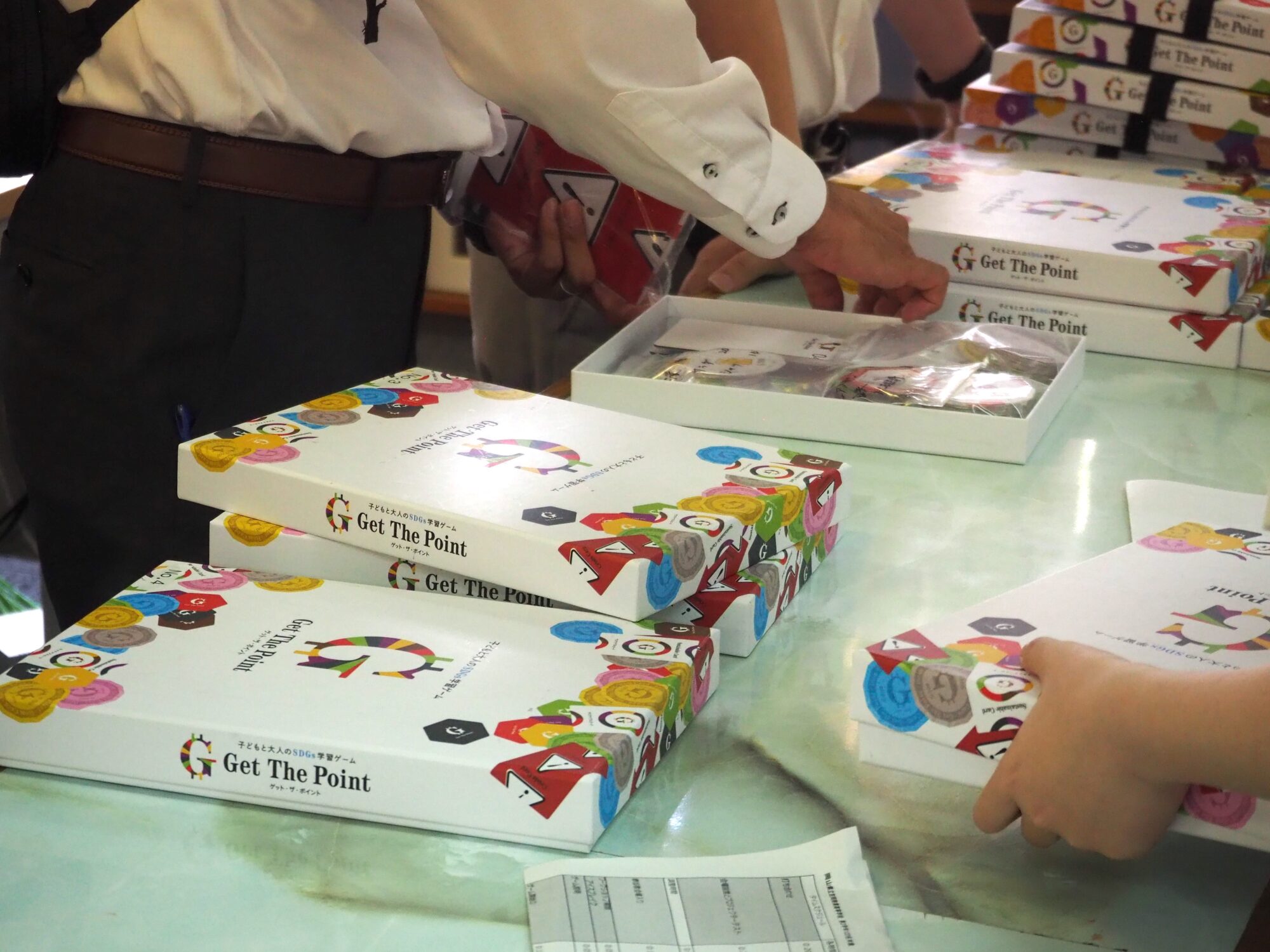
On the day of the event, several second-year students who had previously learned about Get The Point supported the preparation of the board game.
They took resource cards from the boxes containing the complete set of Get The Point prepared at each table and placed them in designated spots on the board.
Now, what rules will guide the progress of Get The Point?
Confirm the rules of Get The Point
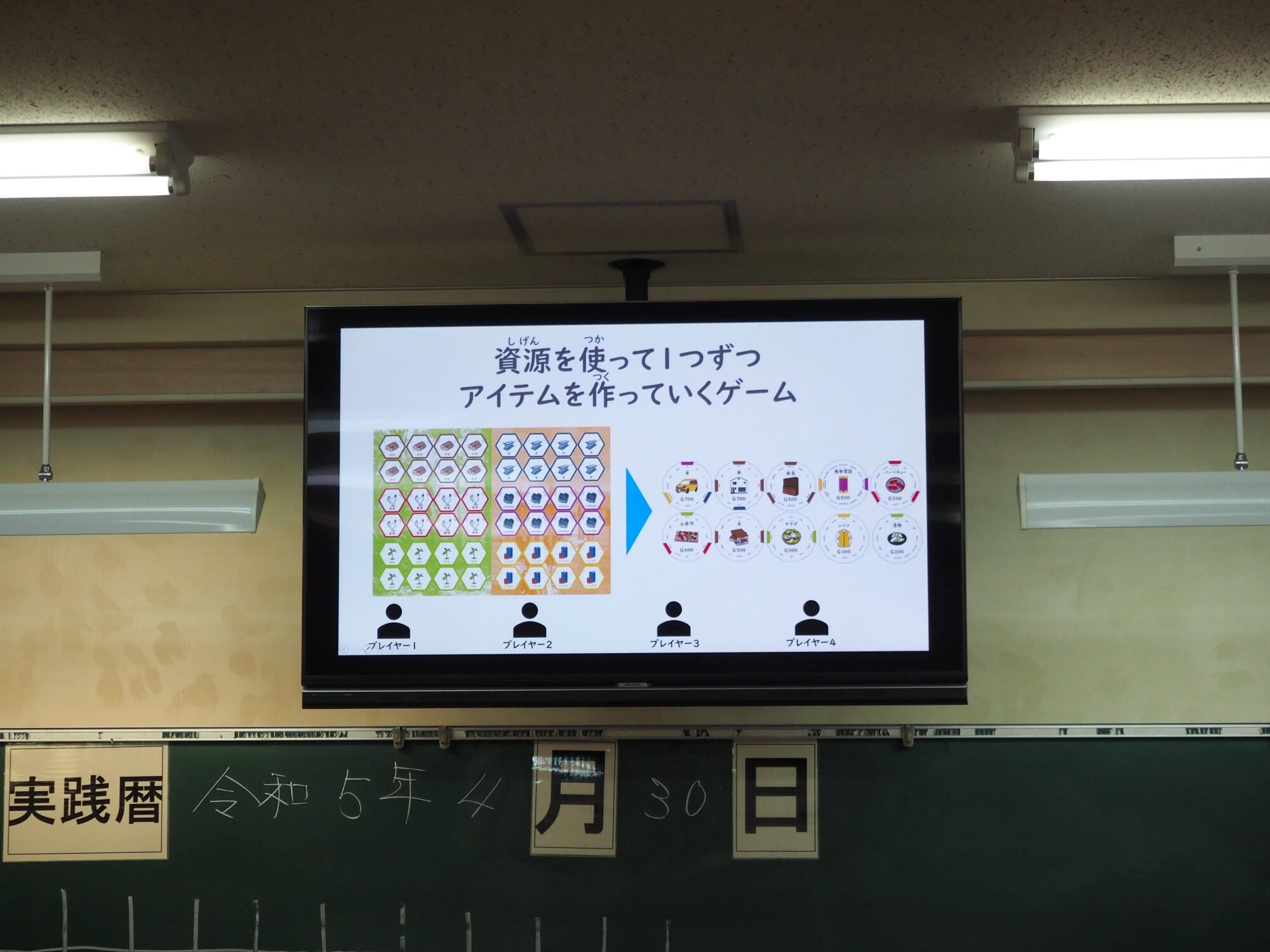
Get The Point is a game where players “use resources to create items one by one.”
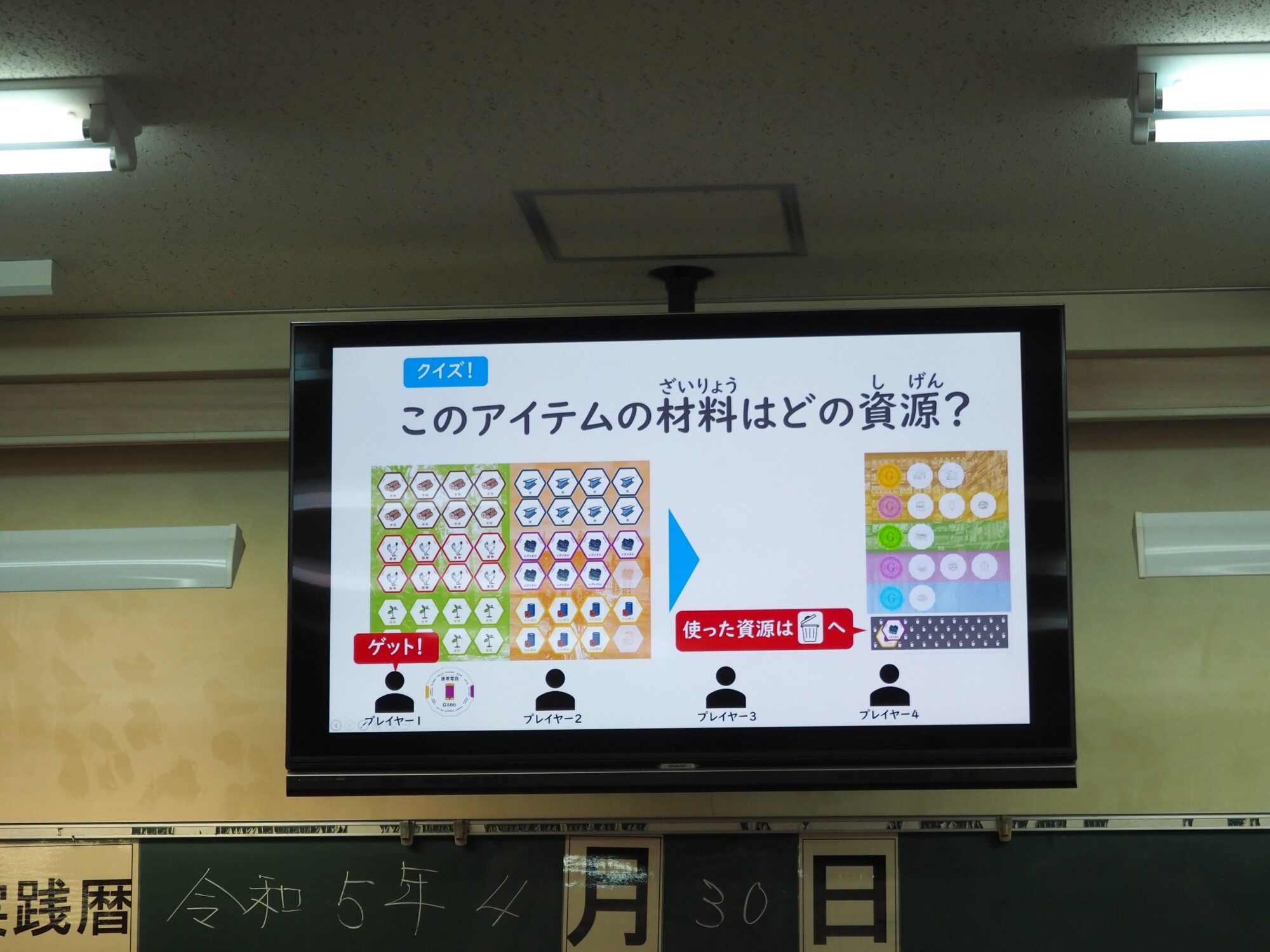
What players need to think about is which resources are needed for the items.
“Which resource cards to use” is the key point of this game.
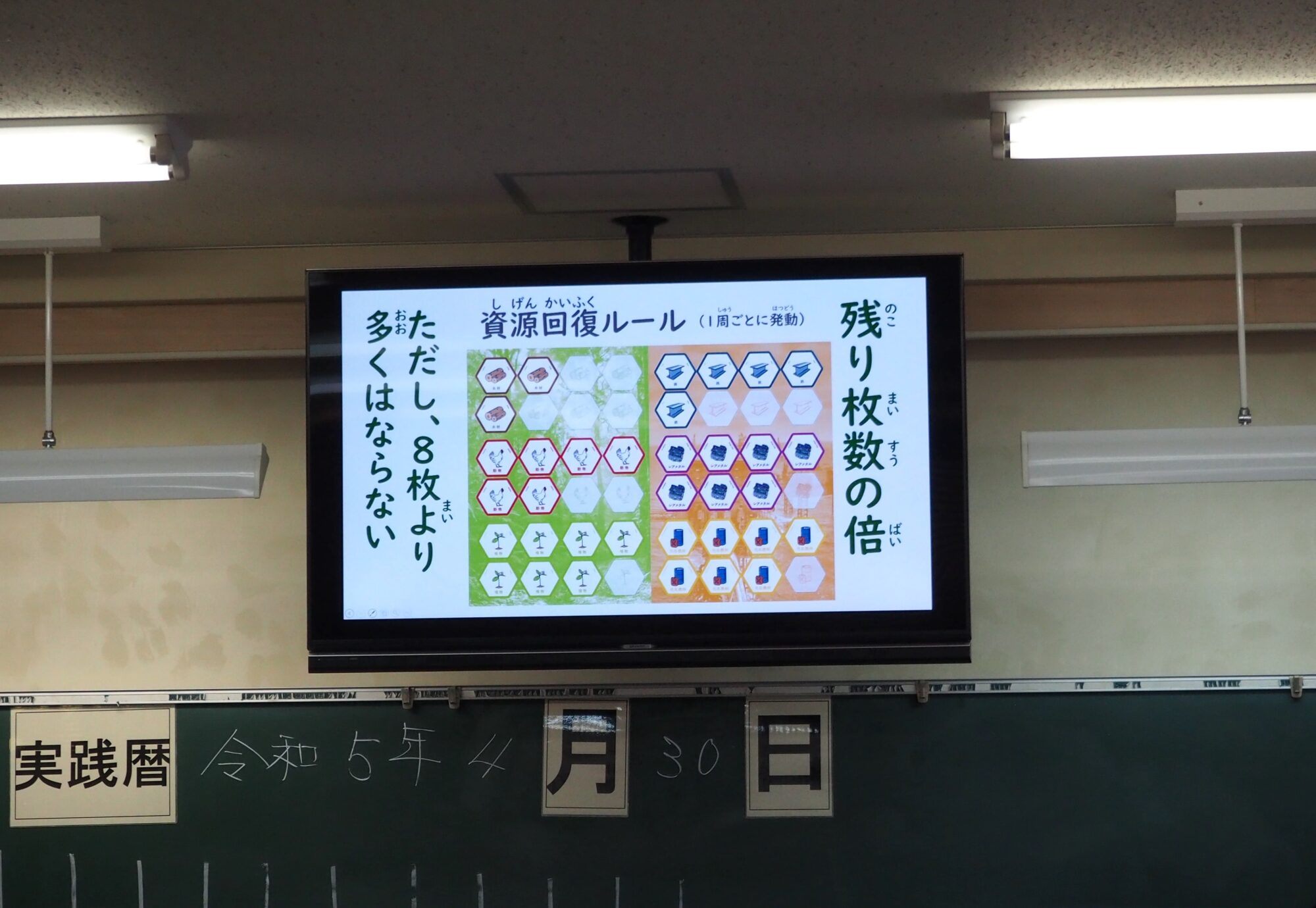
The resource recovery rule, which activates every round, applies only to recoverable resource cards.
The recoverable resource cards are “Wood,” “Animals,” and “Plants.”
These are sustainable resources.
At the end of each round, the number of the above 3 resource cards is counted.
The number of remaining cards is doubled for revival!
However, the maximum number of resource cards that can be revived is 8.
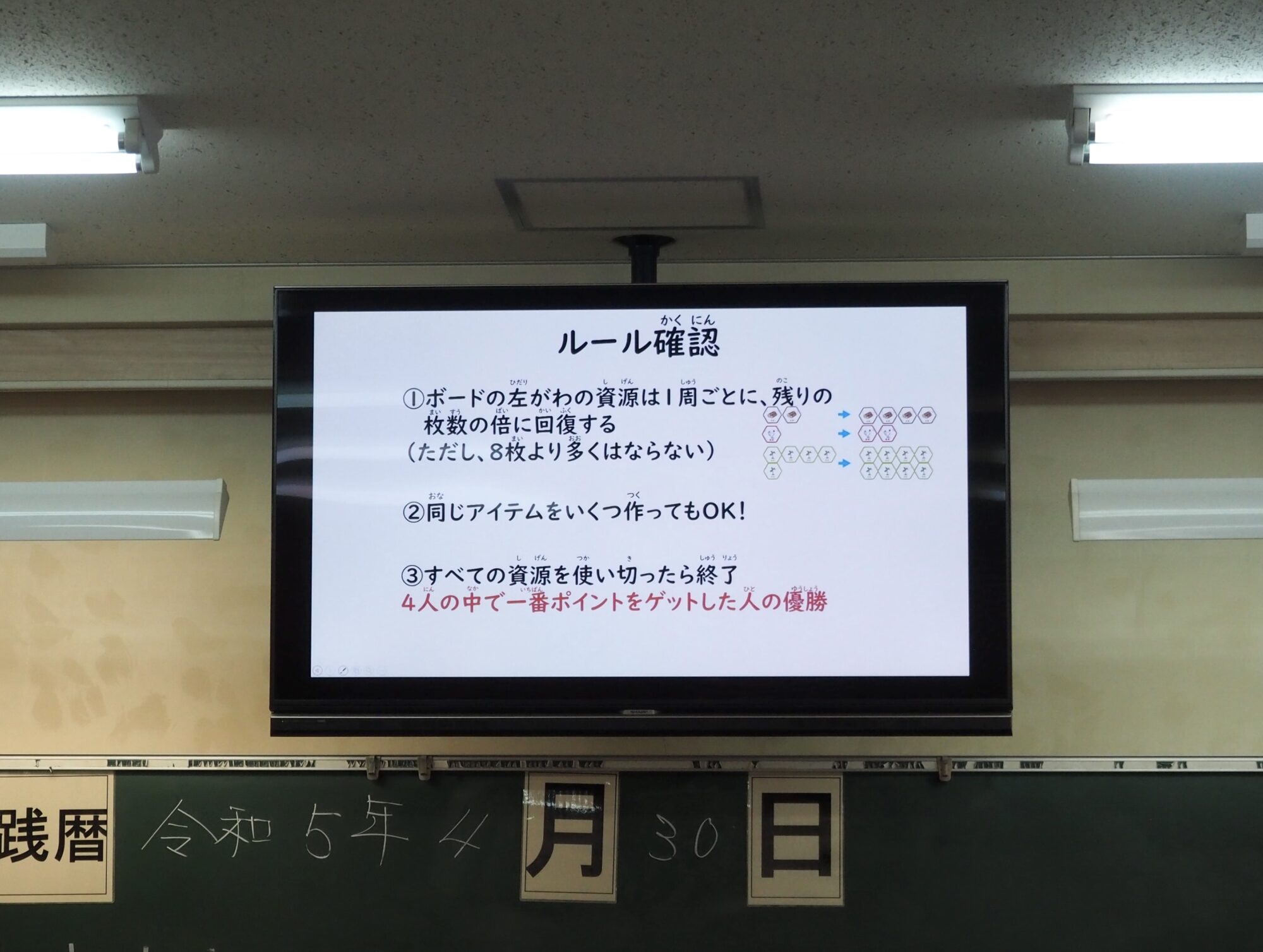
Before starting the game, the final confirmation of the rules is made.
In individual competition, the player with the highest total points from the items created among the 4 players wins!
Start of Individual Competition!
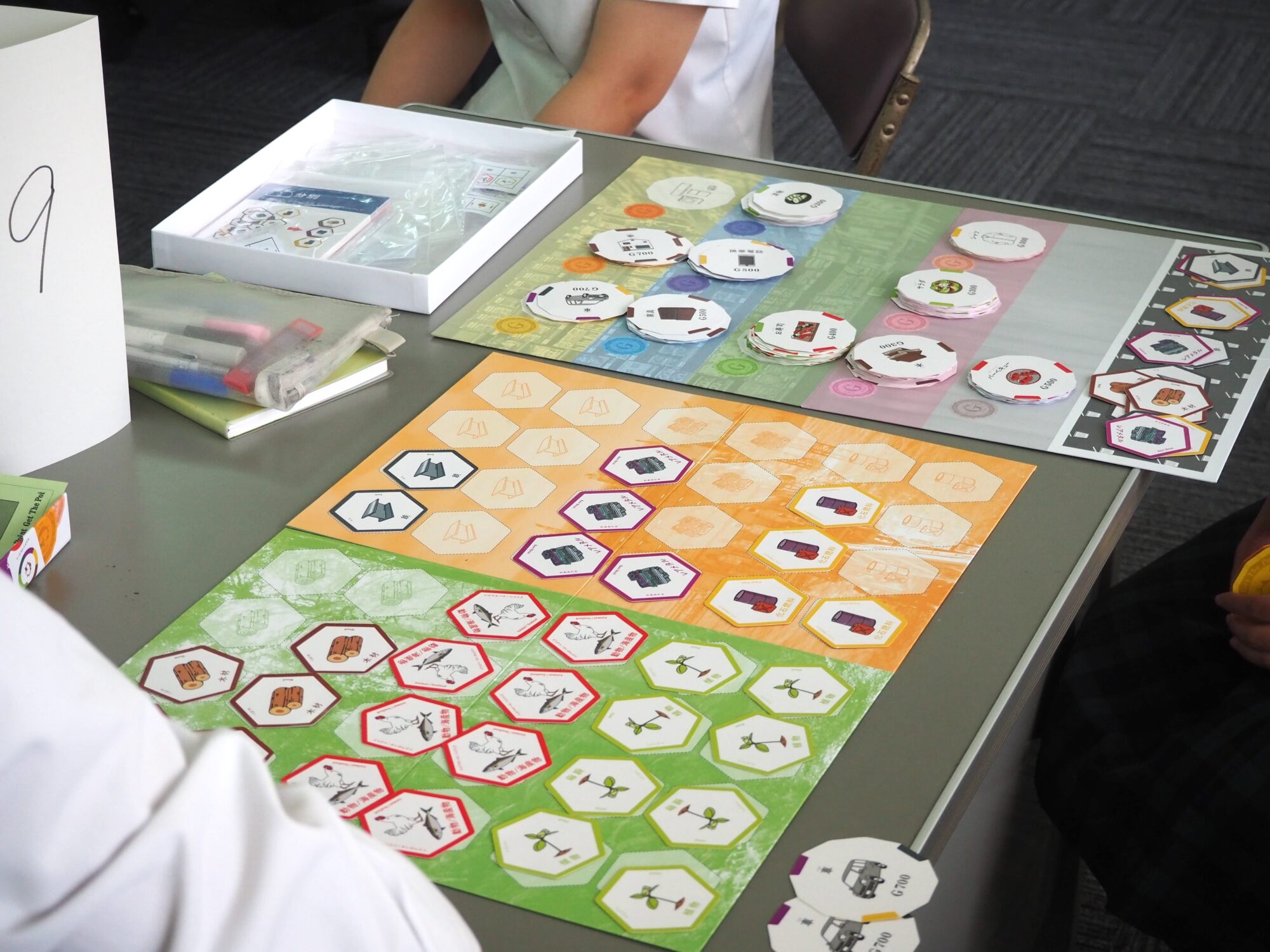
With the rules confirmed, the individual competition begins.
Players only need to think about their own points while creating items.
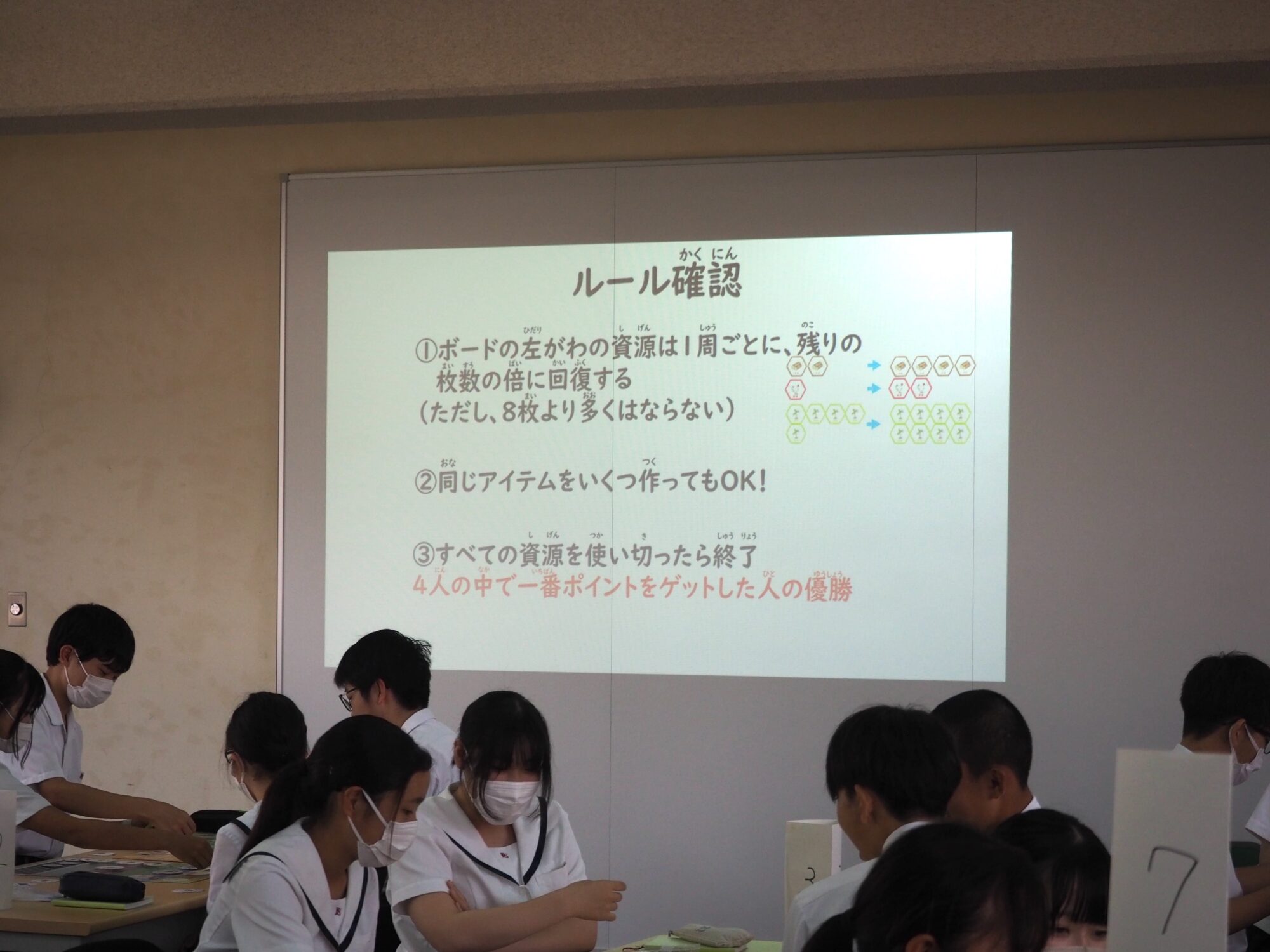
Since most students are playing Get The Point for the first time, they proceed while confirming the rules.
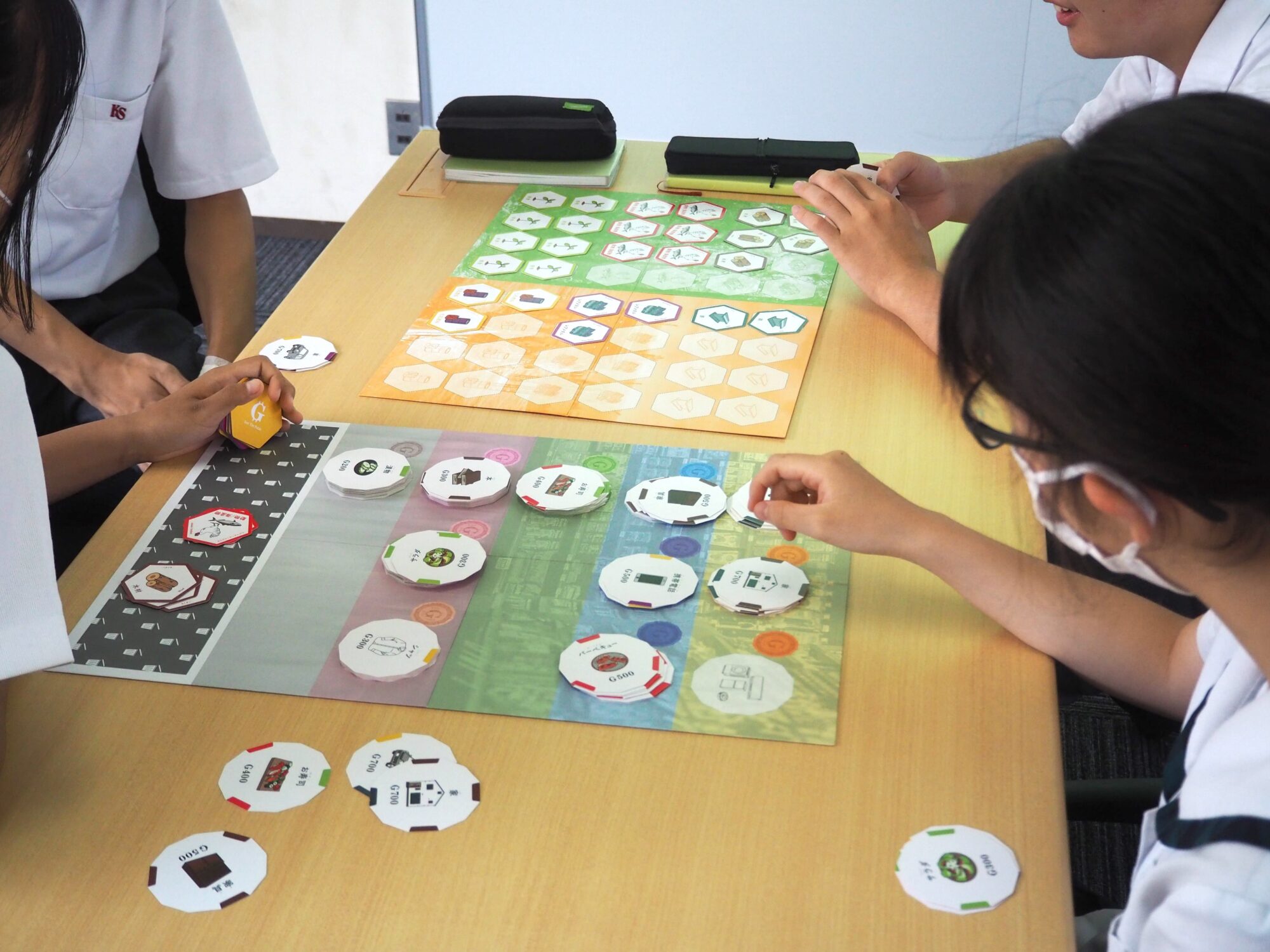
Players select resource cards placed on the board to create items.
The resource cards used to create items are moved to the trash bin and marked as used.
The 4 players take turns creating items, and the game ends after the 10th round!
This team has only 3 remaining resource cards of “Plants”!
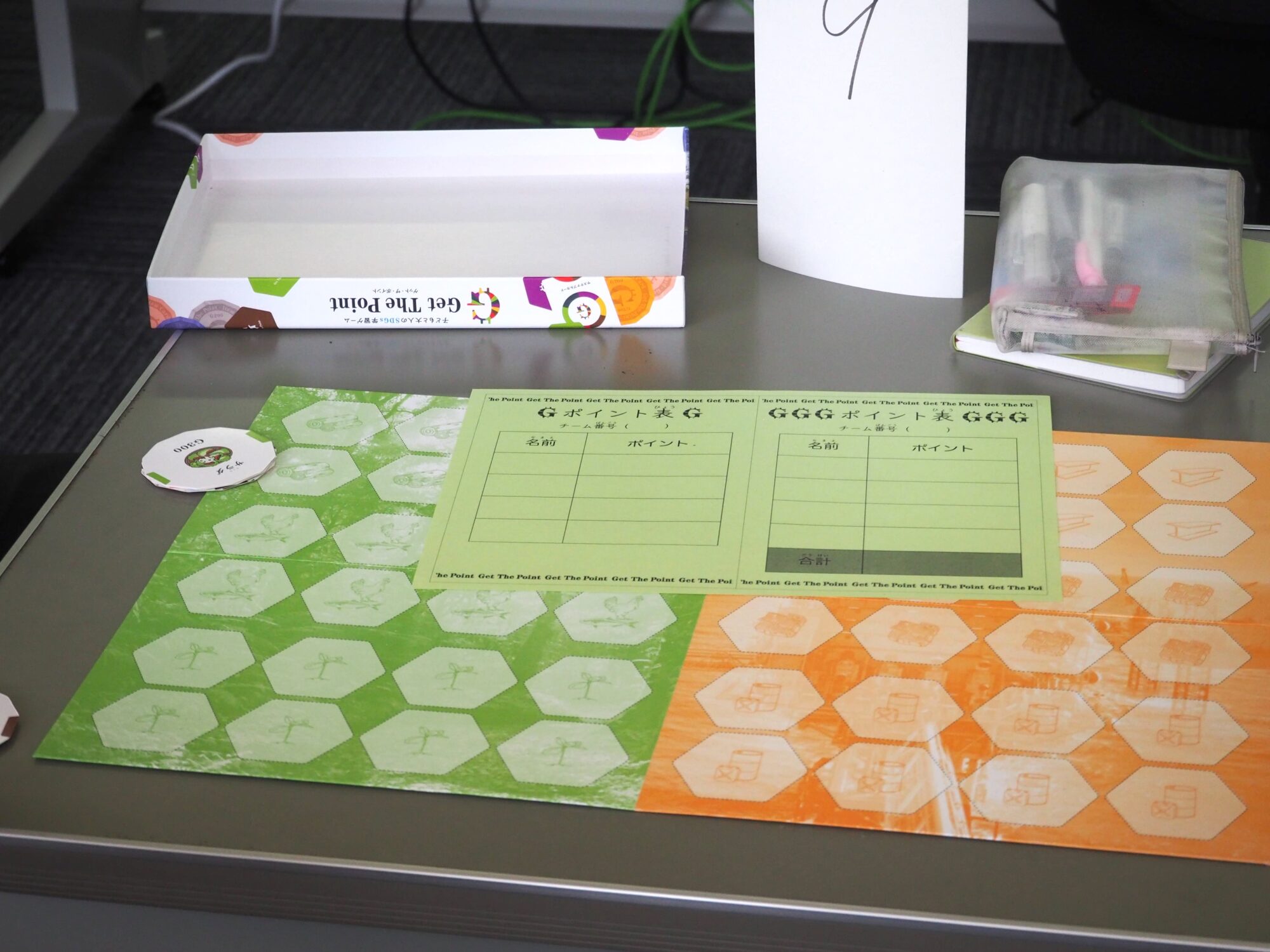
After completing the 10 rounds, the item points are checked, and each player's total is recorded on a sheet.
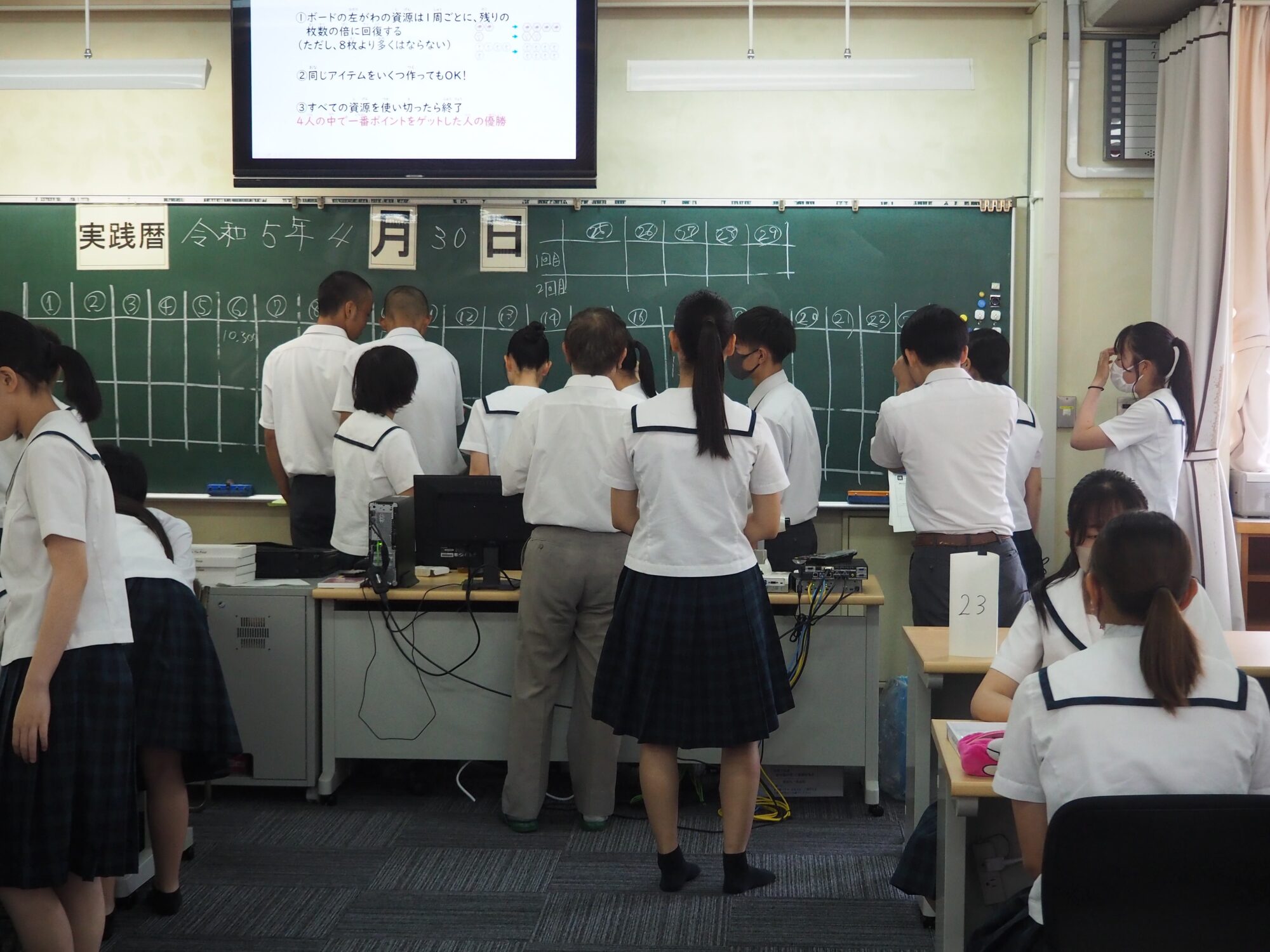
After calculating the total points of all 4 members' items, the results are written on the blackboard.
Although it is called individual competition, the reason for writing the team's total points will become clear after the team competition.
Start of Team Competition!
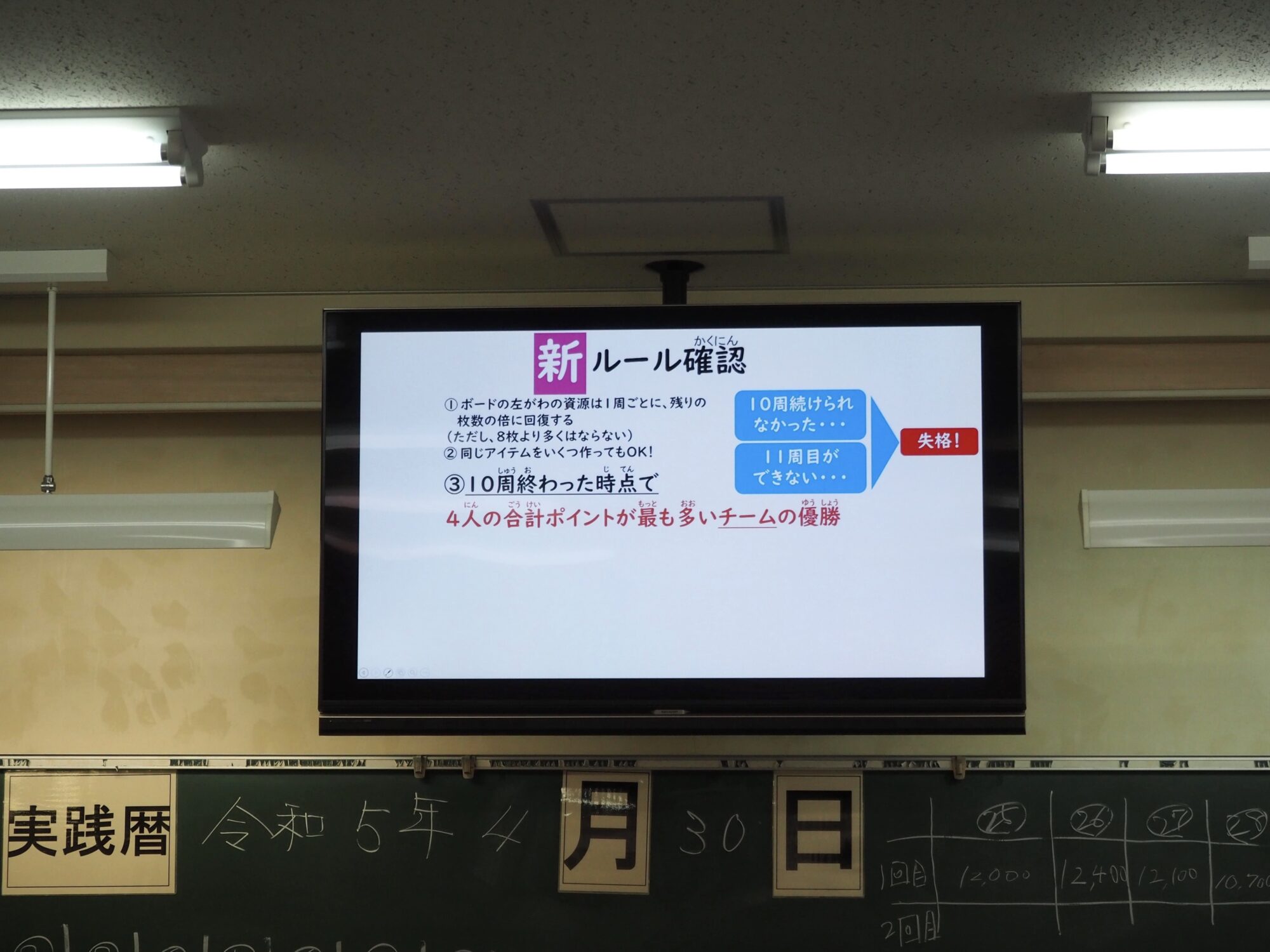
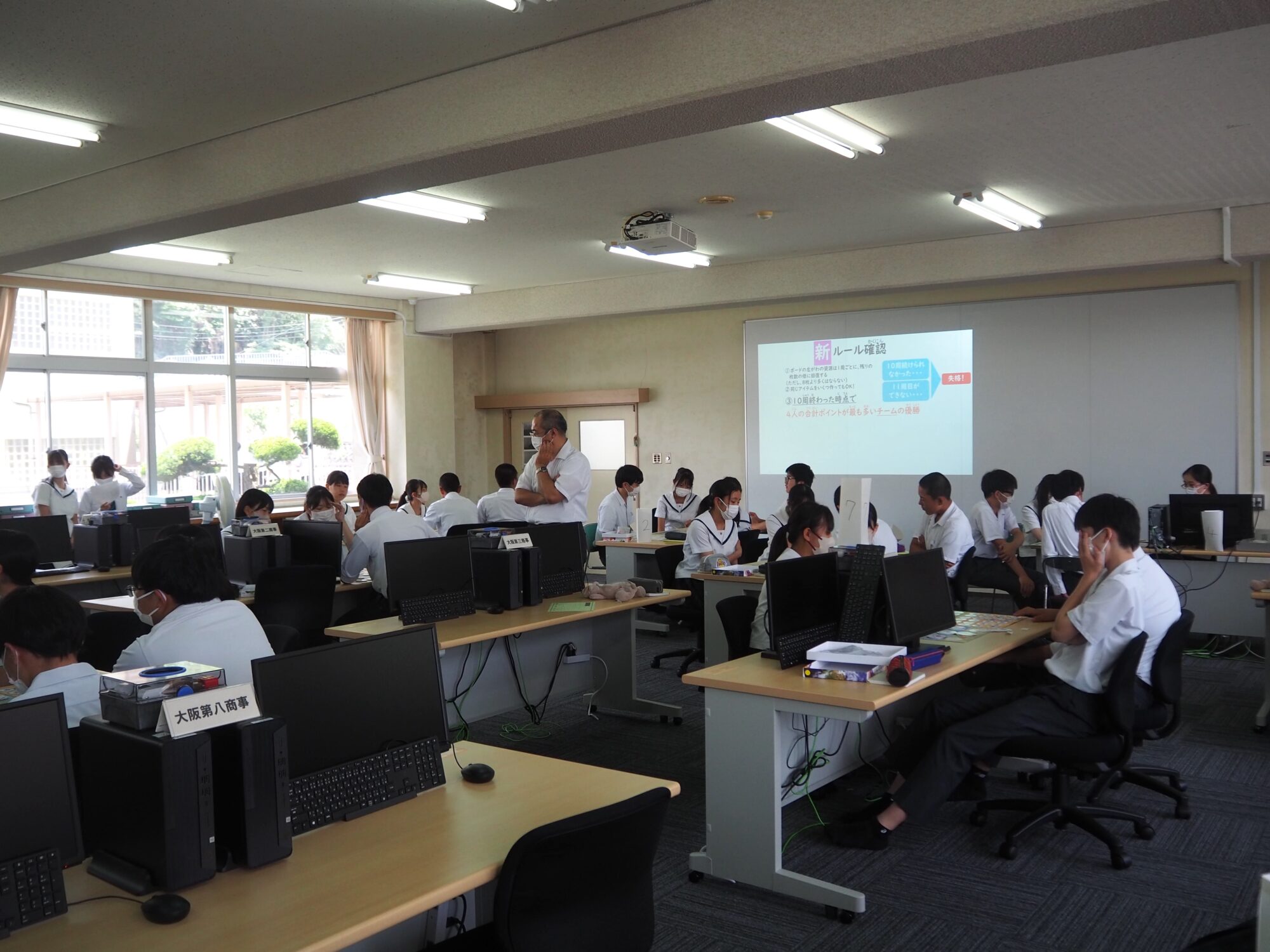
Next is the team competition.
Different rules come into play compared to individual competition.
“Could not continue for 10 rounds”
“Cannot start the 11th round”
If this situation occurs, the team is disqualified.
The team must ensure that they can start the 11th round after completing 10 rounds, so all members must think together while creating items.
Sudden Crises and Sustainability
While smoothly creating items, a sudden “crisis” occurs.
A crisis refers to a “critical situation, difficulty, or significant turning point.”
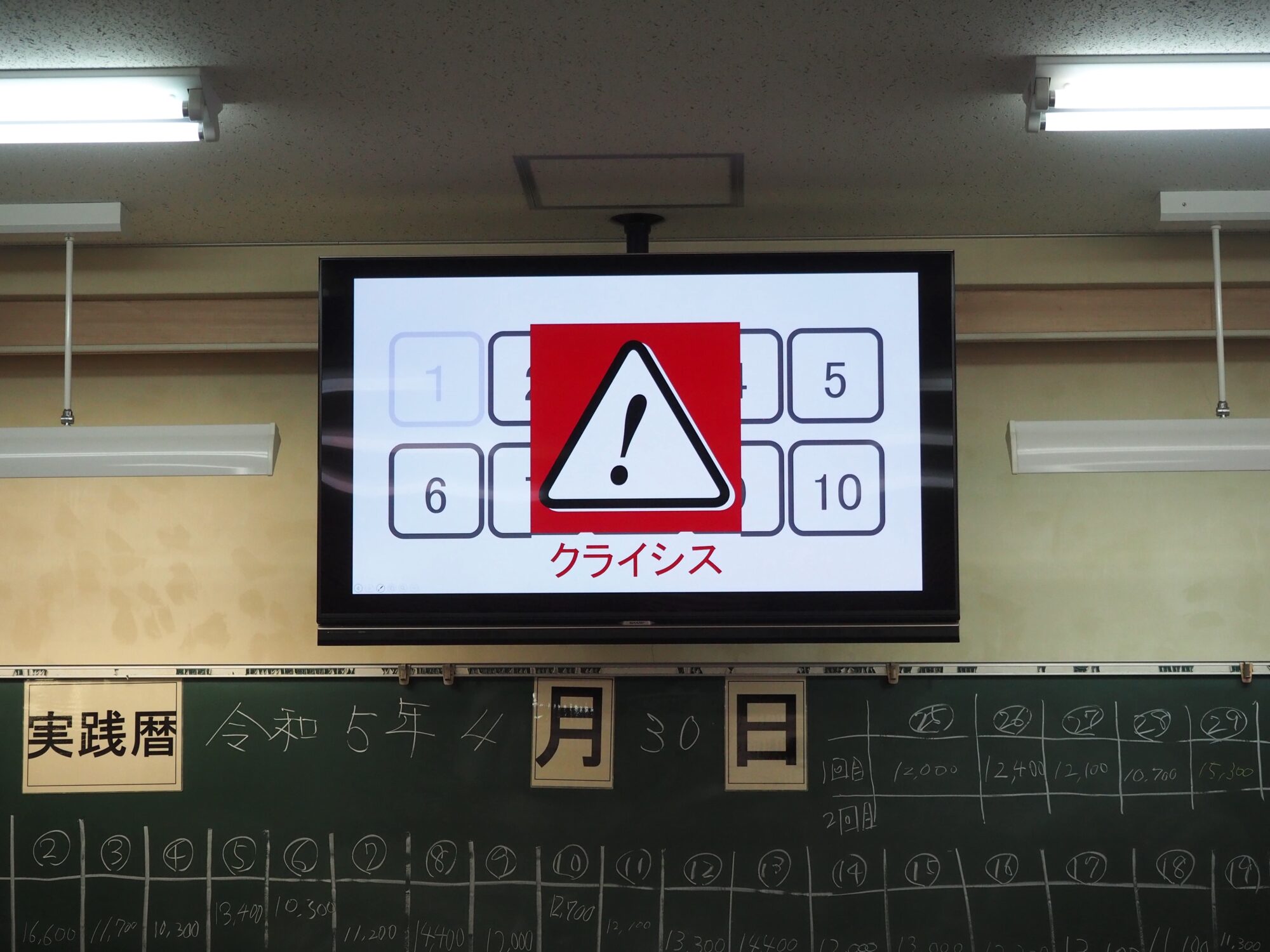
Changes in natural conditions can lead to fluctuations in resources.
In the real world, this could mean a decrease in plant production due to natural disasters or abnormal weather.
Crisis events also occur in the game, and they happen without warning!
For example, “Abnormal weather causes significant damage to plants! You must move half of the remaining plant cards plus one card to the trash bin” must be followed as instructed.
When a crisis occurs, it affects the remaining number of resource cards, causing some teams to panic.
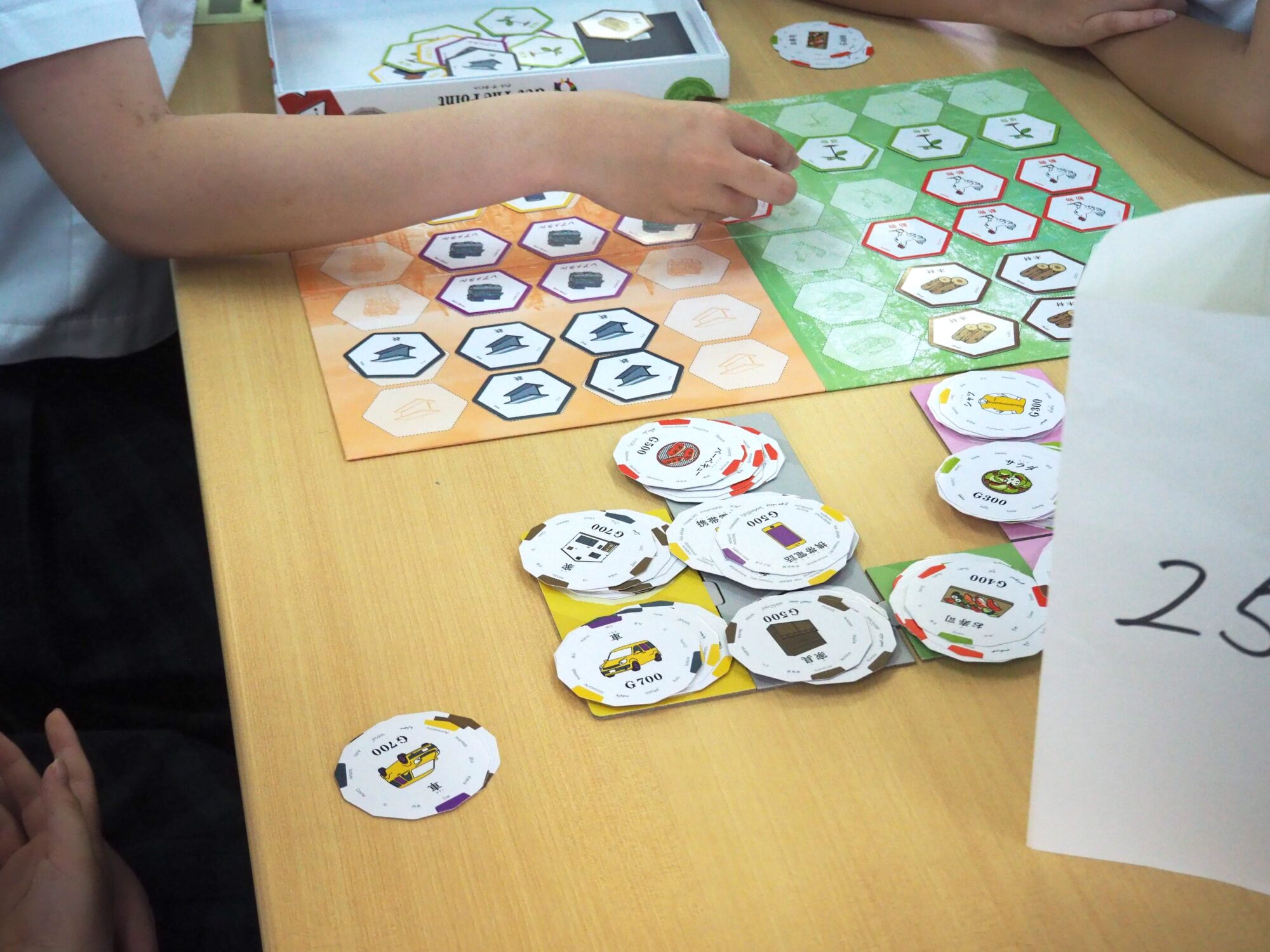
While teams manage to get through the crisis, now “sustainability” occurs!
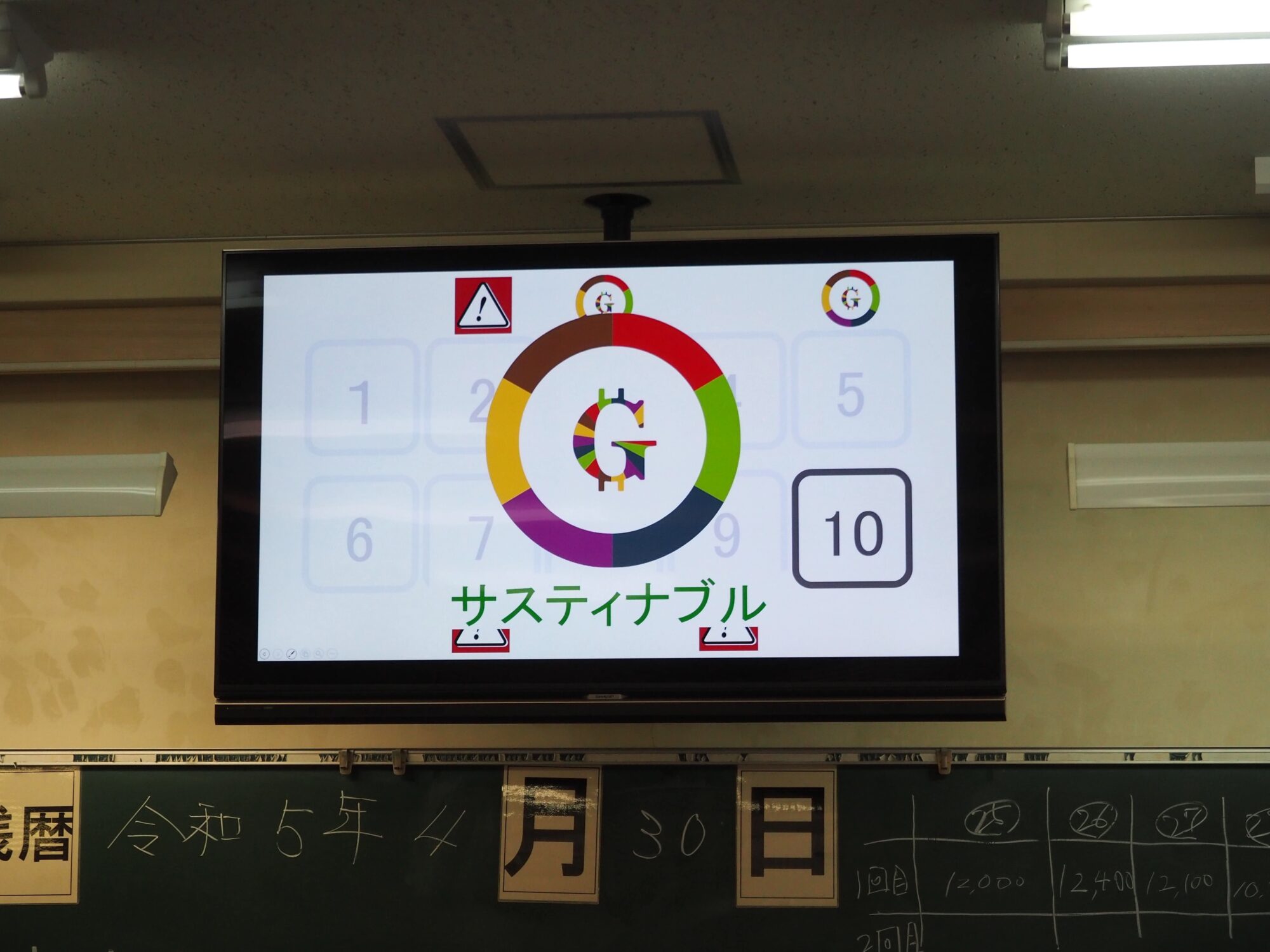
Sustainability refers to “the state of being sustainable” or “the ability to maintain or continue.”
Conditions opposite to crises are added to the game.
For example, “Plants can now be used as energy! You can use one plant card instead of one fossil fuel card.”
Good luck comes into play.
This will help players concretely understand the meaning of sustainability.
In addition to crises and sustainability, various situations arise suddenly during the game, keeping players on their toes.
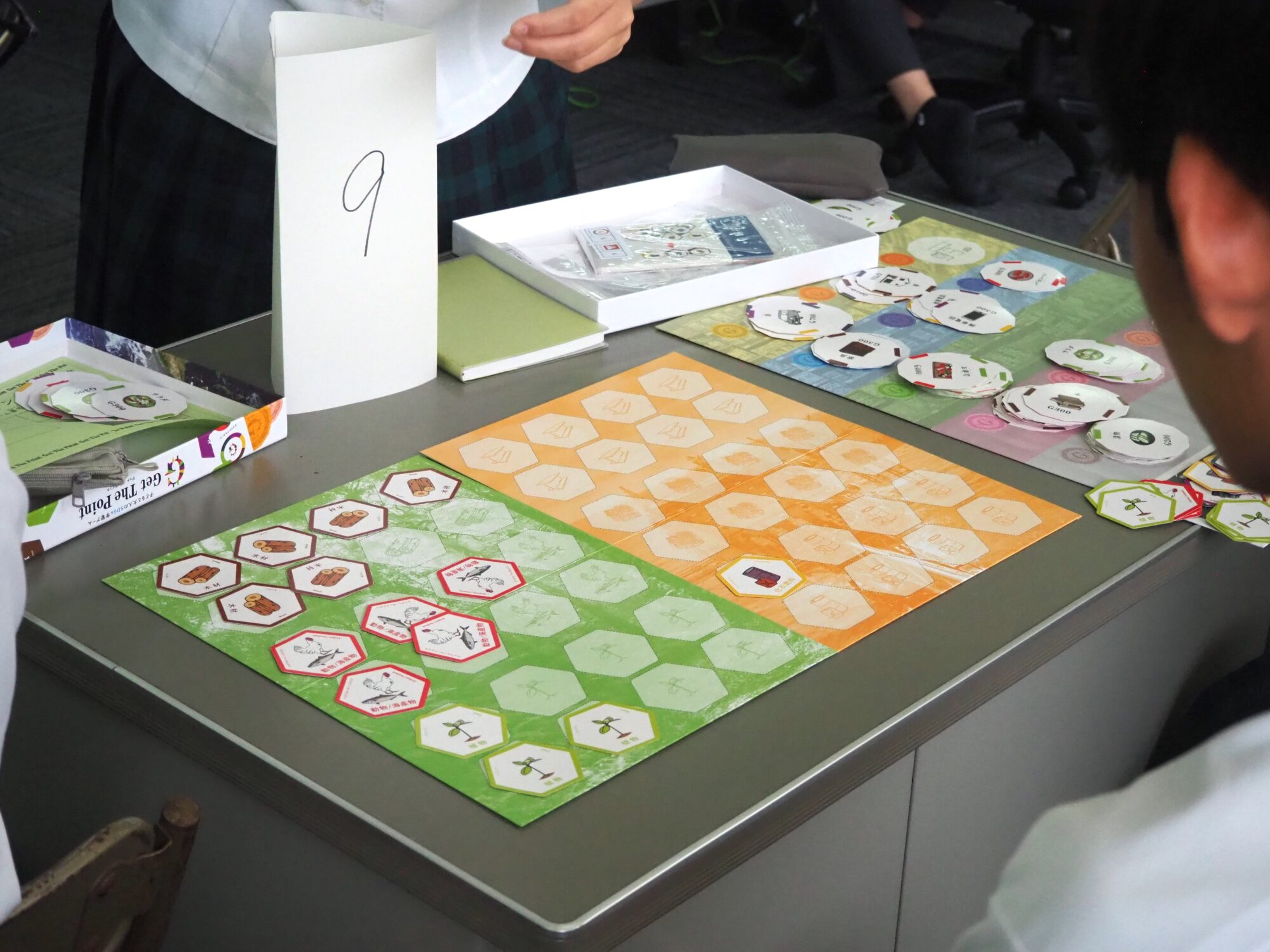
As the game nears its end, teams discuss how to create high-point items while considering the remaining resource cards.
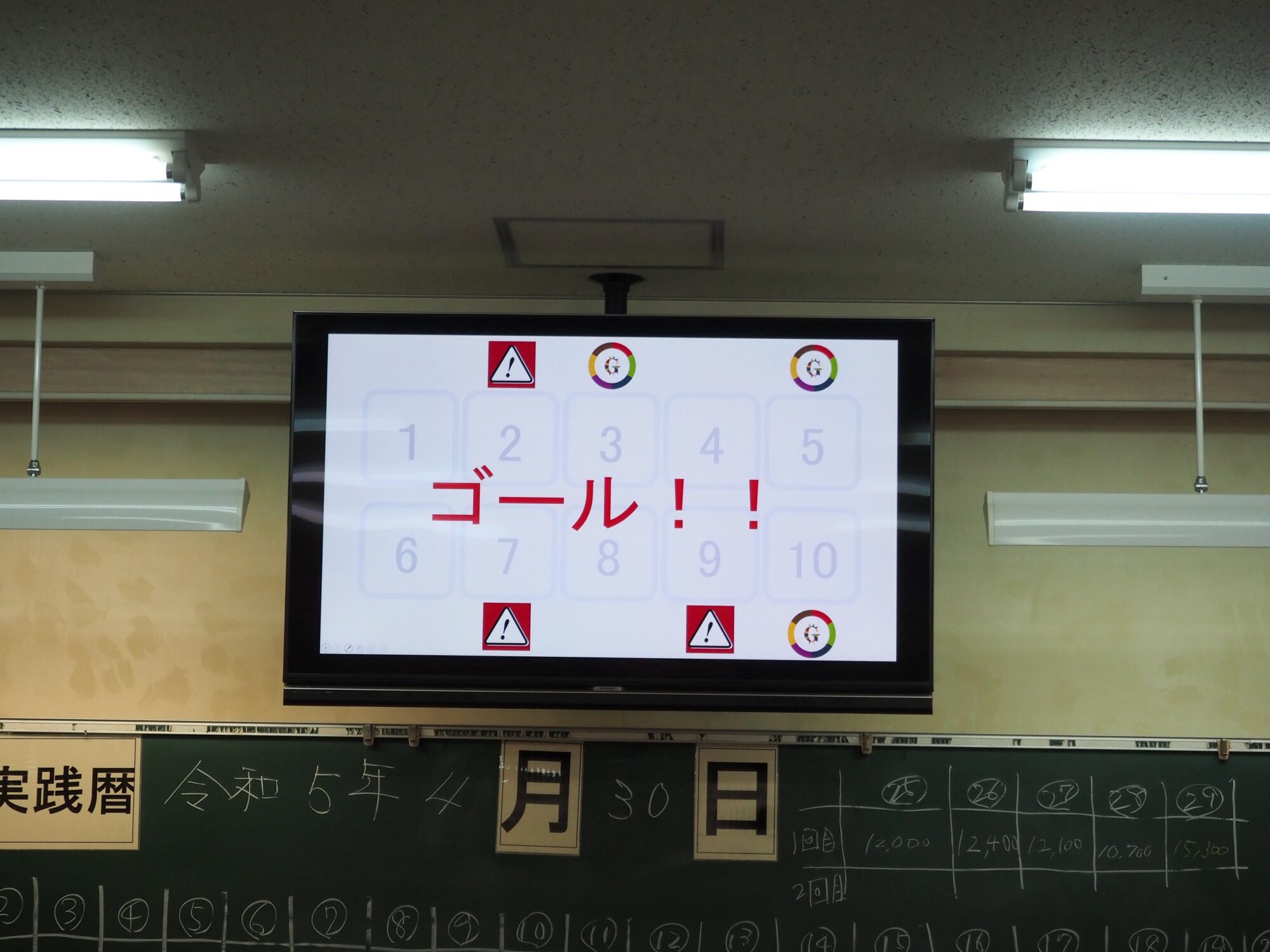
After completing 10 rounds, the game ends.
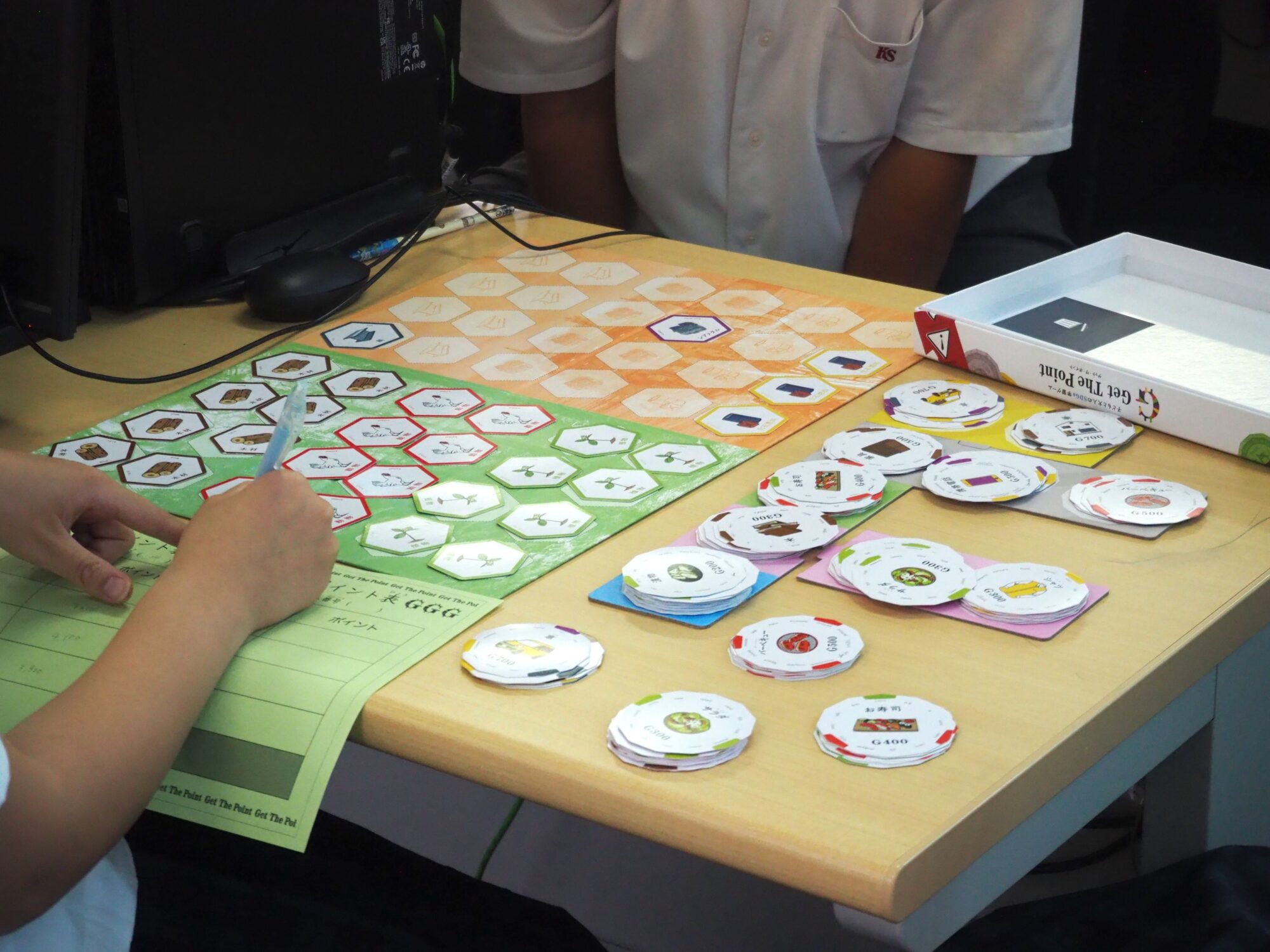
As in the individual competition, the item points for each player are recorded on a sheet, and the total points for the team are calculated.
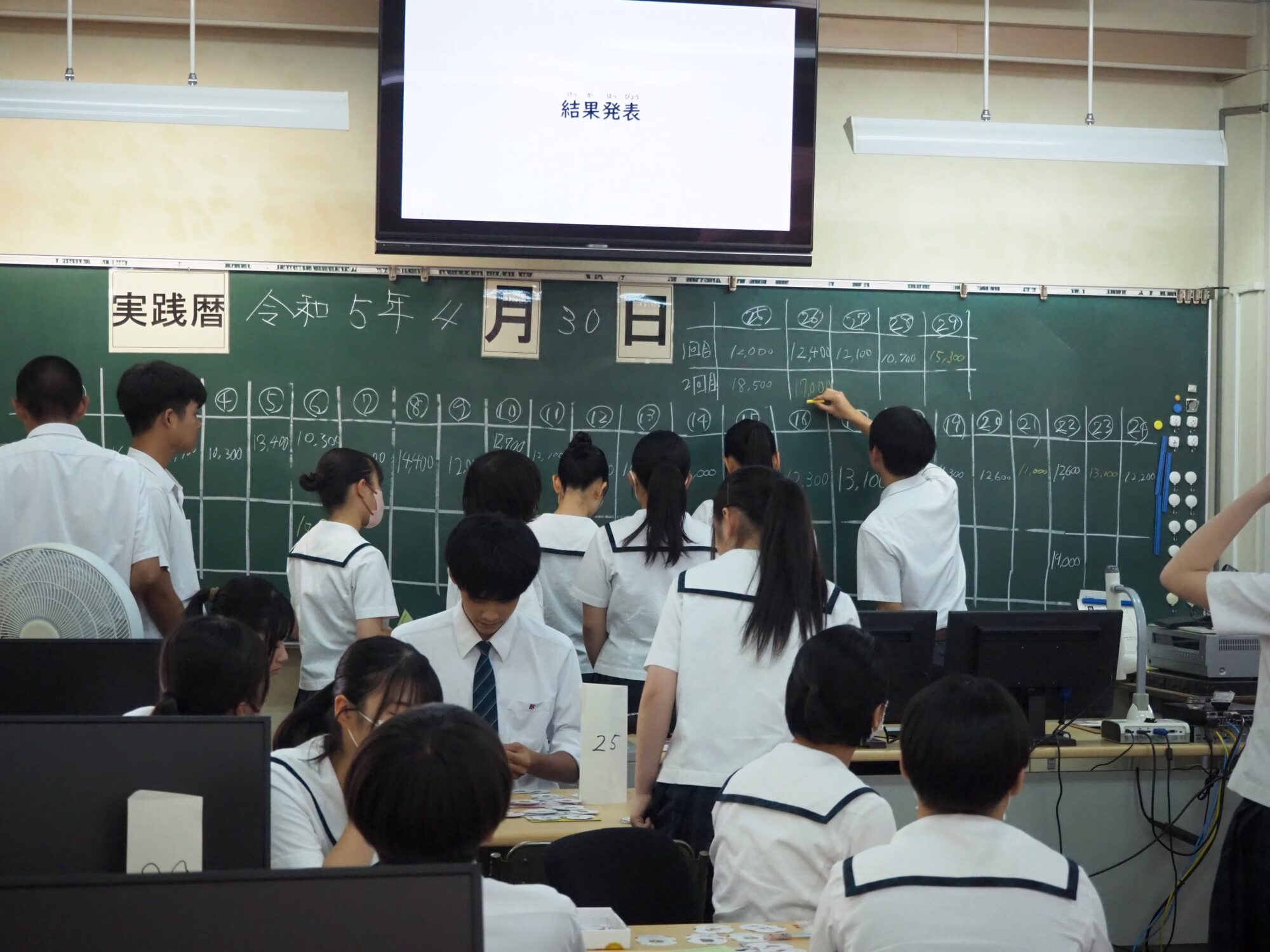
Each team recorded their total points from the team competition on the blackboard.
Was there a difference between the total points of the individual competition and the total points of the team competition?
...All teams showed the same trend with differences in numbers!
These differences in numbers are an important part of Get The Point.
Announcement of Results
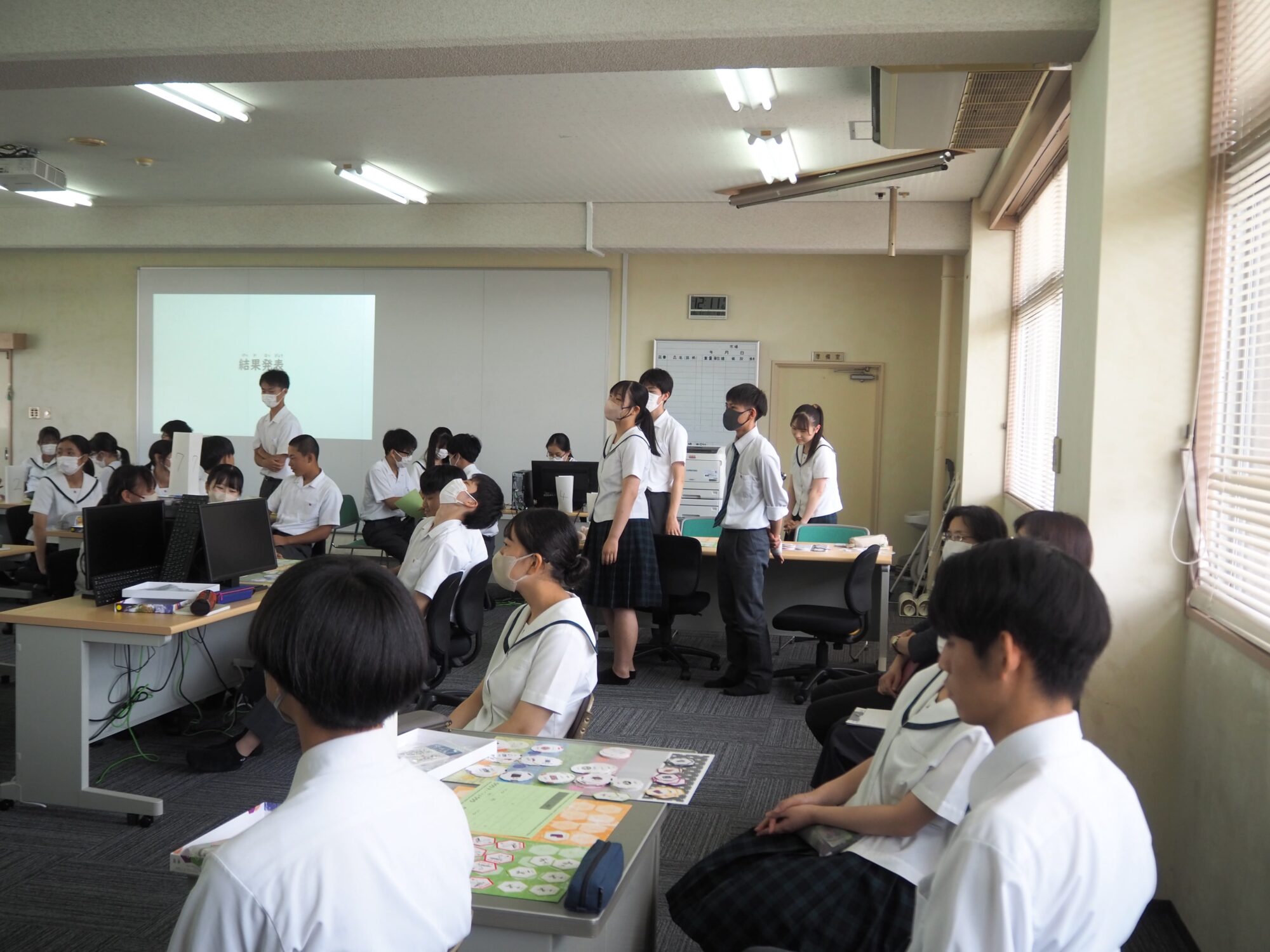
After the team competition, the results are announced.
The team with the highest total item points is announced!
We will hear a word from the winning team.
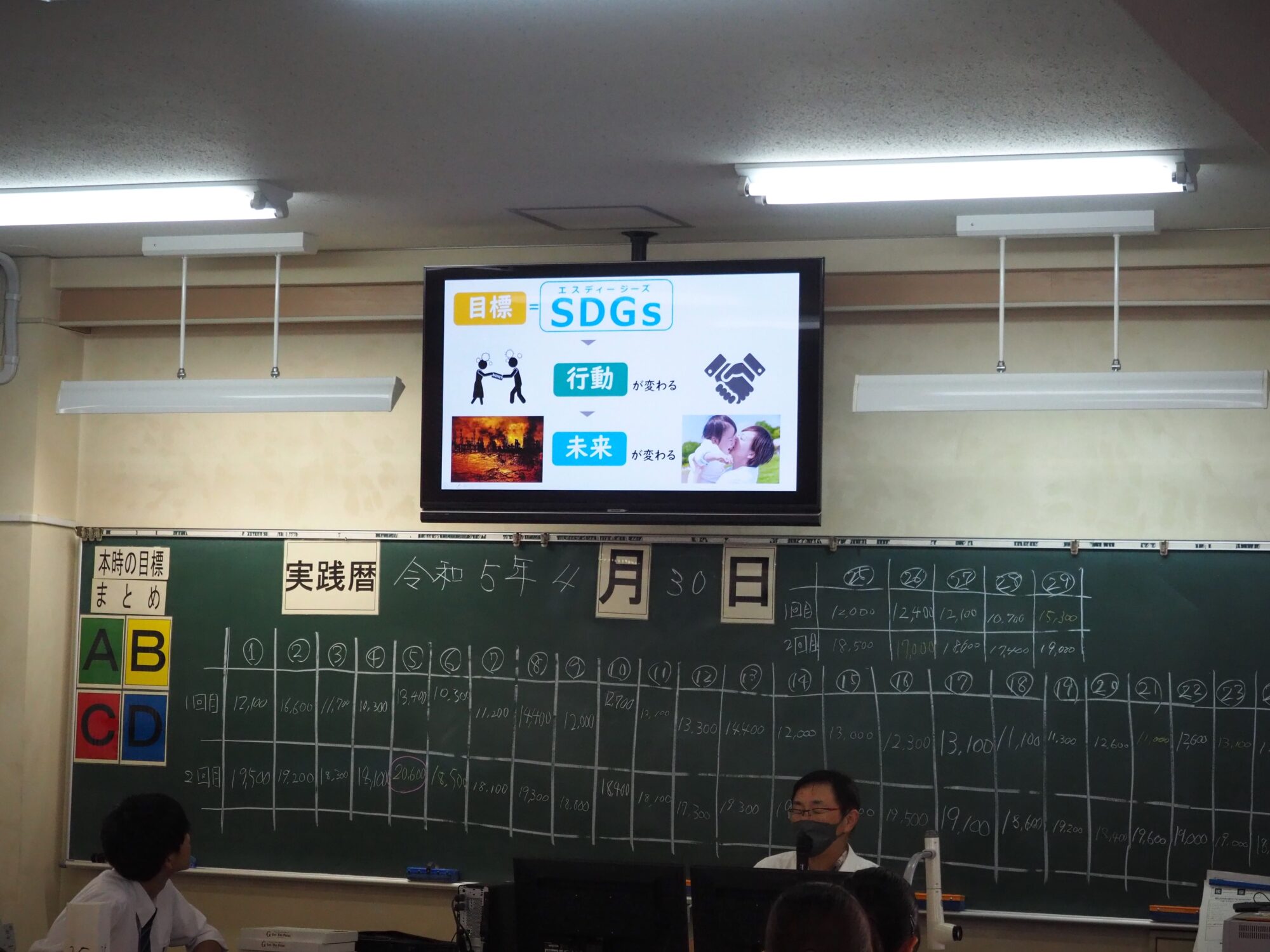
Finally, certified facilitator Kurihama-san spoke about the purpose of the SDGs Board Game - Get The Point - and SDGs.
He explained the differences between the individual competition and the team competition, as well as the differences in total points, and what was learned naturally through Get The Point.
If you want to know the answer to "The meaning of writing the total points of the team even though it is called an individual competition will be understood after finishing the team competition," experiencing the board game will surely make you think, "I see."
But it is a bit concerning, isn't it? Let me explain a little.
- Individual competition = "A world of competition for resources" = Focus on one's own item points
- Team competition = "A world of cooperation for sustainability" = Consider the total item points of the entire team
In the team competition, where teams think about how to increase their total points while continuing the game without exhausting resource cards, the points tend to be higher than in the individual competition.
You can feel that a world of cooperation for sustainability is more sustainable than a world of competition for resources through this board game experience.
Please experience Get The Point and feel the "I see."
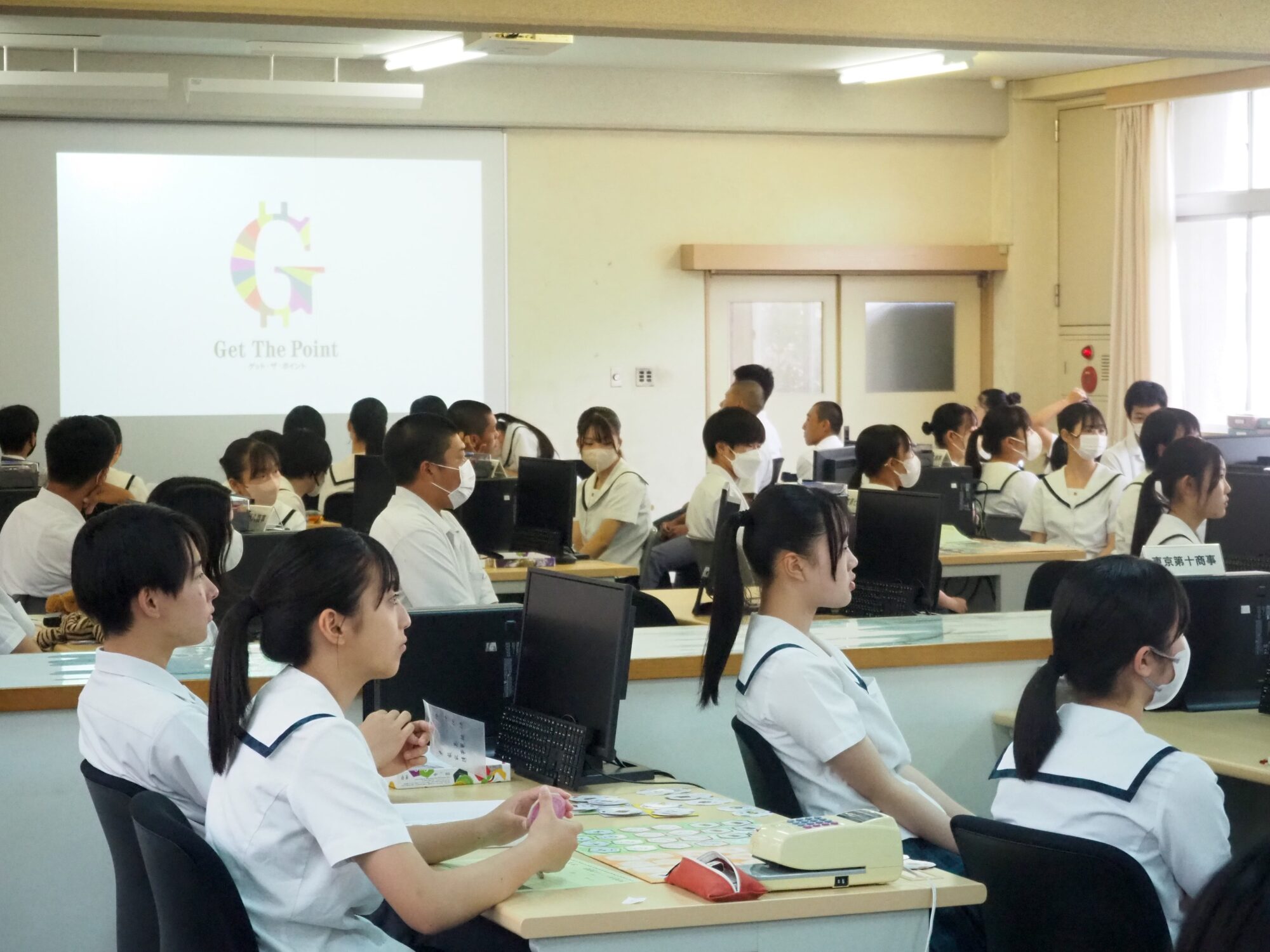
After Kurihama-san's talk, we filled out a questionnaire, and the comprehensive inquiry time using Get The Point concluded.
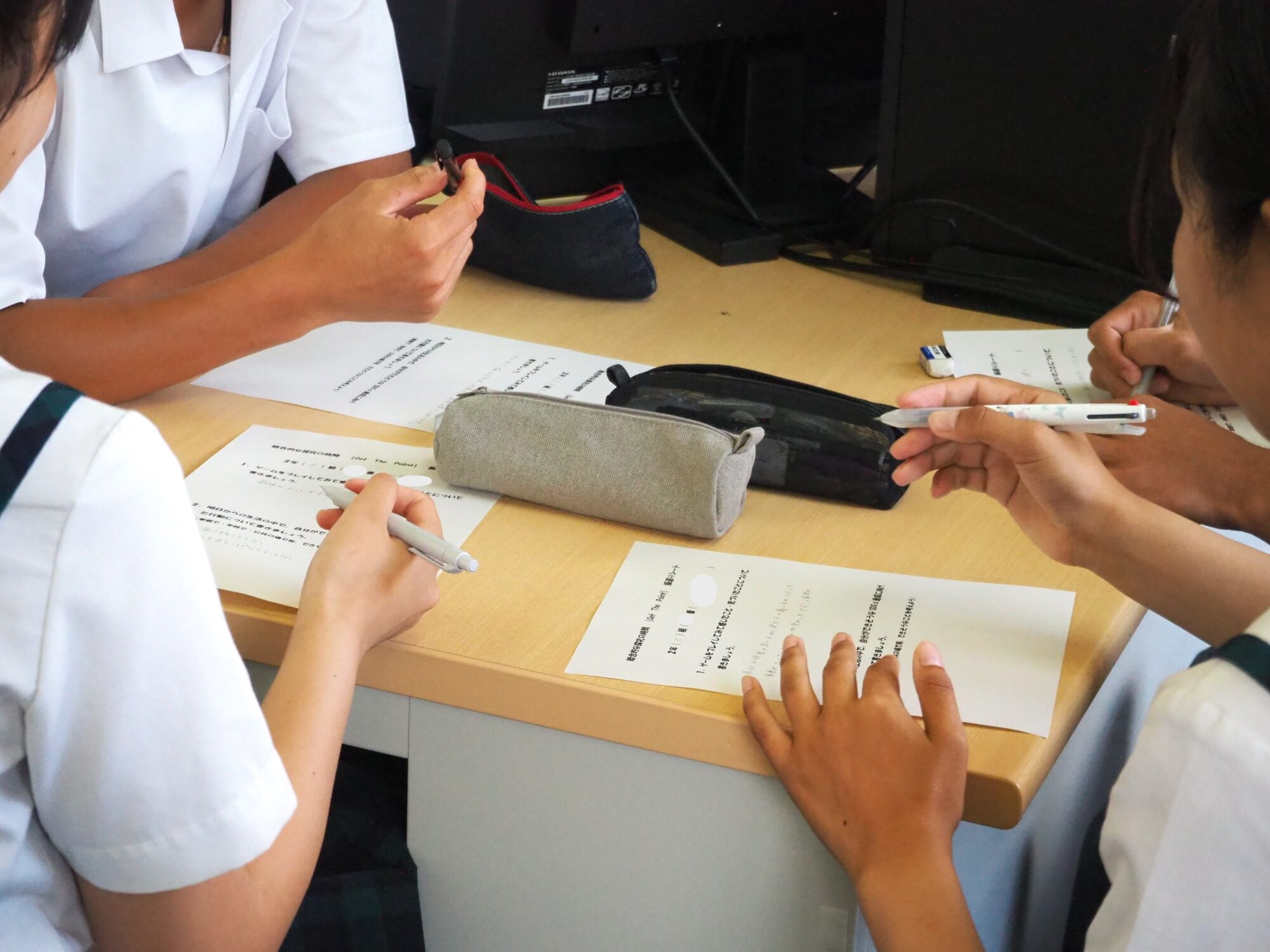
Learning about SDGs through board games is essential in the educational field
Okayama Prefectural Kasaoka Commercial High School's second-year students, about 120 of them, participated in the SDGs Board Game - Get The Point -, which was impressive.
At first, the students were confused about what to do, but as the game progressed, they were seriously discussing and creating items.
You might think, "A board game about SDGs?" but once you actually experience the game, you will likely think, "This is interesting!"
I felt the same way.
As the game progressed, I understood the meaning of the resource cards, and after finishing the team competition, I could envision how to engage with sustainability and SDGs.
Get The Point is designed to be enjoyable for all generations, from elementary school students to adults.
I strongly felt that learning about SDGs in a fun way, like during this comprehensive inquiry time, will be necessary in the future.

What do you want to know about Kurashiki?
Enter a word to search articles from this site





























Awareness Reform Institute (Hiroyuki Kurihama) kurihama0410@gmail.com