
On September 12, 2020 (Saturday), the "RESAS Workshop on SDGs" was held at Okayama Prefectural Kurashiki Commercial High School.
Kurashiki City has been selected as a "SDGs Future City" and "Municipal SDGs Model Project, and the attention to the keyword "SDGs" is increasing, but what exactly are the "SDGs"?
The "Basics" and "Uniqueness" of SDGs
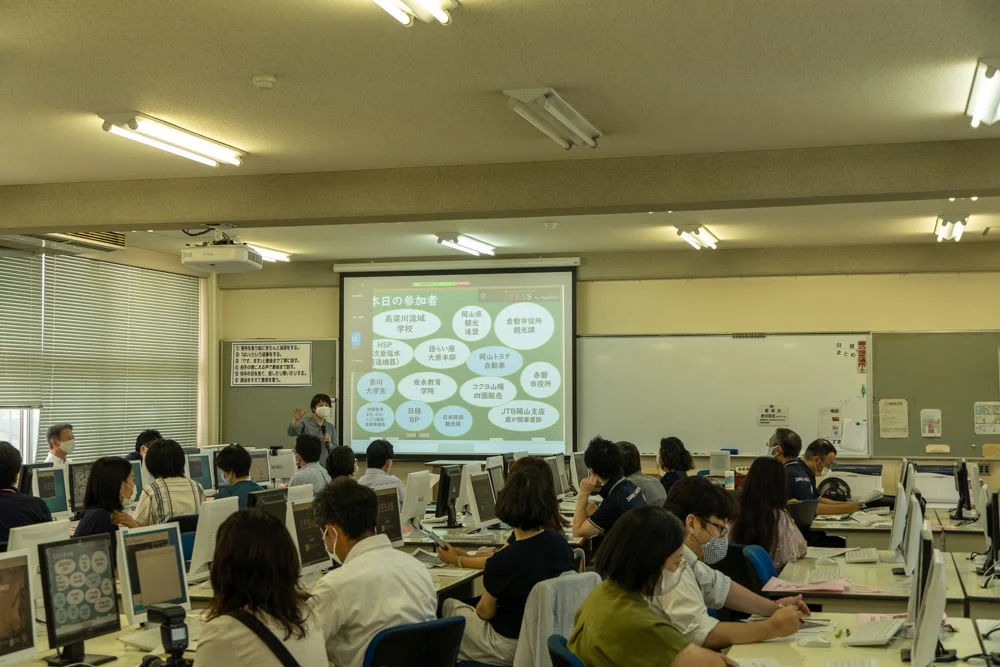
Regarding this, about 50 people involved in education and community development, as well as those working in companies, gathered both in-person and online to learn.
This article will report on the "RESAS Workshop on SDGs".
Overview of the RESAS Workshop on SDGs
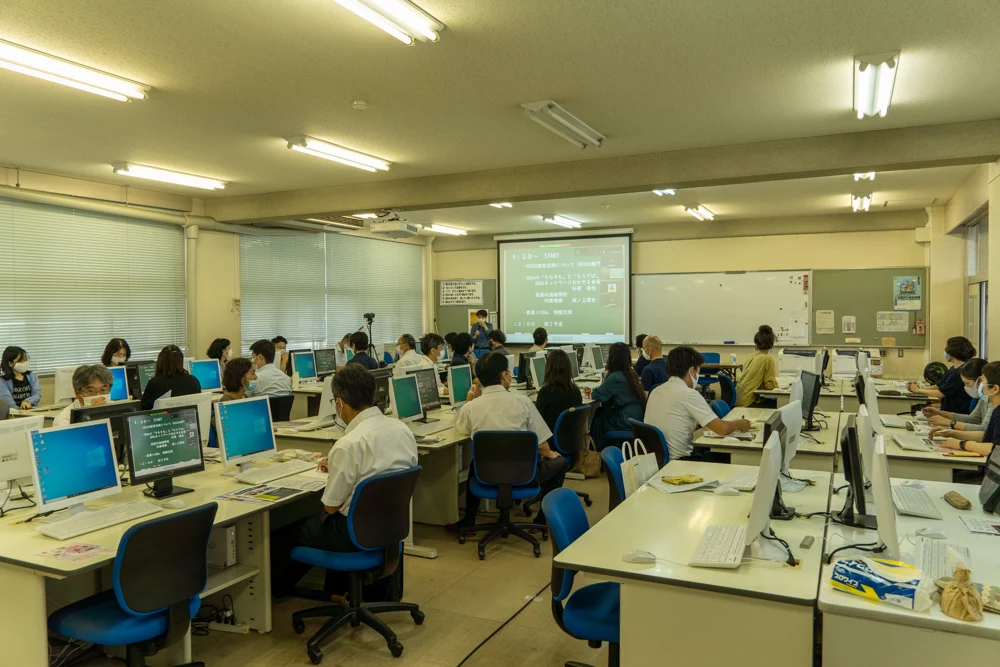
The "RESAS Workshop" is a series of five workshops aimed at deepening the understanding of the current and future perspectives of the region, involving mainly school officials, as well as private companies and government officials who handle data in their work.
The SDGs edition was held as the third session and was conducted as follows.
| Content | Speakers |
|---|---|
| About the Utilization of RESAS in Education | Yoshimi Kawasaki |
| The "Basics" and "Uniqueness" of SDGs | Tatsuya Ishihara Hiroshi Sakanoue |
| Information Exchange | All Participants |
For details on the second session, please see the following article.
About the Utilization of RESAS in Education
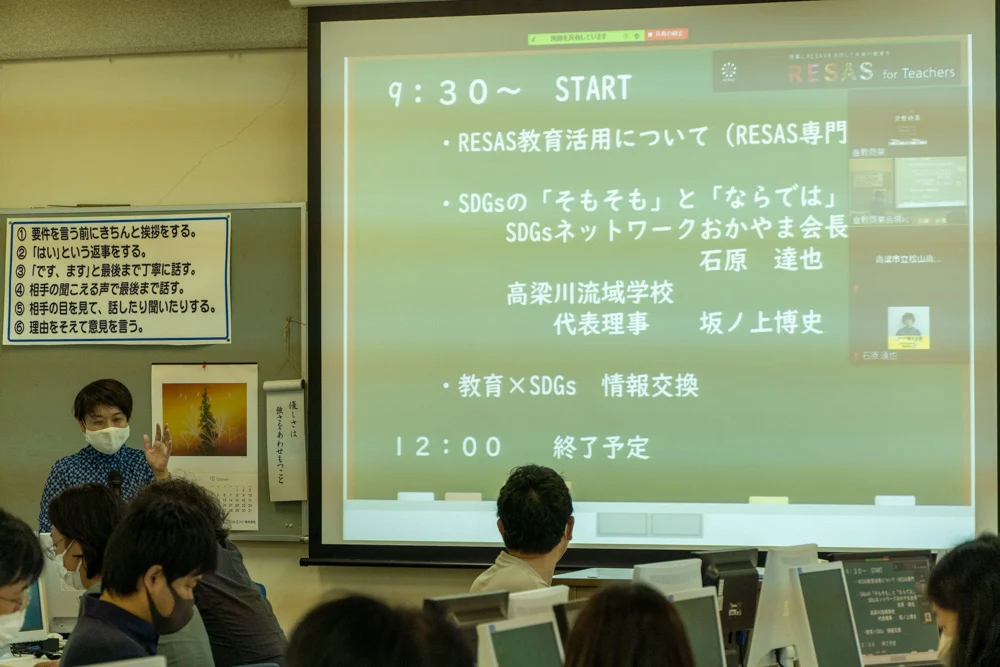
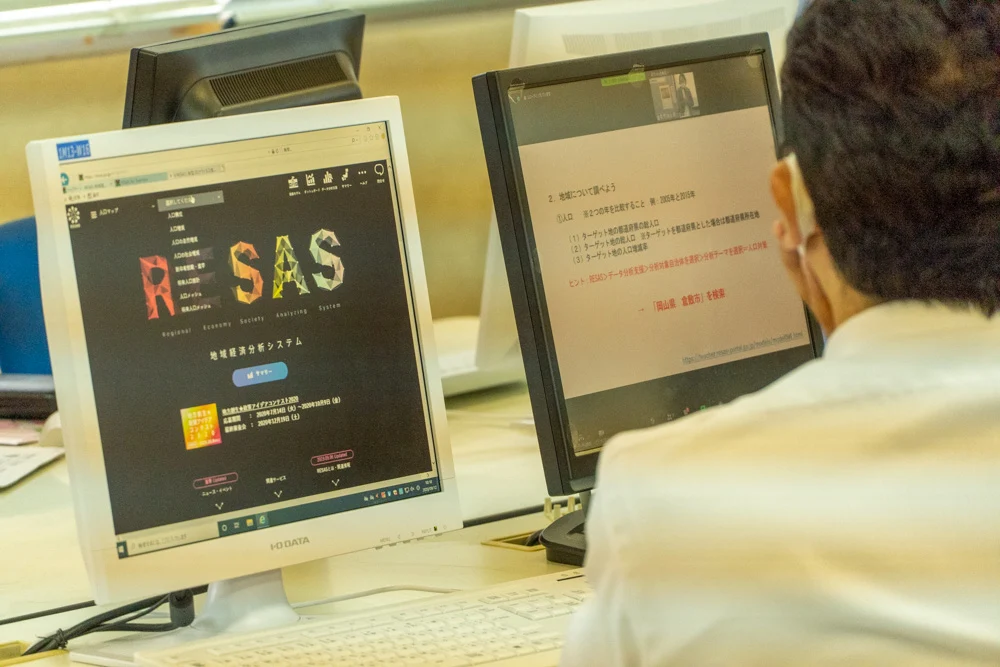
In the first 30 minutes, Yoshimi Kawasaki, a teacher from the commercial department of Okayama Prefectural Kurashiki Commercial High School and a member of the RESAS expert committee, introduced the utilization of RESAS in education and the background leading to the workshop.
The Regional Economic Analysis System (RESAS) is big data that supports various initiatives for regional revitalization from an informational perspective.
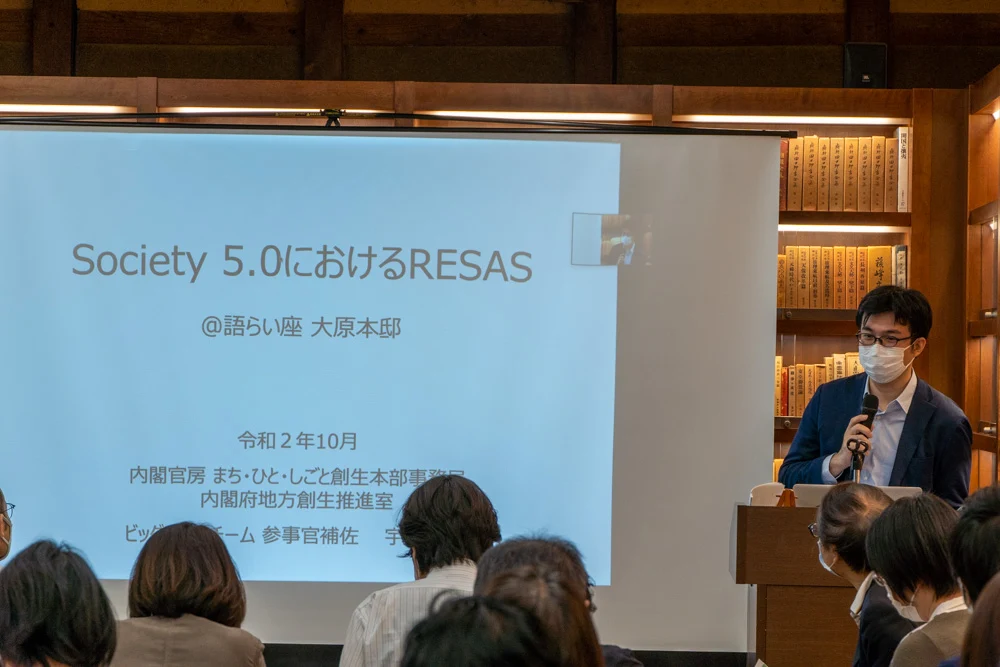
It is provided by the Ministry of Economy, Trade and Industry and the Cabinet Secretariat (the Headquarters for the Creation of Communities, People, and Jobs) and is widely used by municipal employees and various fields interested in regional revitalization for effective policy planning, implementation, and evaluation.
As it is so-called "big data," "anyone" can access and utilize it.
The educational utilization of RESAS has been considered since 2018, and workshops have been held in community rental spaces and other venues.
One of the outcomes is the Ura Cafe.
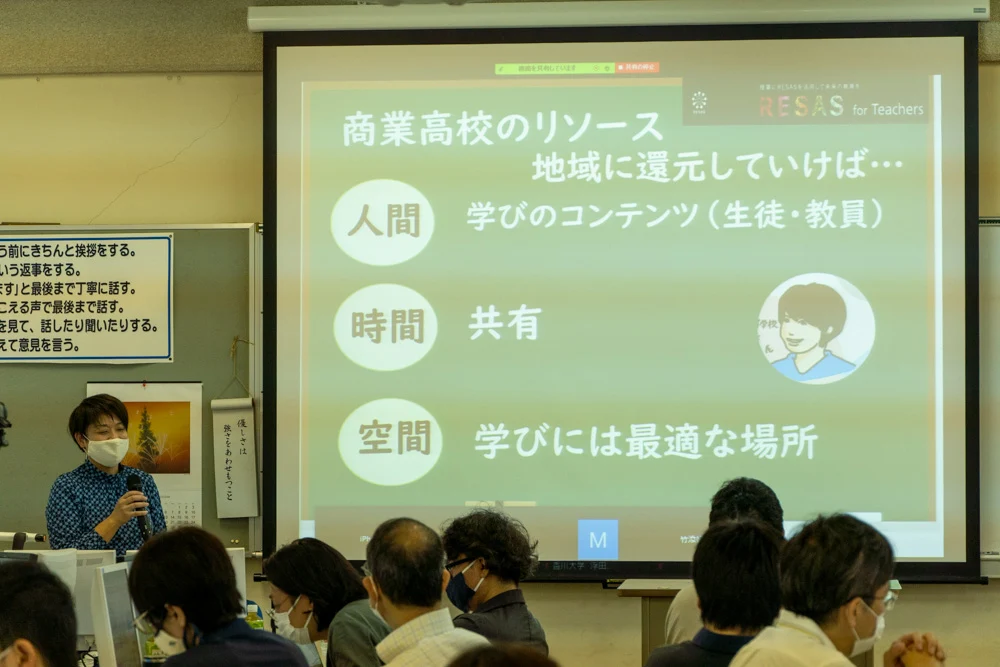
However, after that, we wanted to return the resources of "human, time, and space" that the commercial high school possesses to the community, and started holding workshops utilizing RESAS at the school.
This is the current "RESAS Workshop".
The "Basics" and "Uniqueness" of SDGs
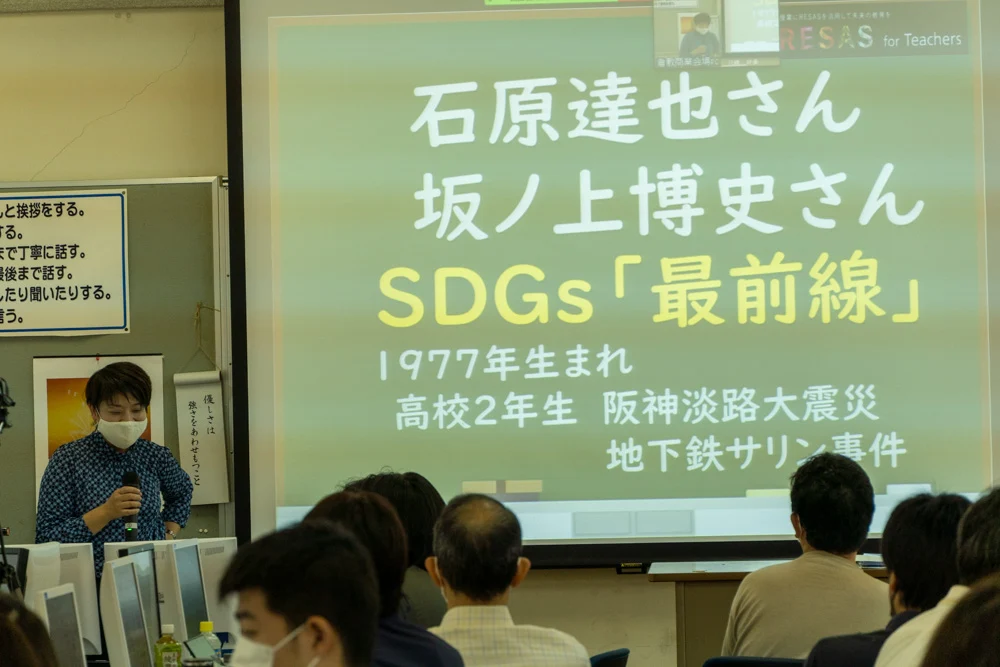
Next, an introduction to the main theme, "SDGs," was provided.
The term "SDGs" has been seen in many media recently, and more people may have heard of it.
The Sustainable Development Goals (SDGs) are 17 international goals with a deadline of 2030, as stated in the "2030 Agenda for Sustainable Development" adopted at the United Nations Summit in September 2015.
It is gaining attention in the field of education, but it seems that there are differences in recognition even among education professionals.
Therefore, two individuals active on the "front lines" of SDGs took the stage.
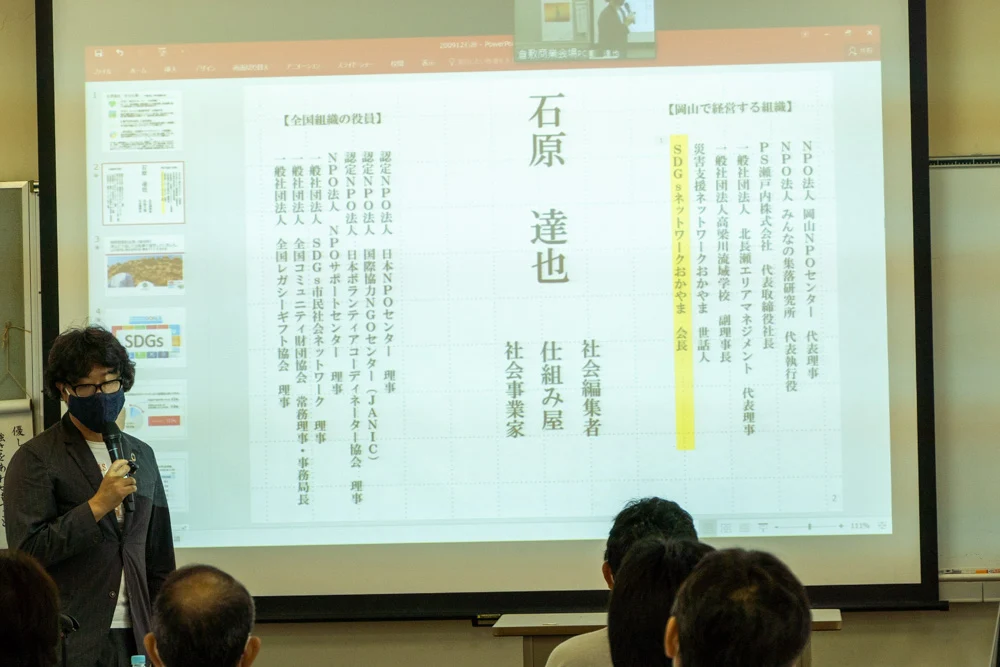
- Tatsuya Ishihara, President of the SDGs Network Okayama
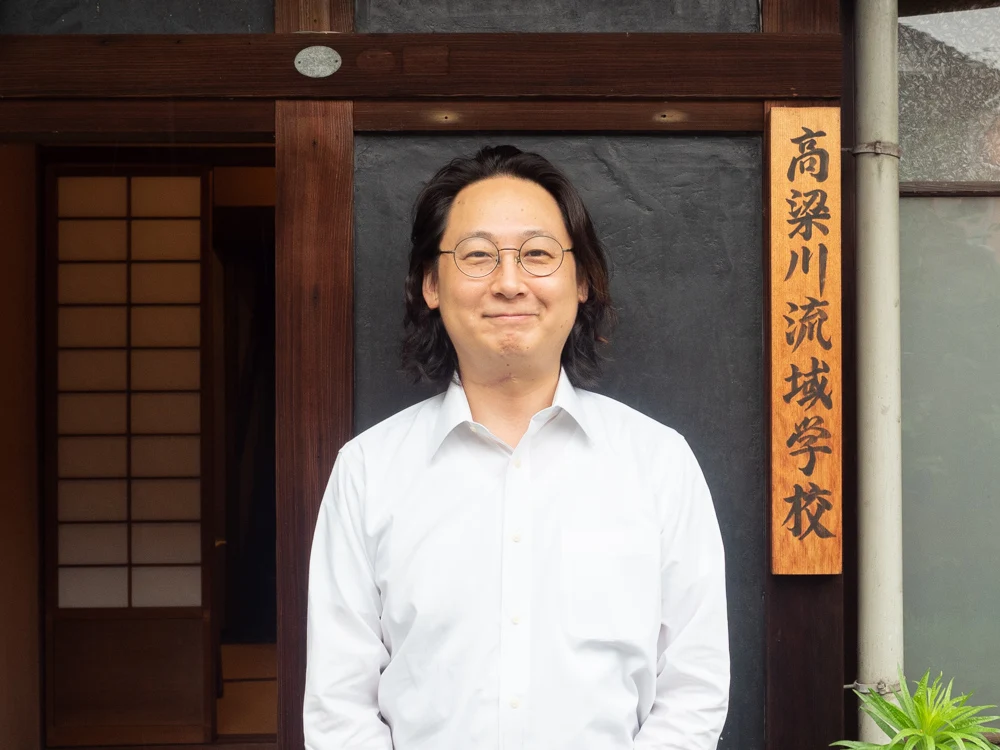
- Hiroshi Sakanoue, Representative Director of the General Incorporated Association Takahashi River Basin School
SDGs as "A Collection of Unresolved Social Issues = What Society Needs"
What exactly are the SDGs?
Before the SDGs, there were the Millennium Development Goals (MDGs) established in 2001.
While the MDGs aimed to address issues in developing countries, the SDGs notably include the resolution of issues in developed countries as well.
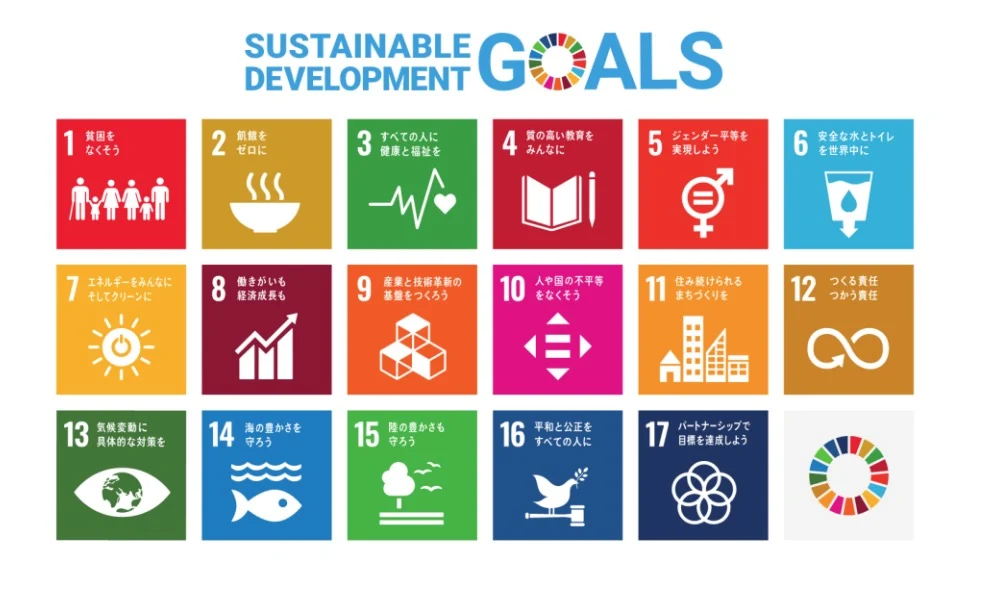
You may have seen the 17 international goals.
While you might understand each goal to some extent, the themes can feel too large to grasp...
In fact, the SDGs consist of "17 goals and 169 targets," and the targets are more specific and easier to understand.
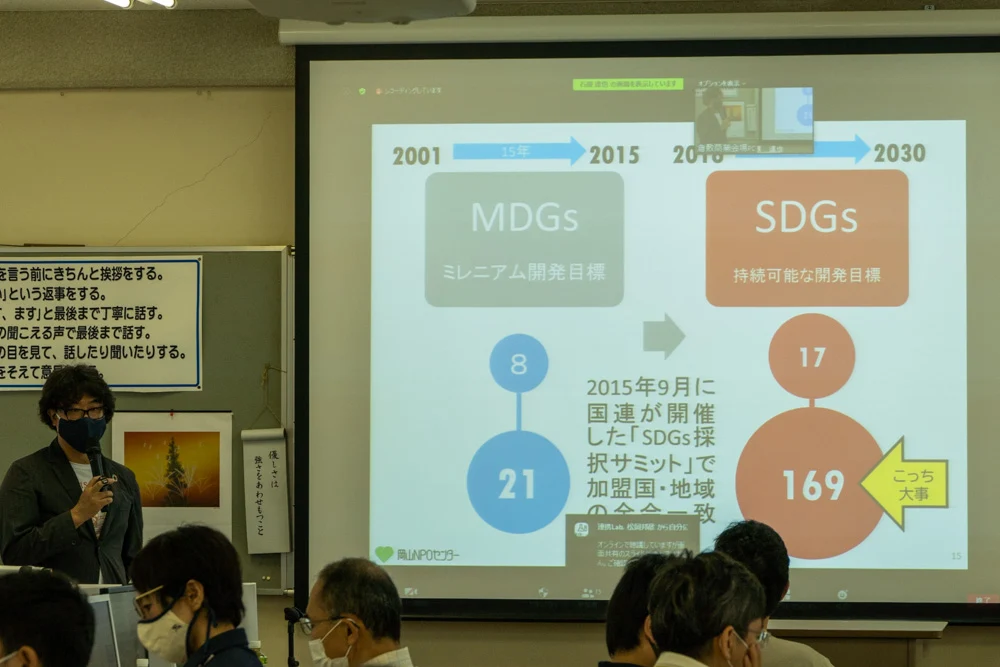
Instructor Ishihara also mentioned that "the 169 targets are more important." If you are interested, I think the Ministry of Agriculture, Forestry and Fisheries' explanation is easy to read, so please check it out.
Regarding "issues in developed countries," Ishihara expressed it as follows.
A Collection of Unresolved Social Issues
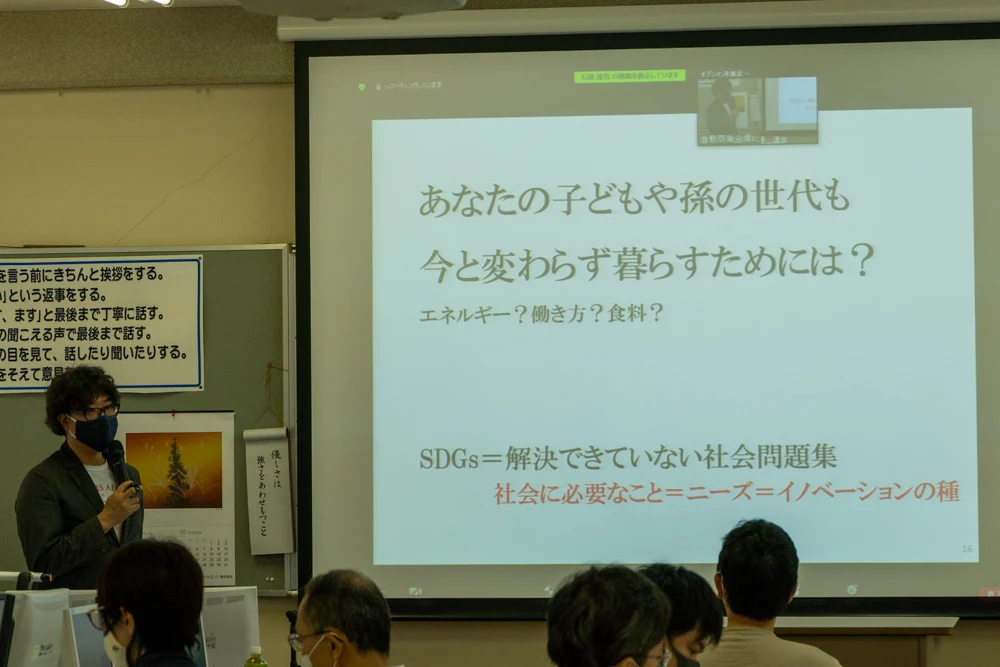
Since these issues remain unresolved, there is no "answer" to what should be done.
- Establish "questions"
- Link them to the SDGs
- Logically construct and launch projects
We need to think about these ourselves.
Utilizing "Parks" in Relation to SDGs
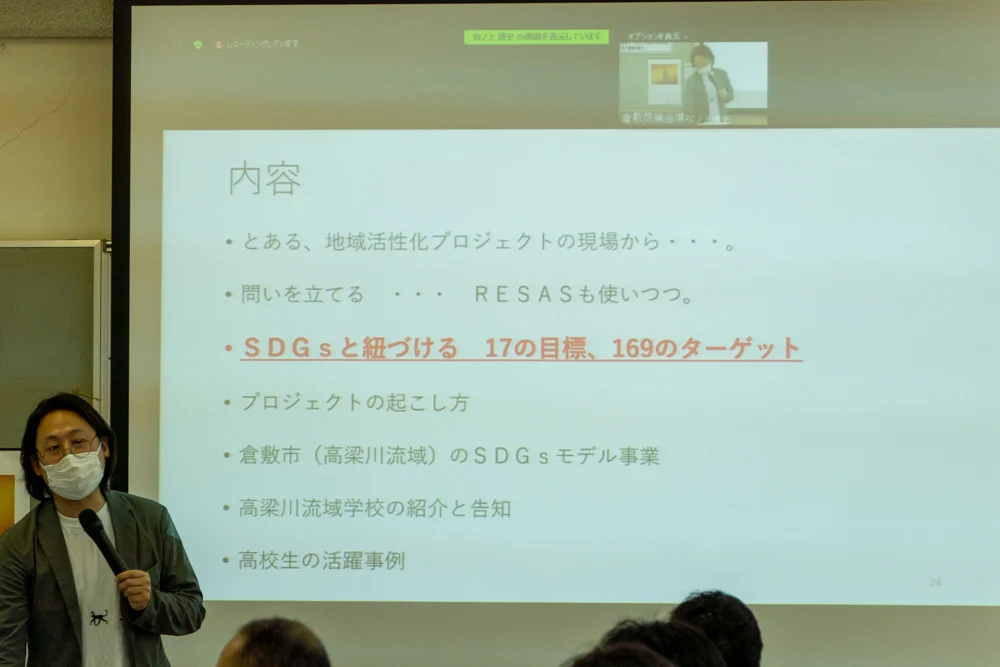
In the lecture, both Ishihara and Sakanoue introduced case studies of social issues using "parks" as an example.
While the locations of the parks differ, the approaches are also different, which is a key point.
Neither approach is the "correct" one.
Utilization of Parks in Mizushima District, Kurashiki City
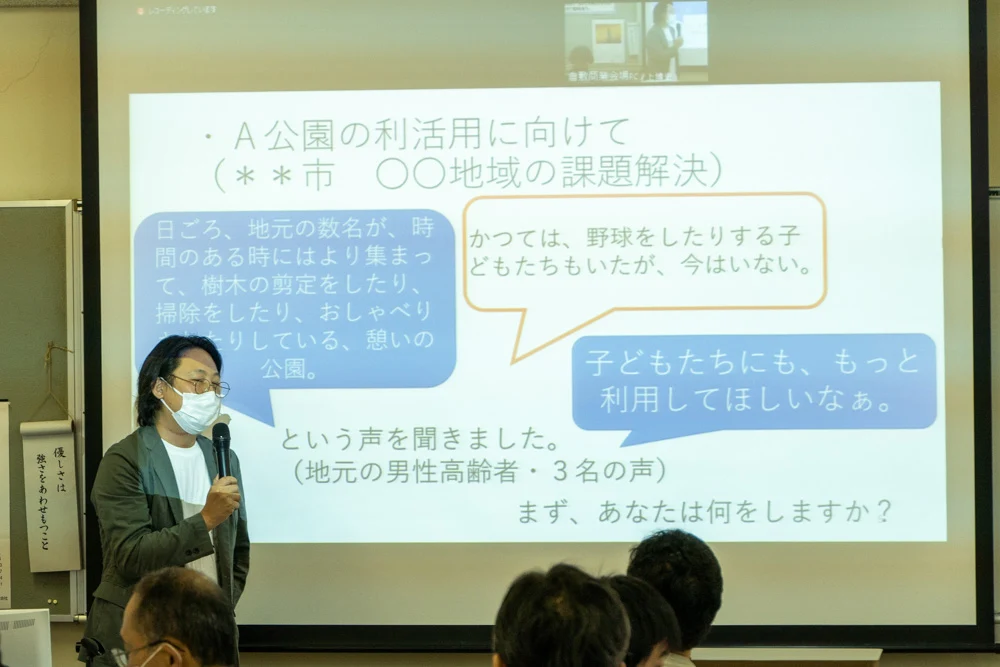
Regarding the utilization of parks in Mizushima District, Kurashiki City, Sakanoue received the following opinions.
- A "place of relaxation" where local people gather
- There used to be children playing baseball, but now there are none
- I want children to utilize it more
"Should we create playground equipment for the children to use...?" While considering this, we decided to establish "questions" and conduct a current situation analysis.
- This park's "uniqueness"
- Whose park is it, to begin with?
In doing so, by viewing the population data published by RESAS and the government (Kurashiki City), one trend can be discerned.
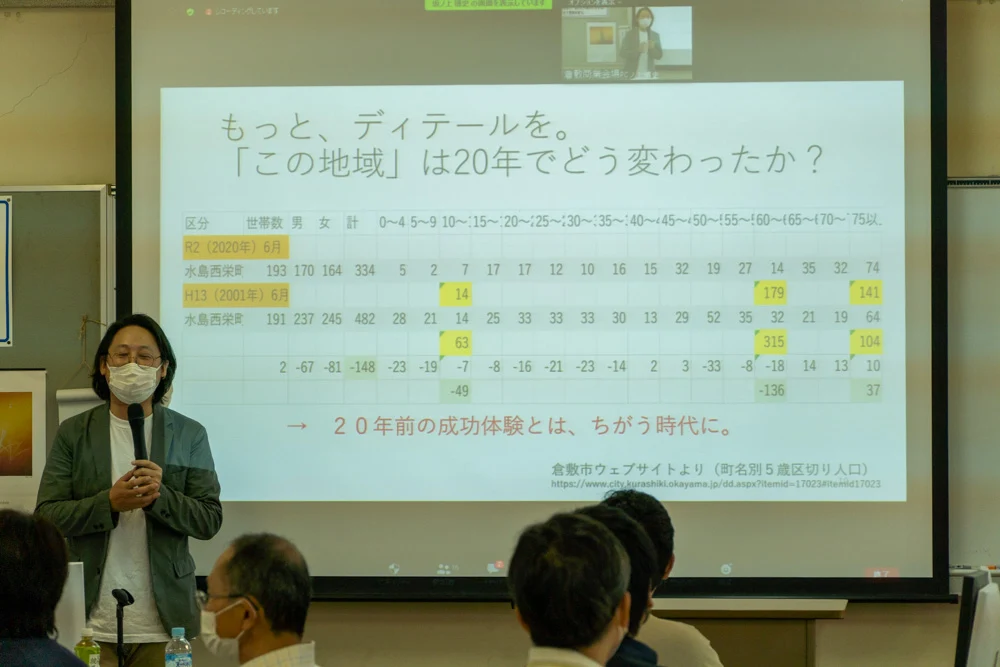
Overall, the population is decreasing, and within that, the decrease in children and the increase in the elderly are particularly noticeable.
From these numbers, it seems that simply creating playground equipment will not increase users. However, considering the surrounding environment may change the situation.
When linking this issue to the SDGs goals, it seems to correspond to goals 3, 11, and 17.
Utilization of the Park in Front of Kitakase Station
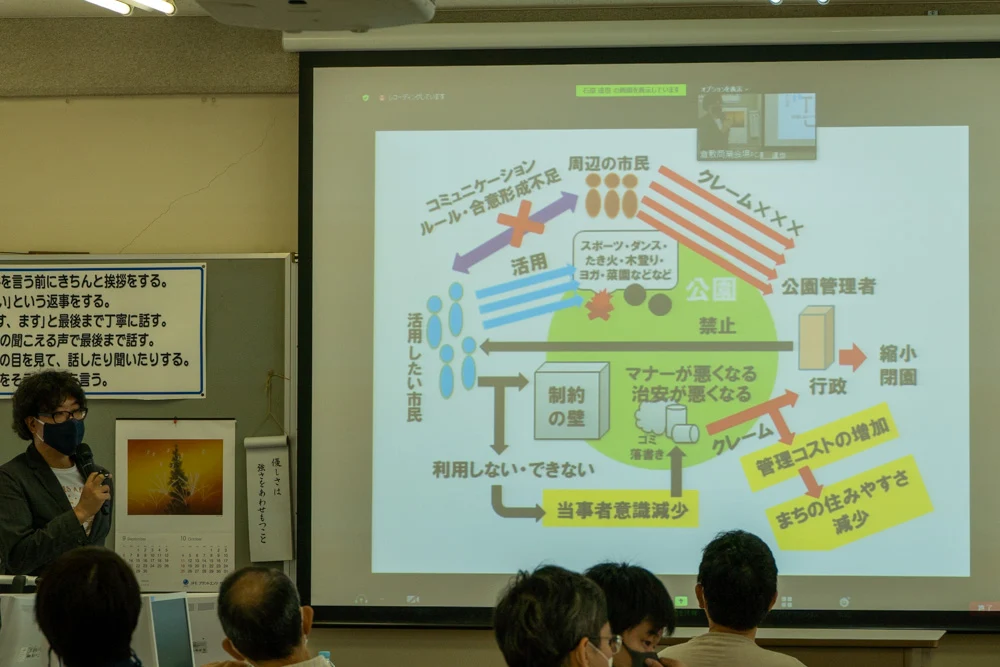
Next, Mr. Ishihara introduced a case study on the utilization of the park in front of JR Kitakase Station.
The area in front of JR Kitakase Station has seen recent redevelopment and an increase in population, with the opening of "Branch Okayama Kitakase" in 2019.
Since it is a region where long-time residents and new residents intermingle, there are various aspects to consider regarding the utilization of the park.
- As a result of active utilization, complaints increase and it becomes prohibited
- It becomes a situation where it is not used or cannot be used, leading to poor manners and security
- The livability of the town decreases
Even for the parks in Mizushima, for example, if "large playground equipment" is introduced, the usage by nearby residents may increase, but there is a possibility of issues such as noise, garbage, and parking.
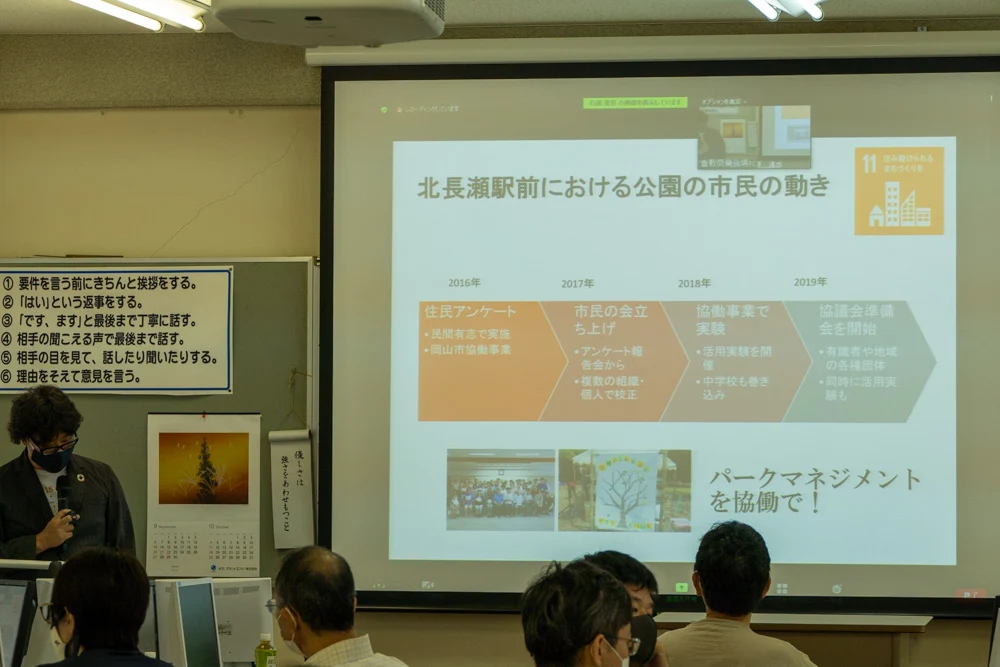
Therefore, they are trying to solve this by establishing a "Citizens' Association" and implementing the park as a "cooperative project".
Having the Perspective of "Who" and "For Whom"
- Parks in areas with a decreasing number of children and an aging population
- Parks in areas with an increasing population due to redevelopment
Such parks likely exist in many places across Japan.
The challenges faced by communities may also be similar. Even if the approaches differ, the two cases share the commonality of actively working to "solve issues" themselves.
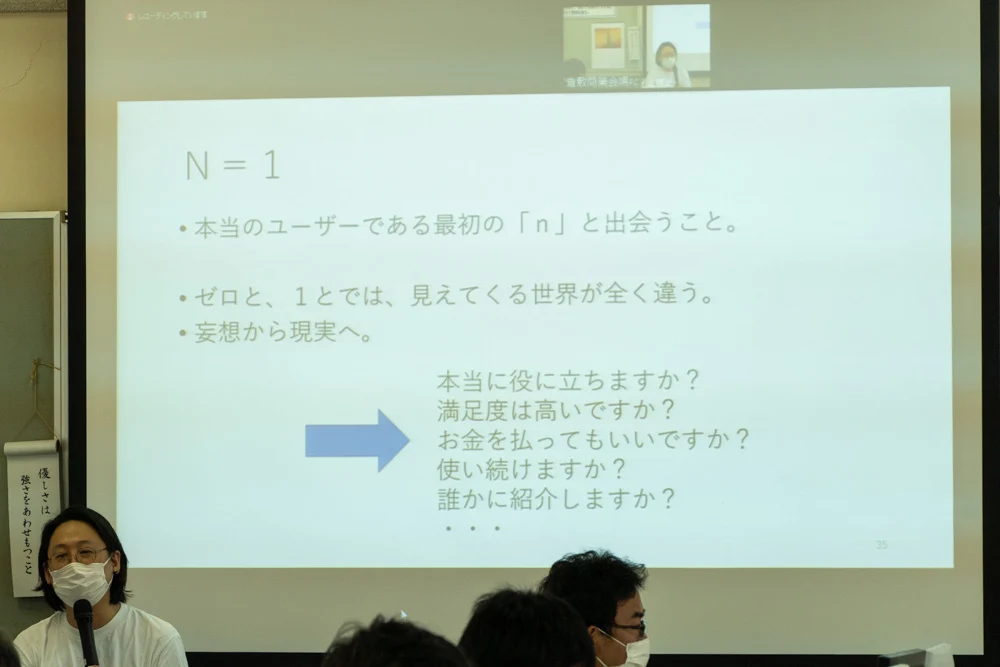
At this time, Mr. Sakanoue mentioned that it is important to have the recognition of "for whom."
Meeting the true user, the first "n"
He expressed it as "N=1," but the visibility is completely different between zero and one, and as long as it is zero, it is nothing but "delusion."
- Is it really useful?
- Is the satisfaction high?
- Would you be willing to pay for it?
- Will you continue to use it?
- Will you recommend it to someone?
The SDGs are a collection of social issues that have not been resolved, so there are no clear answers. There is likely no answer that satisfies everyone.
In order to reach a consensus within that, we can only aim for problem-solving with the perspective of "who" and "for whom."
Conclusion
I introduced the familiar example of "parks," but the SDGs are surely related to some aspect of your own life.
Unconsciously, the activities you have been doing or are about to do may be related to the SDGs.
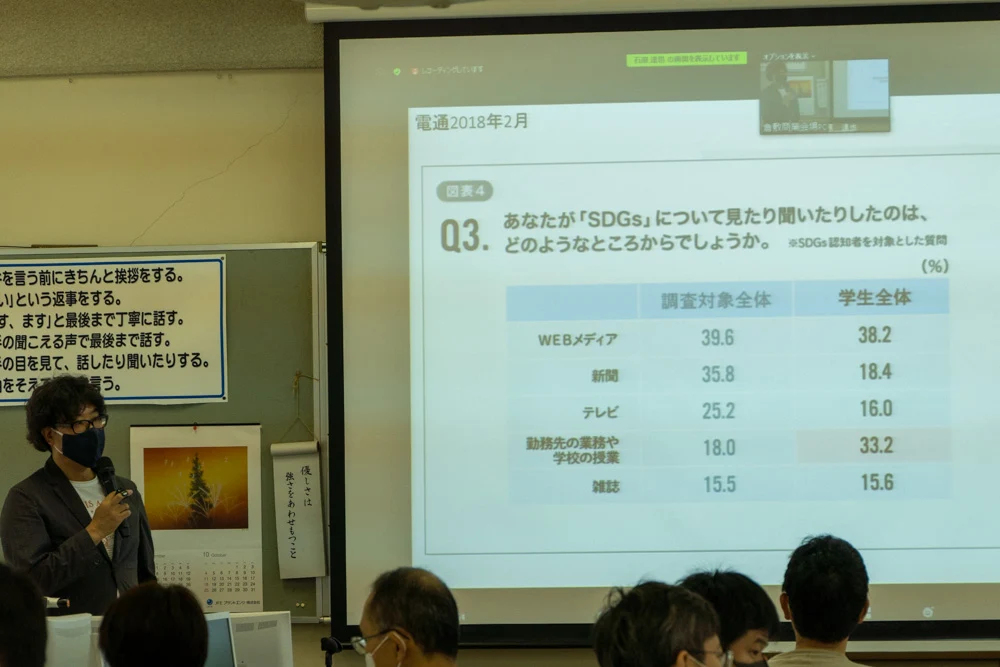
The opportunity to learn about the keyword "SDGs" is especially significant for students through "school lessons."
During the Q&A session after the lecture, initiatives at their respective schools were also introduced by education professionals.
However, through this workshop, I also feel that simply learning about the SDGs as "classroom learning" is insufficient.
It is important to know the SDGs, find related things and activities in familiar places, and take action.
I felt that it is necessary to accumulate individual activities and aim together for the achievement of the 17 international goals.
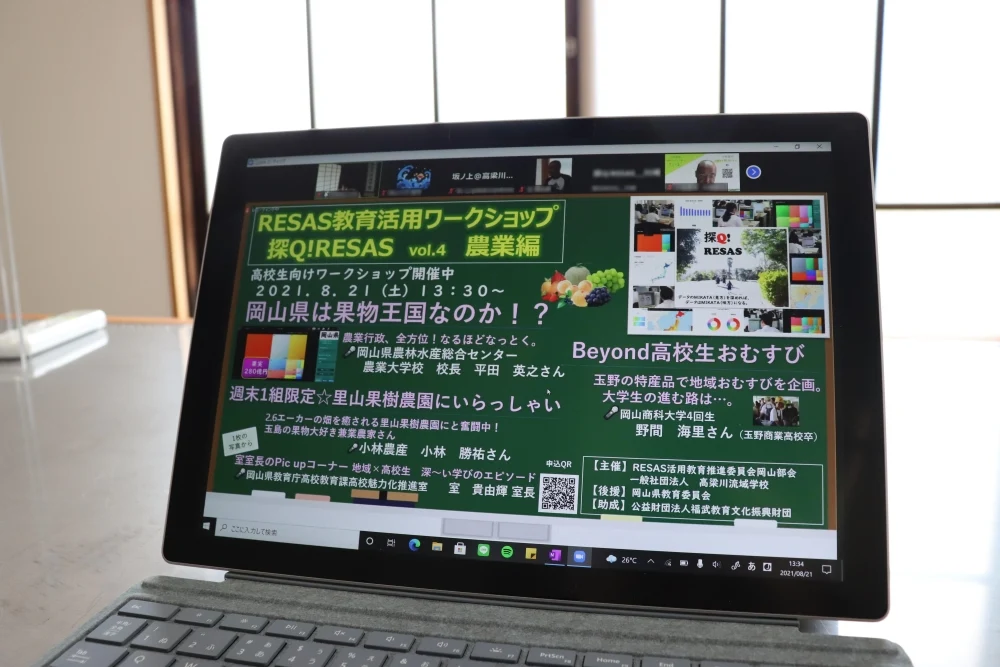
From July 10, 2021, the 2021 RESAS Educational Utilization Workshop will be held.
▼ For more details, please check the official page.
RESAS Educational Utilization Workshop TanQ! RESAS Online Seminar
▼ The application form is as follows.
Application Form
Data on the RESAS Workshop SDGs Edition
| Name | RESAS Workshop SDGs Edition |
|---|---|
| Date | September 12, 2020 (Saturday) 9:30 AM - 11:30 AM |
| Location | 545 Shirakuratown, Kurashiki City, Okayama Prefecture, Okayama Prefectural Kurashiki Commercial High School |
| Participation Fee (Tax Included) | Free |



From July 10, 2021, the 2021 RESAS Educational Utilization Workshop will be held.
▼ For more details, please check the official page.
RESAS Educational Utilization Workshop TanQ! RESAS Online Seminar
▼ The application form is as follows.
Application Form