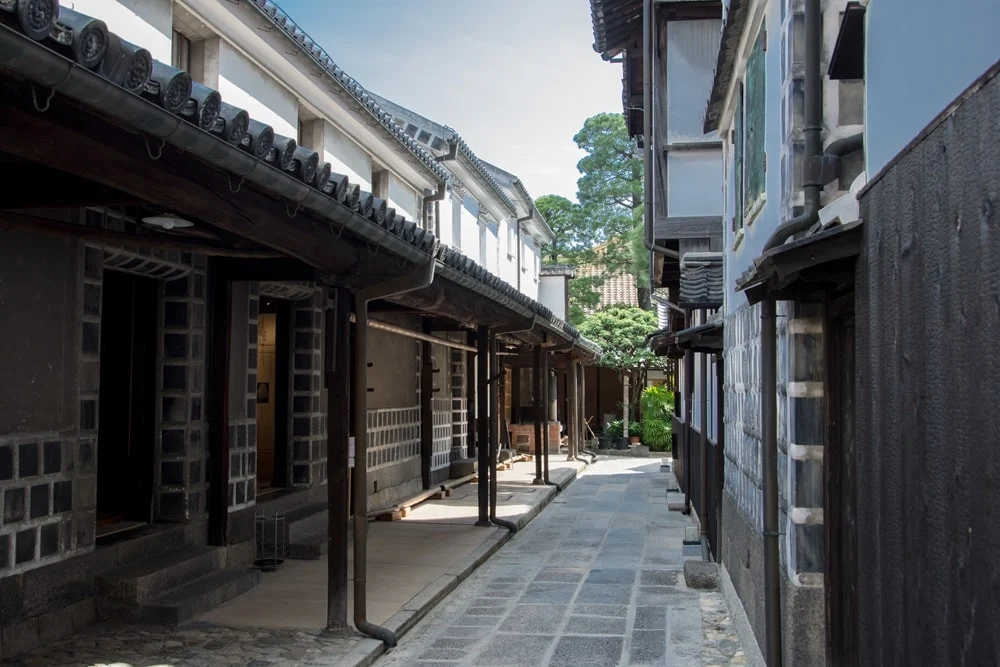
Ohara House Katalyzer, a nationally designated important cultural property located in the Bikan Historical Area of Kurashiki City.
In addition to its role as a tourist facility, it is also focusing on educational programs as a "catalyzer" for new interactions and business opportunities.
"Kurashiki Mirai K Juku" is one of them.
In the 2020 fiscal year, it was also held as the "Takahashi River Basin Future Career Education Seminar" commissioned by Kurashiki City.
The theme of the 15th session is "Decoding SDGs from Keywords".
This event was held immediately after Kurashiki City was selected for the 2020 "SDGs Future City" and "Local Government SDGs Model Project".
Here is a report on the "15th Kurashiki Mirai K Juku - Decoding SDGs from Keywords" held on July 25, 2020 (Saturday).
What is the Takahashi River Basin Future Career Education Seminar?
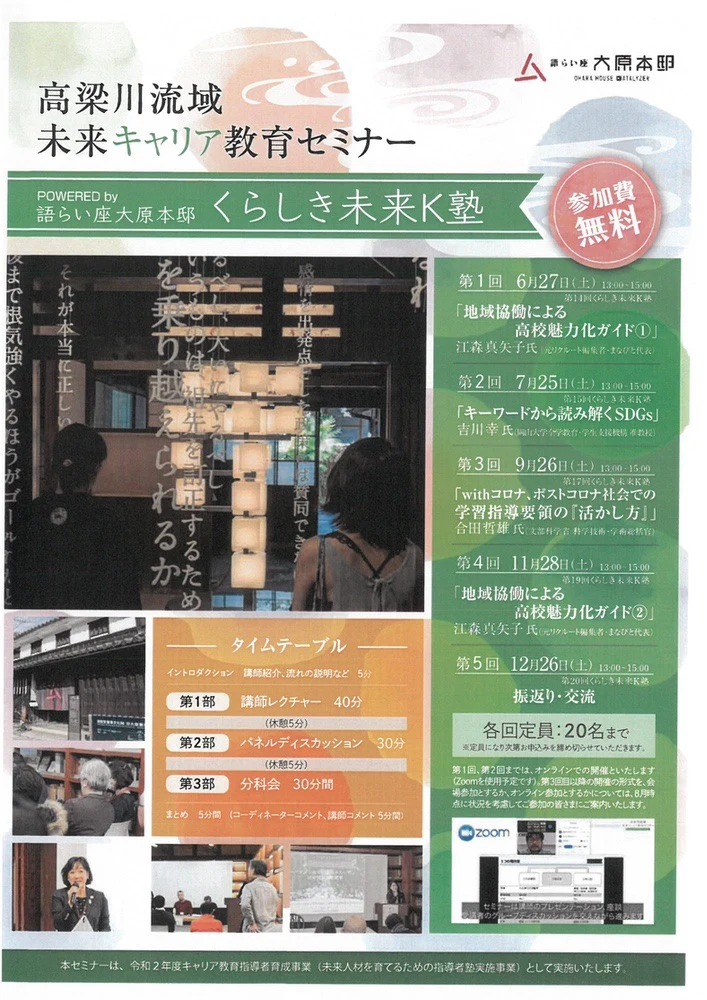
The "Kurashiki Mirai K Juku" for the 2020 fiscal year is also being held as the "Takahashi River Basin Future Career Education Seminar".
The "Takahashi River Basin Future Career Education Seminar" is a monthly seminar that supports the creation of connections among teachers, businesses, and the community, in collaboration with Kurashiki City's projects.
This is the second session of a total of five seminars.
Please see the following article for a report on the first session.
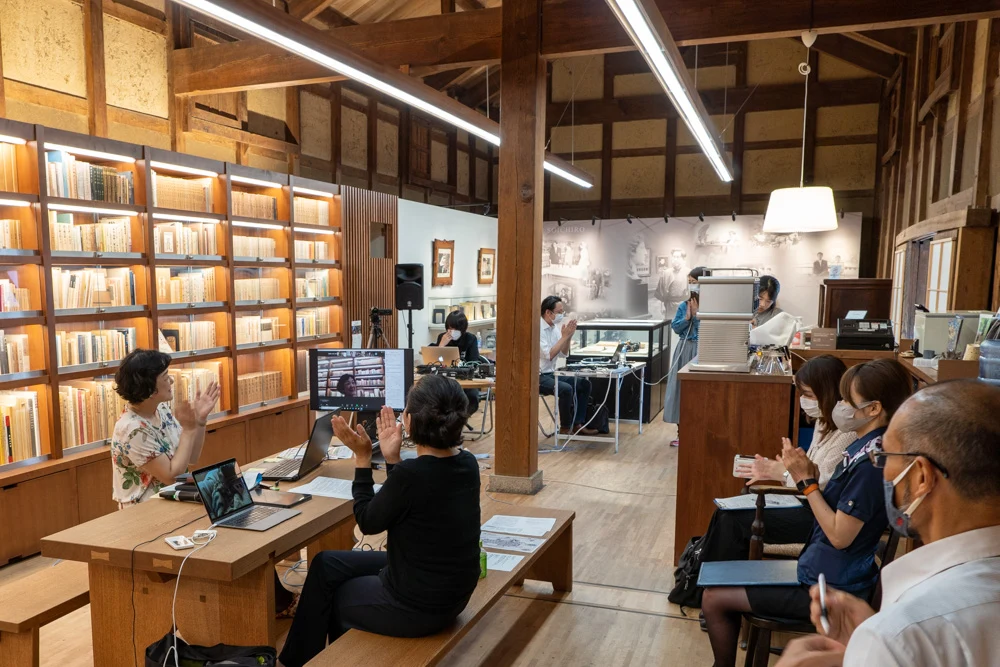
Overview of the 15th Kurashiki Mirai K Juku - Decoding SDGs from Keywords

The theme for this session is "Decoding SDGs from Keywords".
The flow of the seminar was as follows.
| Format | Content | Speaker |
|---|---|---|
| Lecture | Decoding SDGs from Keywords | Yoshikawa Miyuki |
| Share Time | Sharing participants' "!" and "?" | |
| Breakout Session | What I can do to transform learning | |
| Presentation | Presentations by participants and summary by the instructor |
Until this session, participants were primarily recruited in an online seminar format to prevent the spread of the novel coronavirus.
On-site participation was limited to about 10 people, and those attending in person also accessed the seminar from their own computers or smartphones to listen and interact.
At the beginning of the seminar, a survey was conducted to share topics of interest in real-time.
Using the chat function, participants were able to interact, which is a unique feature of online seminars.
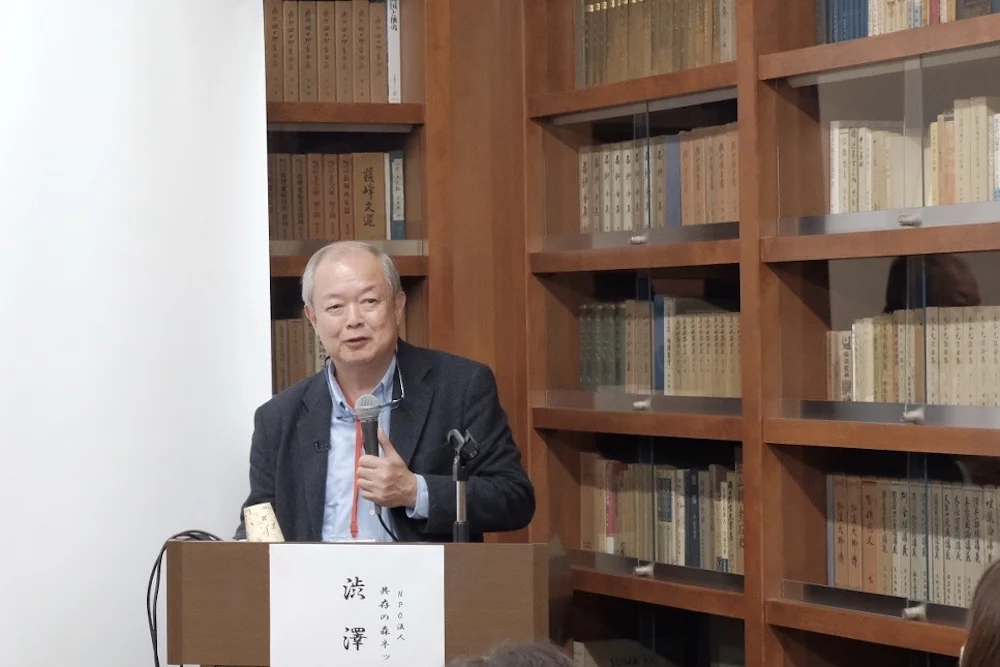
Lecture by Yoshikawa Miyuki
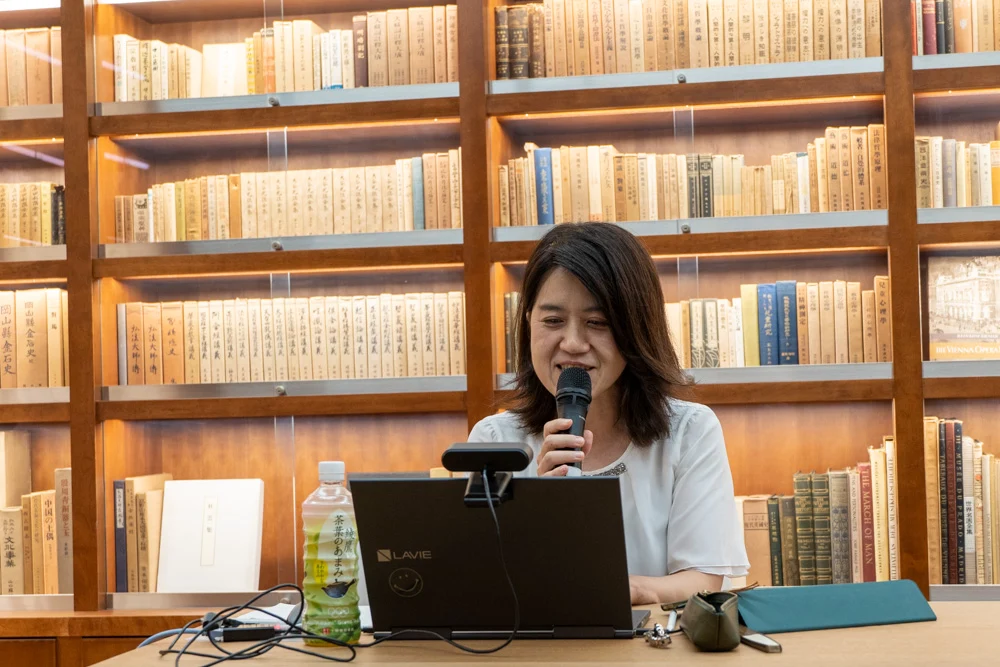
In Yoshikawa Miyuki's lecture, she explained the history and concepts related to "SDGs".
The "keywords" mentioned in the title are the following four.
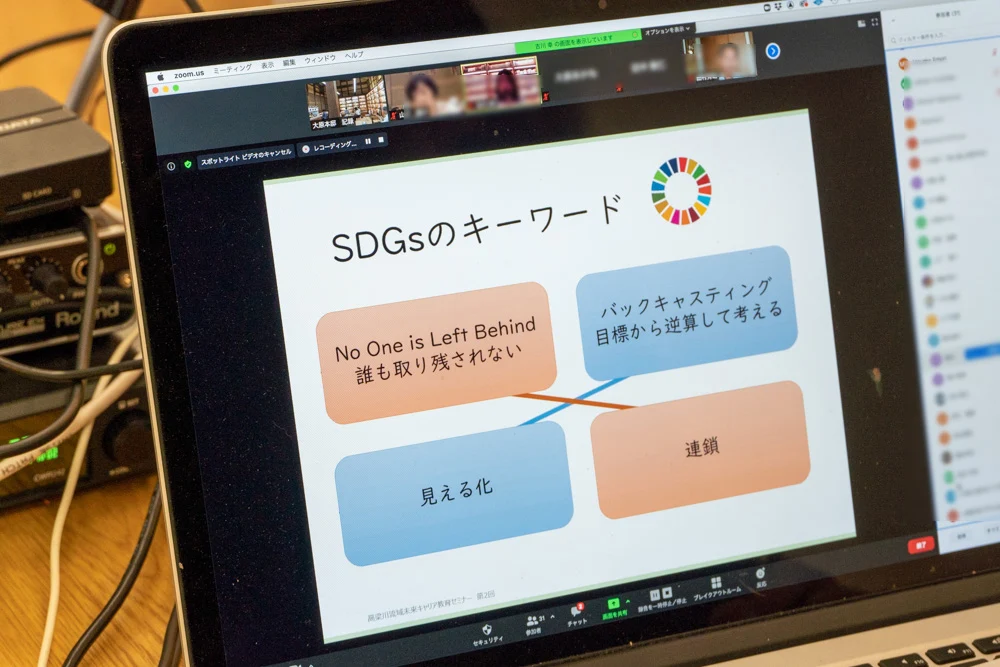
- No One is Left Behind
- Visualization
- Chain Reaction
- Backcasting (thinking from the goal backwards)
What are SDGs?
The Sustainable Development Goals (SDGs) are 17 international goals with a deadline of 2030, as outlined in the "2030 Agenda for Sustainable Development" adopted at the United Nations Summit in September 2015.
Before the SDGs, there were the Millennium Development Goals (MDGs) established in 2001, which primarily focused on "solving issues in developing countries" and did not address advanced countries.
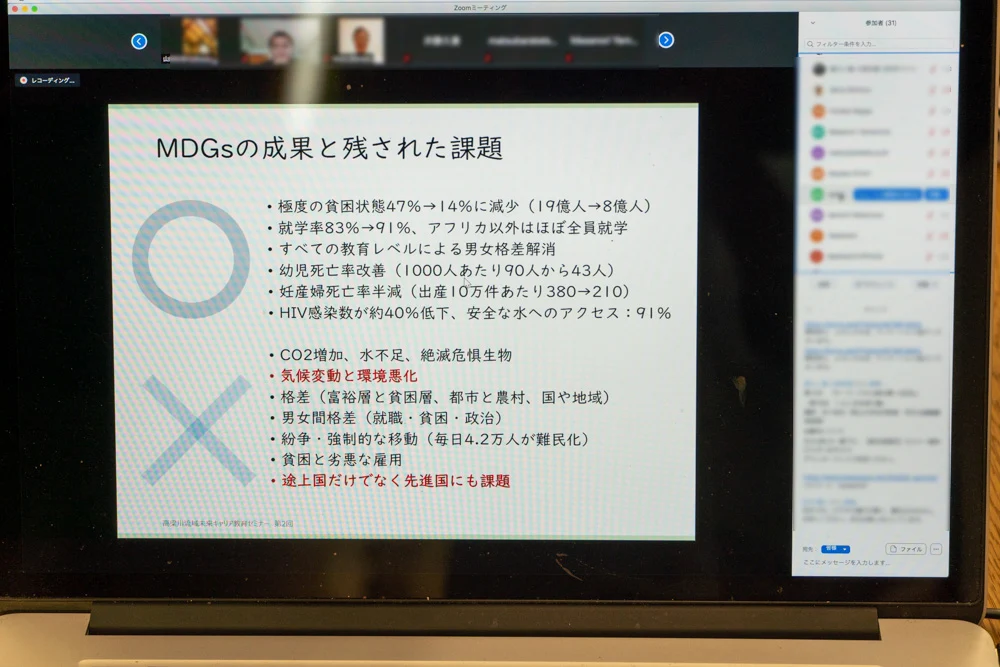
To improve the "climate change and environmental degradation" that have increased as a cost of development, proactive attitudes from advanced countries are essential. The SDGs include these issues as well.
The "17 goals" are as follows.
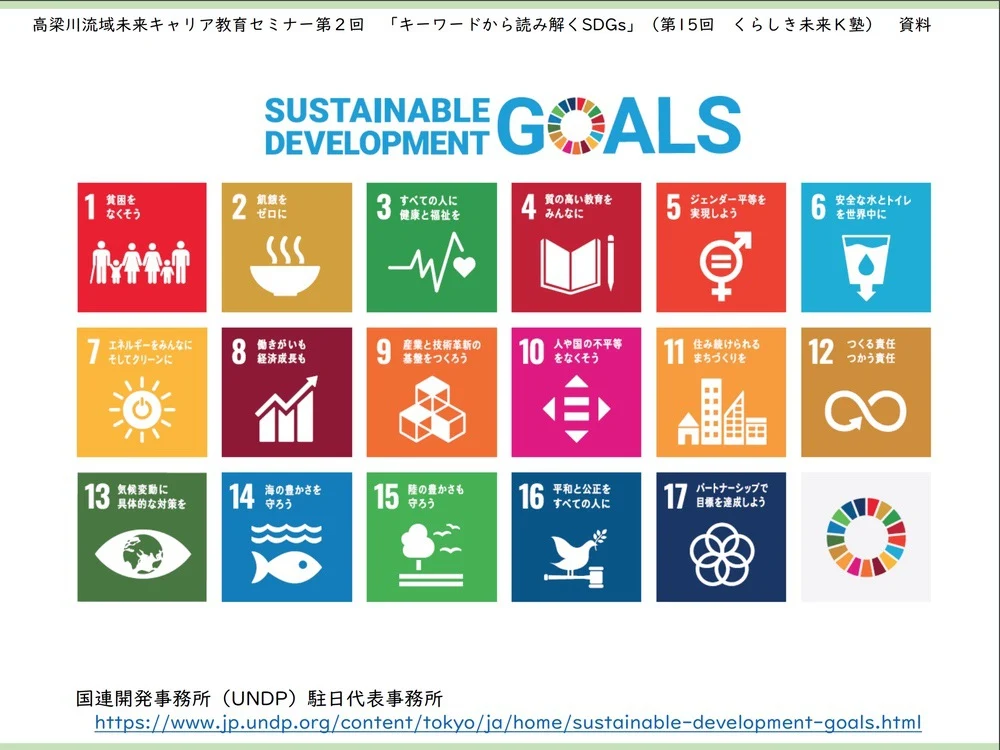
Each goal is somewhat understandable. So, what is the current situation in Japan?
The achievement status in 2019 is as follows.
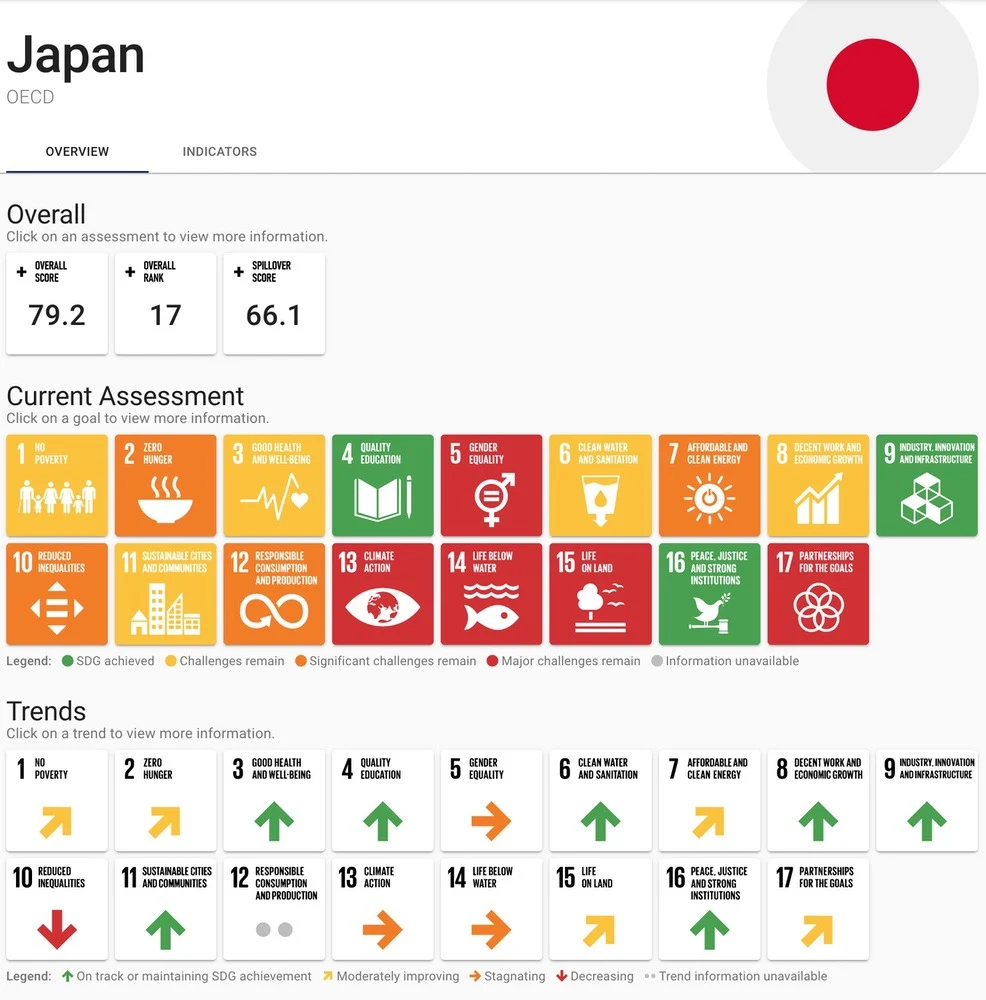
- Goals 4, 9, and 16 achieved
- Goals 5, 13, 14, 15, and 17 not achieved
This trend can be interpreted, and by making it "clear to everyone", we can see what needs to be done.
So, should we achieve the goals "one by one"?
SDGs are either "all achievable or all unachievable"
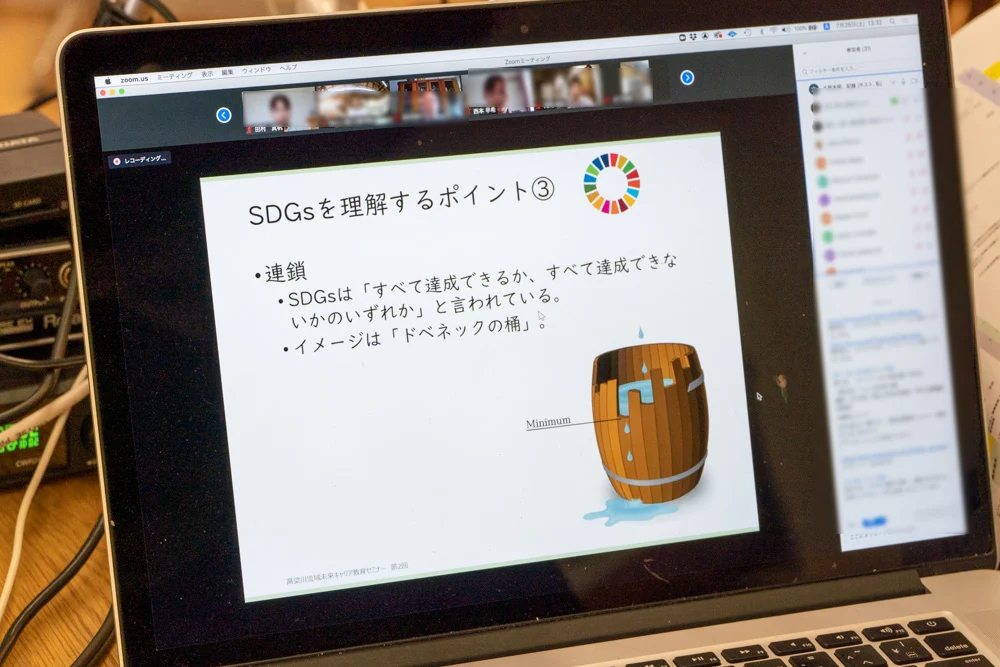
Yoshikawa Miyuki stated that SDGs are either "all achievable or all unachievable".
As a reason, she introduced an easily understandable example.
Why is "Goal 6: Safe Water and Sanitation for All" necessary?
Various problems arise due to water shortages.
- Rising temperatures lead to desertification, causing agriculture to decline
- It becomes difficult to earn income from agriculture, leading to a flow of people from rural areas to urban areas
- Urban areas experience a rapid population increase, resulting in housing shortages and the emergence of slums, worsening sanitary conditions
- There is an increase in extremist organizations that recruit unemployed youth
Failure to solve one problem leads to a "chain reaction" of other problems.
This perspective is important.
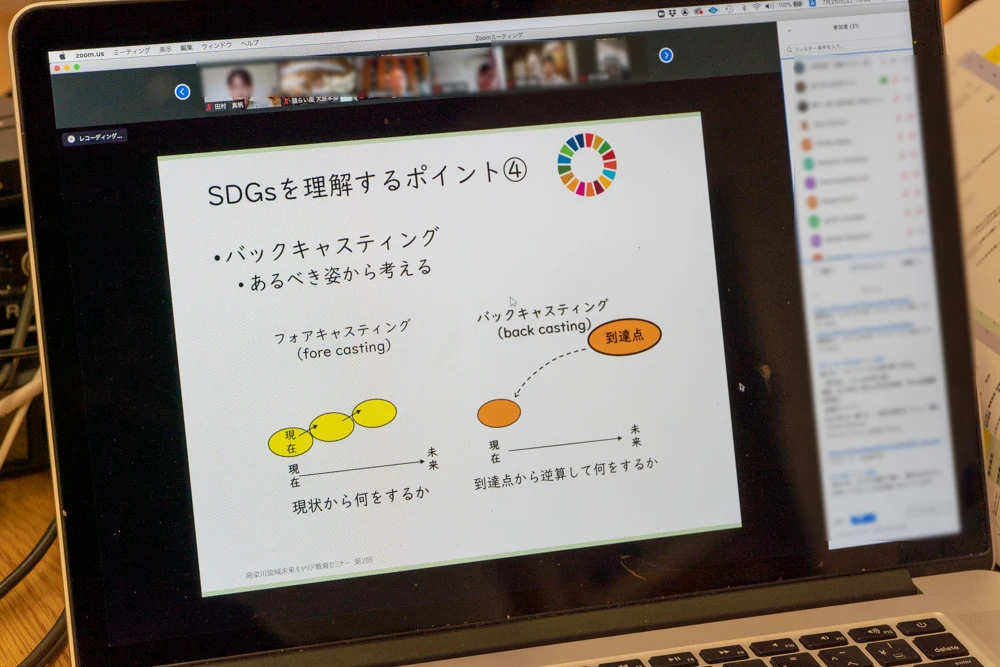
Therefore, Yoshikawa stated that SDGs should be considered not from the current situation (forecasting), but from the endpoint backwards (backcasting).
Breakout Session
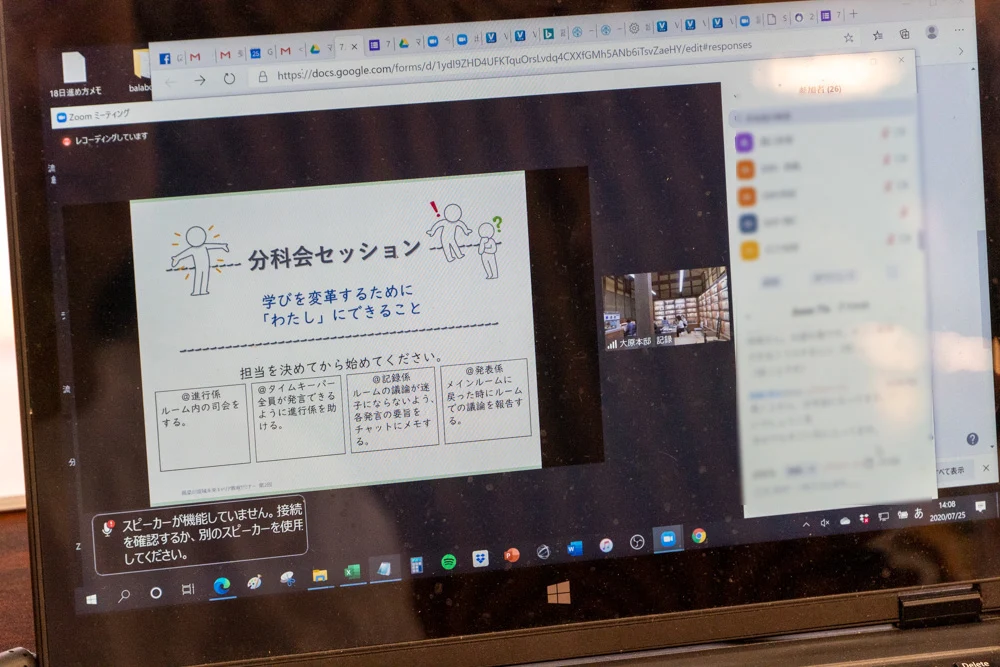
Based on the explanations so far, there was a Q&A session regarding SDGs, followed by a break and then the breakout session.
Kurashiki Mirai K Juku emphasizes not just listening to talks as a "seminar", but also valuing the time for participants to interact with each other.
The theme of the breakout session was What I can do to transform learning.
Both on-site and online participants engaged in discussions online.
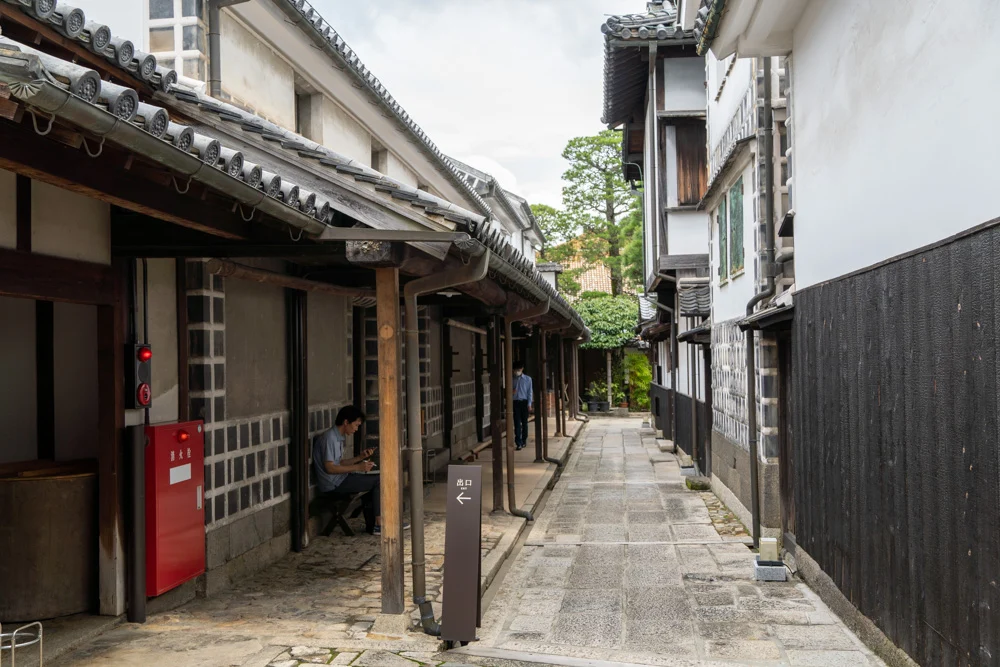
While being present at the venue, it is a "COVID-19 era" scene where everyone is talking with their smartphones in hand from different locations.
After about 40 minutes of discussion in each group, opinions were presented by each group.
Although the theme was "SDGs", it was impressive that participants were discussing it as a "personal matter".
Yoshikawa Miyuki provided comments and summaries after each presentation, but there was still a feeling that there was more to discuss as the session concluded.
Conclusion
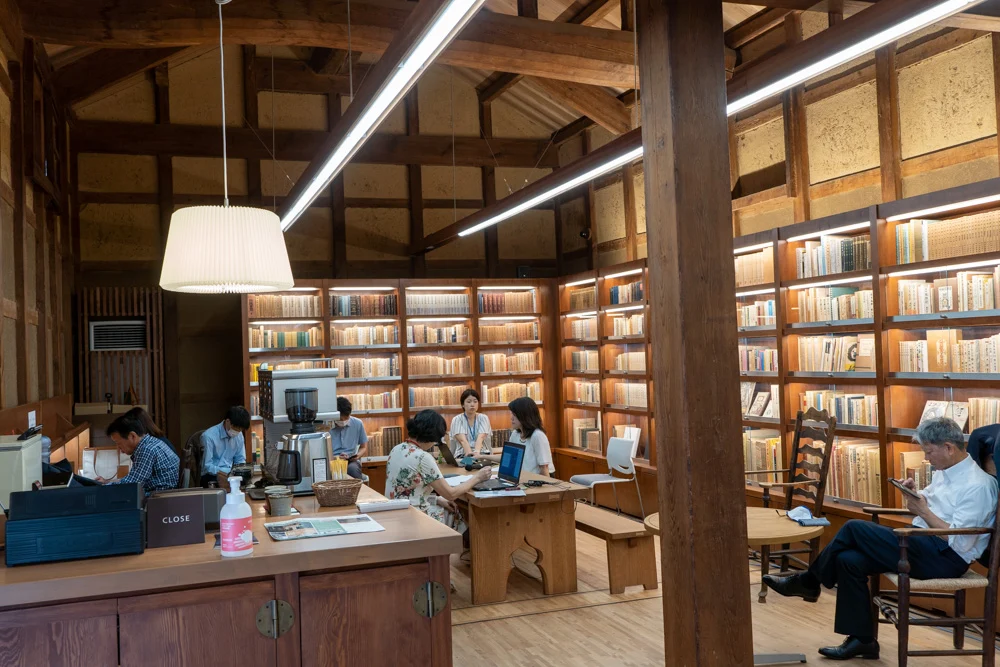
Kurashiki Mirai K Juku is a seminar themed on "education".
The theme this time was "SDGs", but it tends to be a grand theme.
However, participants from various backgrounds, including young people around university age, school teachers, and business owners, actively engaged in discussions.
In particular, it is characteristic that "there are many young participants online".
After the session, a university student who said, "I live nearby, can I come over there?" and continued the conversation at the venue was impressive.
Kurashiki Mirai K Juku is held on the "fourth Saturday" of each month.
For the latest information, please check the website of the Takahashi River Basin Future Education Seminar.
Articles related to Ohara House Katalyzer
Data for the 15th Kurashiki Future K Seminar / 2nd Takahashi River Basin Future Career Education Seminar

| Name | 15th Kurashiki Future K Seminar / 2nd Takahashi River Basin Future Career Education Seminar |
|---|---|
| Date | July 25, 2020 (Saturday) 1:00 PM - 3:00 PM |
| Location | 1-2-1 Chuo, Kurashiki City, Okayama Prefecture |
| Participation Fee (Tax Included) | Free |
| Homepage | Takahashi River Basin Future Career Education Seminar |