Children’s education is the responsibility of schools and teachers
Many people may think this way, but the community is also deeply involved in education, and schools and teachers seek the community’s cooperation.
However, when people look at “education” as community residents, many may want to get involved but not know what they can do.
Kurashiki Mirai K-juku holds seminars on a variety of themes, including education, work styles, and community development, as a place where everyone—not just teachers—can think about the town’s future, in support of “a curriculum open to society.”
To learn about her hopes for realizing “a curriculum open to society,” we spoke with Yamashita Yoko, who has organized Kurashiki Mirai K-juku to serve as a link between schools and the community.
Here, we introduce the background that led Yamashita to hold Kurashiki Mirai K-juku and her thoughts on education.
The information presented here was current when this article was published in April 2022. Please note that it may differ from current information.
What is Kurashiki Mirai K-juku?
Overview of Kurashiki Mirai K-juku

Kurashiki Mirai K-juku is a seminar aimed at connecting schools and the community in support of “a curriculum open to society.”
It began in December 2018 as Kurashiki Mirai Teachers’ Juku, and was renamed Kurashiki Mirai K-juku in December 2019.
By April 2022, it had held 29 seminars featuring business leaders, university faculty, and government officials active mainly in Kurashiki and Okayama.
Kurashiki Mirai K-juku is not a seminar open only to education professionals; it also welcomes members of the general public, and is characterized by its role in connecting school education with the local community.
Background of Yoko Yamashita, organizer of Kurashiki Mirai K-juku
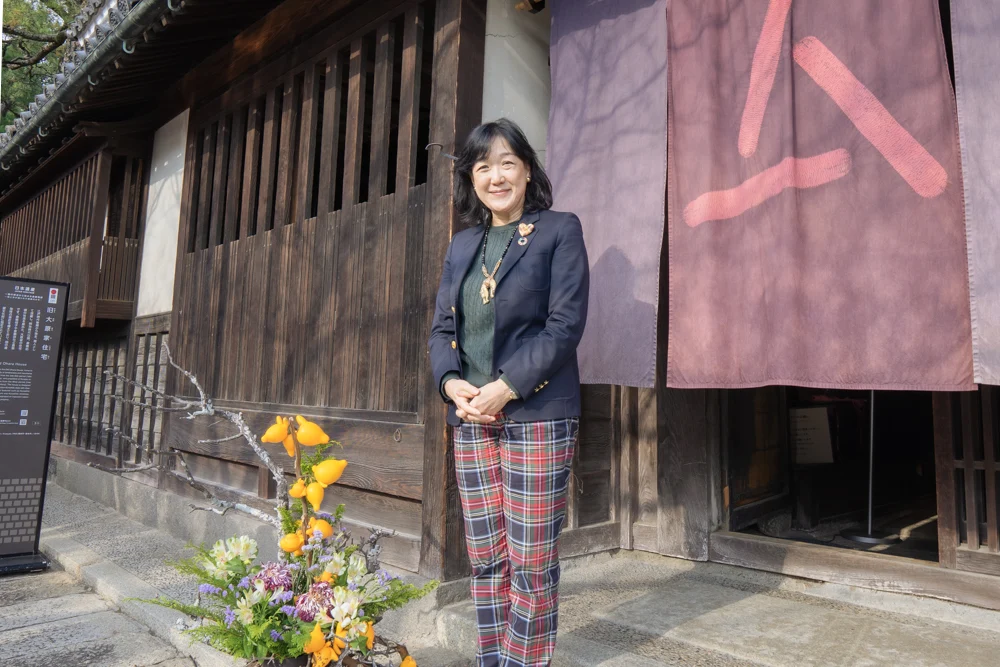
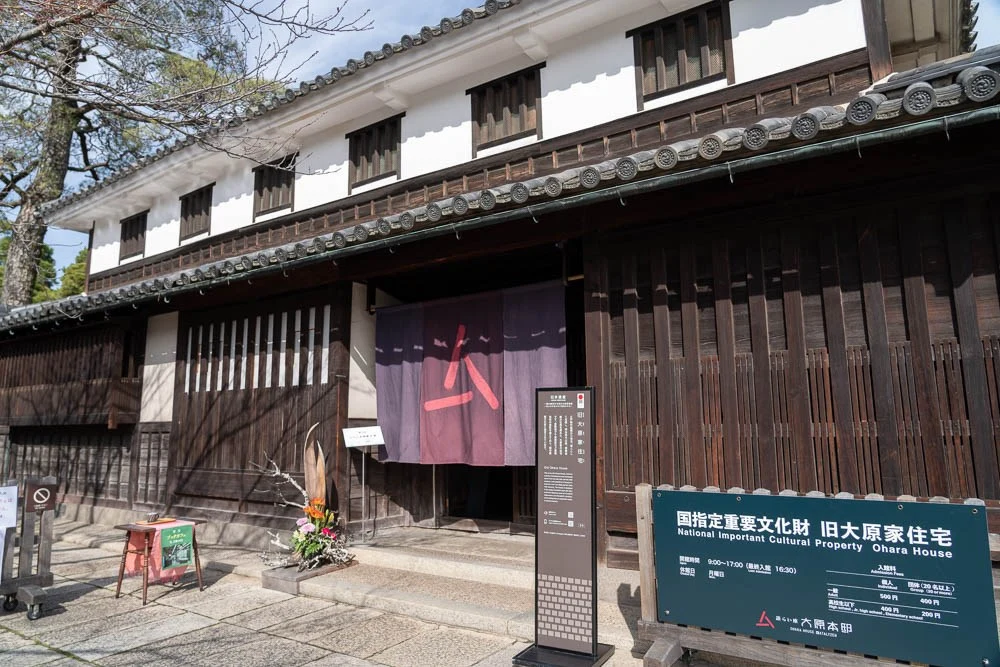
Kurashiki Mirai K-juku is organized by Yamashita Yoko, director of Ohara House Katalyzer.
She is a leading practitioner of school education in Okayama Prefecture, having worked as a teacher at prefectural high schools there for 38 years, starting in 1979.
In 2011, she experienced the consolidation and closure of high schools in Maniwa City, and served as principal of Maniwa Prefectural High School and Ochiai-Kuse High School.
From 2012 to 2017, as principal of Kurashiki Minami Prefectural High School, she worked on the Kurashiki Machishu Project, a hands-on educational program connecting schools and the community.
Working in partnership with the Kurashiki Chamber of Commerce and Industry and the Ohara Museum of Art, she implemented a new educational program focused on identifying and solving local issues, and received the Minister of Education, Culture, Sports, Science and Technology Award.
Today, as director of Ohara House Katalyzer, she has launched Kurashiki Mirai K-juku and is working to realize “a curriculum open to society.”
We spoke with Yamashita, who has worked to reform education in Okayama Prefecture, about why she started Kurashiki Mirai K-juku and what she has felt while continuing it.
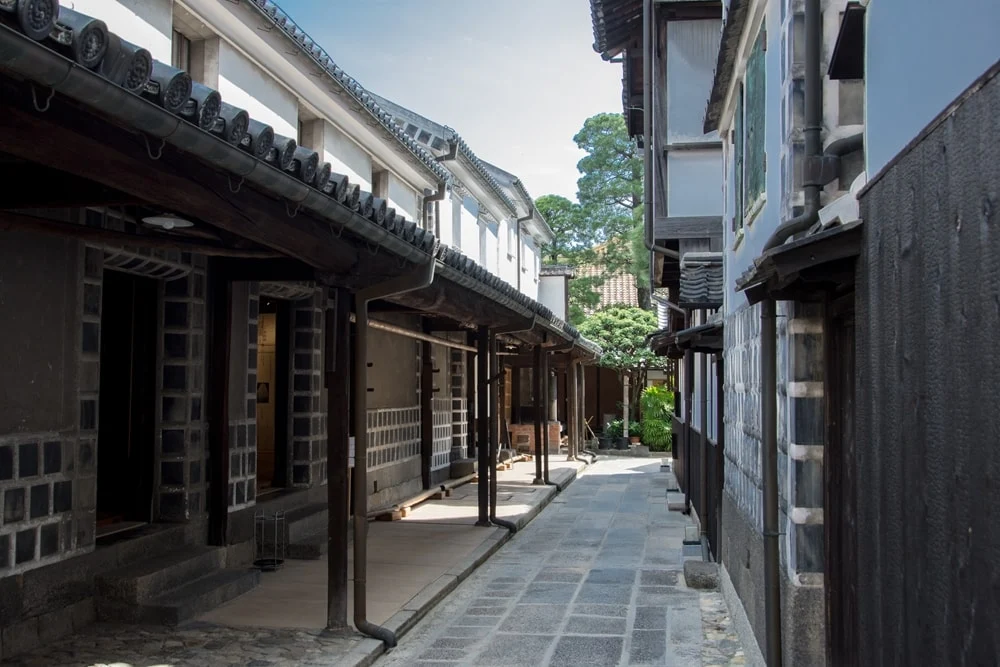
Interview with Yoko Yamashita

How Kurashiki Mirai K-juku began
Why did you start Kurashiki Mirai K-juku?
Yamashita (honorific omitted)
It began when I realized how essential teachers’ networking skills and ability to put things into words are for putting “a curriculum open to society” into practice.
As part of career education at Kurashiki Minami High School, we launched the Kurashiki Machishu Project, which had local community-development groups and businesses welcome students and consider solutions to issues on site, and carried out hands-on learning. (Hereafter, “Machipro.”)
Through Machipro, the children would return from their experiences at host organizations with many confused thoughts and feelings, but they couldn’t put them into words very well.
When asked how it was, they would say, “It was fun.”
But behind “It was fun” lie a variety of thoughts and feelings. If left unexamined, they would vanish by the time dinner was over.
“What was fun about it? What do you mean by that?”
By helping children sort through the thoughts that stayed with them and become aware of their own interests, they can see the next step. It also allows them to connect their experiences to learning and grow.
For that, it was more important than anything for teachers to help put those experiences into words.
Furthermore, to support this process, it is also important for teachers to deepen their understanding of the local community.
We believed that building networks with the community and developing the ability to put things into words were essential for making children’s fieldwork meaningful. To support this, we started “Kurashiki Mirai Teachers’ Juku” as a place to connect the community and teachers.
What challenges did you face at the beginning?
Yamashita
When we actually started, the only teachers who came were creative ones who already had strong communication skills and diverse connections with the local community.
The teachers who really needed to participate, those who needed to improve their skills, didn’t come.
I was concerned that we had lost sight of our original purpose, but I came to think that we also had a role in connecting teachers who wanted to advance reform.
Schools are an extremely homogeneous society, in the sense that everyone from new hires to veterans does the same work, and they also have a conservative side.
In that environment, reform-minded teachers can easily become isolated.
I thought it was important not only to expand their networks with the local community to support these teachers, but also to create a place where teachers could exchange information.
The people from local businesses and community-development groups who participate also come to feel, through their interactions with teachers, “There are teachers this impressive!”
I think it became a place where teachers could recognize that they were valued by the local community.

Where did the name Kurashiki Mirai K-juku come from?
Yamashita
Even though we planned it as a teachers’ juku, the teachers we really wanted to participate didn’t come. We were glad to attract creative teachers, but the participants remained the same.
When I consulted a business leader who regularly attended the seminars about my concerns over continuing, they said, “Why not ask the participants whether it’s needed and think it through together?”
So, after discussing it, we confirmed that it was worth continuing as a place where everyone living in Kurashiki—not just teachers—could think about the town’s future, and renamed it “Kurashiki Mirai K-juku.”
The “K” for teachers, the “K” for companies, the “K” for Katalyzer, and of course the “K” for Kurashiki.
I thought it would be interesting to use the letter “K” in a name that encompassed various meanings and left room for imagination.

The path to Kurashiki Mirai K-juku
Why did you start the “Kurashiki Machishu Project”?
Yamashita
When we first started Machipro at Kurashiki Minami Prefectural High School, our aim was for students to gain firsthand experience of the real-world complexities and the difficulty of solving problems through practical learning involving the community, and to develop respect for the adults who support society, an awareness of their own place in it, and an understanding of the importance of learning in order to participate in society.
I hoped they could put what they felt into their application essays and use it for the university recommendation-based and AO entrance exams, which were becoming more common.
Students who are good at efficiently solving problems can score highly on the Center Test, but some children who aren’t as efficient—for example, those who read too deeply when a question is long—can’t finish answering.
Yet some of these children can answer perfectly if they are given enough time.
Children who think deeply about things in this way grew through hands-on learning, organizing their experiences as they moved between the community, businesses, and school.
The abilities that can be measured by written tests are limited. The desire to develop these diverse abilities and help students secure opportunities to continue their education was what prompted us to start Machipro.

What changes did you see in students through Machipro?
Yamashita
In their interactions with businesses, children are sometimes reprimanded, but they begin to change once they understand what they are doing it for.
Children who had approached their classes as nothing more than exam preparation began to see that “gaining academic skills gives you tools that are useful in society,” and became more engaged in their studies.
Surveys on learning also showed increased motivation, and the number of children making remarkable academic progress grew.
As a result, the first cohort of Machipro students became the year group with the greatest improvement in university admission results in the previous five years.
Did teachers change as well?
Yamashita
Kurashiki Minami High School has a mission as a college-preparatory school, so even well-intentioned teachers had doubts about Machipro.
The year I arrived at Kurashiki Minami High School, prestigious universities such as the University of Tokyo and Kyoto University began introducing recommendation-based admissions one after another.
I felt that university entrance exams were undergoing a major shift toward tests based on experience, and saw this as an opportunity to apply community-based learning to admissions.
The teachers who had initially been skeptical gradually saw that the children’s motivation to study was increasing, and began to take an active part in Machipro.
Teachers who became involved with the community through the children bringing back their experiences also began learning about the community.
It became an opportunity for teachers, as well as children, to develop networking skills and the ability to put things into words—a kind of “period for integrated studies” for teachers.
Machipro, which encouraged children’s growth and broadened teachers’ perspectives, ultimately received the Minister of Education, Culture, Sports, Science and Technology Award.

Why is it important to value connections with the community?
Yamashita
At a school where I worked before joining Kurashiki Minami High School, I planned a class called “Work Experts’ Lectures” as part of the period for integrated studies, inviting people from local businesses to give talks.
Building networks between teachers and local businesses broadened the scope of career guidance, making it a valuable opportunity for teachers as well.
My experience working at an agricultural high school also had a major influence.
Agricultural high schools have a lot of practical training.
Students may witness a cow giving birth, or have experiences involving “life,” such as a calf they have been caring for being put down after an unexpected injury.
Even when they grow up healthy, they are sold to livestock farmers for fattening after about 200 days.
This is a cycle of society that you cannot understand by looking only at the cuts of meat displayed in a supermarket. Experiences like these help children mature emotionally.
I thought that students in general academic programs, too, could learn about the reality beyond what they see and the cycles of society, and that such experiences could motivate their learning.
I came to understand the importance of engaging with the local community through the diverse career education I experienced before joining Kurashiki Minami High School.

The future of Kurashiki Mirai K-juku
What kind of place would you like it to become in the future?
Yamashita
I’m proud that it has functioned as a link between schools and the community.
Until now, I’ve held seminars with speakers and themes that I personally felt were just right, but I’ve increasingly wanted to plan them with a broader scope.
I think it might be good to let young people plan seminars and then connect their ideas across the board.
Of course, I believe that a place connecting teachers and the community is valuable, so I want to continue to cherish its role as a catalyzer (a catalyst).

Hearing the thoughts behind Kurashiki Mirai K-juku
In my own case, the knowledge I learned at school only became useful some time after I graduated from high school.
The ability to understand context that I developed in Japanese class helps me organize information in documents and what people say, while the logical thinking skills I honed in mathematics are extremely useful even now, as I write this article.
It was through engaging in research and work at university that I realized how important both the individual knowledge taught in school subjects and systematic ways of thinking are.
Whenever I faced a challenge, I drew on all the knowledge I had, and when it wasn’t enough, I learned more. That’s why I understand how children who have become eager to learn through the Kurashiki Townspeople Project feel.
Perhaps we understand the meaning of learning only when we put it to practical use.
Providing children with experiences in society is difficult for teachers to do alone; it requires the cooperation of people in the local community.
I felt that Kurashiki Mirai K-juku, a link between schools and the local community, has the potential to make the entire town a place of learning for children.
I was glad to see education taking shape in Kurashiki that brings together all the adults involved in the community to nurture children.
I hope Kurashiki Mirai K-juku will fulfill its role as a link between schools and the local community and become a place that enriches and transforms society.
Articles about Ohara House Katalyzer
Kurashiki Mirai K-juku Information

| Name | Kurashiki Mirai K-juku |
|---|---|
| Held | Held once a month. Approximately two hours. |
| Location | 1-2-1 Chuo, Kurashiki City, Okayama Prefecture |
| Participation fee (tax included) | Whether there is a participation fee varies by seminar. |
| Website | Ohara House Katalyzer |


What would you like to know about Kurashiki?
Enter a word to search articles on this site