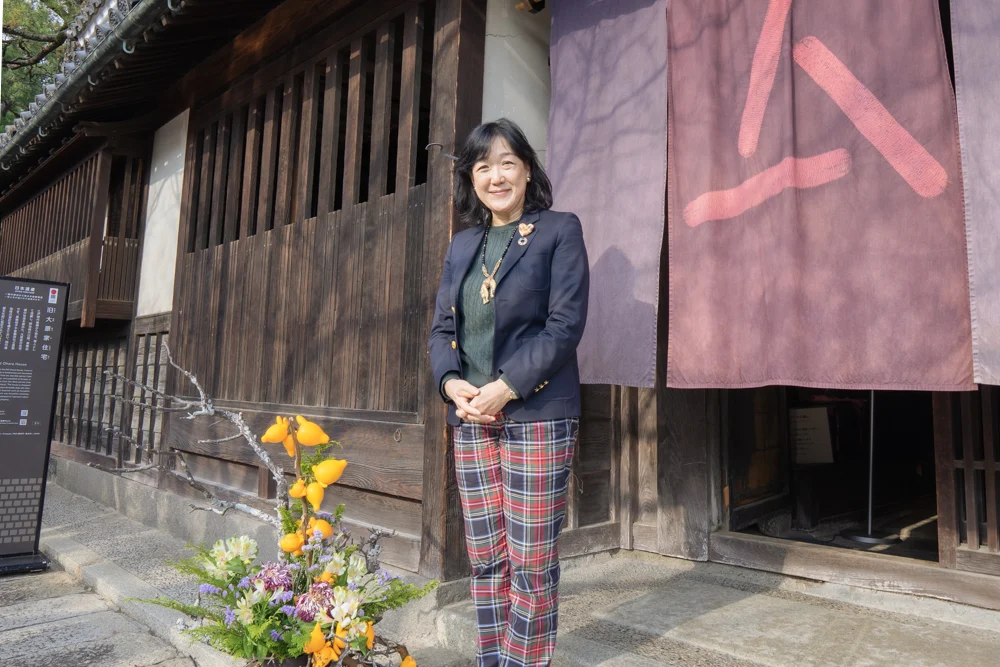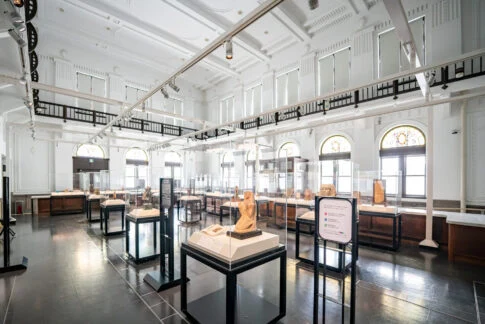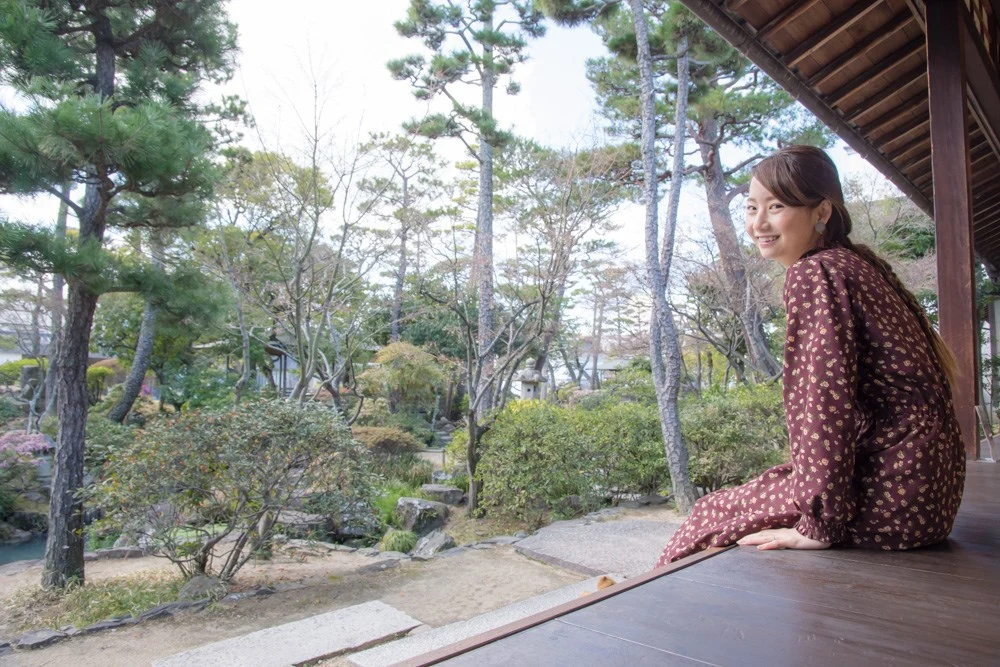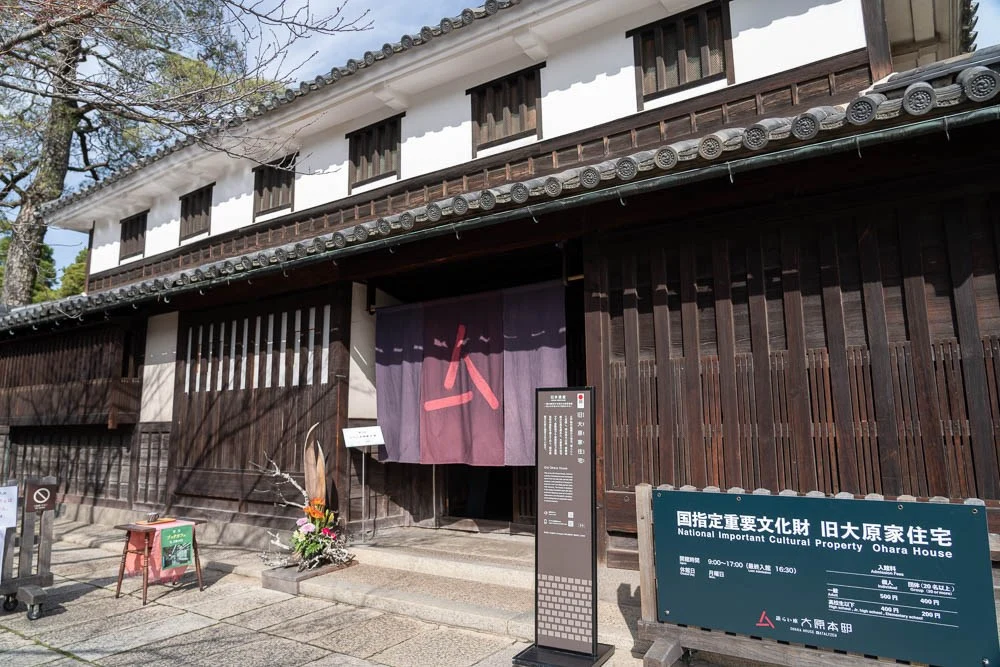
Ohara House Katalyzer, a nationally designated important cultural property located in the Bikan Historical Area.
It is a historic building with a beautiful garden, but it is more than just that.
As a place to discuss the present and future, it is also focused on educational programs.
One of the programs organized by Ohara House Katalyzer is "Kurashiki Mirai K Juku."
I participated in the seminar "9th Kurashiki Mirai K Juku - Honest Talk with the Producers of 'Regional Future'" held on January 26, 2020 (Sunday).
I will report on the seminar.
What is Kurashiki Mirai K Juku?
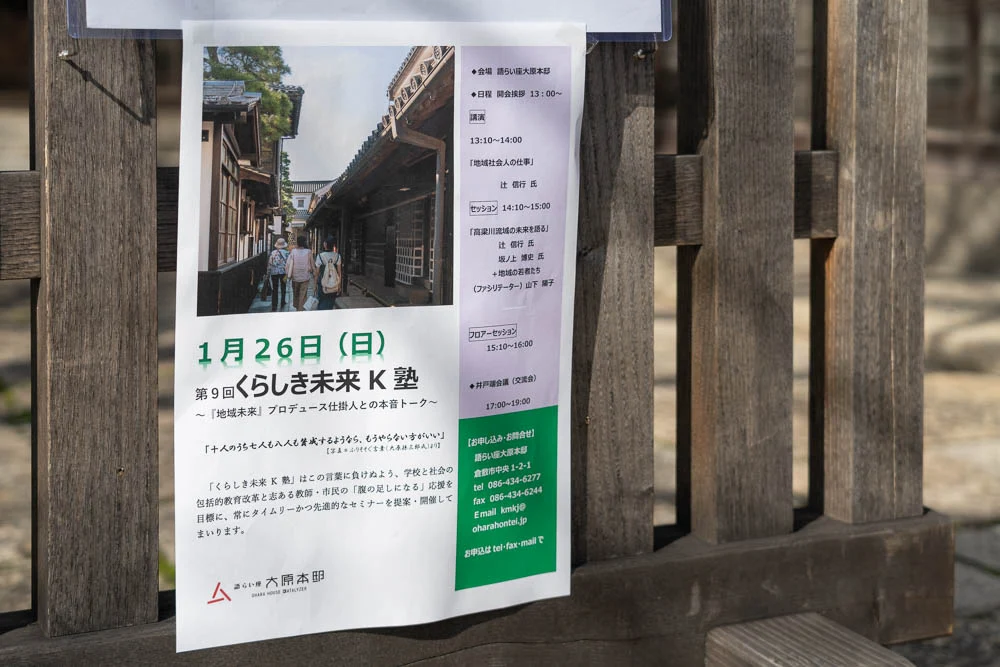
"Kurashiki Mirai K Juku" is a monthly seminar held at Ohara House Katalyzer, aiming for comprehensive educational reform between schools and society and supporting aspiring teachers.
It started in December 2018 as "Kurashiki Mirai Teacher Juku" and was renamed "Kurashiki Mirai K Juku" in December 2019.
Since December 2019, the following themes have been established:
- Community ✕ Education ✕ Work Style
- Culture ✕ Manufacturing
- Community ✕ SDGs ✕ Educational Reform
- Changing Work Styles ✕ Community
Overview of the 9th Kurashiki Mirai K Juku - Honest Talk with the Producers of 'Regional Future'
The theme of the 9th Kurashiki Mirai K Juku is "Honest Talk with the Producers of 'Regional Future'."
| Date and Time | January 26, 2020 (Sunday) 1:00 PM - 4:00 PM |
|---|---|
| Venue | Ohara House Katalyzer |
The flow of the seminar was as follows:
| Format | Title | Speaker |
|---|---|---|
| Lecture | The Work of Community Professionals | Nobuyuki Tsuji |
| Session | Discussing the Future of the Takahashi River Basin | Hiroshi Sakanoue, Yoshikazu Saeki, Hiroshi Sasaki |
| Floor Session | (Q&A) | Nobuyuki Tsuji, Hiroshi Sakanoue, Hiroshi Sasaki |
Greeting by Yoko Yamashita, Director of Ohara House Katalyzer
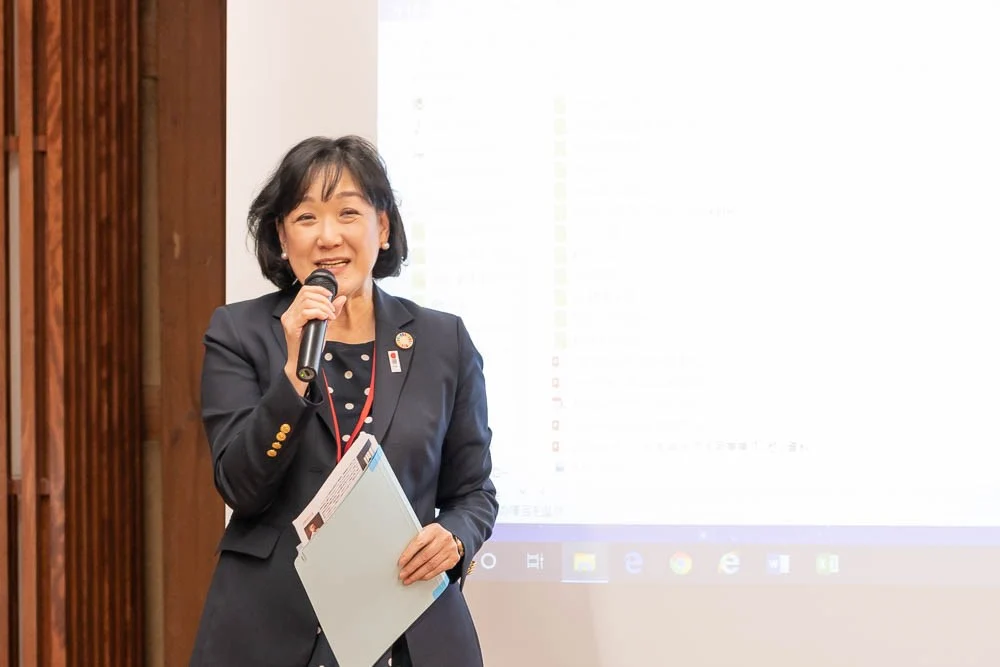
Yoko Yamashita, the director of Ohara House Katalyzer, gave the following greeting:
"The speakers today, Mr. Tsuji and Mr. Sakanoue, are individuals for whom it is difficult to decide how to introduce them with titles.
I feel that those who struggle with such titles are the ones creating innovation these days.
Today, we have these two who are involved in Kurashiki's innovation, along with two special guests invited by Mr. Sakanoue."
Lecture by Nobuyuki Tsuji - The Work of Community Professionals
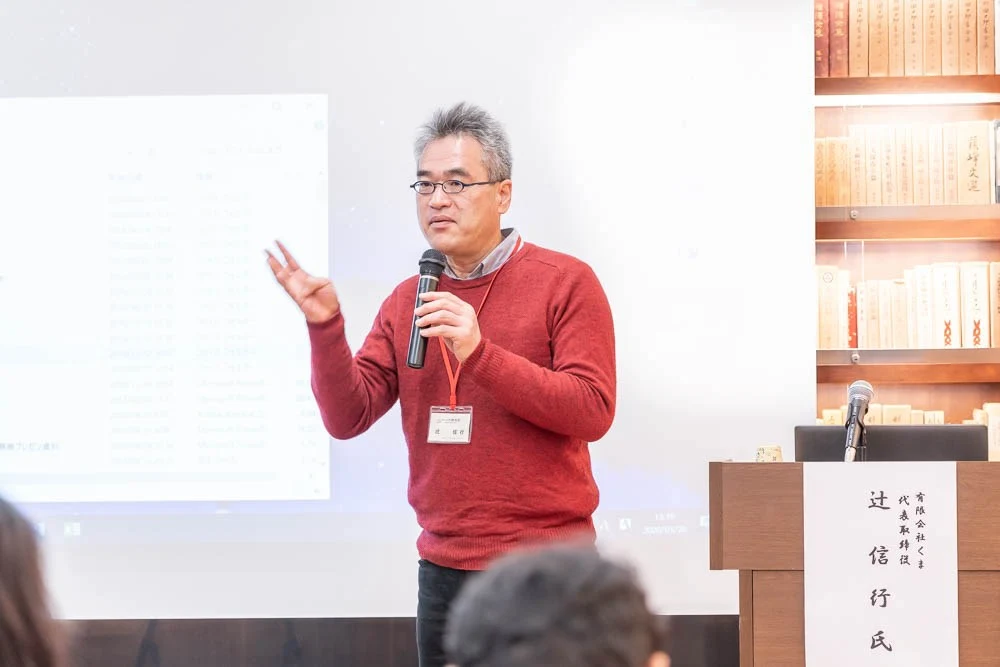
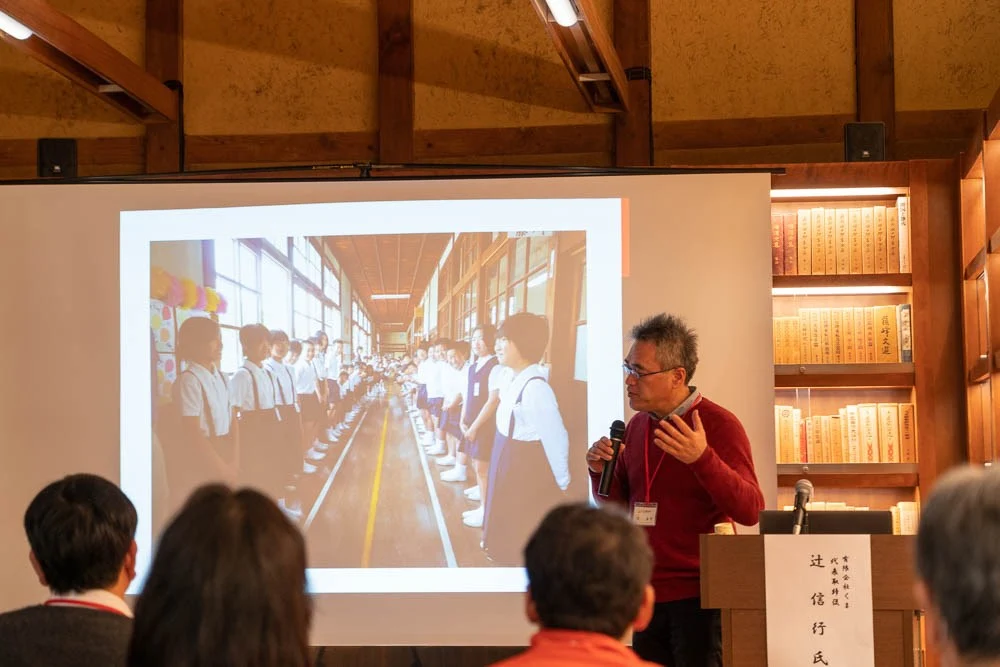
Nobuyuki Tsuji is a person who engages in community building, manufacturing, and human resource development, closely aligned with the community and seasons in Kurashiki.
In his lecture, he spoke about his career, activities, and the thoughts behind them.
Career of Nobuyuki Tsuji
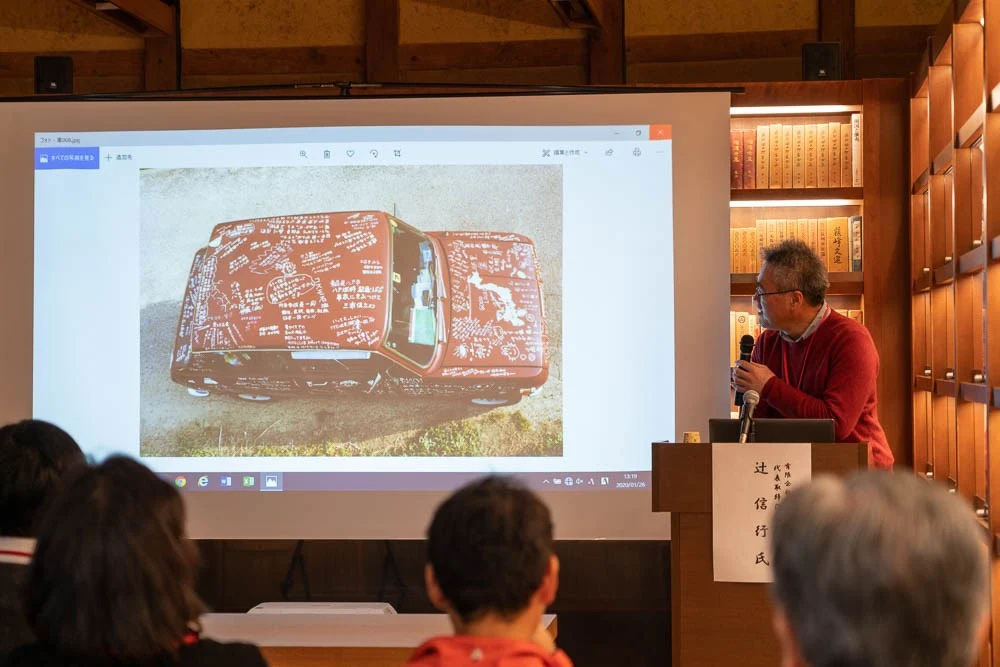
Mr. Tsuji traveled around Japan alone while in university.
To have a socially conscious journey, he had a newspaper column and included live television broadcasts.
After graduation, while being involved in education, he planned and appeared in the Kurashiki Cable Television program "O-chan's Morning Stroll" for about 12 years.
He continues to convey the charm of the town and is affectionately known as "the town-walking uncle" by the locals.
He also runs the following shops, which are well-known among the people of Kurashiki.
- Machiya Cafe Miyake Shoten
- Hayashi Genjuro Pharmacy Museum
- Cafe by the Water - Miyake Shoten Sakazu
- Former Harada Residence - Miyake Shoten Cafe Workshop
Community Work - Connecting the Town through Community Professionals
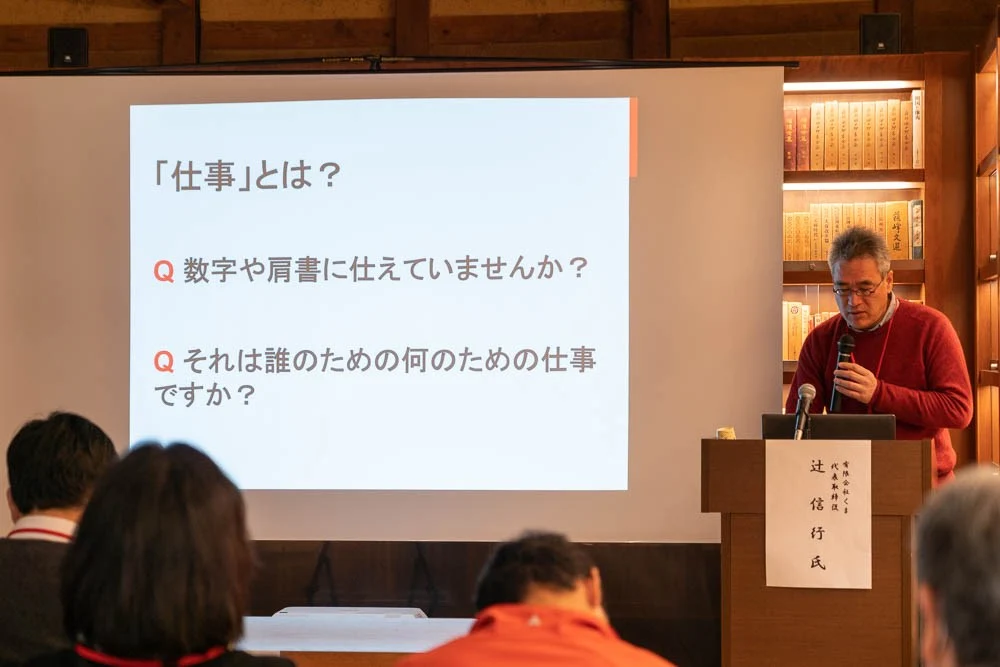
What does "work" mean?
"Are you serving numbers or titles?" Mr. Tsuji asks.
Mr. Tsuji's concept of "work" includes the following:
- Serving to make the person in front of you smile, happy, and enriched
- Serving to enrich the community and the times
I want to create community professionals who can take pride in their community as "their own matter," and I want to be one of them.
With this desire, I engage in activities related to community building, manufacturing, and education.
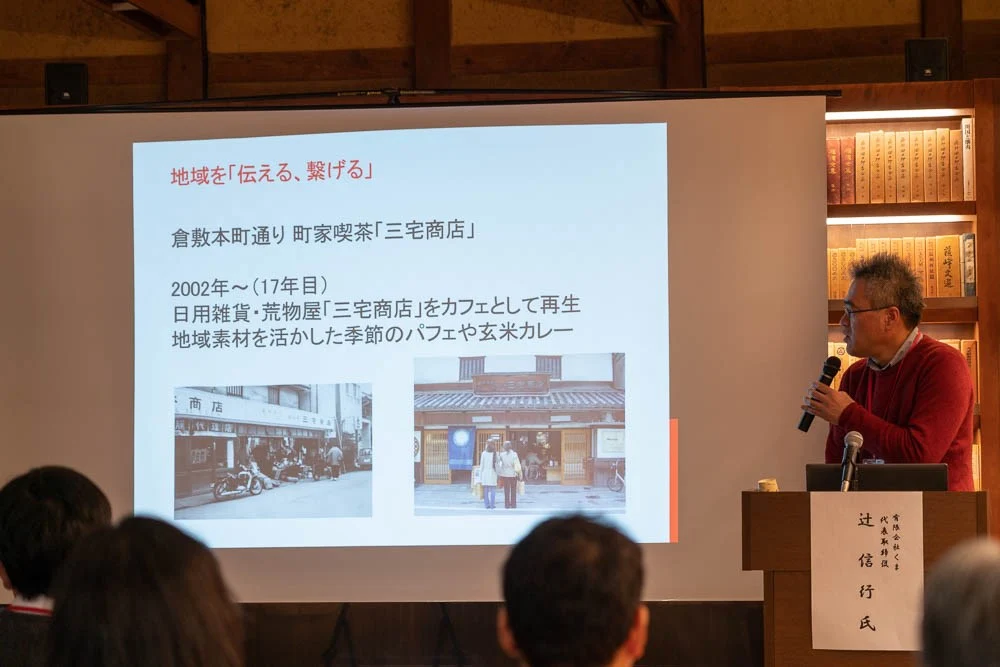
Among the various examples raised as activities to "know, convey, and connect" the community, let me introduce the Machiya Cafe "Miyake Shoten," which opened in 2002.
Mr. Tsuji says, "Simply knowing and conveying the good things in the community will lead to decline."
"To preserve good things, it is necessary to connect them, involve those around, and transform them into pride and enjoyment, thus circulating the economy. It cannot be a temporary thing," he started Miyake Shoten with this resolve.
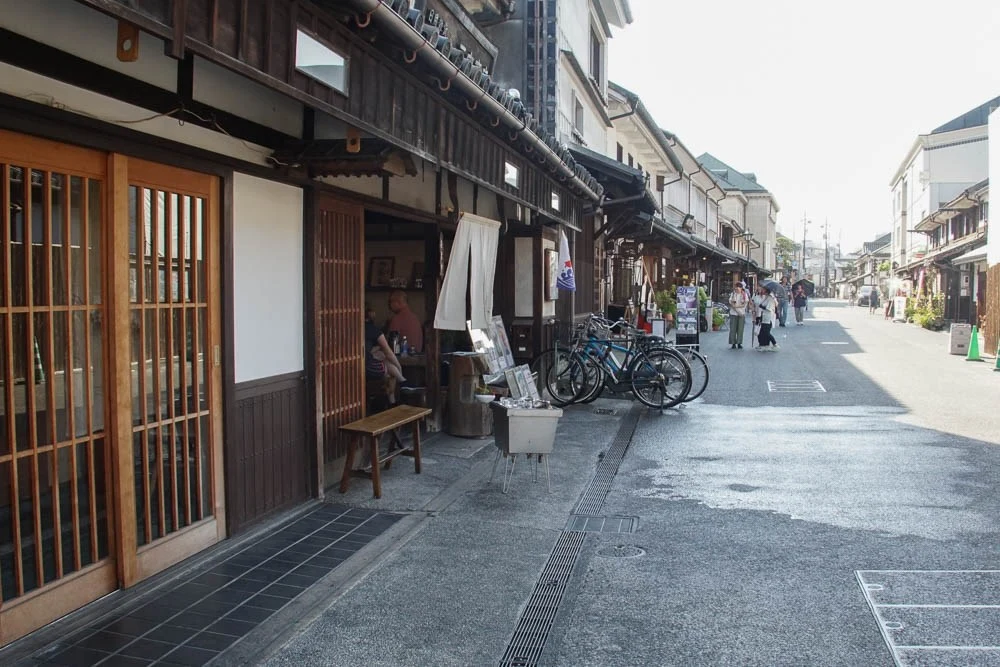
Machiya Cafe Miyake Shoten is located on "Honmachi Street," just one road away from the Kurashiki River.
Mr. Tsuji felt that "Honmachi Street is an attractive street that teaches the richness of the community."
However, at that time, it was called "the back street," and only about one in ten tourists would pass through.
When the "Miyake Shoten," which had been a daily goods store and miscellaneous goods store since before the war, became vacant, it was purchased to open a cafe for creating a space that anyone could engage with.
To connect the memories of the business that had been loved by the local people, the name "Miyake Shoten" was inherited.
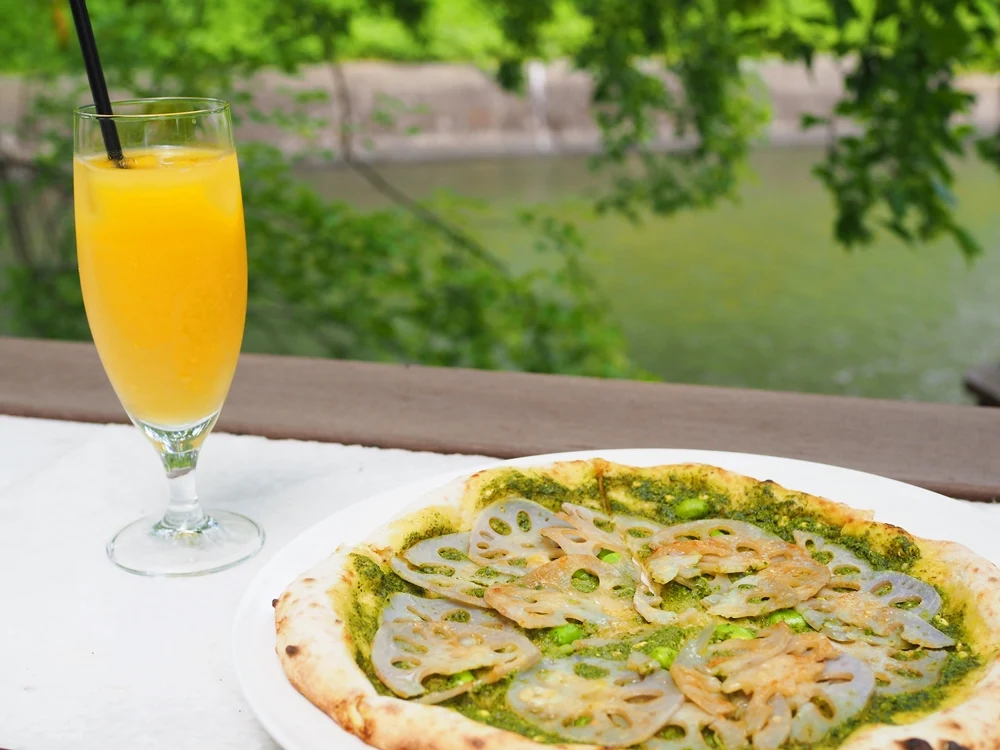
Currently, Miyake Shoten has contracts with 30 farmers.
Knowing who produces what and with what feelings, they purchase all the fruits that generally cannot be shipped from the contracted farmers.
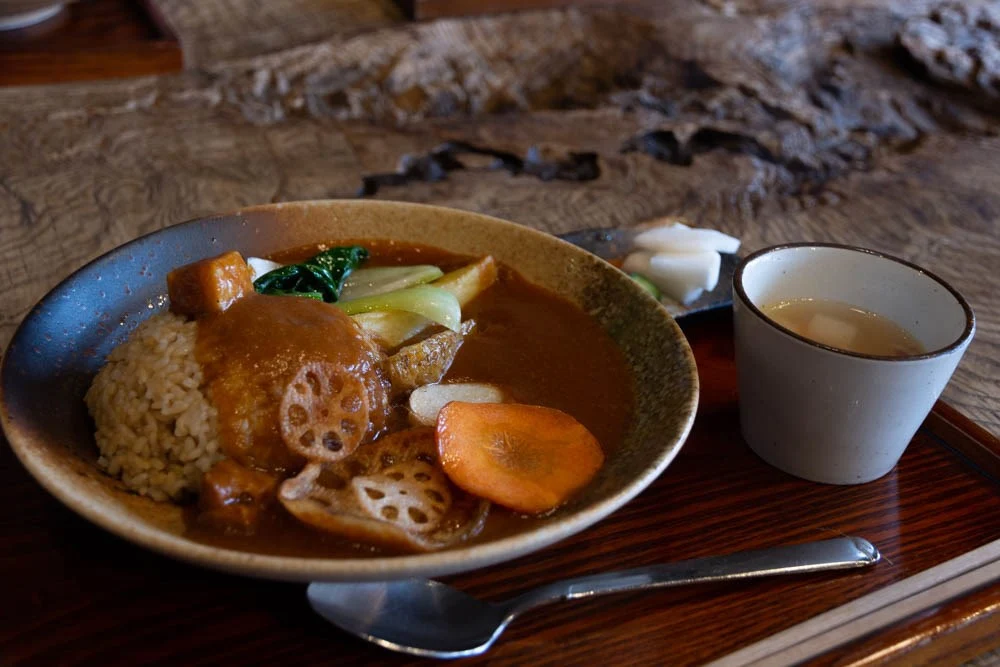
They turn them into ice cream and juice, providing seasonal menus that align with the seasons.

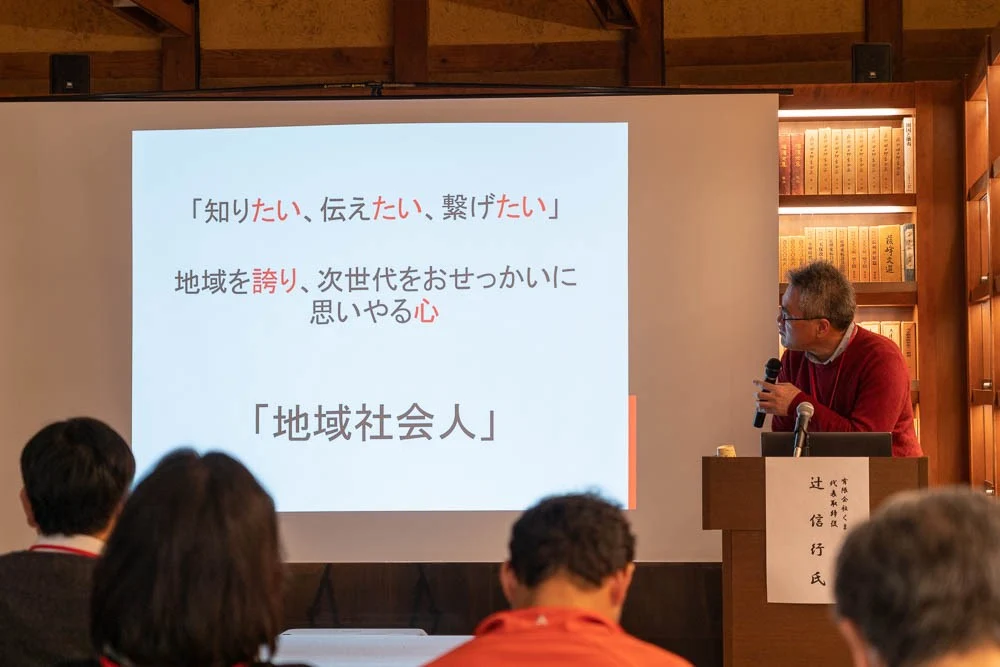
Mr. Tsuji concluded his lecture as follows:
"If you have the desire to know, convey, and connect, anyone can become a community professional.
To take pride in the community and have a caring heart for the next generation is what it means to be a community professional.
Creating opportunities for such community professionals is my lifelong work."
Talk Session
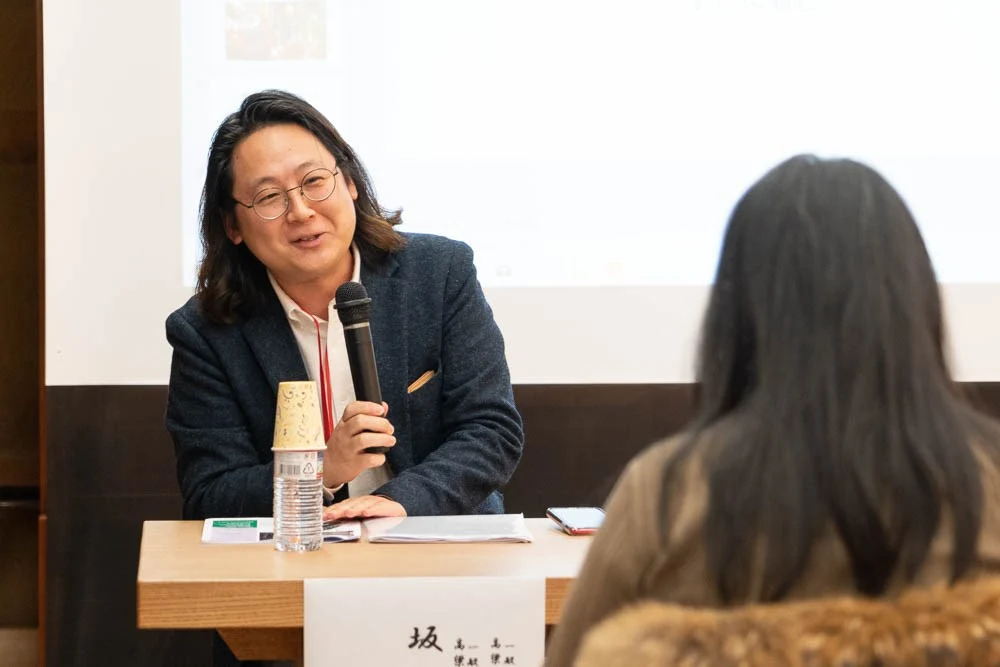
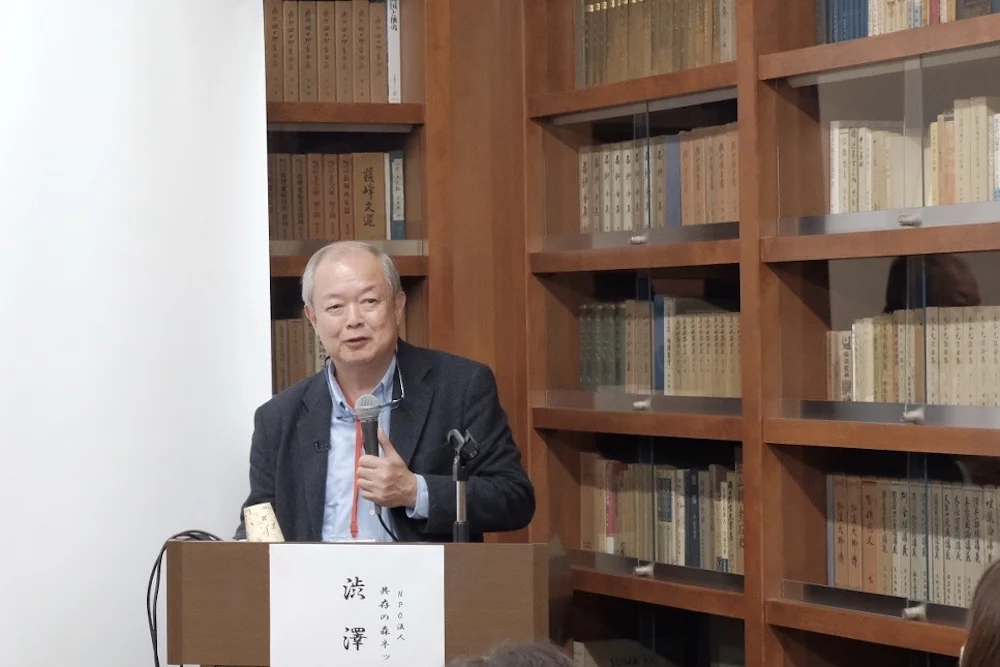
In the talk session, Hiroshi Sakano Ue, who is involved in planning and managing local projects, invited two guests whom he thought, "I want you to hear this person's story."
Through the backgrounds and stories of the two guests, we will consider the future of the Takahashi River basin.
Yoshikazu Saeki, who works in forestry in Niimi
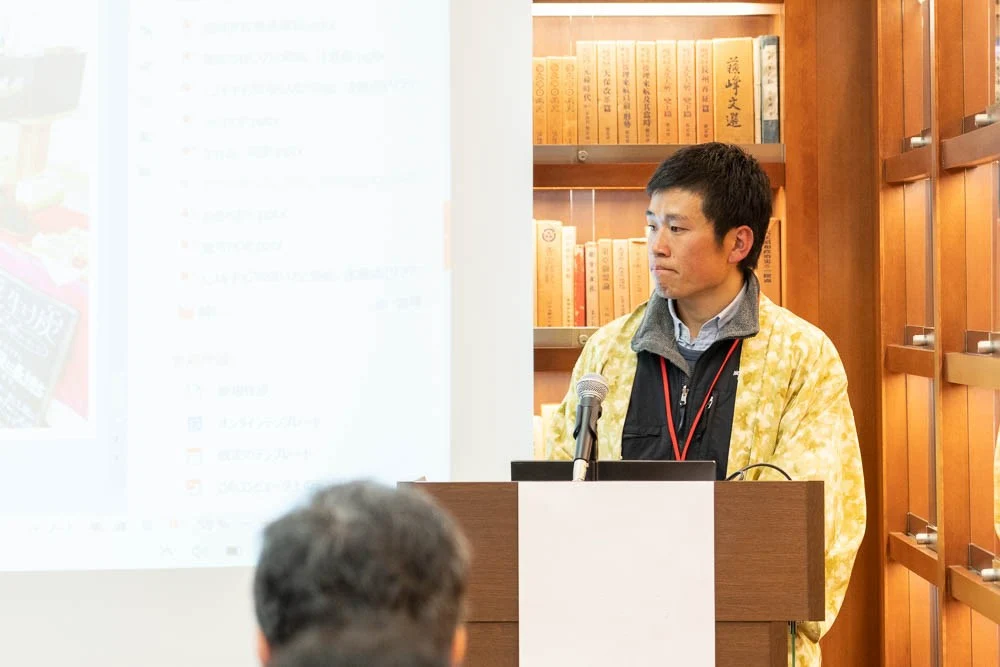
The first guest is Yoshikazu Saeki.
Originally from Imabari City, Ehime Prefecture, Saeki went on to Okayama University to study law.
Growing up surrounded by nature as a child and having a love for making things, Saeki researched wood and encountered forestry.
During his student days, he participated in environmental conservation volunteer activities, and after graduation, he worked as a regional revitalization cooperation volunteer in Niimi City, Okayama Prefecture.
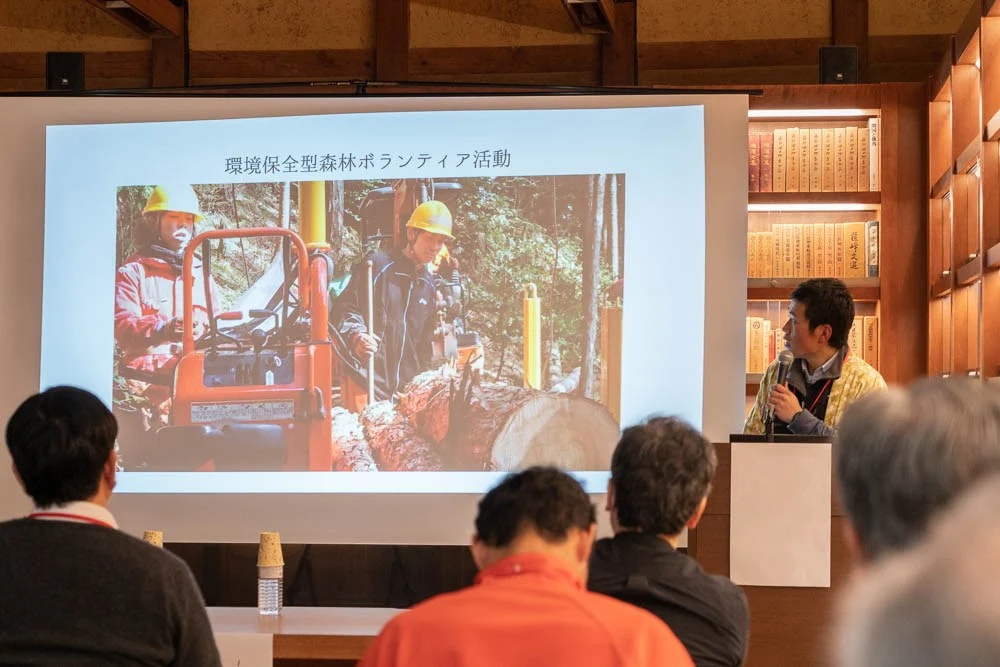
After finishing his term as a regional revitalization cooperation volunteer, he continued to live in Niimi and got a job at the general incorporated association "Hitotomori," where he works in forestry while protecting the forest.
He has created long tables combining Niimi's timber and the steel from the Mizushima Industrial Complex, wooden jungle gyms, and mobile bar counters.
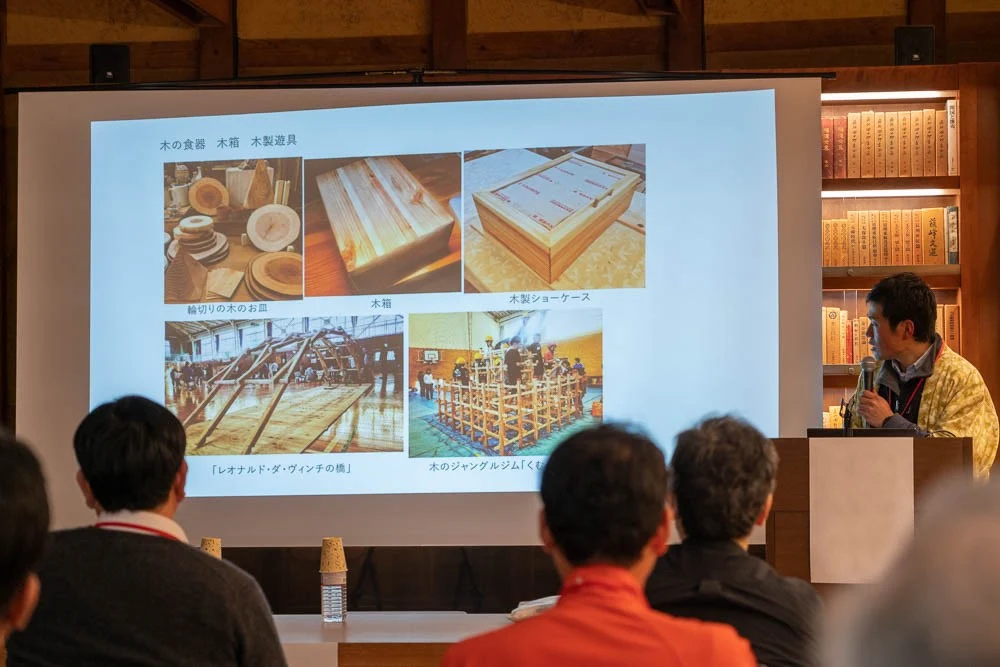
In October 2019, he left the company and became independent.
Currently, he is engaged in custom furniture production and the development and sale of charcoal products.
Although he is often told that he has a "unique background," Saeki says it was a natural flow for him.
There is a table made by Saeki in the coworking space "Bunfuku" run by Hiroshi Sakano Ue.
IT Evangelist Hiroshi Sasaki
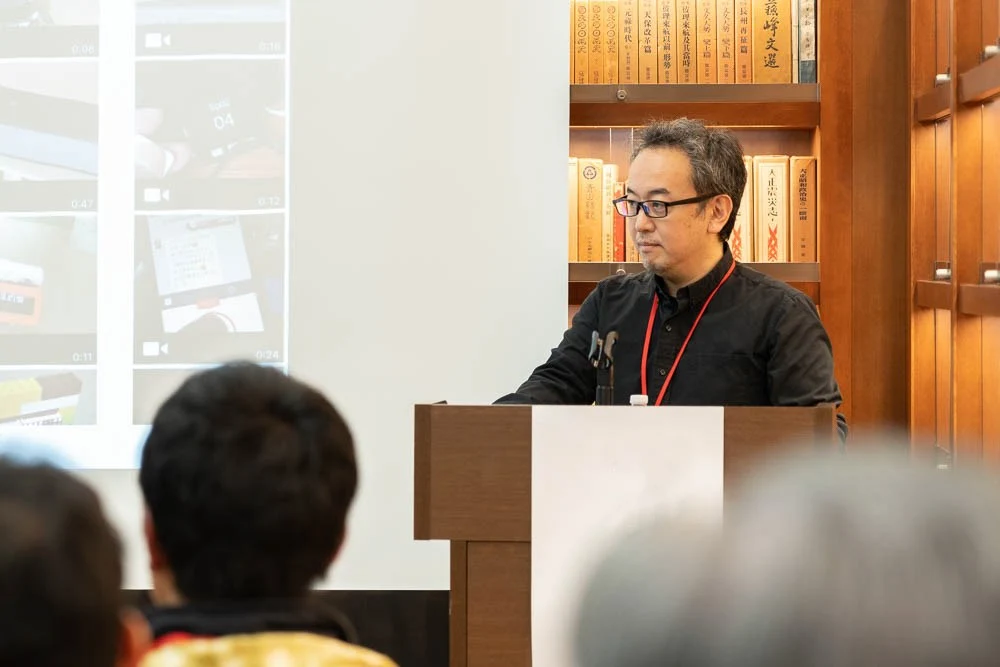
The second guest is IT Evangelist Hiroshi Sasaki.
An IT evangelist is someone who explains and promotes the latest technology in an easy-to-understand manner to the public.
Sasaki served as a lecturer for beginner and middle-aged computer courses for 12 years on the NHK Educational TV program "Shumi Yuyuu" (now E-Tele).
Living in Tokyo, he commutes to Ina City, Nagano Prefecture, to create a new company.
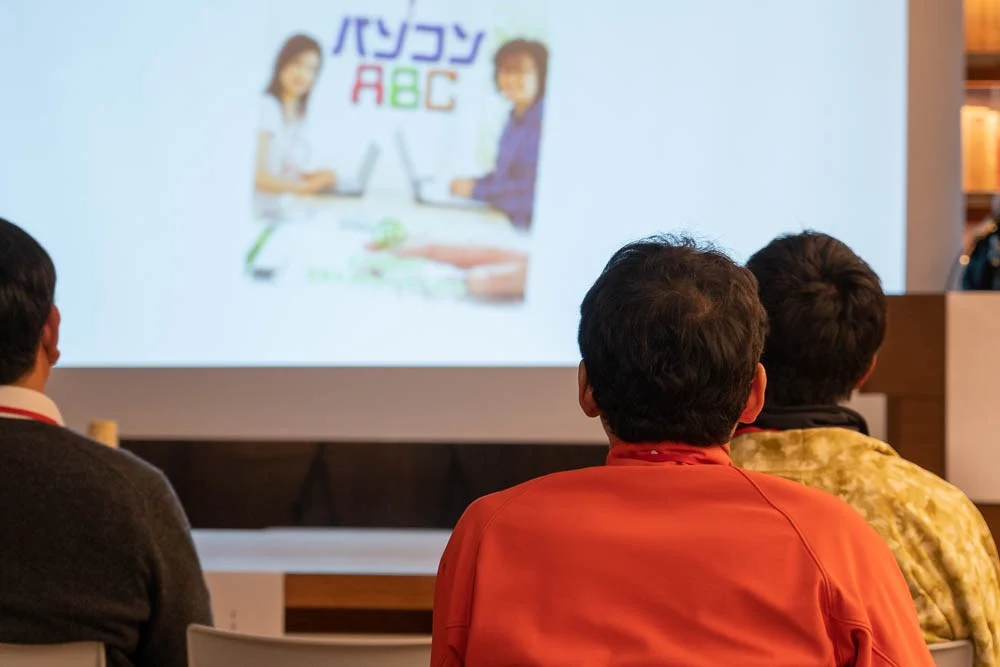
Sasaki quoted the words from the "Planned Happenstance Theory" by Professor John D. Krumboltz of Stanford University: "80% of a career is determined by chance."
Reflecting on his own career, he spoke about the importance of connecting accidental events to career advancement.
Sasaki, who describes himself as "just a computer-loving guy, not an authority on computers," received an offer to appear on television one day from a producer at NHK.
He said, "I had never done it before and was scared, but I thought, why not give it a try?" This decision changed his life.
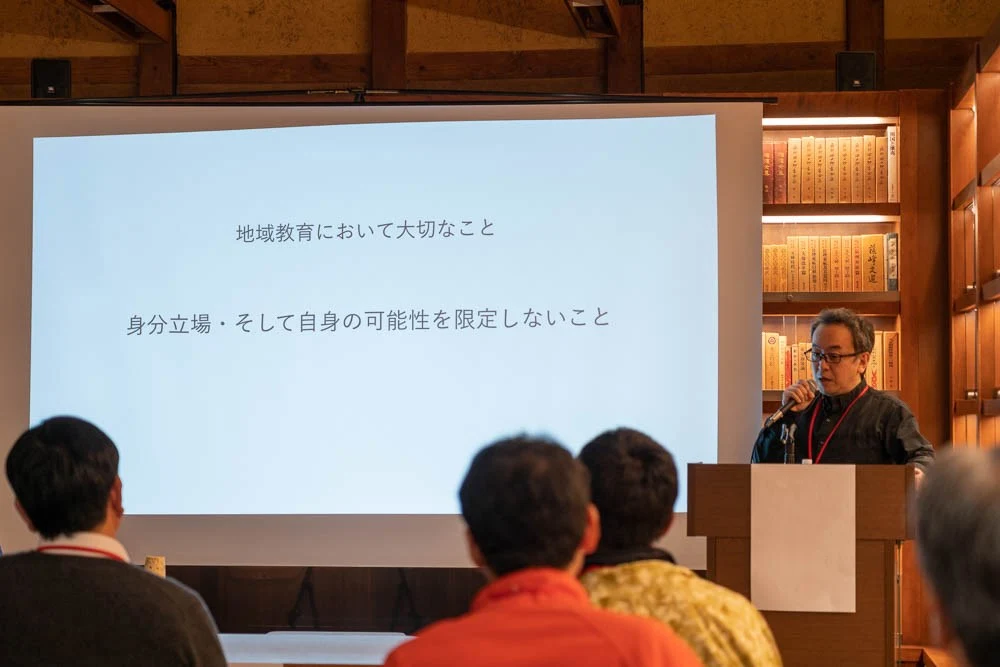
Sasaki said the following:
"Looking back, at turning points, there were people who appeared from unexpected places saying, 'You could do it, couldn't you?'
When someone brings out another drawer that is inherent in you, it is a chance.
Finding many trustworthy people who can expand your possibilities is an important lesson in life."
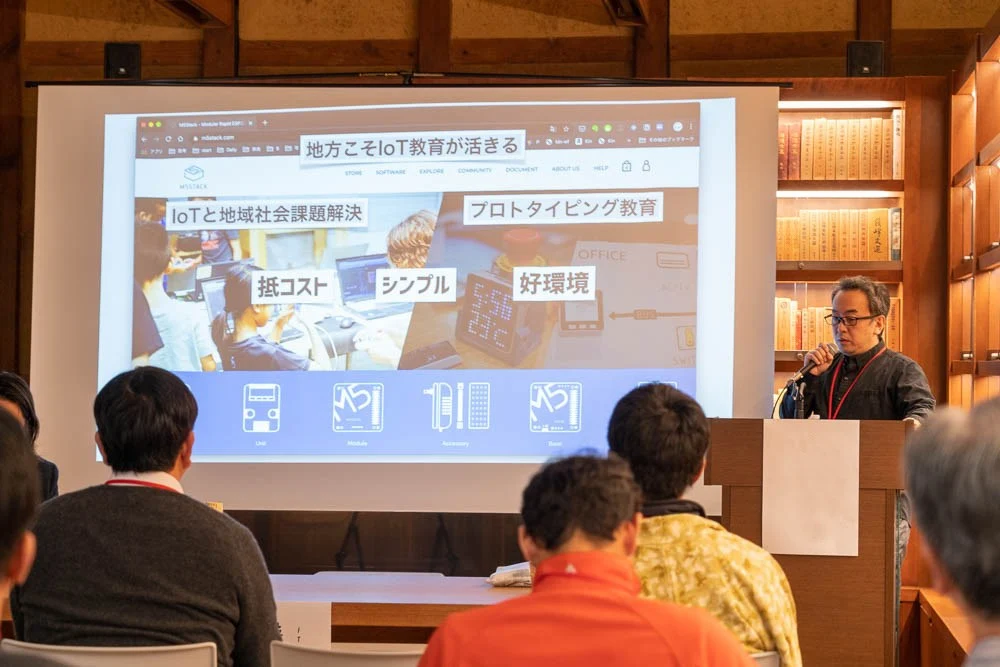
Sasaki states that IoT education is most effective in rural areas.
Currently, he is teaching IoT to local children and conducting classes on how to solve regional issues with technology.
IT is meant to create free time and one's own lifestyle.
If there are familiar issues, it is important to think about what can be solved with technology and to practice what can be done.
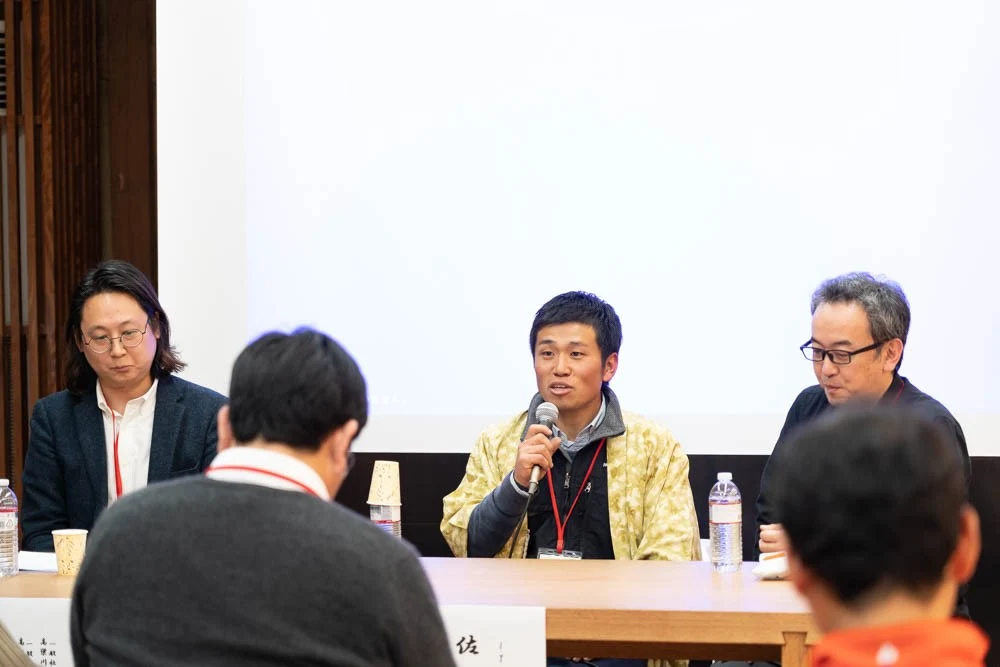
Floor Session
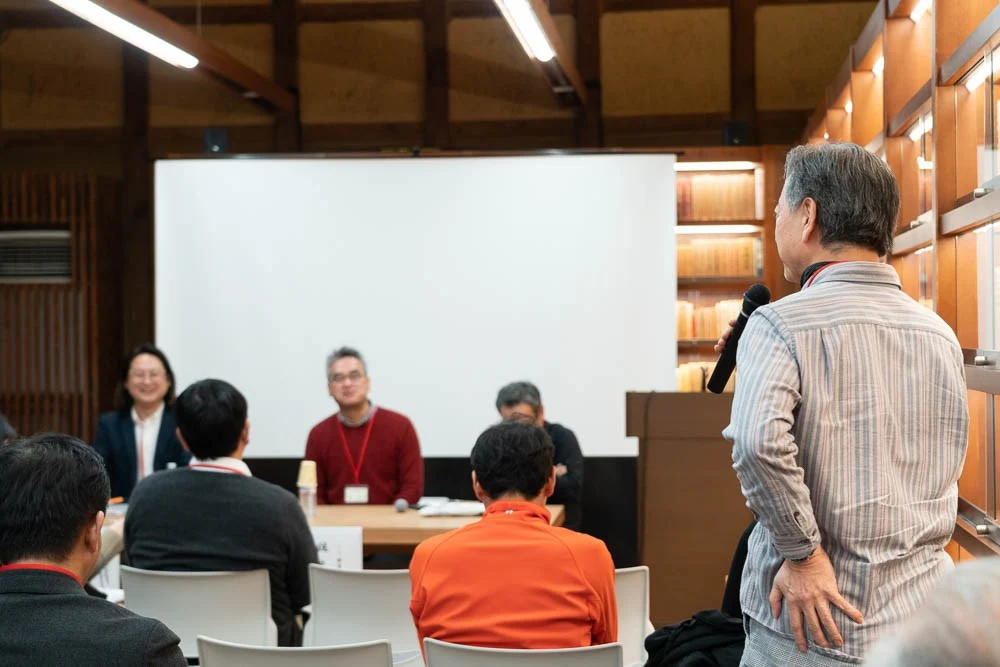
In the floor session, the speakers answered questions from the participants.
How have you overcome challenges so far?
Tsuji
If I compare my life to a plastic model, it's more interesting to make it myself, even if it gets messy with glue, than to receive a beautifully completed model.
Both producing television programs and running a café are things I had never done before, but I have watched television and been to cafés.
If you think, "The biggest amateur is the biggest professional," and act from the perspective of a consumer, everything becomes a proper job.
In a world where IT technologies like AI are advancing, what should adults be careful about regarding children?
Sasaki
I believe the problem is that adults are becoming more and more out of touch.
Children learn skills for living on their own.
Since values differ, being anxious based on adult values may negatively impact children.
I think it would be good to start with an interest, such as "What is AI?" and learn about it.
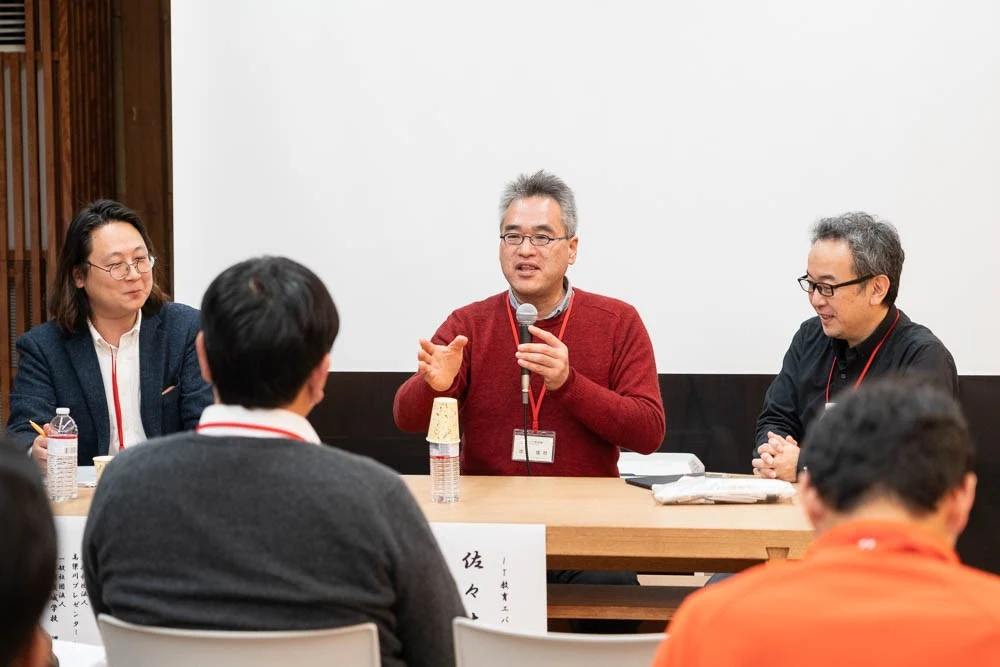
Many people want to solve regional issues but are struggling to balance it with their main job. Can you give some advice?
Sakano Ue
I think the first big factor is whether you can decide how to use your own time.
If you think in terms of 1 or 0, it becomes difficult. Whether your family can be HAPPY is very important.
Therefore, assuming that you will not sacrifice your family, you might say, for example, that you will spend 1% of the year, or 3 to 4 days a year, on community activities.
If you move in that way, there may come a time when someone says, "Can you do this for me if I pay you?"
Tsuji
I am the king of debt (laughs).
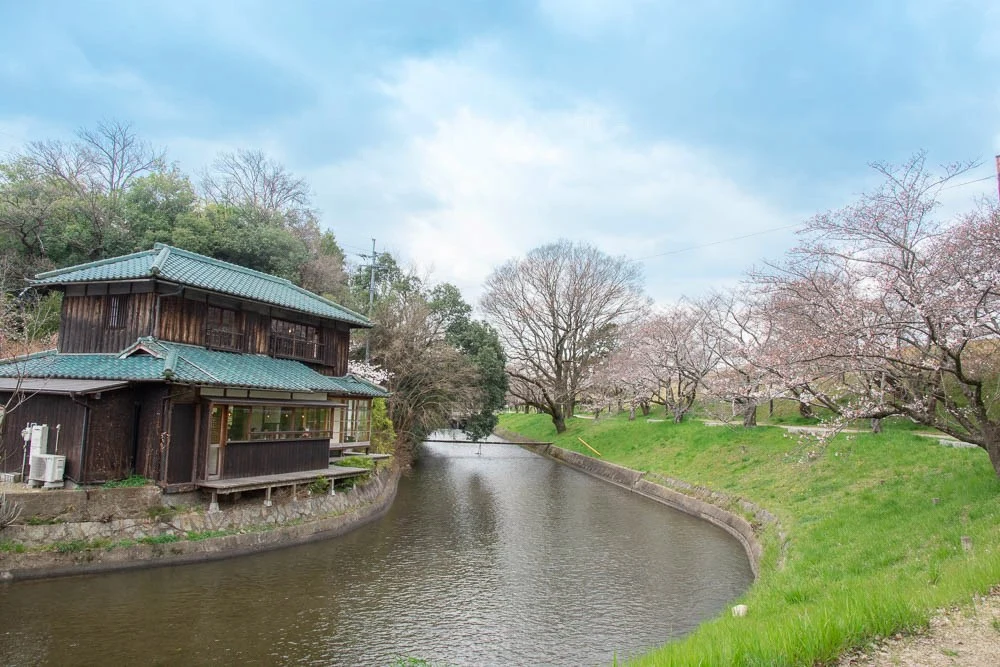
For example, the café by the water, Miyake Shoten, is in a place that has neither convenience nor economic viability. However, there is water and greenery, and if you walk 5 to 10 minutes nearby, the "pores of sensitivity" that are usually closed open up.
By experiencing it as your own, you can imagine various things, and I believe that the economy will flow from there.
Sasaki
I think that unstructured time is important.
In a relationship where you can talk without being bound by time, if you ask someone you trust, "If I were to pay you to do something for me, what would it be?" and let them speak honestly, you might see a side of yourself that you haven't noticed.
Please tell us what you have felt through the heavy rain disaster in July 2018.
Tsuji
The manager of the café by the water, Miyake Shoten, also had his house flooded up to the second floor.
When I visited the disaster area the next day, the people who had been affected said, "I was scared because of the water, but the next day I was looking for water. Maybe we are being taught something."
I thought I needed to reconsider flood control and a rich life.
In one area, there was a flood control facility, but it was too complicated to operate and did not function at all.
Now, residents are trying to create facilities that they can use themselves.
I feel that the movement of "not just for myself, but for the whole community" is accelerating in each region.
Sakano Ue
Even now, when I hear "heavy rain," my body tenses up.
When I was in my second year of high school, the Great Hanshin Earthquake occurred.
Even unconsciously, I may have been influenced in my career path, and now I am engaged in community activities.
Unfortunately, I believe that all adults are responsible for how the students who suffered from disasters will live 20 years from now.
After the Seminar: "Iidobata Meeting"
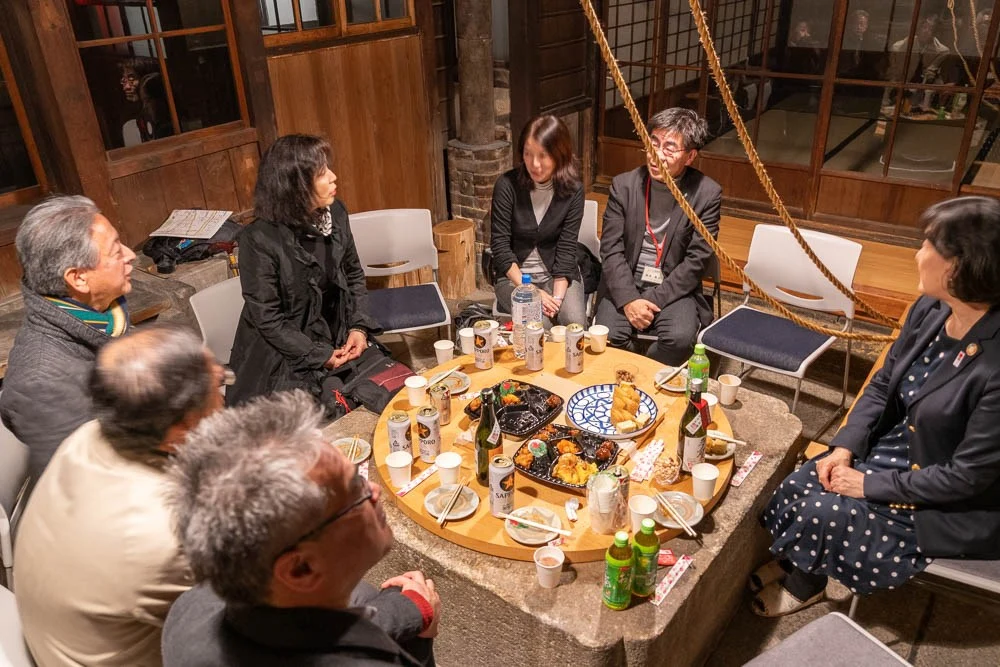
Have you ever talked around a well?
After the Kurashiki Future K School seminar, there was an "Iidobata Meeting" held around a real well.
In a casual atmosphere, many interesting discussions about future movements took place.
Conclusion
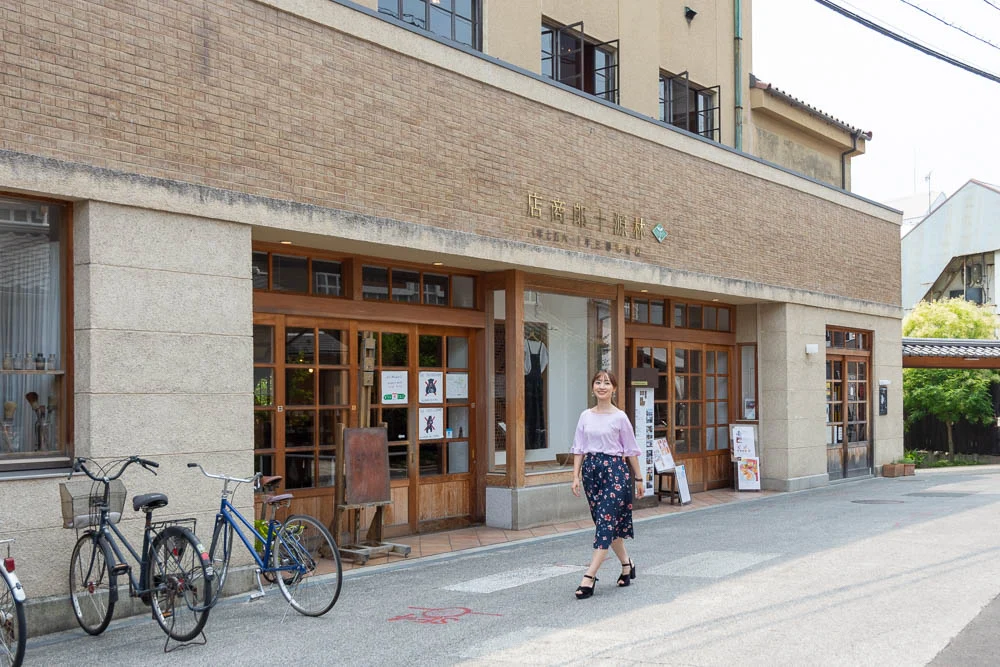
When asked, "What are the stylish spots in Kurashiki?" the unmissable ones are Miyake Shoten and Hayashi Genjuro Pharmacy Museum.
A comfortable place that makes you want to bring people along.
I became even more fond of it after experiencing the thoughts embedded in the store.
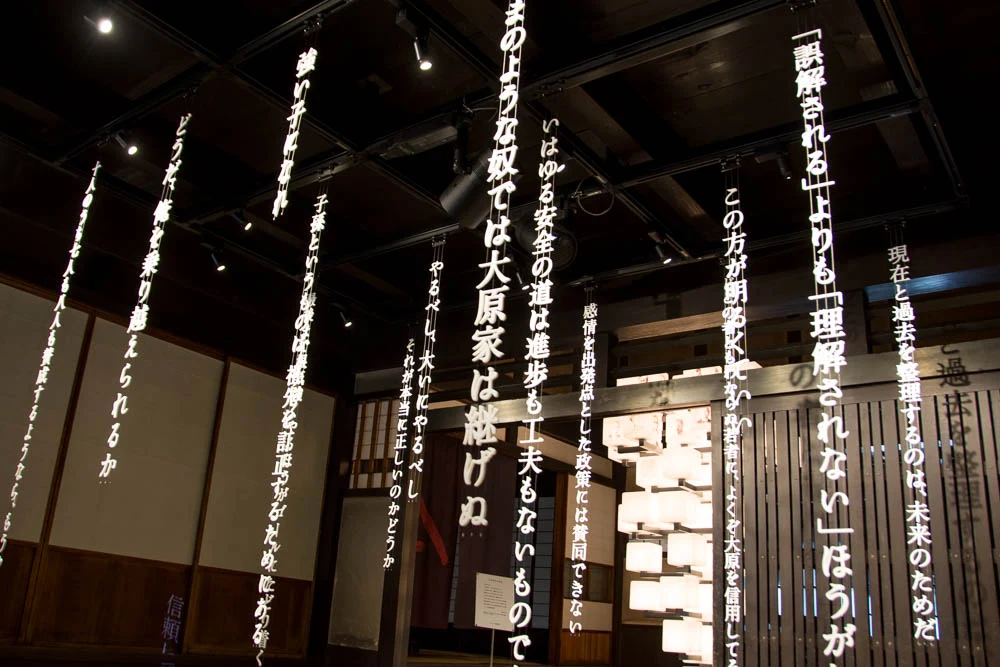
What I learned in the seminar was not only about education and the future of the community.
I was able to think from multiple perspectives about how to engage with my own community, how to work, and what should be passed on to the next generation.
Moreover, I felt very proud as a citizen of Okayama to know that there are people who are seriously considering the future of Okayama and that meaningful seminars are held regularly.
The "Kurashiki Future K Juku" will continue to hold seminars related to education in the future.
Please check the content on the website of Ohara House Katalyzer.
Articles about Ohara House Katalyzer
Data on Kurashiki Future K Juku
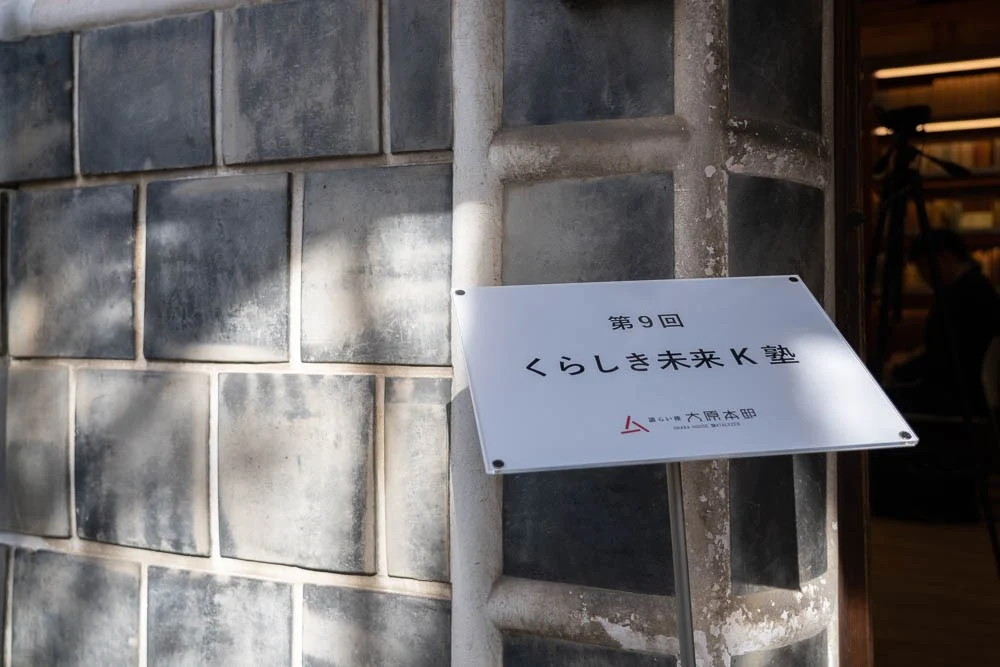
| Name | Kurashiki Future K Juku |
|---|---|
| Date | 9th session on January 26, 2020 (Sunday) from 1:00 PM to 4:00 PM Please confirm the time for each session |
| Location | 1-2-1 Chuo, Kurashiki City, Okayama Prefecture |
| Participation Fee (including tax) | General: 3,000 yen (including tax) KATALYZER members: 2,000 yen (including tax) |
| Website | Ohara House Katalyzer | OHARA HOUSE KATALYZER |