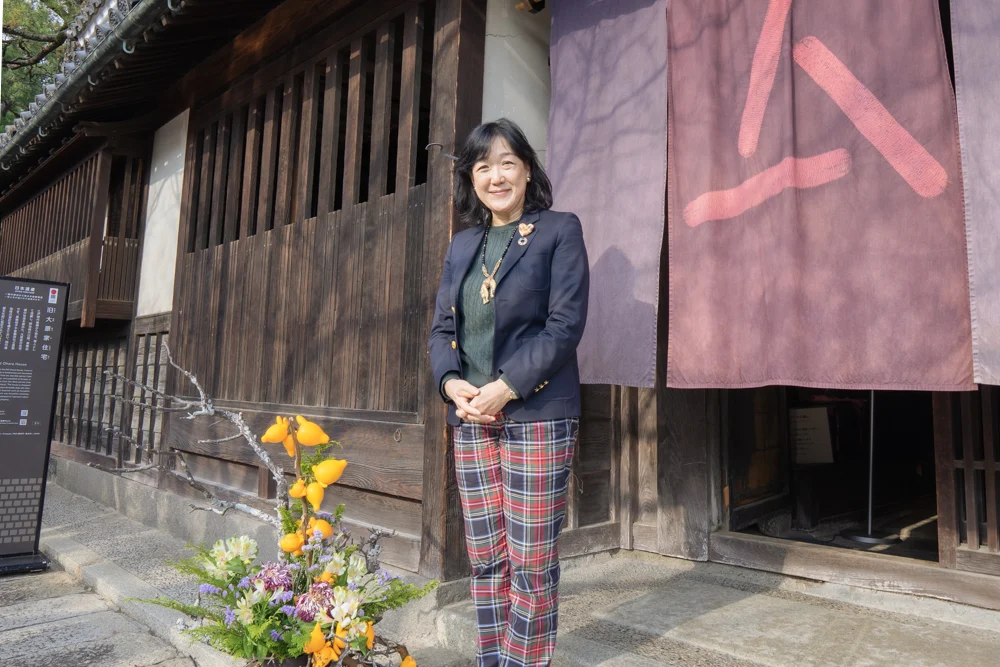
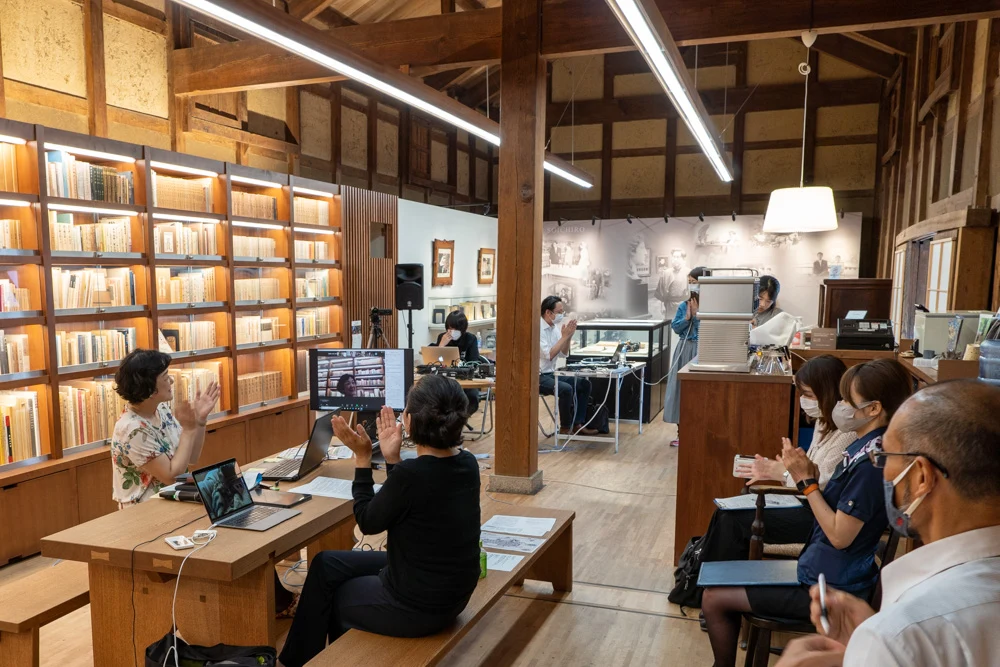
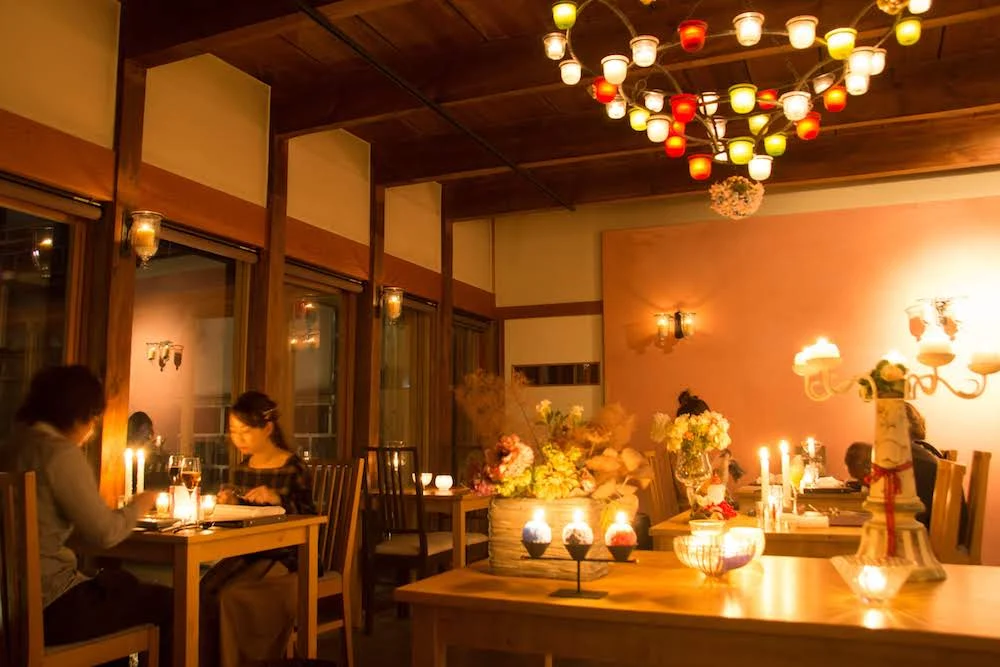
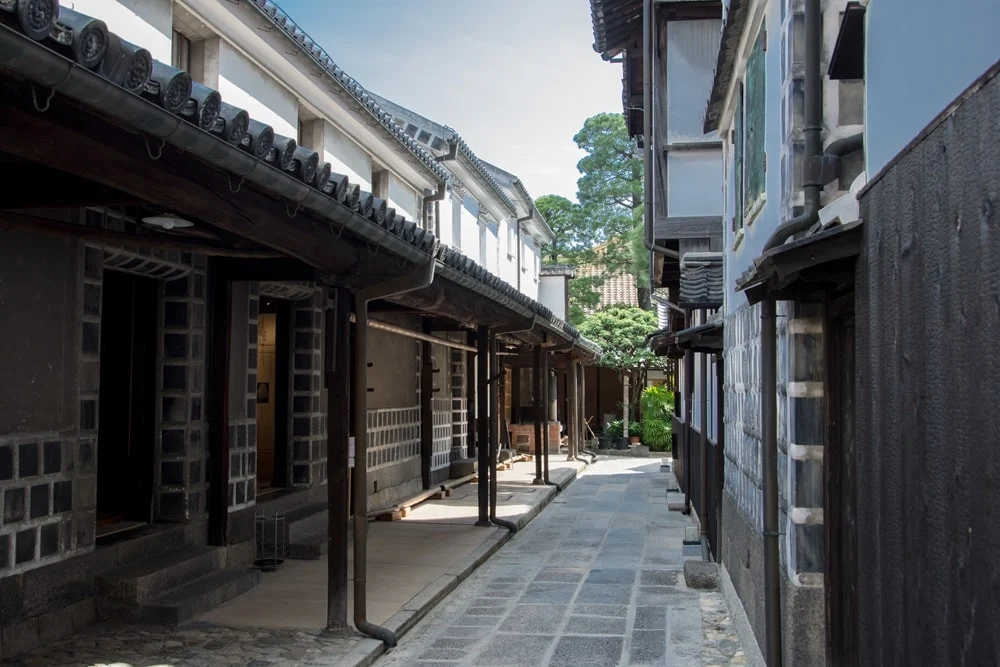
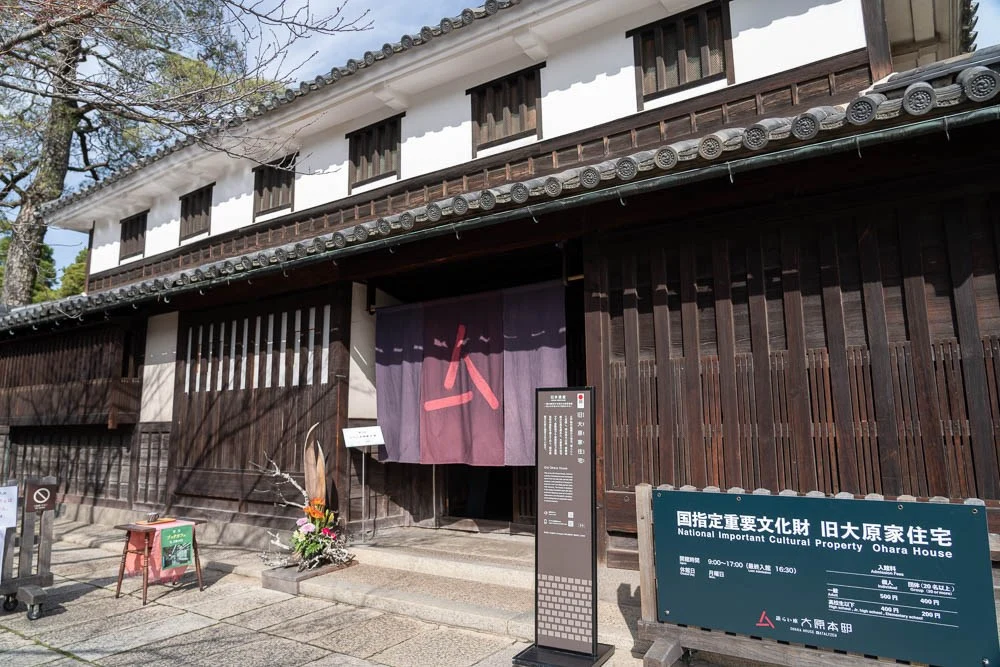
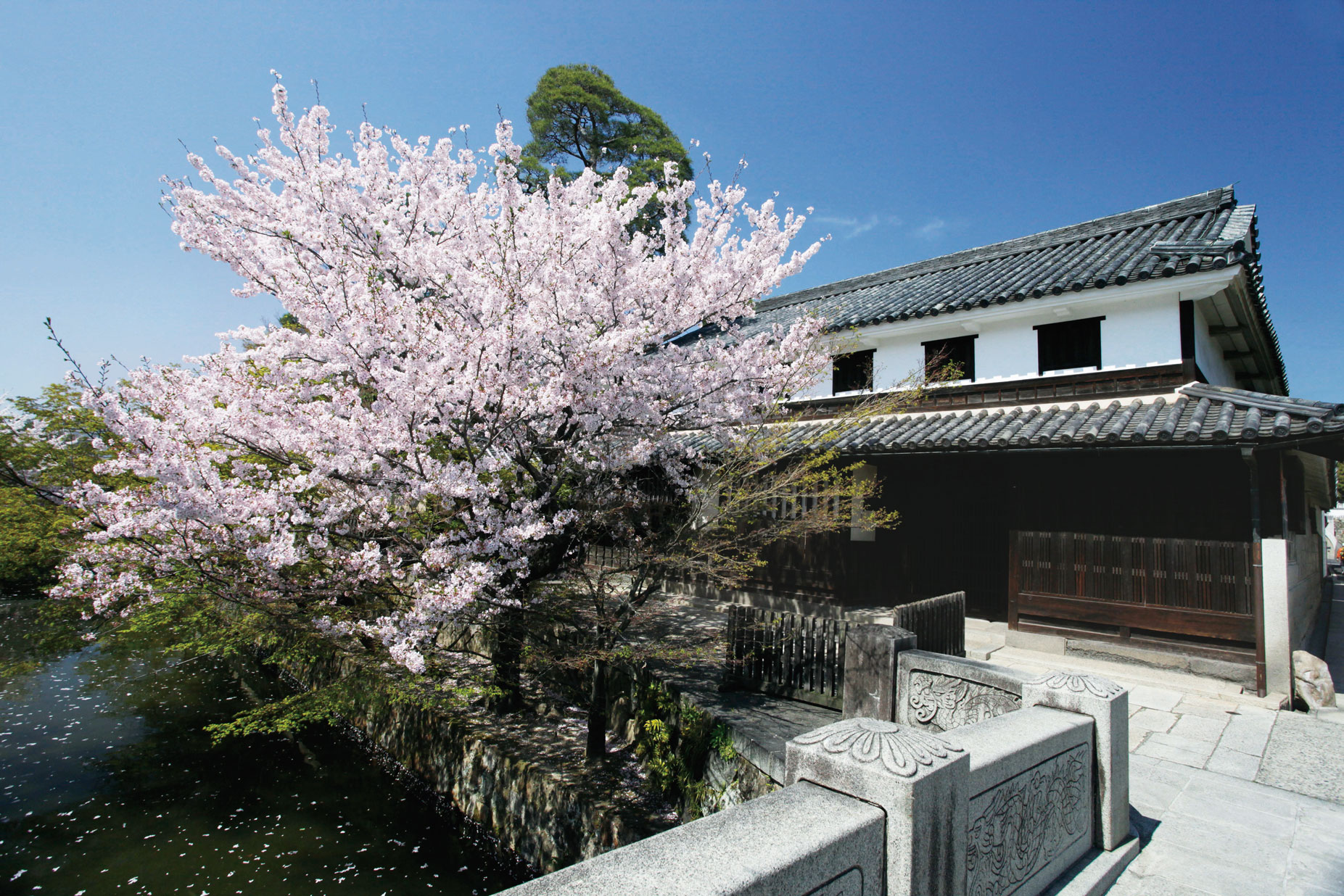
Ohara House Katalyzer, a nationally designated important cultural property located in the Bikan Historical Area.
As a place to discuss the present and future, we are also focusing on educational programs.
One of the programs organized by Ohara House Katalyzer is the Kurashiki Mirai K Juku.
The 10th session was held as a collaborative project with the Takahashi River Basin School.
The theme was, “Serve the town with knowledge: The mutually beneficial relationship between educational institutions and the community”.
This session deepened the understanding of what education is, with discussions on community-based education and advanced school education learned from “the most desirable town to live in America.”
We will report on the seminar held on February 22, 2020 (Saturday), titled “10th Kurashiki Mirai K Juku ~ ‘Serve the town with knowledge: The mutually beneficial relationship between educational institutions and the community’.”
What is Kurashiki Mirai K Juku?
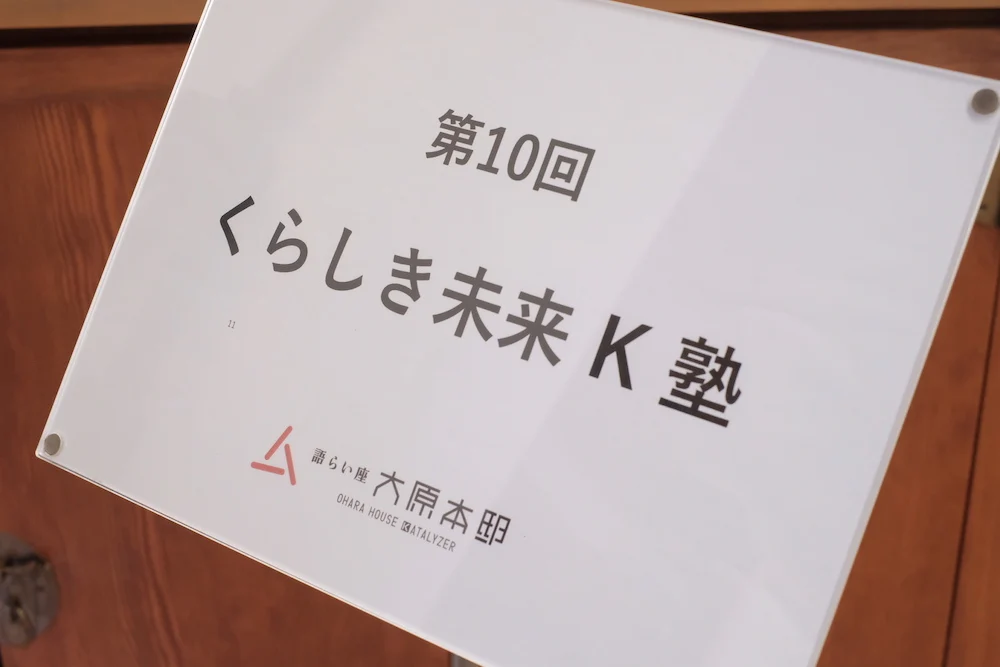
Kurashiki Mirai K Juku is a monthly seminar held at Ohara House Katalyzer, aimed at comprehensive educational reform between schools and society and supporting aspiring teachers.
It started in December 2018 as “Kurashiki Mirai Teacher Juku” and was renamed “Kurashiki Mirai K Juku” in December 2019.
Since December 2019, the following themes have been established:
- Community ✕ Education ✕ Work styles
- Culture ✕ Manufacturing
- Community ✕ SDGs ✕ Educational reform
- Changing work styles ✕ Community
▼ Here is the report from January 2020.
Overview of the 10th Kurashiki Mirai K Juku ~ “Serve the town with knowledge: The mutually beneficial relationship between educational institutions and the community”
The theme of the 10th Kurashiki Mirai K Juku is, “Serve the town with knowledge: The mutually beneficial relationship between educational institutions and the community.”
| Date and Time | February 22, 2020 (Saturday) 1:00 PM - 4:00 PM |
|---|---|
| Venue | Ohara House Katalyzer |
The flow of the seminar was as follows:
| Format | Title | Speaker |
|---|---|---|
| Lecture | What will community life be like in 2030? ~ Learning and livelihoods ~ | Jui Shibusawa |
| Presentation | Community participation-based education in “the most desirable town to live in America” | Yukikawa Yoshikawa |
| Summary | Conclusion | Kensaku Okubo, Yoko Yamashita, Hiroshi Sakanoue |
What will community life be like in 2030? ~ Learning and livelihoods ~ Jui Shibusawa
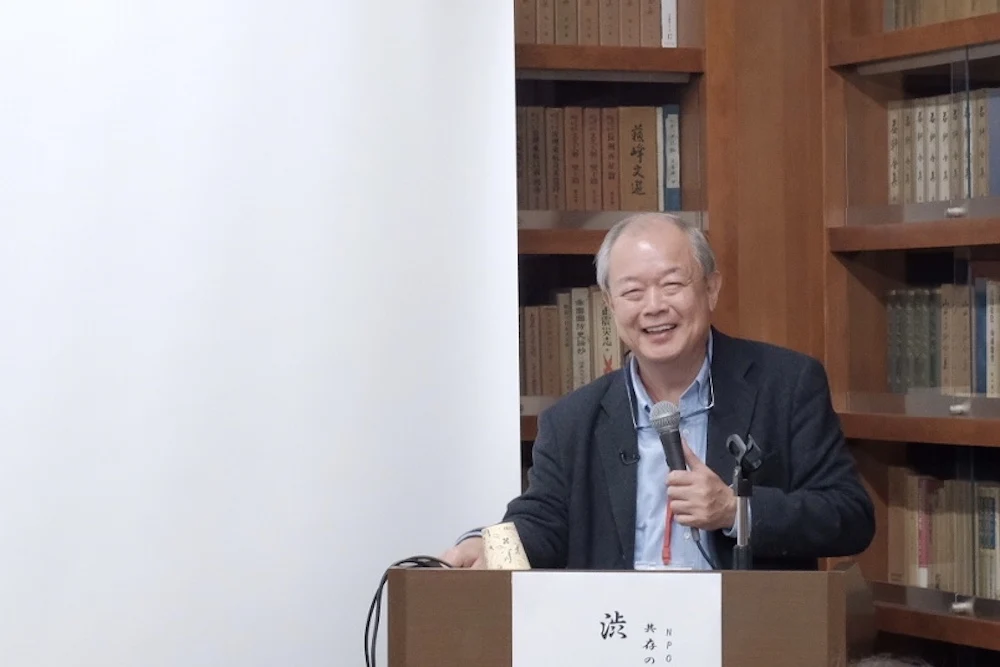
Jui Shibusawa is a graduate of the doctoral program at Tokyo University of Agriculture and is active as a Doctor of Agriculture.
He has previously worked as a director for the theme park “Nagasaki Dutch Village” and the circular city “Huis Ten Bosch,” and is currently the chairman of the NPO Coexistence Forest Network, focusing on community development and human resource development in Japan and various countries.
Additionally, he is the great-grandson of Eiichi Shibusawa, who will be featured on the 10,000 yen bill starting in the first half of 2024.
In his lecture, he discussed “What does it mean to learn in the community?” using a small village in Akita Prefecture, which was the catalyst for his current activities, as an example to talk about “social education.”
I hope you can read it with the feeling of reading a story.
“Social education” learned from a small village in Akita Prefecture
Near the shrine where the village's guardian deity is enshrined, there were said to be three large tree stumps.
Looking at the tree rings, they were large trees that had grown for over 280 years.
When asked the villagers when they were cut down, they said it was in April 1946.
1946 was the year the war ended; these large trees were cut down the year after the end of the war.
At that time, Japan was in a chaotic era, having been turned into a burned-out wasteland by the war.
It was a time when the entire country of Japan had lost hope for survival.
In a small village in Akita Prefecture, in order to somehow regain brightness, they decided to sell the three natural cedars located at the farthest end of the village to “light up with hydroelectric power.”
However, the large tree is a natural Akita cedar that has been protected by generations for over eight generations.
“Is it okay for us to cut it down in our generation?”
“Wouldn't it be better to leave it for the children to eat?”
Various discussions took place among the villagers.
When the villagers were having a hard time making a decision, the village chief said, “If we are going to do it, let's cut it down and regret it,” and finally cut down the Akita cedar that had been carefully nurtured by their ancestors.
Then, they sold the Akita cedar in town, and with that money, they introduced hydroelectric power to the village, allowing lights to shine in the villagers' homes.
When incandescent lights were lit in each household, they felt “warm” before they felt “bright,” and it is said that hope for life surged among all the villagers.
From then on, they resolved to “continue living from now on,” and the cedar tree came to be called a “treasure.”
The villagers shared such stories, saying, “If you are going to live in the mountains, you need to be able to work and earn.”
Conveying Ways of Life Through “Local Work”
What is the difference between “work” and “earn”?
When asked by the villagers, they replied, “You all think work and earning are the same,” and then shared the following:
- Earning is for the family
- Work is for the future
They must do grass cutting and tree transplanting for their children’s generation and future generations.
Work does not earn any money, but without it, the village cannot continue.
If they do not do things that do not earn money, the village will disappear.
Therefore, the villagers say, “Those who can only earn are half-baked.”
What is “work”?
The villagers answered, “It’s a festival.”
Although festivals may seem like “play,” the villagers say that festivals are “work,” and gatherings are also “work.”
Preparation for next year's festival begins the day after the festival ends.
Festivals pass down wisdom from the elderly to the young, and through the preparation for the festival, they convey “how to live” across generations.
Social Education is “Education for Living”
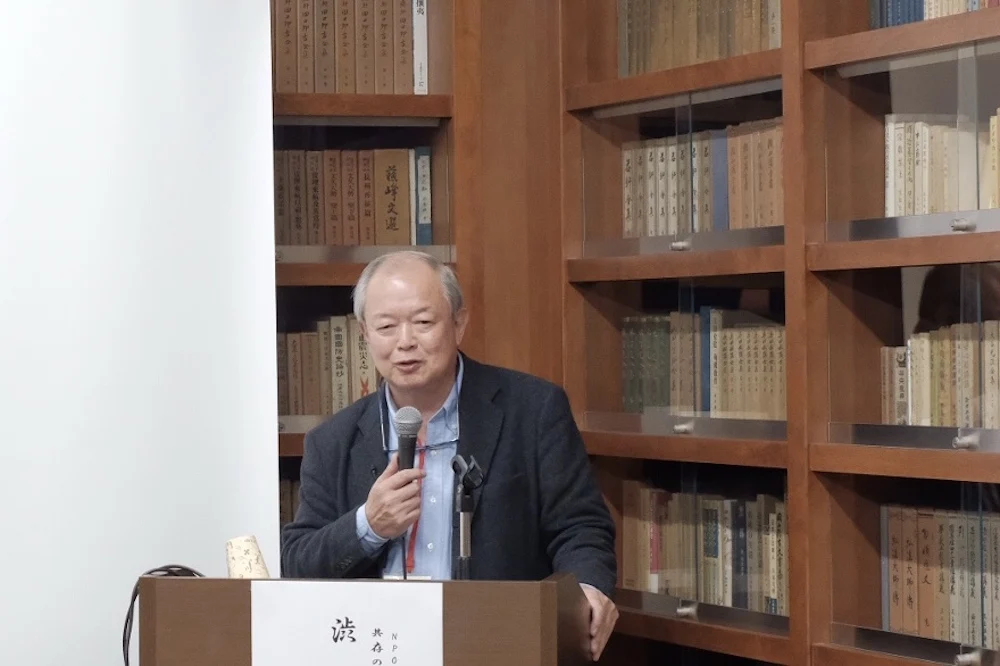
Social education is “education for living” that is learned through hands-on activities during festivals.
School education is “education for acquiring knowledge” that is learned through studying, and that alone cannot sustain life.
Therefore, it is necessary to conduct “social education” to convey how to live in the community.
Recently, there has been an attempt to teach everything in schools, but school education and social education are different.
If we do not teach in the community, even if children acquire knowledge, they will not understand what it means to live.
And as children study for entrance exams, they feel that if they cannot do well in their studies, there is no future, and they end up living in a state of desperation.
“In such a situation, there is no way society can continue,” Shibusawa-san learned from the villagers.
Additionally, what is important for social education is the festival “gathering.”
The “Gathering” That Seems Inefficient is Social Education
Shibusawa-san continues with a story from when he participated in a gathering in a village in Nagoya during his student days.
At the “gathering,” they meet day and night to discuss the festival, but it is not a formal setting like a “meeting.”
“By the way, how is the rice at your place?”
“Recently, my grandmother has been having back problems.”
“Isn’t your daughter about the right age now?”
It feels just like a neighborhood chat, and at first glance, it seems that the discussion about the festival is not progressing at all.
There is no moderator, no one tries to summarize, no blackboard, and they continue to talk about completely different topics.
“This is why rural Japan is lagging behind!” Shibusawa-san thought when he participated in the gathering as a student.
He was furious at how irrational, unscientific, and inefficient it was.
At that time, during the high economic growth period, rationality, economic efficiency, and unity were highly valued, so he was surprised by the inefficiency of the “gathering.”
However, according to Shibusawa-san, this seemingly wasteful chatter is necessary.
Through the gathering, the following can be understood:
- What circumstances each household is in
- How the farmland is
- Whether they are financially comfortable or struggling
- What each person thinks
The circumstances of each household can be somewhat shared among everyone.
This is a part that cannot be discussed in a meeting and is a “sensation before it becomes words,” Shibusawa-san explains.
It is essential to have the time of the “gathering” where everyone shares the situations of their community members and reads the differences.
In today’s education, where going towards a conclusion in the most efficient way is considered best, this is seen as “the worst education.”
However, in an era that was highly influenced by natural seasonal changes and had high uncertainty, it was necessary to share everyone’s situations because they could not unite their efforts towards one thing.
In ancient Japan, festivals were held to share “sensations” rather than “knowledge,” and while acquiring knowledge from school education, they learned sensations through social education.
Reasons for the Loss of Local Social Education
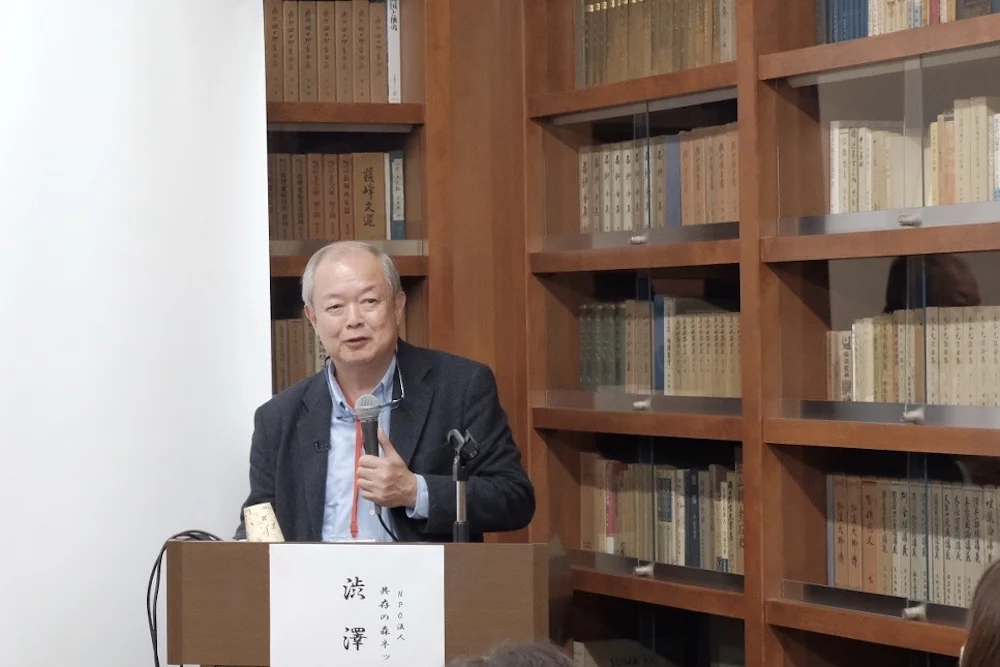
Why has local social education been lost?
Shibusawa-san states, “Japan changed due to the war.”
Japan became a wasteland due to the war and had to recover economically.
Therefore, Japan has always been thinking about how to increase GDP (Gross Domestic Product).
During the high economic growth period, rationality, economic efficiency, and unity were emphasized to raise GDP.
In other words, post-war Japan has considered “what can make money” as something valuable.
Housewives, child-rearing, and housework have been regarded as non-labor.
From Now On, It’s Time for “Be” Over “Do”
During the high economic growth period, what one has done was emphasized.
In English, it has been evaluated based on “do (what one has done).”
- What company’s president one is
- What kind of work one has accomplished
Until now, “do (what one has done)” has been emphasized, but from now on, “be (how one wants to be)” is important, according to Shibusawa-san.
People born after the high economic growth period do not consider making money or becoming wealthy as valuable.
For example, when young people in Maniwa City, Okayama Prefecture were asked what they want to be in the future, they answered as follows:
- I want to live positively
- I want to spend time in nature
- I want to live with my grandparents
Now that the high economic growth period has ended, Japan has become wealthy, and the demand has shifted from “do (what one has done)” to “be (how one wants to be).”
Like the “gathering,” instead of holding meetings, sharing information before it becomes words and empathizing is what “be (how one wants to be)” education is, and it is something that the community needs to do, Shibusawa-san explains.
Learning not only through school education but also through engagement with the community is something important for the future, as learned from Shibusawa-san’s experiences.
Next, from the perspective of school education, Okayama University Practical Education Planner Yoshikawa Yuki will give a lecture on social participatory education in “the most desirable town in America.”
Social Participatory Education in “The Most Desirable Town in America” - Yoshikawa Yuki
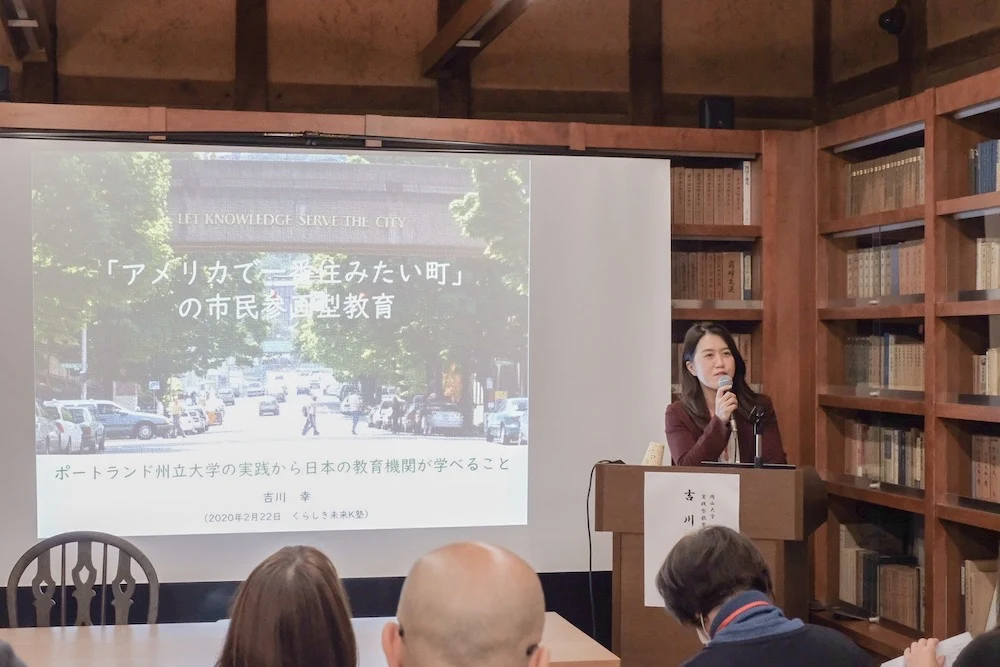
Yukikawa is working as a practical education planner at Okayama University, focusing on enhancing the educational appeal of the community under the theme of "Community-wide Human Development."
She shared insights about the educational case of Portland, often called "the most desirable city to live in America," and her practices at Okayama University through a lecture and mini-workshop.
How Portland Became "the Most Desirable City to Live in America"
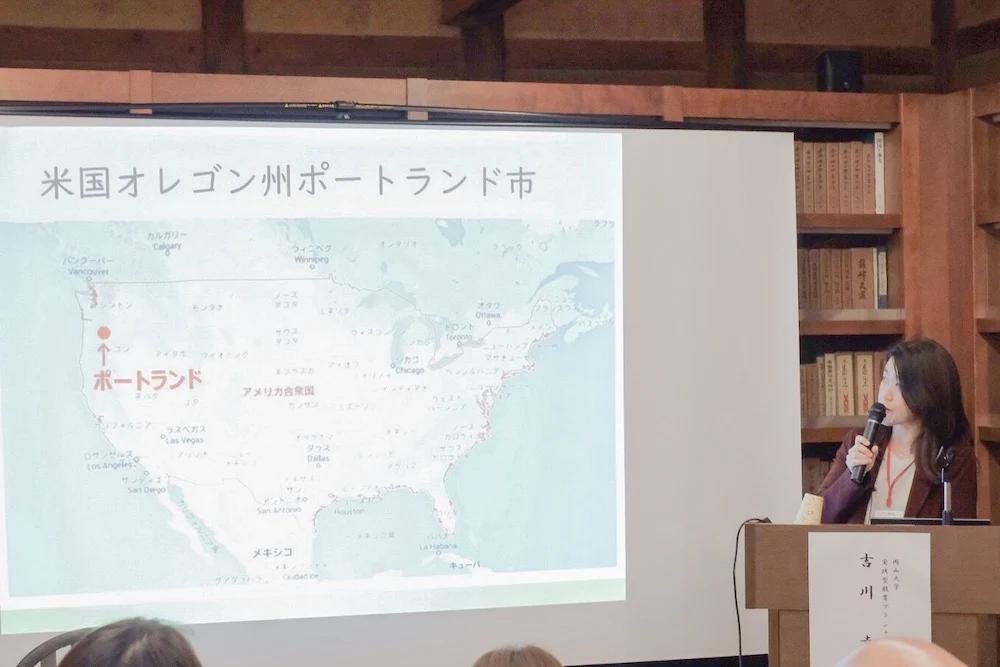
Portland, located in Oregon, is now referred to as "the most desirable city to live in America," but it was originally a town suffering from environmental pollution.
With industry thriving, industrial oil flowed into the rivers, making it impossible for fish to live, and the town was known as "Stumptown" due to the stumps left behind after clearing the wilderness.
However, a group of young people gathered with the idea of "let's build a town!" and the citizens united to work on town development, creating a place where people would want to live.
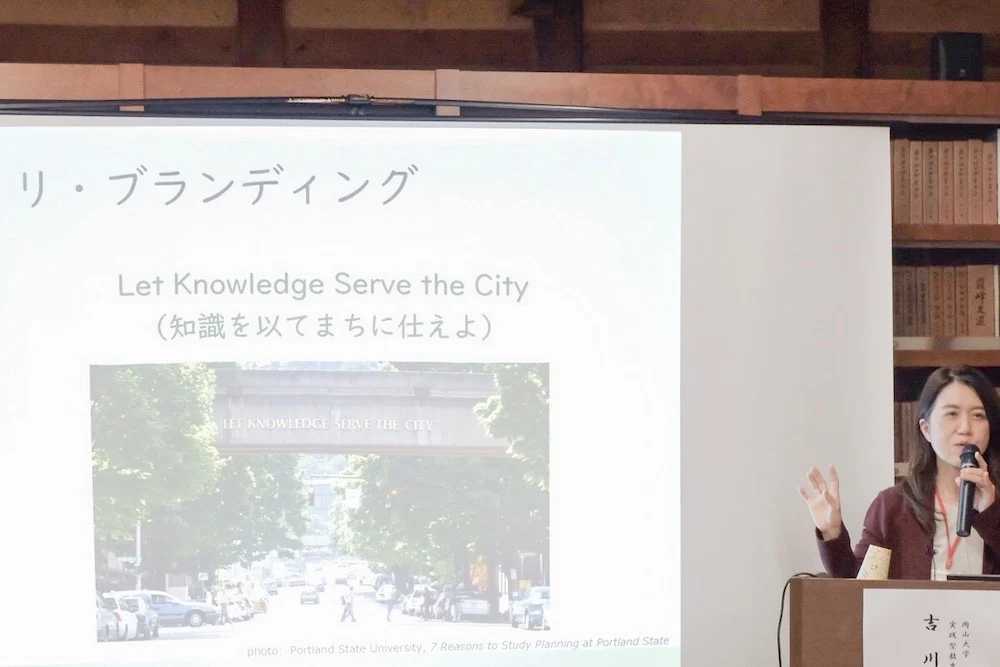
Originally called "Stumptown," Portland underwent a rebranding.
With the motto "Let Knowledge Serve the City," Portland State University became a town focused on community-based learning.
Community-Based Learning "CBL"
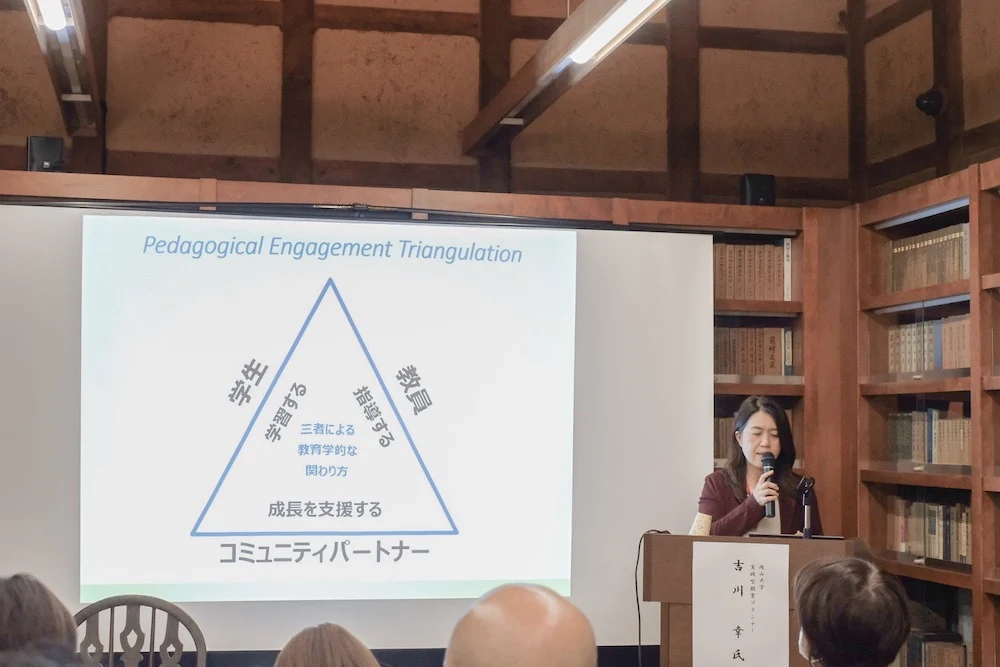
Community-based learning is referred to as CBL.
CBL is a form of education where teachers, students, and community partners work together in a mutually supportive manner.
Partnerships are essential for mutual support.
Yukikawa took out some yarn and began the workshop by asking participants to "use your hands to knit the yarn."
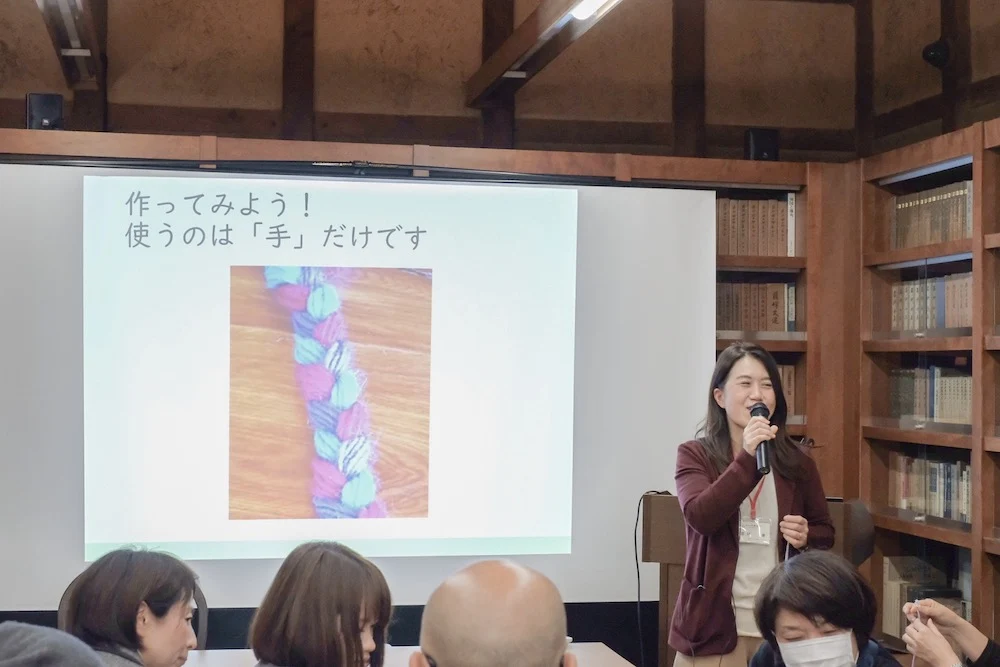
Participants were surprised by the sudden knitting activity!
Those familiar with knitting started smoothly, while those who were not accustomed to it were puzzled.
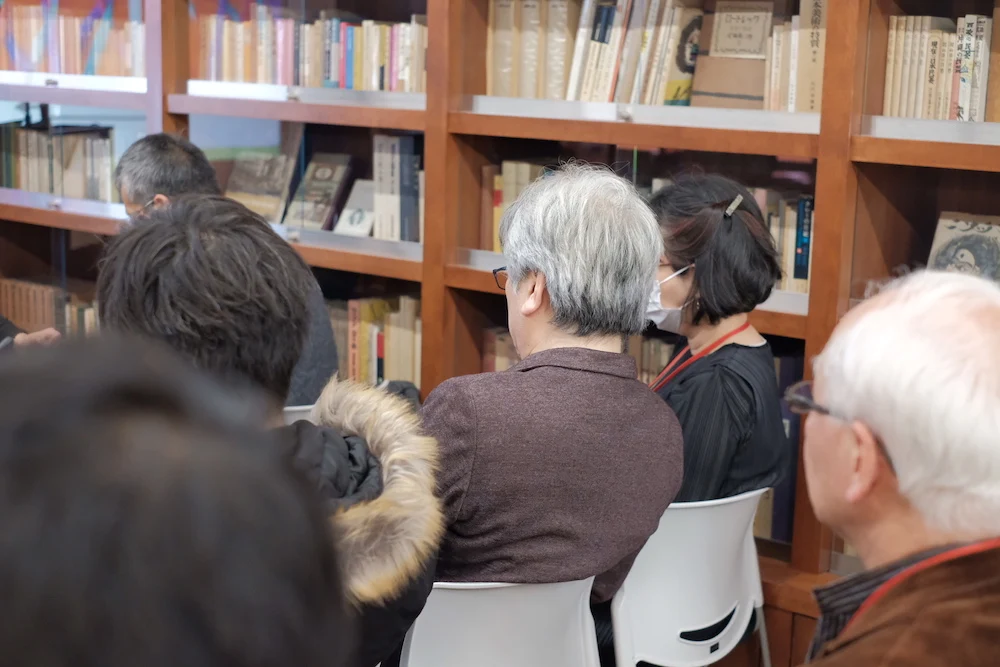
The author is struggling with knitting for the first time since elementary school...
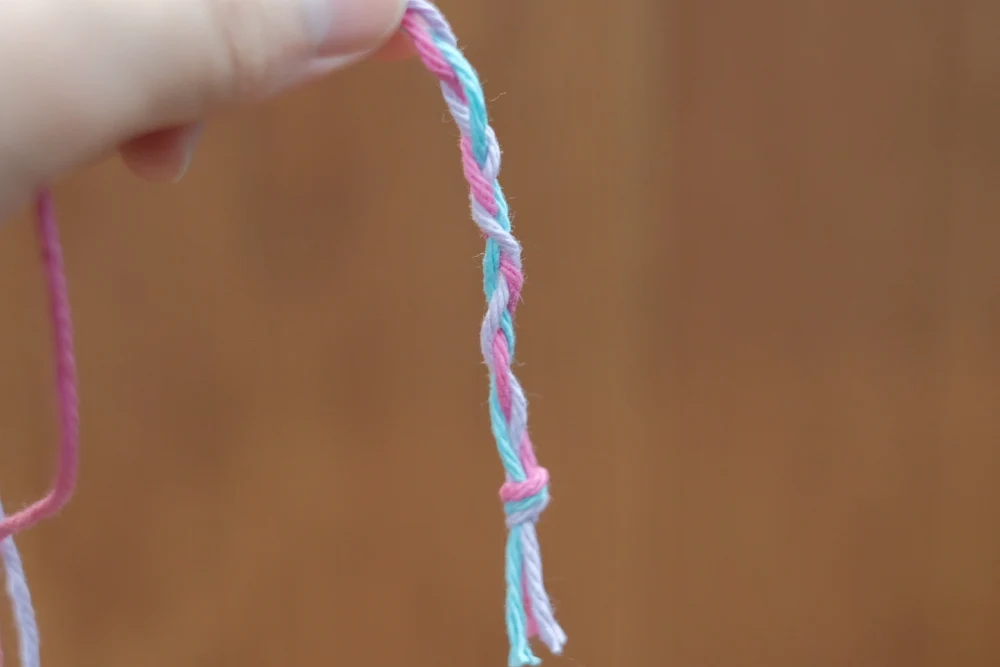
Seeing people struggling, Yoshikawa-san says, “Please use your hands and be aware of partnership.”
Then, those who are good at knitting began to support those who are not.
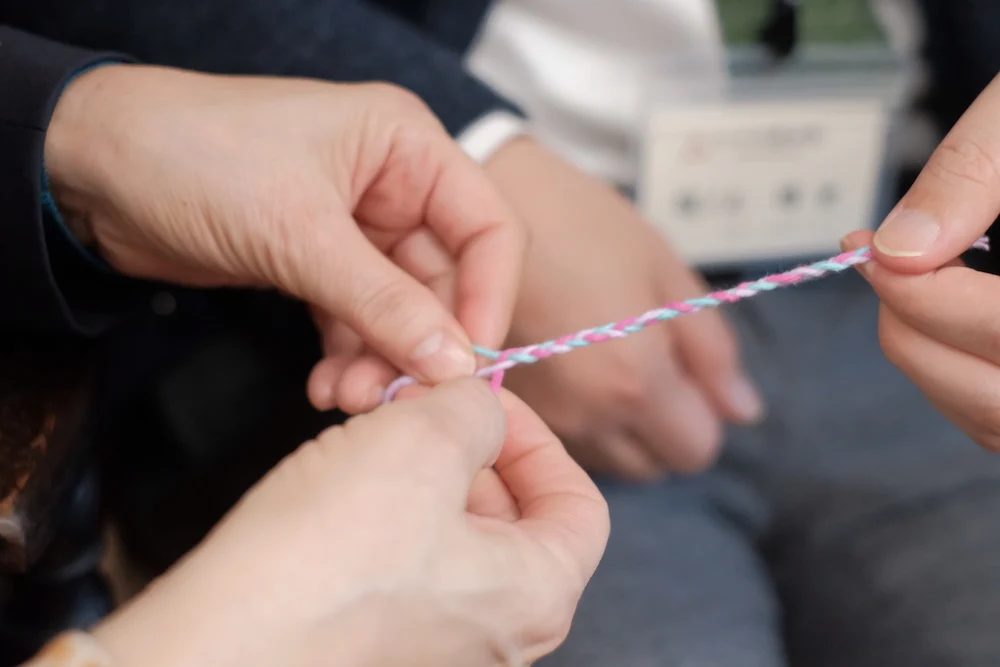
Thanks to the support of those skilled in knitting, those who struggled were able to do it one after another.
Yoshikawa-san explains that partnership means supporting those around you in areas where you excel.
In CBL, there are also things that cannot be solved by just schools and students.
By having community partners support, we can overcome the weak areas of traditional school education and realize learning rooted in the community.
To achieve this, it is necessary for a professional called AP (community coordinator) to function as a link among the three parties.
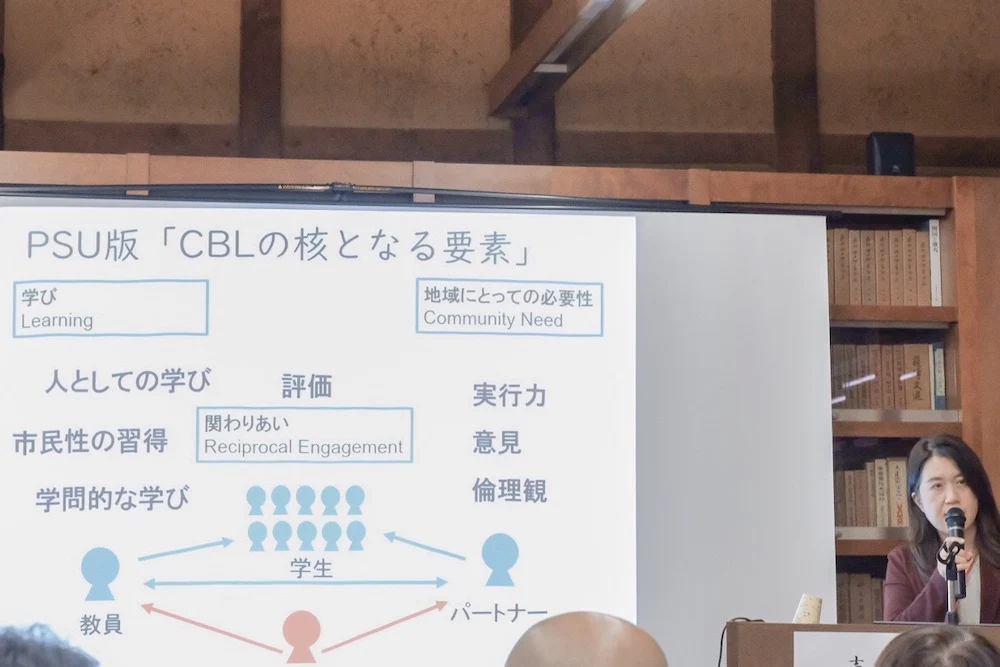
AP (community coordinator) is the one who acts as the organizer of CBL, providing support tailored to the situations of the university and partners.
In Japan, there are still few schools that have implemented this, but in Okayama Prefecture, the number of schools introducing AP, mainly high schools, is gradually increasing.
At Portland State University, CBL is being realized through an organizational structure of the university, community partners, and the coordinating AP.
How Learning in Portland is Being Utilized at Okayama University
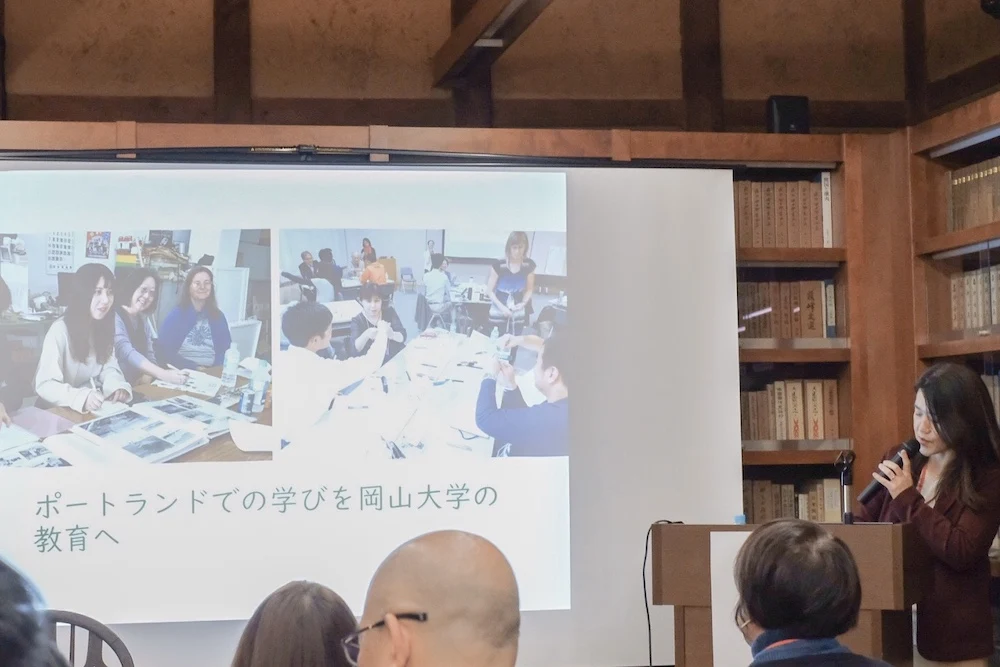
Okayama University is engaged in “practical community collaboration education,” addressing the issues felt by the local community and nurturing practitioners equipped with the practical knowledge (judgment, leadership, teamwork, responsibility, and spirit) necessary for their resolution.
For example, through forestry practice, students have worked with local companies to actually use chainsaws to cut trees.
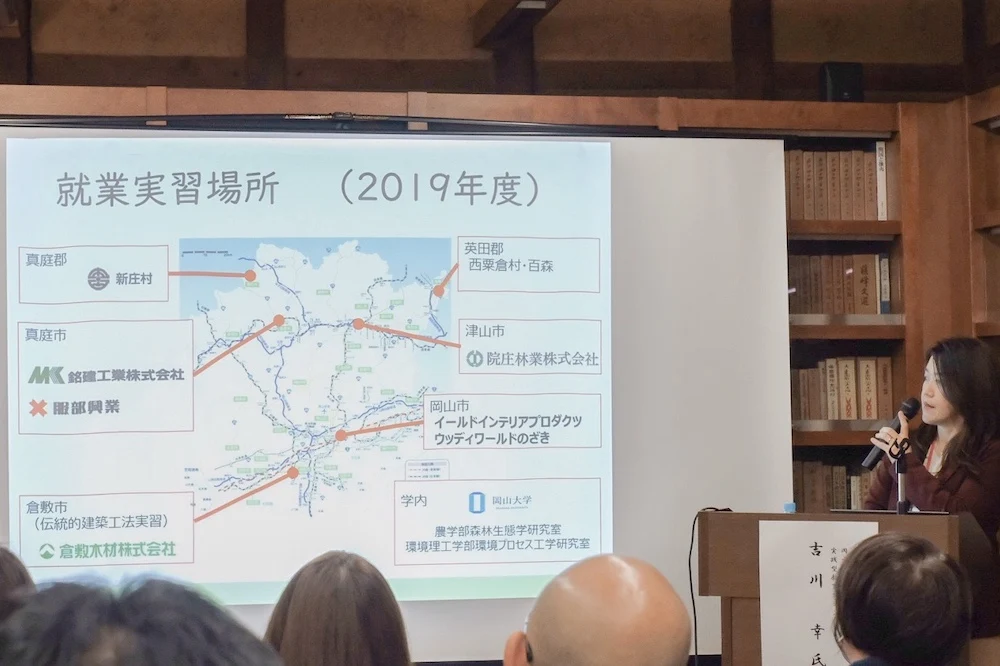
The forestry practice also includes international internships, with international students participating and developing communication skills by translating and teaching what they learned from local people.
Additionally, in a practical observation called “job shadowing,” students learn by following people who are actually working and observing their work environment.
This is not in the form of a factory tour, but allows students to experience the usual workflow.
It is said that the phrases associated with “working” change significantly before and after doing “job shadowing.”
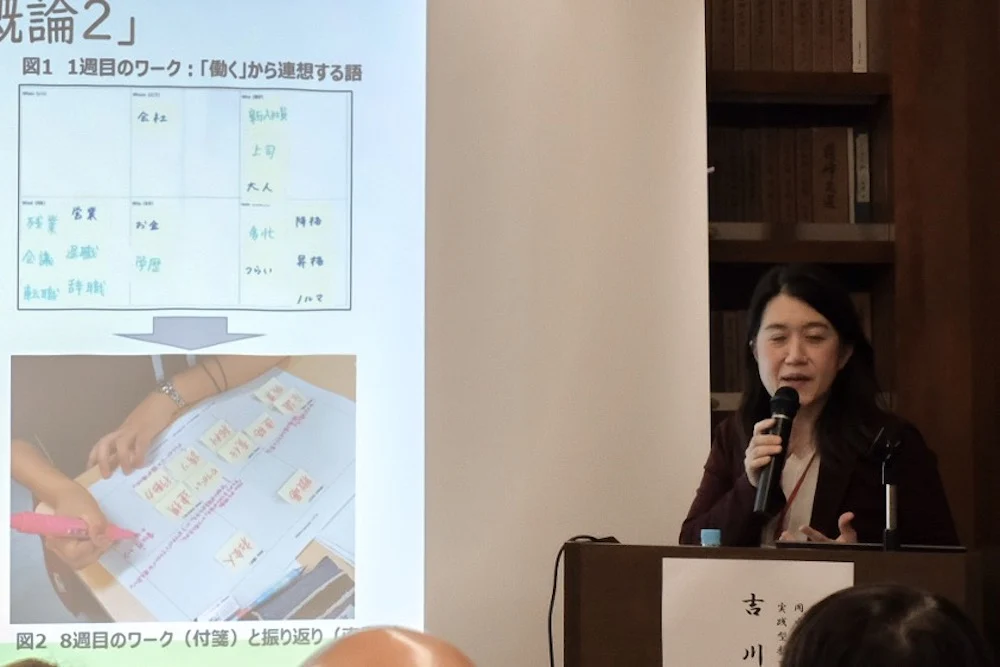
Before the practice, the phrases associated with “working” often have negative connotations such as “hard, busy, overtime, quotas.”
However, after “job shadowing,” they change to positive phrases like “pride, learning, fulfillment, growth, proactivity, collaboration.”
It seems that without school education, it is difficult for students to form an image of actual work, and they tend to judge based only on images from dramas and movies.
From Yoshikawa-san's lecture from the perspective of an educational institution, I learned that by learning in cooperation with the local community, students can gain useful knowledge for when they enter society.
Conclusion
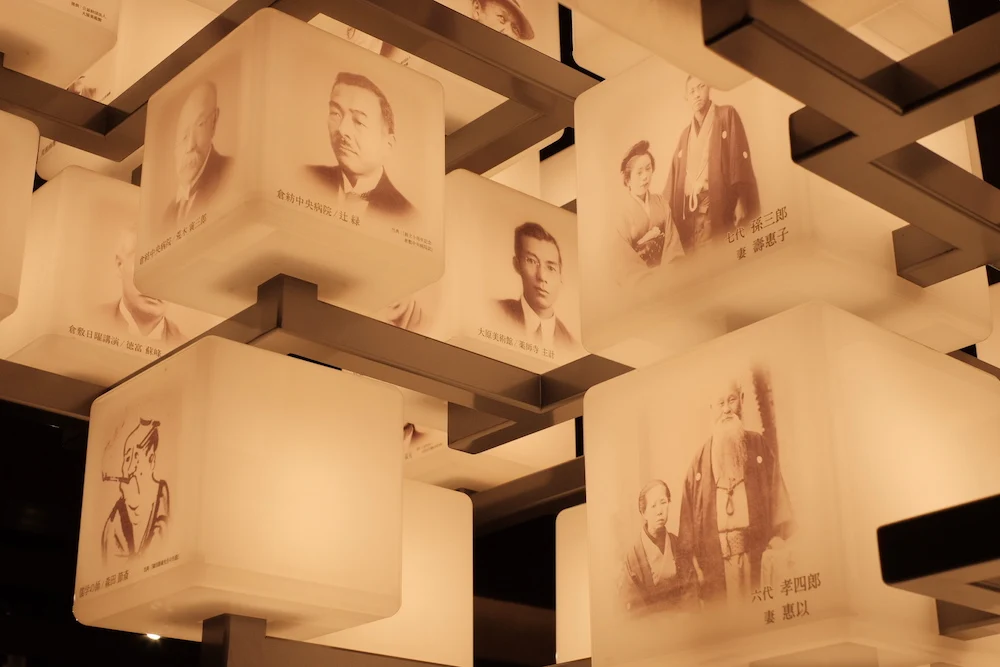
In the 10th Kurashiki Future K Seminar, we learned about the importance of collaboration between educational institutions and the community.
It became clear from the discussions of the two speakers that learning not only "knowledge" but also "sensation" is extremely important, and I felt the significance of the close relationship between schools and the community.
As a regional coordinator at a high school, I have witnessed the moment when students' eyes sparkle while talking with local adults.
The joy of discovering a new "sensation" cannot be learned only within the school.
However, I also believe that this feeling is possible because of the "knowledge" gained through school education.
I felt that it is essential for the community and educational institutions to respect each other's educational approaches, understand one another, and cooperate for the future of the children.
The "Kurashiki Future K Seminar" will continue to hold seminars related to education in the future.
Please check the content on the Ohara House Katalyzer website.
Articles about Ohara House Katalyzer
Kurashiki Future K School Data
| Name | Kurashiki Future K School |
|---|---|
| Date | February 22, 2020 (Saturday) |
| Location | 1-2-1 Chuo, Kurashiki City, Okayama Prefecture |
| Participation Fee (including tax) | General: 3,000 yen (including tax) KATALYZER Members: 2,000 yen (including tax) |
| Homepage | Ohara House Katalyzer |