A letter that leaves a lasting impression
In the summer of Kurashiki, I encountered a quietly memorable moment amidst the historically rich streets.
It was a moment of touching the "true feelings" contained in a single letter written by artists, rather than a work of art.
- It’s okay if it doesn’t reach you, but I want to convey it
- In this single piece, I find my present self
Such words resonate softly in the heart, transcending time.
Until August 3, 2025, I would like to introduce the special exhibition "A Collection of Letters Remaining in the Ohara Family - Letters from Kojima Torajiro and Munakata Shiko" being held at Ohara House Katalyzer.
The images in this article are published with permission.
Please refrain from reproducing the images.
What is the special exhibition "A Collection of Letters Remaining in the Ohara Family - Letters from Kojima Torajiro and Munakata Shiko"?
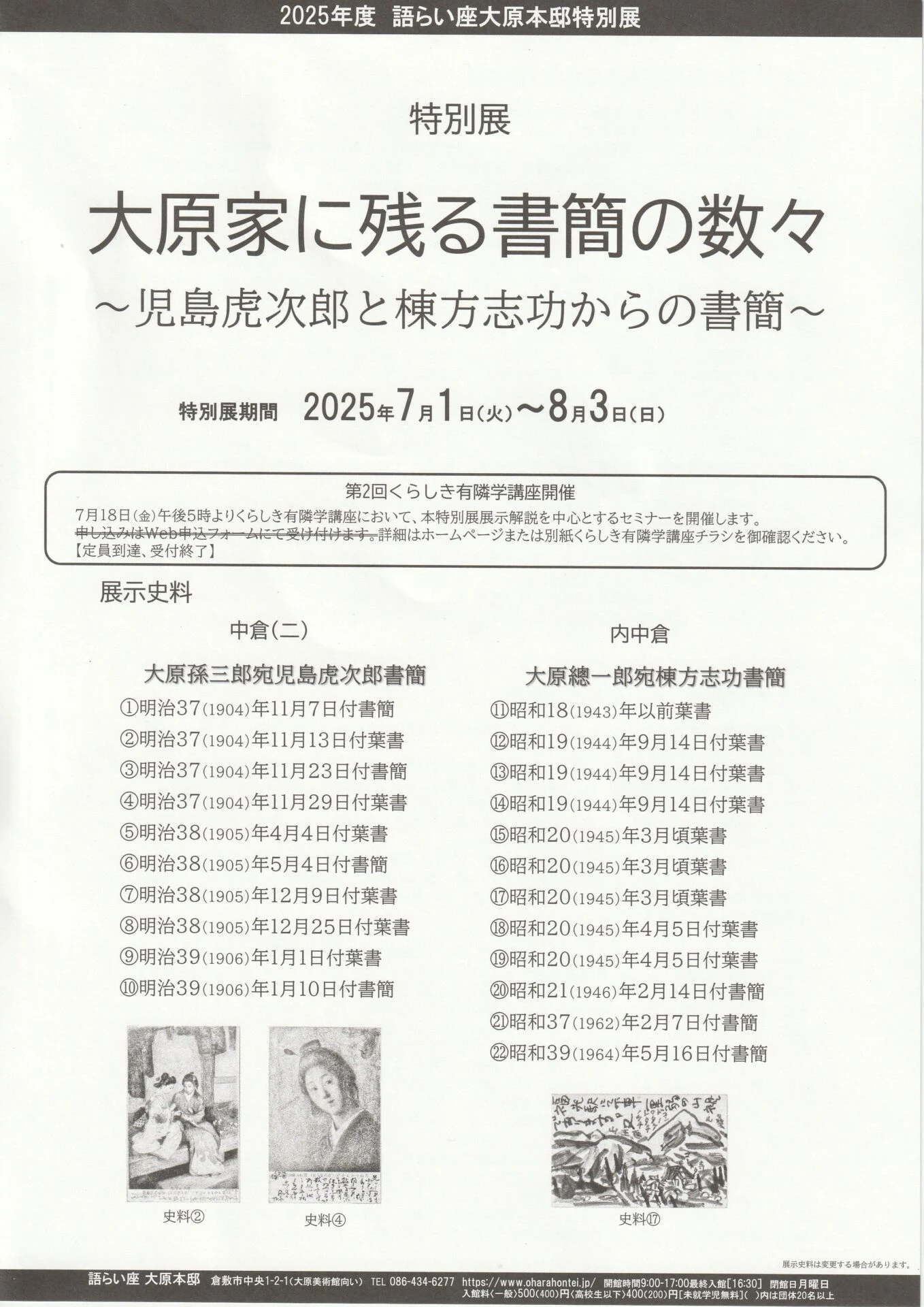
The special exhibition "A Collection of Letters Remaining in the Ohara Family - Letters from Kojima Torajiro and Munakata Shiko" is currently being held at Ohara House Katalyzer until Sunday, August 3, 2025.
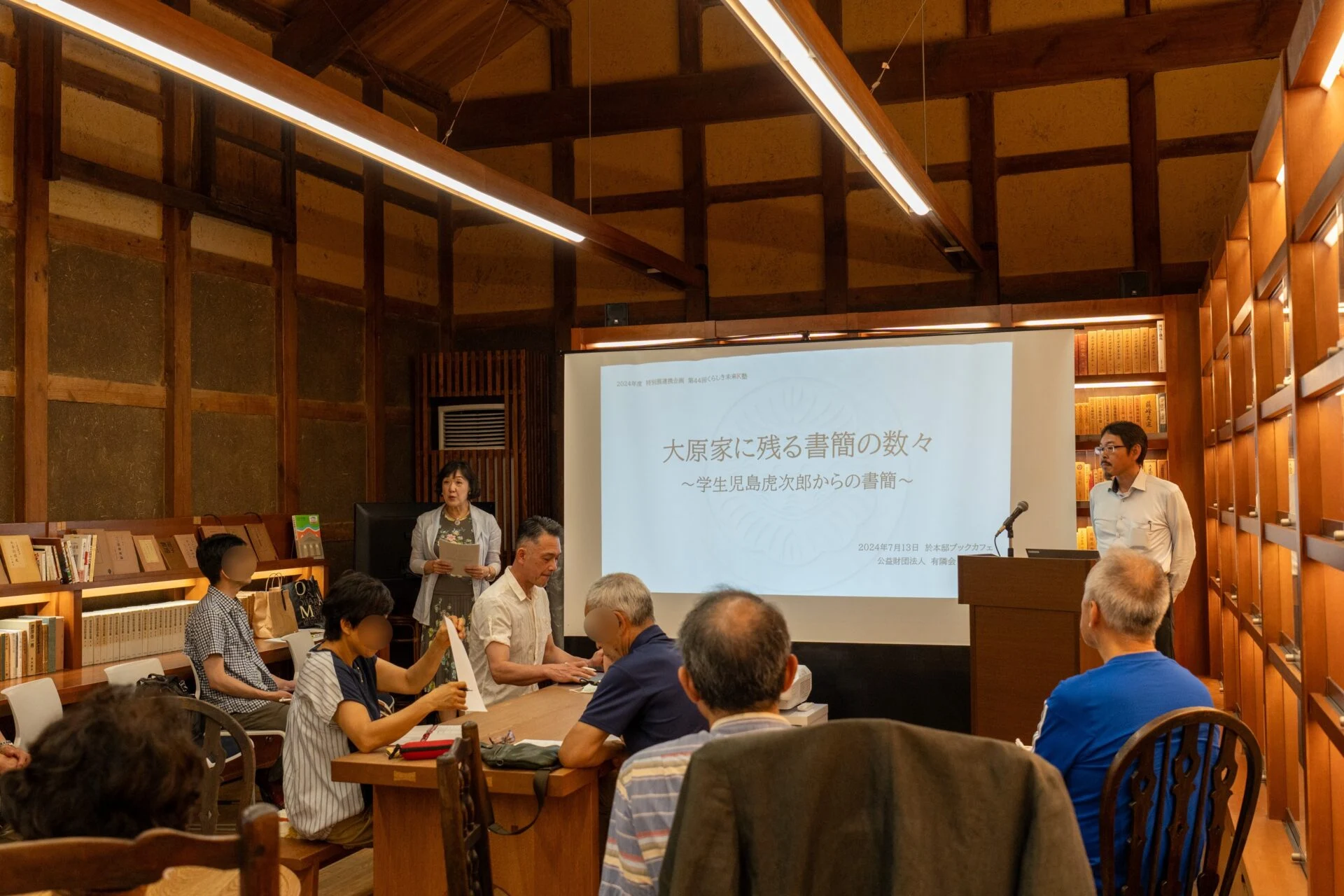
The exhibition was planned by Mizushima Hiroshi of the Yu-rin Association, a public interest incorporated foundation. Last year (2024), a special exhibition centered on Kojima Torajiro's letters was held, introducing the personality and growth of Torajiro as read from the letters.
"Last year, there were many letters from Torajiro's student days that we couldn't introduce due to space constraints. They contain the genuine voice of the young Torajiro before he became an artist, and I wanted everyone to see them, so I planned this exhibition," says Mizushima.
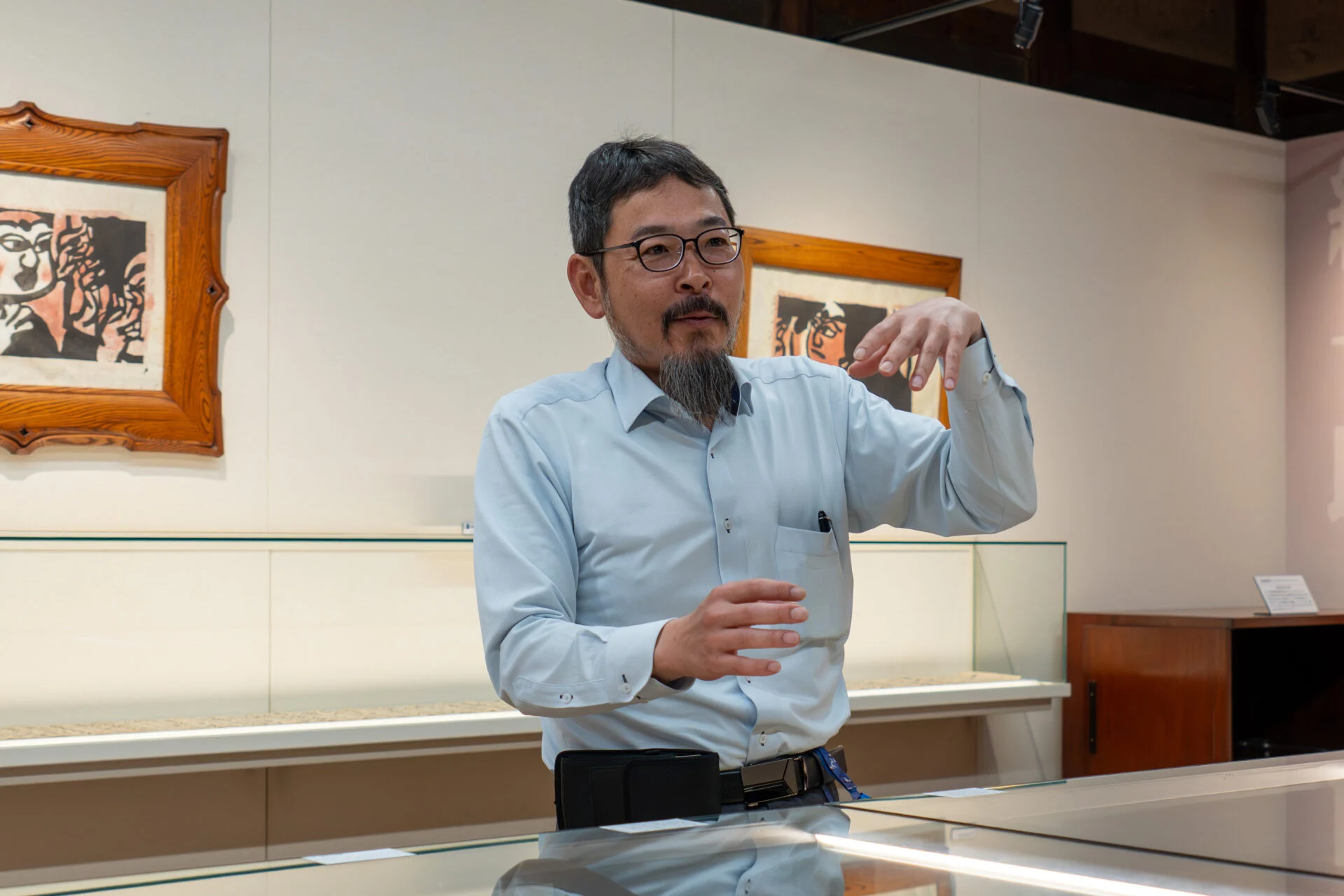
In this exhibition period, not only the relationship between Torajiro and Ohara Magosaburo but also the relationship between Munakata Shiko and Ohara Soichiro is highlighted, with Shiko's letters also on display. "I hope visitors can feel the deep trust between the supporters and artists spanning two generations," Mizushima says.
What emerges from the letters is the honest and human side of the artists that cannot be understood from their works alone.
Enjoying "Ohara House Katalyzer" with the history of Kurashiki
The venue is the nationally designated important cultural property "Ohara House Katalyzer", built in the late Edo period.
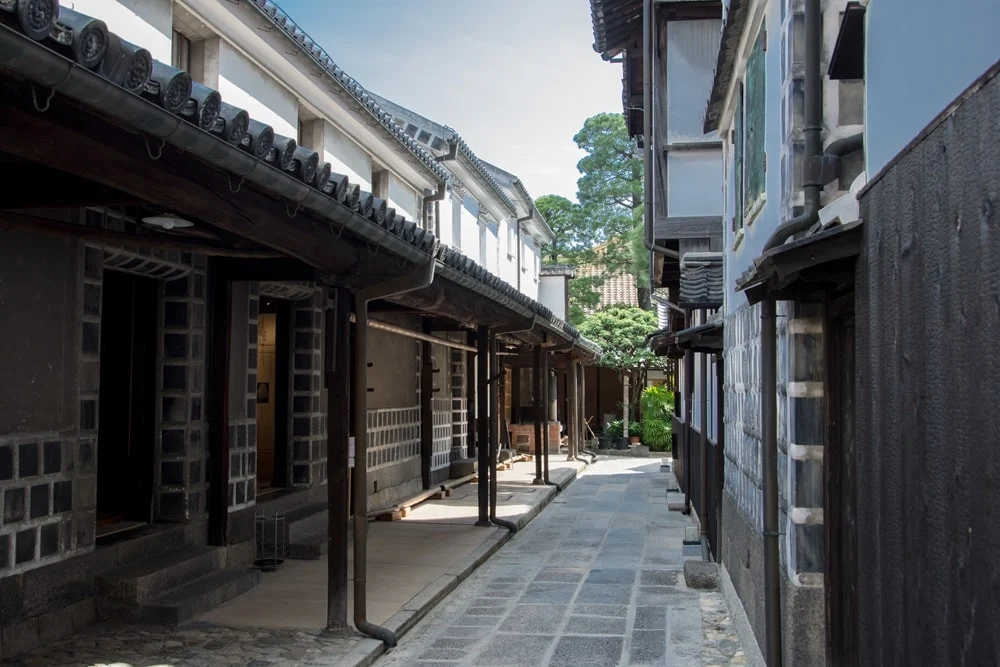
As you walk along the cobblestones of the Bikan Historical Area, it quietly stands amidst the scenery of white-walled storehouses and townhouses.
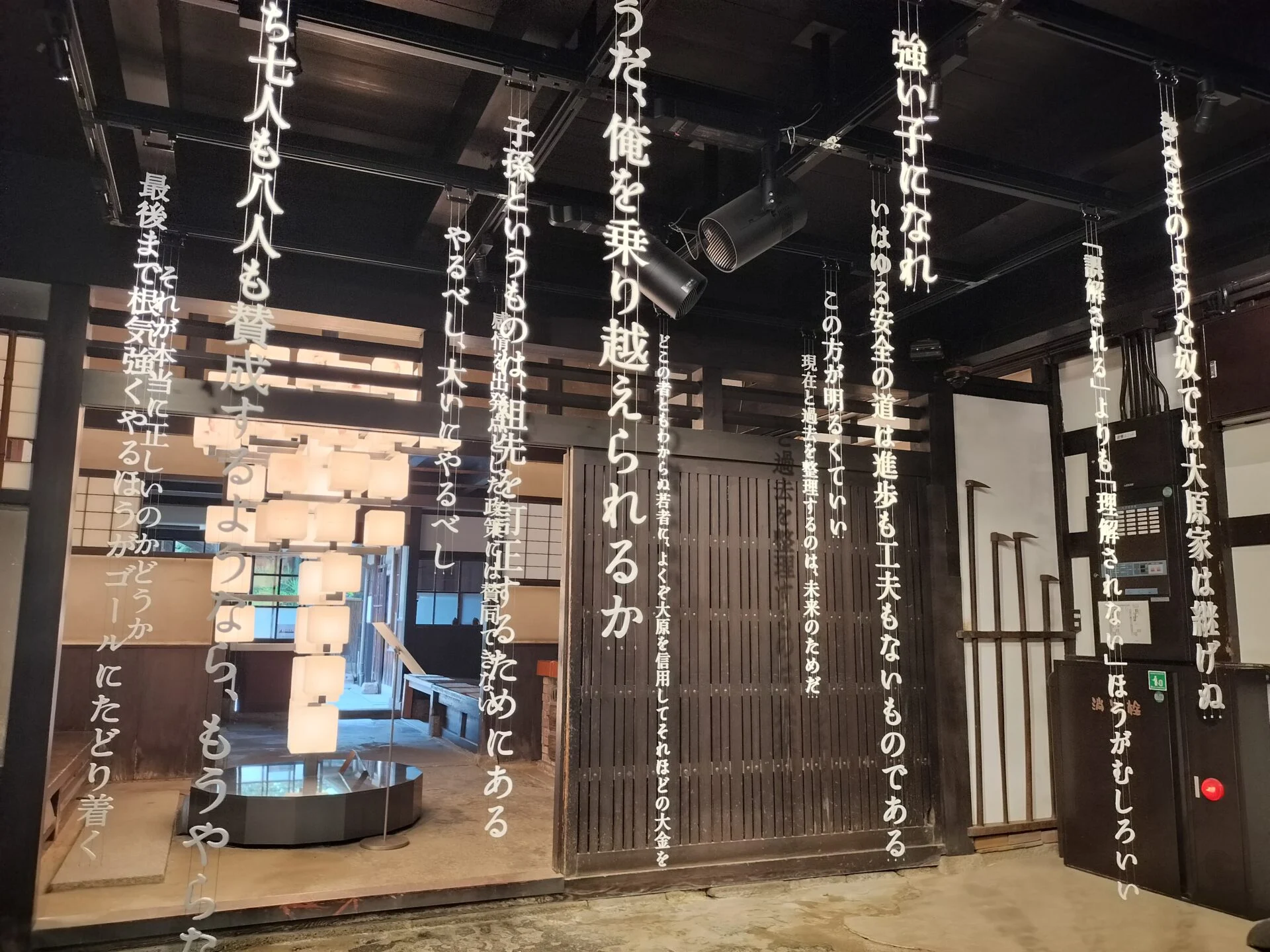
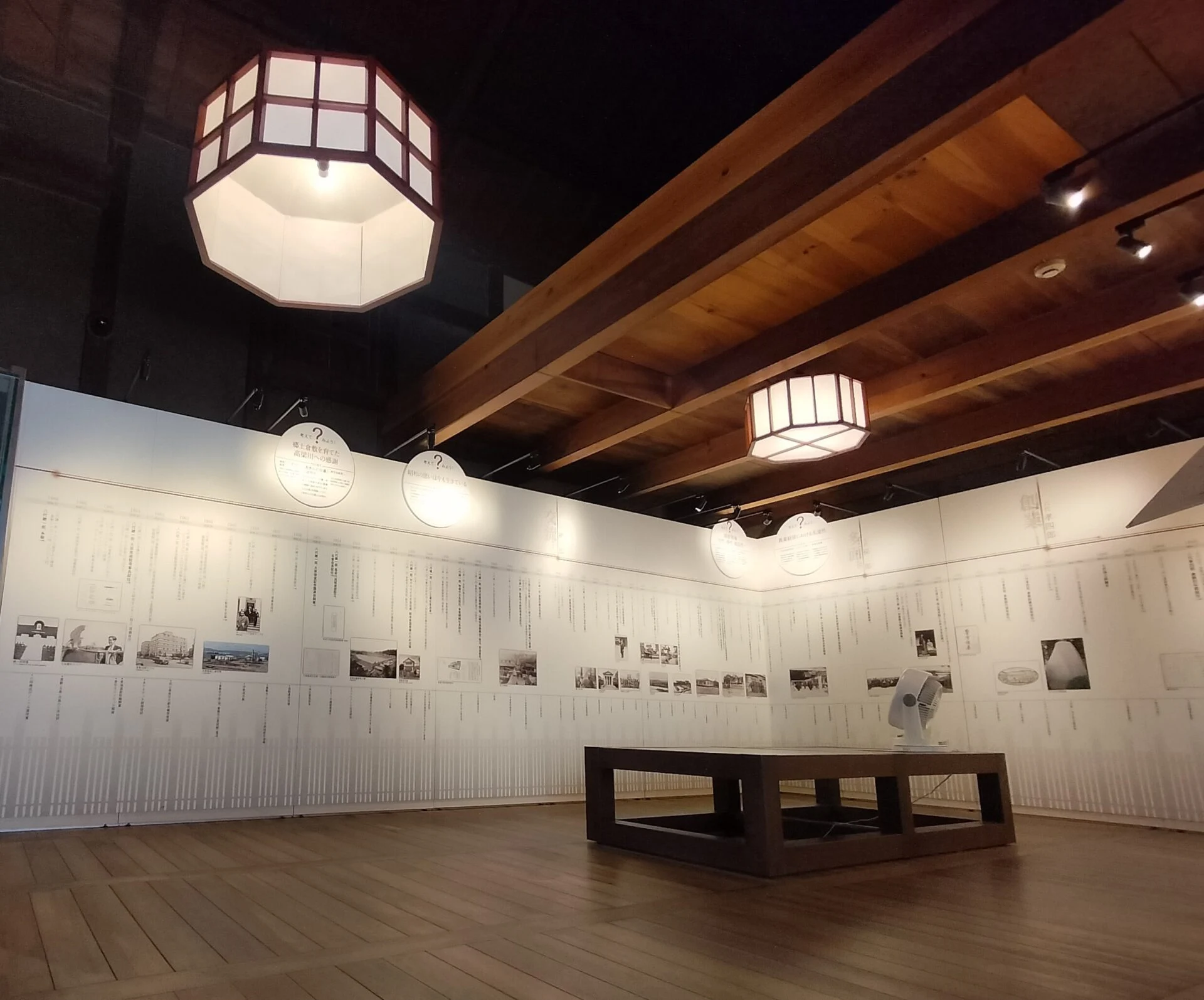
Upon entering, you are greeted by a space with a high ceiling and dark beams, soft light streaming through the lattice windows, and a blend of white walls and cobblestones.
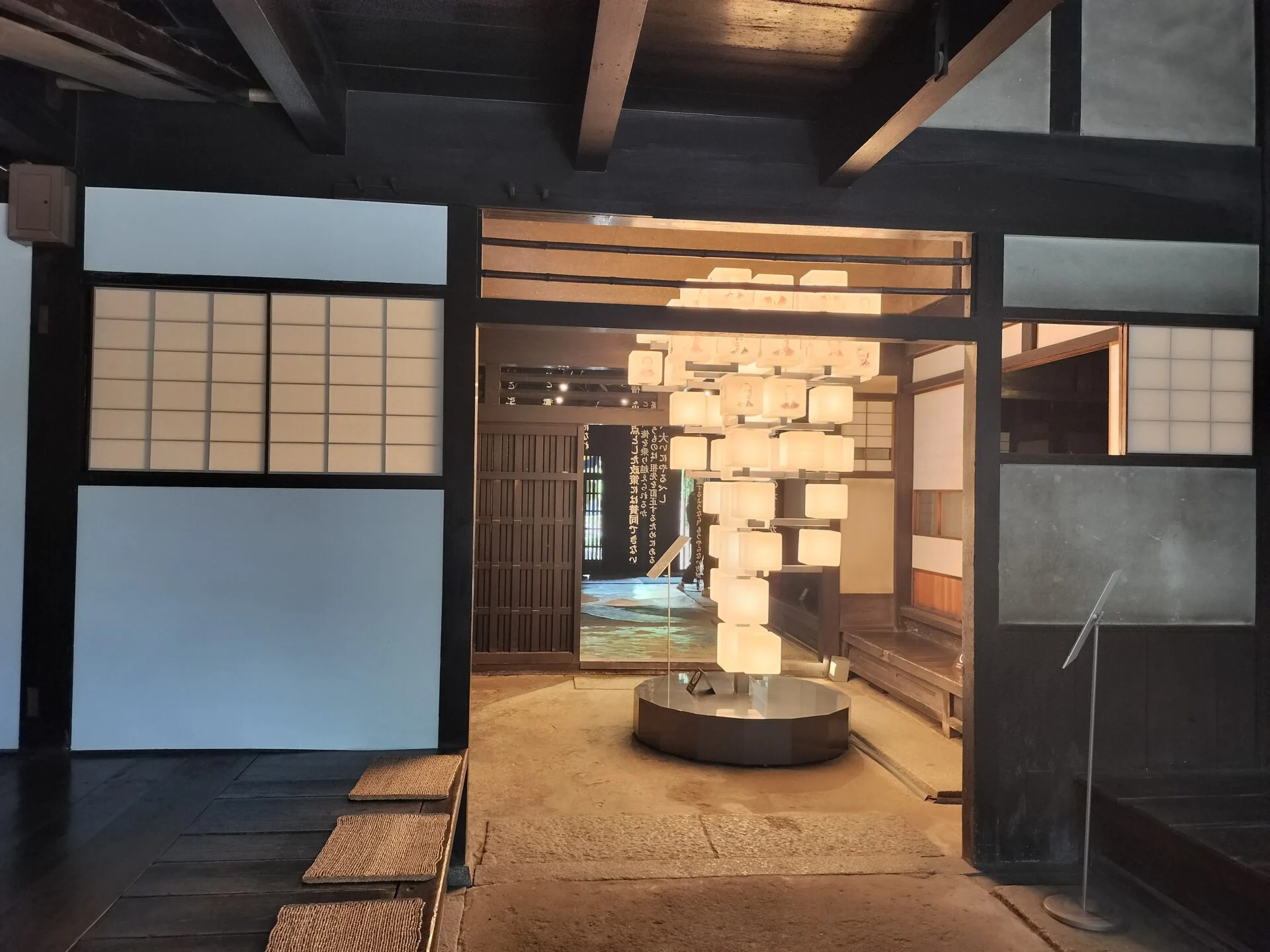
Inside the storehouse, a cool breeze flows, and standing in front of the letters feels like wandering into the memories of the Ohara family.
Stepping into the garden, the well-maintained plants and bamboo fences gently adorn the white walls of the storehouse and the cobblestones.
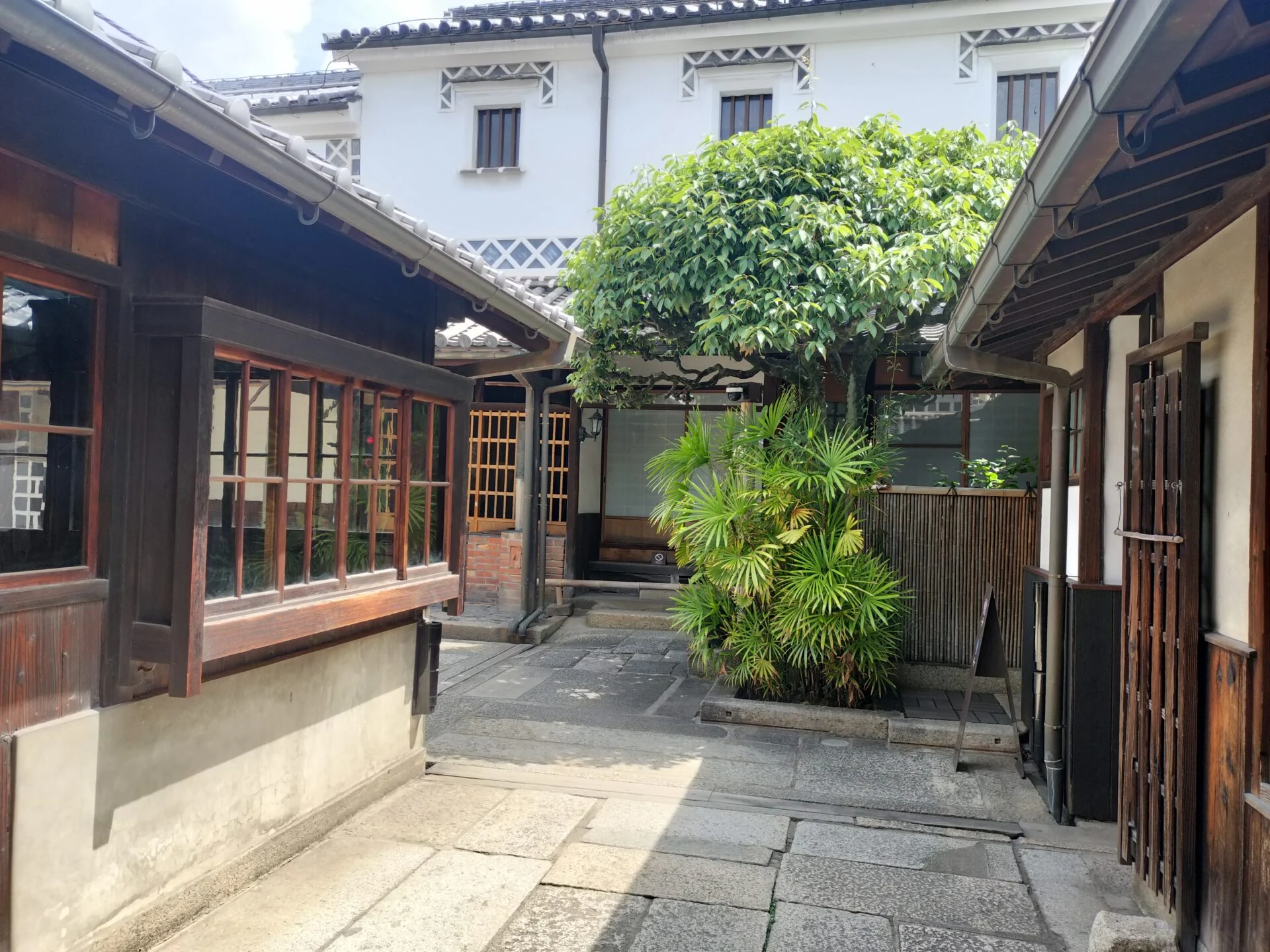
Under the blue sky, walking along the cobblestones of the Bikan Historical Area lined with white-walled storehouses and townhouses, while feeling the gentle sound of the Kurashiki River in the distance, I listen to the letters of the artists in the quiet storehouse.
This is a special moment that can only be experienced here.
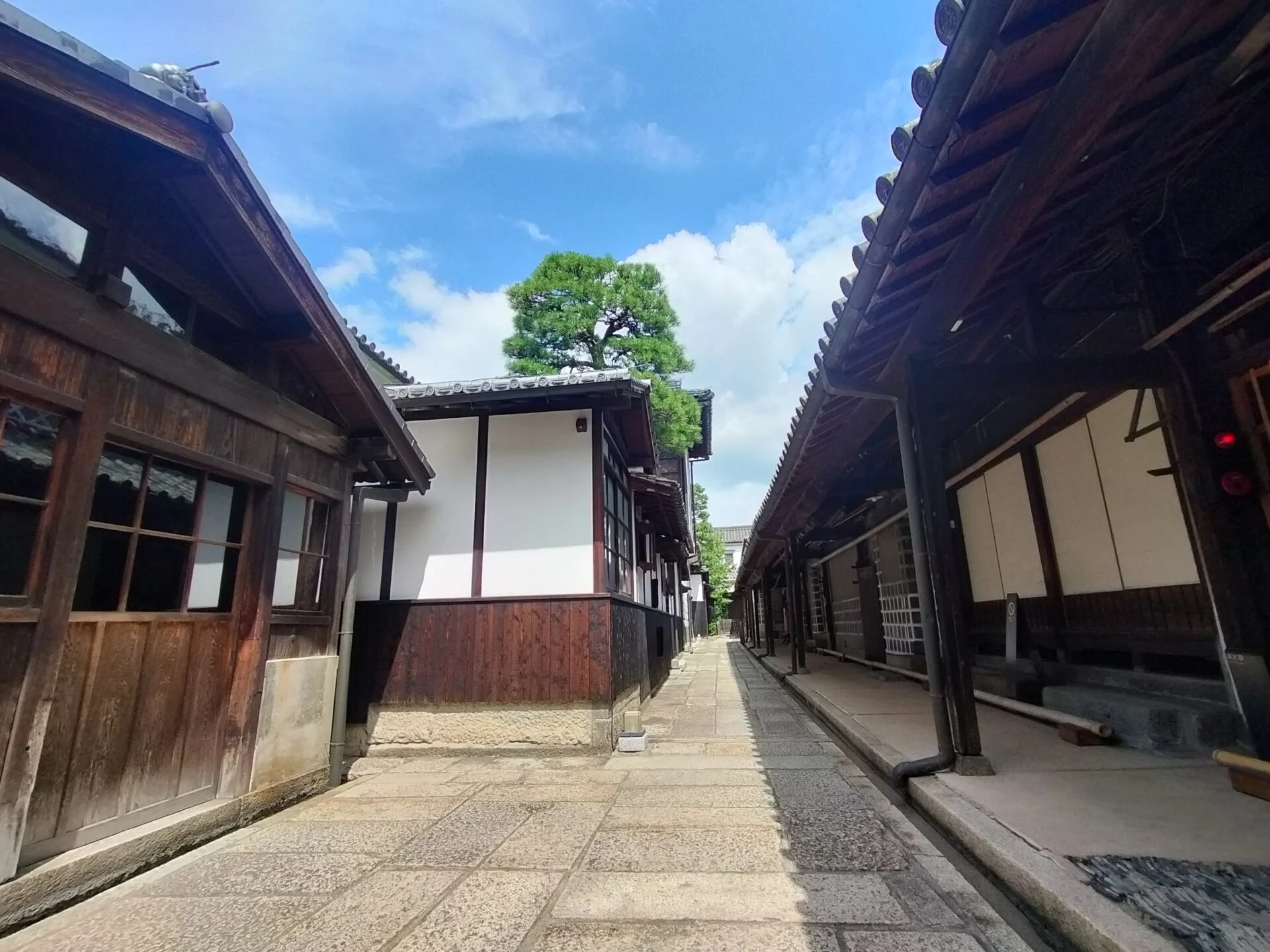
On the left, you can see the building connected to the office, kitchen, and living space, which conveys the charm of town house architecture with its wooden lattice and board walls.
On the right, the white-walled building is a "kura" (storehouse) built with earthen walls, and the thick earthen walls and "namako wall" patterns are designed to enhance fire resistance and durability. Currently, this storehouse is used as an exhibition room displaying letters, artworks, and materials related to the Ohara family.
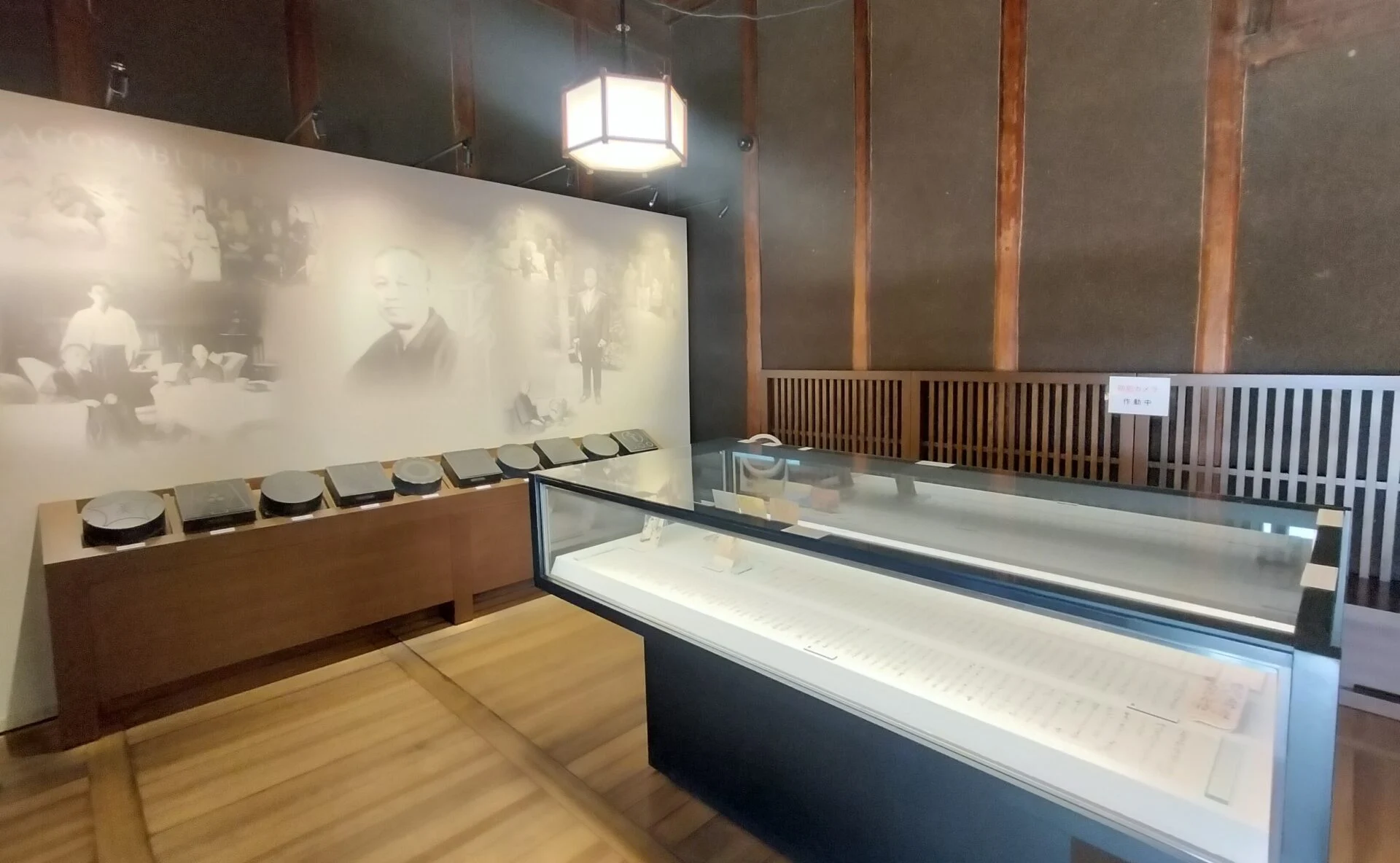
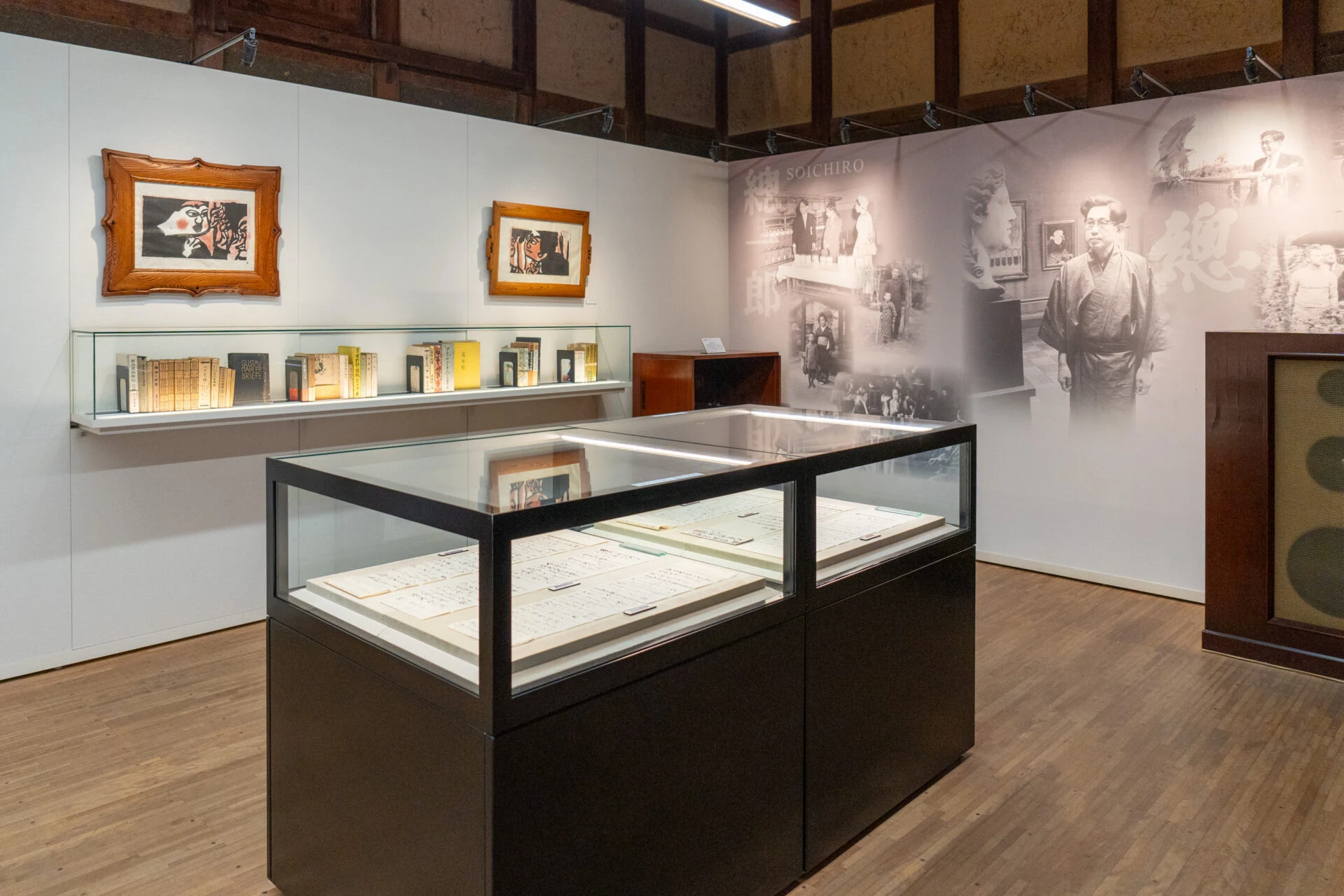
The letters from Kojima Torajiro and Munakata Shiko in this special exhibition are displayed in the Nakakura (2) and Uchinakakura.
Let me introduce some of the letters on display.
Letters revealing the true faces of artists
The letters on display are addressed to the Ohara family from the two artists.
What is common is their sincere feelings of gratitude and a strong determination to move forward despite their doubts.
Highlights of Kojima Torajiro's letters
In a letter sent from Kojima Torajiro while traveling to Magosaburo, he writes,
"I am frustrated that the weather has not been favorable, and I cannot sketch as I wish,"
expressing his lament and how he is encouraged by the words of his mentor, Kuroda Seiki.
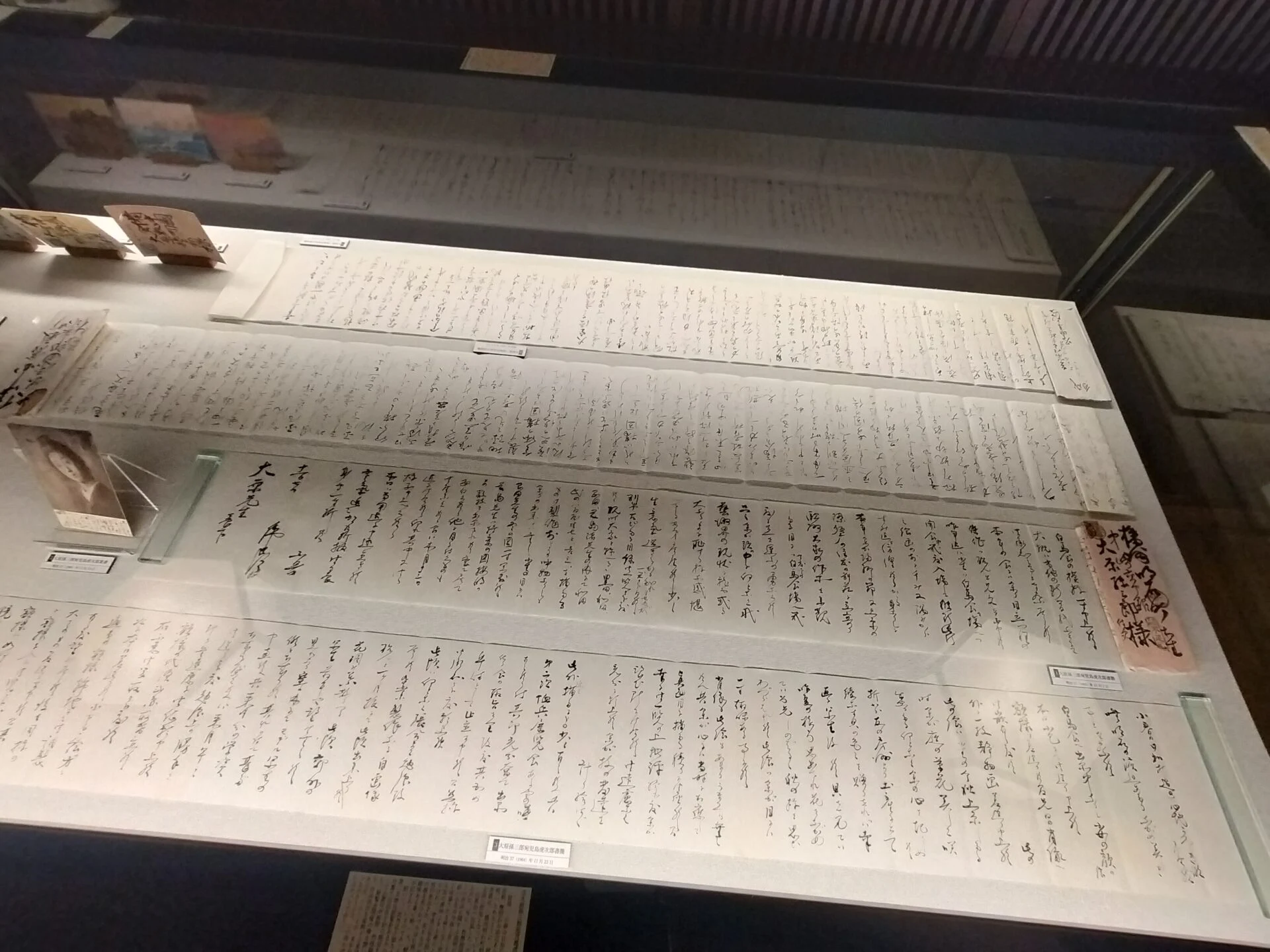
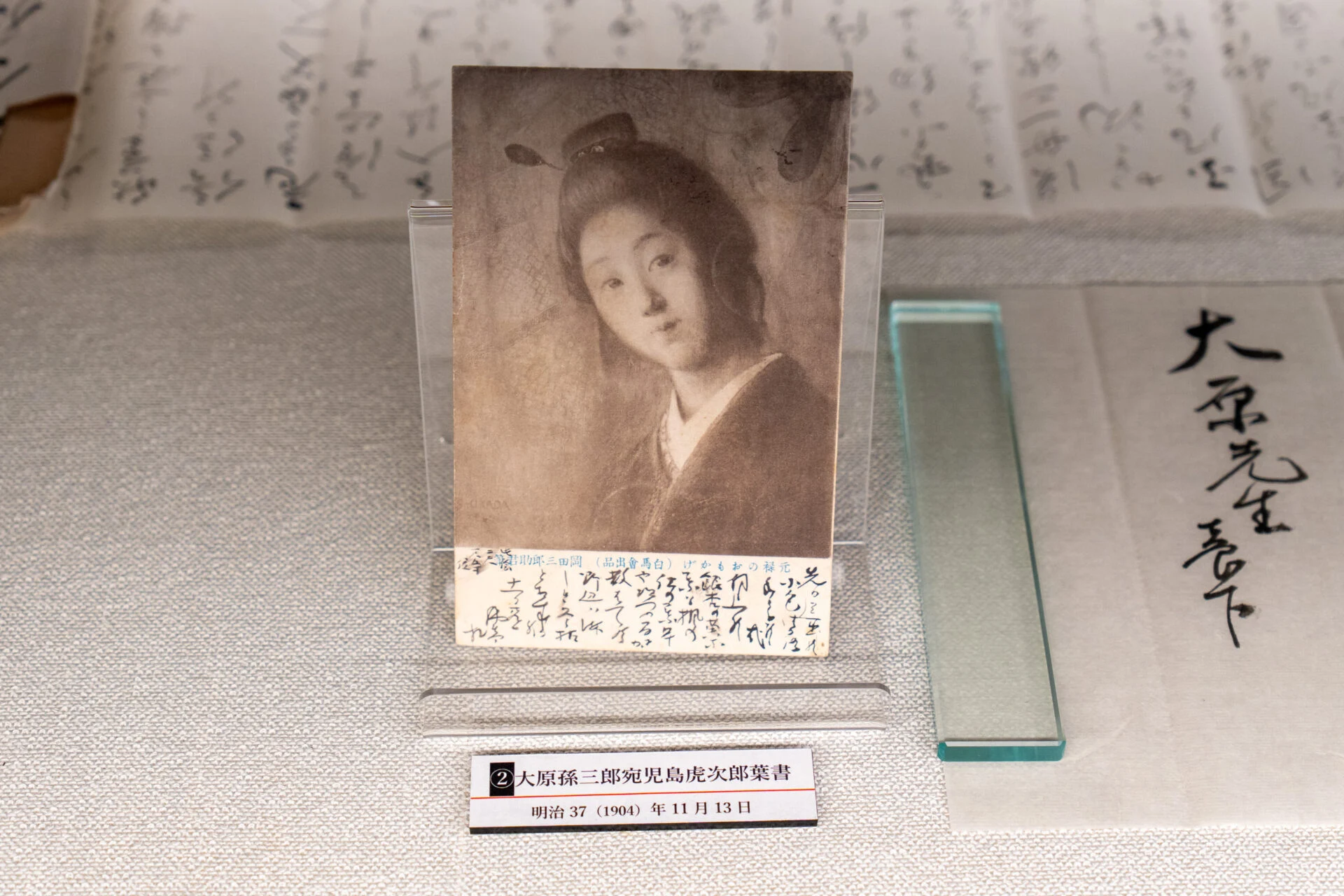
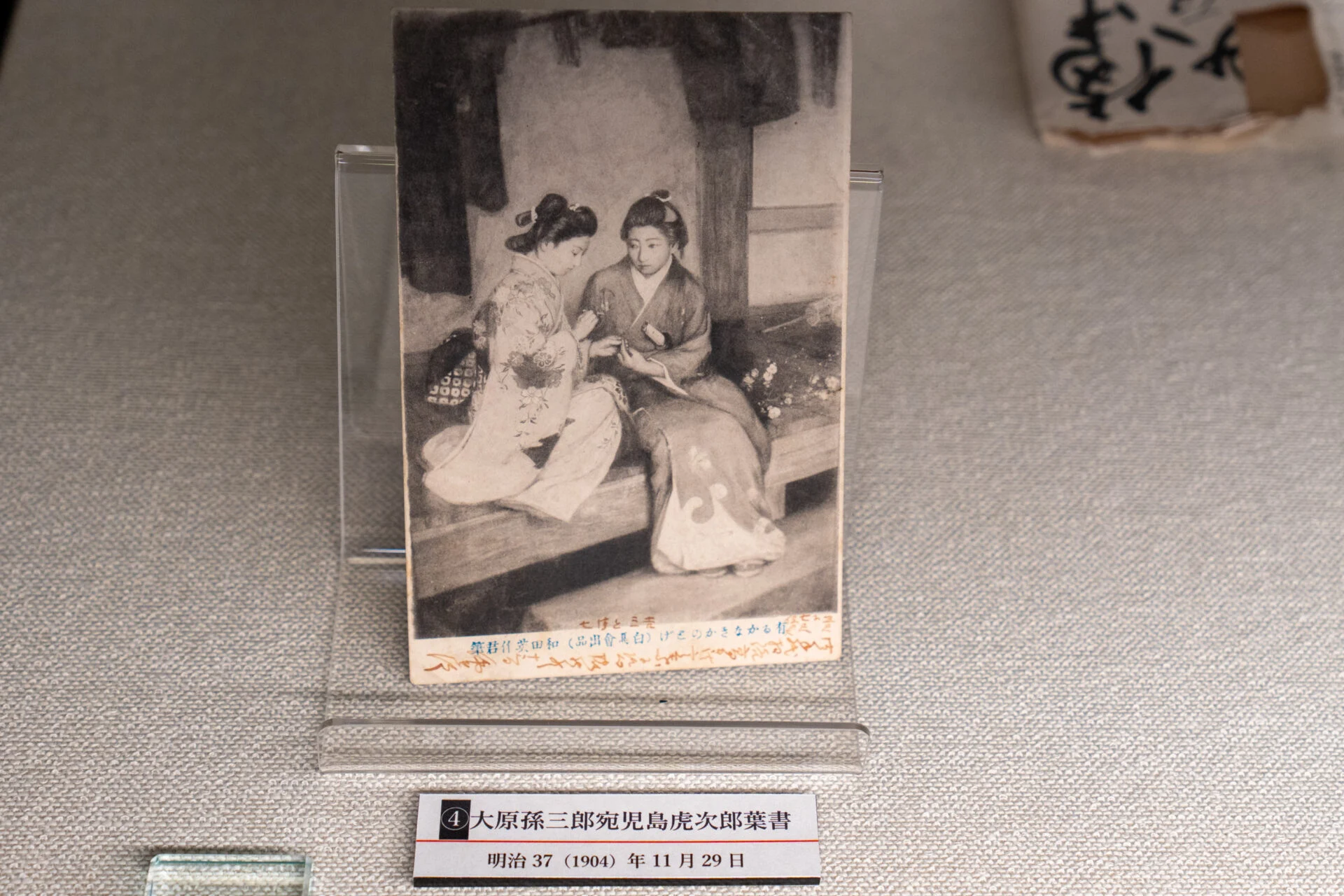
The postcard is one that Kojima Torajiro sent from his travels. In addition to its beauty as a painting, it is a valuable document with a handwritten message that conveys Torajiro's sensibility and personality.
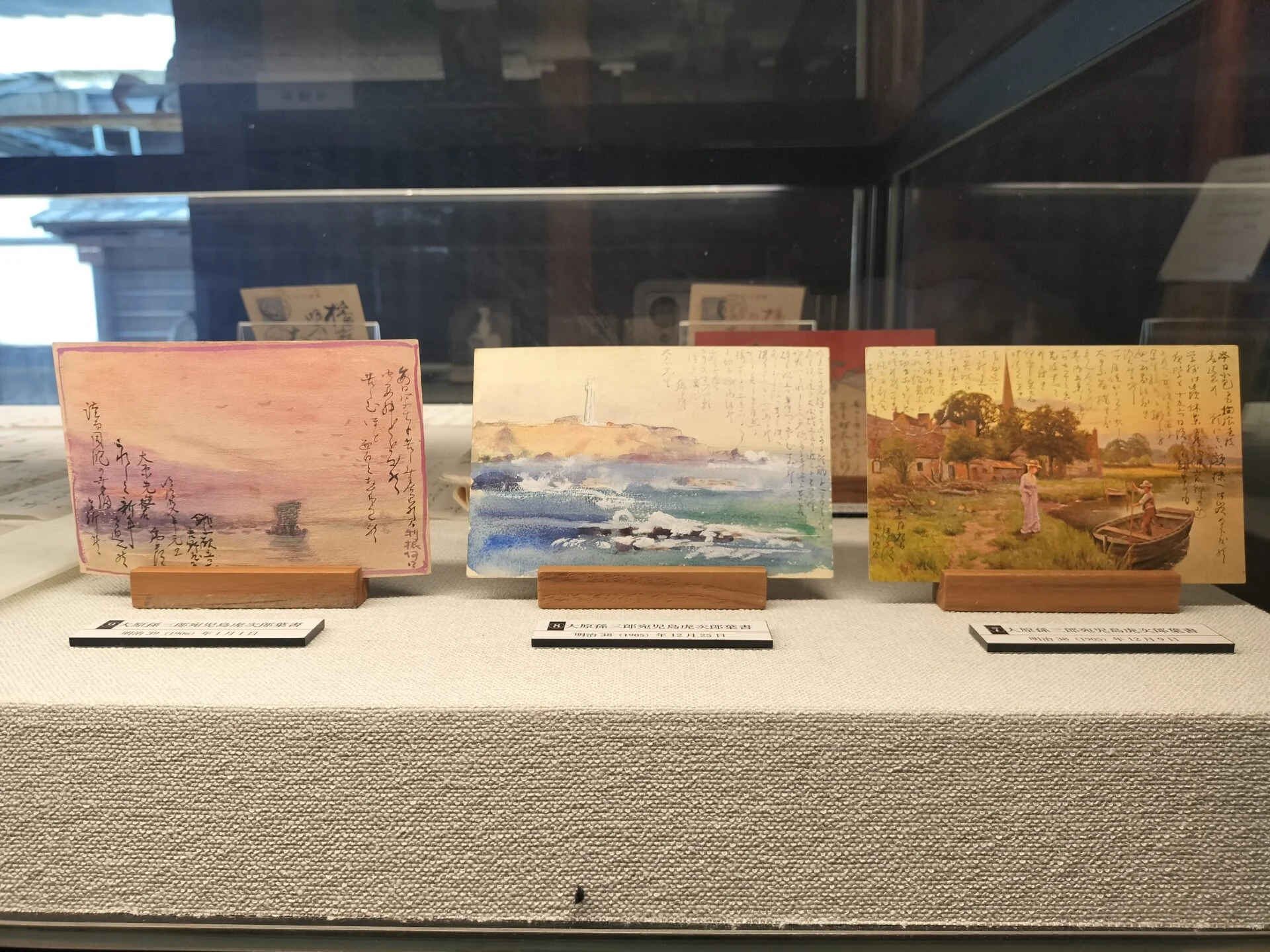
December 9, 1905: European rural landscape
December 25, 1905: Seascape with lighthouse
January 1, 1906: Tone River estuary landscape
The two images on the left are not only written words but also drawings in Kojima Torajiro's own handwriting.
Highlights of Munakata Shiko's letters
On the other hand, Munakata Shiko's letters exude sincerity and earnestness.
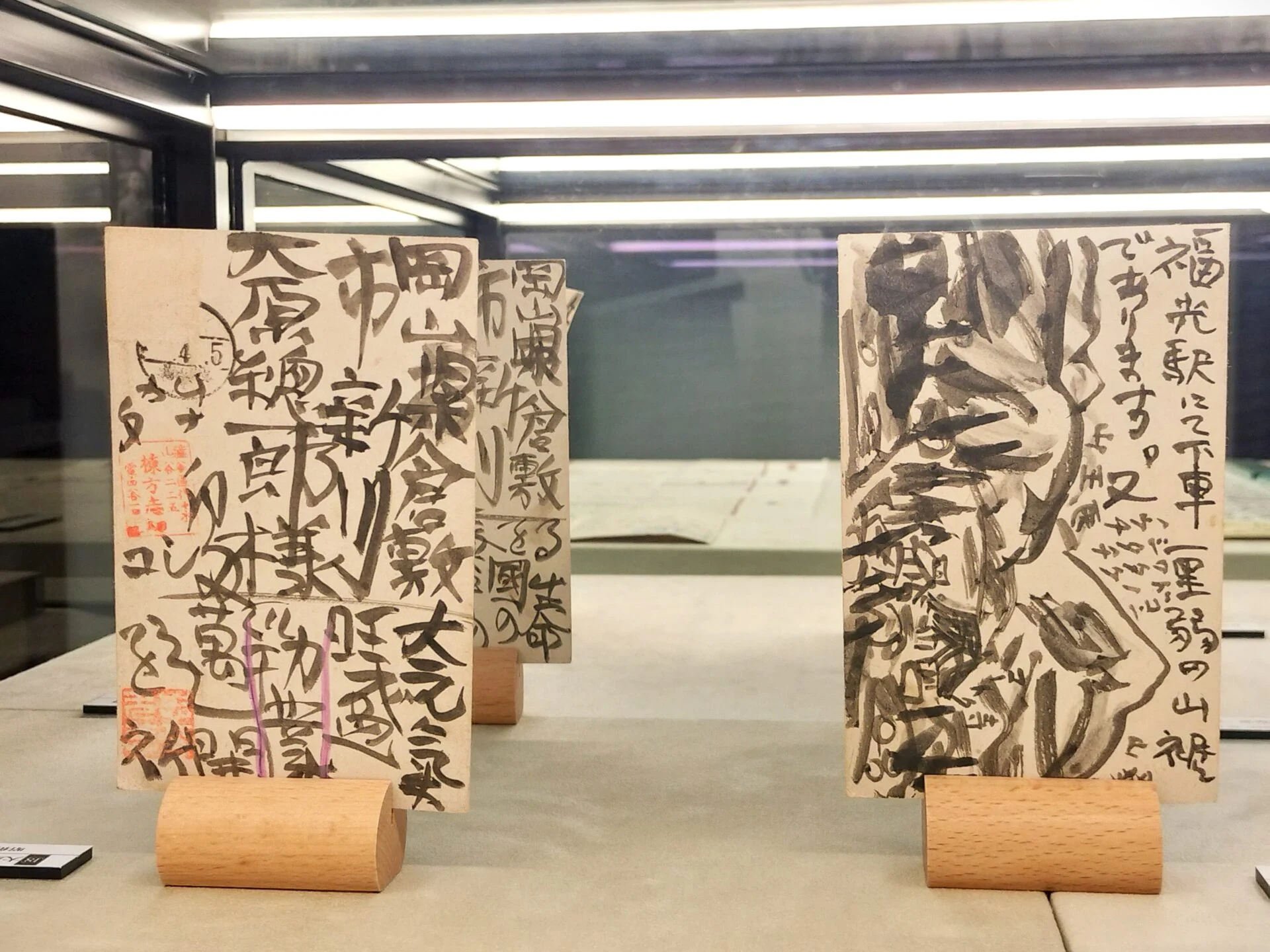
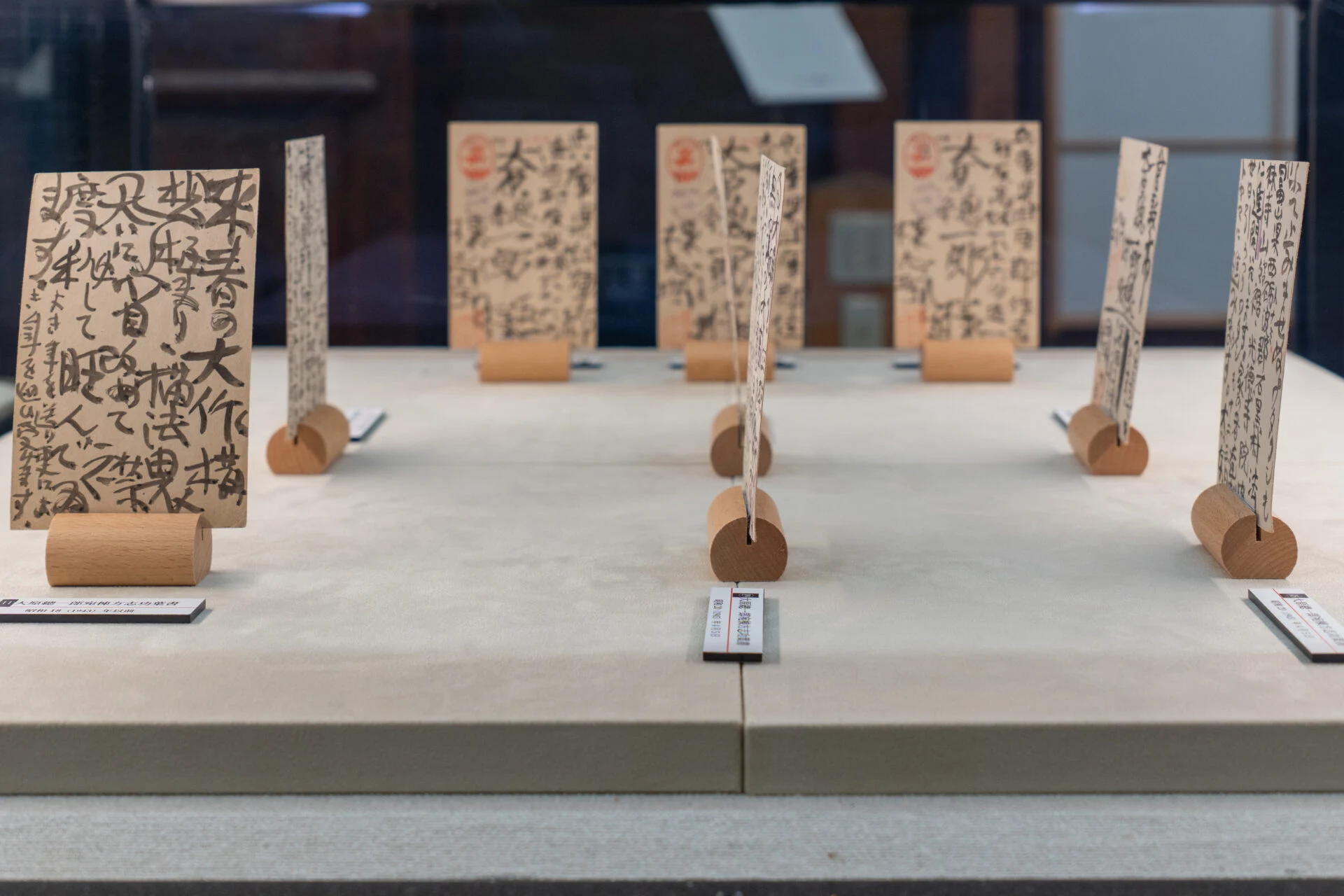
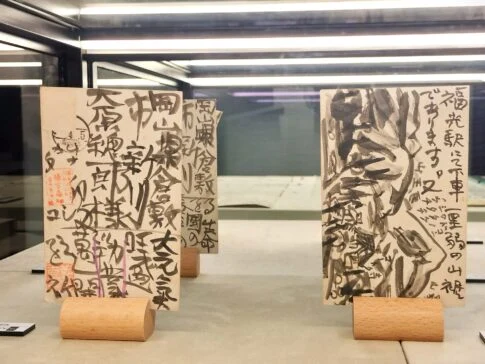
In the center, three postcards are quietly displayed on a simple wooden stand.
All three are filled with handwritten characters written in ink, and their powerful, unique brushwork captivates the viewer's eye.
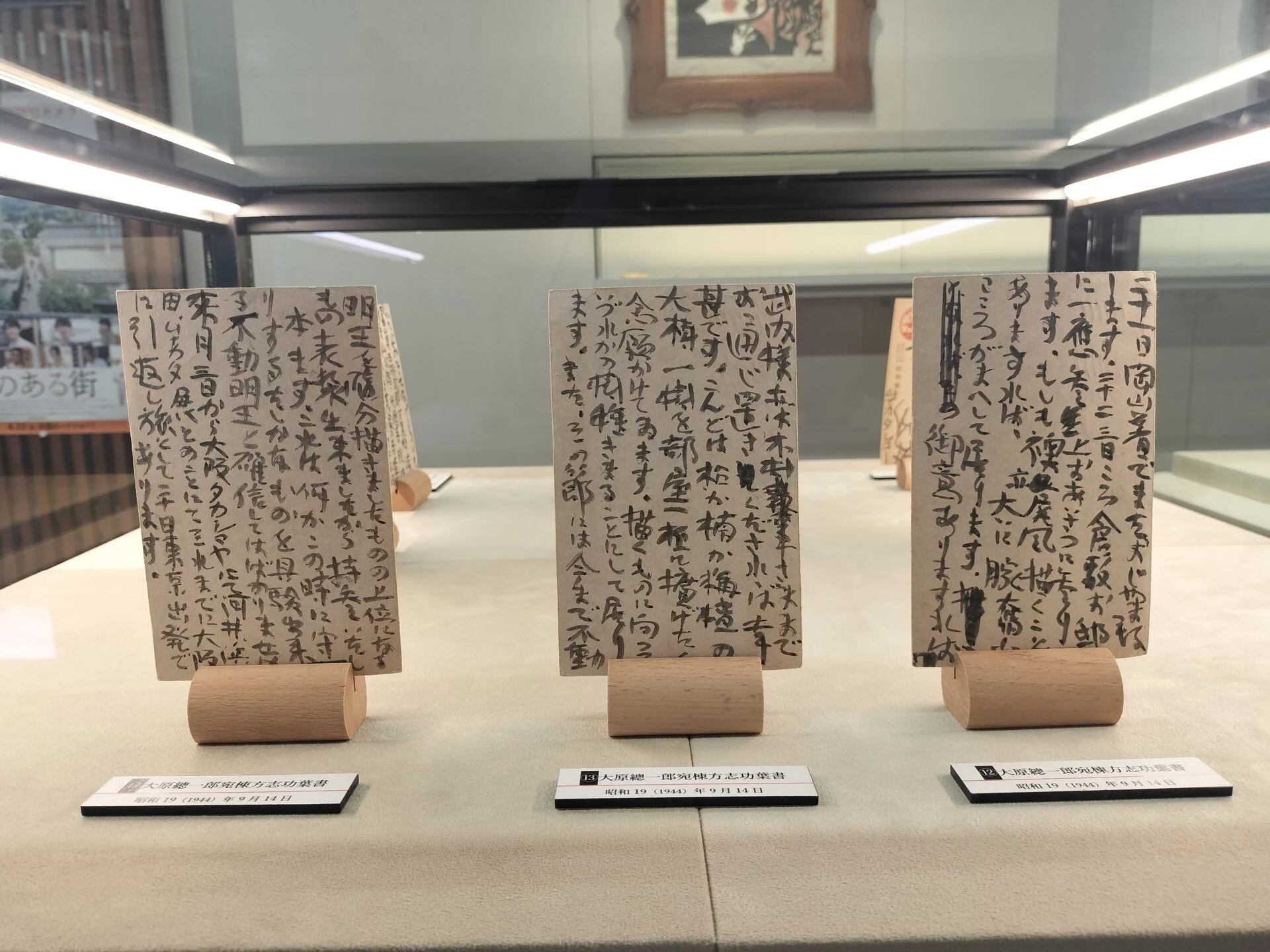
All are written in vertical Japanese, and from the handwriting, Munakata Shiko's strong will and unique rhythm can be felt.
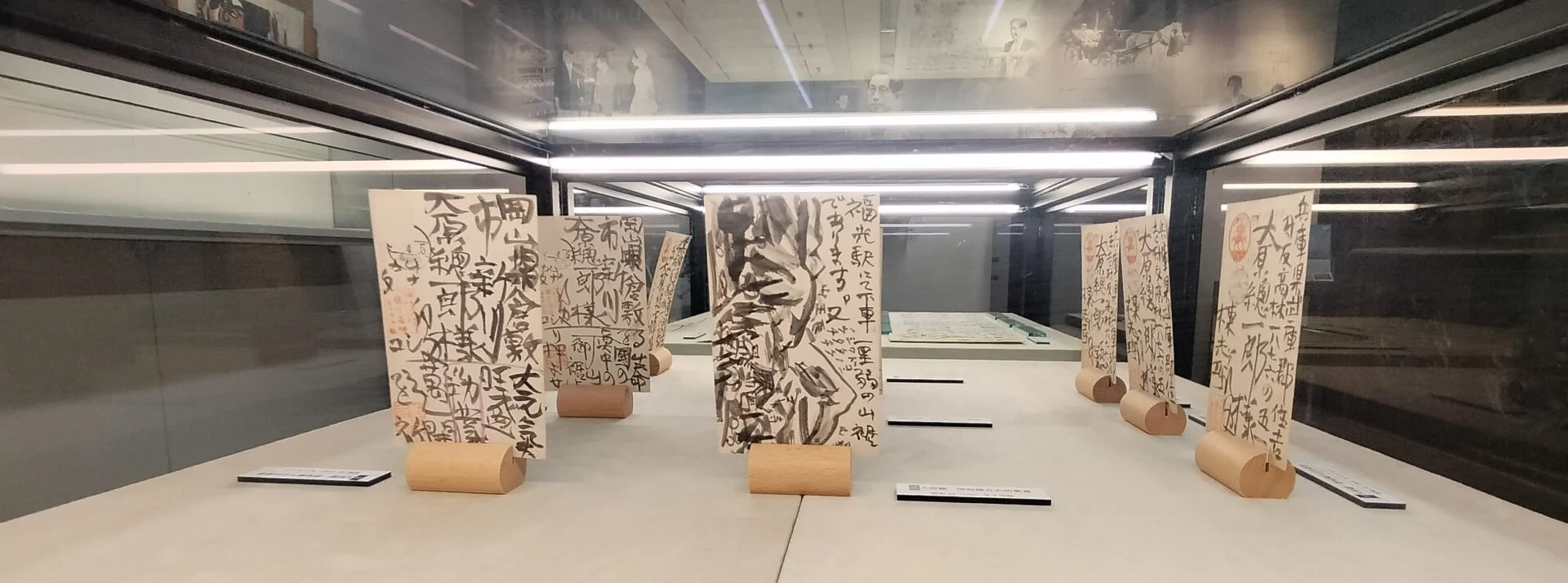
On the wall, works by Mizushima Shiko are also on display.
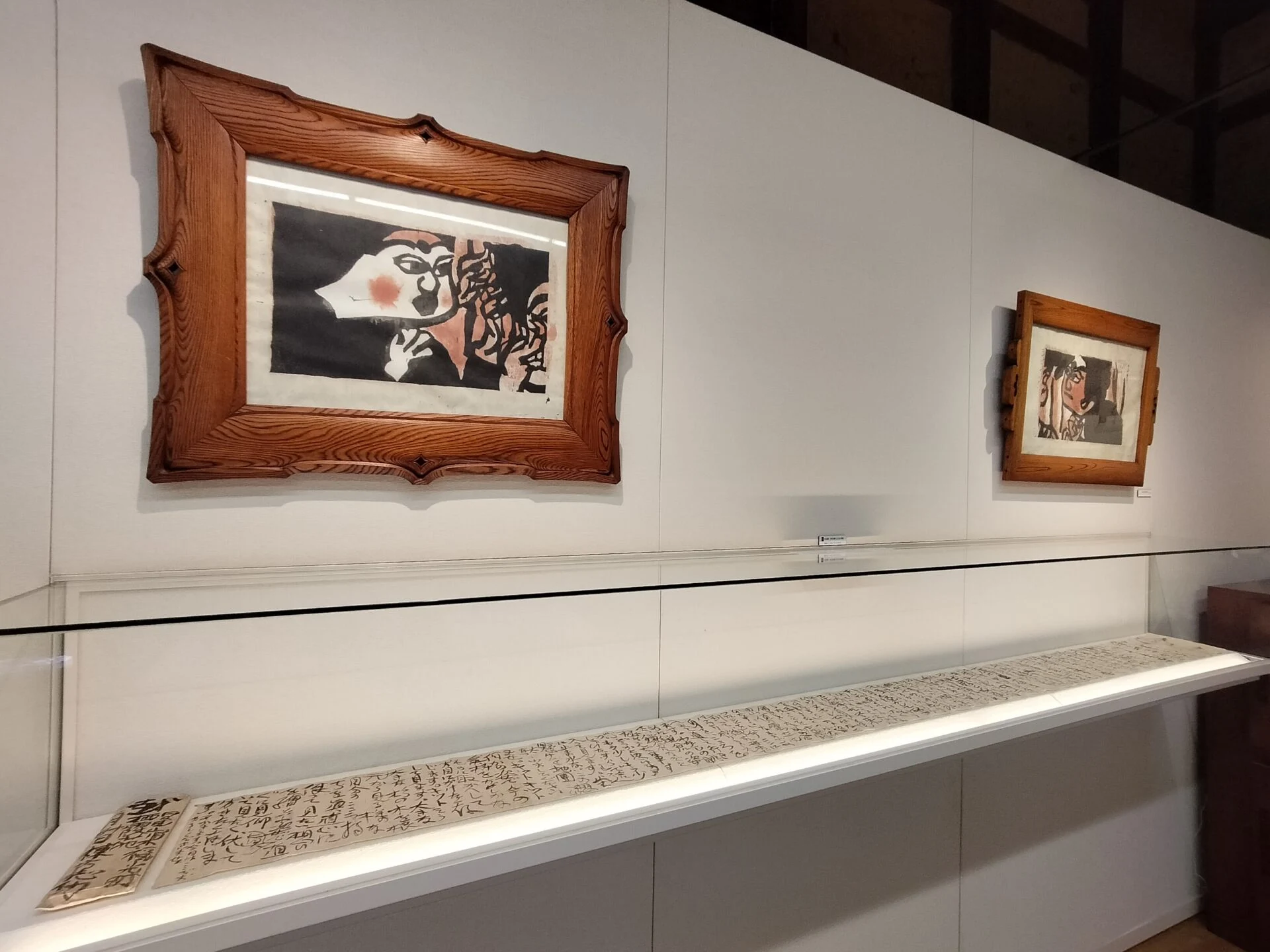
Below the wall, there is a long glass case, in which scroll-like letters (letters) are spread out and displayed.
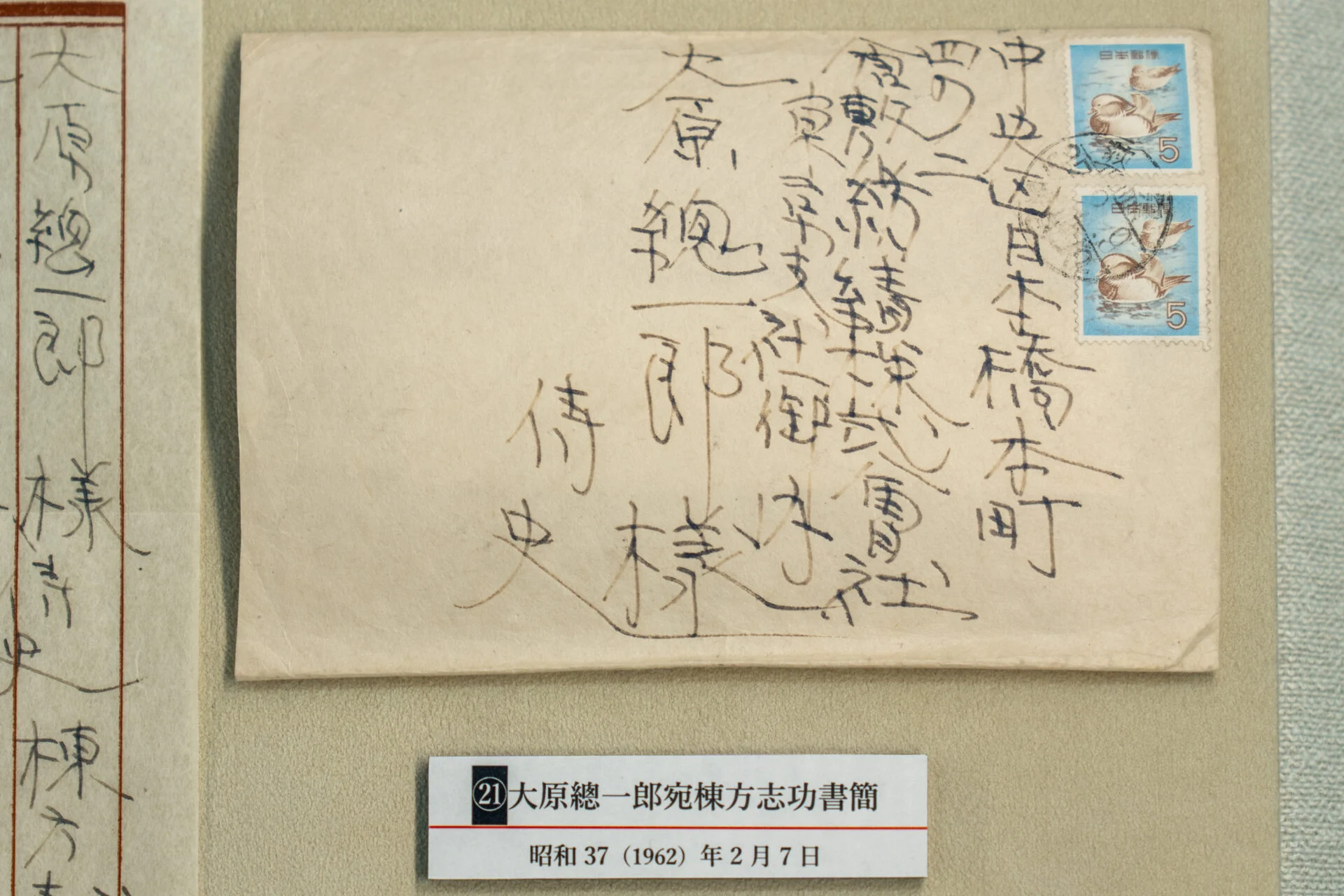
Mizushima-san speaks of how the letters convey the artist's "raw form" that cannot be seen in the works.
We heard about the highlights of the exhibition and the personalities of the two.
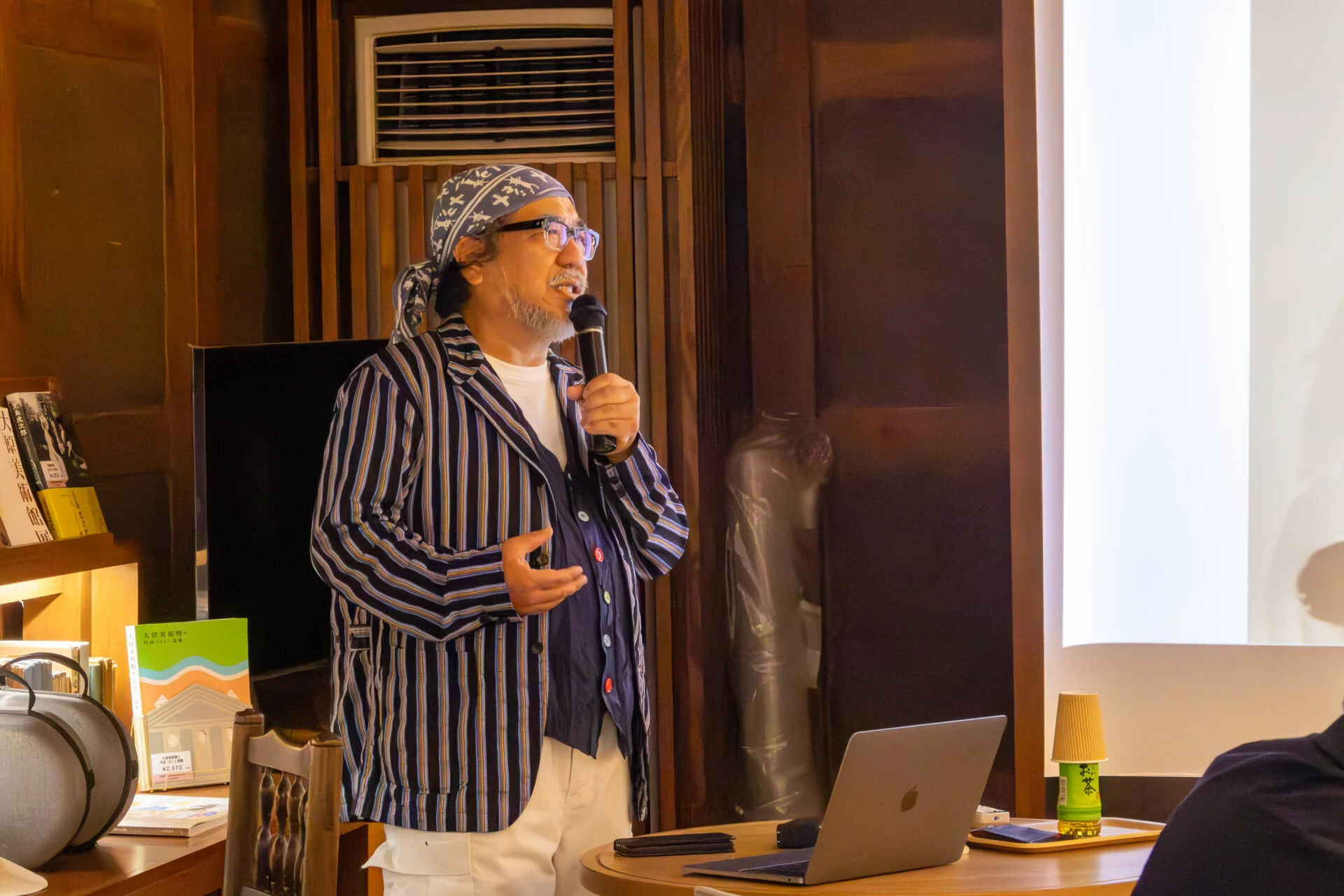
Interview with Mizushima Hiroshi
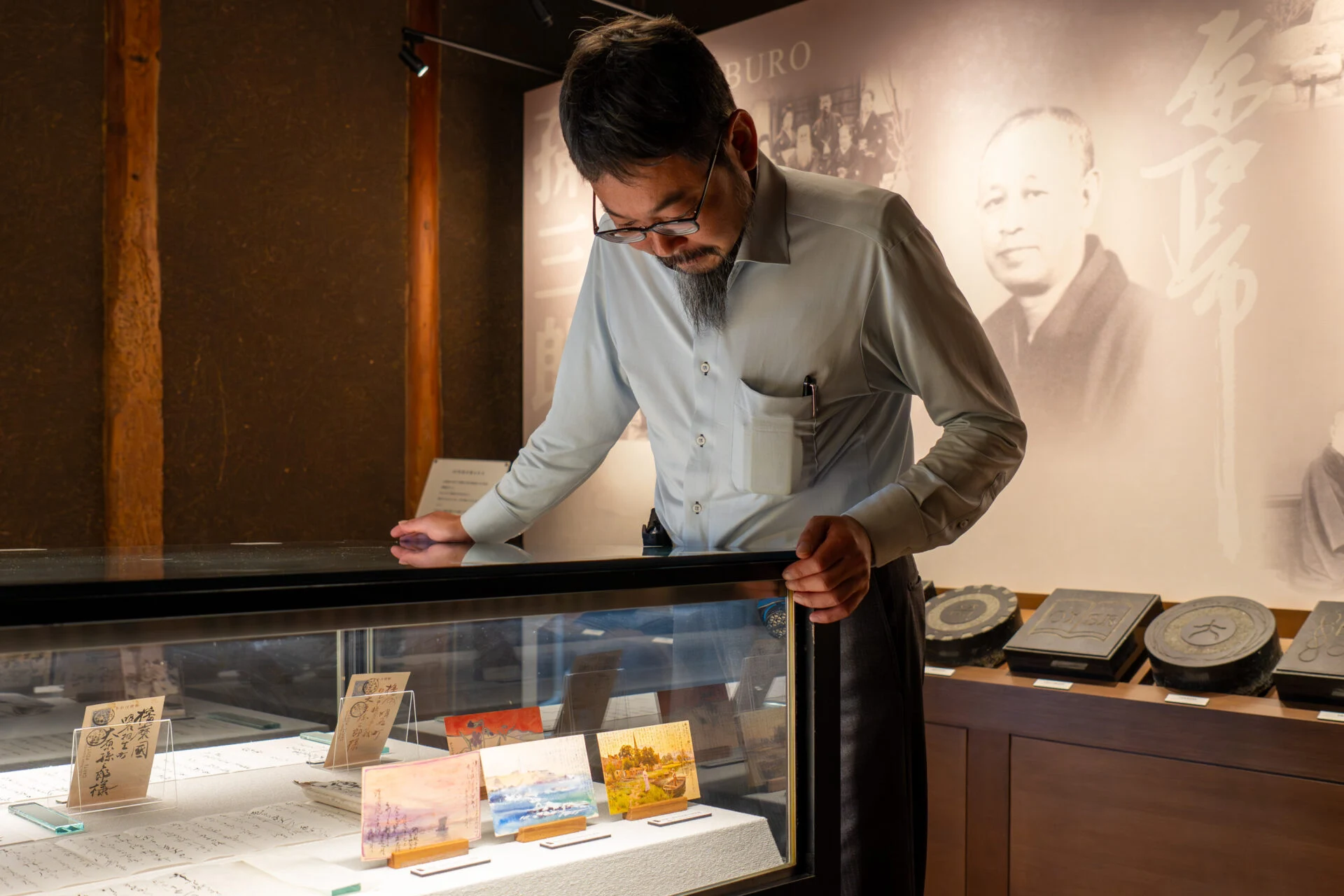
What is the charm of the artist's letters?
Mizushima (no honorific)
The letters on display this time are from when Torajiro was still a student, in other words, when he was an "artist in the making."
The letters are valuable materials that capture their inner voices as they are. Torajiro was quite the letter writer since his student days, writing very detailed accounts of his studies, creative processes, and the hardships of sketching trips, along with scholarship reports.
You can feel how he struggled and grew, and the trust he had in Magosaburo.
Although Shiko's letters are few in number, when he had something to say, he would stack several postcards, and sometimes the letters would be as long as 5 meters.
Even in the harsh wartime, he remained positive, and it is clear that he relied heavily on Soichiro.
Are there any particularly impressive materials that are being shown for the first time?
Mizushima
It's Torajiro's letter dated November 7, 1904.
He clearly writes about the Hakuba-kai exhibition, saying, "There is nothing particularly worth seeing." The reason is also impressive: "I saw the works of European masters at the Sumitomo villa, so I cannot be satisfied with Japanese works."
The moment when the young man was shocked by real Western art and honestly recorded it comes across vividly.
It seems that there are also points of interest in the "appearance" of the letters.
Mizushima
Torajiro's handwriting is very elegant, and it is quite difficult for modern people to read, which is one of its charms.
Shiko's letters are relatively easy to read, and his signatures vary, such as "Mizushima Shiko," "Munakata Shiko," and "卐 included," showcasing his personality well.
Furthermore, there are many enjoyable elements, such as Torajiro's signatures, letters longer than 1 meter, and illustrated postcards, making it "fun to look at" even if you cannot read the text.
What do the letters reveal about their personalities?
Mizushima
Torajiro writes diligently about scholarship reports and progress in his work, while also boldly asking for support, showing that he had complete trust in Magosaburo.
Shiko's letters convey a sense of care and gratitude towards Soichiro amidst his free-spirited writing, reflecting a strong bond of trust.
I feel that both of them deeply respected the Ohara family as not just supporters, but as emotional pillars.
Finally, do you have a message for the readers?
Mizushima
Since this exhibition has a lot of written materials, it is understandable if people think, "It looks difficult." Indeed, I think deciphering Kojima Torajiro's letters is quite challenging. On the other hand, Mizushima Shiko's letters and postcards are written in a legible manner.
Additionally, to alleviate the feeling of "it looks difficult," we have summarized the contents of each letter in the materials distributed in the museum. Furthermore, we have displayed transcriptions and explanations next to each letter and postcard to assist in understanding.
Please do come and visit.

Conclusion
The worries, joys, sufferings, and prayers embedded in each letter.
What emerges from them is the human faces of the two artists, Kojima Torajiro and Mizushima Shiko.

"I was surprised to learn that the famous Shiko was so desperate," the author conveys the deep trust and gratitude towards the Ohara family. That voice quietly reaches our hearts across time.
This summer, why not listen closely at the Ohara House Katalyzer and witness their journey at the Ohara Museum of Art?
A special time is sure to be found.
Articles about Ohara House Katalyzer
Data for the Ohara House Katalyzer Special Exhibition "Numerous Letters Remaining in the Ohara Family - Letters from Kojima Torajiro and Munakata Shiko"
| Name | Ohara House Katalyzer Special Exhibition "Numerous Letters Remaining in the Ohara Family - Letters from Kojima Torajiro and Munakata Shiko" |
|---|---|
| Dates | Exhibition period: July 8, 2025 (Tue) - August 3, 2025 (Sun) 9:00 AM - 5:00 PM Last admission: 4:30 PM |
| Location | 1-2-1 Chuo, Kurashiki City |
| Admission Fee (Tax Included) | General: 500 yen (400 yen) High school students and below: 400 yen (200 yen) (Prices in parentheses are for groups of 20 or more) |
| Website | Ohara House Katalyzer Special Exhibition |