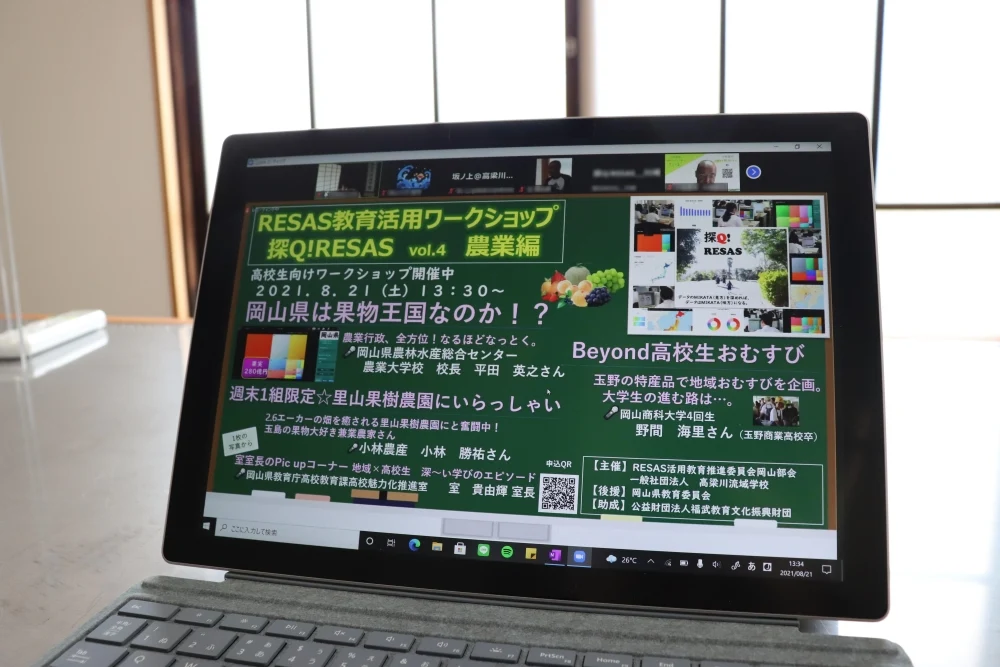
On Saturday, August 21, 2021, the "RESAS Educational Utilization Workshop Explore Q! RESAS Online Seminar" was held.
The RESAS Educational Utilization Workshop is a workshop that utilizes RESAS (Regional Economy Analysis System data) to learn from professionals in various fields.
The online seminar consists of six sessions, targeting high school students and school officials in Okayama Prefecture, as well as students of the Takahashi River Shijuku.
The key phrase is, "If you deepen your understanding of data, data will become your ally."
In this fourth session, there were presentations from three speakers about agriculture.
I will report on the contents of the "RESAS Educational Utilization Workshop."
Overview of the RESAS Educational Utilization Workshop
The flow of the fourth "RESAS Educational Utilization Workshop" is as follows.
| Content | Speaker |
|---|---|
| Why is Okayama Prefecture called the Fruit Kingdom? An analysis using RESAS data Examples of sixth industrialization in Okayama Prefecture | Hideyuki Hirata |
| About a high school that made badges from wood shavings | Takayuki Muro |
| Agricultural experience at a satoyama fruit orchard | Katsuhiro Kobayashi |
| About the "Tamayui" project | Kairi Noma |
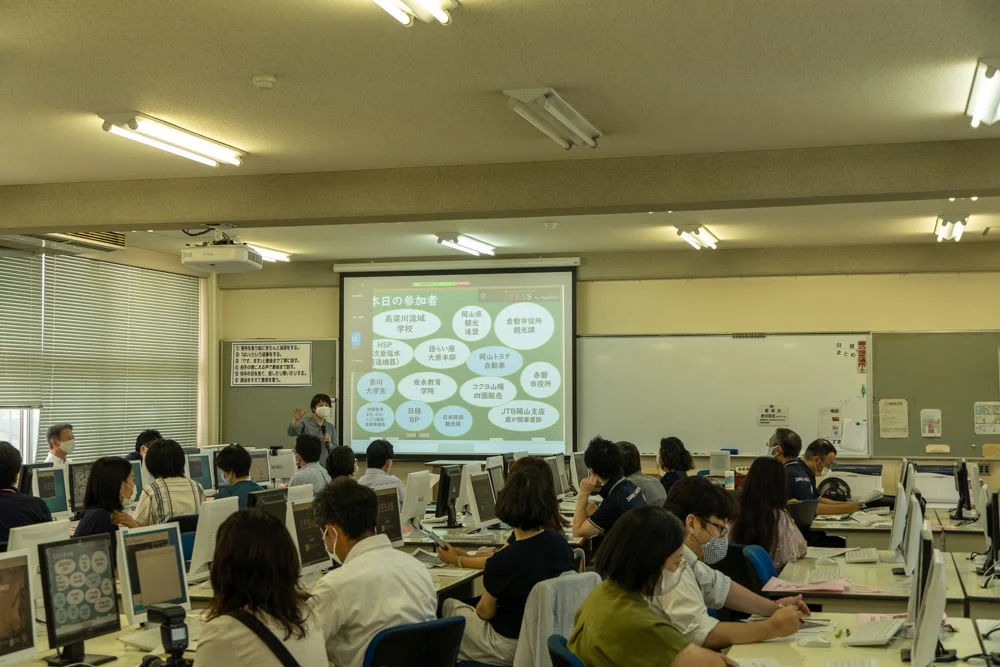
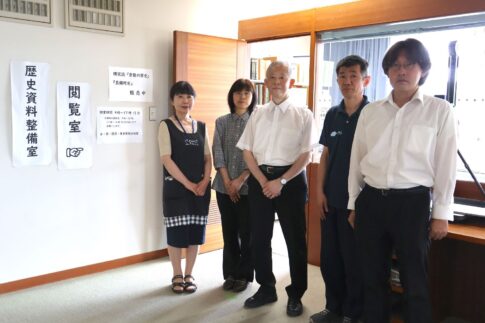
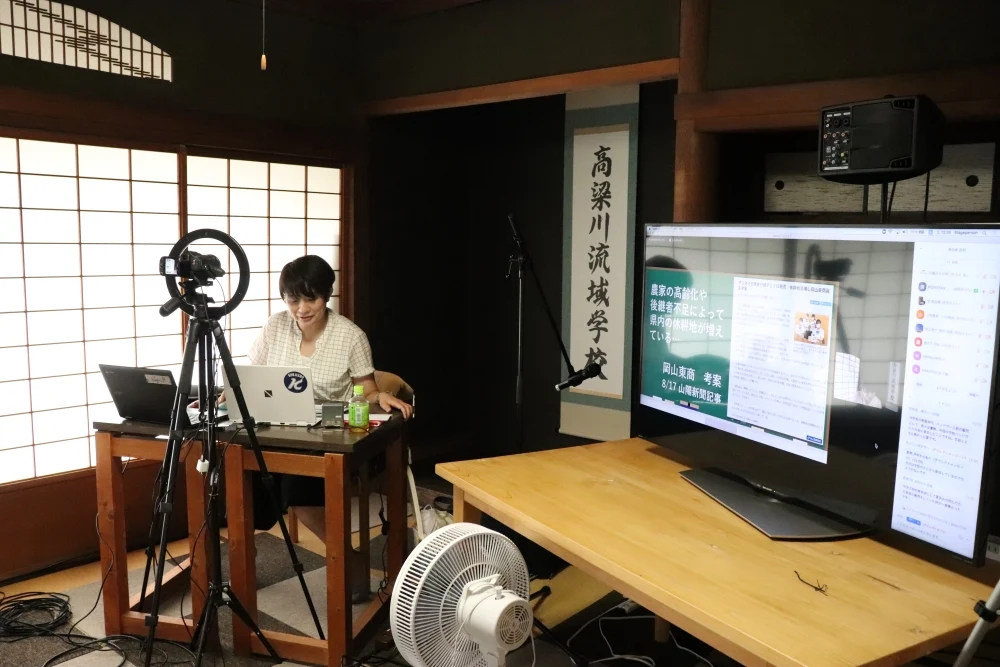
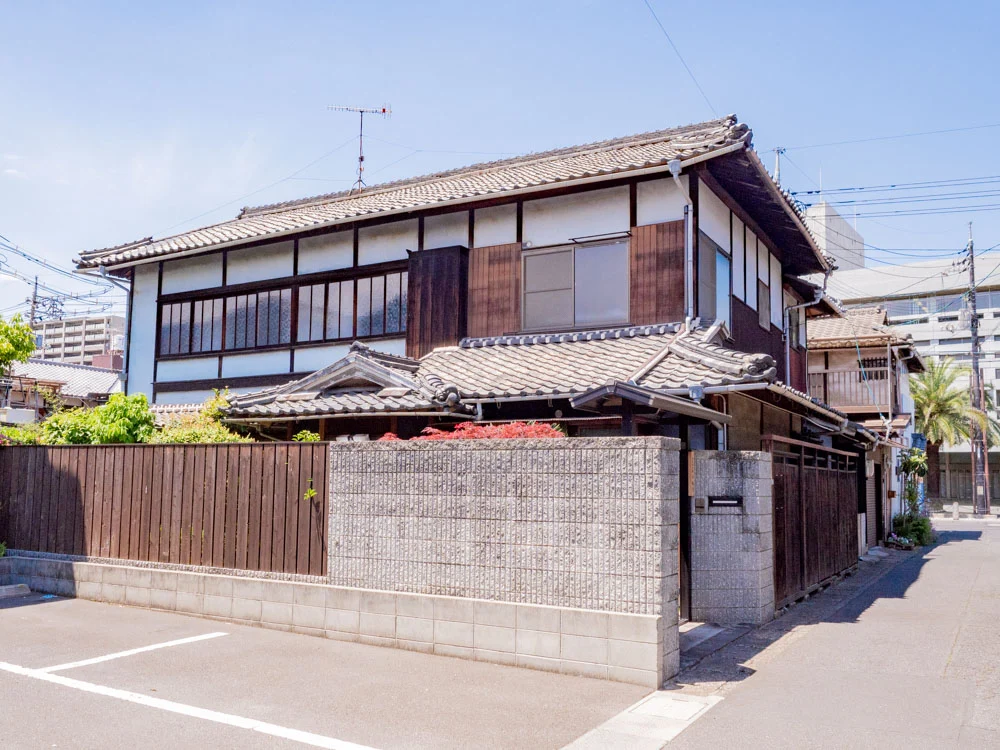
The event was held online, with the broadcast taking place from Bunfuku, Sumiyoshi-cho.
High school students from commercial courses and those involved in education and agriculture participated.
Participants joined the seminar from their respective computers.
Talk by Yoshimi Kawasaki
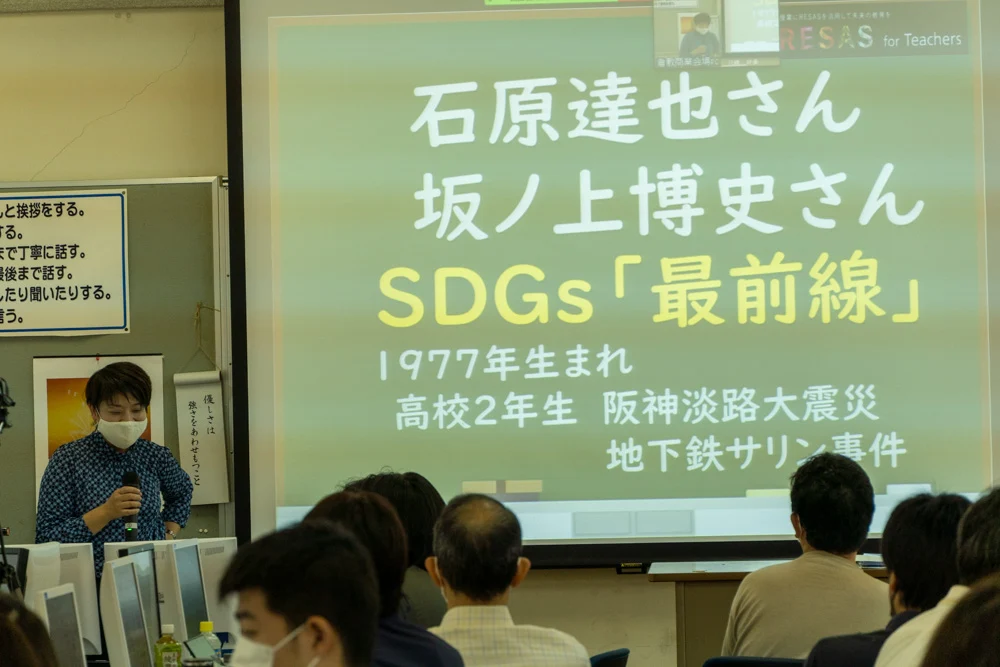
Before the presentations began, Yoshimi Kawasaki, a teacher at Okayama Prefectural Kurashiki Commercial High School and a member of the RESAS expert committee, spoke to the high school students participating in the seminar about points of view and ways of thinking.
Among the teaching materials used to learn about the region, there are some aimed at elementary school students, and in Kurashiki City, a textbook called "Minna no Machi Kurashiki" is used.
When I was in elementary school, I also studied social studies using "Minna no Machi Kurashiki."
However, there are not only supplementary materials for elementary school students but also those for high school students to learn about the region.
In the workshop, examples of supplementary materials from Nagano Prefecture and Tokyo were mentioned, highlighting that high school students also learn about the region using supplementary materials.
Additionally, regarding local agriculture, it seems that one can also learn from the RESAS industrial structure map and website, in addition to supplementary materials.
It is necessary to extract facts from data and ask for opinions on how one thinks about them, Kawasaki stated.
Presentation by Hideyuki Hirata
The first guest speaker was Hideyuki Hirata, the principal of Okayama Prefectural Agricultural University.
Hirata is an employee of Okayama Prefecture and, as of 2021, serves as the principal of the Agricultural University, but he has also been involved in supporting new farmers and migration measures.
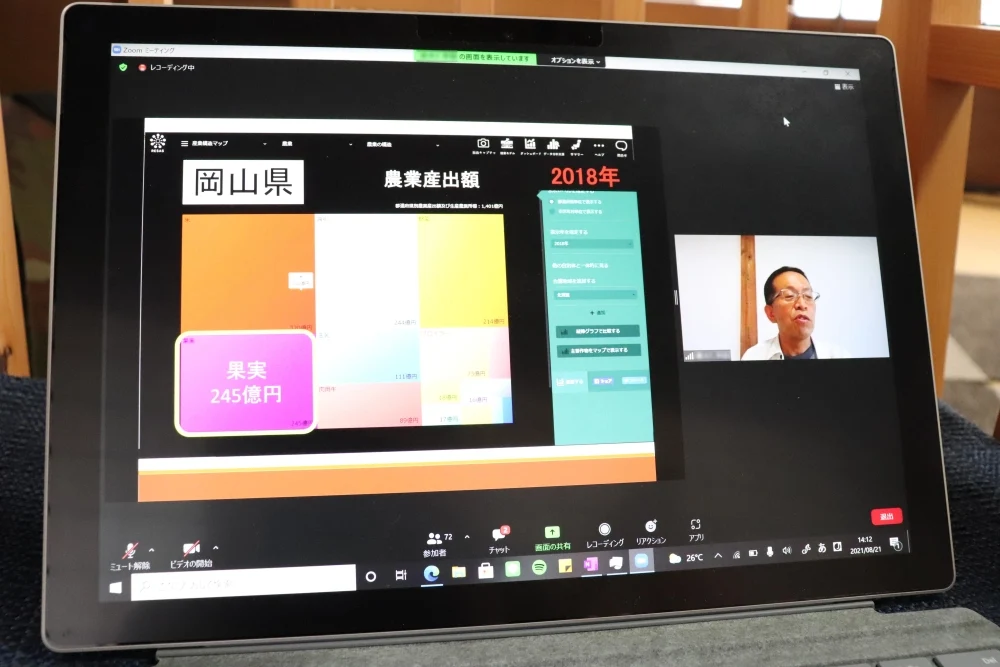
Hirata discussed the positioning of Okayama Prefecture's agricultural output of fruits within the national agricultural output figures, using RESAS data to explain why Okayama Prefecture is called the Fruit Kingdom.
In 2018, the top agricultural output of fruits in Japan was in Aomori Prefecture, amounting to 82.8 billion yen.
Okayama Prefecture ranked 10th, with an agricultural output of fruits at 24.5 billion yen.
There is a difference of 58.3 billion yen from Aomori Prefecture, which is ranked first.
Why is Okayama Prefecture, which has the image of producing many fruits, called the Fruit Kingdom?
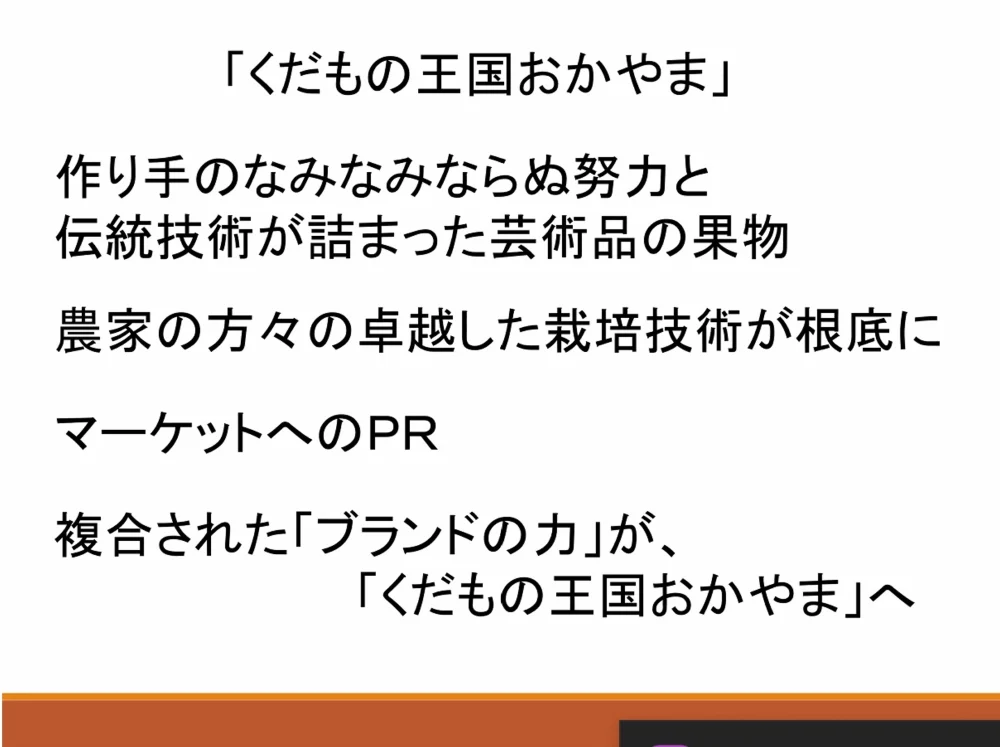
Hirata described Okayama's fruits as "artworks filled with the extraordinary efforts and traditional techniques of the producers."
Producers of fruits in Okayama inherit and preserve techniques and wisdom from their predecessors while also conducting research to further enhance the power of the fruits.
Okayama Prefecture is blessed with good weather, being called the Land of Sunshine, and has soil that is easy to cultivate fruits, but that alone does not explain why it is called the Fruit Kingdom.
The brand power cultivated by predecessors, the outstanding cultivation techniques of farmers, and the marketing efforts of distributors and government combined have led to Okayama Prefecture being called the Fruit Kingdom.
Hirata also spoke about companies in Okayama Prefecture that are engaged in sixth industrialization and their products.
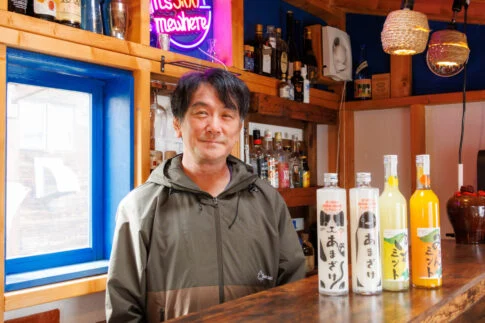
Sato Beniten, a former regional revitalization cooperation team member, produces red yuzu pepper "Fukiya no Beni Daruma" in Fukiya, Takahashi City, and the Red Rice Company cultivates the Okayama Prefecture-bred red rice "Akaoni Mochi" in Soja City, producing "Aka Rice Amazake Harenohi."
Through the efforts of Skole, which has obtained a trademark and sells straight grape juice under the name "Kajun," we learned in detail about what sixth industrialization entails.
After the presentation, in response to a question from a participant asking about recent examples in the agricultural field, facilitator Hiroshi Sakanoue mentioned that he is focusing on Bichu Sanpin and mint.
Bichu Sanpin refers to rice, salt, and cotton, which were particularly produced in Tamashima and Kasaoka.
He also introduced the Kurashiki Mint Exhibition Hall, which is attempting to revive mint, a major production area in Kurashiki.
Director Muro's Pic up Corner
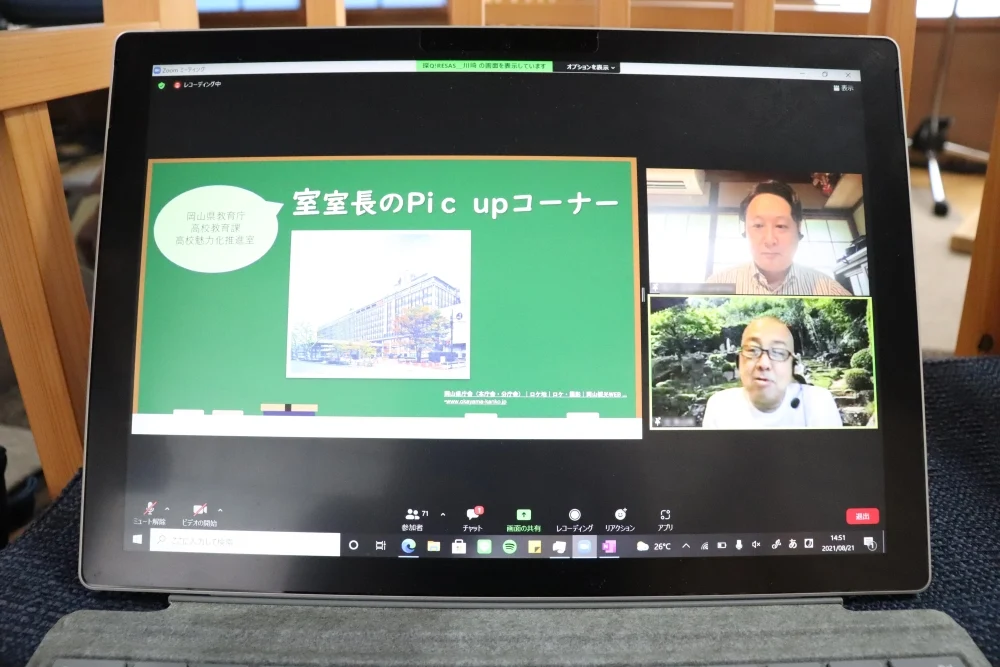
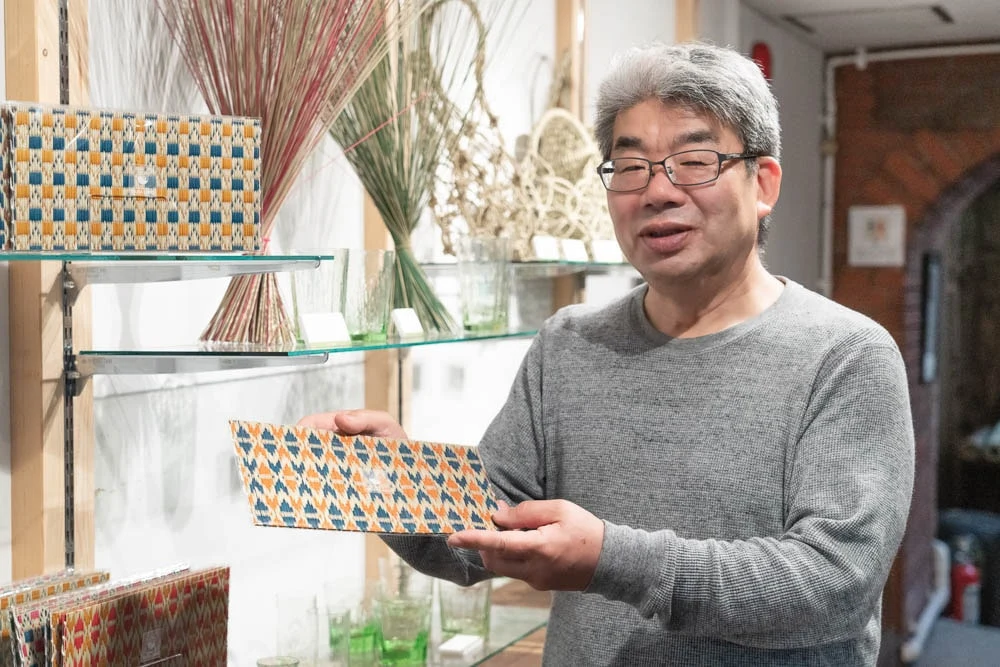
Takayuki Muro from the Okayama Prefectural Board of Education's High School Education Division spoke about badges made from wood shavings.
For the completion ceremony of a new high school building, badges were made from wood shavings to be worn by guests, and when this was shared on social media, someone from Kochi Prefecture expressed interest and requested to buy the badges.
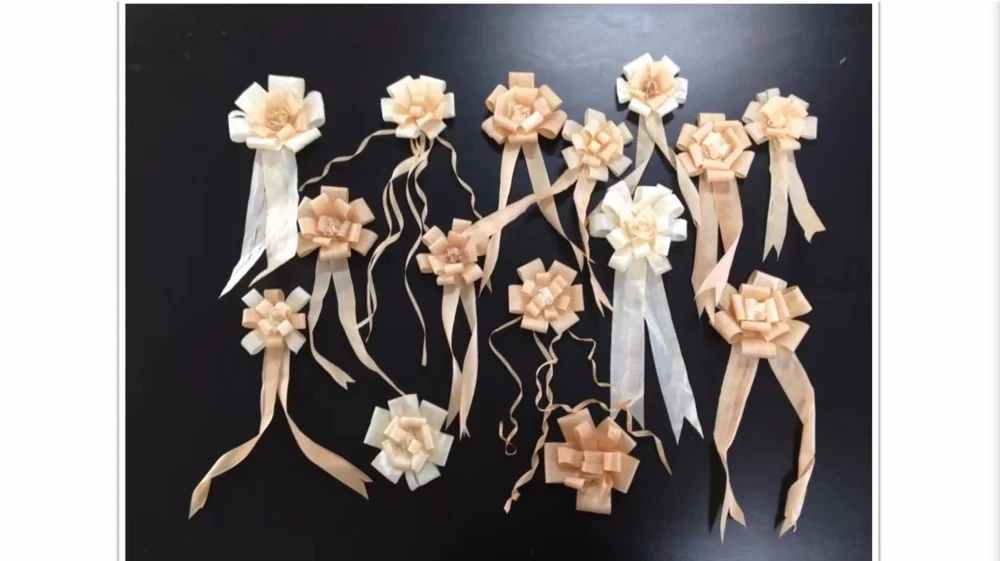
Furthermore, there were requests to use them at a national conference on environmental issues, leading to additional production.
This is an example of how information dissemination can lead to the expansion of initiatives from a single idea or opportunity, Muro stated.
When one hears "wood shavings," they may think of waste or something unnecessary, but in reality, it can become a product or something filled with dedication.
Presentation by Katsuhiro Kobayashi
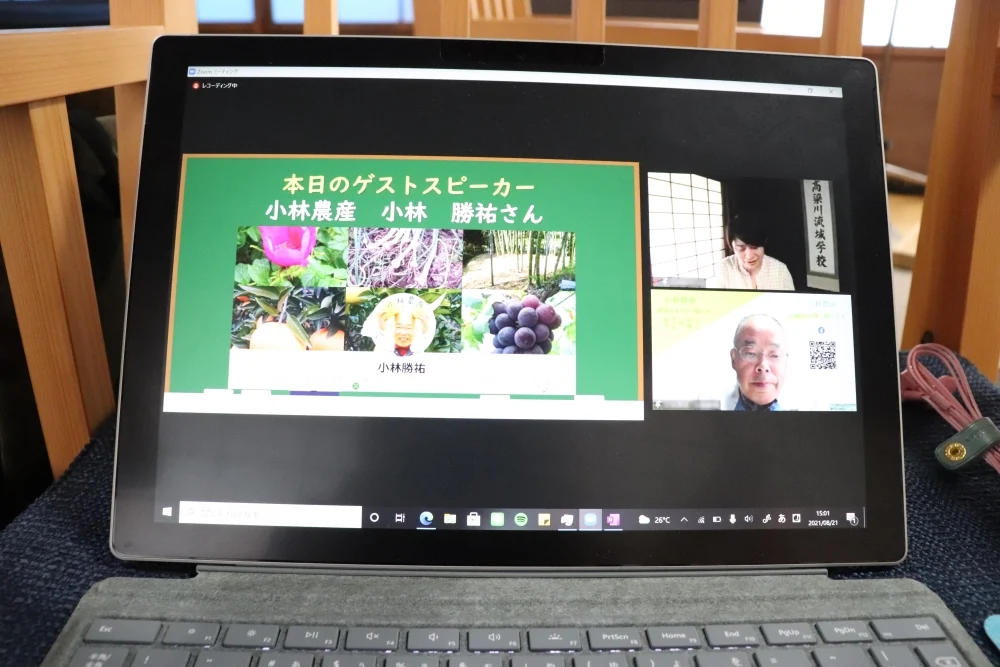
The second guest speaker was Katsuhiro Kobayashi from Kobayashi Agricultural Products.
Kobayashi conducts fruit harvesting experience events while taking care of a satoyama fruit orchard, and his presentation provided insights from the perspective of someone engaged in agriculture.
Kobayashi hopes to make the fruit orchard inherited from his father a place where people who are working hard can relax and enjoy the satoyama, and thus started the agricultural experience events.
Although he understood the procedures for fruit cultivation from helping his parents since childhood, he mentioned that there is a difference between observing and actually doing, so he is still experimenting and learning how to grow fruits.
In particular, the discussion about grapes for shipment and pesticides was striking.
For the grapes cultivated for shipment, there are size regulations, and pesticides must be applied within three days after full bloom and hormones within three to five days after the flowers have set.
However, grapes grown without pesticides developed well, and when this was shared on social media, people began to express interest in wanting grapes that had not been treated with pesticides.
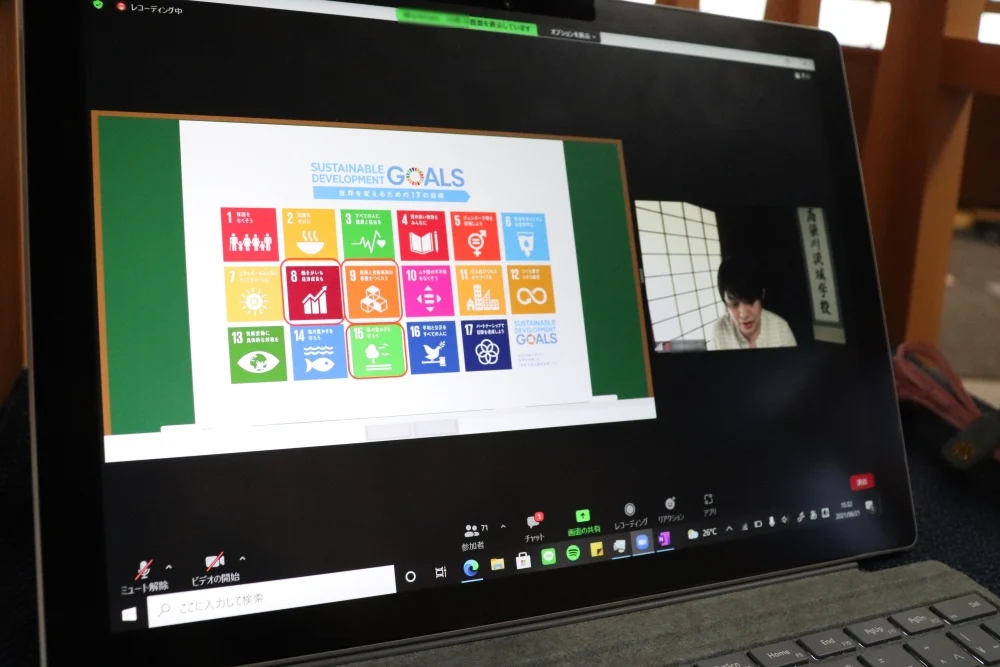
He also spoke about agriculture and the Sustainable Development Goals (SDGs).
Agriculture cannot be done without the richness of the land, and one cannot produce delicious food without it.
In his orchard, Kobayashi used to use pesticides to kill weeds, but he realized that some of the weeds in the field have beneficial effects for people.
By understanding the names of the weeds, he learned about their effects, and thus stopped using pesticides indiscriminately to kill them.
Not using pesticides not only leads to the safety of consumers but also protects rich farmland and the health of those engaged in agriculture.
At the end of his presentation, Kobayashi stated, "To protect diversity, I hope people will take an interest in satoyama and actually visit satoyama fruit orchards."
Presentation by Kairi Noma
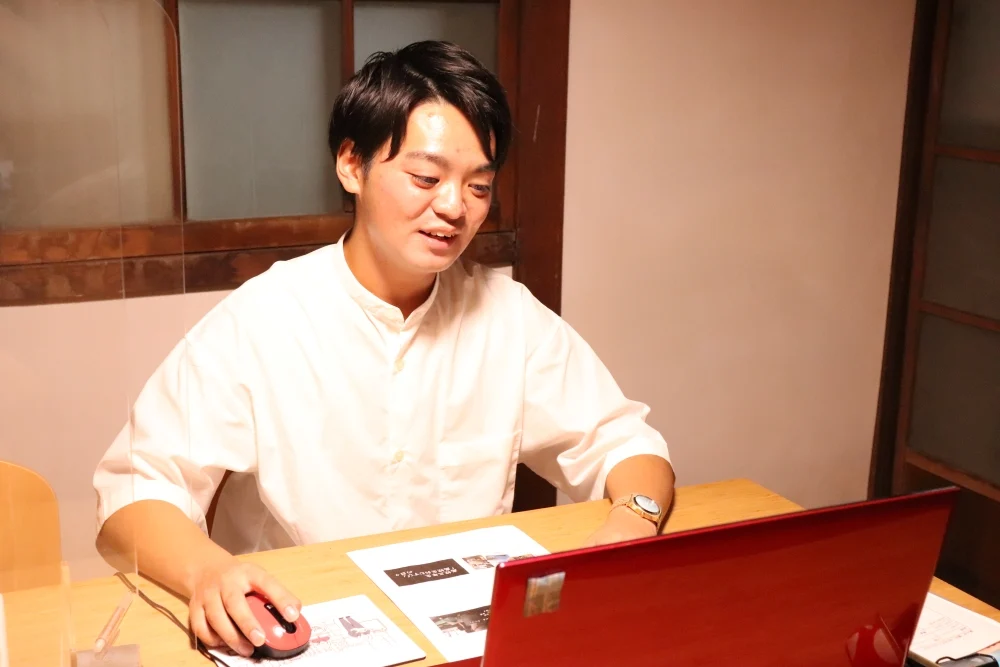
The third guest speaker was Kairi Noma, a fourth-year student at Okayama Shoka University.
During high school, Noma was involved in the "Tamayui Project," which involved making rice balls using products produced in Tamano City.
By learning about rice cultivation from students in the agricultural department of nearby high schools and actively participating in market events held at Uno Port, the Tamayui Project grew larger.
In the "Tamayui de Goen Marche," which they planned and executed themselves, they collaborated with nearby high schools to create an event that would also be enjoyable for overseas guests.
Noma emphasized the importance of connections not only among participants in the event but also among high school students themselves.
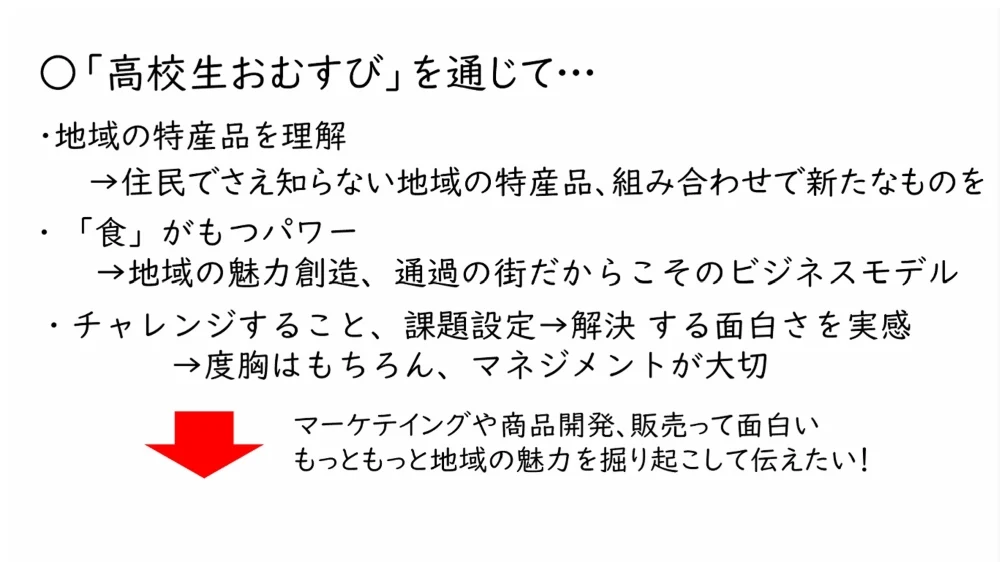
Through the Tamayui Project, Noma learned to understand local specialties, the power of food, and the creation of regional appeal, as well as the fun of setting challenges and solving problems, and the importance of management.
Utilizing his experiences in high school, Noma values regional exploration and field studies in university.
He established a travel research club and engaged in activities such as investigating the appeal of the region centered around the Kitabou area in Maniwa City while actually traveling.
Through his activities in high school and university, Noma has come to feel that he wants to work in a field that can uncover and convey the charm of the region.
Exploratory activities conducted in high schools and elsewhere are activities that expand one's knowledge, and it is important to take the initiative in these activities, Noma stated.
Participating in the Workshop
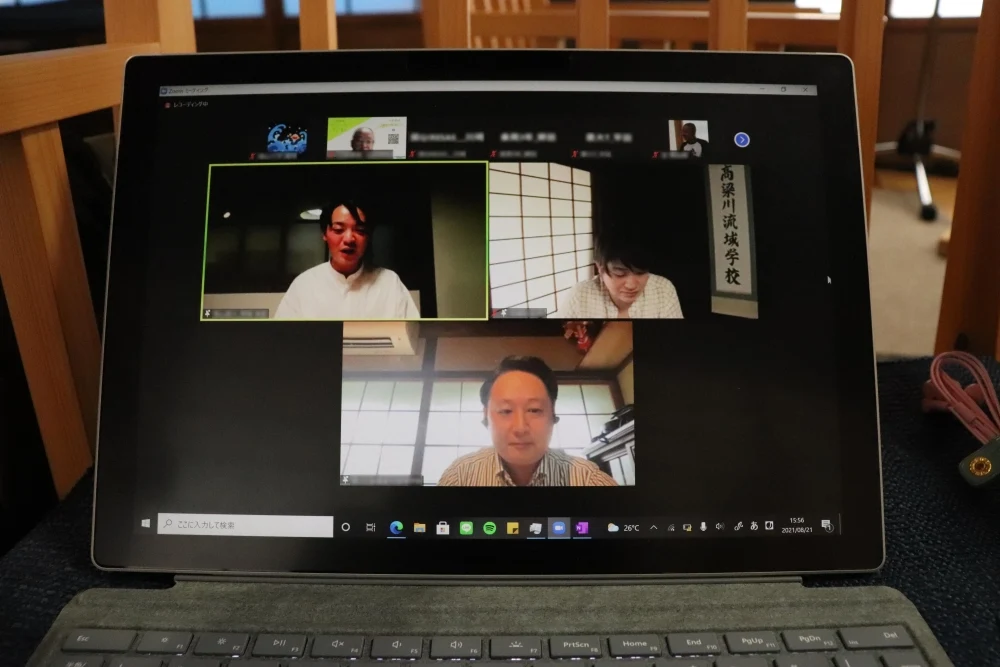
I had never considered why Okayama Prefecture is called the Fruit Kingdom.
It would be good if there were indicators that could more clearly measure the brand power of fruits, which is not easily understood just by looking at the proportion of fruits in agricultural output or market prices.
In that case, it might also be possible to utilize RESAS data.
I had thought that brand power and data might not be closely related, but by considering how to connect such things with RESAS, I feel that the potential of RESAS may be greater than I had imagined.
Even for someone like me, who usually does not hear discussions about agriculture, it was a workshop where I could learn while having fun.
RESAS Educational Utilization Workshop TanQ! RESAS Online Seminar Data
| Name | RESAS Educational Utilization Workshop TanQ! RESAS Online Seminar |
|---|---|
| Date | August 21, 2021 (Saturday) 1:30 PM - 4:00 PM |
| Location | 2-13-3 Chuo, Kurashiki City |
| Participation Fee (including tax) | Free |
| Homepage | RESAS Educational Utilization Workshop TanQ! RESAS Online Seminar |