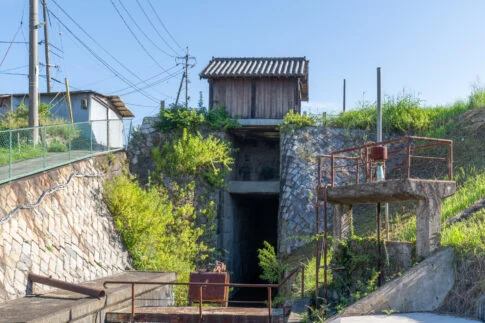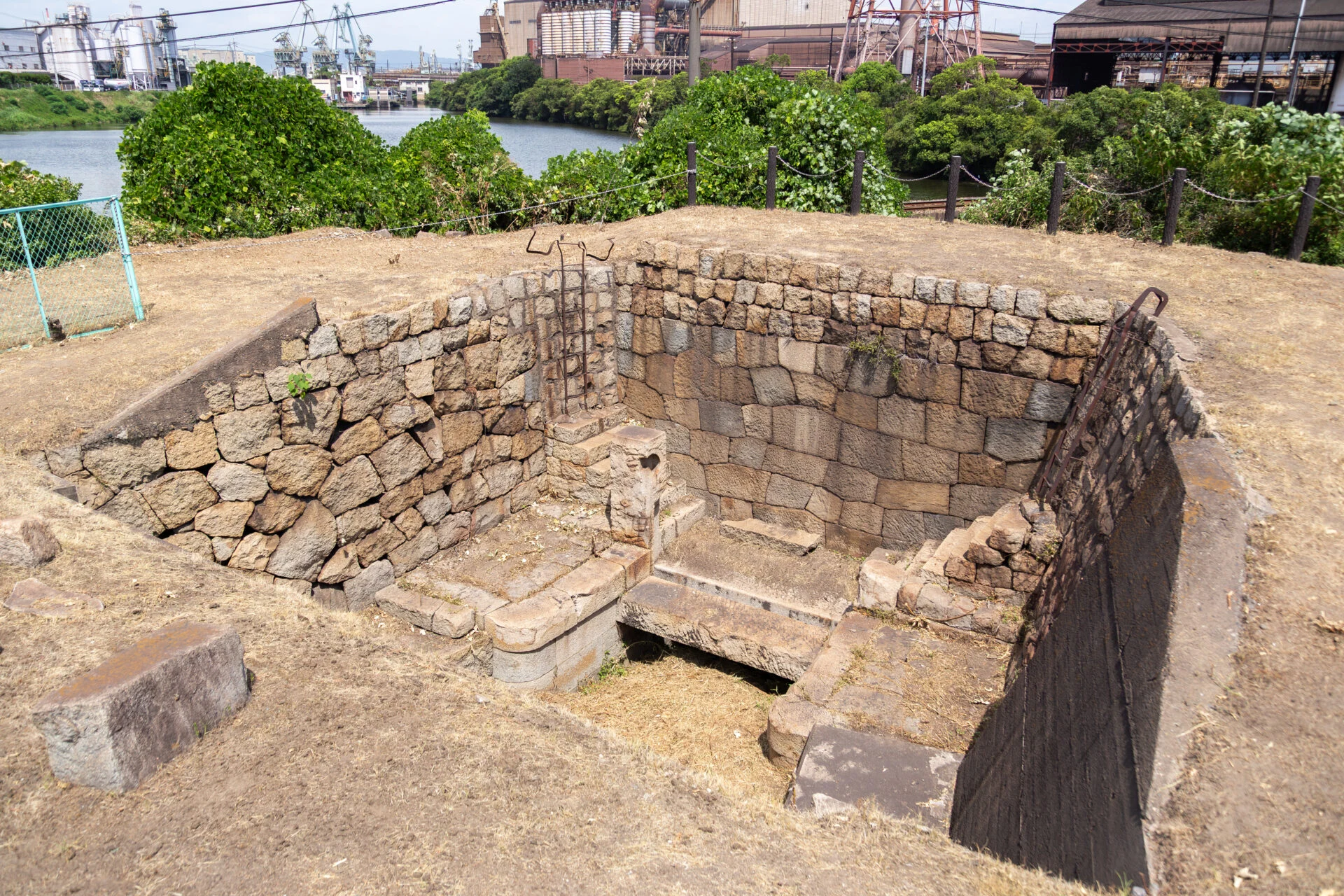
In the Mizushima area, there is a water gate called Itajiki Suimon, which was built around the end of the Edo period.
Currently, most of Kurashiki City is the result of land reclamation and new rice field development that began after the Edo period, and land reclamation is an inseparable part of Kurashiki City's history. For this reason, Itajiki Suimon was designated as a cultural property (historic site) by Kurashiki City in 1995 (Heisei 7), and later it was also designated as a component cultural property of Japan Heritage.
Through the Itajiki Suimon, which has remained in Mizushima across the ages, we will unravel the history of new rice field development and land reclamation in Kurashiki.
Entry to the interior of Itajiki Suimon is prohibited.
This time, we have obtained permission for entry and photography from Kurashiki City.
About Itajiki Suimon
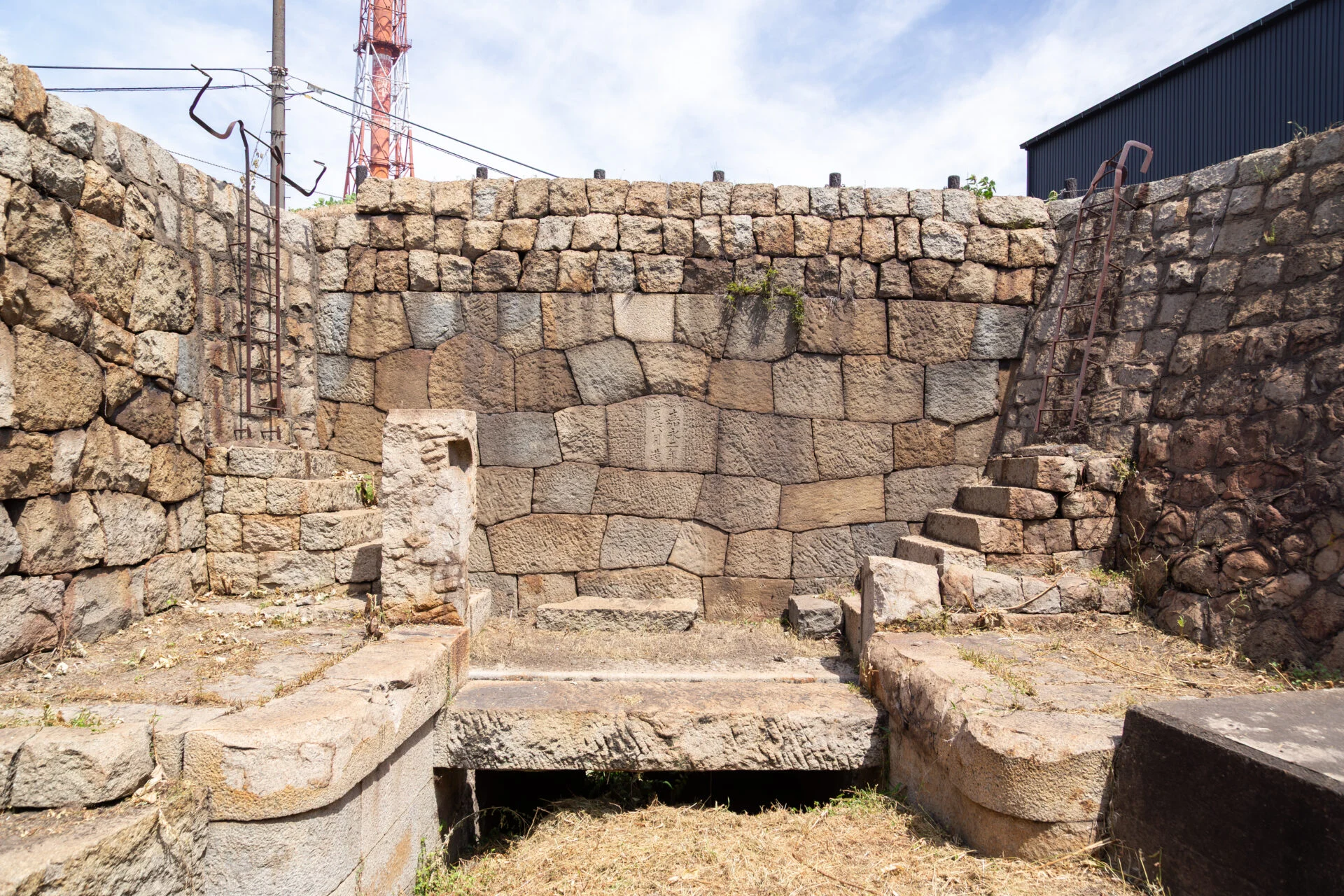
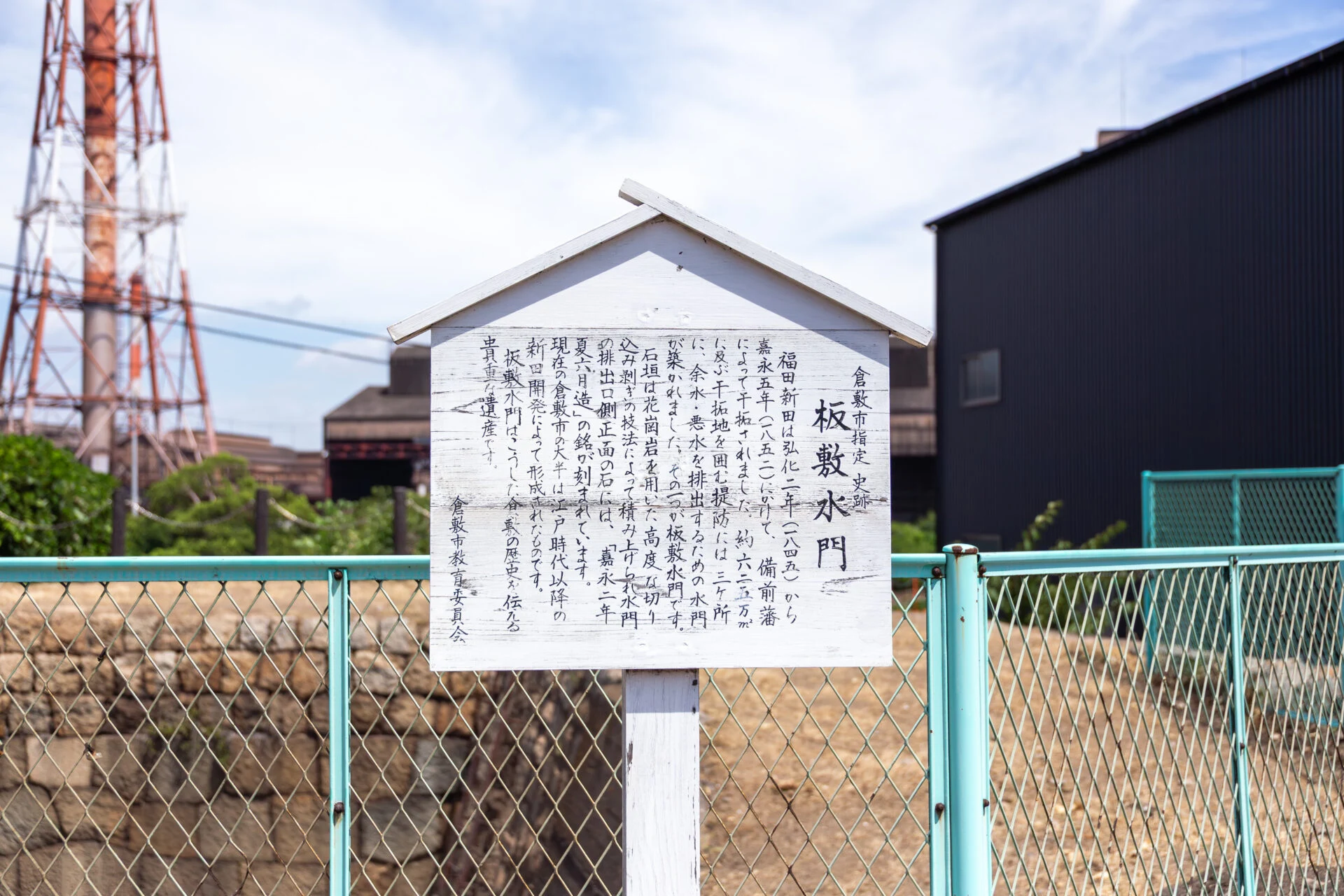
Itajiki Suimon is one of three water gates built to drain excess and foul water from the Fukuda New Rice Field, which was reclaimed between 1845 (Koka 2) and 1852 (Kaei 5).
Excess Water
Water that is drawn into rice fields, etc.
Foul Water
Water that is drained from rice fields, etc.
The width of the water gate is 10m, and the depth is 6m, with granite used for the stone walls.
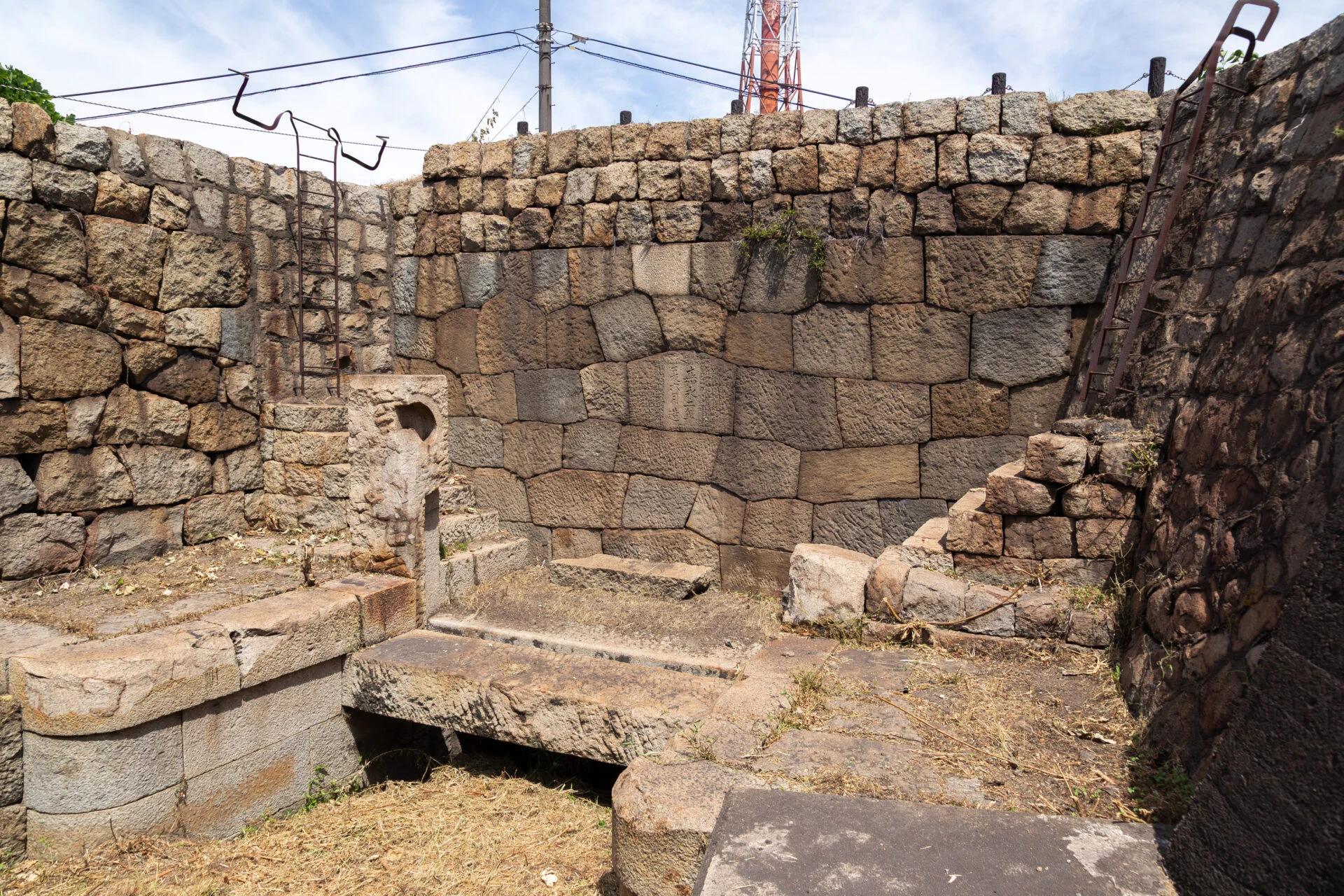
According to the Fukuda Town History, the development of Fukuda New Rice Field was proposed in 1835 (Tenpo 6) by eight wealthy village headmen from Kojima District, but it was difficult to find a contractor due to the high costs involved.
There was opposition from surrounding villages, but ten years after the proposal, in 1845 (Koka 2), the village headman of Yanai Village, Kyu Gohei, obtained permission from the Ikeda Domain and began the development of the new rice field.
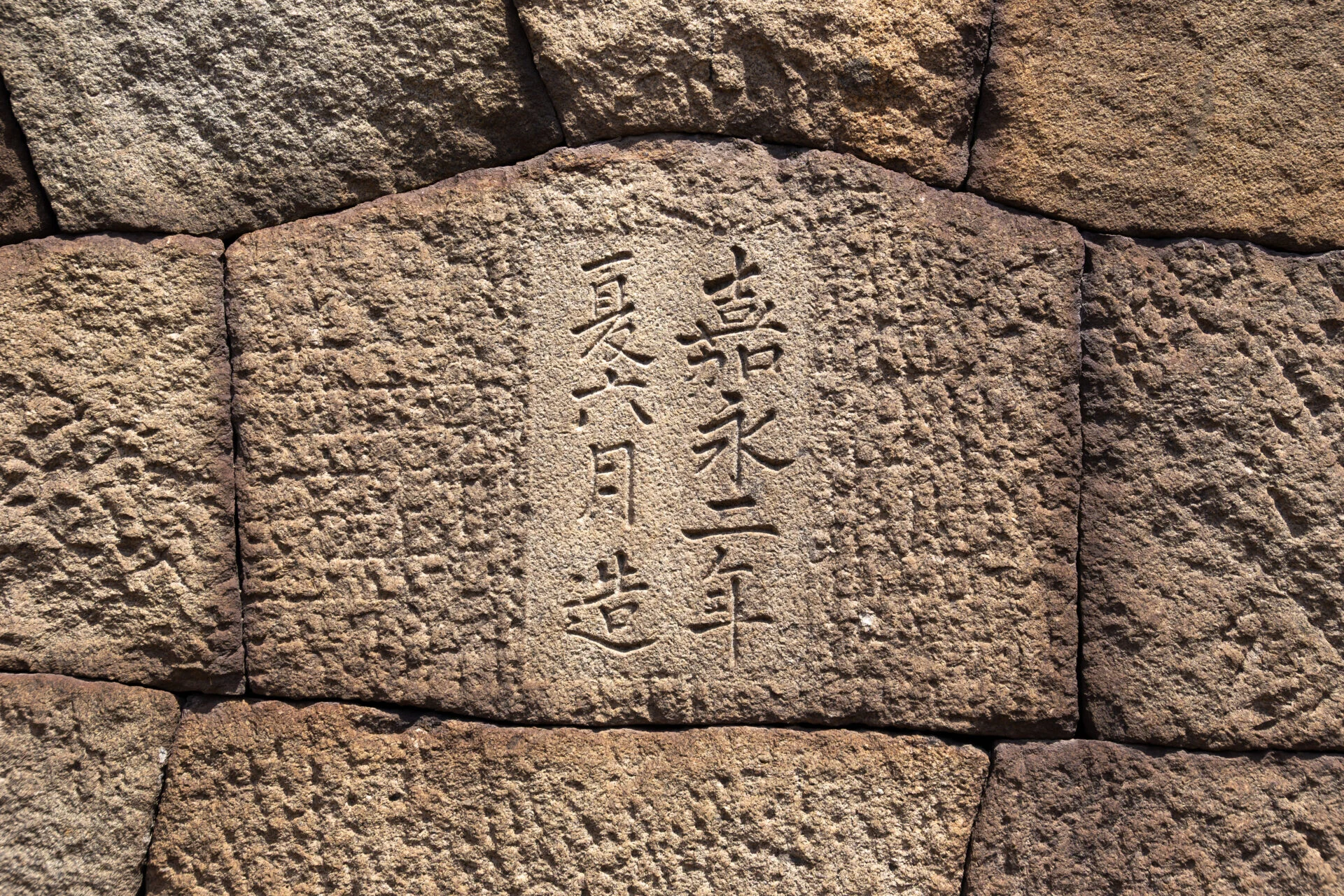
Later, the contractor changed from Kyu Gohei to Nozaki Buzaemon (のざき ぶざえもん), who was called the "King of Salt Fields," and the Itajiki Suimon was completed in the summer of 1849 (Kaei 2).
On the stone walls of the water gate, there is a stone engraved with "Constructed in the summer of the second year of Kaei," which indicates the year of construction.
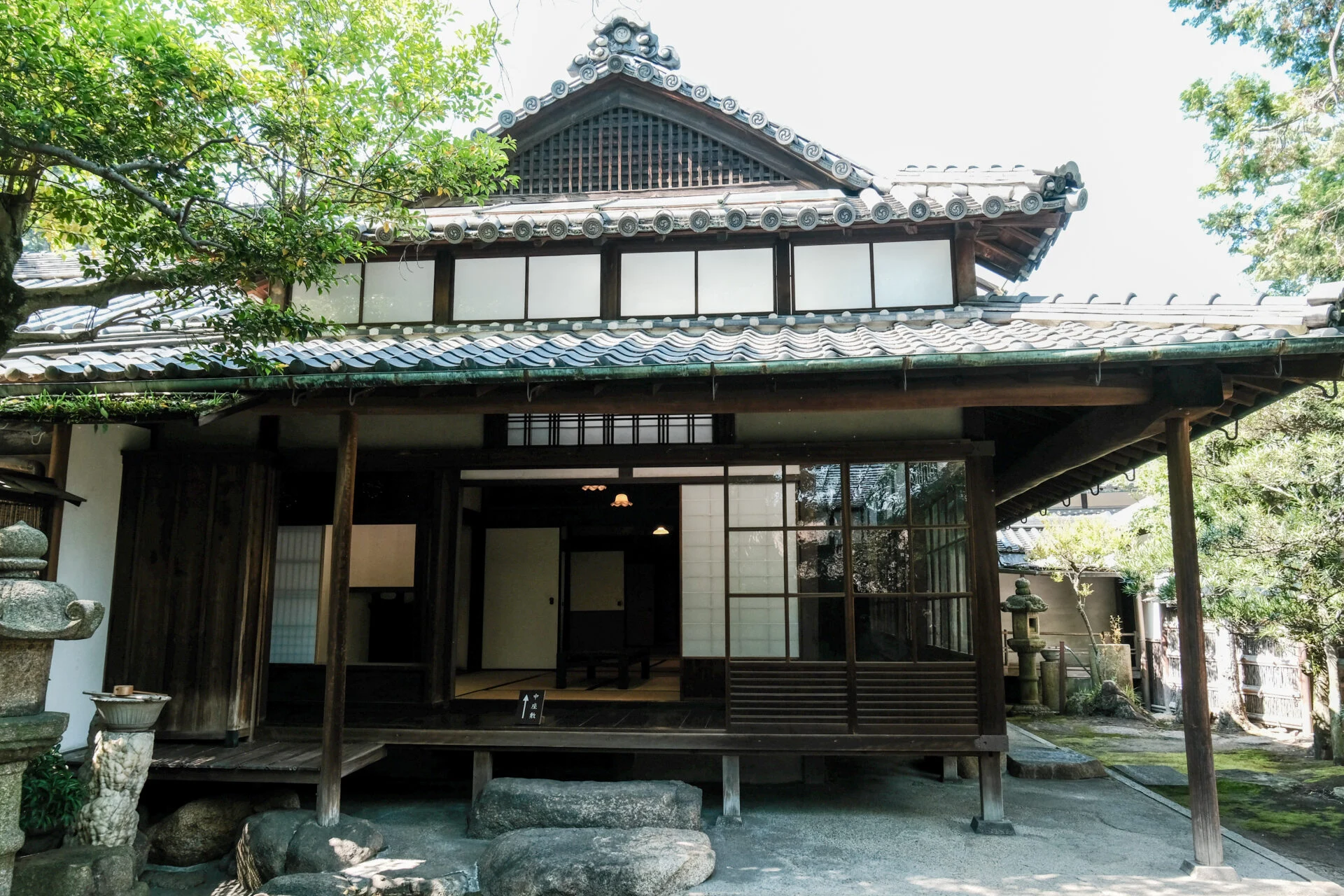
Public works during the Edo period were carried out by the Edo Shogunate or domains, ordering wealthy village headmen to do so.
The land reclamation of Fukuda New Rice Field also began with Kyu Gohei as the contractor, but when Kyu Gohei ran out of funds, the contractor changed to Nozaki Buzaemon. It is said that Nozaki Buzaemon was granted permission to carry a family name and a sword as a reward for a series of developments including salt fields and new rice fields.
From the episodes related to the construction of embankments and water gates, we can see that society during the Edo period was different from today.
Itajiki Suimon and Land Reclamation
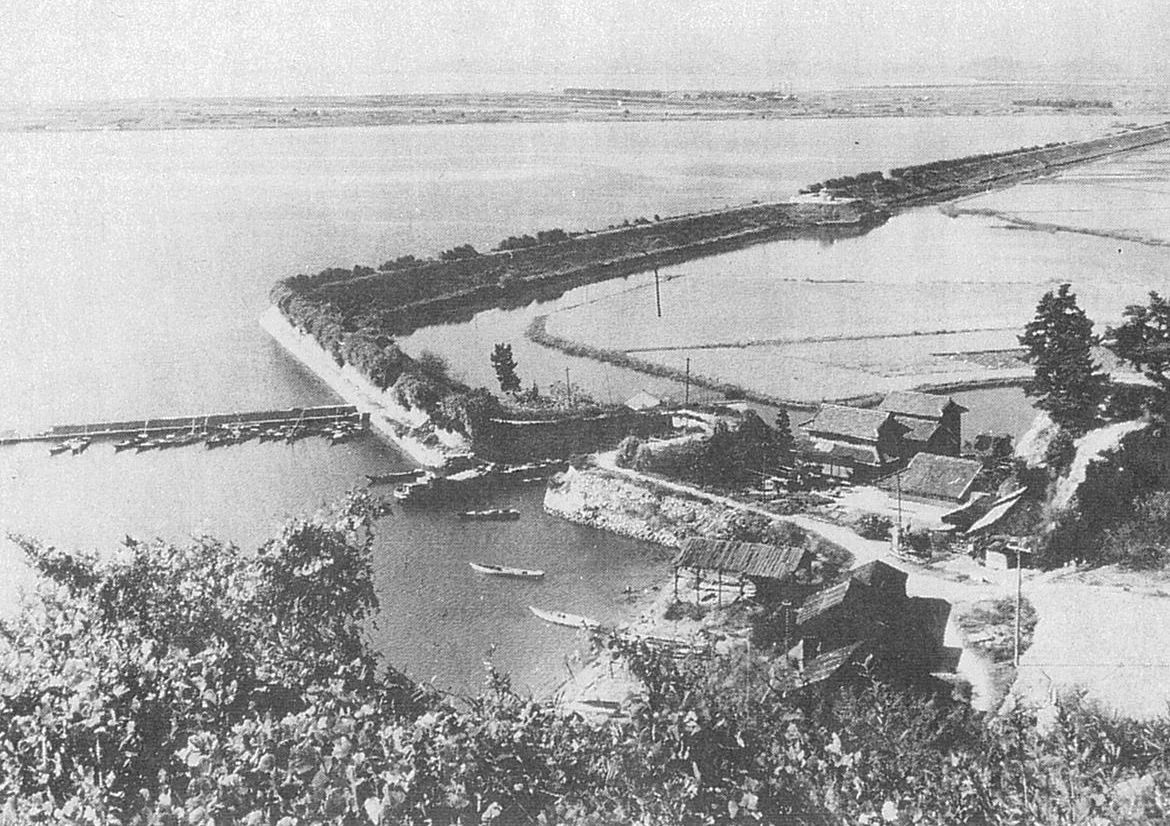
Most of present-day Kurashiki City was created through new rice field development and land reclamation during the Edo period.
Land reclamation involves building embankments and water gates to separate the sea from the land and dry out the land.
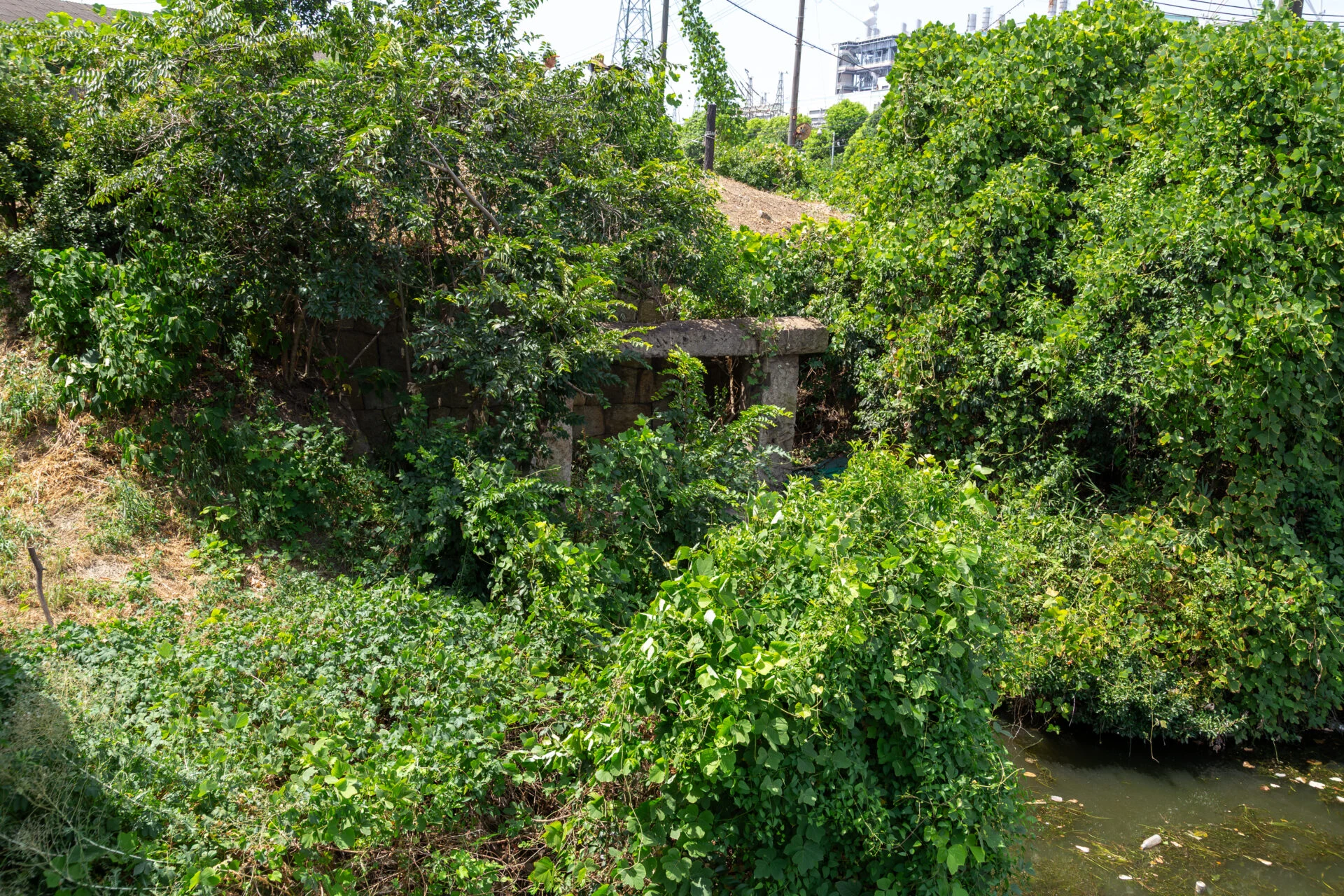
By turning the land created through land reclamation into rice fields, the area for rice cultivation was increased. This is the new rice field development. Additionally, since the reclaimed land is dried out from the sea, it contains a high level of salt.
Before it could be used for rice cultivation, salt-resistant crops such as cotton and rush were grown, and through these, the town of Kurashiki developed.
During the land reclamation in the Edo period, there were reportedly several water gates near the Bikan Historical Area, but once the land reclamation was completed, the embankments and water gates were dismantled as they had fulfilled their purpose.
However, Itajiki Suimon, built towards the end of the Edo period, continued to serve as an embankment even after the land reclamation was completed.
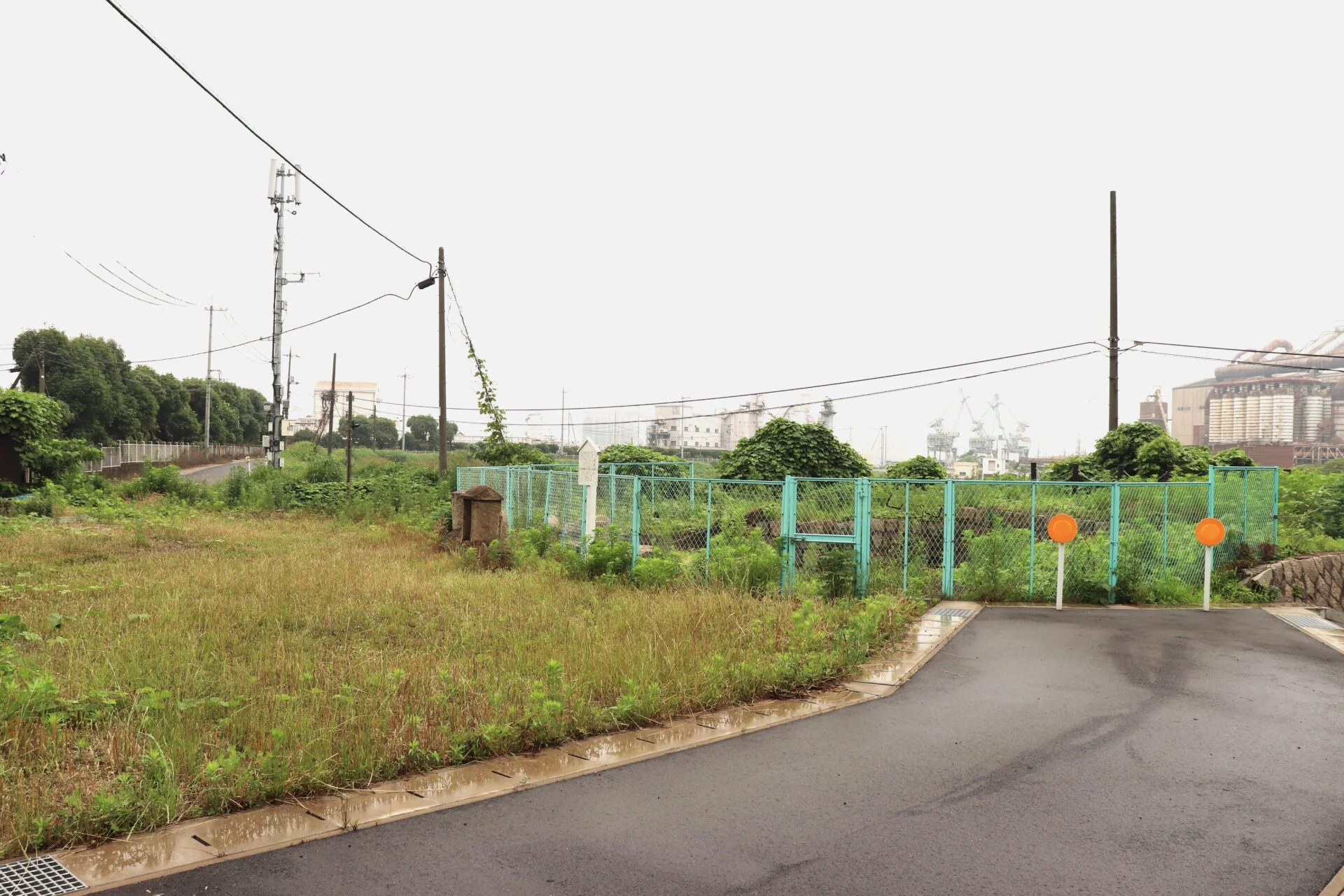
The green fence surrounds Itajiki Suimon, and the road extending to the left in the background used to be the embankment.
Additionally, the land surrounding Itajiki Suimon is owned by Kurashiki City, and when the sea of Mizushima was reclaimed and factories were built, no human intervention was made. For this reason, it has remained intact until now.
Difference between Land Reclamation and Filling
The land in the Mizushima area was created through land reclamation and filling.
We were also taught about the differences between land reclamation and filling.
First, land reclamation is primarily conducted for the purpose of new rice field development.
For this reason, maps such as "Fukuda New Rice Field Embankment, Water Gate, and Irrigation Ditch Construction Diagram," which show the land and irrigation ditches created along with the development of Fukuda New Rice Field, have been preserved.
Itajiki Suimon was built for the purpose of new rice field development and land reclamation.
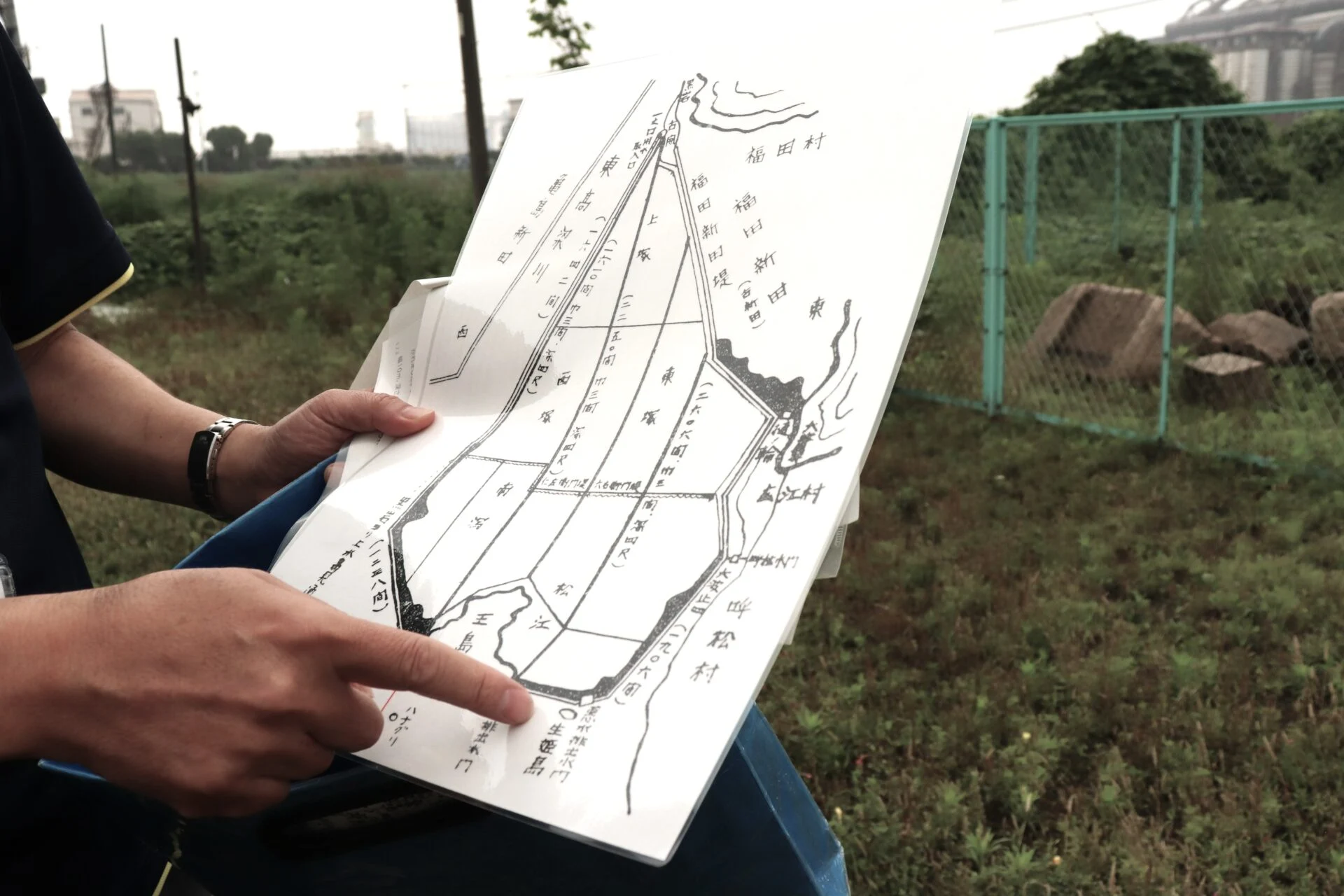
On the other hand, the land of the Mizushima Industrial Complex was created through filling during the post-war period of rapid economic growth.
Land reclamation involves building embankments and water gates to separate the sea from the land and dry out the land, while filling refers to creating new land by piling dredged soil and other materials on the seabed.
Dredged Soil
Soil that has been scooped from the bottom of ports, rivers, and canals.
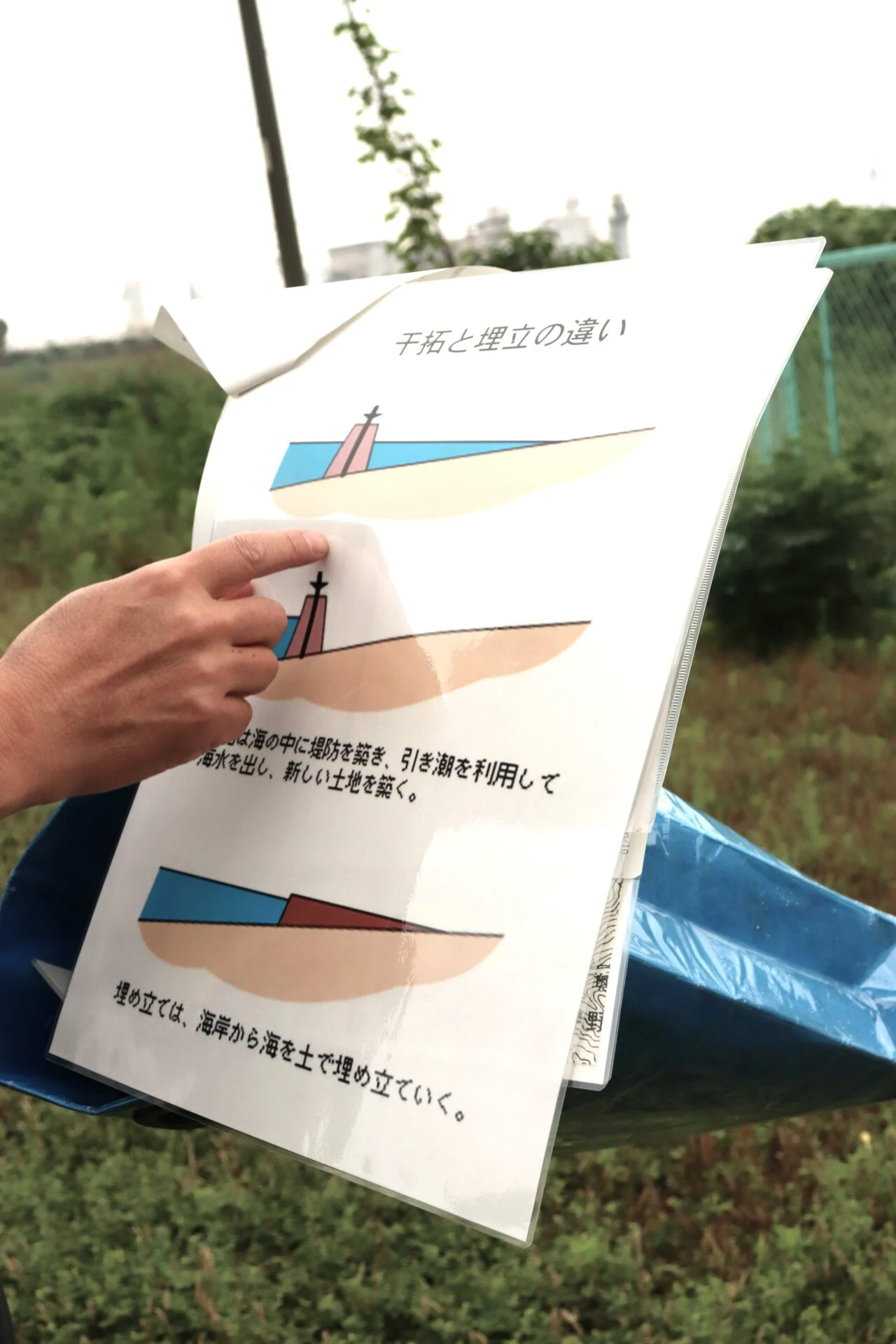
Even within the Mizushima area, the purposes and methods of land creation differ between Fukuda New Rice Field and the Mizushima Industrial Complex.
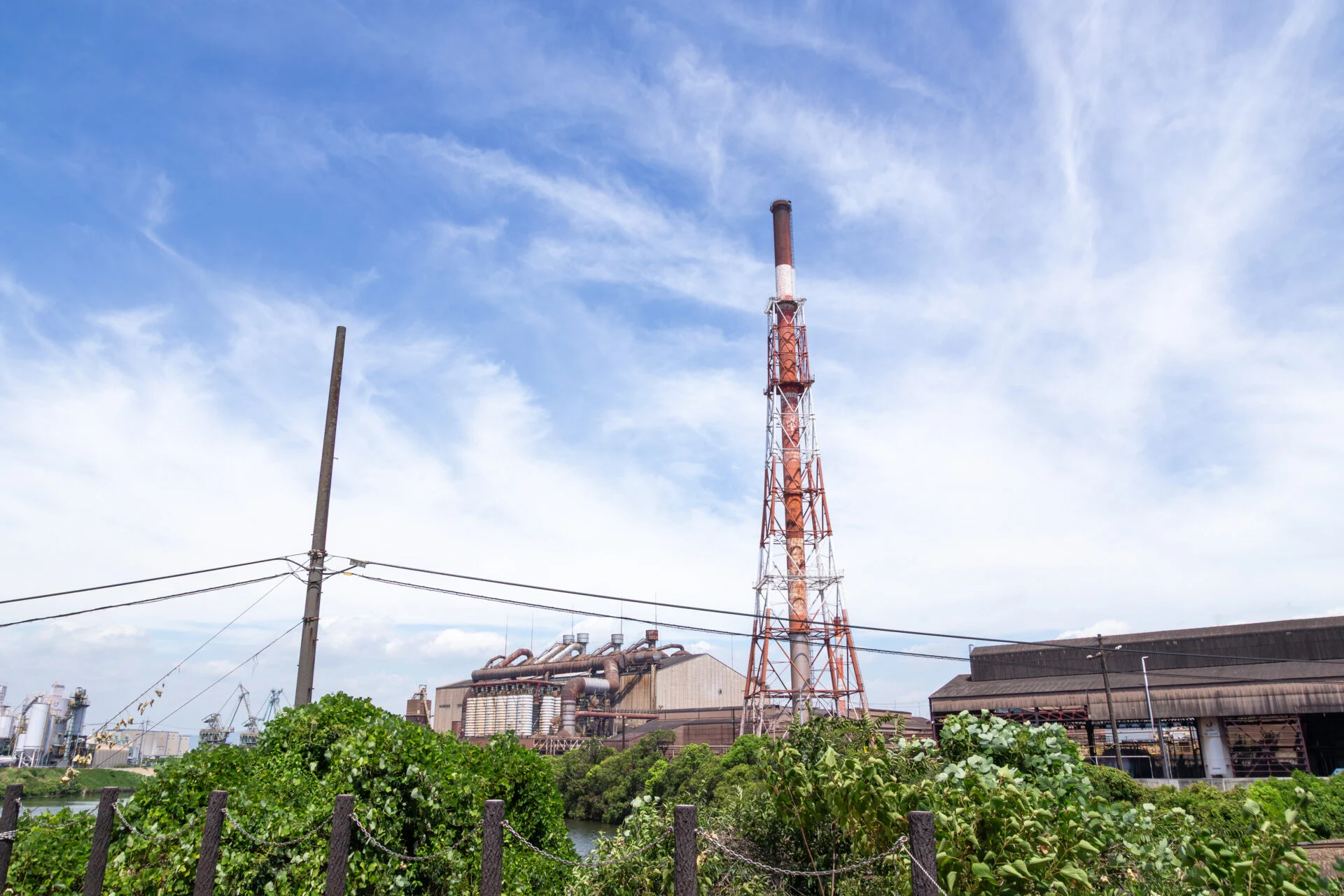
Itajiki Suimon can be said to be the "boundary between reclaimed land and filled land" in the Mizushima area.
Conclusion
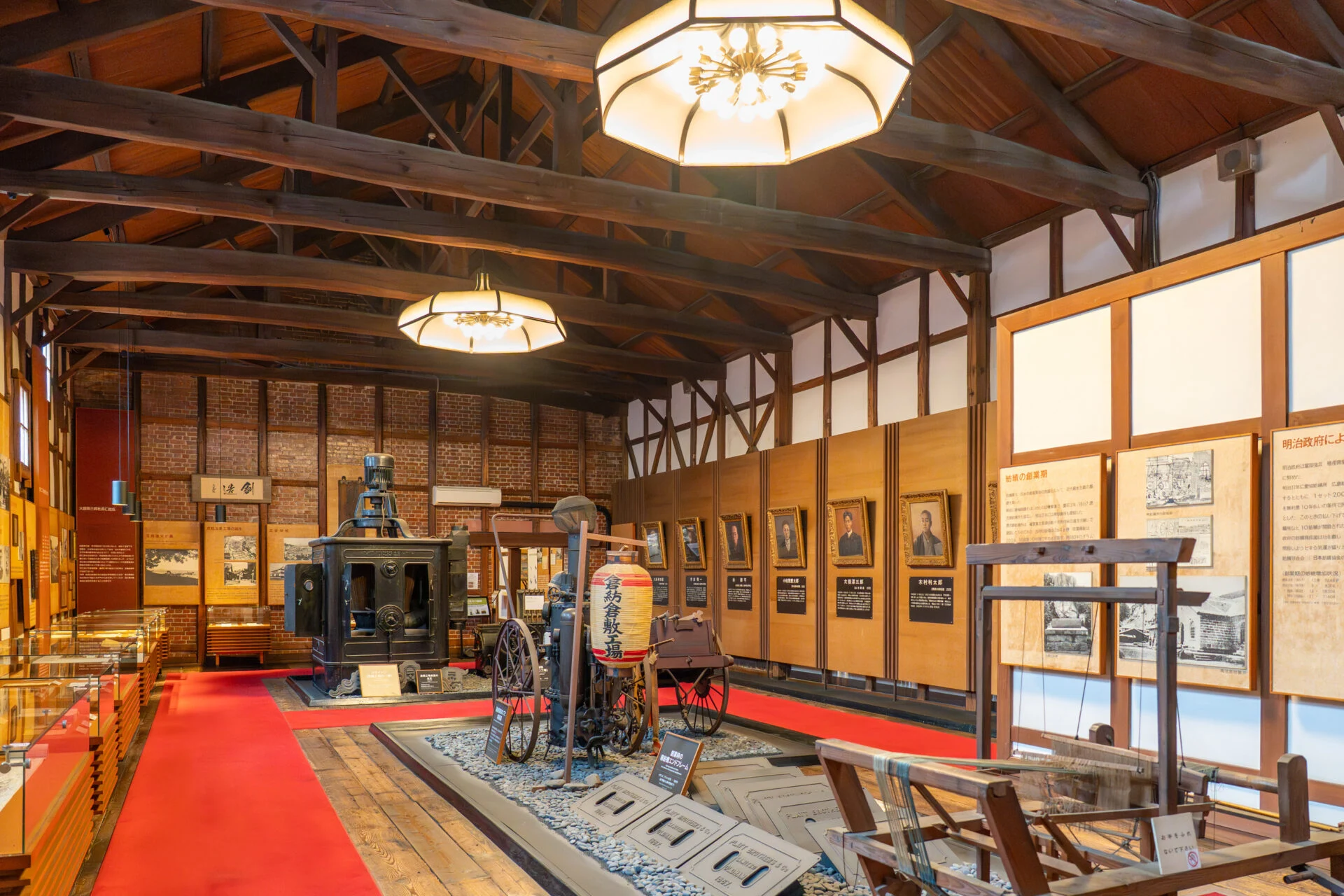
Itajiki Suimon is the only designated component cultural property in the Mizushima area of the Japan Heritage story "A Kurashiki story beginning with a single cotton flower."
While many unused water gates are often dismantled, Itajiki Suimon is a valuable existence that conveys the appearance at the time of its construction and the history of land reclamation to the present day.
When unraveling the history of the region, attention tends to focus on buildings and culture, but the existence of land development and infrastructure is also essential for development.
Itajiki Suimon is a component cultural property that conveys this fact.
Articles about Japan Heritage in Kurashiki City
Itaziki Water Gate Data
| Name | Itaziki Water Gate |
|---|---|
| Address | 4-chome Minami-une, Kurashiki City, Okayama Prefecture, and 3-chome Shiodori |
| Homepage | Itaziki Water Gate | Kurashiki City Homepage |