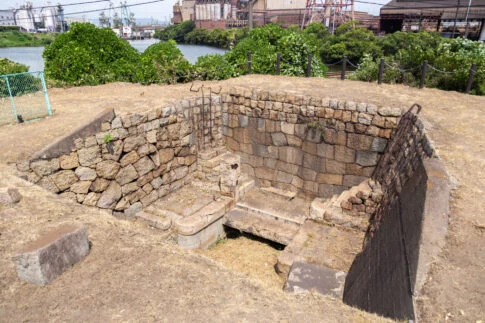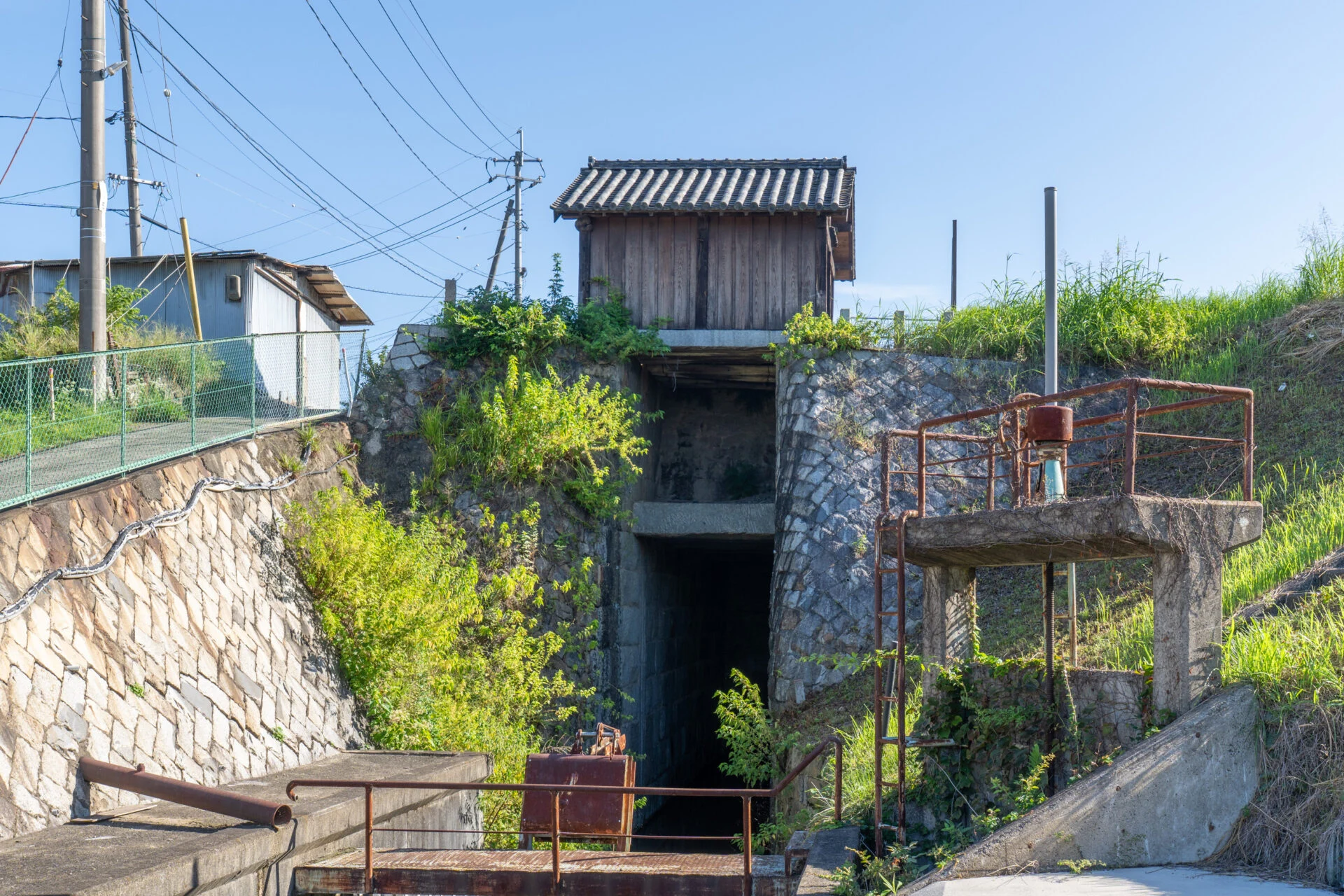
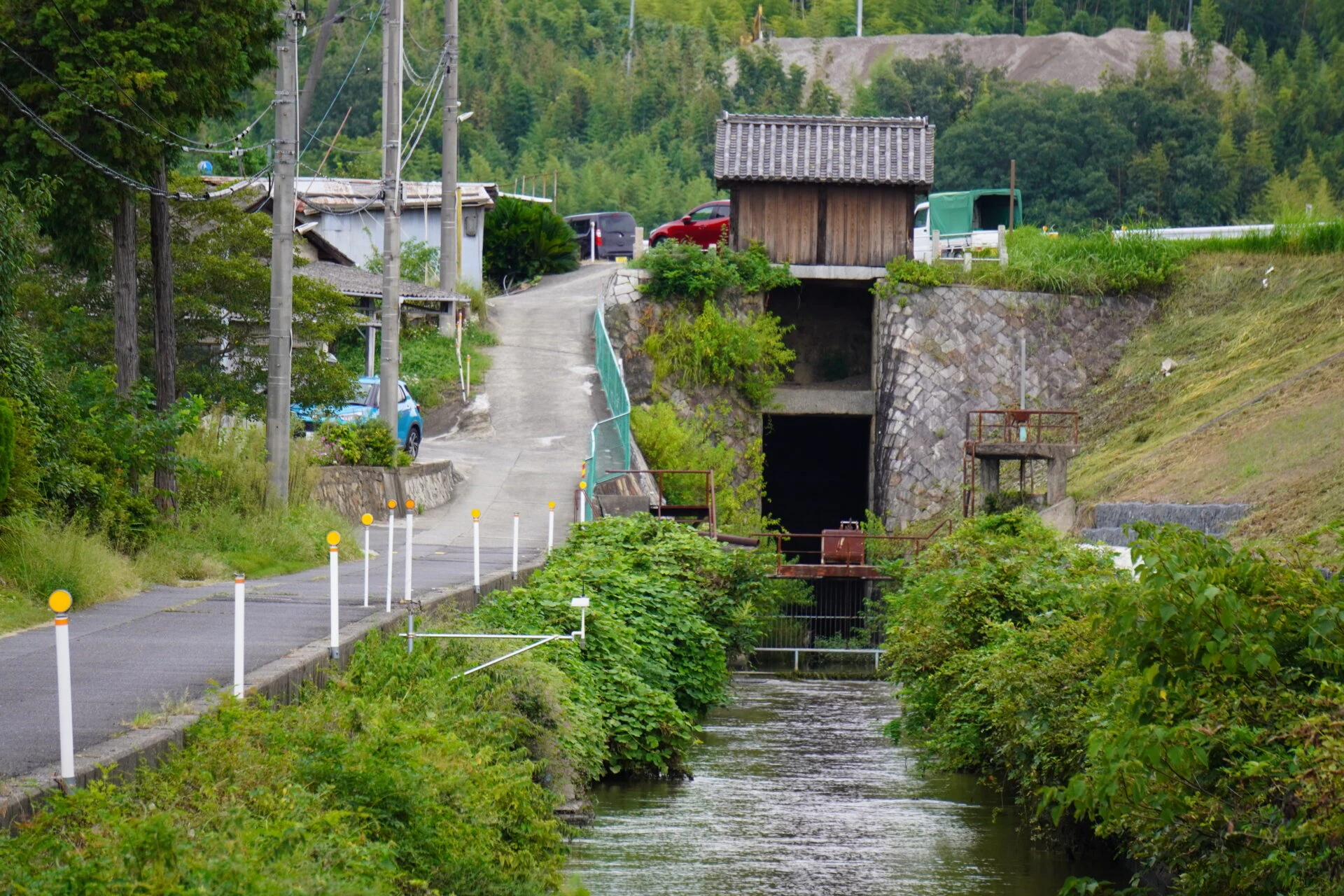
A small ruin quietly standing in Mizue, Funao, Kurashiki City.
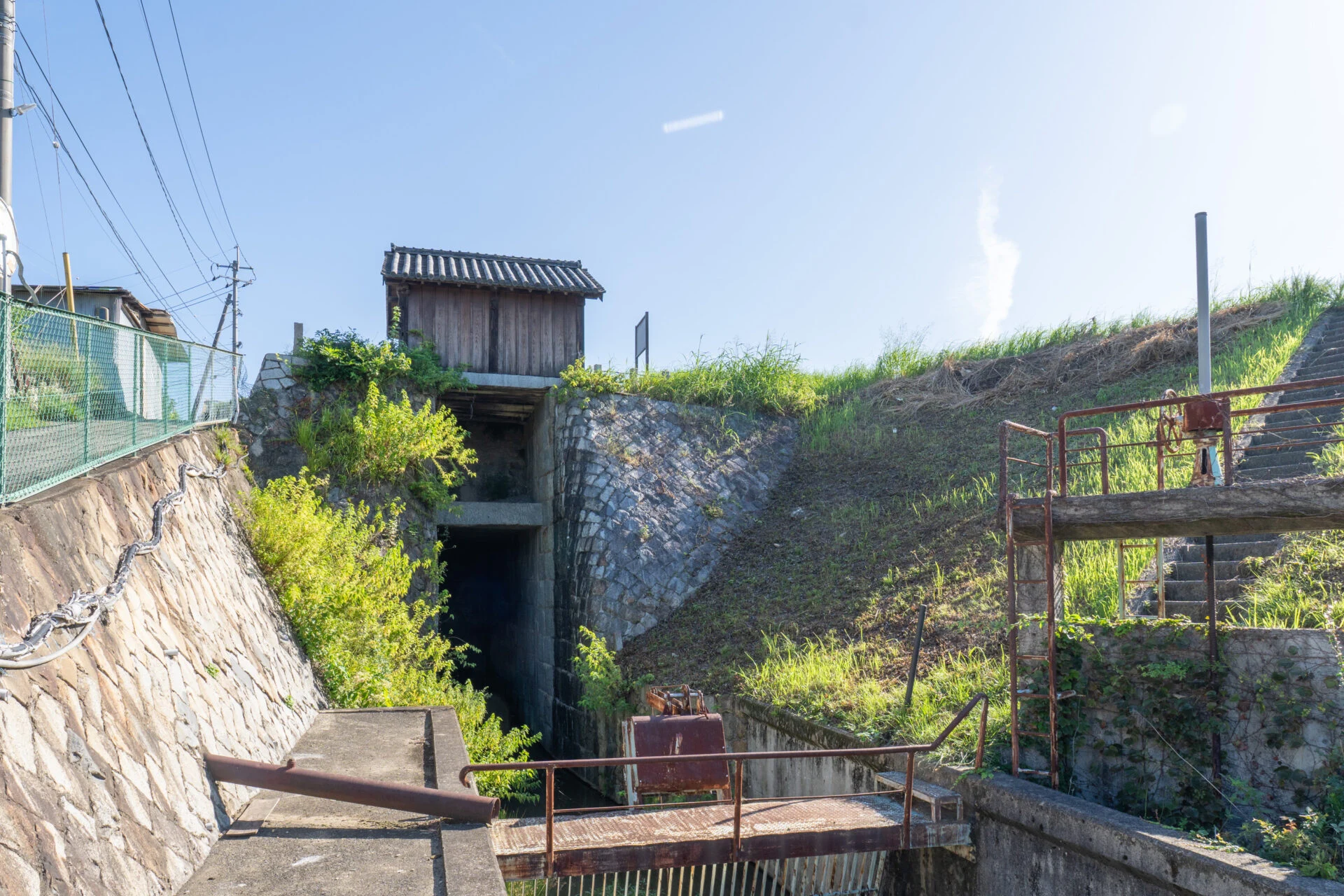
This is a structure from the mid-Edo period, the lock-type canal water gate " Ichinokuchi Water Gate."
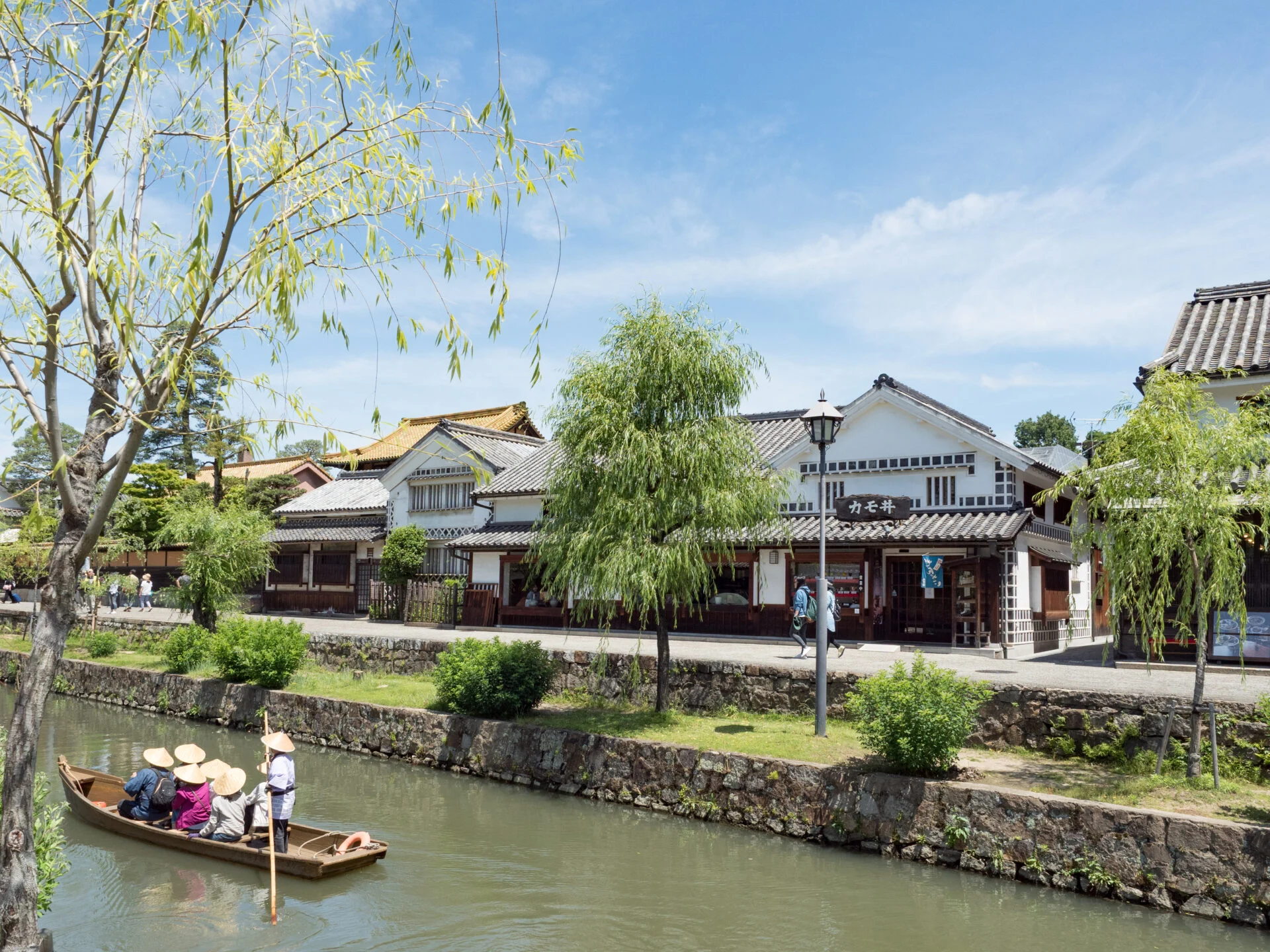
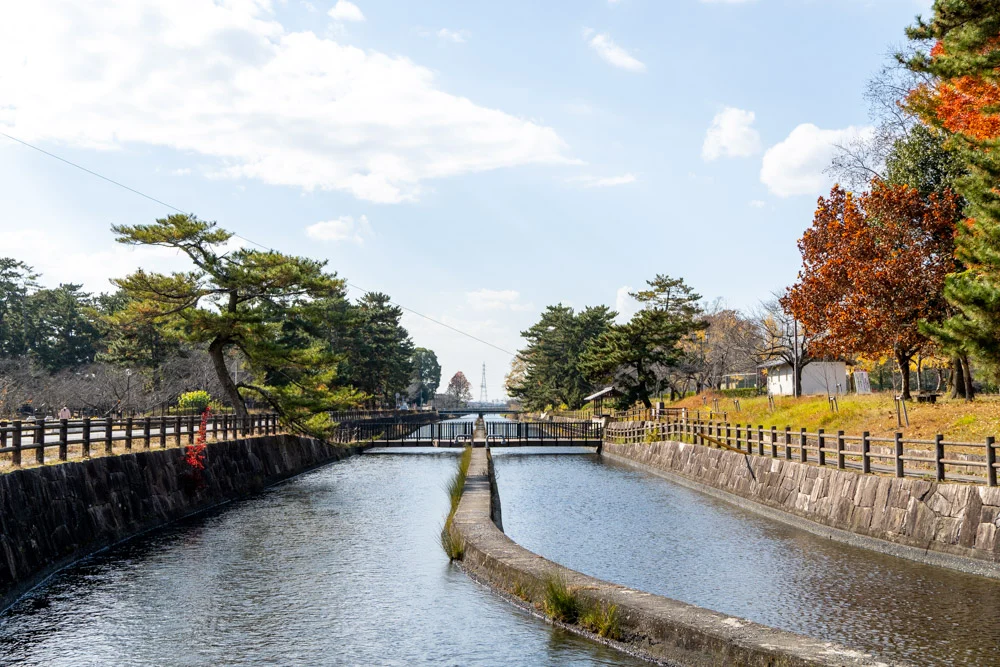
In an era when water transport was the main method of transporting goods, it played an important role as the starting point of the canal "Takase-doshi," which connected to Tamashima Port through reclaimed land.
I visited the "Ichinokuchi Water Gate," which is one of the cultural properties of the Japan Heritage "A Kurashiki story beginning with a single cotton flower - A town of textiles woven from Japanese and Western influences," and is also designated as a historic site of Kurashiki City.
What is Ichinokuchi Water Gate?
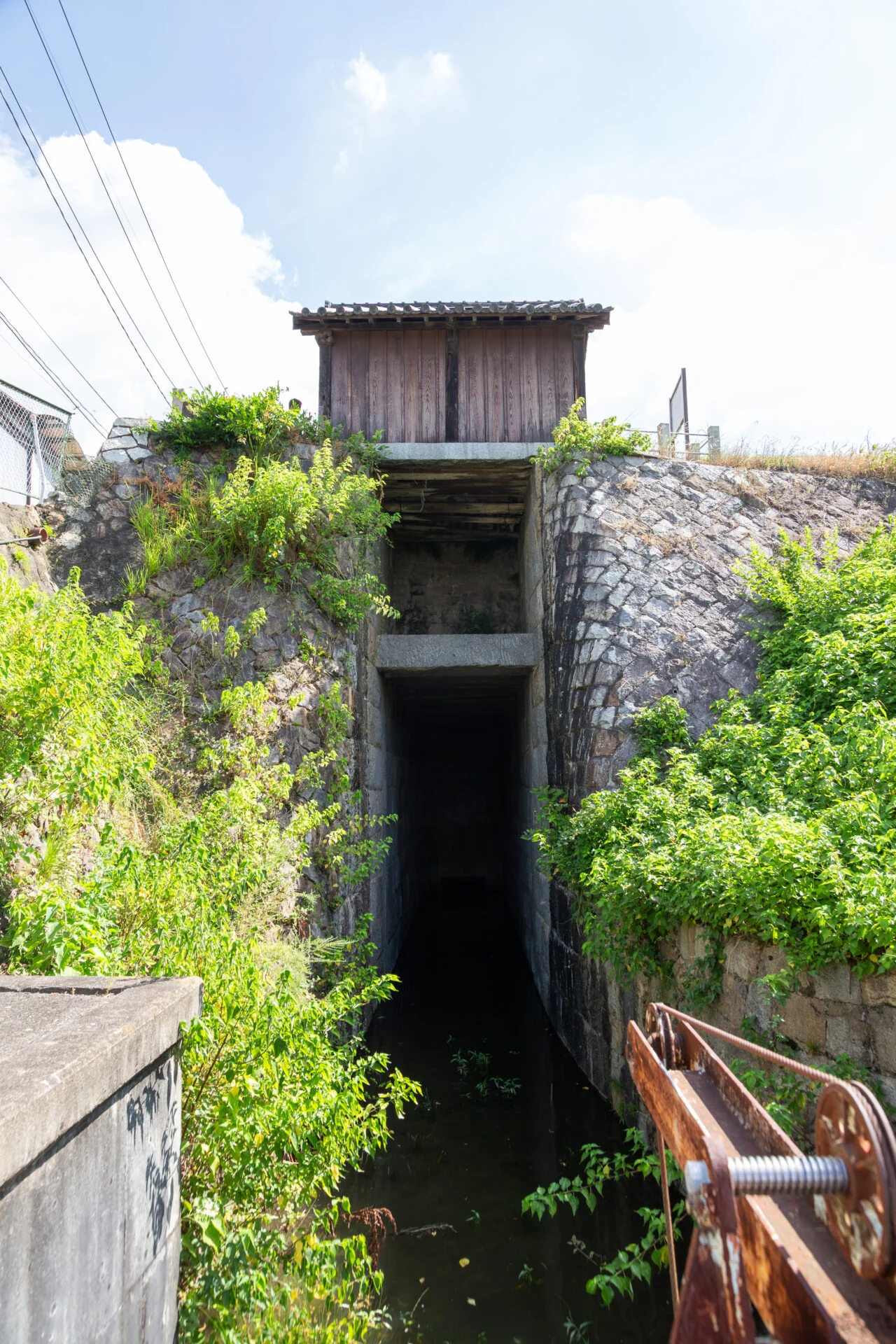
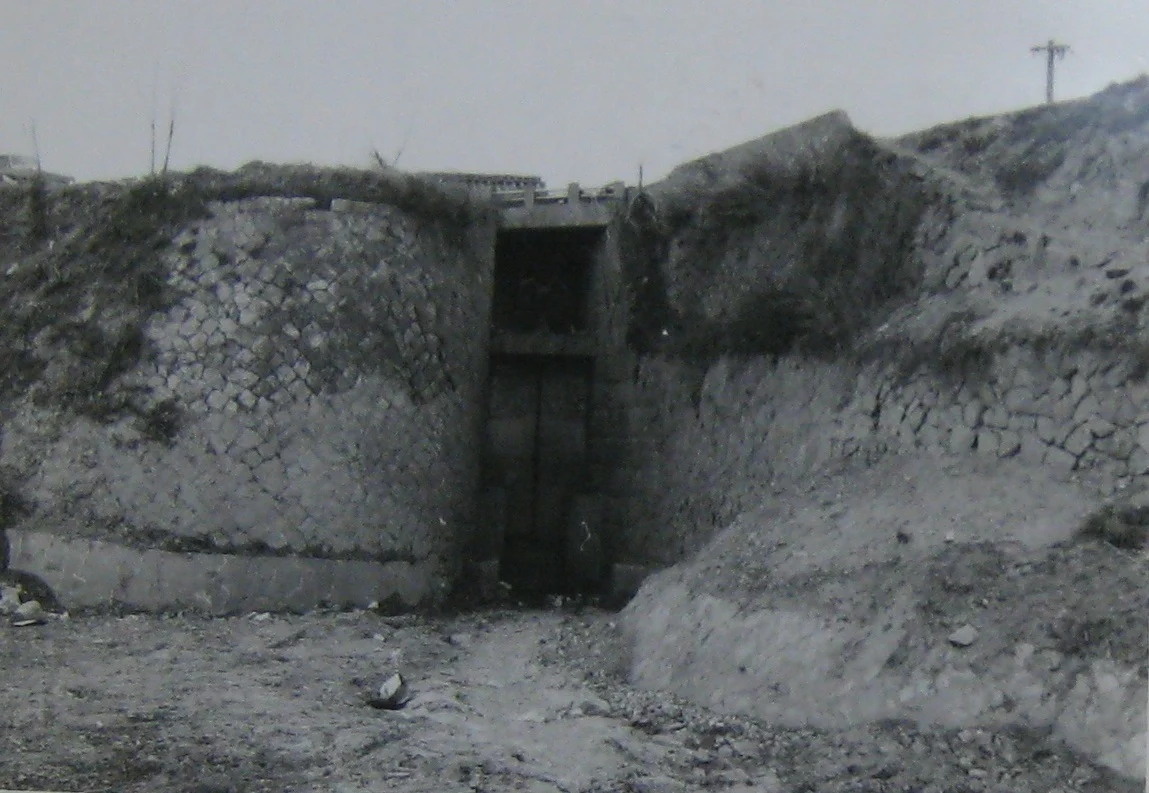
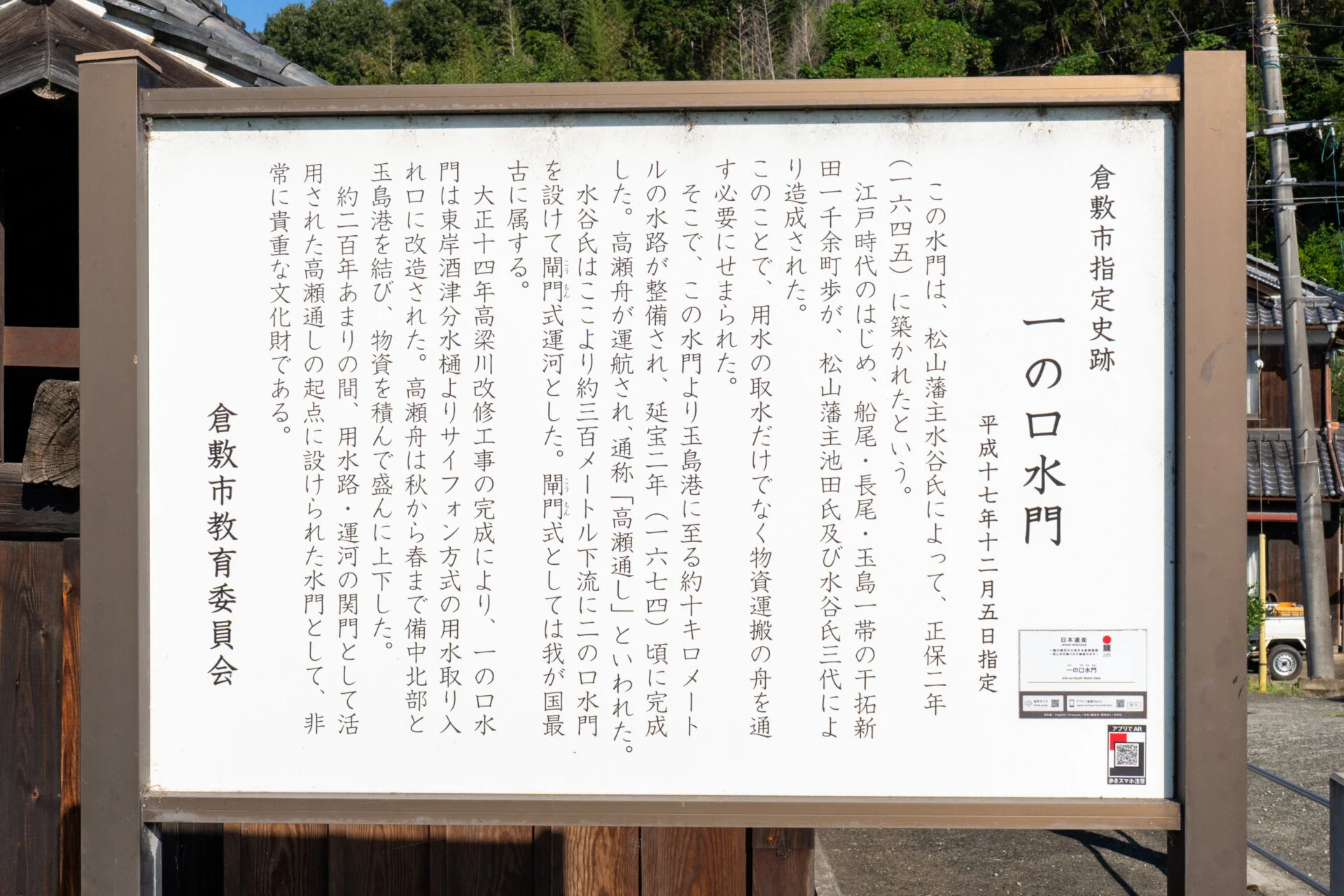
The "Ichinokuchi Water Gate" is a stone water gate built in 1645 (Shōhō 2) by Mizunoya Katsutaka, the lord of Bitchu Matsuyama Domain, when he developed new rice fields on the right bank of the Takahashi River in Mizue, Funao, Kurashiki City during the early Edo period.
The specifications are as follows:
- Style: Lock-type (komon-shiki) water gate
- Height: 7.12m
- Width: 2.58m
The Ichinokuchi Water Gate, the starting point of the canal "Takase-doshi"
Before the reclamation, Bitchu Matsuyama Domain used boats to transport goods to Tamashima Port, the domain's gateway, utilizing the Takahashi River.
After the reclamation, the territory expanded, but boats had to go out to sea and take a long detour to reach Tamashima Port.
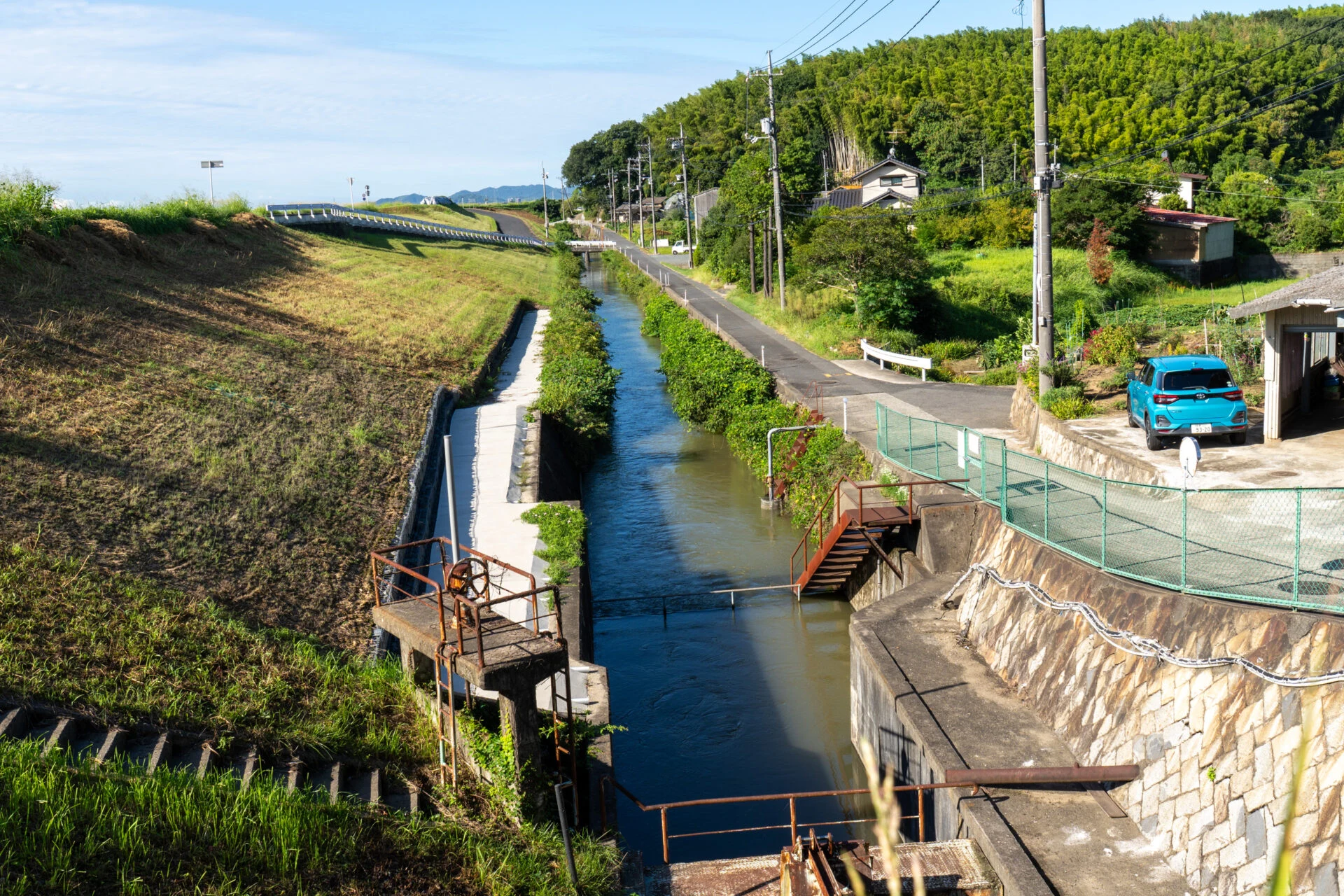
As a result, the canal was developed using irrigation channels from the Ichinokuchi Water Gate, and around 1674 (Enpō 2), the approximately 9 km long lock-type canal "Takase-doshi" was established, allowing for the transportation of goods between Tamashima Port and Takase boats without going out to sea.
The Ichinokuchi Water Gate became the entrance for Takase boats from the Takahashi River and was used as a canal water gate for over 200 years.
Later, it was modified during the Takahashi River improvement work in 1925 (Taisho 14), ending its role as a water gate, but the Takase-doshi still remains.
What is a "lock-type canal"?
A lock-type canal is a canal that uses two water gates to adjust the water level and allow boats to pass through, and the "Ichinokuchi Water Gate" is a lock that regulates the water level between the Takahashi River and the canal.
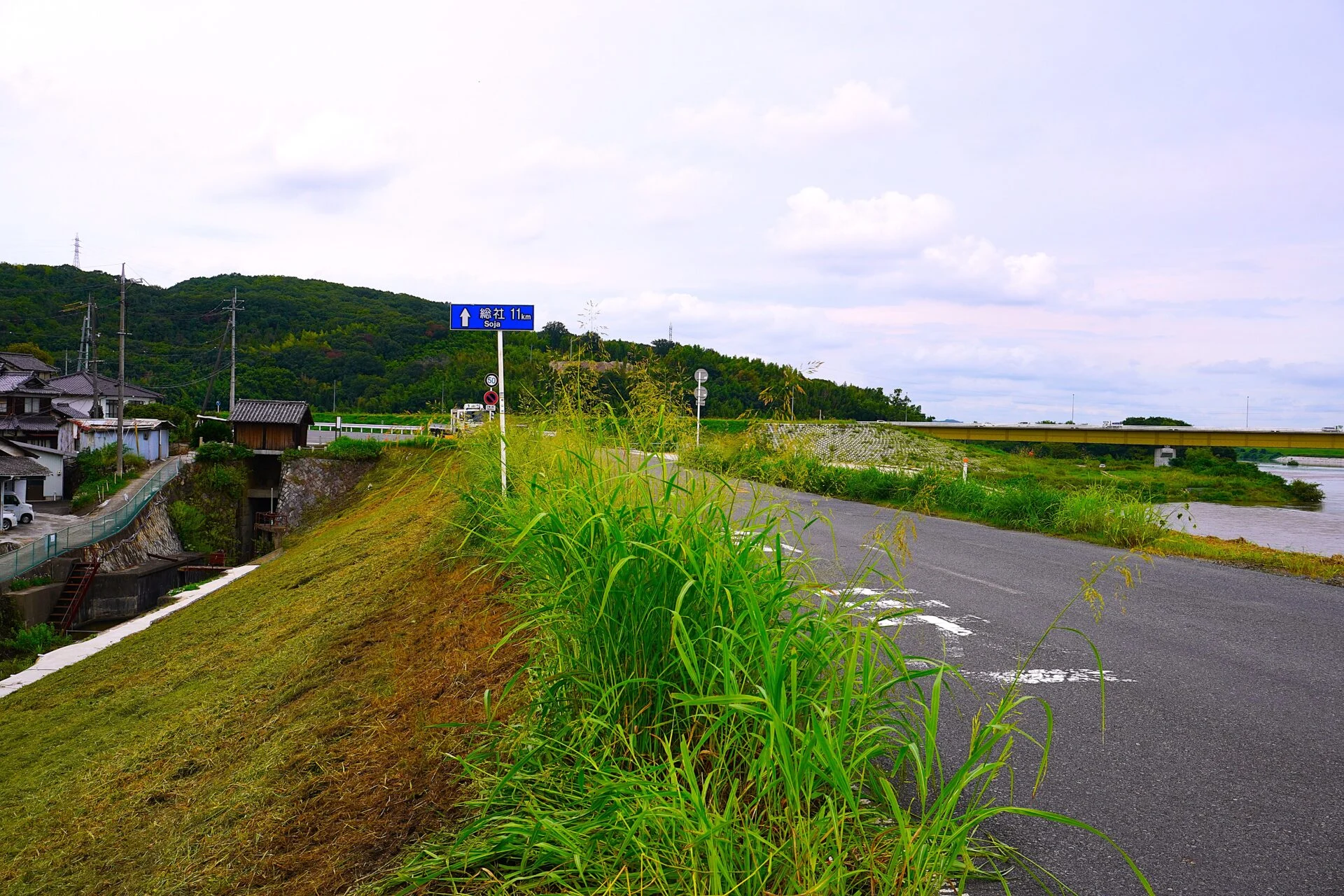
It is said that a "second water gate" was established about 300 meters downstream of the "Ichinokuchi Water Gate," and it is believed that water was stored between them to allow Takase boats to pass through.
This is one of the oldest lock-type canals in Japan, built more than 200 years before the famous Panama Canal, which opened in 1914. This indicates the advanced technology of the time.
What was transported by Takase boats?
Takase boats carried agricultural products from northern Bitchu downstream and marine products upstream.
Later, towards the end of the Edo period, specialty products of Matsuyama Domain, such as iron and tobacco from northern Bitchu, were shipped nationwide from Tamashima Port via Takase boats, supporting the economy of northern Bitchu.
Historical Value
It is said that some Takase boats that traveled the Takase-doshi could carry up to 50 koku, and if we convert 1 koku to approximately 150 kg, it is believed that there were boats that could carry loads equivalent to 7.5 tons of trucks.
This canal, which now looks like an irrigation channel, supported the region as a major logistics artery at that time.
The Ichinokuchi Water Gate, which serves as the starting point, has traces of water level adjustment mechanisms when entering the canal from the Takahashi River, and along with Tamashima Port, it is a valuable cultural property that constitutes an indispensable part of Tamashima's history and the story of Japan Heritage.
In December 2005, it was also designated as a historic site of Kurashiki City.
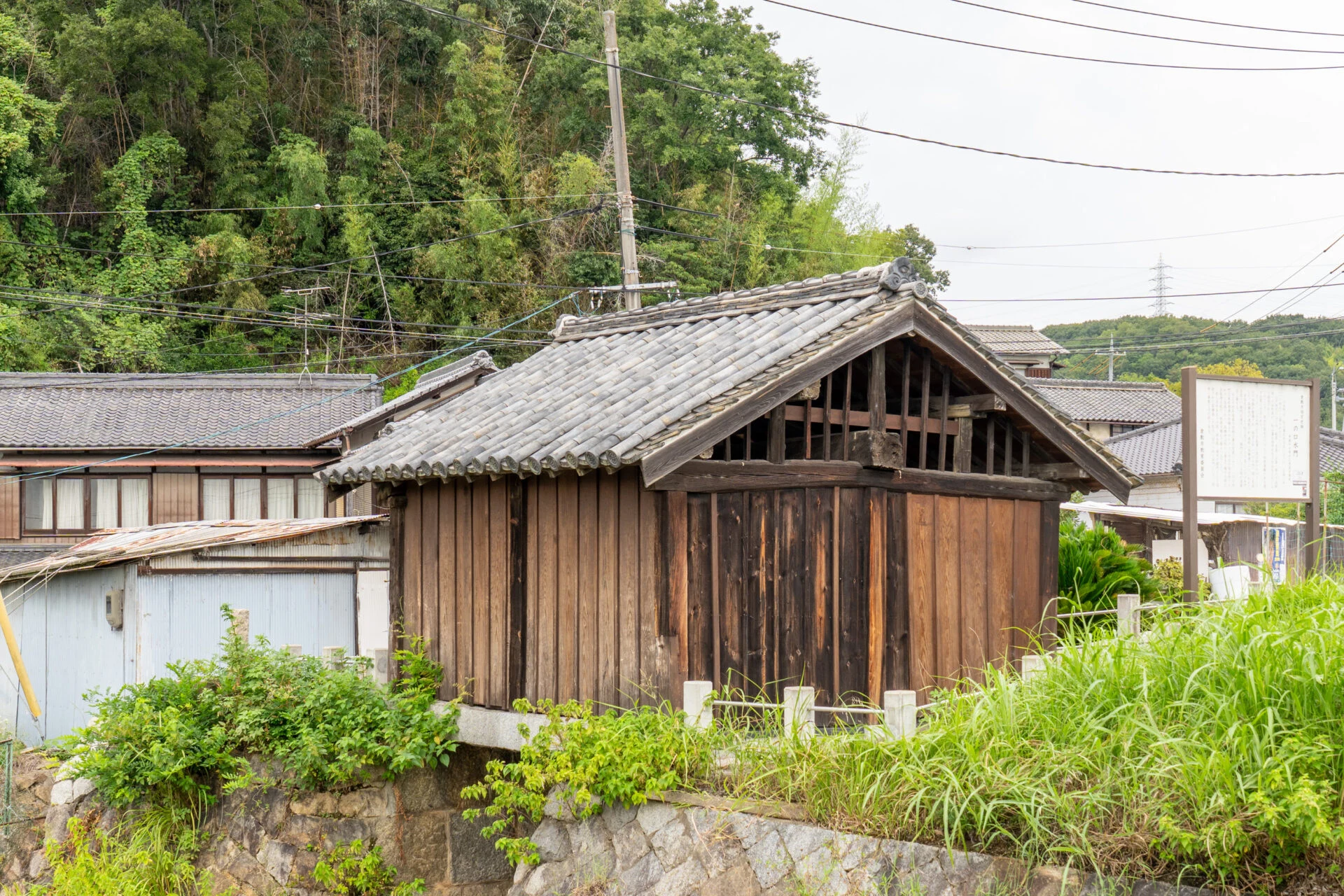
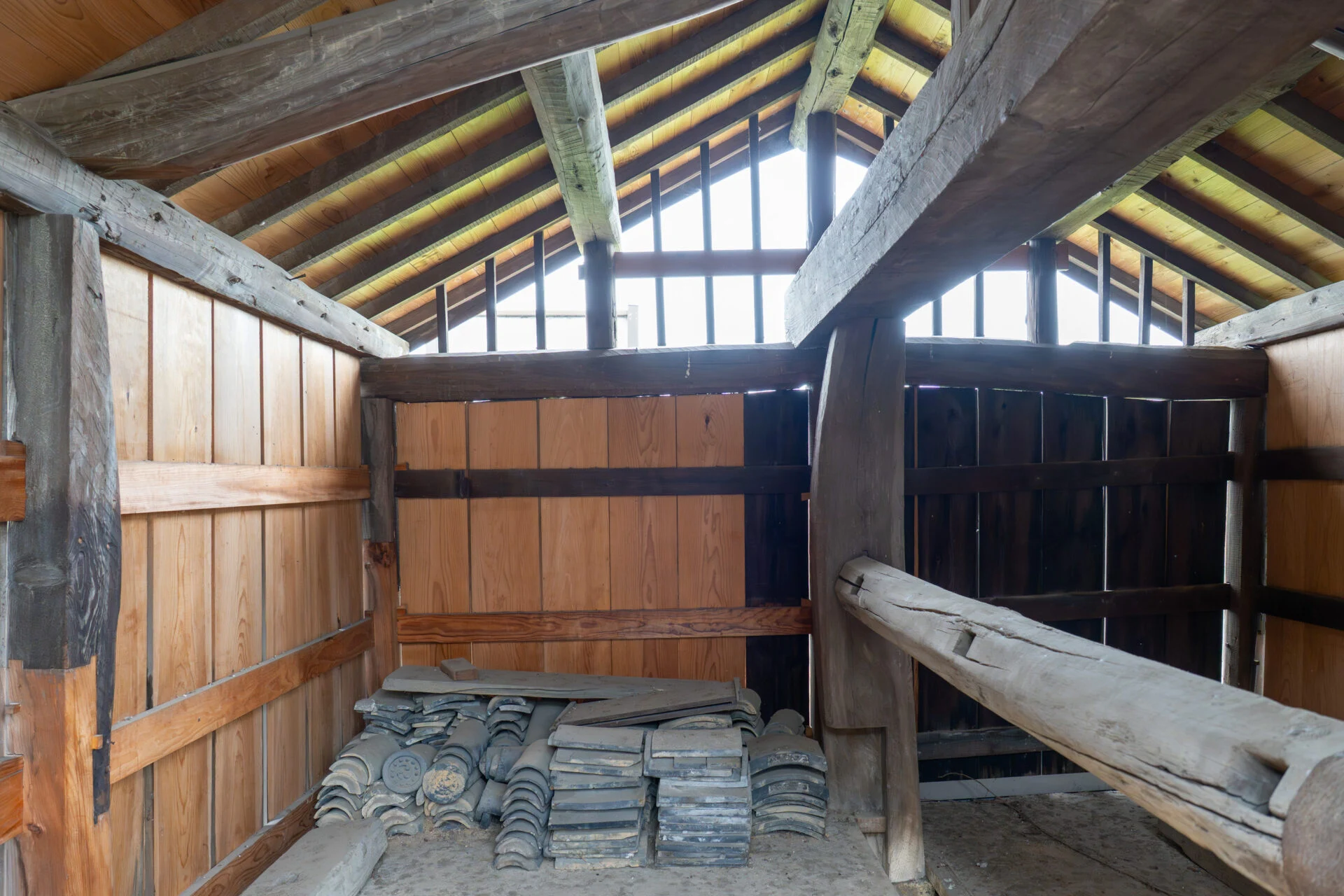
Current Ichinokuchi Water Gate
In the Takahashi River improvement work in 1925 (Taisho 14), the Ichinokuchi Water Gate ended its role as a water gate. In other words, its role as a water gate has become merely superficial.
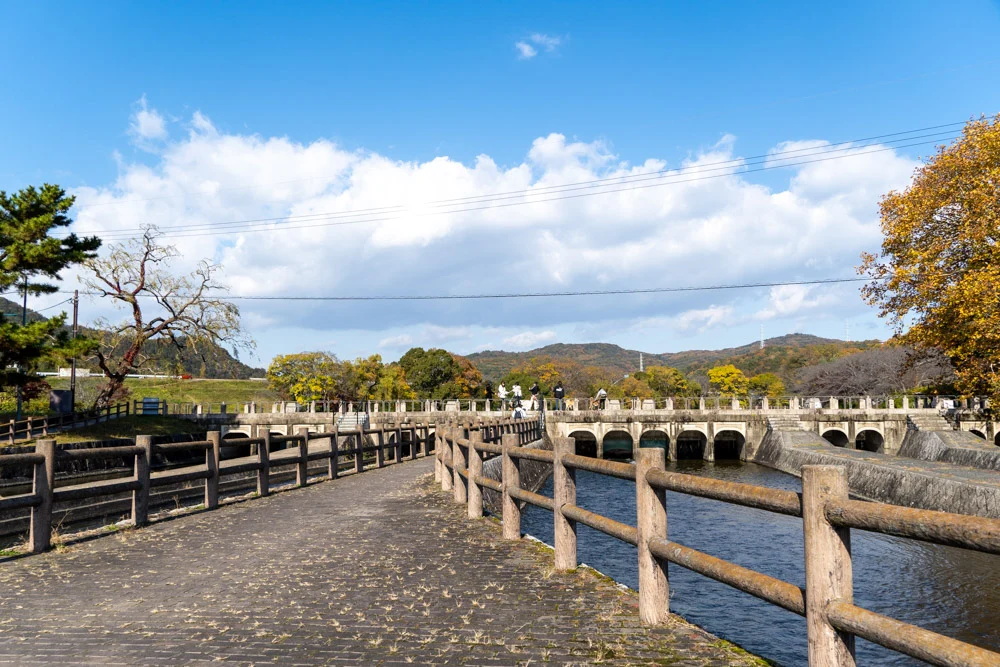
Nevertheless, some may find it strange that water still flows and it functions as an irrigation channel. In fact, agricultural water is distributed from the Takahashi River East-West Water Supply Facility located in Sakatsu, Kurashiki City, and it is still used as "West Bank Water."
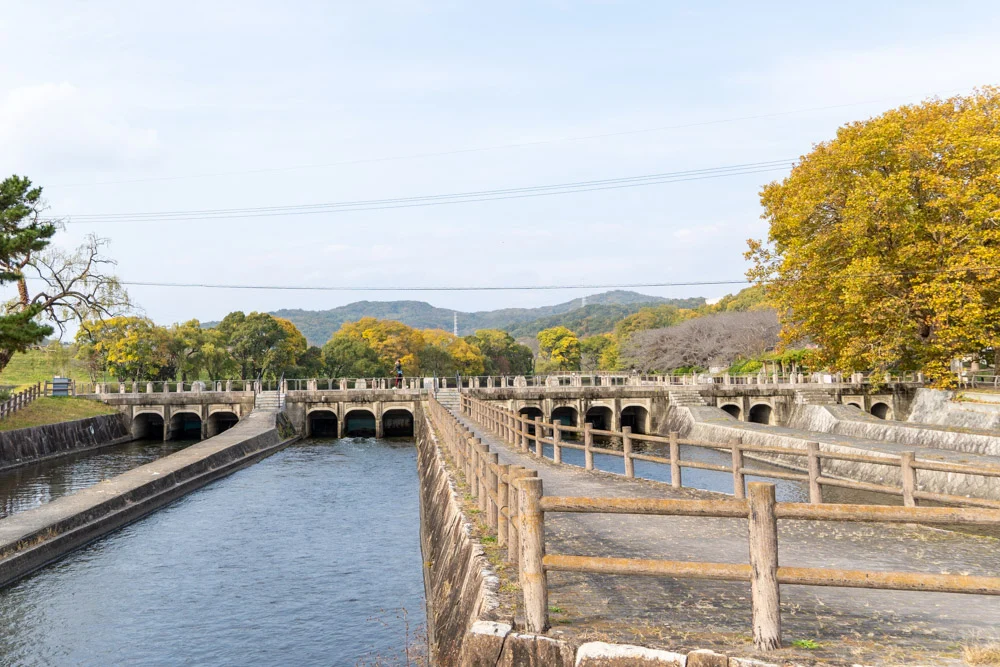
From left: West Bank Water, Western Water, Southern Water, Bizen Water, Kurashiki Water
As can be seen in the map below, a distribution pipe is installed underground in the Takahashi River, and the location corresponding to the starting point on the west side of the Takahashi River is where the "Ichinokuchi Water Gate" is located.
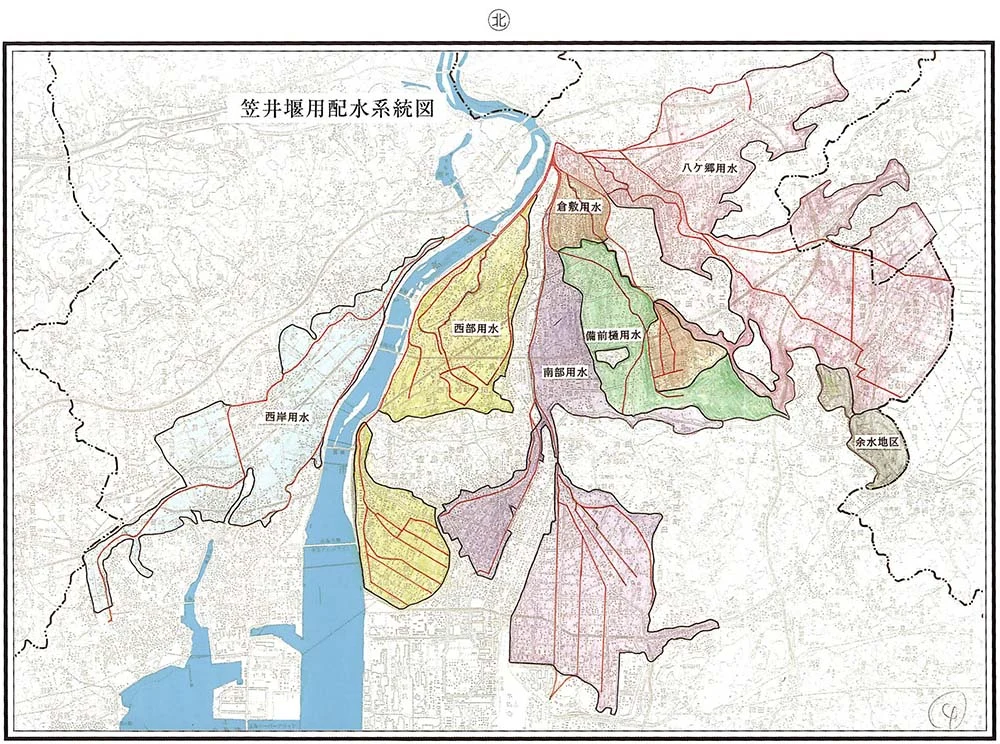
Quoted from '100 Years of Progress of the Takahashi River East-West Water Supply Association'
Water is taken from the location of the Ichinokuchi Water Gate using a siphon method and continues to Tamashima Port to this day.
Conclusion
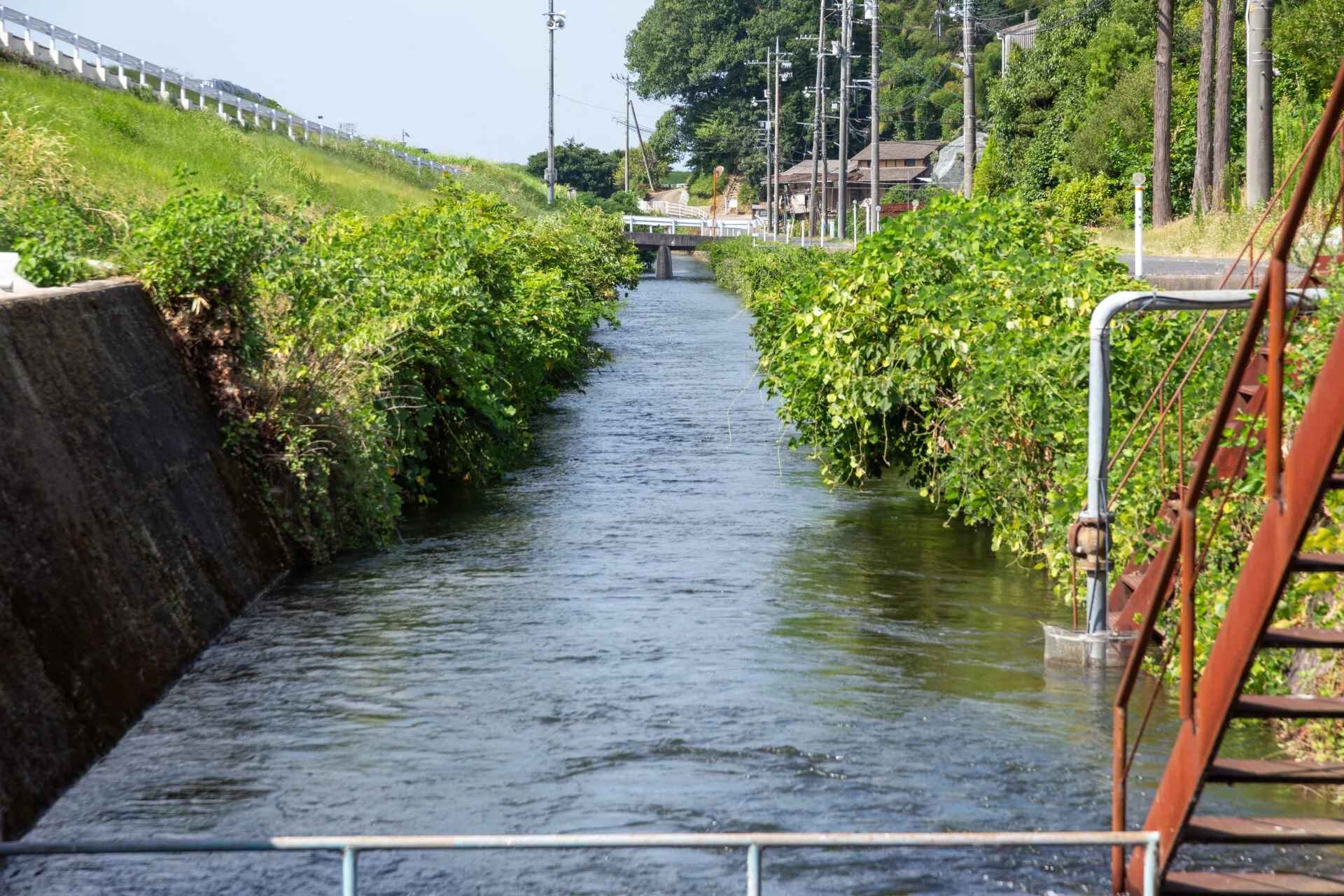
The stone water gate, about 7 meters high, standing in Mizue, Funao-cho, Kurashiki City, reflected the excellent civil engineering skills of the Japanese, along with wisdom and ingenuity.
The starting point of Takahase Street, "Ichinokuchi Water Gate," serves as a living witness of history, conveying the achievements of our predecessors to the present day.
Articles about Japan Heritage in Kurashiki City
Ichinokuchi Water Gate Data
| Name | Ichinokuchi Water Gate |
|---|---|
| Address | Mizue, Funao-cho, Kurashiki City, Okayama Prefecture |
| Contact | None |
| Website | Official Website of Kurashiki City (Ichinokuchi Water Gate) |