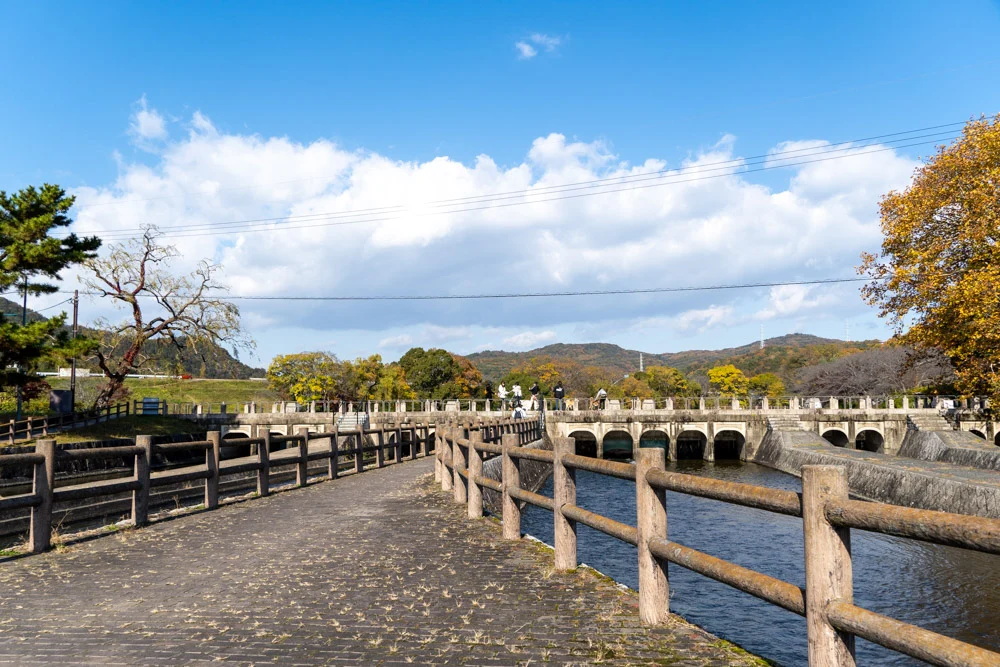
The first-class river "Takahashi River" flows through the western part of Okayama Prefecture.
In Kurashiki City, it is mainly used as a source of water for drinking, agriculture, and industry, serving as a "source of water that supports life and industry."
The author, born in 1979 and raised in Kurashiki, has no memories of river flooding over the past 40 years.
Therefore, other citizens of Kurashiki may also think of the Takahashi River as a gentle river.
However, did you know that until about 100 years ago, it was a river that repeatedly flooded and caused suffering to many people?
Once divided into the "West Takahashi River" and "East Takahashi River," the current areas of Kurashiki, Mizushima, Funao, and Tamashima were created by reclaiming the river islands. Those reclaimed lands were vulnerable to flooding.
According to the "History of Kibi District," it is recorded that there were 36 floods over a period of 170 years from 1664 (Kanbun 4) to 1834 (Tenpo 5).
In other words, "a flood occurred once every five years."
As a result, residents began petitioning almost every year from around 1883 (Meiji 16), and in 1911 (Meiji 44), construction work was initiated as a direct project of the then Ministry of Home Affairs.
A "national project" that lasted for 14 years from 1911 (Meiji 44) to 1925 (Taisho 14).
This article will introduce the history of the Takahashi River East-West Water Supply Facility and the work of the Takahashi River East-West Water Supply Association, which has been responsible for water intake and distribution since its construction.
What is the Takahashi River East-West Water Supply Facility
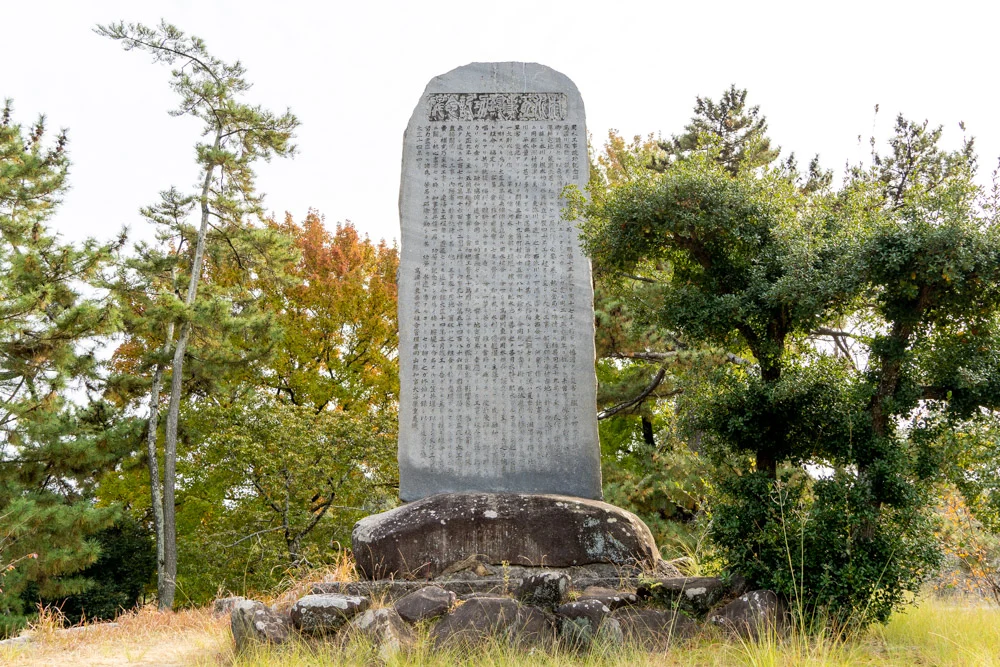
The Takahashi River East-West Water Supply Facility is an agricultural water facility developed alongside the major renovation work of the Takahashi River that began in 1911 (Meiji 44).
The major renovation work of the Takahashi River was a truly monumental project that took 14 years and consisted mainly of the following:
- Closing off the East Takahashi River at Sakatsu and merging it with the West Takahashi River downstream (= the East Takahashi River was abandoned)
- Widening the entire river to improve water flow
- Dredging the riverbed and building strong levees, among other tasks
Since then, flood damage has drastically decreased to just a few incidents, leading to the present day.
At Sakatsu, where the East Takahashi River was closed, the 11 water intake gates that were individually located on both banks of the Takahashi River were unified into one water intake gate and distribution facility.
This is the Takahashi River East-West Water Supply Facility (hereinafter referred to as "East-West Water Supply").
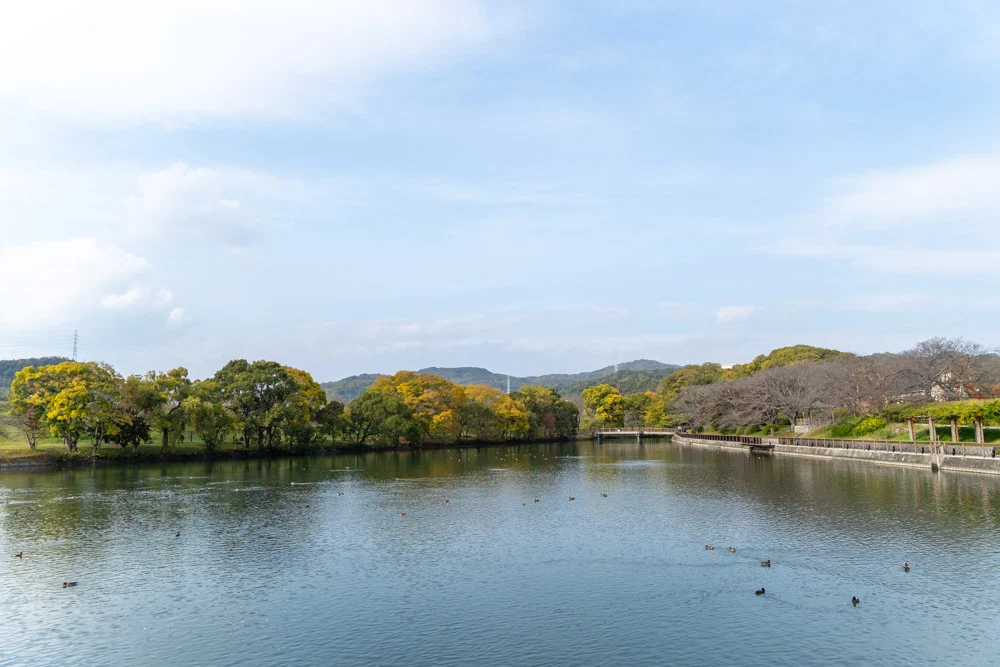
The East-West Water Supply is not a drinking water (water supply) facility, but an irrigation facility aimed at distributing agricultural water, consisting mainly of the following facilities.
- Kasai Weir
- Water Intake Gate
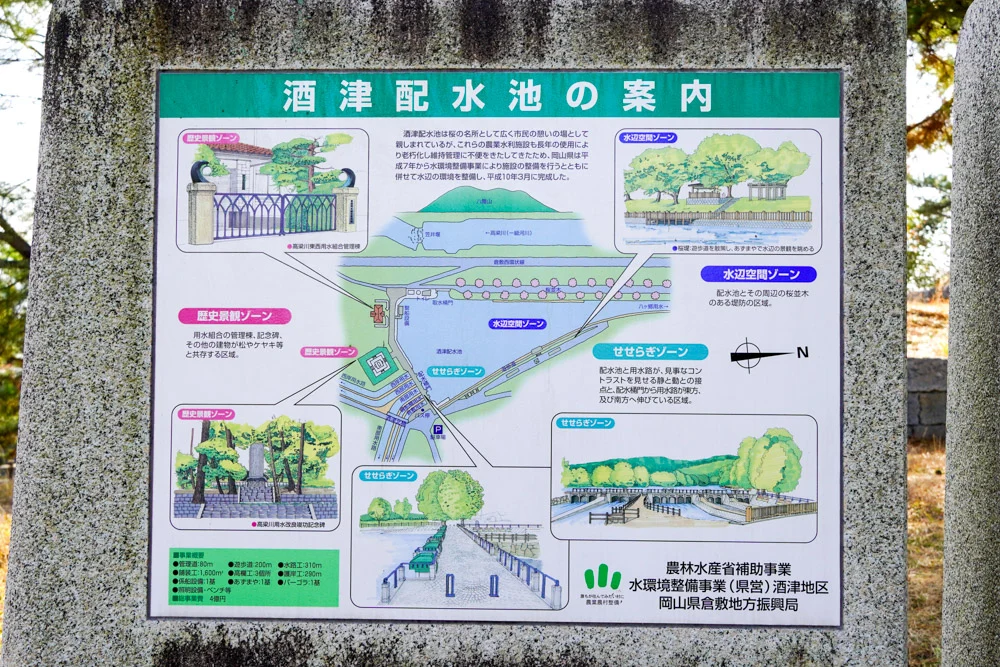
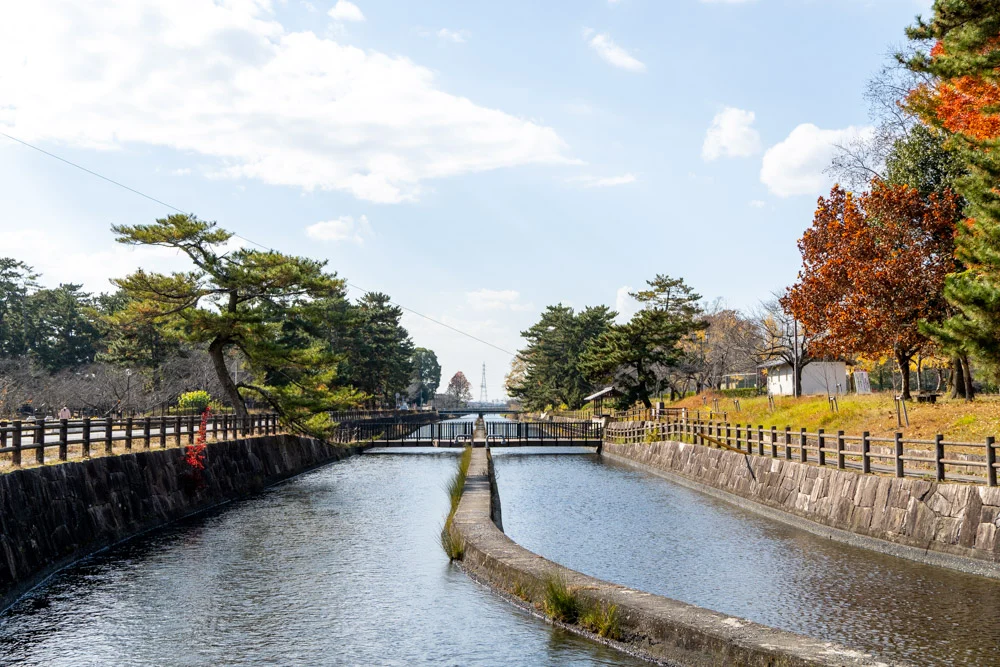
- Distribution Reservoir
- South Water Supply Gate
- North Water Supply Gate
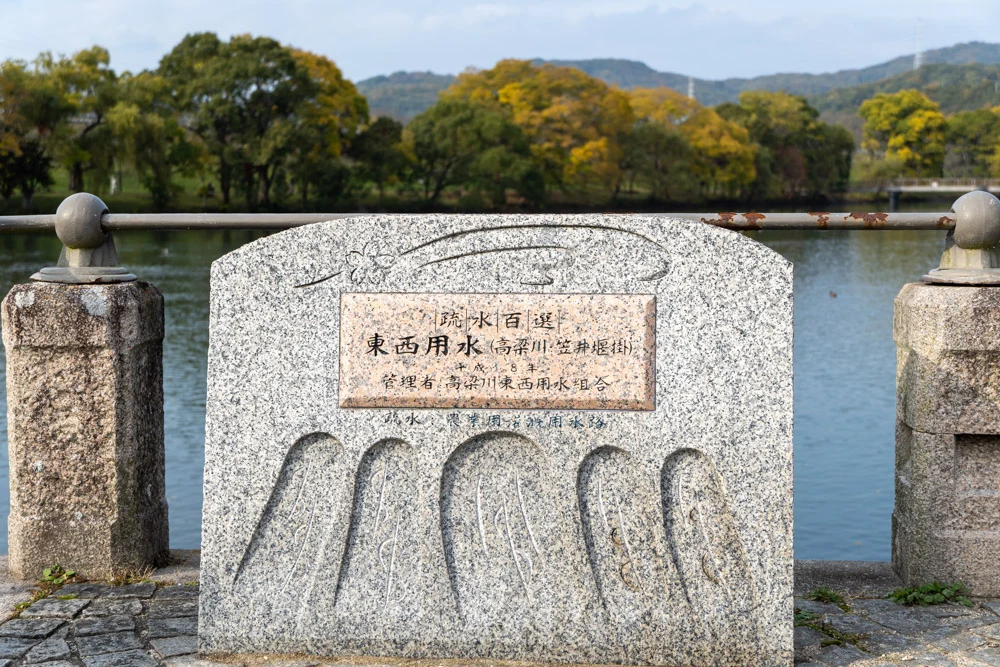
With nearly 100 years of history, the East-West Water Supply has been designated as one of the "100 Selected Sluices" (Sosui Hyakusen) (February 2006).
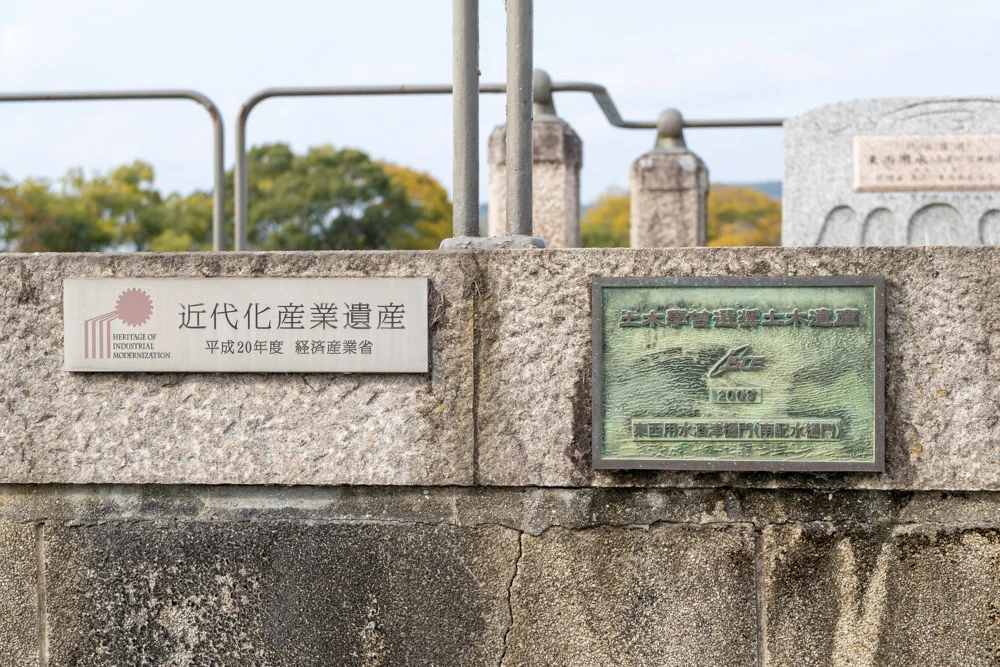
Additionally, some facilities have been recognized as "Modern Industrial Heritage" and designated as "Important Cultural Properties (Buildings)," and since they are also cultural properties that constitute Japan Heritage, some may view them as historical cultural heritage, but they are facilities that still exist and are actively used today.
| Name | Date of Designation | Target Facilities |
|---|---|---|
| Civil Engineering Heritage | November 2003 | ・Water Intake Gate ・South Water Supply Gate ・North Water Supply Gate |
| Modernization Heritage | March 2005 | ・Takahashi River East-West Water Supply Association Office ・Water Intake Gate ・South Water Supply Gate ・North Water Supply Gate |
| 100 Selected Sluices | February 2006 | ・Takahashi River East-West Water Supply |
| Modern Industrial Heritage | February 2009 | ・Takahashi River East-West Water Supply Sakatsu Gate ・Takahashi River East-West Water Supply Association Office |
| National Important Cultural Property (Building) | July 2016 | ・Takahashi River East-West Water Supply Facility |
| Japan Heritage Constituent Cultural Property | April 2017 | ・Takahashi River East-West Water Supply Facility |
Kasai Weir
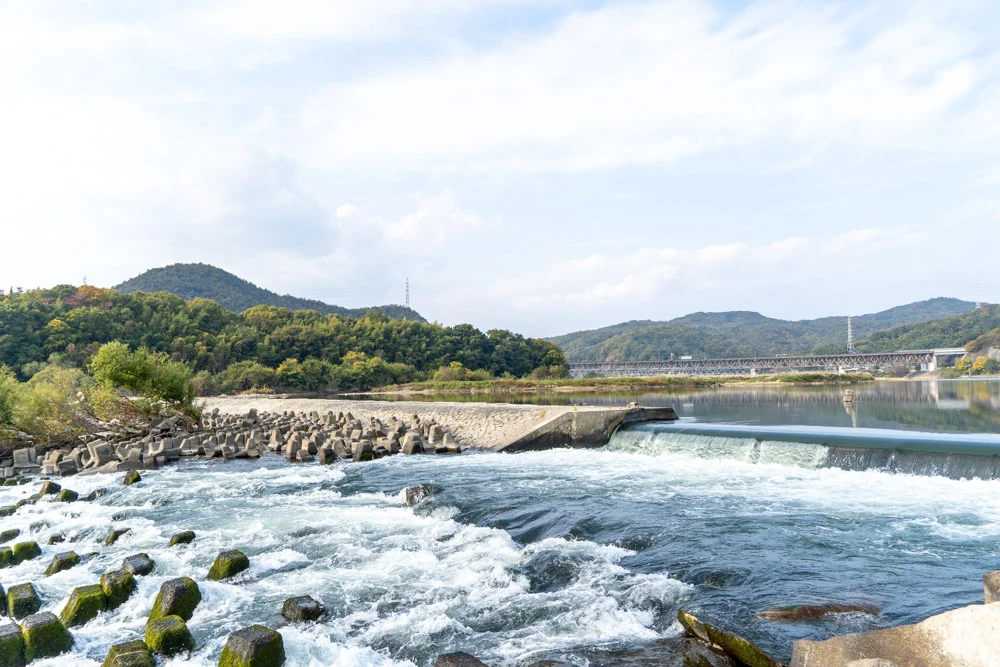
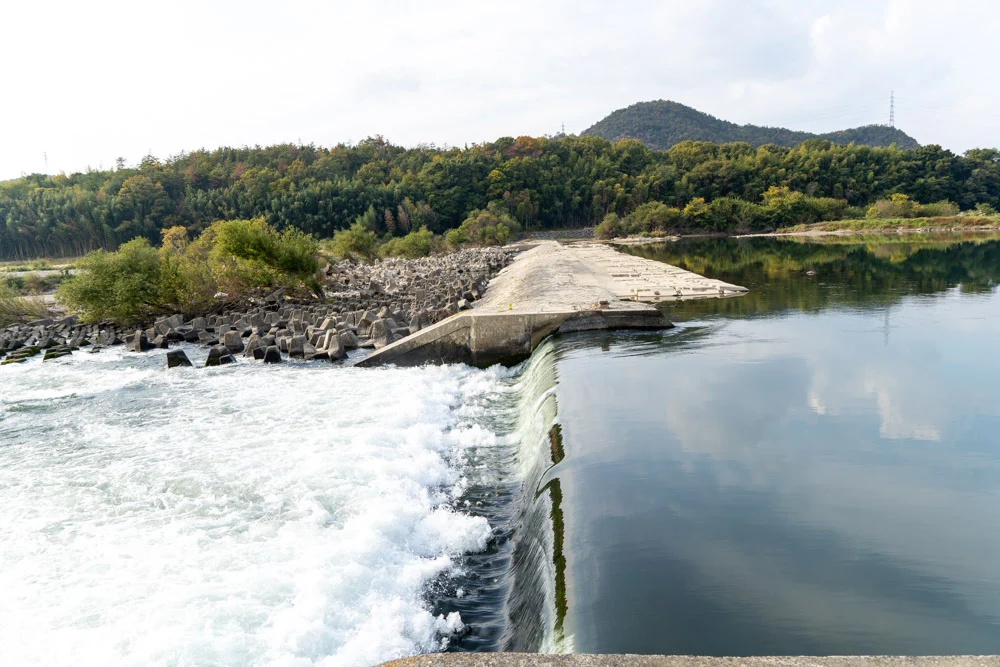
The weir, which is used to stop the flow of the river to intake water from the unified water intake gate, is called a "weir."
The Kasai Weir, built across the Takahashi River on both banks, adjusts the water level of the Takahashi River and facilitates water intake into the distribution reservoir.
Currently, it has been upgraded to a hydraulically operated tilting gate that can be controlled remotely, but it is aging and plans for reconstruction are underway.
The name "Kasai Weir" was given in honor of the Okayama Prefectural Governor "Shinichi Kasai" at the time when the East-West Water Supply was completed in 1925 (Taisho 14).
Water Intake Gate
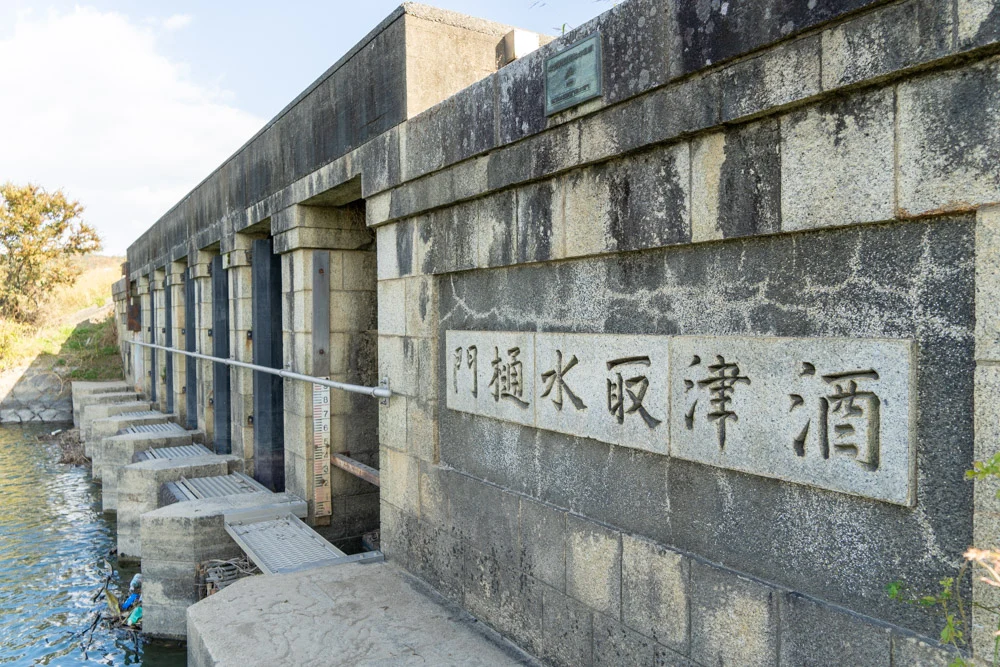
The water intake gate is the facility that takes in the water from the Takahashi River, which is blocked by the Kasai Weir, into the distribution reservoir.
It is located on the left bank of the Takahashi River just upstream of the Kasai Weir.
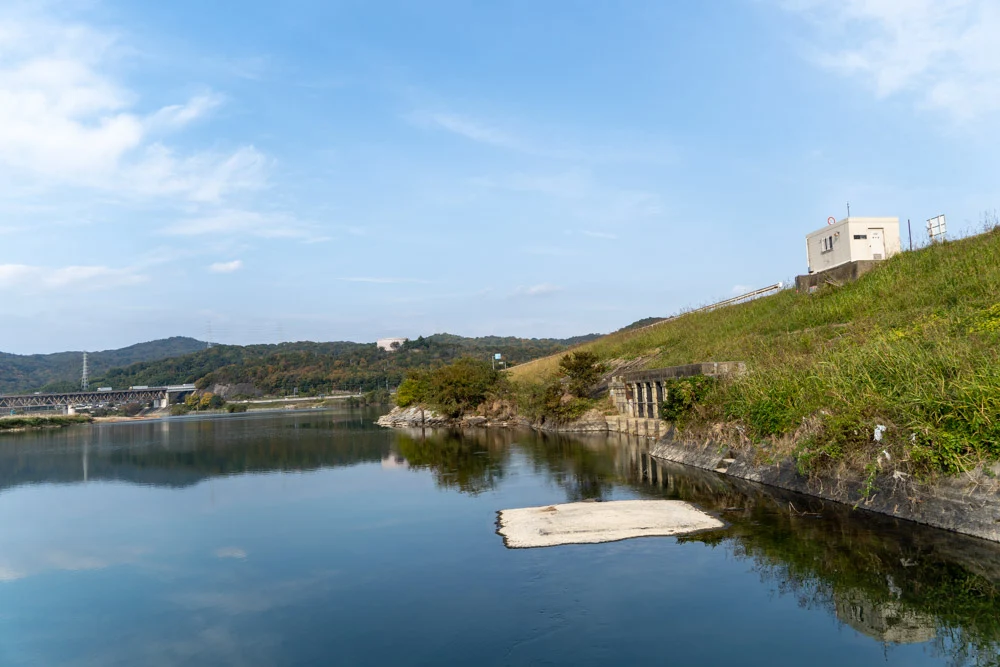
Distribution Reservoir
The water from the Takahashi River taken in through the water intake gate first flows into the distribution reservoir.
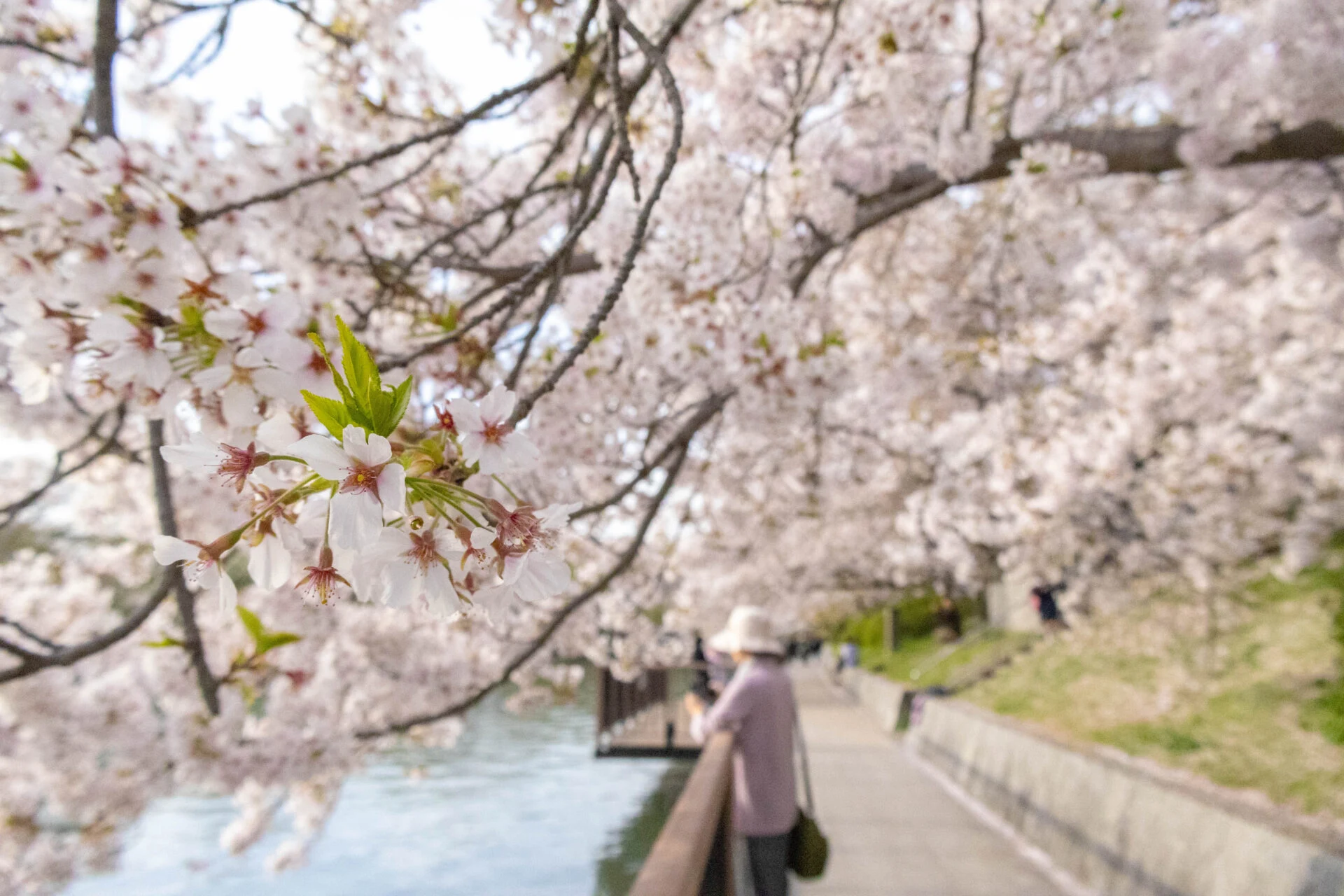
The embankment is lined with cherry trees, and in spring it is bustling with many cherry blossom viewers, while it also serves as a place of relaxation for citizens who jog or walk.
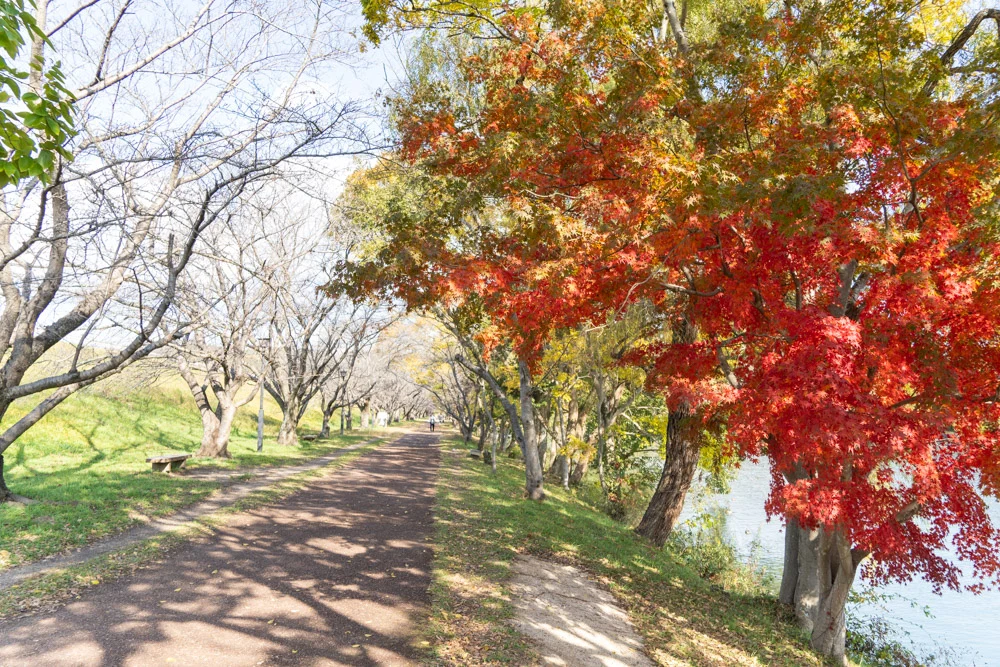
However, the distribution reservoir is not just a simple pond; it has the role of temporarily storing water for distribution to the irrigation channels and serving as a sedimentation basin for sand and gravel.
South Water Supply Gate
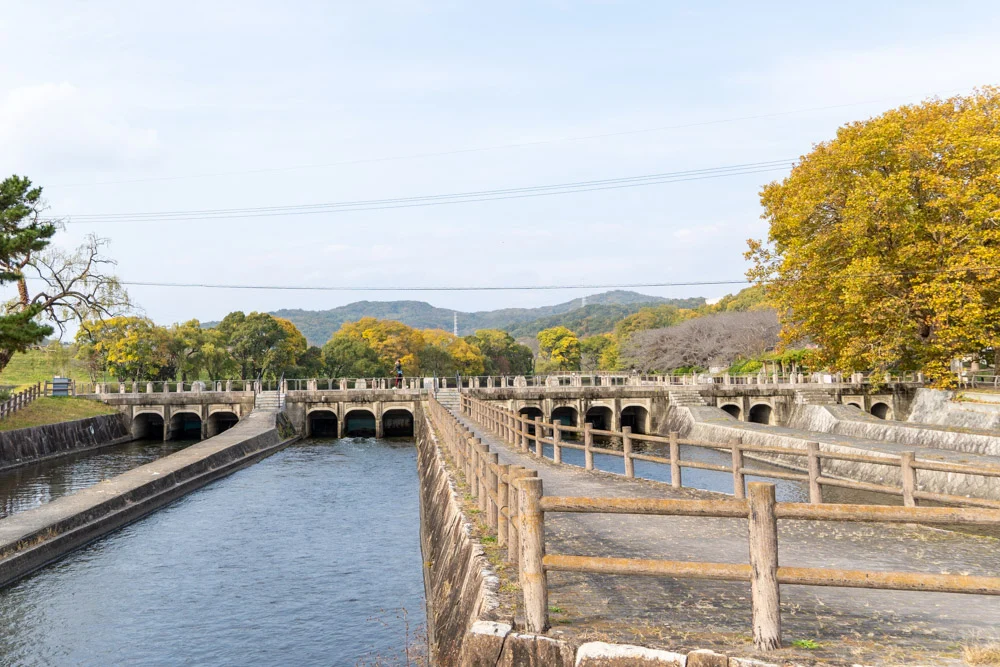
From left: West Water Supply, Western Water Supply, Southern Water Supply, Bizen Water Supply, Kurashiki Water Supply
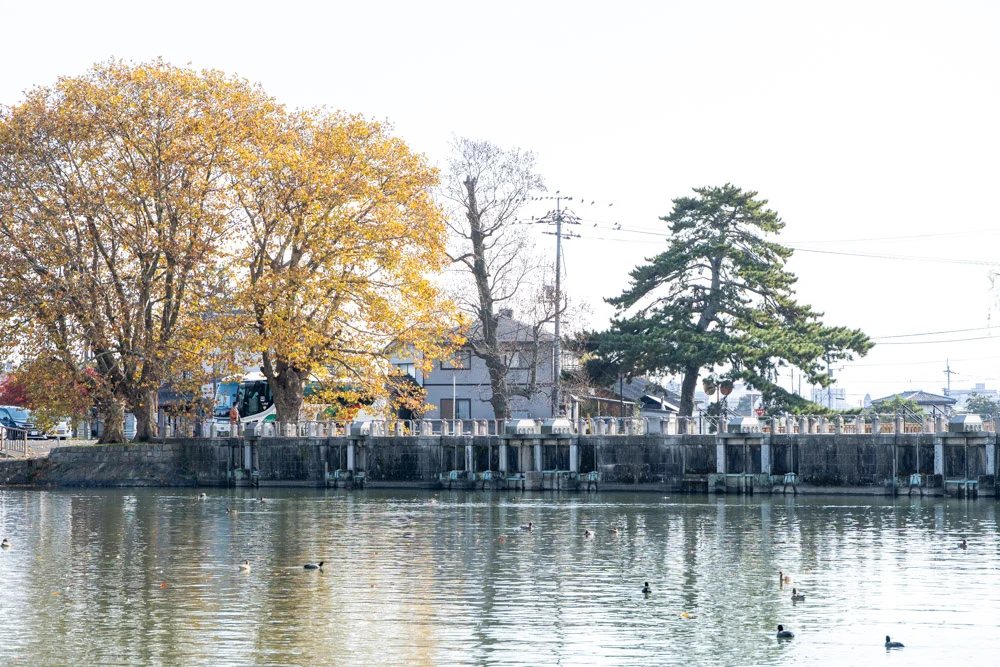
The gate located on the south side of the distribution reservoir is the South Water Supply Gate.
Even if you are not familiar with the term "Takahashi River East-West Water Supply Facility," you may recognize this equipment.
There are a total of 15 gates, each with a height of 1.2 meters and a width ranging from 1.18 to 1.75 meters.
The arch-like shape is impressive, and among the six water supplies, it plays a crucial role in distributing water to five supplies: Kurashiki Water Supply, Bizen Water Supply, Southern Water Supply, Western Water Supply, and West Water Supply.
North Water Supply Gate
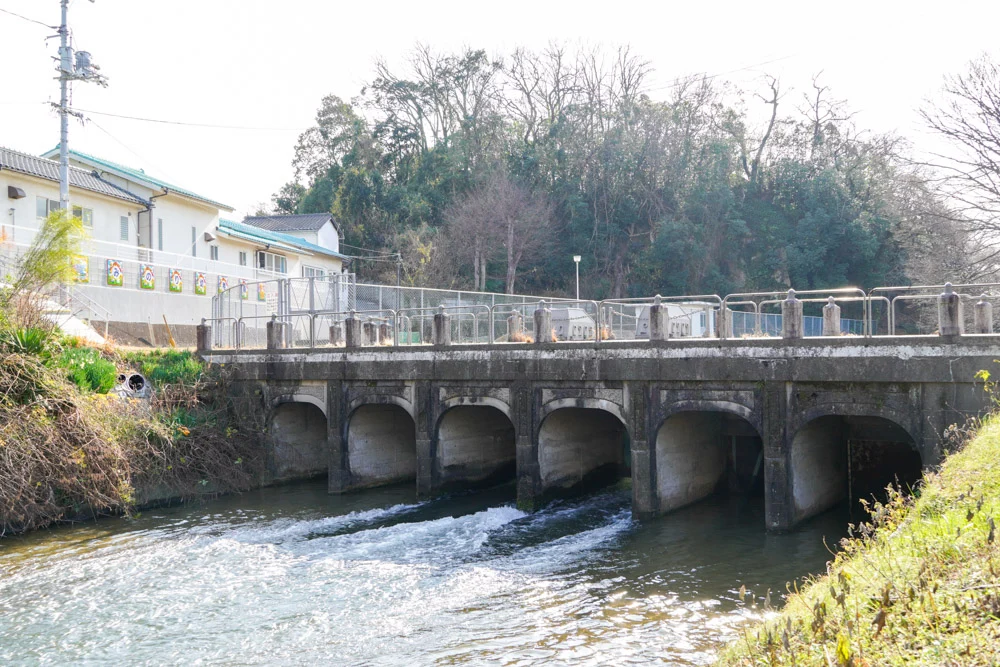
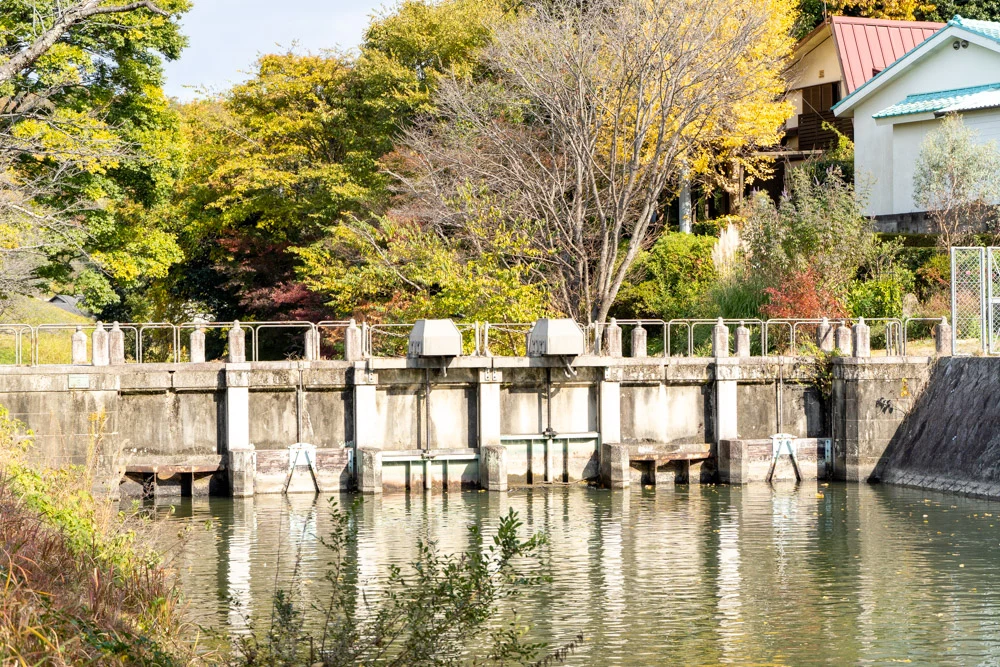
The water gate located on the north side of the reservoir is the North Water Gate.
It supplies water to the Yagakyo Water and just ahead is the "Miyake Shoten Sakazu Riverside Cafe".
The "Takahashi River East-West Water Association" Established for Fair Distribution of Agricultural Water
The East-West Water, which continues to operate even today, is managed in this way.
Since then, flood damage and droughts have significantly decreased, making the Kurashiki area a more livable region.
However, we must not forget that the prosperity of the Kurashiki area is not only due to excellent facilities but also because of the simultaneous creation of the system from water intake to distribution.
Over 100 years ago, agriculture was the main industry. Water posed not only negative aspects like floods but also a pressing issue of "water disputes over agricultural water."
If a large amount of water is taken upstream, water shortages occur downstream. This was a matter of life and death for farmers in the closed Takahashi River basin.
To solve such problems, the "Takahashi River East-West Water Association" was established in 1916 for the fair distribution of agricultural water.
Under the Takahashi River East-West Water Association, the 11 water intake gates that were individually established on both banks of the Takahashi River were unified into one, allowing for fair distribution from the reservoir.
All gates are of the same height. By changing the width and number, water is distributed as before.
| Water Distribution Gate Name | Water Name | Number of Gates |
|---|---|---|
| South Water Gate | Kurashiki Water | 2 |
| 〃 | Bizen Water | 2 |
| 〃 | Southern Water | 5 |
| 〃 | Western Water | 3 |
| 〃 | Western Bank Water | 3 |
| North Water Gate | Yagakyo Water | 6 |
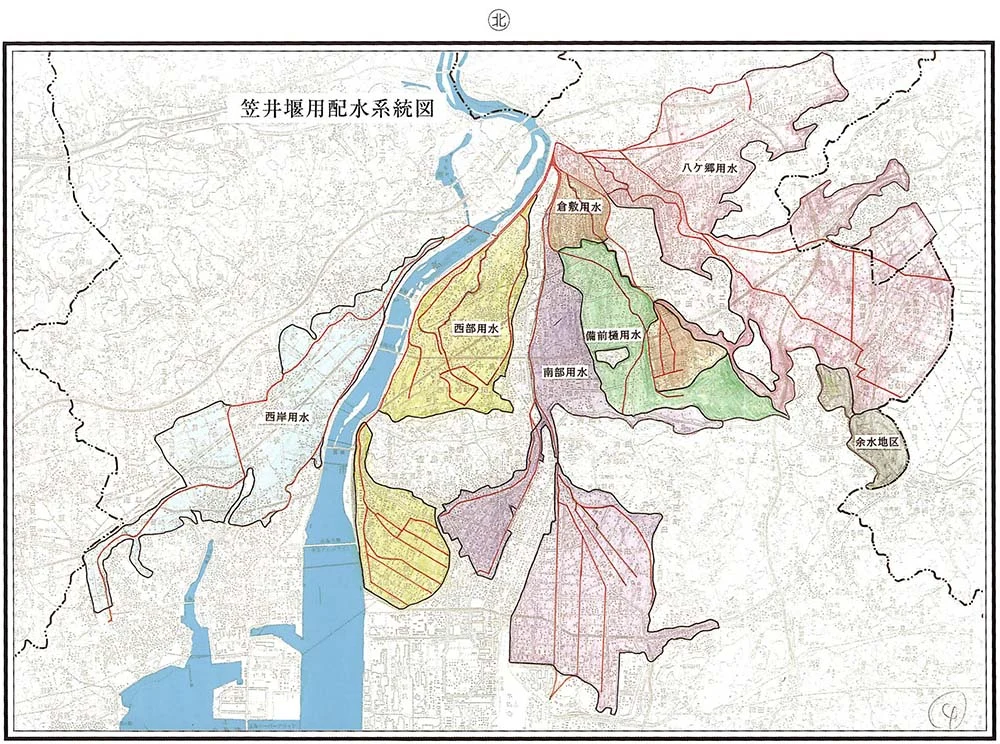
※Quoted from "100 Years of the Establishment of the Takahashi River East-West Water Association"
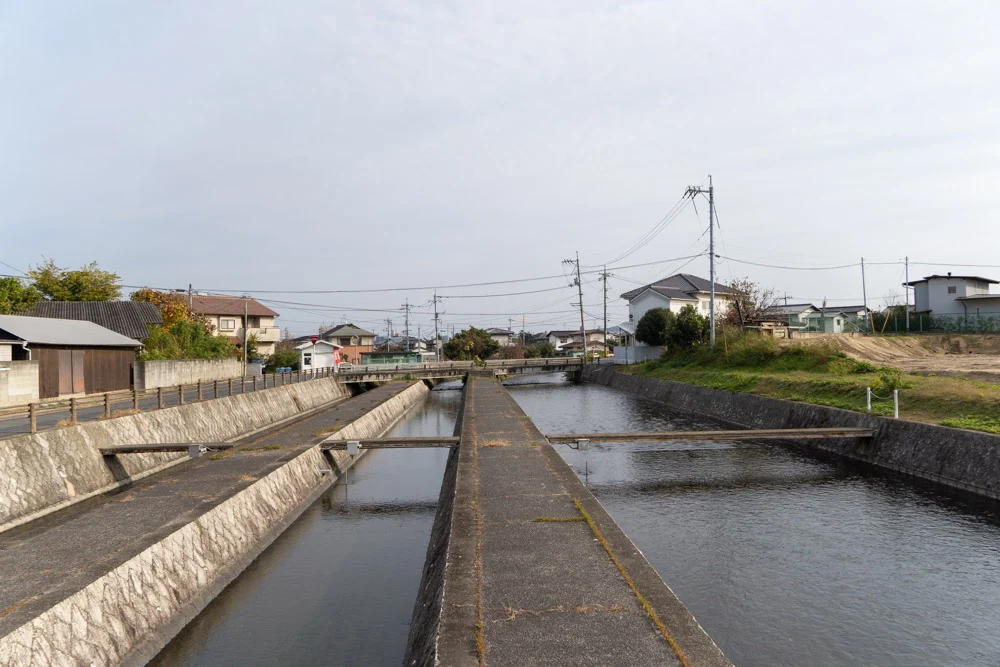
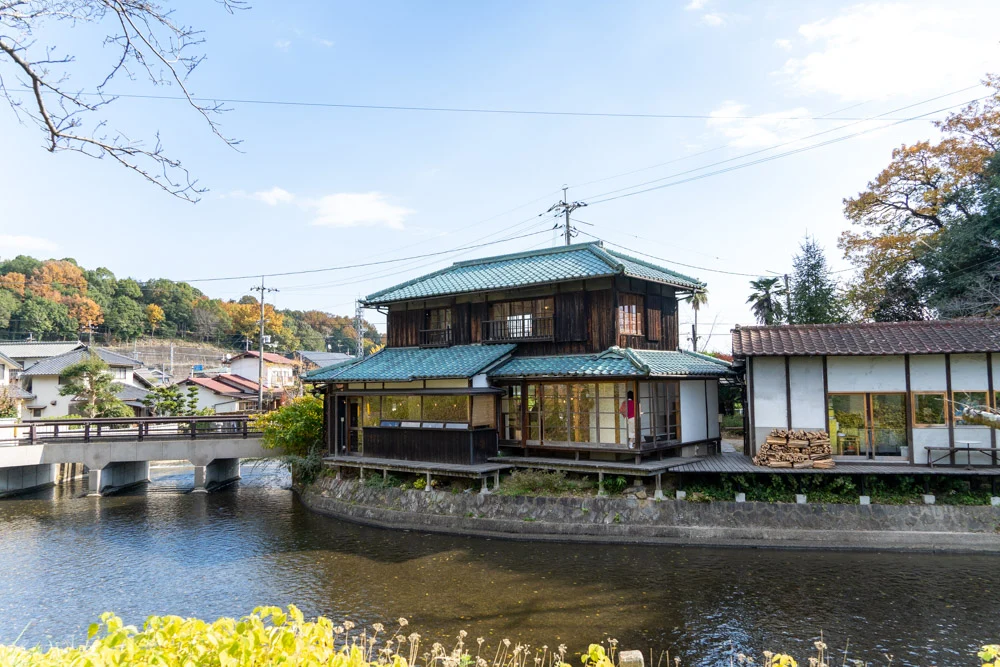
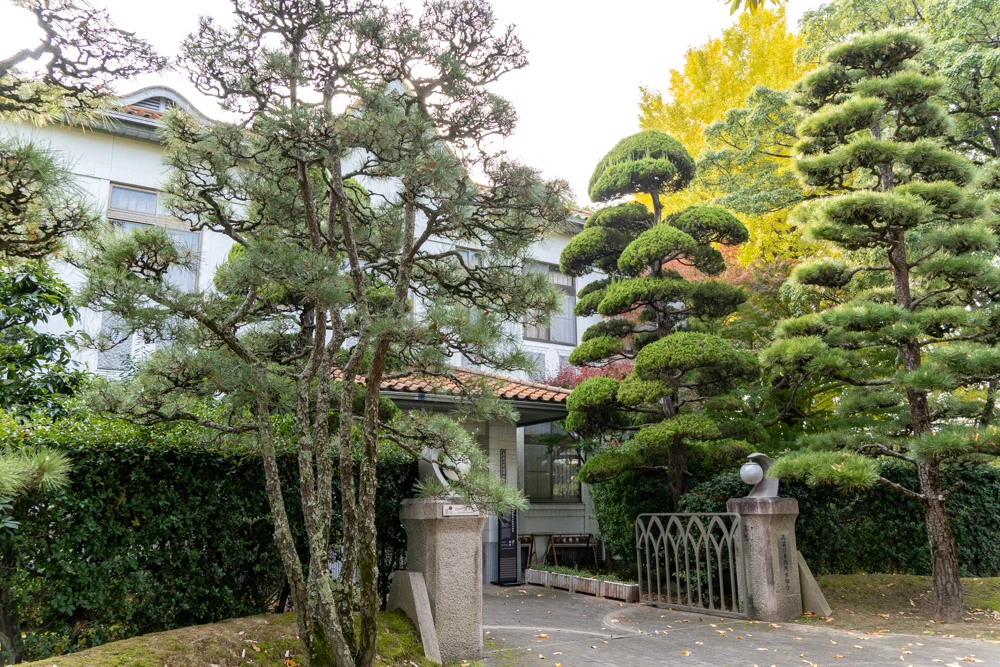
The "Takahashi River East-West Water Association Office" Preserves the Atmosphere of the Taisho Era
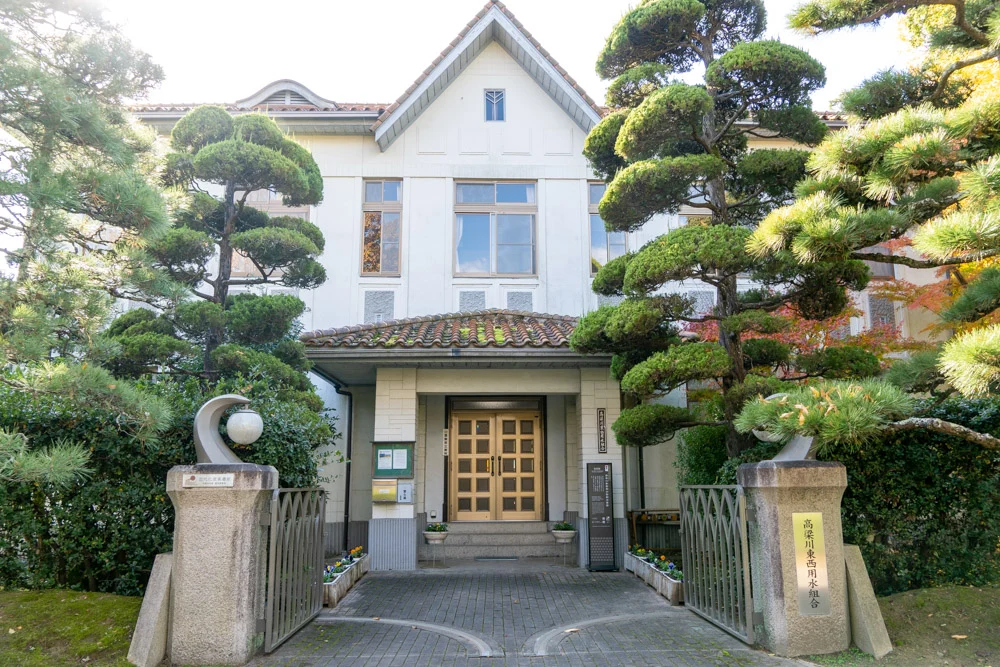
The Takahashi River East-West Water Association office is still located very close to the East-West Water.
If you are a citizen of Kurashiki, have you ever seen such a retro building near the famous cherry blossom viewing spot "Sakazu Park"?
The association office is a two-story wooden building, and as of January 2022, four staff members are working there.
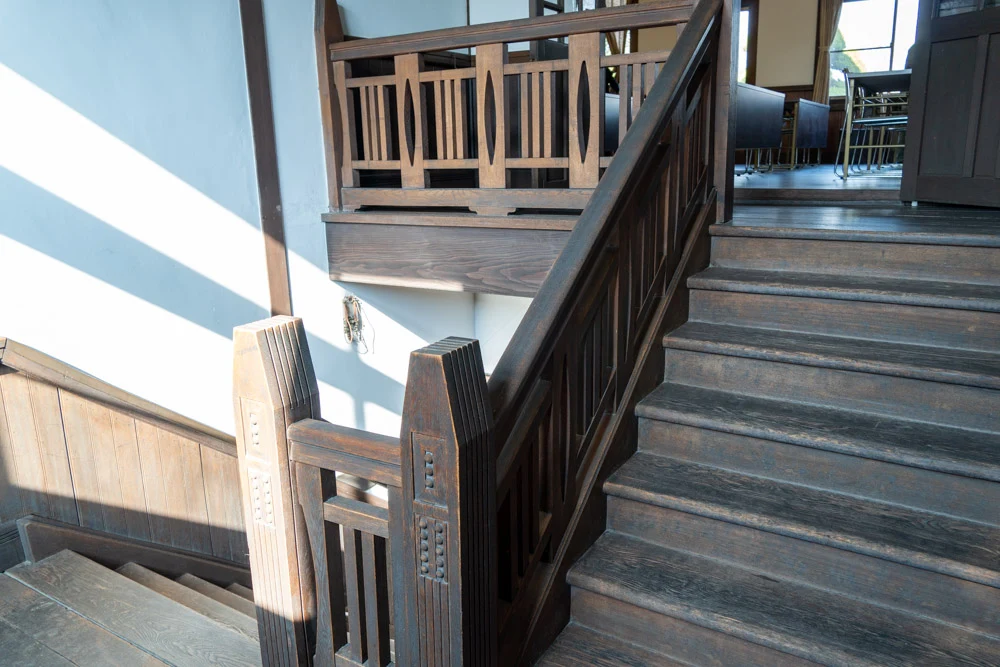
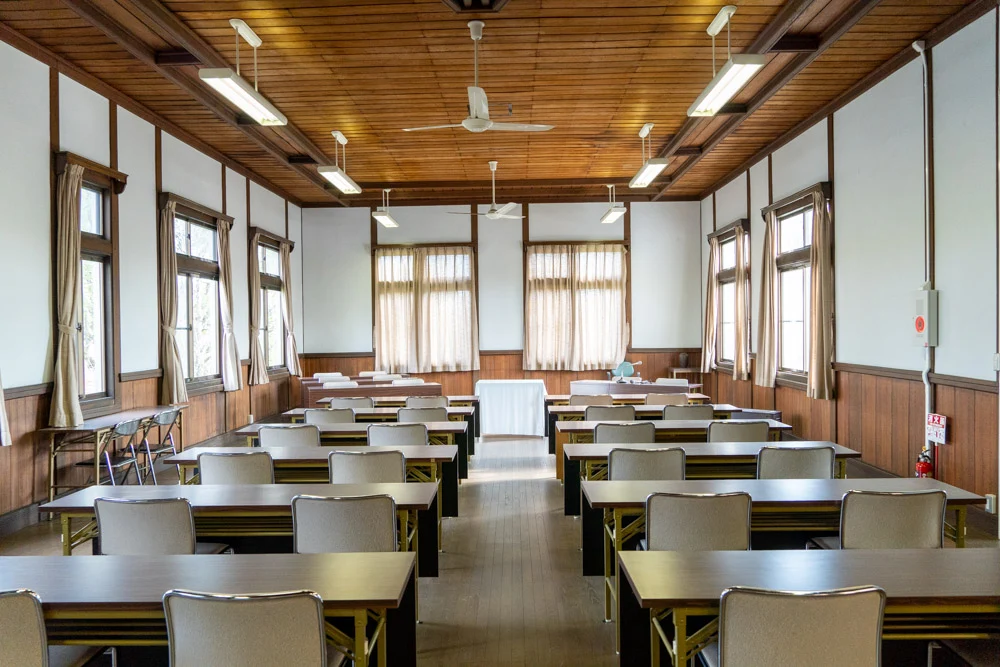
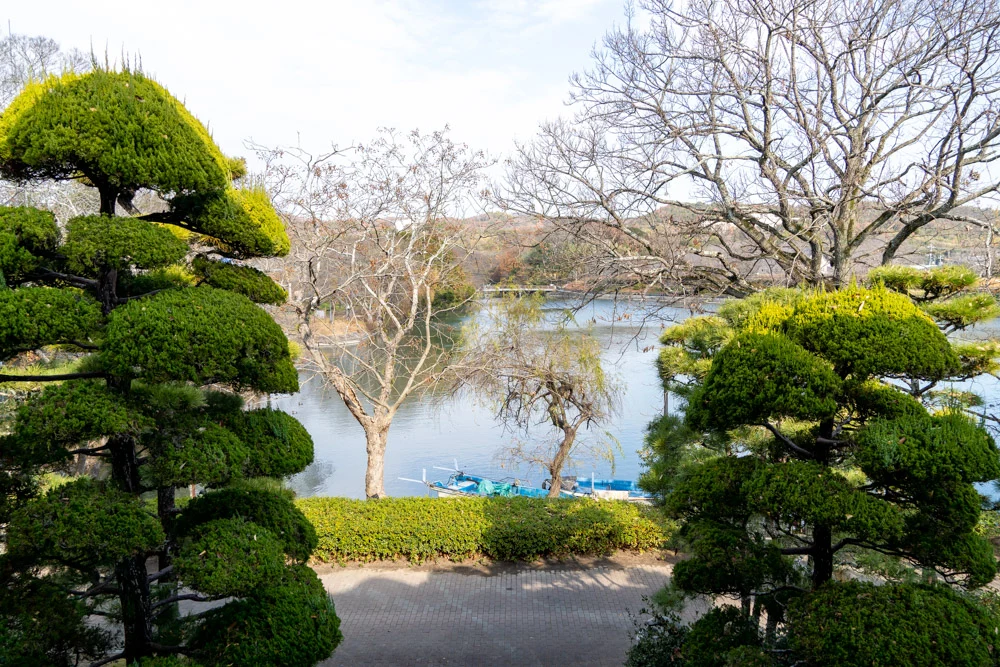
Let me briefly introduce the interior of the building.
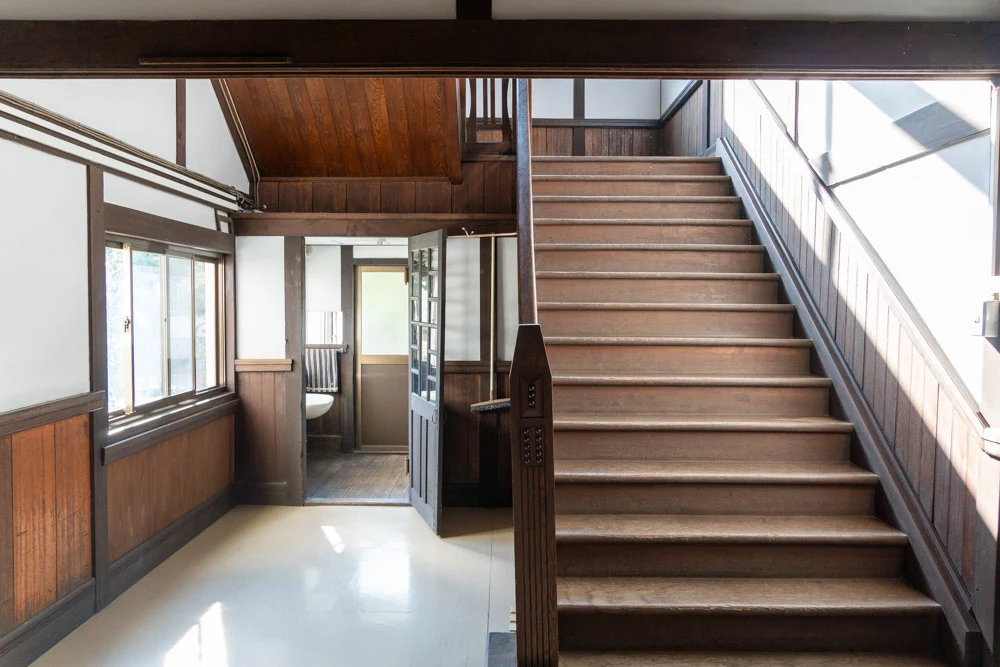
The interior features traditional wall construction with wainscoting and plastered partitions
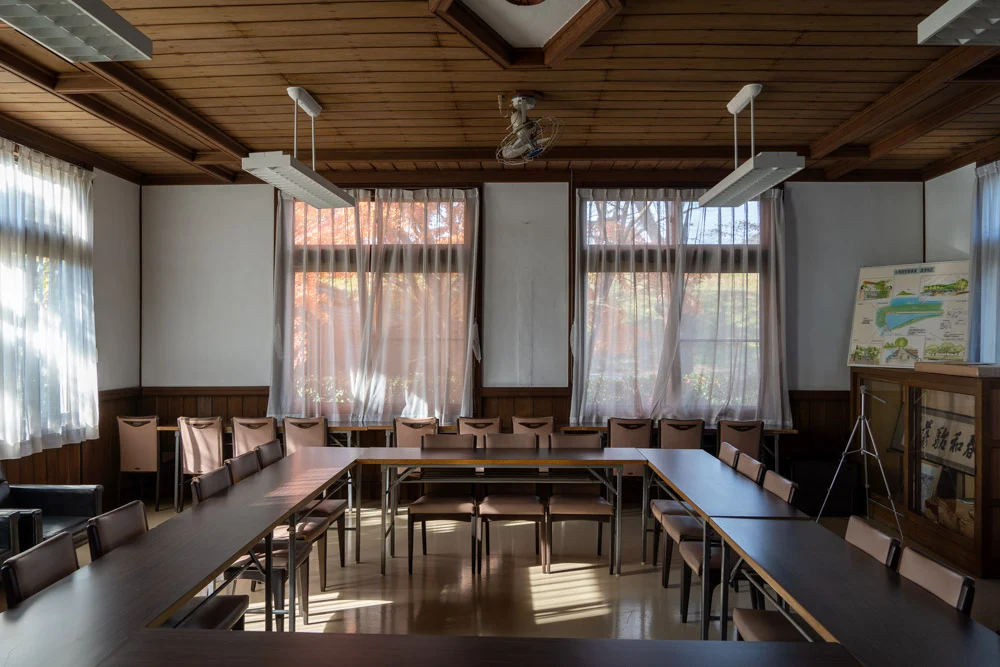
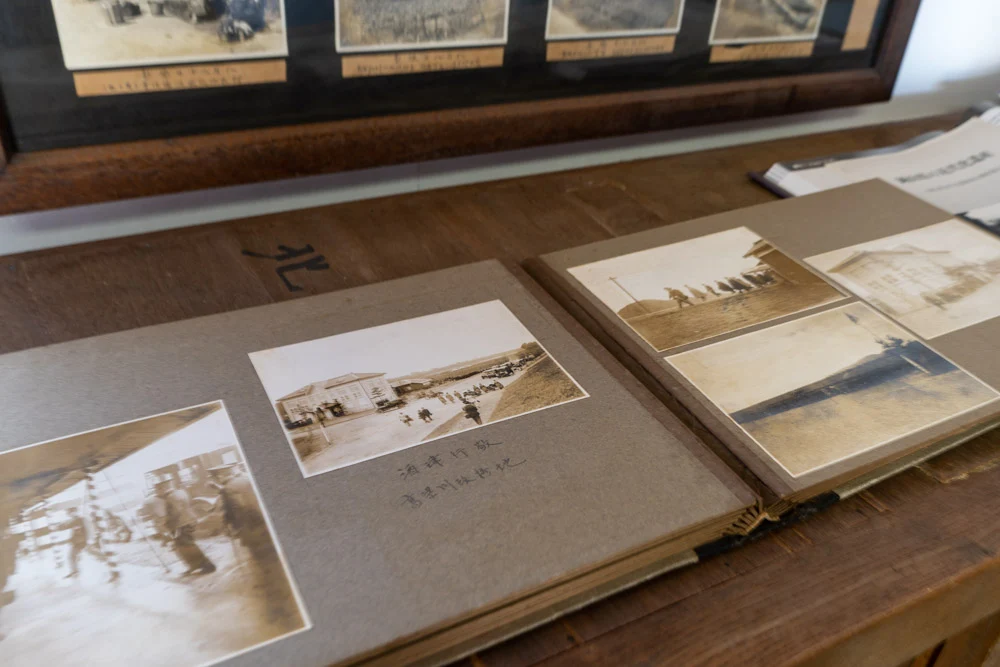
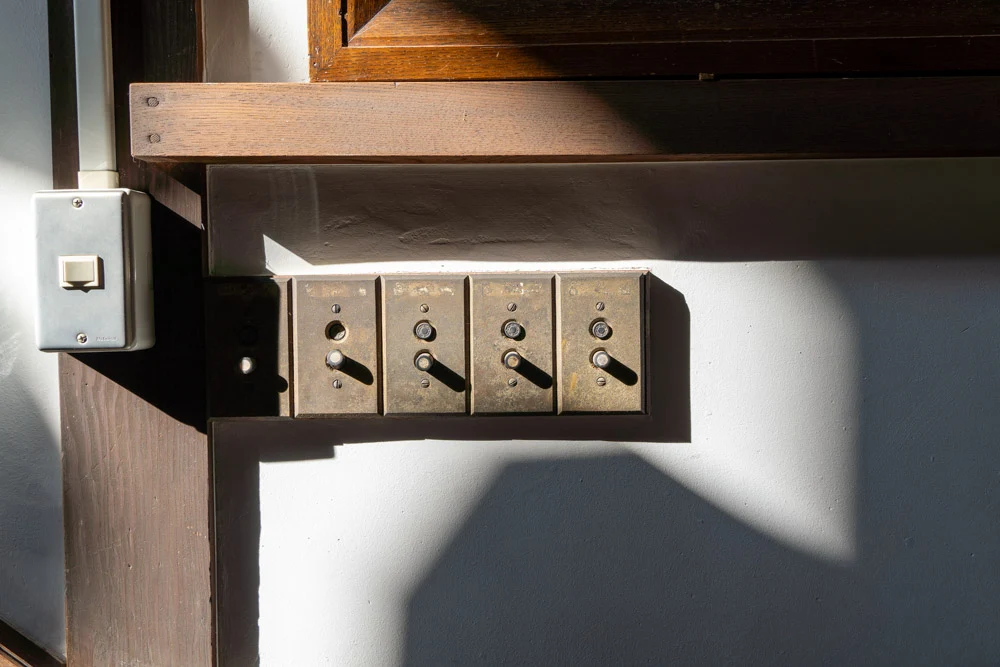
※Currently not in use (using the switch on the left in the photo)

Staff Working at the Association Office
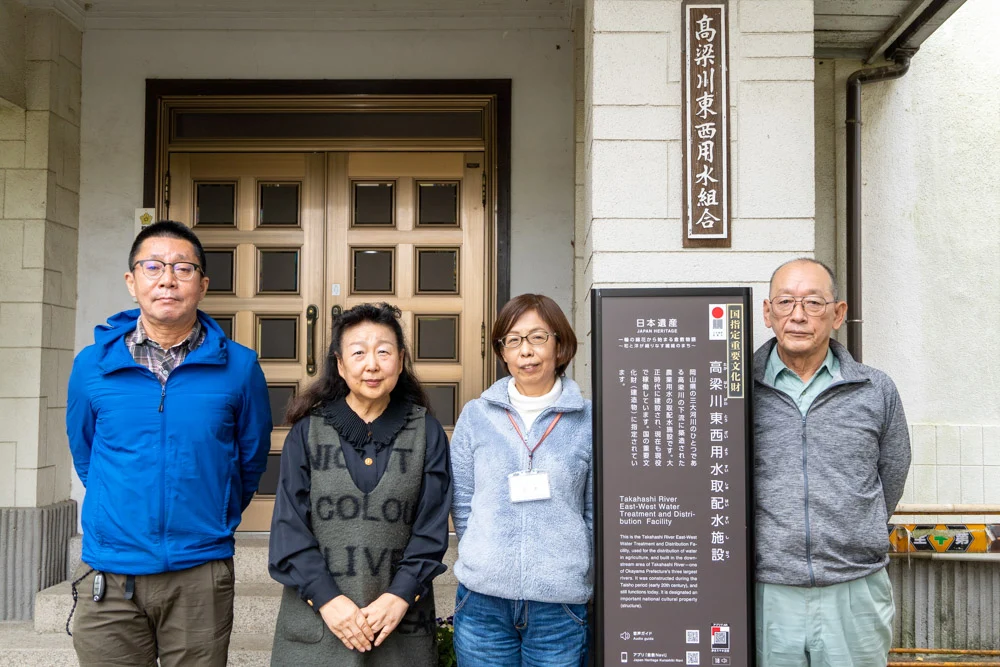
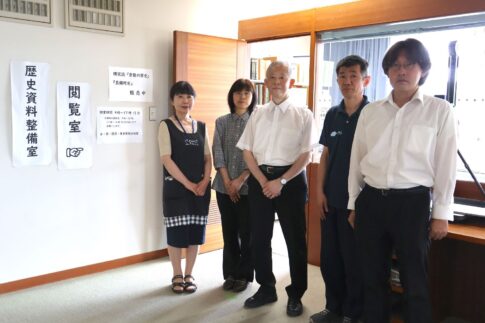
From left: Guard Kunibu, Clerk Nakahara, Chief Okamoto, Deputy Manager Kono
As of January 2022, the following four members are working full-time.
- Deputy Manager
- Chief
- Clerk
- Guard
By the way, the manager is Kurashiki City Mayor Kaori Ito.
At the time of its establishment, the administrator was designated as the Governor of Okayama Prefecture according to the regulations, but due to the revision of the regulations in 1964, it was decided that the mayor of Kurashiki would be elected from among the mayors of the municipalities within the union, and since then, the mayor of Kurashiki has been elected.
In addition to maintaining and managing the sluice gates and reservoirs, adjustments are made to the amount of water intake and distribution (currently, most of the operations have been electrified and can be operated from the control room on the premises).
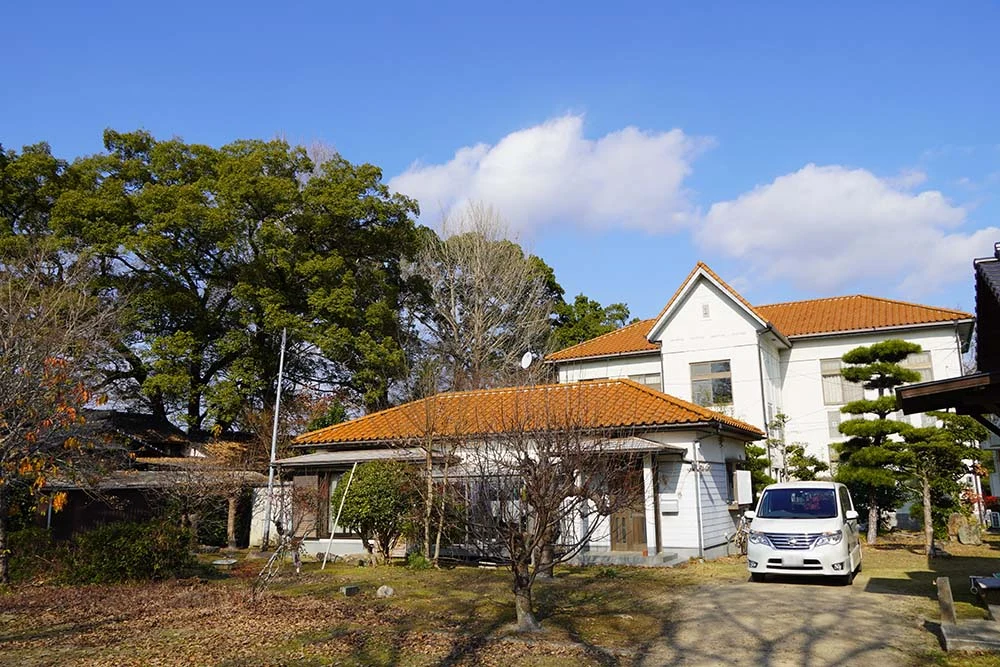
The guards live in the official residence adjacent to the office, ensuring that they can respond immediately in case of emergencies.
Since its completion in 1925, the Takahashi River East-West Water Supply Association has been maintaining and managing the East-West water supply for nearly 100 years, and we spoke with the staff about their work and what they want the citizens to know.
Interview with Hiroshi Kono and Yumiko Okamoto of the Takahashi River East-West Water Supply Association
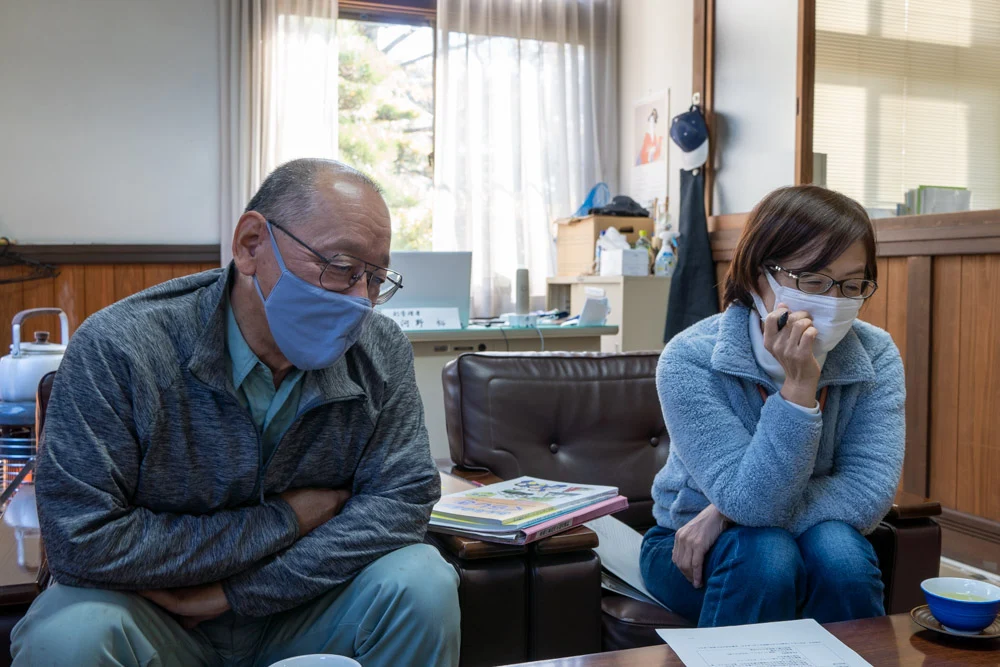
We spoke with Hiroshi Kono, the Deputy Administrator of the Takahashi River East-West Water Supply Association, and Yumiko Okamoto, the Chief, about the association and their work.
Reasons for Working at the Takahashi River East-West Water Supply Association
First, may I ask how long you have been working here?
Kono (honorific omitted)
Both of us started in April of this year (2021). We were appointed after retiring from the Kurashiki City Office.
The Takahashi River East-West Water Supply Association is classified as a "joint administrative association," and the administrator of the association is the mayor of Kurashiki, with the mayor of Hayashima Town serving as a participant.
A joint administrative association is an administrative body established for the purpose of jointly providing part of the administrative services by multiple local public entities (municipalities, special wards, etc.).
What Kind of Work Does the Takahashi River East-West Water Supply Association Do?
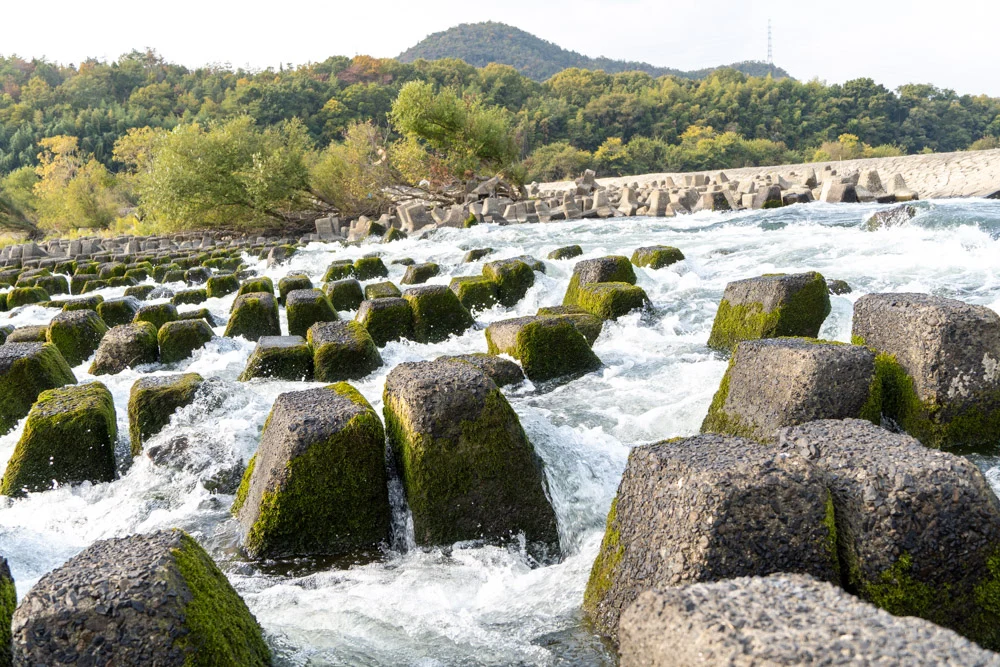
Specifically, what kind of work does the East-West Water Supply Association do?
Kono
The raising and lowering of the Kasai Sluice gate and the management of the sluice gates are mostly done by the guards. In particular, the Kasai Sluice is not electrified, and the procedures are complex.
However, since there are times when someone is absent, we ensure that everyone, including myself, can operate the sluice gates.
What has changed since its completion in 1925, and what has remained the same?
Kono
The operation aspect has changed.
One of the sluice gates for each water supply has been electrified, allowing it to be operated from the control room on the premises.
Since it is made of reinforced concrete with stone facing, I don't think the "appearance" has changed.
When do you open and close the sluice gates?
Kono
Basically, it is under the direction of the administrator, but it is often opened and closed based on instructions from the Agricultural Waterway Division, which receives directives from the mayor.
It is not based on whether it is raining or has rained, but rather instructions are given based on weather forecasts from 3 to 4 days prior.
As a result, there are many instances of "false alarms," but it is often implemented from a disaster prevention perspective.
It is like emptying the water from the waterway in preparation for heavy rain.
Originally, it was intended for agricultural water use, but is it now more focused on disaster prevention?
Kono
That is not correct.
The purpose of the East-West Water Supply is to take and distribute agricultural water.
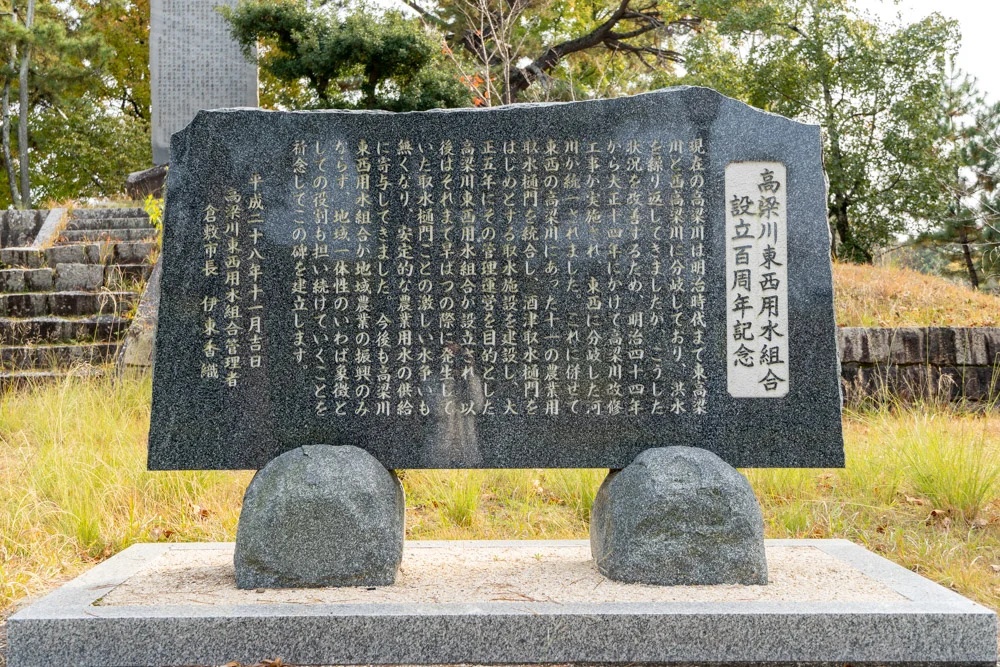
So, what kind of work do you do during normal times?
Kono
The amount of water distributed is determined for each period, so we adjust the sluice gates accordingly.
Additionally, when there is construction or cleaning somewhere, we receive instructions for each water supply, such as "please lower the water level by XX centimeters," and we respond accordingly.
Okamoto (honorific omitted)
Also, in the summer, we cut the algae in the distribution reservoir. All staff participate for about two days each week.
This is quite labor-intensive.
Kono
Therefore, working here requires physical strength and motivation (laughs).
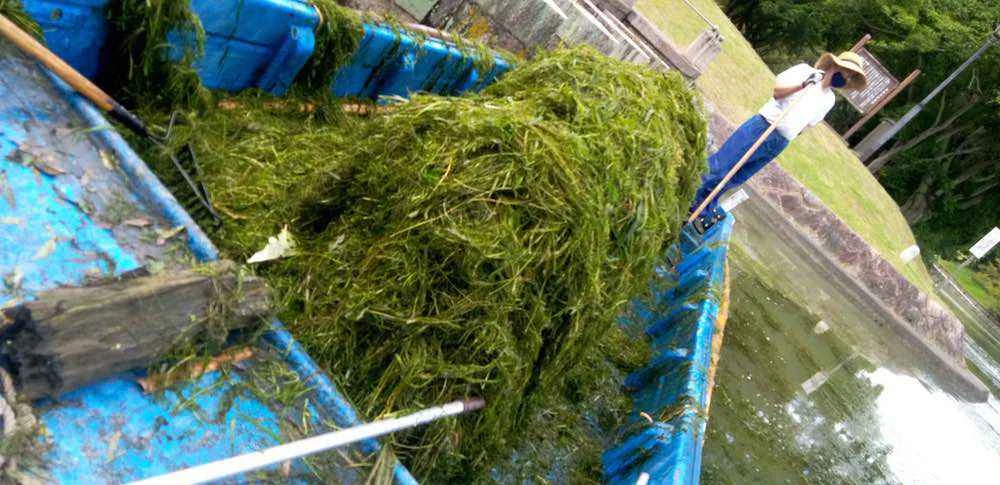
Photo provided by the Takahashi River East-West Water Supply Association
Do you also regularly clean the bottom of the reservoir?
Okamoto
We regularly perform "dredging" to scrape the bottom of the distribution reservoir and remove sediment, but we haven't done it recently.
The last time was in 2002, which was 20 years ago.
According to records, it seems that only part of it was done at that time, and the last complete dredging was in 1984, nearly 40 years ago.
Things You Want to Try and Challenges Ahead
You mentioned that you just started this year, but do you have any things you want to try or challenges ahead?
Okamoto
I would like to create a display of materials on the history of the East-West Water Supply and the Takahashi River in the first-floor room, so that local children can learn about the origins of the town they live in, fostering a sense of attachment and familiarity with the community.
Kono
Nearly 100 years have passed since its completion, and it is aging, but because it is an important cultural property, repairs cannot be easily made.
If repairs are to be made, in many cases, it is necessary to remove the stones and repair the internal reinforced concrete structure.
After repairs, it is also necessary to return the "original stones," which incurs costs, and obtaining "original stones" is nearly impossible.
I believe we need to consider how to maintain it while also planning for future repairs.
What You Want to Convey to the Citizens of Kurashiki
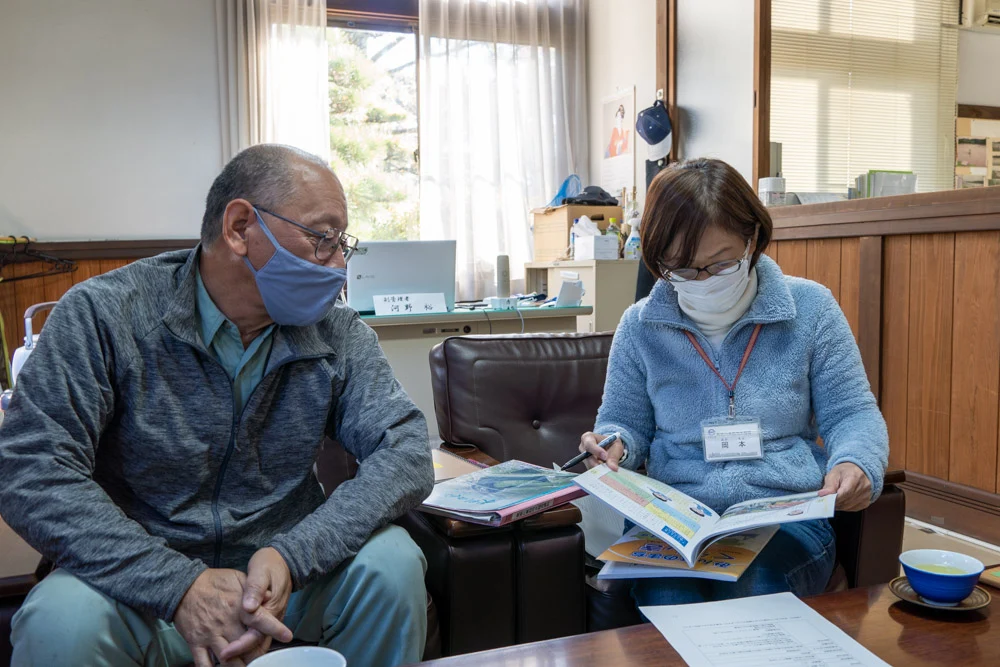
Finally, if there is anything you would like the citizens of Kurashiki to know or convey, please do so.
Okamoto
The Takahashi River East-West Water Supply Association mainly focuses on the maintenance and management of water supply facilities, so we rarely need to caution about activities in Sakatsu Park.
However, the only thing we are cautious about is diving into the "distribution reservoir".
Of course, it is dangerous for children, but it is also dangerous for adults, so we are cautious.
Many people think that the distribution reservoir is quite deep, but in reality, it is only about deep enough for adults to stand (approximately 150 centimeters).
Therefore, if someone dives in, they may hit the bottom, and the current near the sluice gates can be fast, which can lead to being caught in the sluice gates, making it very dangerous.
Kono
I hope people will value water.
Valuing water also means keeping rivers and ponds clean.
Since the East-West Water Supply is maintained by us, there is no need for special awareness in daily life.
However, recently, there was an instance where a bed was discarded in the distribution reservoir.
I hope that this wonderful water utilization system, created nearly 100 years ago, can be used for as long as possible.
Since it is located in Sakatsu Park, a place for relaxation for the citizens of Kurashiki, I want to ensure that everyone can enjoy their time there.
Conclusion
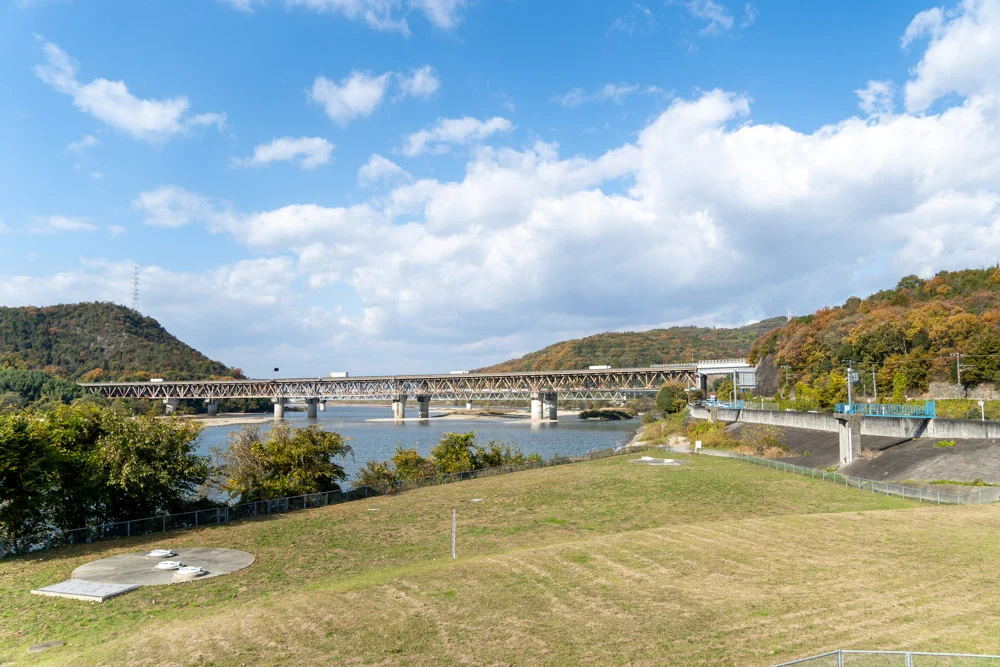
Embarrassingly, I thought that even though the sluice gates and other water supply facilities remained, they were no longer in use, and I did not know that there are still people working in the "Takahashi River East-West Water Supply Association Office."
Okayama is known as the land of sunshine, a region with few disasters, and the foundation for that was the water utilization system called the East-West Water Supply, created nearly 100 years ago.
It may be difficult to be aware of a system that has been in place since before we were born.
However, the gentle river and the water that is readily available were created by the wisdom of our predecessors, and that system continues to be used today, maintained by people.
I hope that as many people as possible will be aware of this fact.
- 100 Years of the Takahashi River East-West Water Supply Association
- 100th Anniversary Commemorative Book of the Takahashi River East-West Water Supply Association
Articles Related to Japan Heritage in Kurashiki City
Takahashi River East-West Water Supply Association Data
| Organization Name | Takahashi River East-West Water Supply Association |
|---|---|
| Industry | Management and repair of water supply gates and reservoirs, as well as necessary operations related to water intake and distribution |
| Representative Name | Administrator: Ito Kaori (Mayor of Kurashiki City) |
| Established Year | 1916 |
| Address | 2826 Sakezu, Kurashiki City, Okayama Prefecture |
| Contact | 086-422-0219 |