The first-class river "Takahashi River" flows through Kurashiki City.
It originates from Hanamiyama (elevation 1,188 meters: Niimi City), and in Niimi City, forest management is being carried out to enhance the functions of water source conservation and sediment runoff prevention that support the rich water environment of the Takahashi River.
Residents of Kurashiki City living in the downstream area can be said to benefit from this, but they may not have seen what the source area of the Takahashi River looks like.
I, the author, who have lived in Kurashiki City for over 30 years, am one of them, and although I have visited Niimi City, I mostly stayed in the urban area.
I participated in a forest conservation activity held on November 19, 2022 (Saturday) as part of "JT's Forest Koigakubo Niimi," a collaborative effort between Japan Tobacco Inc. (hereinafter, JT) and Niimi City, and I would like to introduce its content.
What is "JT's Forest Koigakubo Niimi"?
The JT Group, which conducts business activities centered on tobacco, pharmaceuticals, and processed foods, utilizes natural materials derived from plants such as leaf tobacco, paper, and vegetables in its operations.
As part of its environmental conservation efforts, forest conservation activities are promoted under the name "JT's Forest," and as of November 2022, activities are ongoing at nine locations nationwide.
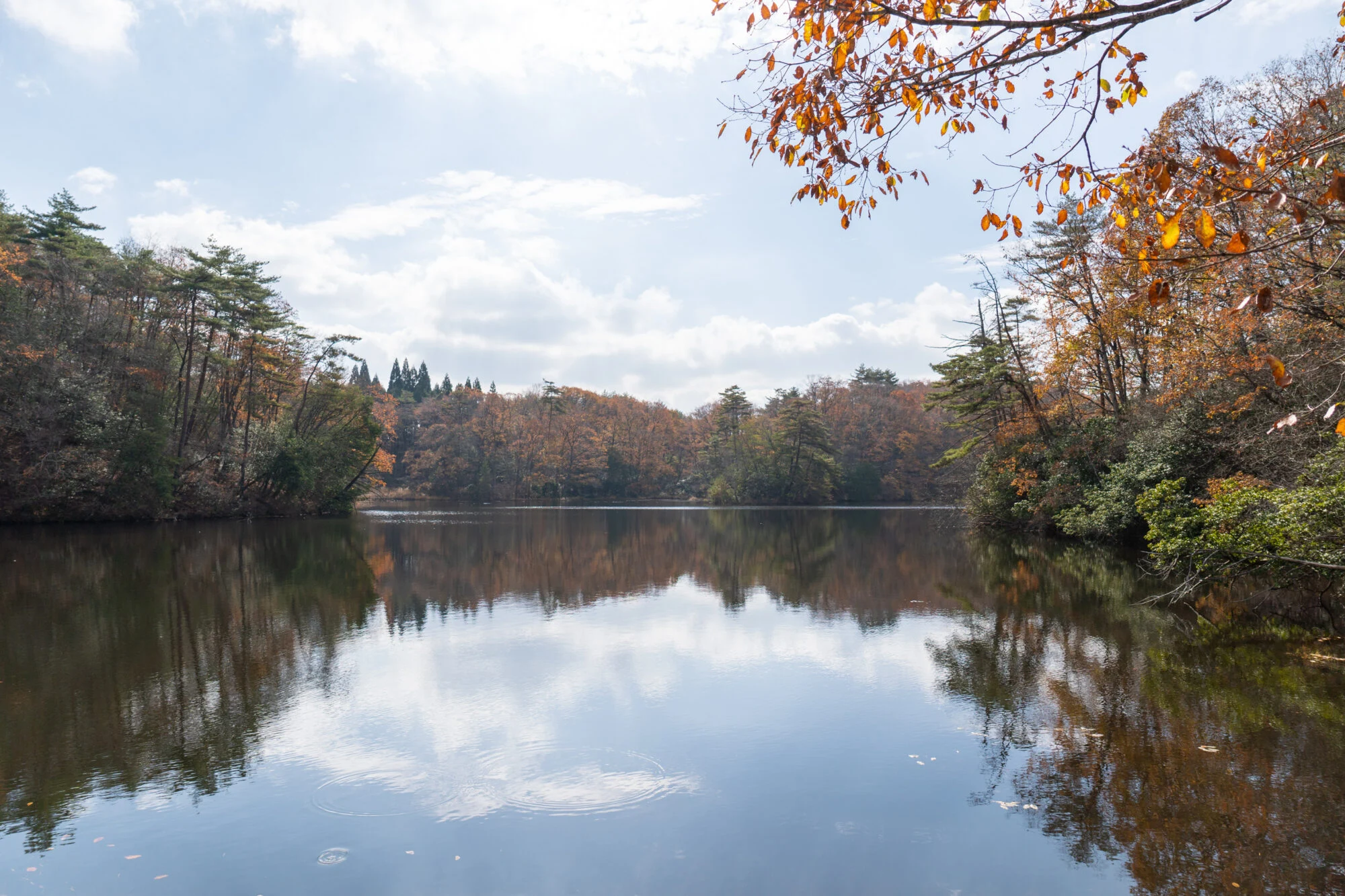
In Okayama Prefecture, there is "JT's Forest Koigakubo Niimi," which conducts forest conservation activities centered around Koigakubo Wetland.
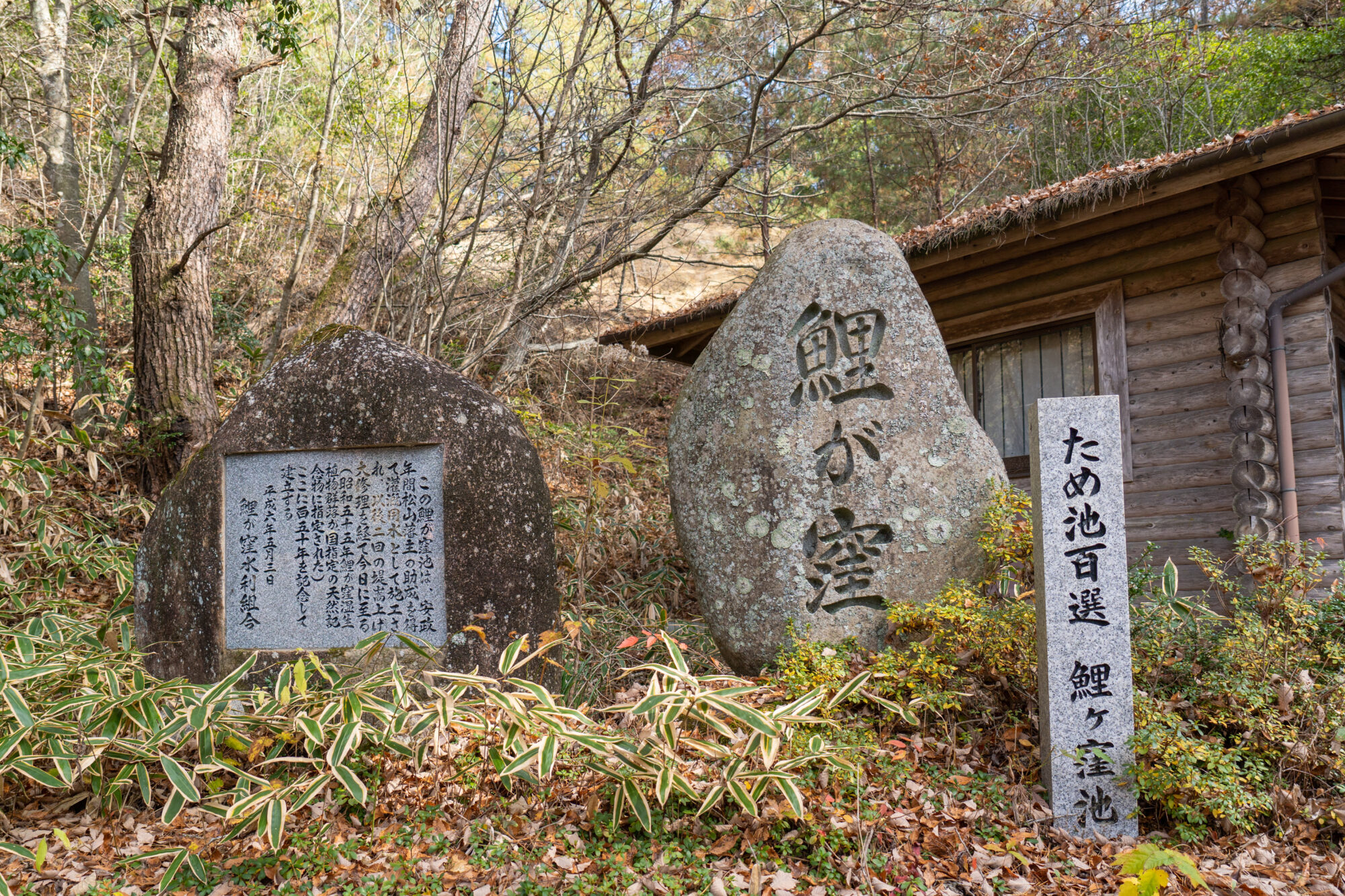
Koigakubo Wetland
It is a region where over 300 species of plants, including Ogura-senno, grow naturally, and it was designated as a natural monument of Japan on March 6, 1980, as "Koigakubo Wetland Plant Community."
"JT's Forest Koigakubo Niimi" utilizes the "Forest Creation Project in Collaboration with Companies" promoted by Okayama Prefecture, and has been conducting forest conservation activities in collaboration with Niimi City for about six years since November 2016.
The activities are divided into the first phase starting in 2016 and the second phase, which began in 2022 with a change in the target forest area, and the autumn 2022 forest conservation activity was conducted as the first activity of the second phase.

Content of the Autumn 2022 Forest Conservation Activity
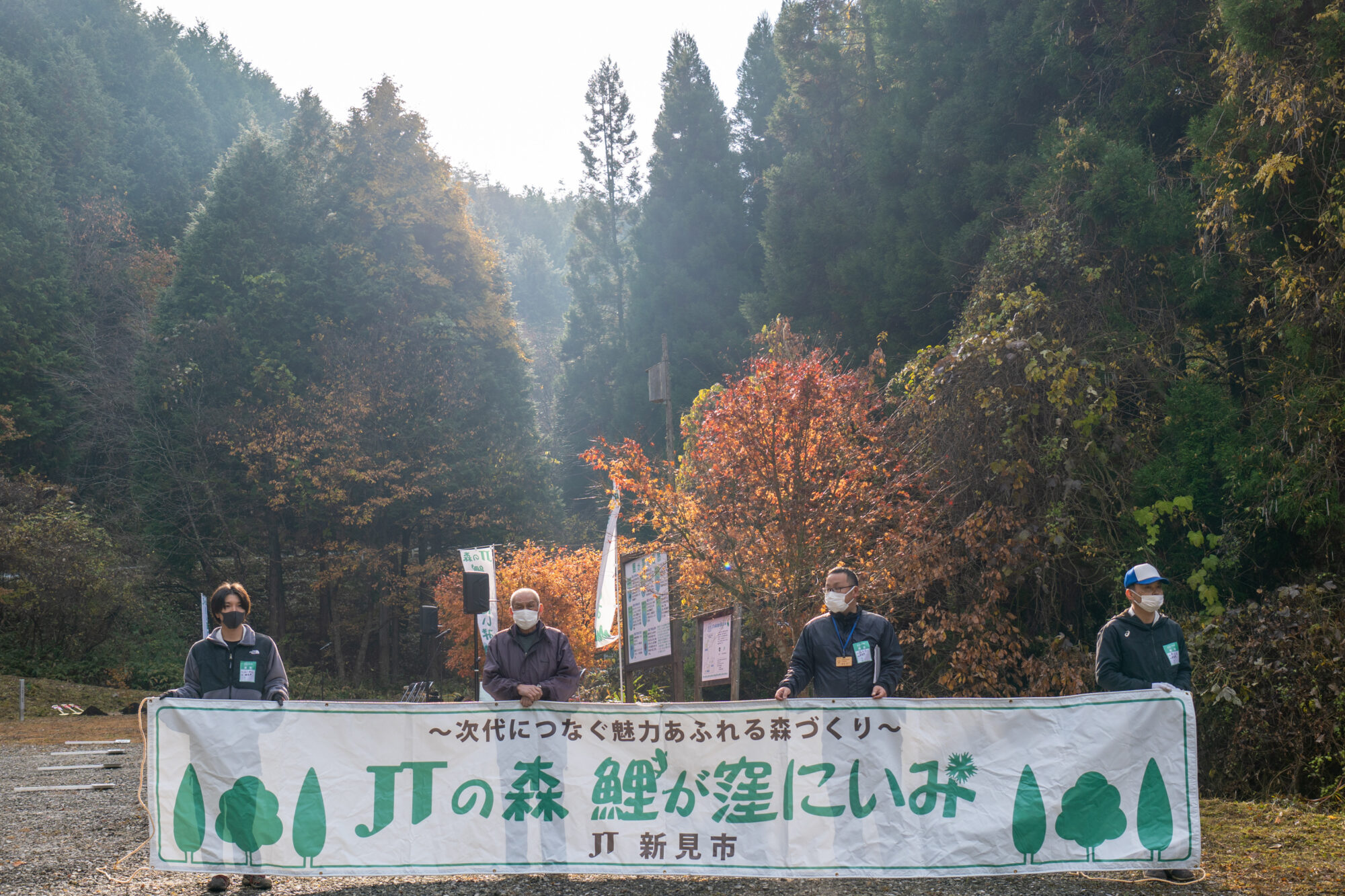
The autumn 2022 forest conservation activity was primarily focused on "maintenance of walking paths in Koigakubo Wetland" and was conducted in the following sequence.
- Opening Ceremony
- Forest Conservation Activity (Maintenance of Walking Paths in Koigakubo Wetland)
- Woodworking Class and Closing Ceremony
- Tour of High-Performance Forestry Machinery and Chip Factory
The first and second activities were in the morning, while the third and fourth were in the afternoon.
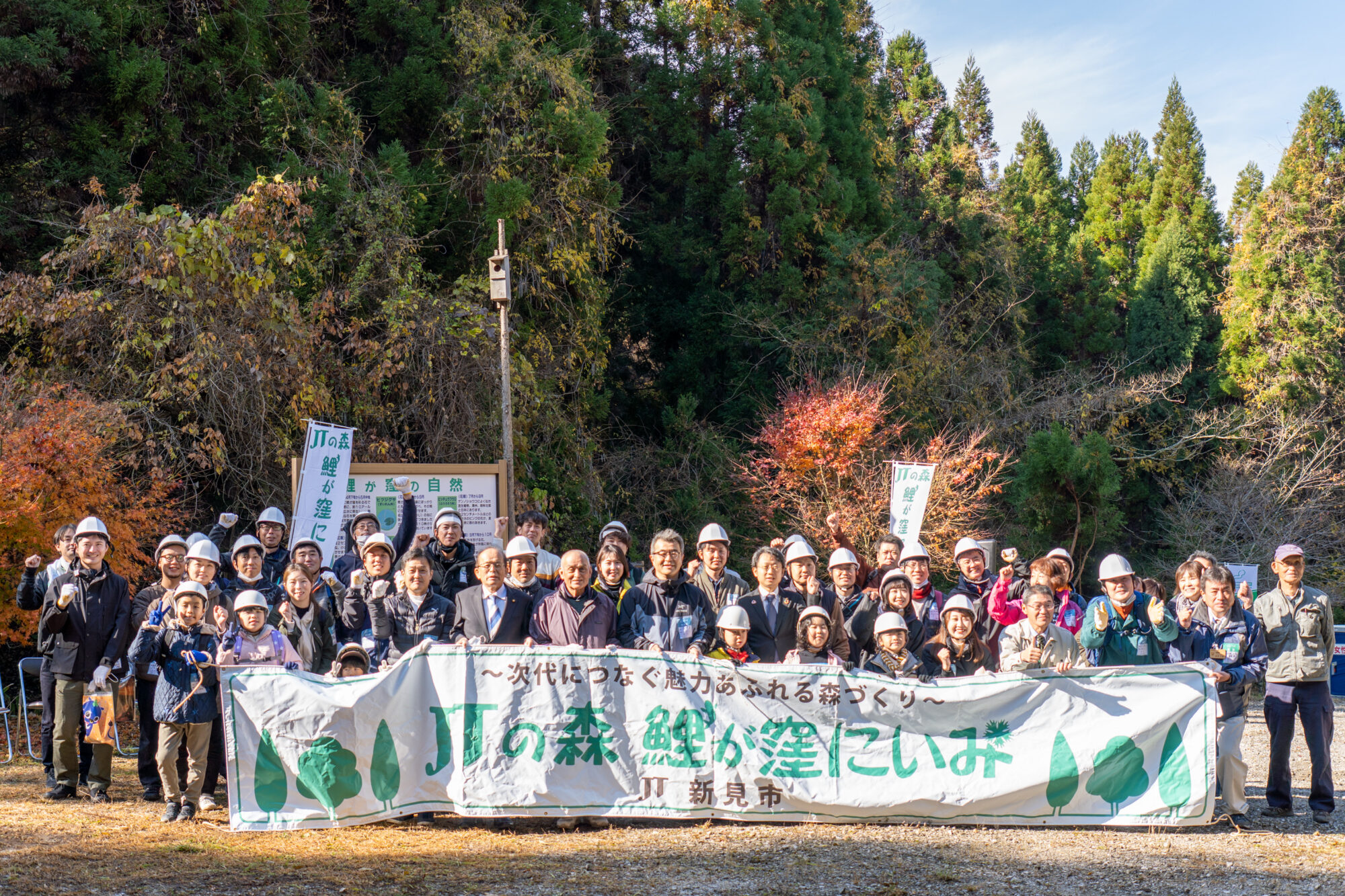
About 90 participants, mainly employees and their families from the JT Group centered in Okayama and Hiroshima Prefectures, as well as residents of Niimi City, were divided into four groups to carry out the activities.
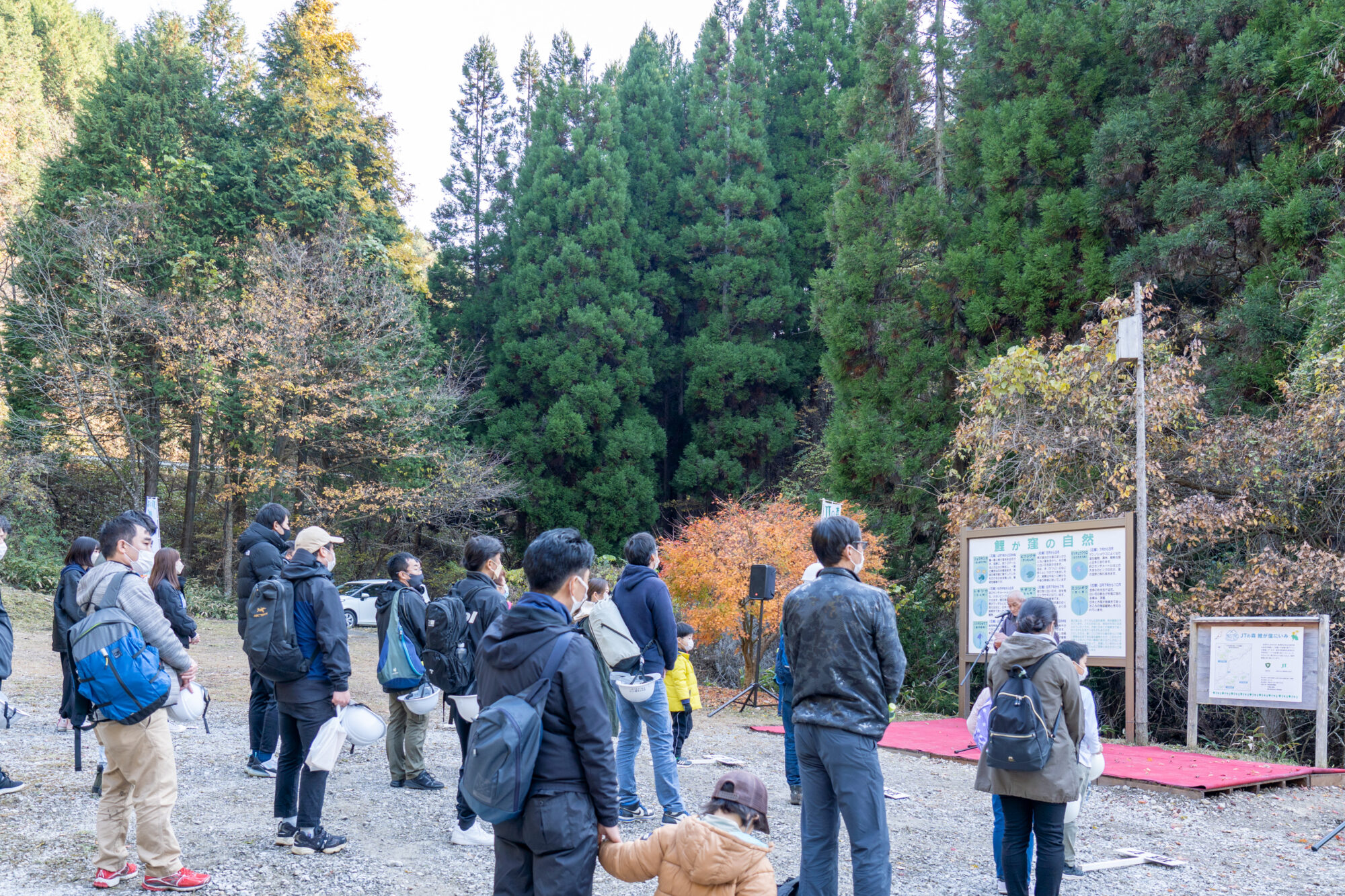
Opening Ceremony
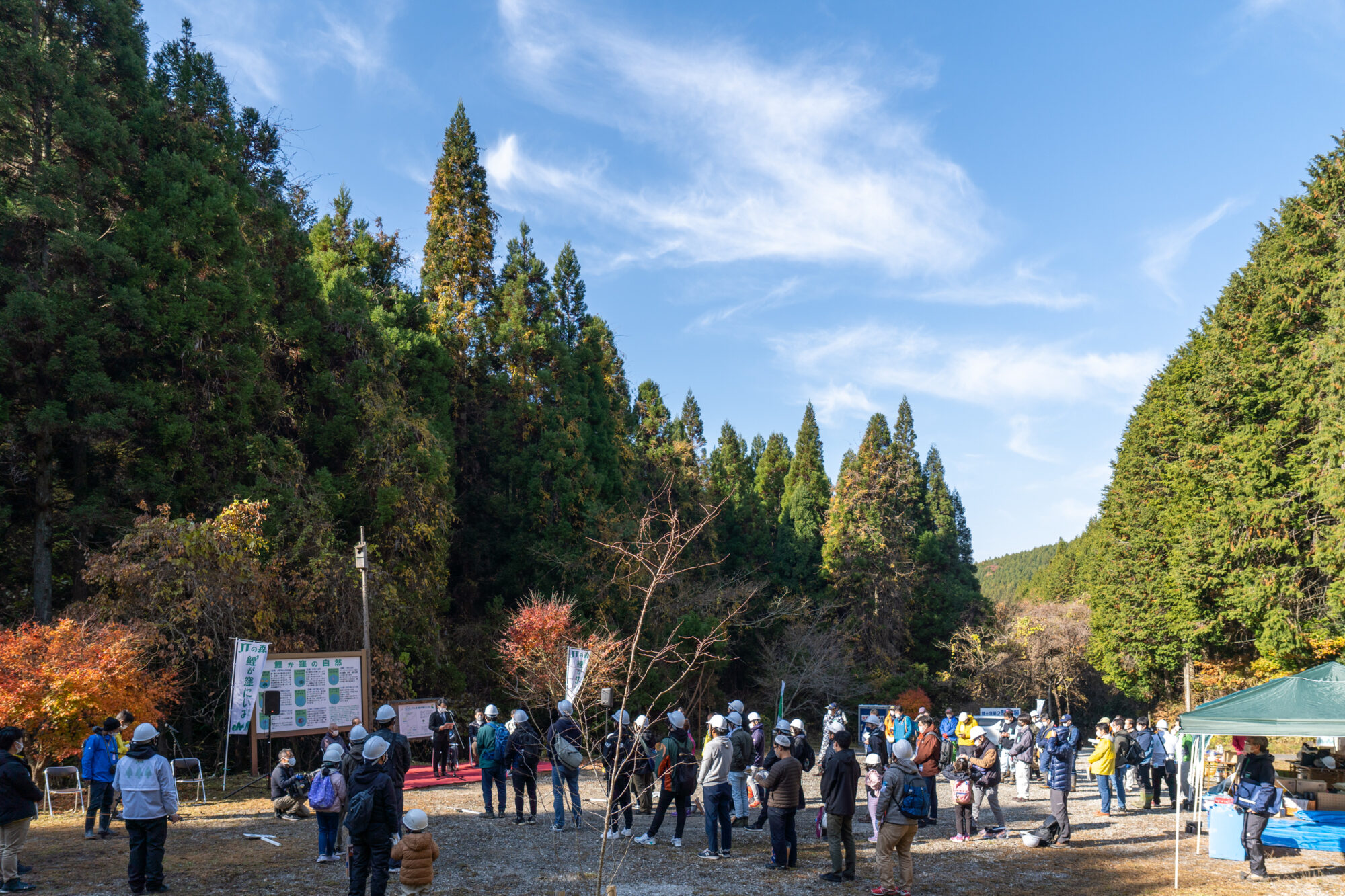
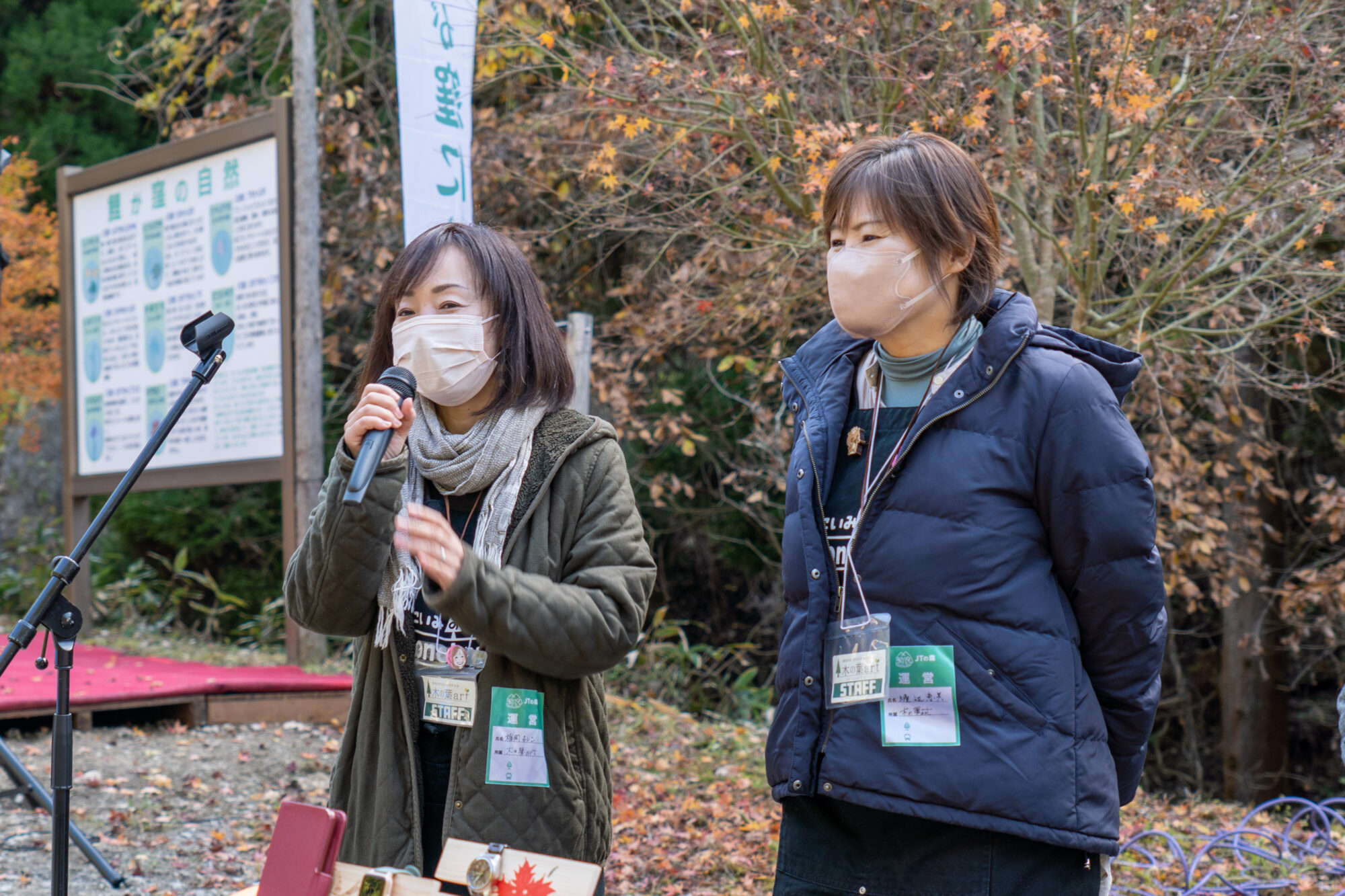
At the opening ceremony, greetings were given in the following order by the guests.
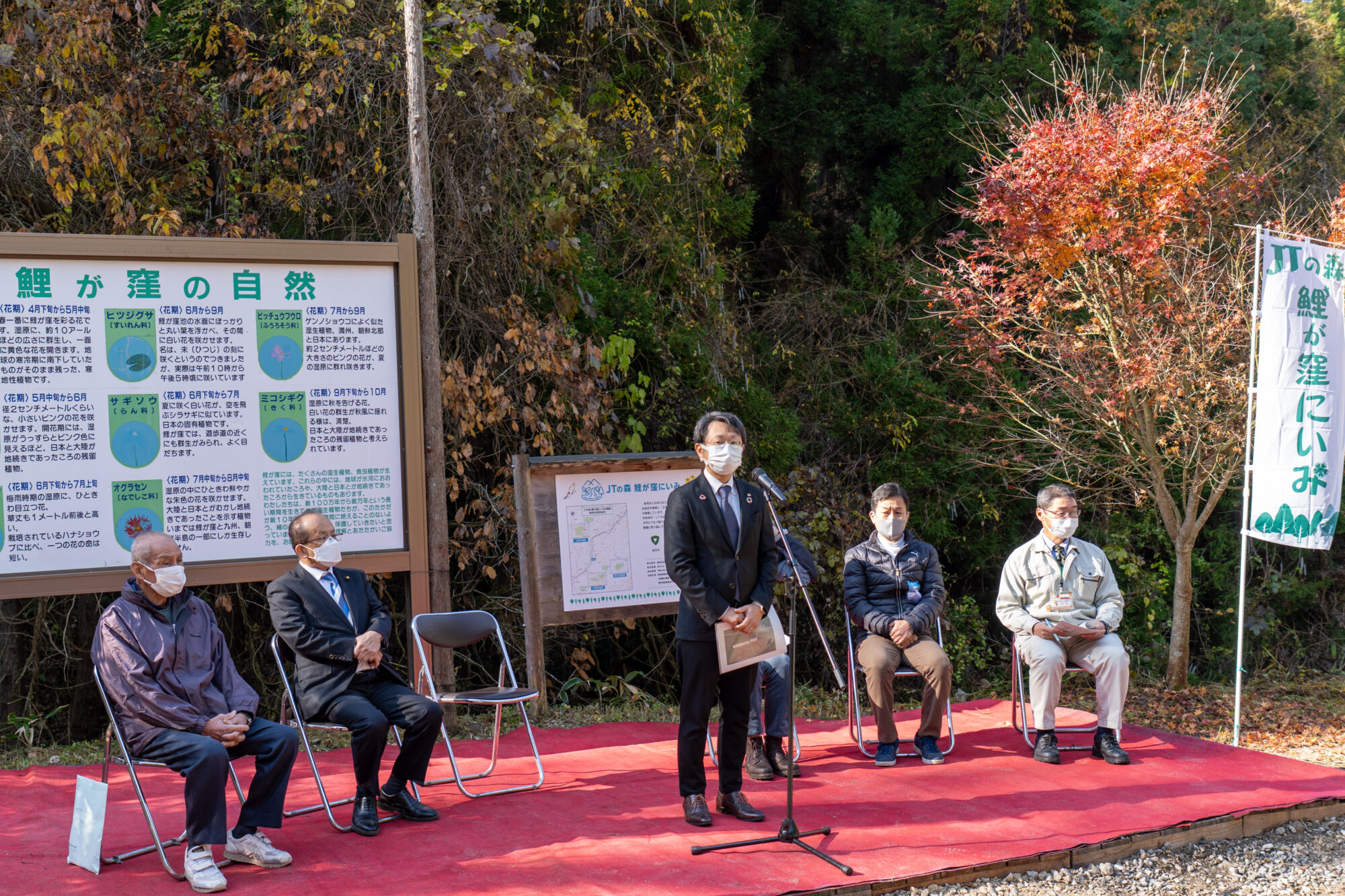
- Niimi City Vice Mayor Nomata Tetsuto
- JT Executive Officer Ogura Kenji
- Okayama Prefecture Bichu Regional Bureau Yukimori Shigeto
- Niimi City Council Chairman Ishida Minoru
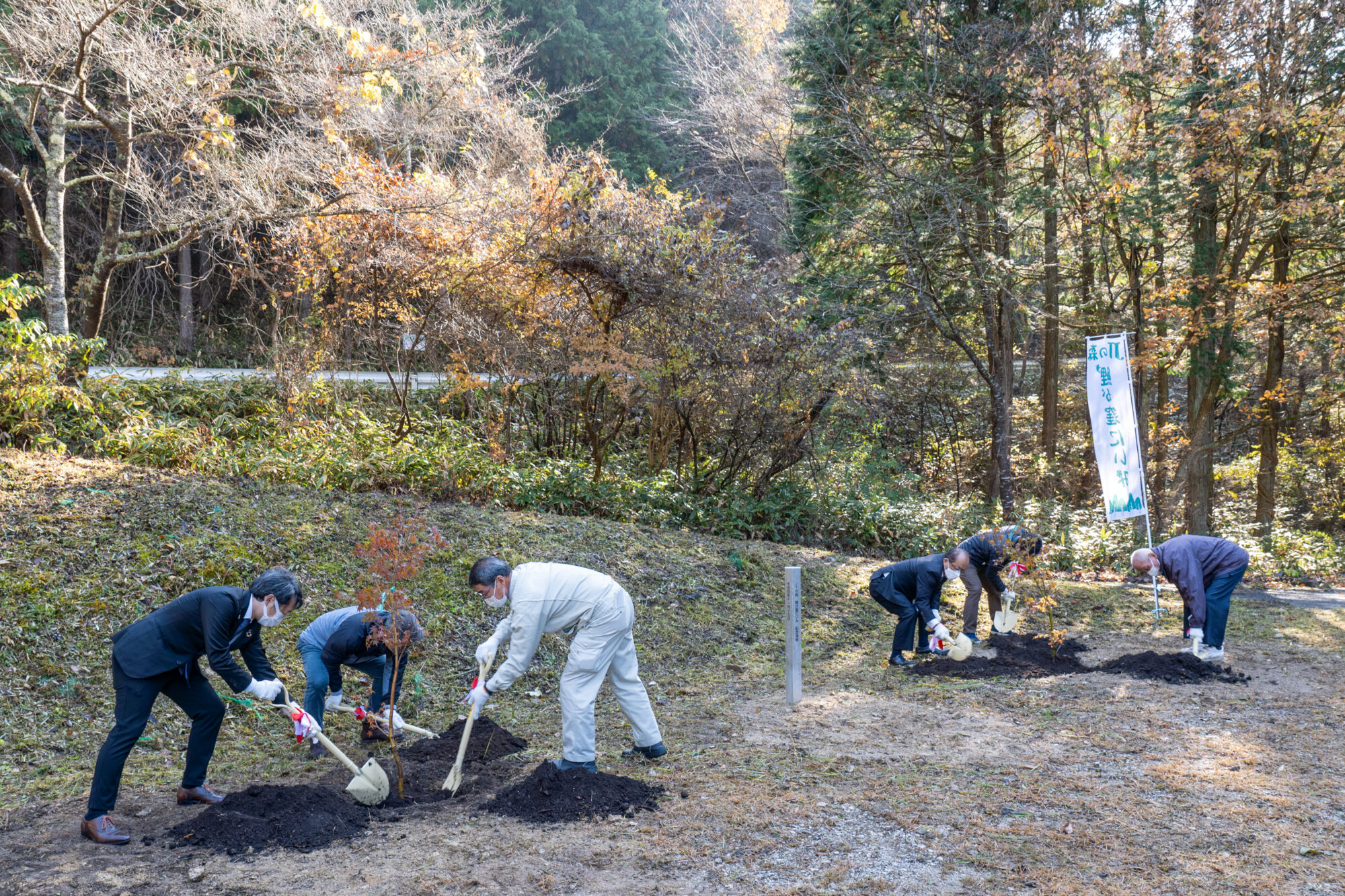
Following this, the presentation of the Okayama Prefecture Carbon Dioxide Forest Absorption Certification and commemorative tree planting took place, concluding the opening ceremony.
From here, the forest conservation activities officially begin.
Forest Conservation Activity (Maintenance of Walking Paths in Koigakubo Wetland)
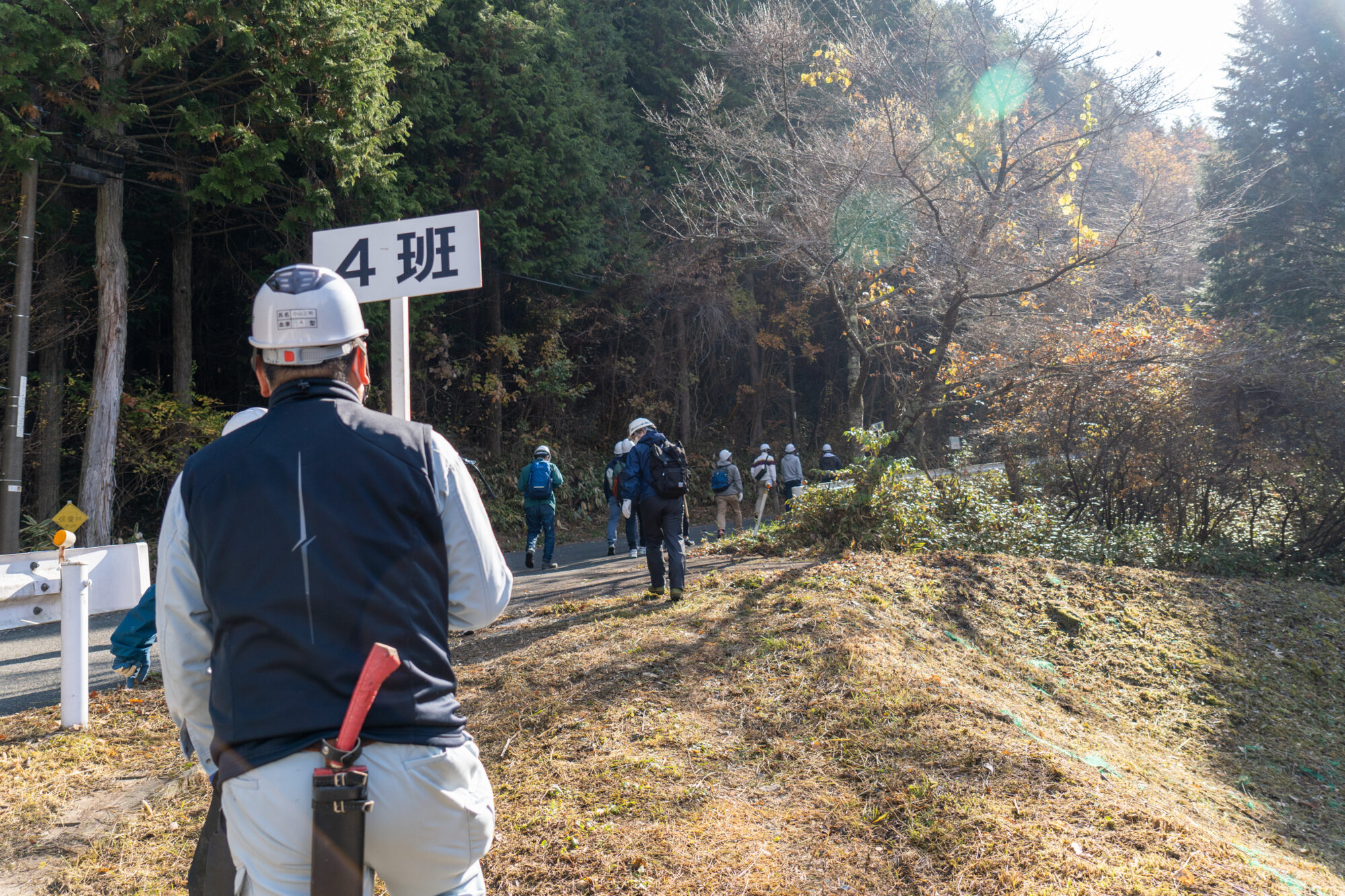
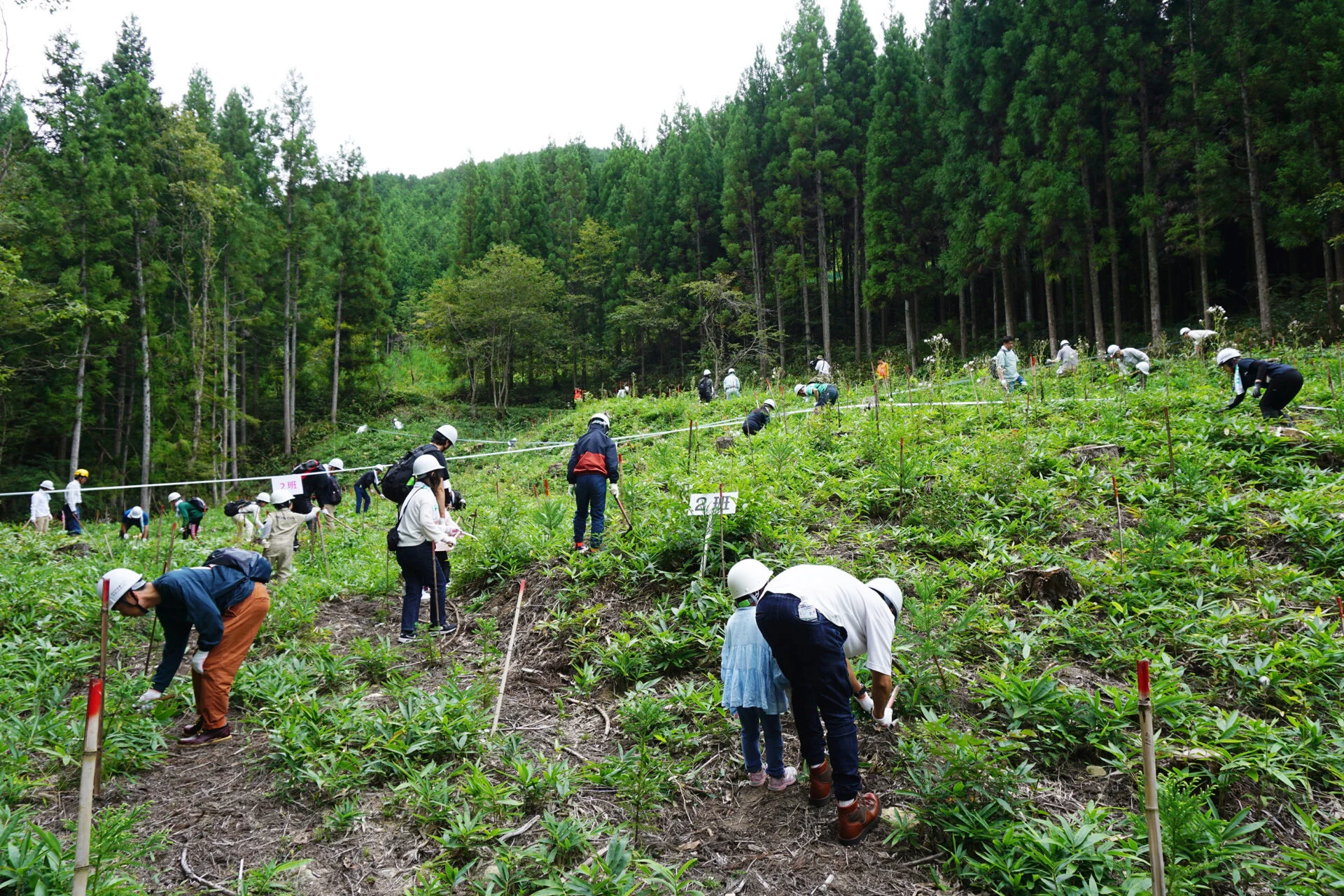
From the second parking lot of Koigakubo Wetland, where the opening ceremony was held, the four groups moved on foot to the Koigakubo Wetland, guided by members of the Niimi City Forest Association.
Initially, the temperature was a bit chilly, but as we moved, we started to sweat.
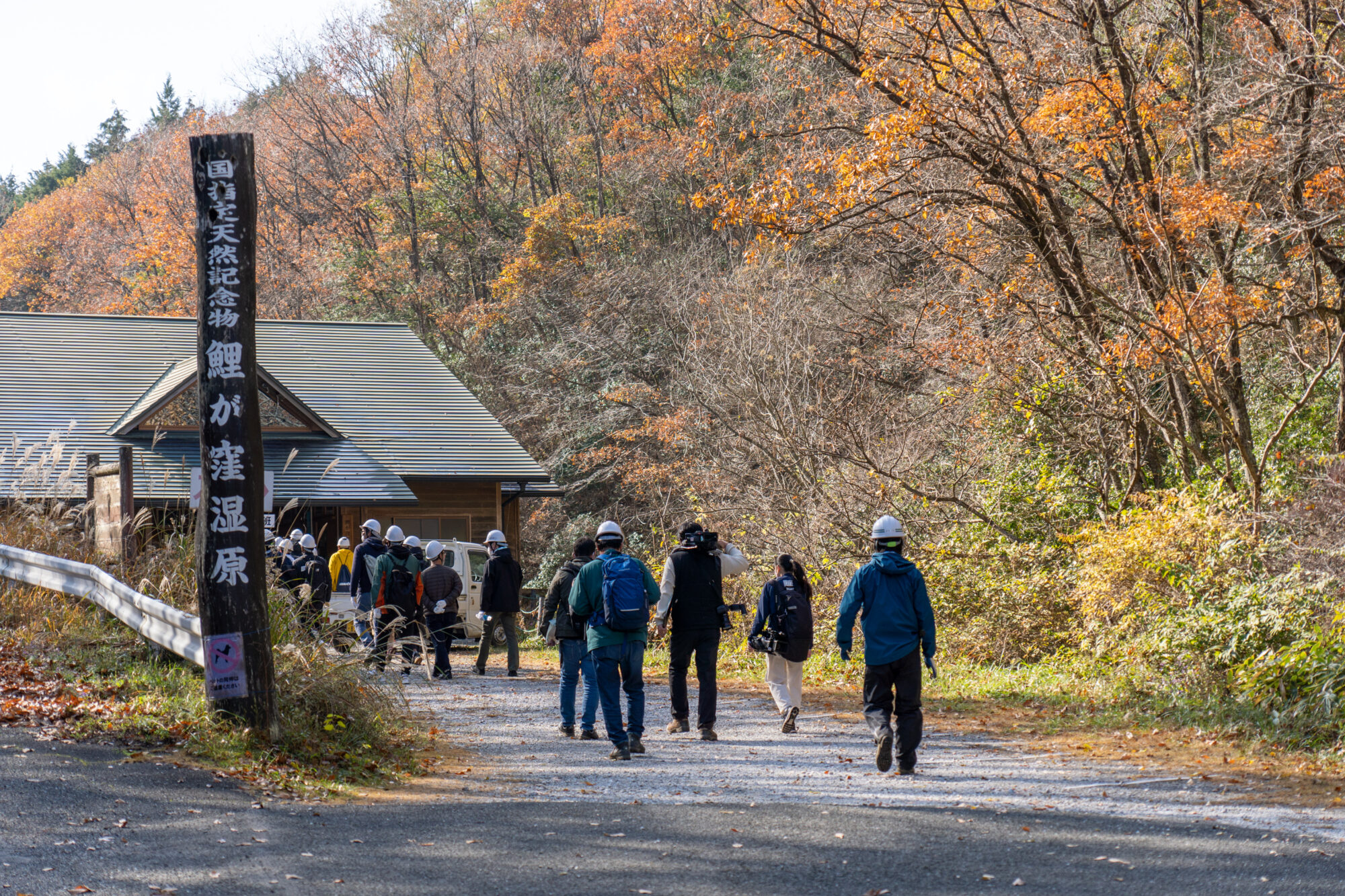
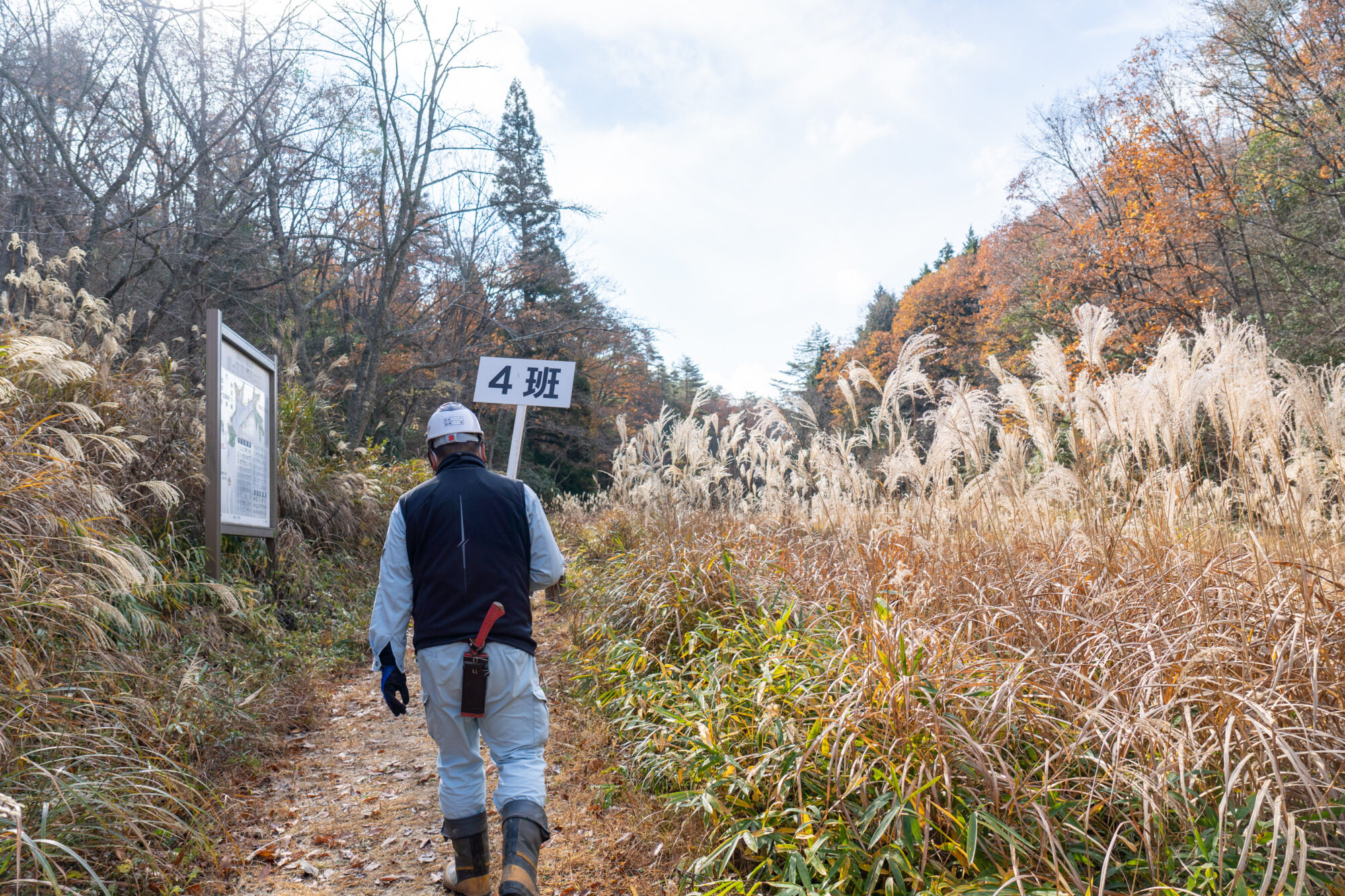
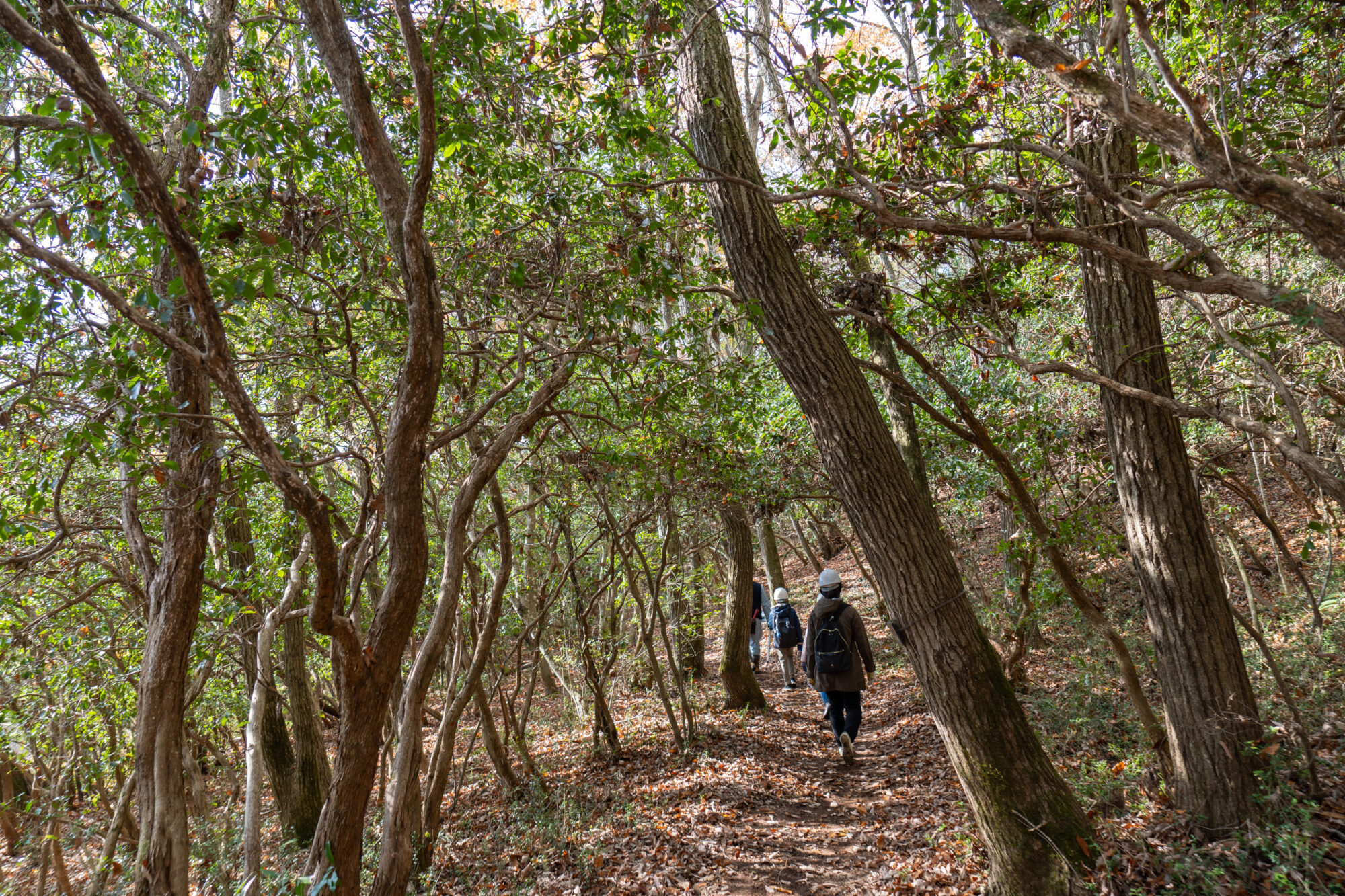
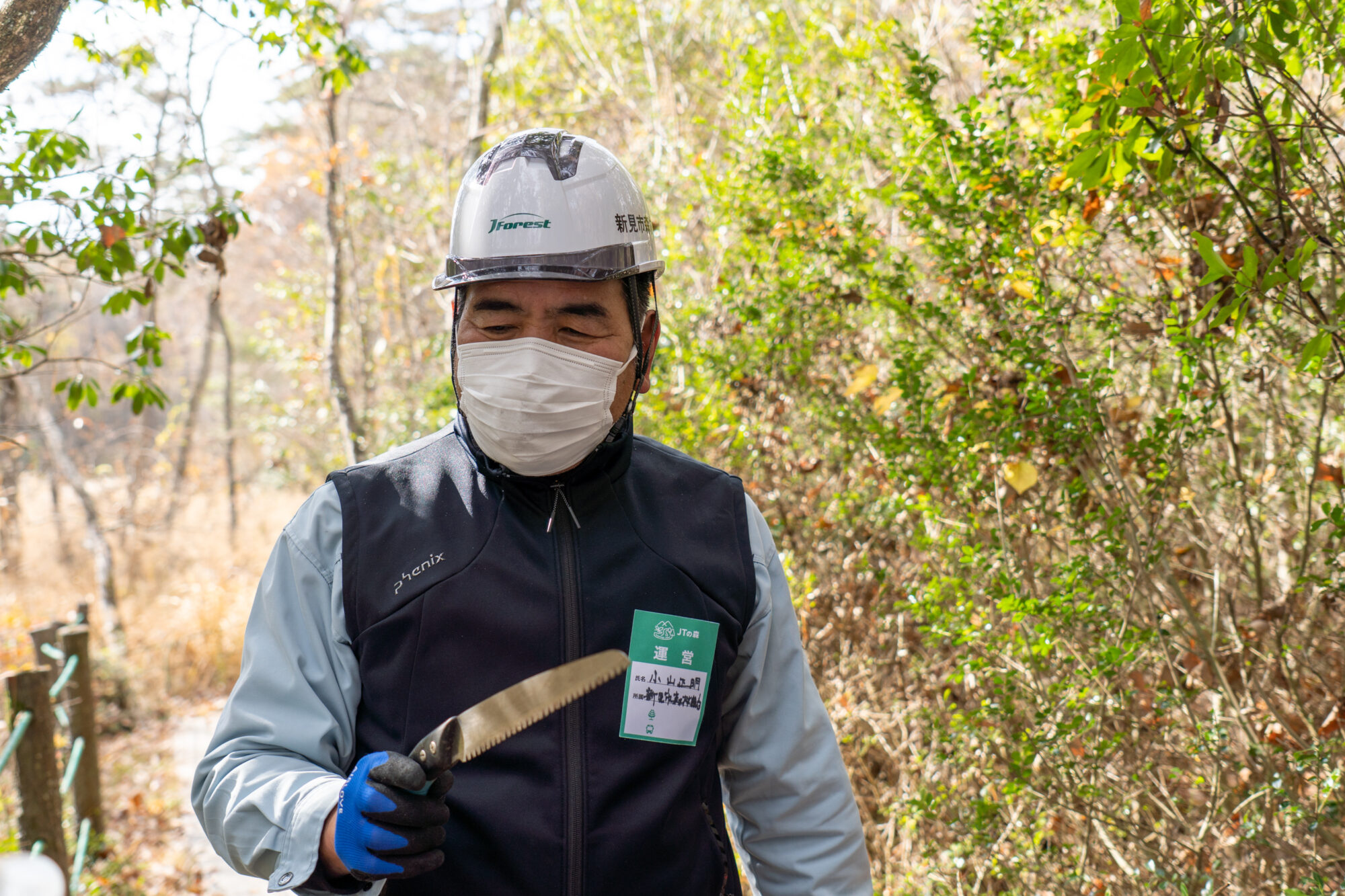
Upon arriving at the wetland, each group will carry out the removal of obstructive branches that hinder the walking paths in their designated areas.
- Pruning Shears
- Hedge Shears
- Saw
- Pole Saw
Members of the Niimi City Forest Association briefly explained how to carry out the removal work using these tools, and then the activity officially began.
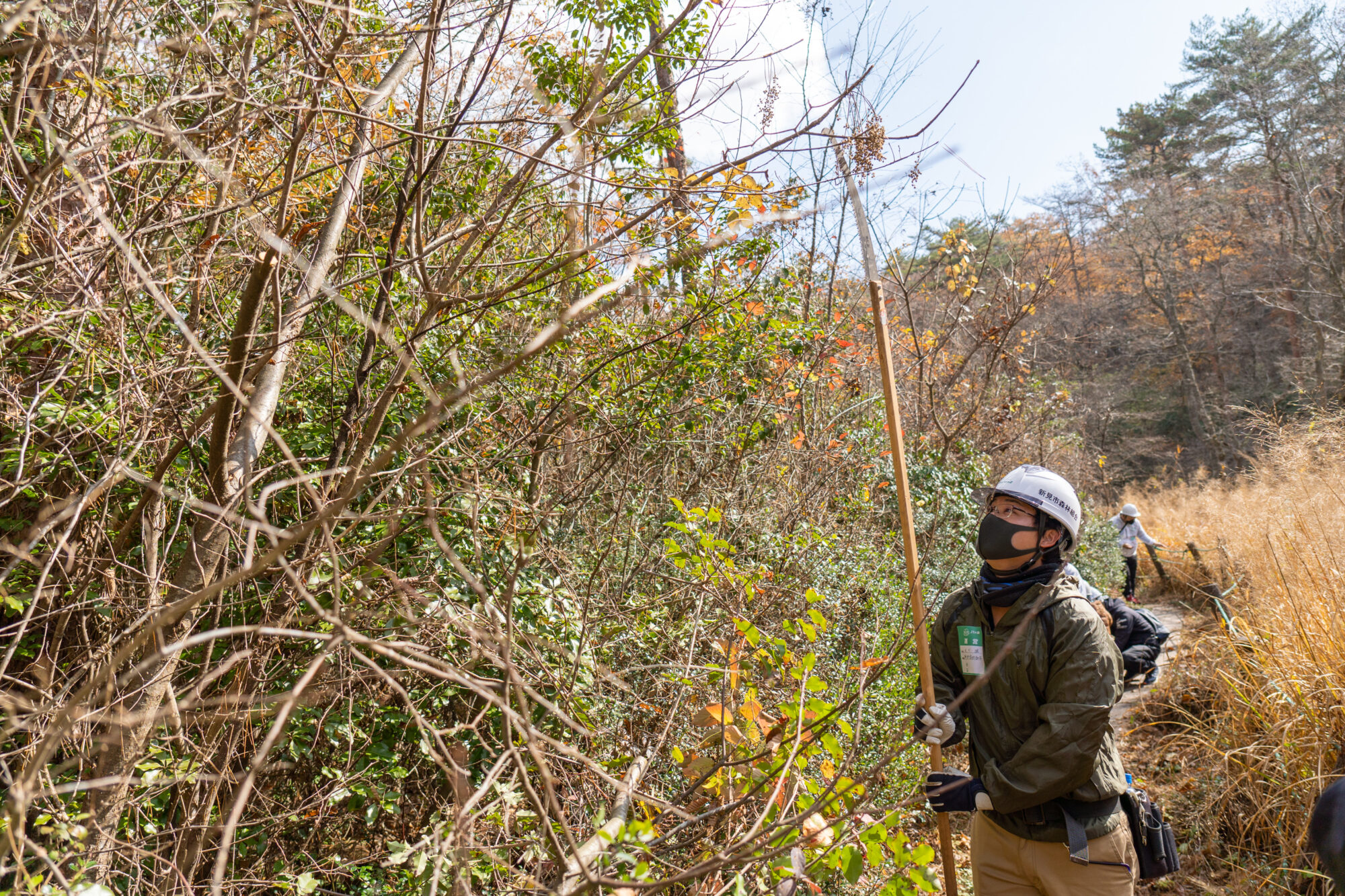

Just cutting off branches
That’s what they say, but since I’m not used to this kind of work, my arms started to hurt after just 30 minutes.
This time, the work lasted about an hour, but I have great respect for the members of the forestry cooperative who regularly engage in conservation activities.
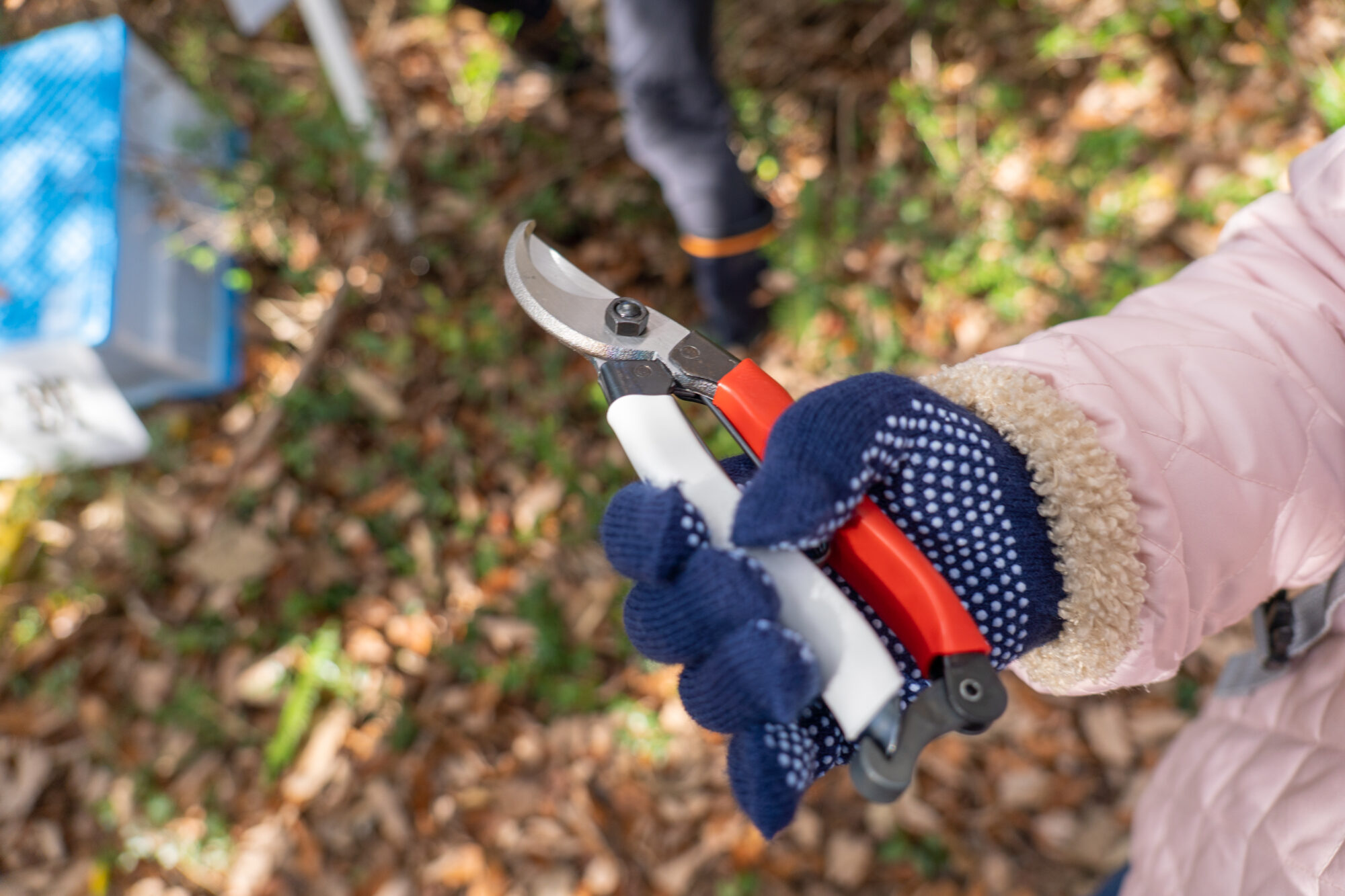
Several children also participated, and it seems they were trying to figure out things like, “Which one should I cut?” and “I can’t cut it well!”
After finishing, we returned to the second parking lot where the opening ceremony was held and had lunch.
Blessed with good weather, the lunch enjoyed under the blue sky after finishing the work tasted many times better than usual.
Woodworking Class and Closing Ceremony
In the afternoon, a woodworking class was held.
Using a kit made from Hinoki from Niimi, we made a “smartphone stand.”
With explanations and support from the members of the “Niimi Wood Utilization and Wood Education Association Konoha Art,” we sanded the wood and finished it by writing drawings and dates with a wood-burning pen.
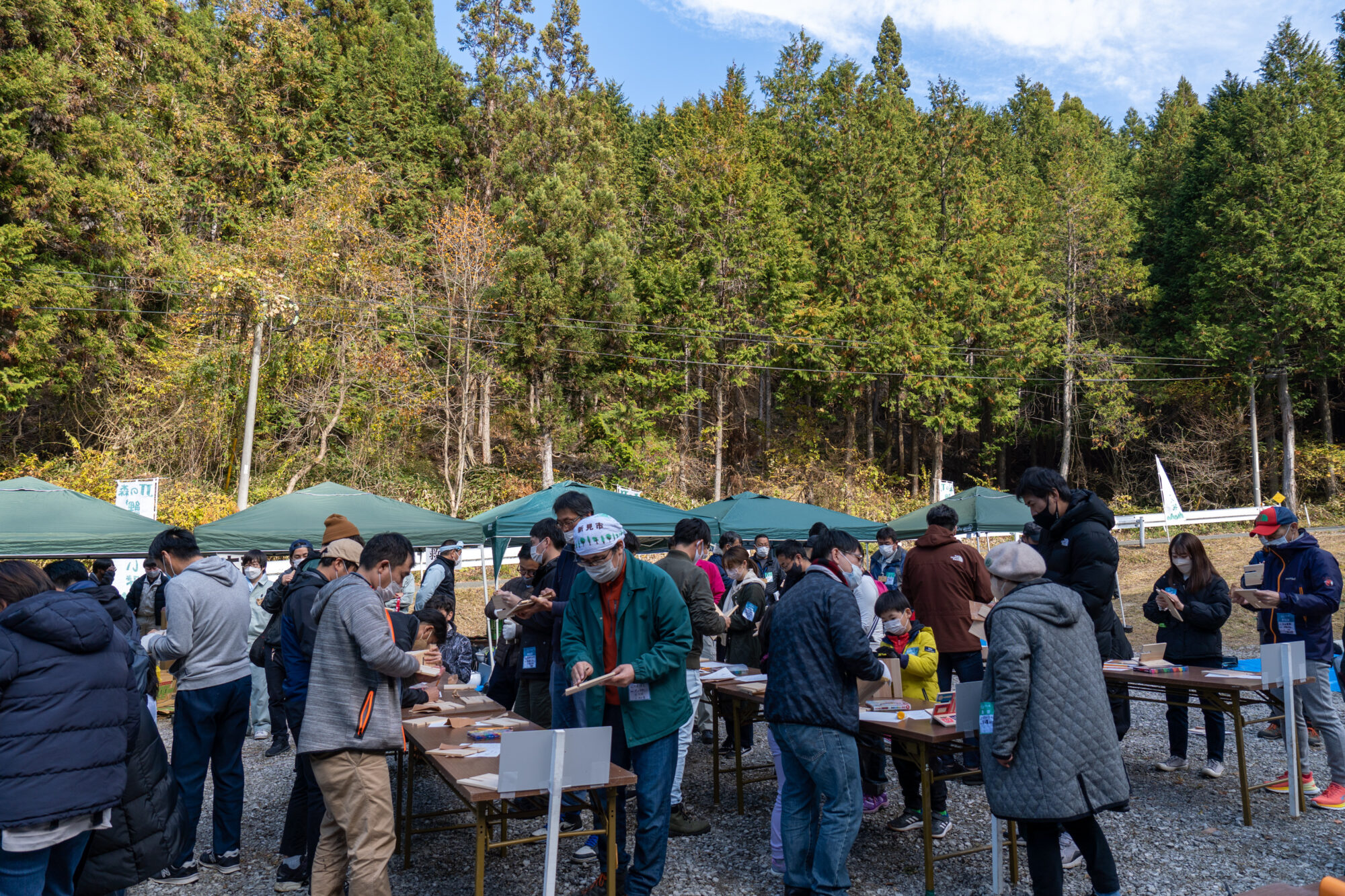
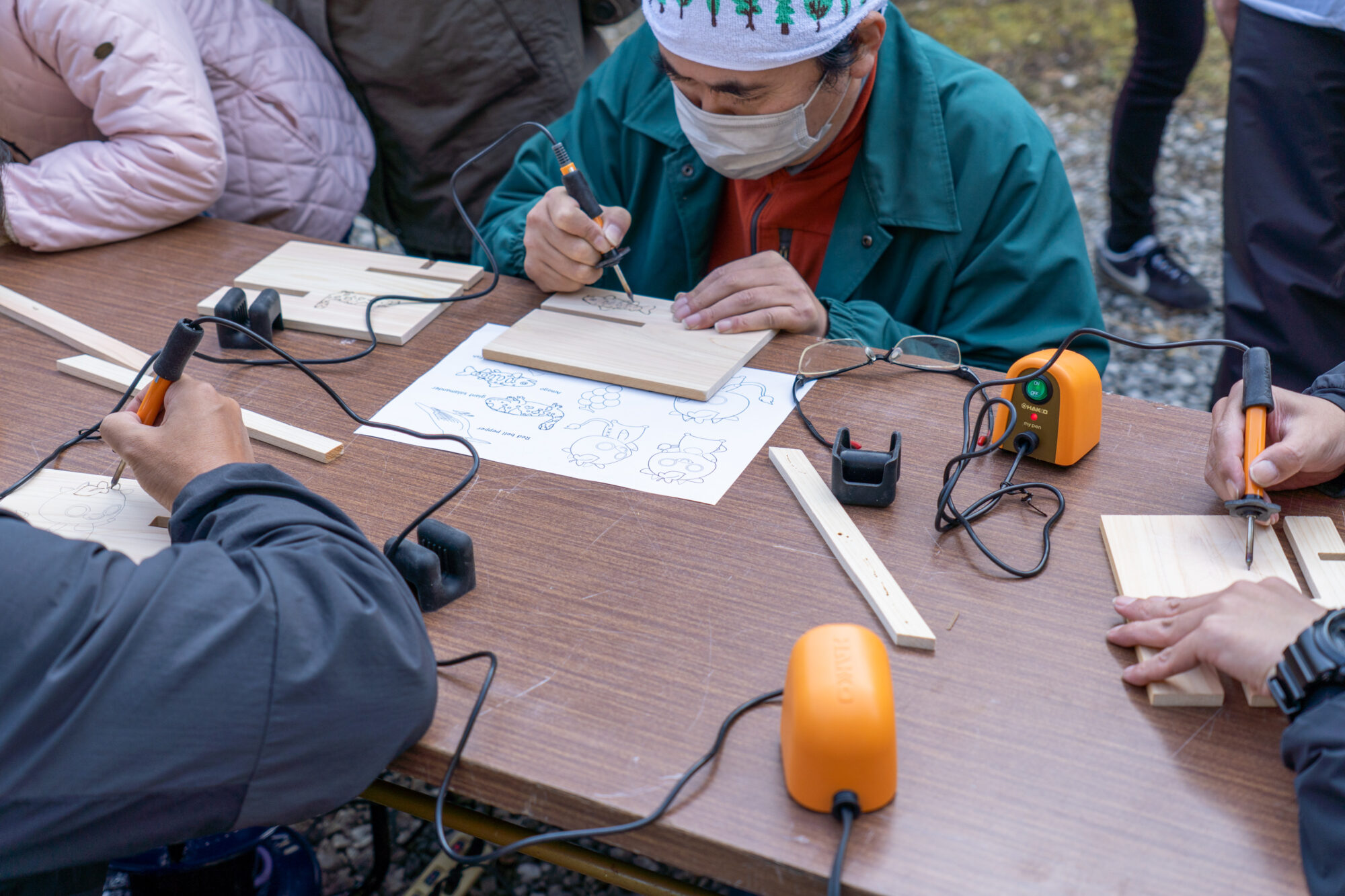
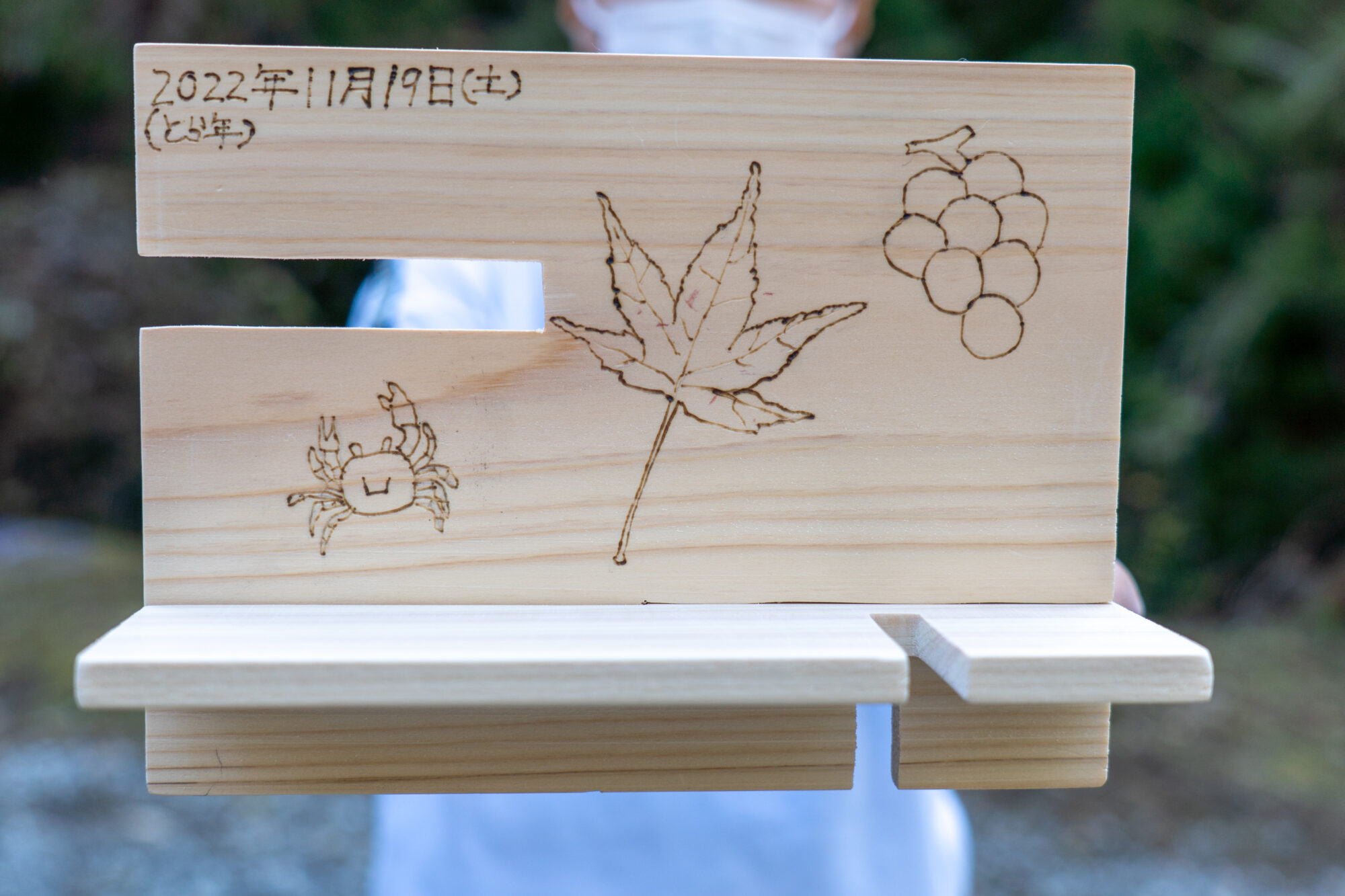
Both adults and children had a great time, and the woodworking class, which lasted about an hour, ended in no time.
Afterward, the closing ceremony was held, marking the end of the “Autumn 2022 Forest Conservation Activity.”
Visit to High-Performance Forestry Machinery and Chip Factory
Finally, all participants visited the wood chip factory of “Togawa Timber Co., Ltd..”
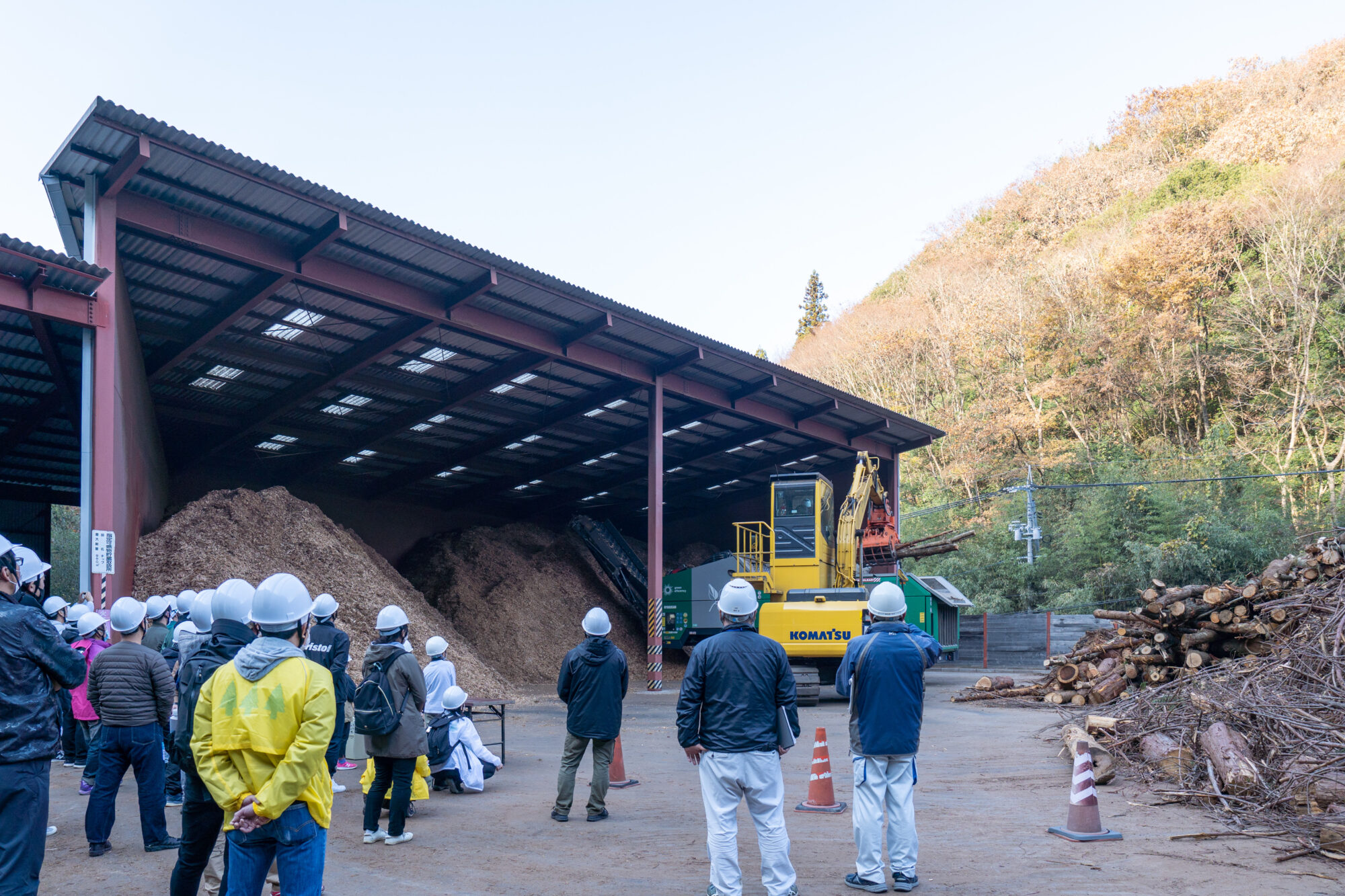
Traditionally, thinned wood was often left in the forest.
However, at Togawa Timber, they process it into wood chips and sell “fuel chips” to biomass power generation companies, achieving nearly 100 percent recycling of wood, including bark.
The sight of large amounts of wood and bark being processed into wood chips with a thunderous sound was quite impressive.
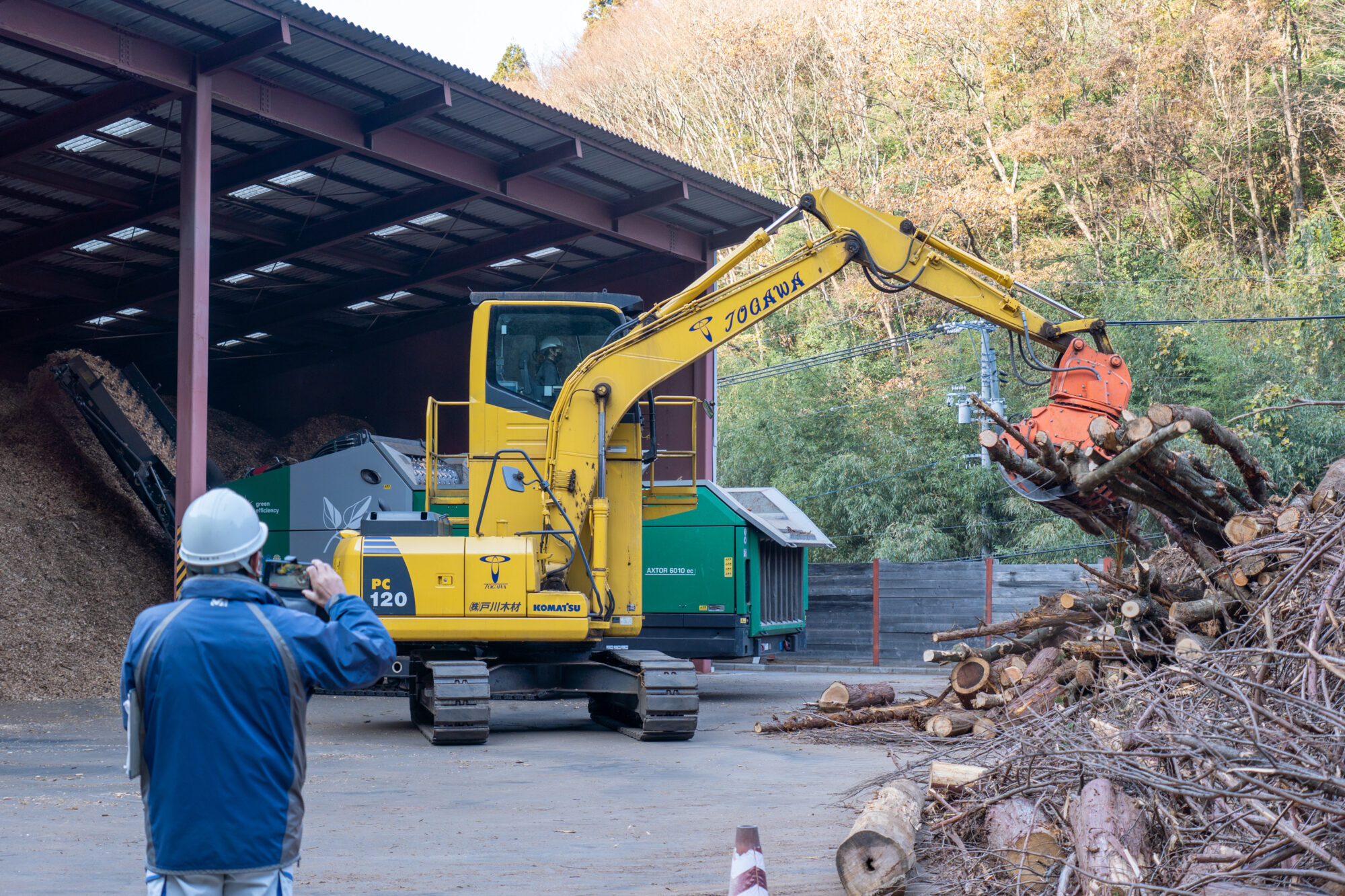
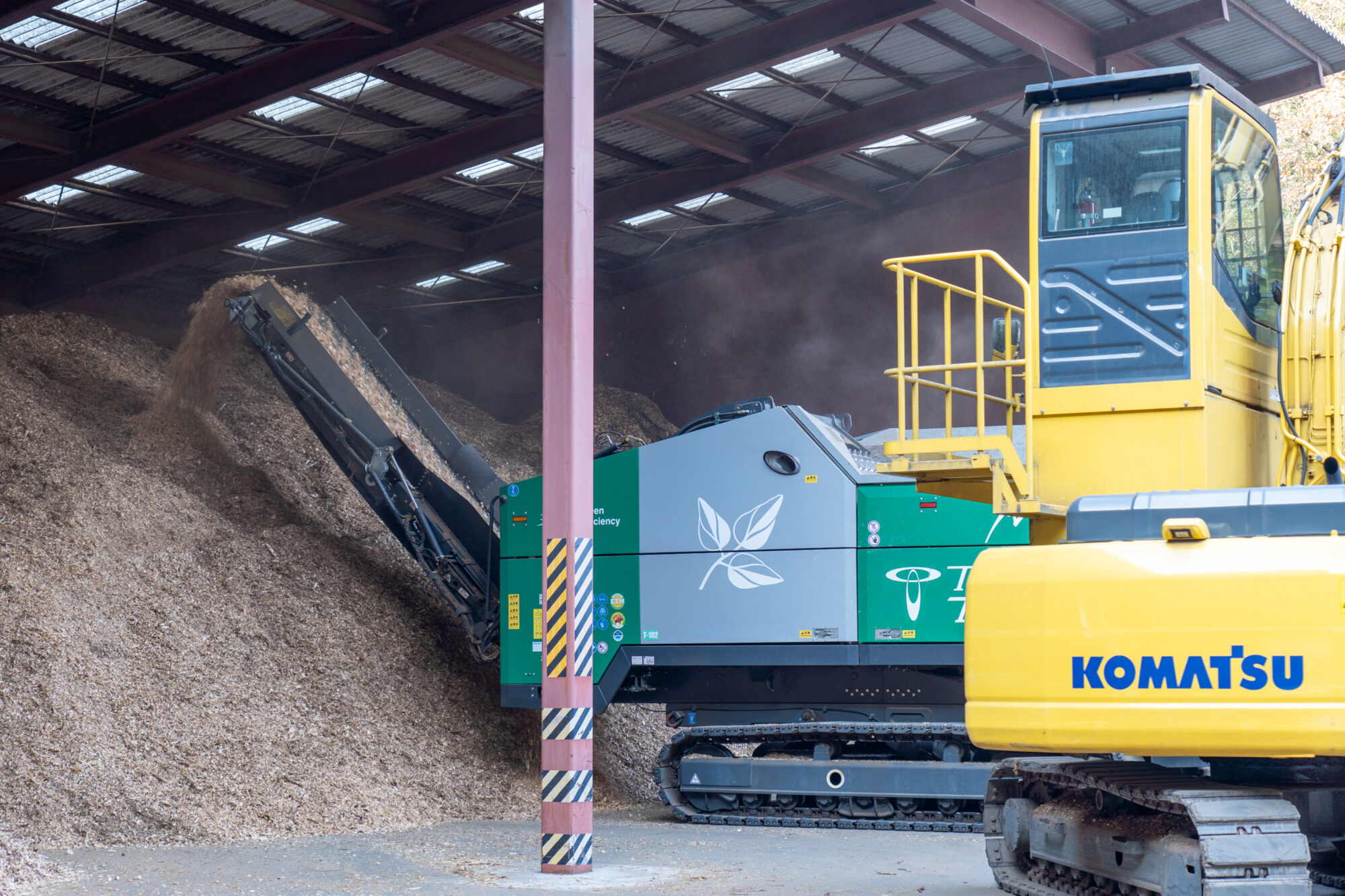
When we think of forest conservation, we tend to imagine planting trees and promoting their growth, but sometimes it also involves cutting down trees (i.e., thinning).
I learned that there are considerations for effectively utilizing trees that have completed their role in this way.
Conclusion
The author participated in this conservation activity with my family, including two children.
The children were delighted to see scenery they don’t usually encounter and to have various experiences, saying, “It was fun.”
When living in urban areas, it’s easy to forget about forests and water.
However, the walking path where we conducted the conservation activity didn’t just come about by itself.
There are people who maintain and manage it after it has been developed.
I felt that we must not forget that we can enjoy the scenery and obtain stable water resources downstream thanks to their efforts.
Data on ‘JT Forest Koigakubo in Niimi’ Autumn 2022 Forest Conservation Activity
| Name | ‘JT Forest Koigakubo in Niimi’ Autumn 2022 Forest Conservation Activity |
|---|---|
| Date | November 19, 2022 |
| Location | Yada, Tetsusei-cho, Niimi City, Okayama Prefecture (Koigakubo Wetland) |
| Participation Fee (including tax) | ※ Whether there will be a general call for participants and the method for the next event is undecided |
| Homepage | JT Forest |