The Takahashi River, a Class A river that flows through Kurashiki City.
Its headwaters are at Mt. Hanamiyama (elevation: 1,188 m; Niimi City). In Niimi City, forest management is carried out to further enhance the forests’ water-retention capacity and erosion-control functions, which support the Takahashi River’s rich water environment.
As a Kurashiki City resident, the writer had never visited the Takahashi River’s headwaters.
Then, last year (2022), the writer joined “JT Forest Koigakubo Niimi,” a forest conservation initiative undertaken in collaboration with Niimi City by Japan Tobacco Inc. (JT) and visited the headwaters.
This year (2023), the writer had another opportunity to take part, and would like to share what happened at the “JT Forest Koigakubo Niimi 2023 Autumn Forest Conservation Activities,” held on Saturday, October 14, 2023.
The information presented was current when this article was published in November 2023. Please note that it may differ from current information.
What is “JT Forest Koigakubo Niimi”?
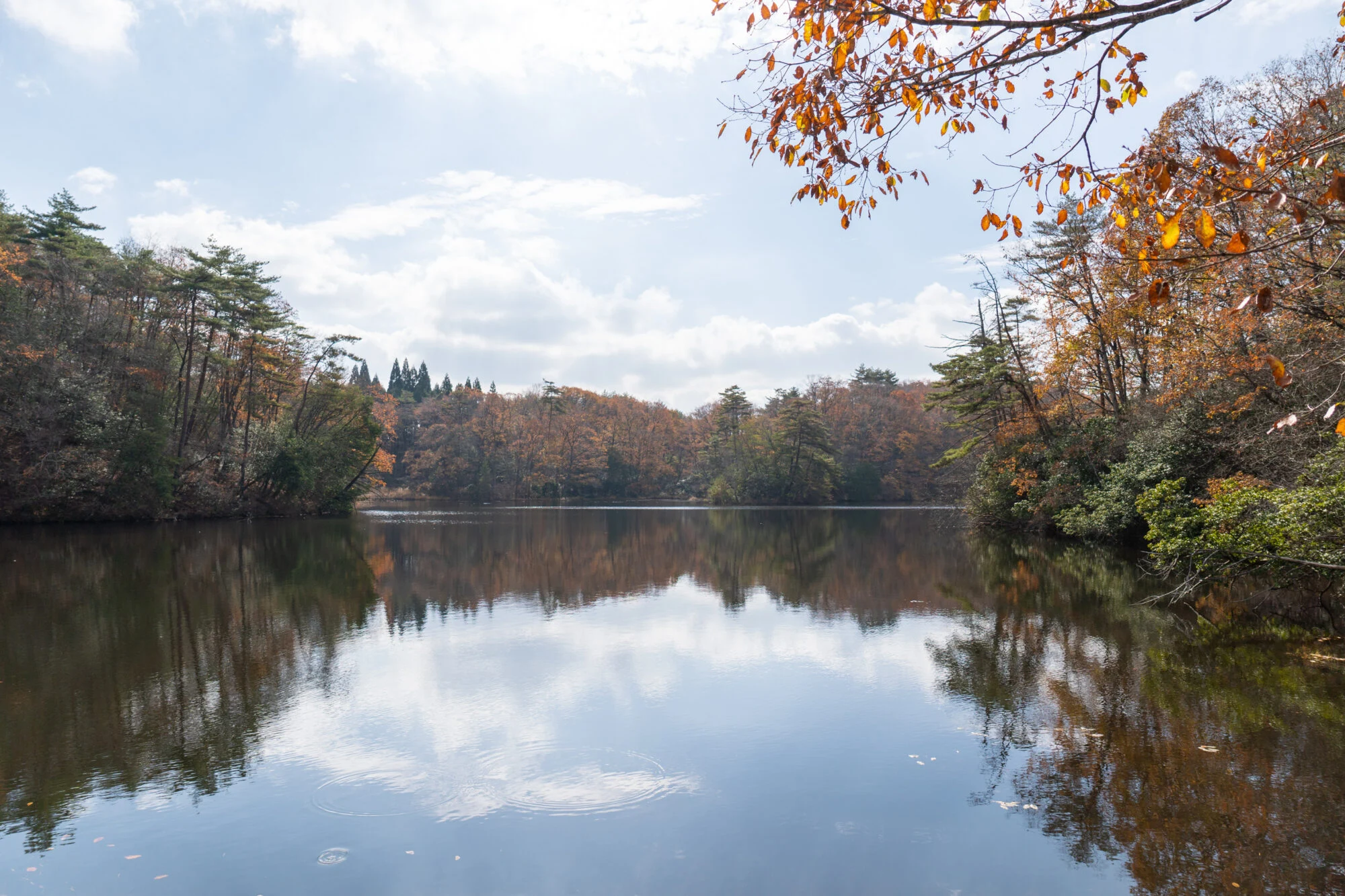
The JT Group, whose business activities focus on tobacco, pharmaceuticals, and processed foods, uses natural raw materials—primarily plants such as tobacco leaves, paper, and vegetables—in its businesses.
As part of its efforts to conserve the natural environment, the group carries out forest conservation activities under the name “JT Forests”; as of October 2023, activities were underway at nine locations nationwide.
In Okayama Prefecture, there is “JT Forest Koigakubo Niimi,” where forest conservation activities are carried out around Koigakubo Wetland.
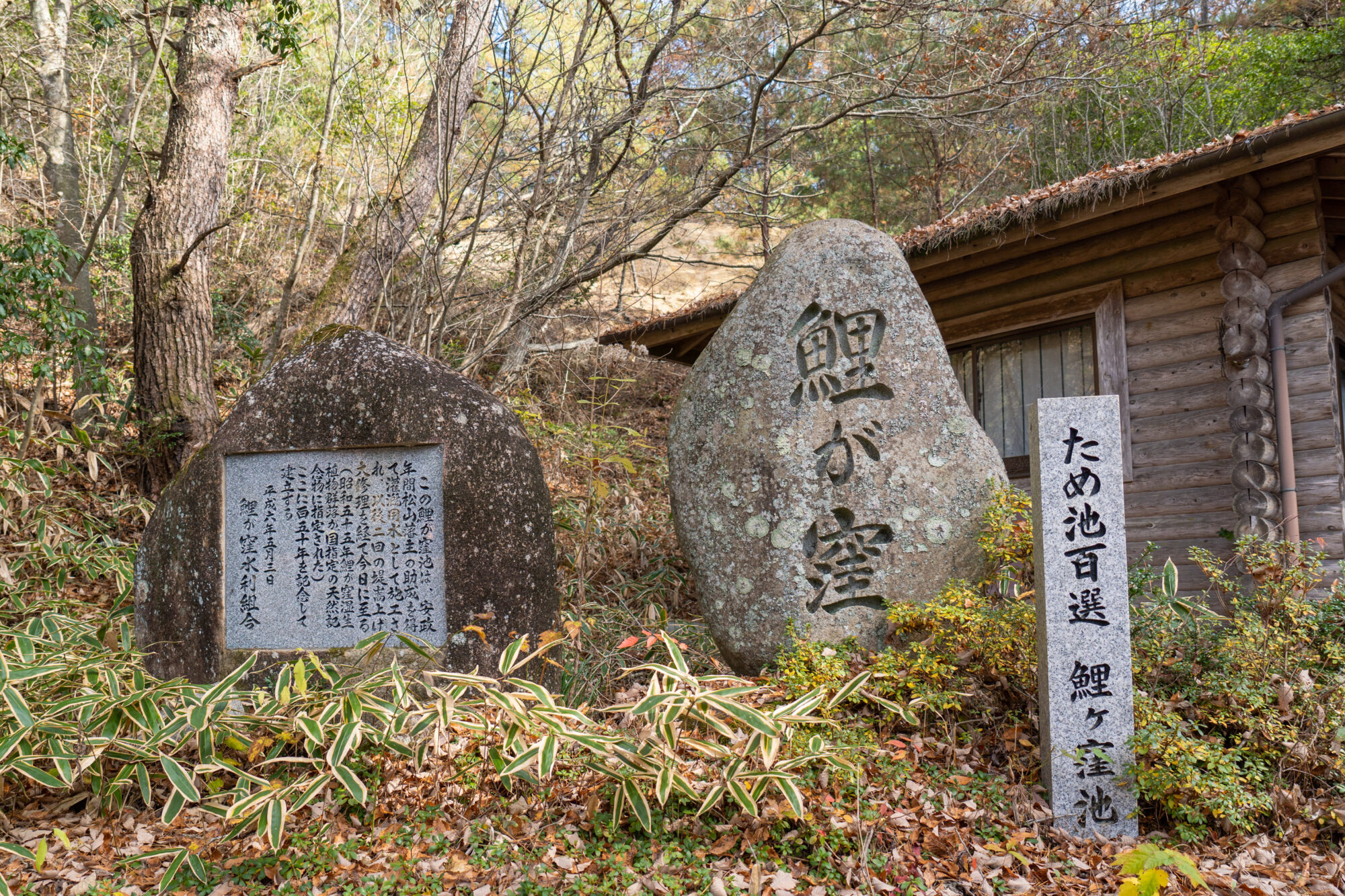
Koigakubo Wetland
A region where more than 300 plant species, including the Japanese catchfly, grow naturally. It was designated a Natural Monument of Japan on March 6, 1980, as the “Koigakubo Wetland Plant Community.”
“JT Forest Koigakubo Niimi” makes use of Okayama Prefecture’s “Corporate Partnership Forest Development Program” and has carried out forest conservation activities in collaboration with Niimi City for approximately six years, since November 2016.
The project is divided into its first phase, which began in 2016, and its second phase, which began in 2022 with a change to the designated forest area. The 2023 autumn forest conservation activities were held as the second activity of the second phase.

About the 2023 Autumn Forest Conservation Activities
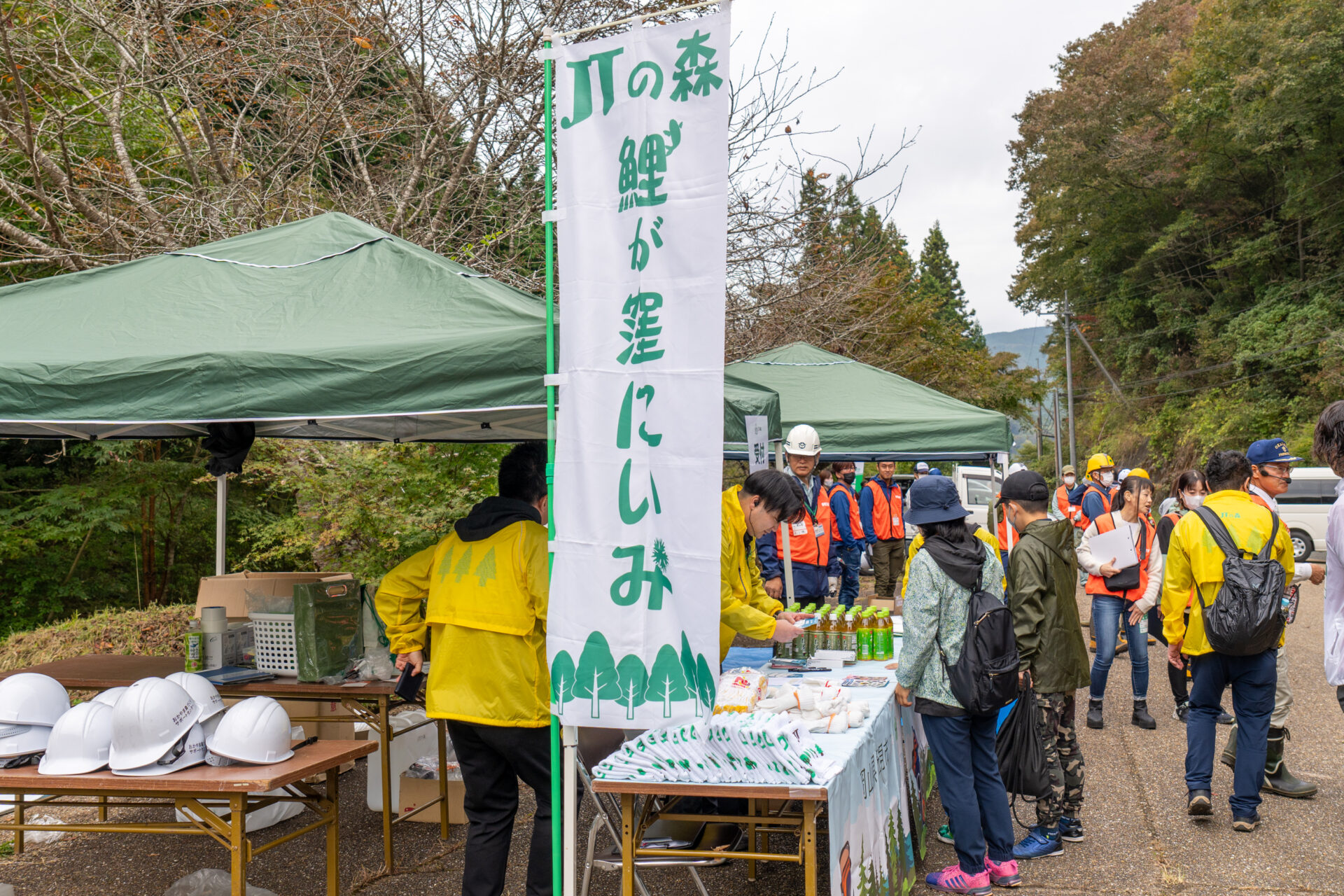
The 2023 autumn forest conservation activities centered on planting low-pollen Japanese cedar and followed the schedule below.
- Opening ceremony (greetings from the organizers / commemorative photo)
- Forest conservation activities (planting low-pollen Japanese cedar)
- Lunch & rice flour pizza making
- Forest extracurricular lesson (moritomirai card game)
Activities 1 and 2 took place in the morning, and 3 and 4 in the afternoon.
A total of 97 people, including related parties, took part. They were mainly JT Group employees, business partners’ employees, and their families from Okayama, Hiroshima, and Shimane prefectures. Participants were divided into five teams.
Opening Ceremony
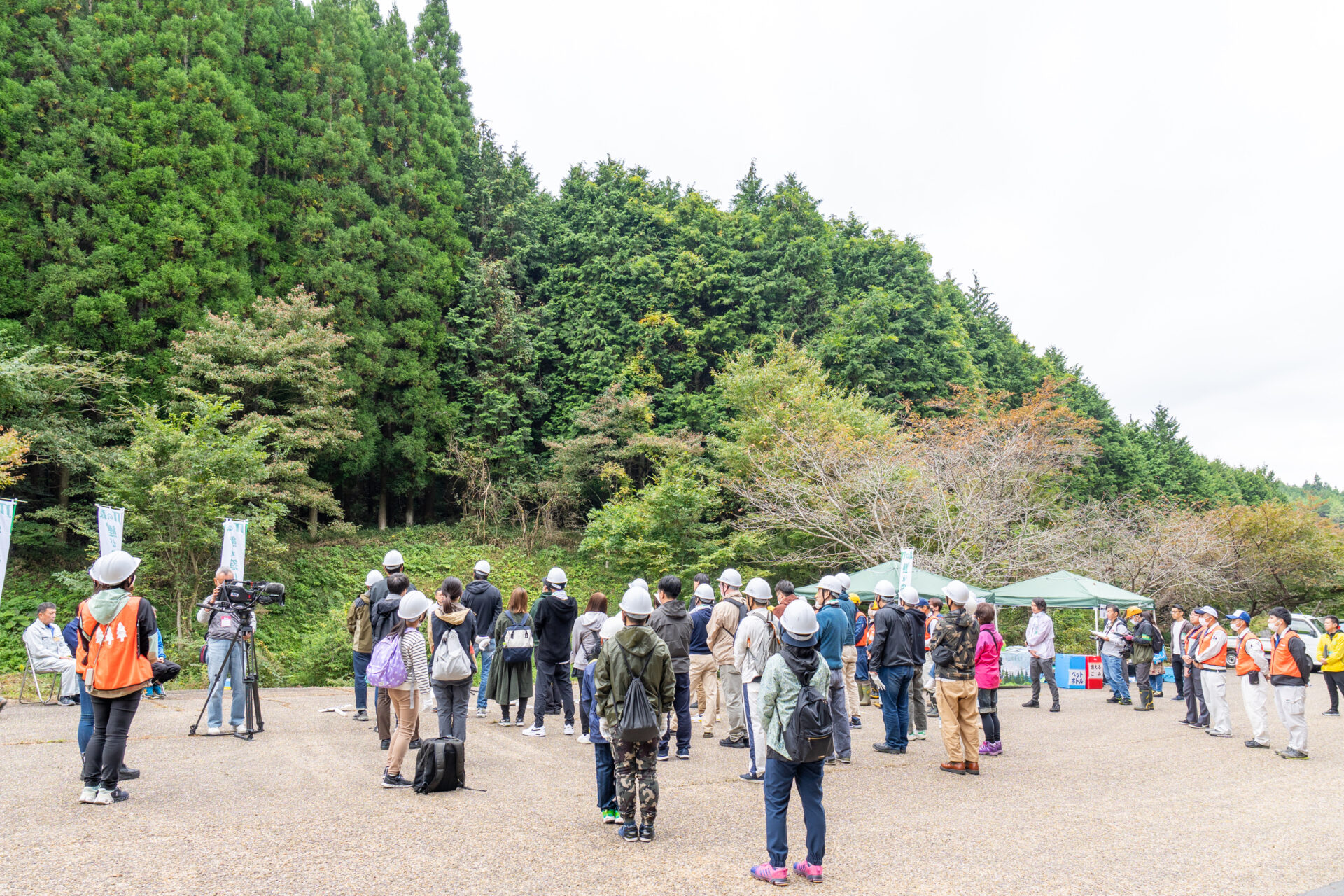
At the opening ceremony, the guests of honor gave greetings in the following order:
- Niimi City Mayor Hitoshi Ebisu
- JT Executive Officer Suguru Fujiwara
After introductions of the participating organizations and staff, the forest conservation activities finally got underway.
Forest Conservation Activities (Planting Low-Pollen Japanese Cedar)
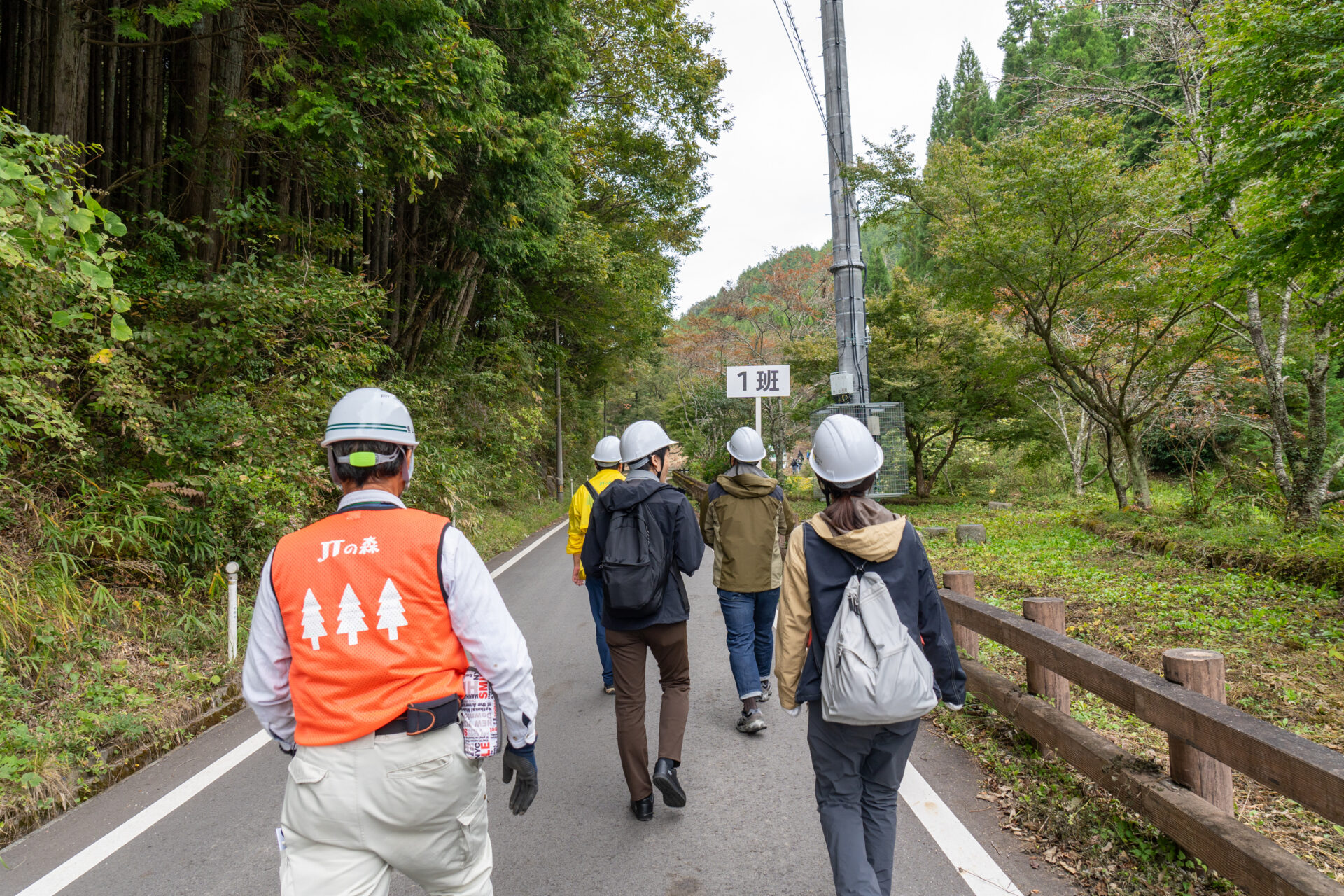
We walked from the opening ceremony venue to another site about five minutes away.
There was a vast area that appeared to have been cleared of trees quite recently.
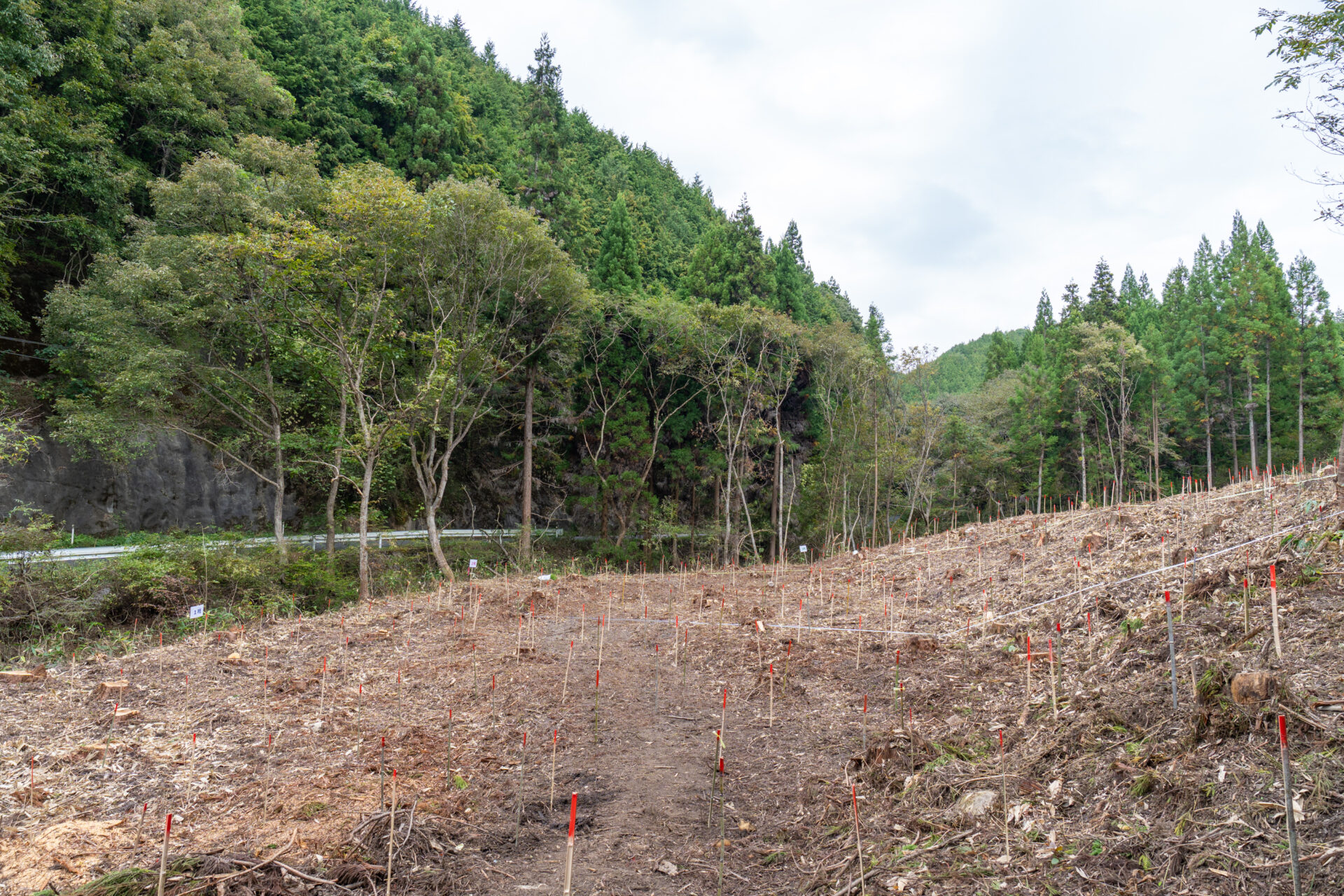
The activity involved planting low-pollen Japanese cedar here as part of the forest conservation effort.
What is low-pollen Japanese cedar?
A variety of Japanese cedar that produces very little pollen.
Among naturally growing Japanese cedar trees, those that produce less pollen are selected and studied. Varieties that meet the pollen-volume standards set by the government are registered as low-pollen Japanese cedar.
Compared with the amount of pollen produced by conventional varieties, these trees produce no more than 1% as much pollen.
◆ Quoted from the leaflet distributed at the site
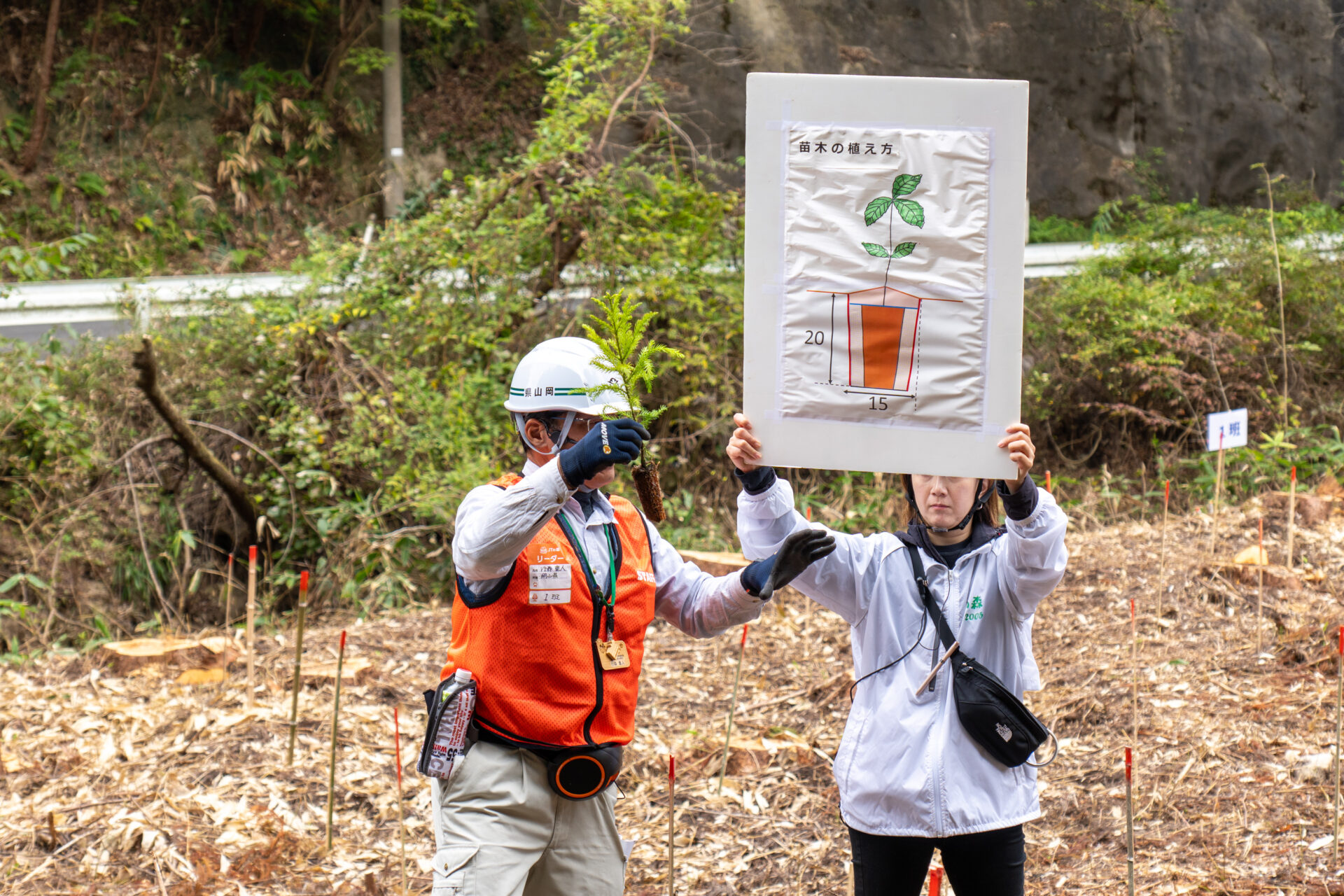
First, the planting method was explained.
- Dig a hole about 20 cm deep
- Plant a container-grown low-pollen Japanese cedar sapling
- Cover it with soil
- Tamp down the soil around the base
- Cover it with soil once more
Container-grown saplings
These are saplings grown in special containers. The containers have holes in the bottom, and because root growth stops when the roots are exposed to air, root pruning is unnecessary.
Because they are planted with soil around their roots, they have a high survival rate even when planted outside the traditional planting seasons of spring and autumn. The planting holes can also be smaller, making planting easier. Another advantage is that growth can be expected in the year they are planted.
◆ Quoted from the leaflet distributed at the site
That was the entire process.
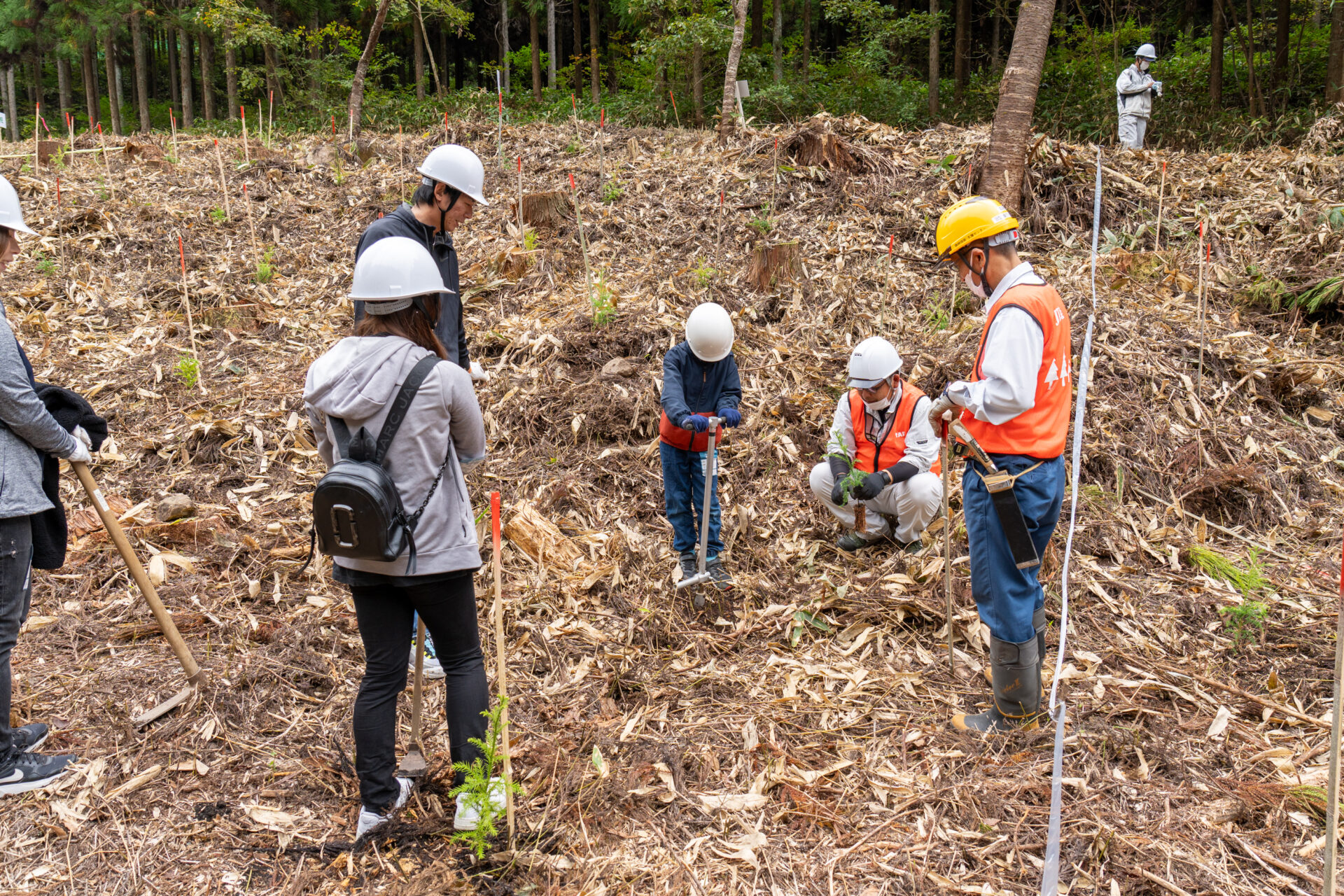
Since 600 trees were to be planted in total, I was told that each person’s quota was “about 10 trees.”
Honestly, I thought, “We just have to plant them, so this should be easy,” but I soon realized how mistaken I was…
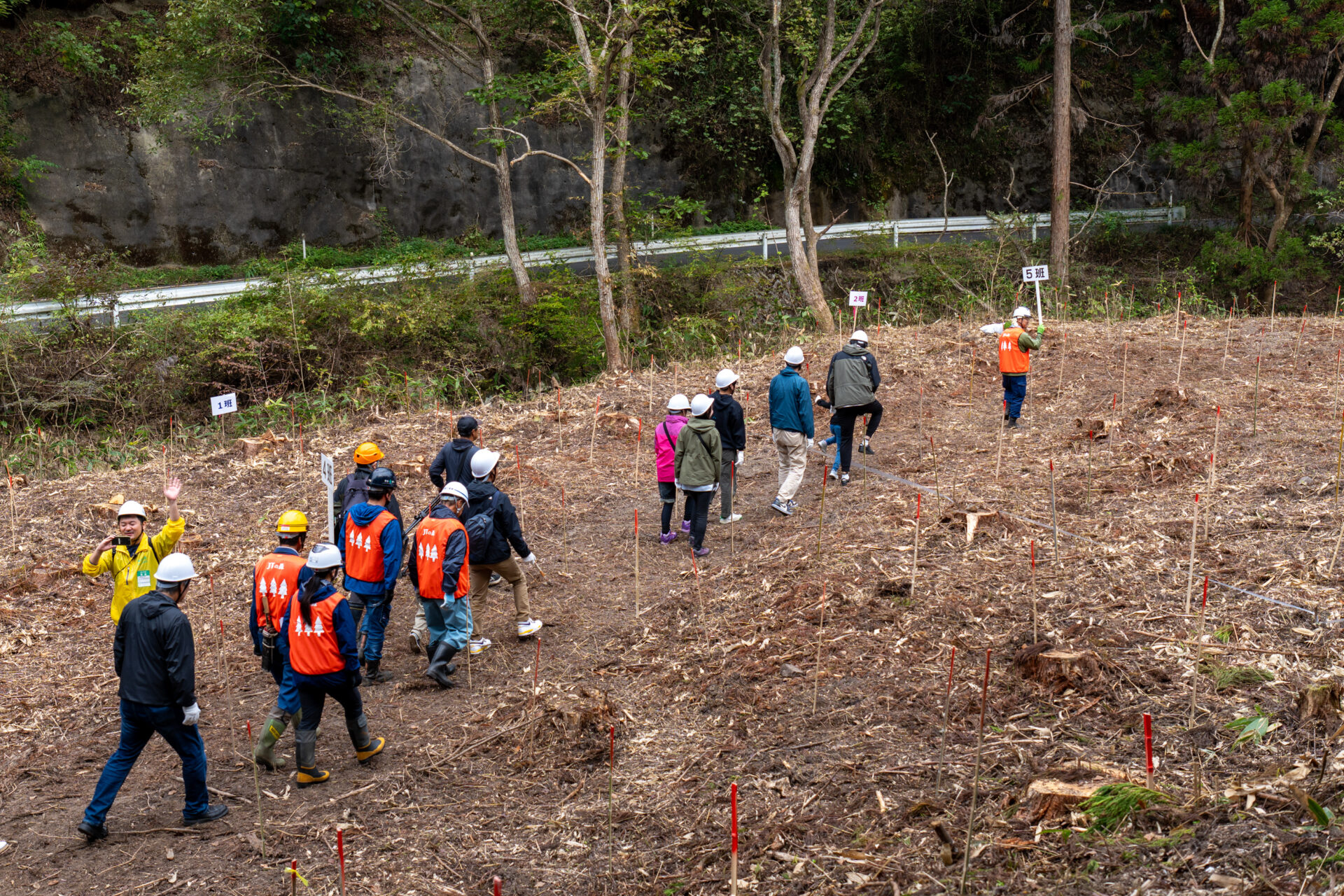
After that, we split into five teams and began planting.
First, we dug holes with hoes.
This was harder than I expected.
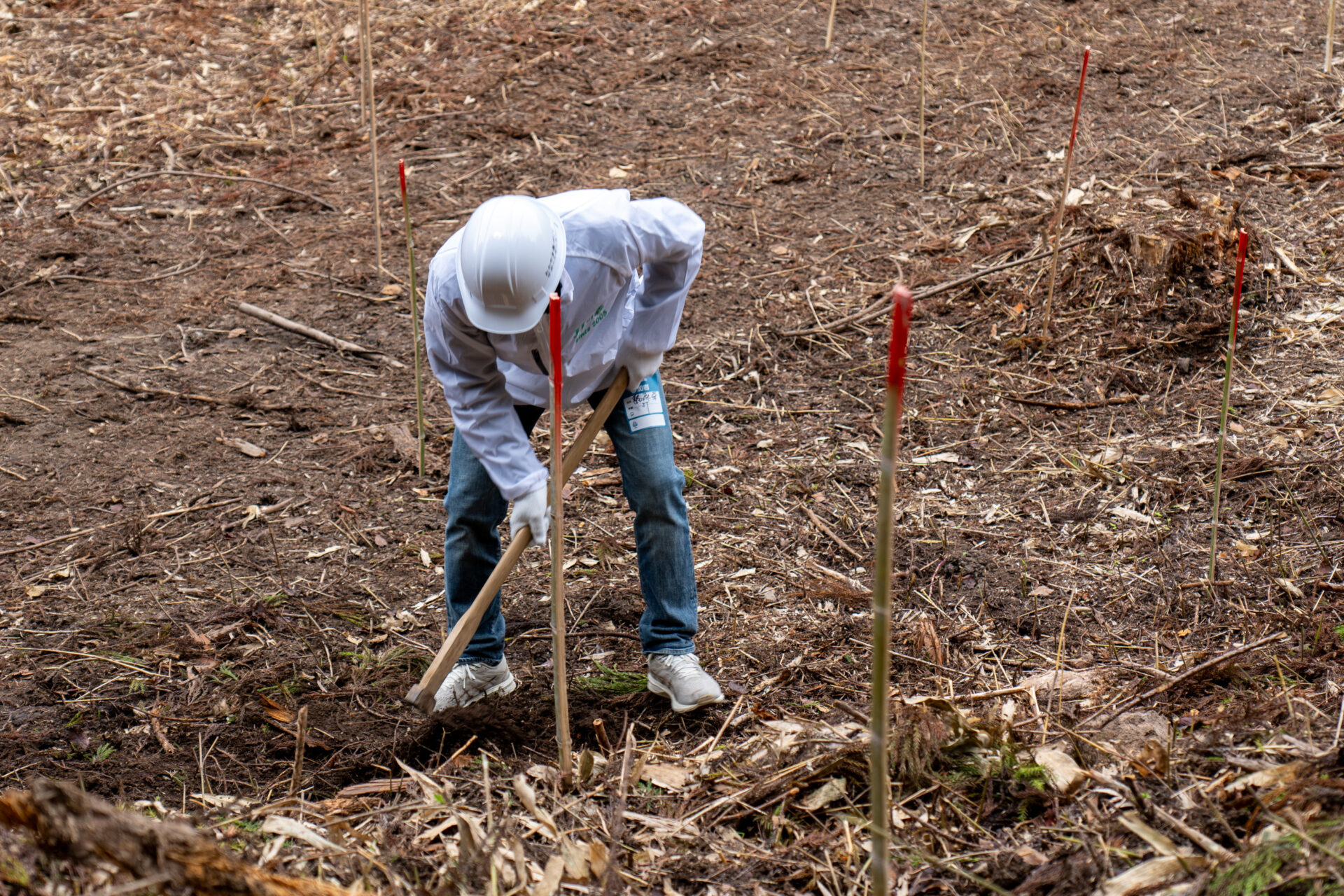
Next, we planted the container-grown saplings.
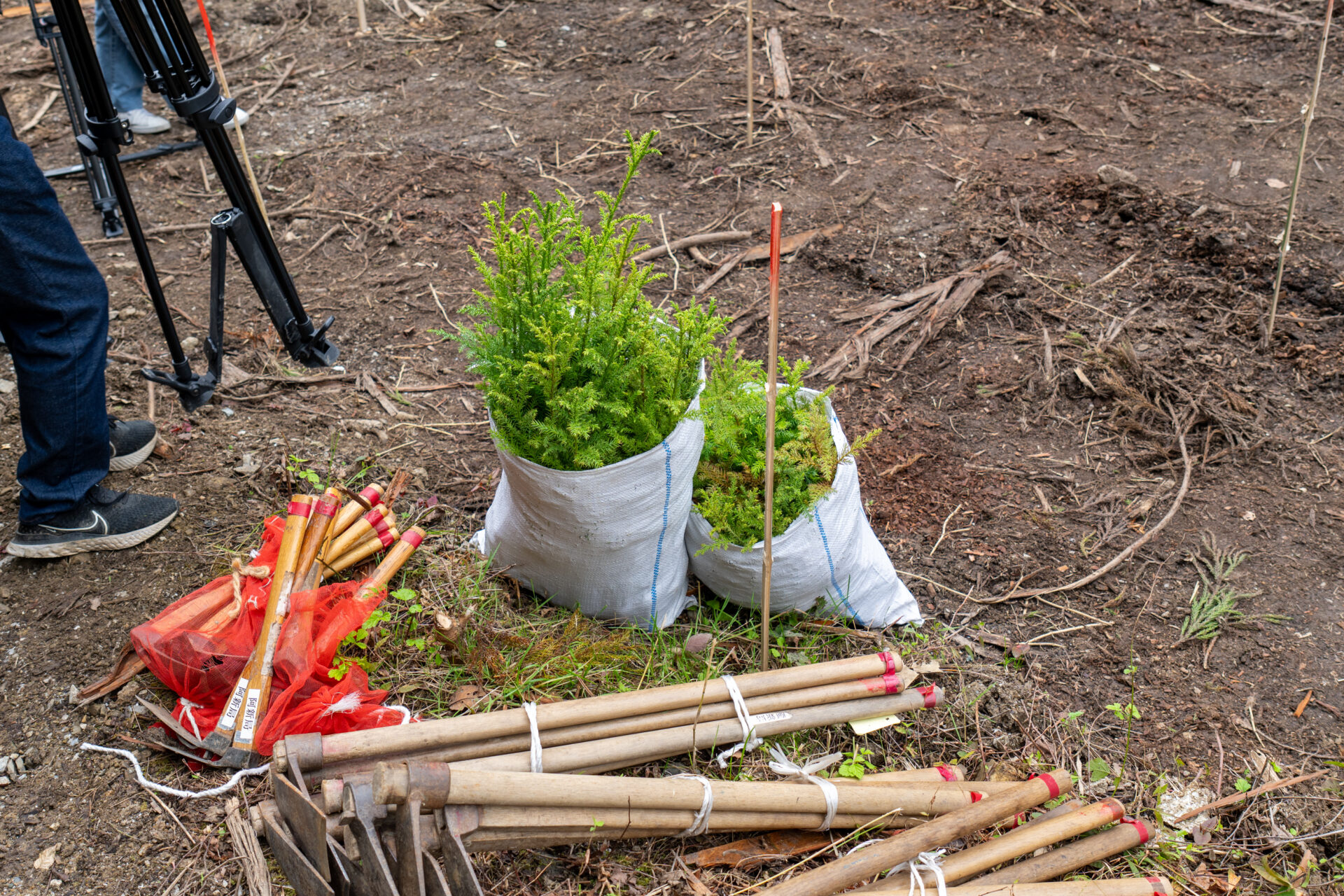
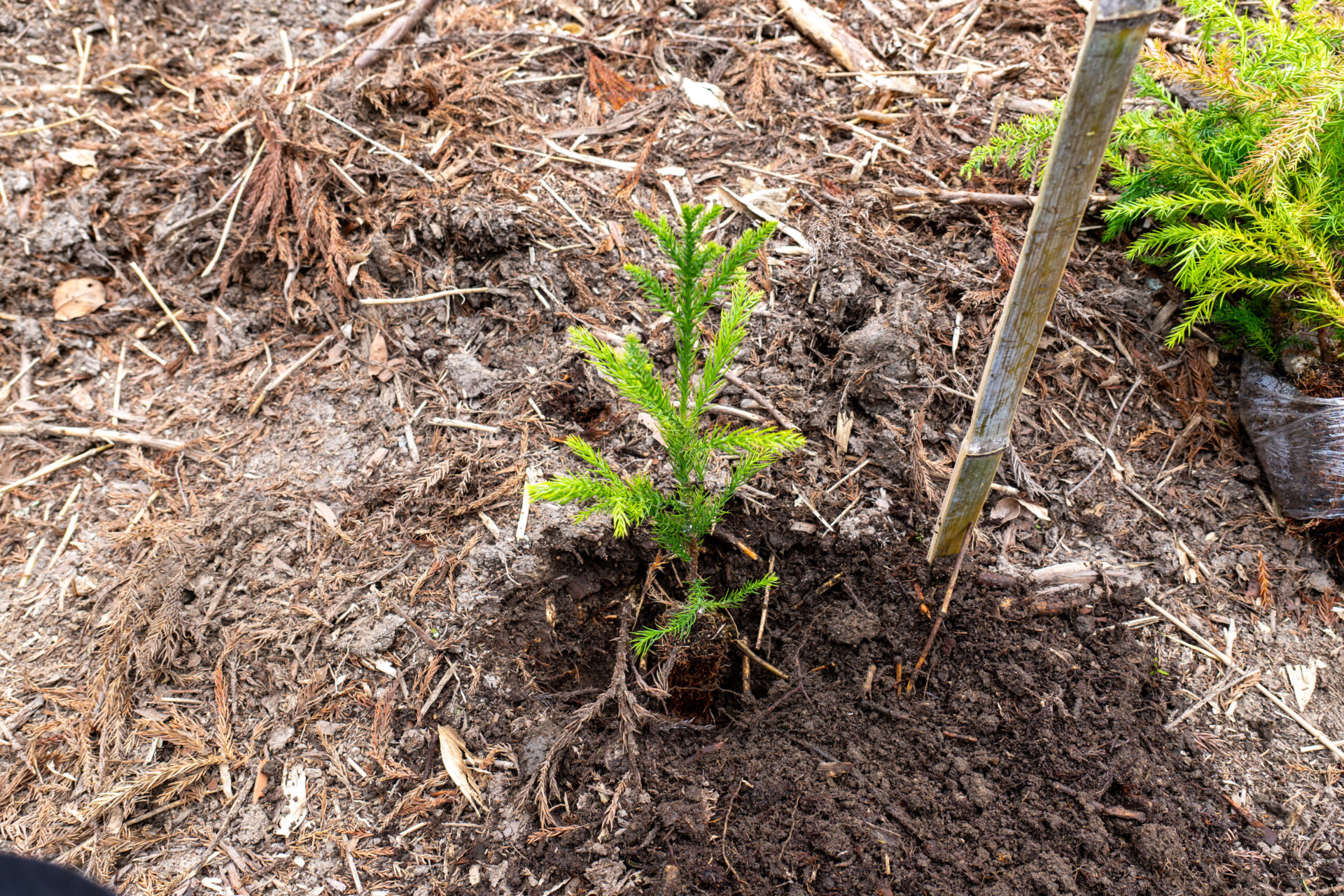
Because the land had been cleared quite recently, many roots and other remnants were left behind, making it difficult to dig the soil.
This wasn’t a “field.”
At first, everyone worked cheerfully, but before long they fell silent and became completely absorbed in the task.
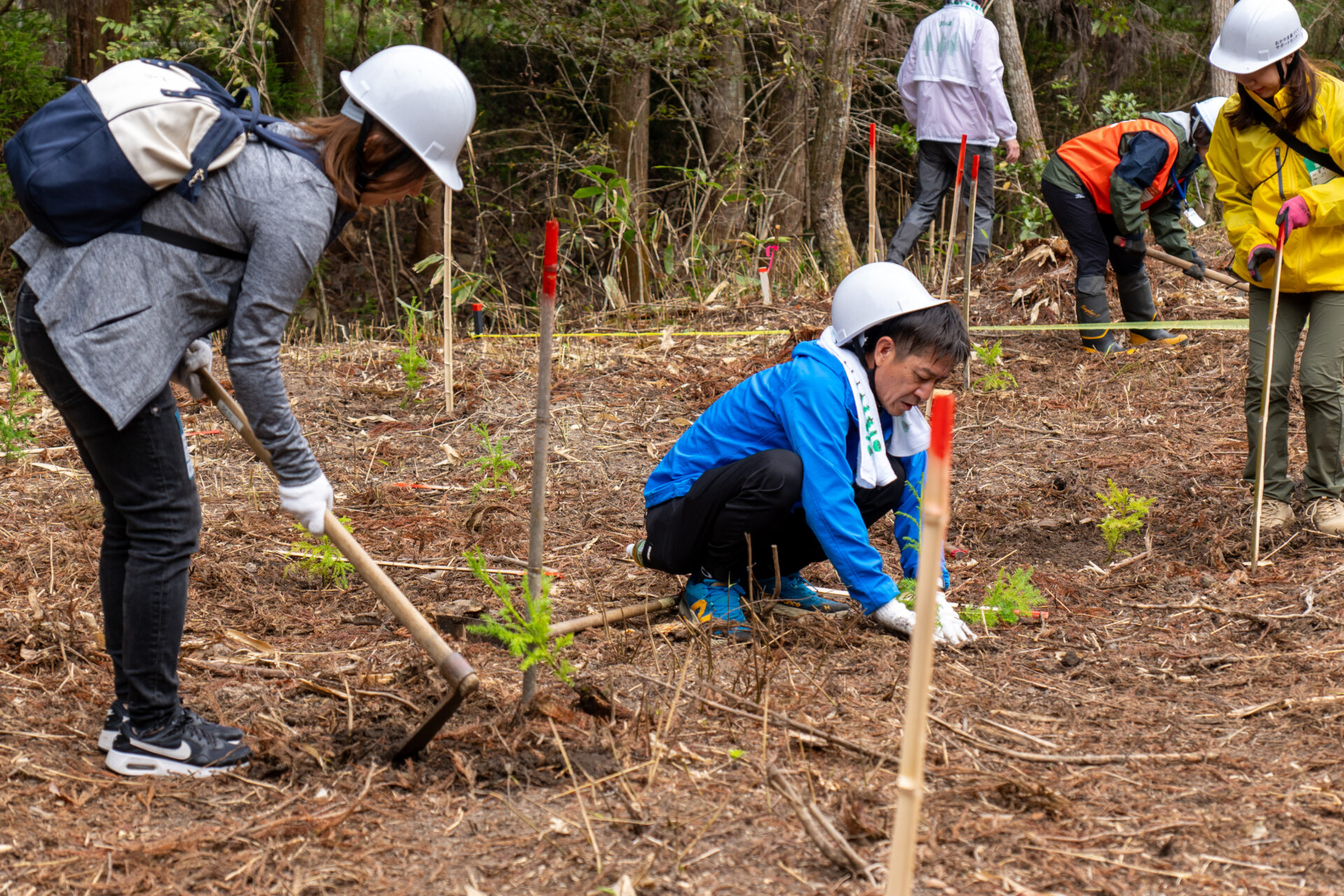

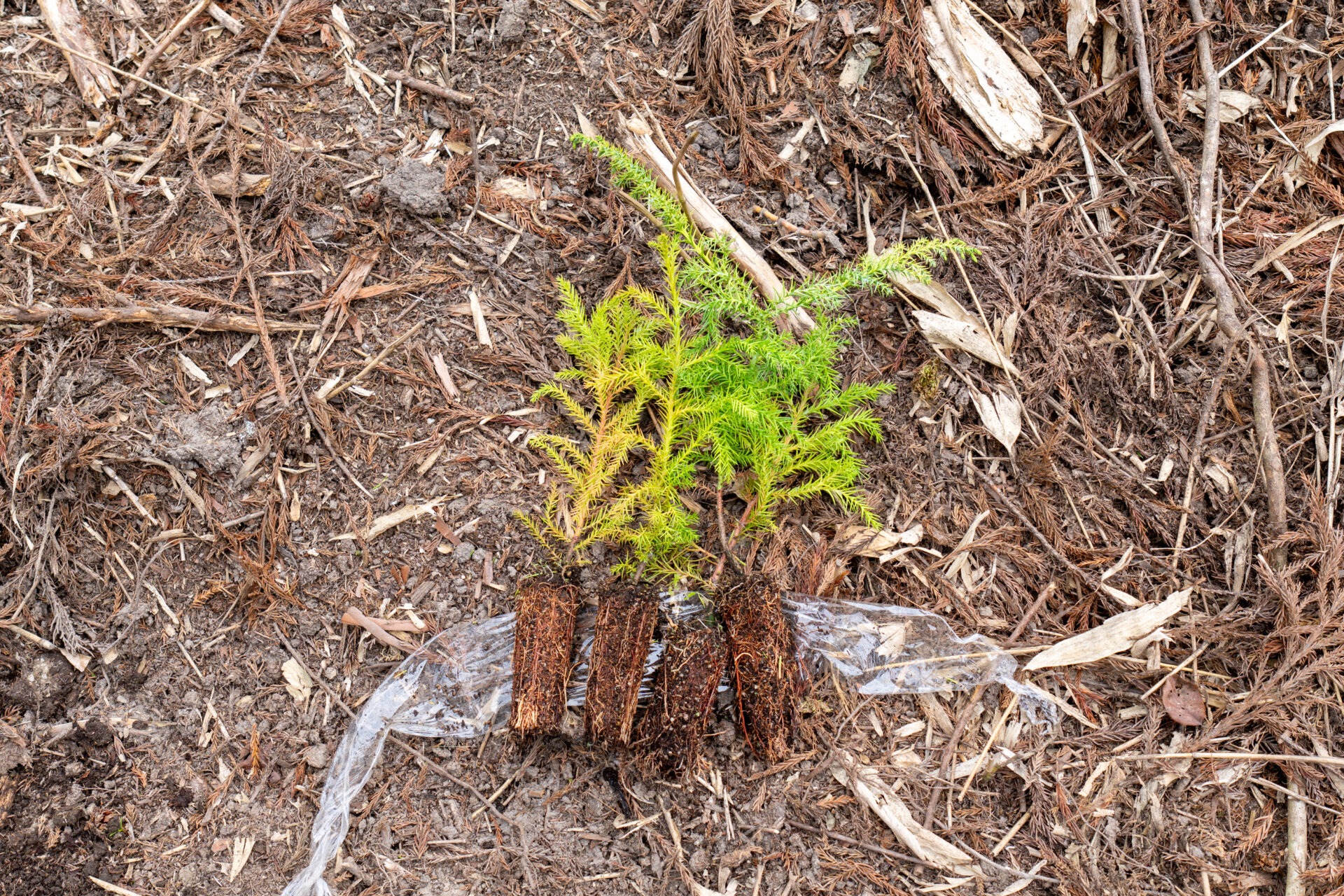
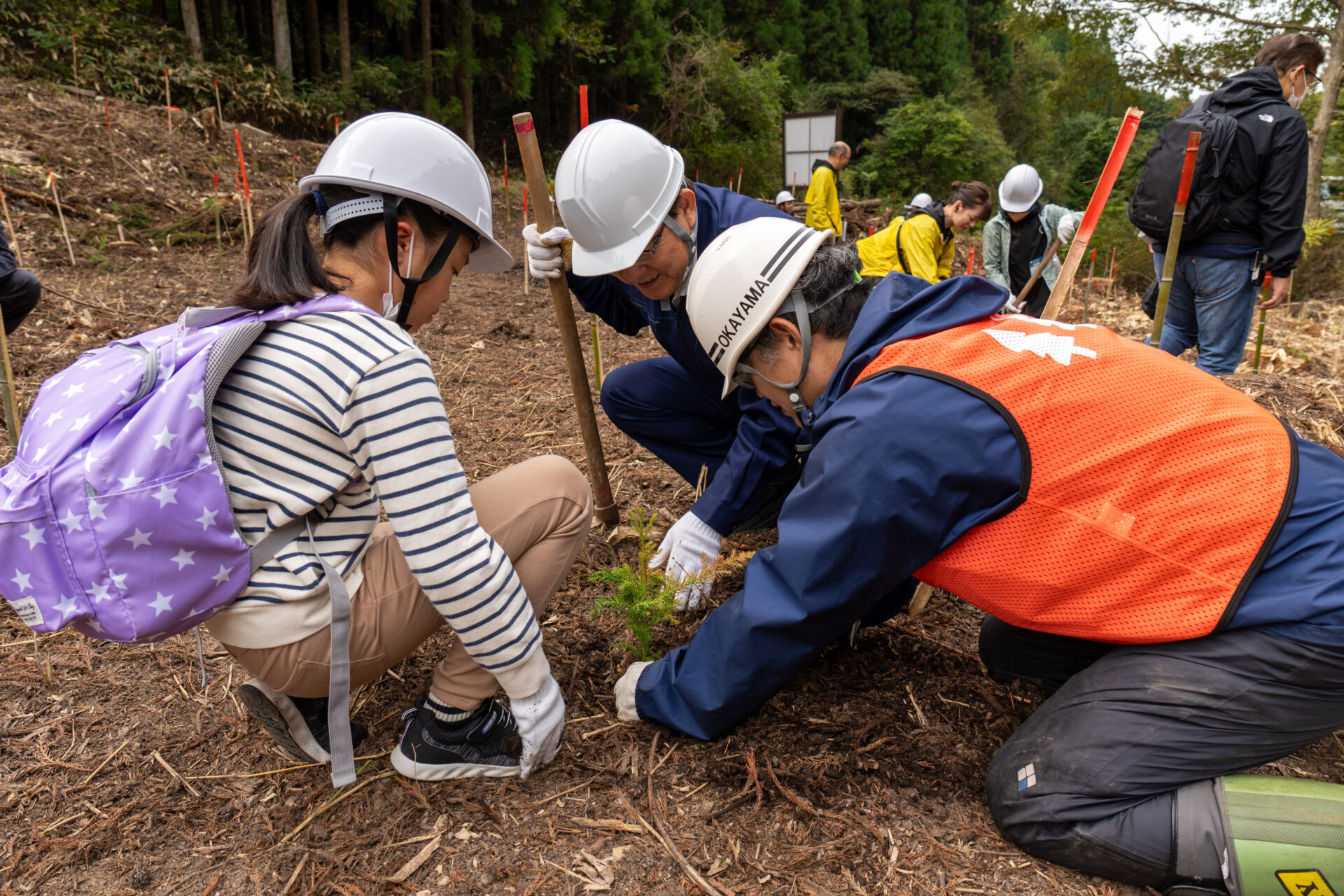
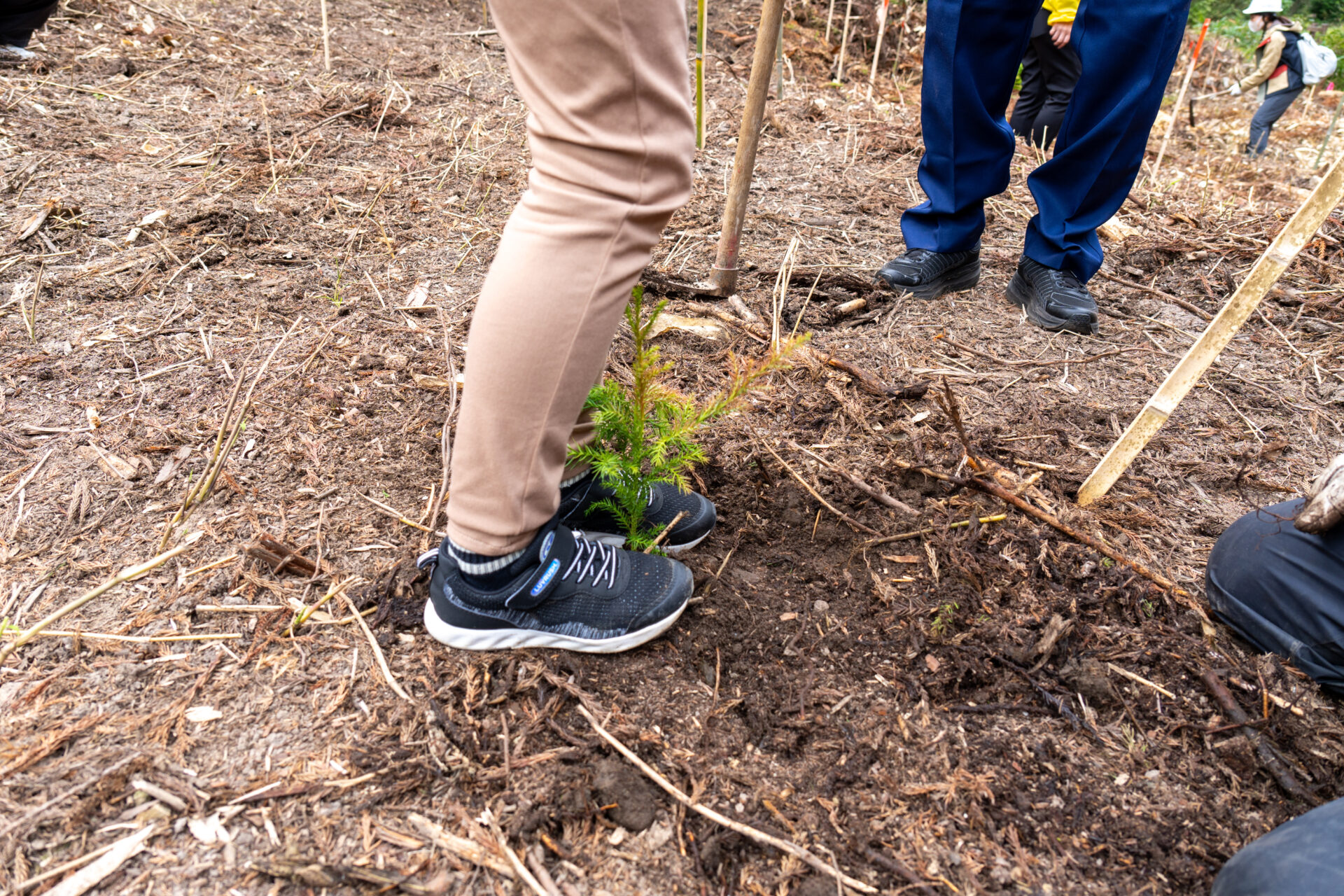
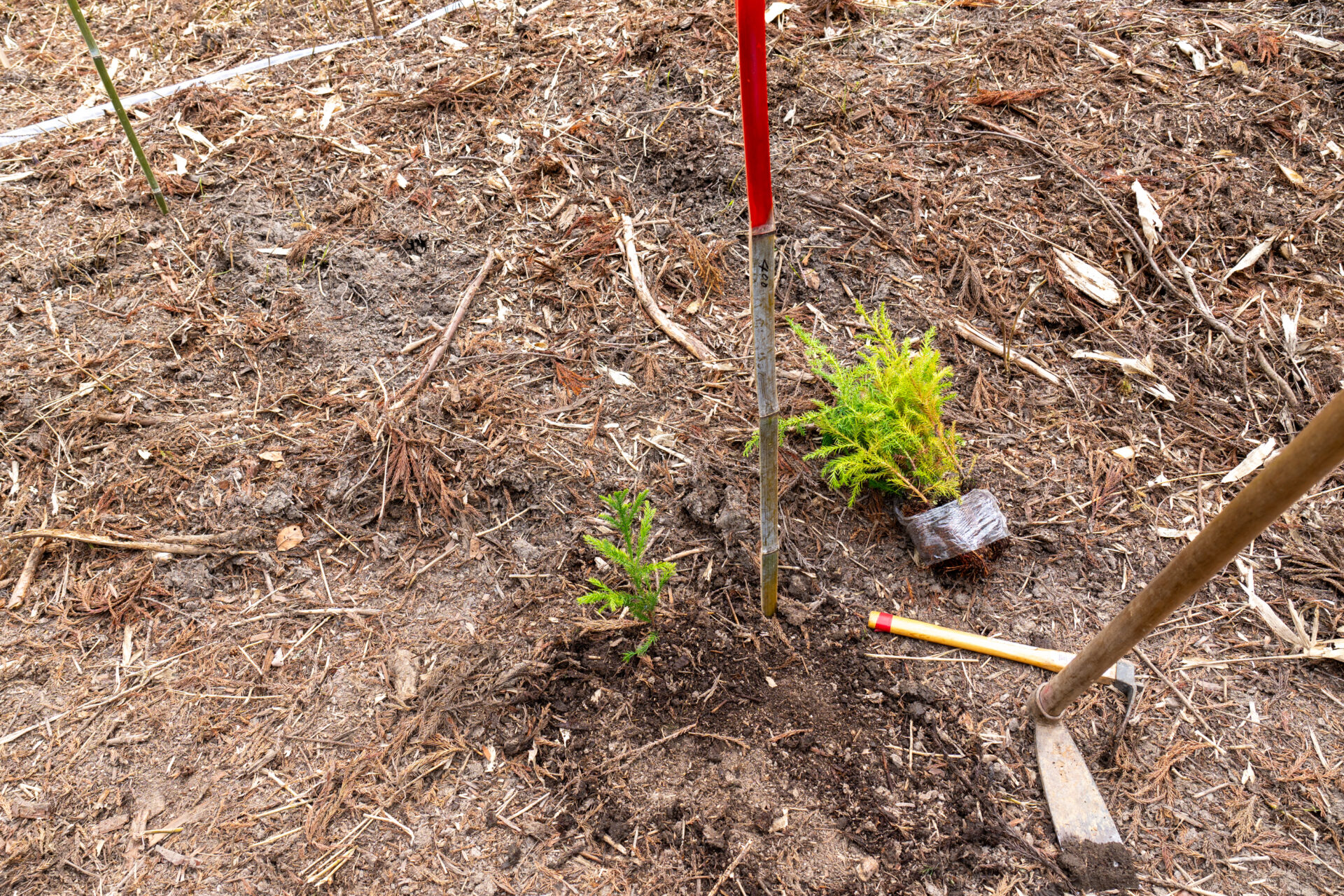
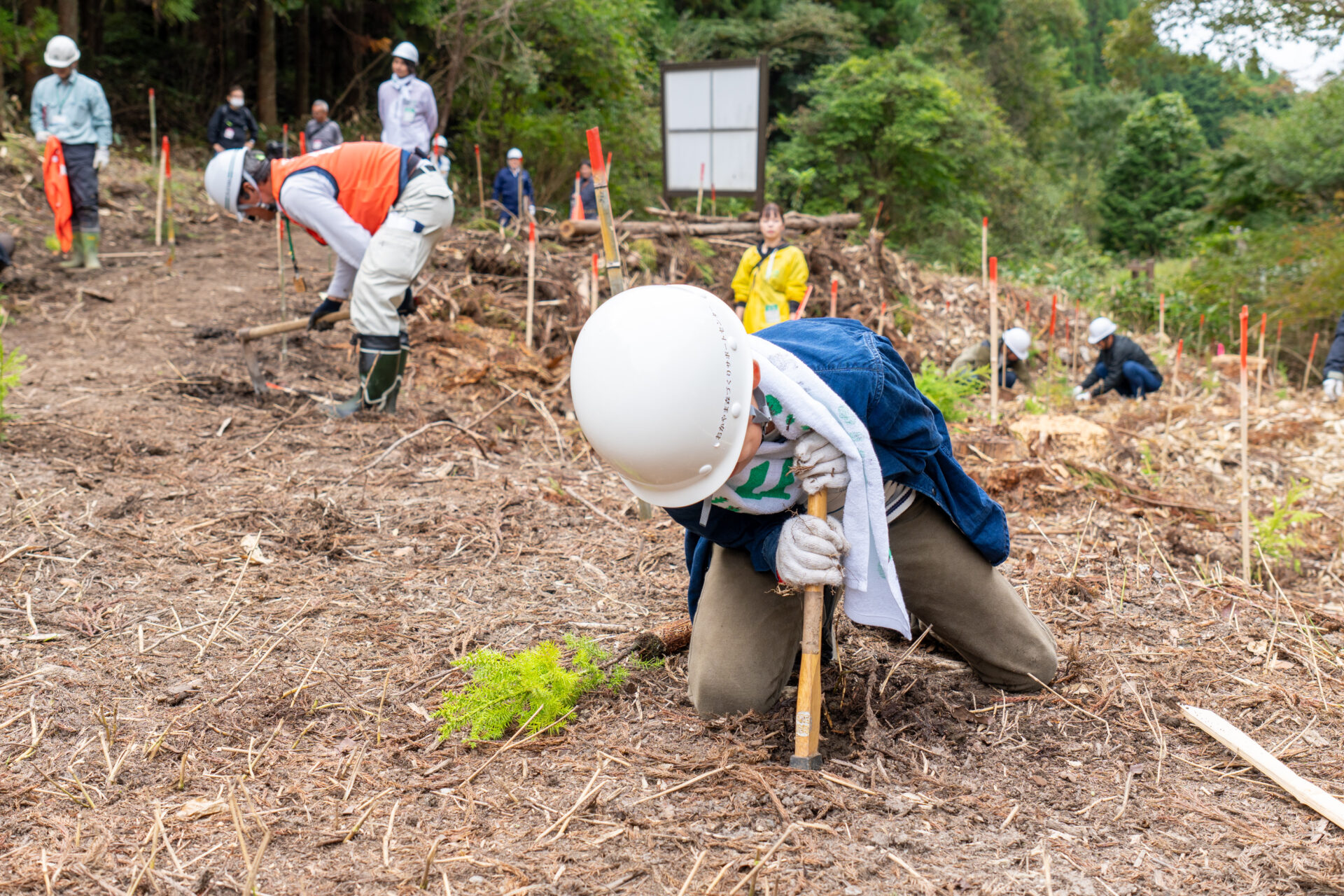
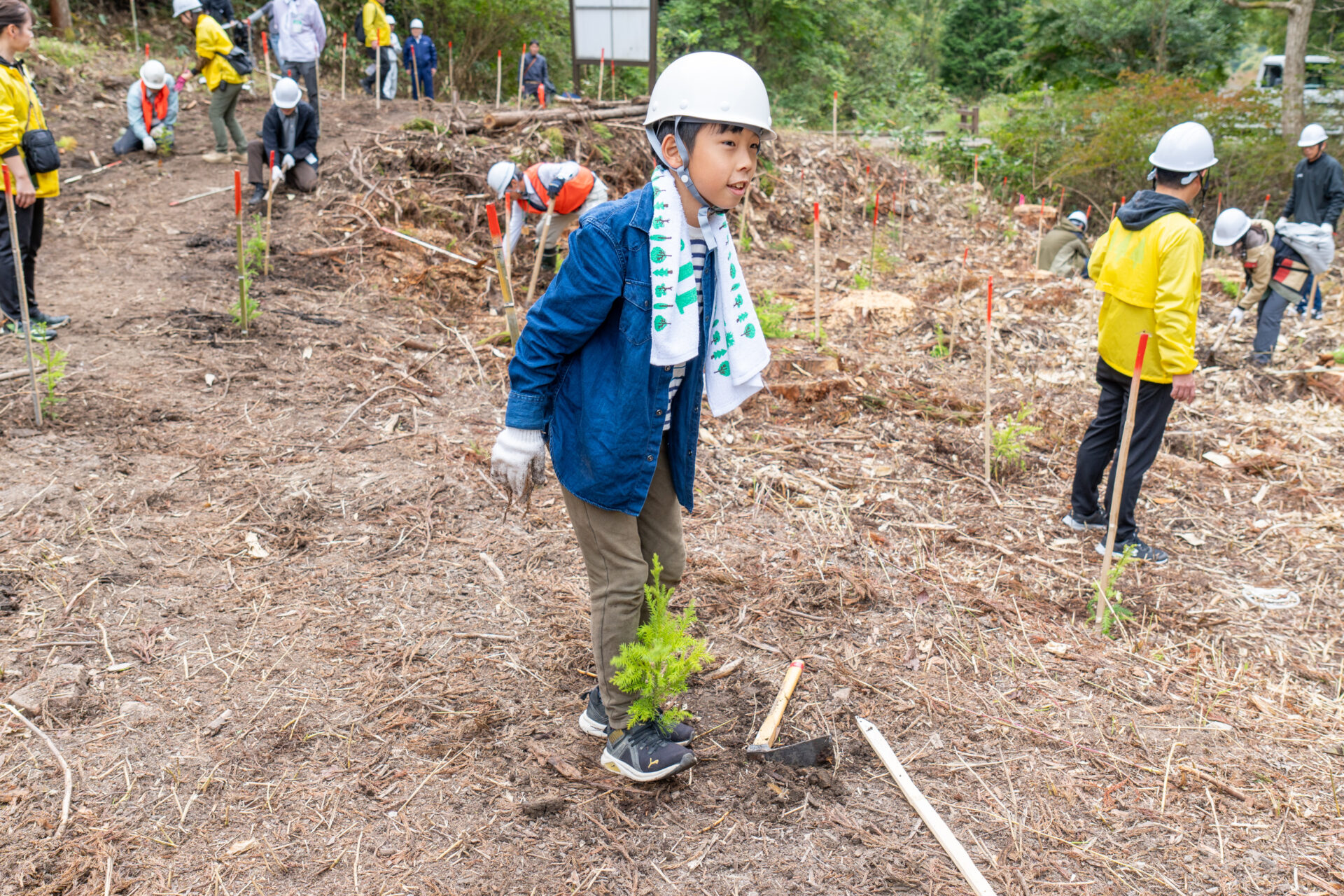
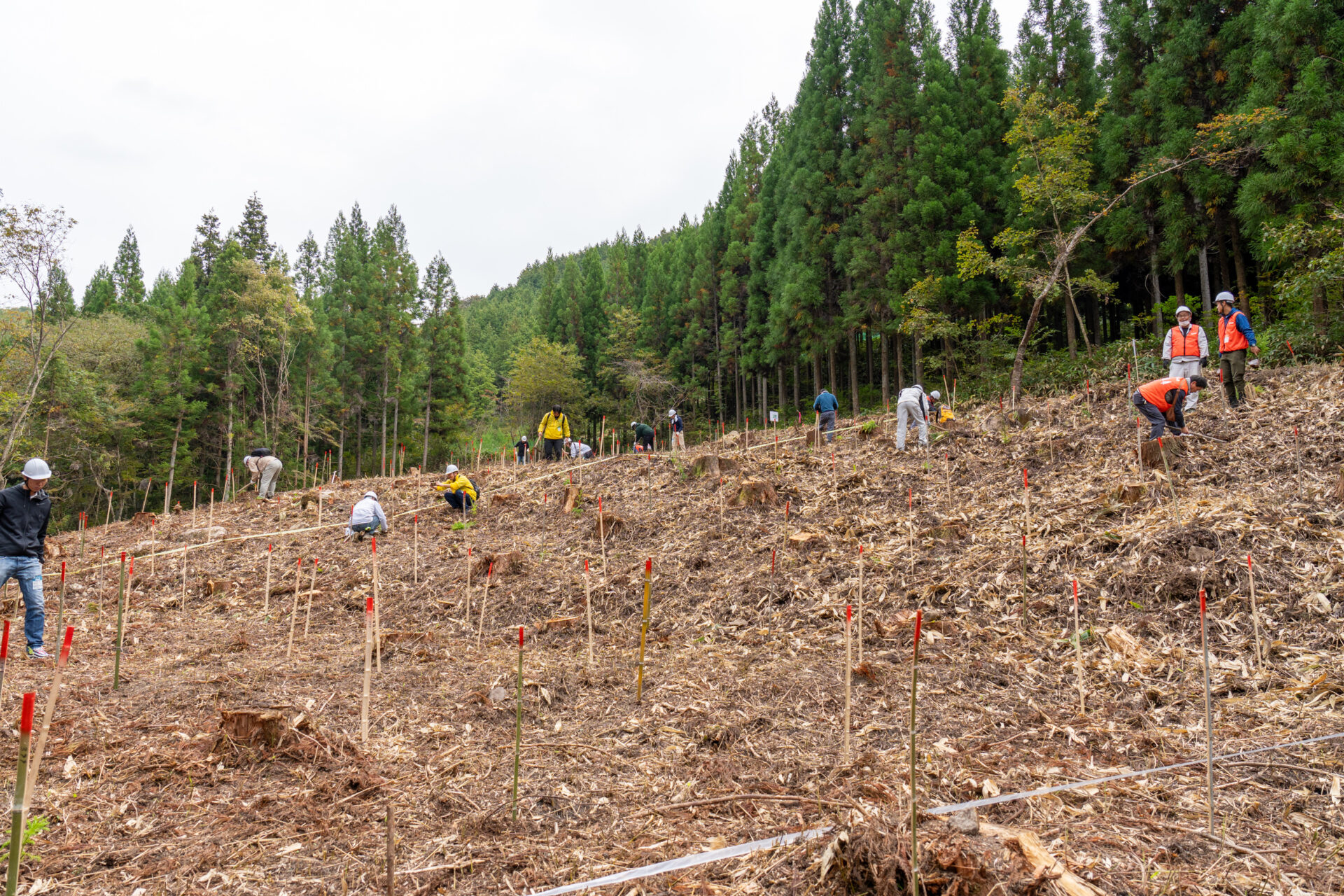
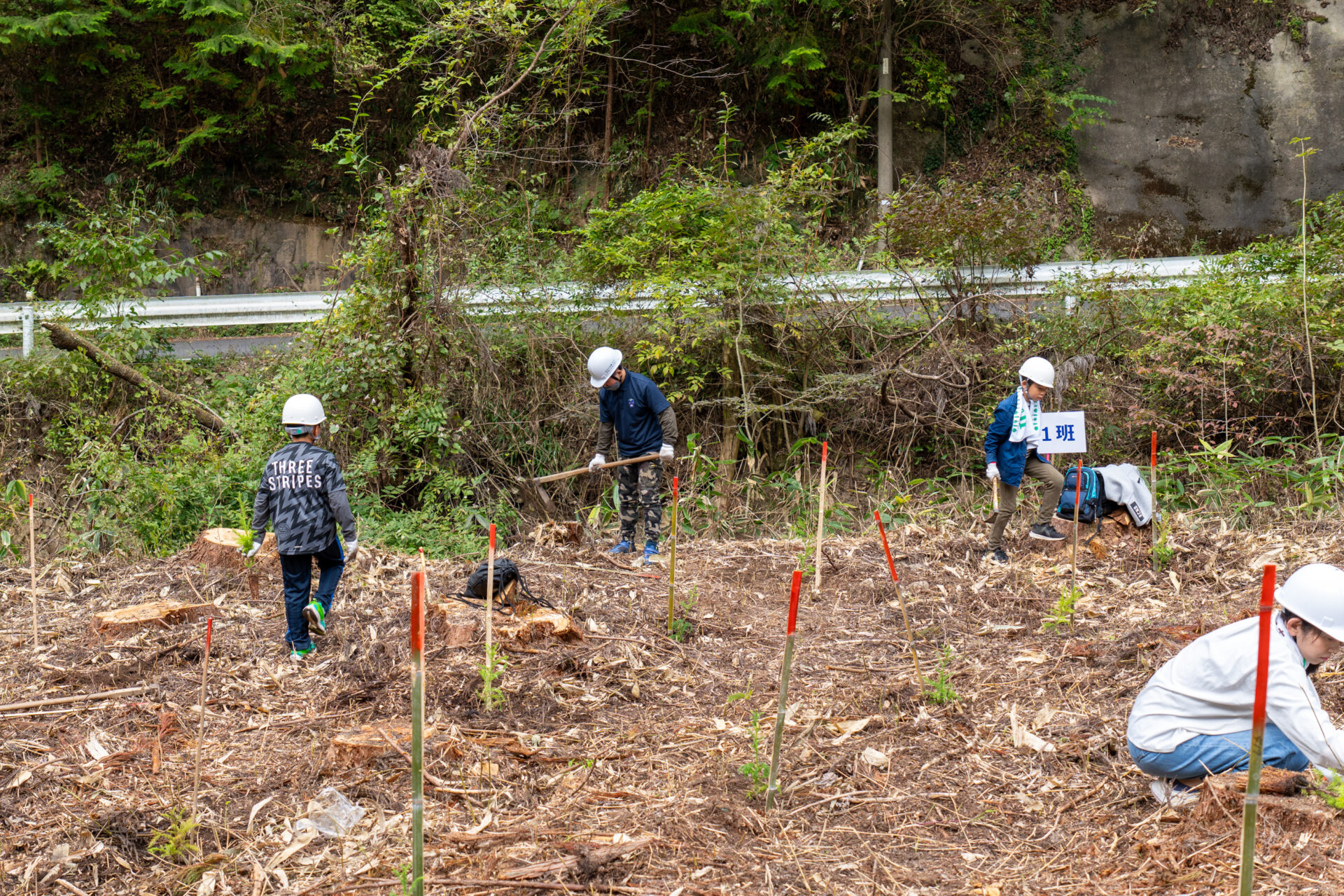
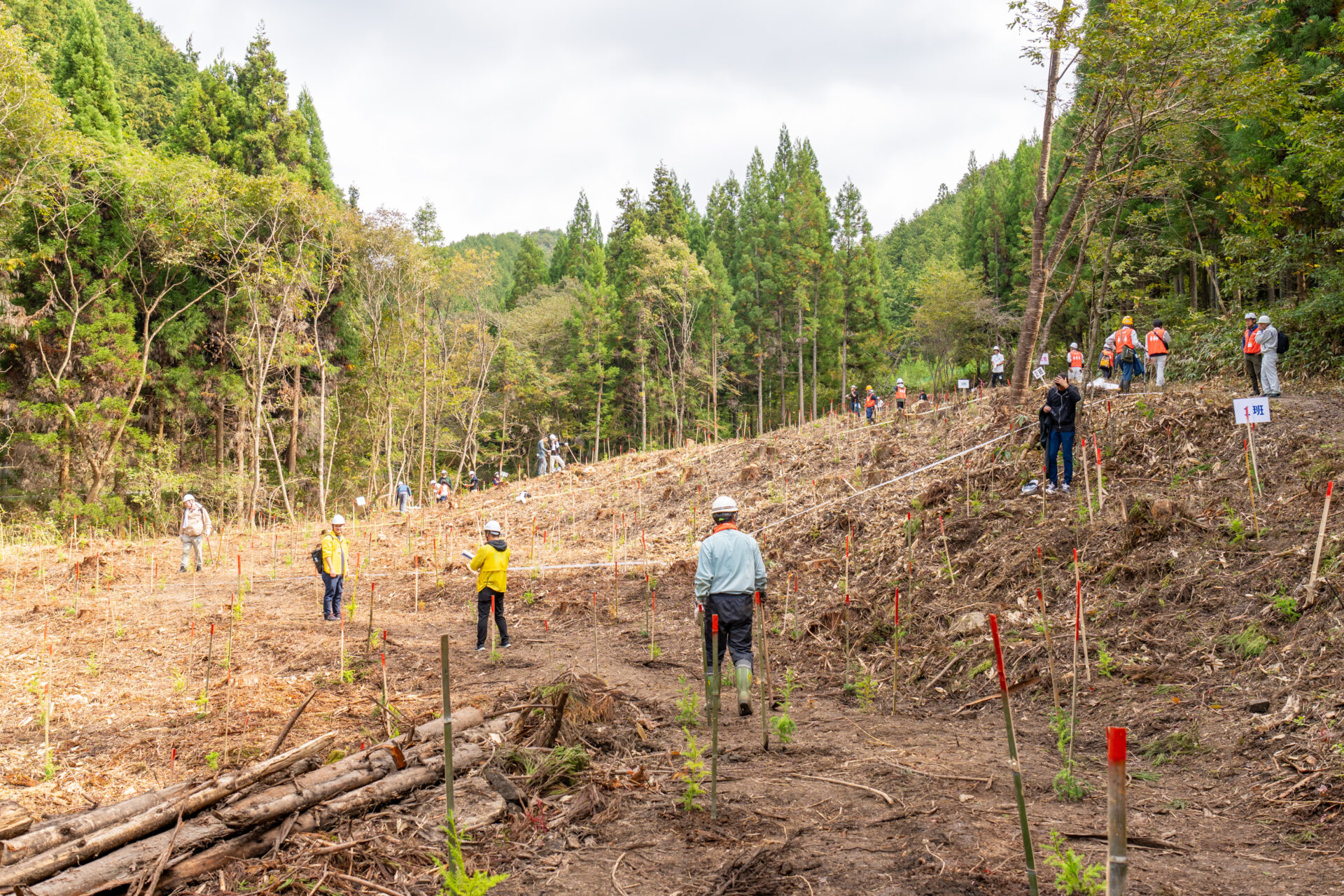
After about 60 minutes of activity, everyone was drenched in sweat. When they finally finished planting 600 trees, cheers went up.
Lunch & Making Rice Flour Pizza
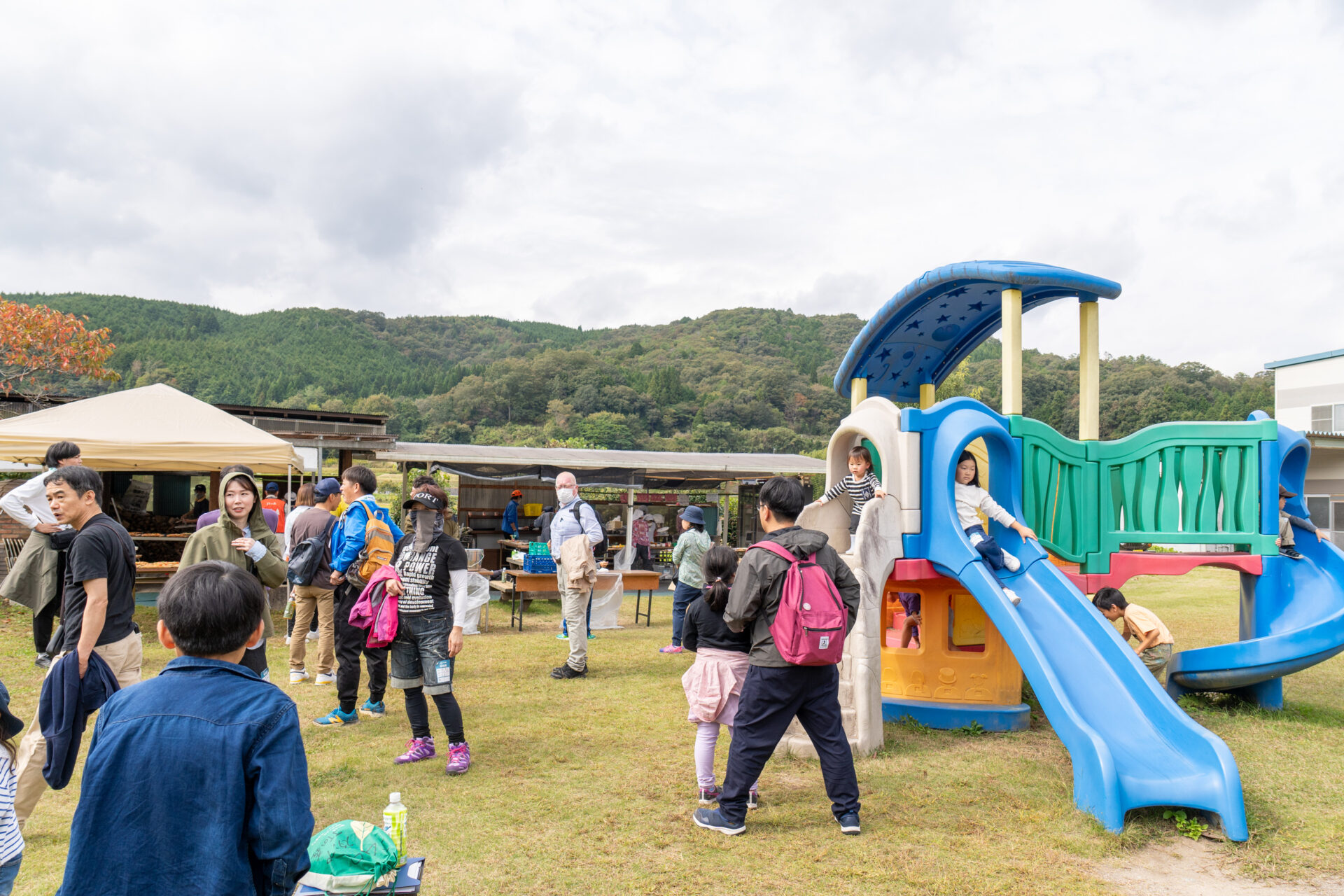
Afterward, everyone moved to Koigakubo Roadside Station for lunch.
Chestnut rice, soup, Niimi sampler skewers, rice flour pizza, and Pione grapes were prepared. After the forest conservation activities, everyone was famished, and the participants enjoyed their meal with smiles.
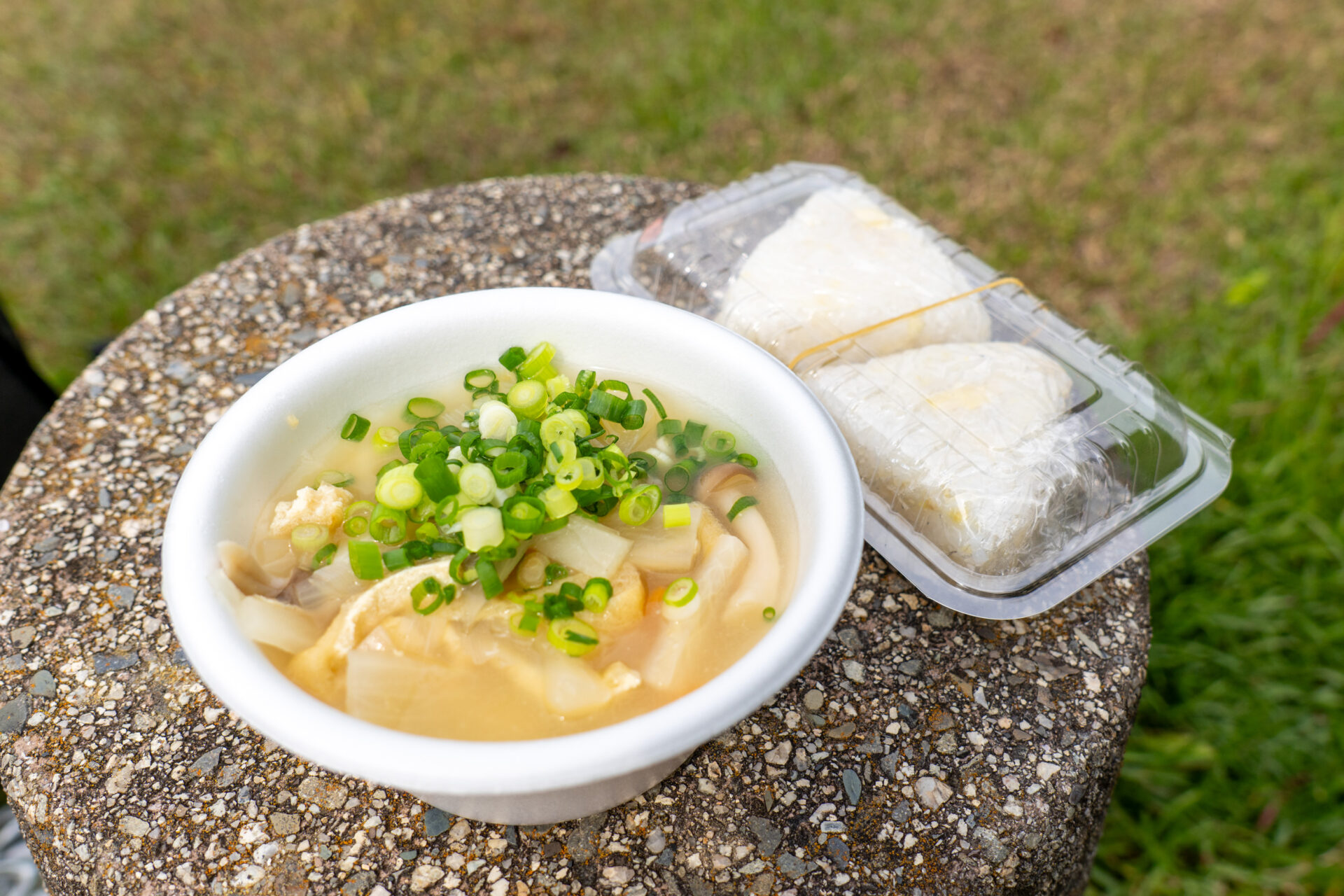
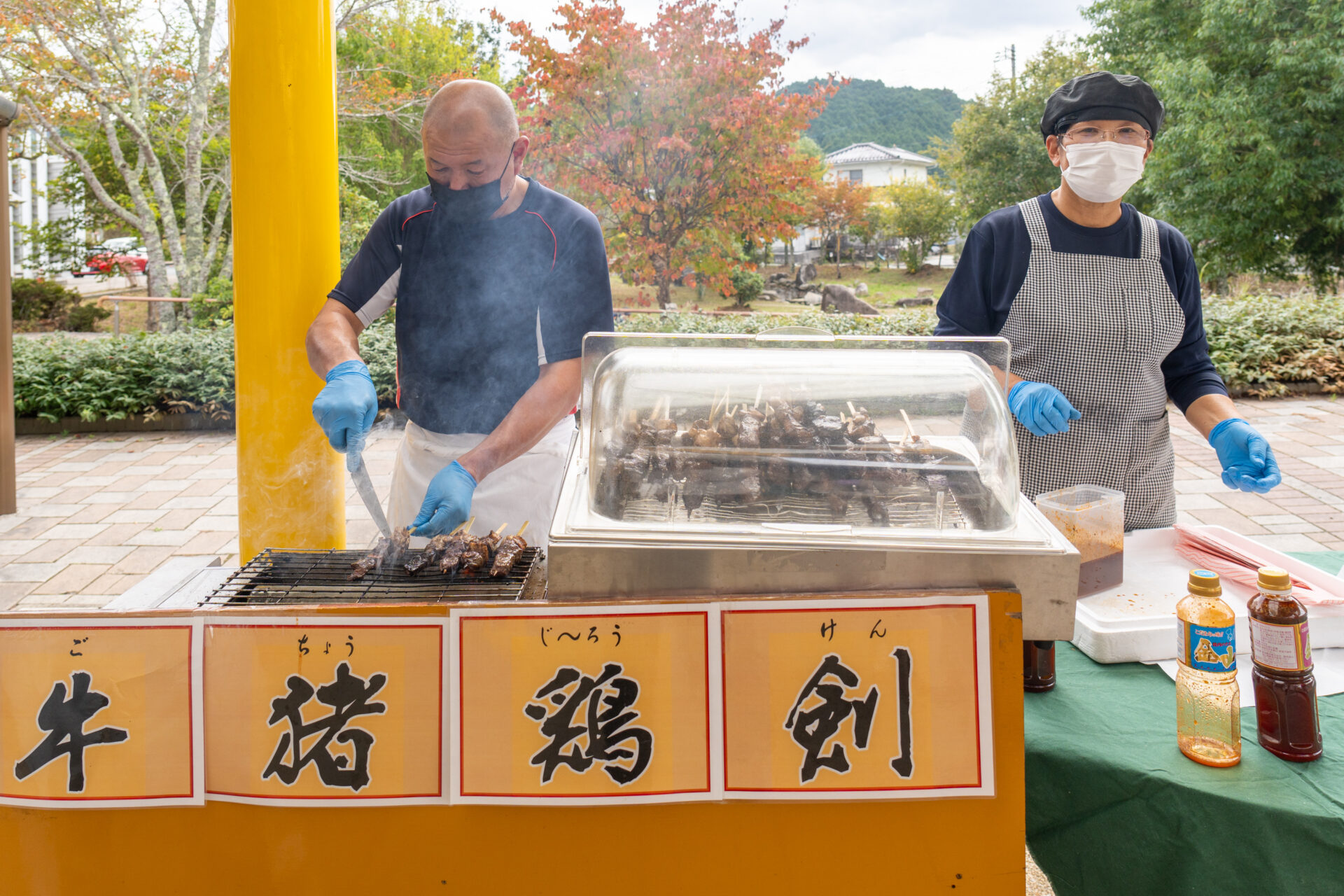

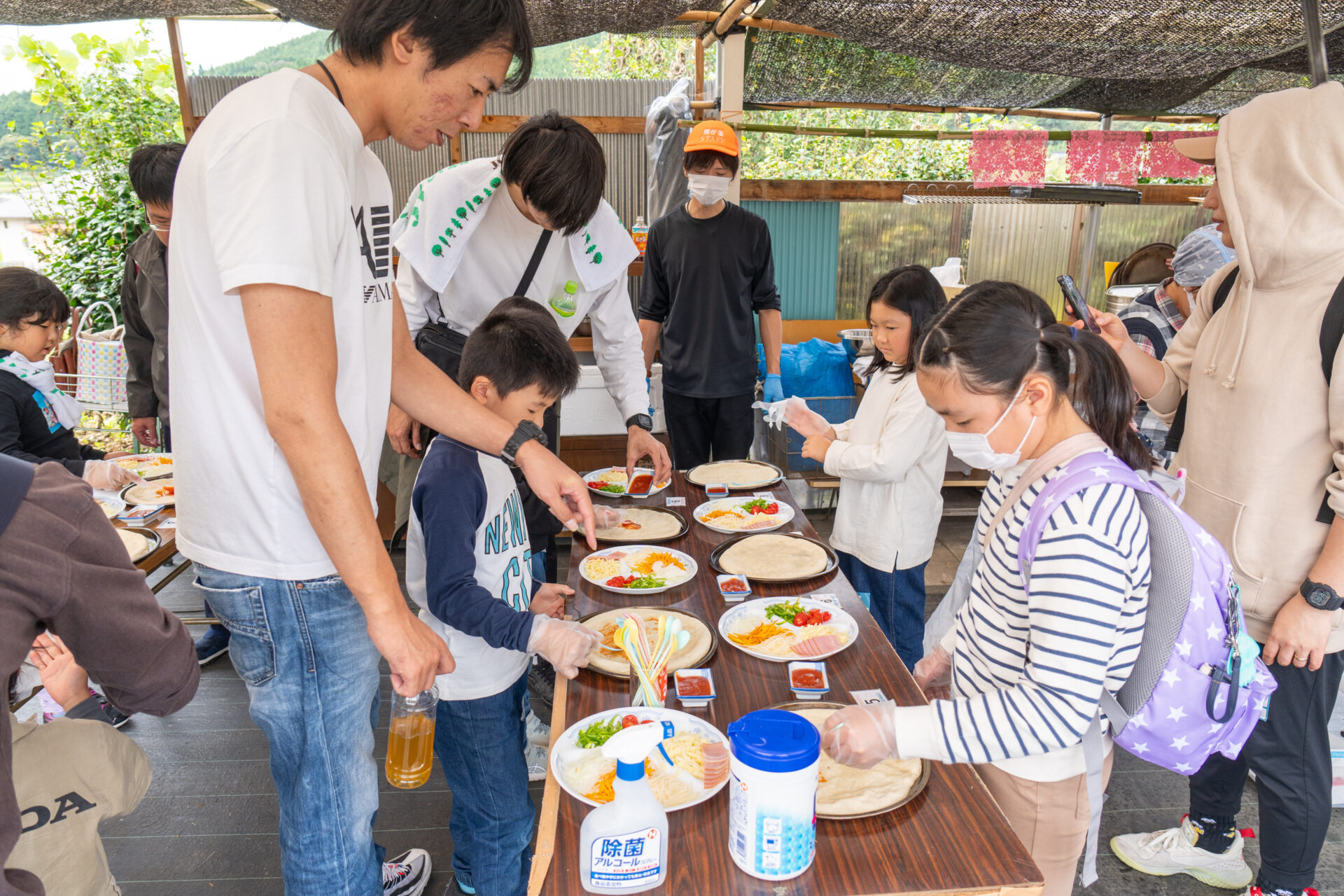
There was also a hands-on rice flour pizza-making activity, where the children made their own pizzas with their favorite toppings.
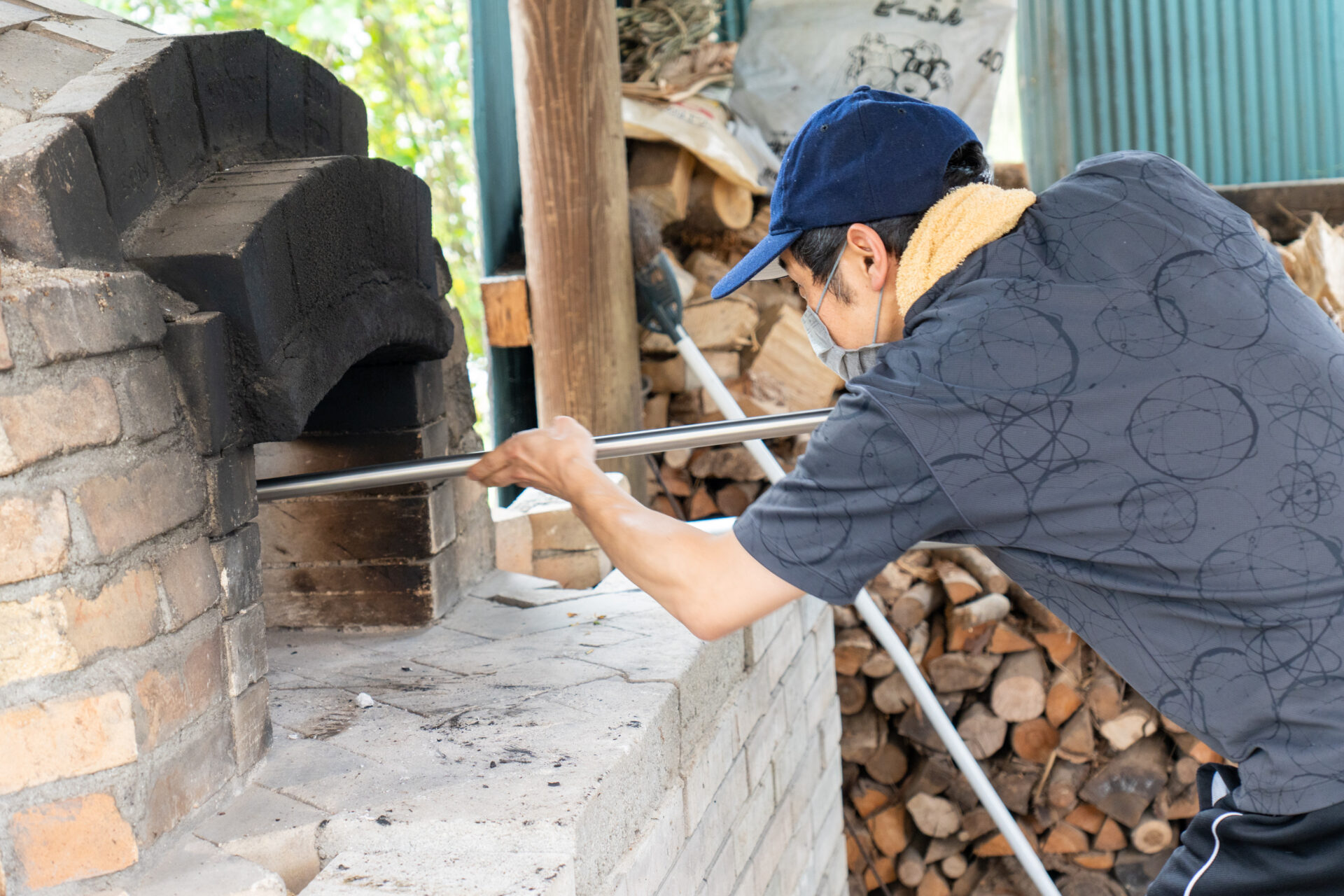

After lunch, we moved to a meeting room at the Niimi City Tessei Branch Office on the premises and took part in an outdoor classroom about forests.
Outdoor Classroom About Forests (moritomirai Card Game)
In the afternoon, as part of the outdoor classroom about forests, we played the card game “moritomirai”.
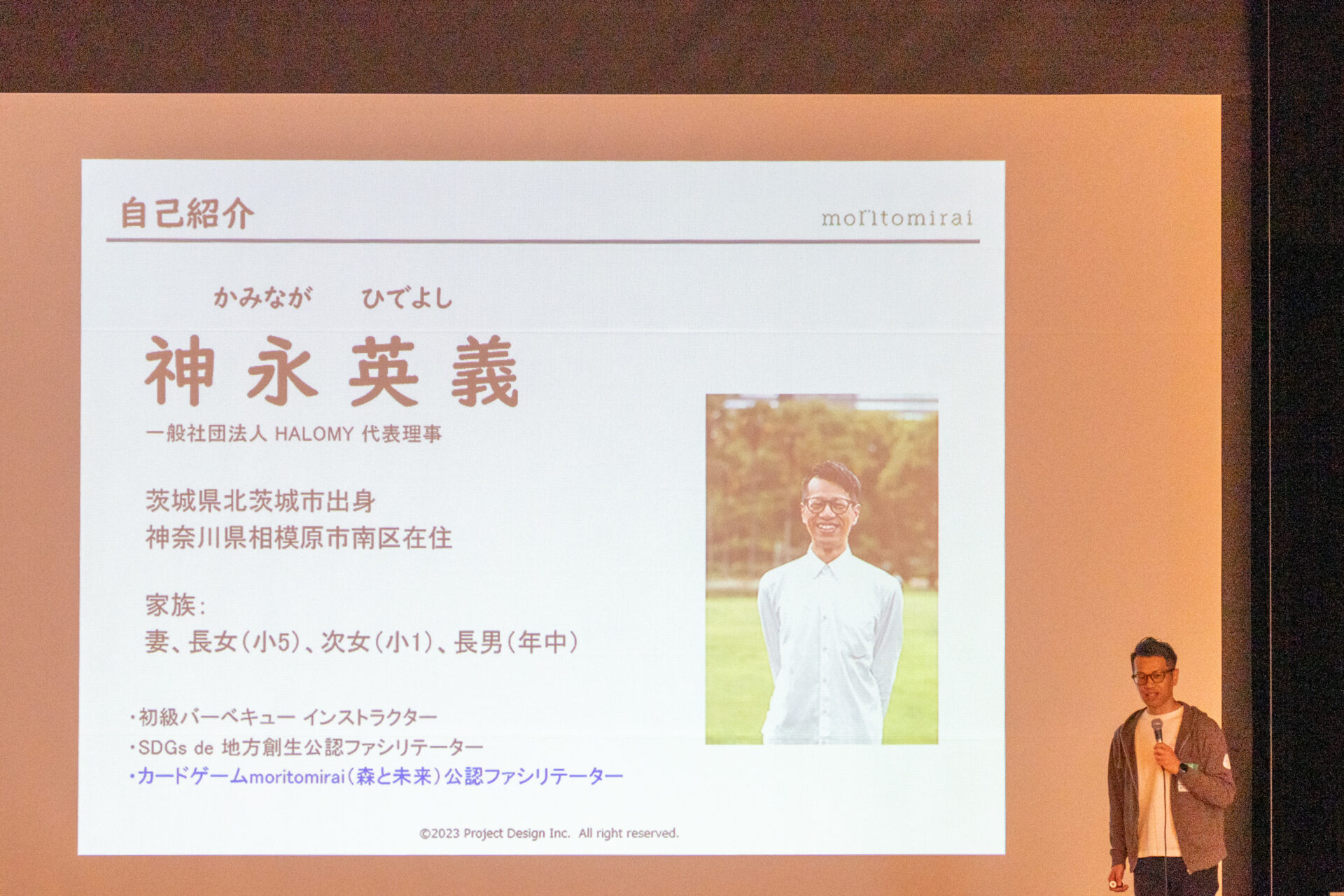
The facilitator was Hideyoshi Kaminaga, representative director of the general incorporated association HALOMY.
The card game “moritomirai” is a game in which players—including mountain owners, forestry cooperatives, hunters, government employees, homebuilders, and schoolteachers—consider how forests change as they repeat actions related to work and daily life.
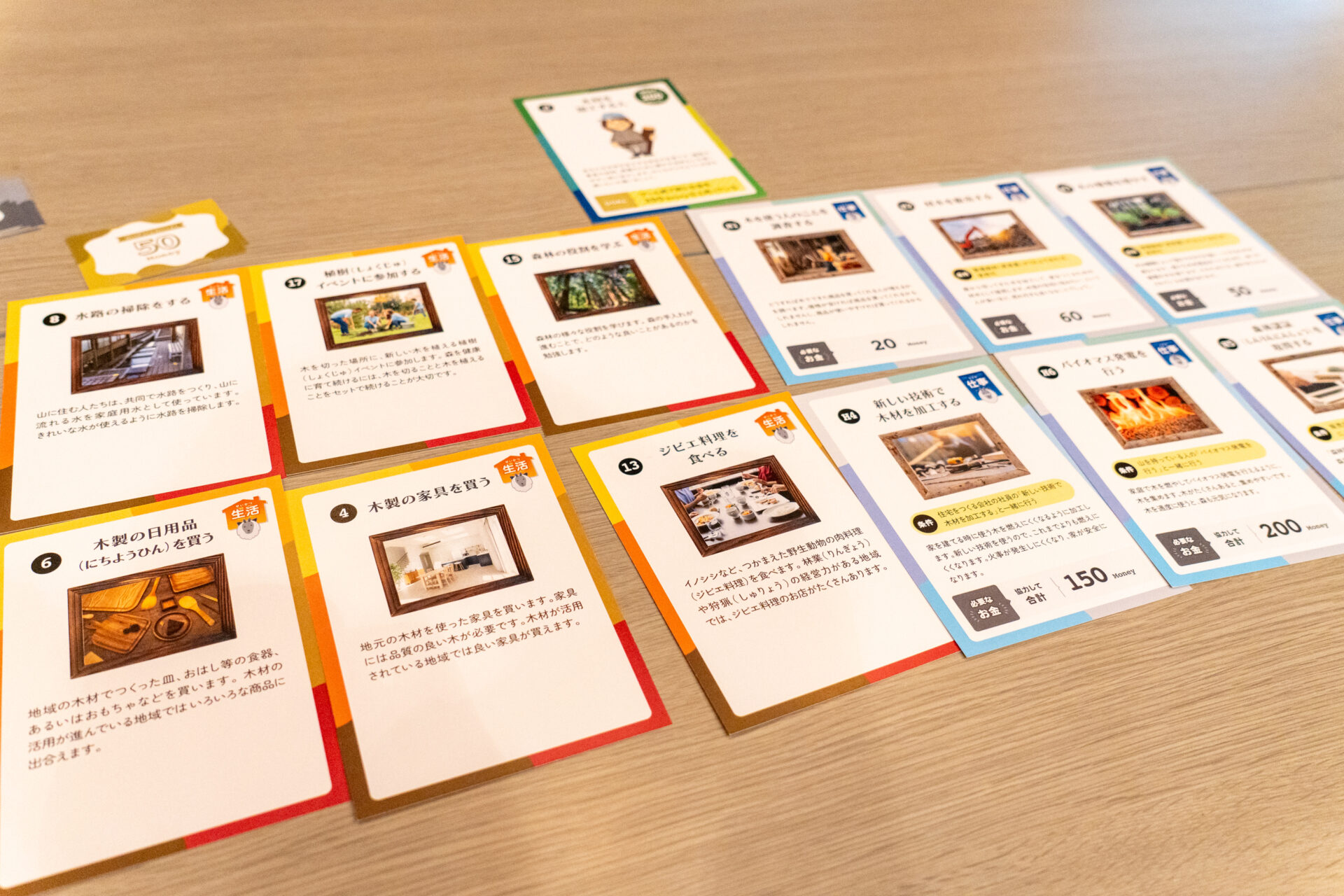
On the day, participants formed two teams, each with groups of about four people. They took on roles such as mountain owners and played the game while discussing matters within their groups and with other players.
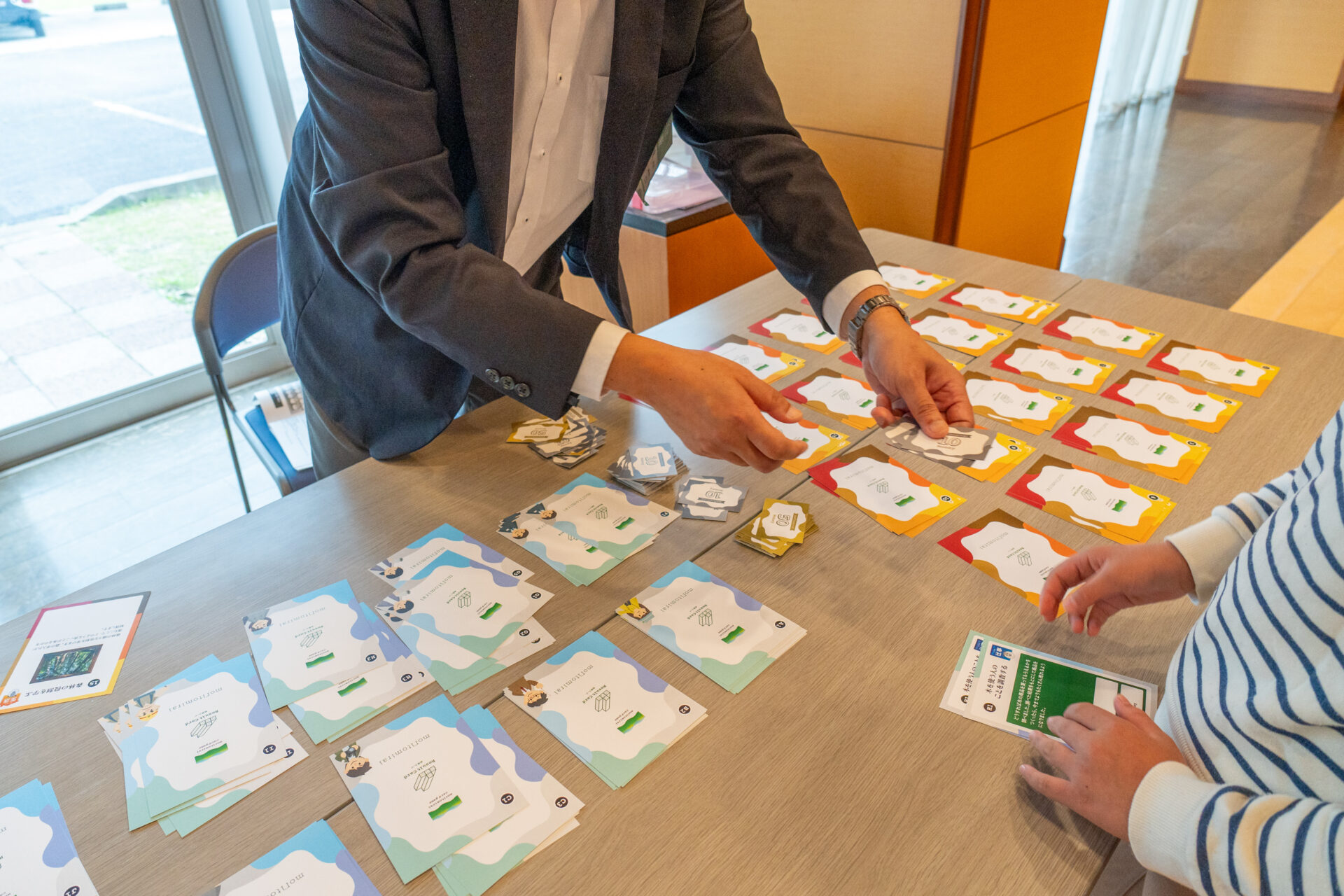
The game lasted about an hour and a half and was divided into four turns.
Since it was everyone’s first time, they initially struggled to understand the rules and felt their way through.
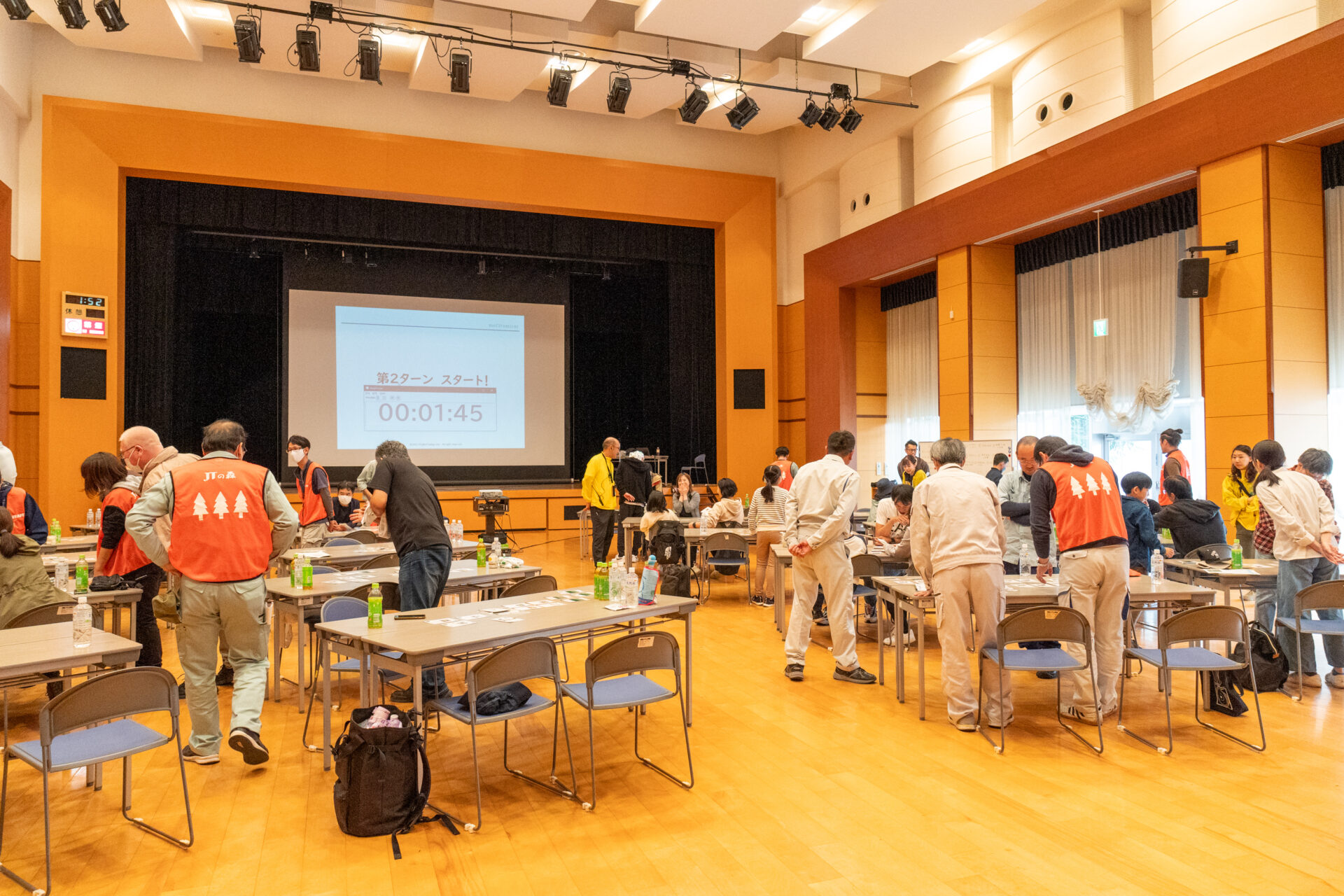
However, as time passed, opportunities for discussion increased, with comments such as “Let’s do this together,” and the conditions of the forests and towns changed for both teams.
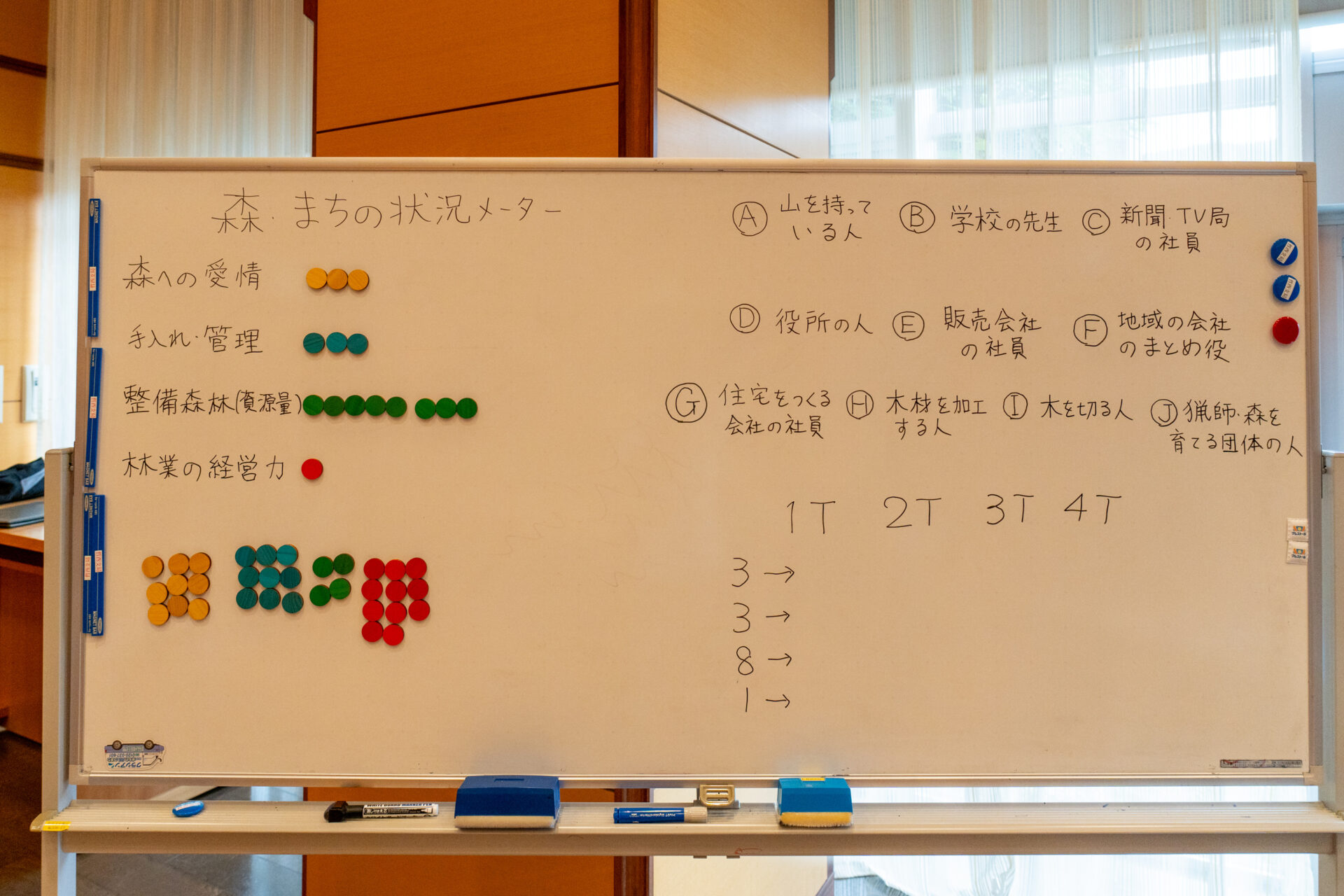
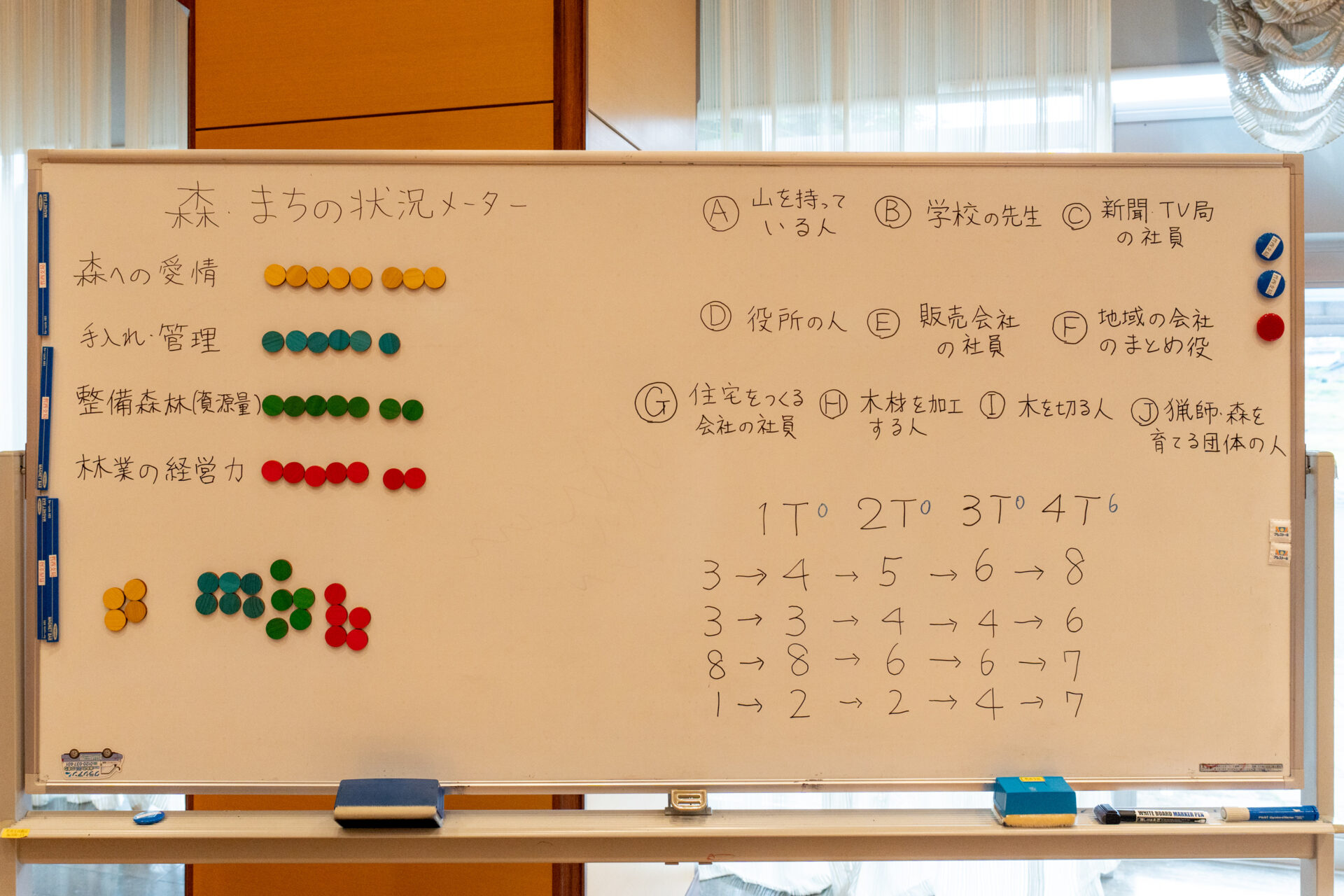
Although it was a game, we learned how forests change when projects are carried out and how important forest maintenance is.
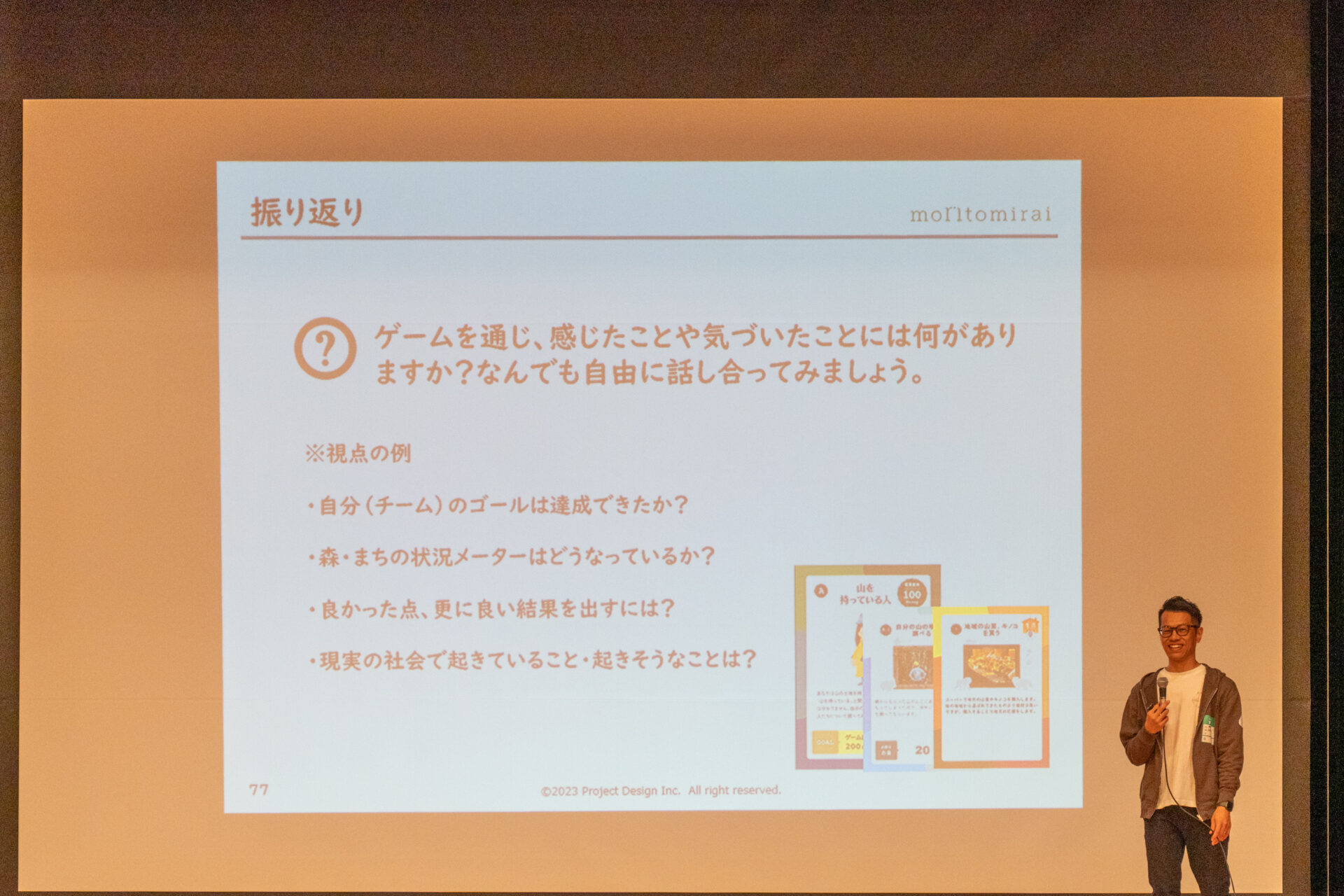
Afterward, a closing ceremony was held, bringing the “Fall 2023 Forest Conservation Activities” to a close.
From the Writer
I took part in this conservation activity with my daughter, who is in third grade.
She seemed to find the experience of planting trees in a place that was not a maintained “field” both new and challenging.
Looking back on my own experience, it was my first time as well, and I was surprised by how physically demanding it was—more than I had imagined.
Once trees are cut down, you can simply plant new ones.
Living in an urban area, it is easy to think that way, but through the card game “moritomirai,” we learned that trees do not simply need to be planted; forests thrive when they are properly managed.
I was reminded that forests, as a resource, are sustained through the involvement of many people, and that we must not forget that we benefit from them.
“JT Forest Koigakubo Niimi” Fall 2023 Forest Conservation Activities: Information

| Name | “JT Forest Koigakubo Niimi” Fall 2023 Forest Conservation Activities |
|---|---|
| Date | October 14, 2023 |
| Location | Yada, Tessei-cho, Niimi City, Okayama Prefecture |
| Participation fee (tax included) | *Whether applications will be open to the general public and the format of the next event have not yet been decided. |
| Website | JT Forest |




What would you like to know about Kurashiki?
Enter a word to search articles on this site