These days, we often see SDGs (the Sustainable Development Goals).
Kurashiki City also appears to be actively promoting the SDGs by registering as partners with companies and organizations working toward achieving them in the Takahashi River Basin.
- “What should we do to create a sustainable world?”
- “What can I do?”
It’s difficult to think about these questions on your own, isn’t it?
At this event, you can learn about the SDGs through the food we eat every day, under the theme “Let’s think about delicious food in the future!”
The information provided was accurate when this article was published in September 2022. Please note that it may differ from current information.
Overview of “SDGs from Ario: Let’s think about delicious food in the future!”
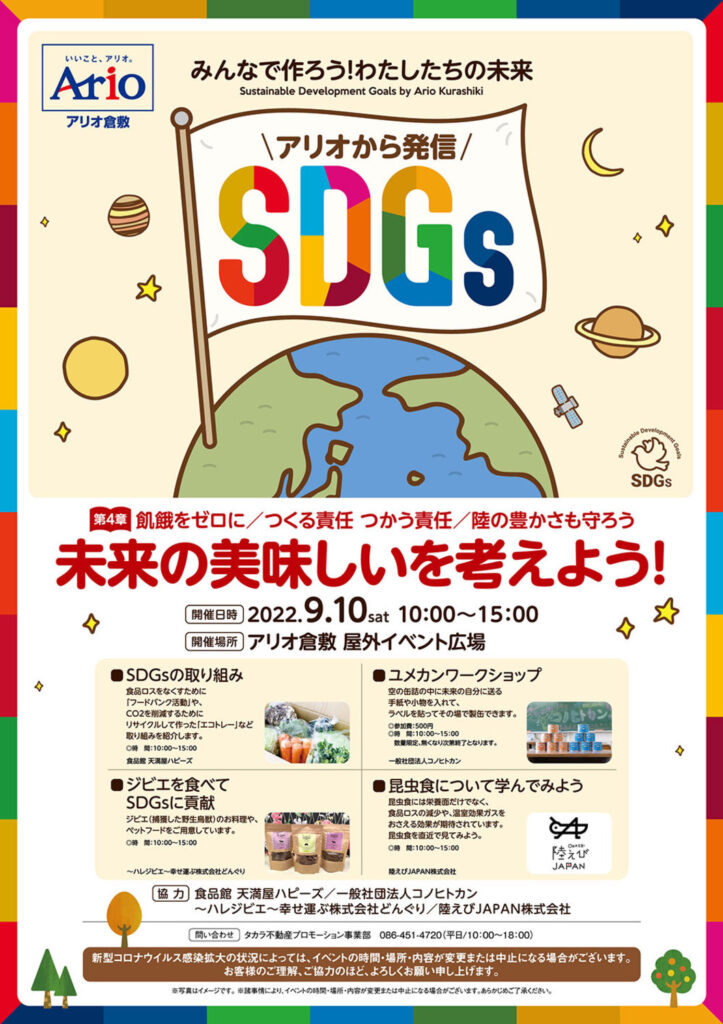
“SDGs from Ario: Let’s think about delicious food in the future!” was held at the outdoor event plaza at Ario Kurashiki on Saturday, September 10, 2022, from 10 a.m. to 3 p.m.
The four participating vendors were:
- Shokuhinkan Tenmaya Happies
- Konohitokan General Incorporated Association
- ~Hare Gibier~ Donguri Co., Ltd., Bringing Happiness
- Riku Ebi JAPAN Co., Ltd.
All of the vendors are organizations or companies working to achieve the SDGs.
I attended the event
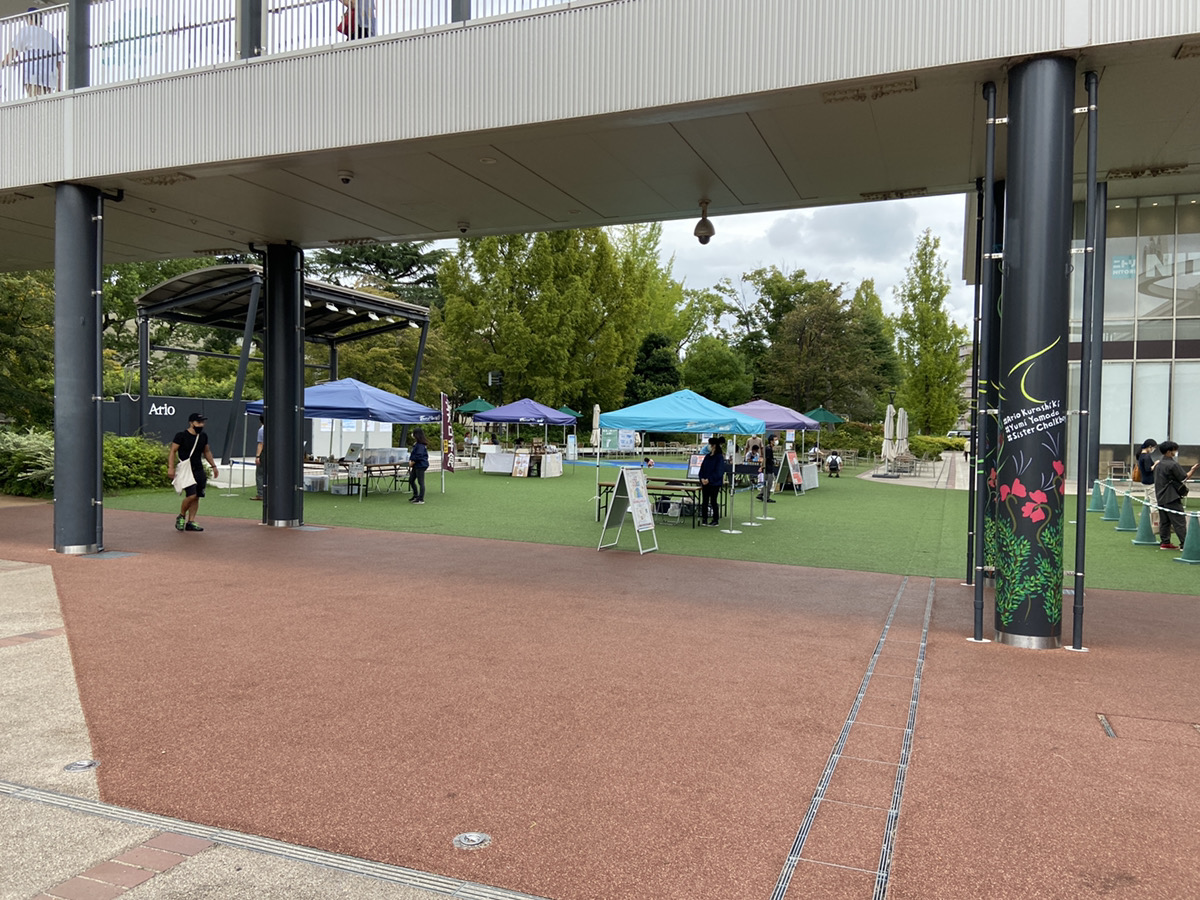
The weather was unfortunately unsettled that day (September 10, 2022), with light rain coming and going.
Even so, the atmosphere was relaxed, with families letting their children splash around in the nearby fountain plaza and others stopping by to see what event was taking place.
At the event stage, there was a panel explaining “food loss and food bank activities,” and we also saw parents and children learning together.
- “Food loss” refers to ingredients and food that are thrown away even though they are still edible.
- “Food bank activities” involve providing, free of charge, ingredients that are still safe to eat but would otherwise be discarded to people facing hardship and welfare organizations.
I had never given serious thought to the SDGs before, and I wanted to learn what kinds of companies and organizations were working on them, so I went to take a look.
Let’s take a look.
Konohitokan General Incorporated Association
First, I visited the booth of the Konohitokan General Incorporated Association.
To address “poverty” and “food waste,” this organization buys ingredients before they are discarded, uses them to make canned food, and distributes it to children’s cafeterias and care facilities.
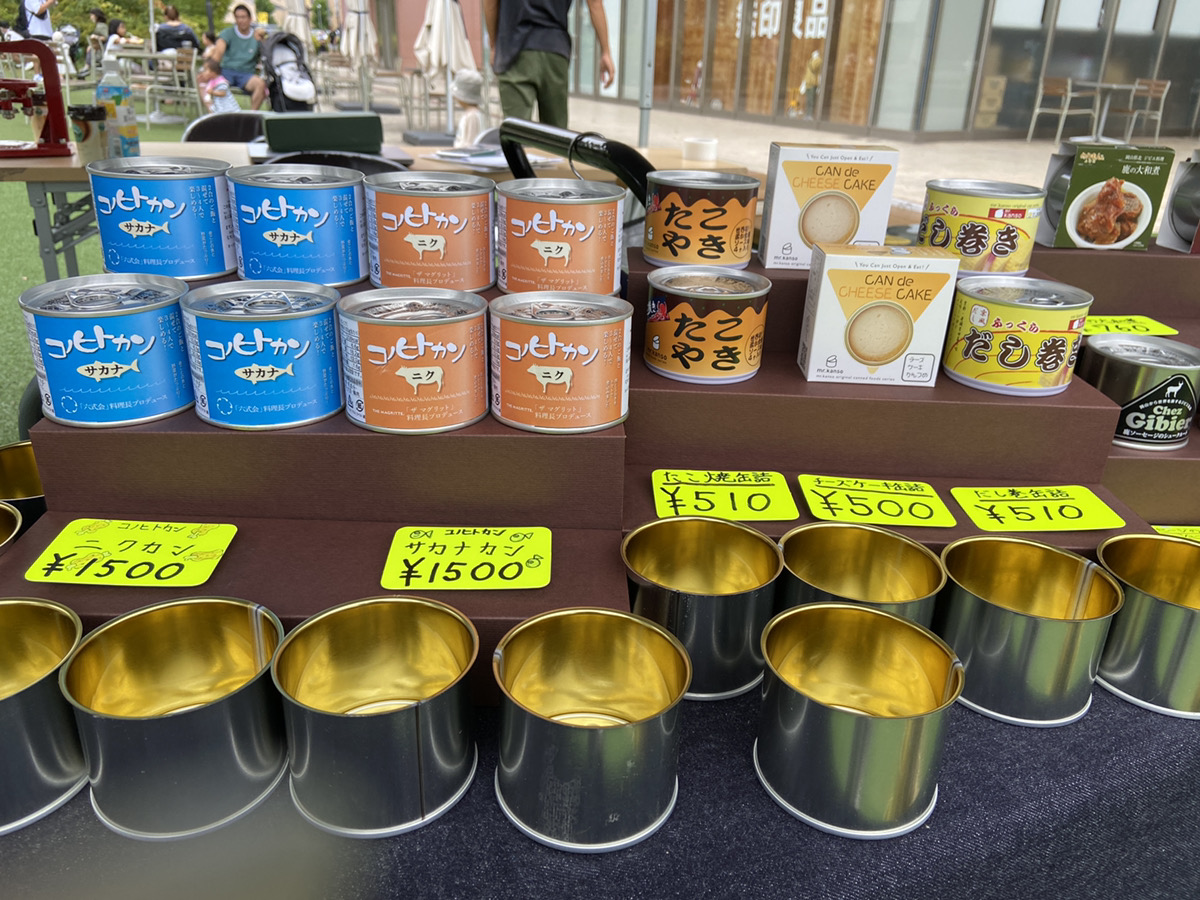
One can, mixed with two cups of rice, is said to make enough to satisfy three or four people.
The meat cans are meat-sauce flavored, so they can also be used in soup.
The fish cans are said to be delicious, like chirashi sushi.
They were also selling other unusual canned foods.
At the event, they also held a workshop to make “Yumekan,” a time-capsule can, using these cans.
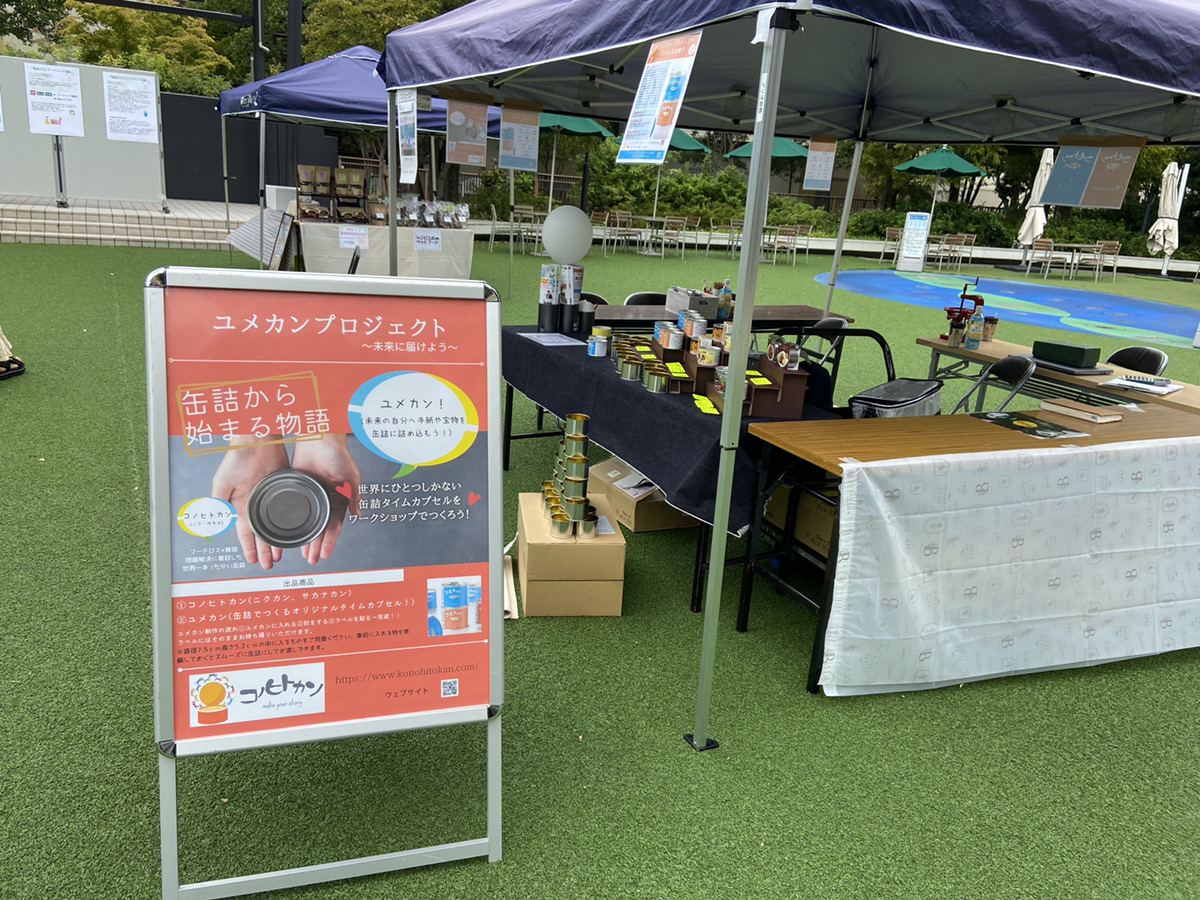
You can put letters, treasured items, and other things inside, and have the can sealed on the spot.
You get to decide how many years later you’ll open it.
A time capsule in a can, one of a kind in the world. What a lovely idea.
Riku Ebi JAPAN Co., Ltd.
Riku Ebi JAPAN Co., Ltd. is a company conducting research and development in Kibichuo Town, with a focus on solving problems such as “food loss,” “greenhouse gases,” and “depopulation.”
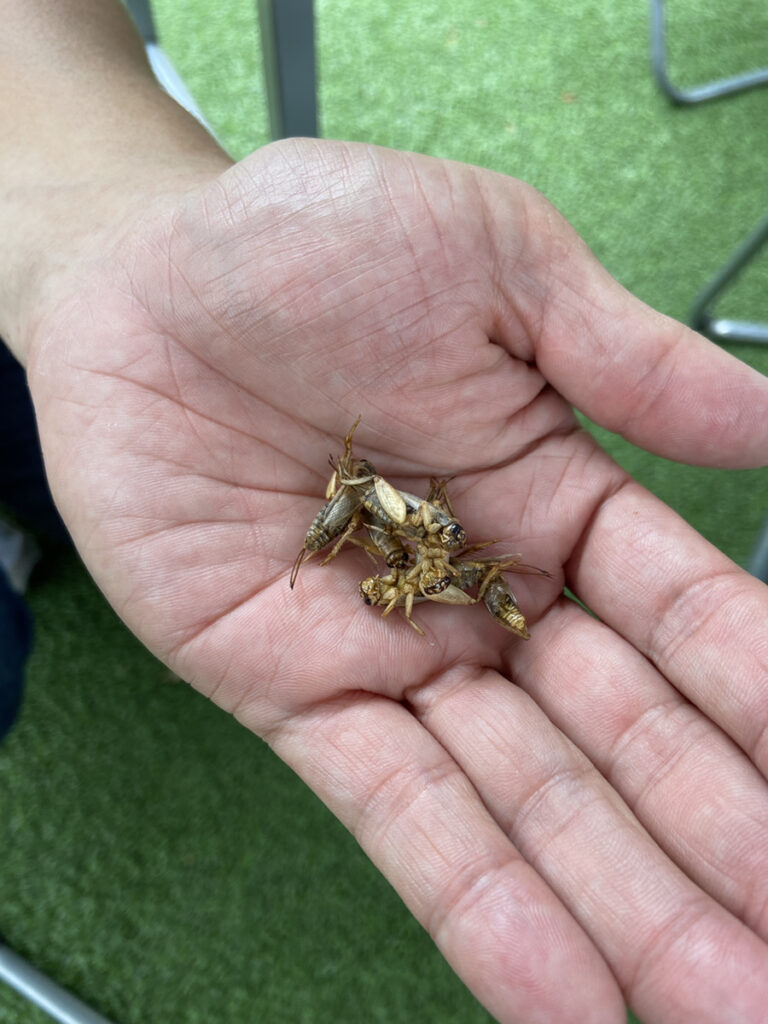
They were even selling crickets for human consumption.
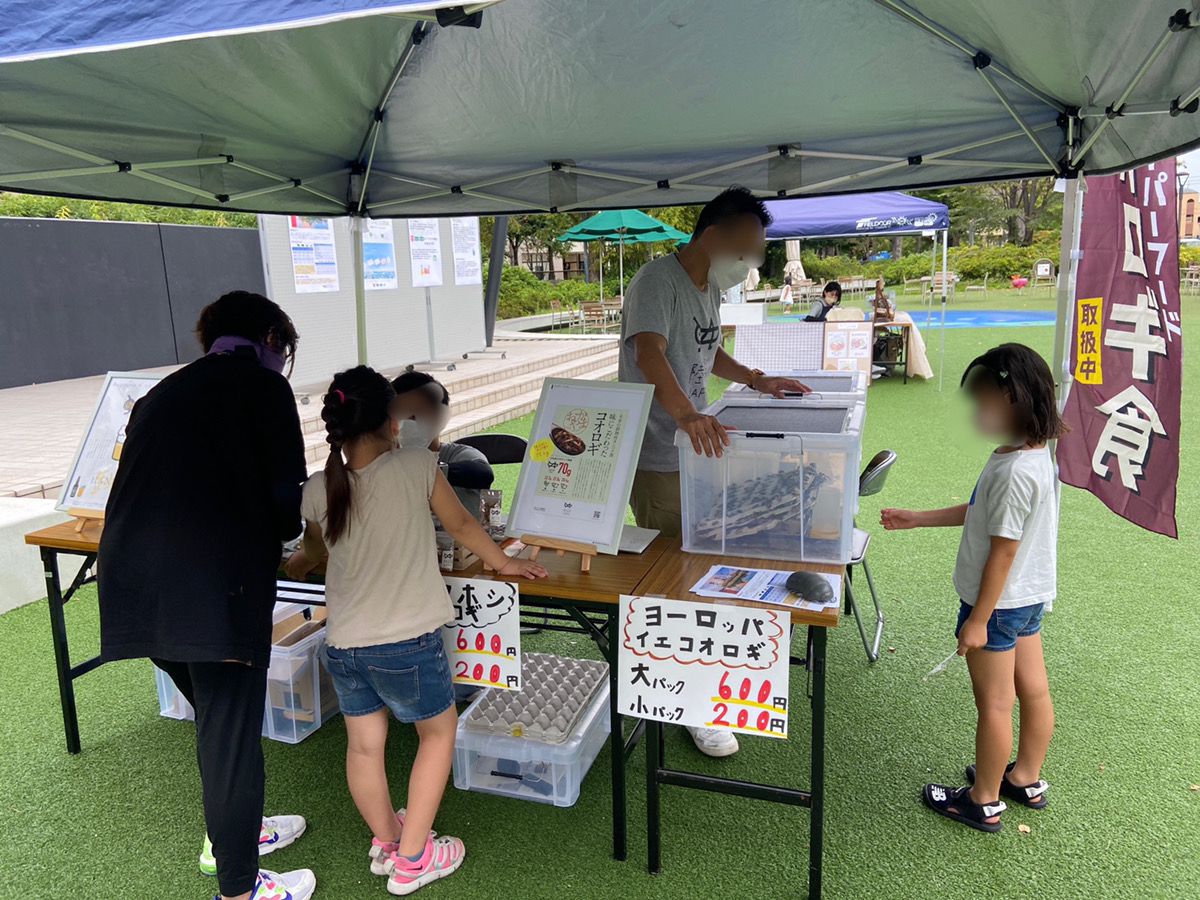
Insects are not an unusual food; as many as two billion people around the world eat them.
In particular, crickets are highly nutritious and contain high-quality protein.
They can be raised in a small space, so they are said to have a low environmental impact.
The children were fascinated by the idea of eating insects, which they love.
The adults looked a little unsure at first, but after cautiously trying them, some said, “They’re delicious, like dried baby sardines,” and bought this unusual product as a souvenir.
~Hare Gibier~ Donguri Co., Ltd., Bringing Happiness
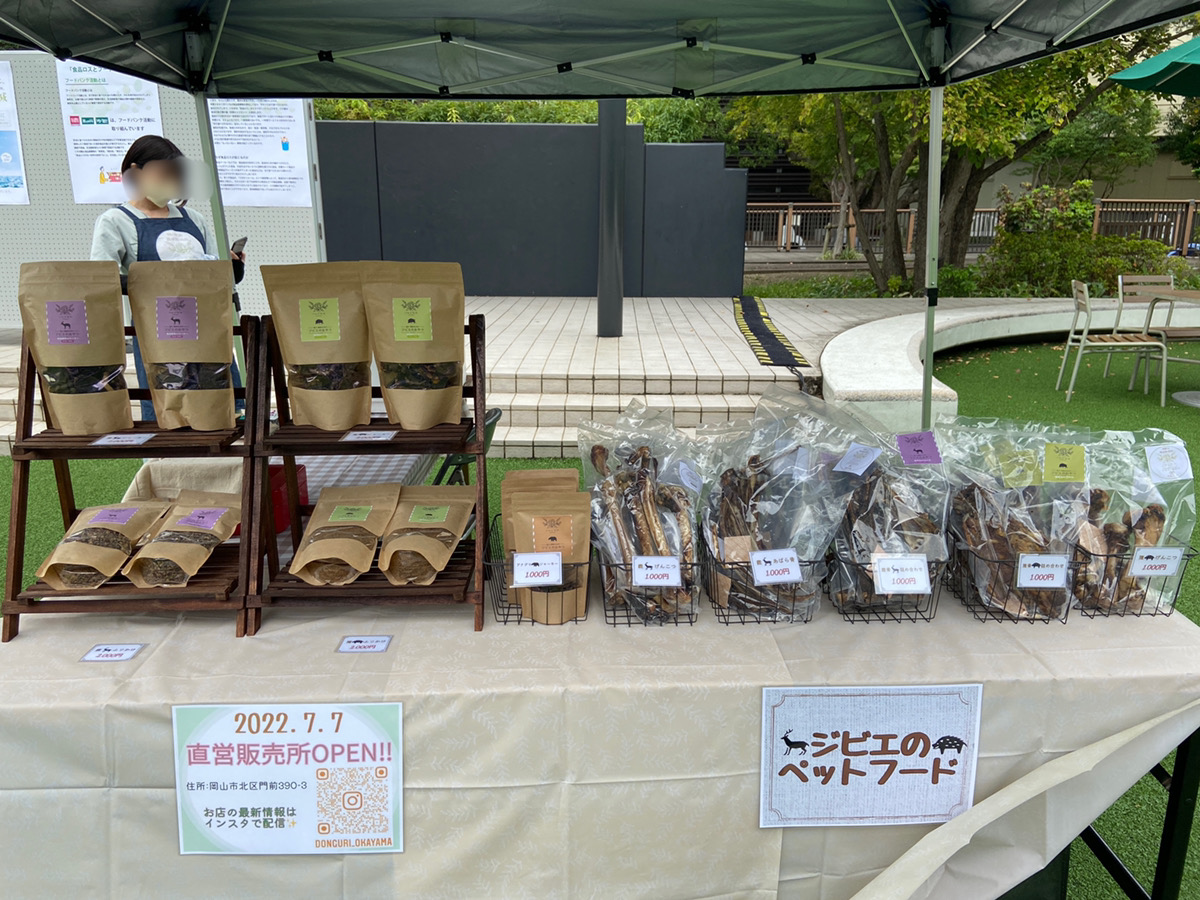
The last business I’ll introduce is the gibier shop “~Hare Gibier~ Donguri Co., Ltd., Bringing Happiness.”
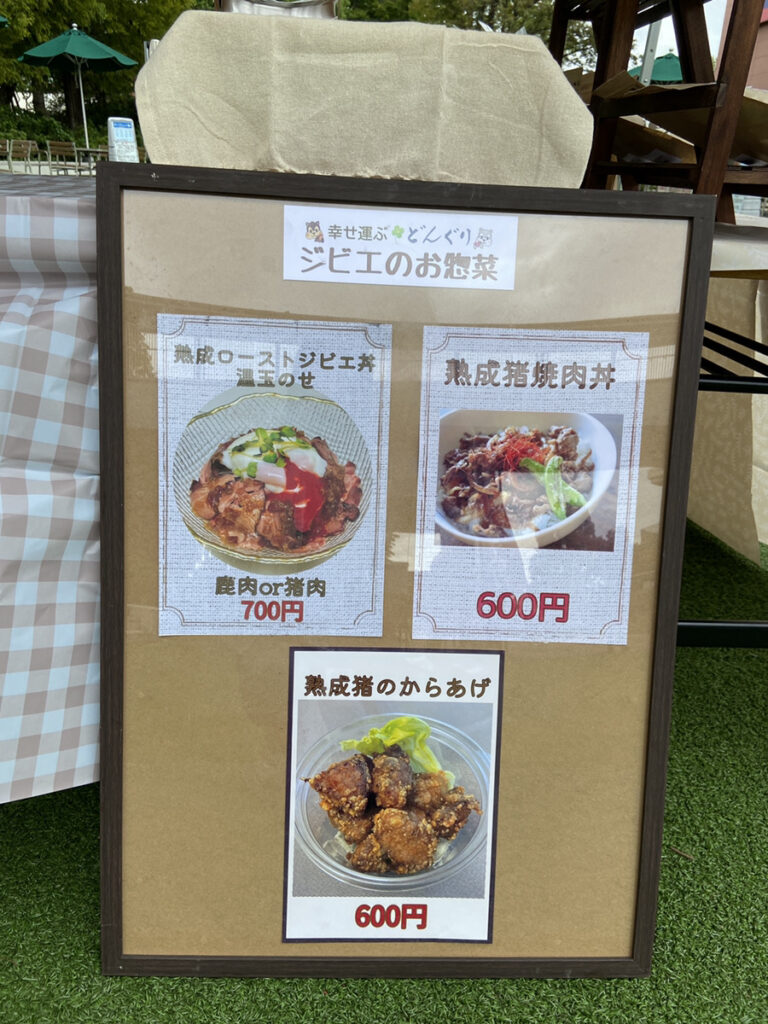
They were selling rice bowls and prepared dishes made with venison and wild boar, as well as pet food.
Gibier has recently become popular as gourmet food, but the problem is that the animals are also culled as pests.
By making full use of these animals, the company helps reduce waste and secure food supplies, contributing to the SDGs.
Their pet food also includes sprinkles that can be mixed into meals when pets have little appetite, making for a nutritious meal.
From the Writer

There were only four vendors this time, but measures to prevent the spread of COVID-19 were thorough, and the tents were spaced apart, so we could take our time looking around.
I hadn’t given much thought to the SDGs before.
Through this event, I came to realize that, in addition to not leaving food uneaten in our daily lives, we can take things a step further by asking whether there is something we can do for someone else—and that buying food made from ingredients that would otherwise go to waste may also be a way to contribute.
The organizers say they will continue to introduce, from time to time, companies and organizations working on SDG initiatives at future events.
If you get the chance, why not stop by?
“SDGs from Ario: Let’s think about delicious food in the future!” Information
| Name | “SDGs from Ario: Let’s think about delicious food in the future!” |
|---|---|
| Date | Saturday, September 10, 2022, 10 a.m.–3 p.m. |
| Location | 12-2 Kotobukicho, Kurashiki City, Okayama Prefecture |
| Admission (tax included) | Free |
| Website | Ario Kurashiki | Kurashiki Shopping Mall |



What would you like to know about Kurashiki?
Enter a search term to find articles on this site