In recent years, elementary schools have been placing importance on "inquiry-based learning," where children pose their own questions and deepen their thoughts.
That said, there are surprisingly few opportunities for children to think about social issues as "their own matters."
I want children to know that "there are things they can do too."
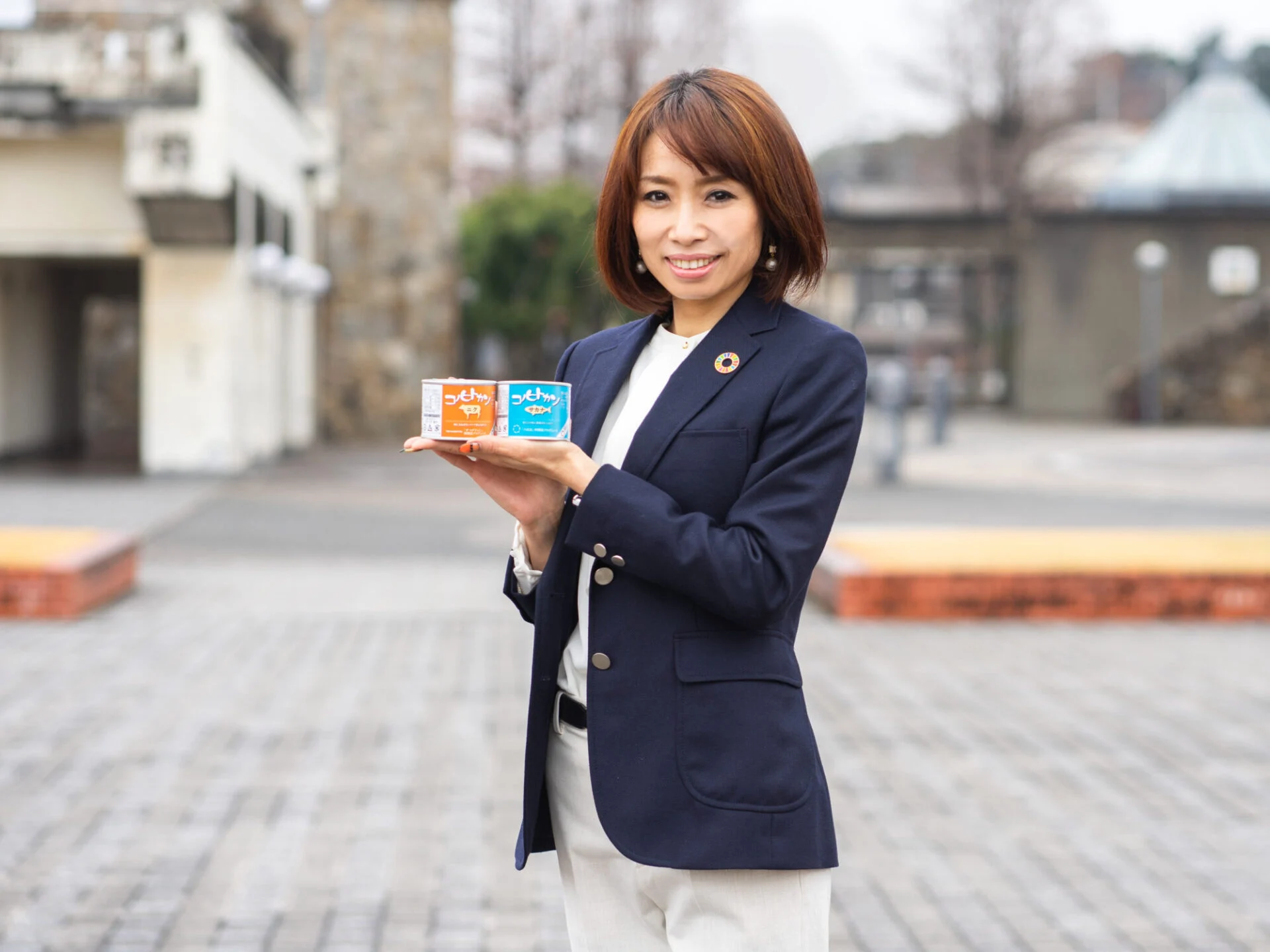
From this desire, Chihiro Miyoshi, the representative of Konohitokan, Inc., along with her colleagues, created educational materials that allow children to learn about food loss and disaster prevention through play.
How did the educational materials from Konohitokan take shape through various encounters and collaborations? We will trace the thoughts embedded in them.
What is Konohitokan?
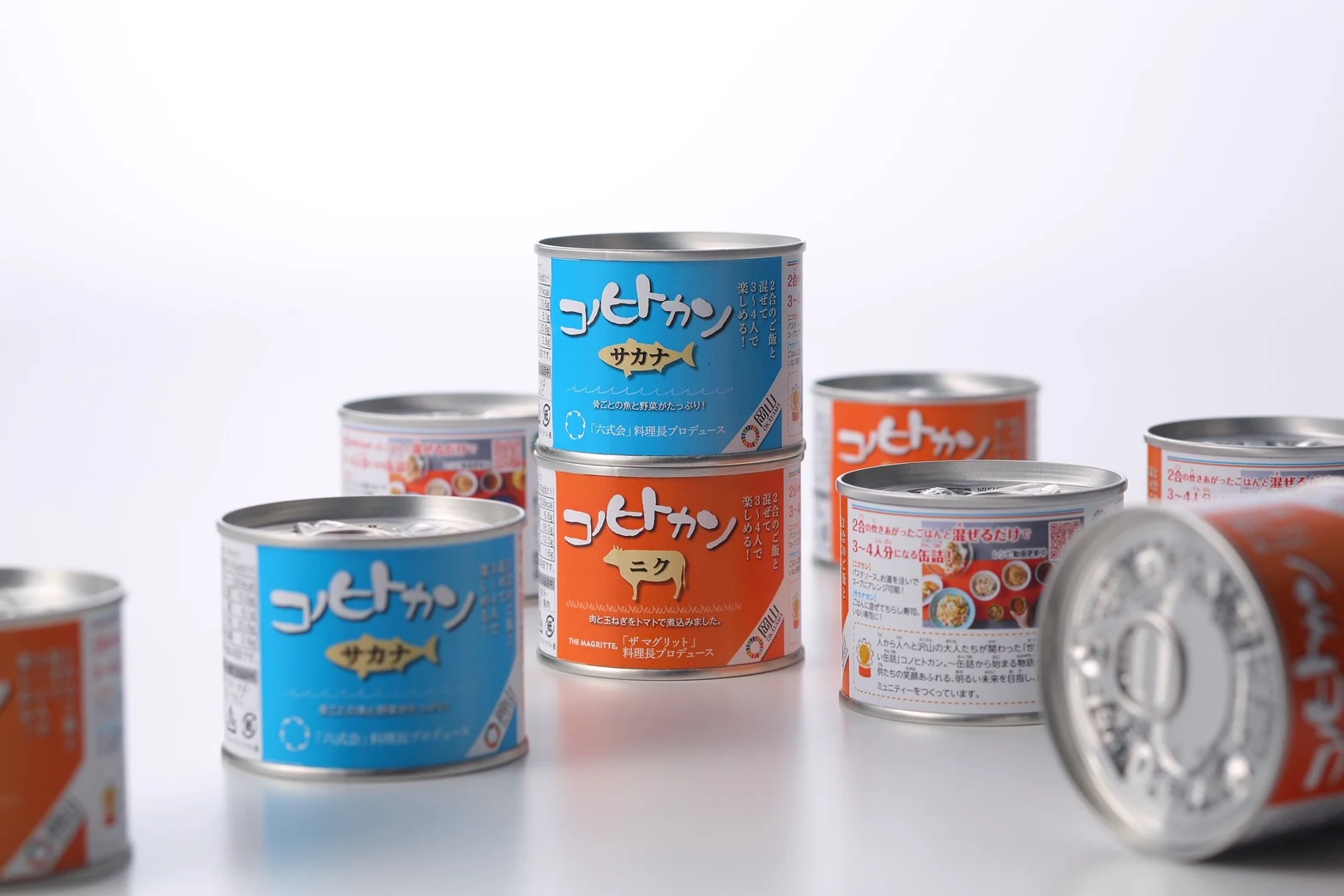
Konohitokan is a canned food product made with the thoughts of many adults, utilizing ingredients that are still edible but would otherwise be discarded, under the supervision of chefs in Okayama Prefecture.
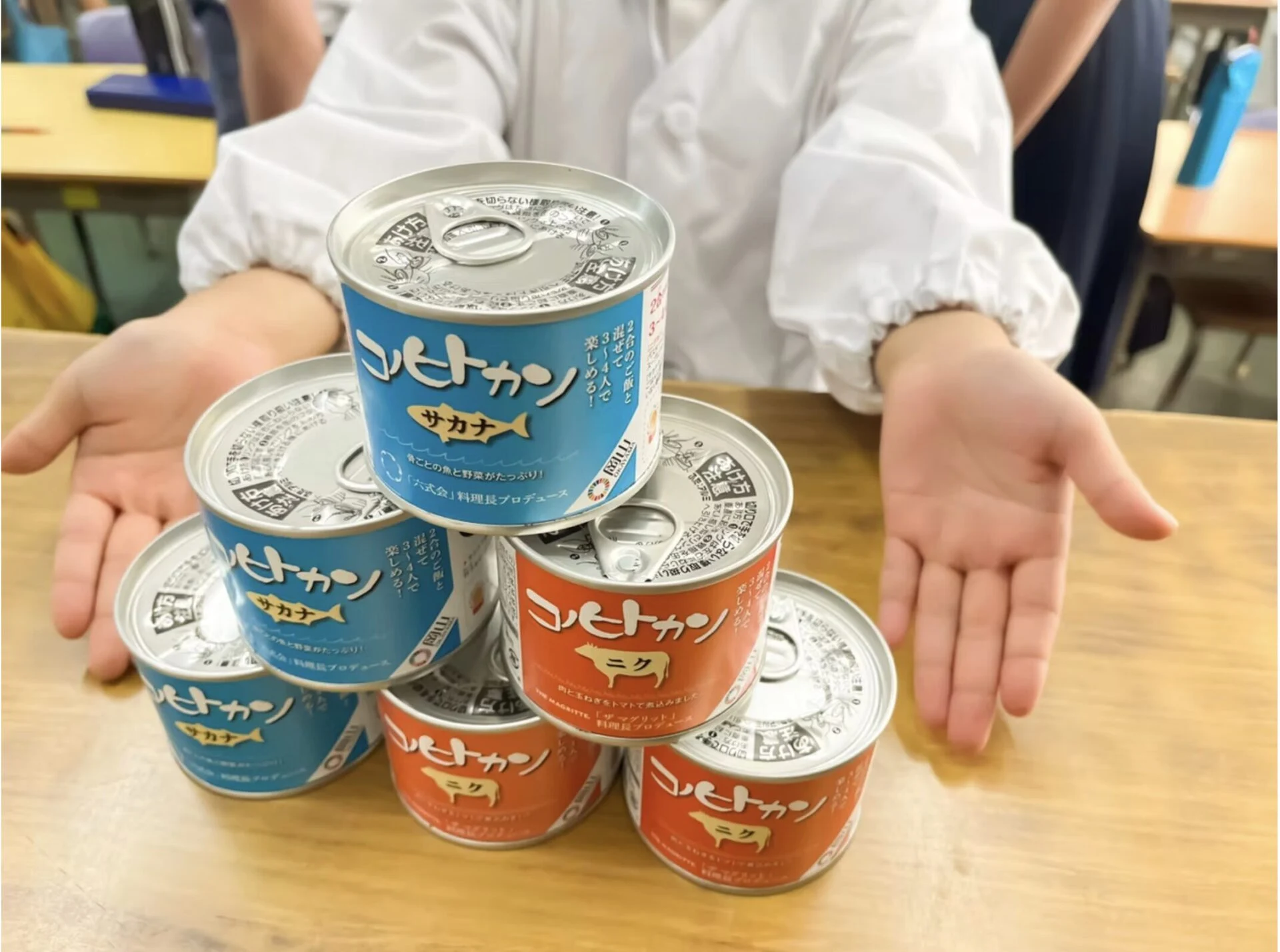
(Photo provided by Konohitokan, Inc.)
There are two types: "Nikukan" (meat can) and "Sakanakan" (fish can).
They are designed to easily create meals for 3 to 4 people just by mixing them with freshly cooked rice.
With support from companies and individuals, they are distributed free of charge twice a year to children's cafeterias and child welfare facilities through social welfare councils. They continue activities that not only deliver the canned food but also convey the thoughts behind each can and the connections between people.
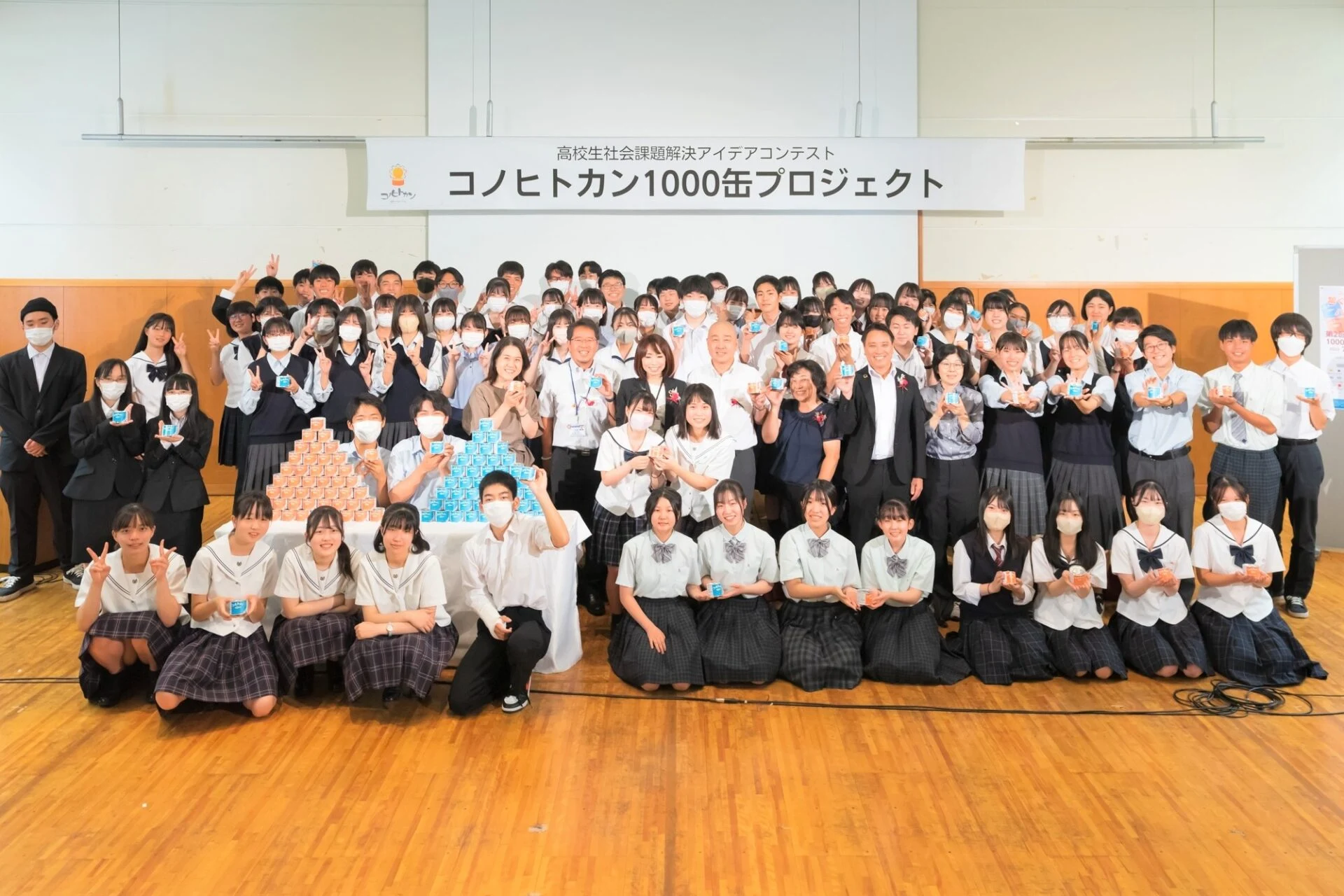
Additionally, they hold the "Konohitokan 1000 Can Project," where high school students think about solutions to social issues every year. From the third session in 2024, it will expand nationwide, and from 2025, it will receive support from the Ministry of Education, Culture, Sports, Science and Technology. In 2026, it will mark its fifth session, and activities originating from Okayama are gradually starting to reach outside the prefecture.
How Konohitokan's Educational Materials Were Created
In 2025, Konohitokan utilized subsidies from the "Bichu Region Future Creation Support Project" to work on creating educational materials for elementary schools.
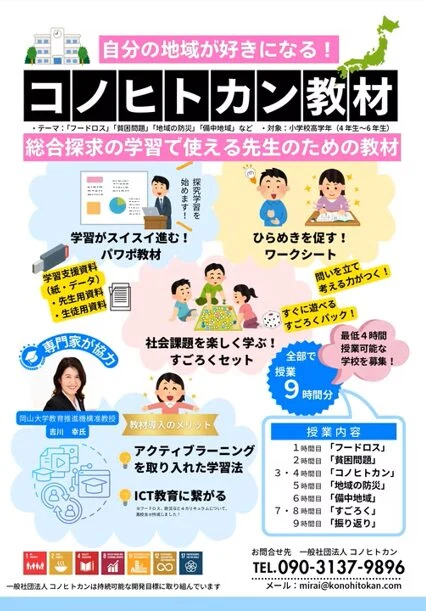
The background to this is that there are differences in how inquiry-based learning is conducted and how classes are created at each school, leading to a significant burden on teachers' preparation. Therefore, the aim was to create materials that are easy for teachers to use and allow children to learn while thinking for themselves.
As a result of reaching out to many elementary schools, six schools in the Bichu region, including Kurashiki City Akitaka Elementary School and Tsubue Elementary School, participated as model schools.
High school students from Okayama High School, Okayama Sanyo High School, Kurashiki Suisho High School, and Komatsu Otani High School in Ishikawa Prefecture also joined in the material production.
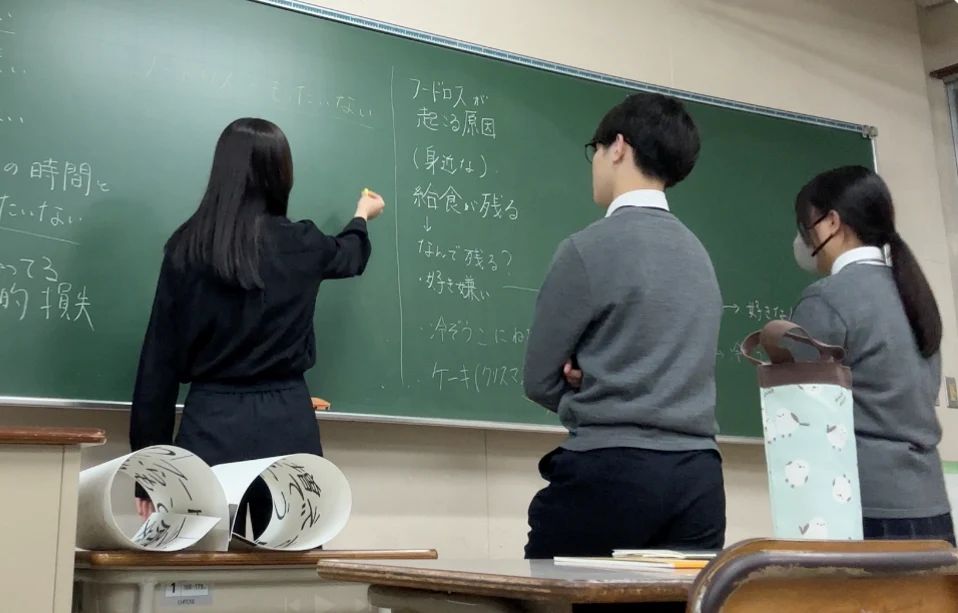
The teaching slides and worksheets were repeatedly refined with the advice of former teachers and under the supervision of Associate Professor Miyuki Yoshikawa from the Okayama University Educational Promotion Organization.
Classes will be conducted at each elementary school starting in the second semester, where students will learn about food loss and disaster prevention using the Konohitokan materials. Some high school students aiming to become teachers will even stand in front of the class. Although they may feel nervous, this experience has strengthened their desire to "want to become a teacher."
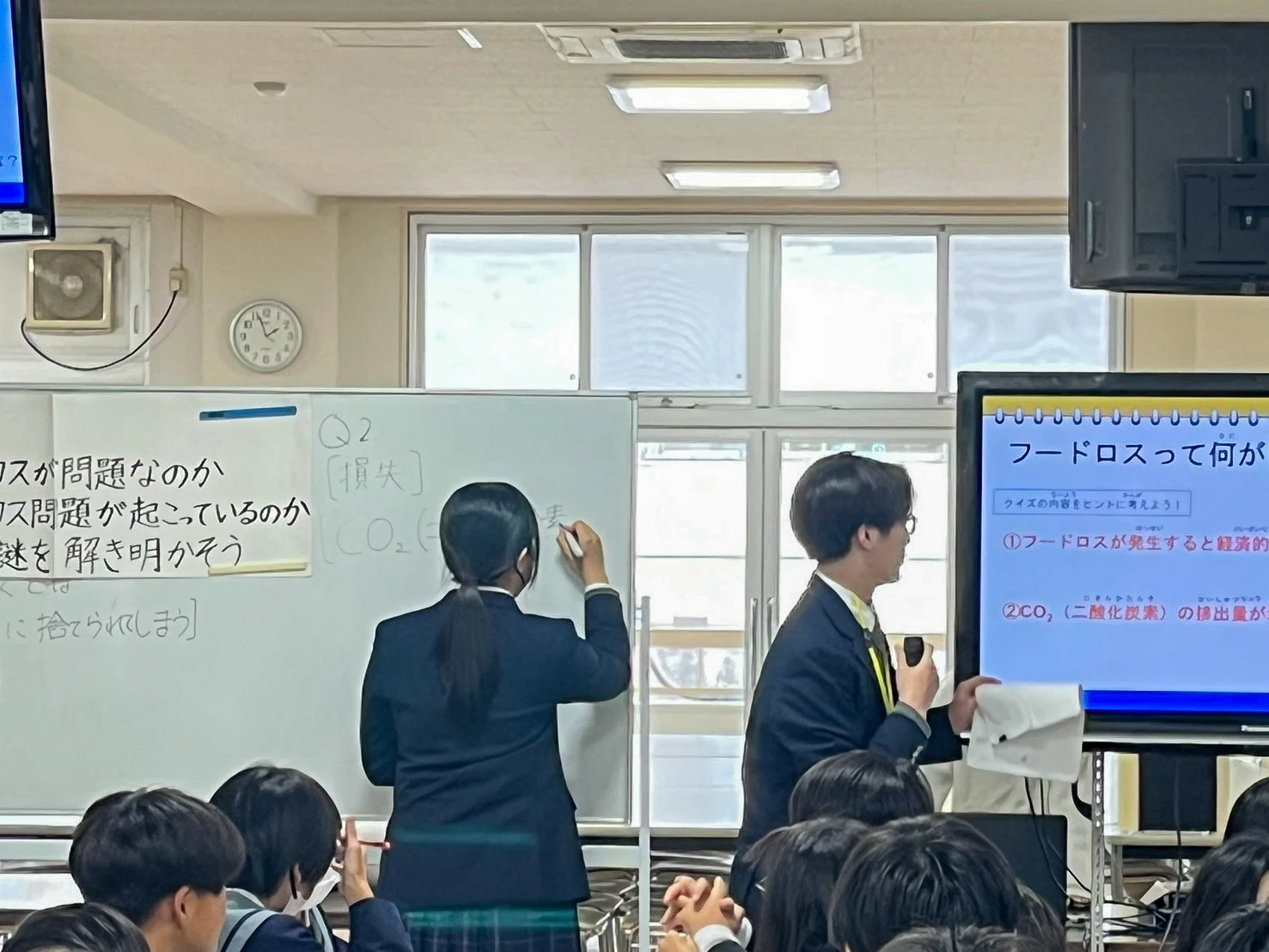
In the post-class surveys, comments such as "I want to talk about this with my family" and "It was fun and easy to understand" were received, and this initiative has been featured in the media. It was clear from the feedback that this learning had become a personal matter for the children.
"Konohitokan Sugoroku"
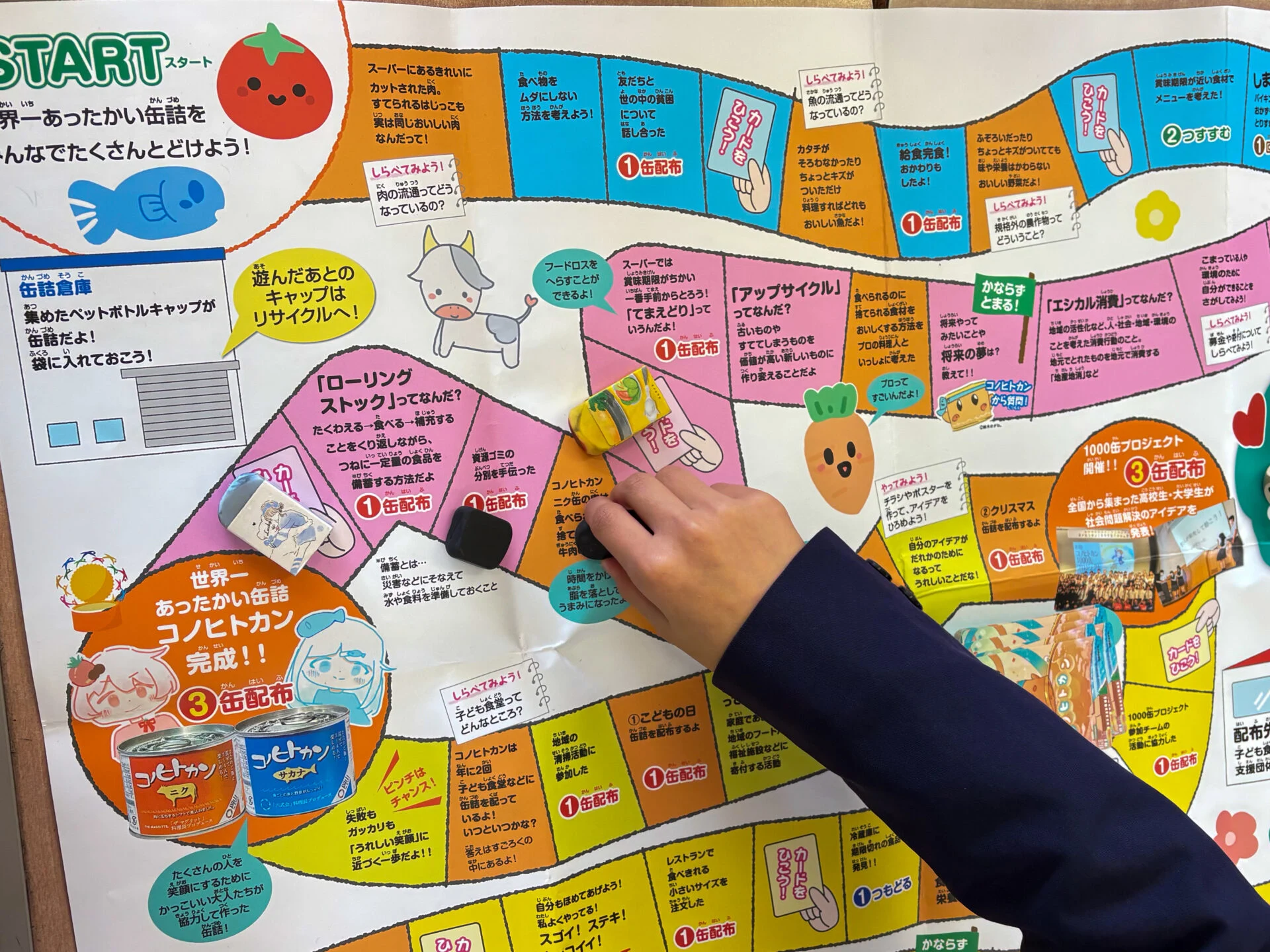
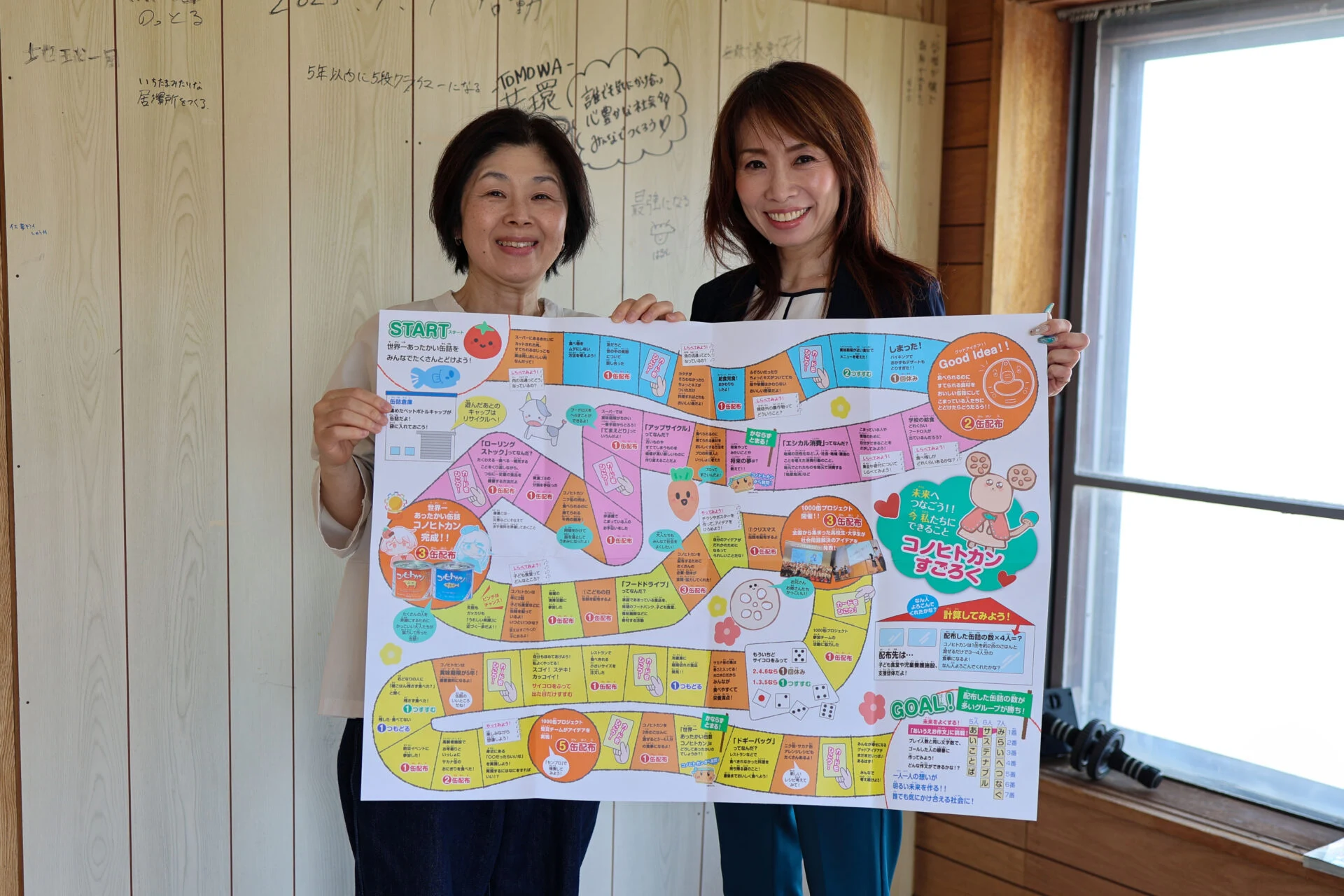
The centerpiece of the educational materials is the "Konohitokan Sugoroku."
This sugoroku is not a competition to see who can reach the goal first as individuals.
It is characterized by progressing as a team while thinking about food loss and disaster prevention and discussing with friends.
In the game, the bottle caps collected by the children are treated as Konohitokan's canned food.
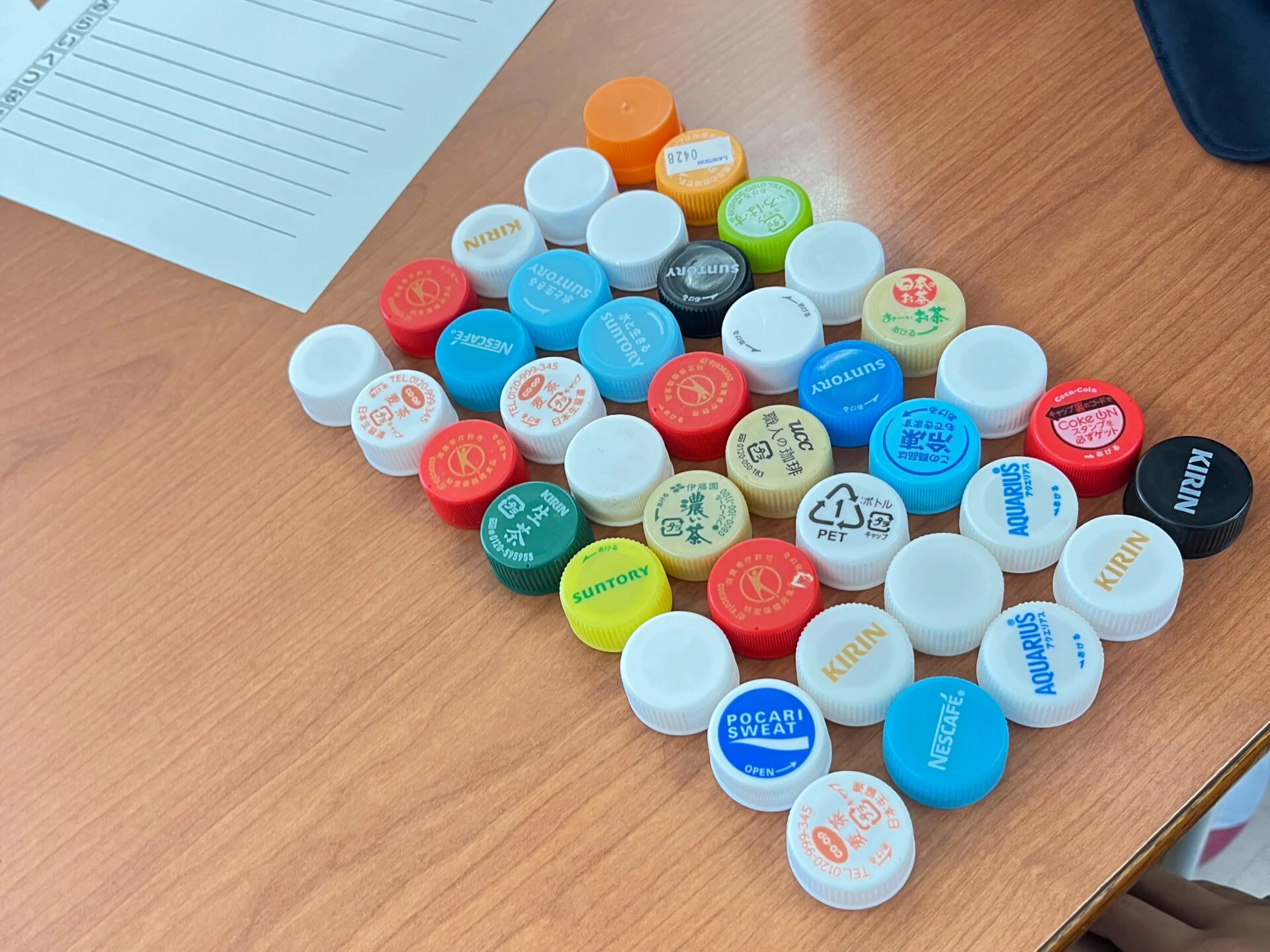
The setting is to deliver those canned foods to people in need or those requiring assistance.
Ultimately, the team that delivers the most canned foods and brings smiles to the most people wins.
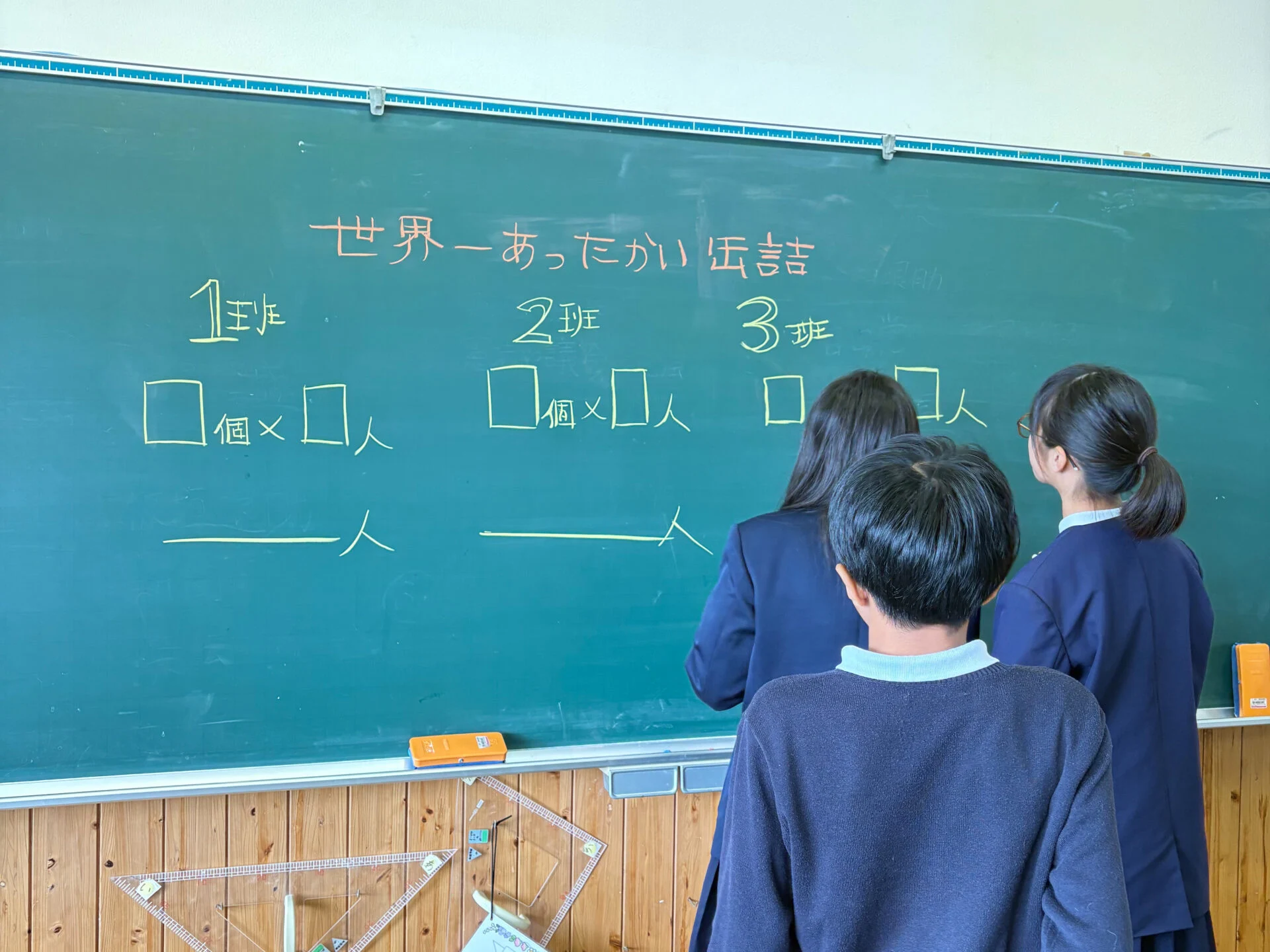
Rather than competing, the structure encourages teams to cooperate and feel that "they have done something good" after reaching the goal.
The Thoughts Embedded in the Cards
Various cards appear in the Konohitokan Sugoroku.
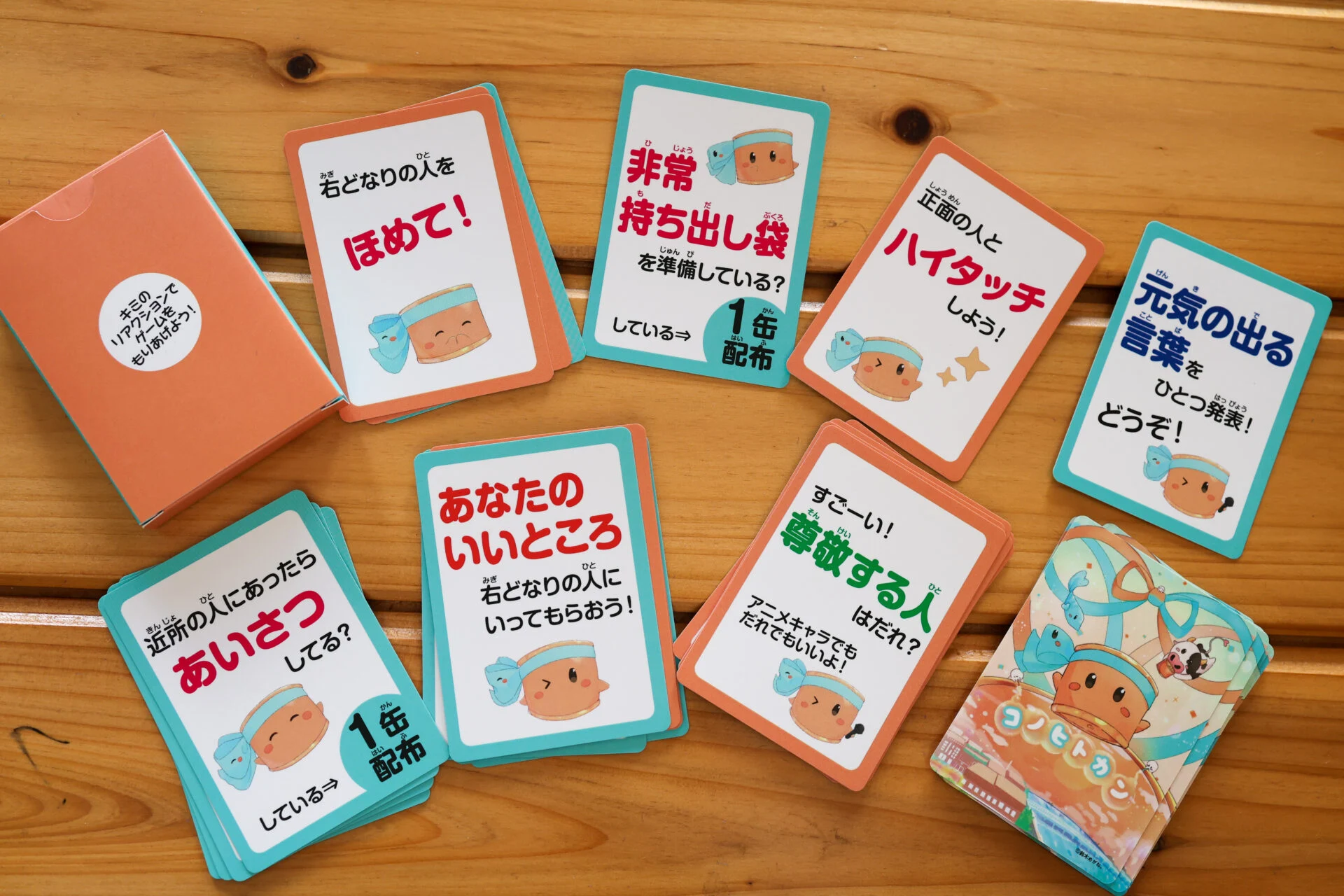
"High-five the person in front of you"
"Try to say thank you to your teacher."
These may seem like small actions, but they can serve as opportunities to express words that one might normally feel shy to say or to become aware of one's own feelings.
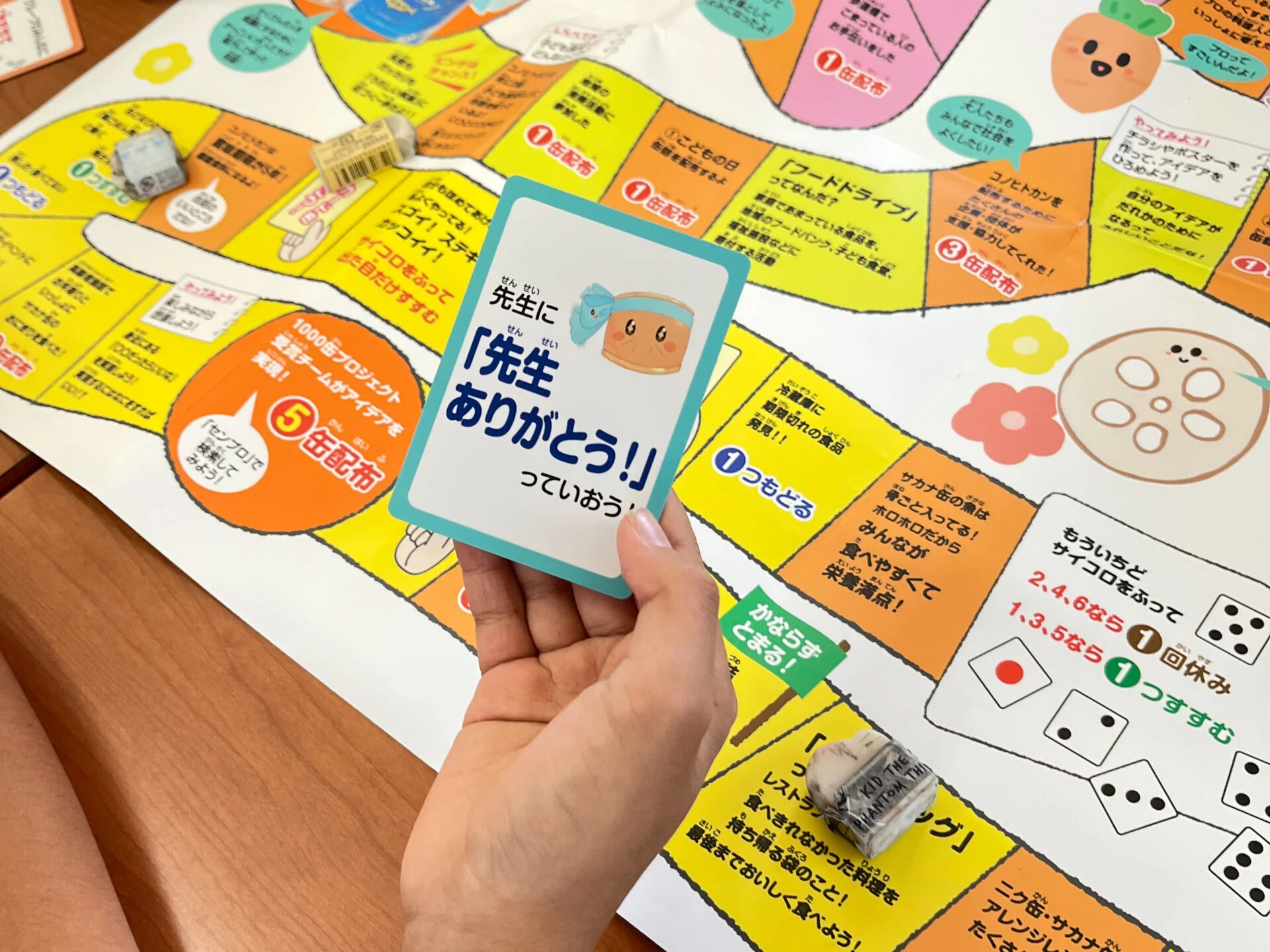
Not only does it teach about food loss and disaster prevention, but it is also designed to provide time for self-reflection.
"The Baton of Thoughts" Connecting Children and Companies
These educational materials have been utilized in six elementary schools over the course of a year, with approximately 450 children learning from them.
In the reflection classes, there is also time to write letters to the companies supporting Konohitokan as a "baton of thoughts."
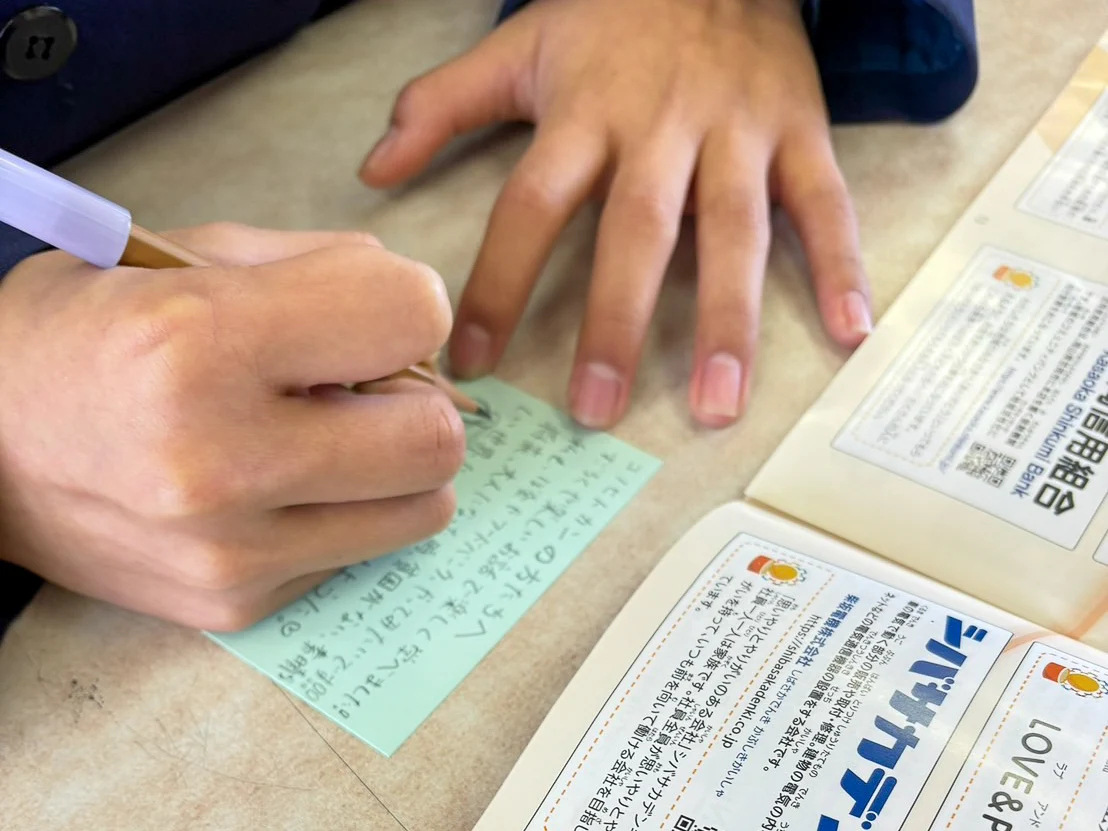
Konohitokan receives messages from supporting companies to the children.
The children read these messages and write their feelings, thanks, and dreams on cards to be delivered back to the companies.
Receiving the thoughts of companies, the children respond in their own words.
The "Thoughts Baton" has also become an initiative that connects children and companies.
We spoke with Chihiro Miyoshi, the representative of the general incorporated association Konohitokan, and designer Sonono Nishimori about the thoughts behind the creation of educational materials for elementary school students.
Data of the General Incorporated Association Konohitokan
| Organization Name | General Incorporated Association Konohitokan |
|---|---|
| Representative Name | Chihiro Miyoshi |
| Year Established | June 10, 2022 |
| Address | 1240-3 Sasao, Kurashiki City, Okayama Prefecture |
| Website | General Incorporated Association Konohitokan |