The Kanemitsu Gakuen Music Club Wind Orchestra in Asakuchi City celebrated its 100th anniversary in 2019.
From its founding in 1919 (Taisho 8), a century has passed.
Originally, a commemorative concert was scheduled for March 2020 (Reiwa 2) to celebrate the 100th anniversary, but it was canceled due to the outbreak of the novel coronavirus.
Since then, despite restrictions on club activities and performances, the long-awaited commemorative concert is finally set to take place.
A three-hour reflection on 100 years of history through people and music. The author, a graduate of the school, will introduce it.
Before the performance - Entrance reception filled with smiles and conversations
On the day of the concert.
The author left home aiming to arrive earlier than the opening time, but was surprised to hear from a friend who arrived earlier that the area around the venue was already crowded.
Upon arriving at the venue entrance, there was a sign saying, "No tickets available for sale today due to full capacity."
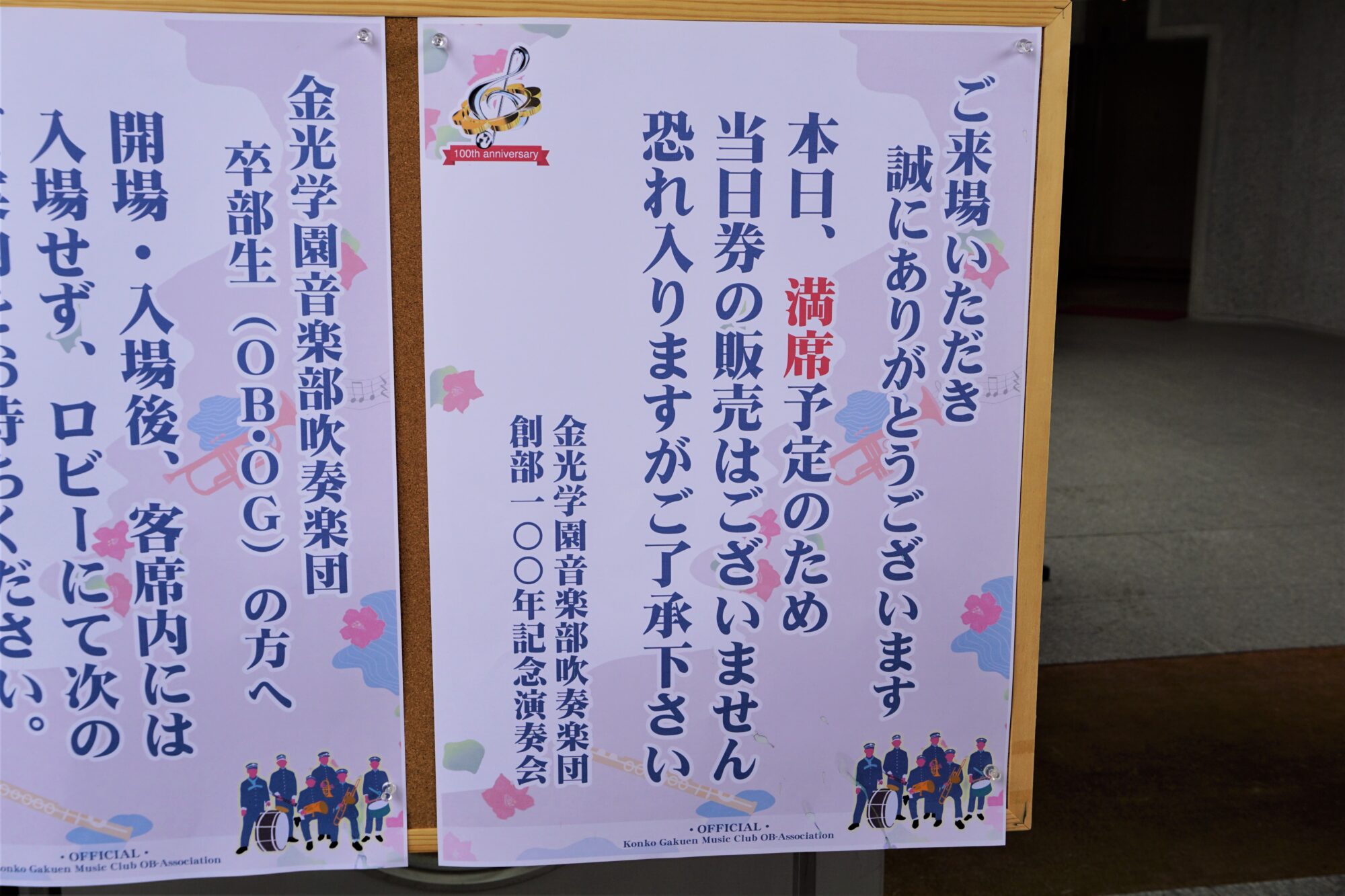
The author had purchased tickets on the morning of the previous day, but it seems they had sold out just around that time.
When asked about the preparations for the event, it was unknown how many attendees there would be.
Hearing that the tickets were sold out made the author unexpectedly happy.
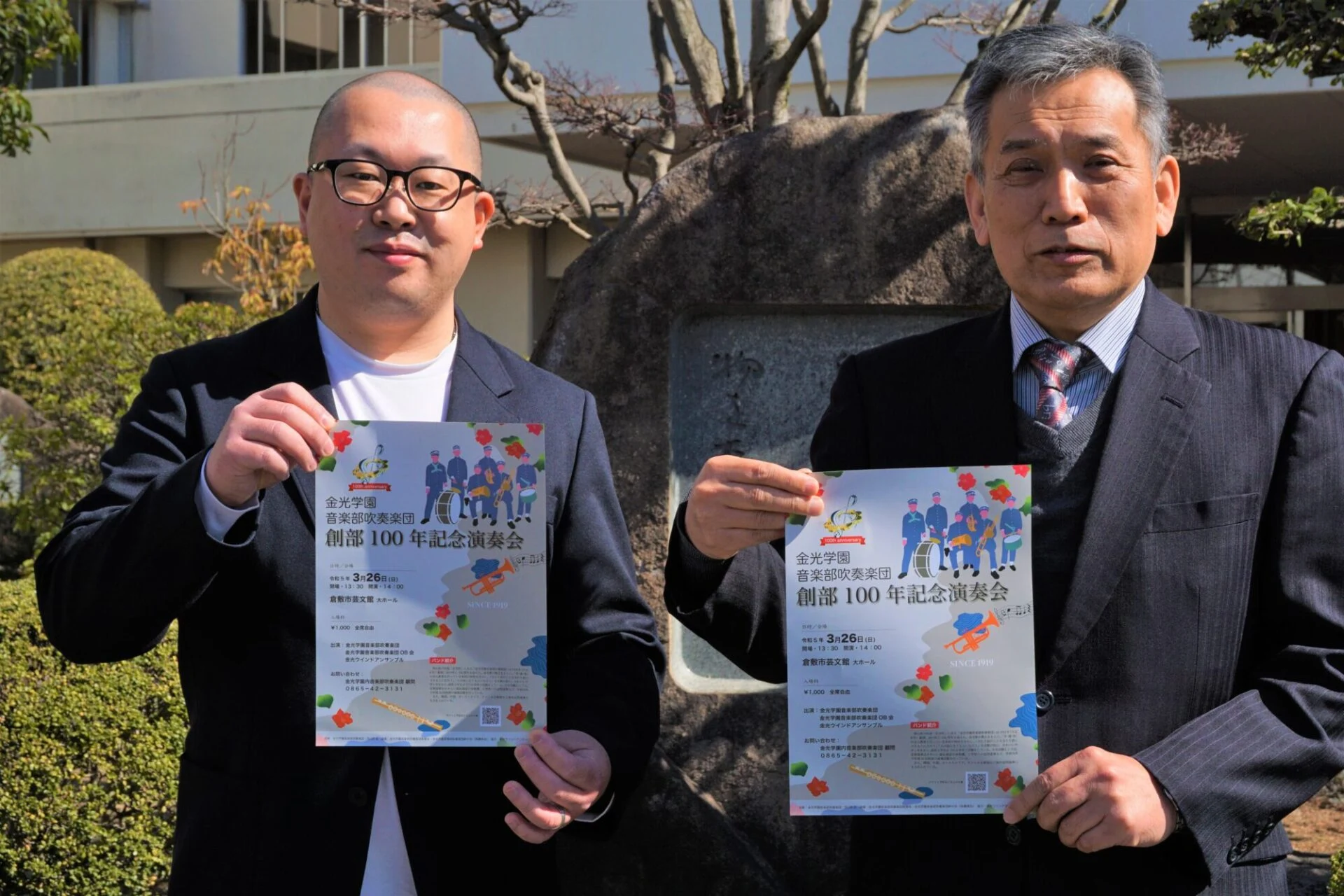
The lobby shining with the orchestra's history
Around the reception area, many groups were seen enjoying conversations while reminiscing about their reunions.
Occasionally, people moved from one group to another or rushed to greet someone else.
It felt more like a hotel lobby before a reunion than a lobby before a concert.
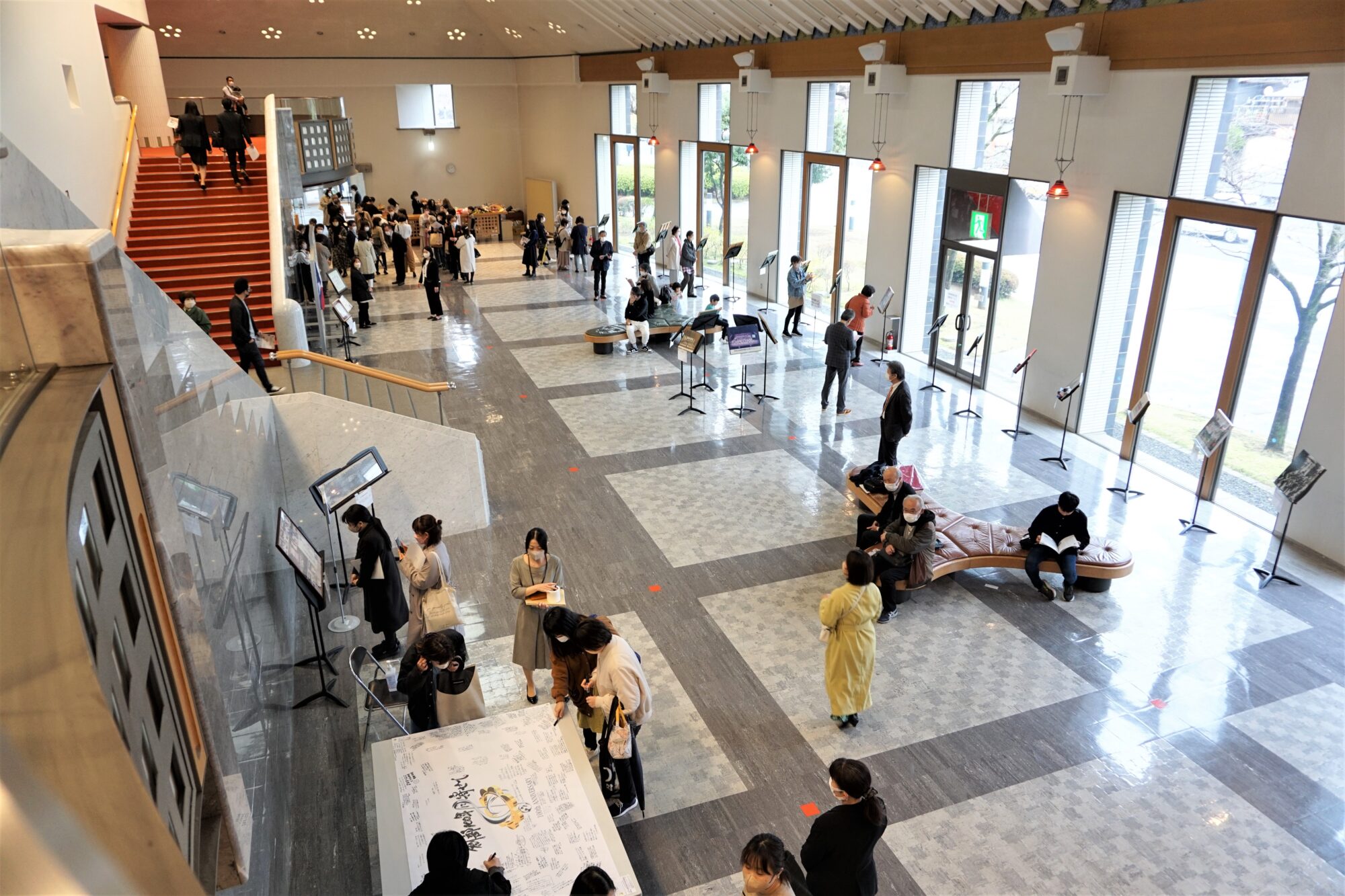
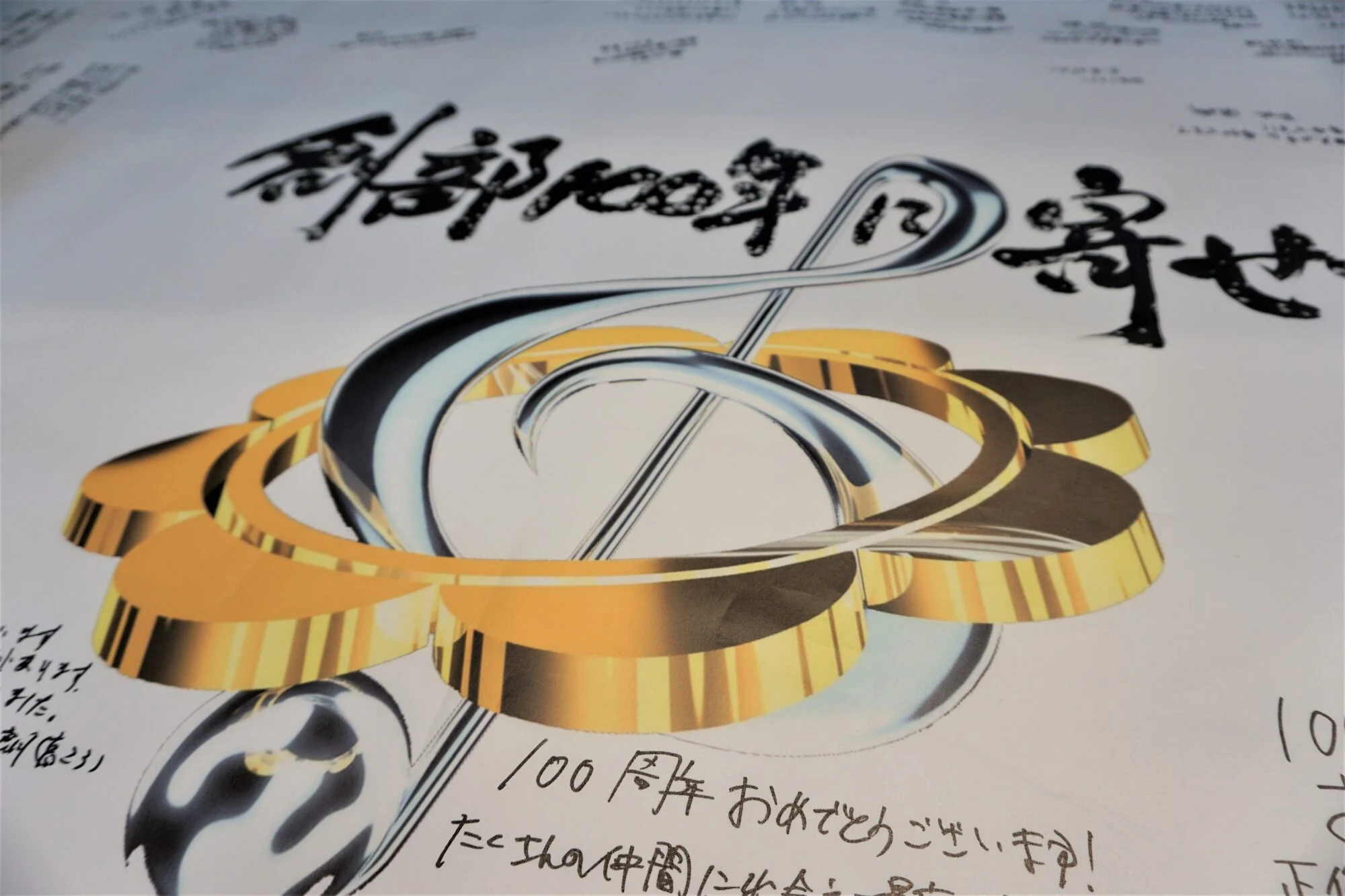
In the lobby, there were panels documenting the achievements of the wind orchestra.
There were monochrome photos, some of which had faded edges or were rounded.
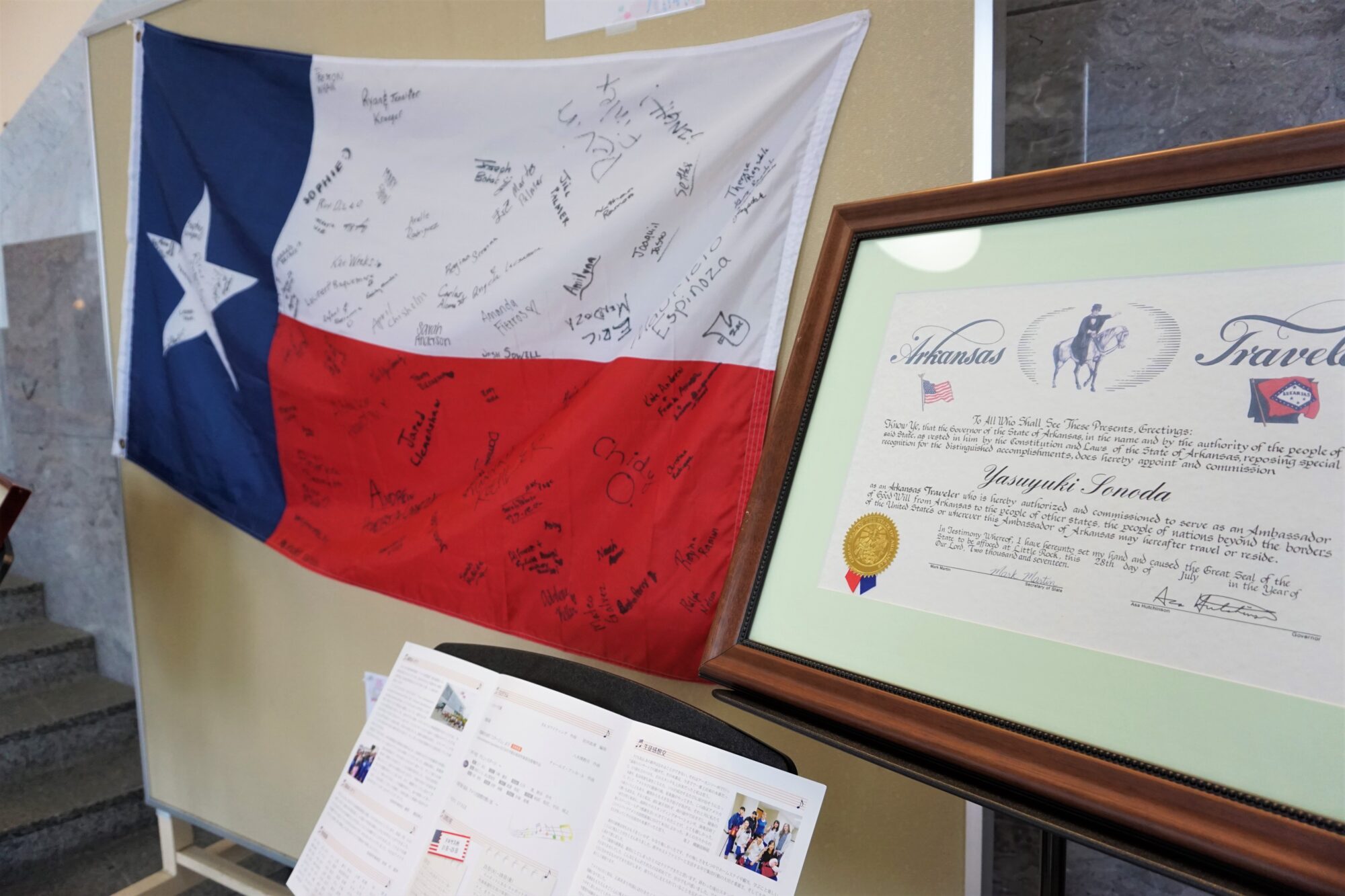
It seems that about 70 photos were used, including those on panels and those shown in slide presentations during performances.
“I took out all the albums lined up in the lockers and flipped through every page, looking at thousands of photos. Each one brought back memories of that time. It was a huge task,” said former advisor Masatoshi Sato.
This was an episode shared during the performance.
Starting with just six members, they performed at elementary schools and with the youth division of the Kanemitsu Church.
Even after the war, they did not lose their momentum and expanded their performance activities.
After leaving the country, they left a solid record of performances abroad, and then faced another difficult period due to the outbreak of the novel coronavirus.
Yet, the commemorative concert of the Kanemitsu Gakuen Music Club Wind Orchestra, which has been passed down, is about to begin.
Part 1 Young Soul Stage
Finally, the performance begins.
As indicated in the prior announcements, the seats in the venue are almost filled.
Performance pieces
| Performance Piece | Details |
|---|---|
| Omens of Love | Hirotaka Izumi / Composer, Naruharu Miyagawa / Arranger |
| The 13 Lords of Kamakura | Evan Call / Composer, Mikan Goma / Arranger |
| Sakura no Uta | Yosuke Fukuda / Composer |
| Jamboree Mickey | Marco Marinangeli / Composer, Mikan Goma / Arranger |
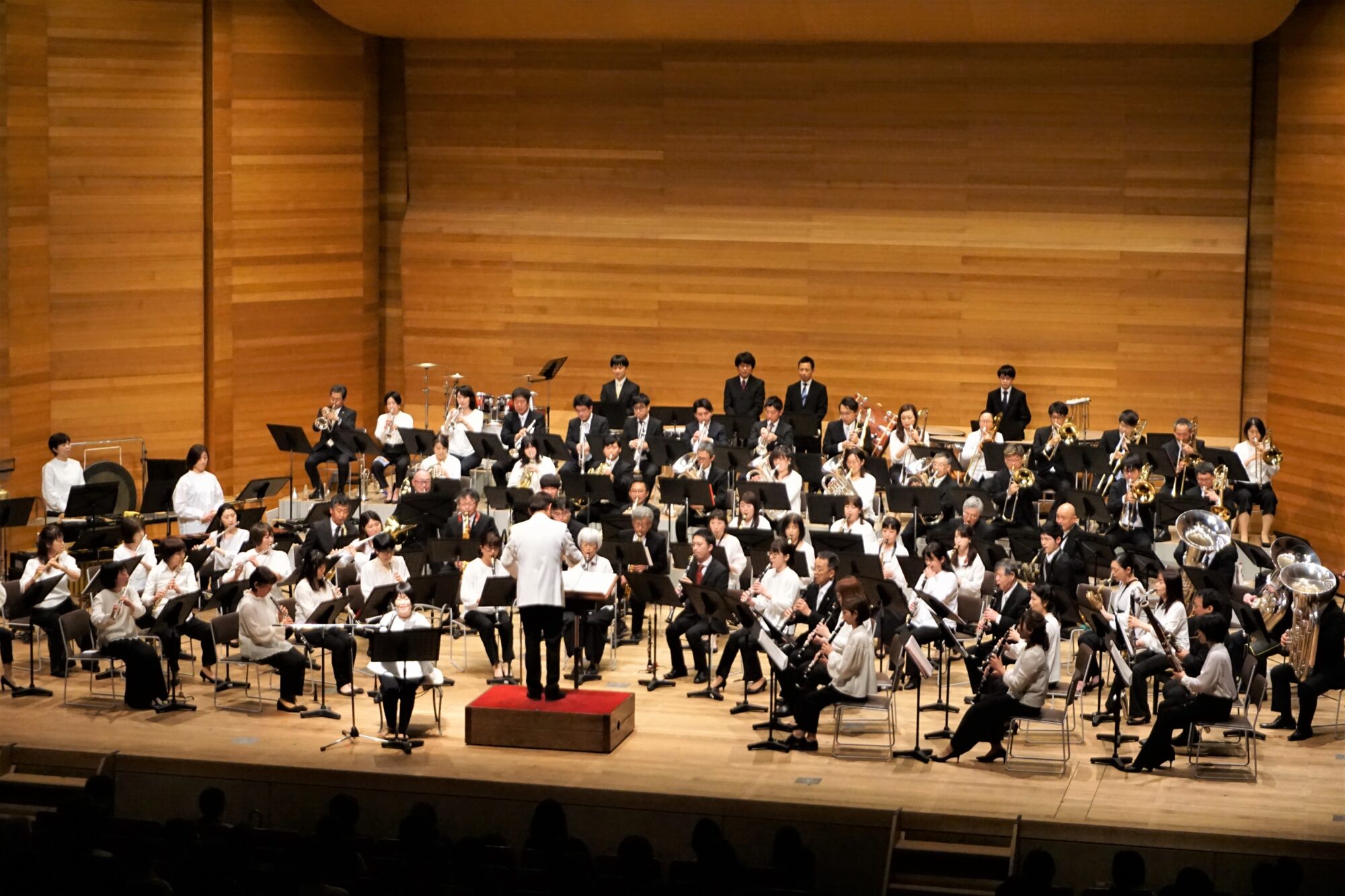
Conducted by Advisor Yoshiyuki Sonoda, performed by the Kanemitsu Gakuen Music Club Wind Orchestra.
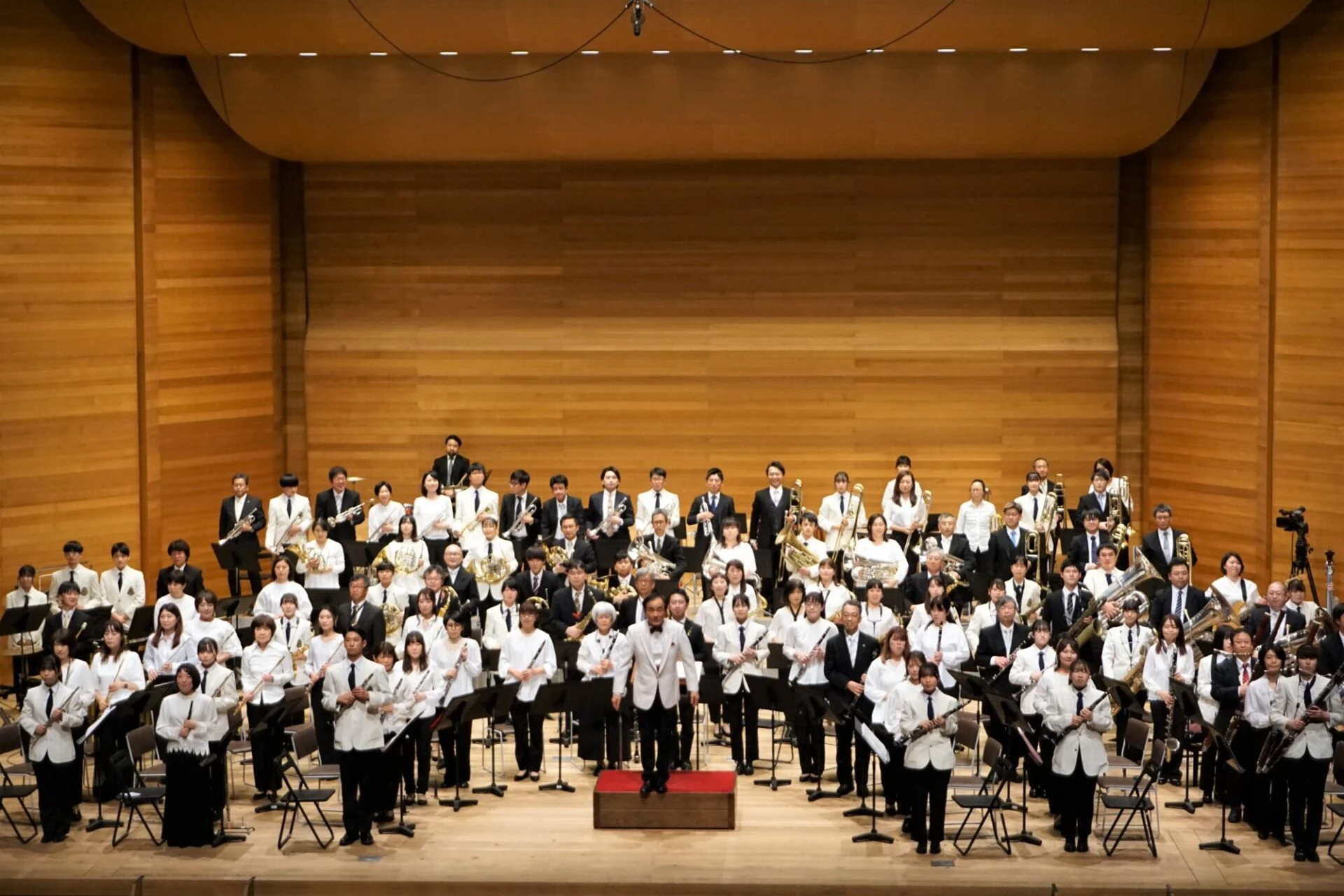
A total of 28 members dressed in white blazers took their seats.
As Mr. Sonoda confidently stepped onto the podium, the audience felt a tension and anticipation that seemed to transfer from the members until the lights dimmed.
A lively rhythm and movement that brings out smiles - Jamboree Mickey
The lively shouts vibrate the air of the venue.
In response to the conductor's movements, the vibrant tones seemed to spread straight across the entire venue.
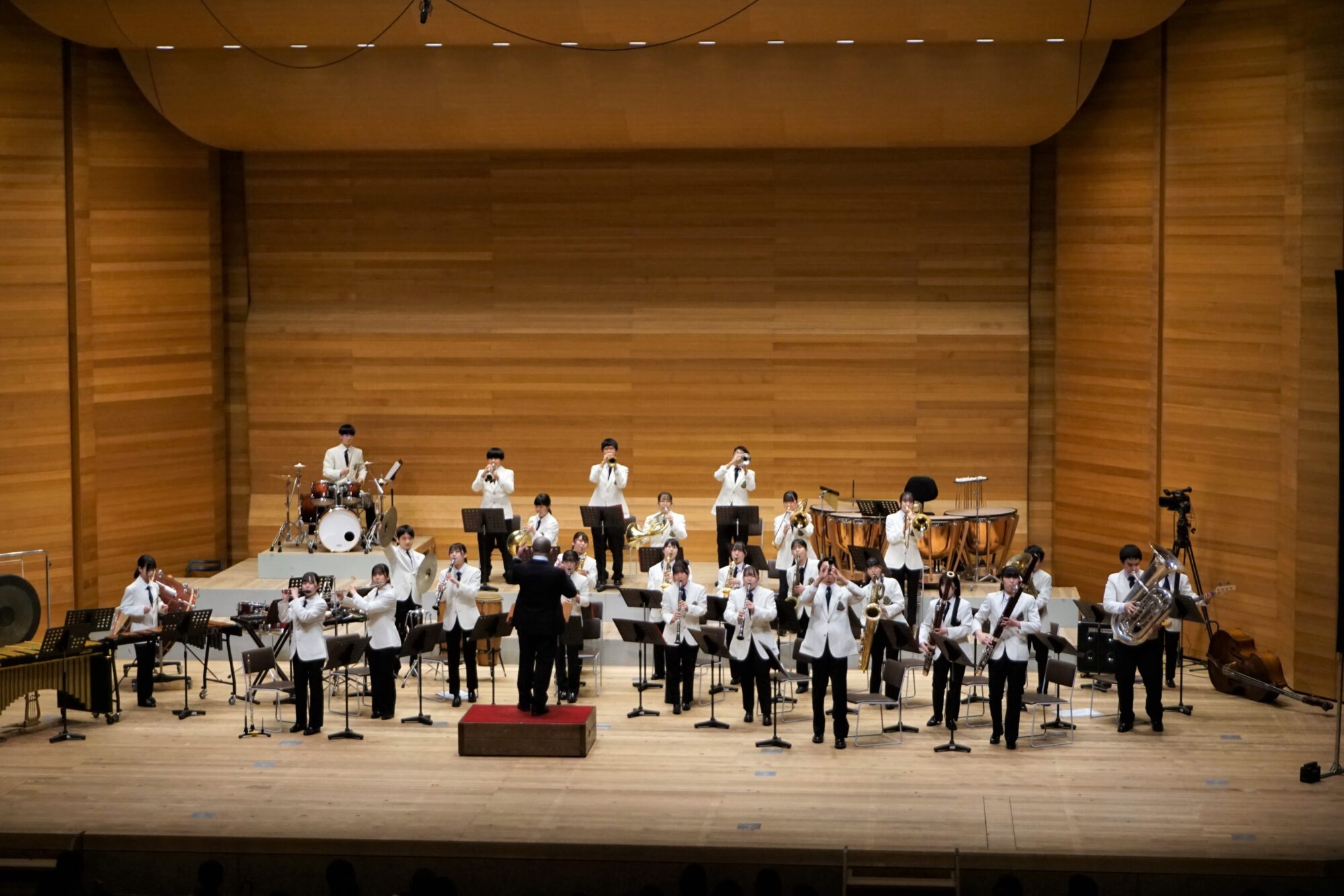
There are parts that feel as if they are played by a single instrument, while there are also parts that are overwhelming with dynamic contrasts.
The performance while stepping is unique to a wind orchestra.
In an interview before the concert, Mr. Sonoda mentioned, “I have never felt the lack of numbers. I believe we are pursuing something good with the current number of members.”
This stage was exactly as he described.
Listening to the pieces played sincerely in response to Mr. Sonoda's conducting, one could envision the partnership between the conductor and the members, or how the members supported each other, as they have walked together up to this day.
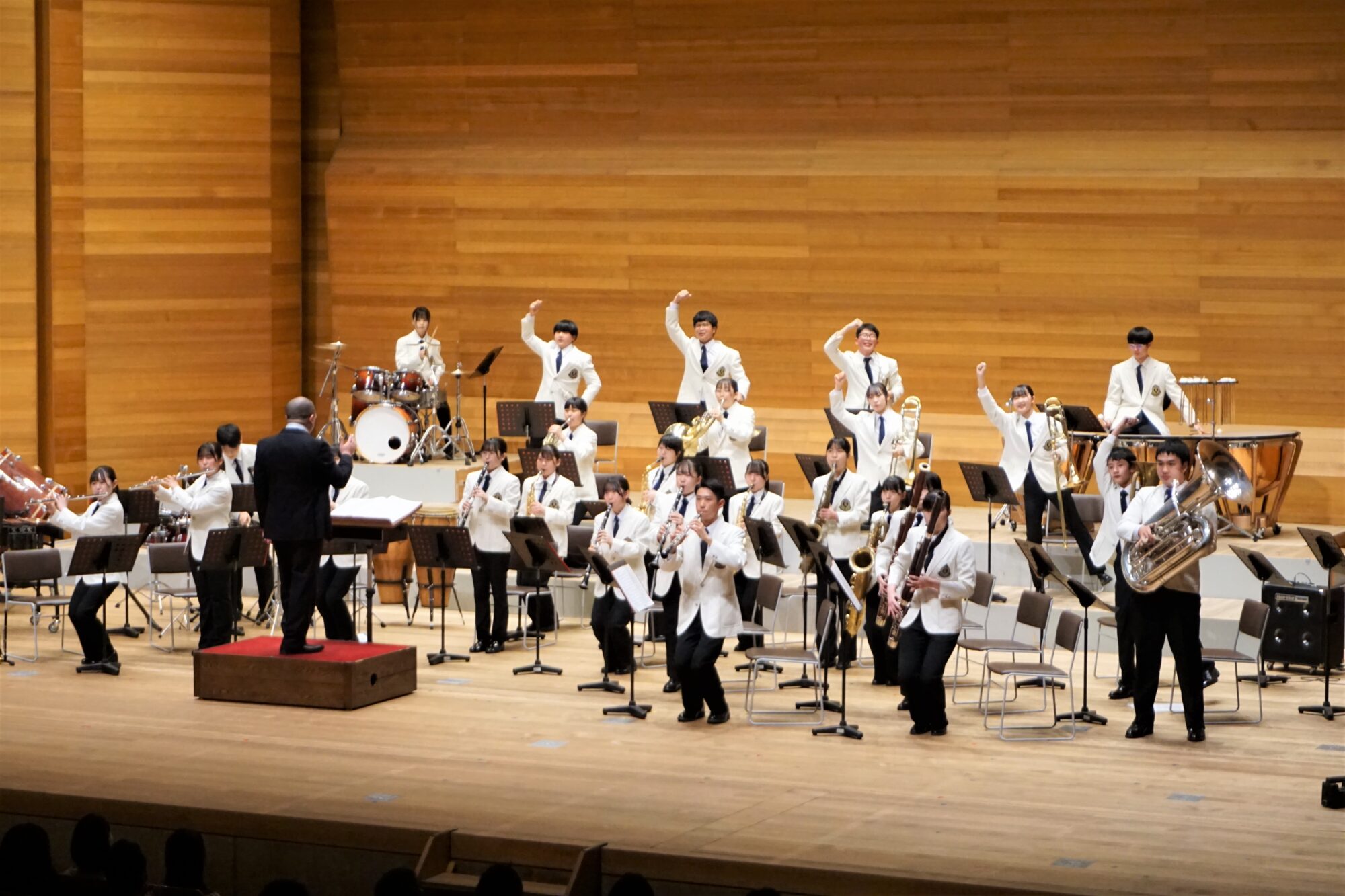
In the final piece of Part 1, the movements of the members become even larger and faster in "Jamboree Mickey".
Expressions of tension and smiling faces, as well as expressions that seem to be thinking about the next performance can be seen.
The author recalls having seen classmates perform the same piece during their time at school.
Watching the performance while moving brought back memories of admiration and nostalgia for the scenes of classmates performing, making it a refreshing yet nostalgic piece.
Part 2 Legacy stage
As Part 1 concludes, the stage is quickly rearranged.
The number of chairs being set up increased in no time.
“I actually don’t know the number of members in the Kanemitsu Wind Ensemble and the alumni volunteers in the wind orchestra. It seems to be increasing,”
Mr. Sonoda's words from the interview resurfaced.
At that time, I believe I heard it was around 80 members.
Counting the number of performers listed in the pamphlet, I was surprised to find that excluding the current members, the number was approaching 100.
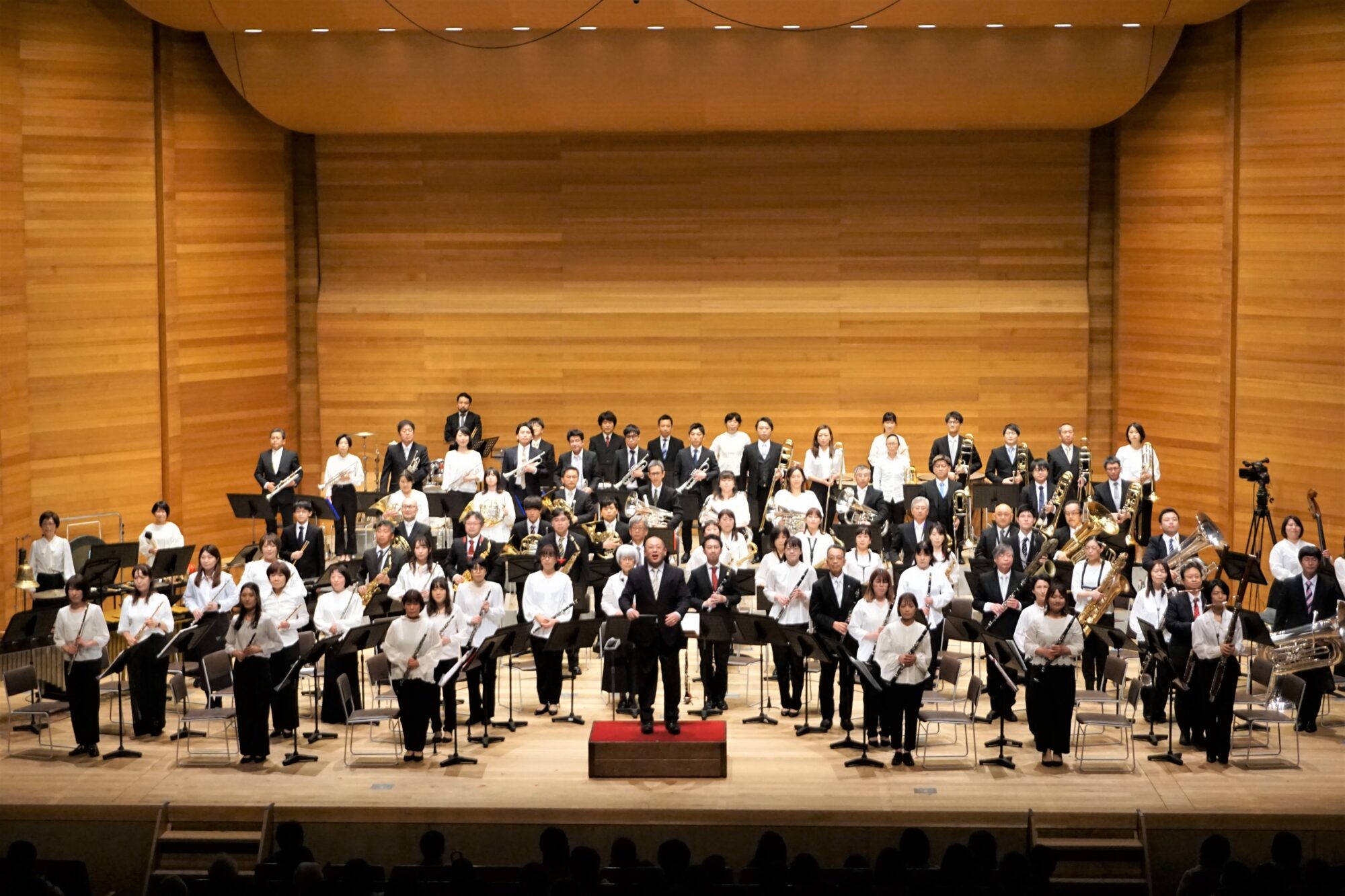
Performance pieces
| Piece Name | Details | Conductor |
|---|---|---|
| Fanfare "Light of the Blue Sky" | Shuhei Tamura / Composer | Yoshiyuki Sonoda / Advisor |
| Silk Road | Kitaro / Composer, Genba Fujita / Arranger | Masatoshi Sato / Former Advisor |
| Taisho Showa Kayo Medley | Kunitoshi Yamashita / Arranger | Masatoshi Sato |
| March "Young Soul" | Masakatsu Ishida / Composer | Katsunobu Yoshitomi / Former Advisor |
| Italian Festival | Glenn Osser / Arranger | Katsunobu Yoshitomi |
| In Memoriam March | Genba Fujita / Composer | Tatsuhiko Ishii ・Kanemitsu Wind Ensemble |
| From "Totto-chan: The Little Girl at the Window" | Akiro Komori / Composer, Masatoshi Sato / Arranger | Masatoshi Sato |
| Festival Prelude | Alfred Reed / Composer | Masatoshi Sato |
The conductors, all former advisors, took charge of the pieces that held memories for them.
The performance was by the Kanemitsu Wind Ensemble and alumni volunteers for the 100th anniversary wind orchestra.
After conducting, advisor Mr. Sonoda joined the performance, showcasing his transformation from conductor to performer.
At the opening of Part 2, the principal of Kanemitsu Gakuen Junior and Senior High School, Michiharu Konkō, gave a greeting, and former principal Motonobu Sato and former advisor Katsunobu Yoshitomi shared stories from that time as Part 2 progressed.
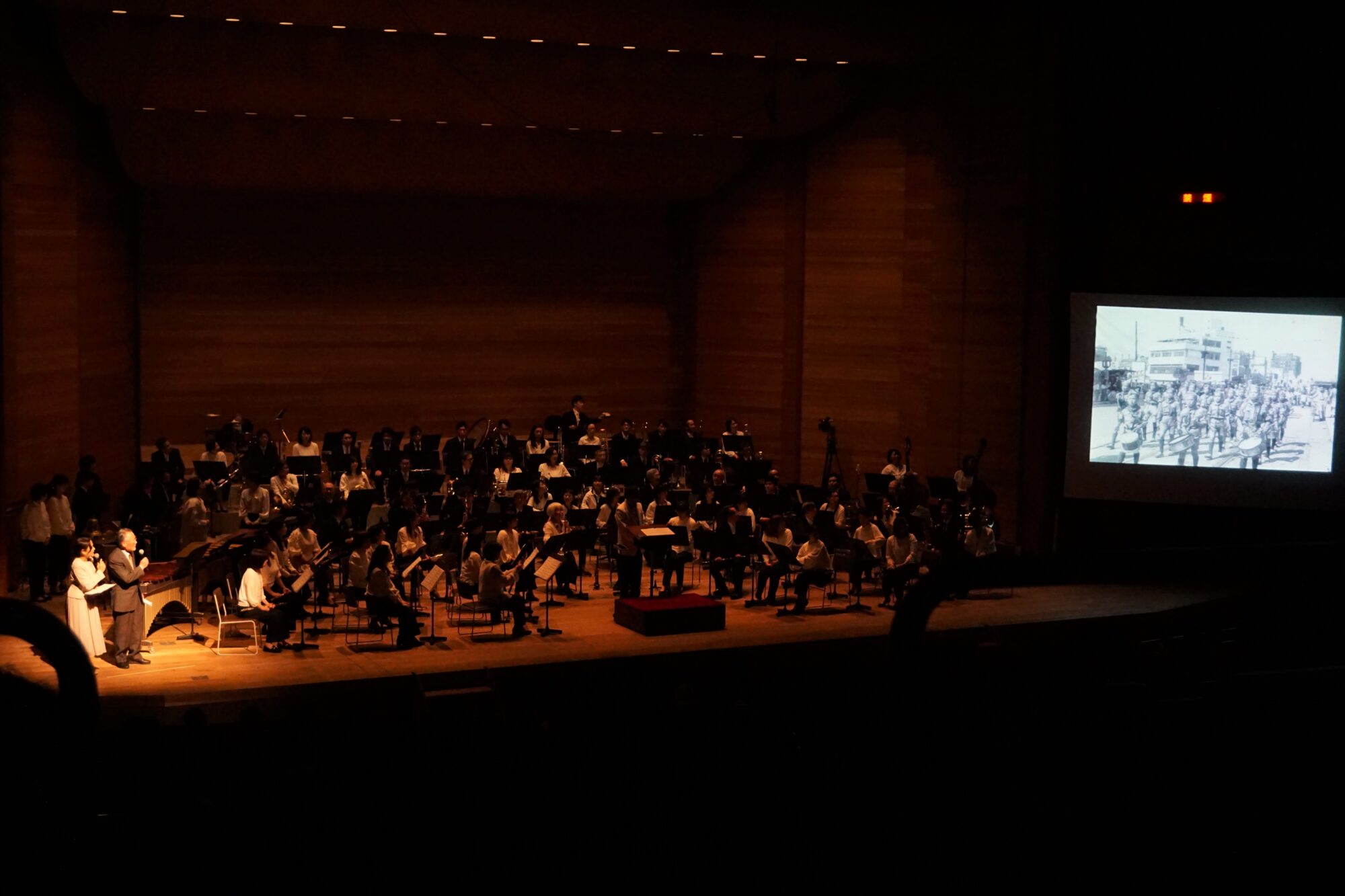
A proud and bright performance - Fanfare "Light of the Blue Sky"
Part 2 begins.
Each individual lined up on stage seems to exude a strong presence.
People of different ages and paths have gathered for this day, waiting to perform on the stage before them.
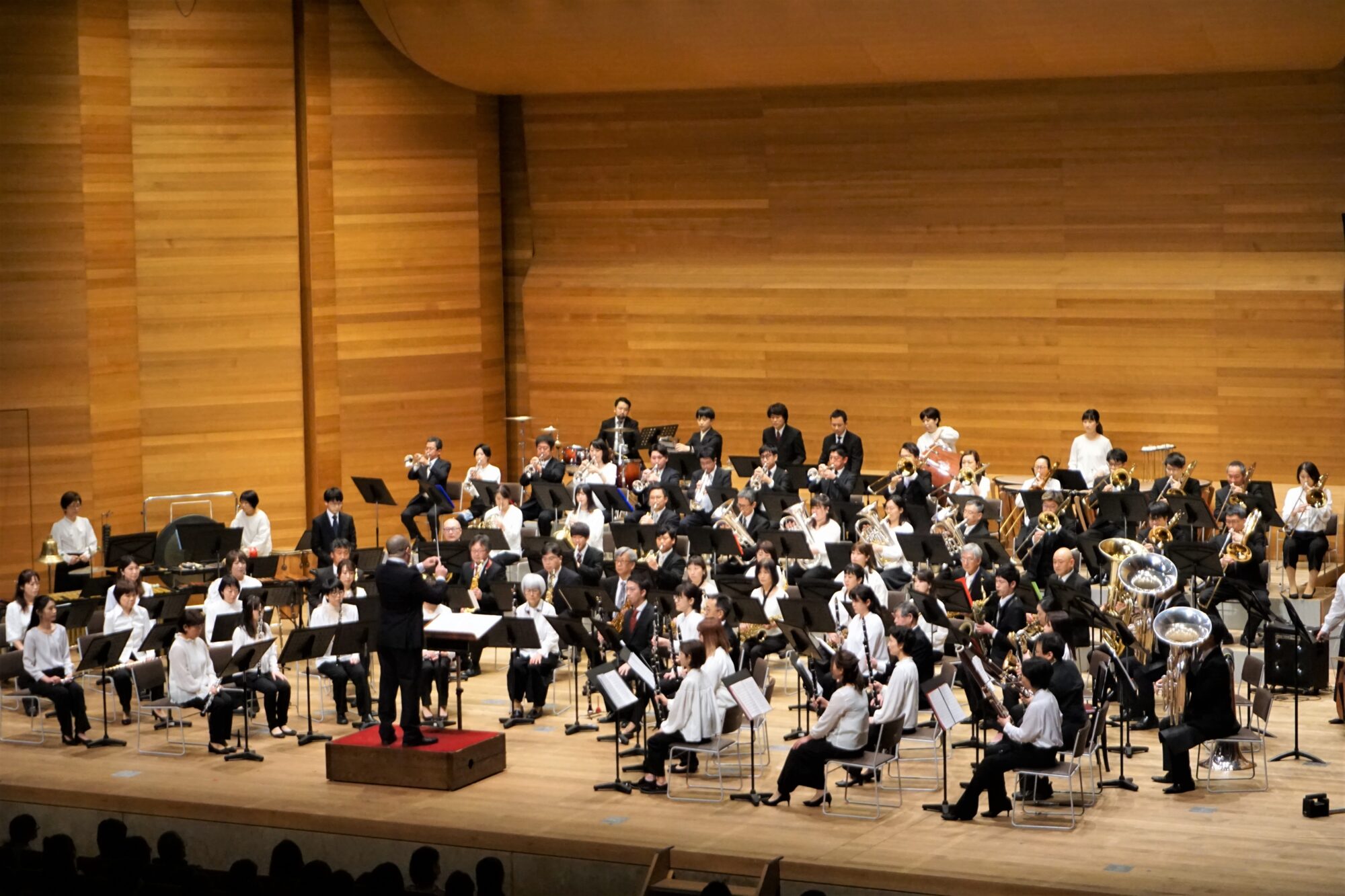
The first piece was the fanfare "Light of the Blue Sky".
This piece was commissioned from composer Tamura Shuhei, who is from Okayama Prefecture, to commemorate the 100th anniversary of the founding of the Kanmitsu Gakuen Music Club Wind Orchestra.
“It was decided that it would be a fanfare, and when I thought about what to name it, the clear blue sky of Okayama came to mind,”
revealed Tamura after the performance, sharing the story behind the naming of "Light of the Blue Sky."
The performance by the 100th anniversary wind orchestra was filled with a lively tempo of the fanfare, while also conveying a sense of weighty footsteps, creating a bright and celebratory atmosphere.
“Although it’s cloudy today, I believe that there are breaks in the clouds above the venue, and the blue sky is visible,”
said Tamura, and indeed, it felt like a fanfare that pierced through the clouds to reveal the clear sky.
The Power of Watching a Movie Without Images – From "Totto-chan: The Little Girl at the Window"
What was truly impressive was the digest of the musical story "Totto-chan: The Little Girl at the Window."
As the concert approached its midpoint and was heading towards the finale,
the author was watching with a child and thought that their concentration was about to wane.
Conductor Sato Masatoshi shared the origin of the song selection while revealing a surprise.
To everyone's astonishment, a video message from the author of "Totto-chan," Kuroyanagi Tetsuko, was played.
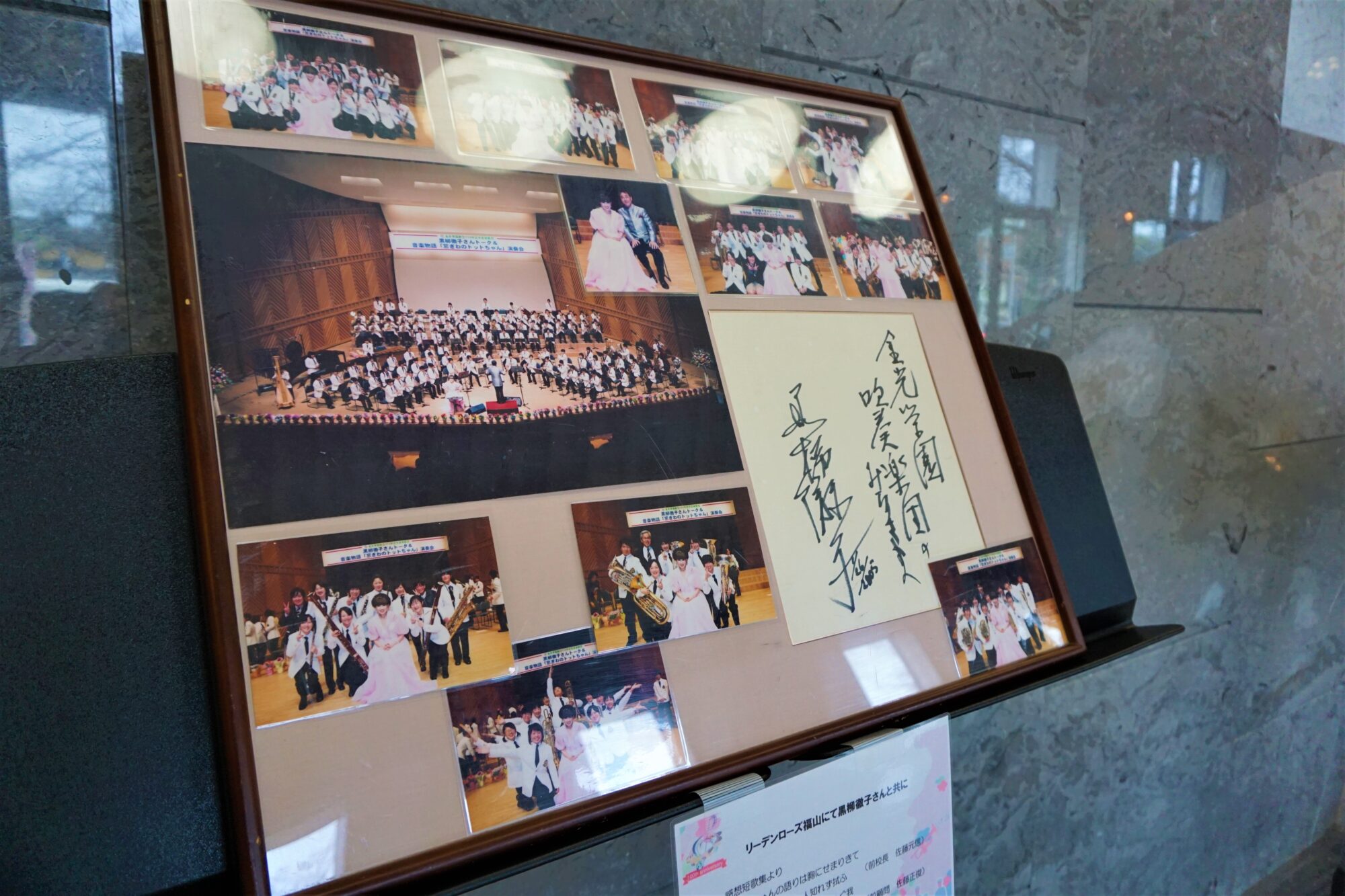
On a panel found in the lobby, there was a photo of the members with Kuroyanagi Tetsuko.
Sato shared stories about the composer Komori Akihiro and how they came to perform "Totto-chan" with Kuroyanagi Tetsuko.
There were many surprising revelations that I had never known before.
Once again, my anticipation for the performance grew.
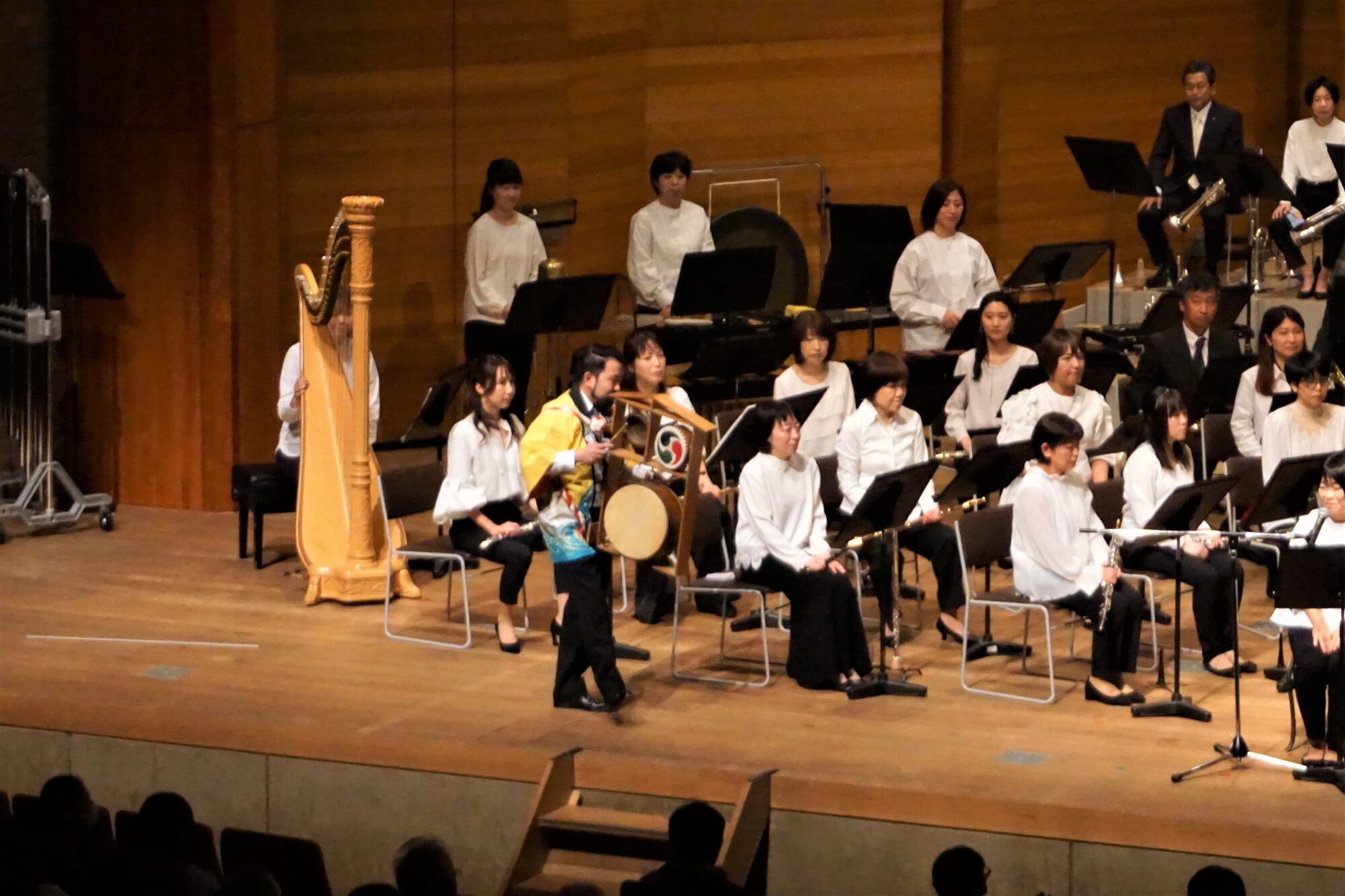
The theme song made you want to hum "Ma~do~gi~wa no~ Totto-chan," and the musical story began with a soft and gentle narration.
In the part where Totto-chan is expelled from elementary school, there is a scene where the Chindon-ya livens up the atmosphere.
In their traditional happi coats and the familiar sound of gold.
Narrator Tajima's cheerful voice calling out "Chindon-ya~!" instantly draws the audience into the world of the story.
After transferring to Tomoe Gakuen, Totto-chan enjoyed her time there, but it was short-lived.
The train car that served as her classroom was burned in an air raid.
The percussion of the orchestra thundered, the lights flickered, and the instruments moved with the music, sparkling.
Tajima's voice was low and filled with tension, painting the scenes as if watching a movie without images.
I recalled hearing in an interview before the concert that "there are quite a few alumni who, after a long time, are touching their instruments again to participate in the 100th anniversary concert."
It may be a cliché, but it truly didn’t feel that way.
The sound seemed to swell freely and writhe.
Then, as the scene changed, the sound transformed lightly, like a gentle breeze caressing the heart.
My child remarked that the thunderous sound was "scary," and it was easy to understand why, as the truly compelling performance left me overwhelmed throughout the second part.
Part Three: Festival Stage
Finally, the last chapter.
The members of the Kanmitsu Gakuen Music Club Wind Orchestra lined up among the 100th anniversary wind orchestra, and the third part began.
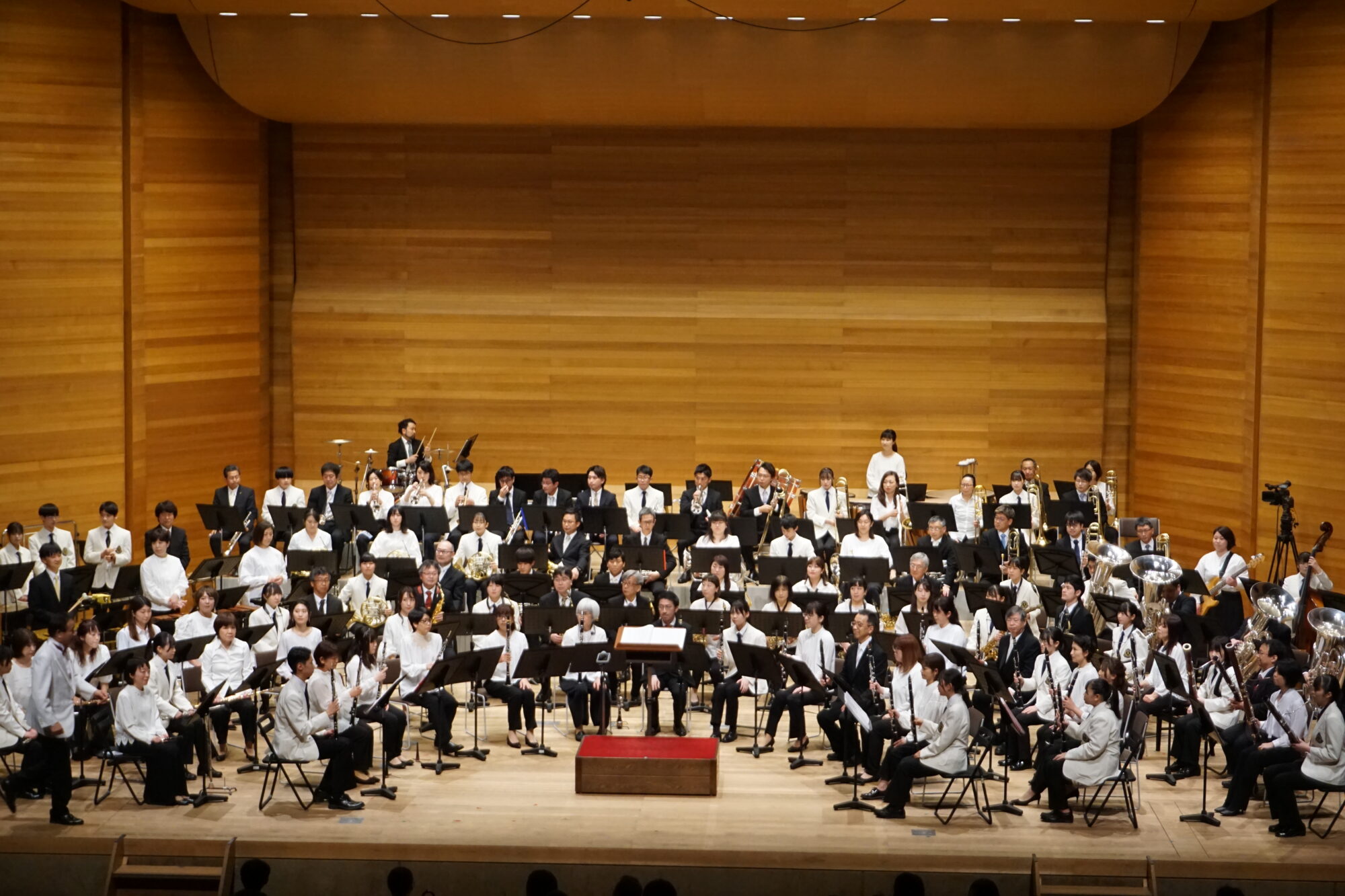
A total of 128 people gathered for the commemorative concert. The oldest member is said to be in their 70s.
Once again, I felt the length and weight of 100 years.
Performance Pieces
| Title | Content |
|---|---|
| Japanese Graffiti IV – Works by Housaku Dan | Housaku Dan / Composer, Isozaki Atsuhiro / Arranger |
| SORAN | Ito Takio / Composer, Sato Masatoshi / Arranger |
The conductor was Sato Masatoshi, and the performance was by the 100th anniversary wind orchestra and the Kanmitsu Gakuen Music Club Wind Orchestra.
In Japanese Graffiti, a medley of the famous songs by Kayama Yuzo was performed.
The melodious tunes played resonated like singing, and the image of Kayama Yuzo briefly floated in the author's mind.
A Grand and Dynamic Finale – SORAN
The final piece of the concert was SORAN.
The familiar phrases "Ya~ren so~ran, so~ran so~ran" and "Dokkoi sho~ dokkoi sho" were arranged by Sato.
The author, who had not been following the program closely, was surprised by the sudden performance of the wadaiko (Japanese drum) and felt a thrill upon seeing Sato in his happi coat.
Later, I learned that the first half of the piece uses a well-known song in the wind orchestra world called "African Symphony."
This is a unique SORAN from the Kanmitsu Gakuen Music Club Wind Orchestra.
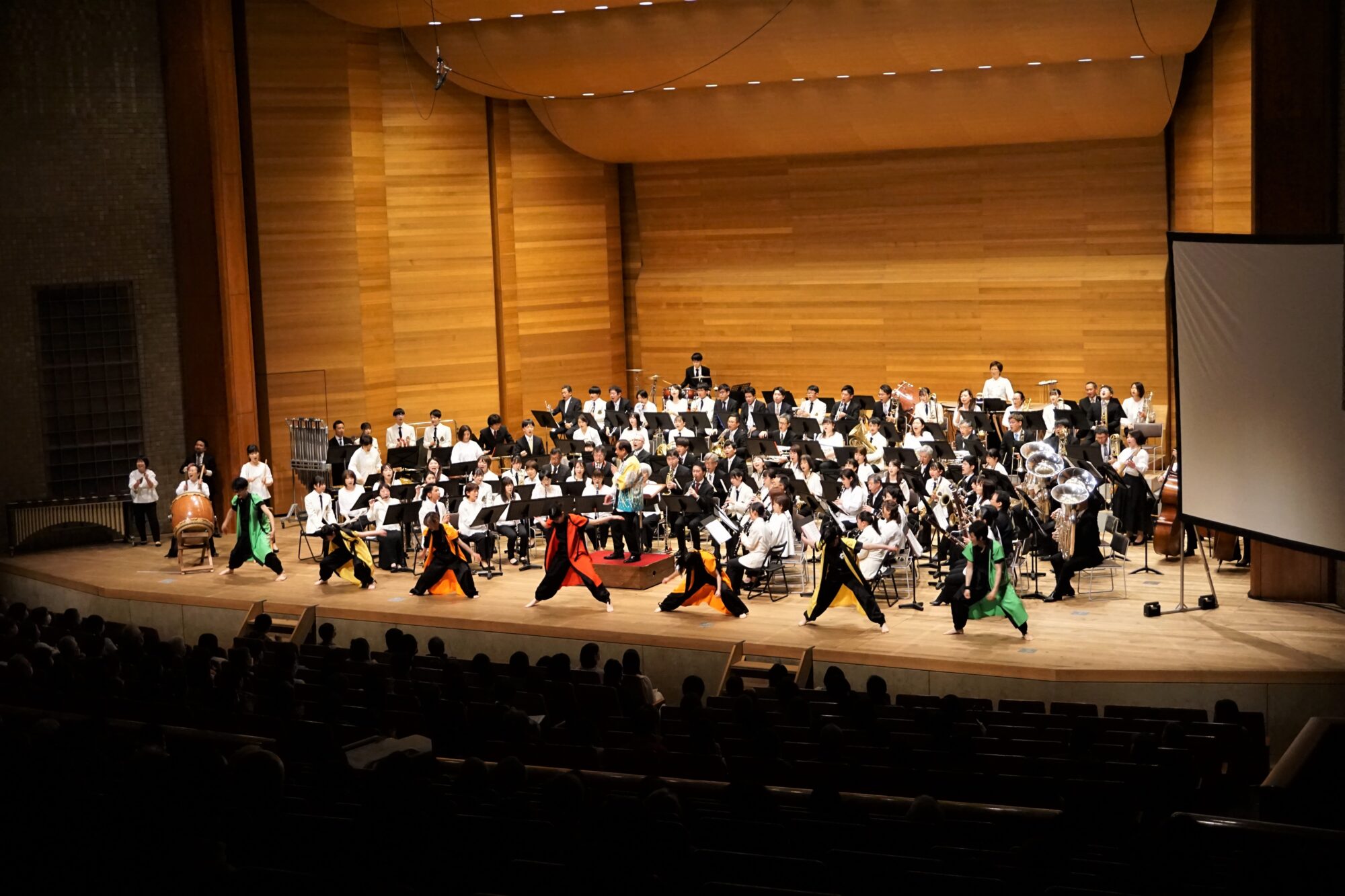
As the African Symphony played, the dancers entered, suddenly swirling in vibrant haori (traditional jackets), and the SORAN began.
With an incredibly bright melody, Sato's cheerful phrases overlapped.
The dancers, who had entered, expressed the roughness of fishing with all their bodies.
It must have lasted over five minutes. They deeply bent their knees and repeatedly recreated the motions of pulling in nets.
At one point, Sato called out, "Hoi, do your best," and I unexpectedly felt the warmth of the orchestra.
Conclusion
The 100th anniversary concert has concluded.
100 years. Through this concert, I once again felt the presence of the people who lived in each era.
I believe that among the six members at the time of its founding, none would have thought that the orchestra would last for 100 years.
It was not that they aimed for 100 years from the beginning, but rather that the people who lived through each era wove something precious that has led to "now."
The music passed down from person to person has gained depth, layered like a cake, and I felt that it shapes the current Kanmitsu Gakuen Music Club Wind Orchestra, enjoying the history created by people and music.
Data on the 100th Anniversary Concert of the Kanmitsu Gakuen Music Club Wind Orchestra
| Name | 100th Anniversary Concert of the Kanmitsu Gakuen Music Club Wind Orchestra |
|---|---|
| Date | March 26, 2023 (Reiwa 5) (Sunday) From 2:00 PM Geibunkan Hall Admission fee: 1,000 yen |
| Location | Geibunkan Hall |
| Website | Kanmitsu Gakuen Music Club Wind Orchestra |