In Kurashiki City, people with intellectual or mental disabilities live in nearly 20 group homes, and more than 100 facilities provide services related to continuous employment support and employment transition support.
However, in Kurashiki City, there are few opportunities for people involved in disability welfare to share practical examples across organizational and support-area boundaries.
To address this, Kurashiki Shien LABO, which works on initiatives to help people with disabilities lead fulfilling lives in their local communities, planned the “Kurashiki Shien LABO Gachinko Research Gathering” as a place to share their activities.
Around 100 people, including participants from outside Okayama Prefecture as well as Kurashiki City, gathered under the theme “Toward realizing ‘fulfillment’ for people with disabilities living in the community” and engaged in lively discussions across eight breakout sessions.
The information presented was current when this article was published in December 2025. Please note that it may differ from current information.
What is Kurashiki Shien LABO?
Public social welfare programs can provide a minimum standard of living, but existing programs alone cannot expand the range of lifestyle choices that enable people with disabilities to engage with their local communities.
To change this situation, Kurashiki Shien LABO holds events that people can participate in regardless of whether they have a disability, including matchmaking seminars, music events at cafe-bars, and floral decoration (flower-arranging performance) events.
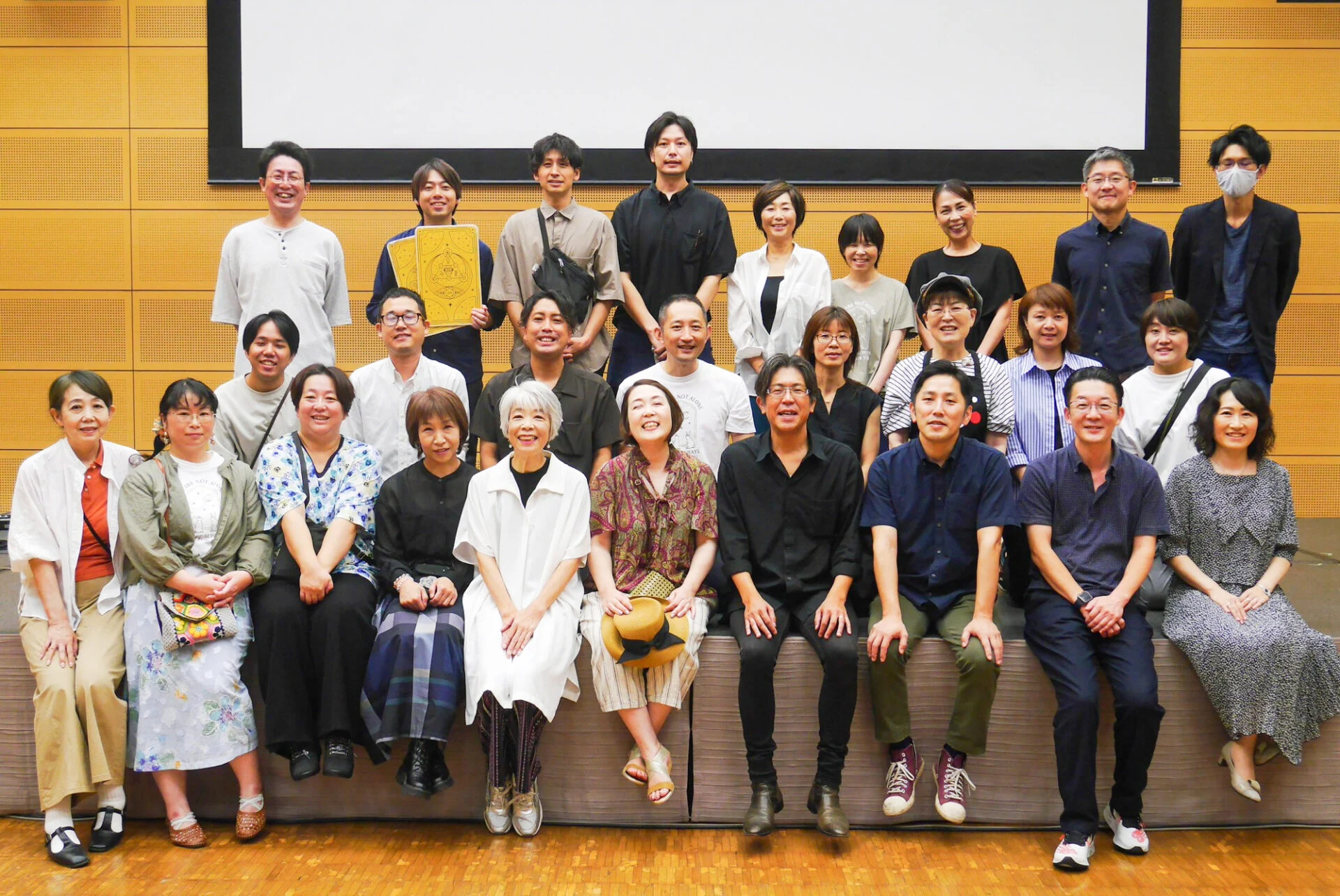
What is the Kurashiki Shien LABO Gachinko Research Gathering?
The Kurashiki Shien LABO Gachinko Research Gathering was held on Sunday, November 9, 2025, at Kurashiki Civic Hall.
Around 100 participants, including staff and presenters, gathered on the day and held discussions in eight breakout sessions.
For details, please see the images below.


What the day was like
It was drizzling on Sunday, November 9, but some people were walking to the venue pulling suitcases. Several of the people I spoke with had come all the way to Kurashiki for this event from Kyushu, the Kinki region, and the Tokai region, showing just how much attention it had attracted.
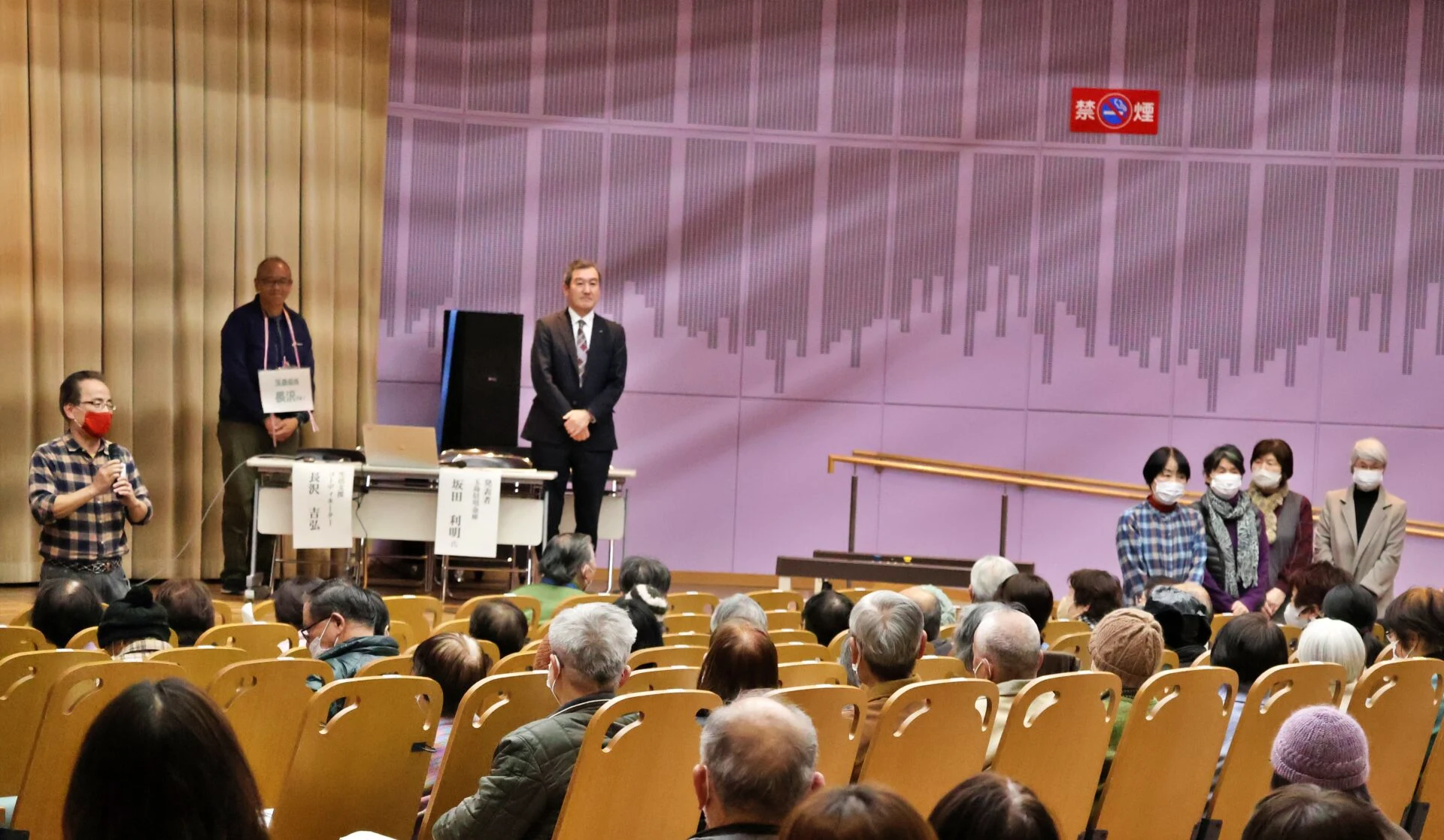
At the opening, two people who had been involved in running Kurashiki Shien LABO since its establishment took the stage.

- Sato Masakazu
A person with firsthand experience of disability support - Ando Kiyoko
A parent of a child with a disability, speaking from firsthand experience
Under the theme “Toward realizing ‘fulfillment’ for people with disabilities living in the community,” they spoke about Kurashiki Shien LABO’s objectives and activities, as well as how it is organized and run.
Kurashiki Shien LABO initially started as a grant-funded project, but now it is run through its own efforts. A donation box was set up at the venue, and attendees were encouraged to donate to activities they supported.

One distinctive feature of Kurashiki Shien LABO is that the people running it change with each project. The many donation boxes are apparently there because “it’s a feel-good system to let people donate to events they genuinely support.”
Learning, discussion, exchange… Eight breakout sessions tailored to different goals
After the opening, participants split into sessions based on their interests, across eight themes in total (morning and afternoon combined).
Since people could freely come and go during the sessions, I took a brief look at each one.
The future of employment support

The morning session of Breakout Session 1 was on the theme “The future of employment support—connecting systems, workplaces, and society,” with the following two speakers:
- Sato Masakazu
NPO Irodori (Kurashiki City, Okayama Prefecture) - Miyamoto Takayuki
Dweild LLC (Aichi Prefecture)
From the perspective of support providers, the discussion raised the question of whether it is enough for people with disabilities simply to earn wages through work, or whether support is needed that considers and helps realize a sense of purpose in work for people with disabilities.
The first person to speak during the discussion was a parent of a child with a disability. Their firsthand perspective brought greater focus to the conversation, and participants affirmed the need for various organizations in Kurashiki City to pool their knowledge and consider what kind of employment support is needed by people with disabilities and their families.
Reproducibility of the Shien LABO community

The afternoon session of Breakout Session 1 was on the theme “Reproducibility of the Shien LABO community—exploring how to recreate a ‘cross-boundary community’ that drives local welfare,” with the following speaker:
- Sato Masakazu
NPO Irodori (Kurashiki City, Okayama Prefecture)
Since its establishment in 2021, Shien LABO has organized a variety of events, believing that people with disabilities should be able to attend events and have romantic relationships, broadening their lifestyle choices.
Looking back on that history, it was a meaningful opportunity for support providers, people with disabilities, and government officials alike to share how the founding belief—“we want Kurashiki Shien LABO to support areas that the national support system cannot fully cover”—is reflected in its projects.
AI and welfare

The morning theme for Breakout Session 2 was “AI and welfare—using technology to enrich support.” The speaker was:
- Ogawa Toshiki
Jin Co., Ltd. (Osaka Prefecture), which has practical experience using an AI assistant to deepen communication between support staff and service users - Takami Kyohei
Kurashiki City Chayamachi Community Life Support Center (Kurashiki City, Okayama Prefecture)
Since my previous job was as a special-needs school teacher, I had thought that emotional labor involving people and AI seemed worlds apart. Many participants appeared to have come with similar feelings.
For that reason, the session offered easy-to-understand explanations for beginners, along with practical examples of the situations in which different AI tools are actually used.

Among other things, Takami’s comment, “I use it with the mindset that humans are AI’s bosses,” stayed with me.
One aspect of the identity of emotional labor involving people is that it is something “only a living human, not AI, can do.” That is why the perspective that people can focus on consultation work by leaving administrative tasks that can be entrusted to AI to AI felt so fresh.
This is surely a topic that will yield a great deal of new insight by the next research gathering, planned for two years from now.
Profitability of consultation support

The afternoon session of Breakout Session 2 focused on “Profitability of consultation support—realistic business strategies for sustaining support,” with the following speakers:
- Suzuki Masayoshi
Consultation Support Office GIFT (Kyoto Prefecture) - Takami Kyohei
Kurashiki City Chayamachi Community Life Support Center (Kurashiki City, Okayama Prefecture)
Suzuki has been running a consultation support office for about 10 years.
Takami, on the other hand, only started the business this fiscal year. The discussion proceeded with Takami asking Suzuki for advice, as Suzuki shared the various strategies that had enabled the business to continue for 10 years.
Money is usually a difficult subject to ask about, but having it set as a session topic seemed to make it easier for participants to listen. It was surely a major takeaway that the discussion also covered concrete topics such as how to increase revenue.
Leisure support

In the morning session of Subcommittee 3, the theme was “Leisure Support—Supporting the Time We Spend Living”, and the following people shared their perspectives.
- Komagawa Tatsuro
irodori Employment Transition Support Office (Kurashiki City, Okayama Prefecture) - Yoshinobu Daiki
irodori Employment Transition Support Office (Kurashiki City, Okayama Prefecture) - Kojima Takashi
chill Daytime Temporary Support Program (Kurashiki City, Okayama Prefecture)
Some of the speakers were support workers who had experienced social withdrawal themselves, and the audience listened intently to their stories from both perspectives: their feelings as people with lived experience and their feelings as support workers.
Many of the participants were also support workers, and this was a subcommittee with many people attending with specific needs, such as wanting to “connect with people who will spend leisure time with someone like this at my workplace.”
At the same time, lively discussion also focused on the importance of first drawing out the person’s own desire to “do XX,” rather than acting on a support worker’s wish to “do something for them.”
Disability and Sexuality

In the afternoon session of Subcommittee 3, the theme was “People with Disabilities and Sexuality—What Does It Mean to Support Decision-Making and ‘Resolve’?” Konishi Rie, who works at Kagayaki Seisakusho in Osaka, facilitated the session, and the following person shared her perspective.
- Shibayama Keiko
Group Home Aaku no Ie (Kurashiki City, Okayama Prefecture)
Shibayama discussed pregnancies and births she had encountered among residents at a women’s group home, and the group considered how to support residents of their organizations if they become pregnant and give birth.

The group confirmed the need for support from the perspective of “What does the person want?” rather than “What would I do?” and “What can support workers do to respect the person’s wishes?”
The Divide Between Childhood and Adulthood

In the main hall on the second floor, where the opening was held, speakers shared their perspectives and discussions unfolded in depth from morning through afternoon on the theme “The Divide Between Childhood and Adulthood—How to Support Children’s ‘Self-Understanding’ and Growth.”
The speakers were:
- Ueno Miharu
Four Star Plus Co., Ltd. (Osaka Prefecture) - Ono Makoto
Mirai-zu General Incorporated Association (Kurashiki City, Okayama Prefecture) - Kurokawa Akira
Kosodate Support Kagayakids Co., Ltd. (Kurashiki City, Okayama Prefecture) - Ando Kiyoko
Certified NPO Parent Support Step (Kurashiki City, Okayama Prefecture)
With “continuity in self-understanding” from early childhood through adulthood as a key concept, participants shared challenges and practical approaches from the perspectives of after-school day services, educational settings, support organizations, and parent support.
Participants came from a range of backgrounds, and there were moments when everyone listened intently as parents spoke candidly about how difficult things could be.

No answer emerged for bridging the gap between childhood and adulthood, but everyone carried deep feelings about it, and being able to share those feelings was a major takeaway.
In everyday life, people often have to interact as support workers and families using support services, or as government and community members. The opportunity for everyone to speak candidly as fellow participants, regardless of their roles must have been a truly valuable experience.
The Dark Room
This was an informal discussion room, mainly for support workers who wanted to take a breather.
Since many participants had come from outside the prefecture, the room was a popular place to exchange information.

A Sales Corner Packed with Souvenirs Unique to a Kurashiki Welfare Event

Although a fee was required to attend the subcommittee sessions, a free-admission sales corner was open on the first floor, just inside the entrance.
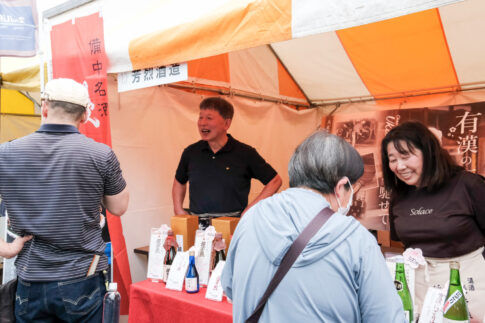
A wide variety of sweets and miscellaneous goods made by welfare service providers and parents of children with disabilities were on display, mainly from Kurashiki City, with some vendors coming from as far away as the Kansai region.


The sales corner was especially lively during the lunch break, when subcommittee participants also stopped by to shop for a memento of the event.
From the Writer
The participants who returned to the closing venue after the program ended looked extremely cheerful.

At the closing, the facilitators of each subcommittee shared what they had felt in their respective venues.
None of the subcommittees came up with a clear-cut answer, but it was a day that gave people from a range of backgrounds the chance to share their thoughts on a common theme and recognize that each was trying to address it while facing challenges in their own role.
Support workers, families of children and adults with disabilities, and people with disabilities themselves returned to their everyday lives. Knowing about the “presence of others who understand” and that “each person shares feelings about the same challenges” that they experienced that day should become a source of emotional support.

This time, members of Kurashiki Shien LABO were the main speakers, but perhaps at the research gathering two years from now, some of the people who took something away from this event and returned to their workplaces will share their perspectives.
It was a highly meaningful event that made us look forward to the future of disability welfare in Kurashiki.
Kurashiki Shien LABO Gachinko Research Gathering Information

| Name | Kurashiki Shien LABO Gachinko Research Gathering |
|---|---|
| Date | Sunday, November 7, 2025, 10:00 a.m.–4:00 p.m. |
| Location | 17-1 Honmachi, Kurashiki City, Okayama Prefecture |
| Admission (tax included) | 1,900 yen |
| Website | Kurashiki Shien LABO (Gachinko) Research Gathering Official Facebook Page |

What would you like to know about Kurashiki?
Enter a search term to find articles on this site