Japanese social welfare faces major challenges, including labor shortages and funding, even as the needs of an aging population and people with disabilities continue to grow. Efforts in disability welfare have expanded to include employment support, assistance with daily life, and participation in community activities, but there still are not enough places where everyone can feel safe and live as themselves.
“I want to live as myself.” “I want to be useful to someone.”
These are wishes shared by people with and without disabilities. However, people with disabilities have limited opportunities for work and places to belong, and many struggle with anxiety and loneliness.
One organization that has taken on challenges that make you want to ask, “Why on earth is it like that!?” is Nuka Co., Ltd., based in Hayashima Town, Tsukubo District, Okayama Prefecture.
Its representative, Nakano Atsushi, continues to create new value by embracing the individuality of people with disabilities not as “problems” but as “something interesting.”

The information presented was current when this article was published in October 2025. Please note that it may differ from current information.
About Nuka Co., Ltd.

Nuka Co., Ltd. (hereafter, “Nuka”) is a unique welfare provider that combines welfare and art. Its name comes from nukadoko, the rice-bran bed used to make pickles, and embodies the idea that “a slight change in perspective can create new value.”
As of 2025, Nuka operates the following four services.
- Nuka Tsukuru Toko, a daily care service office (established in 2013)
A place for adults to spend their days. It values time in which people can engage with themselves and their peers, and be accepted through both their challenges and failures. - Atelier Nuka Gokko (established in 2018)
An after-school day service for elementary through high school students. It is a place for free expression where children think up games through crafts, enjoy conversation, and sometimes value time spent “doing nothing.” - Chinu Consultation Support Office (established in 2023)
A consultation service for accessing welfare services. Like the sea bream known as chinu, it connects people with one another, and people with their community. - Hyon, a Type B Continuous Employment Support Office (established in 2024)
A place to connect with the community through work and creative activities. People enjoy unexpected encounters and chance events as “honna koto” (“something that happened by chance”), while building new connections.
New value born from asking, “Why is it like that?”

In welfare settings, the distinctive interests and habits of service users are often treated as “problems.”
Nakano, however, calls the people who use the services “Nukabito” and engages with them by asking, “Why is it like that?” This perspective gives rise to unexpected interest and new value.
Nukabito
People who use the facility.
The term conveys respect for each person’s individuality and the way they are, rather than simply calling them “service users.” Nuka’s approach is to accept even small “habits” and “fixations” as part of what makes each person who they are.
“Rather than trying to fix what’s seen as a problem, we enjoy it together as part of who that person is. I think that’s how new forms of welfare can emerge,” says Nakano.
Hyon, born “by chance”
Of Nuka’s services, this article focuses on Hyon, a Type B Continuous Employment Support Office that opened in Kurashiki City in 2024.
Hyon is a place where the warmth of an old Japanese house meets unique ideas. Its users work as themselves, connect with the community, and create new value.


A chance encounter with the building
Hyon’s office is in Nishi-Achi, Kurashiki City.

Stepping into the residential neighborhood across the road from Henjo-in Temple, you’ll see a modest sign among the rows of traditional houses.

Their encounter with the building was apparently pure chance. The place they had originally planned to use became unavailable, so they searched again and found this old house.


After looking into its history, they learned that the building had served as a base for Nagase Takashi, who expanded social activism in Okayama after the war. Nakano says, “I felt a connection and took it on with a sense of mission.”
That sentiment naturally led to activities connecting welfare, expression, and the community, and they continue to grow today.
The four areas that make up Hyon
Hyon runs activities to help its users—people with disabilities or intractable diseases who have difficulty working at ordinary companies—work comfortably and enjoyably. The facility has four main areas.
Purchases from the sales area and meals can be paid for in cash or by cashless methods such as credit cards.
- Sales area
- Dining area
- Exhibition room
- Why on Earth Museum
Sales area
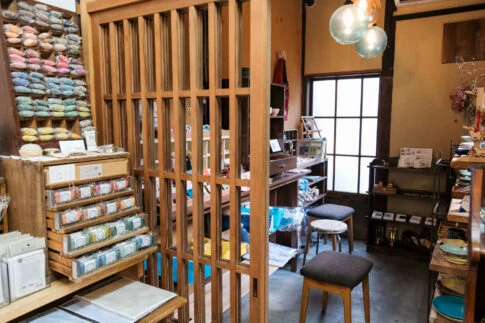
The sales area offers handmade items by Nukabito, along with seasonings, food, books, and more. Each item reflects the individuality and character of the person who made it.


Dining Area
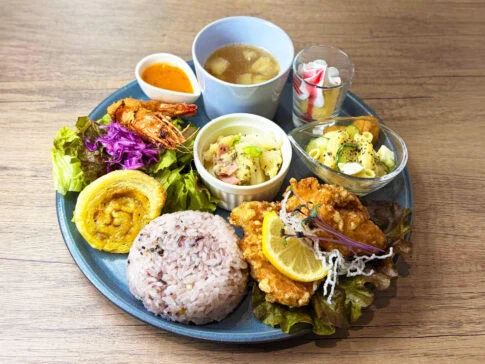
The dining area is a relaxing place where you can enjoy “Hyon’s wappa bento,” made with healthful fermented foods as its theme, as well as seasonal drinks and sweet treats.


Exhibition Room
The exhibition room features the following areas.
- Exhibition Area
Works provided by partner organizations from across Japan are displayed and sold by theme. - Craft Area
A space where visitors can freely enjoy creating things. Spend a moment here feeling supported and understood.


At the back of the exhibition room is a workshop where visitors can freely enjoy making things.
During our visit, a first-year university student taking part in an internship had a great time with visitors, tearing newspaper into pieces and making all kinds of shapes, while enjoying doing what they love.
The workshop is open so that members of the public can casually observe visitors at work. One of the products made here is “Nanchatte Hariko,” and visitors can enjoy seeing the creative process up close.
The bookshelves are lined with books that anyone can read, making this a perfect spot for those who want to take a short break. Toys are also available for visitors with children, creating a warm atmosphere filled with children’s free-spirited ideas and laughter.


Why on Earth Museum
In one corner of the main house is another exhibition room called the “Why on Earth Museum,” filled with works and words brimming with humor and mystery.

The “Why on Earth Museum” regularly exhibits unique and mysterious works. It is a place packed with fun, where you can enjoy wondering, “What could this be?”
For example, works with titles like the following are simple yet thought-provoking, prompting visitors to wonder, “What could this be?”
- Going Off the Rails on a Whim—Reindictment
- Adults Just Don’t Get It
- No In-App Purchases Until 20,000


We spoke in detail with Nakano about the welfare projects he is involved in and the efforts to embrace them as “something interesting” and transform them into new value.
Nuka Co., Ltd. — Hyun Type B Continuous Employment Support Office Information

| Name | Nuka Co., Ltd. — Hyun Type B Continuous Employment Support Office |
|---|---|
| Address | 528 Nishi-Achi-cho, Kurashiki City, Okayama Prefecture |
| Contact | 086-697-6609 |
| Parking | Available |
| Hours | Monday–Friday / First Saturday of each month 10:30 a.m.–4:00 p.m. |
| Closed | Saturday, Sunday, and irregular days First Monday of each month |
| Payment methods |
|
| Website | Hyun |



What would you like to know about Kurashiki?
Enter a search term to find articles on this site