
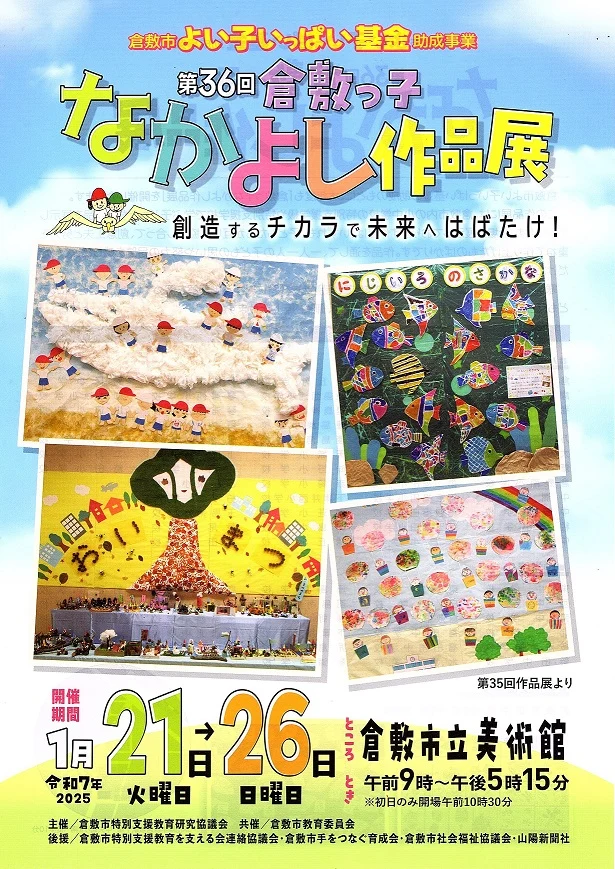
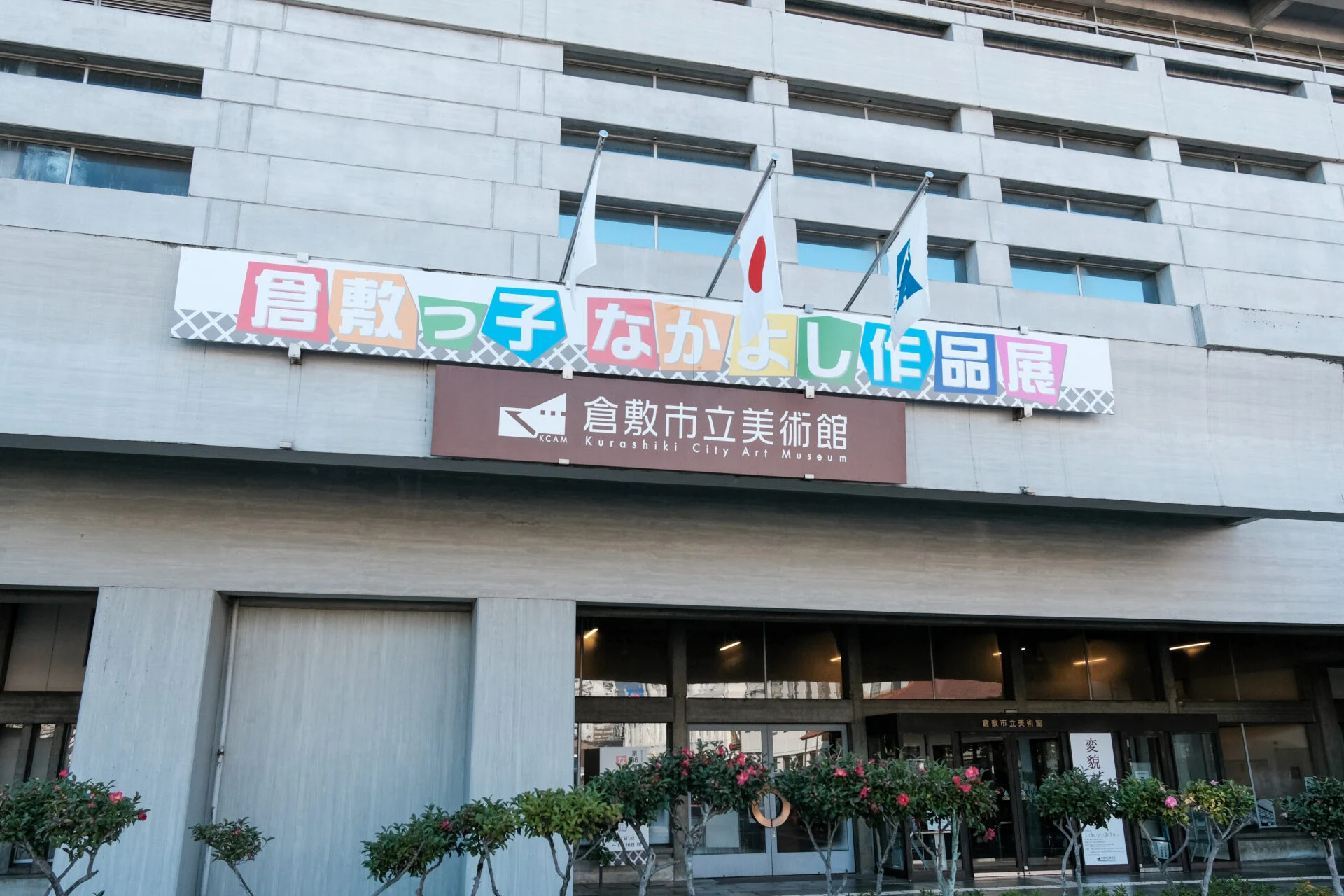
The "36th Kurashiki Children’s Friendship Art Exhibition," featuring children from special needs classes and special needs schools in Kurashiki City, has begun at the Kurashiki City Art Museum.
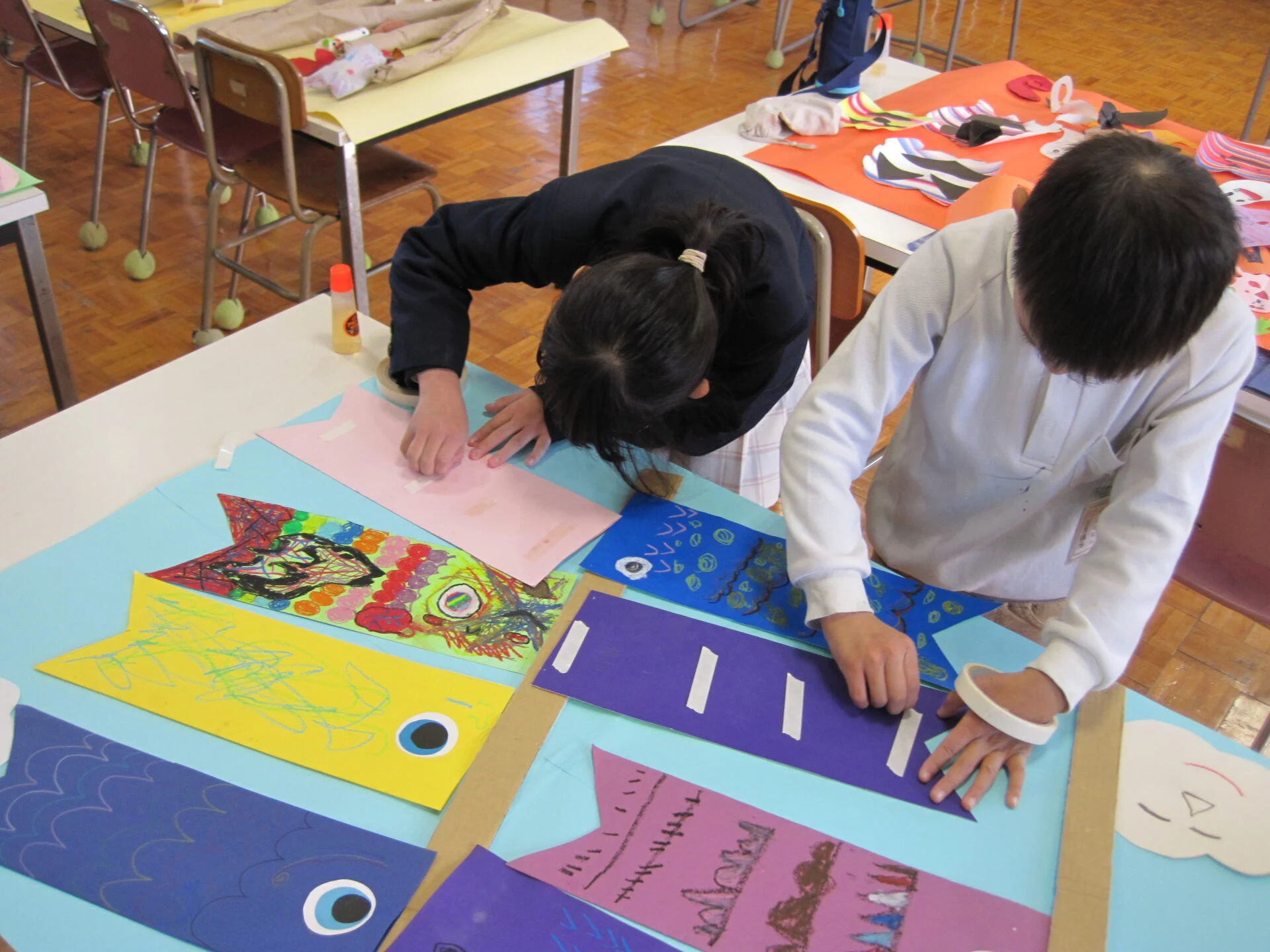
This exhibition brings together works that showcase the footprints and efforts of children accumulated through their daily activities.
Having moved to Kurashiki from the Kanto region in December 2023, I am a former special needs school teacher. Last year, I was deeply impressed by the heartfelt works of the children when I first attended the exhibition, so I visited again on the opening day of this year’s exhibition, January 21, 2025 (Tuesday).
What is the "36th Kurashiki Children’s Friendship Art Exhibition"?
The Kurashiki Children’s Friendship Art Exhibition is an annual event held to promote understanding and cooperation in special needs education, and this year marks its 36th edition in 2024.
This year, it is being held for six days from January 21 (Tuesday) to January 26 (Sunday), 2025, at the Kurashiki City Art Museum.
Participating are all special needs classes in elementary and middle schools in Kurashiki City, as well as the Kurashiki Support School (hereafter referred to as Kurashiki Support School).
Schools that provide education equivalent to kindergartens, elementary schools, middle schools, or high schools for children with disabilities, aiming to impart the knowledge and skills necessary to overcome learning or daily life difficulties caused by their disabilities and to promote independence (Ministry of Education, Culture, Sports, Science and Technology).
Exhibition Overview
On the first floor, works from middle school special needs classes and Kurashiki Support School are displayed, while on the second floor, works from elementary school special needs classes and hospital classes are exhibited.
Admission is free, so you can start viewing from anywhere, but there are handmade souvenirs by the children available at the reception on the first floor, so please be sure to pick one up.
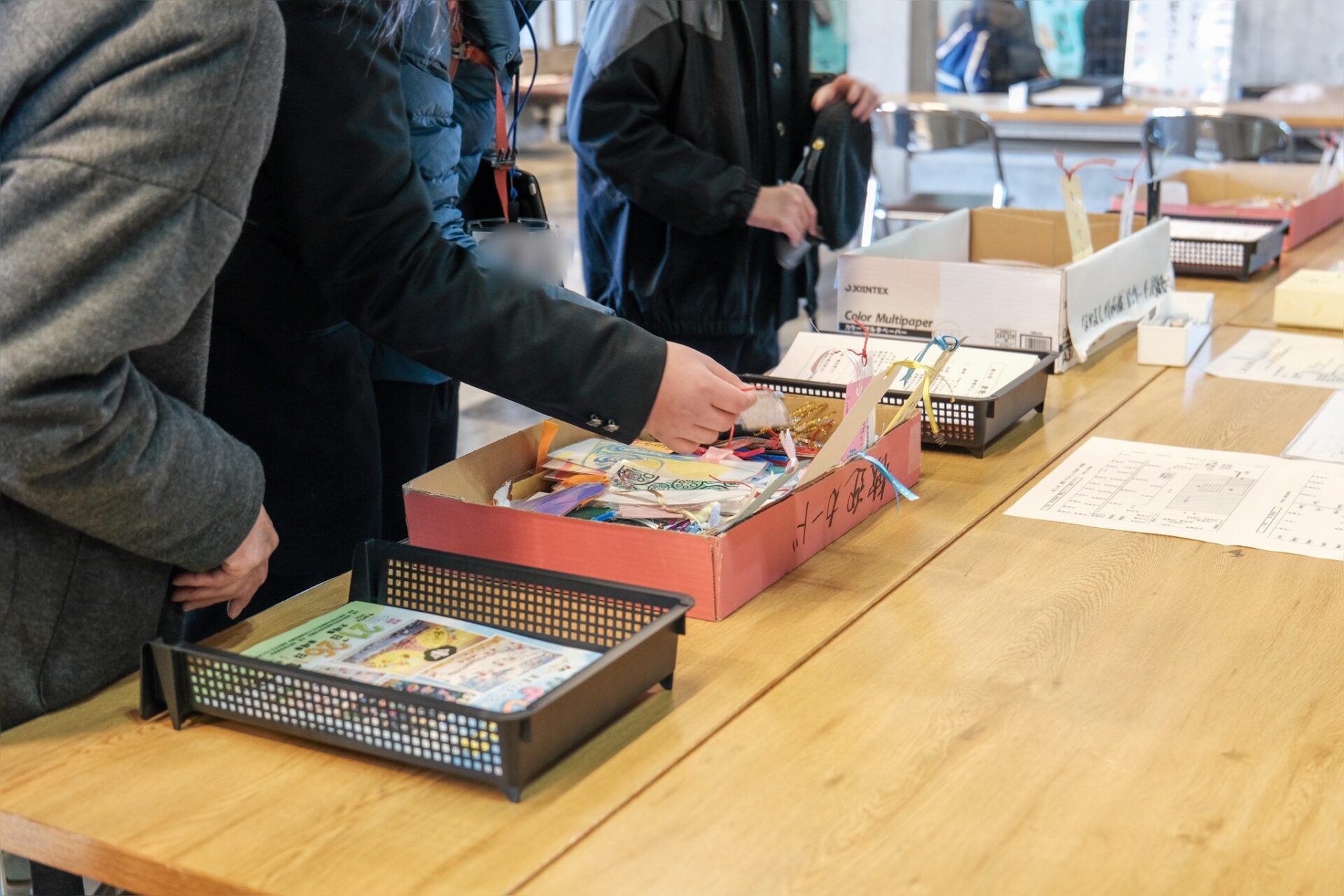
The souvenirs are bookmarks that can be inserted into books.
The messages of "thank you" and cute illustrations from the children participating in the Kurashiki Children’s Friendship Art Exhibition will surely bring a smile to your face.
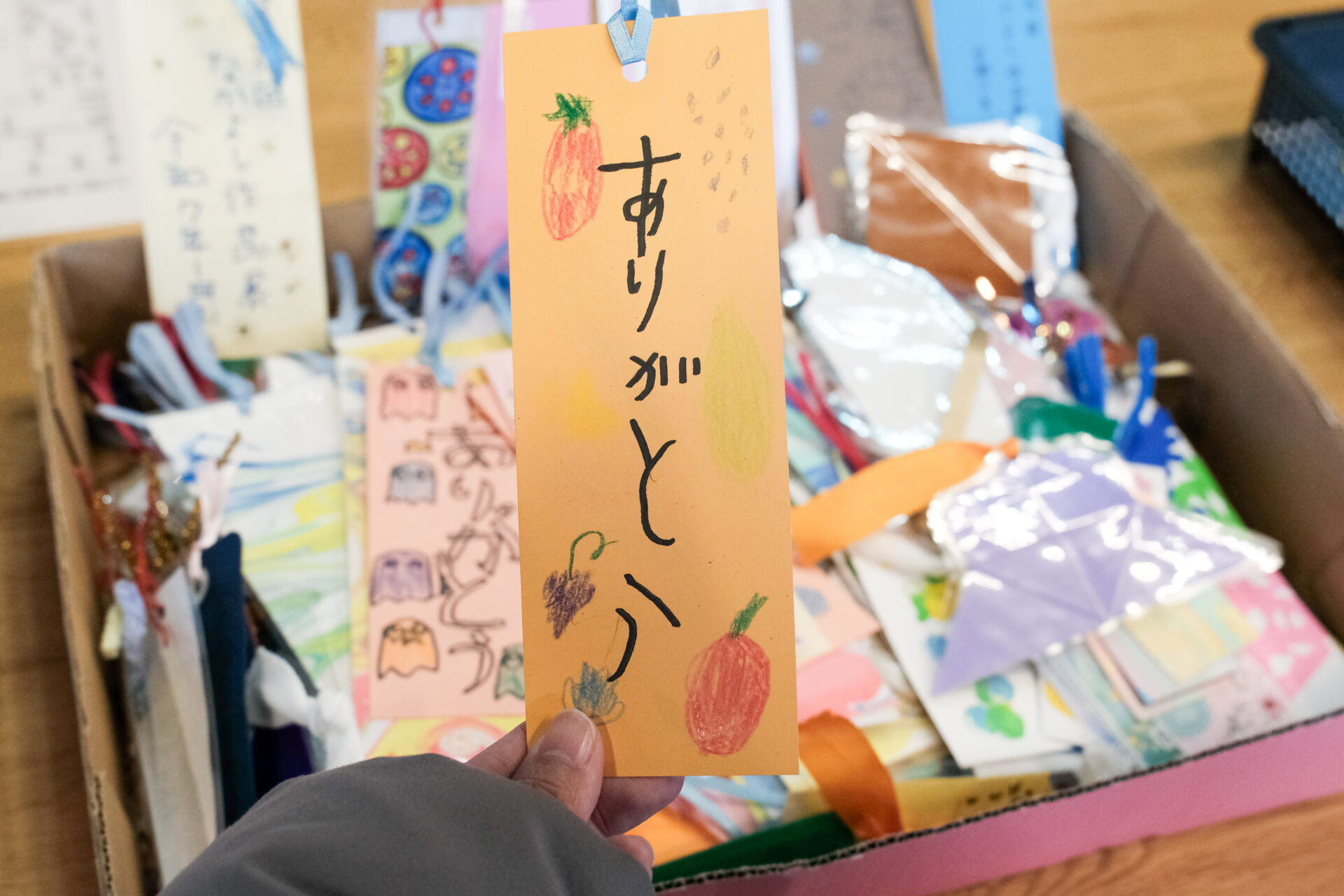
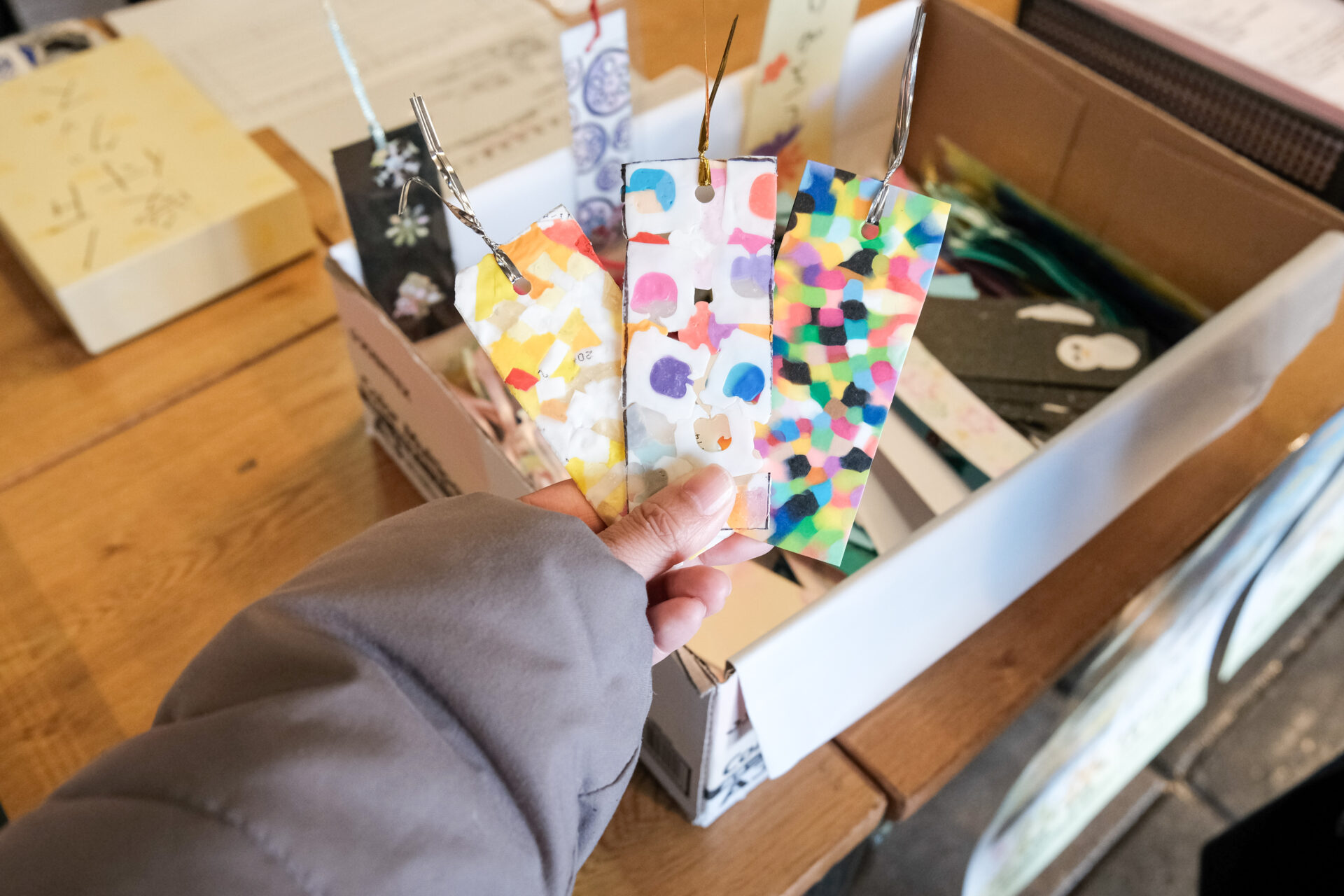
I got a bookmark made from compressed plastic closures used to seal bread. There are also bookmarks made from compressed plastic bottles. Perhaps they are related to the exhibited works.
Works of Middle School Students Reflecting Academic Learning
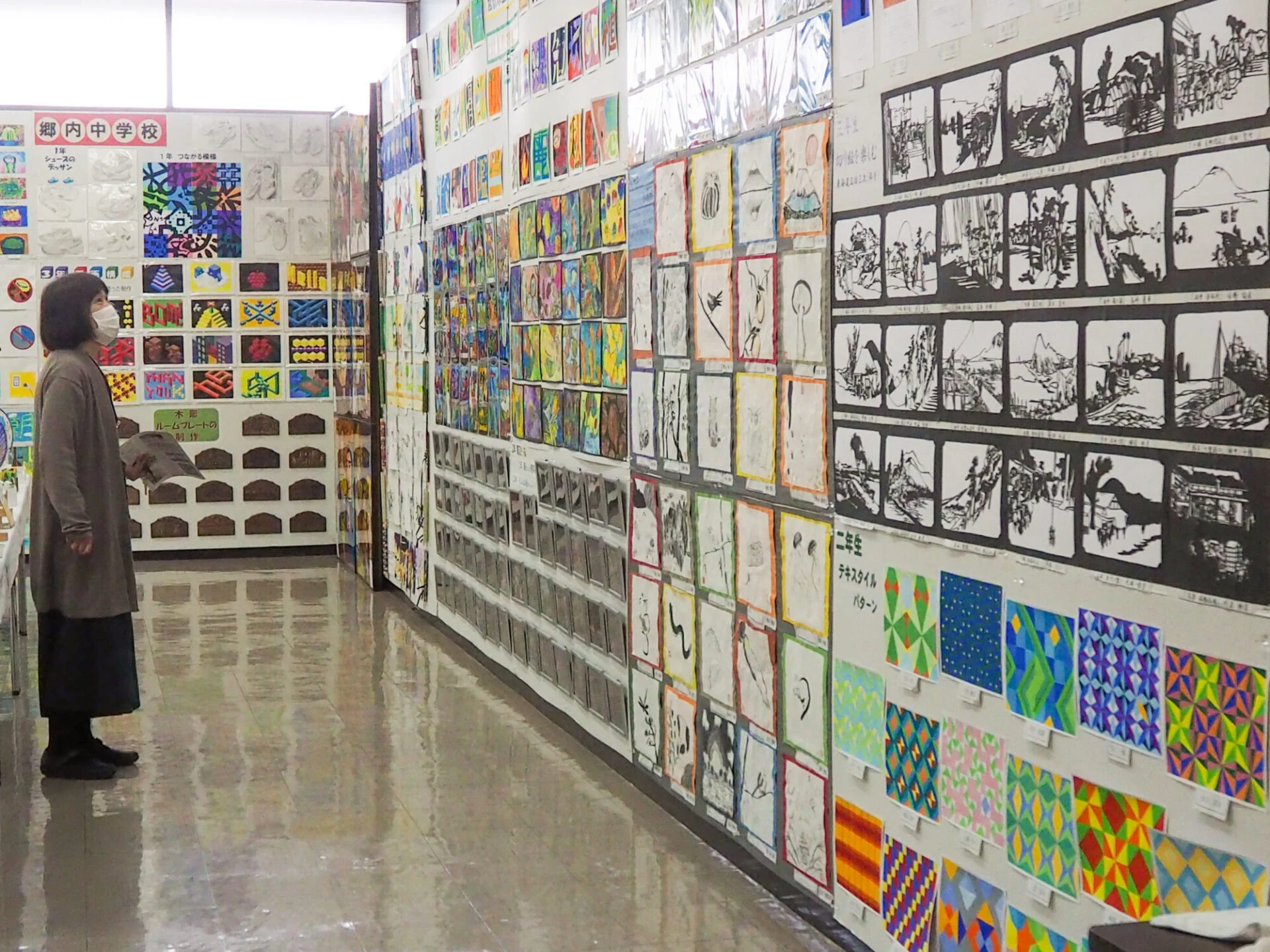
First, I viewed the exhibition in the first-floor display room. Here, works from children of middle schools and Kurashiki Support School are displayed.
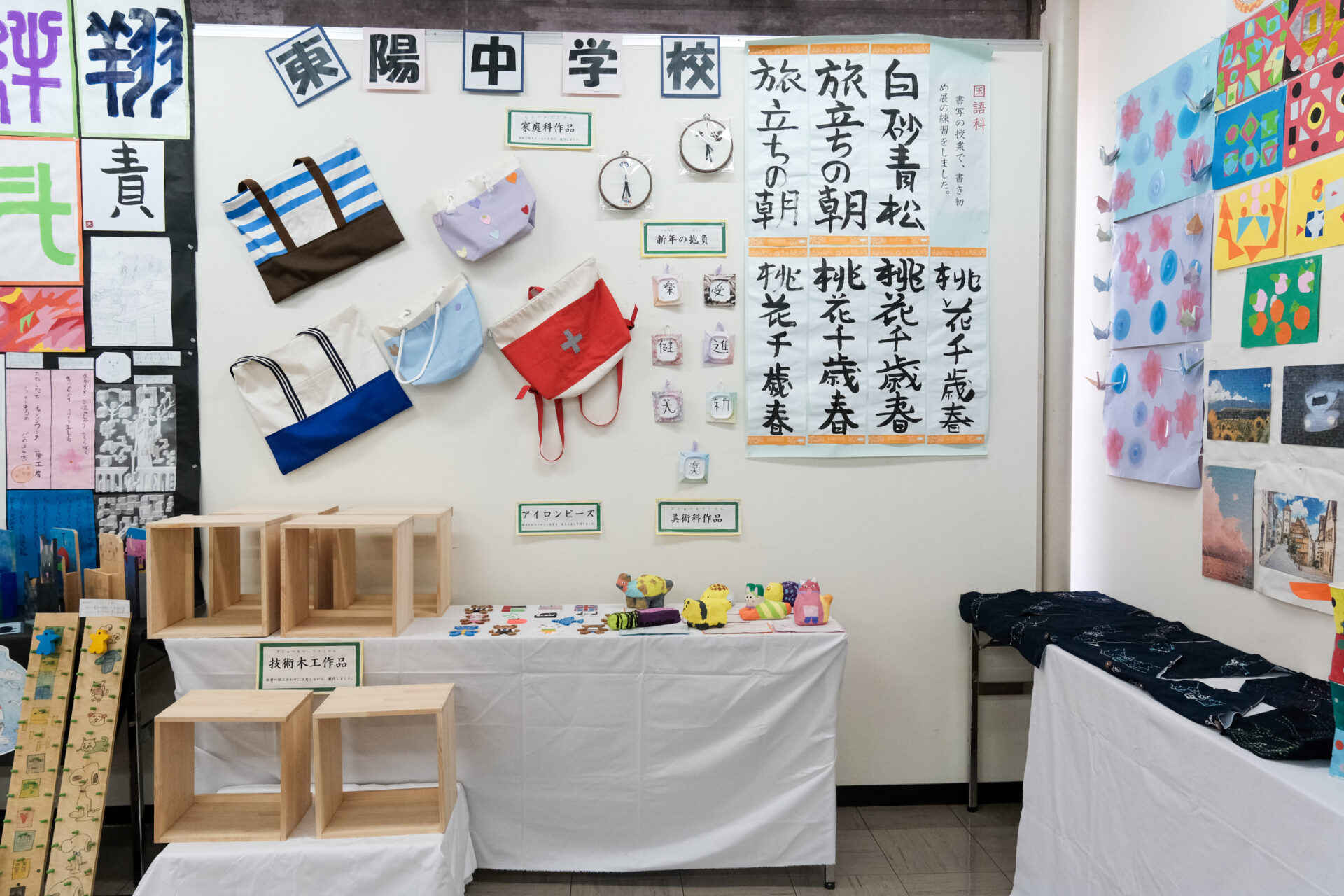
From the middle school students' works, traces of academic learning can be seen.
There are calligraphy works from the Japanese language class, sewing works from the home economics class, woodworking works from the technology class, and artistic works from the art class, all reflecting the efforts of the children throughout the year in their various subjects.
Although each piece is created individually by the students, they are displayed in a way that resembles a single large work from each school.
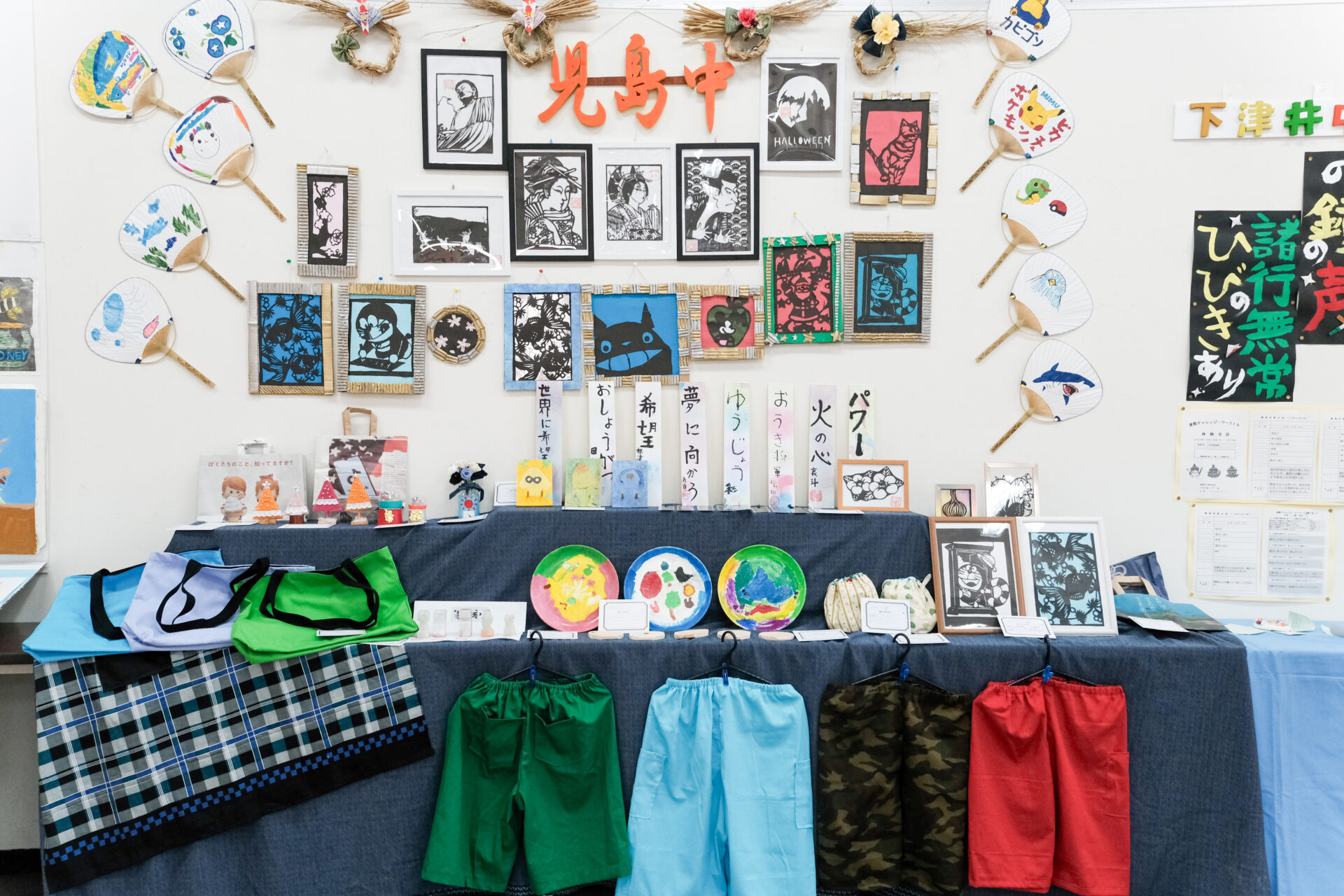
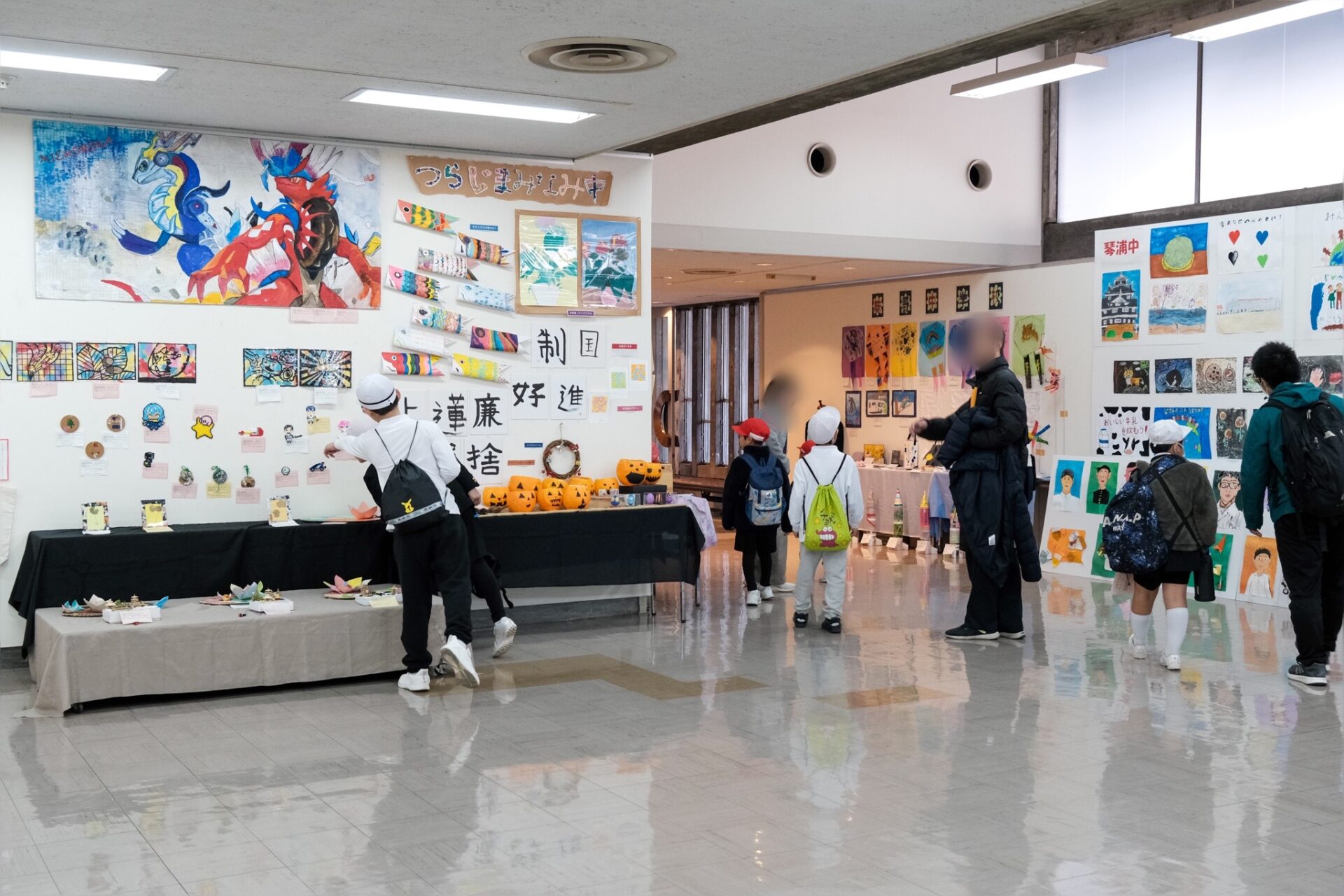
During the time I was viewing, a boy from an elementary school who came to see the exhibition as part of an outdoor learning activity exclaimed, "Middle school students are amazing!" while gazing at the works with admiration.
Works of Children from Kurashiki Support School Linked to Experiential Activities
At the back of the first-floor display room, works from children of Kurashiki Support School were exhibited.
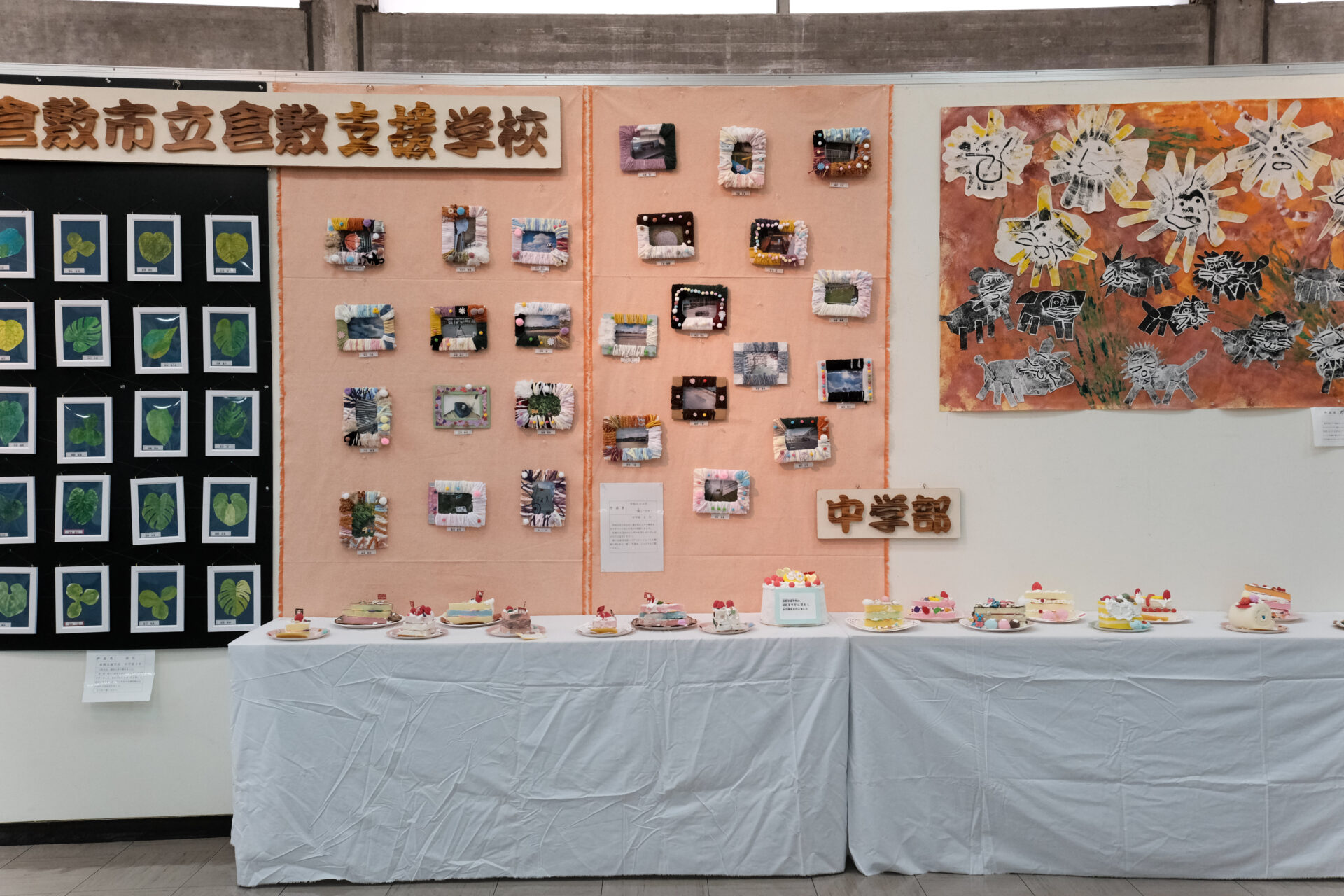
Kurashiki Support School is a school where students from elementary to high school learn, so the works displayed range from children in the elementary division to those in the high school division.
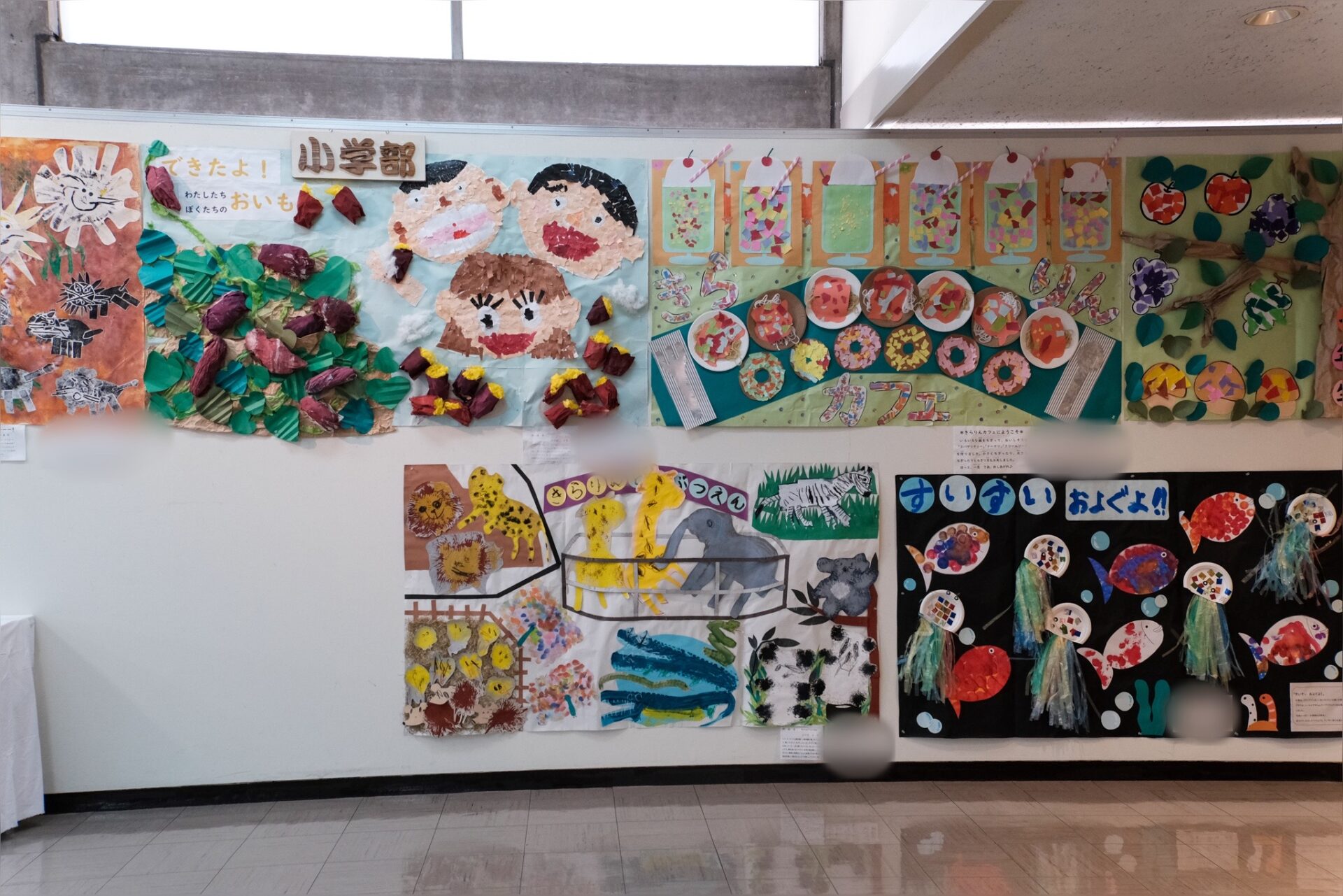
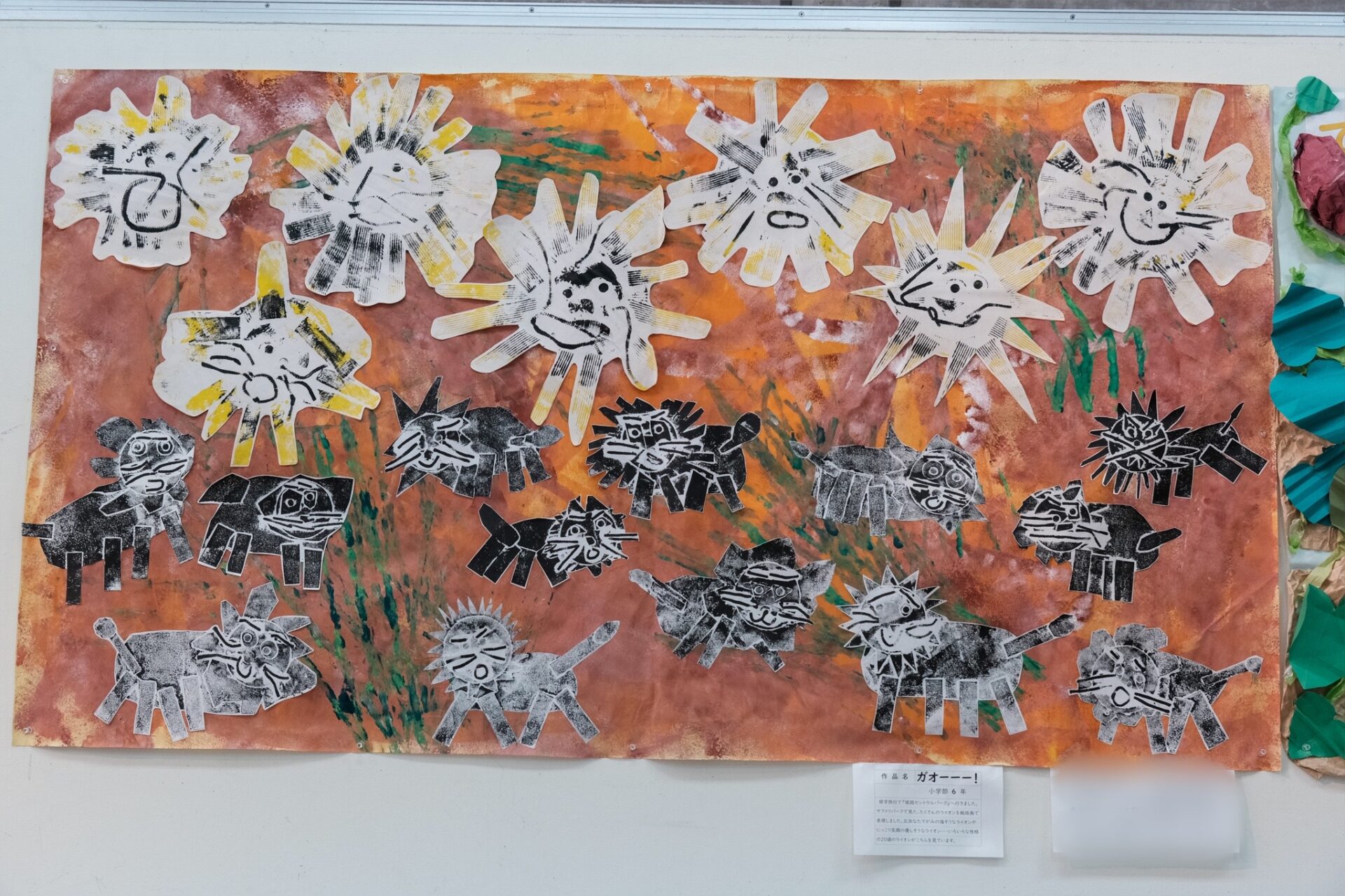
In the lower grades of the elementary division, works corresponding to learning tasks such as "using glue" are displayed, while in the higher grades, works based on experiential learning such as sweet potato digging and school trips reflect the careful learning appropriate to their developmental stages.
The high school division features stencil print works inspired by "initials."
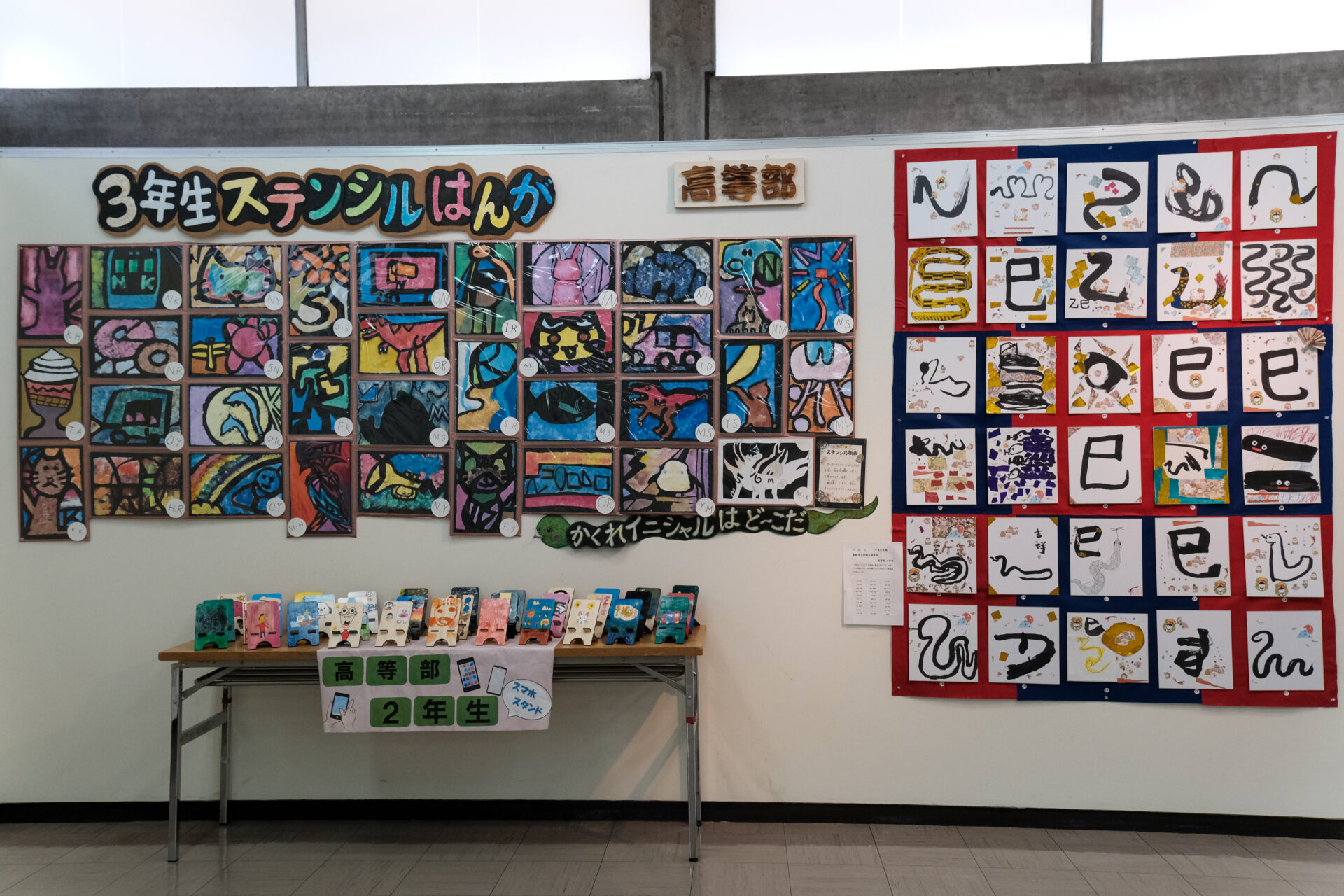
The display of works from children of various ages along one wall allowed us to glimpse the growth of children within a consistent educational framework from elementary to high school.
Displays from Elementary Schools Showing Children Learning with Community and In-School Exchange Classes
On the second floor, works from children in elementary school special needs classes and hospital classes are displayed.
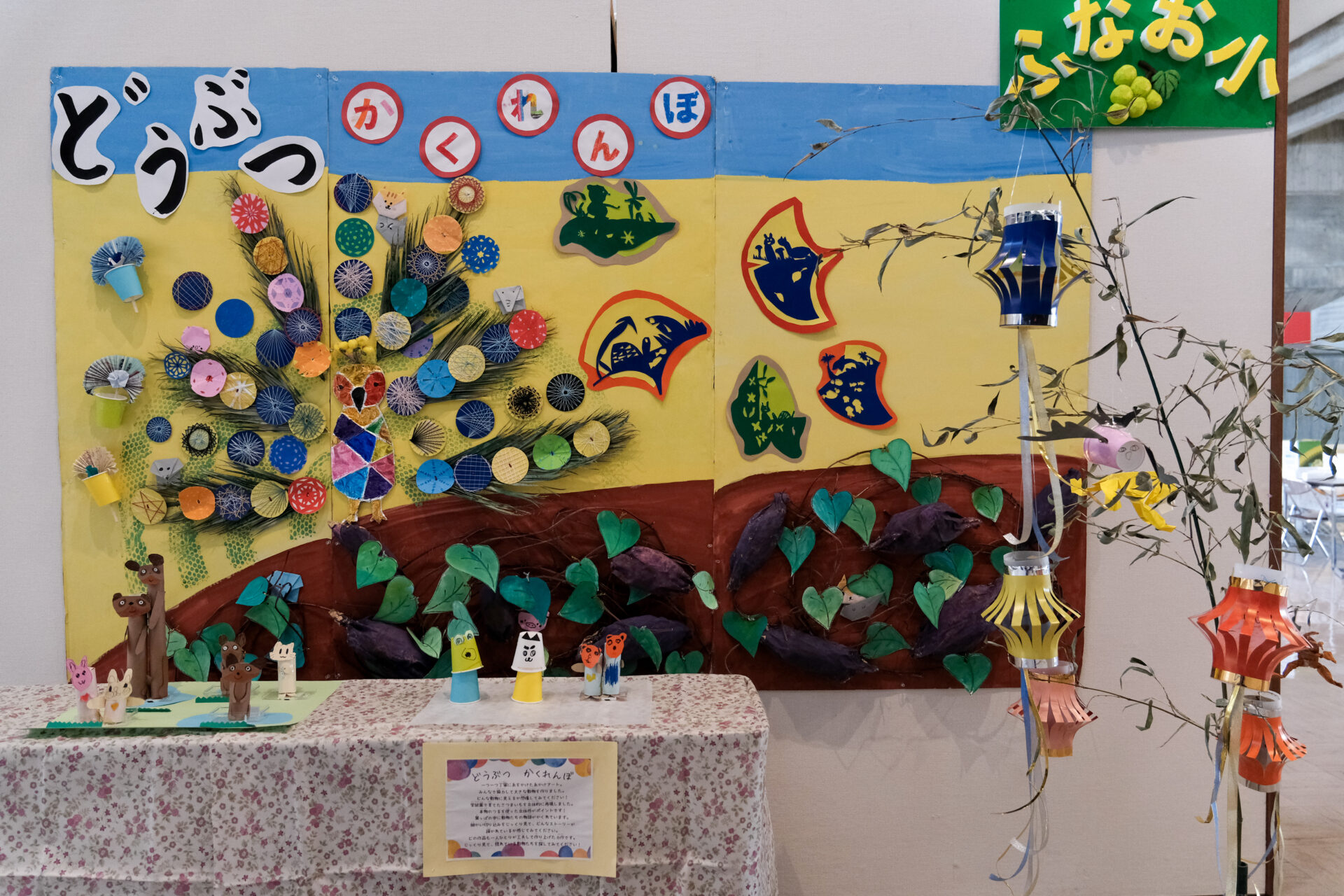
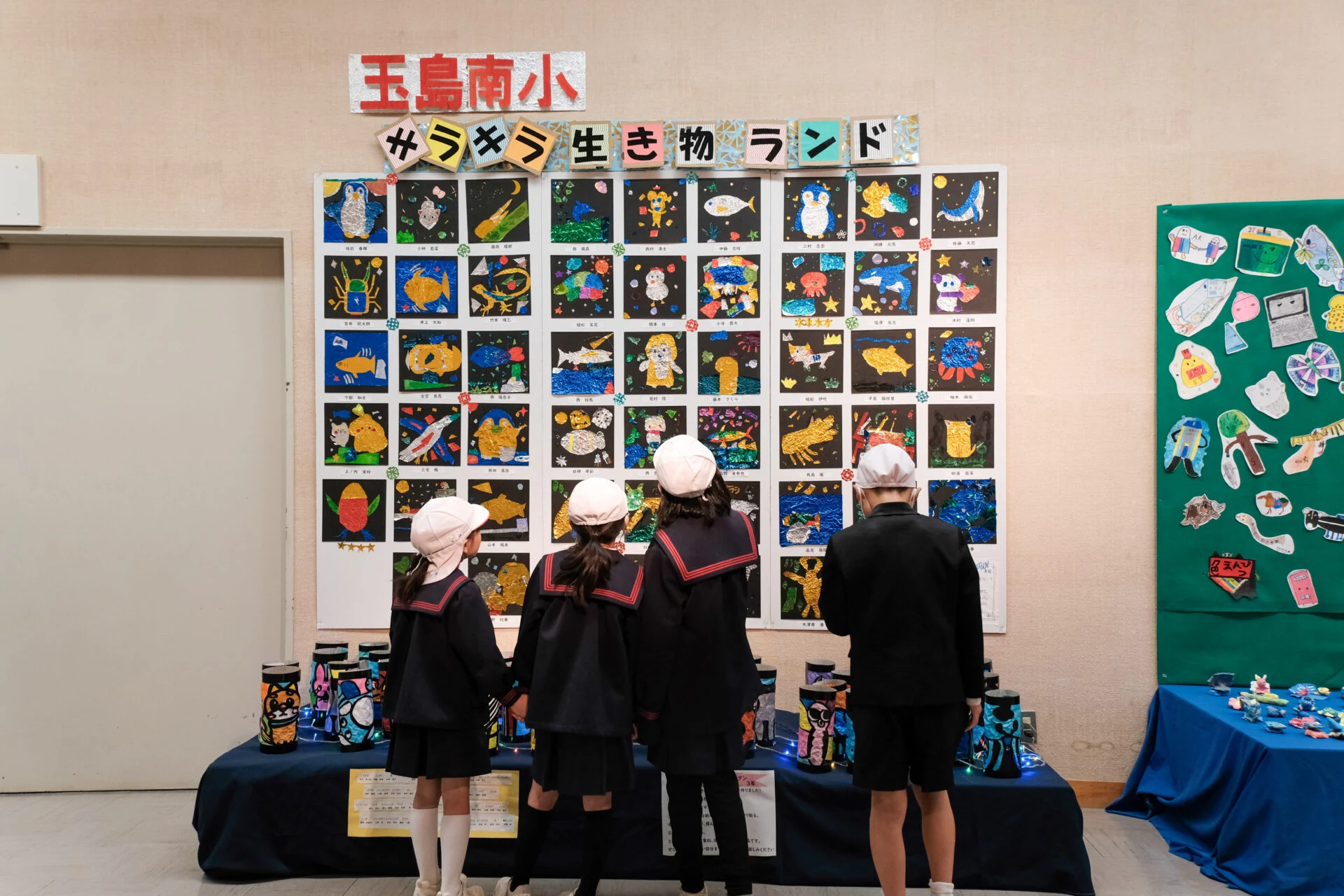
The works from the special support class of the elementary school are characterized by the display of large works in each school's respective space.
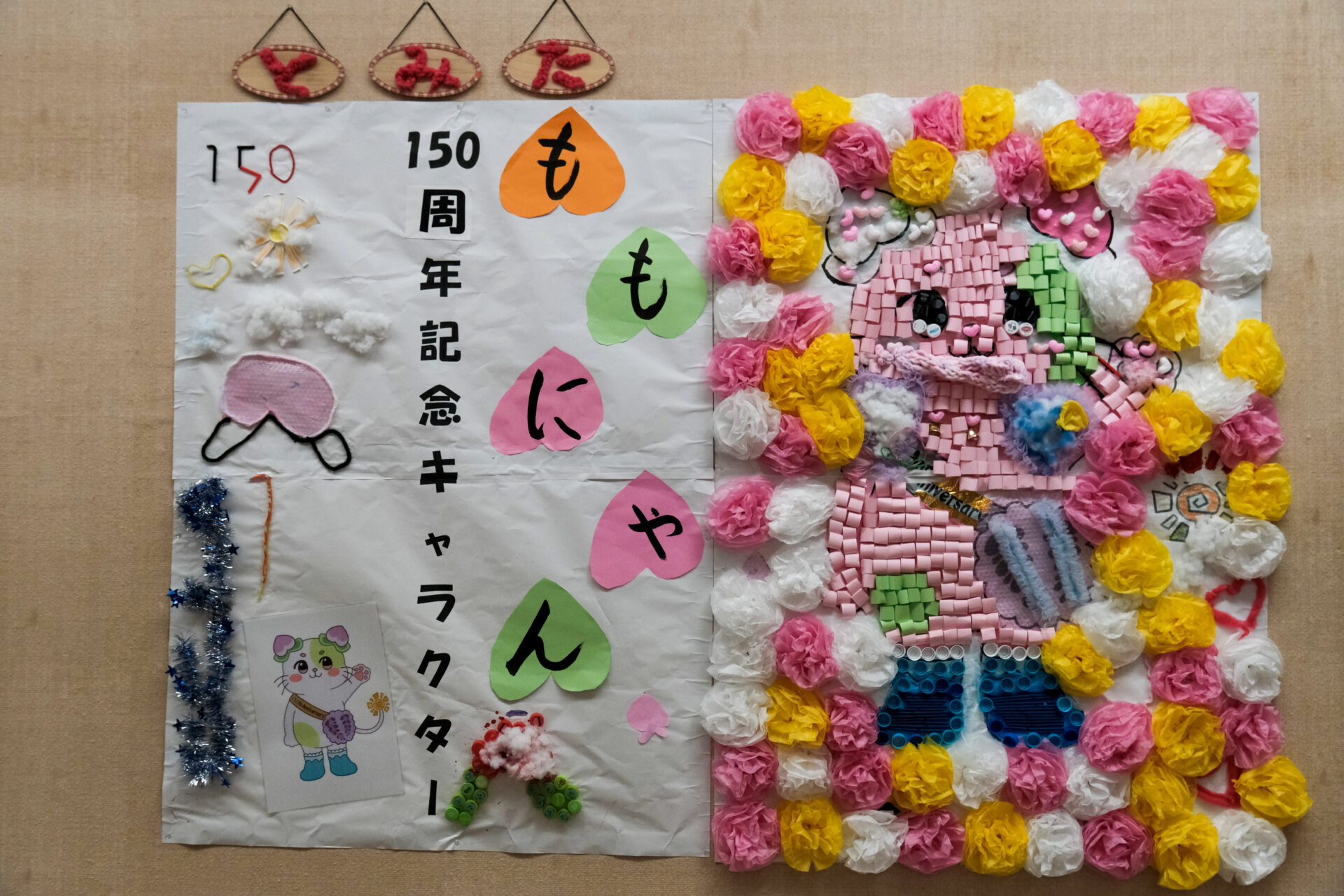
Although it appears to be one large work, it incorporates various tasks such as "rolling paper," "drawing pictures," "writing letters," "making flowers with tissue paper," and "sticking plastic products like PET bottles and straws onto paper."
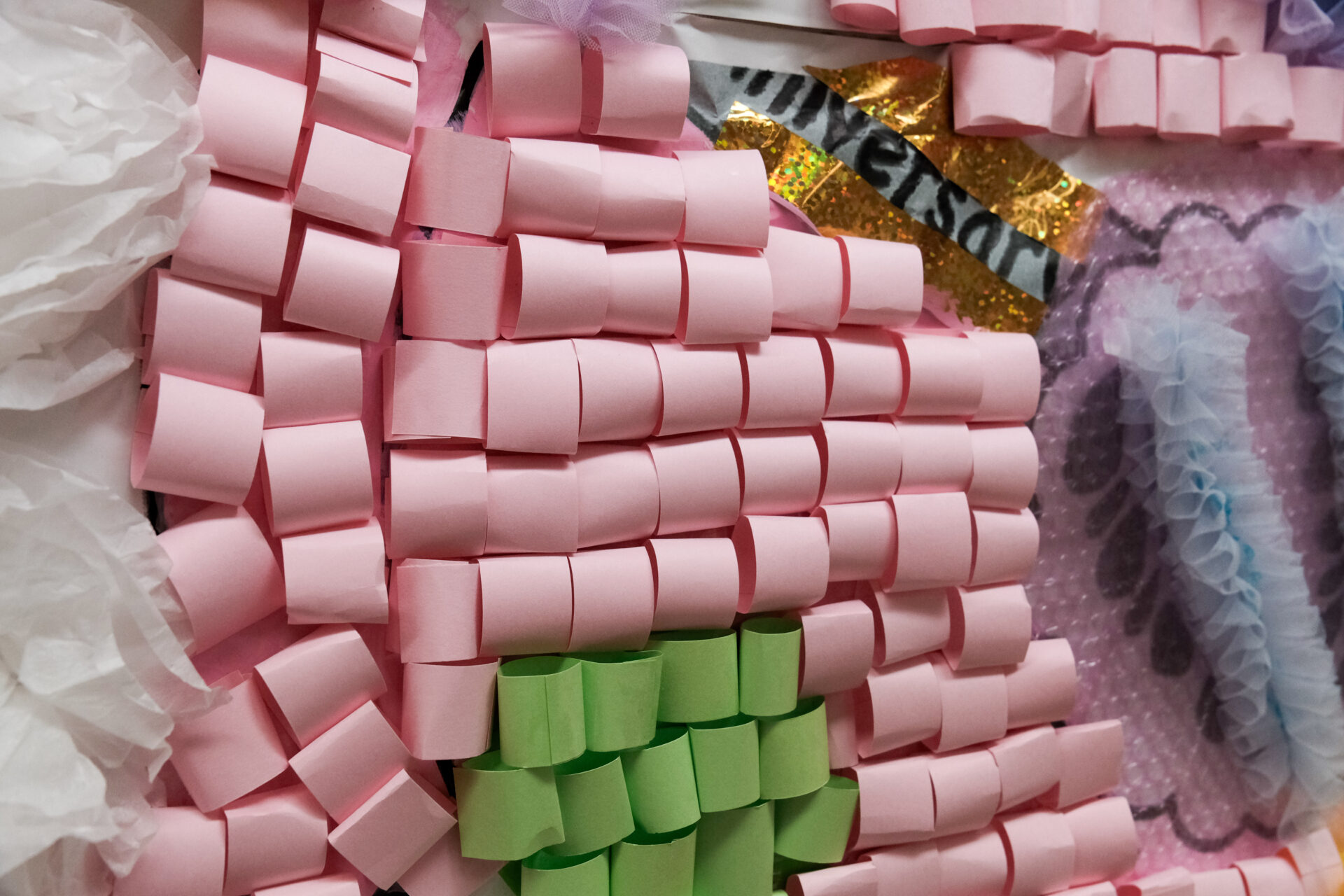
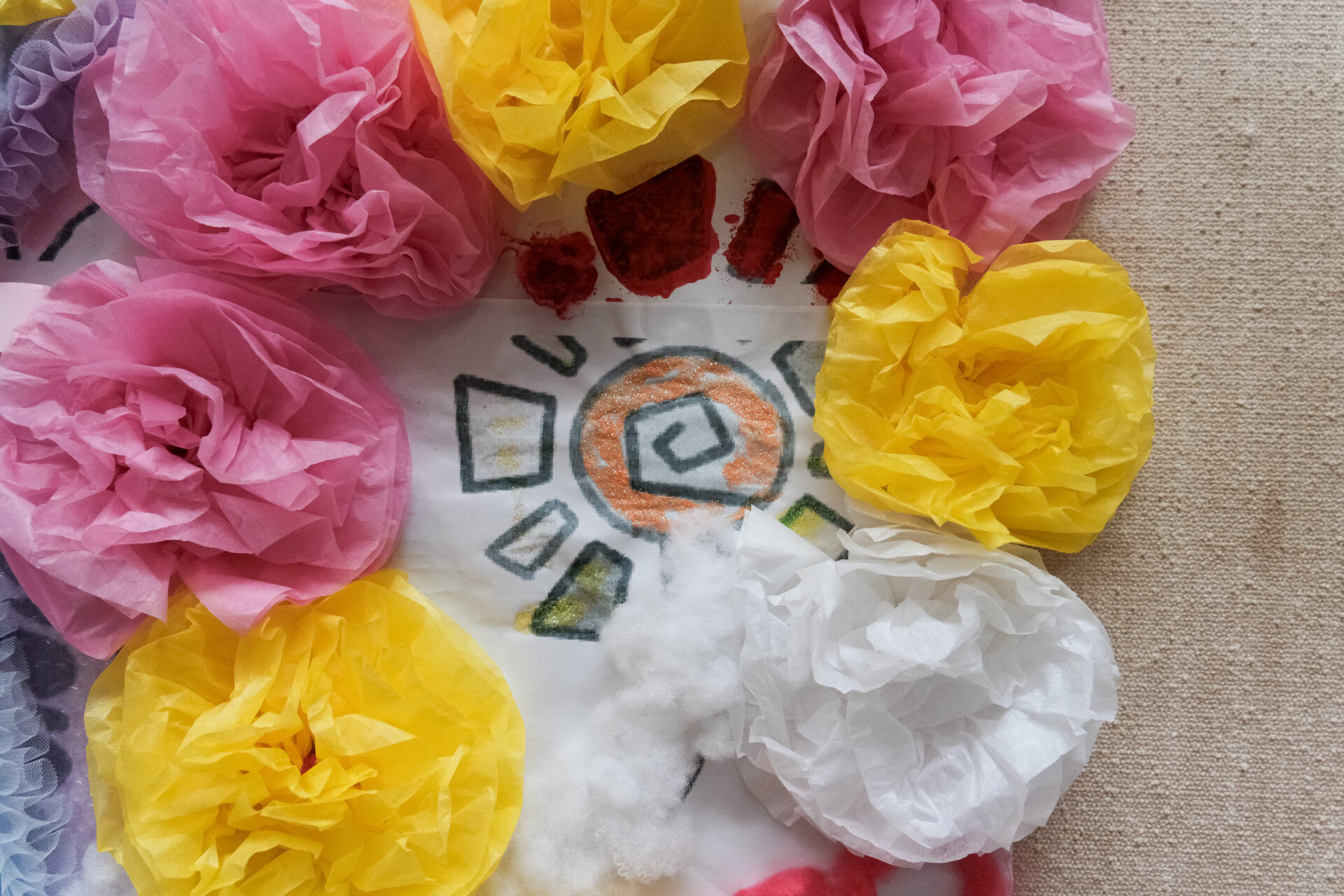
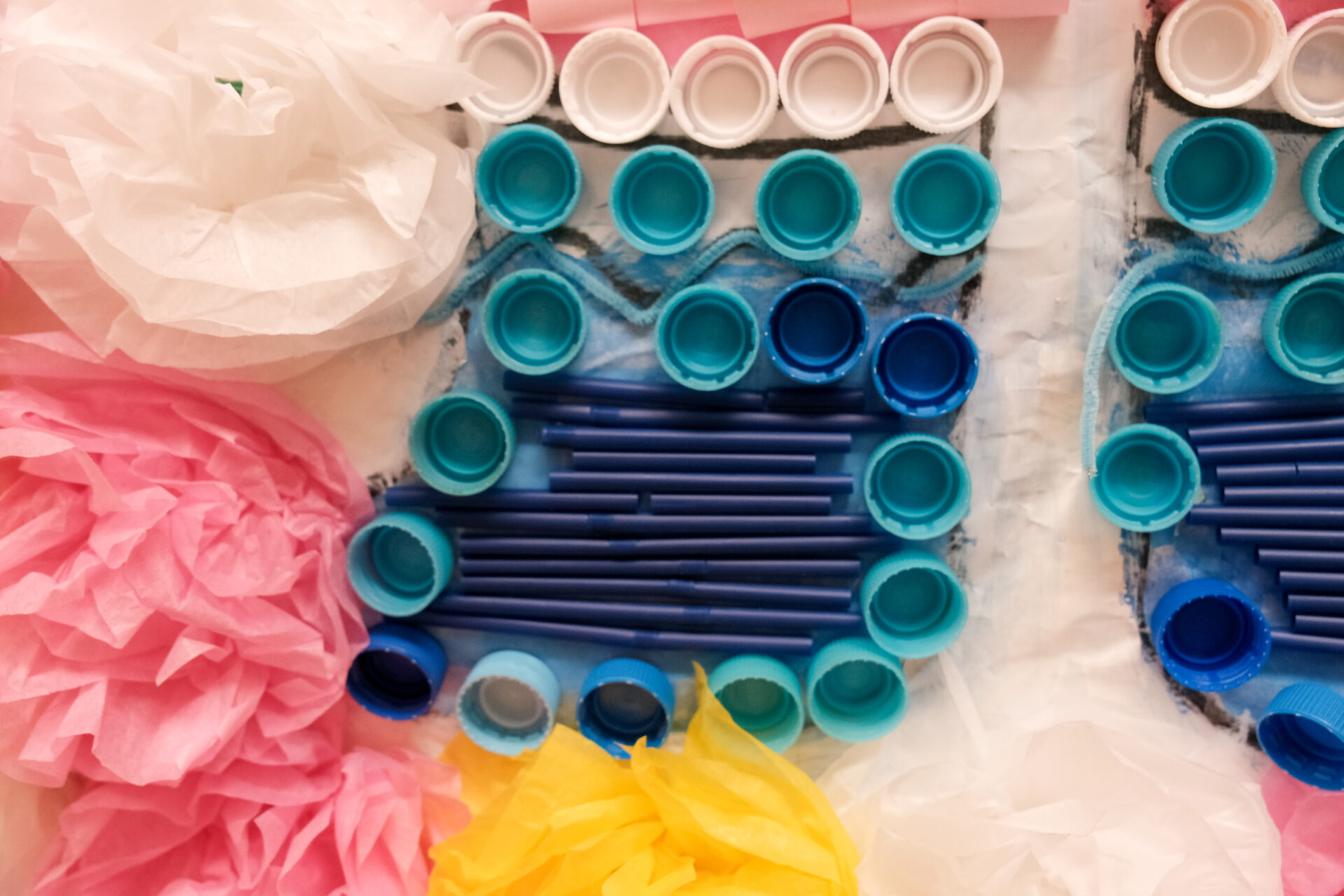
The works displayed as one piece, created by sixth graders and tailored to various children's needs, are impressive.
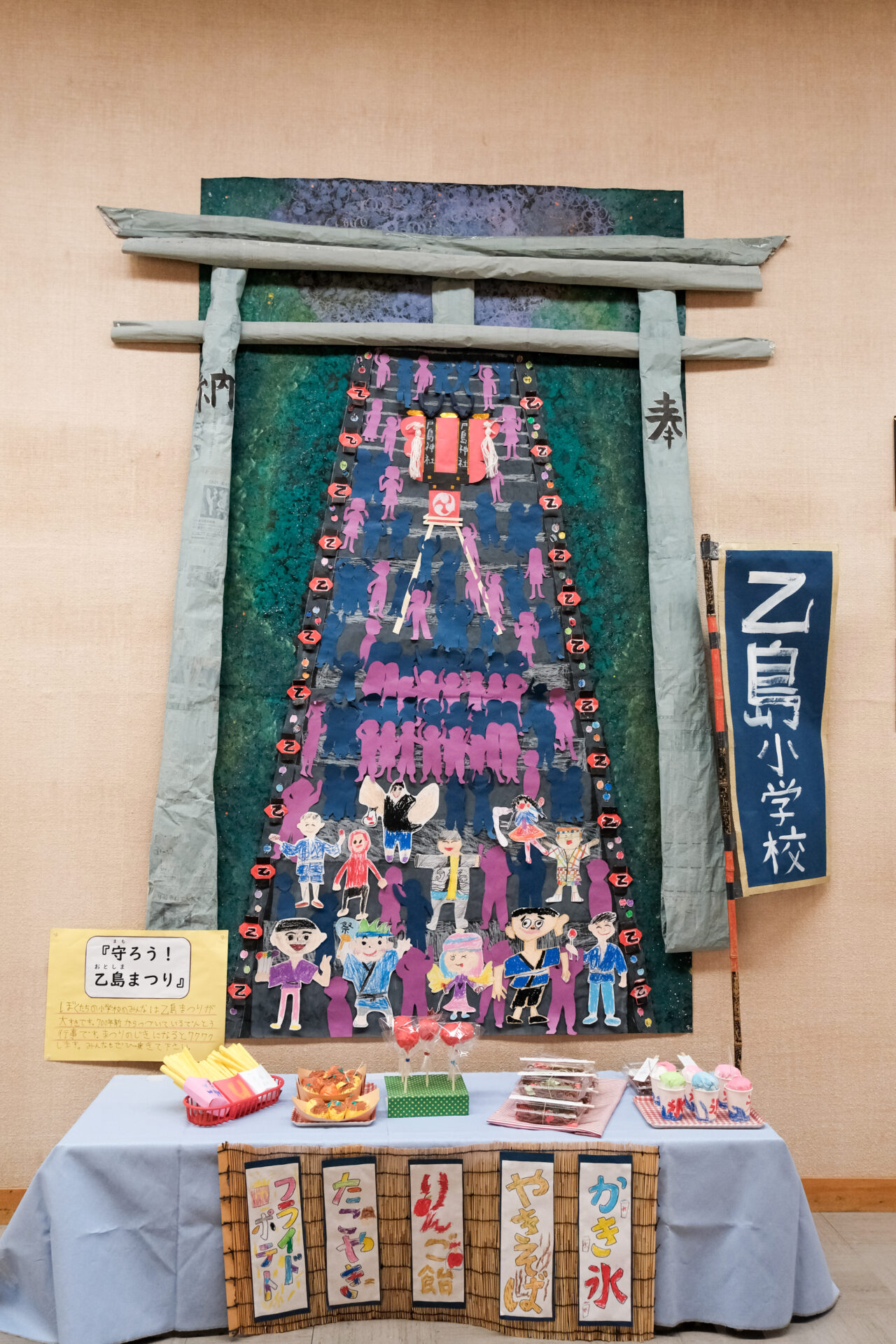
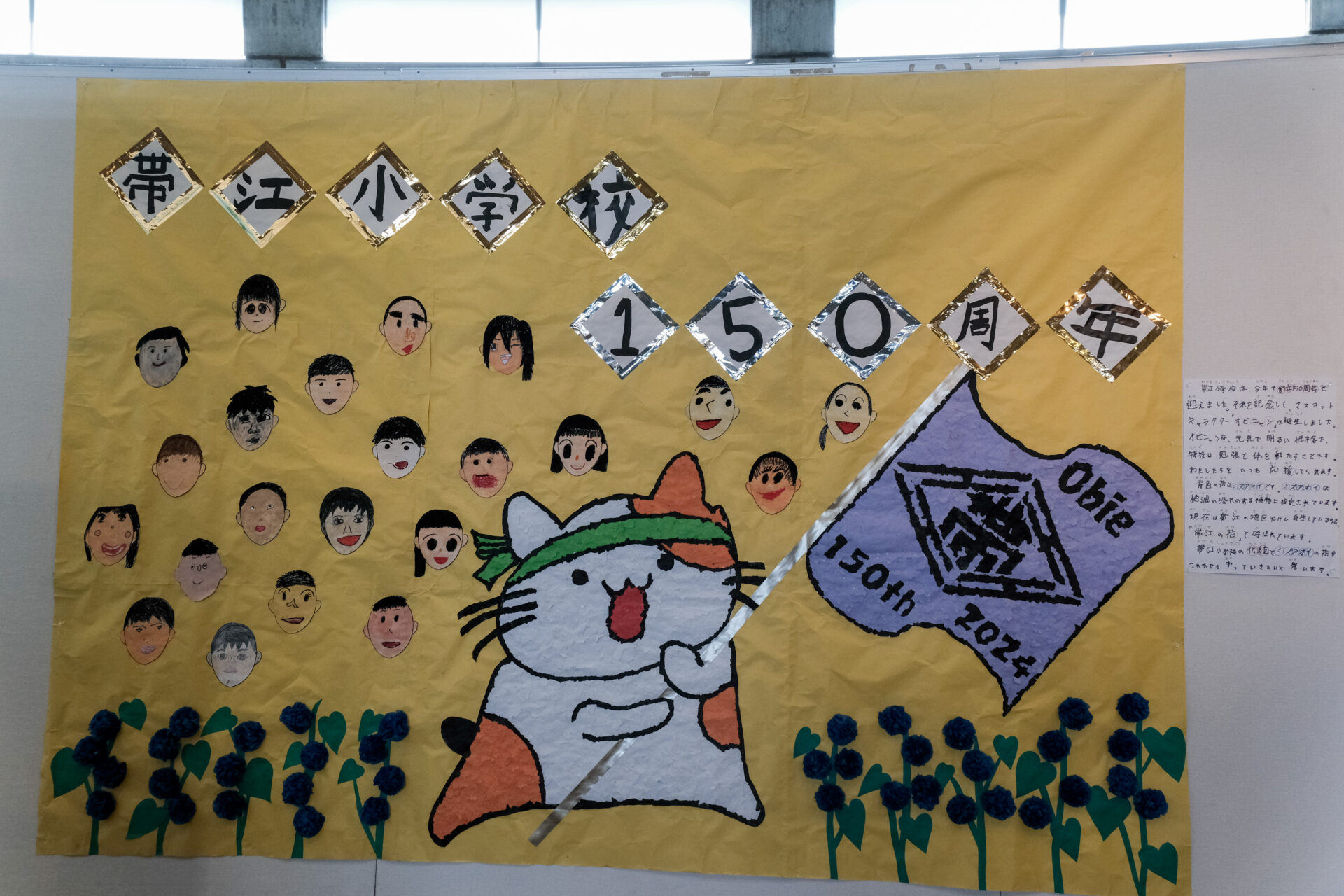
Many works seemed to introduce the school, such as showcasing local festivals or introducing the school's mascot character.
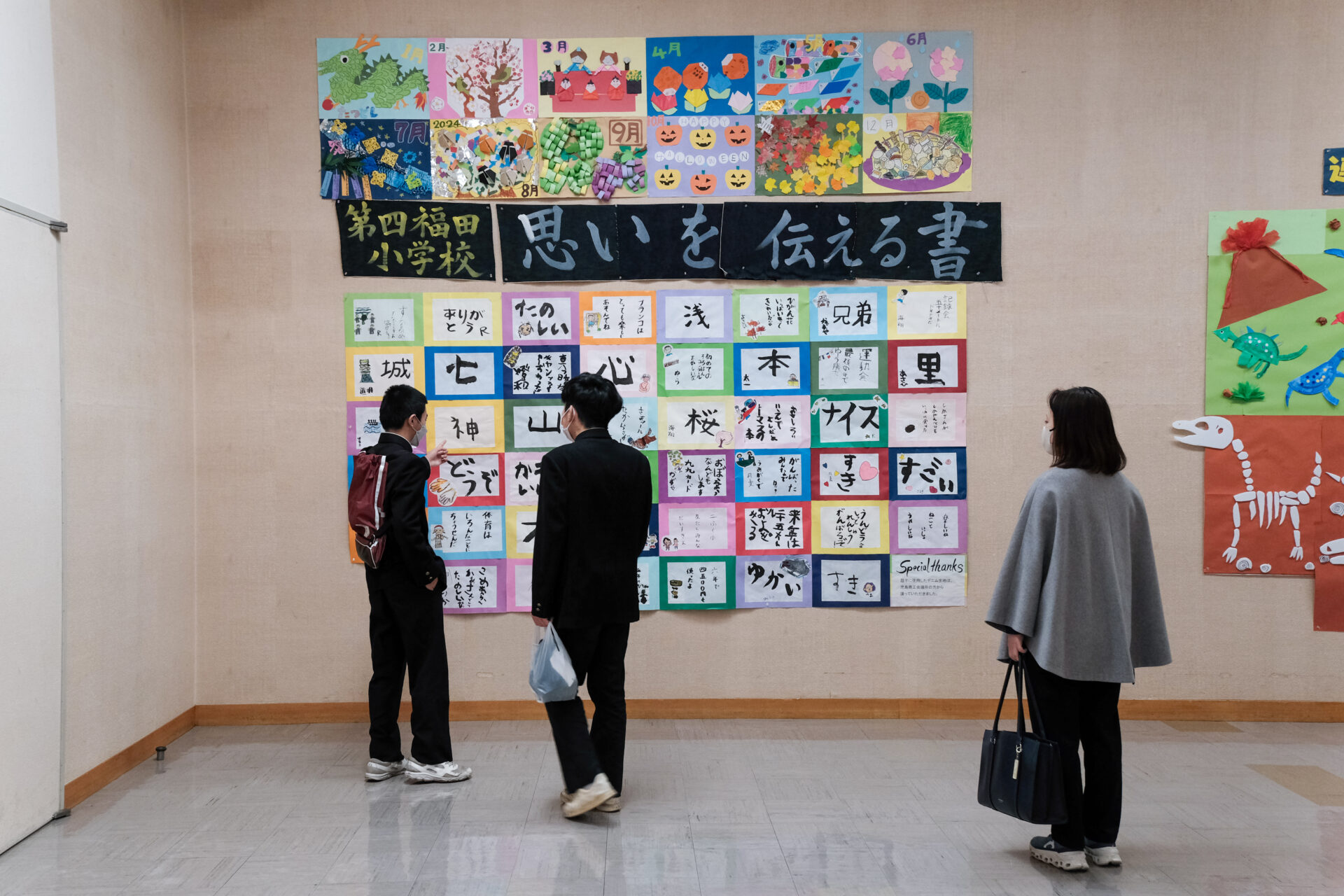
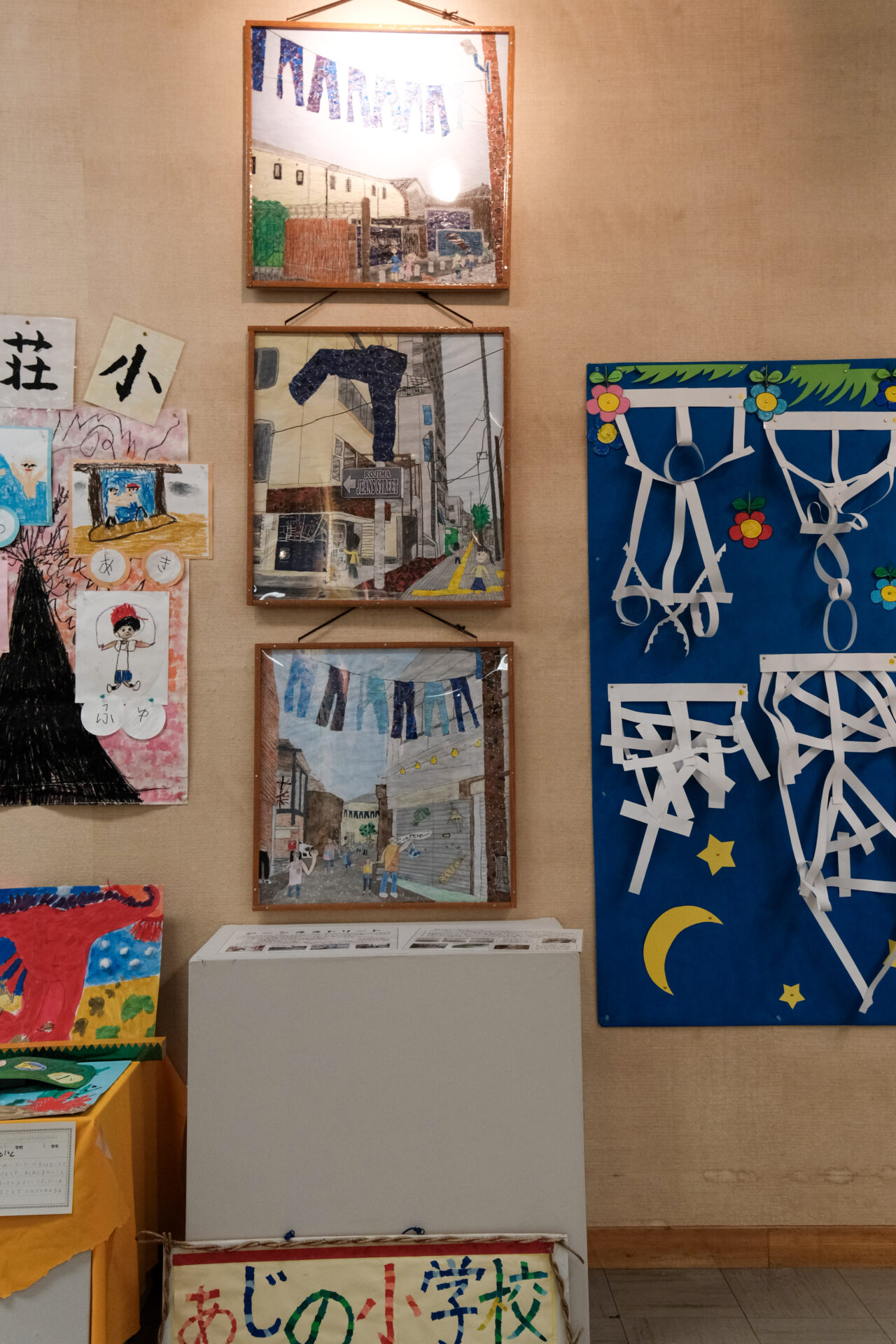
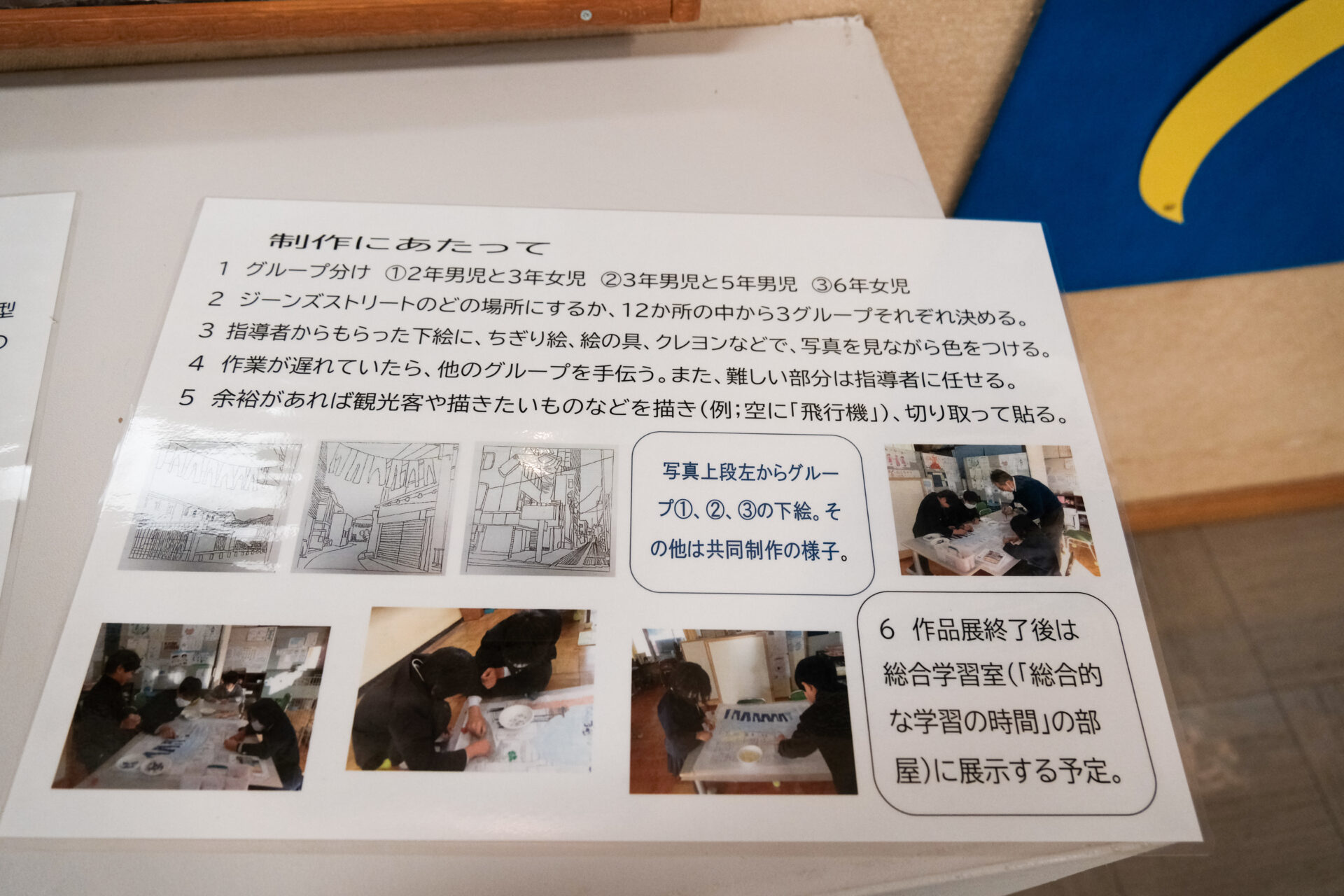
There were also middle school students who were curiously gazing at the work made using denim fabric, which was said to have been given by the Kojima Chamber of Commerce.
Additionally, some schools are planning to display their works within the school after the exhibition ends, and some have created works based on learning in exchange classes.
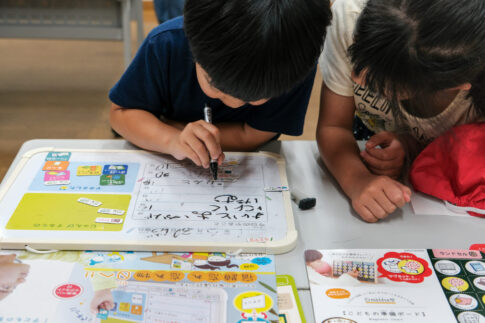
Classes where children with disabilities and children without disabilities learn together ( Everyone's Educational Technology )
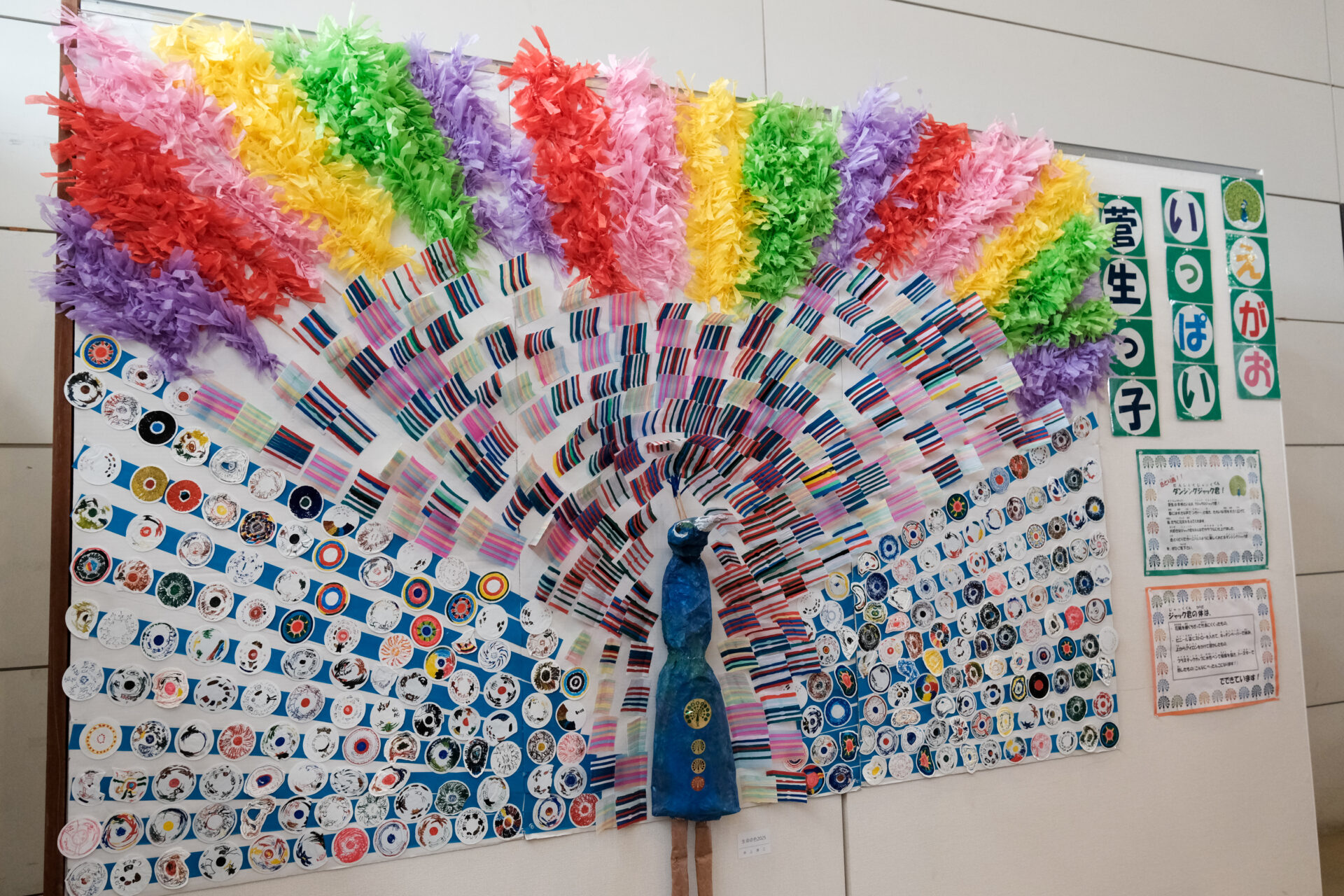
At Kurashiki City Sugao Elementary School, students were creating peacocks using water-based pens to draw patterns on plastic cups and materials heated in a toaster.
Works from the Hospital Class Utilizing Ohara Museum of Art's Outreach Course
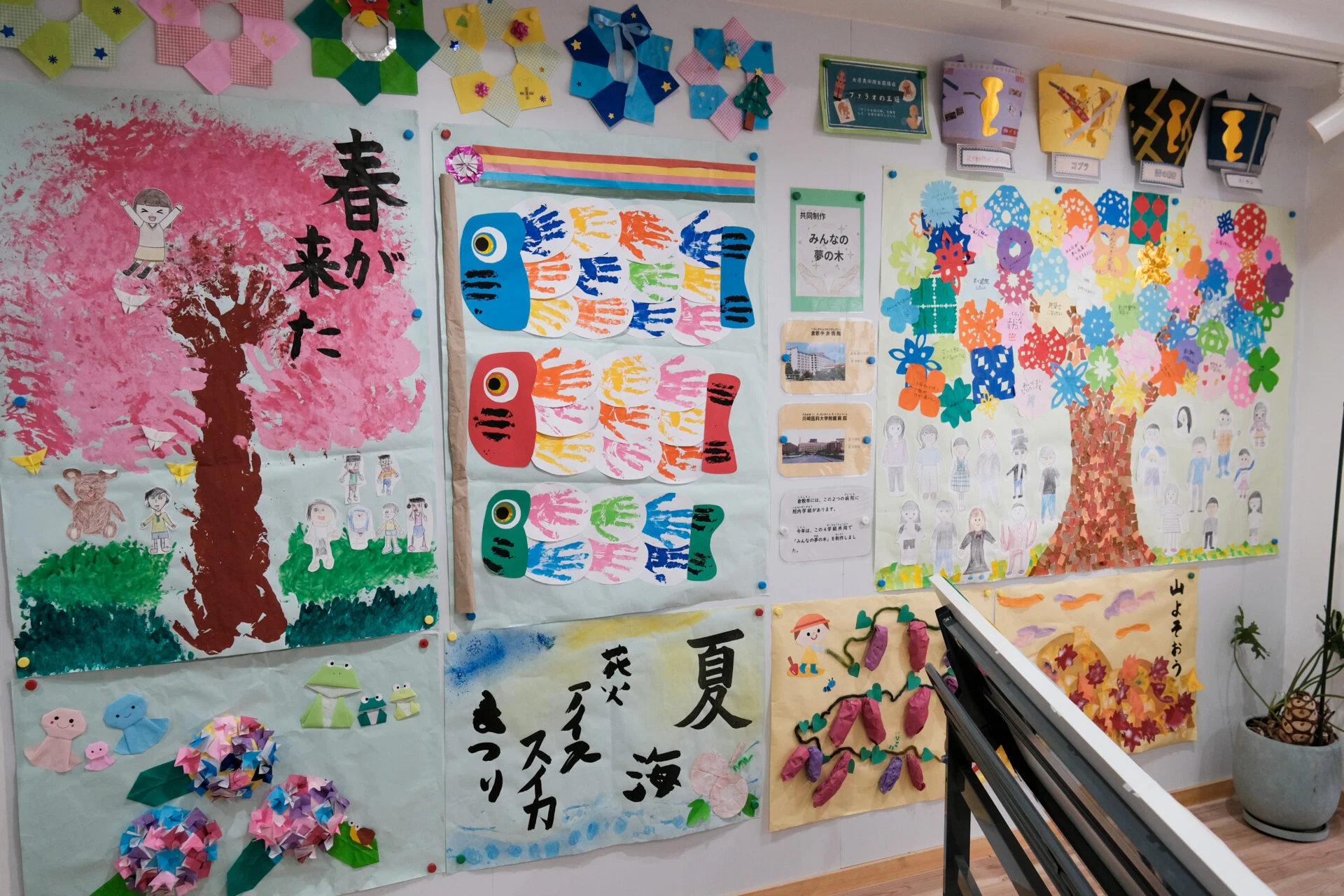
In a corner of the second-floor exhibition room, works from the hospital class were also displayed.
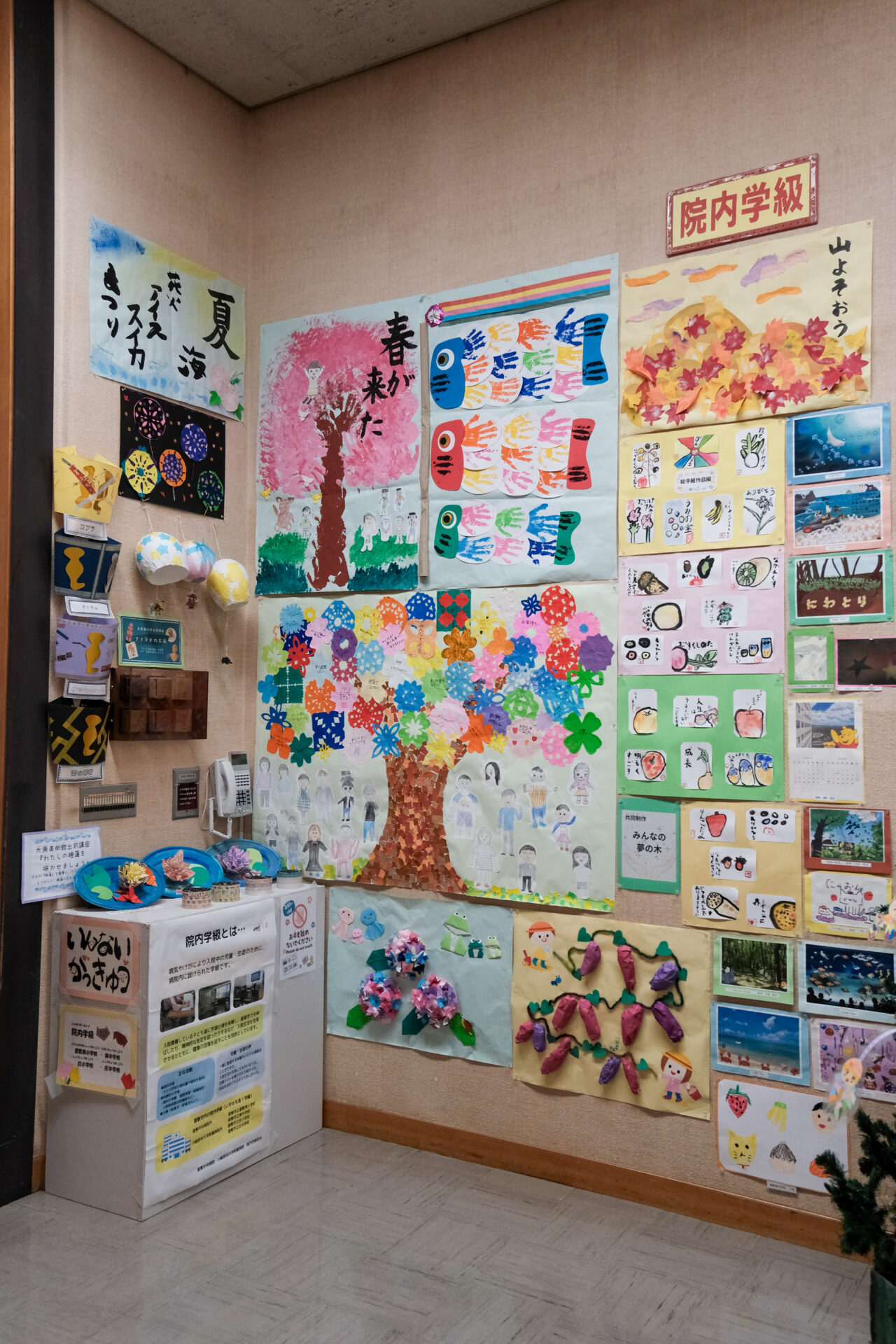
The hospital class is a special support class for children who must be hospitalized due to injury or illness, established within the hospital.
* Currently, there are hospital classes from Kurashiki City public elementary and junior high schools at Kurashiki Central Hospital and Kawasaki Medical School Hospital.
The hospital class features works inspired by Monet's "Water Lilies," utilizing the outreach course from Ohara Museum of Art, as well as works inspired by "Pharaoh Statue Sculpture."
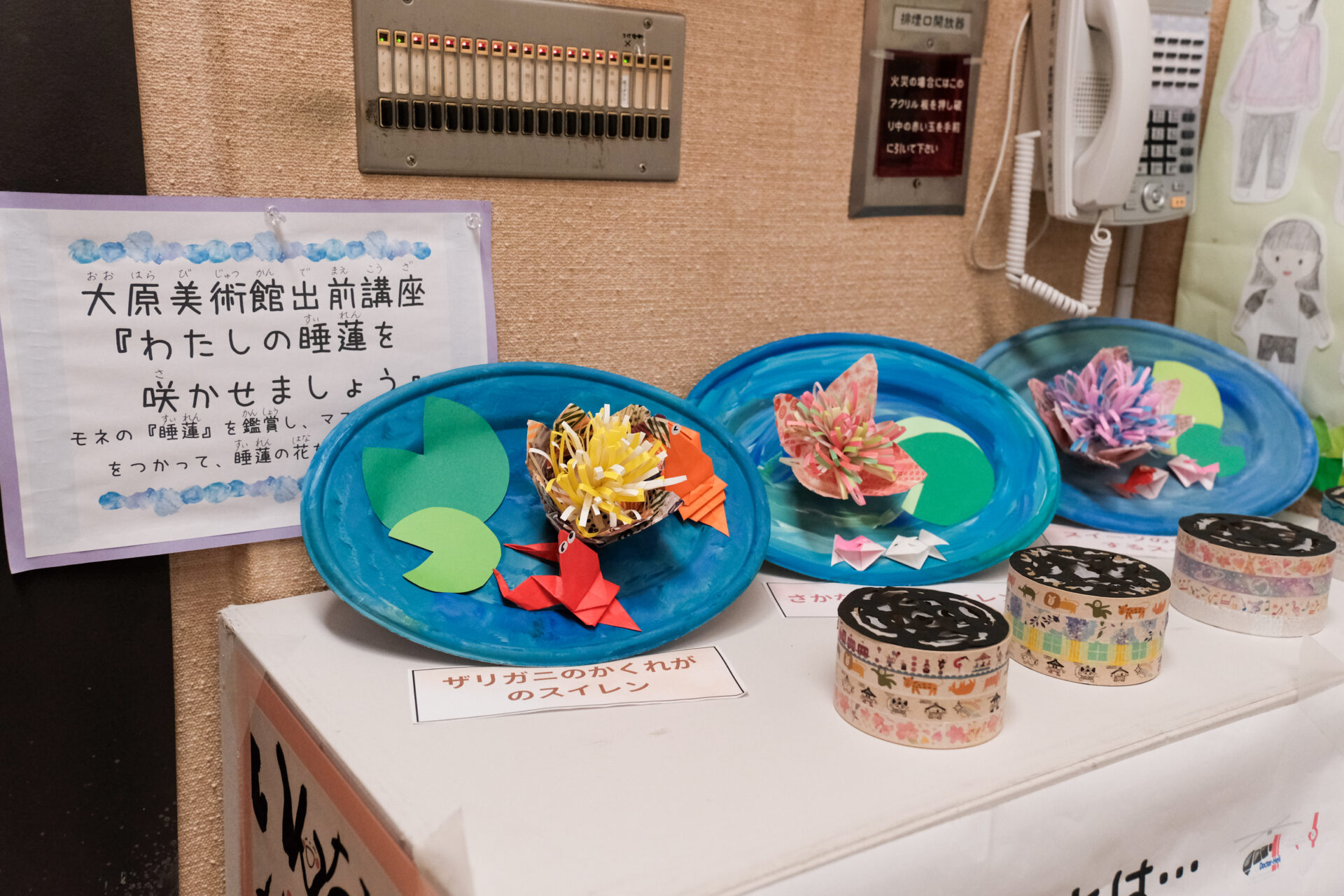
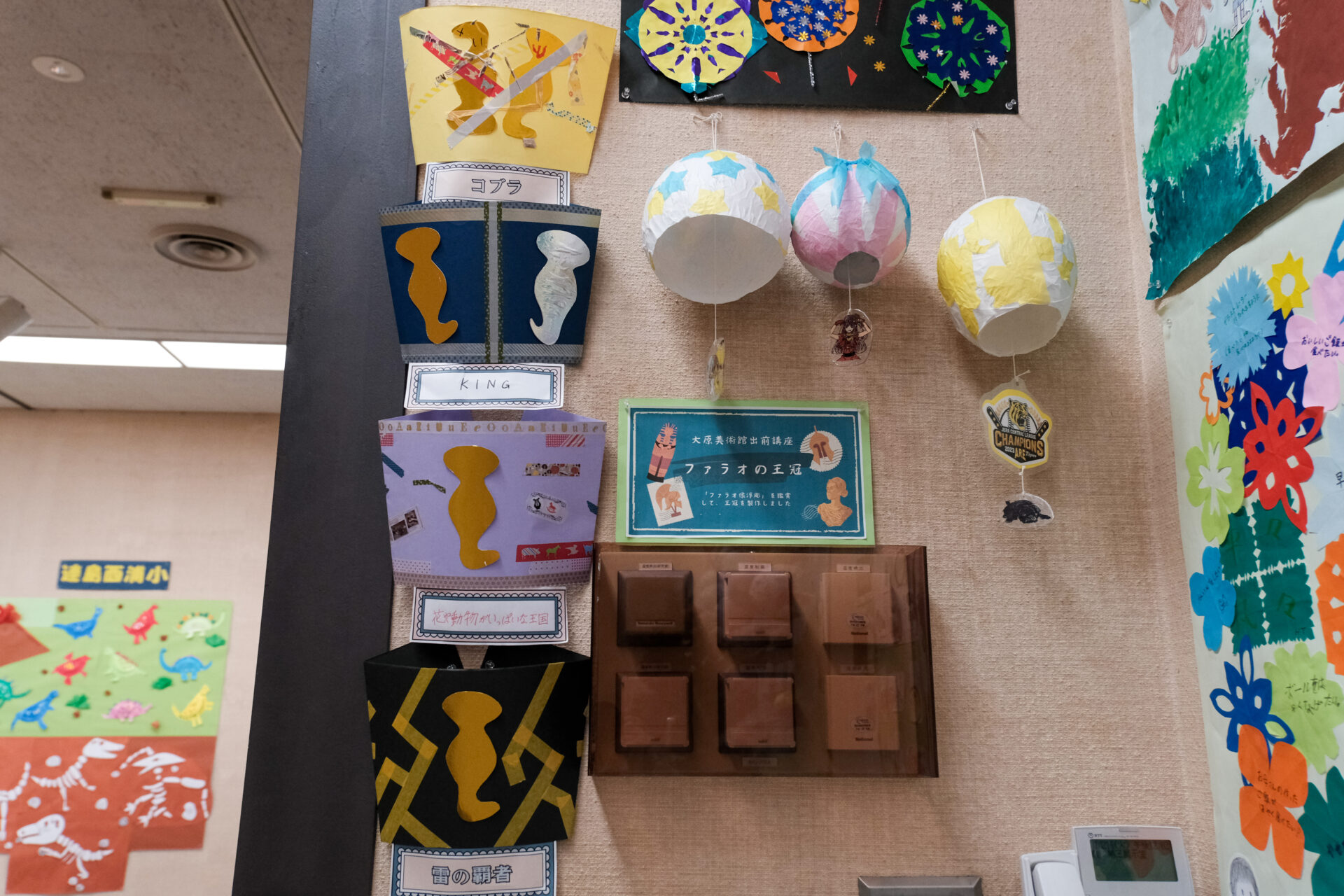
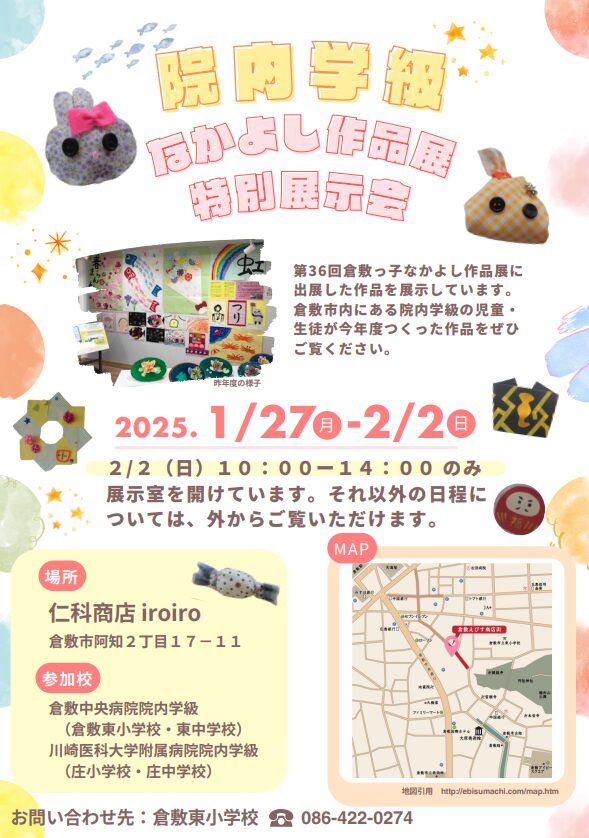
The works from the hospital class are scheduled for a special exhibition at Nishina Shoten Iroiro in the Kurashiki Ebisu Shopping Street from January 27 (Monday) to February 2 (Sunday) after the conclusion of the 36th Kurashiki Children’s Friendship Art Exhibition.
For more details, please check the image below.
Conclusion
From the first day of the exhibition, the Kurashiki City Art Museum was bustling with children visiting the exhibition as part of their field trip.
In the exhibition room, there were children who found their own works and proudly said to their friends and teachers, "I wrote this【ha】!" while admiring the pieces, which was very cute.
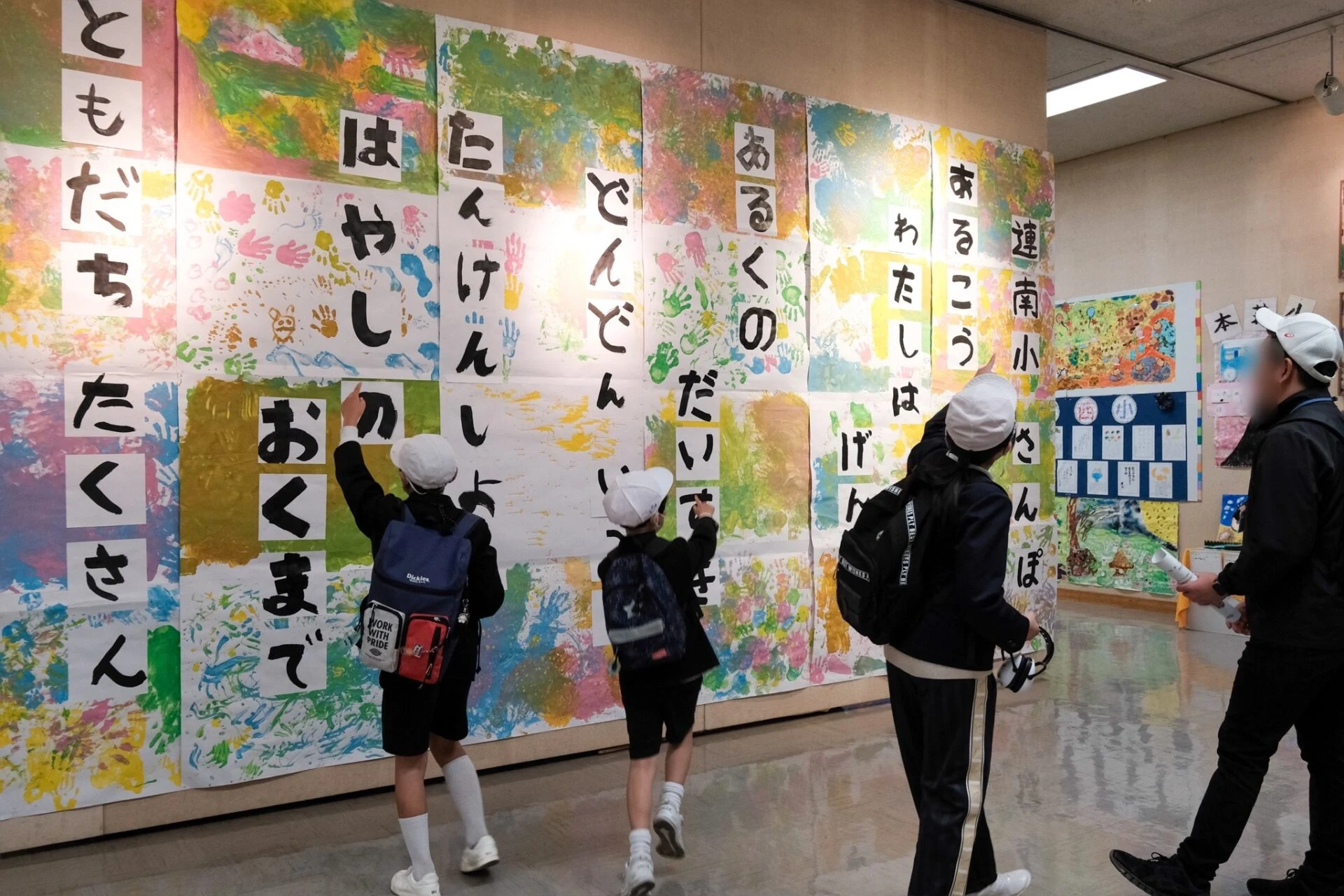
During the exhibition period, many special support classes visit the Kurashiki Kids Friendship Art Exhibition as part of their field trips. It is also a characteristic of this exhibition to see many children happily gazing at the works displayed in the museum.
I hope that the lively appearances of the children and the works they have worked hard to create will catch the eyes of as many people as possible.
Articles about Kurashiki City Art Museum

Data on the 36th Kurashiki Kids Friendship Art Exhibition
| Name | 36th Kurashiki Kids Friendship Art Exhibition |
|---|---|
| Dates | January 22 (Tue) to 26 (Sun), 2025 9:00 AM to 5:15 PM (10:30 AM opening on the first day only) |
| Location | 2-6-1 Chuo, Kurashiki City, Okayama Prefecture |
| Participation Fee (Tax Included) | Free admission |
| Website | Kurashiki City Art Museum |



Classes established in elementary and middle schools to help students with disabilities overcome learning or daily life difficulties caused by their disabilities (Ministry of Education, Culture, Sports, Science and Technology).