
Together with Kurashiki Central Library and Kurashiki Museum of Natural History, Kurashiki City Art Museum forms part of Kurashiki City’s cultural facilities zone. The museum serves not only as an art museum, but also as a place for children’s education.
One of its signature activities, the Kurashiki Children’s Art Exhibition, began again this year on Friday, January 31, 2025.
I visited the lively venue during the opening ceremony and just afterward, when it was filled with energetic children.
The information presented here was current when this article was published in February 2025. Please note that it may differ from current information.
What is the 39th Kurashiki Children’s Art Exhibition?
The Kurashiki Children’s Art Exhibition is held every year at Kurashiki City Art Museum. It provides a place for children, who will shape the future, to develop their imagination, refine their fresh sensibilities, and nurture rich emotional lives.
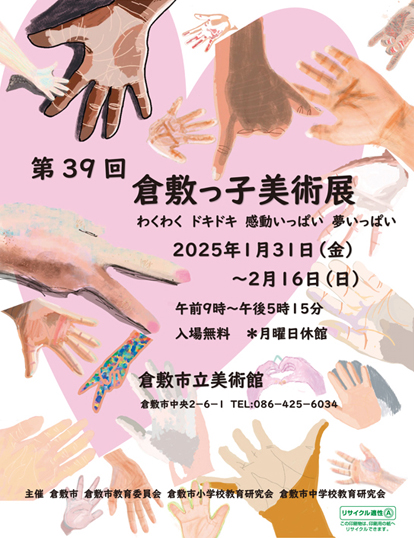
In its 39th year, the 2024 exhibition features entries from 89 schools:
- 60 Kurashiki City elementary schools
- 26 Kurashiki City junior high schools
- Okayama Korean Elementary and Junior High School
- Okayama Prefectural Kurashiki Amaki Junior High School
- Seishin Junior High School
A total of 9,340 two-dimensional, three-dimensional, and collaborative works are on display.
More than 10,000 people visit the exhibition each year. This year, as of the morning of Friday, January 31, 2025, 33 elementary school groups were scheduled to visit.
The opening ceremony
The opening ceremony was held in the first-floor lobby of Kurashiki City Art Museum from 10 a.m. on Friday, January 31, 2025, and lasted about 15 minutes.
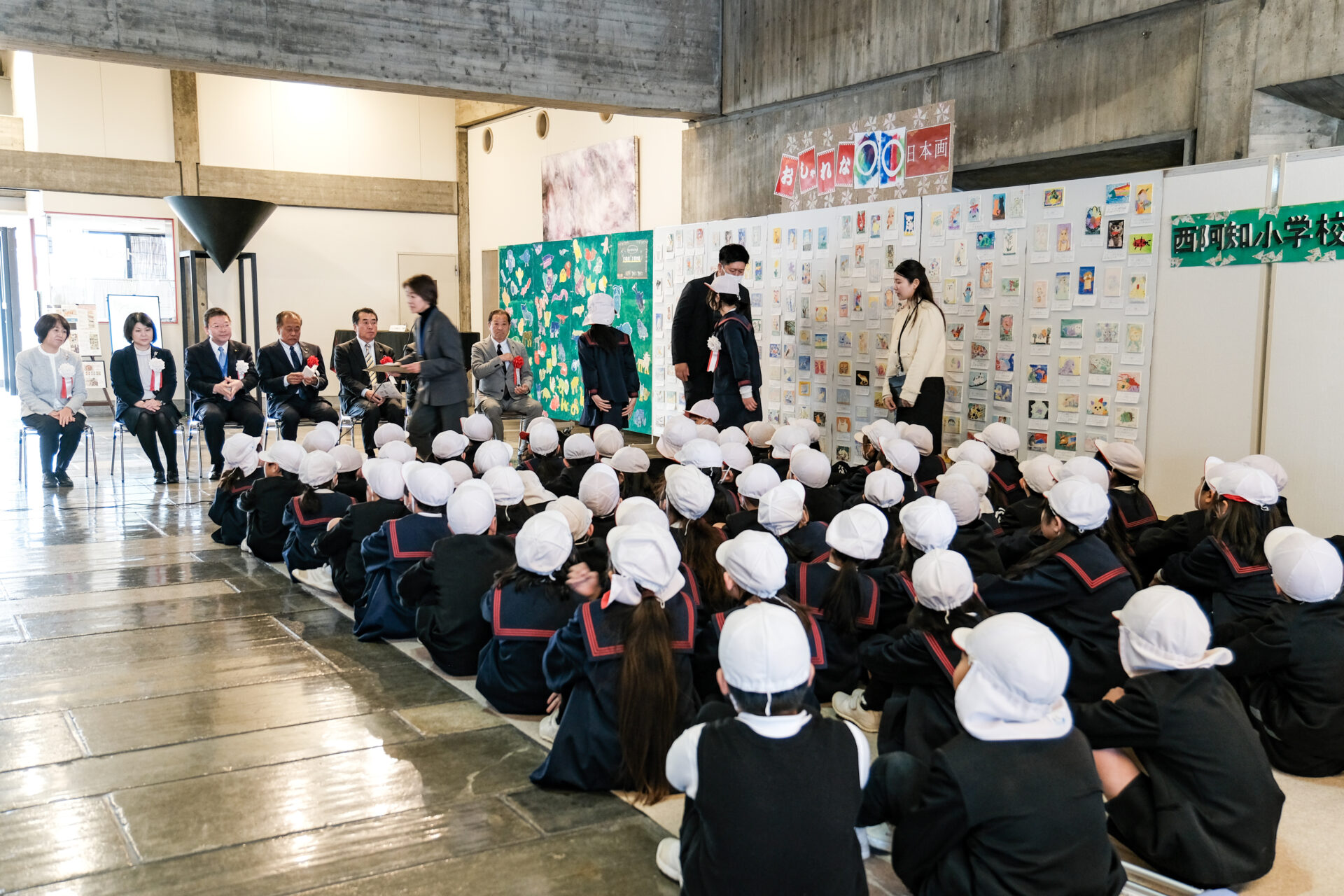
The ceremony was hosted by the superintendent of the Kurashiki City Board of Education, which organizes the exhibition. Kurashiki City council members, children and parents from Kurashiki-Nishi Elementary School, and the student council president of Kurashiki City Nishi Junior High School also attended, making it a grand occasion.
Mitake Runa, a fourth-grader at Kurashiki-Nishi Elementary School who gave the address on behalf of Kurashiki’s children, said:
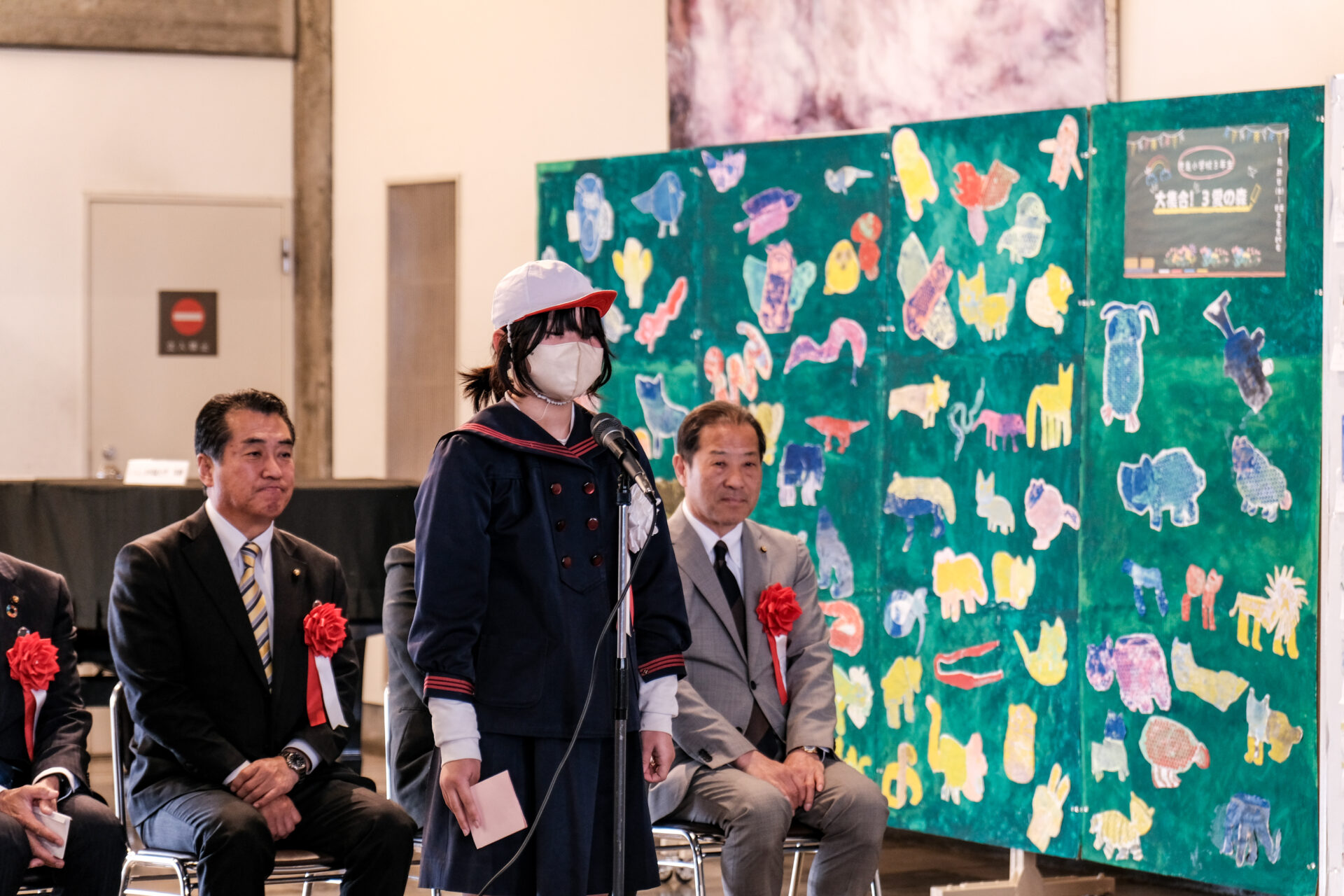
“I love art class. I’m so happy that the work I made in art class is on display at Kurashiki City Art Museum.”
She continued:
“I want to take a good look at the work from other elementary schools and use what I learn in the future. Let’s all enjoy our friends’ artwork.”
she urged.
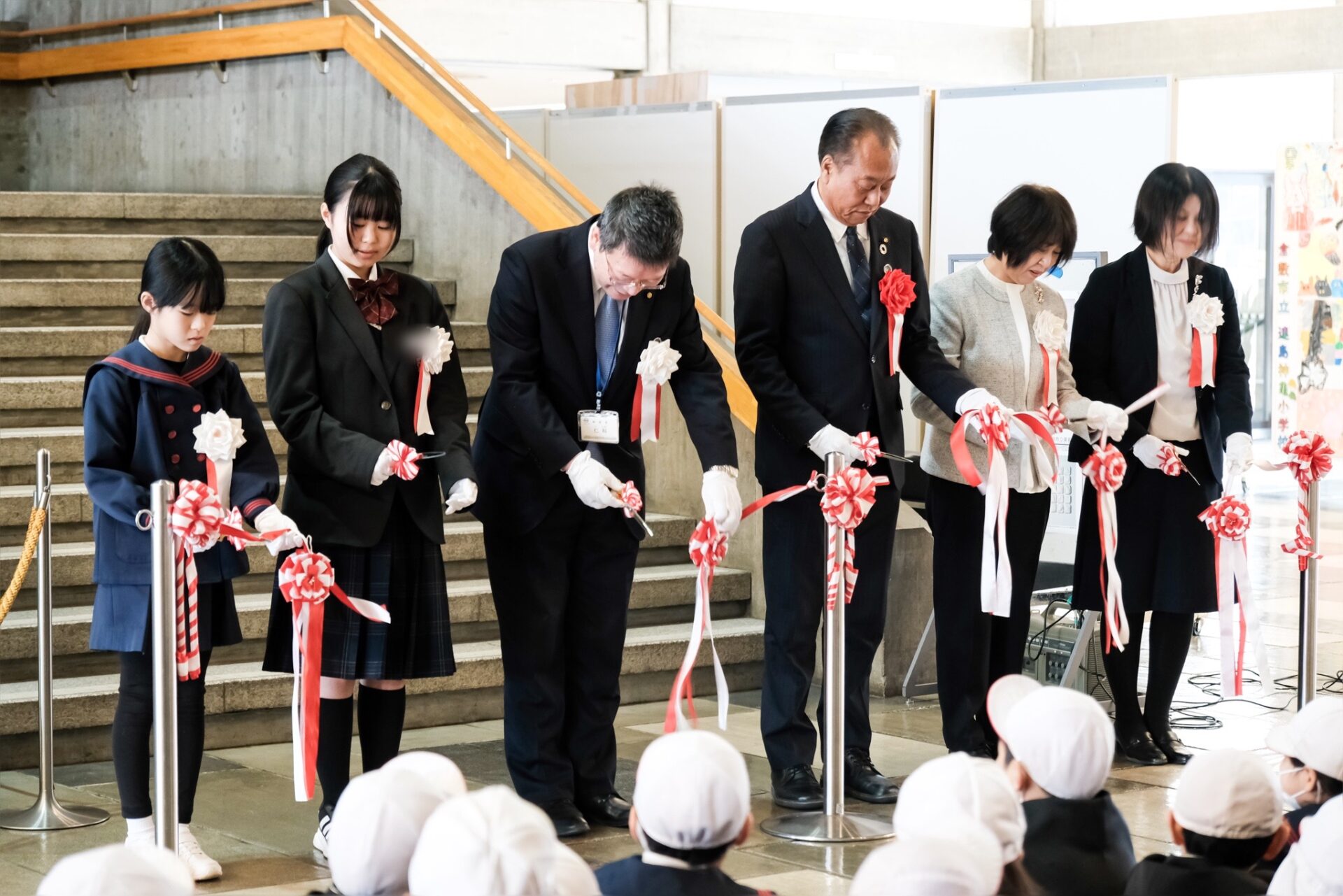
The ceremony ended with a ribbon-cutting, making for a festive occasion.
The exhibition
The works are displayed across the first and second floors of Kurashiki City Art Museum.
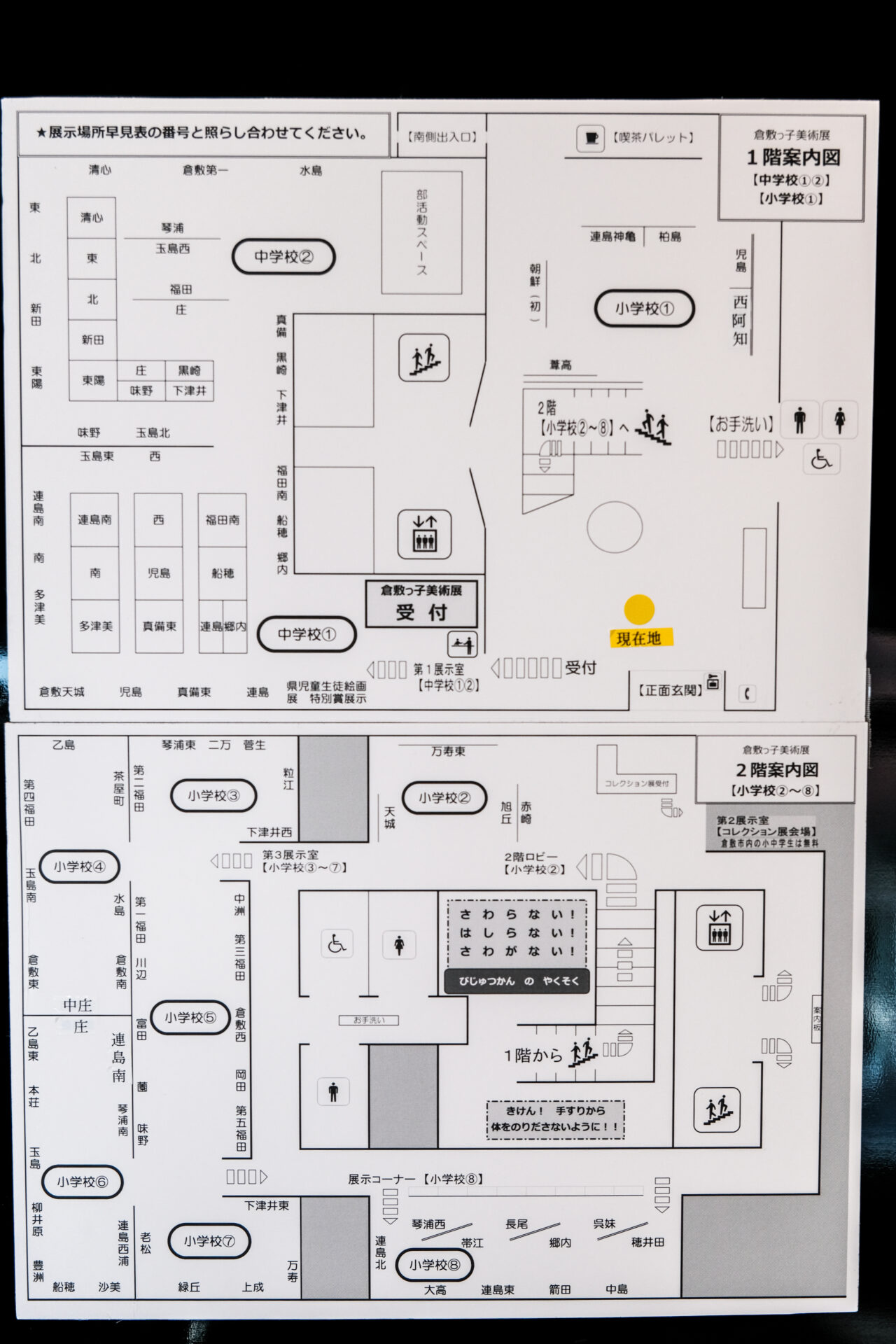
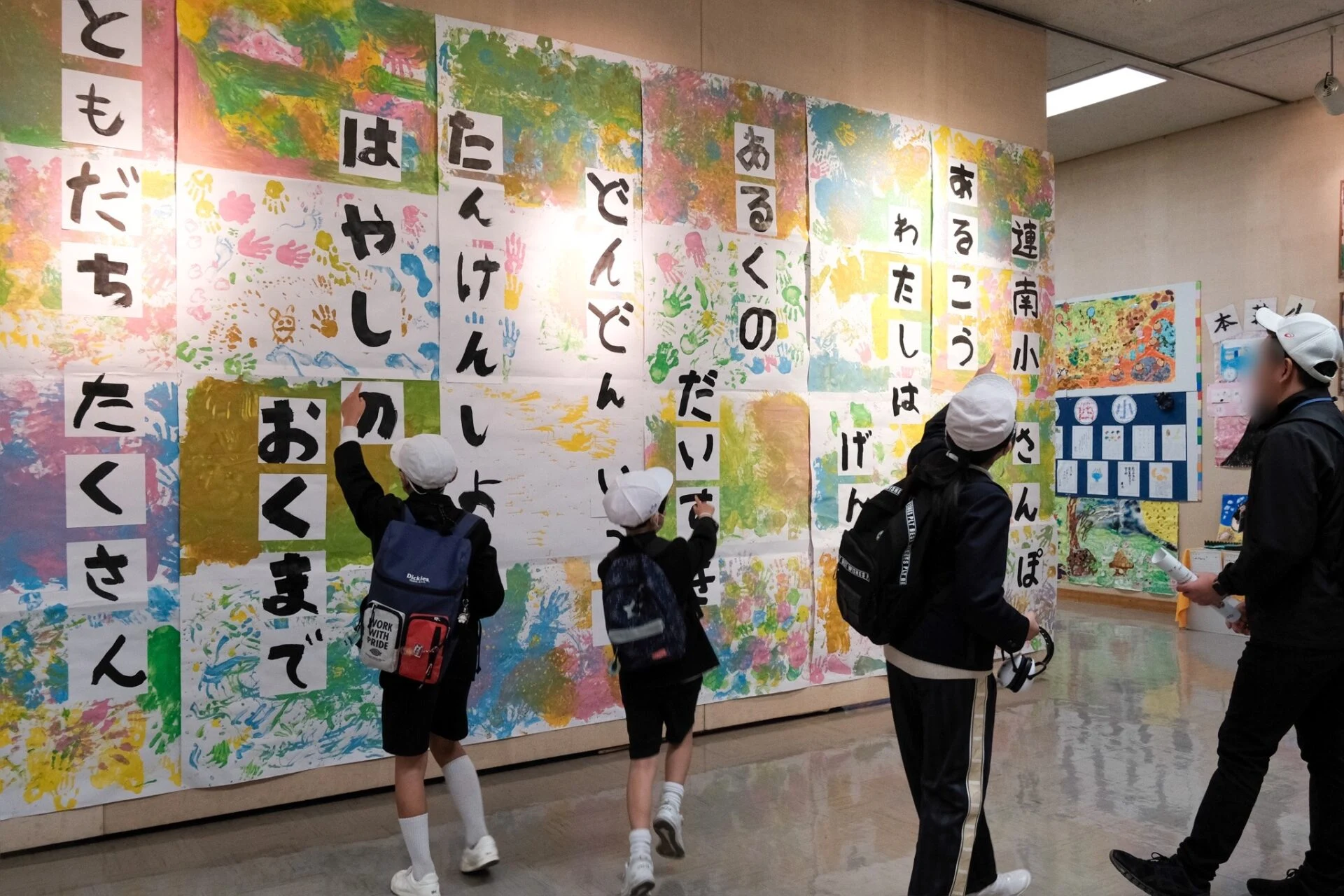
Children enthusiastically viewing the artwork
After the opening ceremony, the children first head to the elementary school exhibition space on the second floor.
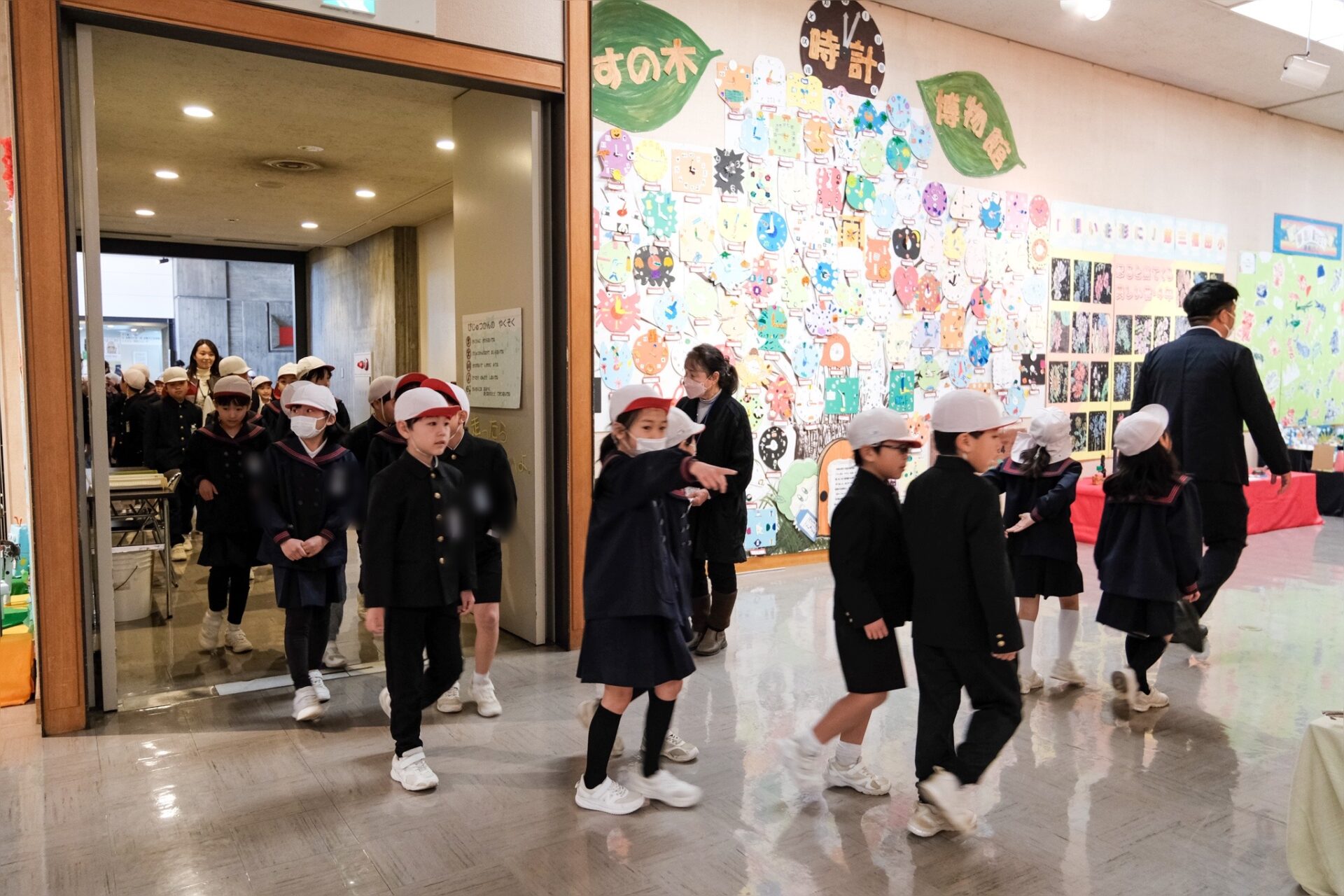
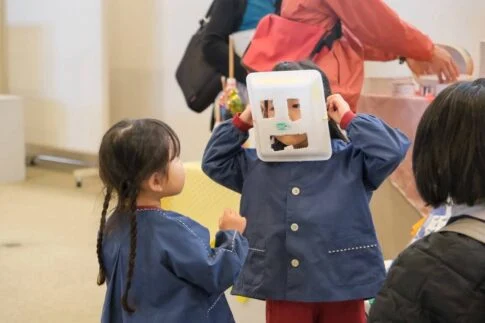
Seeing their work displayed at the city art museum rather than at school brings smiles to their faces, and they happily pose for commemorative photos.
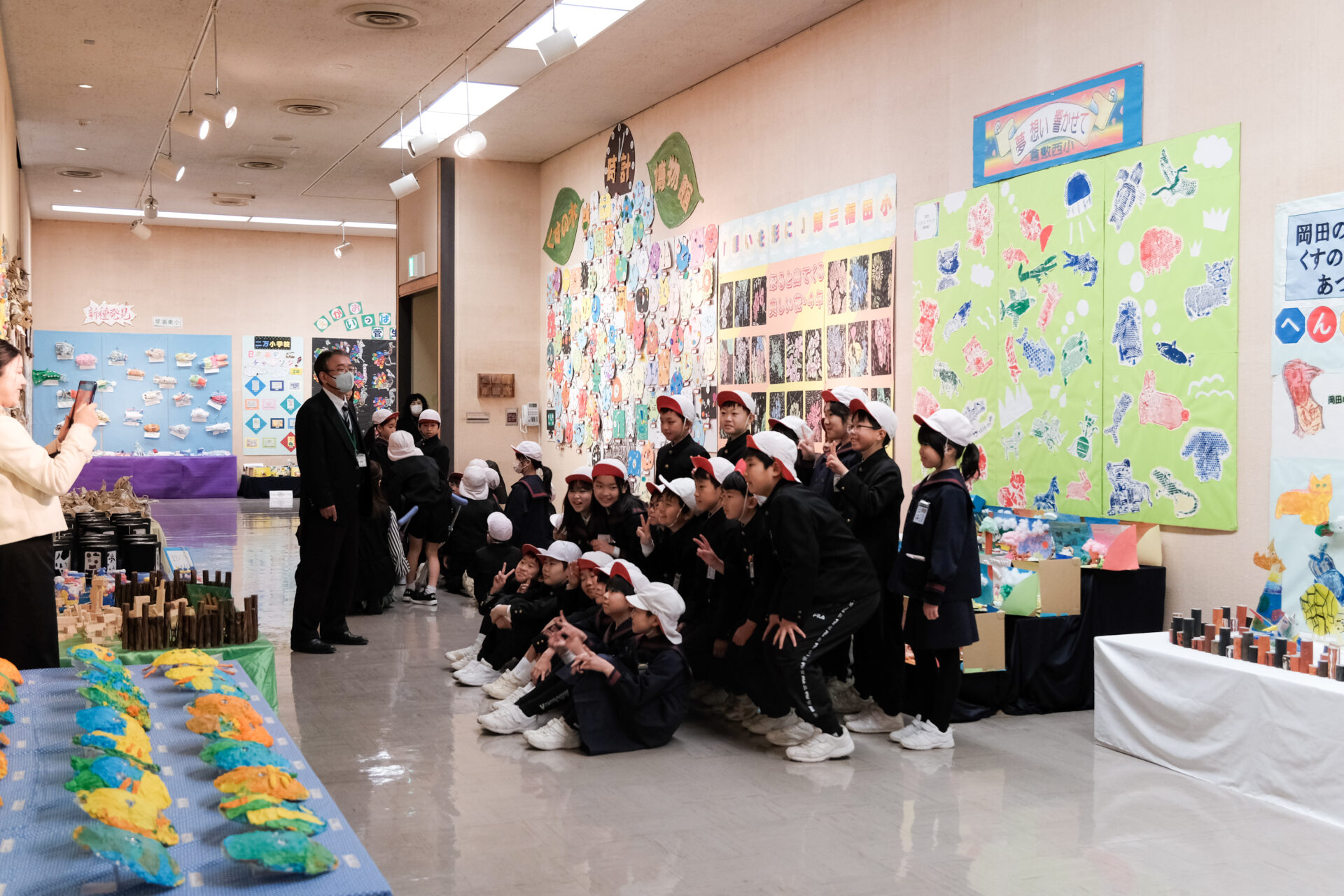
After that, they move on to view work from other schools.
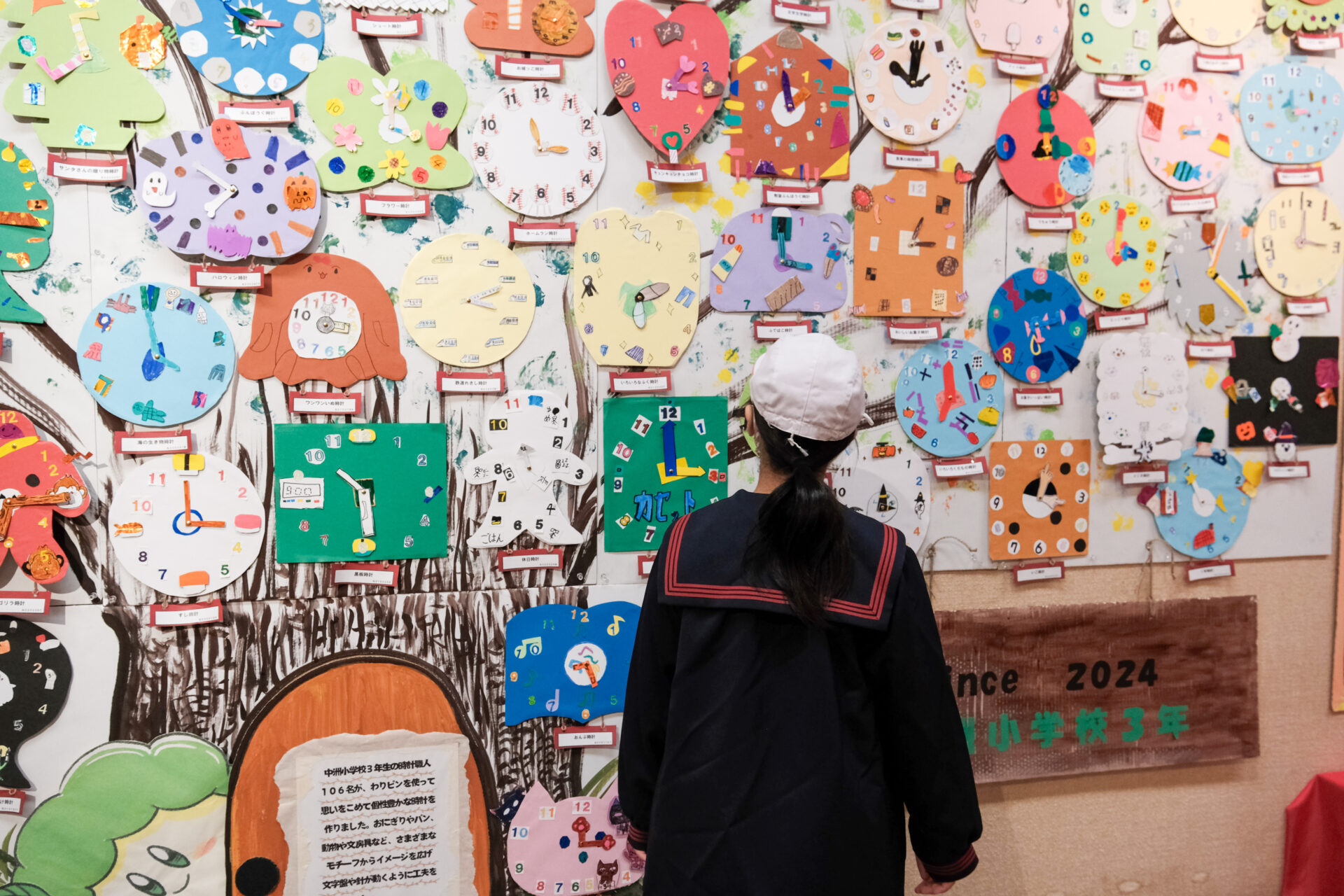
Some children take their time viewing the artwork on their own.
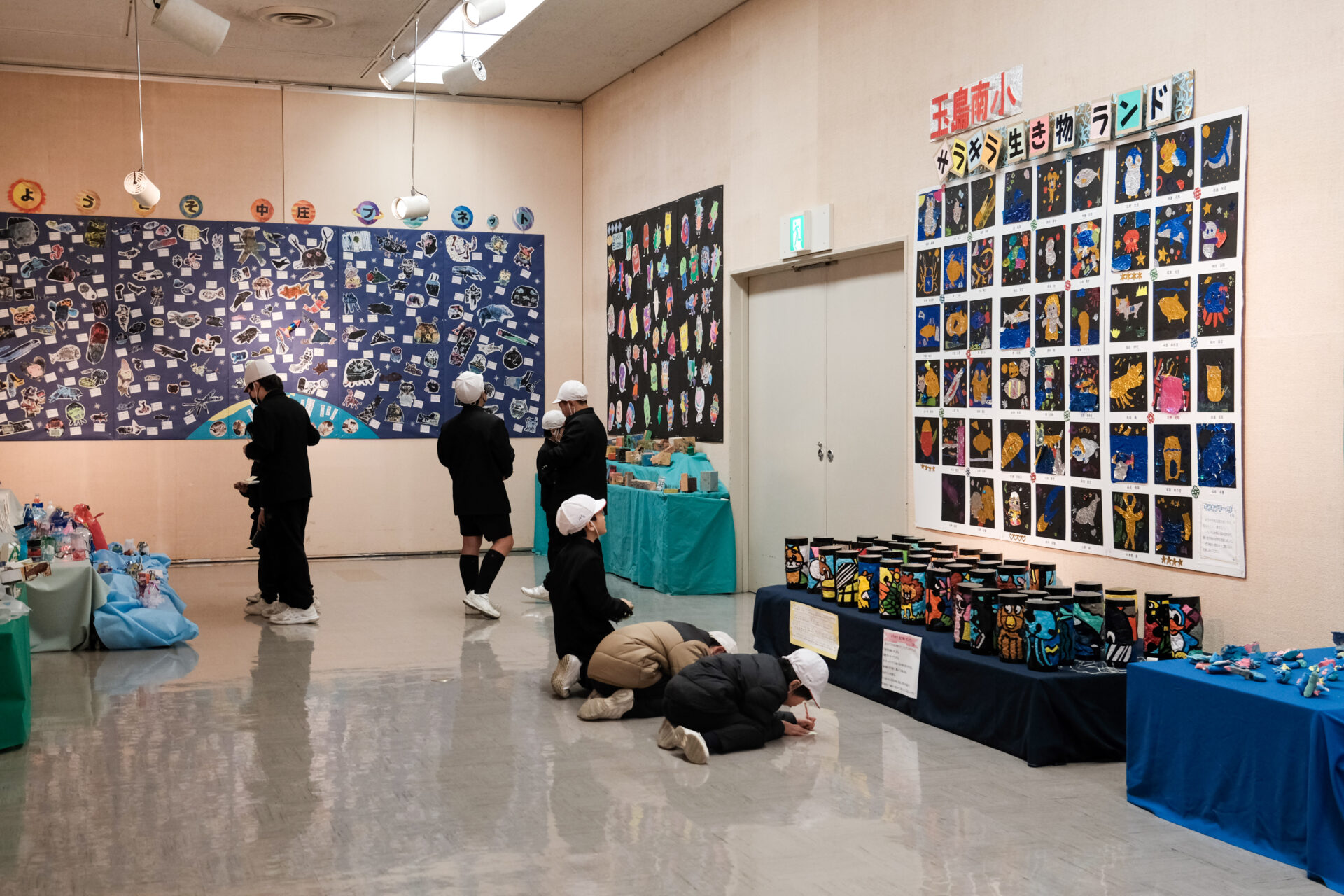
Others walk around with friends, sharing works with each other: “Hey, look at this! This one was amazing!”
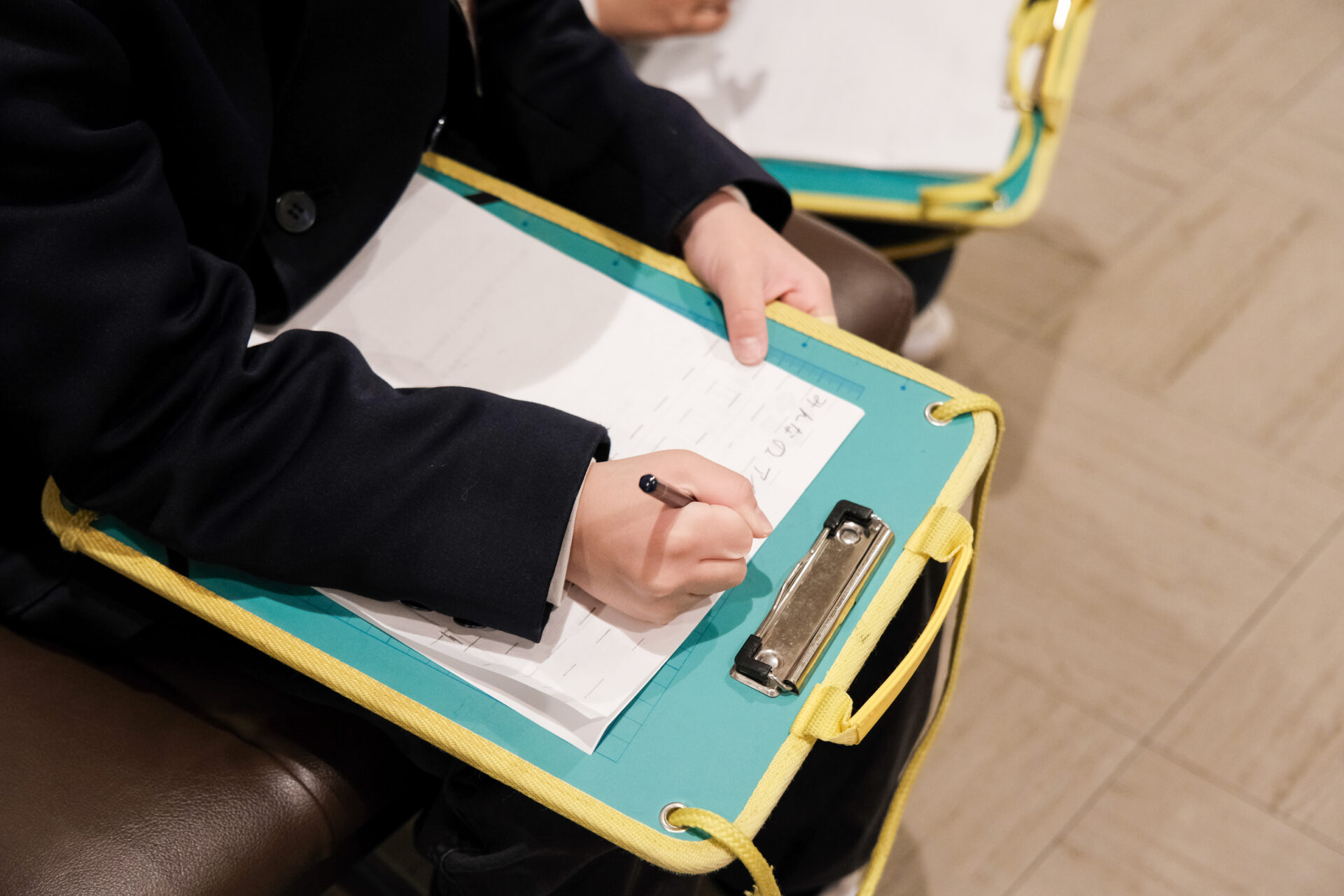
Some diligently write their impressions on sheets tucked into their life studies folders…
The exhibition space is bustling with children enjoying the works in their own way, and being there lifts my spirits too.
Elementary school students come to see the exhibition every weekday during its run, so you can see children enthusiastically enjoying the artwork.
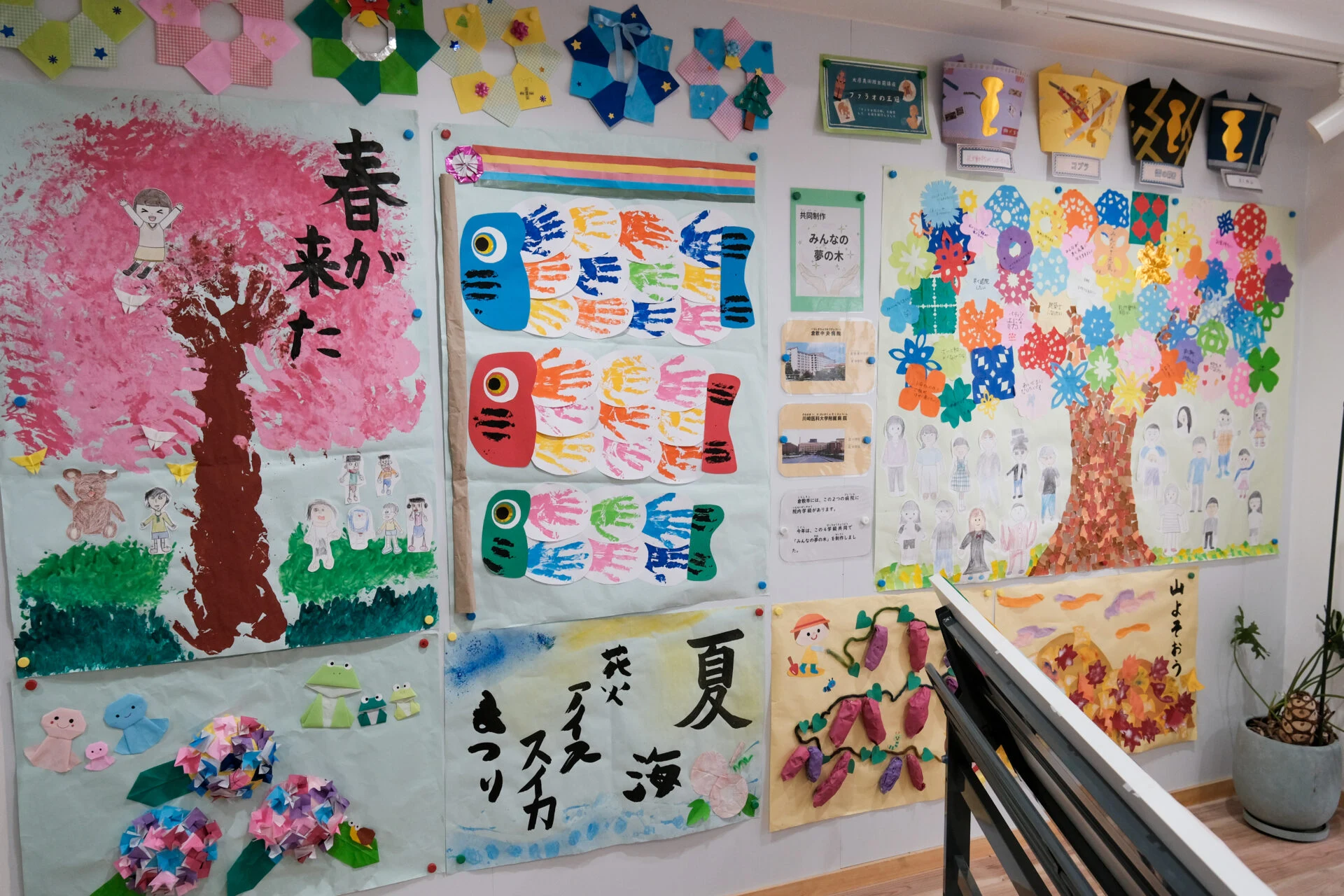
Artwork showcasing each school’s unique character
The Kurashiki Children’s Art Exhibition displays works by school.
Depending on the size of the school, some participate by grade level, while others
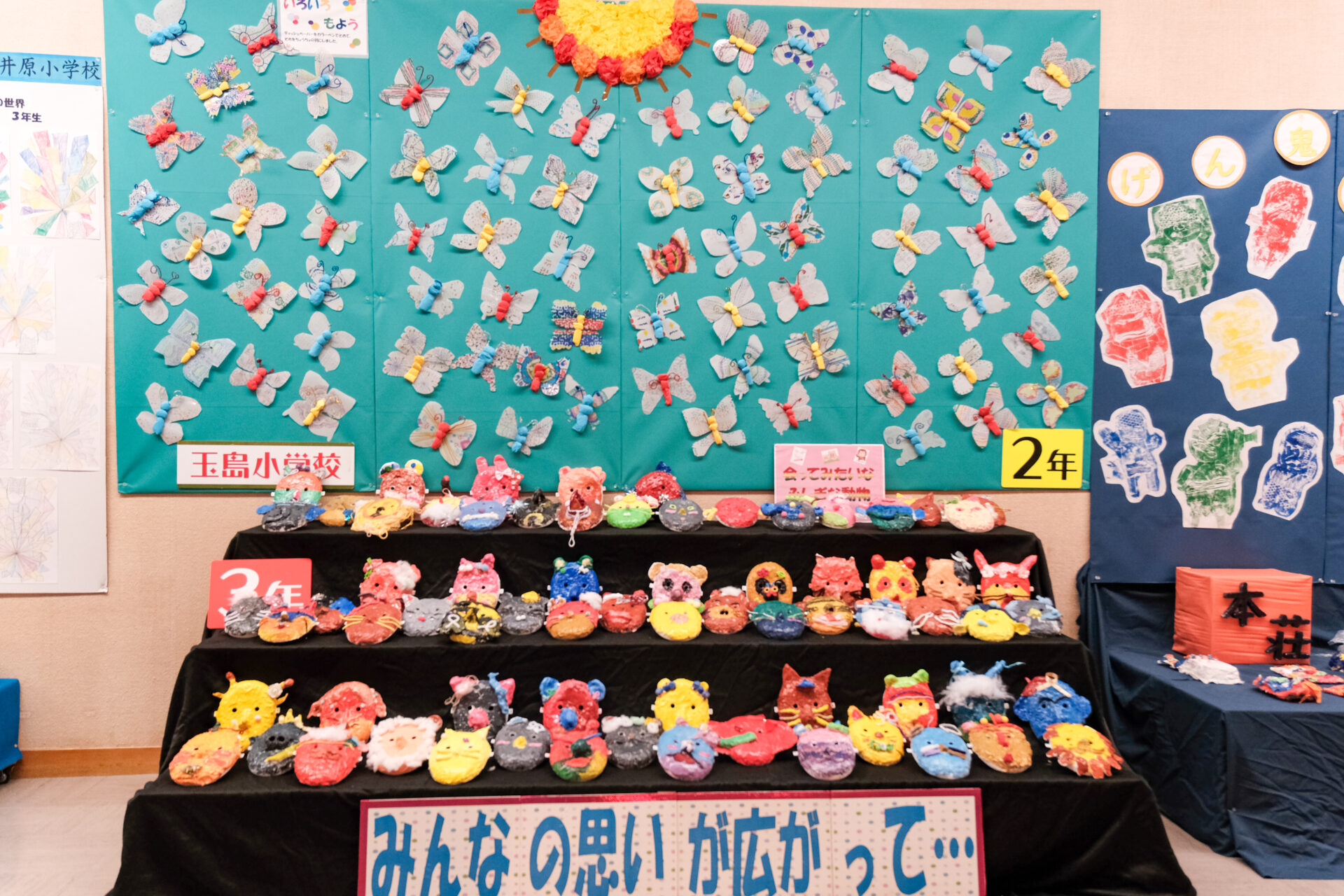
have the whole school work on the same theme.
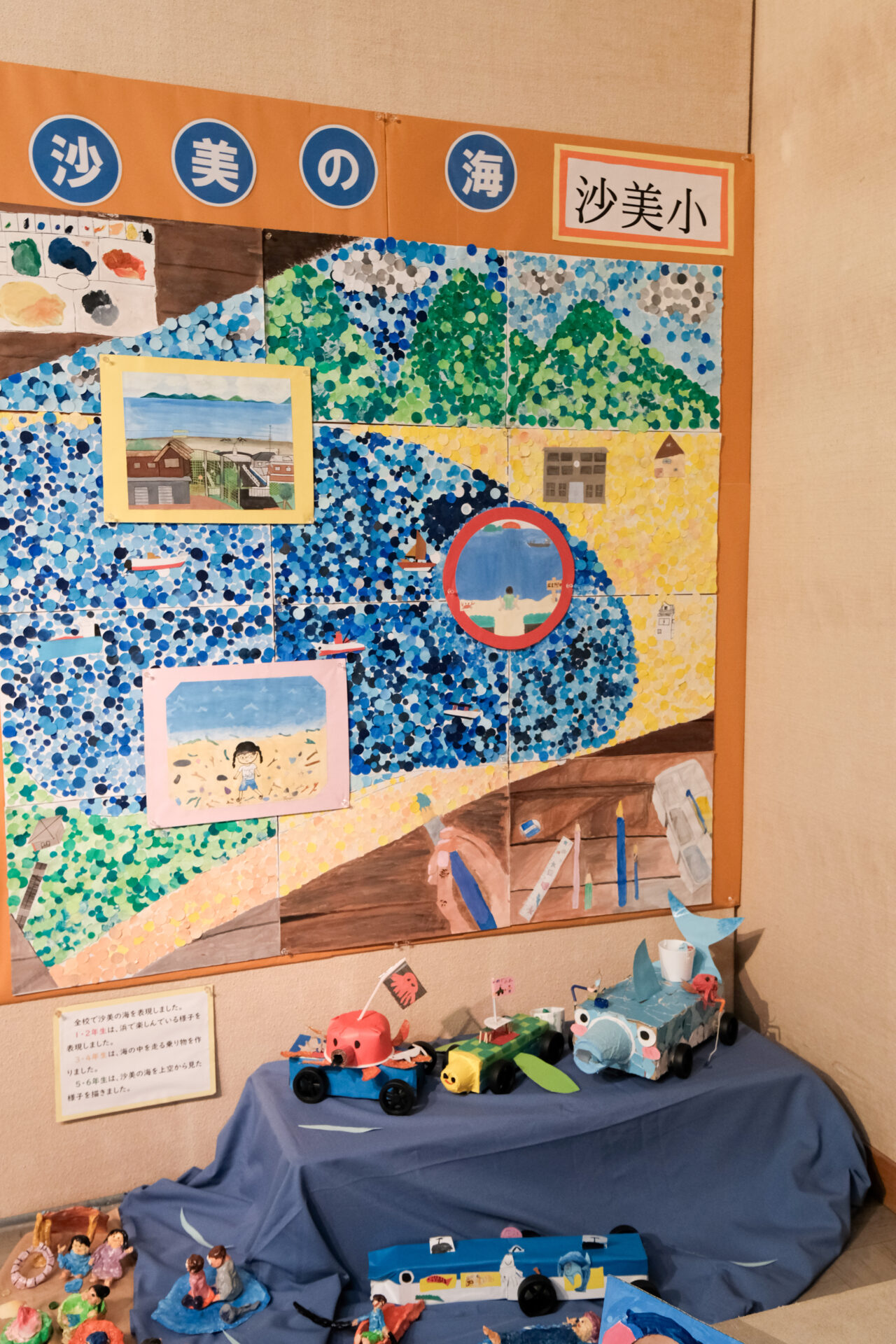
Schools that participate by grade level reportedly coordinate so that each student can submit work to the Kurashiki Children’s Art Exhibition at least once during their six years of elementary school—for example, by having a particular grade participate every year.
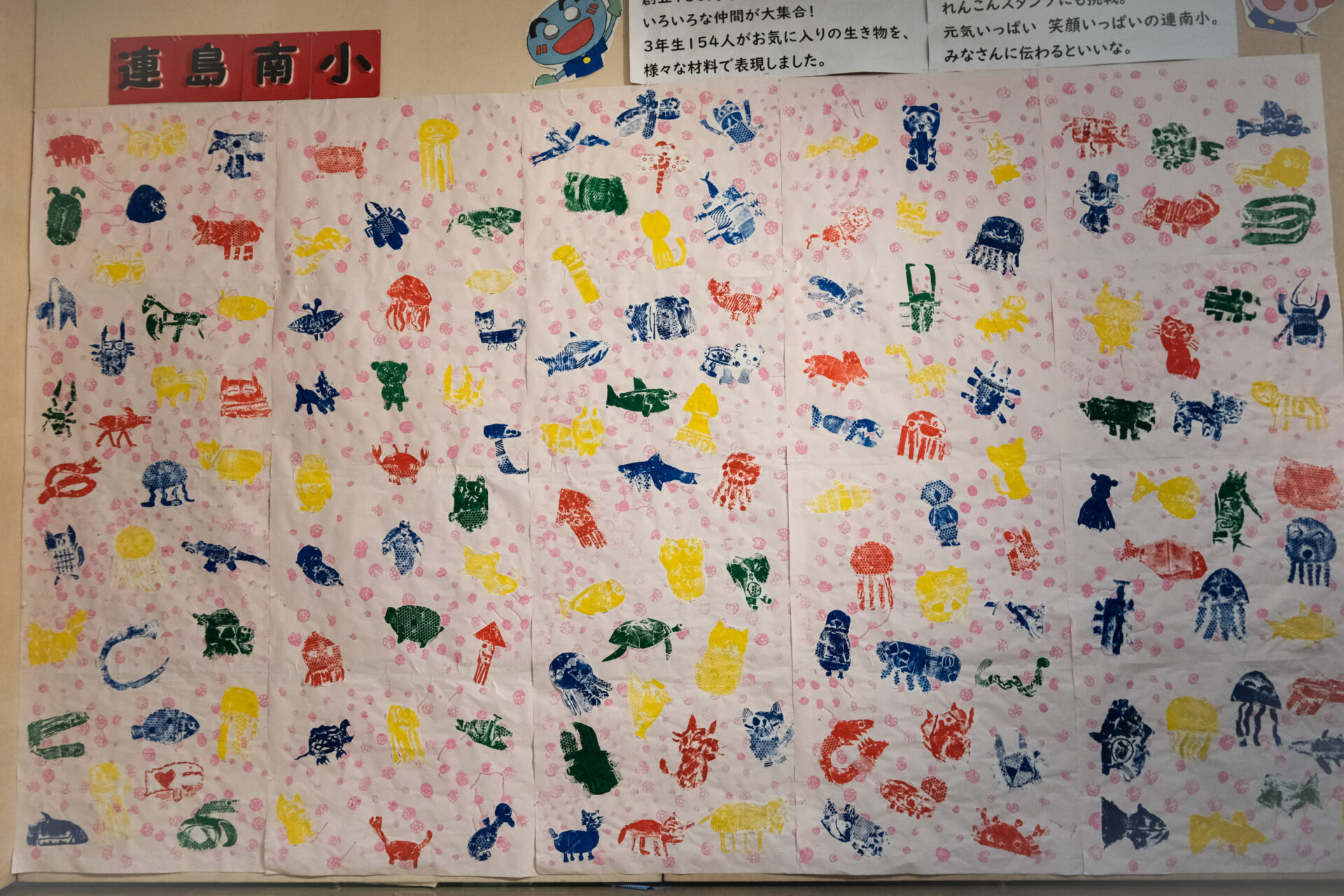
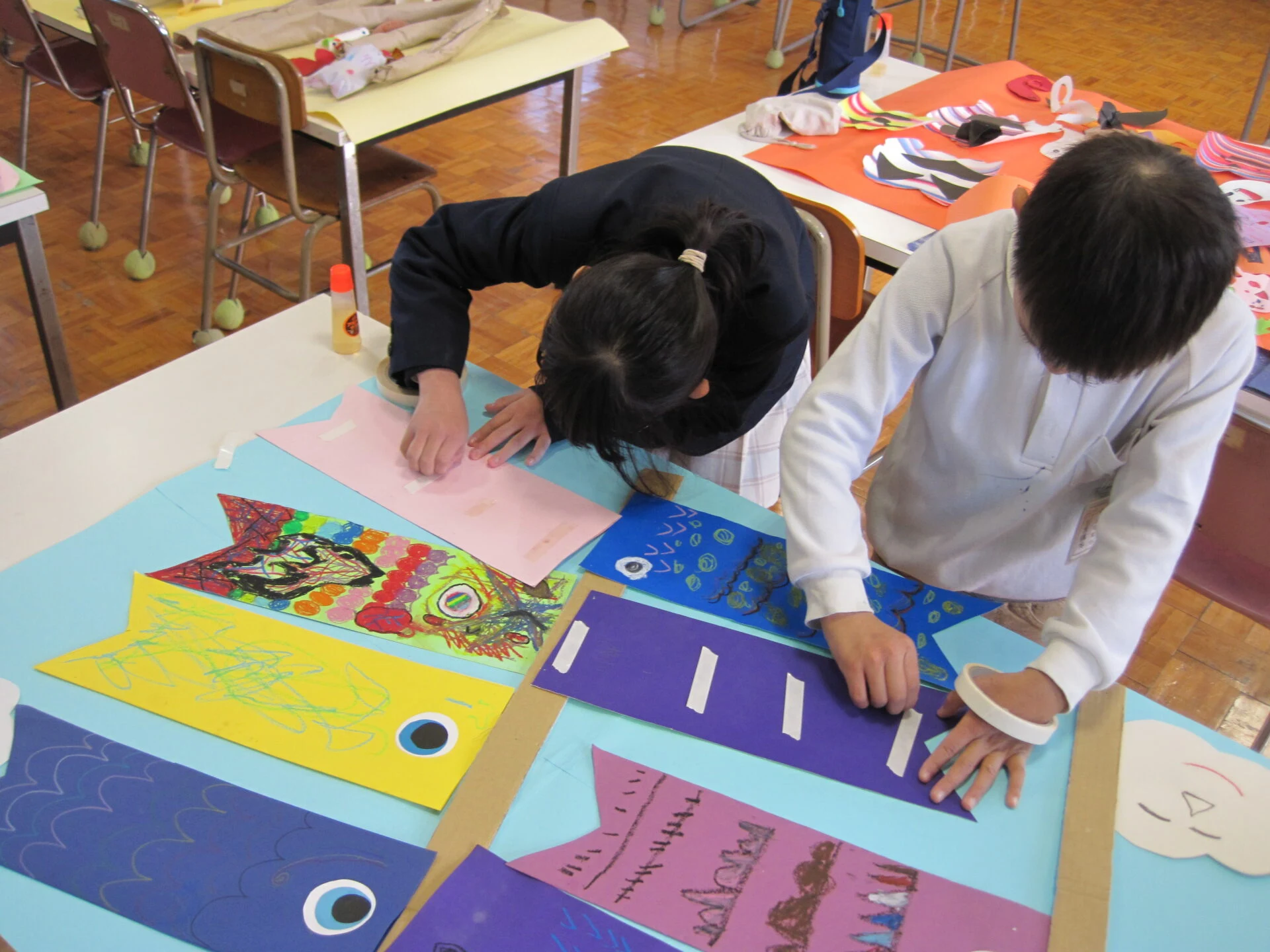
Kurashiki City Tsurajima-Minami Elementary School also created works using lotus root, a local specialty.
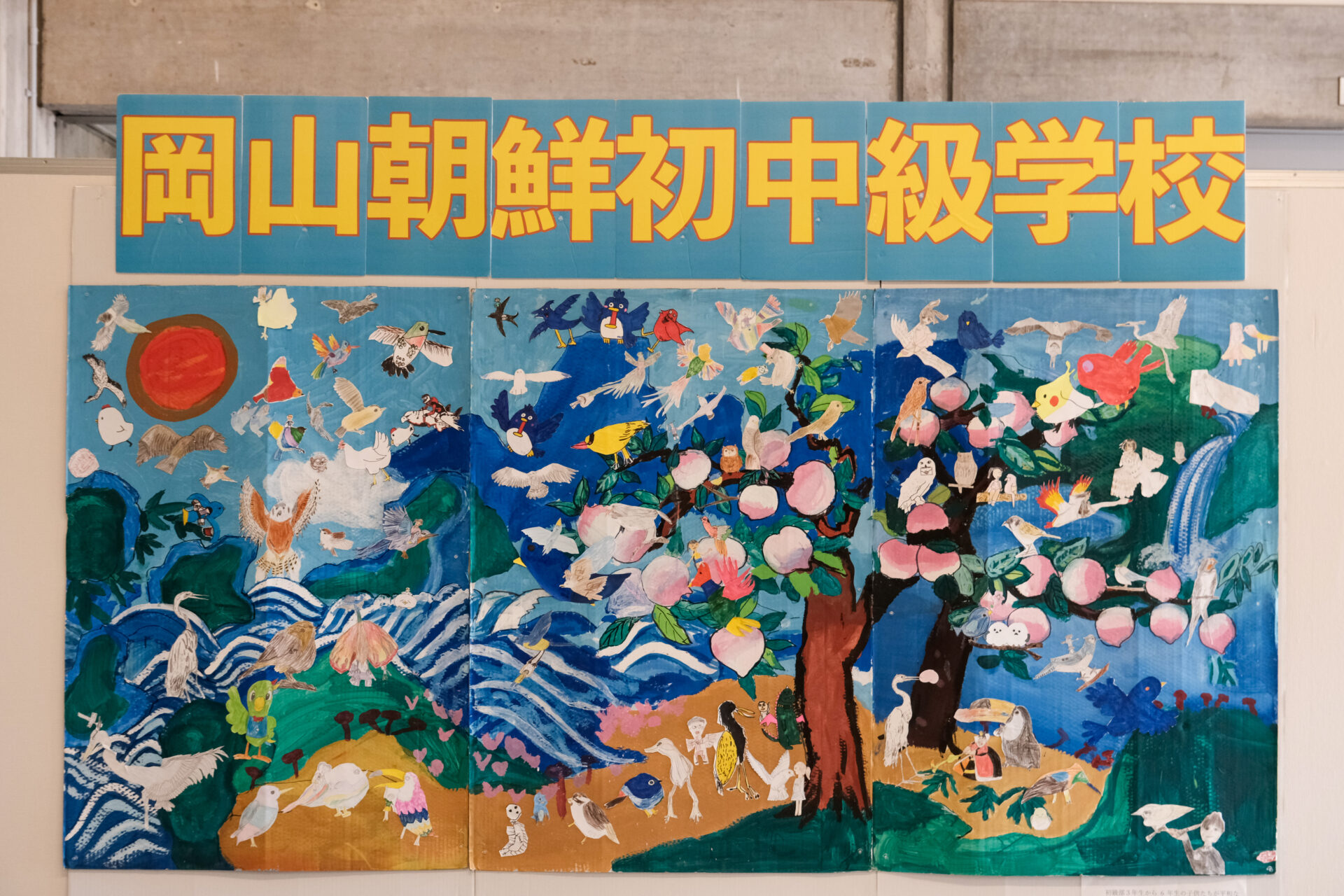
Okayama Korean Elementary and Junior High School displayed works using auspicious paintings that were popular in Korea in the 19th century, among others.
There were also works that made use of each school’s distinctive features.
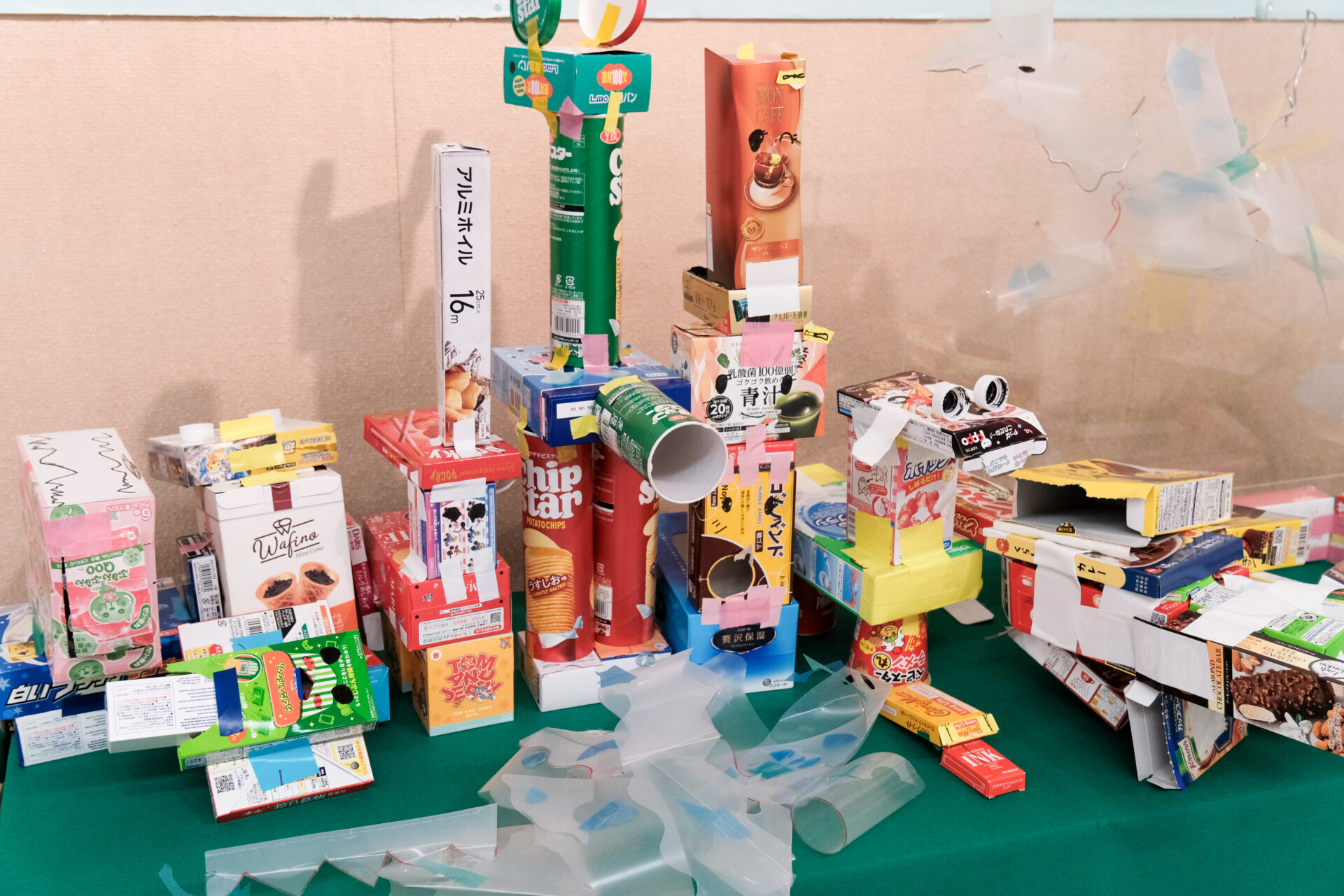
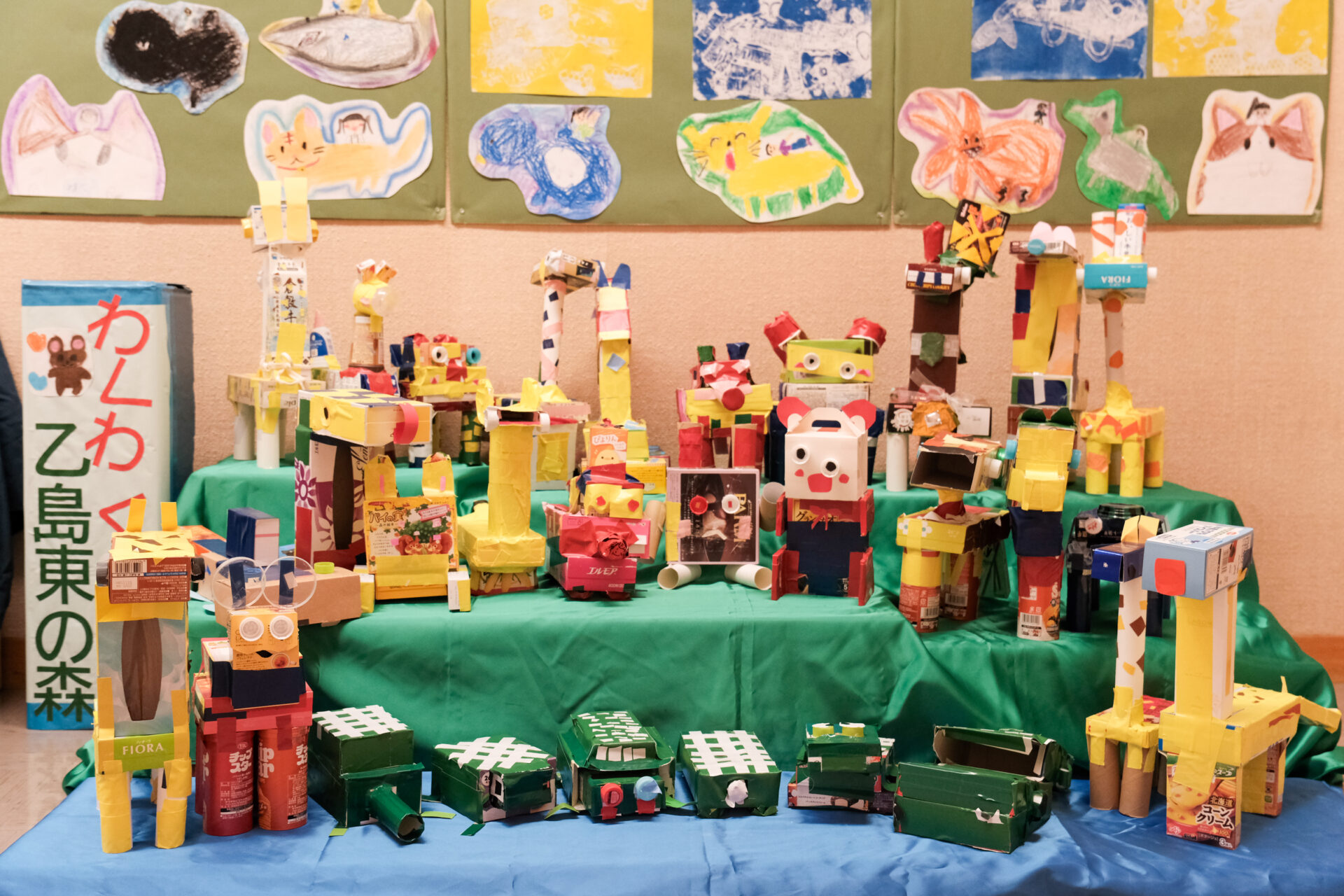
According to an elementary school teacher involved in the exhibition, “Works made from discarded materials also connect to learning about the SDGs. What’s interesting is seeing how children view things at home that might otherwise become trash and transform them into works of art. We also provide discarded materials at school, so we encourage students to bring things from home rather than buy anything.”
After hearing this and looking at the works again, I saw pieces made by reusing discarded materials at various schools.
Exhibited works created through activities beyond art classes
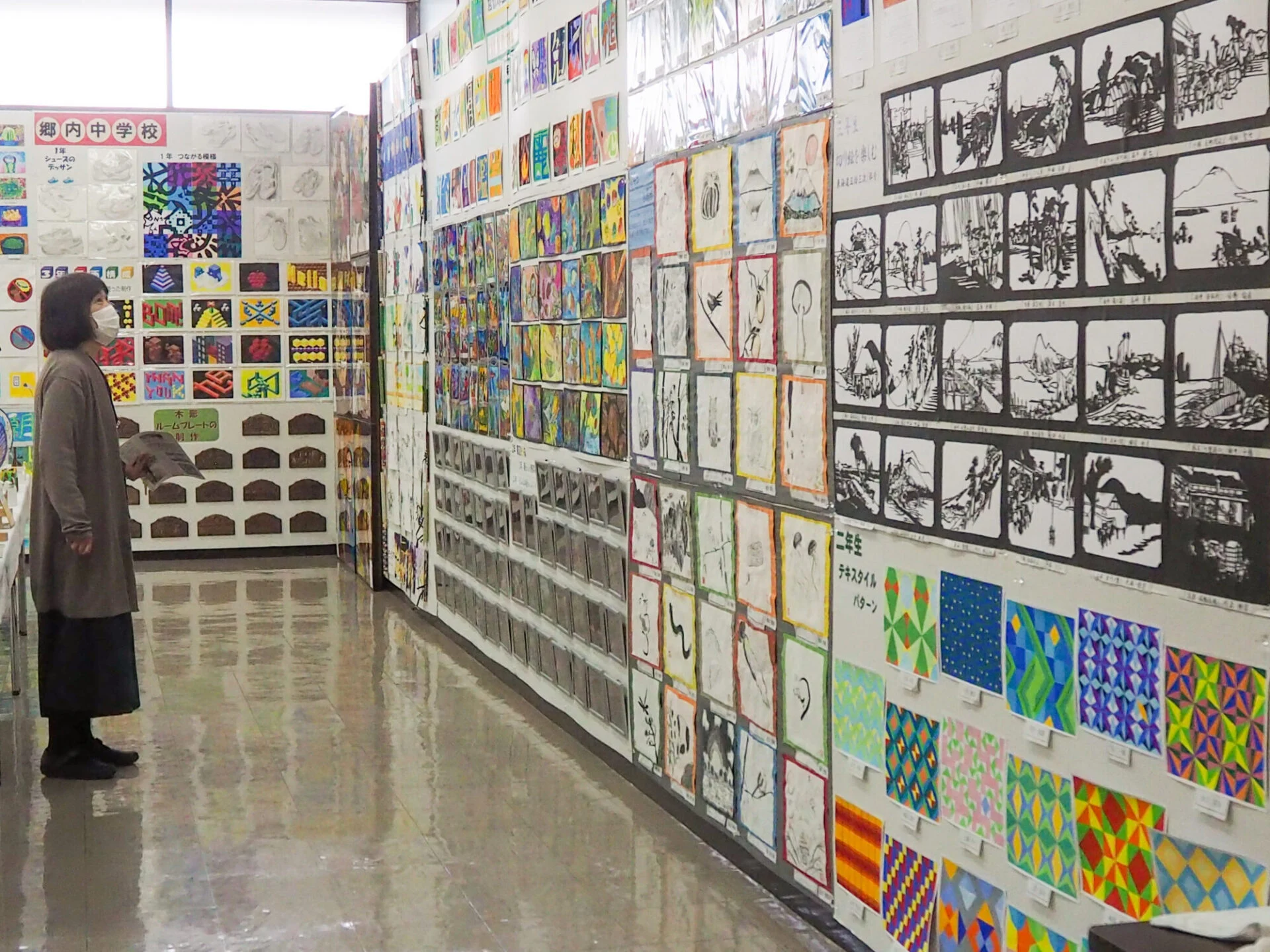
The first exhibition room on the first floor is lined with works by junior high school students.
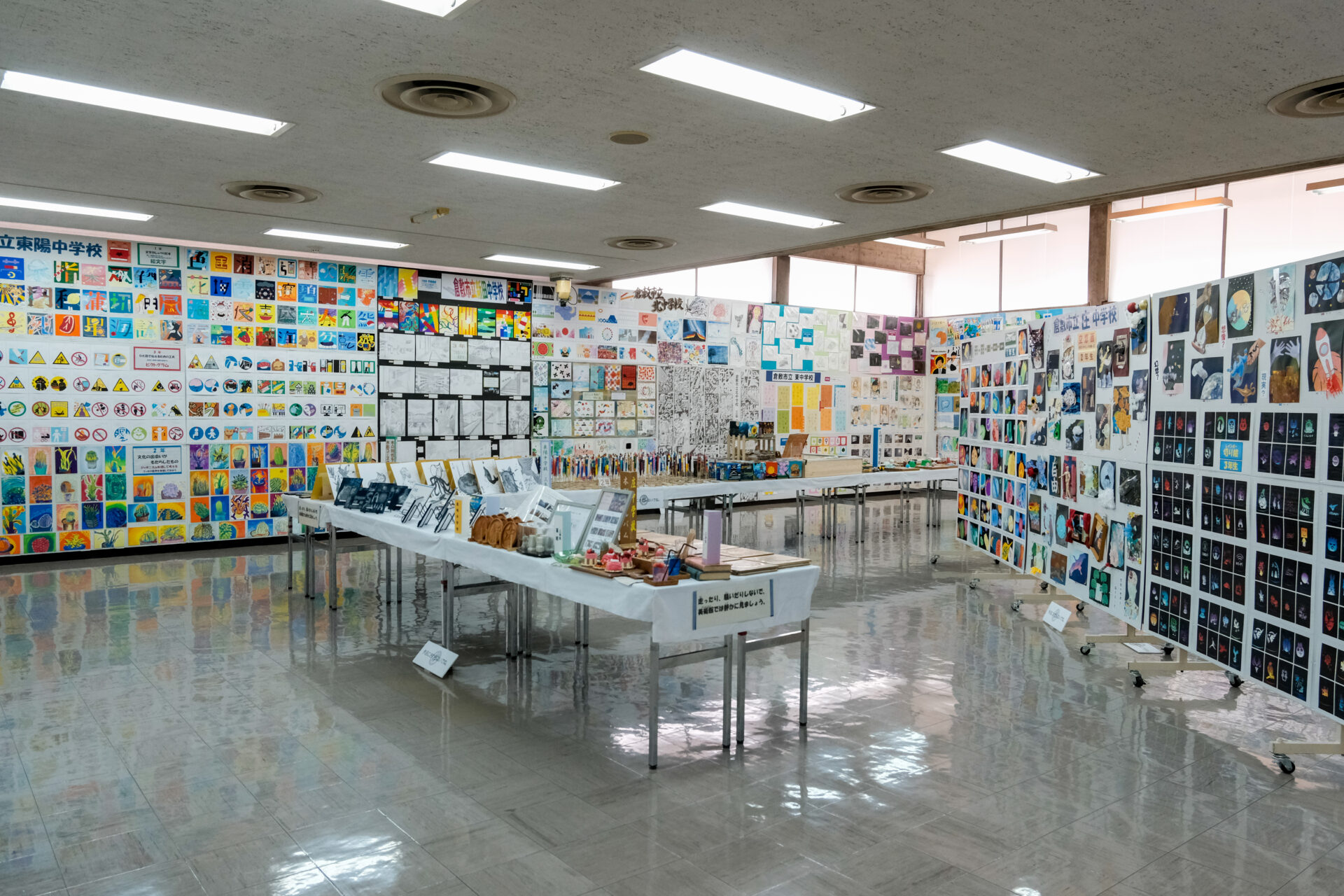
There were also printmaking works made with carving knives among the elementary school pieces, but junior high school students had created even more three-dimensional works. Many pieces served as goals for elementary school students, inspiring them to think, “When I’m in junior high school, will I be able to make something like this?”
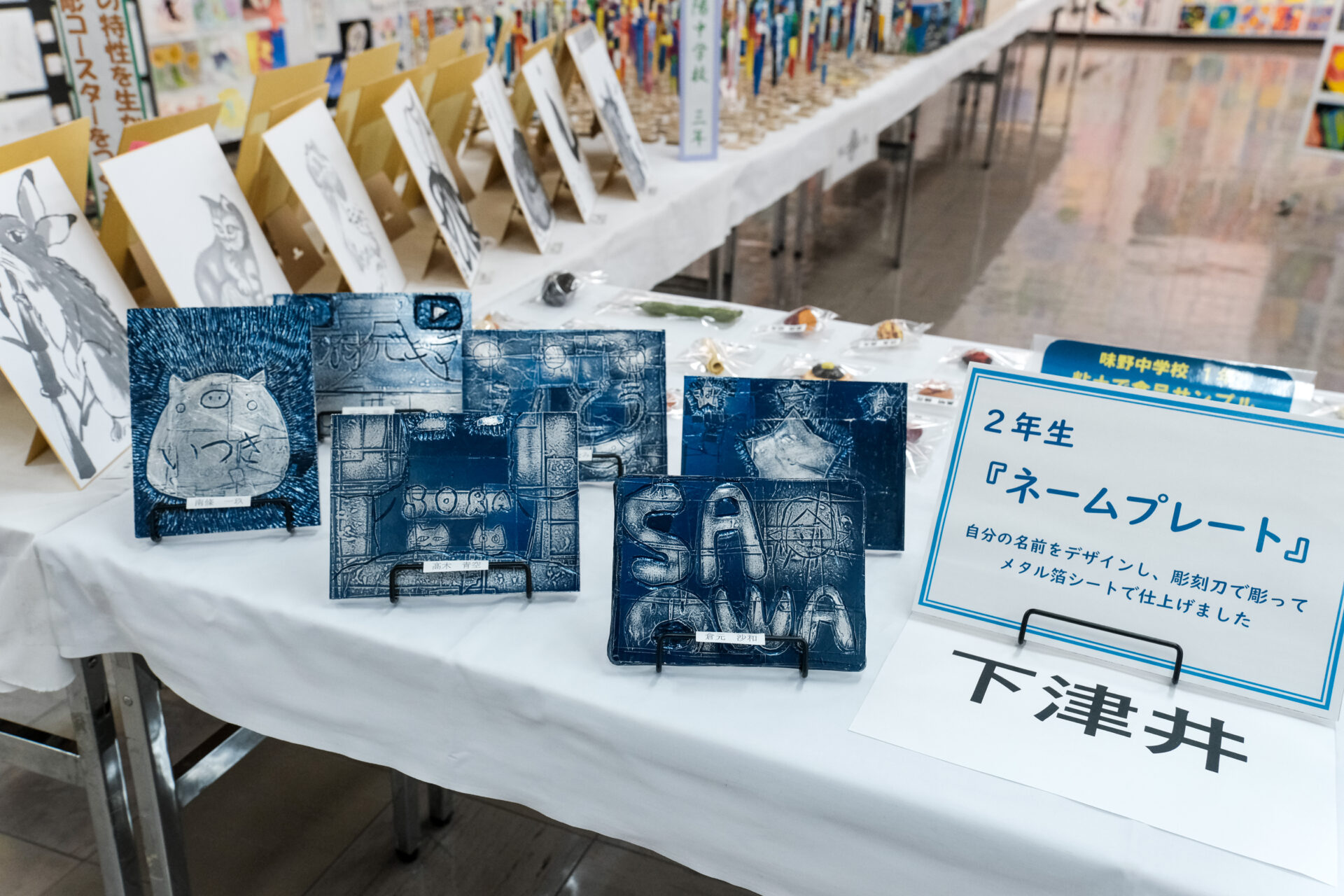
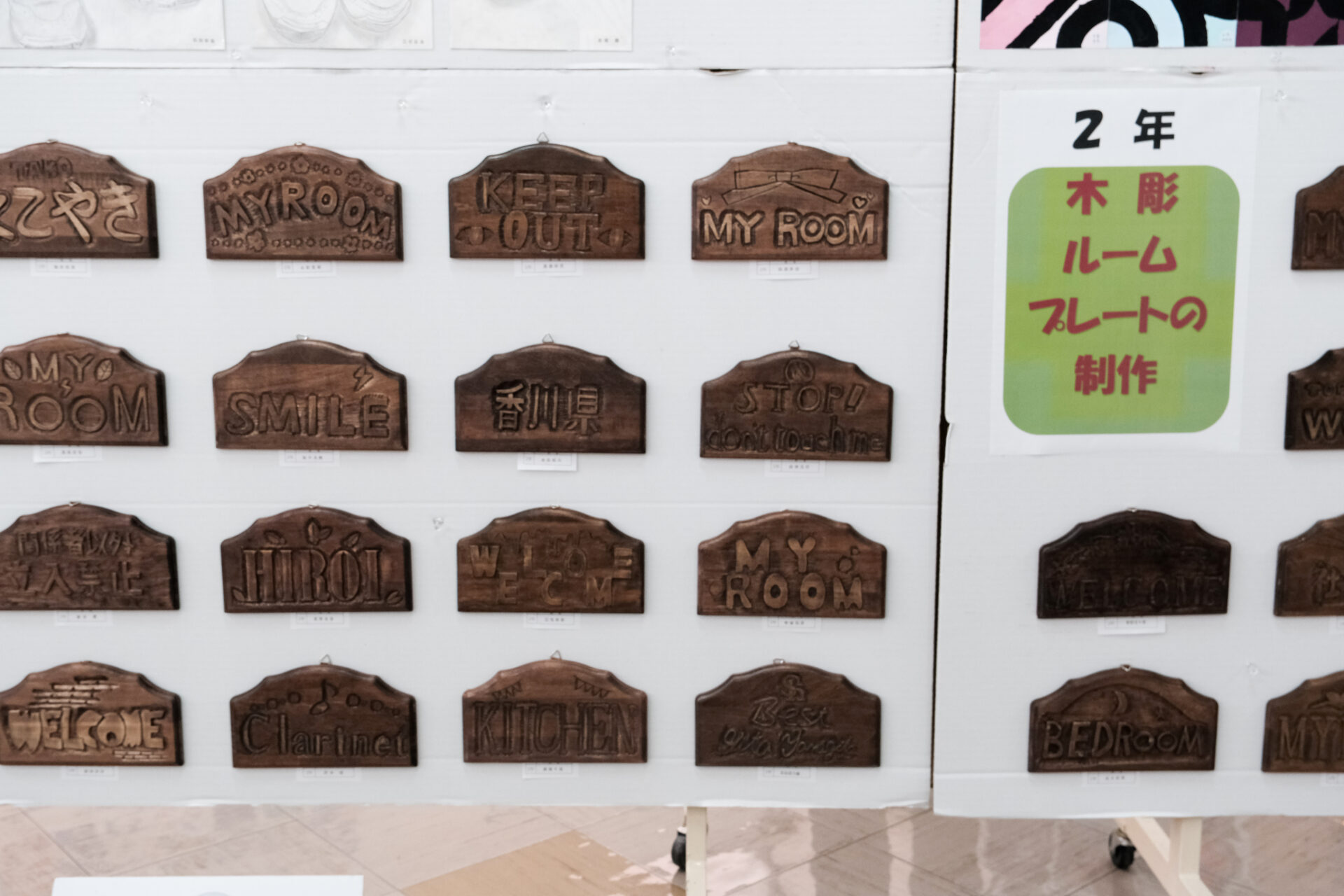
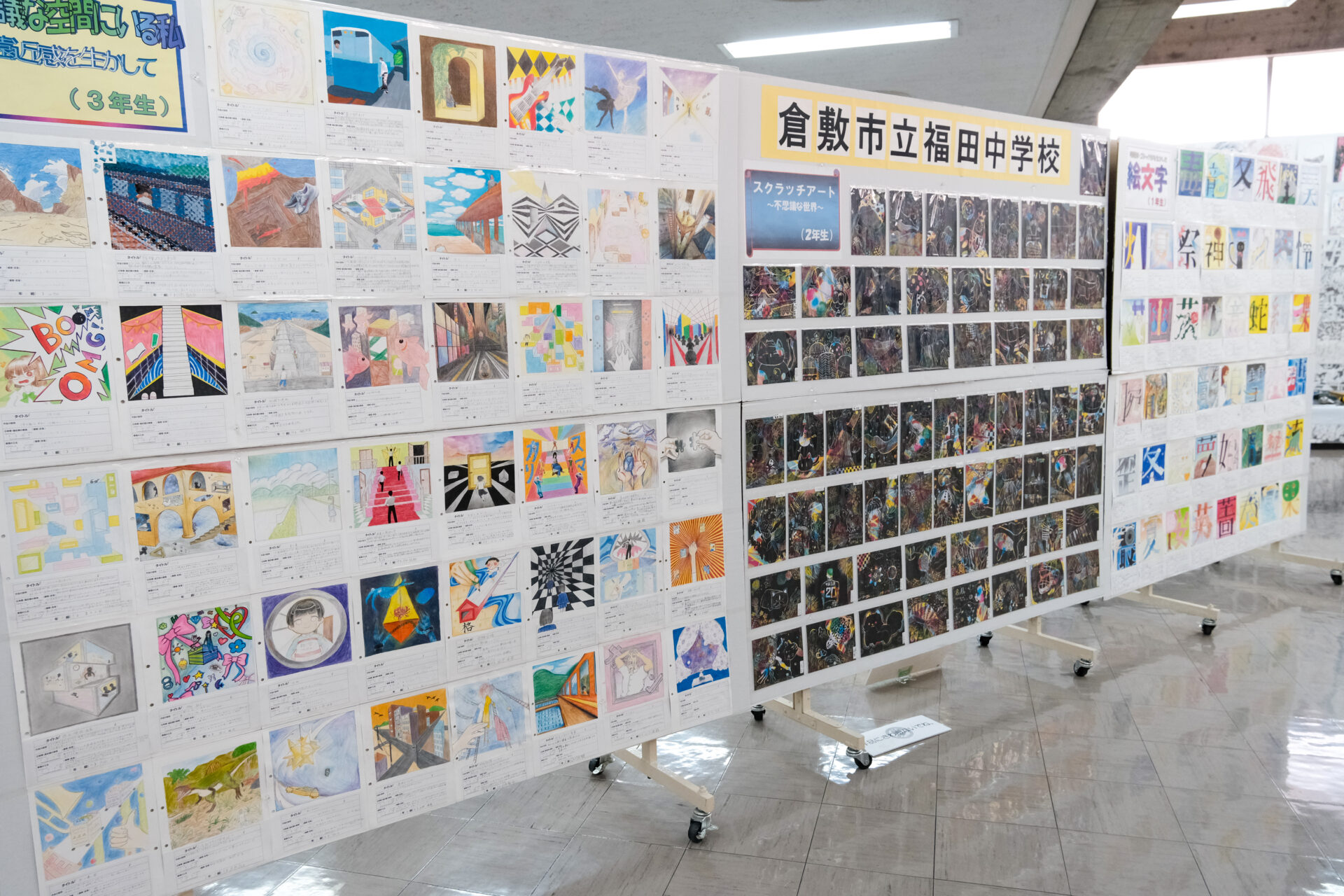
Junior high school students seem to do more than create works; they also carry out self-assessments. Kurashiki City Fukuda Junior High School has works from all grades on display, making it clear that the self-assessments become more specialized as students advance through the grades.
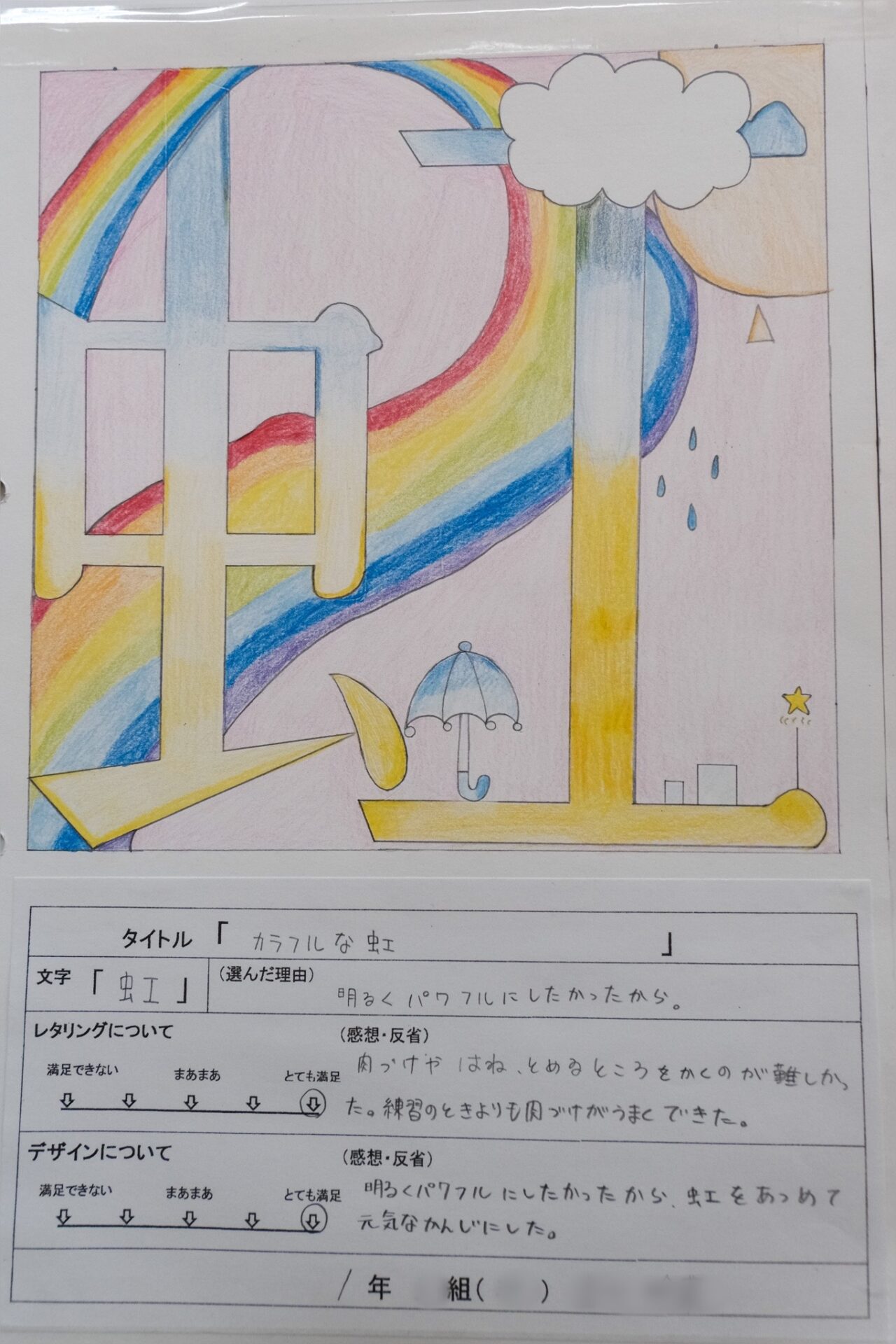
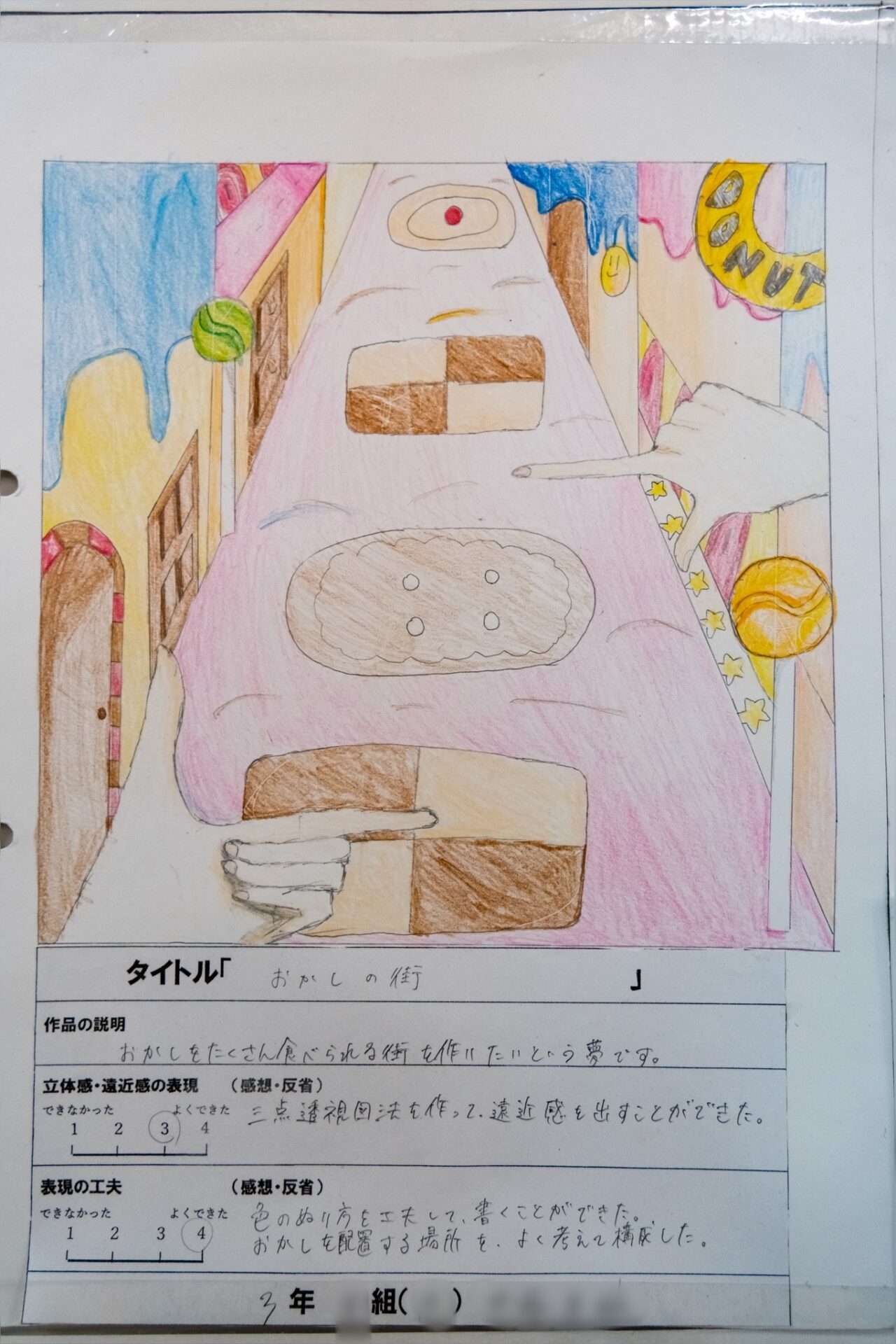
I had assumed that since it was called an art exhibition, the works on display would have been created during art classes, but I also found a piece combining
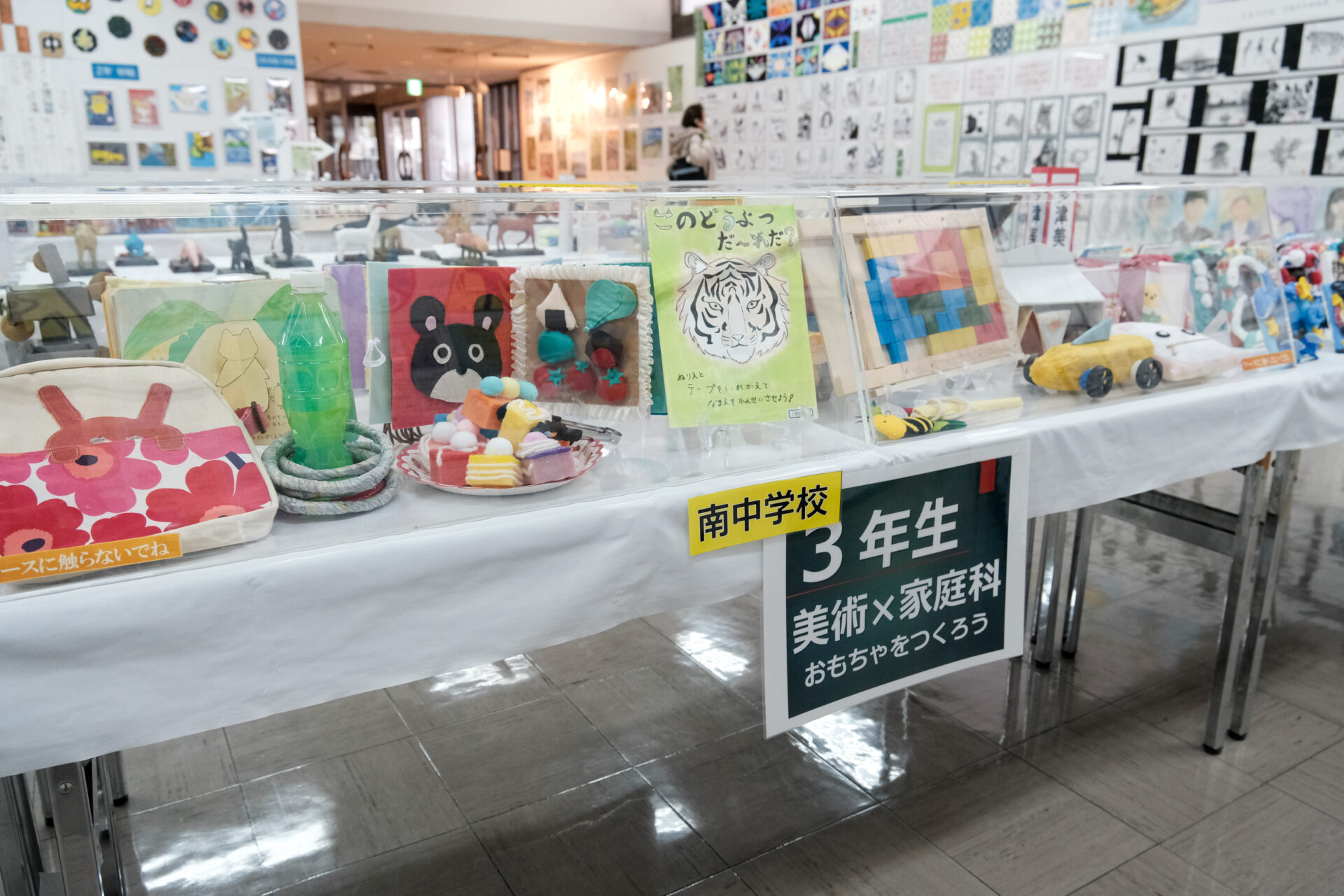
This is a toy for children designed by junior high school students as part of their home economics childcare studies.
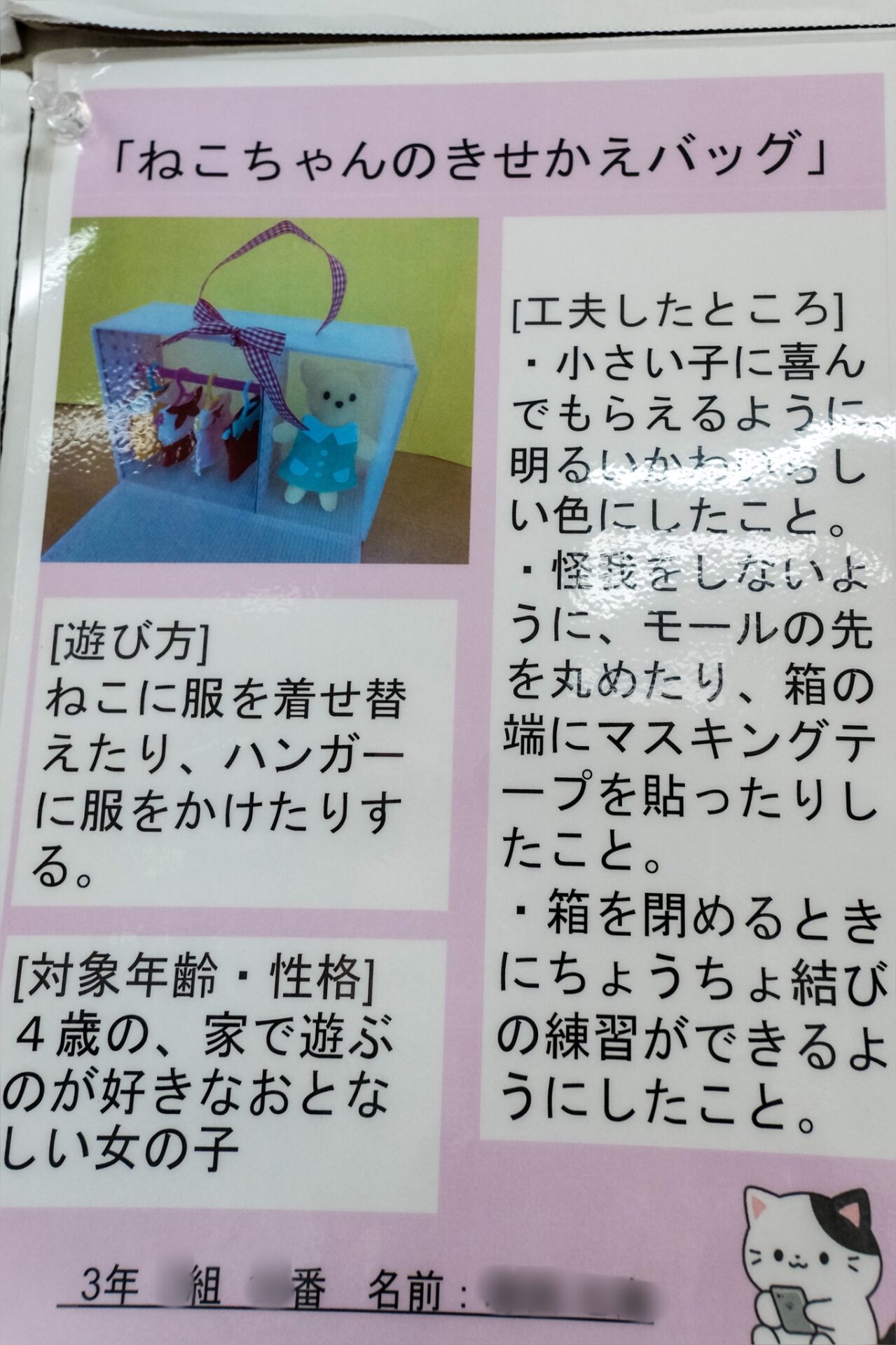
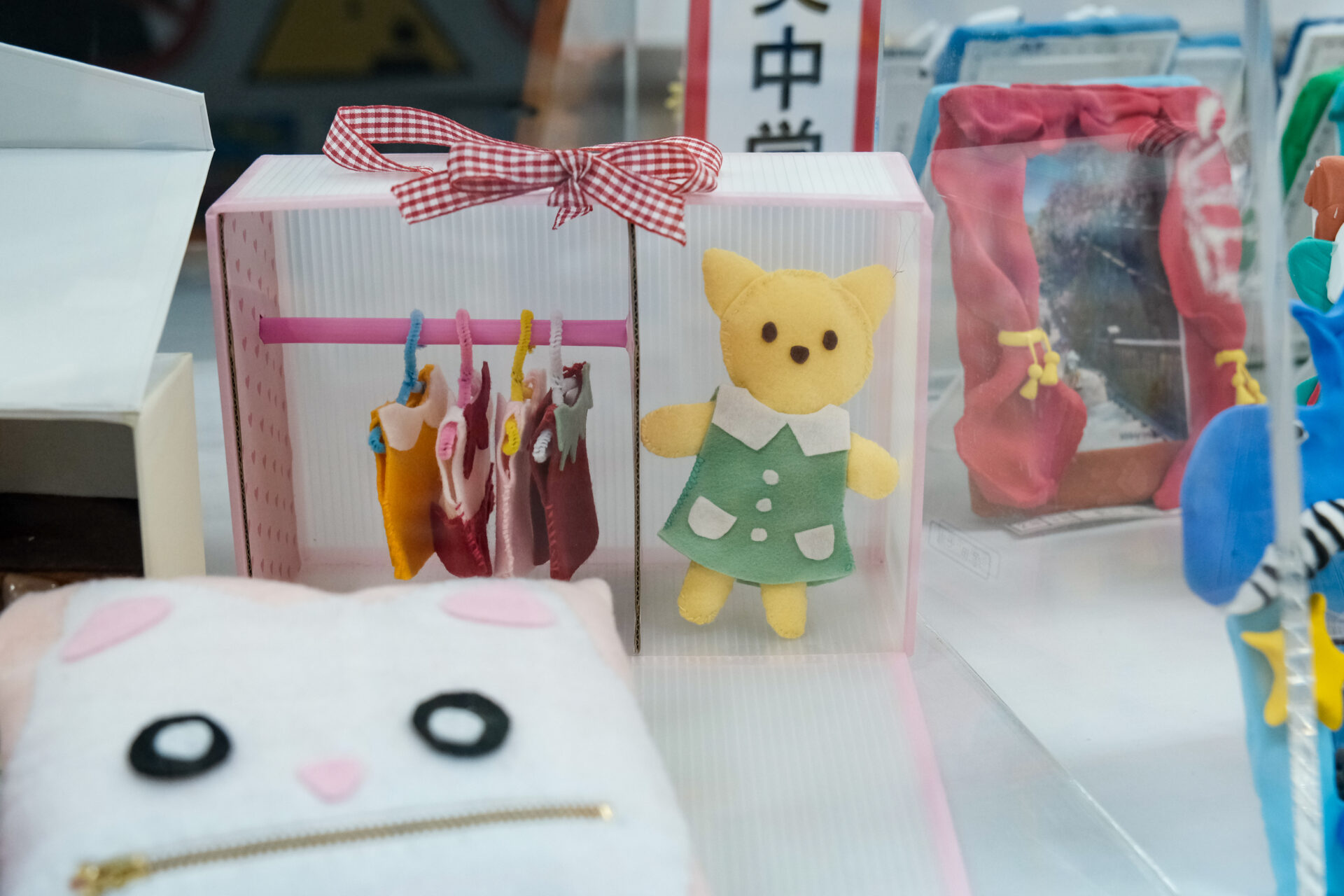
Students not only designed toys as part of the learning described above, but also made them, making this cross-curricular learning with art class.
According to the Ministry of Education, Culture, Sports, Science and Technology, cross-curricular learning refers to learning “that applies learning in each subject and other areas to discovering and solving problems in the real world, with the aim of developing the qualities and abilities needed to live in modern society, where the fields of STEAM (Science, Technology, Engineering, and Mathematics) are intricately interconnected, and to become people who create new value and shape society.”
Junior high school is also when extracurricular clubs begin. Works created through club activities were also on display at the back of the first exhibition room.
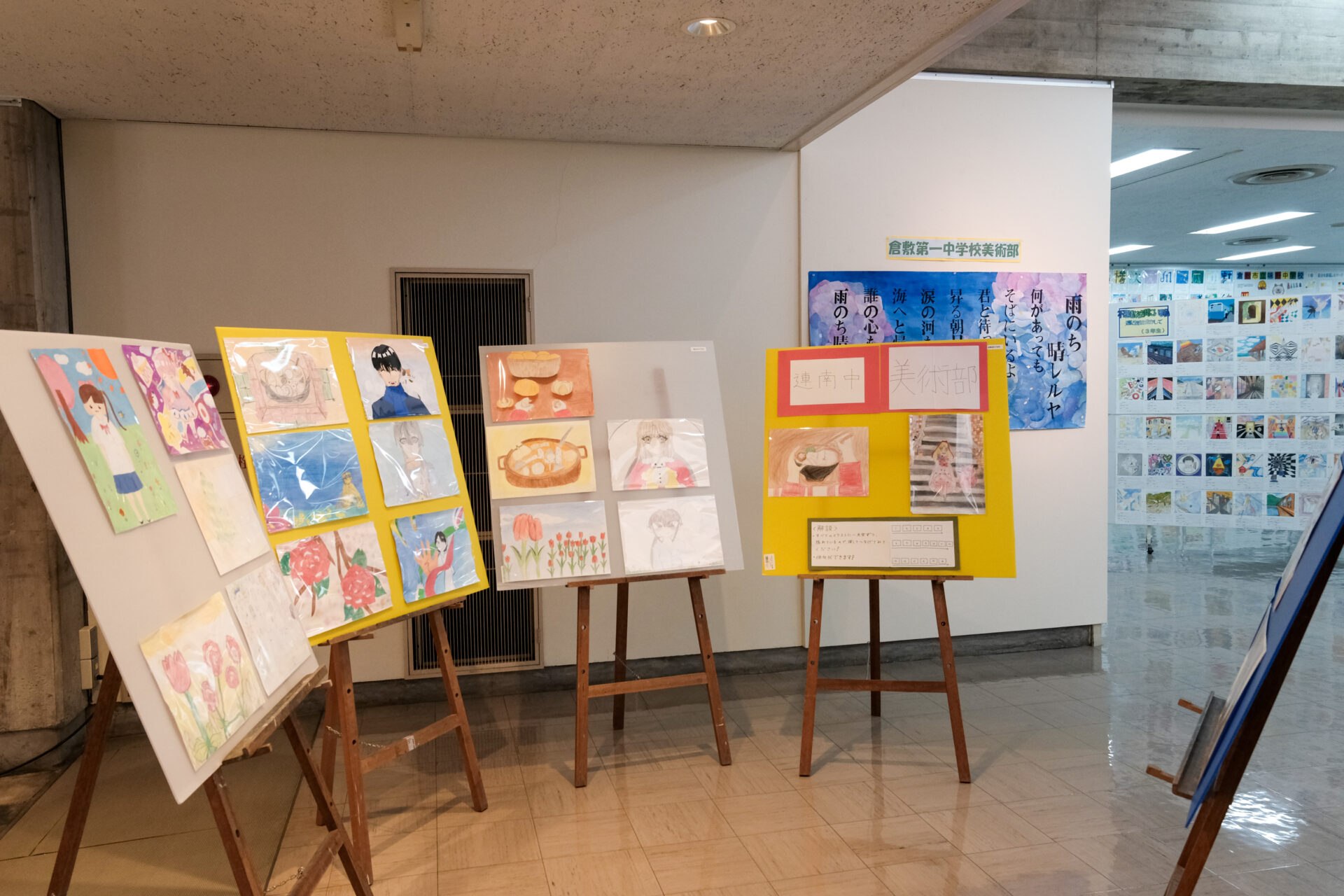
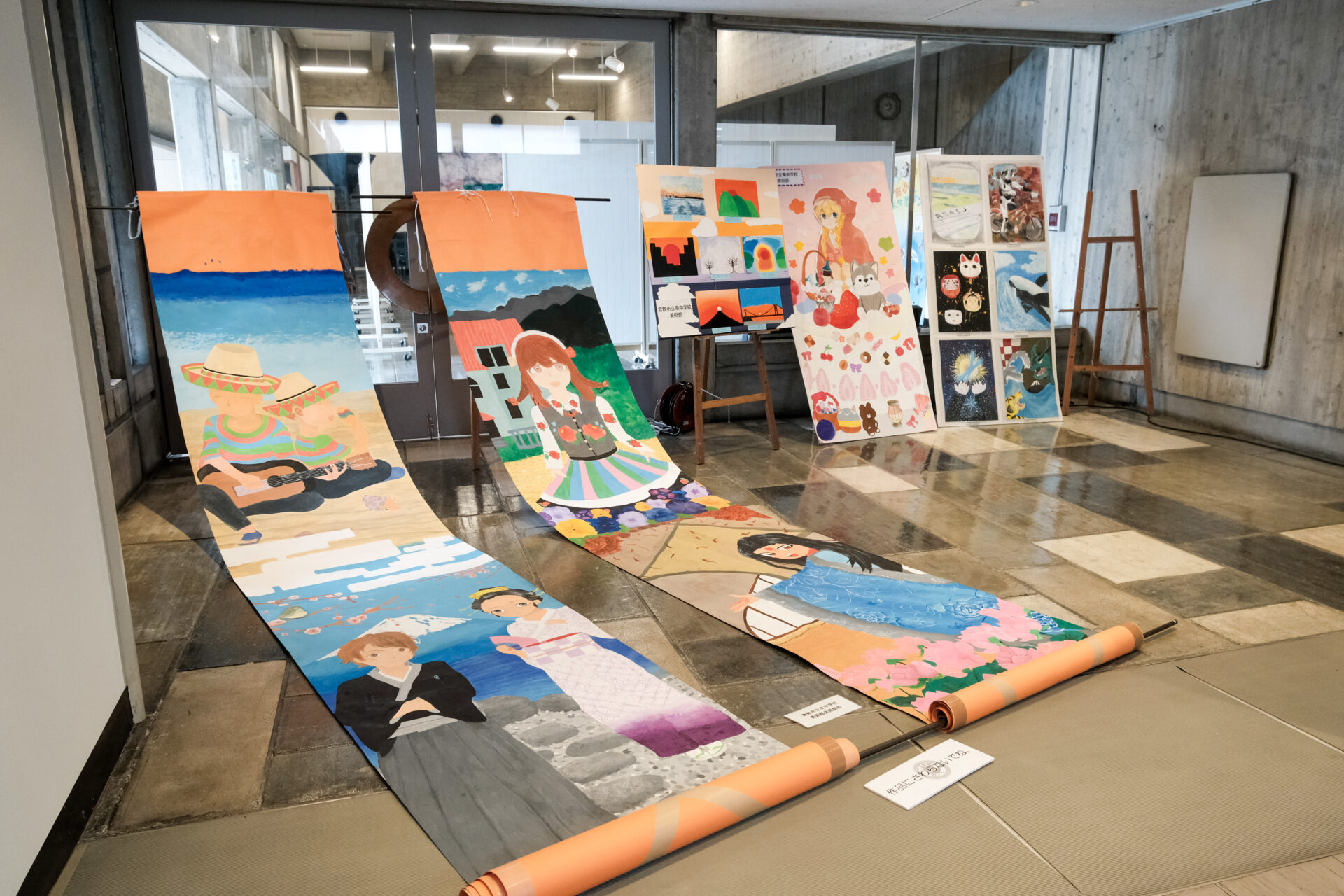
You may have heard terms like “cross-curricular learning” and “school clubs” in the news, but it is not easy to see how they are actually put into practice as part of school educational activities. I felt that the Kurashiki Children’s Art Exhibition is one opportunity to catch a glimpse, through the artworks, of the kinds of educational activities taking place in schools today.
From the Writer
At the opening ceremony, Kurashiki City Council member Kitabatake Katsuhiko gave a guest address:
“As a child, I exhibited my work at the Kurashiki Children’s Art Exhibition at the Kurashiki City Art Museum. When I had children of my own, I came here to see their work. This exhibition is an exhibition that connects generations.”
His words made me appreciate anew the significance of its 39-year history.
Nishina Ko, Superintendent of the Kurashiki City Board of Education, also said:
“I hope people will enjoy viewing the works that were made with joy.”
Speaking with a smile, he reminded us that art activities are not about finding the right answer; above all, they are about “enjoyment.”
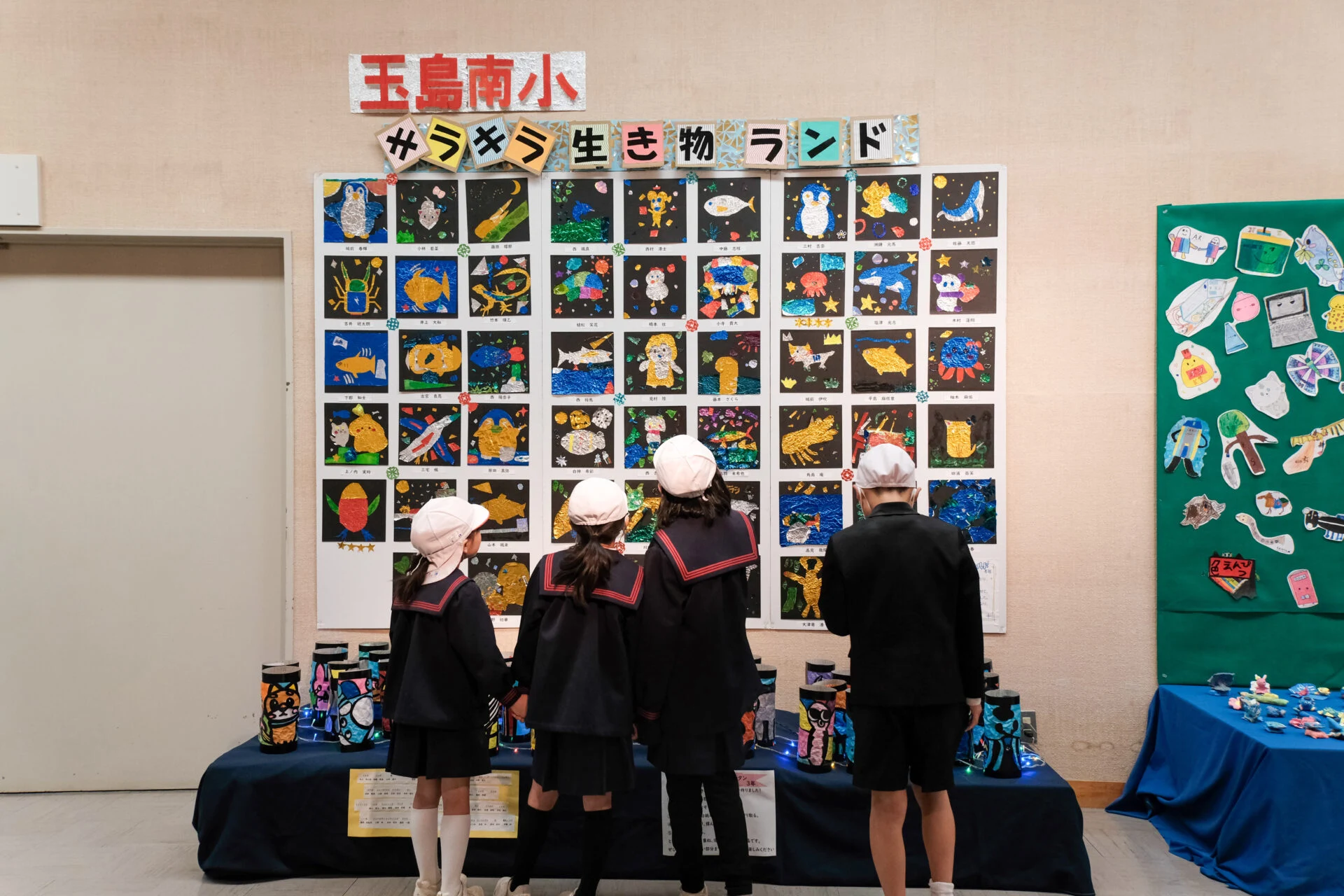
Indeed, the children viewed the works on display in the museum with bright expressions. The powerful artworks and the lively children made me, too, feel full of joy as I looked around.
The 39th Kurashiki Children’s Art Exhibition, connecting generations and brimming with joy, is being held through Sunday, February 16, 2025.
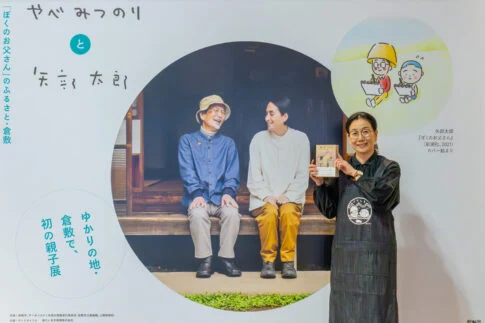
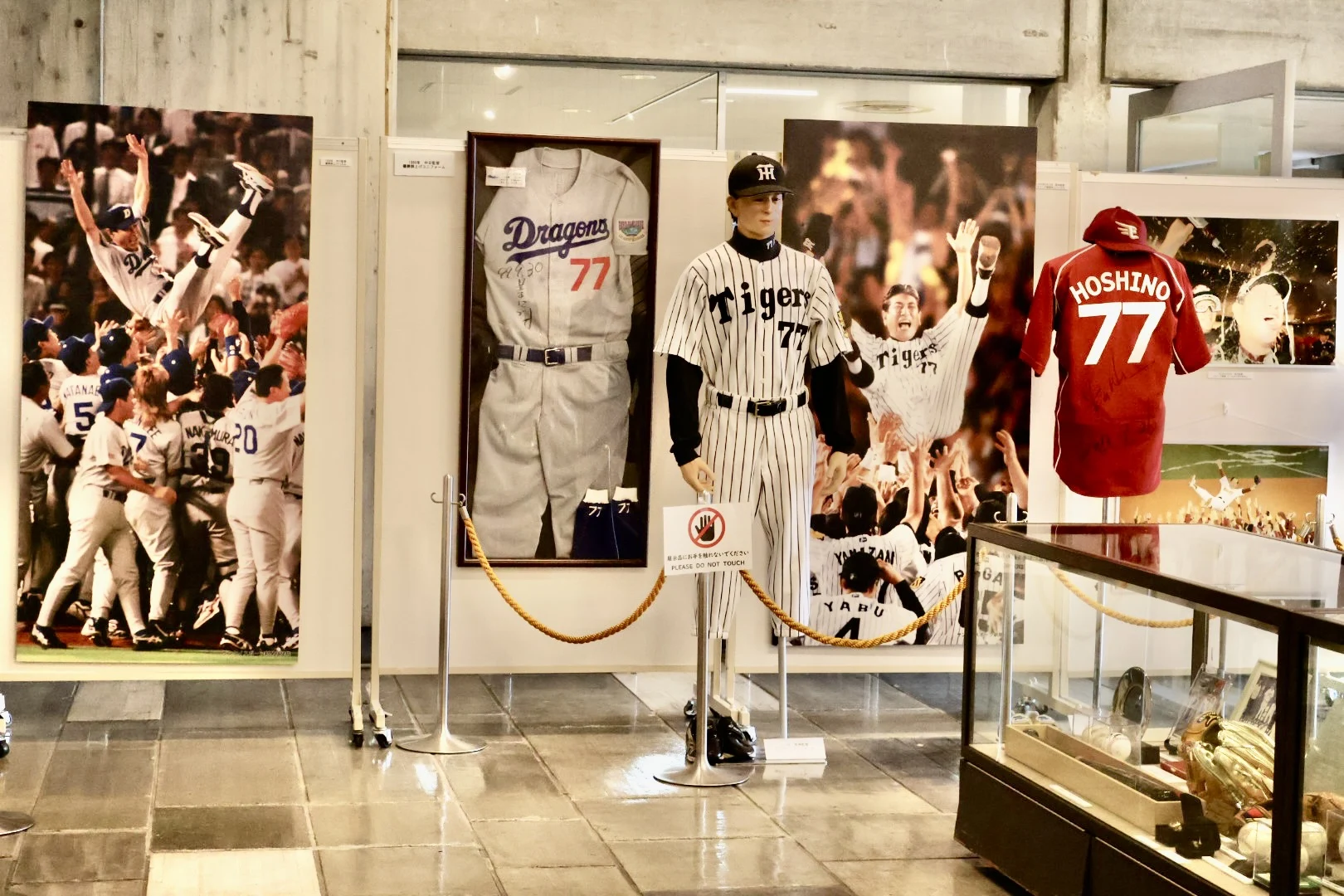
Articles about Kurashiki City Art Museum

39th Kurashiki Children's Art Exhibition Information

| Name | 39th Kurashiki Children's Art Exhibition |
|---|---|
| Dates | January 31–February 16, 2025 (Friday–Sunday) 9:00 a.m.–5:15 p.m. |
| Location | 2-6-1 Chuo, Kurashiki City, Okayama Prefecture |
| Admission (tax included) | Free admission |
| Website | Kurashiki City Art Museum |

What would you like to know about Kurashiki?
Enter a search term to find articles on this site





































First floor: Gallery 1 (junior high schools), entrance hall (elementary schools)
Second floor: Gallery 1, exhibition corner, lobby (elementary schools)