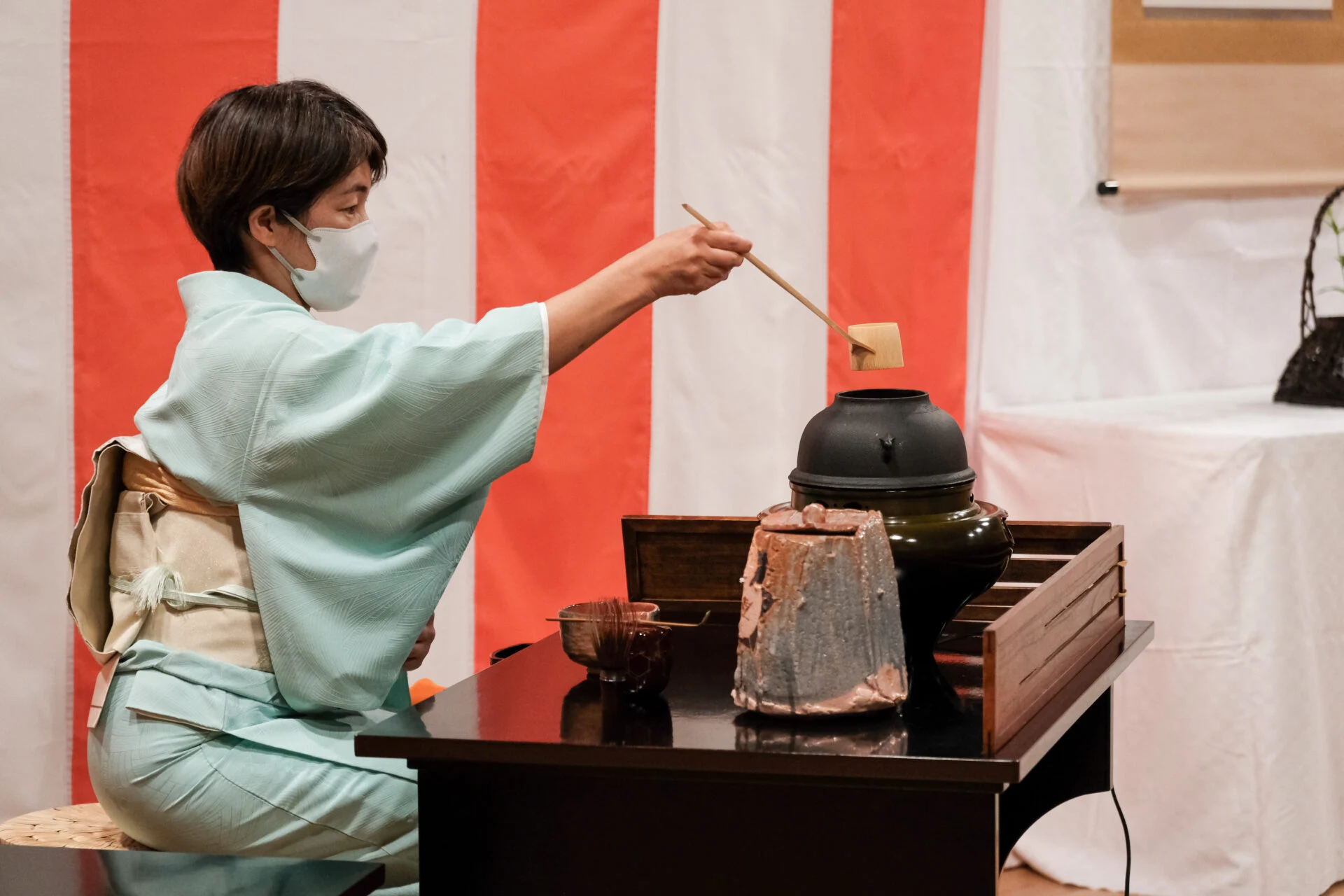
I moved from the Kanto region to Kurashiki in December 2023, and I have been practicing tea ceremony since I lived in Kanto.
When I hear "tea ceremony," I have the image of a tense event where one must wear a kimono and drink tea with the correct etiquette, but in Kurashiki, it seems that a "citizen tea ceremony" is held where citizens can easily participate.
Since I have become a citizen of Kurashiki, I decided to attend the 19th Kurashiki Citizen Tea Ceremony held this autumn.
What is the 19th Kurashiki Citizen Tea Ceremony?
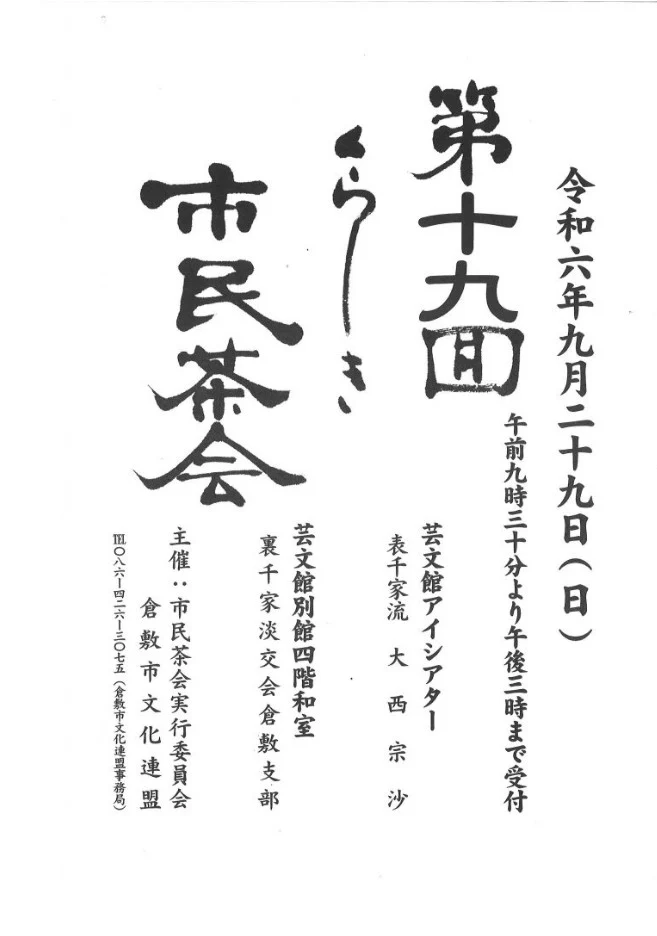
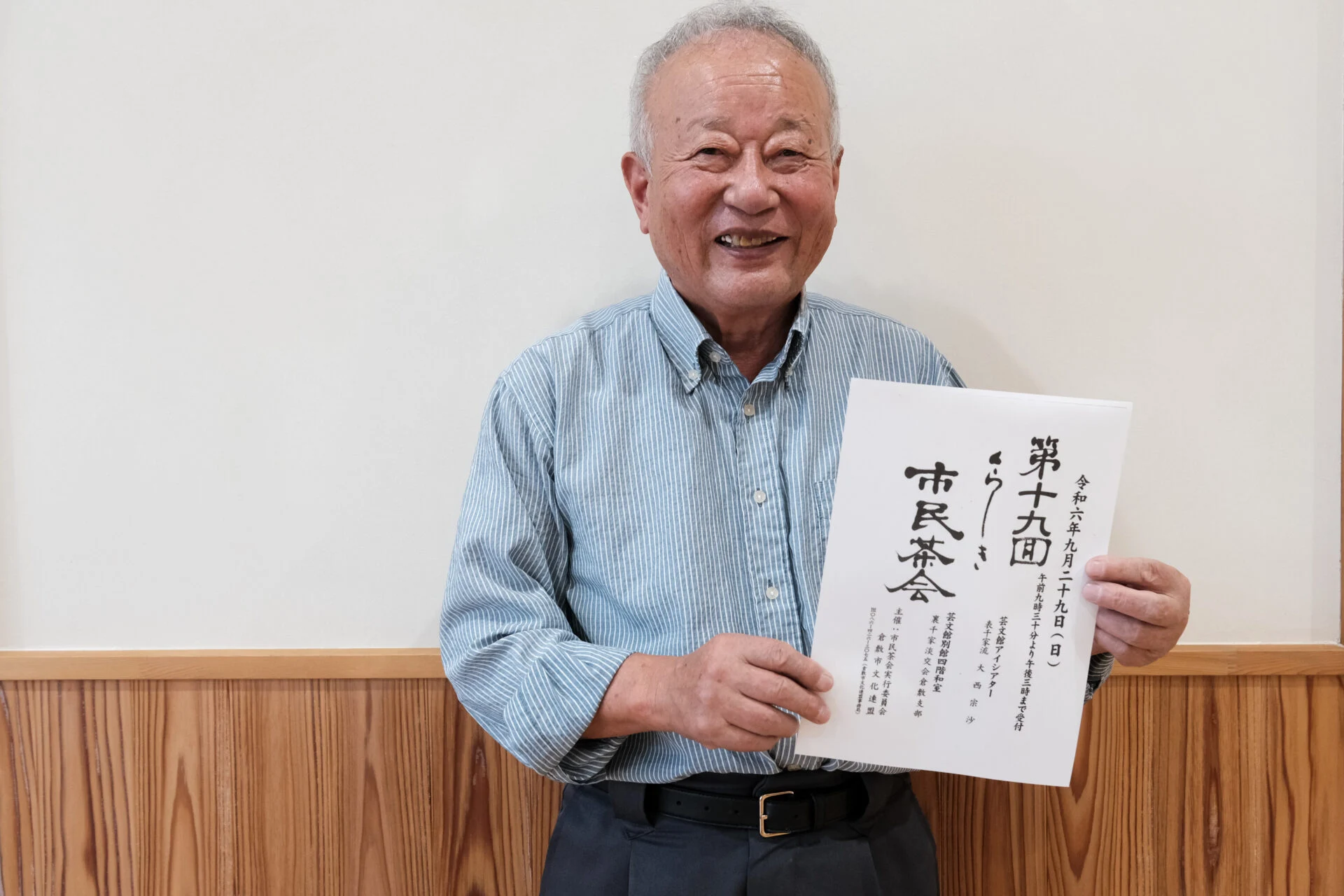
On September 29, 2024 (Sunday), the 19th Kurashiki Citizen Tea Ceremony was held at Geibunkan Hall, organized by the citizen tea ceremony executive committee and the Kurashiki City Cultural Promotion Division.
The two groups participating this time were the Omote Senke style and the Ura Senke Tankokai Kurashiki Branch (hereinafter referred to as "Ura Senke"). From 9:30 AM to 3:00 PM, the Omote Senke style held its tea ceremony at the Geibunkan Aishia Theater, while Ura Senke set up its tea ceremony in the fourth-floor Japanese-style room of the Geibunkan annex.
Participant Experience
Upon arriving at the venue, I was greeted by women in kimonos and men in hakama at the reception, making me feel the traditional culture I had come to experience. On the other hand, while there were participants in kimonos, there were also many participants in casual clothes. Additionally, there were participants of all ages, from elderly individuals with canes to children under elementary school age, creating a diverse atmosphere of people of all ages.
On this day, I entered the venue with a friend's child. The adults were excited to enjoy the tea, but I was a bit nervous about whether my friend's preschool-aged child would enjoy it as well, so we first headed to the Ura Senke venue.
The lively atmosphere at the Ura Senke Tankokai Kurashiki Branch
Since I practice tea ceremony with Ura Senke and know the flow and etiquette of the tea ceremony, I thought it would be easier to explain to the child, so I first visited the Ura Senke venue.

Since the previous seating had already started, we entered the waiting area. Here, we calmed our minds for the next seating while enjoying conversation and looking at the program.

We were guided by a woman in a kimono, and finally, our seating time arrived. The venue was on the fourth floor, one flight of stairs up from the waiting area. I was puzzled when I saw the sign saying "Ura Senke venue is in the fourth-floor Japanese-style room" since the elevator only goes up to the third floor of the Geibunkan annex, but it turns out there was a staircase inside the third-floor room. My anticipation grew even more.

The venue was a spacious Japanese-style room filled with a sense of openness. Participants continued to enter the room, surrounding the Japanese-style room.

Once everyone had entered, the seasonal sweet "Kinfuu" from Kikkoudou, which had a hint of autumn colors, was delivered to the participants. Since this was the original Japanese sweet for the Kurashiki Citizen Tea Ceremony, the participants' eyes sparkled with excitement.

Since there were also kaishi (paper for sweets) and kuromoji (bamboo pick), participants could join without bringing anything.

Children were given cute souvenirs regardless of whether they had tea tickets, and the atmosphere in the venue became warm and friendly as the tea ceremony began.

During the tea preparation, the main guest (the most honored guest) commented, "This time, the sweets come with kaishi and kuromoji, which is very thoughtful," and "Seeing the souvenirs given to the children made us feel warm," creating a lively atmosphere as the matcha was served.

Since many participants started drinking at almost the same time, it was okay if you didn't know the etiquette. When my friend asked me about the etiquette, I confirmed it while drinking together. Everyone else was also enjoying the tea ceremony in a friendly atmosphere, so the volume of our voices didn't matter.
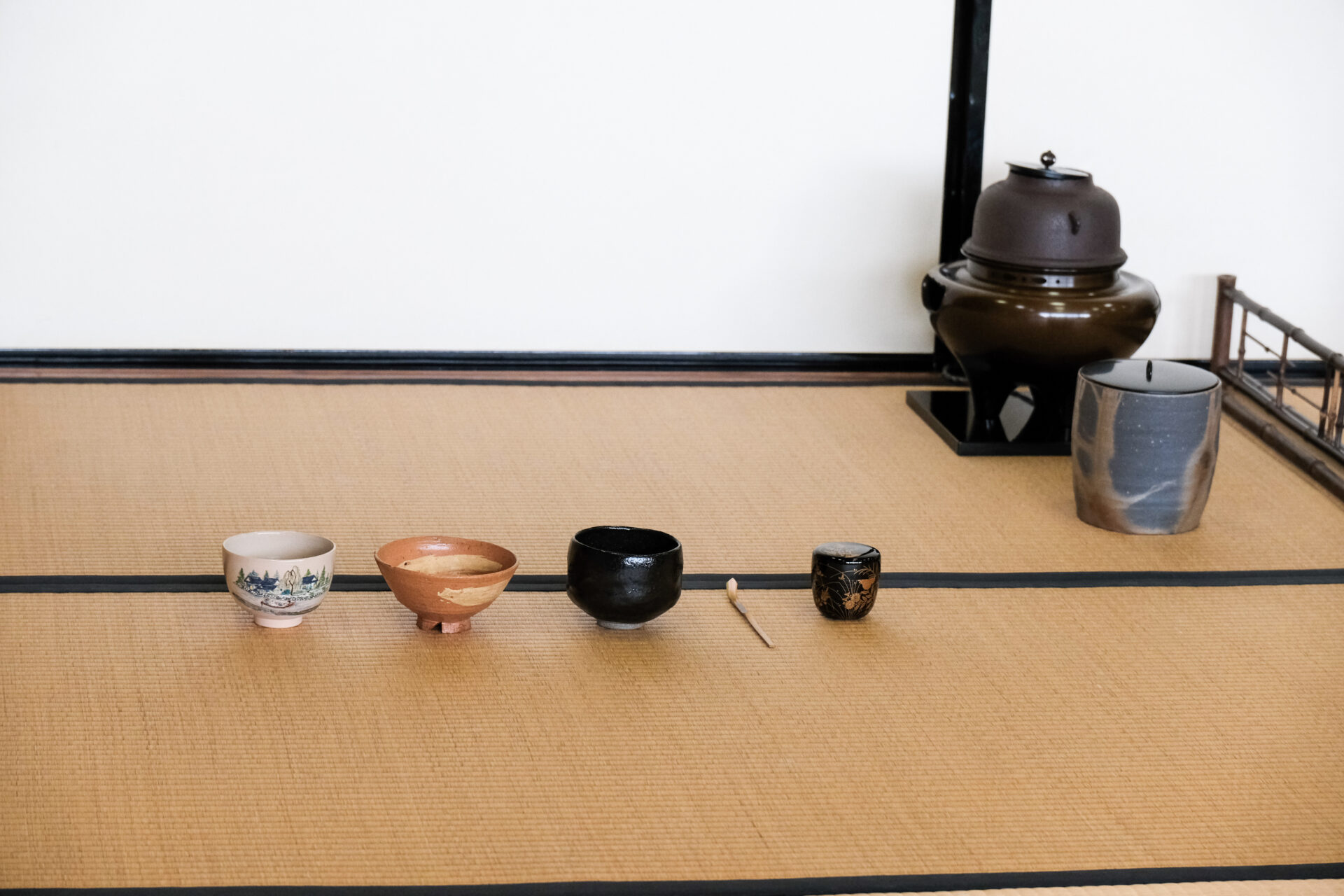
As we were all enjoying the tea, the time for the ceremony came to an end before we knew it. Finally, we took a look at the tools used in the tea ceremony before leaving the venue.
The Omote Senke style with chairs and tables for easy participation for all ages
Next, we moved to the Geibunkan Aishia Theater to observe the Omote Senke style tea ceremony.

In the Omote Senke style venue, chairs were lined up in front, and the program was available there.

In contrast to the Ura Senke's Japanese-style room, the Omote Senke style venue was set up with tables and chairs. I saw participants with children enjoying tea while their kids remained in strollers, and participants with canes sitting comfortably in chairs, conveying a welcoming atmosphere for everyone, regardless of age.

The wagashi (Japanese sweets) from the Omotesenke school are also from Kikodo, and they are cute sweets named "Autumn in the Deep Mountains". This is also a sweets that can only be enjoyed at the Kurashiki City Tea Ceremony.

While enjoying the sweets, matcha (powdered green tea) is served. This also uses a different type of tea than that of the Urasenke school, so it is nice to be able to compare and taste between the Urasenke and Omotesenke schools.
Conclusion
The Kurashiki City Tea Ceremony is set up in an environment where people of all ages can participate, with souvenirs for children who do not have tea tickets, preparation of napkins and black paper, and tea ceremonies held in chair seating.
It was impressive that there was a system in place that allowed beginners to experience an authentic tea ceremony, as there were also participants who were well-versed in tea ceremony, like the main guest in the Urasenke school.
Kurashiki City is a city with a former Kitamaebune (northern coastal shipping) port, recognized as a Japan Heritage site for "A different world entwined with the dreams of men who overcame the stormy seas - The Port of Kitamaebune and Shipowners' Villages." Therefore, merchants gathered around the port town, and the tea culture has been cherished as a refinement.
I hope this event continues so that even one more person can develop an affinity for tea, which is one of Kurashiki's cultures.
Data for the 19th Kurashiki City Tea Ceremony
| Name | 19th Kurashiki City Tea Ceremony |
|---|---|
| Date | September 29, 2024 (Sunday) from 9:30 AM to 3:00 PM |
| Location | 1-18 Chuo, Kurashiki City |
| Participation Fee (including tax) | 1,000 yen |