

An event where children and adults can learn about the environment through hands-on experiences, “Recycle Fair in Kurashiki,” was held every year before the COVID-19 pandemic.
It had been canceled in recent years due to the pandemic, but on Sunday, October 2, 2022, “Recycle Fair in Kurashiki 2022” was held for the first time in a while.
The venue was the “Kurukuru Center” in Kojima.
“What is the Kurukuru Center? Where is it?”
Some people may be wondering. It is next to the “Kojima Marine Pool.”
At the Kurukuru Center, residents donate clothes and books that are still usable, which are then given free of charge to people who need them.
It also repairs and restores furniture and other items, then sells them at low prices.
I visited to find out what kinds of recycling take place in the community and what I could do myself, and to think about these things through the event.
The information presented here is as of the article’s publication in October 2022. Please note that it may differ from current information.
What Is “Recycle Fair in Kurashiki 2022”?
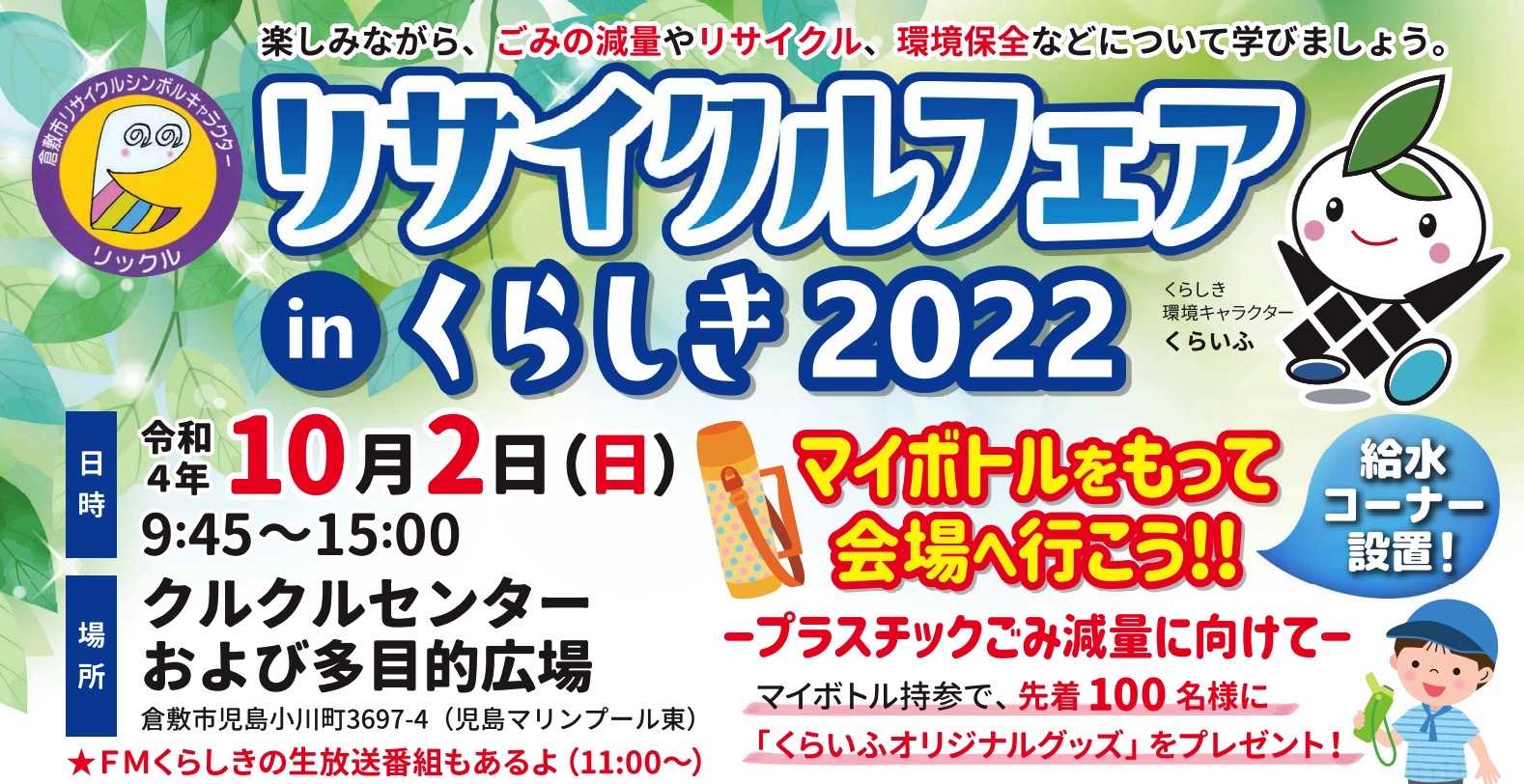
“Recycle Fair in Kurashiki 2022” was an event hosted by Kurashiki City to encourage people to take an interest in reducing waste, recycling, environmental conservation, and related topics.
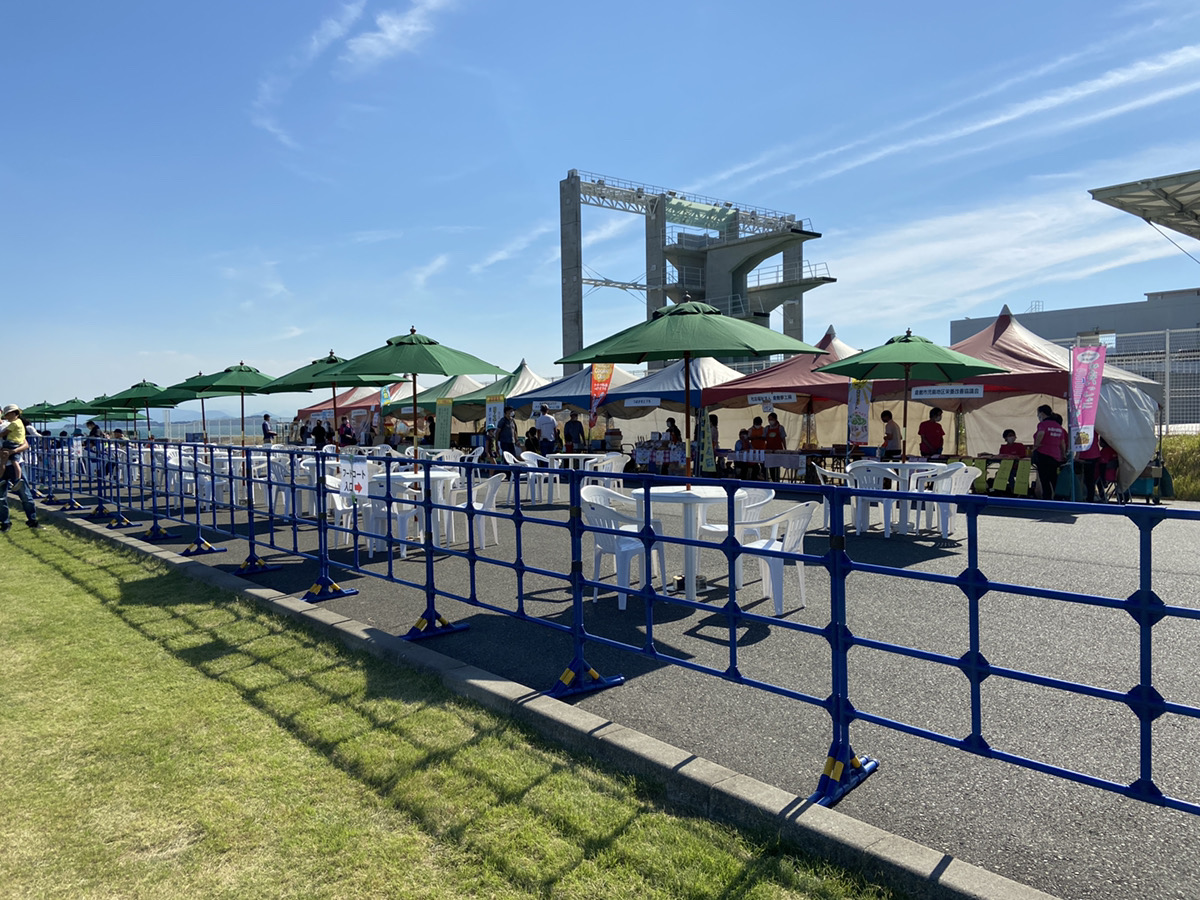
The main venue was the multipurpose plaza in front of the Kurukuru Center, where booths like the following were set up.
- Workshop and activity booths where items that would normally be thrown away were recycled into something new
- Flea market
- Food court
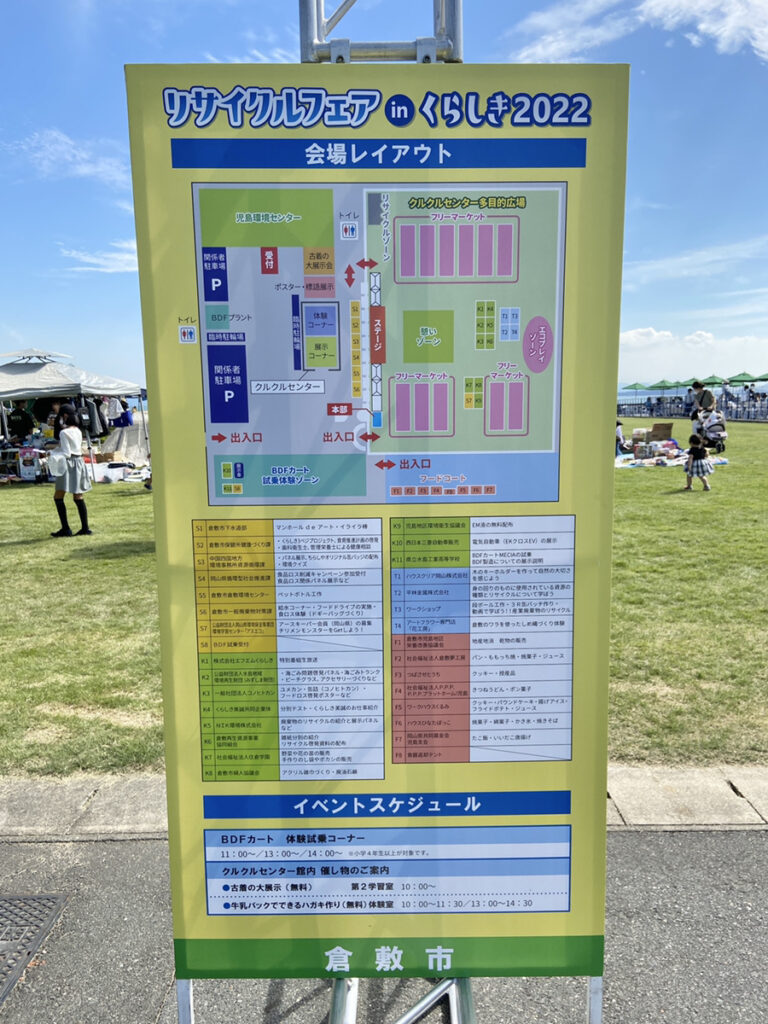
Visitors wandered around, wondering where to start and what to make, and some areas had long lines.
Flyers and other materials encouraged visitors to “bring your own bottle,” and a water station was set up at reception.
It was an environmentally friendly event aimed at reducing plastic waste.
The Day of the Event
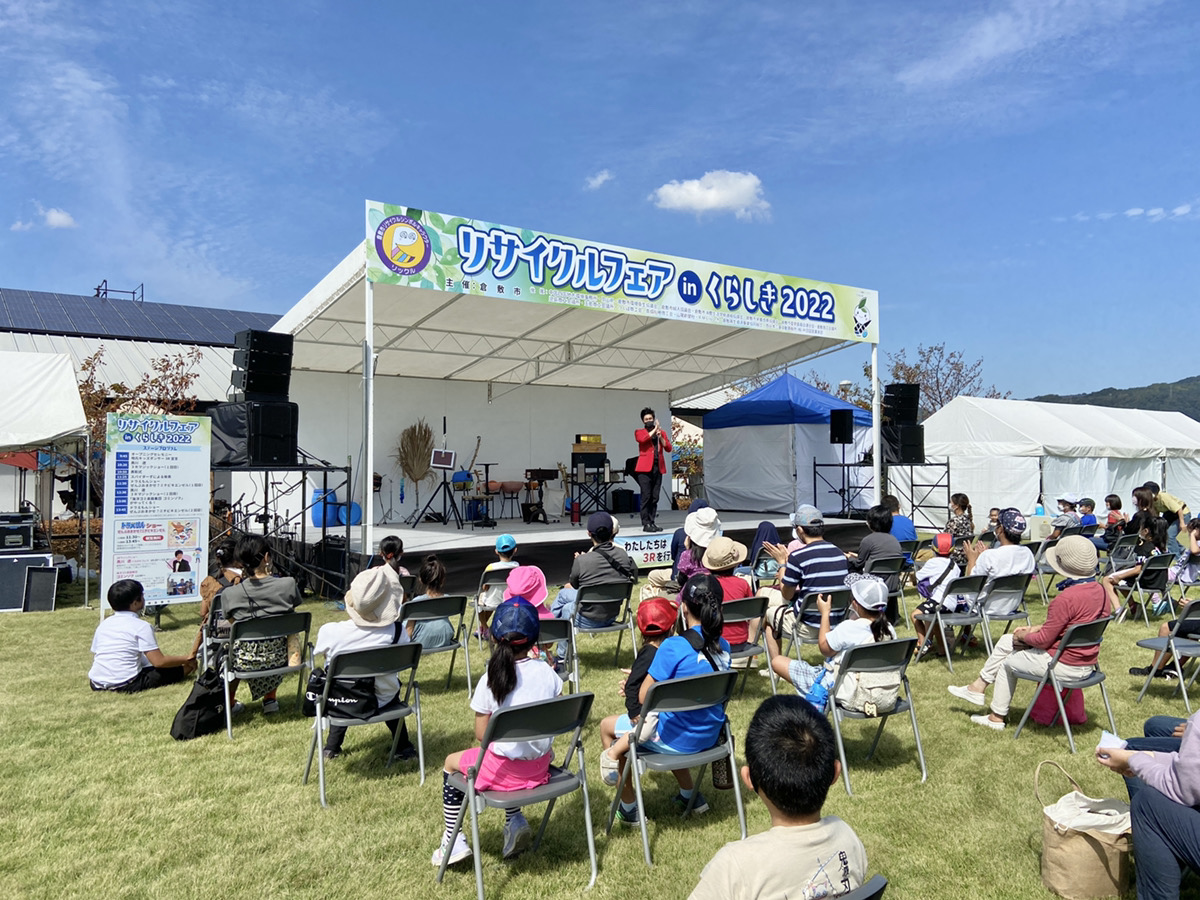
The sky was clear from the morning, but it was so hot it hardly felt like October.
The emcee repeatedly urged everyone to “make sure to stay hydrated.”
Magic shows and character shows brought the stage to life, and children and adults alike enjoyed watching.
The flea market had no vendor fee, so many people took part.
They laid out clothes they no longer wore at home, toys, and other items on sheets and sold them at bargain prices.
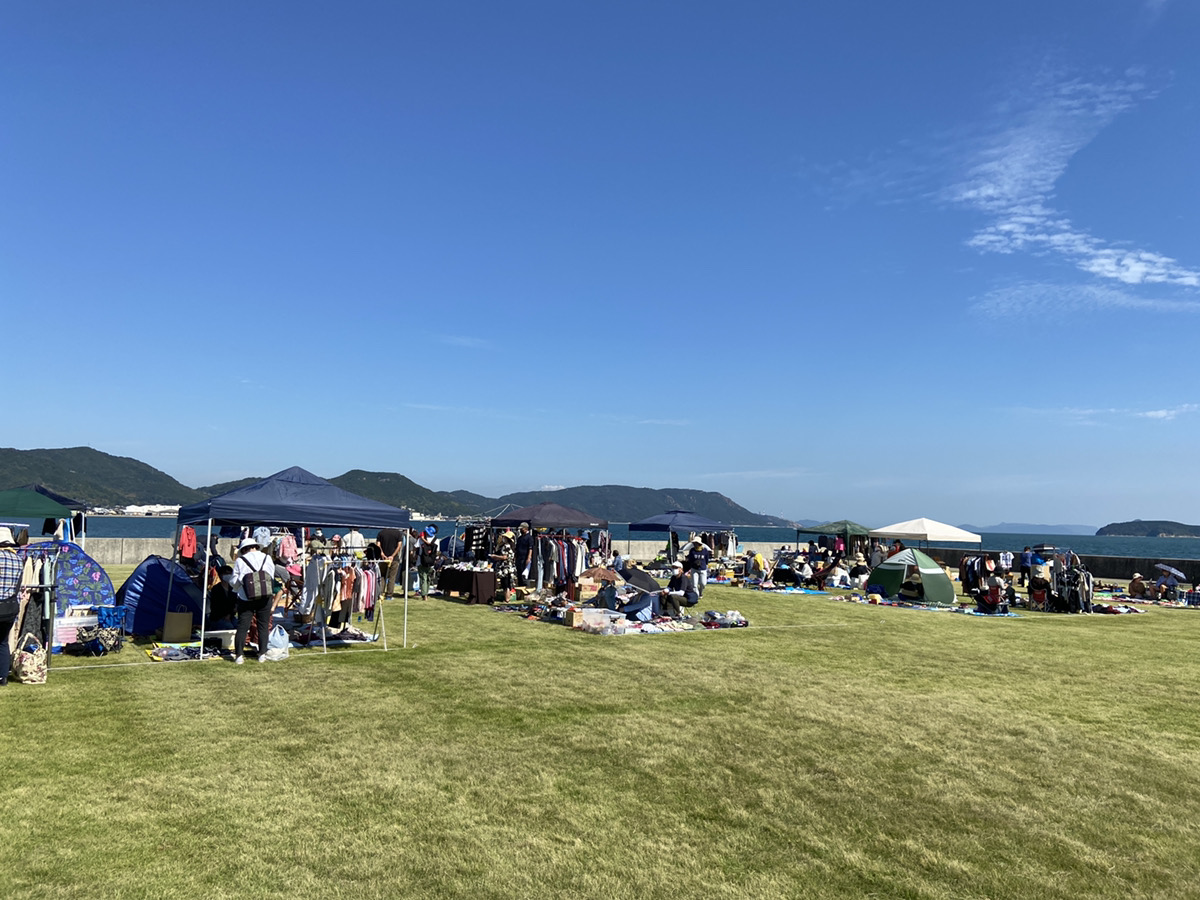
Since items were much cheaper than in stores, it was a great deal if you found something you needed.
A friend who came with me was delighted to say, “I got some brand-new paints.”
The food area offered local specialties as well as handmade bread and prepared foods made by staff at welfare facilities, and some stalls had lines around lunchtime.
I heard that you could get a gift by completing a quiz rally where you learn about the environment, so I decided to give it a try.
Now, let’s take a look at the booths on offer.
“Manhole de Art”
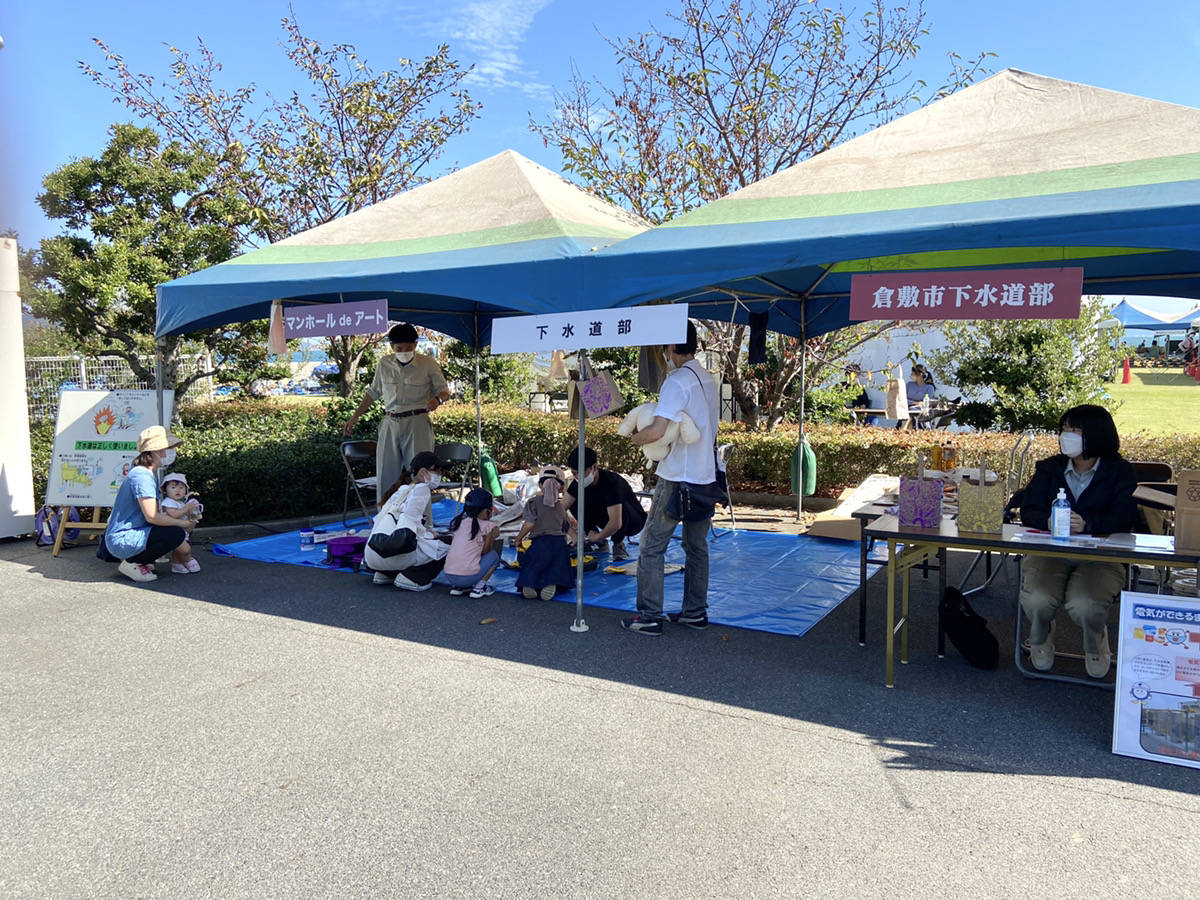
The first booth that caught my eye was “Manhole de Art.”
This was a booth run by the Kurashiki City Sewerage Department.
Visitors painted a real manhole cover yellow or purple, then placed a paper bag over it to transfer the manhole’s pattern.
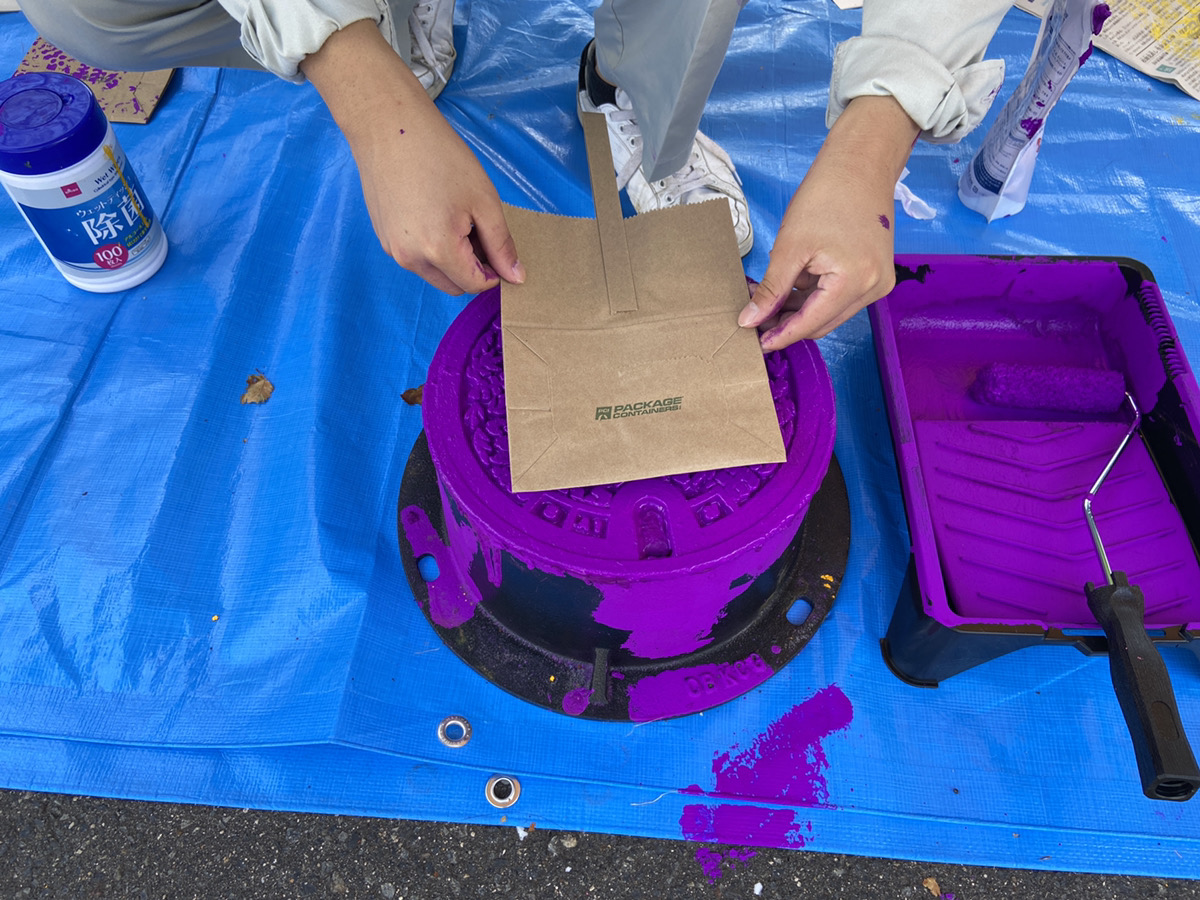
Manhole cover designs apparently differ by area, as follows.
- The Kurashiki area features wisteria flowers
- Mabi features bamboo shoots
I had never really looked closely at manhole patterns before, but from now on I thought I would try to pay attention to them.
Visitors could also make original items if they brought fabric, T-shirts, or similar materials.
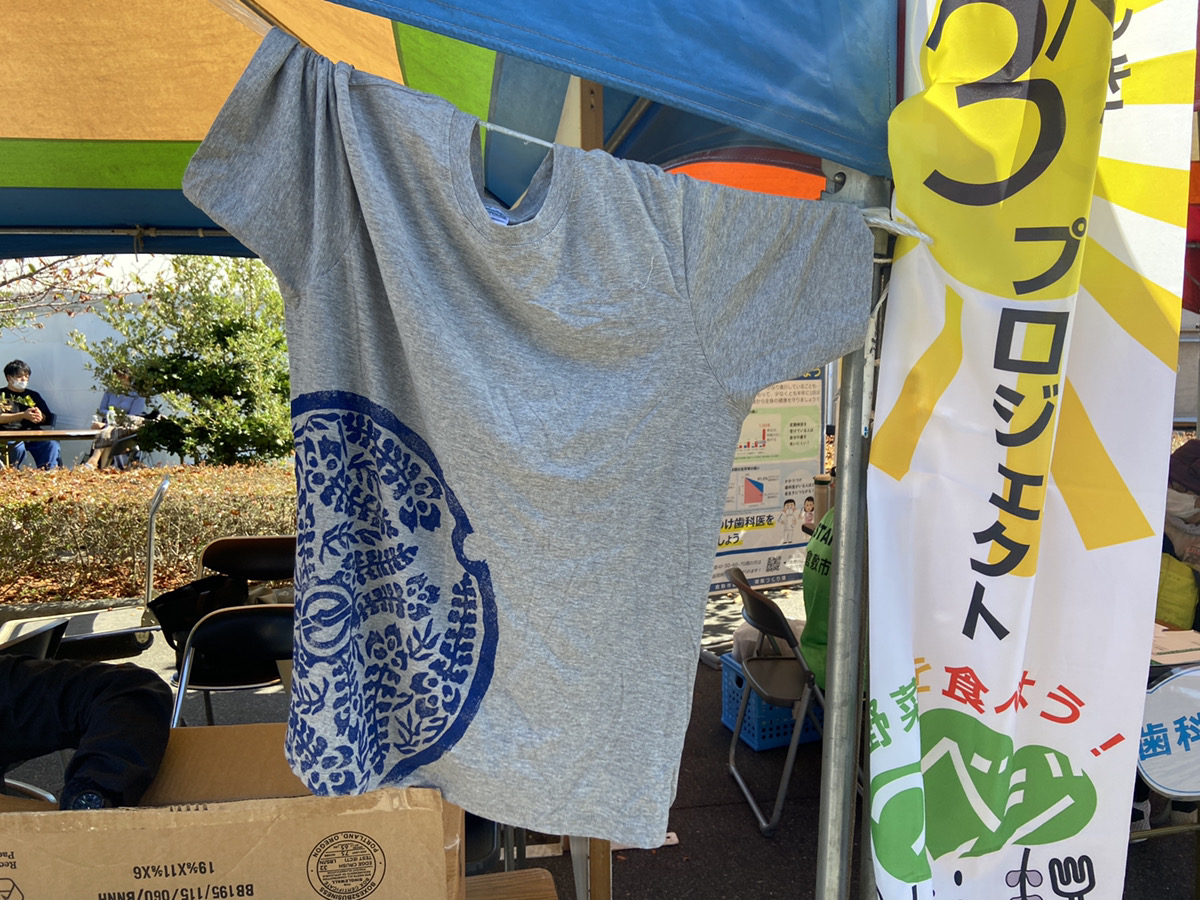
The design was so cute and stylish that you could hardly tell it was a manhole cover.
“Whispers of Numbers” Workshop
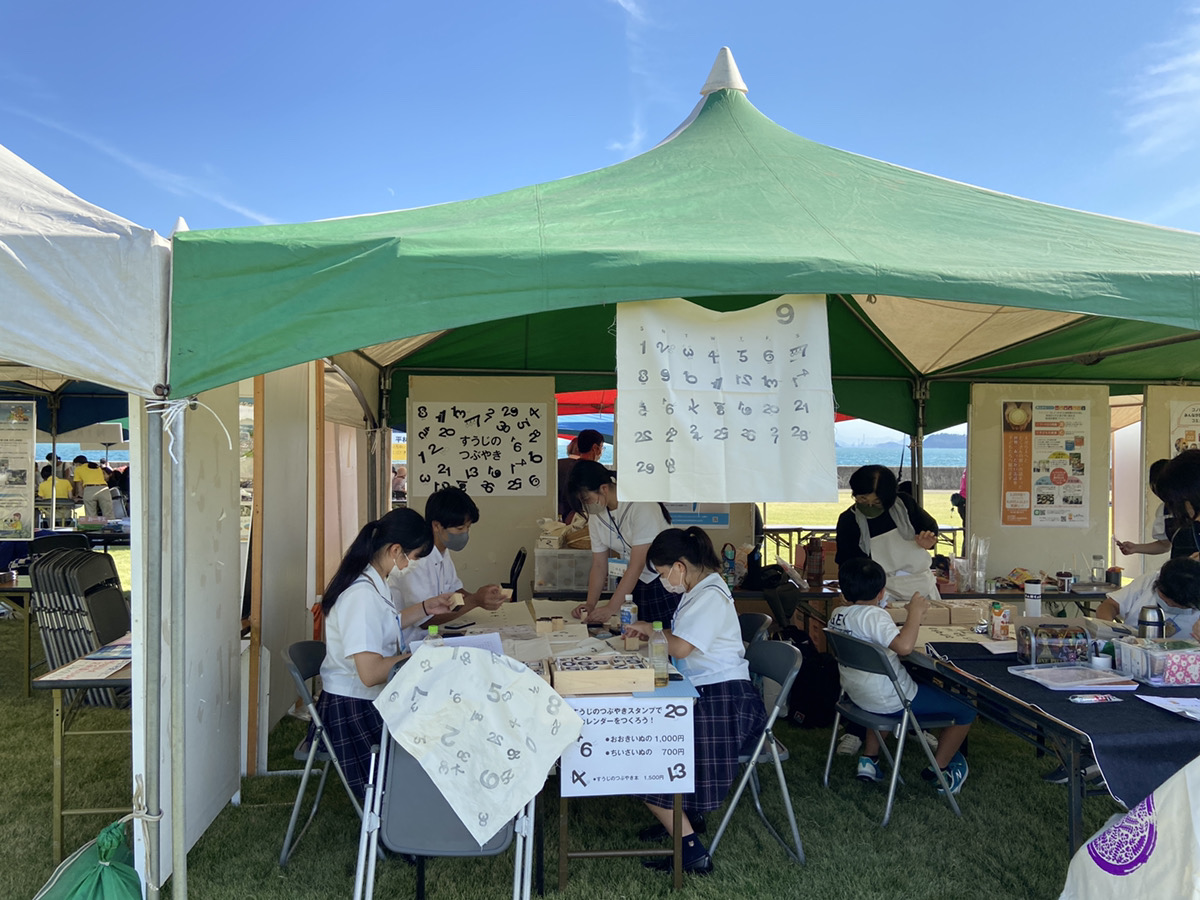
Next, I headed to the “Whispers of Numbers” workshop.
Designer Sono Nishimori, who is active in a wide range of fields, including holding workshops at the Okayama Prefectural Museum of Art, had a booth there.
Participants could stamp “Whispers of Numbers” stamps, designed to resemble animals, tools, and other things, onto off-spec canvas that could not be sold on the market (B-grade or C-grade fabric), and create large calendars to hang on a wall or original art.
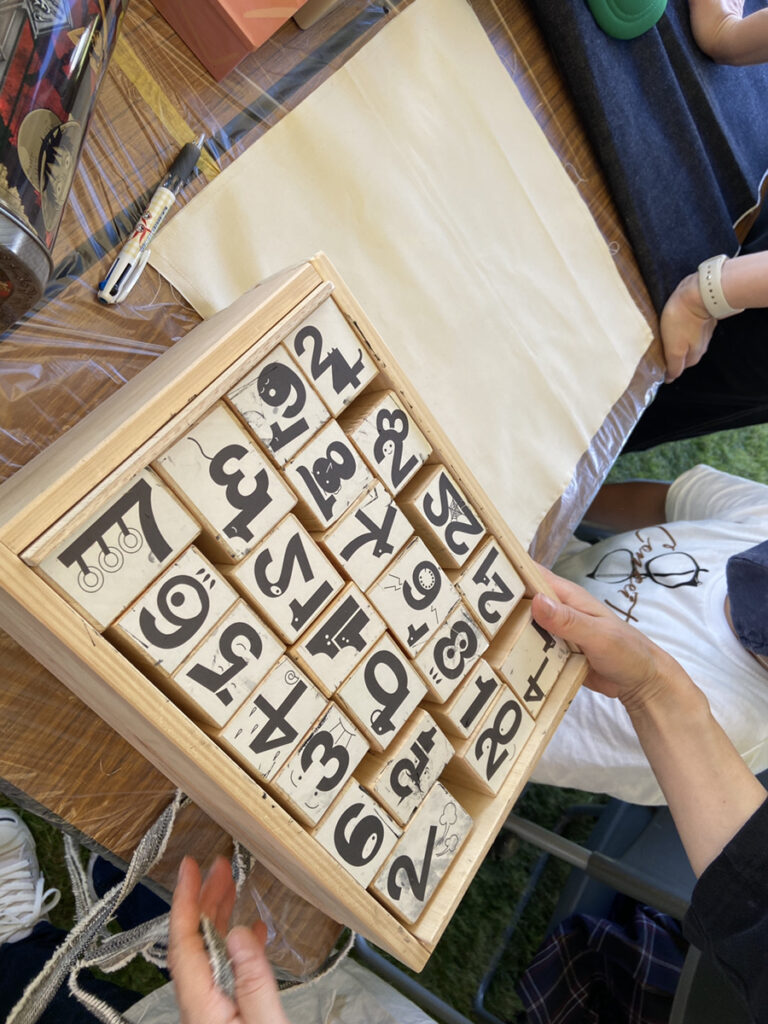
“Play freely with numbers”: participants combined numbers freely, without being bound by their meanings.
The “Whispers of Numbers” stamps designed by Nishino were so cute that local high school students were also enjoying stamping with them.
Make Your Own Doggy Bag
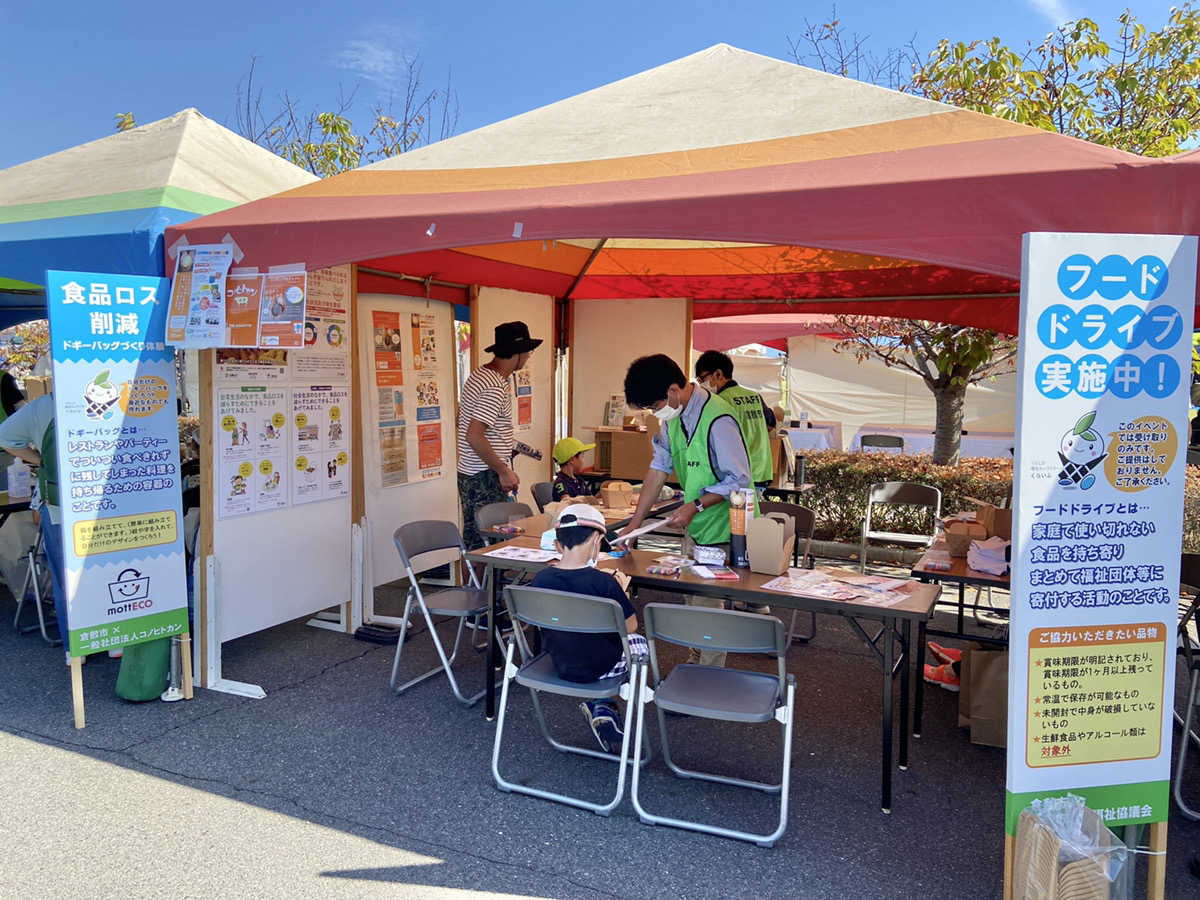
The last booth I’ll introduce was a collaboration between Kurashiki City and the Konohitokan General Incorporated Association.
“Let’s make your own doggy bag!!”
A doggy bag is a paper box for taking home leftover food from restaurants, parties, and other occasions.
I always carry an eco-bag, but I had never carried a box or container for leftovers.
A box is handy because it keeps food from getting squashed. It also helps reduce food waste.
After assembling a foldable box and decorating it with drawings and stickers, an original doggy bag was complete.
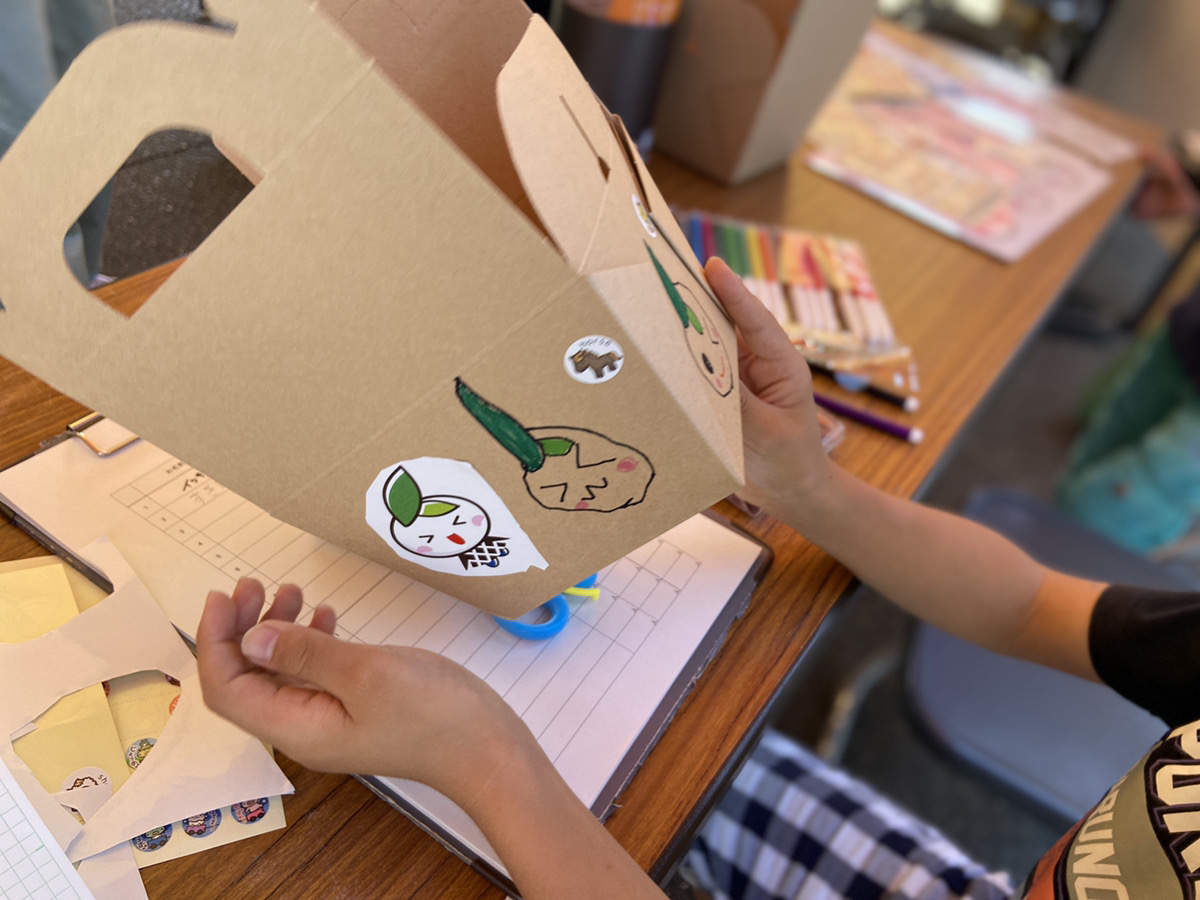
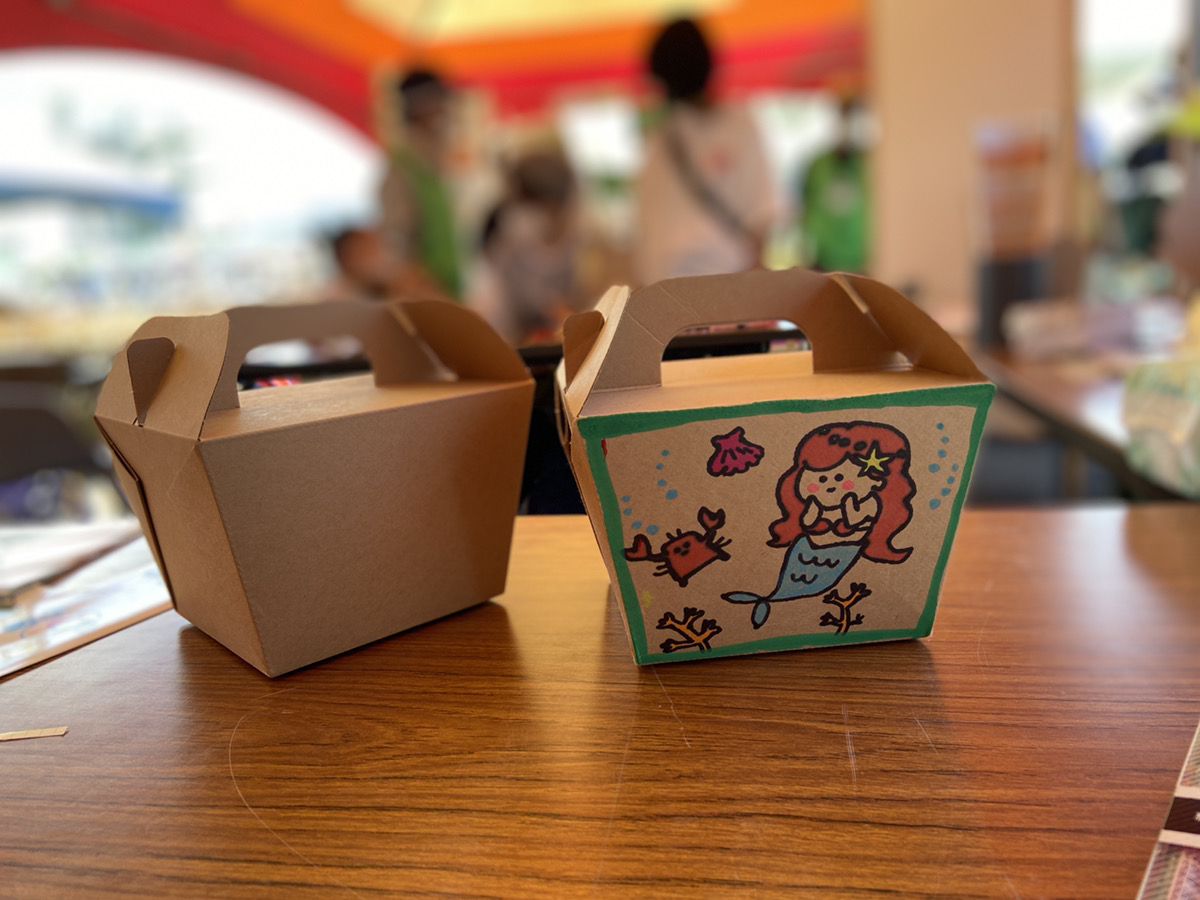
The children each drew pictures they liked and enjoyed making their bags.
From the Writer
Until now, I had been mindful of the following ways to reduce plastic waste.
- Wash plastic bottles and milk cartons and take them to collection boxes
- Bring my own bottle and eco-bag
However, by taking part in this event, I learned that there are still many other ways to reduce waste.
New initiatives are also underway, such as efforts to eliminate food waste and food drives (activities where people bring together food they cannot use up at home and donate it to local facilities).
Flea markets are also a great example of the SDGs, since items do not have to be thrown away if someone else can use them.
At “Recycle Fair in Kurashiki 2022,” I learned more about the activities of local communities and organizations, enjoyed learning about environmental conservation, and spent a meaningful day.
The “Recycle Fair in Kurashiki” appears to be held every year.
Why not join in next year?
Recycle Fair in Kurashiki 2022 Information
| Name | Recycle Fair in Kurashiki 2022 |
|---|---|
| Date | October 2, 2022 (Sunday) 9:45 a.m.–3:00 p.m. |
| Location | 3697-4 Kojima Ogawa-cho, Kurashiki City |
| Admission (tax included) | Free |
| Website | Kurukuru Center | Kurashiki City |



What would you like to know about Kurashiki?
Enter a search term to find articles on this site




































