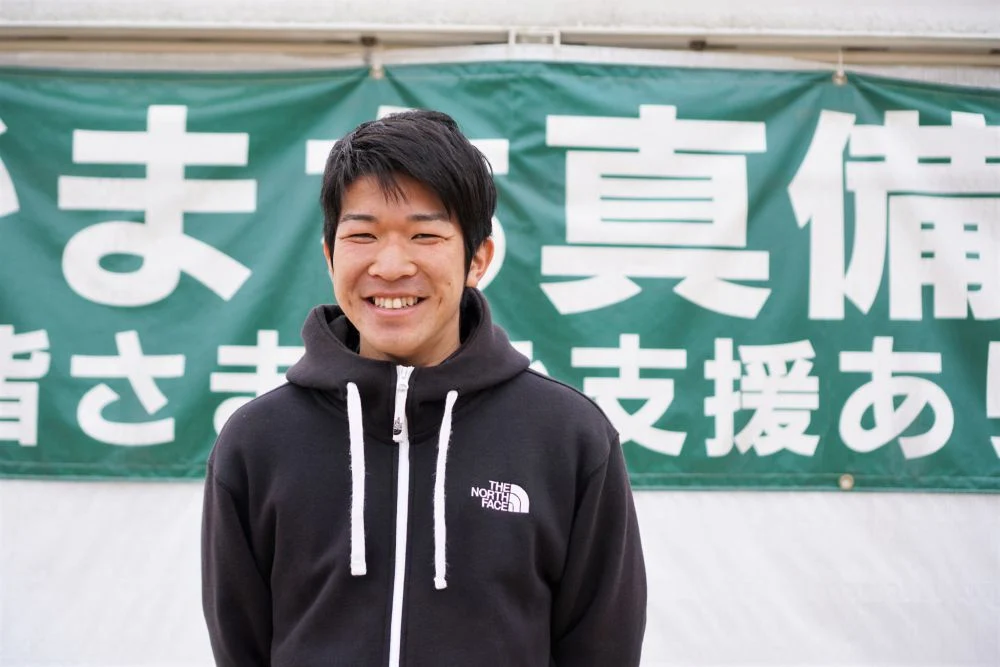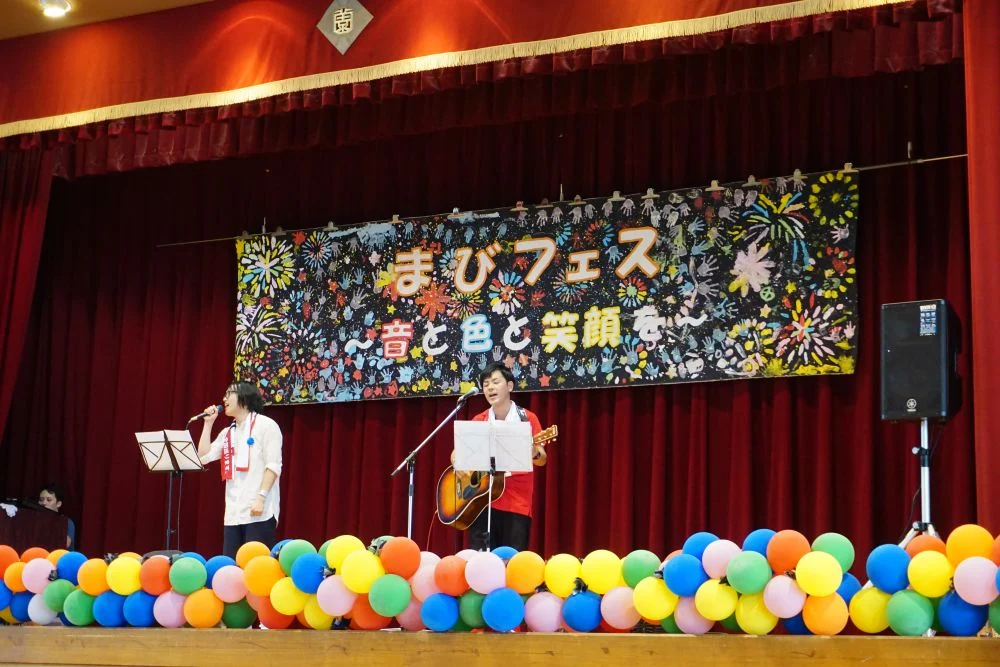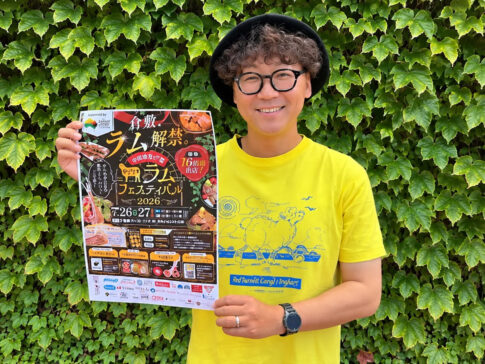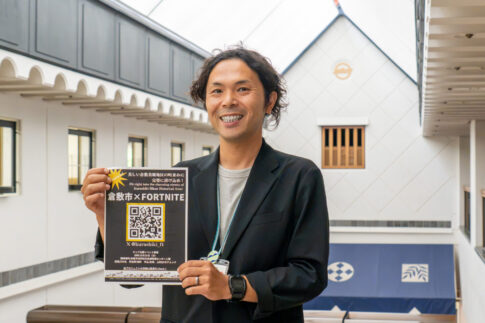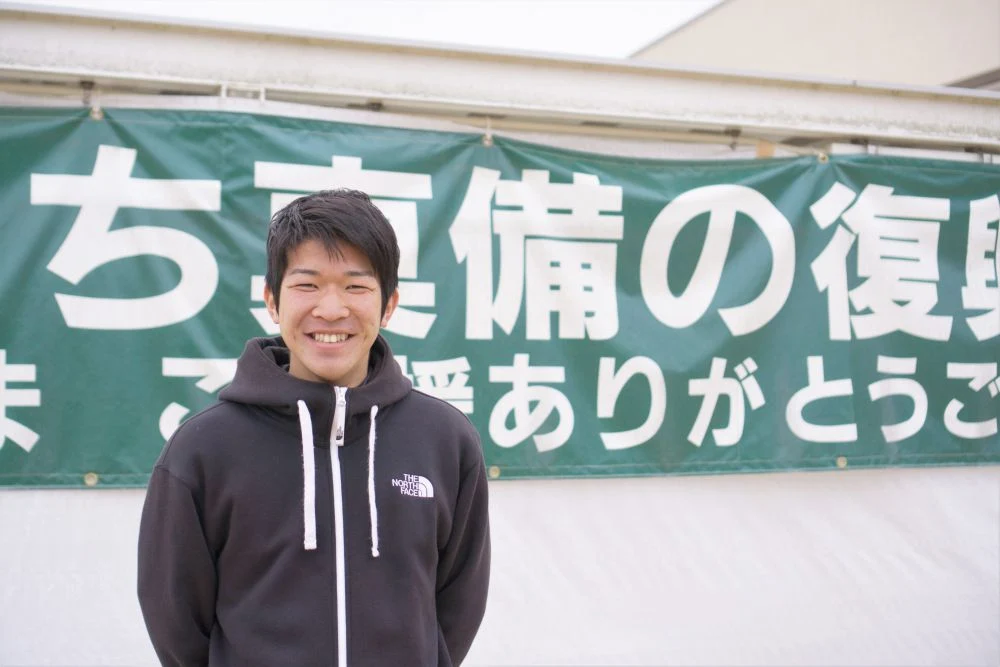
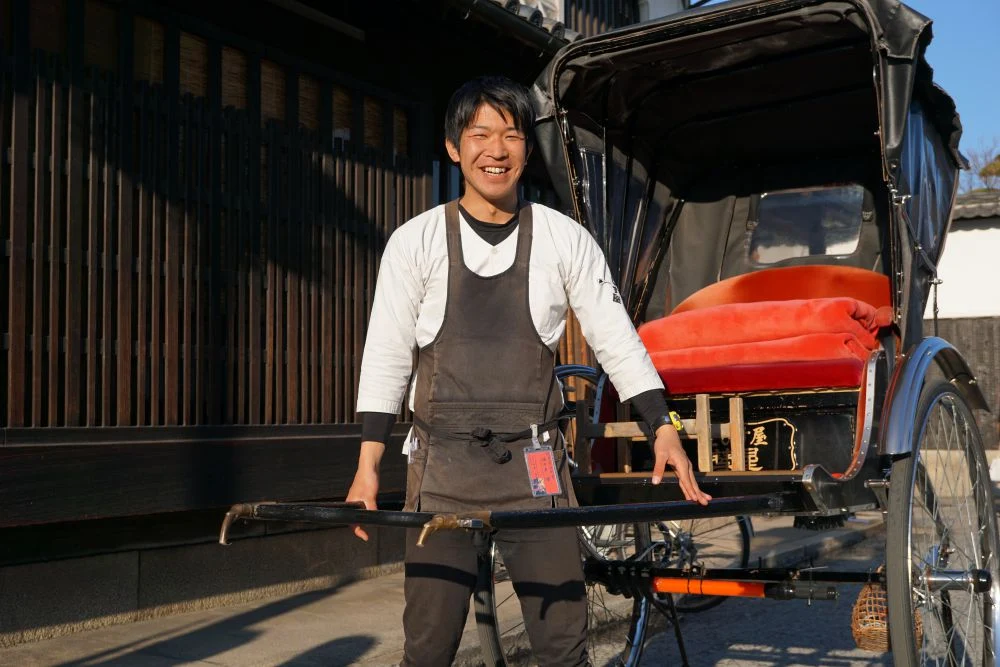
Sasaki Suguru, who works as a rickshaw puller, a flower artisan in the Bikan Historical Area, continues to volunteer in Mabi, Kurashiki City.
Sasaki, a current university student from Funabashi City, Chiba Prefecture, stayed almost entirely in Mabi from July 2018 to February 2019, working hard and sweating.
We spoke with Sasaki about the background and experiences of his volunteer work, his current feelings, and his future plans.
Interview with Sasaki Suguru
What prompted you to come to Mabi as a volunteer?
First, please tell us about how you came to Mabi, Kurashiki City as a volunteer.
Sasaki
In July 2018, the heavy rain disaster of Heisei 30 occurred, and I was shocked to see images of the flooded Mabi area on television. Feeling frustrated that I couldn't do anything, I was inspired by the words of my travel companion, Haru Ryosho.
"Many travelers are my friends. I want you to use the lightness of travelers and the power of life to help western Japan. Let's go."

I had never met Ryosho until just after this heavy rain disaster, but I was so shocked by his words that I immediately contacted him saying, "I will go too!"
Although I didn't receive a reply from Ryosho, who was busy after entering the disaster area, I decided to go to the site even during my university exam period.
I called for transportation and water support, and entered Mabi Town ten days after the disaster.
Initially, I planned to stay for two weeks, but I felt that it was not enough once I got there, so I extended my stay to two months. Even then, I felt that more help was needed, so I returned to Chiba once and completed the procedures for a one-year leave of absence.
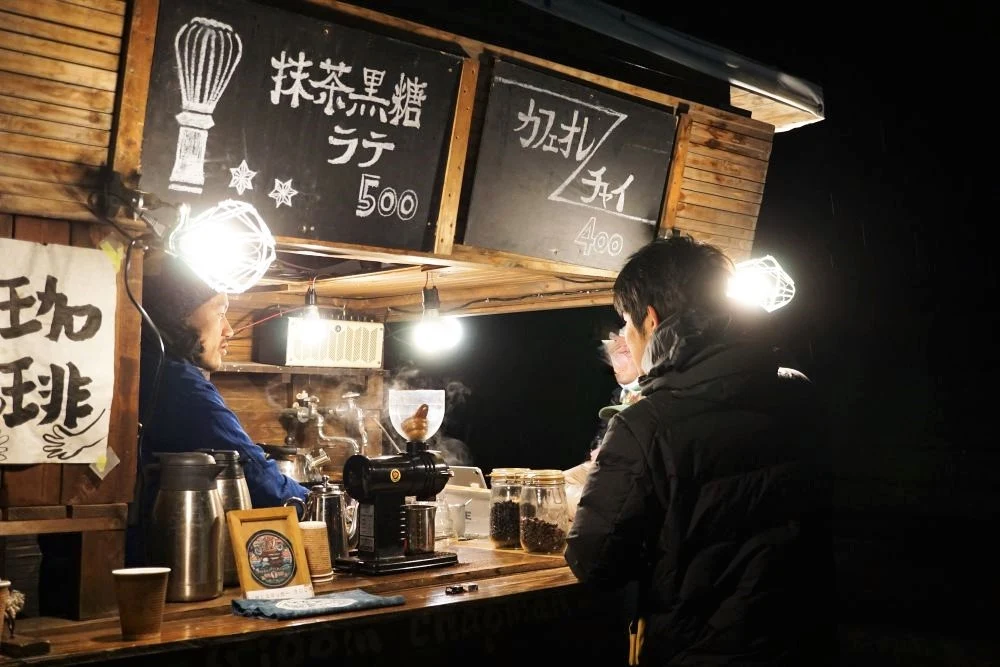
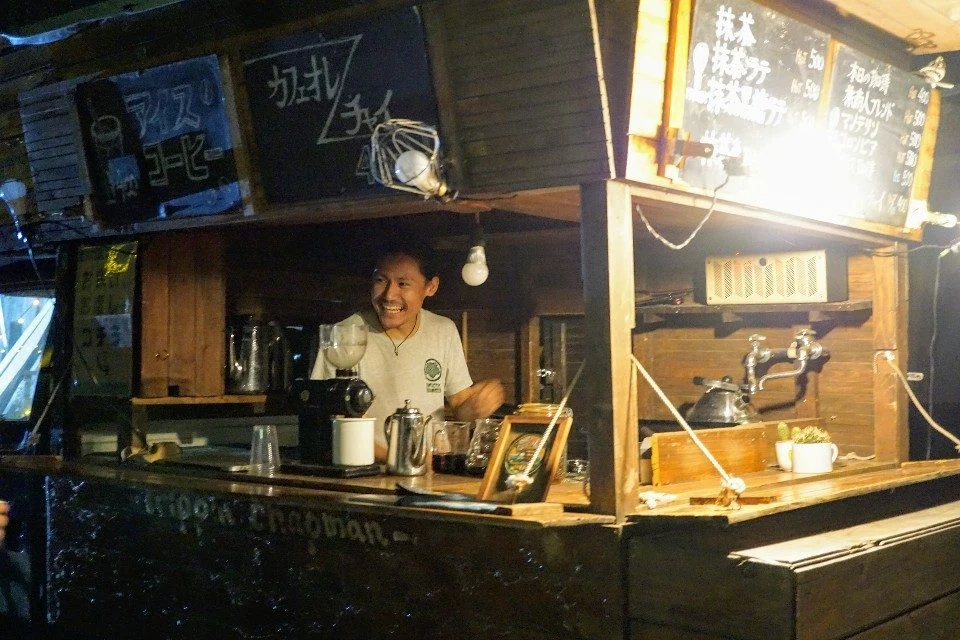
Before going to the disaster area
By the way, what were you studying at university?
Sasaki
I wanted to learn marketing to become a company president, so I enrolled in the "Service Creation Department" at a commercial university.
My father ran a business, so I thought it would be nice to take over and be of help.
My family environment was really good.
That comes across in the way you speak. By the way, have you had any volunteer experience before?
Sasaki
No, this is my first time volunteering.
I love traveling and have lived abroad while hitchhiking. I was saved by the kindness of many people, and I felt that it was finally time to return the favor, so I decided to take action this time.
What made people happy and helped through volunteer activities
How do you live in Mabi Town?
Sasaki
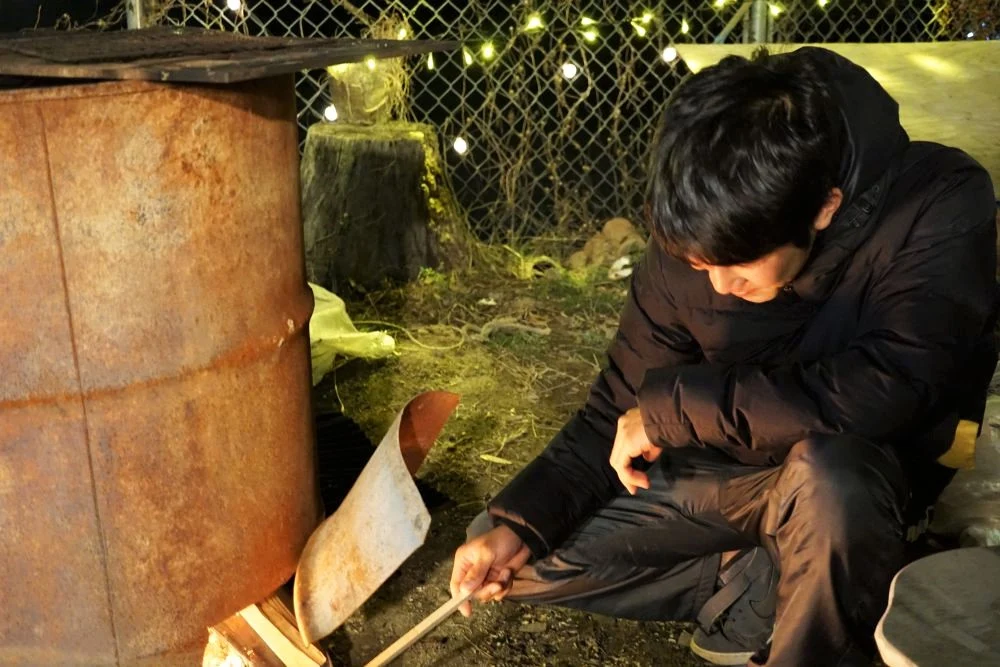
Right after the disaster, I lived in a tent and stayed at Ryosho's house. Basically, I have been staying in Mabi Town and now I am allowed to sleep at a place like a community center.
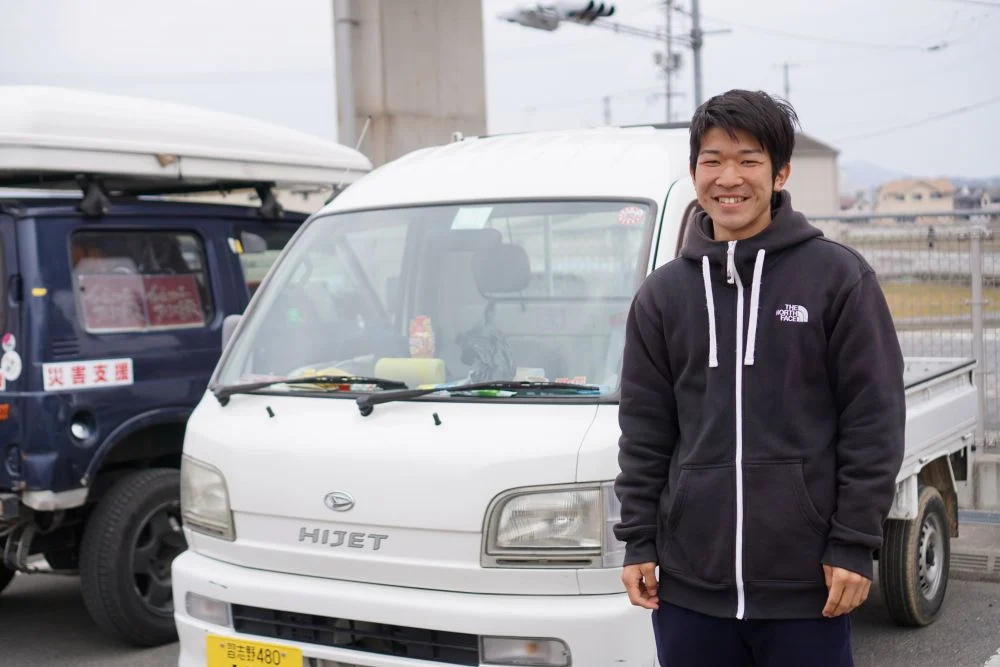
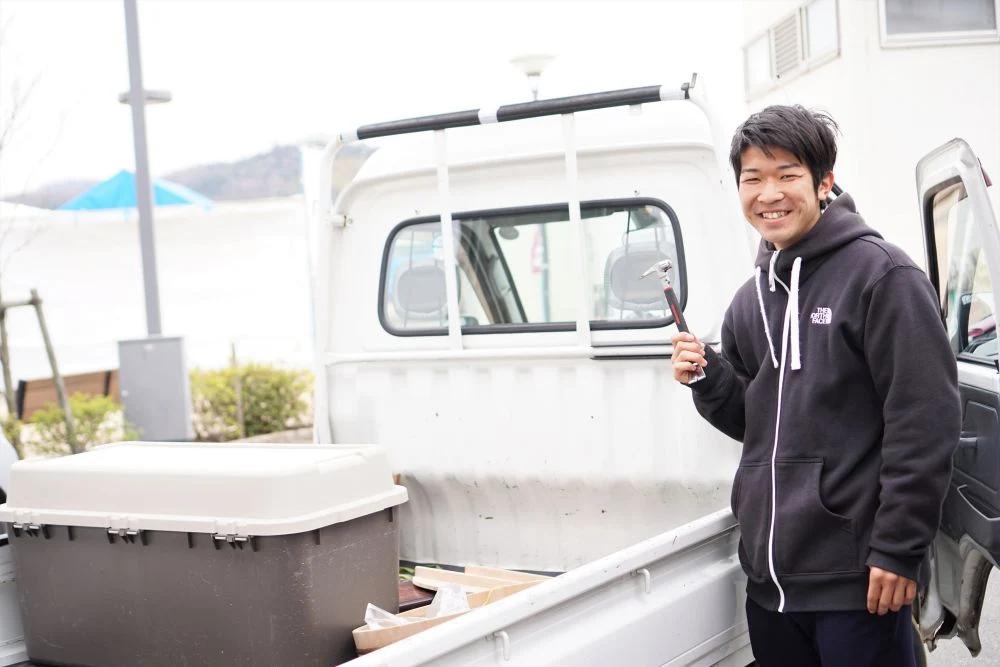
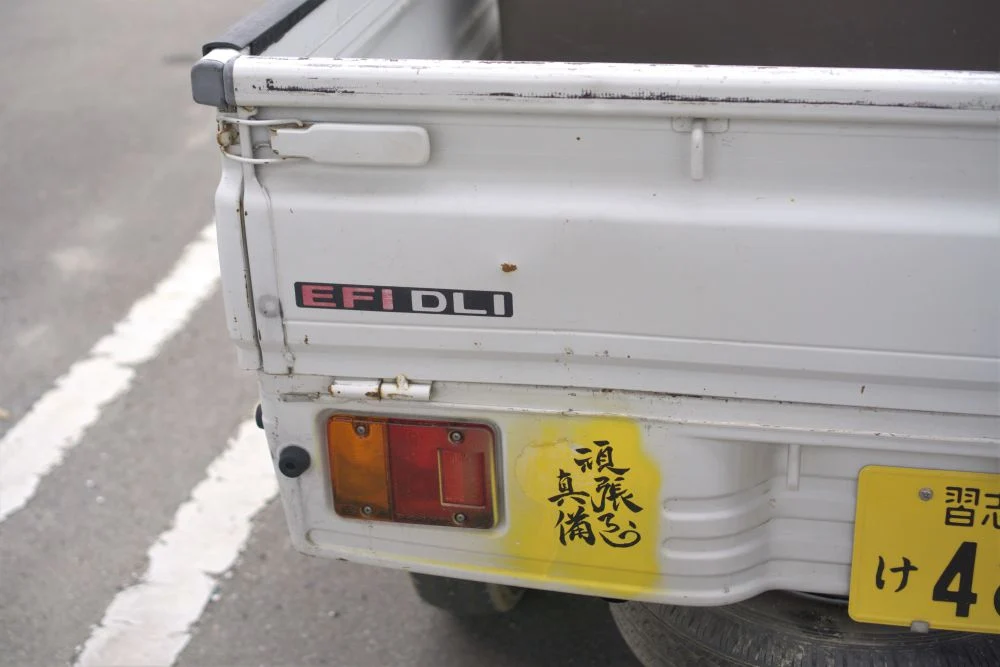
Once I decided to stay long-term, I bought a light truck for transportation in Mabi.
Has your mindset changed through volunteer activities?
Sasaki
Well... I couldn't think of anything during the first two months. I was just reckless. I worked desperately to clean up wet furniture and continued to peel off wet walls to the point that I lost my memory. The hardest task was removing the wet tatami mats.
As I continued to work without thinking, I was happy to be recognized by the same families I helped.
Gradually, the feeling of wanting to make these families happy naturally increased.
If you have any memorable experiences, please share.
Sasaki
There was a family I helped carry wet furniture for, and when everything was finally cleaned up, the elderly couple from that family said, "Please tell me your address. Once things settle down, I will send you a letter. We will do our best!"
The words of someone who is truly doing their best carry weight. I was really happy to see them looking well when I met them recently. Words and smiles like these became my strength and encouragement.
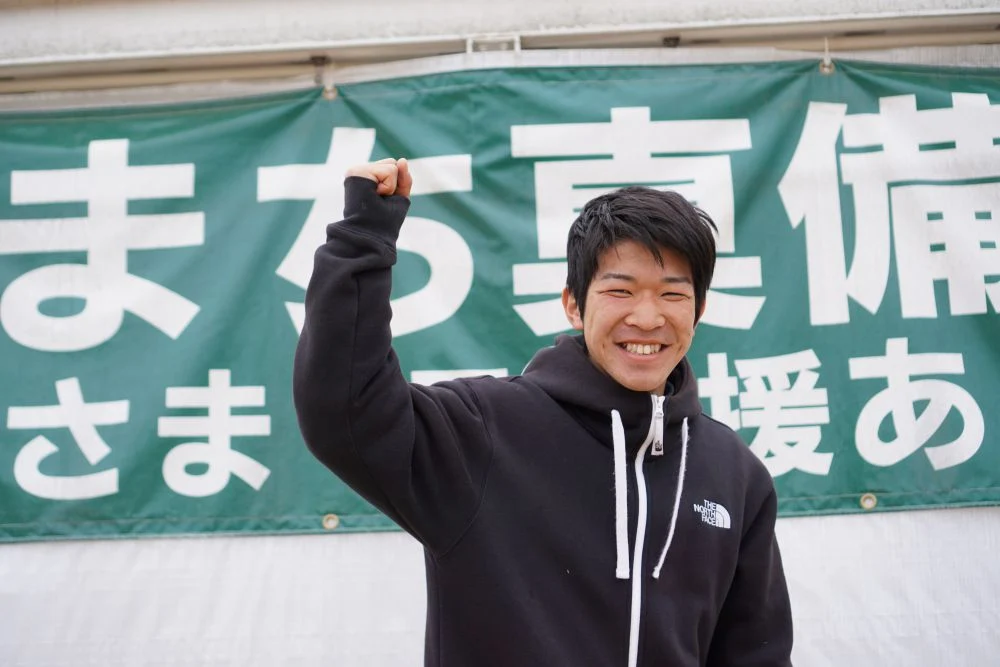
Starting to work as a rickshaw puller in the Bikan Historical Area
I heard that you started working to continue your long-term volunteer work. Why did you choose the job of a rickshaw puller?
Sasaki
I'm a timid person, but I like to stand out, so I chose this job.
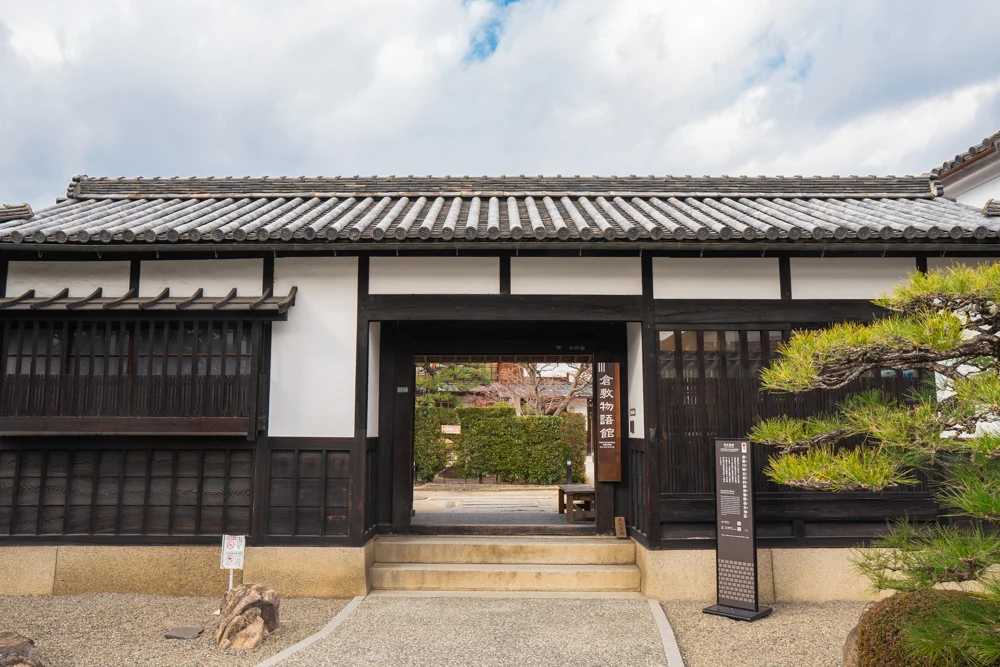
I only visited the Bikan Historical Area once to eat sweets at "Kurashiki Momoko" during my volunteer breaks.
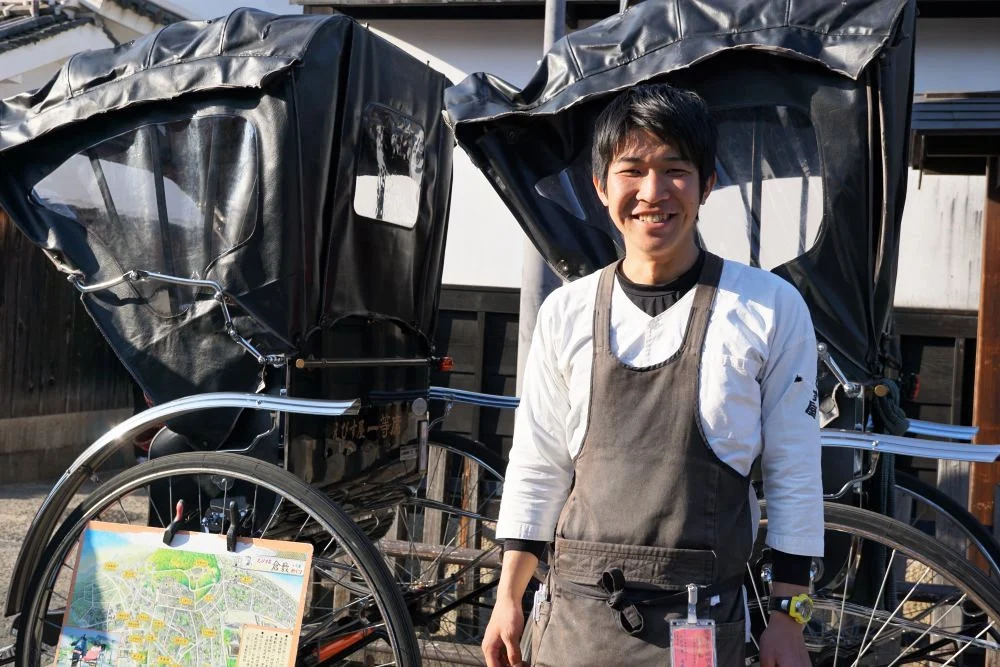
I was introduced to various part-time jobs, but I thought this one would stand out the most! So, I applied for the interview myself and started working.
How was the job once you started working?
Sasaki
It was the hardest thing I've ever done in my life. It was tough to memorize the history of Kurashiki, and I studied hard to remember it. I almost gave up along the way, but since I had told my friends about it, I was too embarrassed to quit halfway. It was also physically demanding work that used muscles I had never used before, so it was really tough.
What impressed you while learning about the history of Kurashiki?
Sasaki
Ohara Magosaburo's words, "If five out of ten people agree, it is usually too late. If seven or eight people say it's good, you should stop. You should do what two or three people think is good," were impressive.
Please tell us about the rewarding aspects and things that made you happy.
Sasaki
I was happy when people came to see me after reading a newspaper article about me, and when someone happened to come from Funabashi and spoke to me.
I hope they will definitely stop by the Bikan Historical Area after volunteering and take a ride on a rickshaw!
Future plans
I heard that your stay in Mabi Town is until February 2019. Please tell us about your future plans.
Sasaki
I wanted to do something different from others, so I plan to travel to the Philippines starting in March 2019. After that, I would like to take it easy for a while.
How do you see your future after your volunteer work in Mabi?
Sasaki
I am truly happy when everyone smiles, so I hope to continue doing things that can make everyone smile.
I think there are few people who know how to deal with large-scale flooding, so while I may be of limited help, I hope to use my experiences to continue to be of assistance in the future.
I don't know how many years it will take, but I would like to visit the restored Mabi Town again.
After the interview
While listening to the conversation, Sasaki's smile as he said, "I am happy that many people can smile," was truly wonderful.
Sasaki mentioned that he thinks there are few young people involved in volunteering, so he hopes that through his experience, people will learn about the "now" of the disaster area and participate in volunteering.
Since there are many elderly people in Mabi Town, I believe that the help from young people is truly appreciated and encouraging.
I look forward to meeting a more grown-up Sasaki and talking with him again in the restored Mabi Town.