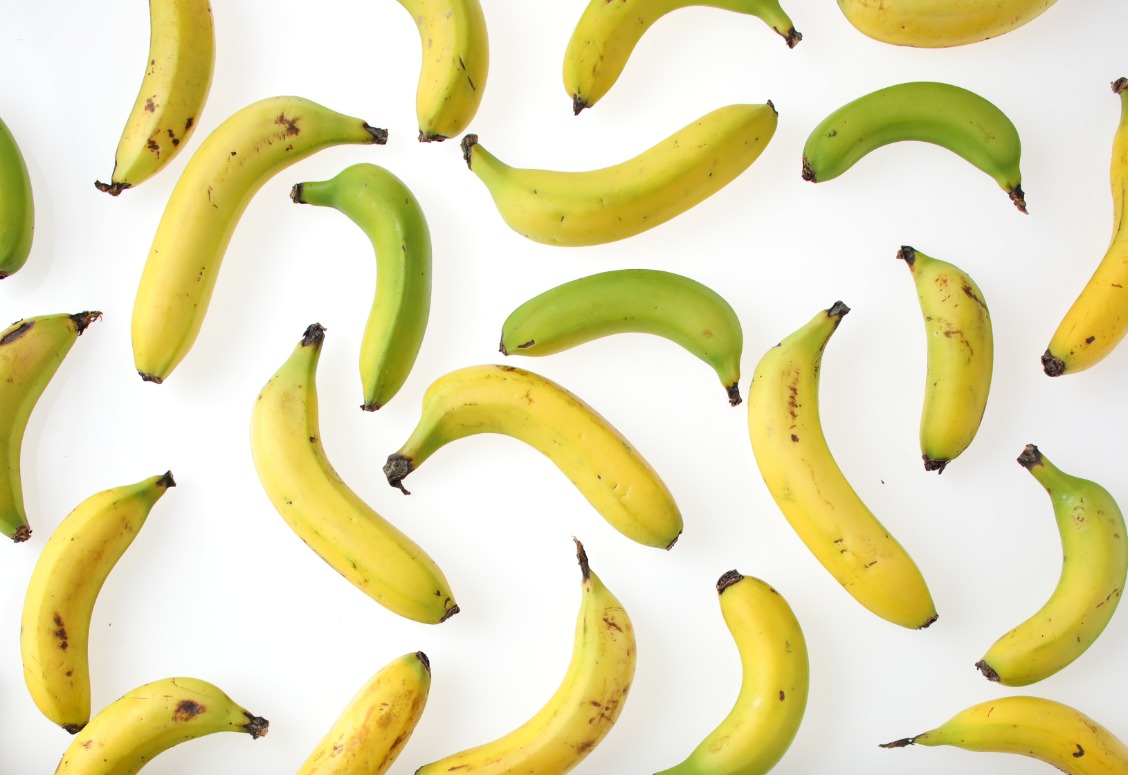
Bananas displayed year-round in supermarkets.
Looking at the origin, most are from the Philippines, with occasional ones from Taiwan or Ecuador.
While bananas are strongly associated with tropical regions, they are also cultivated in Kasaoka City, Okayama.
Moreover, they are grown without pesticides, so the skins can be eaten as well.
It's surprising that bananas are produced in Okayama, and that even the skins, which are usually discarded, can be eaten.
We covered the unexpectedly delightful "Setouchi Banana."
The information provided is based on data available at the time of publication in December 2023. Please note that it may differ from current information.
What is Setouchi Banana?
It may be surprising that bananas, which are strongly associated with the Philippines and Taiwan, can also be harvested in Japan.
Using a technique called freeze-thaw awakening method, seeds that adapt to the local environment have been developed, making banana cultivation possible in Japan.
Let me introduce the Setouchi Banana, which was born from this technology.
About the Producers
Setouchi Banana is cultivated in Kasaoka City, Okayama.
The producer is Agricultural Production Corporation Planter (hereafter, Planter).
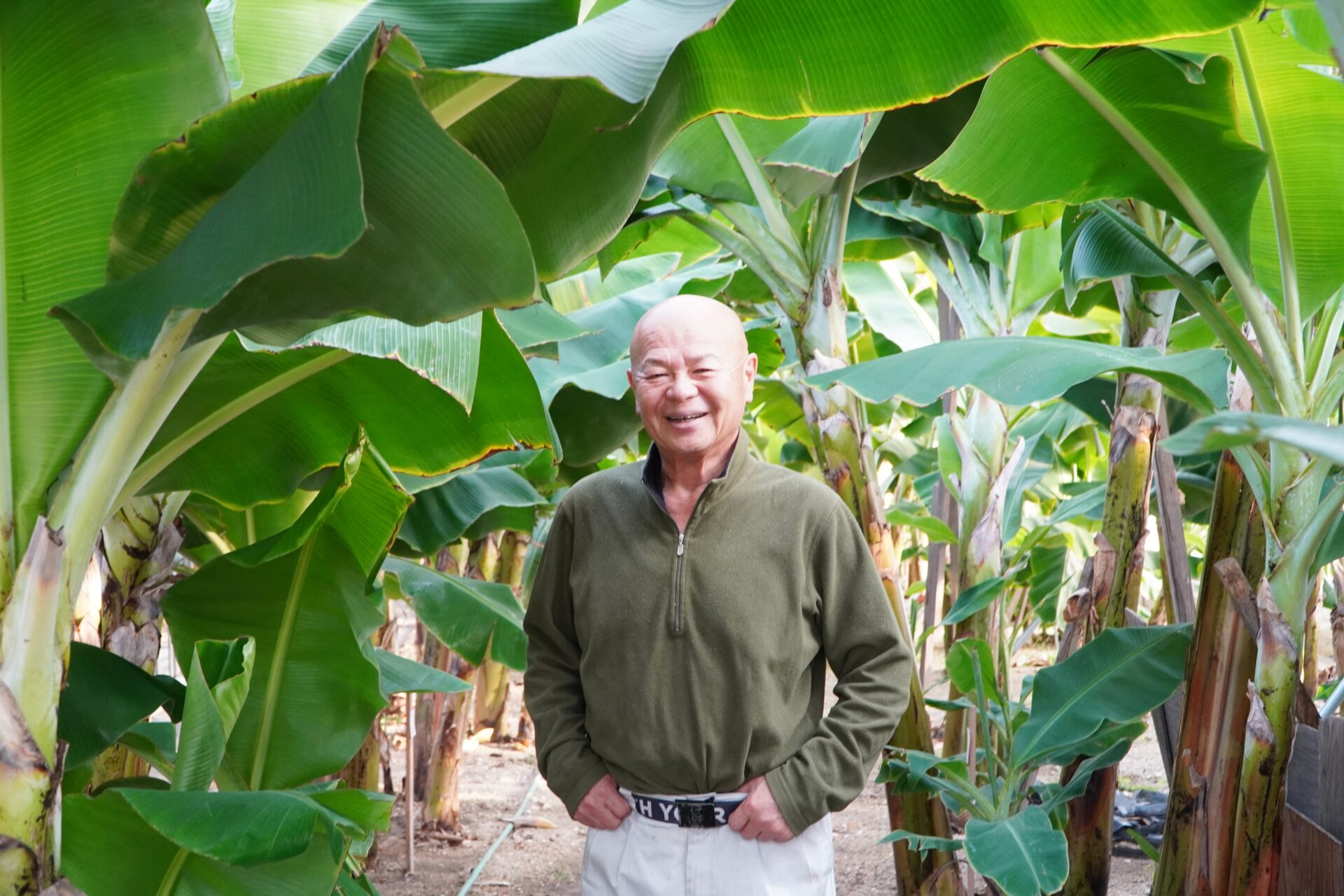
The representative director, Kobori Hideo, is also the chairman of Kobori Construction Co., Ltd.
You might wonder, "Why is someone from construction involved in agriculture?"
Mr. Kobori realized that in creating safe and secure living environments, "food" is also essential.
To achieve a healthy lifestyle, a rich diet is indispensable.
This led him to encounter pesticide-free agriculture.
The reason for choosing bananas among pesticide-free cultivation will be explained later.
The Phantom Variety of Setouchi Banana
Currently, the dominant banana variety in the world is the Cavendish variety.
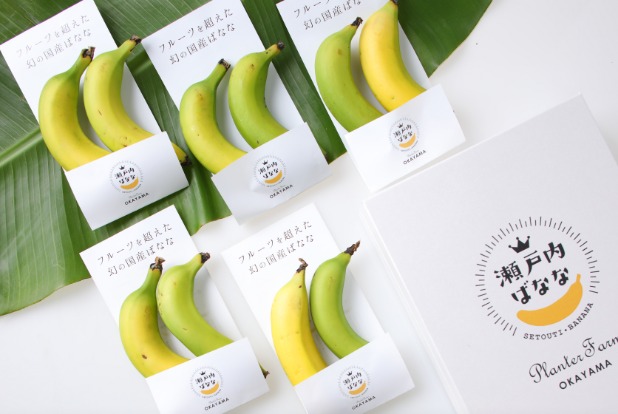
On the other hand, Setouchi Banana is known as the phantom banana, the Gros Michel variety.
It is called phantom because a large-scale banana disease outbreak was believed to have led to the extinction of the Gros Michel variety.
However, survivors were discovered in high-altitude areas, and domestic production was later successful.
One of these is the Setouchi Banana.
Before the disease outbreak, the Gros Michel variety was mainstream and considered a luxury fruit.
For older individuals, it is said to have a nostalgic taste.
The characteristics of Setouchi Banana include the refined sweetness and aromatic quality unique to the Gros Michel variety.
Being free from pesticides and preservatives, the skins can also be eaten is a significant point.
It is said that you can enjoy the texture by making smoothies with the skins.
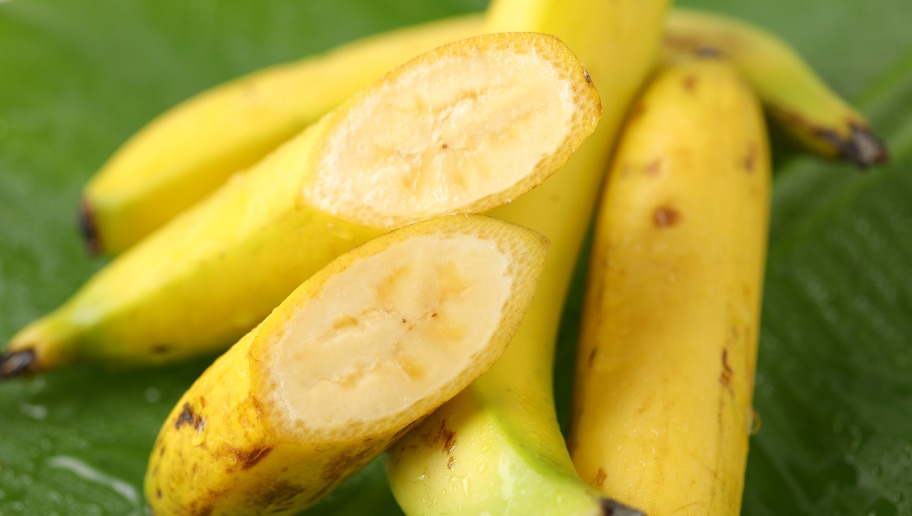
The skins, which contain nutrients like polyphenols, are tasteless and do not interfere with the flavors of other ingredients.
Tasting Setouchi Banana
When harvested, they are still green, so you can let them ripen to your preference before eating.
I left them at home for a while and ate the Setouchi Banana when sugar spots appeared.
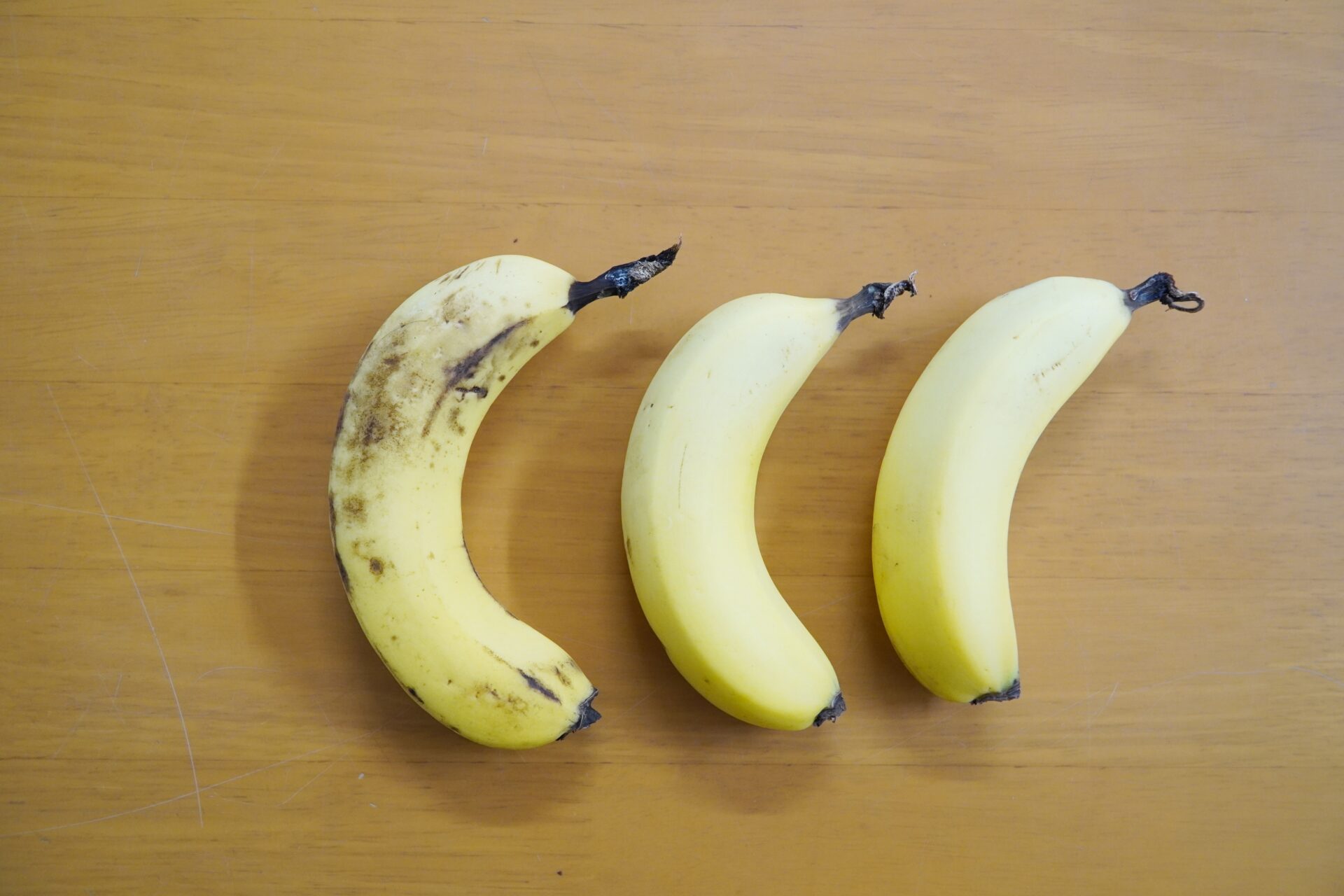
Compared to the Cavendish variety that I am used to, it had a strong aroma and surprisingly refreshing sweetness.
It seems that if you let it ripen more, it will have a rich and dense flavor, so perhaps I ate it a bit too early.
One of the charms of bananas is that even the same product can taste different, allowing you to adjust it to your liking.
Special Tour of the Banana Fields
Normally, the banana fields are not open to the public, but I was allowed a special tour.
Setouchi Banana
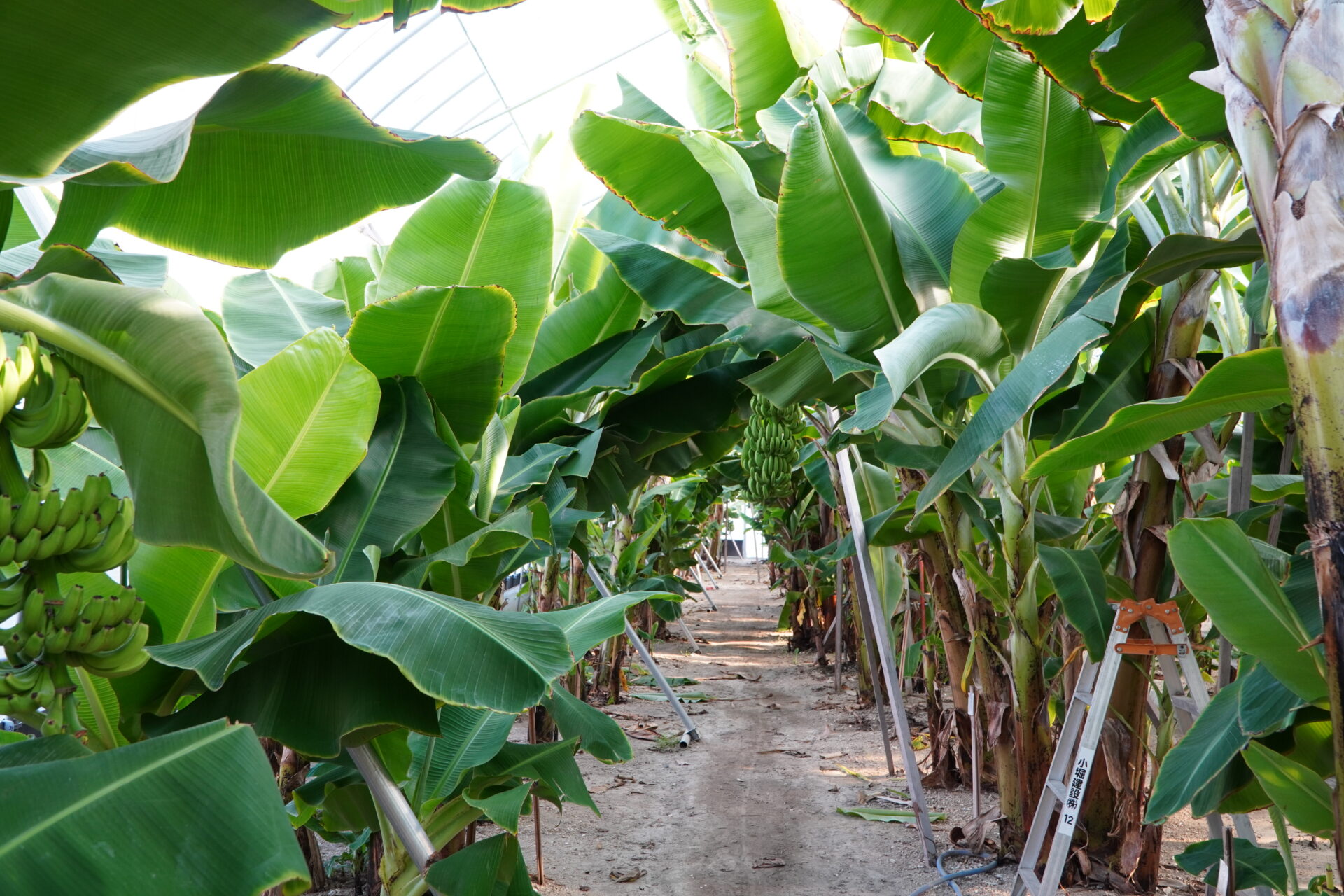
They are cultivated in greenhouses that replicate the climate of tropical regions.
In October, when I visited, the climate seemed to be favorable for the producers, not too hot and no heating required.
In midsummer, it gets hot enough to sweat, while in winter, it is necessary to heat the greenhouses to maintain a temperature of 25-26 degrees, which increases heating costs.
The trees, which are about 3-4 meters tall, are cut down after one harvest.
In reality, the same tree can be harvested multiple times, but the flavor diminishes with each successive harvest.
I felt a strong commitment to maintaining the quality of deliciousness.
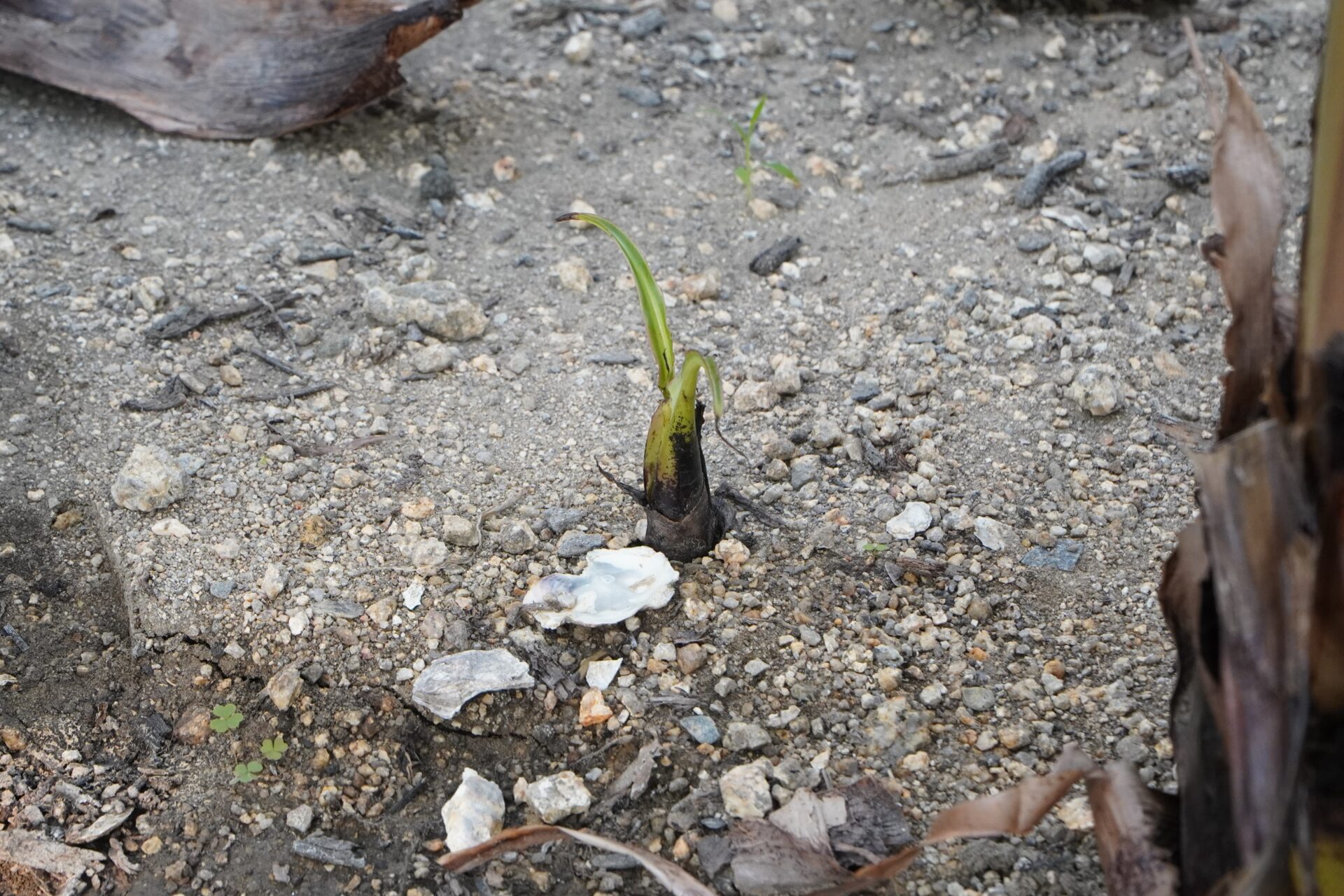
The vigorous stems and leaves are finely chopped and mixed into fertilizer for effective use.
Some restaurants even come to collect the leaves to use as plates for their dishes.
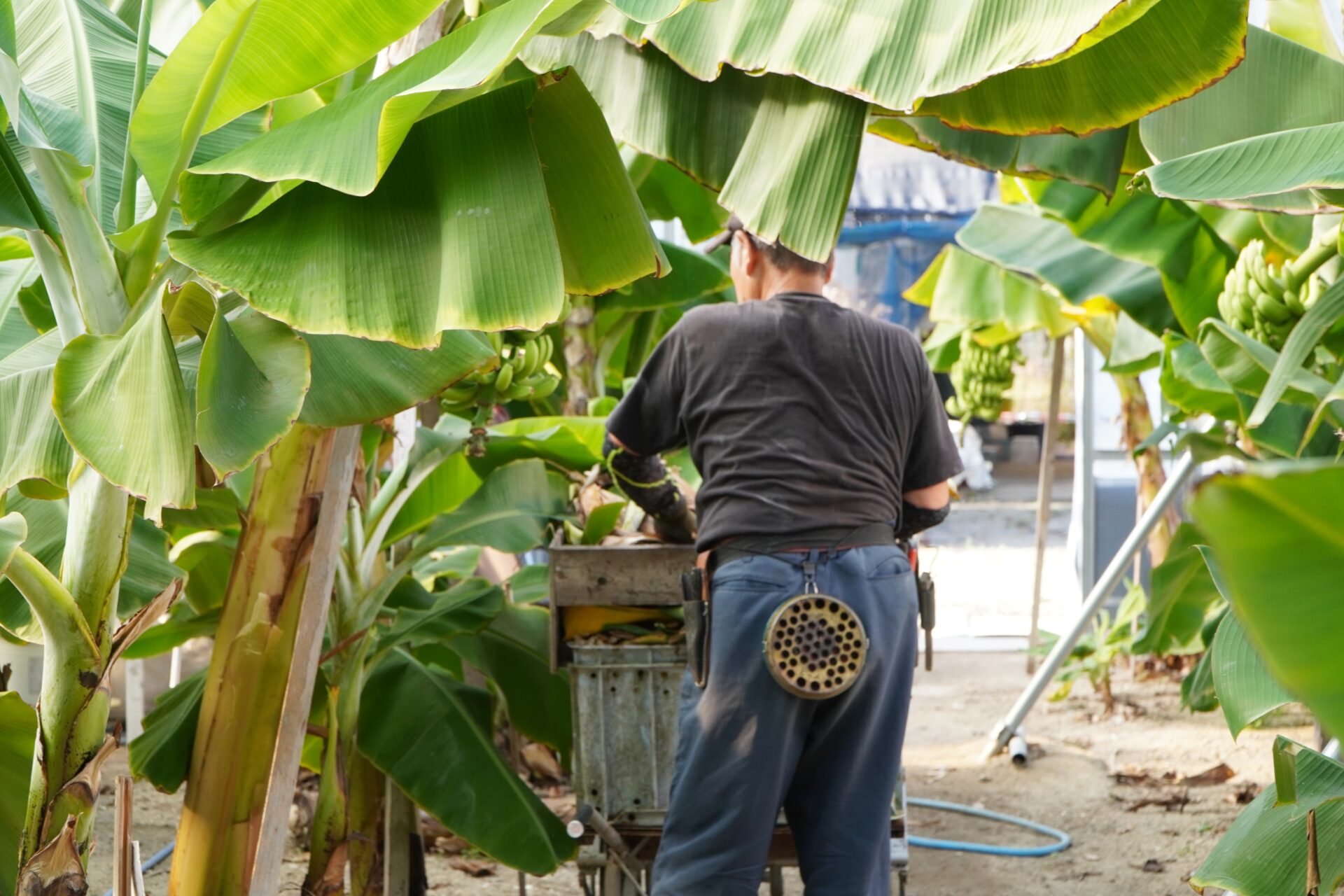
After growing for six months to a year, small flowers begin to bloom on the trees.
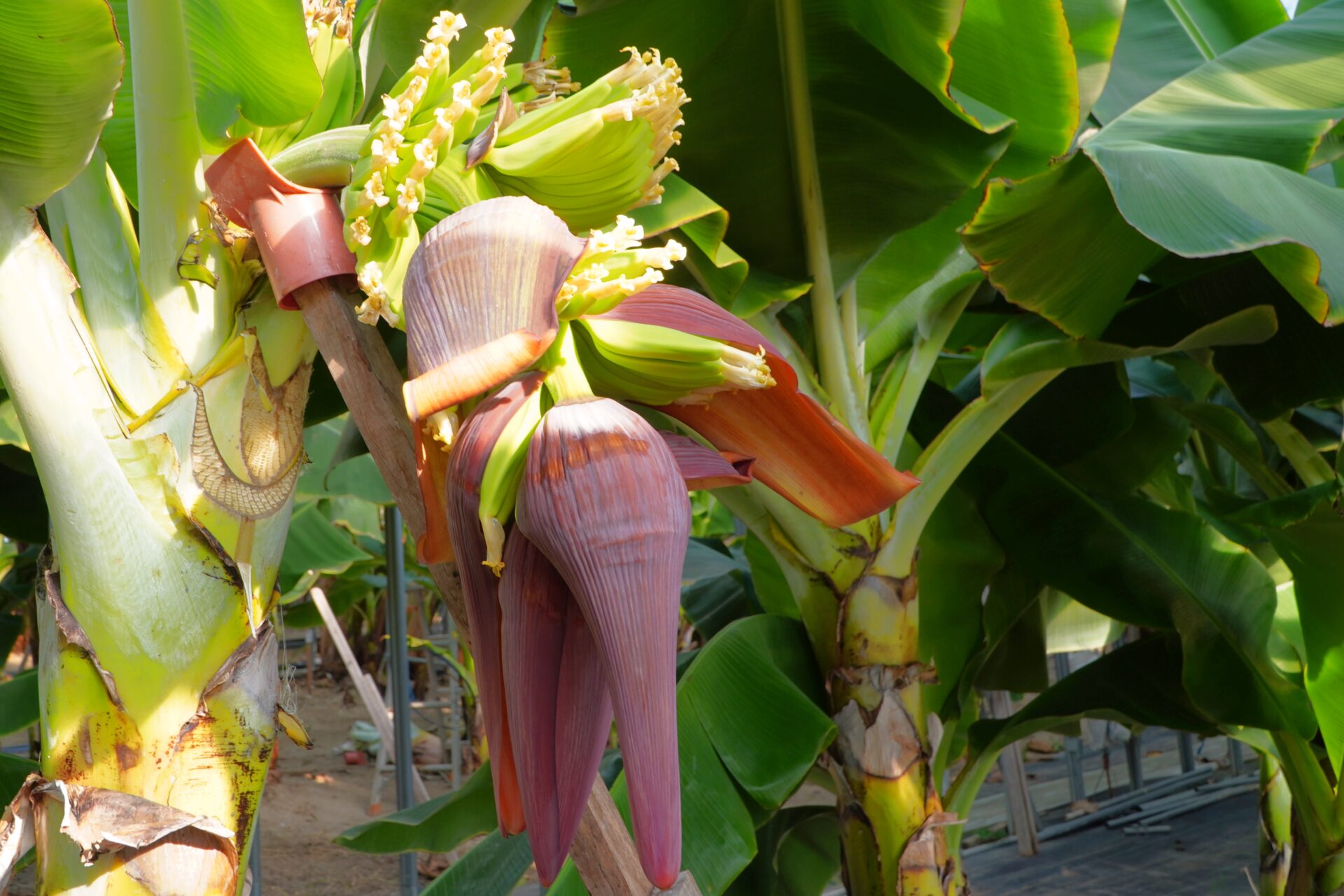
As they grow, the purple bracts fall off, and the flowers stretch upwards, turning into bananas.
When the initially angular bananas become rounded, it is a sign that they are ready for harvest.
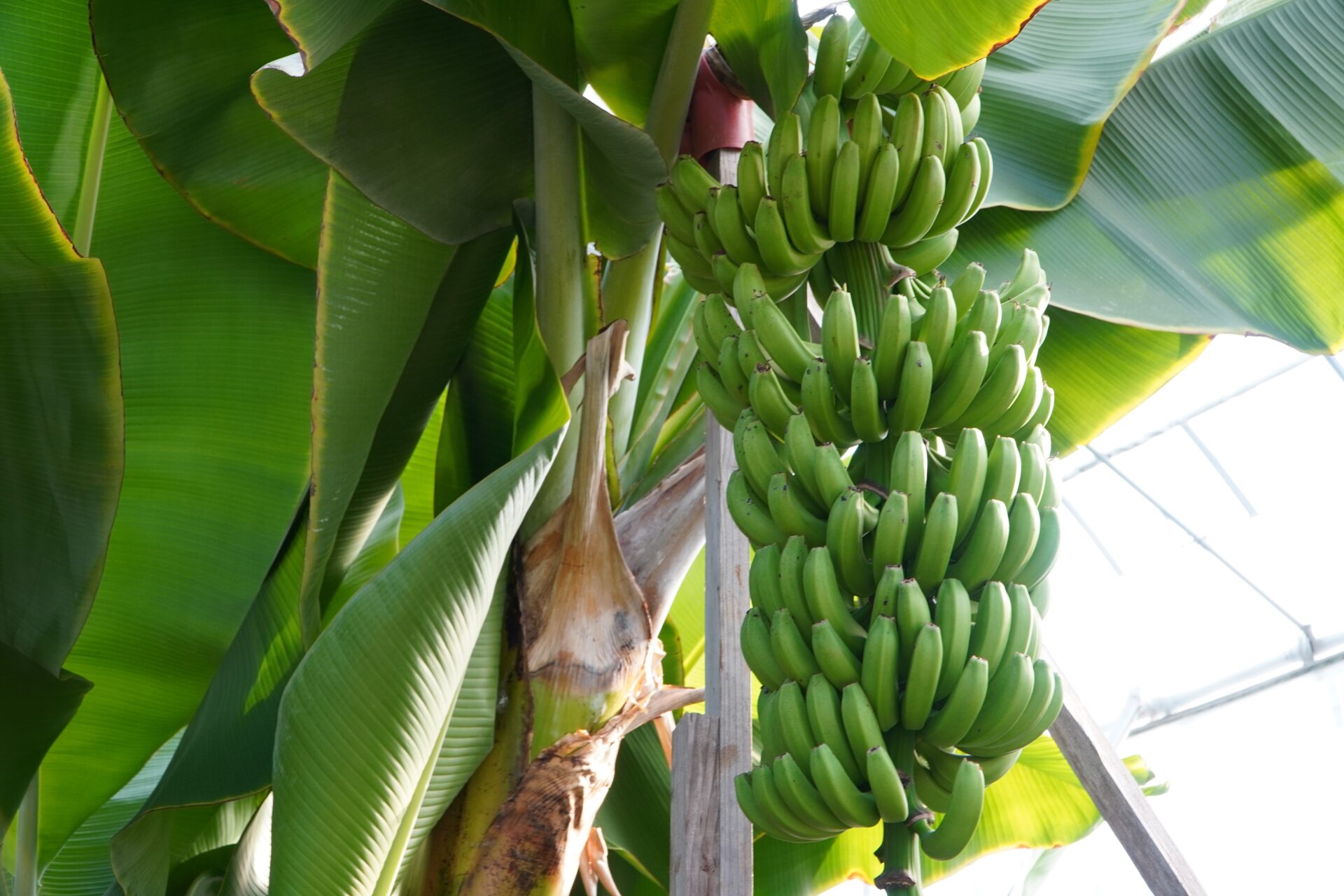
Setouchi Banana cannot be purchased at this banana farm; the main sales are through the online shop.
You can also purchase them at Kasaoka Bay Farm Roadside Station, Noumaru Garden Kibiji Farm, and department stores in Okayama Prefecture, but please note that they may be out of stock depending on the harvest situation.
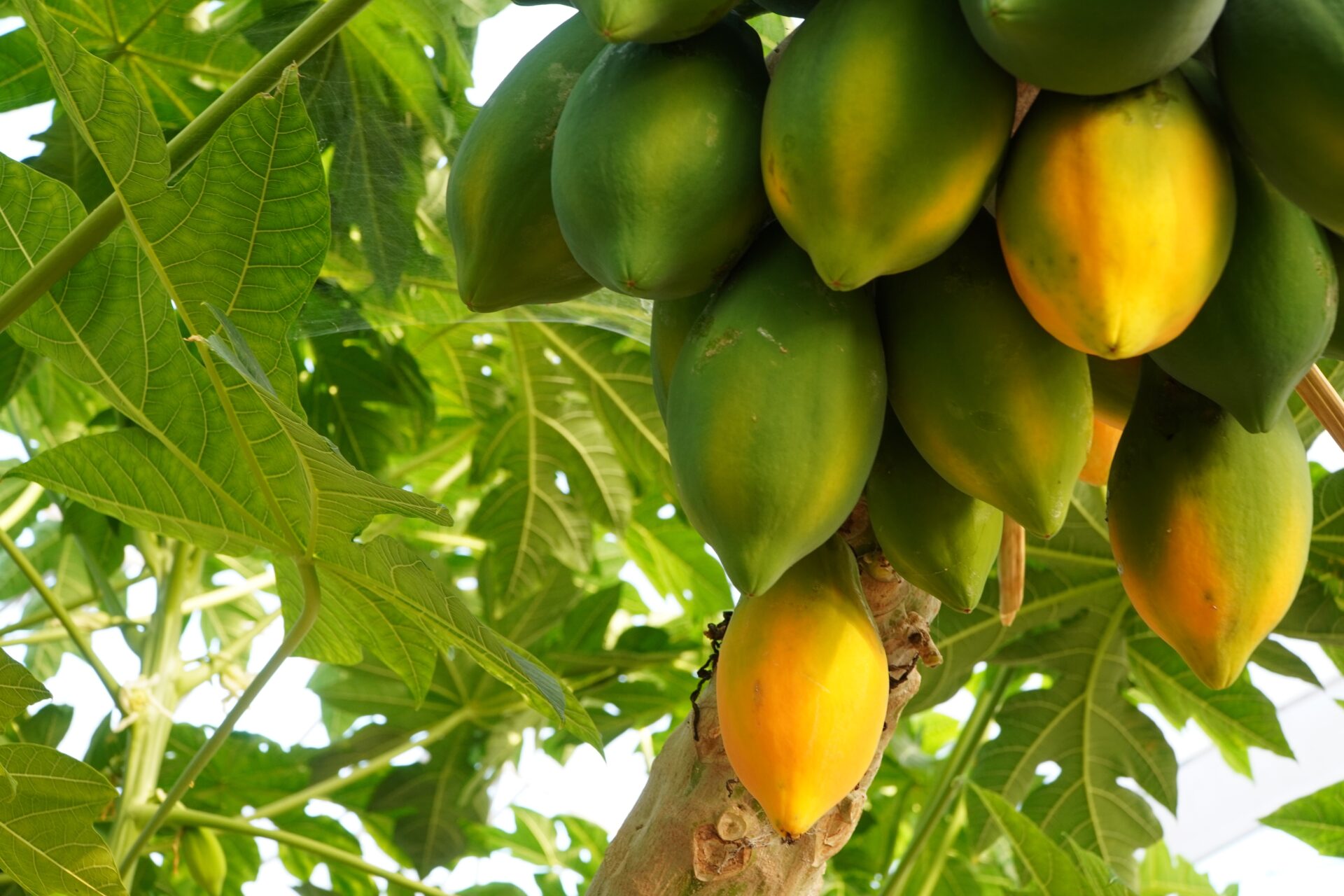
Papaya
Papayas were also cultivated in the greenhouse.
It is quite mysterious to see the fruits growing directly from the stems.
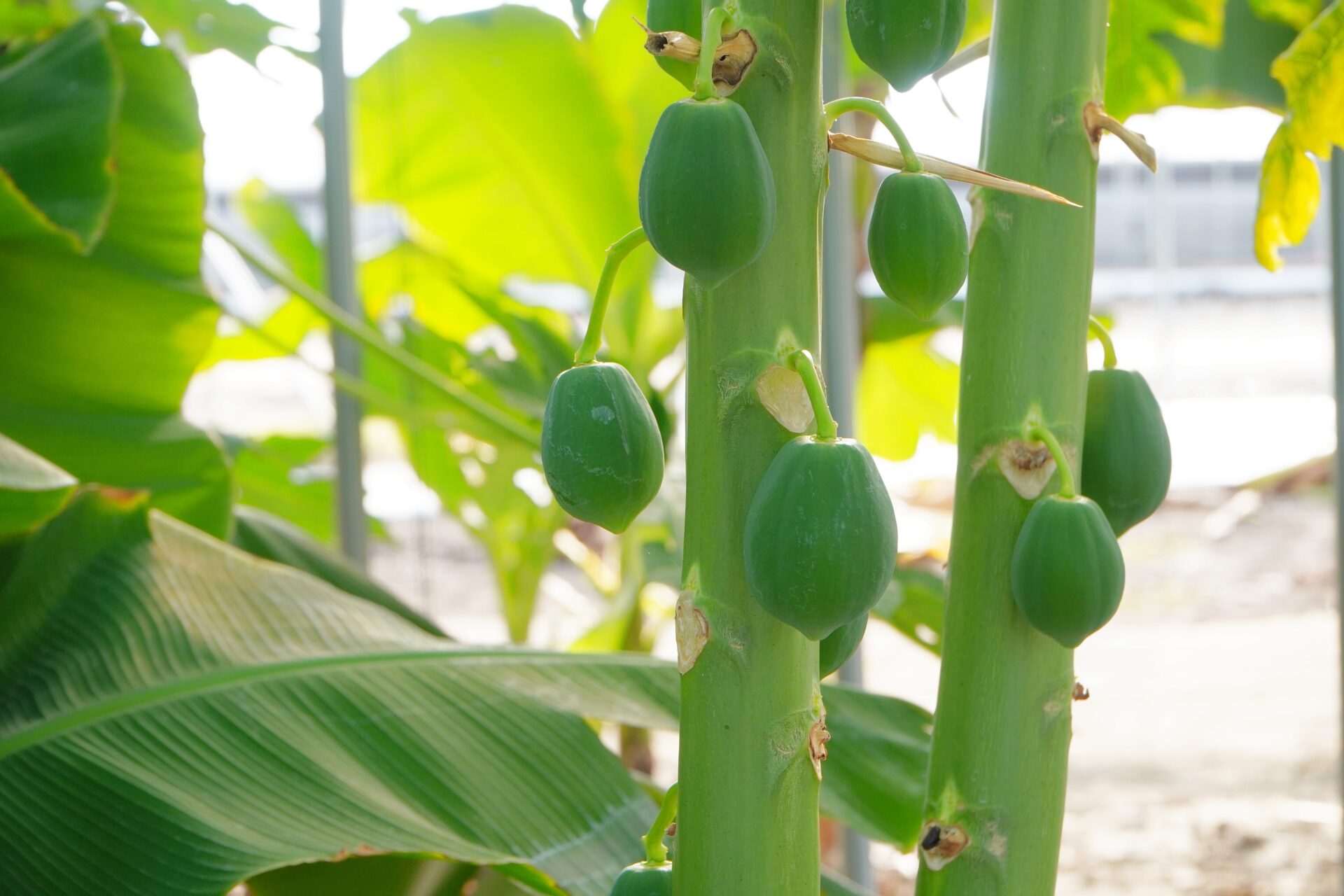
Papayas are harvested even when they are still immature and green.
Eating green papaya raw has a crunchy texture similar to radish, and when boiled, it becomes fluffy.
They can also be used in stir-fries, treated like vegetables.
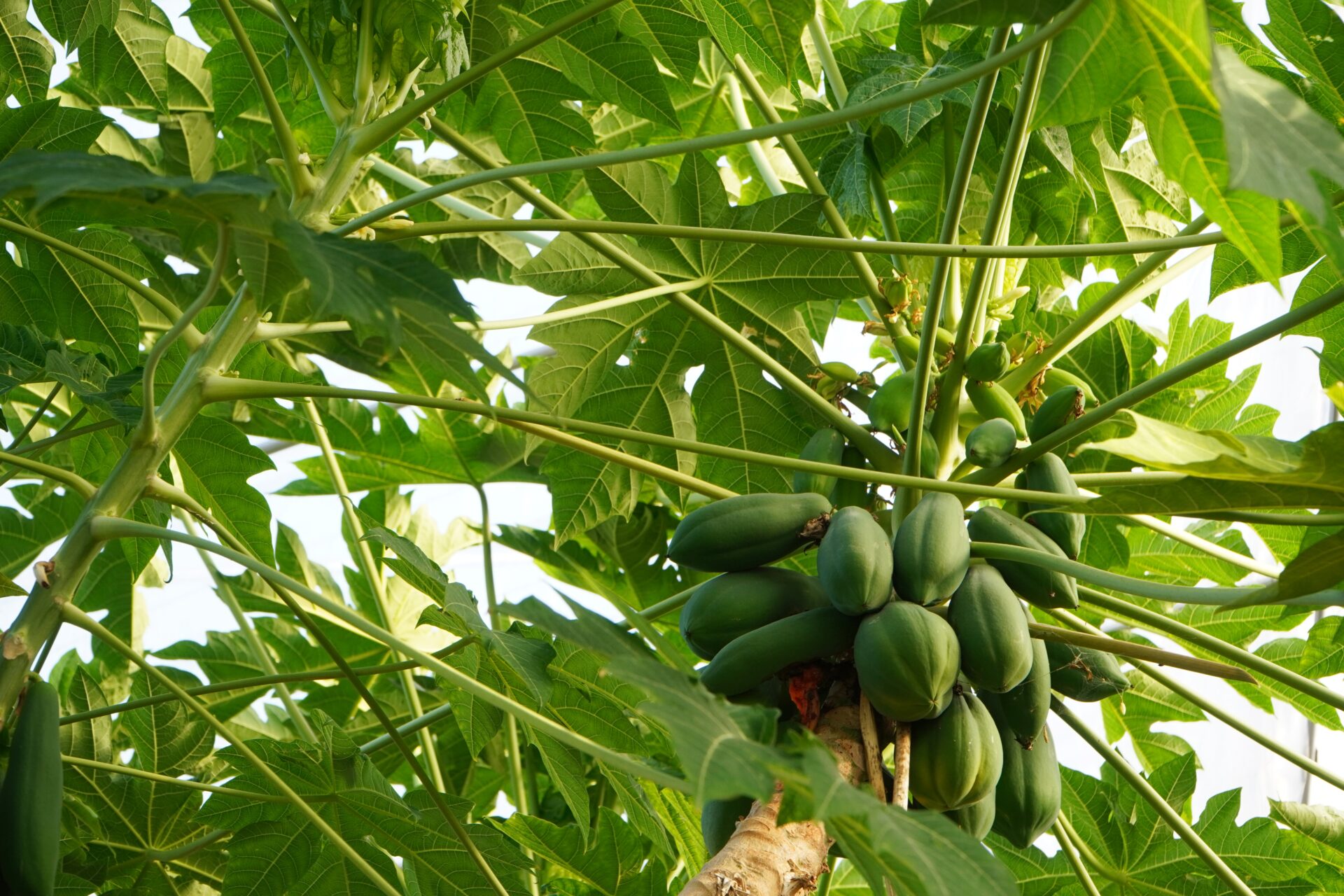
Green papayas turn yellow when ripe, both the skin and the flesh.
When they become yellow fruit papayas, they change to a soft, melting texture.
New Product MUSA
In June 2023, a new product called MUSA was born.
MUSA is a spread made by adding koji (fermented rice) to Setouchi Banana.
A spread refers to something that is applied to bread or crackers, and MUSA can be used similarly by spreading it on toast or mixing it into yogurt.
With the rich vitamins and minerals of Setouchi Banana, MUSA is a nutritious product enhanced with the dietary fiber, B vitamins, and enzymes from koji.
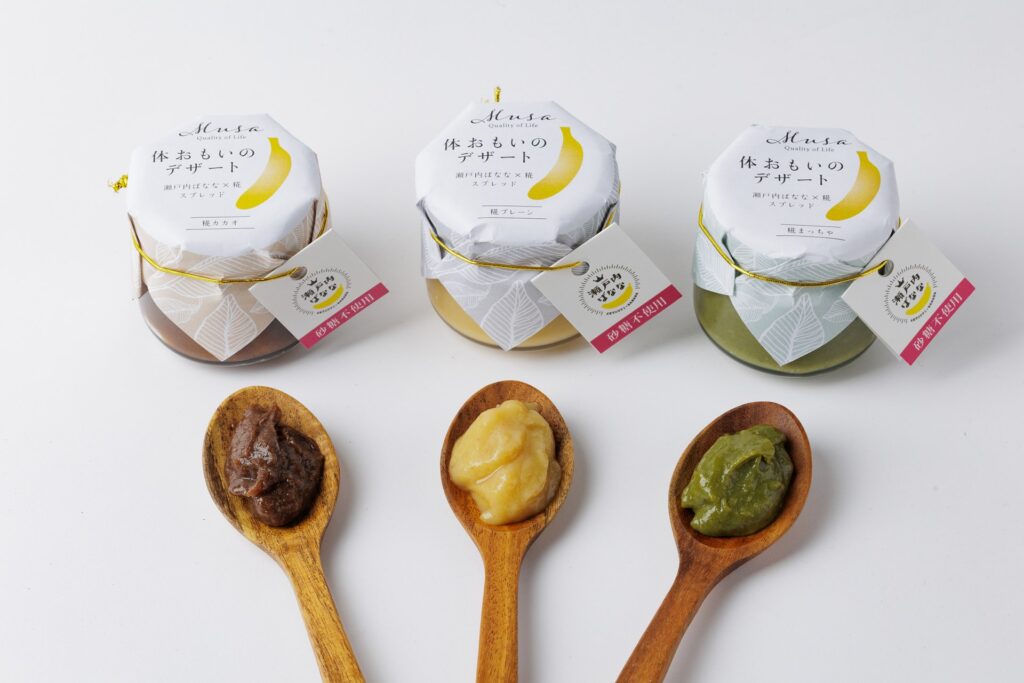
There are three flavors.
- Koji Plain… The flavor of Setouchi Banana is most prominent. The sweetness of Setouchi Banana spreads throughout the mouth.
- Koji Cocoa… Contains fragrant cocoa. A popular flavor among children.
- Koji Matcha… The balance of the slight bitterness of matcha and the sweetness of Setouchi Banana is exquisite.
MUSA is free from sugar, preservatives, flavorings, and colorings.
Despite being sugar-free, it has a solid sweetness, but since it is naturally derived, it is not cloying.
It is a gentle, comforting spread for the body.
Planter, which cultivates the rare bananas and papayas in Okayama Prefecture.
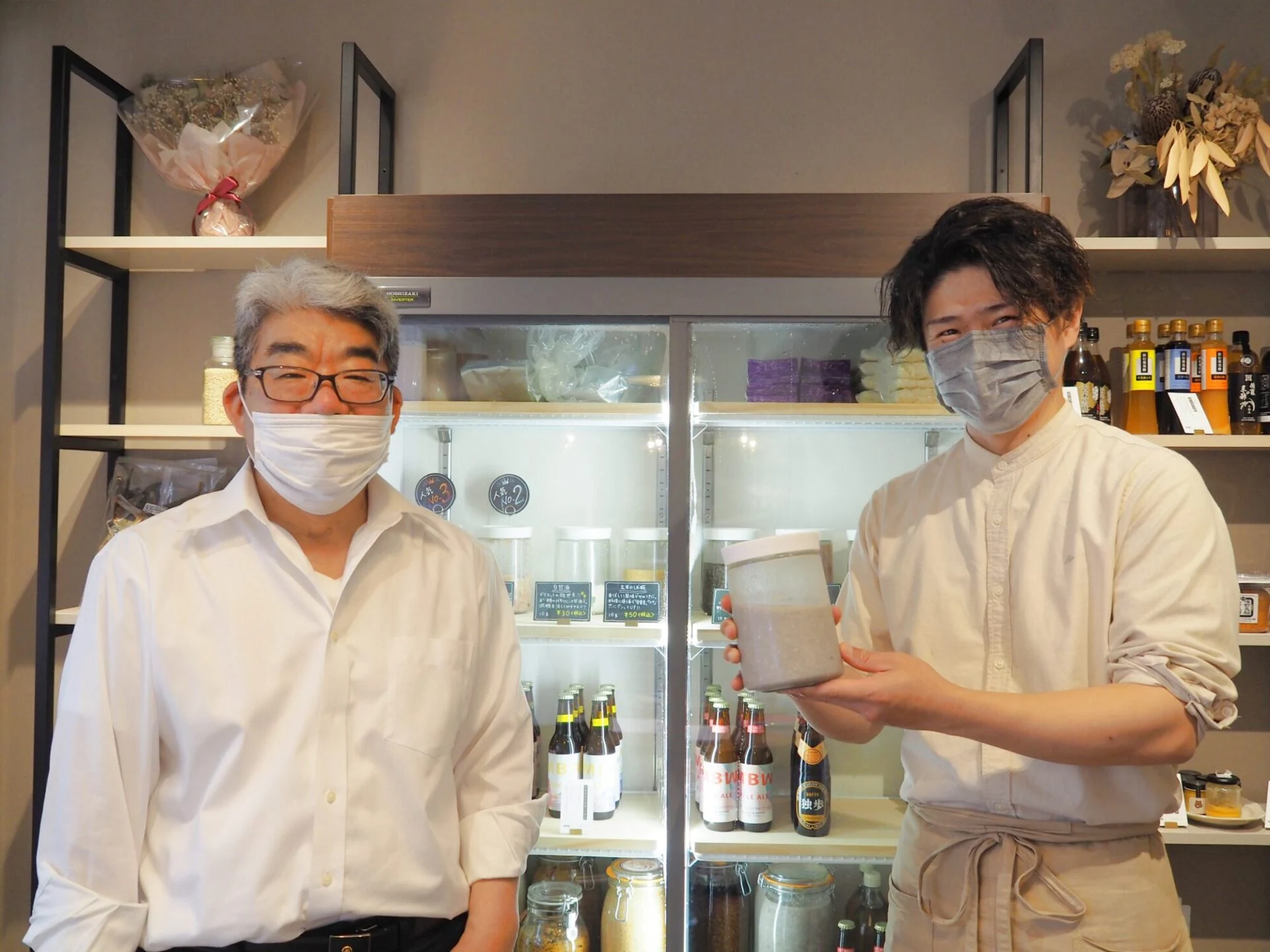
I spoke with the representative director, Kobori Hideo, and his daughter, Noguchi Momo, who was involved in the development of MUSA.
Agricultural Production Corporation Planter Information
| Name | Agricultural Production Corporation Planter |
|---|---|
| Address | 5-15 Niban-cho, Kasaoka City, Okayama Prefecture |
| Contact | 0865-63-5077 |
| Parking | None |
| Business Hours | 9:00 AM – 3:30 PM |
| Regular Holiday | Saturday |
| Website | Planter Corporation |

What do you want to know about Kurashiki?
By entering words, you can search articles from this site