In a world overflowing with information, internet searches are convenient when you need to look something up.
It can feel as though you can find anything and learn everything by searching. But is that really true? There is often information that only local people know, that isn’t online, or that is buried and hard to find.
There is plenty of information like that in the tourist destination of the Bikan Historical Area.
If you want to explore the Bikan Historical Area while learning both the well-known facts and the more niche details, the best place to visit is the Kurashiki District Welcome Tourist Guide Association.
Knowing little facts can make sightseeing even more enjoyable. The author, who is from Kurashiki, joined one of the regular sightseeing tours held every day.
The Bikan Historical Area feels like my own backyard, but there was still a lot I was learning for the first time.
The information presented is current as of the article’s publication in July 2026. Please note that it may differ from current information.
What is the Kurashiki District Welcome Tourist Guide Association?
The Kurashiki District Welcome Tourist Guide Association (KWG) provides volunteer tour guides in the Bikan Historical Area.
Its activities began in 1990, giving it a history of more than 30 years.
As of July 2026, it has 38 guides, 20 of whom can also give tours in English.
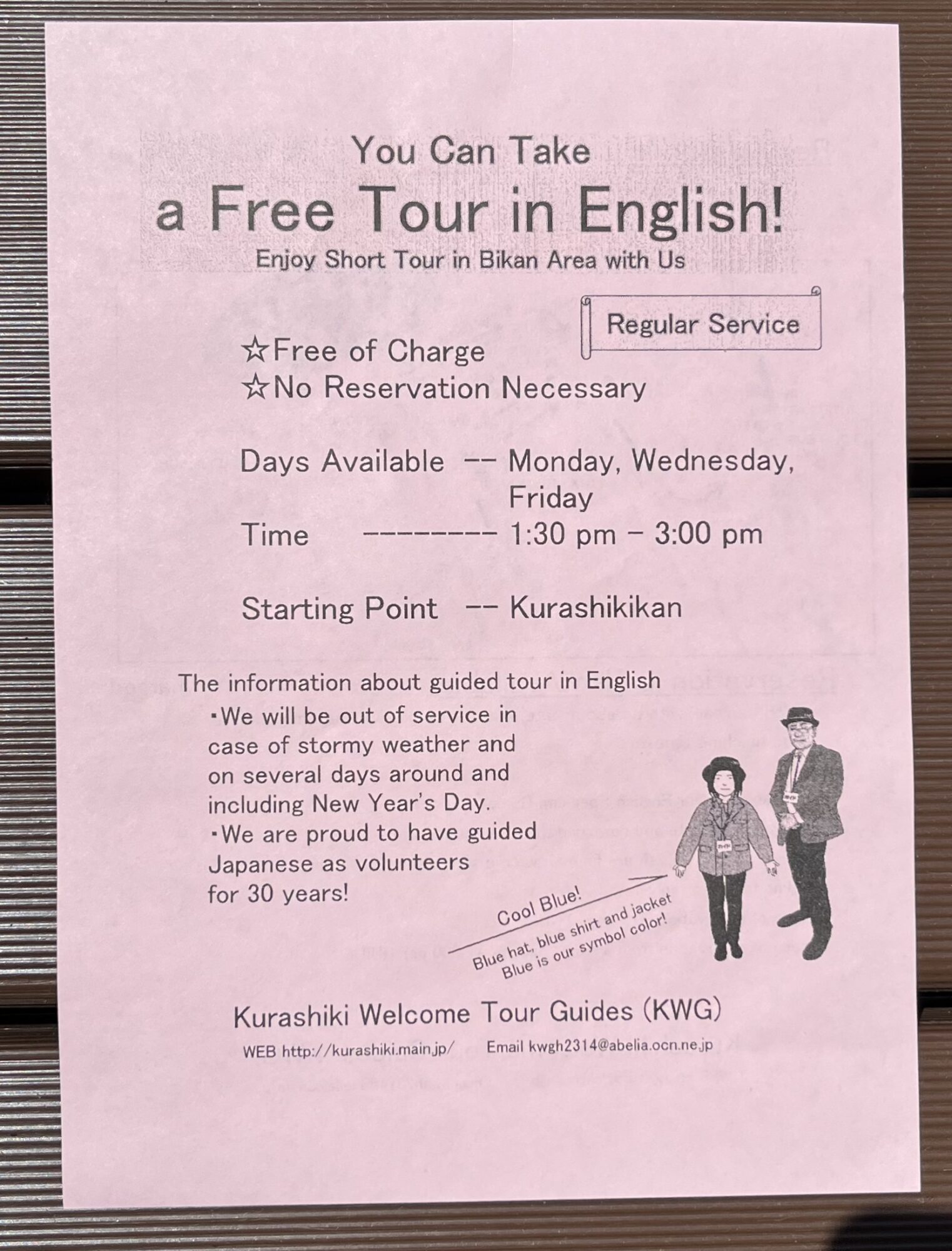
There are guides in the Bikan Historical Area who are not affiliated with KWG.
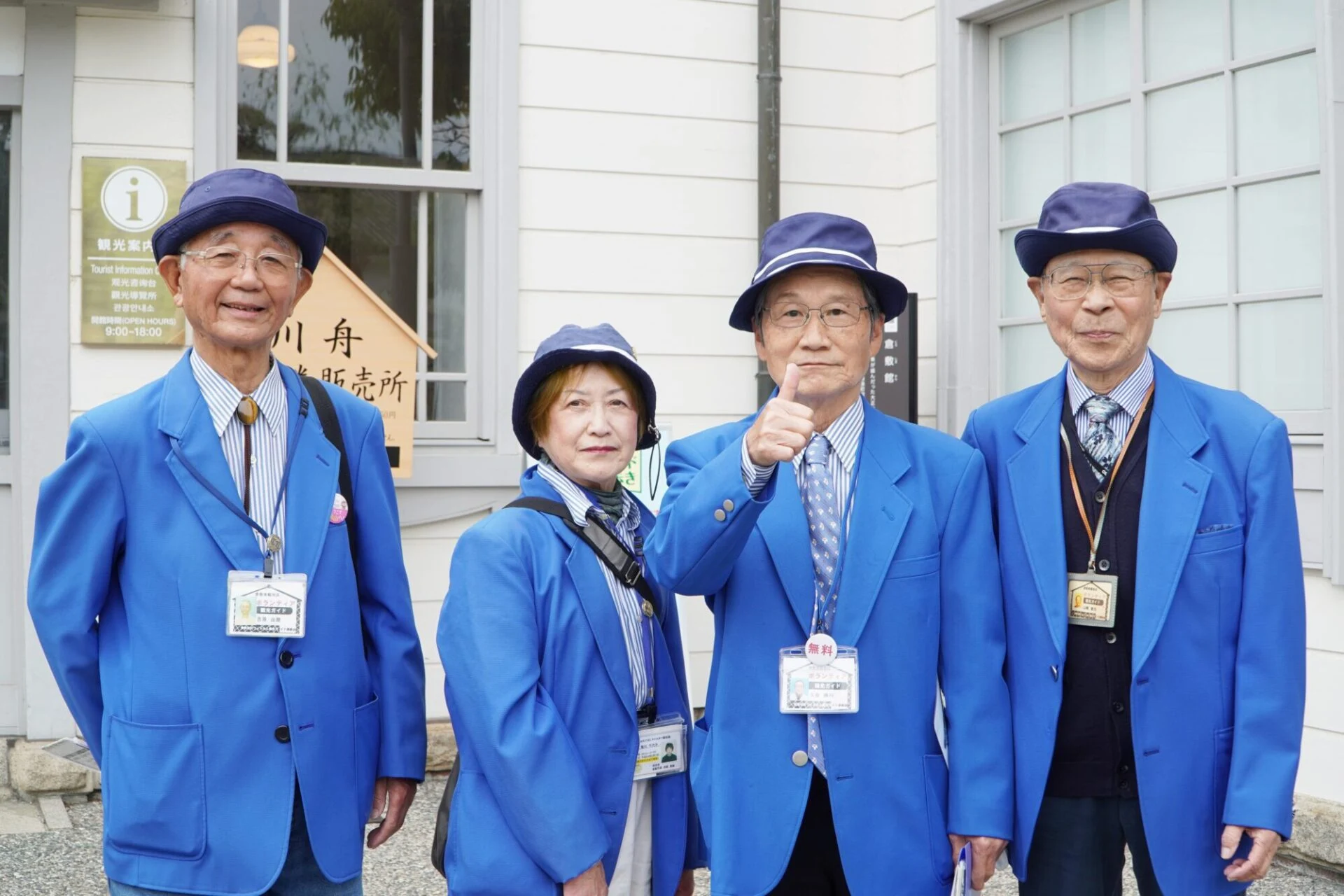
KWG guides are recognizable by their “blue hats and blue shirts or jackets.”
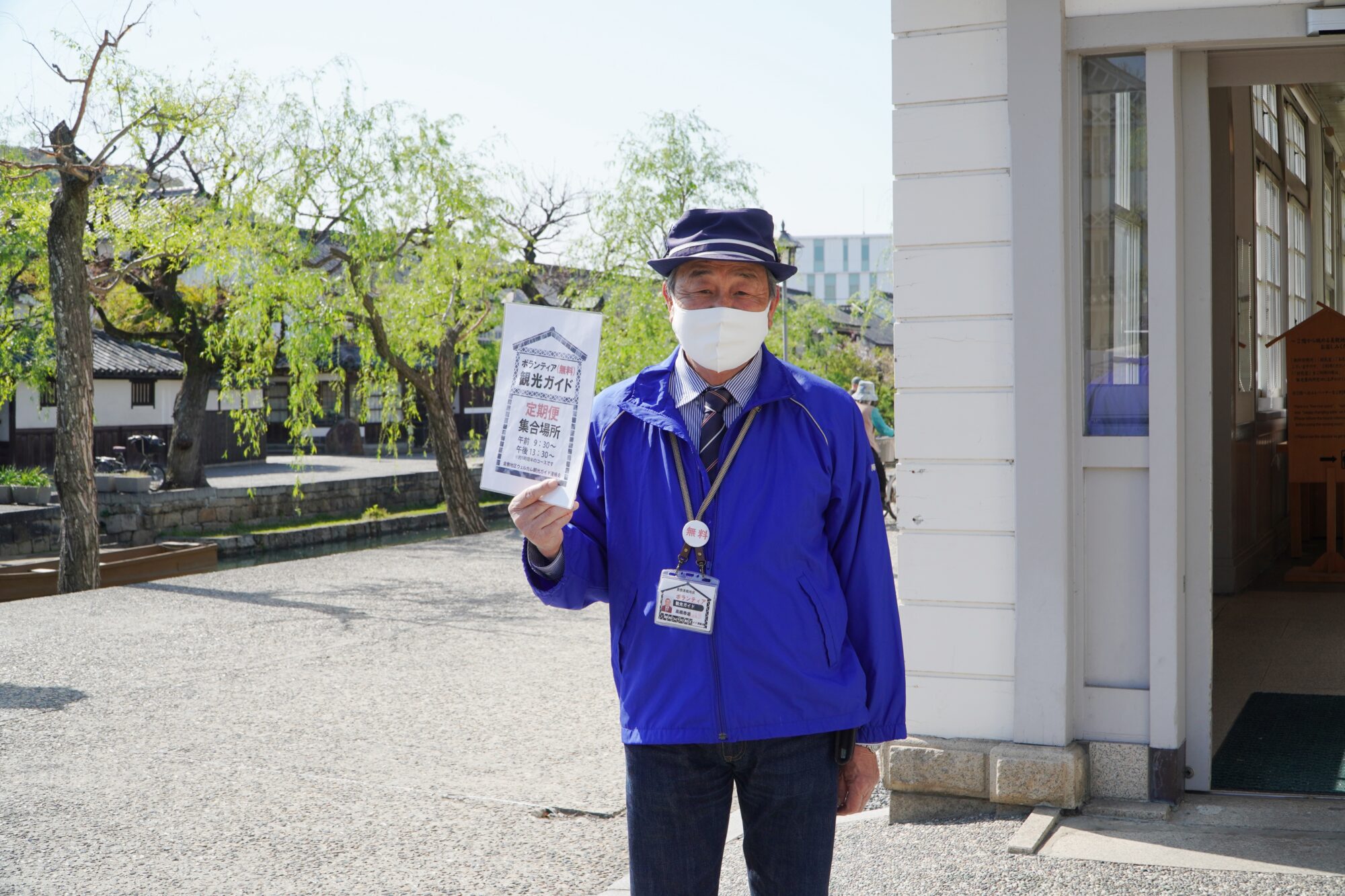
Since its activities began, the association has guided around 400,000 tourists through May 2026.
The guides are volunteers, but they cannot make their debut until they pass an “exam.”
▼Steps to becoming a guide
- Submit an application to join
- Complete two months of training
- Practical exam: Give a tour, treating fellow volunteer guides as tourists
- Written exam
- Receive approval at the monthly meeting
- Make your debut the month after approval
During training, prospective guides join tours led by experienced volunteer guides a total of eight times. Becoming a guide takes time and effort.
Even after becoming a guide, they must lead at least five tours a month and attend the monthly meeting.
They are volunteers, but the standards are professional-level. It takes real dedication.
About the tours
KWG offers three main types of tours.
- Regular guided tours・・・Free
- Friendly tours ・・・Free
- Tours by reservation ・・・Paid
Here is an introduction to each.
Regular guided tours
Here are the details of the regular guided tours.
| Days | Every day (closed December 28–January 4) |
|---|---|
| Start times | 9:30 a.m. or 1:30 p.m. |
| Duration | About 1 hour 30 minutes |
| Basic route | Kurashikikan→Shinkei-en Garden→Ohara Museum of Art→Former Ohara Residence→Yurin-so Villa→along the Kurashiki River→Kurashiki Ivy Square→Honmachi Street |
| Reservations | Not required |
Regular guided tours follow a mostly set route.
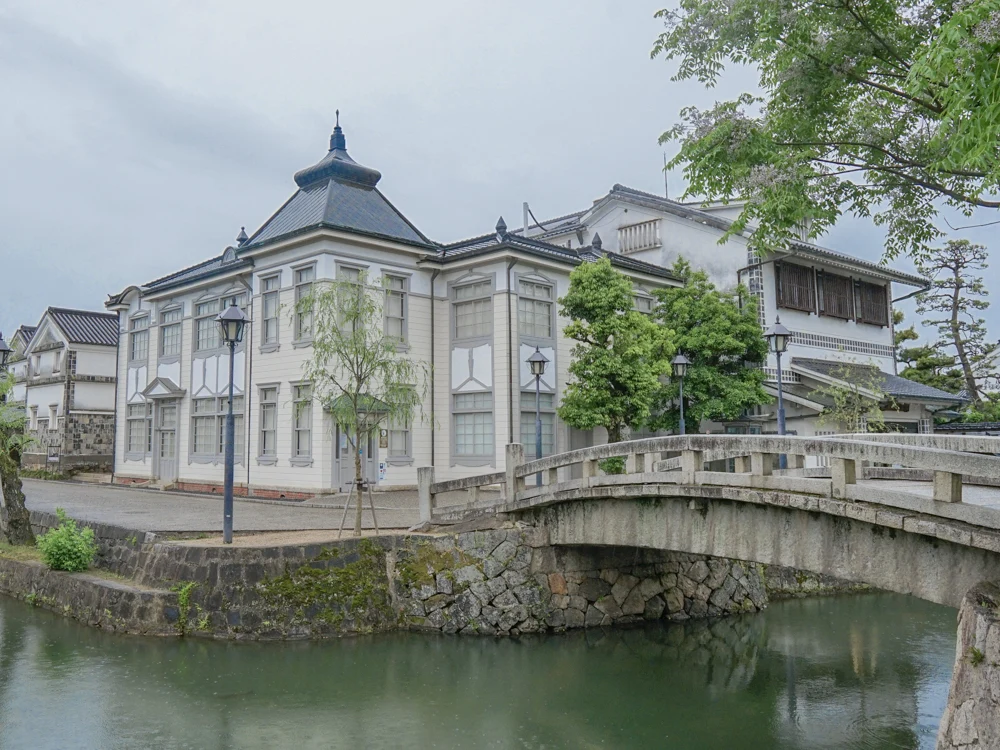
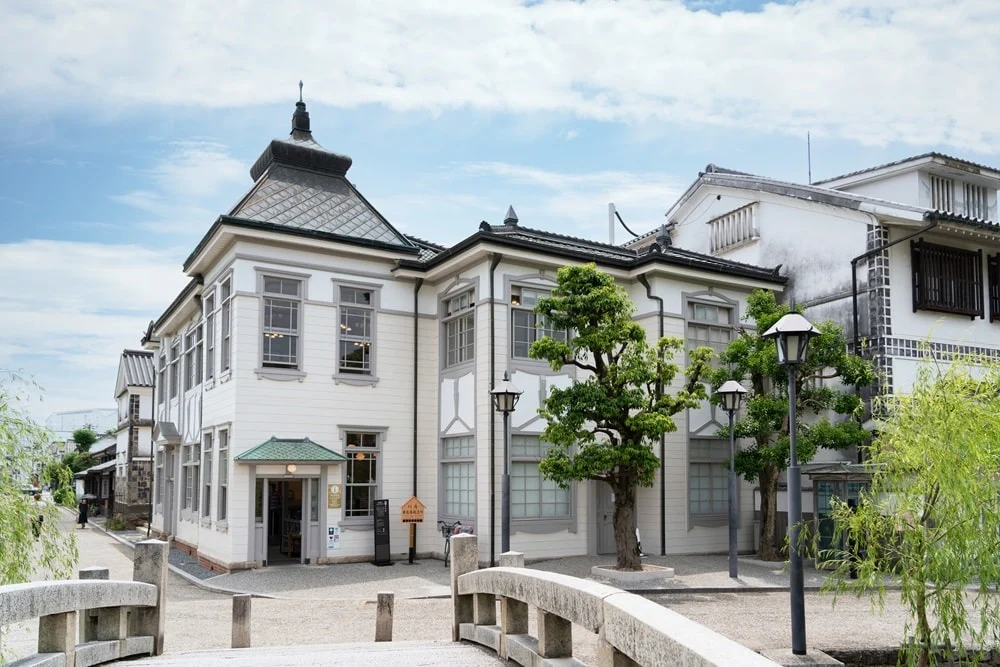
The meeting point is the Kurashikikan Tourist Information Office.
Friendly tours
Friendly tours have the same start times and duration as the regular guided tours.
The difference is that the guides approach tourists themselves and offer a tour.
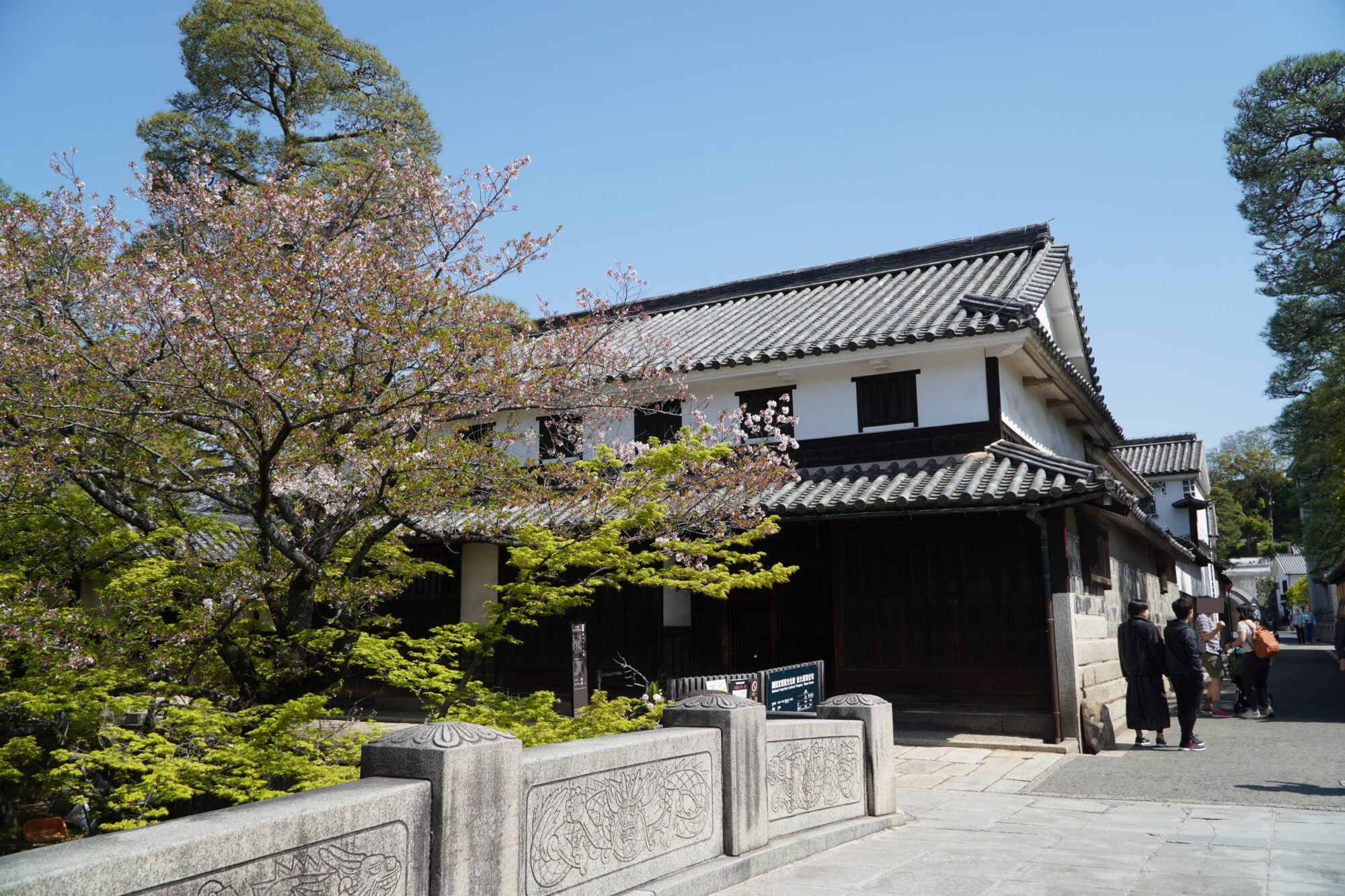
There is no set place for approaching visitors, so the tour’s starting point and route naturally vary.
Tours by reservation
These tours require reservations and are available to both individual visitors and people traveling with tour companies.
| Applicant | Fee |
|---|---|
| Individual visitors | ¥200 per person, including tax |
| Tour companies | ¥3,000 per guide, including tax (one guide can accommodate up to 15 people) |
The duration and route can be set as you wish, so a tour by reservation is recommended if you have specific preferences.
I joined a regular guided tour
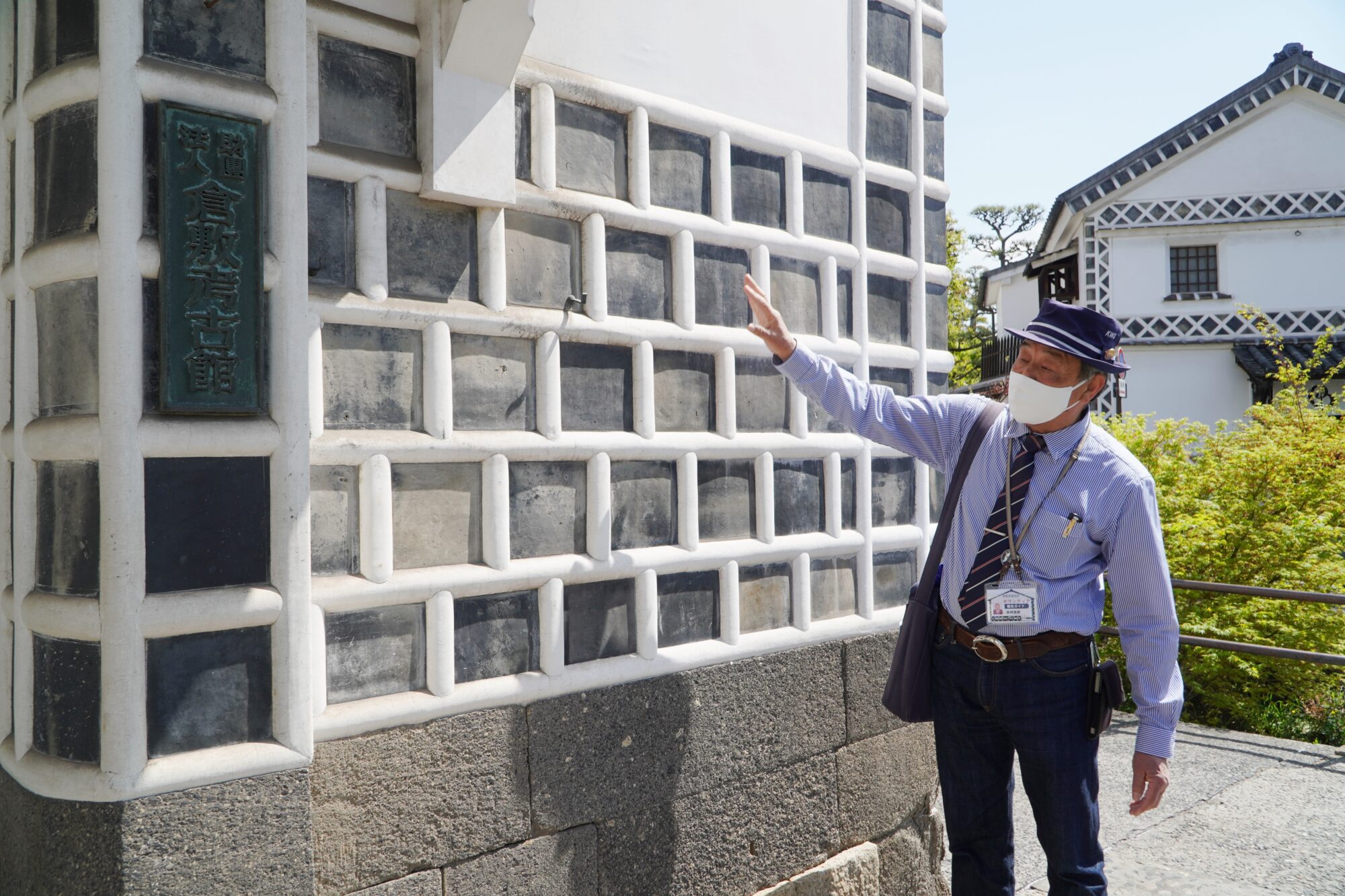
I joined a regular guided tour that started at the Kurashikikan Tourist Information Office.
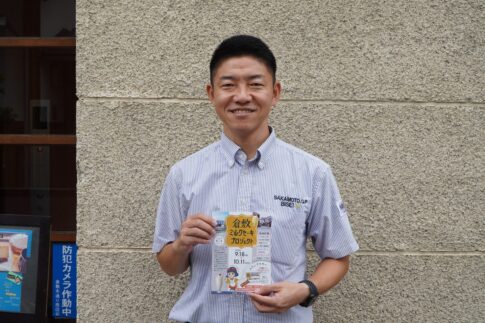
Our guide was Takahashi Yasuo of KWG. We explored together with two visitors from Fukuoka.
“The Kurashiki Tourist Information Office, built in 1917, began as the town hall. The Kurashiki River flows right in front of us. In the past, seawater flowed here,” Takahashi explained.
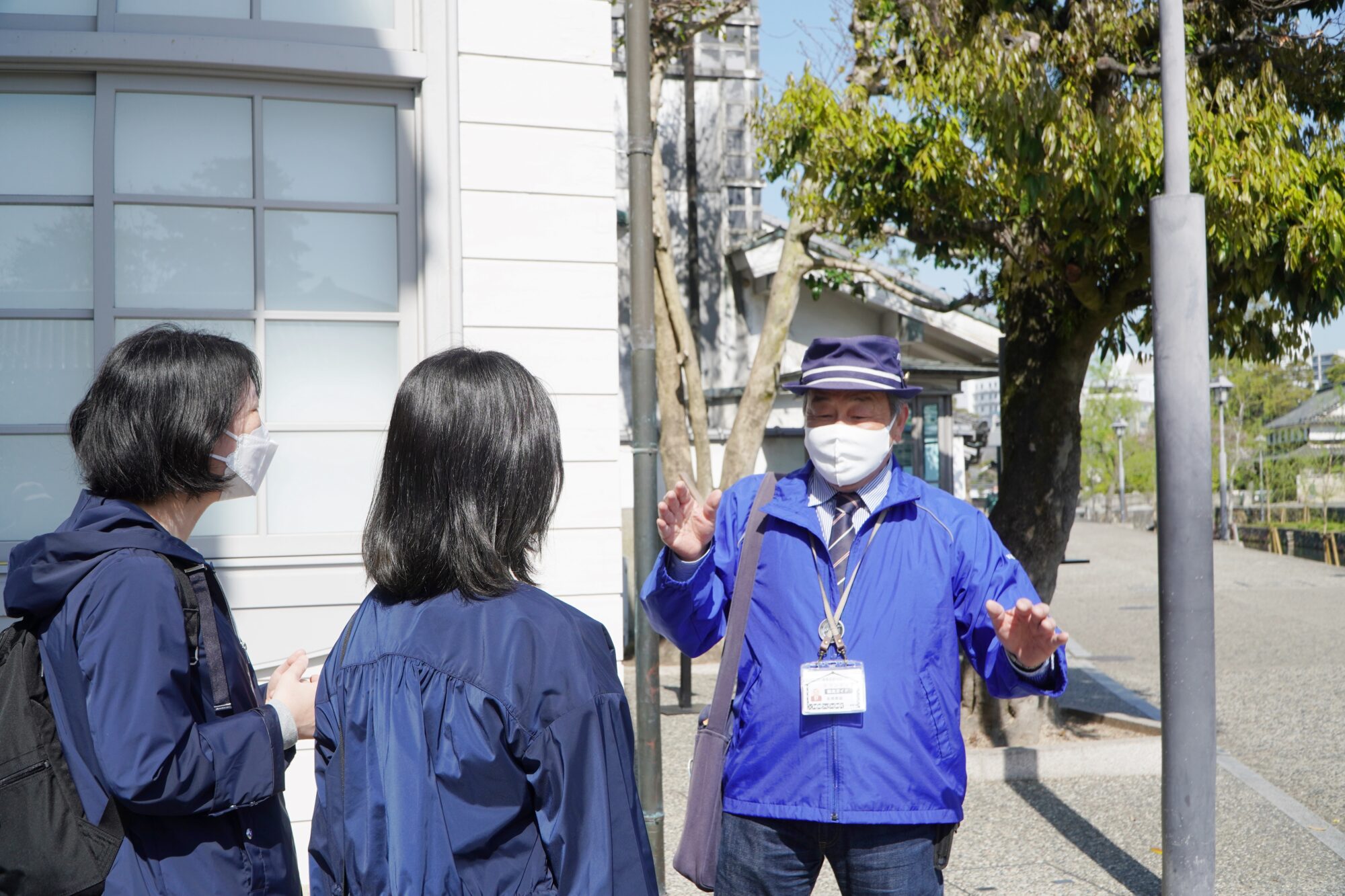
As we learned about Kurashiki’s history, we also paid attention to the details.
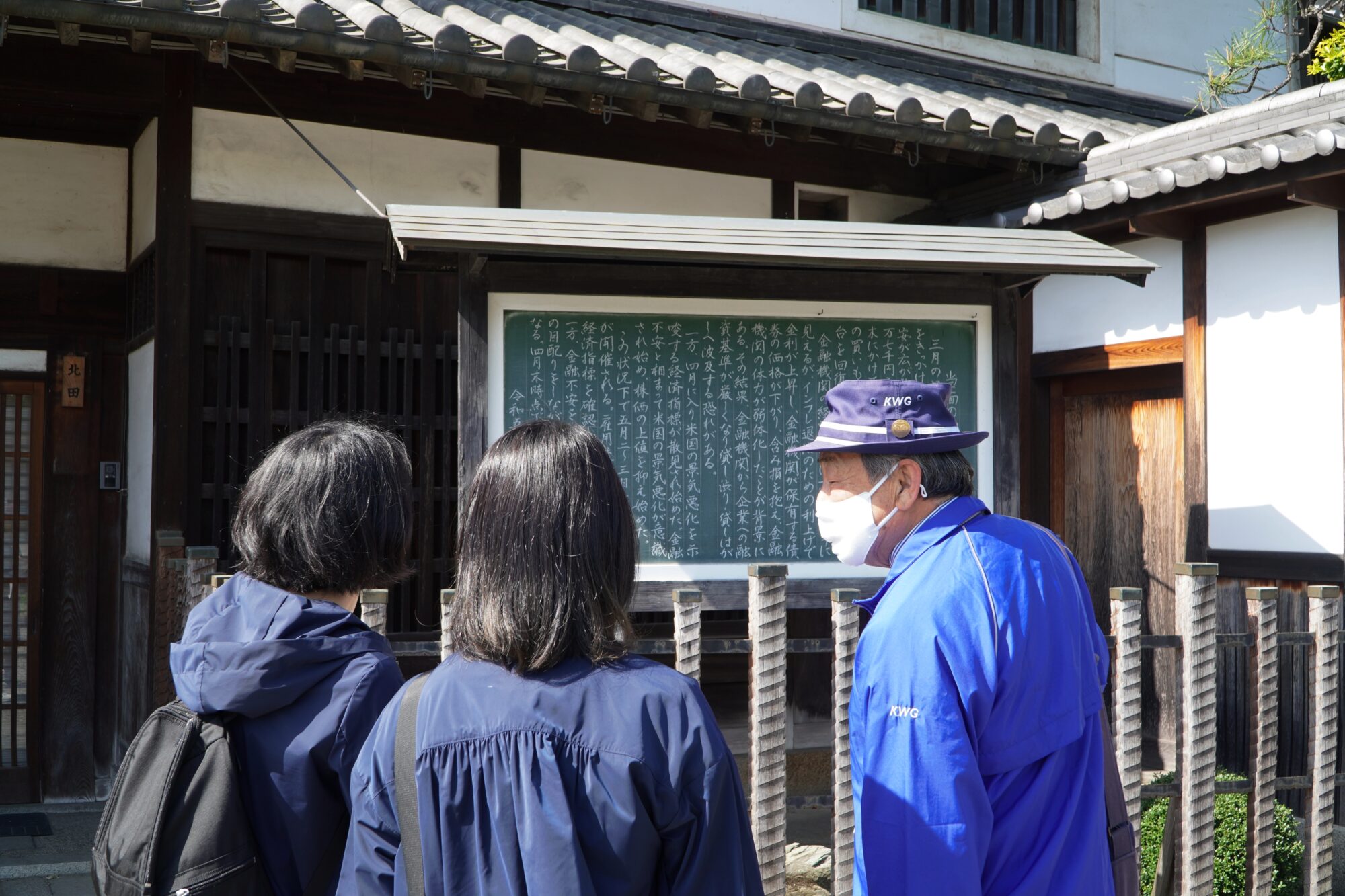
“The Oyama Hinomaru Securities Kurashiki Branch is the only business in the tourist destination of the Bikan Historical Area that has nothing to do with tourism,” he said, introducing a blackboard as a little-known detail.
Apparently, the “Outlook for the Market” is handwritten on it every month.
It certainly seems unrelated to a tourist destination, but the information is clearly presented, and above all, the beautiful handwriting is impressive.
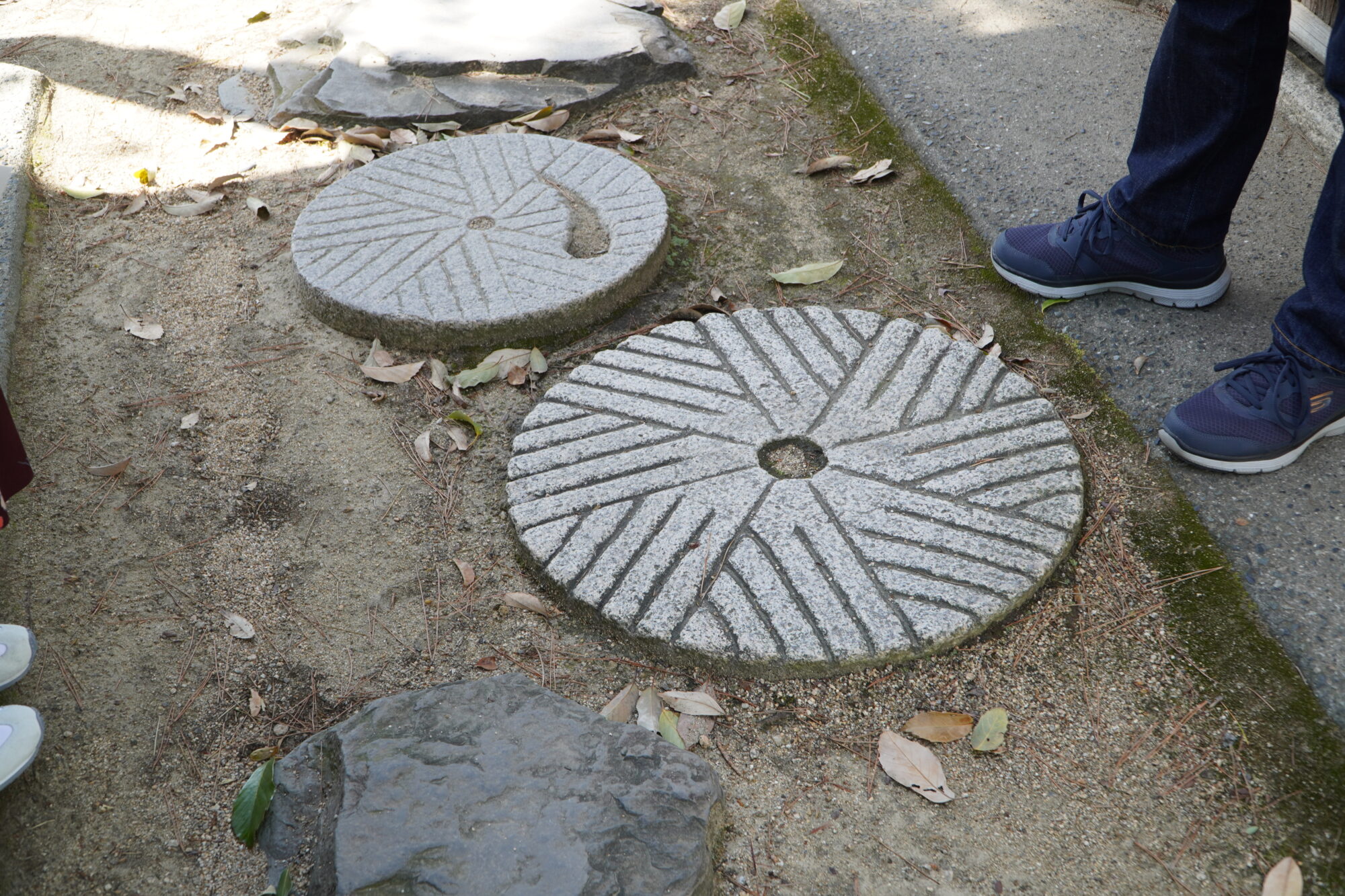
When we visited Shinkei-en Garden, built as a villa for Ohara Koshiro, we learned a little-known fact about the stepping stones in its Japanese garden.
The round stones are actually millstones.
Rather than waste millstones whose grooves had worn shallow with use, they were repurposed as stepping stones.
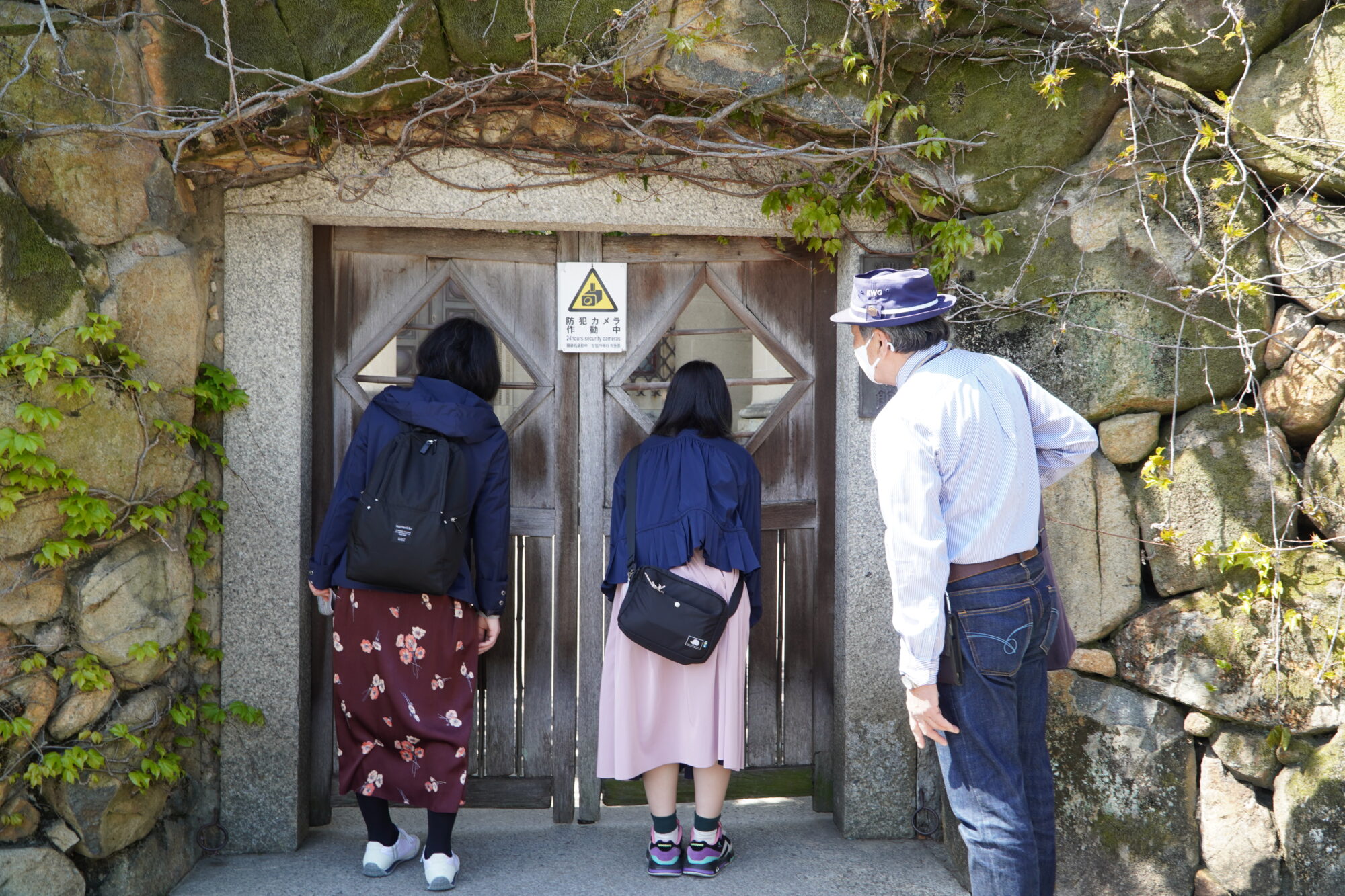
The tour took place on a Monday, when the Ohara Museum of Art was closed. Takahashi adapted the tour, explaining what could be seen from outside.
Although regular guided tours follow a set route, the information shared seems to vary depending on the guide and the day.
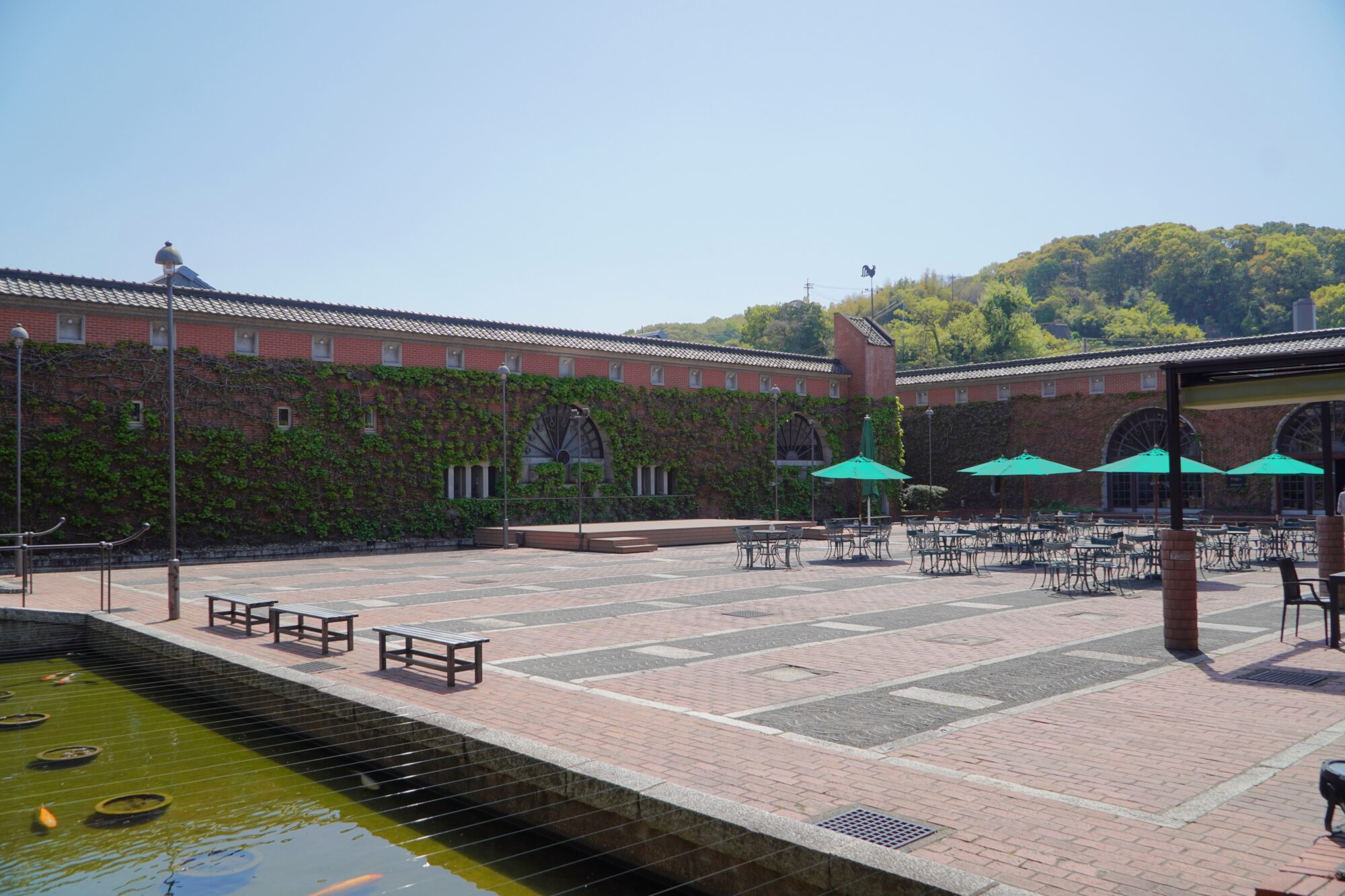
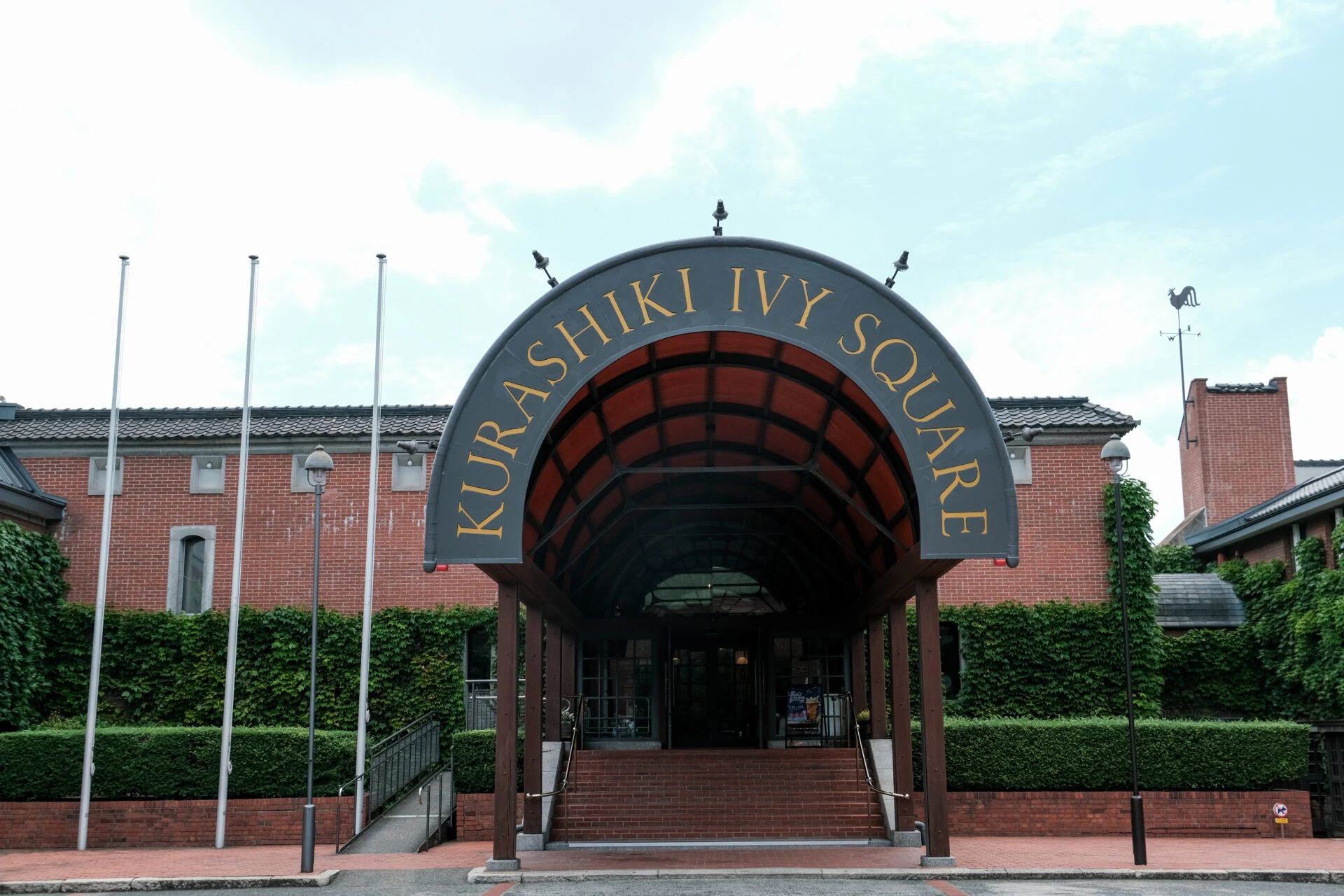
The second half of the tour takes us to Kurashiki Ivy Square.
Kurashiki Ivy Square, once a spinning mill, is now a multi-purpose complex, but many traces of its past remain.
For example, what was once a work area is now an open plaza. The stone sections of the floor are said to have held heavy machinery.
We were also given a tour full of one surprise and moving moment after another, but let’s leave the introduction at that.
By paying attention to details that are easy to miss when simply walking around and learning more about them, I found the Bikan Historical Area to be an even more appealing town.
We spoke with guide Takahashi Yasuo of KWG, who knows a wealth of information that even local residents don’t know.
Kurashiki District Welcome Tourist Guide Association details
| Name | Kurashiki District Welcome Tourist Guide Association |
|---|---|
| Address | 2-6-1 Chuo, Kurashiki City, Okayama Prefecture (inside the Kurashiki Tourist Rest Area) |
| Contact | 086-436-7734 |
| Website | Kurashiki District Welcome Tourist Guide Association |


What would you like to know about Kurashiki?
Enter a keyword and we'll search the articles on this site