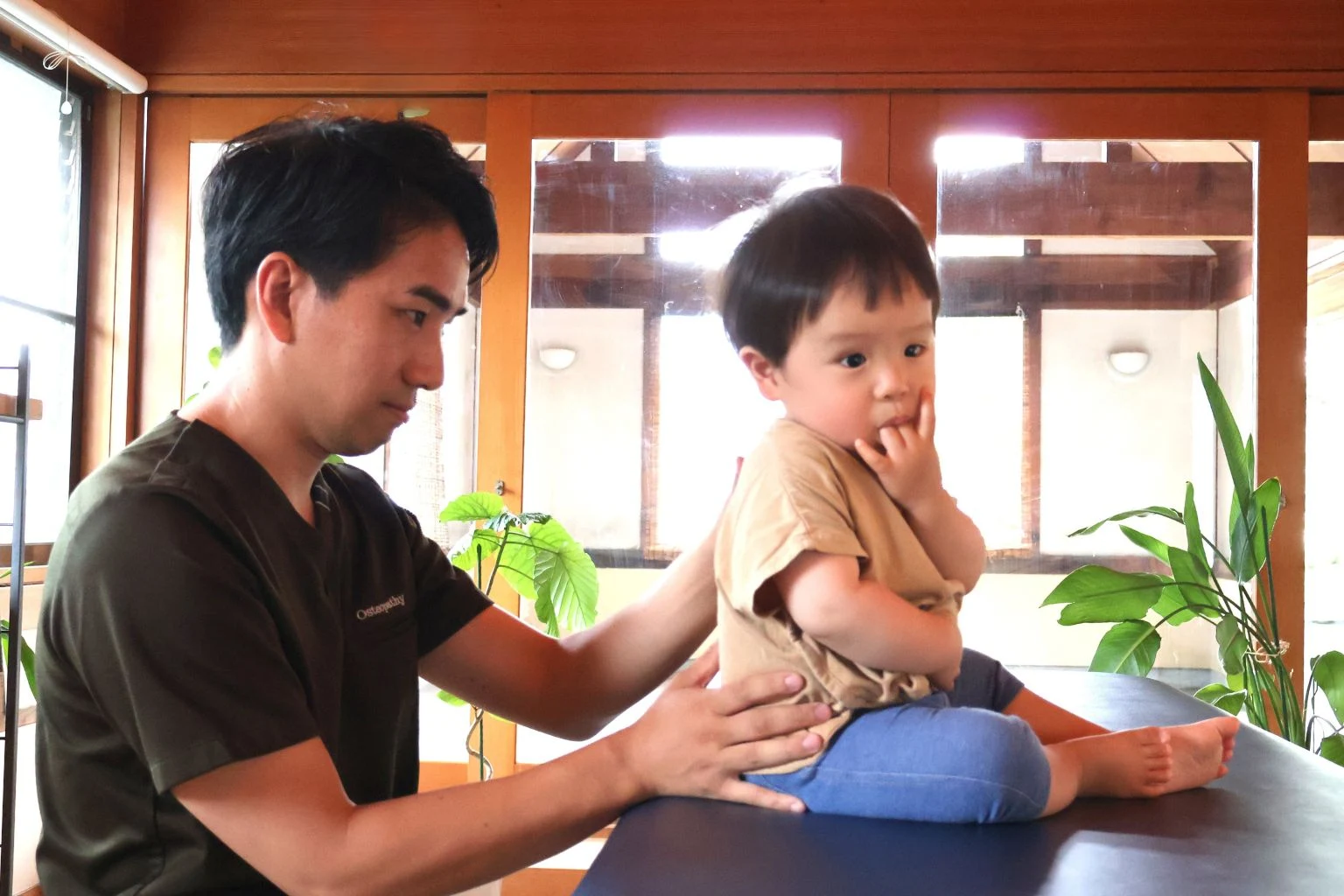
Interview with Satoshi Morita, D.O.
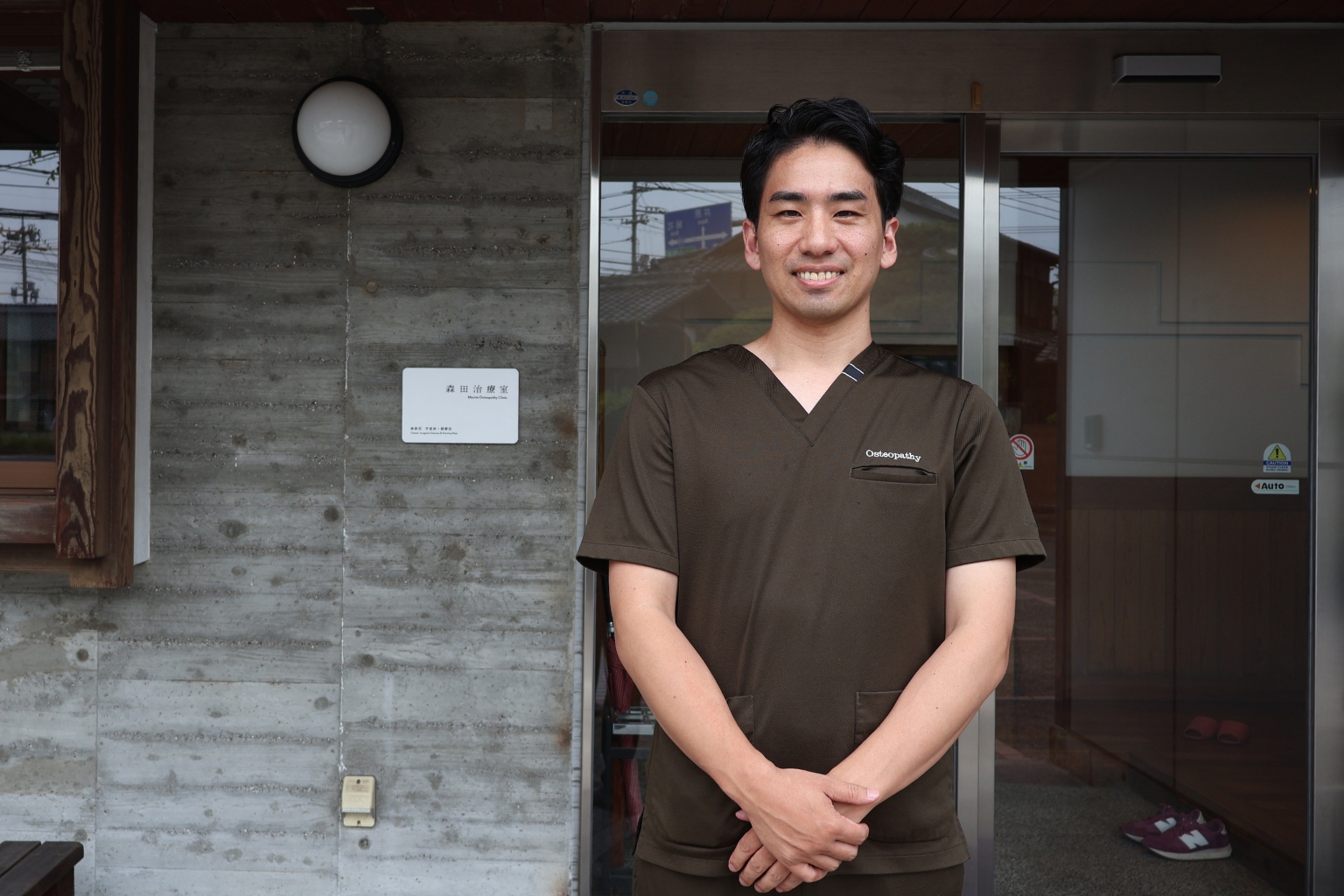
We spoke in detail with Satoshi Morita.
I imagine people come to you with all kinds of problems. Are there any cases that have stayed with you?
Morita (surname only)
Of course, I'm happy when a problem is resolved and someone gets better.
But the cases that stay with me are those who didn't improve much. Some people who come here have symptoms that are difficult to recover from.
In those cases, every time they come in, I think deeply about what I can do. Even when their progress isn't very good, when I ask those who come back, they tell me, “I feel better when I come here.”
It can be difficult to eliminate the symptoms, but I may be able to ease a headache a little or alleviate, to some extent, autonomic nervous system imbalances caused by fear of illness.
I do my best to ease the burden on the body and mind as much as possible. By doing so, I hope I can help shift the way people see life and their outlook in a more positive direction, even a little.
What led you to start practicing osteopathy?
Morita
It began when I saw my supervisor practicing osteopathy at the orthopedic clinic where I got my first job. I thought, “This is different from what we learned in school,” and became interested in the idea that there were approaches different from physical therapy.
As I continued studying osteopathy, I increasingly wanted to explore it in greater depth. When practiced in an orthopedic clinic, it becomes part of the clinic's rehabilitation services.
I wanted to address autonomic nervous system problems, treat children, and use gynecological approaches. Those feelings built up, and I decided to go independent.
I opened my practice just as the spread of COVID-19 was beginning.
It was difficult, but for me it was truly a start from zero, so little by little, more people began coming in, and that's how things have gone since.
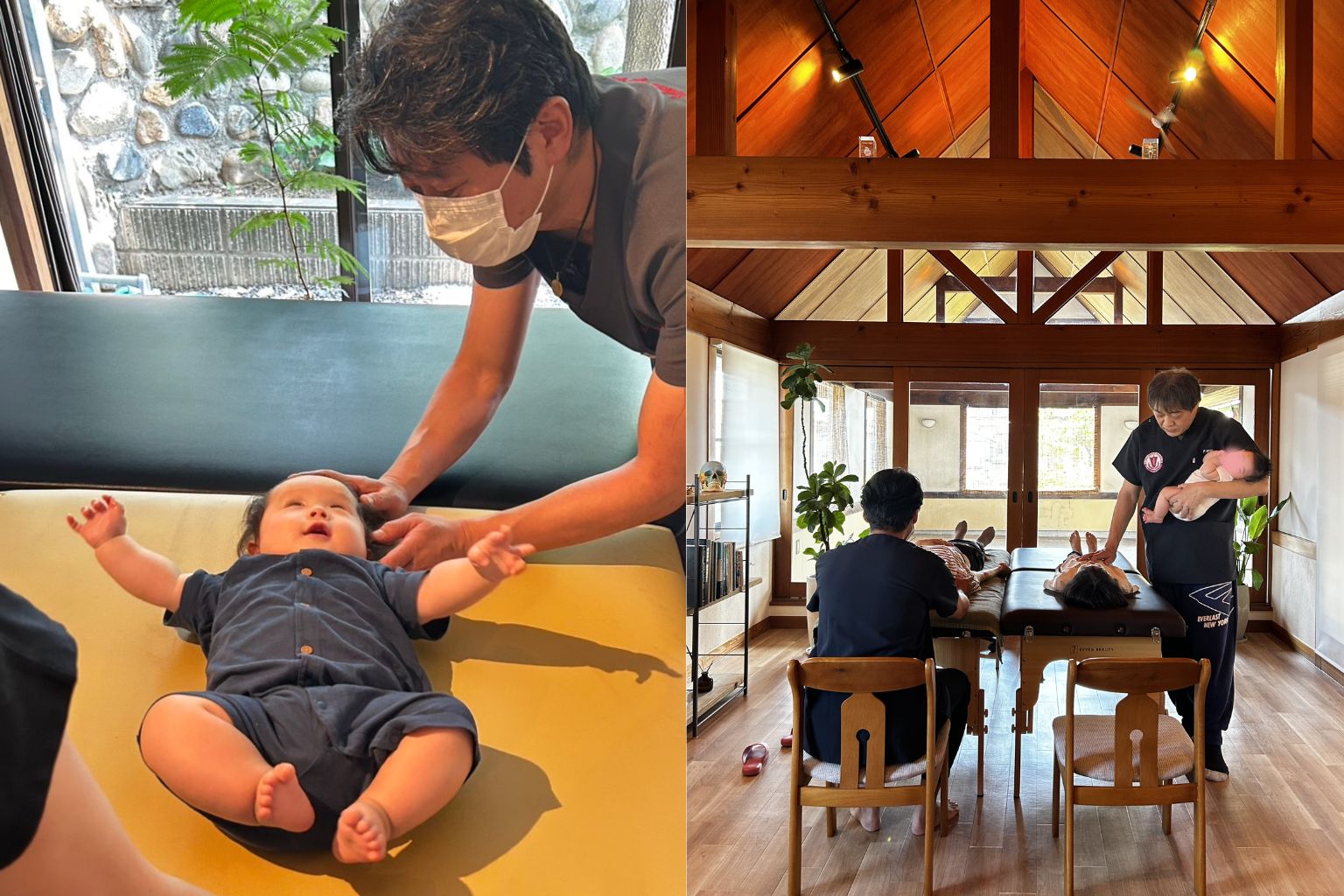
I hear you also treat babies.
Morita
A one-month-old baby who was having trouble breastfeeding once came to see me.
During the consultation, I asked about the birth and learned that it had taken a little while with a vacuum-assisted delivery. I thought the pressure from passing through the birth canal might have remained around the bones at the back of the head and affected the nerves.
When I checked, the area was clearly stiff, and loosening it brought a good response. Knowledge of obstetrics, pediatrics, embryology, and other fields all comes together to inform a treatment that makes sense.
Could you explain the ideas at the heart of osteopathy?
Morita
The human body is naturally designed to heal itself when injured.
But healing can be difficult if the body is more twisted than it should be or compressed in a way that impairs blood flow.
We believe that releasing those twists and restoring the body to its natural position helps its innate healing ability work more effectively. Our job is to help draw out that healing ability.
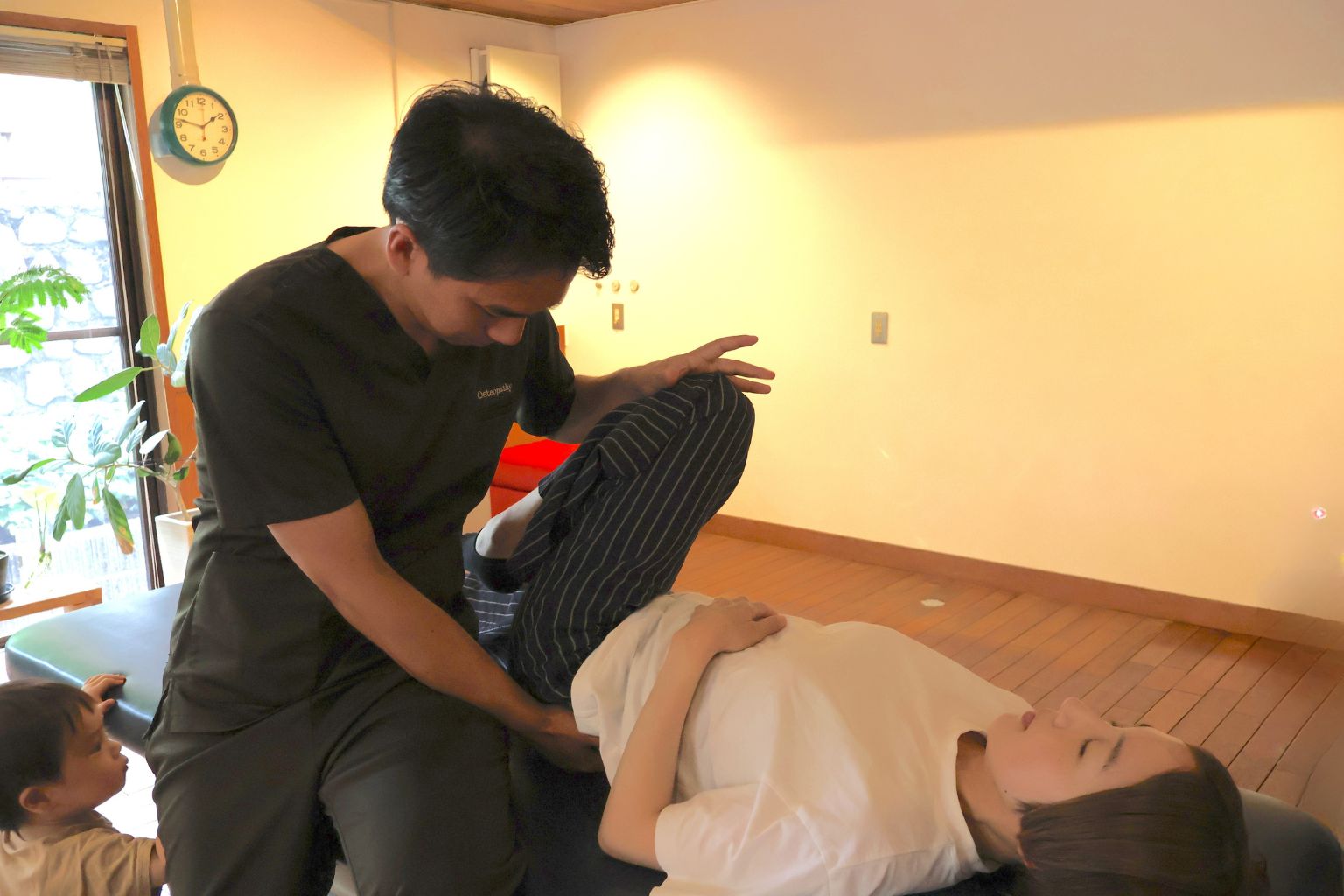
What would you like to do going forward?
Morita
For example, someone might feel less anxious after treatment and become able to go to school, or someone who had difficulty working because of stomach pain might become able to work. From there, their life should start moving forward, and the gears of their life begin to turn.
I hope that the people of Kurashiki will become healthier. I see that as one way I can contribute to society.
In time, I hope to develop this place into a hub like an “Osteopathy Center.” I also want to work toward creating a place in Kurashiki where several osteopaths with internationally accredited training can support the health of local residents.
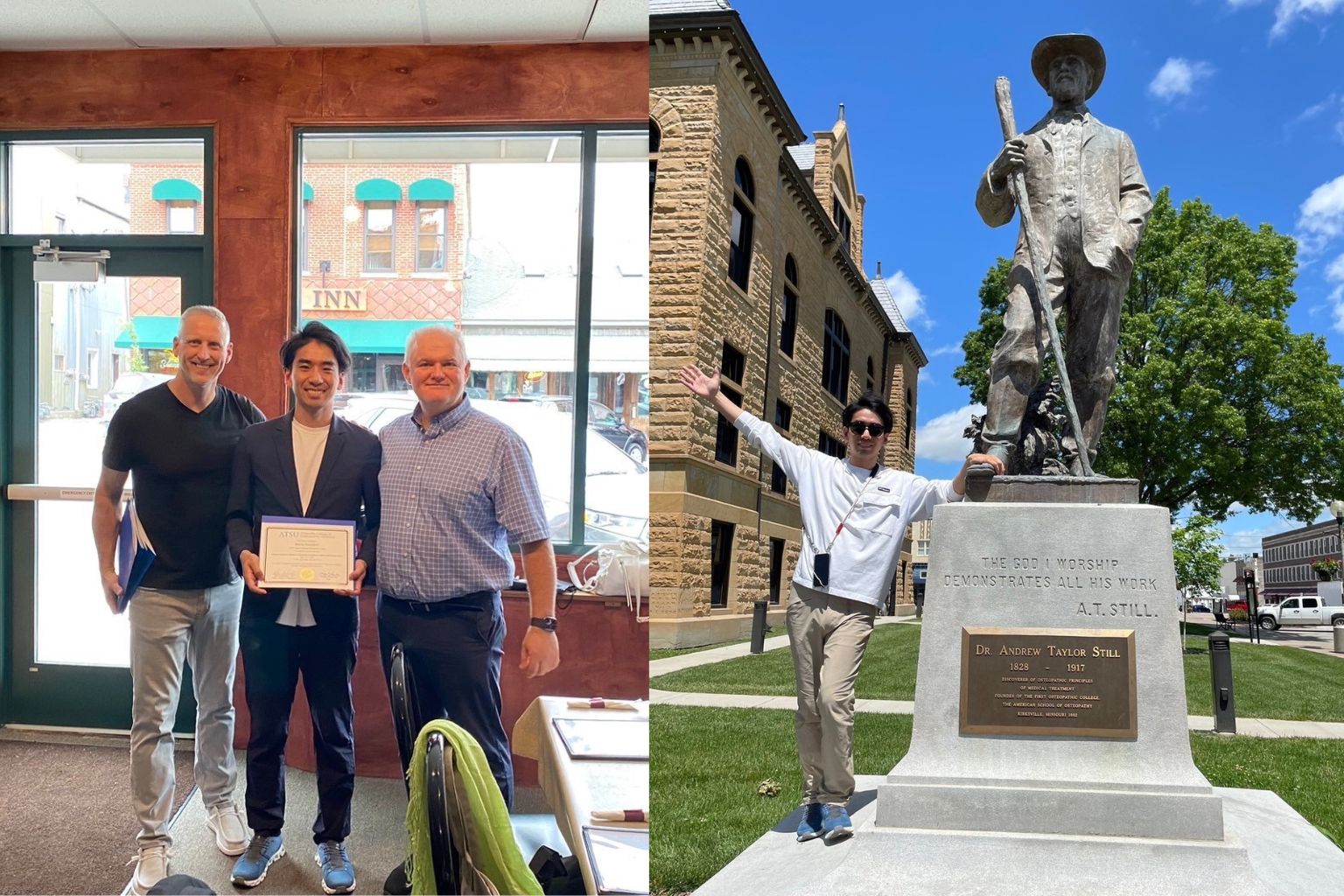
A statue of Dr. Still, the founder of osteopathy (Photo courtesy of Morita Treatment Room)
- 2011: Began working at a hospital as a physical therapist
- 2023: Graduated from Japan Traditional Osteopathy College (six-year program) and earned the internationally recognized D.O. (Diploma of Osteopathy) qualification
- Currently studying at Tokyo School of Osteopathy (eight-year program)
Osteopathy draws out the abilities we already have
Morita, D.O., turned the pages of a very thick specialist textbook and explained things clearly and carefully. As someone who has worked in both Western and Eastern medicine, the writer had been living with lower back pain for about 16 years, and had long struggled with a dull ache whenever it flared up. I had more or less given up, but took this opportunity to ask for advice and experience osteopathy.
After I shared my medical history, he carefully checked the flow of my body from head to toe and gradually brought things into alignment. When the treatment was over, I felt as if I had grown taller, and as though my body, stiff for so many years, had begun to move again.
Pain and anxiety are difficult to put into words and often hard for others to understand. Even so, with Morita, D.O., I felt as though he could hear what my body was saying and would work with me to find a way to get better.
Morita Treatment Room details
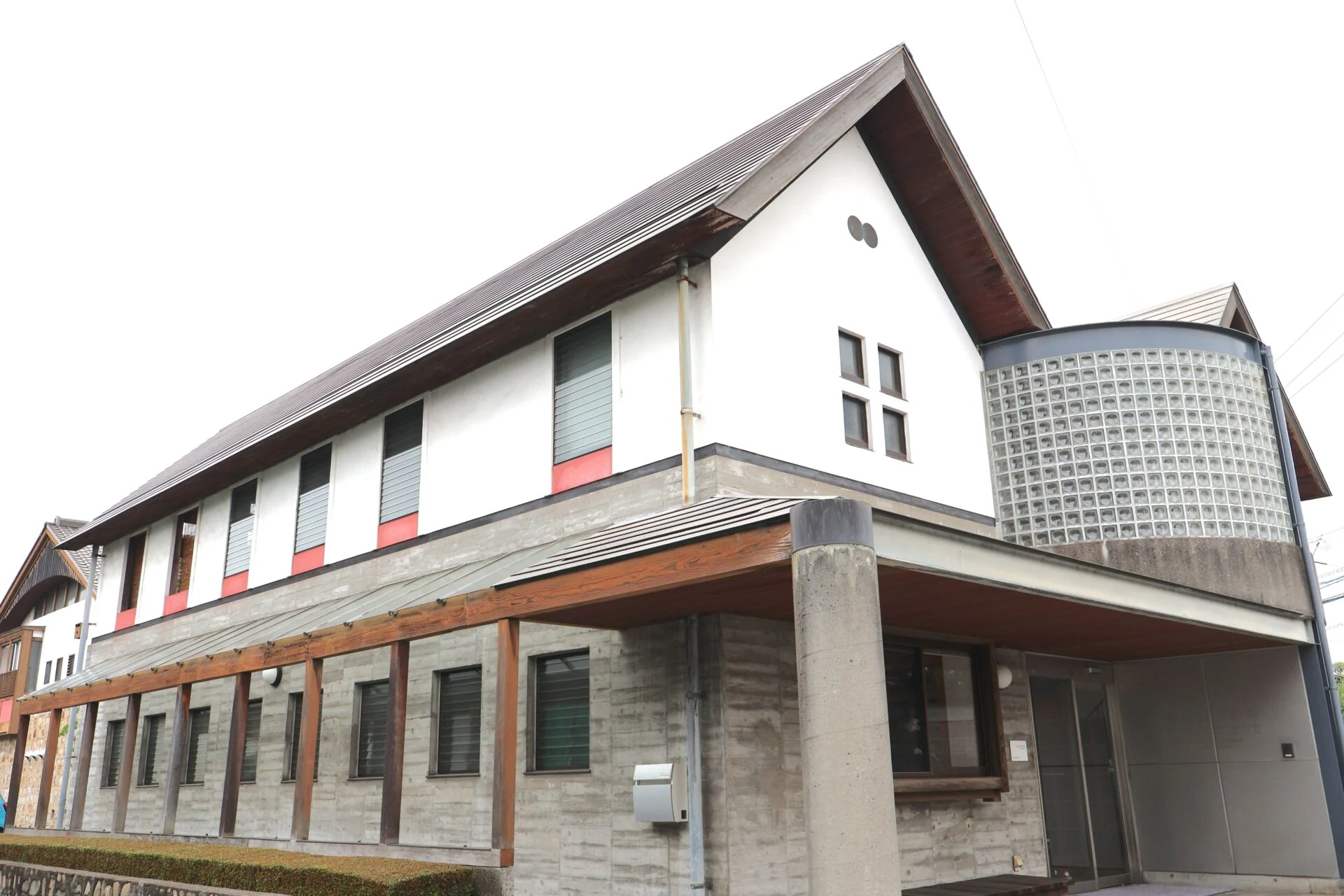
| Name | Morita Treatment Room |
|---|---|
| Address | 1-162 Hamanocyaya, Kurashiki City, Okayama Prefecture |
| Contact | Phone: 070-4465-1598 |
| Parking | Available Parking spaces 1–6 are behind the clinic Those who have difficulty walking may park in front of the entrance |
| Hours | 9:00 a.m.–3:00 p.m. 4:20 p.m.–8:00 p.m. |
| Closed | Irregular holidays |
| Payment methods |
|
| Website | Morita Treatment Room |




What would you like to know about Kurashiki?
Enter a word to search articles on this site