Heart disease, stroke, cancer.
Many of these diseases progress quietly within the body without notice. And many of them suddenly manifest as serious symptoms one day without any prior warning.
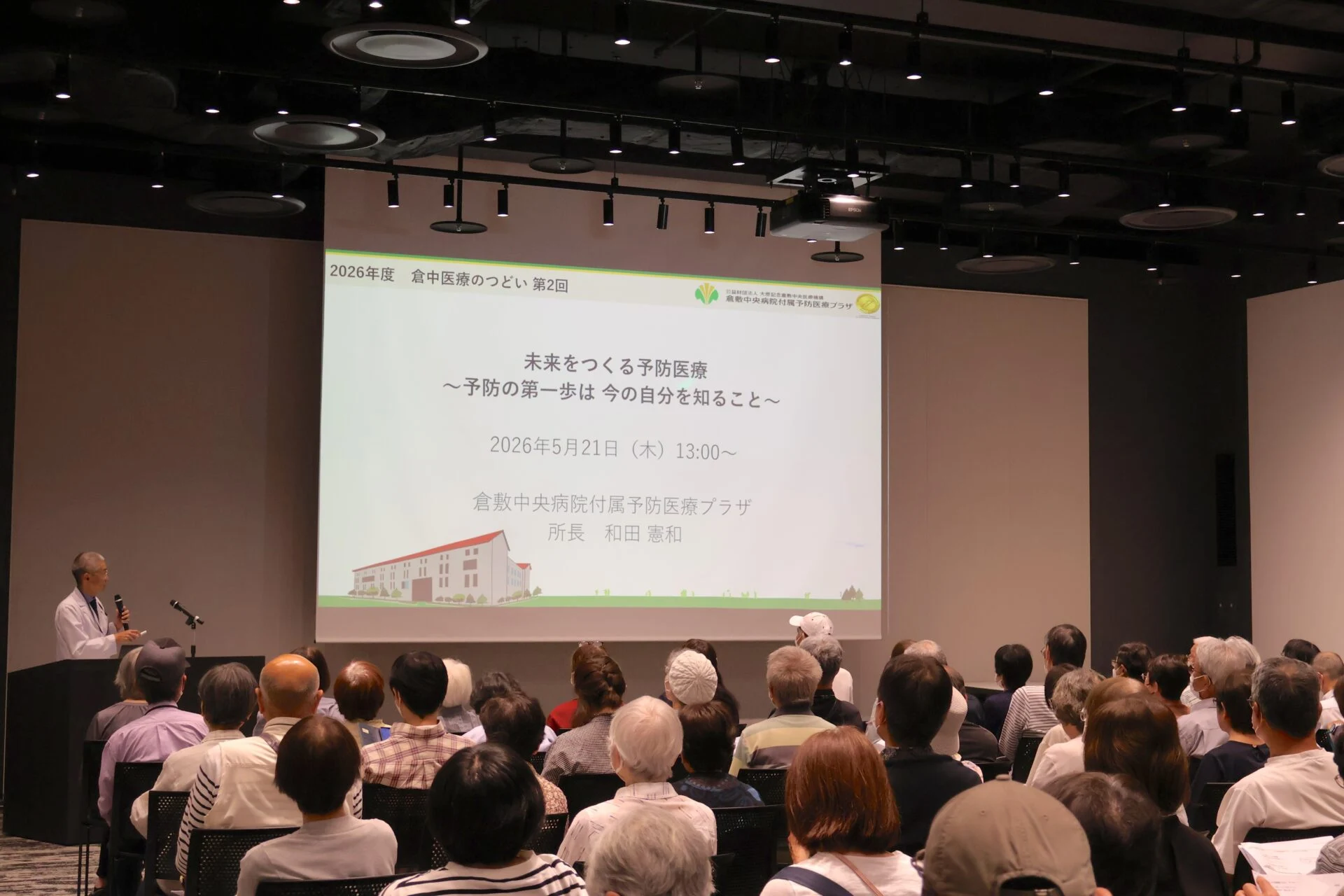
The theme of the citizen health lecture "Kurachu Medical Gathering" in May 2026 was "Preventive Medicine and Health Checkups".
The speaker was Dr. Wada Toshikazu, the director of the Kurashiki Central Hospital Preventive Medicine Plaza. He is a physician with numerous qualifications, including a specialist in health checkups and a specialist in internal medicine and nephrology.
In the lecture, he discussed the concept of preventive medicine, the significance of health checkups, often overlooked signs from the body, and how to choose optional tests. This is a report on topics that we want to reconsider starting today for future health.
Additionally, we will also introduce a talk on frailty prevention by public health nurse Ootaka Erika.
Overview of the Citizen Open Lecture "Kurachu Medical Gathering"

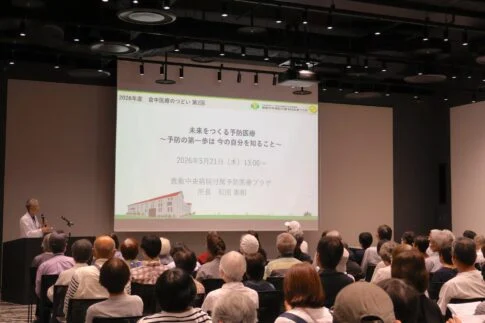
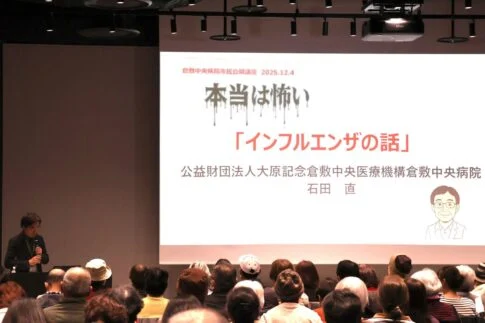
The lecture was held on May 21, 2026, at Kurashiki Central Hospital Preventive Medicine Plaza in the Kokuga Hall.
The Kurashiki Central Hospital Preventive Medicine Plaza is a facility that broadly supports the health of local people through health checkups and exercise and health classes.
The citizen health lecture "Kurachu Medical Gathering" is a series of lectures held monthly where doctors from Kurashiki Central Hospital explain diseases and health in an easy-to-understand manner.
It was raining on the day of the lecture, but many people attended. There was a noticeable eagerness to listen about prevention for their future selves.
Current Situation in Japan: The Gap Between Healthy Life Expectancy and Need for Care
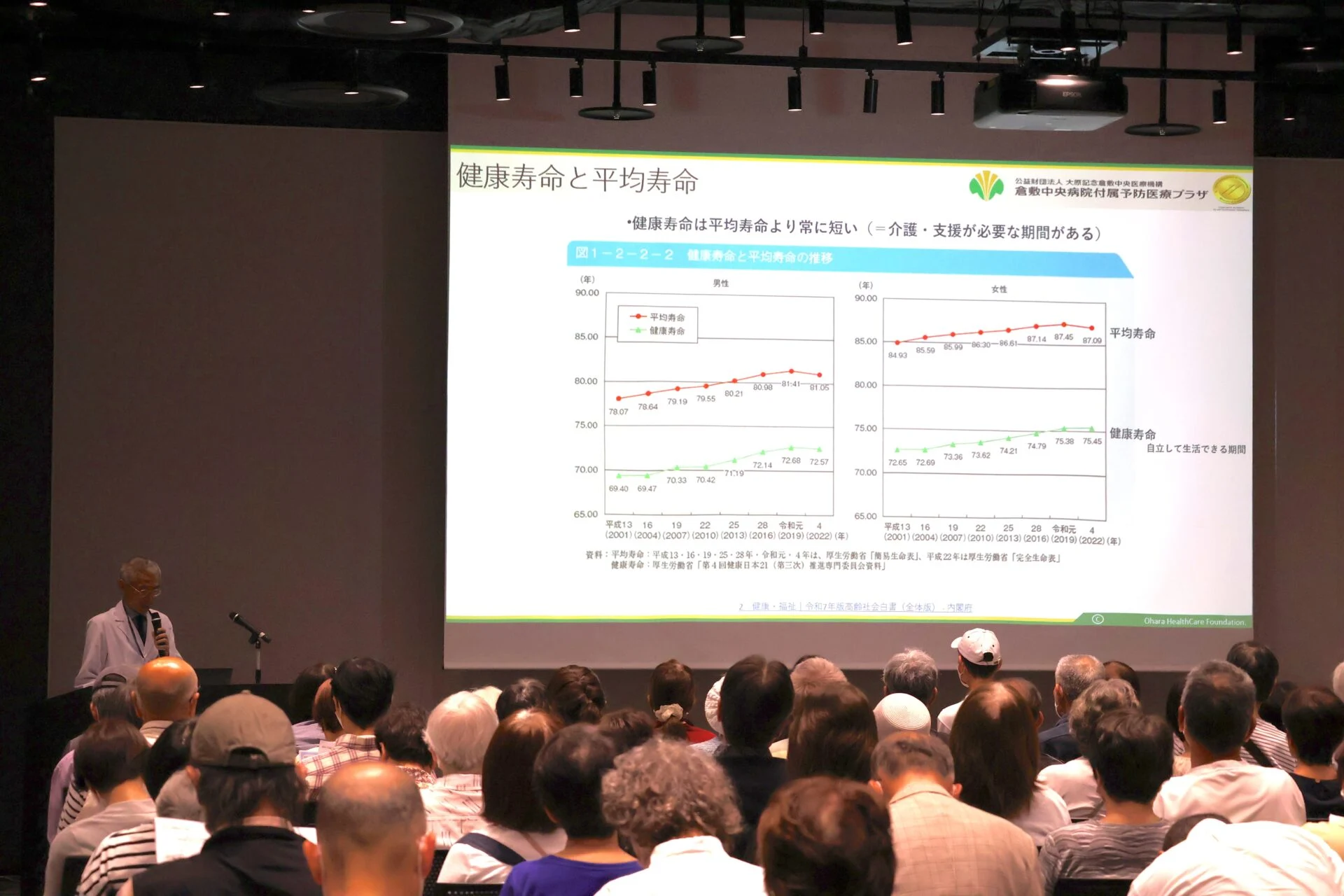
Japan is a globally recognized longevity country, but "living long" and "being healthy" are not necessarily the same.
The gap between average life expectancy and healthy life expectancy is about 9 to 10 years. This gap corresponds to the time when care and support for daily living are needed. Particularly, women tend to have a longer gap.
The most common causes of needing care are as follows:
- Men
Cerebrovascular diseases - Women
Dementia and fractures
"Many of these can potentially be prevented with early intervention," says Dr. Wada.
The Role of Health Checkups and the Three Stages of "Preventive Medicine"
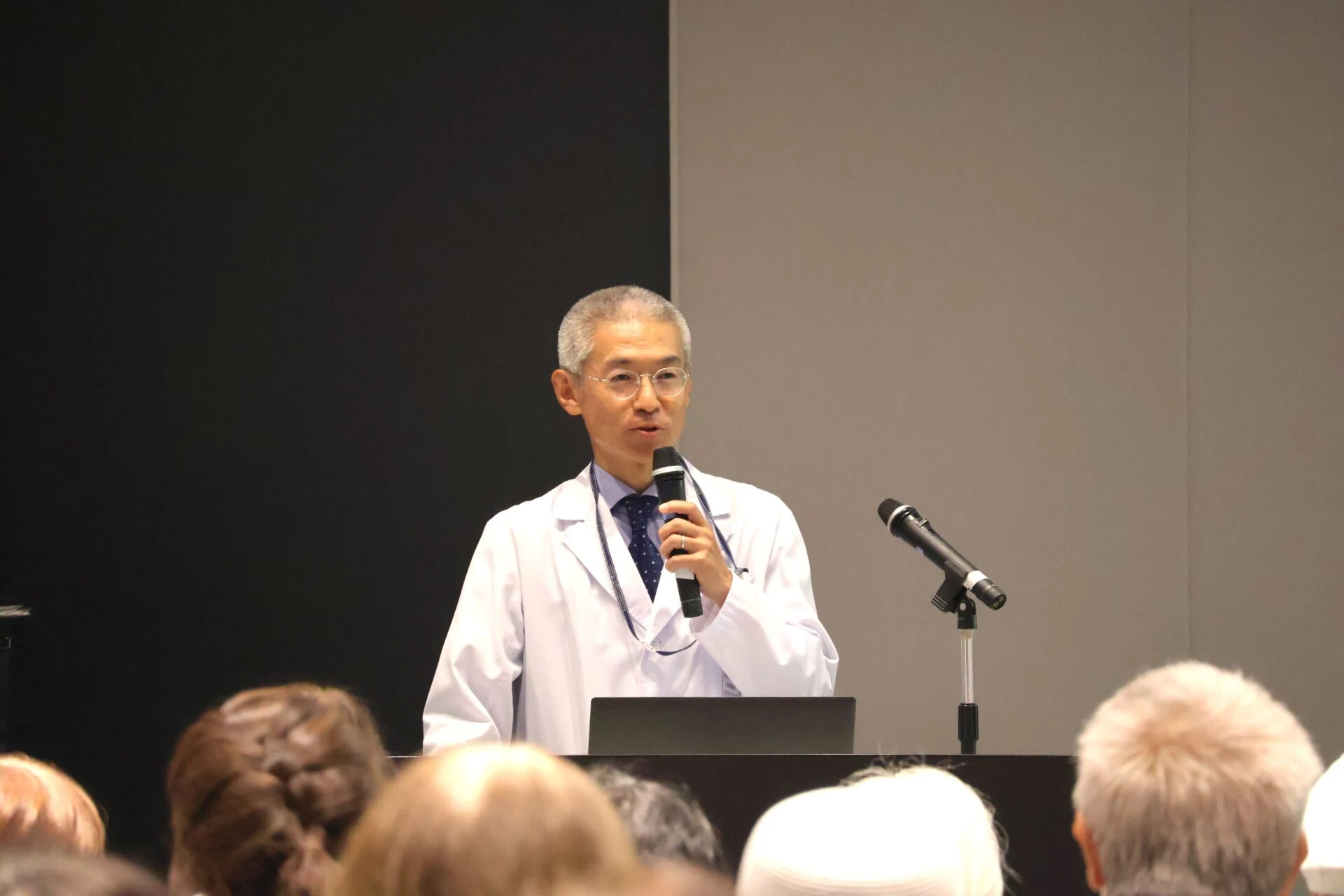
Preventive medicine has three main stages.
- Primary Prevention
Adjusting lifestyle habits to prevent diseases - Secondary Prevention
Early detection and treatment through health checkups - Tertiary Prevention
Preventing disease recurrence and supporting social reintegration
Health checkups play an important role positioned between primary and secondary prevention.
"Health checkups are not for finding scary diseases. They are an opportunity to know your current condition," says Dr. Wada.
Even if you are told there are no abnormalities, it does not mean "perfectly healthy," but rather that it is a state of "no major problems visible at this time." Additionally, if your numbers are slightly concerning, there is a possibility that improving your lifestyle habits could help.
Characteristics of Health Checkups
"Health checkups" derive their name from "dock," where ship engines are repaired. It is a term born from the idea of early detection and prevention of bodily abnormalities.
Unlike regular company health checkups, abdominal ultrasound and fundus examinations are included from the start.
"By the time changes show up in blood tests, they may already be advanced. Ultrasound examinations can potentially detect abnormalities before they progress," says Dr. Wada.
In addition to the basic course, there are also optional tests available to examine specific areas in detail, which is a characteristic of health checkups.
Often Overlooked Signs and Countermeasures
In health checkups, you can confirm bodily changes that are usually hard to notice. Here is an example of an often overlooked sign introduced in the lecture.
Fatty Liver
A major cause of fatty liver that can be confirmed through abdominal ultrasound is excessive intake of carbohydrates (especially fructose).
Fructose-glucose syrup found in soft drinks, sports drinks, and sweet breads can be consumed in large amounts without being aware of it. Those who drink a lot of sports drinks in the summer should be particularly cautious.
Blood Sugar Spikes
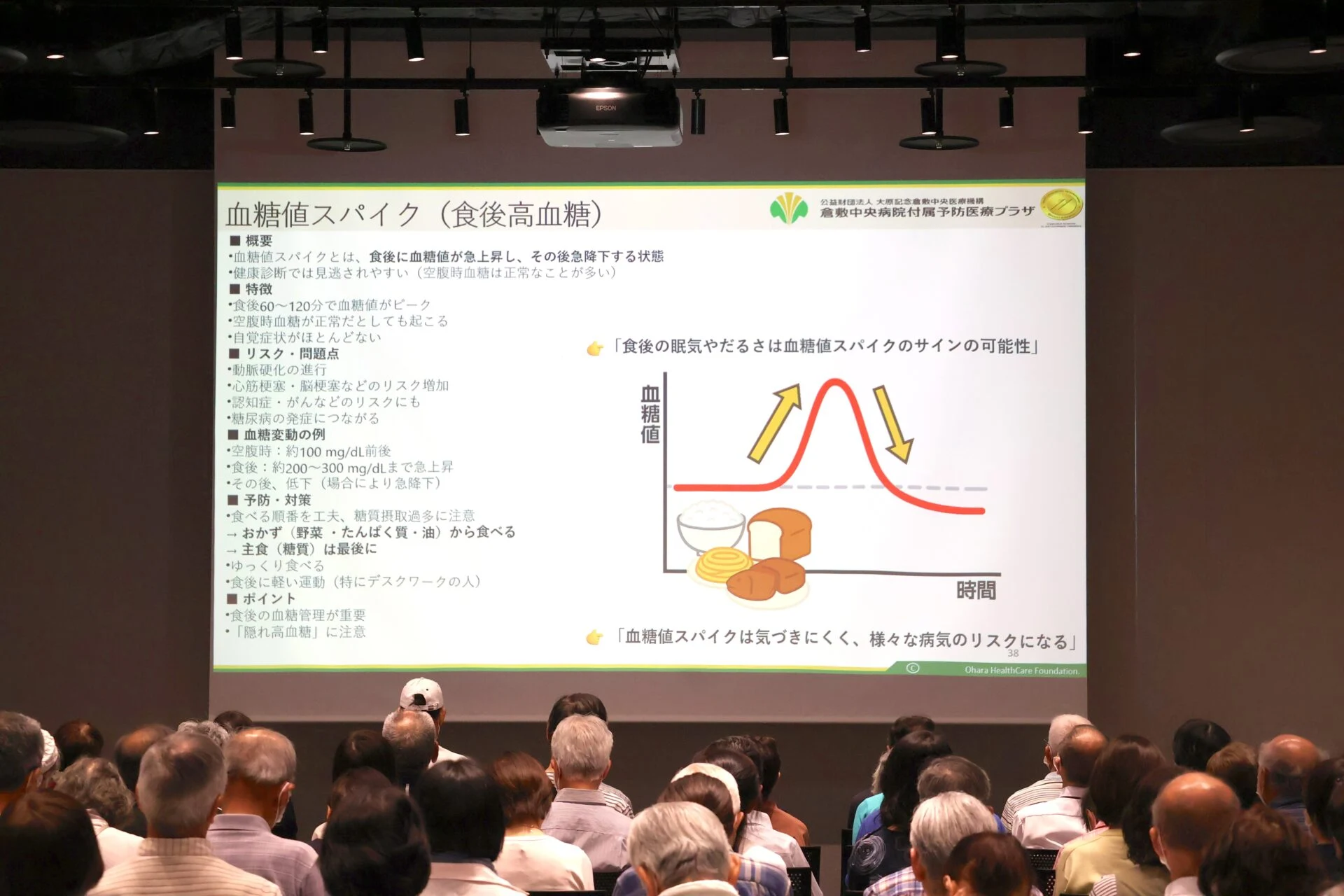
"Blood sugar spikes," where blood sugar levels rise sharply after meals and then drop, are a risk that is difficult to capture in regular health checkups. There are almost no subjective symptoms, and if there are, they may include strong drowsiness or lethargy after meals.
If left unaddressed, it is believed to increase the risk of diabetes, arteriosclerosis, cardiovascular diseases, and is also linked to dementia.
As a countermeasure, starting with vegetables and proteins and consuming carbohydrates (sugars) last, known as "carbohydrate last," is effective.
Iron Deficiency
"Just because you don't have anemia doesn't mean you're fine." If the MCV (mean corpuscular volume) indicating the size of red blood cells is below 90 fL, there may be hidden iron deficiency just before anemia.
If you experience persistent symptoms such as headaches, shoulder stiffness, or frequent leg cramps, it may be a good idea to check.
Osteoporosis and Vitamin D Deficiency
Osteoporosis and vitamin D deficiency often have no subjective symptoms, and many people only realize it after a fracture. Many people are deficient in vitamin D, especially women, whose bone density tends to drop sharply around menopause. It is recommended to have a checkup once in their 40s to 50s.
Vitamin D is not only important for bone health but is also linked to immune function, with reports of its relationship to infections and cancer.
What to Do After Receiving Health Checkup Results
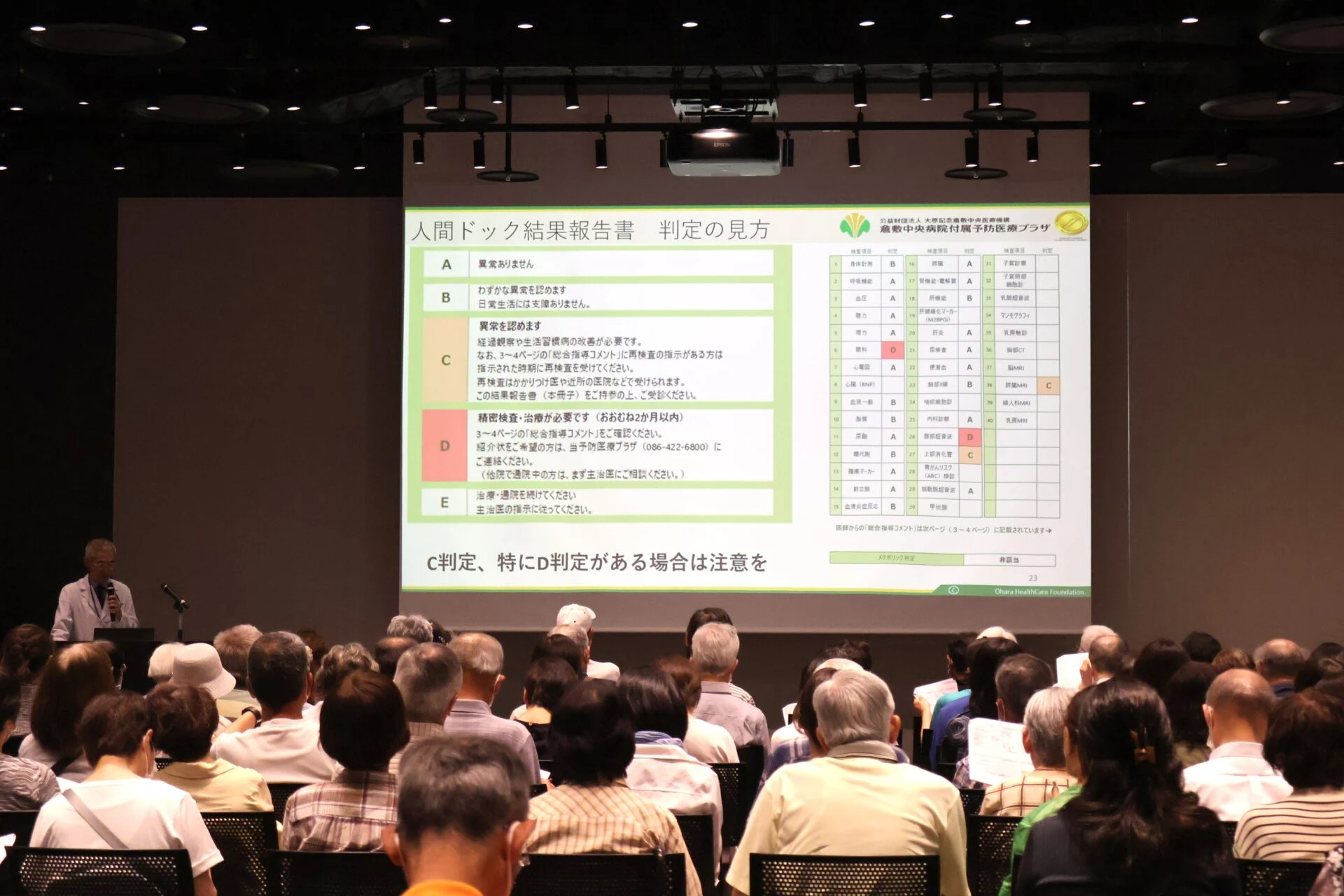
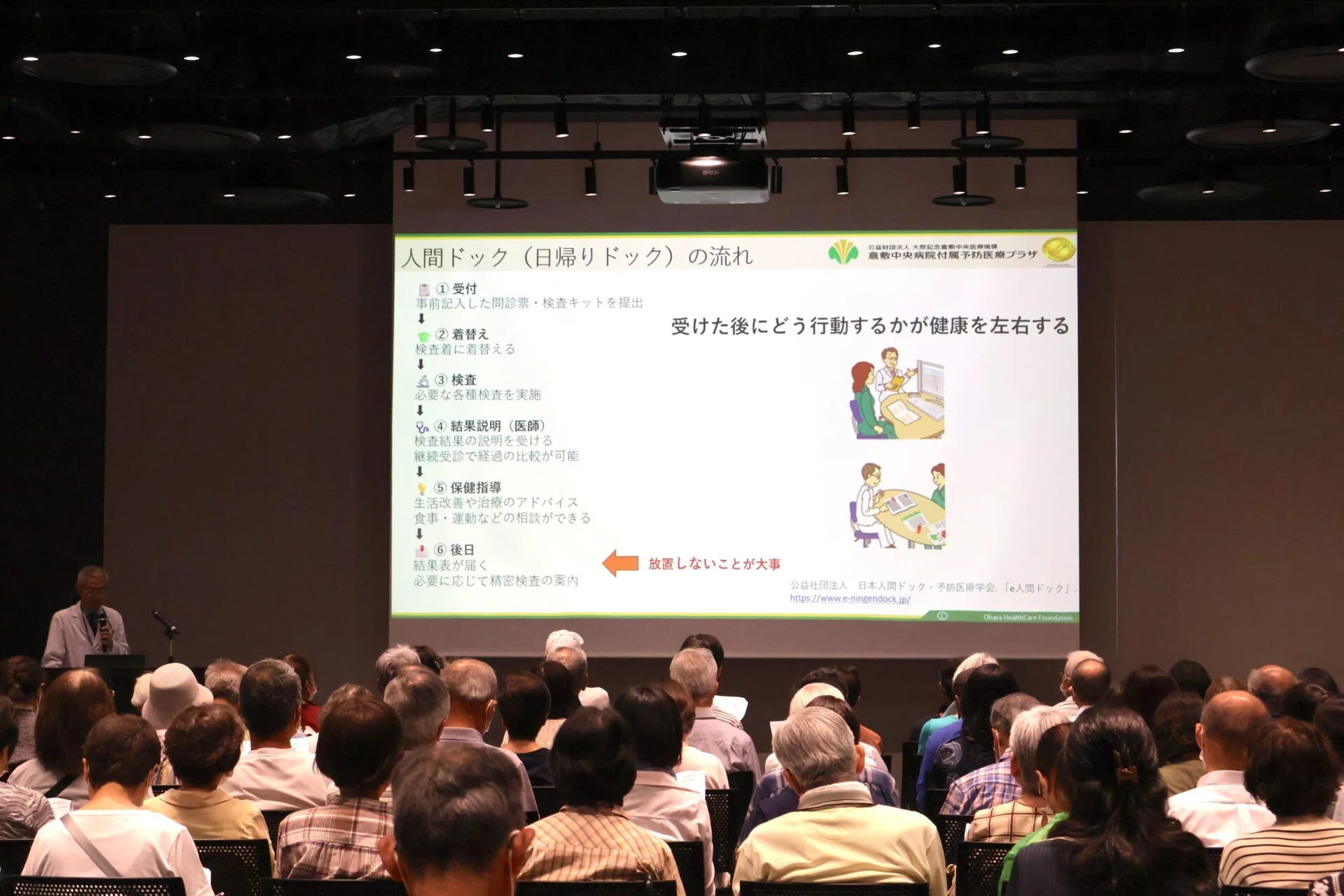
"Some people do not open their health checkup results when they arrive," says Dr. Wada. The health checkup you took is meaningless if you do not utilize the results.
First and foremost, it is important to read the comments section. It contains reasons for the assessments and important information that is easy to overlook.
If you receive a D assessment (requiring further examination), do not leave it unattended and make sure to visit a medical institution. Even with a B assessment, it is good to pay attention to changes in blood pressure, blood sugar levels, and lipids in the future.
Additionally, it is important to receive checkups annually to observe changes. If you are consistently "just within the standard range," consider it a sign to review your lifestyle habits.
How to Choose Optional Tests
In addition to the basic tests of health checkups, there are optional tests available.
However, many people express uncertainty about "what tests to take" and "what to choose among the various options."
Dr. Wada provided the following tests as a guideline.
- Abdominal Ultrasound
If not included in your company health checkup, prioritize adding it. - Lung CT
Can detect early lung cancer in areas that are difficult to see with chest X-rays. - Colonoscopy (or Colon CT)
Recommended to have at least once starting in your 40s. - Fundus Examination
Glaucoma can sometimes be detected even in your 30s. - Bone Density Test
Women should start in their 40s to 50s, and men who smoke or drink should do so earlier. - Vitamin D Test
Since symptoms may not appear even when deficient, it is advisable to check at least once.
"When in doubt, consulting with a nurse or doctor during your visit is the best approach," says Dr. Wada.
At the Kurashiki Central Hospital Preventive Medicine Plaza, phone consultations with nursing staff regarding optional tests are also available. For details, please check the Optional Tests Information.
Additionally, there are plans to incorporate AI for personalized test suggestions in the future.
Talk on Frailty Prevention
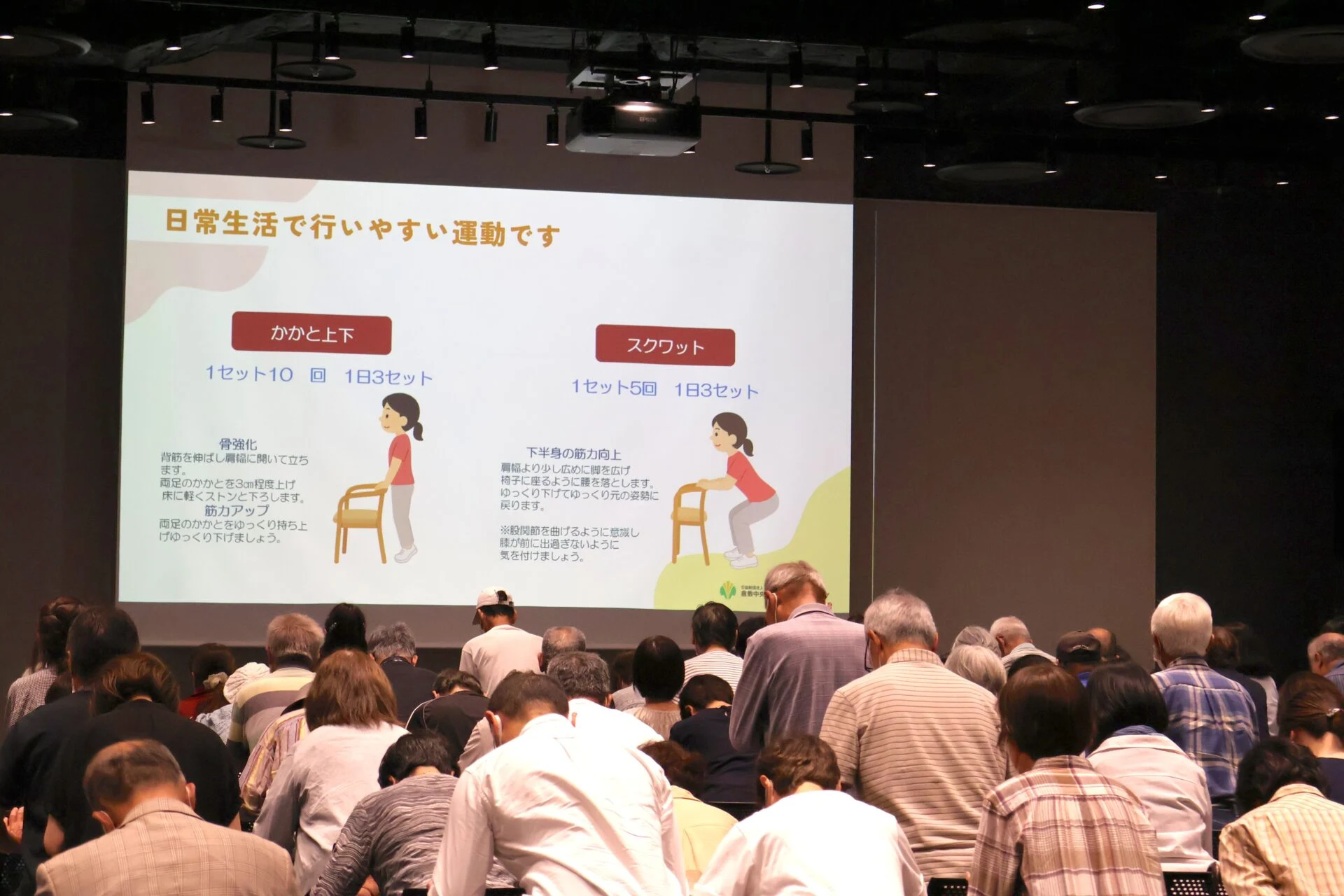
At the end of the lecture, there was a talk on frailty prevention by public health nurse Ootaka Erika. Frailty is defined as a state where muscle strength and cognitive function decline with age, leading to reduced social connections. It is said that people progress from a healthy state through stages of frailty to needing care.
If you notice changes such as "unintentionally losing more than 2 kg in 6 months," "having difficulty opening plastic bottle caps," or "not being able to cross the pedestrian crossing before the light changes," early intervention is necessary.
The key points for prevention are exercise, nutrition, and social participation.
For example, attention should be paid to "oral frailty," which indicates a decline in oral function. If you feel you are choking more easily or have unclear speech, it is recommended to strengthen the muscles around the mouth with exercises like Patakara.
Additionally, squats and heel raises are recommended exercises. They require no equipment and can be done daily at home.
- Squats
Stand with your feet shoulder-width apart, slowly bend your knees, and then return. This strengthens the thigh and buttock muscles, helping to prevent falls. Start with 10 repetitions a day at a comfortable pace. - Heel Raises
While standing, hold onto something for support and slowly raise and lower your heels. This strengthens the calf muscles, improving blood flow and stability while walking. You can do this while watching TV or cooking.
"Muscles can be strengthened at any age, so the important thing is to continue a little every day," was the explanation given.
Interview with Dr. Wada: Knowing Your Current Condition is the Starting Point
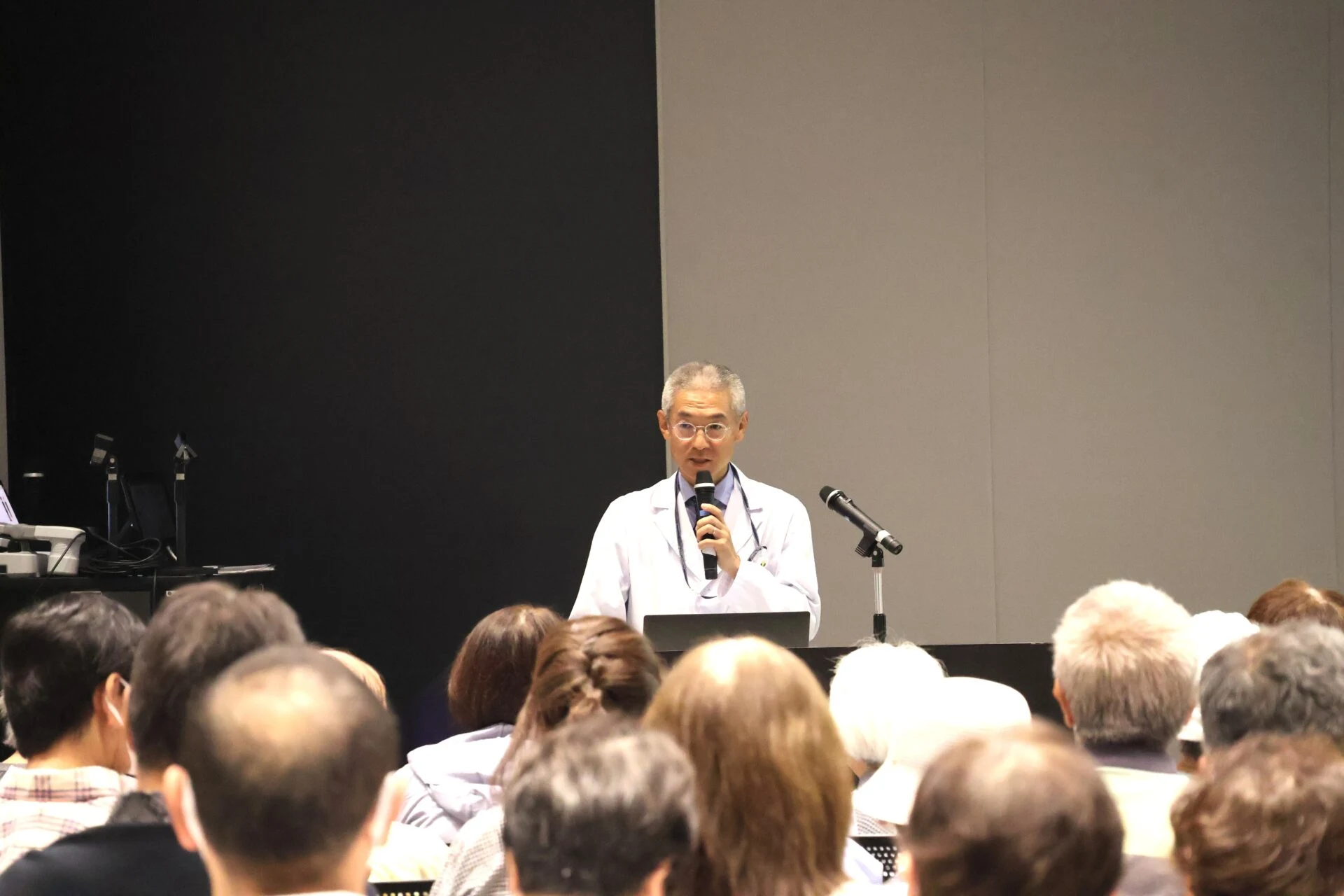
After the lecture, we spoke again with Dr. Wada.
What prompted you to recognize the importance of prevention?
Dr. Wada
I originally worked as a nephrologist at a university hospital.
Every time I faced patients who needed dialysis, I accumulated the thought that "something could have been done earlier."
There were cases where, if blood pressure had been properly managed, they might not have needed dialysis. Such experiences made me realize the importance of prevention.
Do you feel a difference between people who undergo health checkups and those who do not?
Dr. Wada
Yes, there are. When a disease is found, it is not uncommon to feel that "if they had undergone health checkups, they might have noticed it earlier."
On the other hand, those who continue to undergo health checkups every year often address small abnormalities early and remain healthy even into their 80s and 90s.
I feel that being able to address issues while the treatment burden is low makes a significant difference in the long run.
At what age should one start receiving a health checkup?
Dr. Wada
I think it's good to start receiving checkups in your 40s. For those concerned about lifestyle-related diseases, it might be a good idea to check even before turning 40.
Some people start getting checkups in their 30s, and the Preventive Medical Plaza also offers checkups for those in their 20s. Knowing your body early on can lead to better health in the future.
Can you tell us about future initiatives?
Dr. Wada
Currently, we are working with Kurashiki Central Hospital on the development of AI for disease risk prediction based on health checkup data.
If we can use AI to realize a flow like, "If this lifestyle continues, there will be such risks in a few years. Therefore, let's take this test," I believe we can provide more personalized prevention. I want to usher in an era where prevention can be more "predictive."
The first step in prevention is to "know your current self."
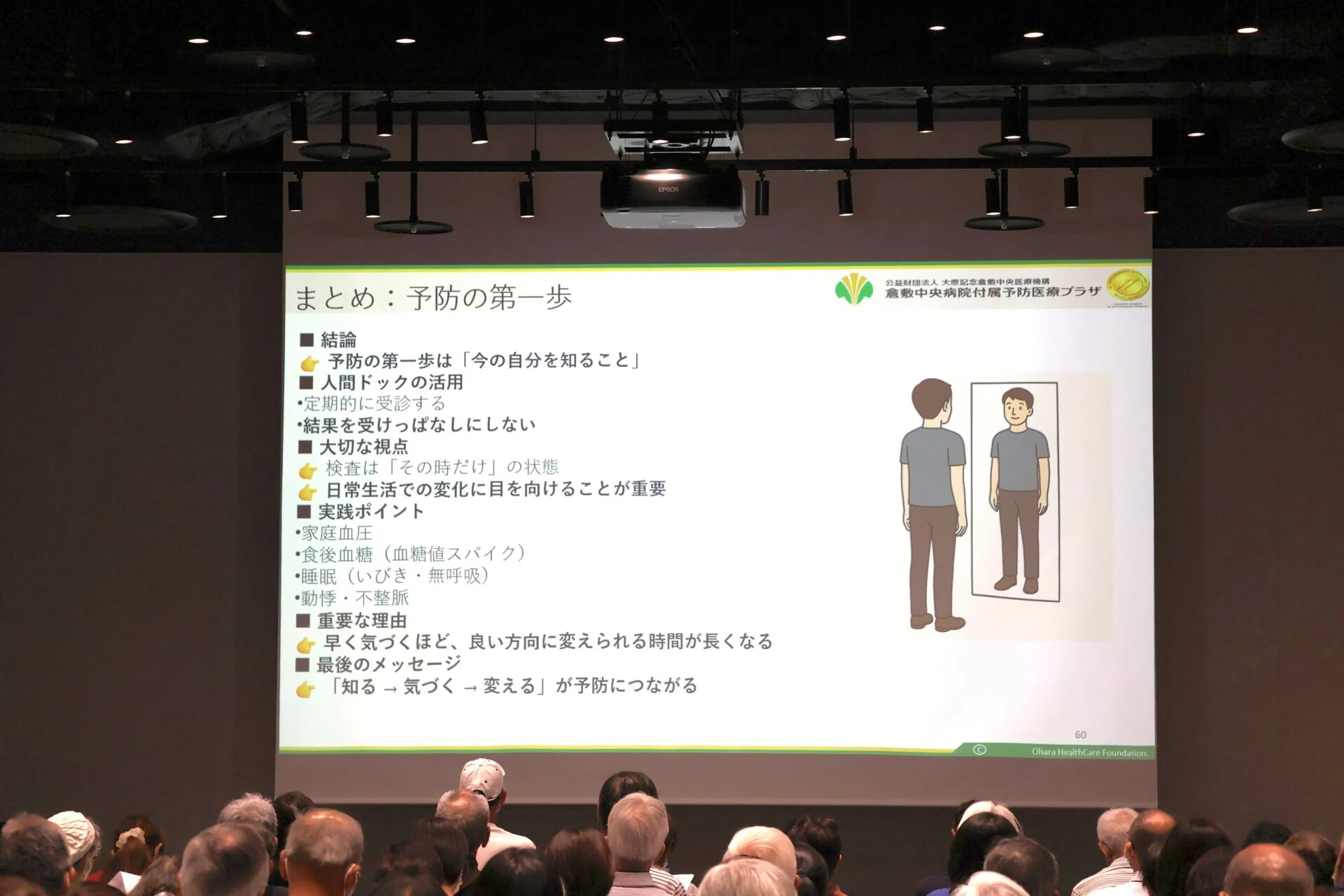
Dr. Wada's words, "Knowing the state of your body and changing your daily life. Those small accumulations lead to future health," left a strong impression on me.
A health checkup is not a place to find scary diseases; it is a starting point to know your current state. It is important not to just finish the checkup but to read the comments section of the results thoroughly and track changes every year as part of health management.
On a personal note, I had a health checkup two years ago, and an issue was found, which allowed me to receive early treatment and achieve a full recovery.
Having experienced this firsthand, I realize the importance of health checkups, but when there are no symptoms, it might be hard to consider detailed examinations. However, I believe that knowing your current state when there is nothing wrong is what brings you closer to good health.
I think many diseases progress without us noticing.
By using advanced tests to understand the state of our bodies and adding one more optional test that concerns us, that test might influence our healthy lifespan 10 or 20 years down the line.
Articles about Kurashiki Central Hospital

Data on the Citizen Health Lecture Kurashiki Medical Gathering 'Creating Future Preventive Medicine'
| Name | Citizen Health Lecture Kurashiki Medical Gathering 'Creating Future Preventive Medicine' |
|---|---|
| Date | May 21, 2026 1:00 PM - 2:00 PM |
| Location | 1-11 Tsurugata, Kurashiki City, Okayama Prefecture |
| Participation Fee (tax included) | Free |
| Website | Kurashiki Central Hospital Preventive Medical Plaza |