

When we feel unwell, get injured, have a health checkup, and of course, when we are born, we rely on hospitals.
Many people work in hospitals.
Doctors and nurses are the first people who come to mind when we think of hospitals, but what other kinds of professionals work there, and what do they do?
An event was held where junior high and high school students could ask healthcare professionals working in medical settings questions directly and try out their jobs.
The event was organized by “Our Community Health Project.,” an initiative involving 23 medical institutions in Kurashiki City and Okayama City.
“Our Community Health Project.” has held lectures and health seminars for adults over the past 10 years, but this was apparently the first time it had held a hands-on event for junior high and high school students.
I was curious too, so I headed over, eager to see what it was like.
The information presented here is as of the article’s publication in February 2025. Please note that it may differ from current information.
What is the Junior and Senior High School Students × Healthcare × Job Experience Lab?

“Come! See! Touch! Discover Careers: Junior and Senior High School Students × Healthcare × Job Experience Lab” was held on Saturday, January 25, 2025, from 10 a.m. to 4 p.m. at the Central Court on the first floor of the specialty stores at AEON MALL Kurashiki. Reservations were accepted, but walk-ins on the day were also welcome.
Eleven healthcare professions had booths, and visitors could freely go around them to ask healthcare professionals directly about their work and what they find rewarding, or try out the jobs.
Which healthcare job should I try?
I arrived at the venue at around 10:30 a.m. Although only 30 minutes had passed since the event began, it was packed, and popular booths had long lines. Numbered tickets were also being handed out to help manage the wait.
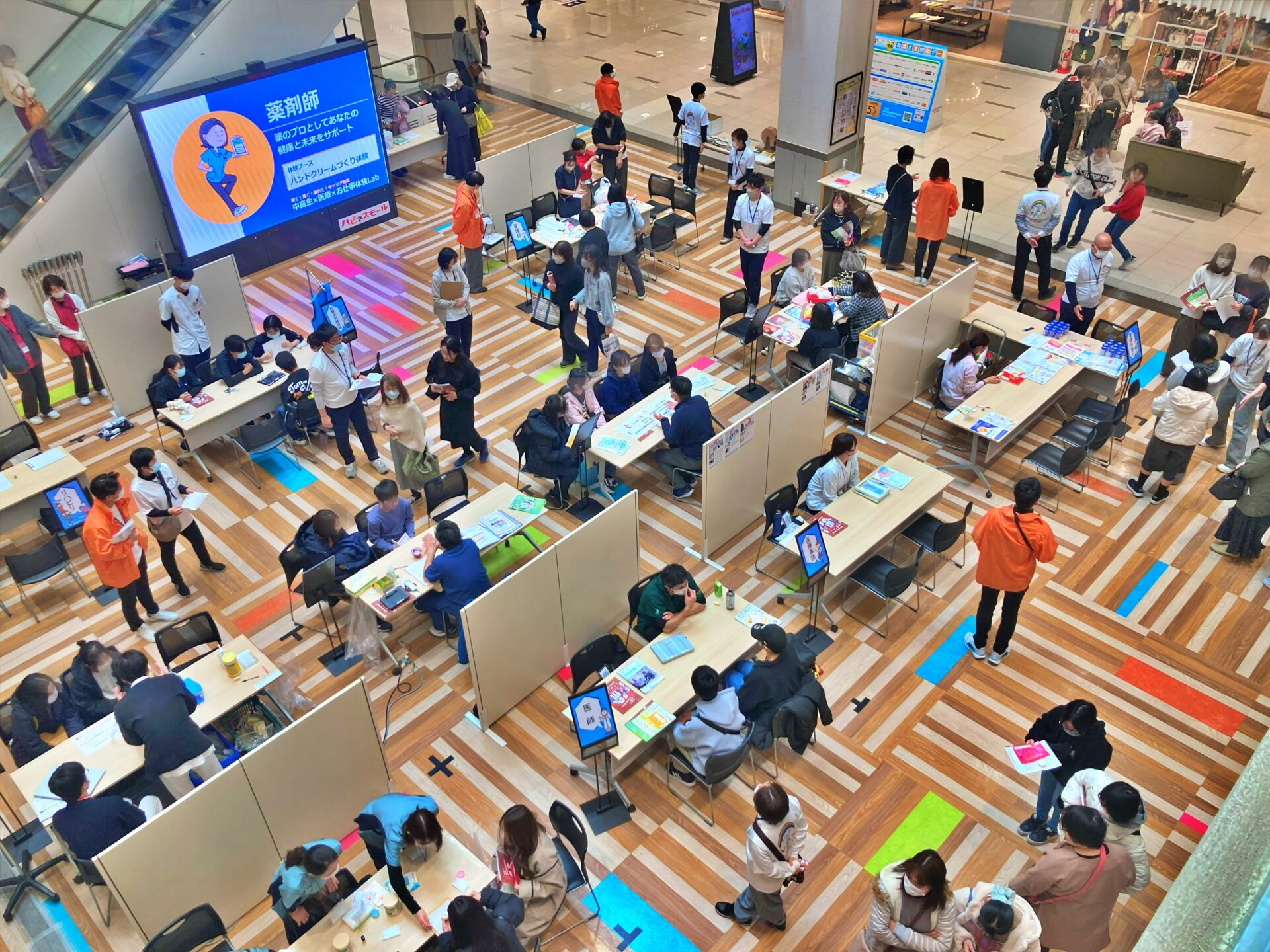
Only junior high and high school students could take part in the activities, so I got permission from one of the participating junior high school students to listen in alongside them.
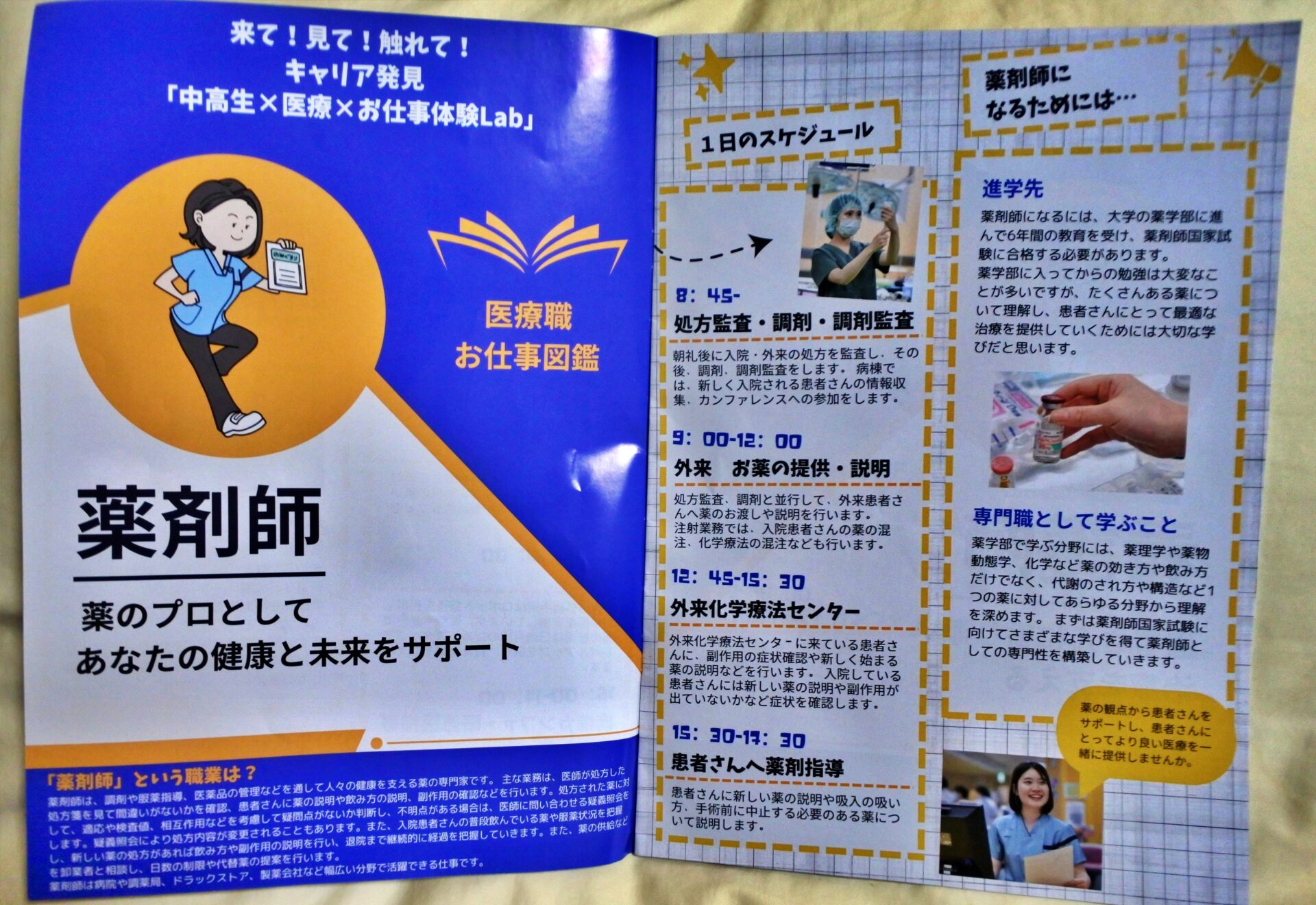
At reception, I received a booklet called “Healthcare Jobs Illustrated” and a stamp rally card.
Those who had made reservations also received a pouch containing original merchandise.
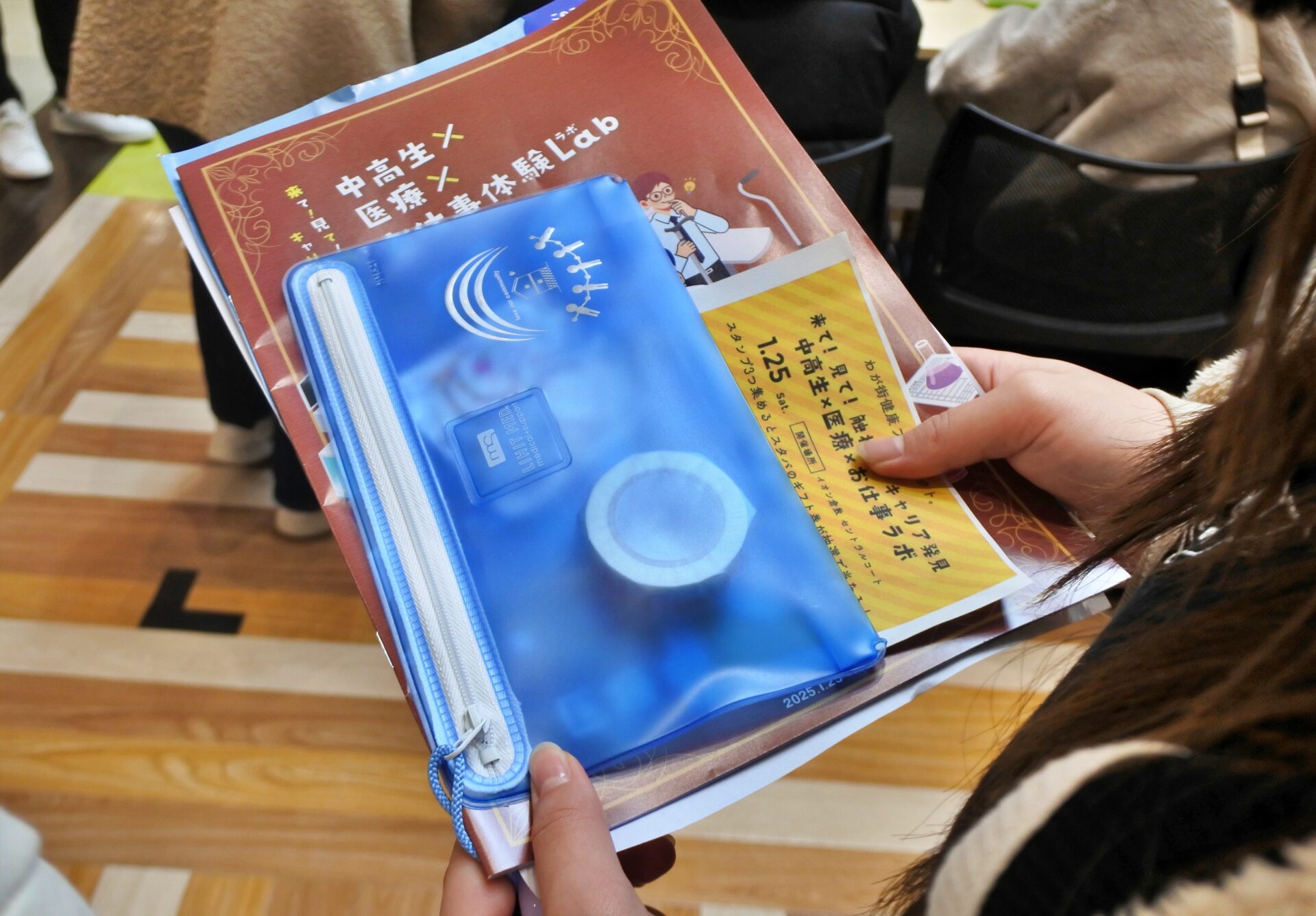
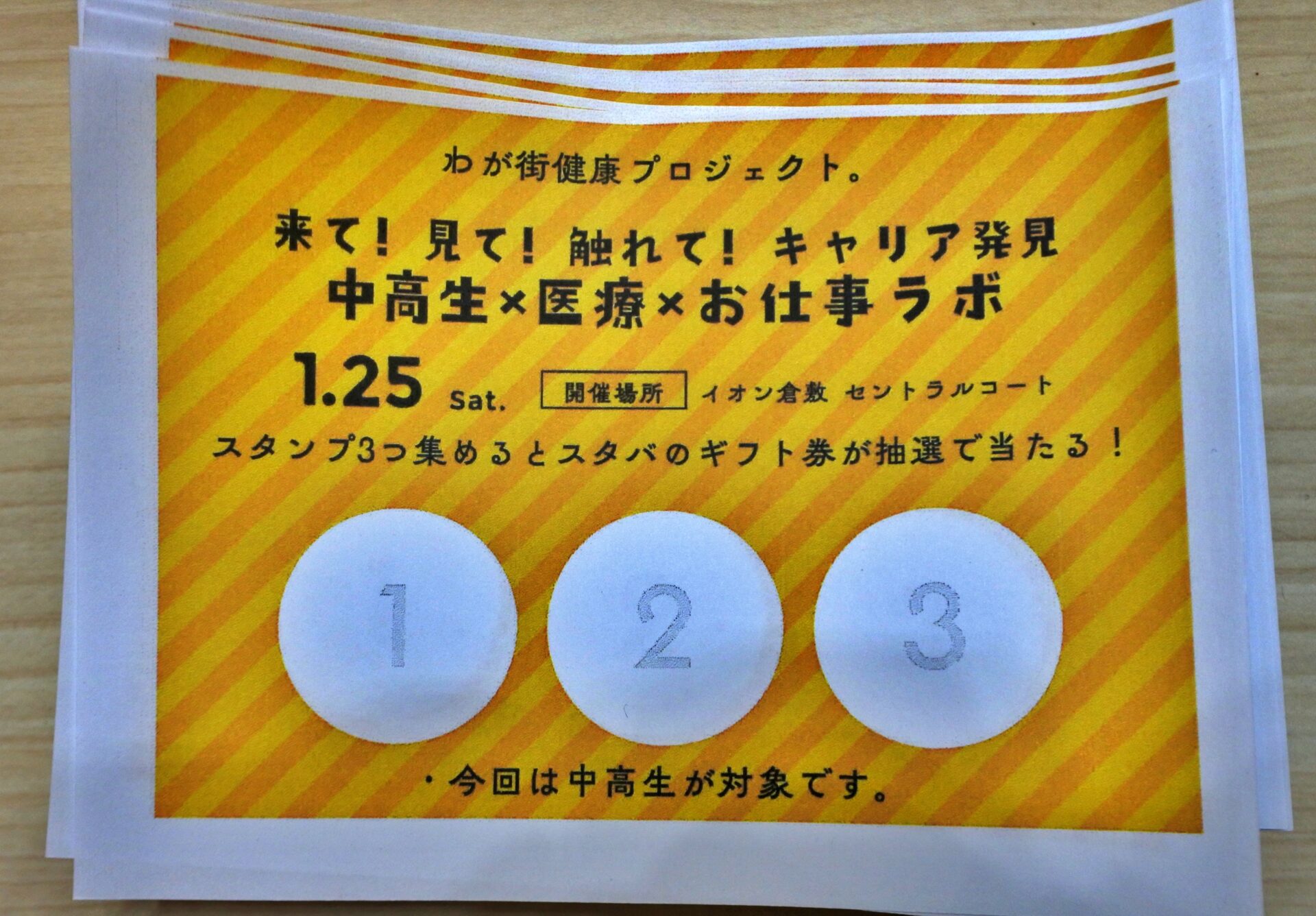
In the stamp rally, collecting three stamps by visiting the booths lets you enter a lottery.
“Healthcare Jobs Illustrated” provides detailed information about the 11 professions represented at the booths, including “What does the job involve?,” “A day’s schedule,” and “How do you become one?”
Trying a Nurse’s Job
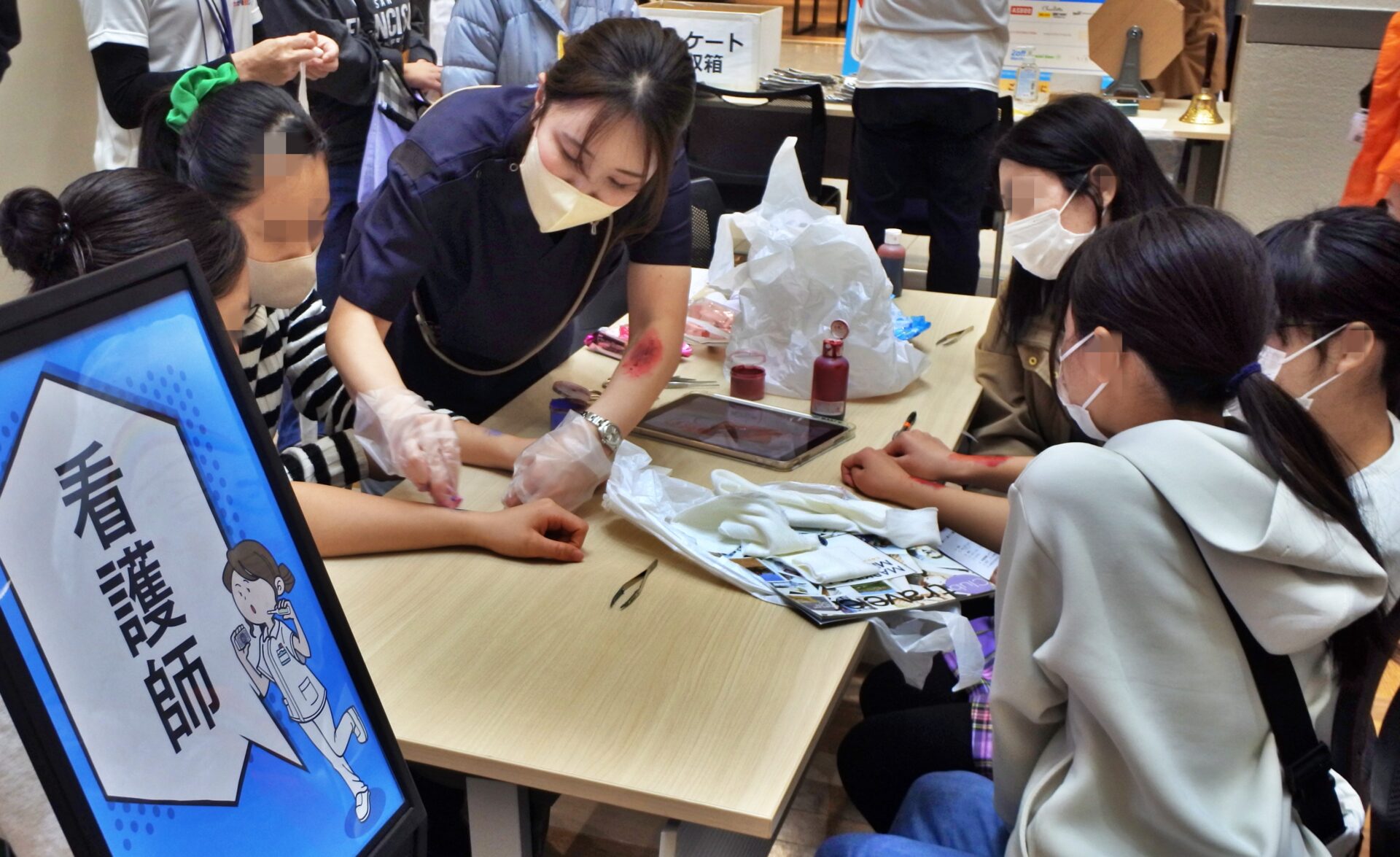
At the nursing booth, participants tried wrapping a bandage around an injured arm and giving first aid using everyday items in the event of a sudden disaster.
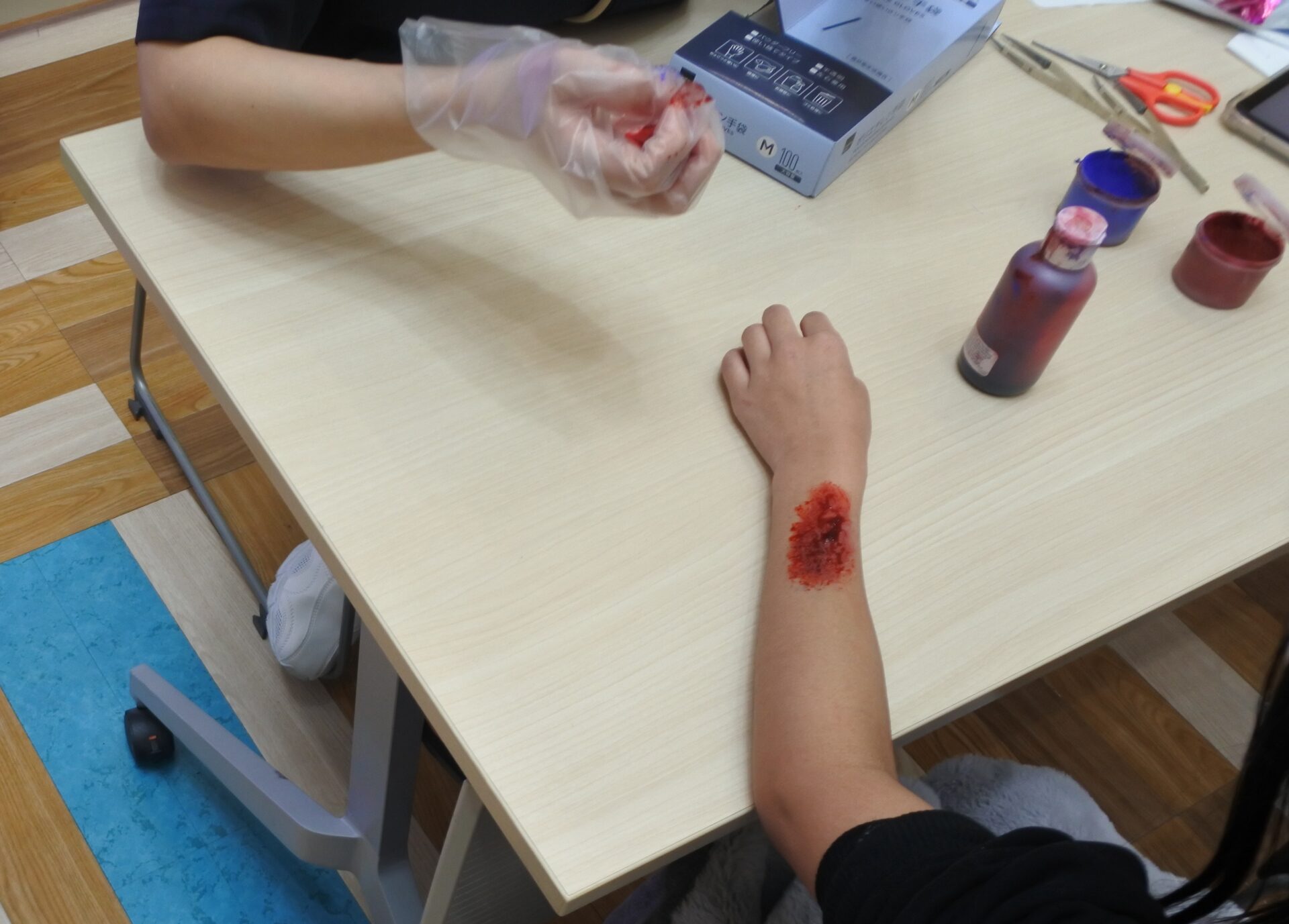
First, they applied makeup to create a wound. The makeup supplies are expensive products used to make people playing patients look realistic during large-scale disaster drills, and the wounds and blood looked real.
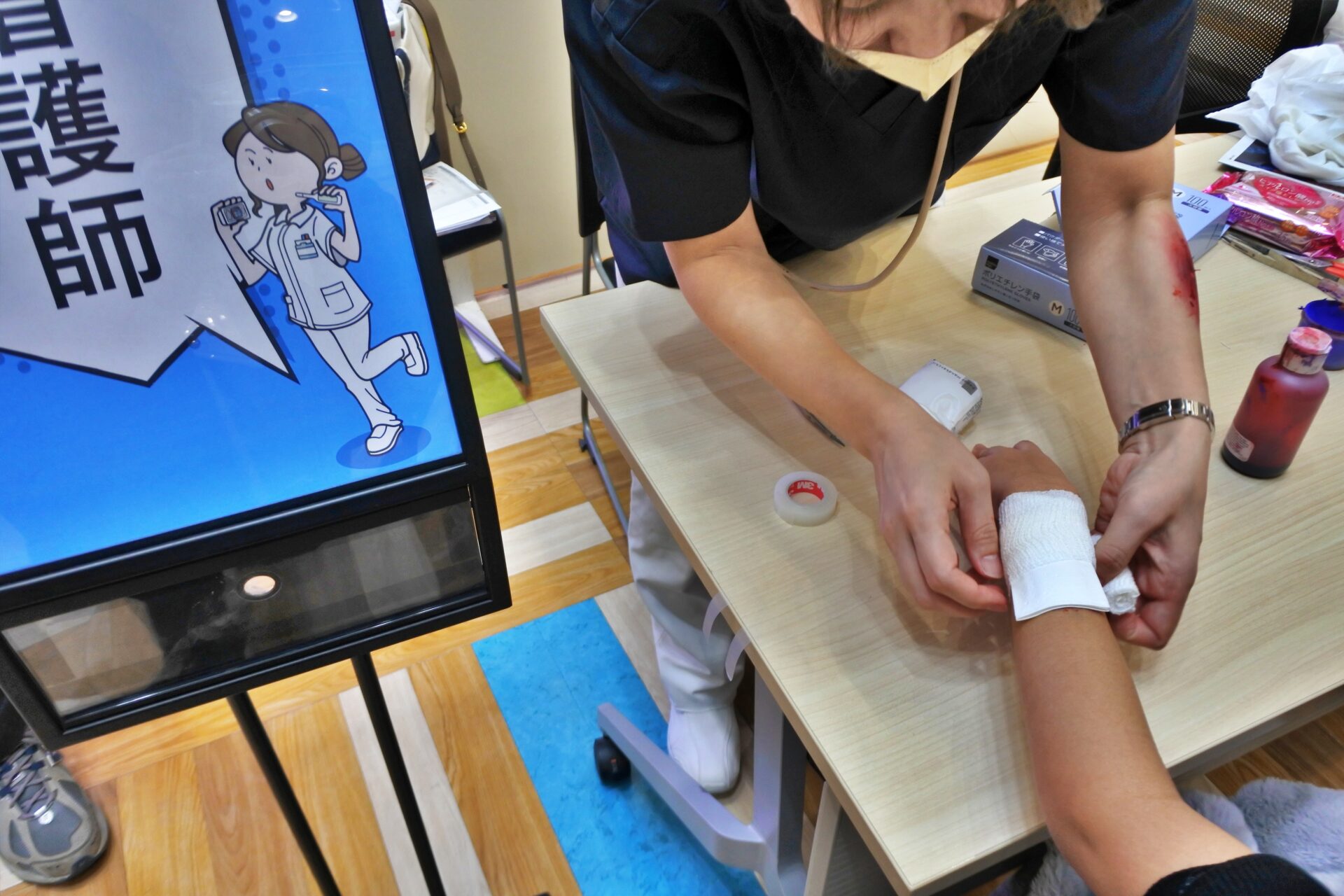
Next, it was time to try wrapping a bandage. A nurse demonstrated by wrapping a participant’s arm. “Okay, now why don’t you try it yourself?” the nurse prompted, and the participant wrapped the nurse’s arm.
To immobilize the arm, they used—of all things—a magazine! It’s first aid using everyday items.
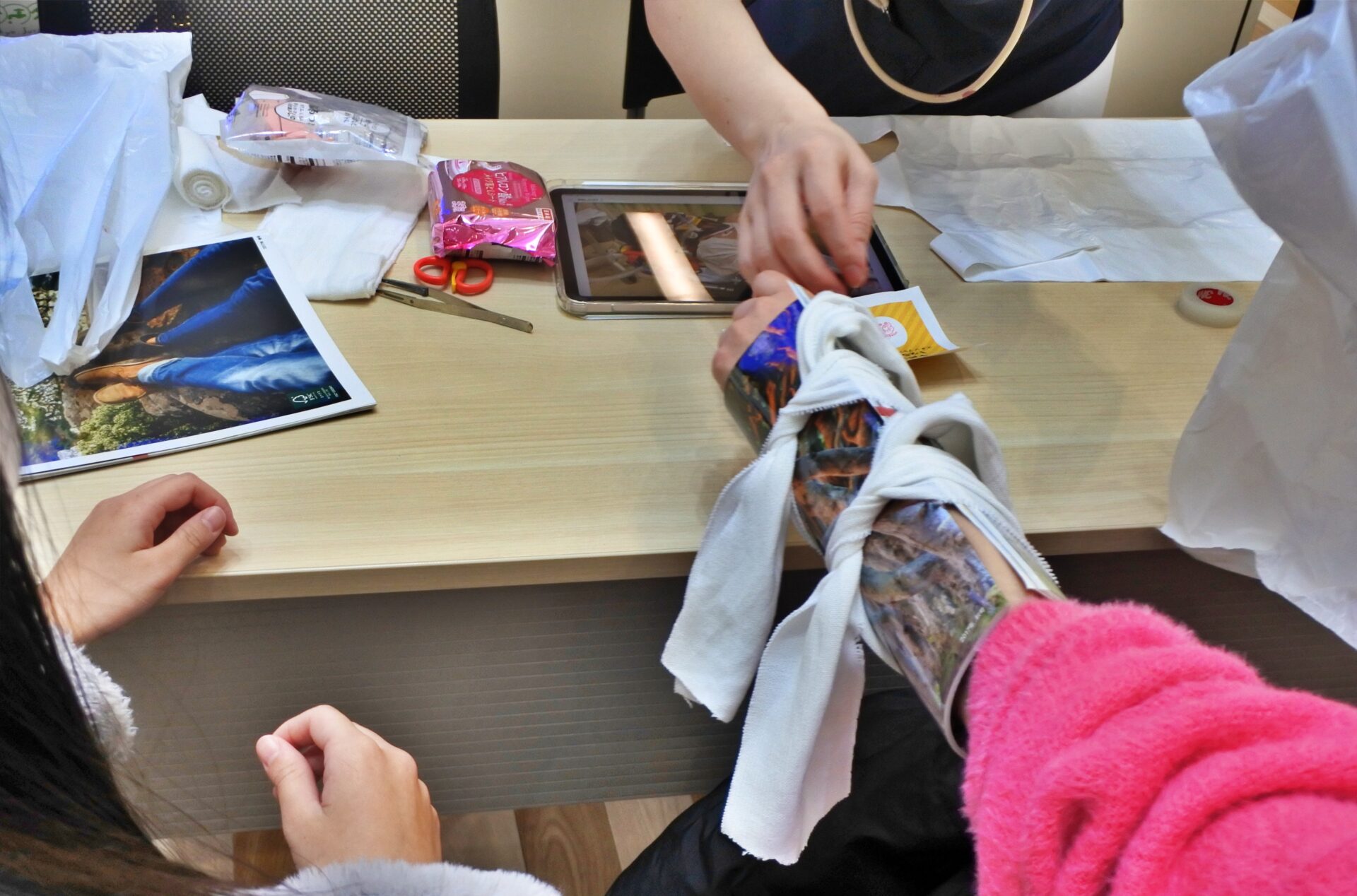
They cut a plastic shopping bag with scissors to use in place of a triangular bandage for supporting the arm.
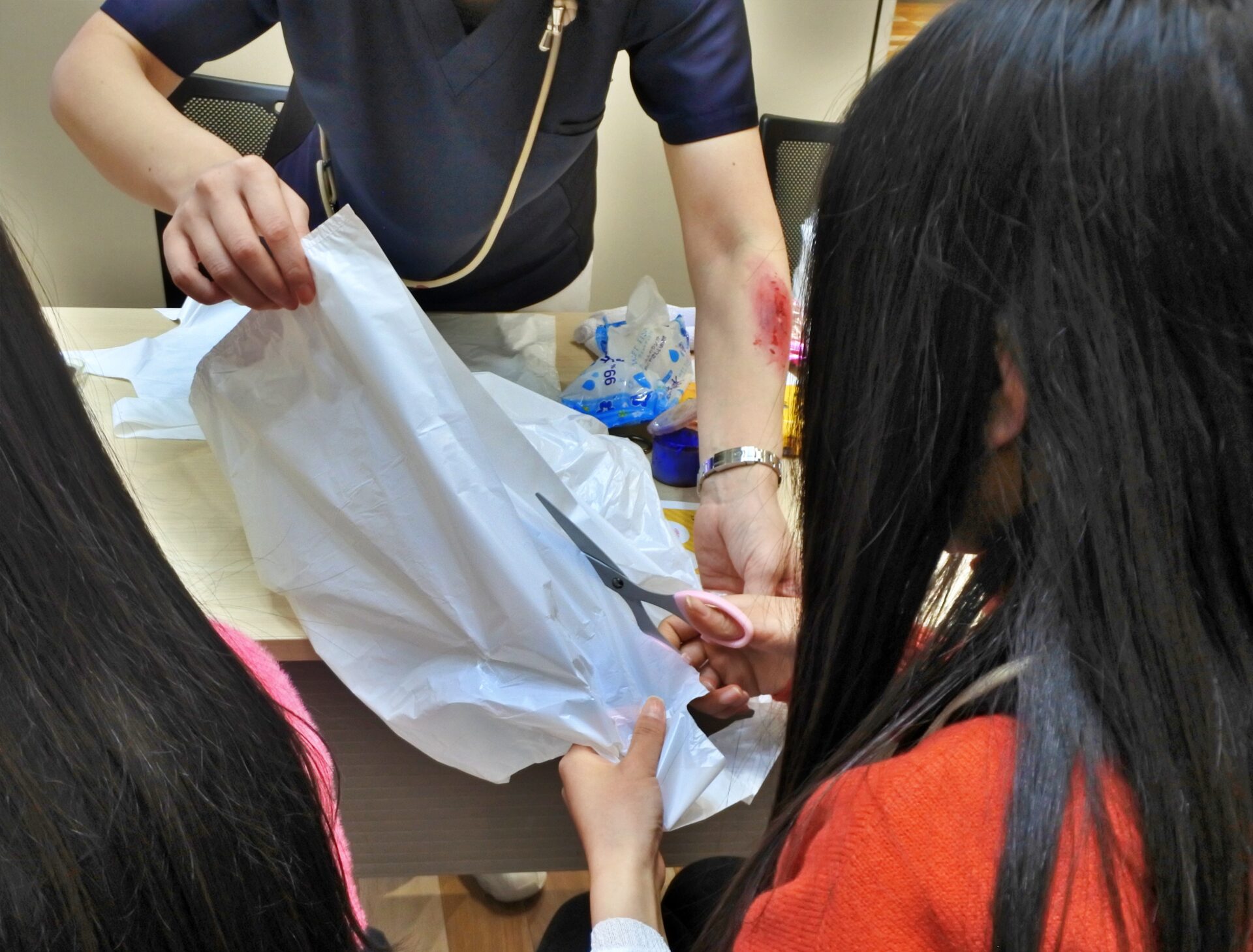
Then they slipped the arm through it and hung it around the neck—and it was done!
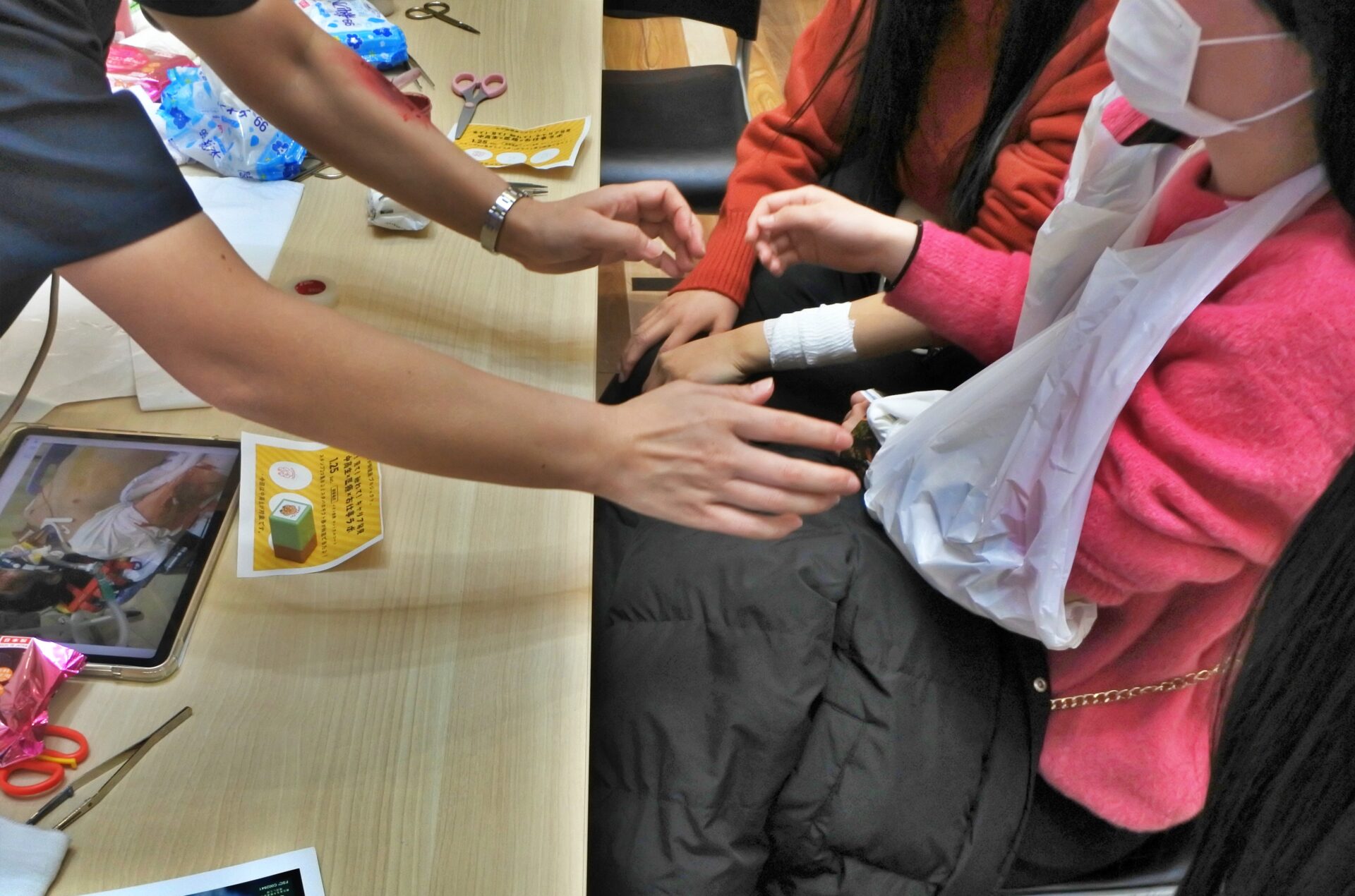
While trying out the job, she chatted happily with the nurse. The girl had apparently taken part because she had wanted to become a nurse for some time.
The nurse told her, “I’ll be waiting for you. Let’s work together.”
Pharmacist Job Experience
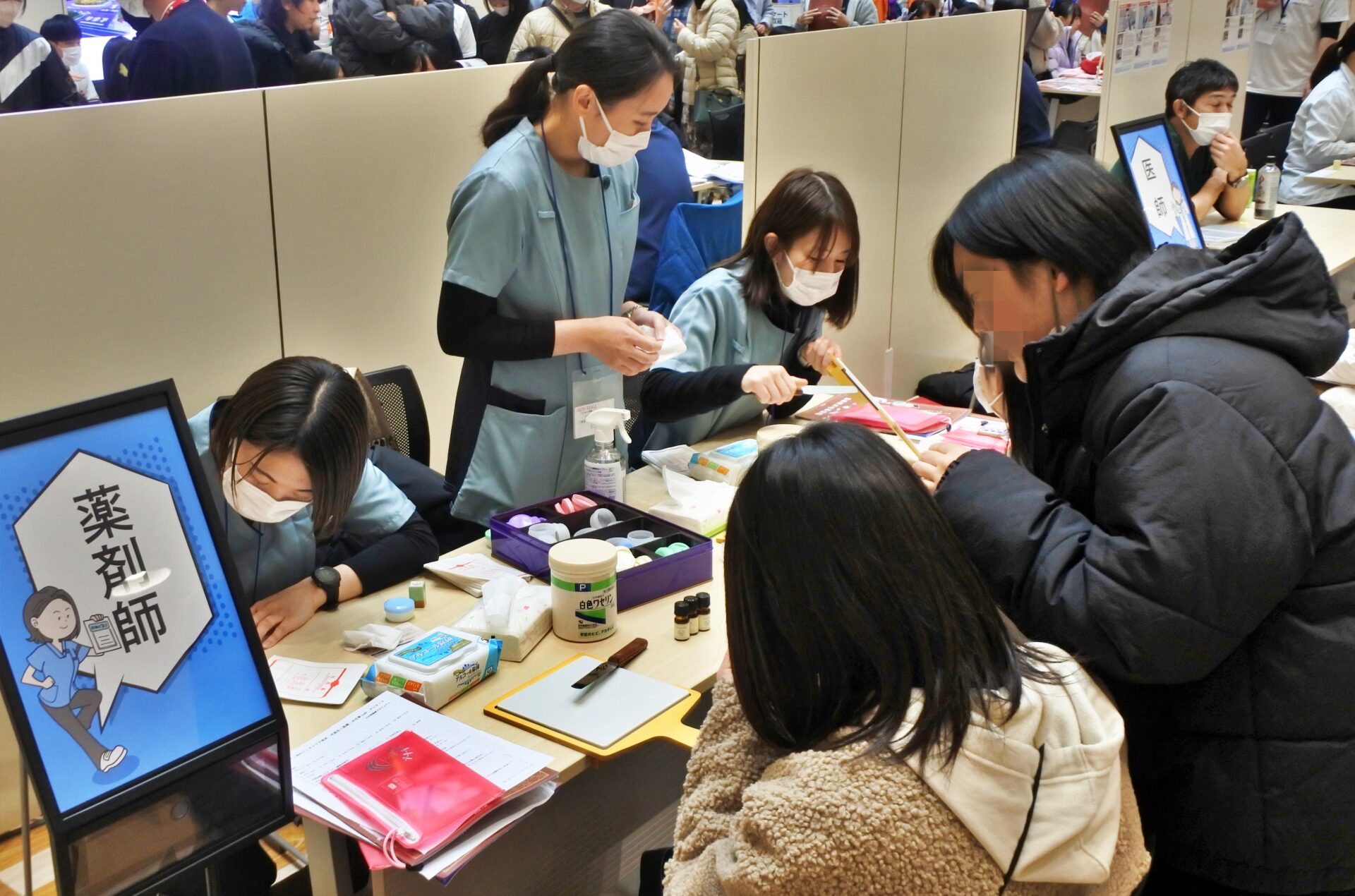
Next, we visited the pharmacist booth.
Here, participants could try making hand cream!
First, they chose their favorite scent from six types of aroma oil.
Next, checking the size of the container they would use, they scooped ointment from a large container onto a board with a spatula.
The board for mixing the ointment and the spatula are apparently also used in actual hospitals.
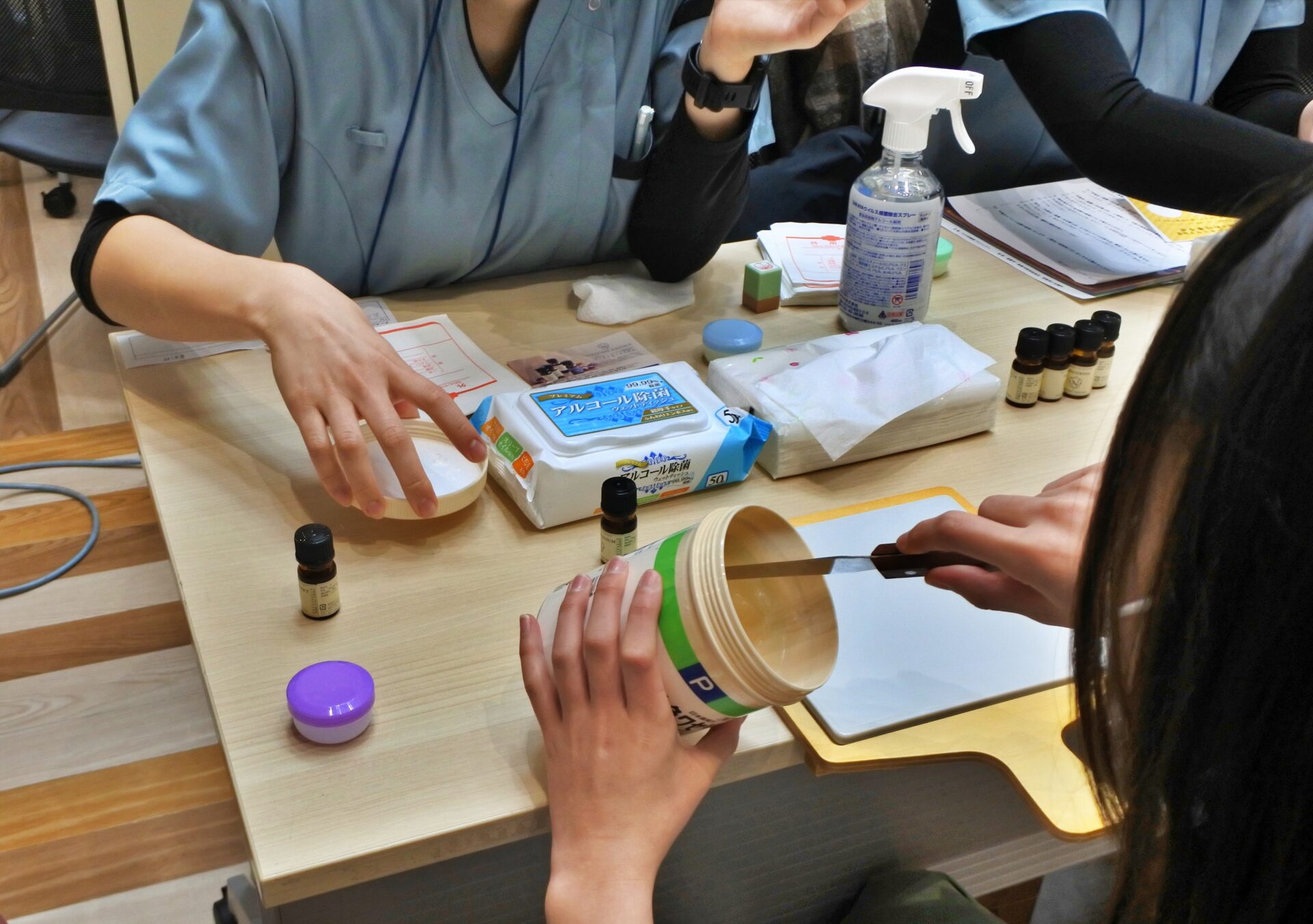
They dripped the oil with their chosen scent onto the ointment and mixed it with a spatula.
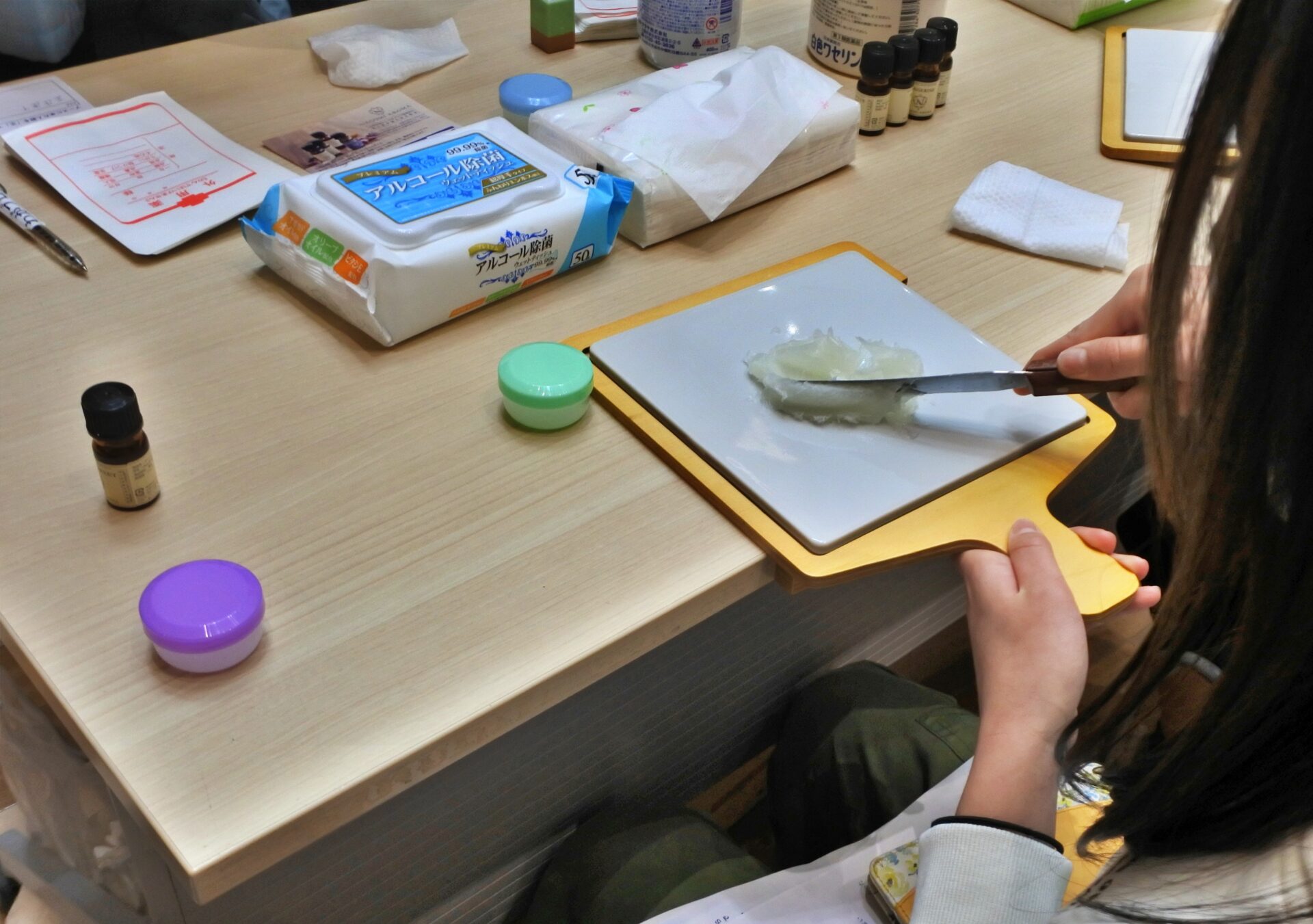
Then they filled the container. They scraped off any excess sticking out above the surface with a spatula, wiped the rim of the container clean, and it was done!
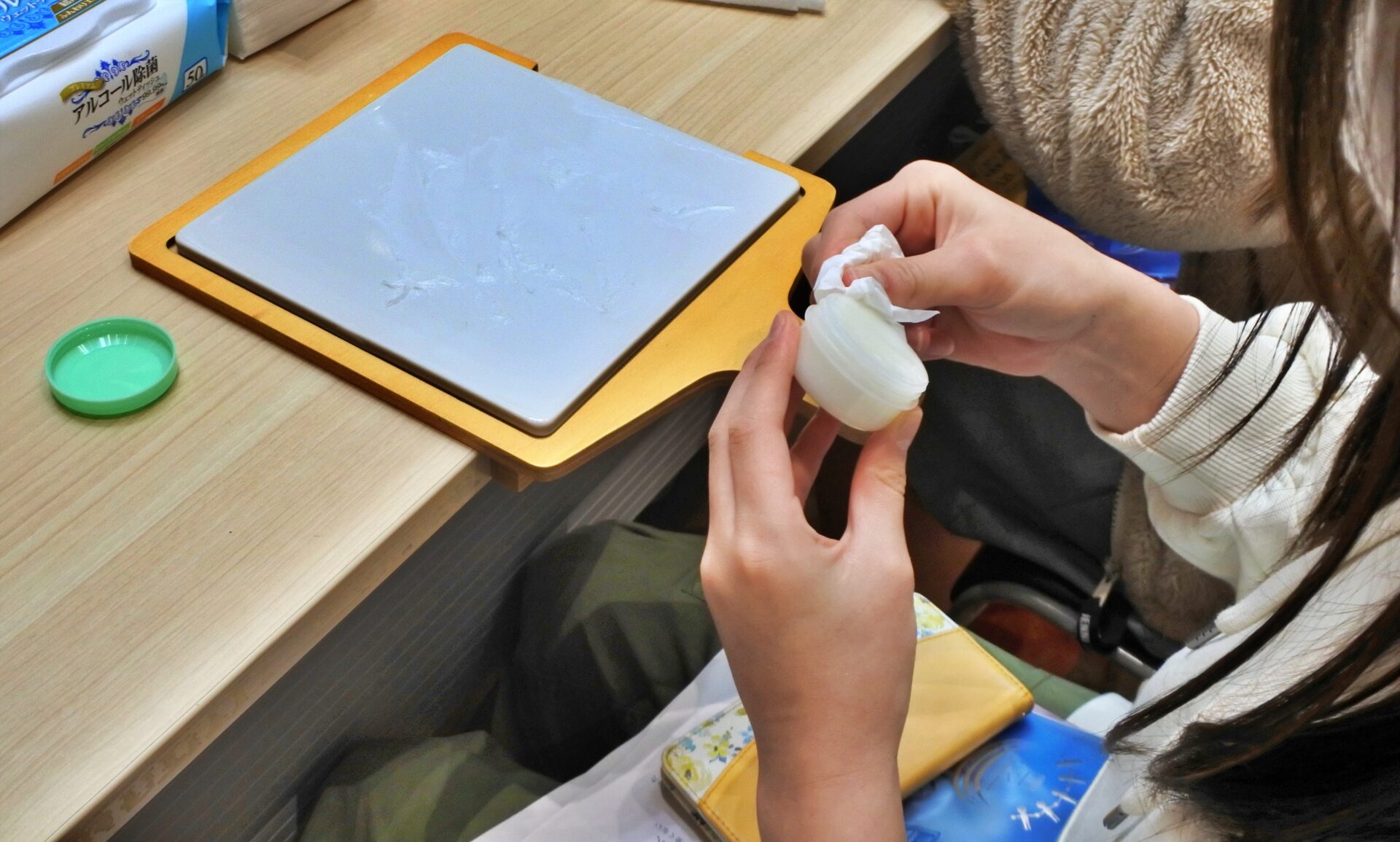
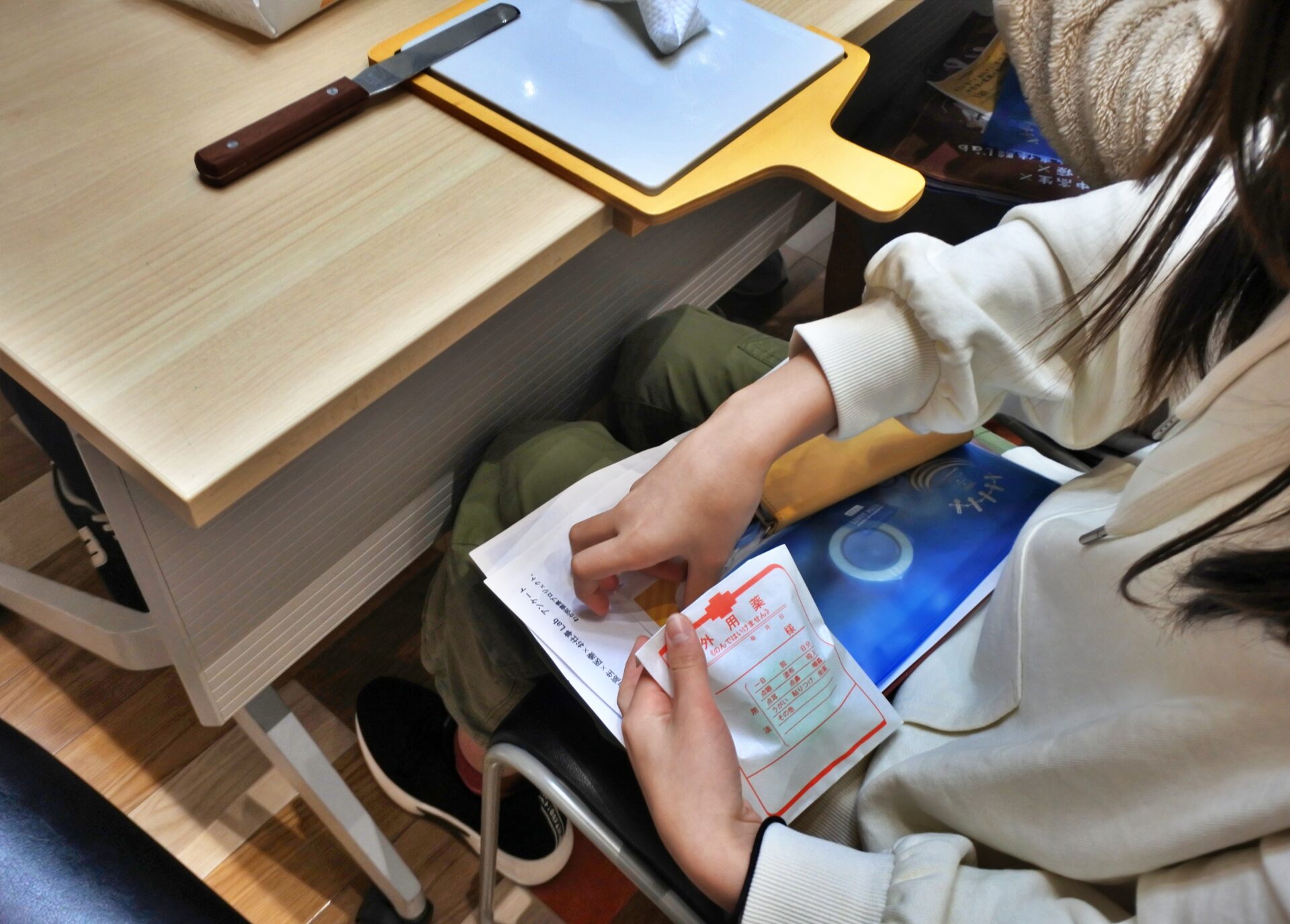
They put it in a medicine bag, making it look like real medicine.
Lots of Exciting Activities
A variety of thoughtful touches were included to spark the interest of junior and senior high school students.
At the public health nurse booth, the “Tobacco Poison Set” made me blurt out, “Wow! There are so many harmful substances!”
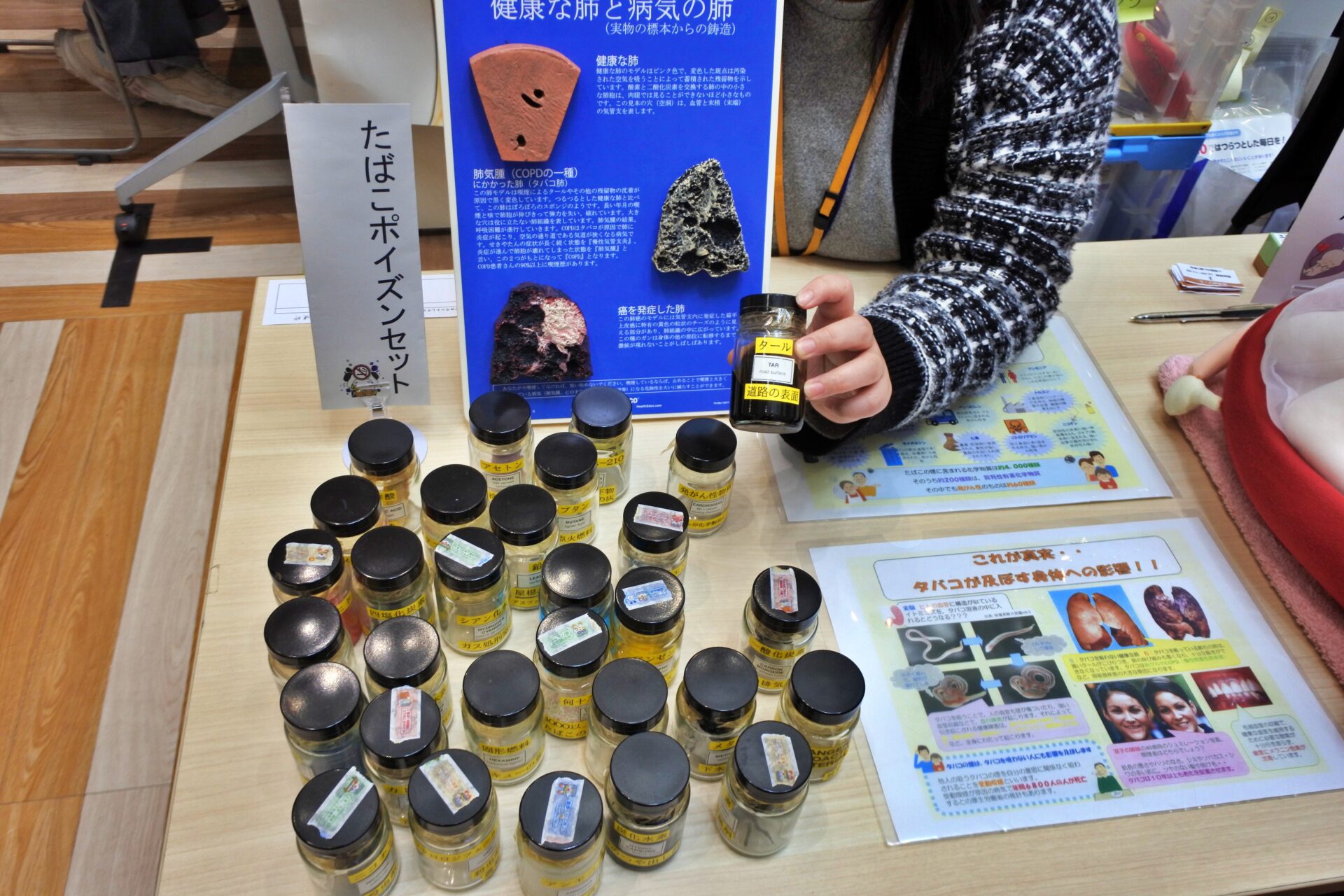
There were 30 small bottles. The public health nurse smiled and said, “It’s not just nicotine. These 30 bottles represent harmful substances found in tobacco, but they’re only a small part of the whole.”
Just looking at the 30 bottles lined up makes you realize how bad it is for your body—and gives you a jolt.
“The work of a public health nurse can be hard to understand, so we use things like this as a starting point to get people interested and talk with them,” she explained.
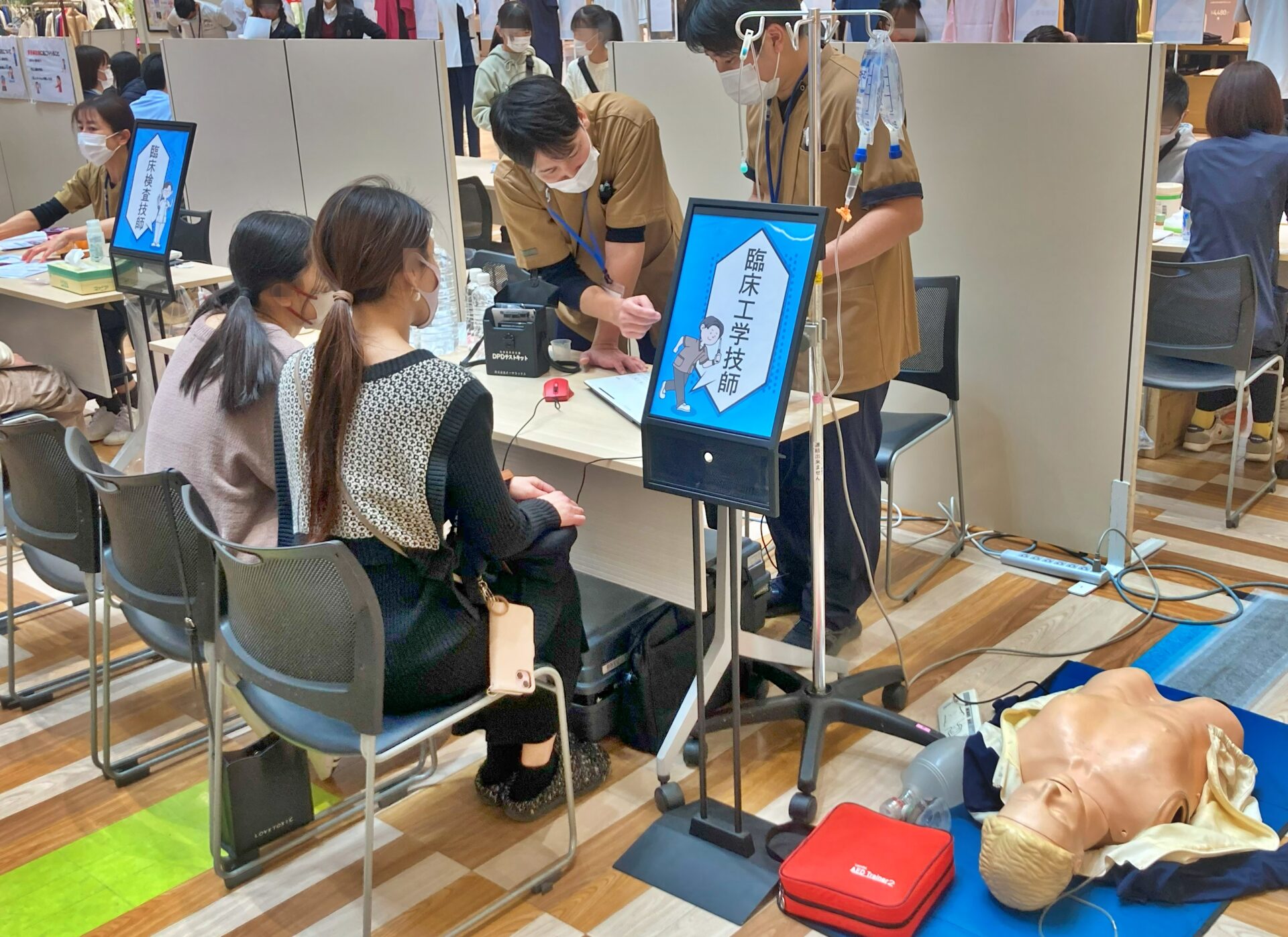
At the clinical engineer booth, different jobs were introduced in the morning and afternoon.
In the morning, participants learned about ventilators; in the afternoon, AEDs. They listened to explanations of how to operate the equipment while getting hands-on with devices used in practice.
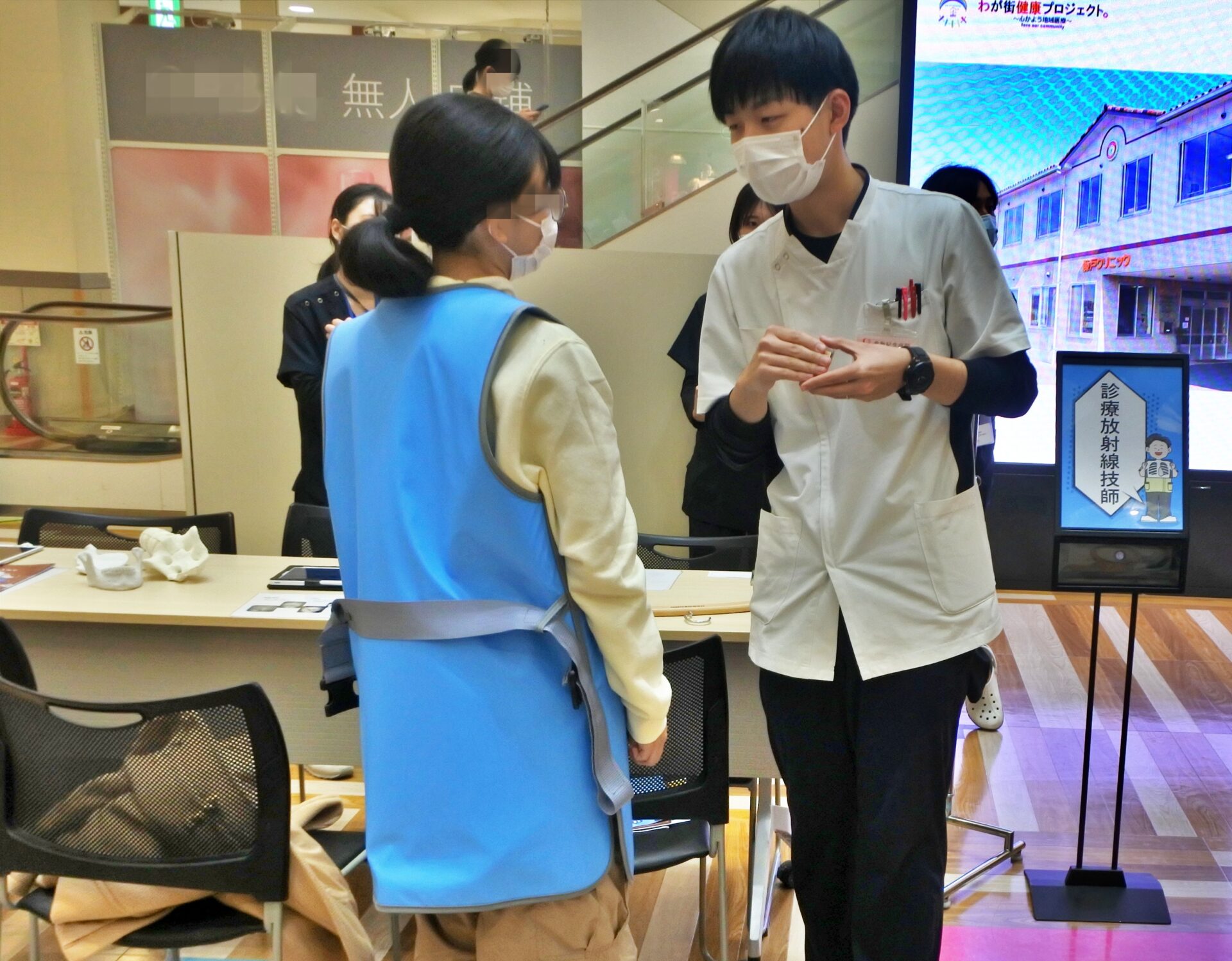
At the radiological technologist booth, participants could try on radiation-protective clothing.
When the technologist said, “You wear this to go into the X-ray room,” participants looked surprised and exclaimed, “It’s so heavy!”
After all the hands-on activities, there were treats to look forward to.
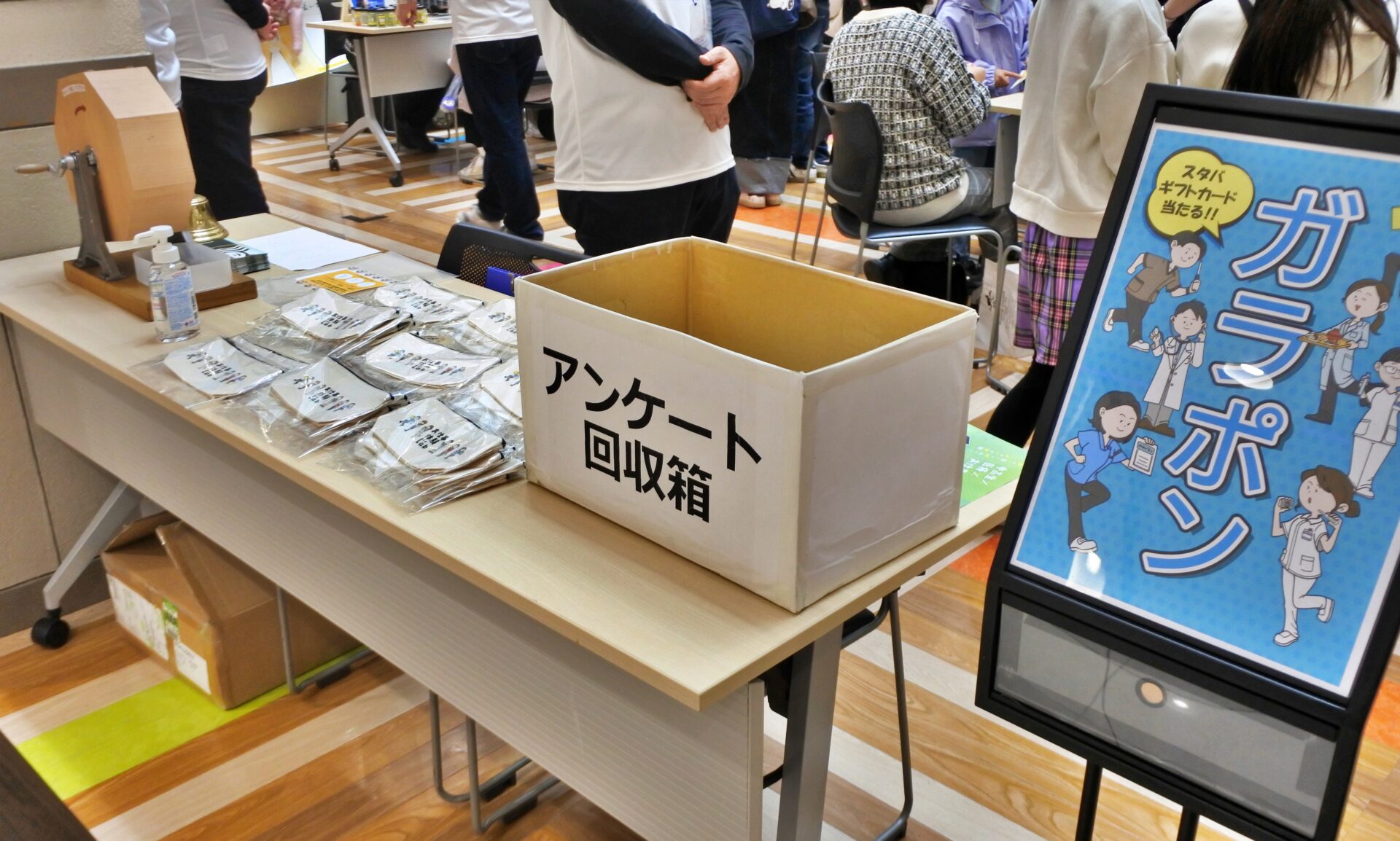
Once they had collected all three stamps on the stamp rally, participants could enter a draw at the “garapon” prize-draw corner.
When someone won, a handbell rang out loudly. The prize was a Starbucks gift card!
There was also an original pouch as a gift for submitting a survey.
From the Writer
We often heard the term “essential workers” during the spread of COVID-19.
Healthcare and hospitals are essential to our peace of mind in everyday life. But we have few opportunities to learn about the different professions and what their work involves. The risk of infectious diseases can also make workplace visits difficult.
This time, the venue was a shopping mall, so it was easy to take part.
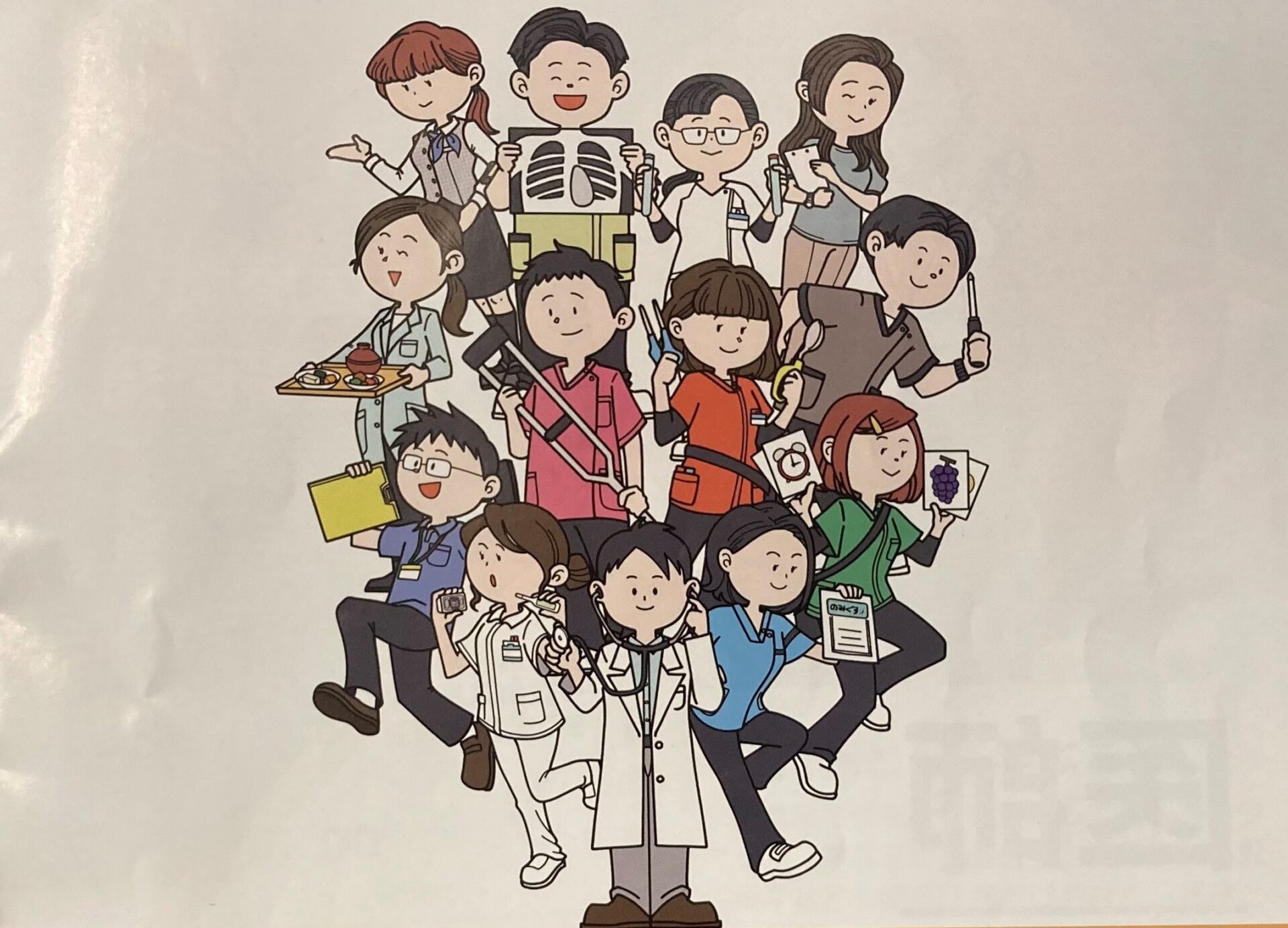
The booklet we received at the venue, “Healthcare Jobs Illustrated Guide” (published by Our Town Health Project.), said the following:
“There are many national qualifications for professions related to healthcare, and for many of them, the path chosen after high school (university or vocational school) is a major turning point. We hope that junior and senior high school students, who will shape the future, will learn that ‘people in a variety of professions work together at medical institutions,’ become interested, and consider these careers as options when choosing their future path…”
That makes sense!
So the direction of your life is decided when you graduate from high school.
It would be great if more opportunities arose for children—not just junior and senior high school students, but elementary school students and even younger children—to become familiar with healthcare work.
This was apparently the first initiative of Our Town Health Project.
I’m looking forward to seeing what they plan next.
Come! See! Experience! Discover Careers: Data for the Medical Career Experience Lab for Junior and Senior High School Students
| Name | Come! See! Experience! Discover Careers: Medical Career Experience Lab for Junior and Senior High School Students |
|---|---|
| Date | Saturday, January 25, 2025, 10:00 a.m.–4:00 p.m. |
| Location | 1 Mizue, Kurashiki City, Okayama Prefecture |
| Website | Our Town Health Project. |



What would you like to know about Kurashiki?
Enter a search term to find articles on this site





































