When you hear “local government work,” what kind of work comes to mind?
Many people may think of counter service or office work, but there is much more to working at City Hall. Staff play a role in a wide range of fields related to people’s daily lives.
Kurashiki Shigoto Expo, a job-hunting event where attendees could hear directly from young staff about the appeal of Kurashiki City’s diverse range of jobs, was held on Saturday, March 7, 2026.
Here’s a report on the day.
The information presented was current when this article was published in May 2026. Please note that it may differ from current information.
What is Kurashiki Shigoto Expo?

Kurashiki Shigoto Expo is a job-hunting event for people interested in working at Kurashiki City Office, held on Saturday, March 7, 2026. It is hosted by Kurashiki City.
The venue was divided into the following four types of booths, where visitors could learn about the city’s diverse range of jobs.
- Information booths introducing the work of each division (administrative, technical, licensed-professional, and fire service positions)
- Exhibition booths displaying work clothes and tools
- “KuraCafe,” where visitors could casually exchange with staff
- An event booth offering mock interviews and mock group discussions
As well as learning about the work itself, the event’s greatest features were the opportunity to prepare for the recruitment exam and exchange with young staff.
There was no stuffy atmosphere at all, and I think it was an event that gave visitors a real feel for the city’s working environment.
What the day was like
Kurashiki Shigoto Expo was held at the Disaster Prevention and Crisis Management Center, newly established at Kurashiki City Office.
After checking in, let’s head inside.

Learn about City Hall jobs! Information booths
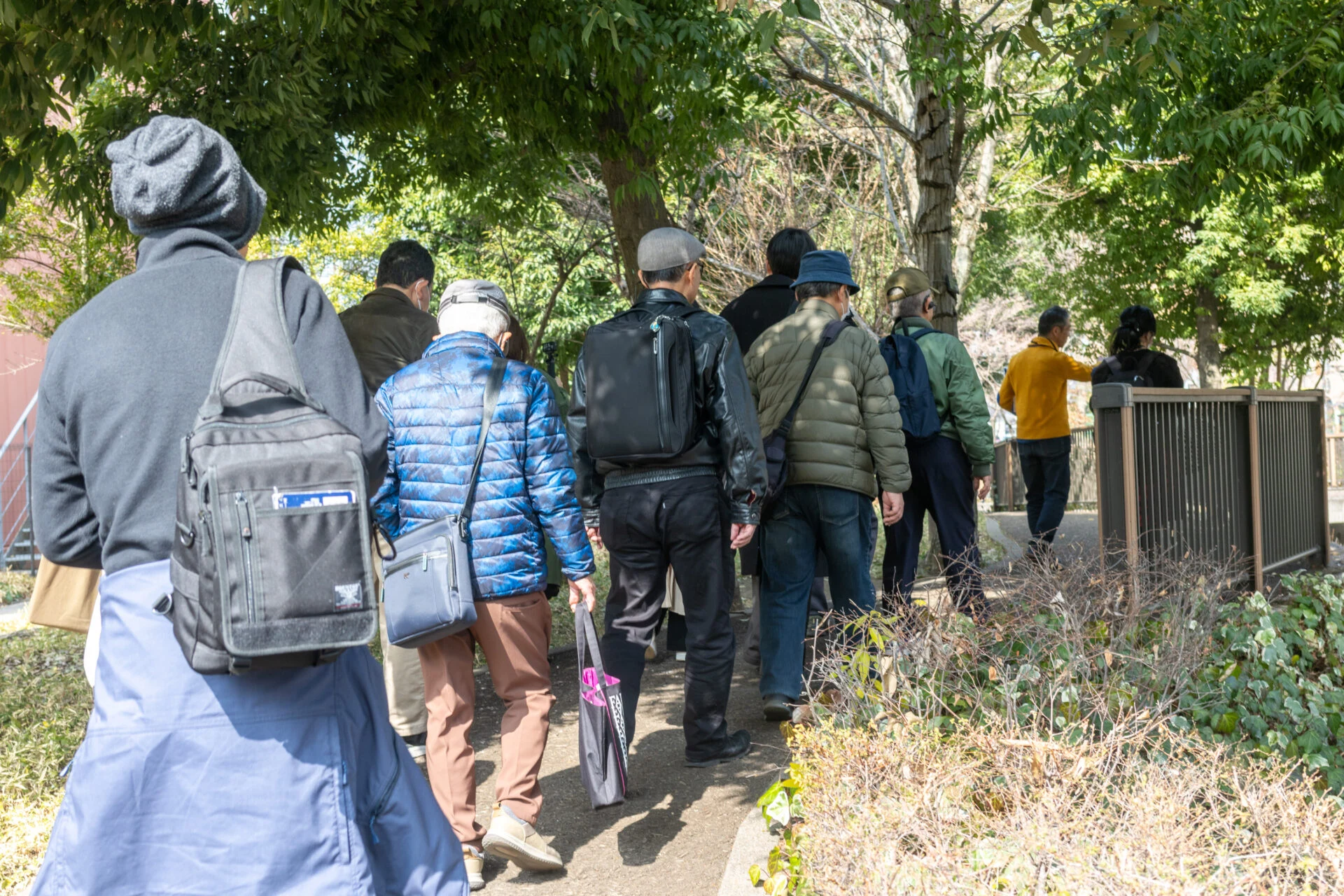
The first place I visited was the information booths, where visitors could learn about the work involved in each type of position. Desks and chairs were lined up in a spacious room.

Visitors could hear from staff at the following 13 booths.
- Administrative positions (Citizen Affairs Division / Tax Collection Division / Human Resources Division / Lifelong Learning Division / Disaster Prevention and Crisis Management Office / Digital Government Promotion Office / Funao Branch Office and Kojima Branch Office)
- Civil engineering technical positions
- Mechanical and electrical engineering technical positions
- Chemistry and architectural technical positions
- Dietitians
- Public health nurses
- Fire service positions
Each booth was decorated with displays related to its work, making it hard to walk by without stopping. The civil engineering booth was covered with manhole covers from around Kurashiki City.

I decided to take a look around, mingling with the job seekers.
At the Citizen Affairs Division booth, staff carefully explained the work of each section, including the My Number Card Section and the Family Register Section. It was clear that even administrative work covers a wide range of duties.

The Lifelong Learning Division booth displayed pamphlets and panels about events the division had organized. It conveyed that the work involves coordinating and cooperating with a variety of people, rather than simply working alone at a desk.

When I asked to see some of the slides used in the presentations, they were full of information job seekers would want to know, such as “A day’s schedule” and “What I’m glad about / what I find challenging about working at Kurashiki City Office.”


Responding to disasters, for example, may be one of the challenges unique to city employees. I was impressed by how staff in every type of position spoke candidly not only about what they find rewarding, but also about what they find difficult.
The Funao and Kojima Branch Office booth was decorated with charming portraits and photos. At branch offices, exchange with the local community is closer; local nursery schools sometimes give staff portraits, and local children sometimes come for visits.

I was told that branch offices are “the administrative service counters closest to residents in each area.” I think the difference between the main City Hall and branch offices is something worth knowing if you plan to work for the city.
Next, I visited the booths for licensed professionals, technical positions, and fire service positions.

These may be positions that residents have few opportunities to talk about, but at Kurashiki Shigoto Expo, visitors could take their time talking with staff. Personally, I was surprised by how many positions make use of technical skills and professional qualifications.
I learned that technical staff work hard to create a comfortable city by repairing public facilities used by many residents, improving the urban environment, protecting nature, and more. I also saw staff answering questions about how their work differs from that of private companies.

At the fire service booth, visitors could see up close the firefighting uniforms and extinguishing equipment used on the job. The uniform worn during actual firefighting operations had a faint smell of smoke.


Firefighting is a job with a unique work schedule. I couldn’t picture what working 24-hour shifts would be like, but the panel displays made it easy to understand.

At every booth, many participants actively asked questions.
Some questions might be difficult to ask at a typical information session, such as “Can you really take time off?,” “Do you receive holiday pay?,” and “Could you tell me about the employee benefits?” However, staff members responded thoughtfully, helping to ease participants’ concerns.
They also talked about how easy it is to take childcare leave and maternity and parental leave, as well as how easy it is to raise children, highlighting the appeal of the job beyond the work itself.

It was also striking that many questions compared the city with private-sector companies. A mid-career hire asked about the respective advantages of working in the private sector and as a civil servant. Drawing on personal experience, the staff member said, “Kurashiki City employees are generally not transferred outside the city, making it easier to plan for the future.”
Answers from people who have experienced both workplaces should offer great reassurance to those unsure about their career path.
Displays of work tools and uniforms
The information-booth venue featured tools regularly used by city employees.

The large, cross-shaped manhole key is apparently used to open heavy manhole covers. It looks well-worn, as if it has been used for many years.

Work clothes were also on display.
There was a wide variety, including denim jackets that promote Kurashiki’s renowned textile industry and polo shirts printed with the city’s mascot.

“KuraCafe,” where you can connect with young staff members
Next, I visited the lively venue for “KuraCafe.”

KuraCafe is a place to connect with young staff members on an equal footing. Conversations were lively at each table, covering everything from questions about the work and job hunting to casual inquiries.

A young staff member offered advice to a participant worried about job hunting: “Job hunting isn’t everything.”
I think they were able to offer support because they could relate to the concerns of participants close to them in age.
Event booth for mock interviews and group discussions
I also visited an event booth where participants could try mock interviews and mock group discussions.
The first activity was a mock interview. Six volunteers took part, splitting into interviewer and candidate roles and asking and answering questions.

Questions likely to come up in a real interview were posed, such as “Why did you choose Kurashiki City over other local governments?,” “Why do you want to work for a local government?,” and “What kind of work would you like to take on at City Hall?” The participants playing candidates answered in turn.
Rather than only practicing how to respond as a candidate, experiencing the interviewer’s perspective also offers an objective way to learn what recruiters look for.
After a break, the mock group discussion followed.

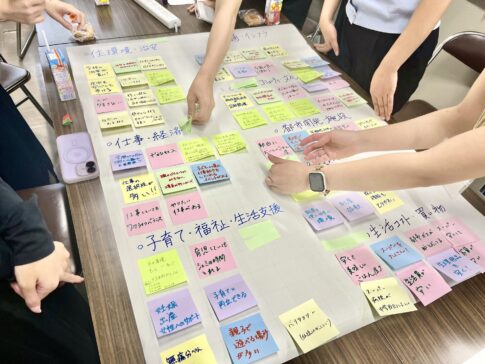
Participants split into groups of six or seven and discussed the topics provided.
The first topic was “Are you for or against a four-day workweek?” The second was “Are you for or against side jobs for civil servants?” Both topics seemed likely to generate plenty of arguments for and against.

They discussed the topics with people they had just met and worked together to find answers.

After both the mock interview and the mock group discussion, young staff members provided feedback.
You can prepare for interviews by making use of your school’s career guidance or career center, but opportunities to experience a group discussion firsthand are surprisingly limited. I think this was a valuable chance for participants to prepare.

Near the venue exit, a raffle to win Kurashiki specialties was being held.
Packed with playful ways to experience the region’s charms, it was the perfect final treat.
From the Writer
After covering the Kurashiki Shigoto Expo, I felt that it was more than just a job fair.
You could listen to young staff members share their real-life experiences and talk directly with them about your concerns regarding job hunting. I think the event’s greatest appeal was the chance to have a two-way conversation.
When choosing a job, interacting with people who do the work may be just as important as getting information through a screen.
I hope the Kurashiki Shigoto Expo will inspire more people to pursue the goal of “making Kurashiki a better place.”
Kurashiki Shigoto Expo Information
| Name | Kurashiki Shigoto Expo |
|---|---|
| Date | Saturday, March 7, 2026 1:00 p.m. to 4:30 p.m. |
| Location | 1st floor, Disaster Prevention and Crisis Management Center, 640 Nishinakashinden, Kurashiki City, Okayama Prefecture |
| Website | Kurashiki City Employee Recruitment Website |




What would you like to know about Kurashiki?
Enter a search term to find articles on this site