
The sounds of spring are gradually becoming audible, and it has become a pleasant season to walk outside.
On March 1 (Saturday) and 2 (Sunday), a historical walking event called Kurashiki Aruku was held.
The event was organized by the architectural group KURASiX, based in Kurashiki.
Through the perspective of architects, this event aimed to delve into the origins of Kurashiki Village as seen from the flow of water, combining lectures and walking tours. I participated in the first day on March 1 (Saturday) and will report on it.
What is Kurashiki Aruku
This walking tour is themed around interpreting the origins of Kurashiki Village through its relationship with water, walking different areas on the first and second days.
On the first day that I participated, the theme was Viewing Kurashiki Village from the Outside, starting from MITSUI OUTLET PARK Kurashiki and covering a course of about 3 km around "Hamamura" (present-day Hamacho) in the northeastern part of Kurashiki Station.
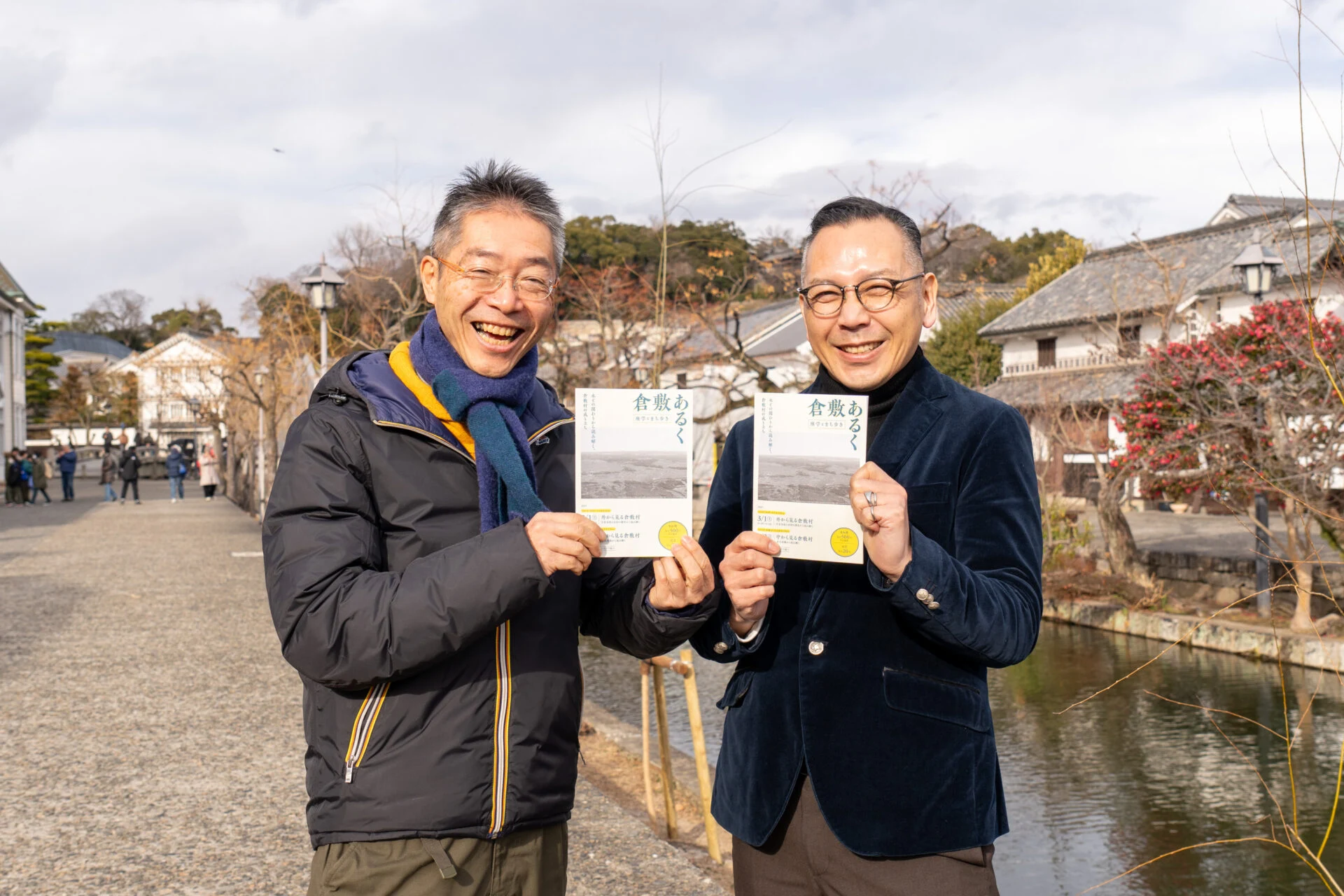
Regarding why the architectural group KURASiX organized this historical event, one of the members, Yamaguchi Shinsaku from Kurashiki Architectural Studio, said the following.
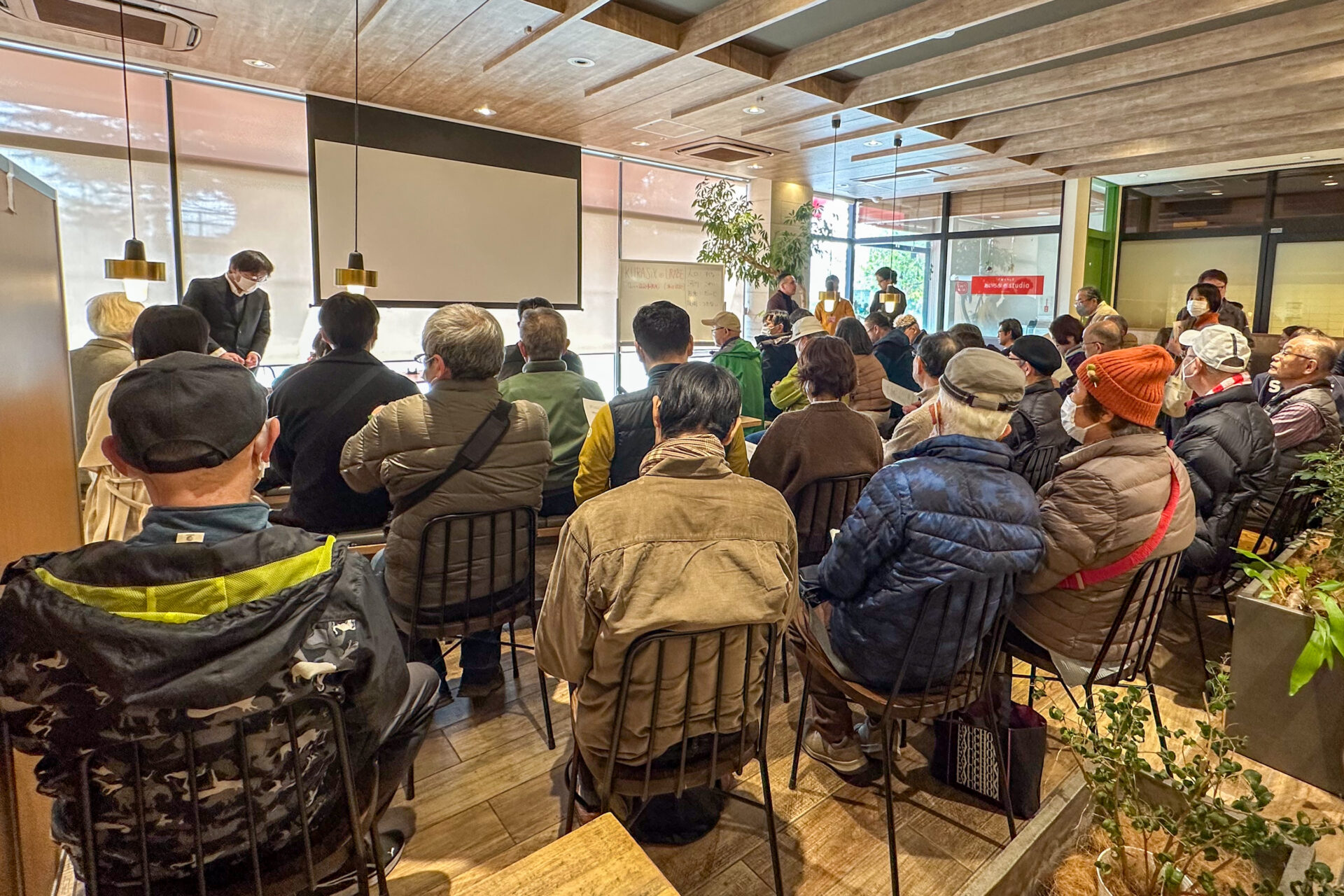
The venue for the first day was "Kurashiki Circle," located in a corner of the cafeteria area within MITSUI OUTLET PARK Kurashiki.
What is "Kurashiki Circle"
It is a space used in a corner of the cafeteria area within MITSUI OUTLET PARK Kurashiki, aimed at supporting community activities and creating connections within the region.
As soon as the reception started at 10 AM, participants began entering the venue one after another.
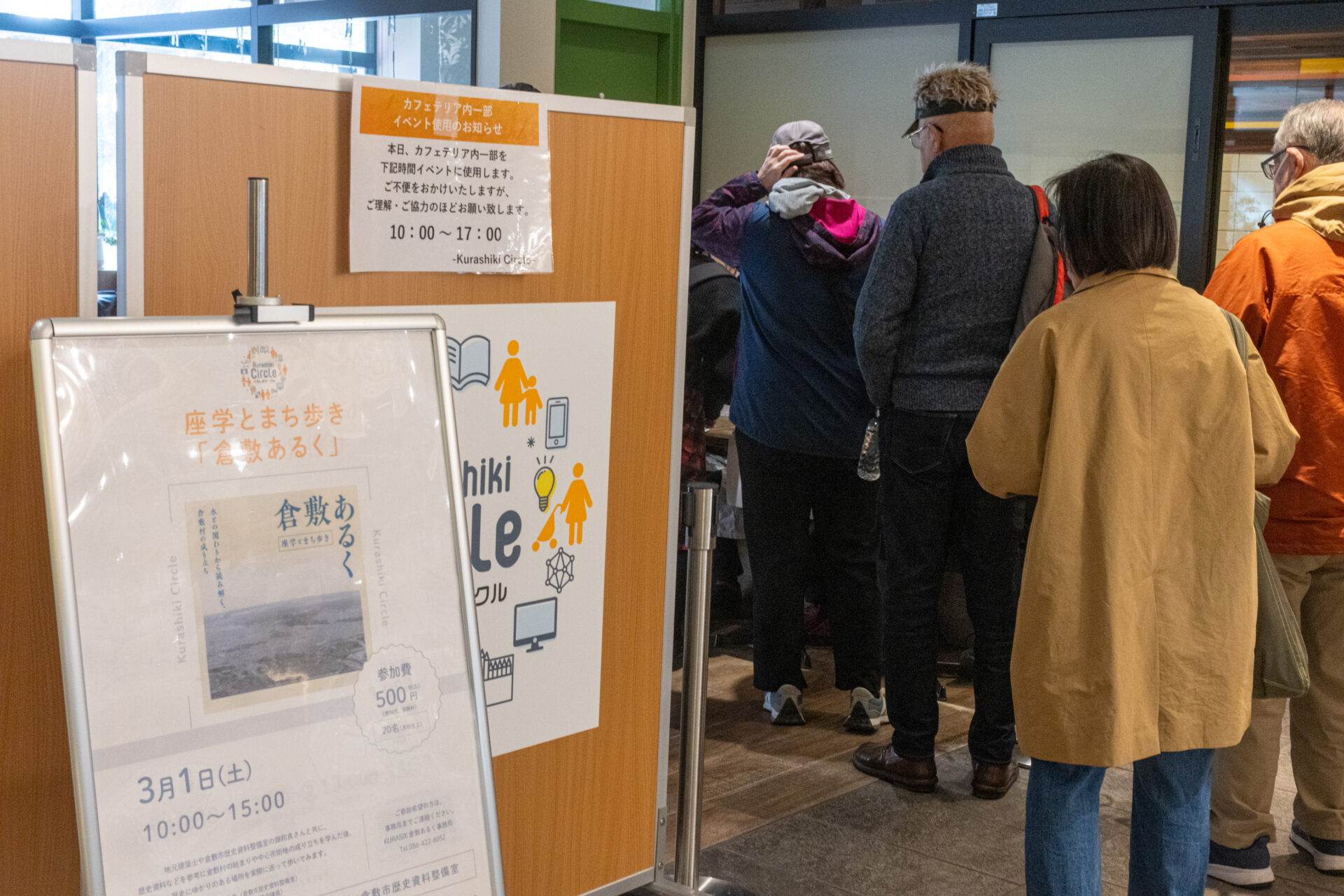
The initial capacity was planned for 20 people, but due to its popularity, it was increased to 40 participants.
The seats in the venue filled up, and the lecture was about to start.
Lecture
First, in the morning, we learned preliminary knowledge for the walking tour through a lecture.
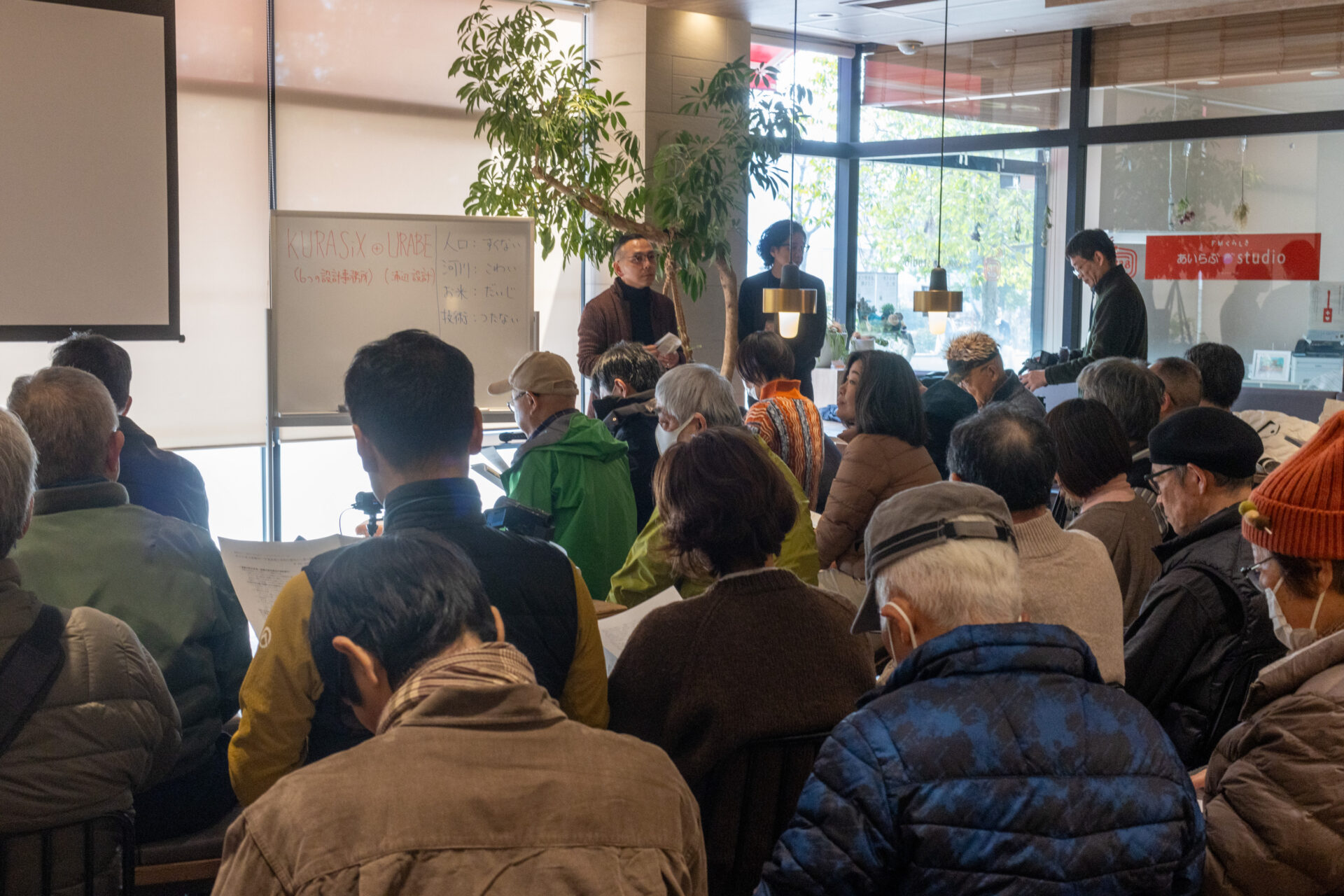
Following the overview explanation by Yamaguchi, a member of KURASiX, a lecture lasting about an hour was given by Hata Kazuyoshi from the Kurashiki City Historical Materials Maintenance Office.
The Historical Materials Maintenance Office of the General Affairs Division was established as a department that was renamed from the General Affairs Division's City History Compilation in the fiscal year 2006. It was newly established as an organization on April 1, 2020. Its activities aim to create a system where citizens can actively utilize historical documents and ancient texts, which are shared intellectual resources, and to select and preserve modern public documents and other records that have value to be passed down to future generations.
Source: Overview of Kurashiki City Historical Materials Maintenance Office
In the lecture on the theme of "Viewing Kurashiki Village from the Outside," we deepened our knowledge by comparing historical documents with the current situation.
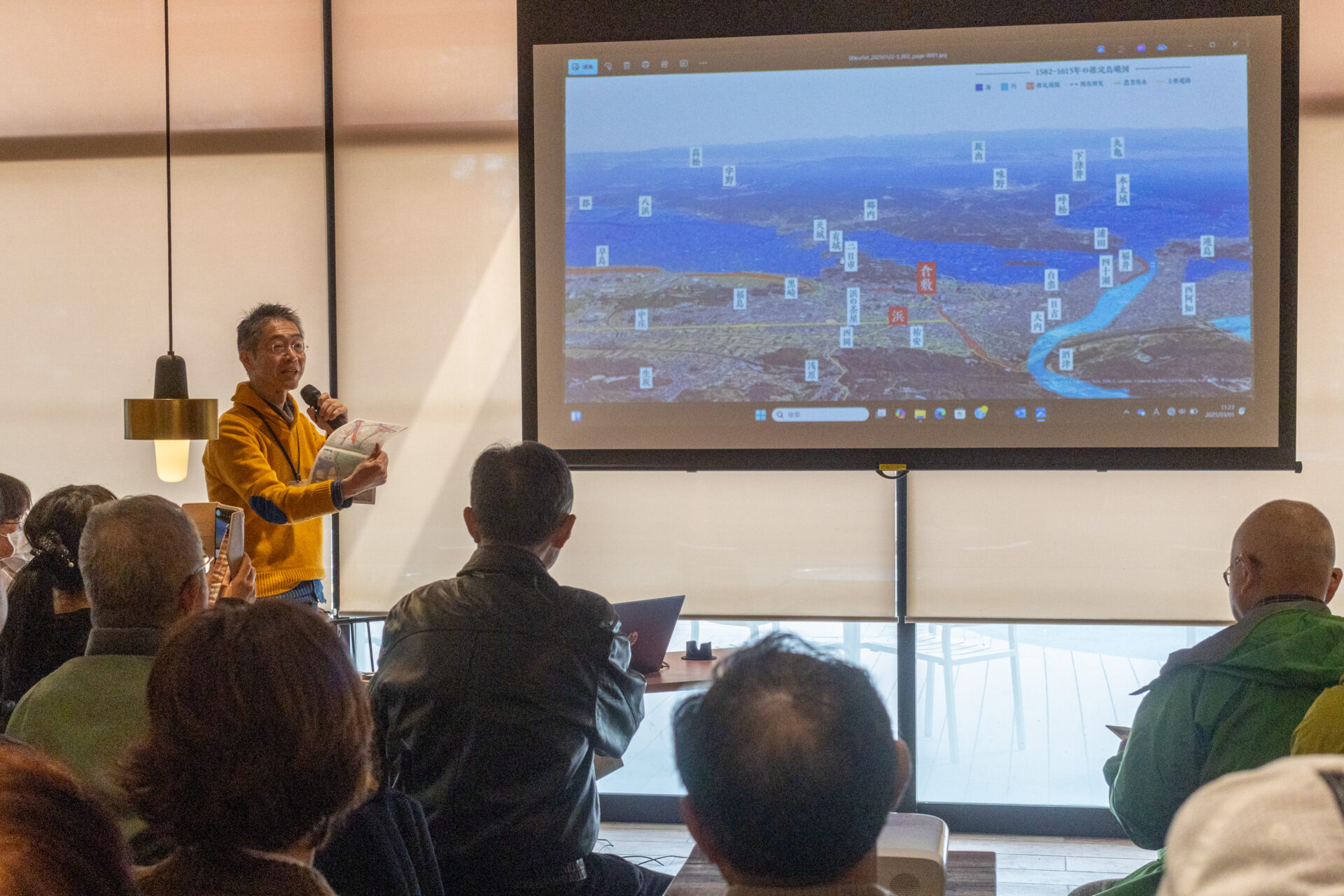
Finally, there was a summary of the lecture by Nishina Masahiro from Nishina Architectural Design Office, a member of KURASiX, and then a lunch break was taken.
Walking Tour
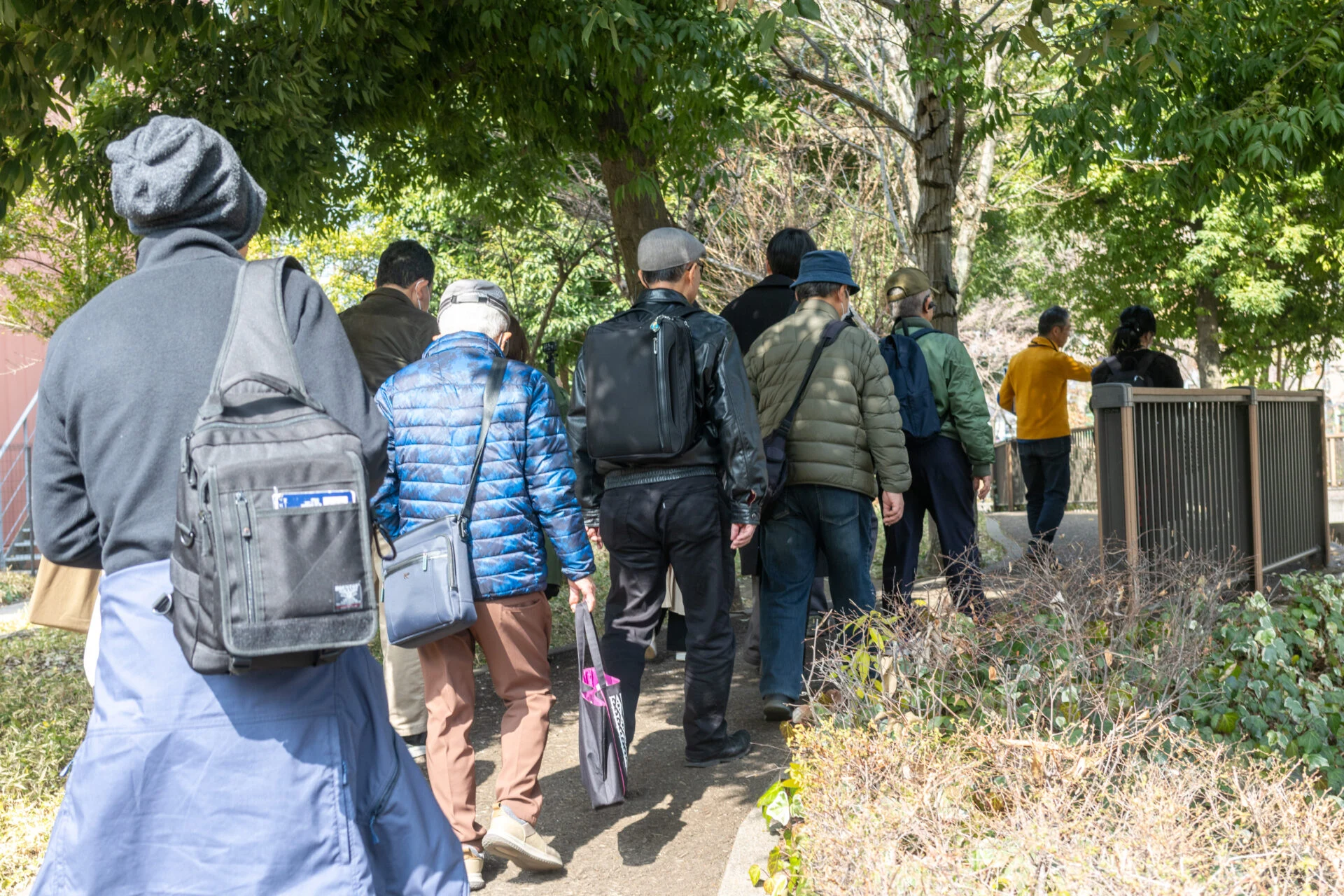
In the afternoon, we split into two groups and conducted the main event, a 3 km walking tour.
The walking tour course was structured around the keyword The History of Ukita Dike and Hamamura, focusing on the historical heritage around the aqueduct flowing north of Kurashiki Station and Hamamura.
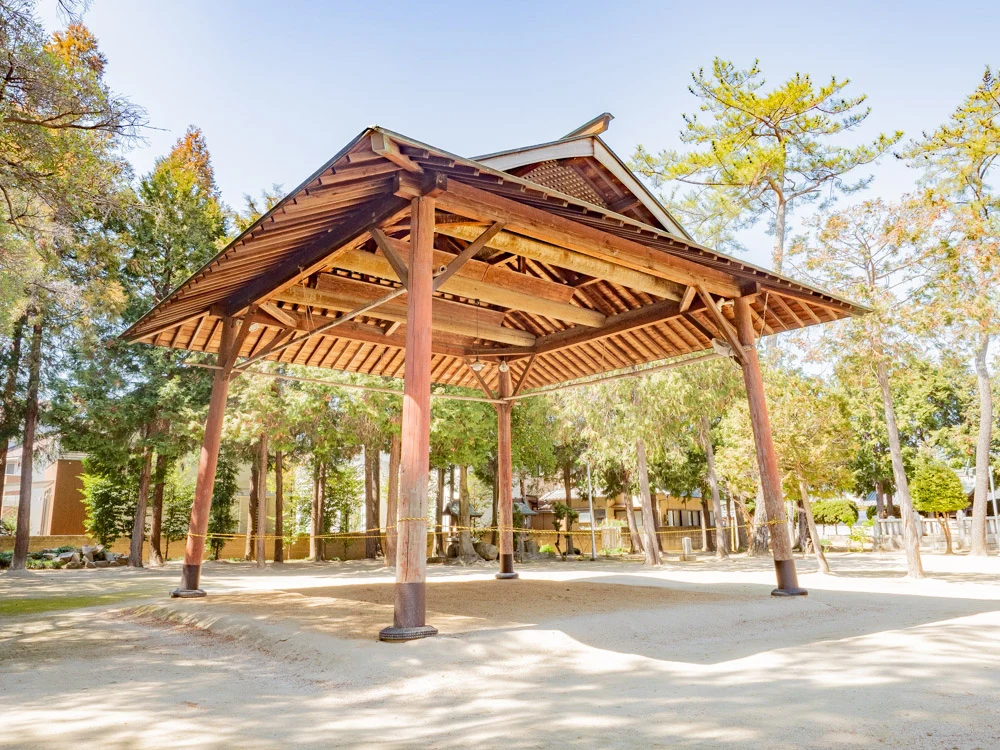
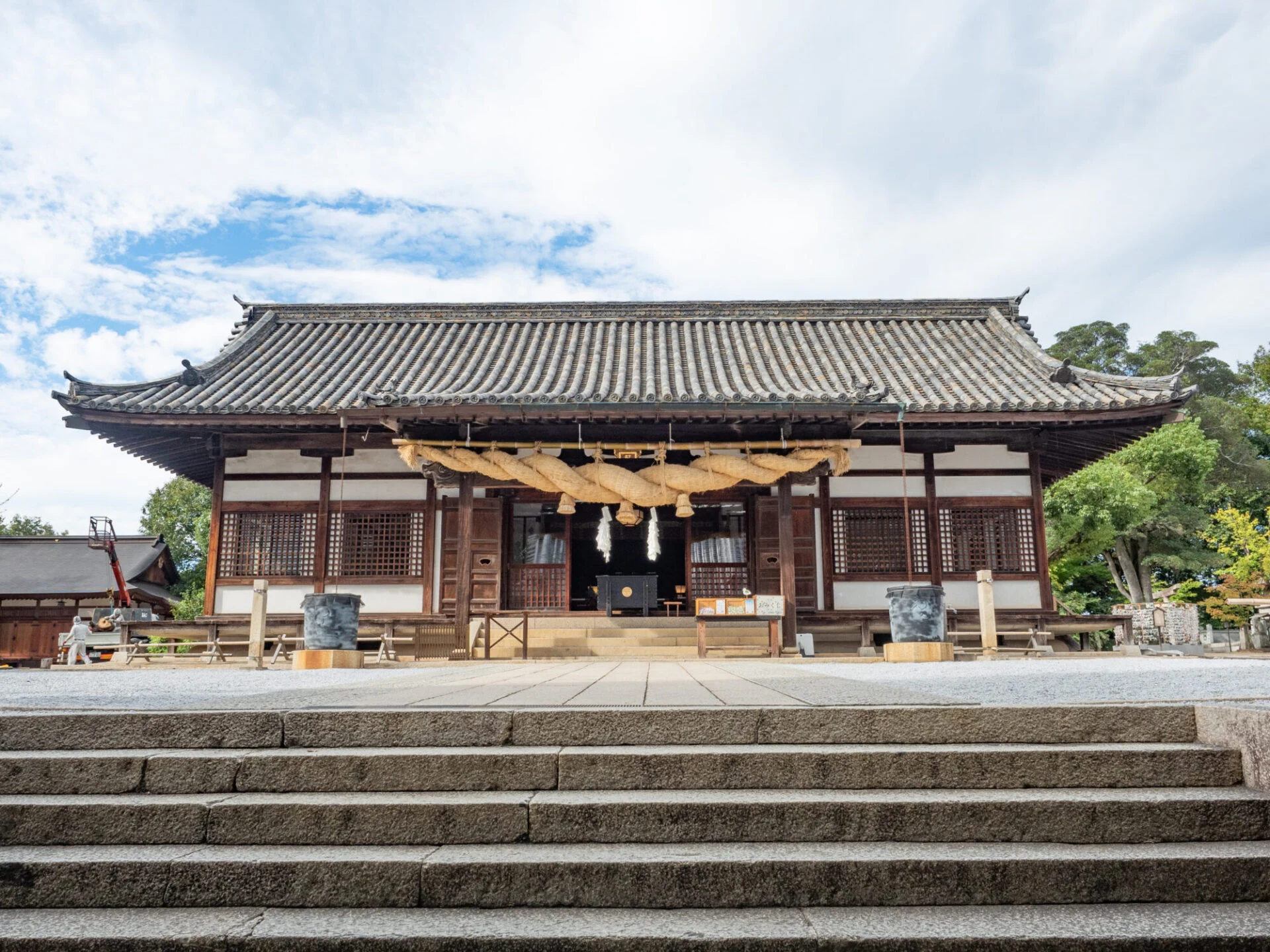
Achi Shrine (Kawairi)
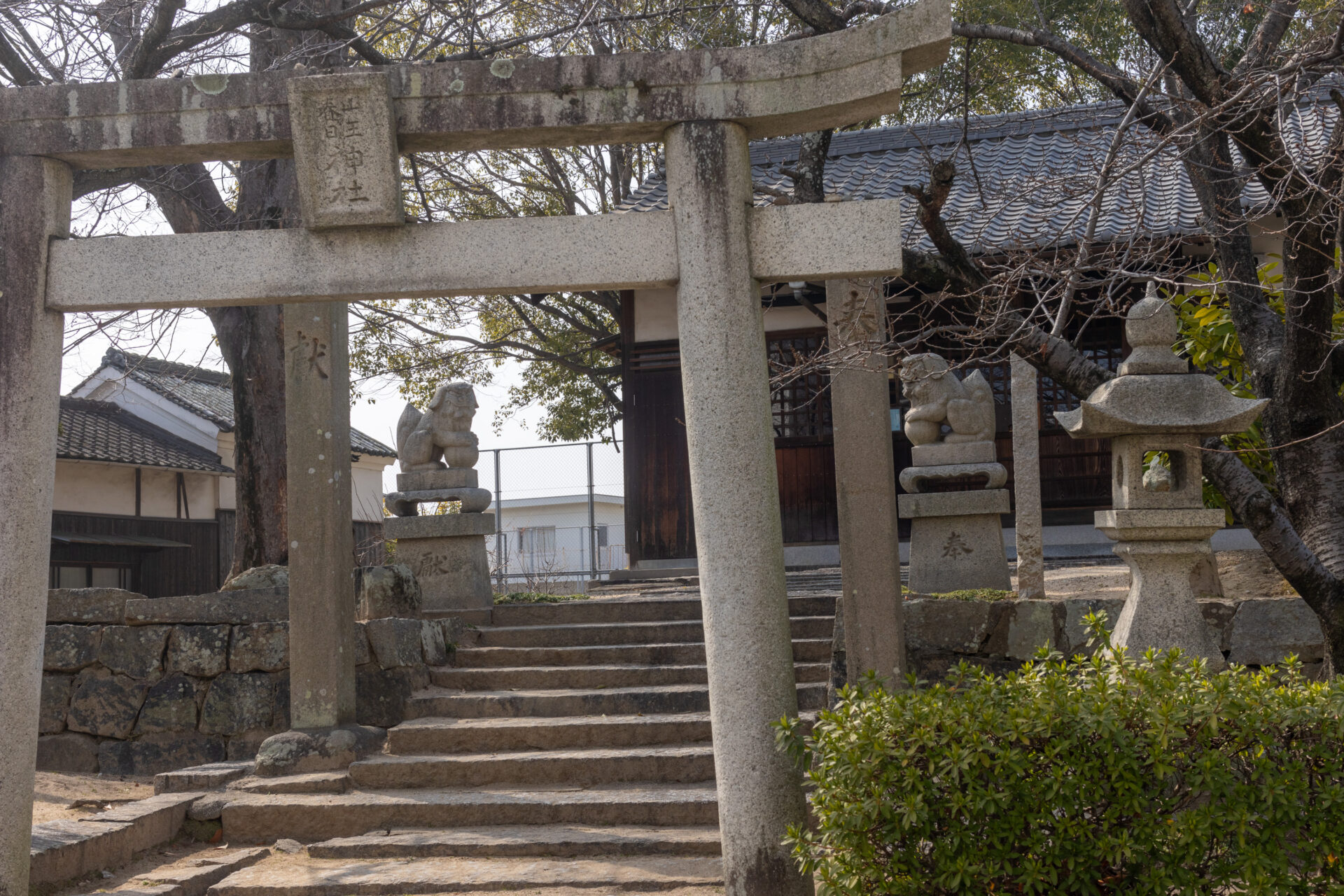
After walking a few minutes north from the starting point at MITSUI OUTLET PARK Kurashiki, we arrived at Achi Shrine (Kawairi), located within a residential area.
In fact, this shrine has been washed away by floods in the past.
As a relocation site, a shrine of the same name was built in Hiyose-cho, about 1 km southwest from here (which still exists today).
Later, with the efforts of the residents, it was decided to keep a shrine here as well, and it was rebuilt in this location, which is slightly higher than the surrounding houses.
Aqueduct Overpass (Fusekoshi)
Kurashiki City and Okayama Prefecture have many ancient aqueducts.
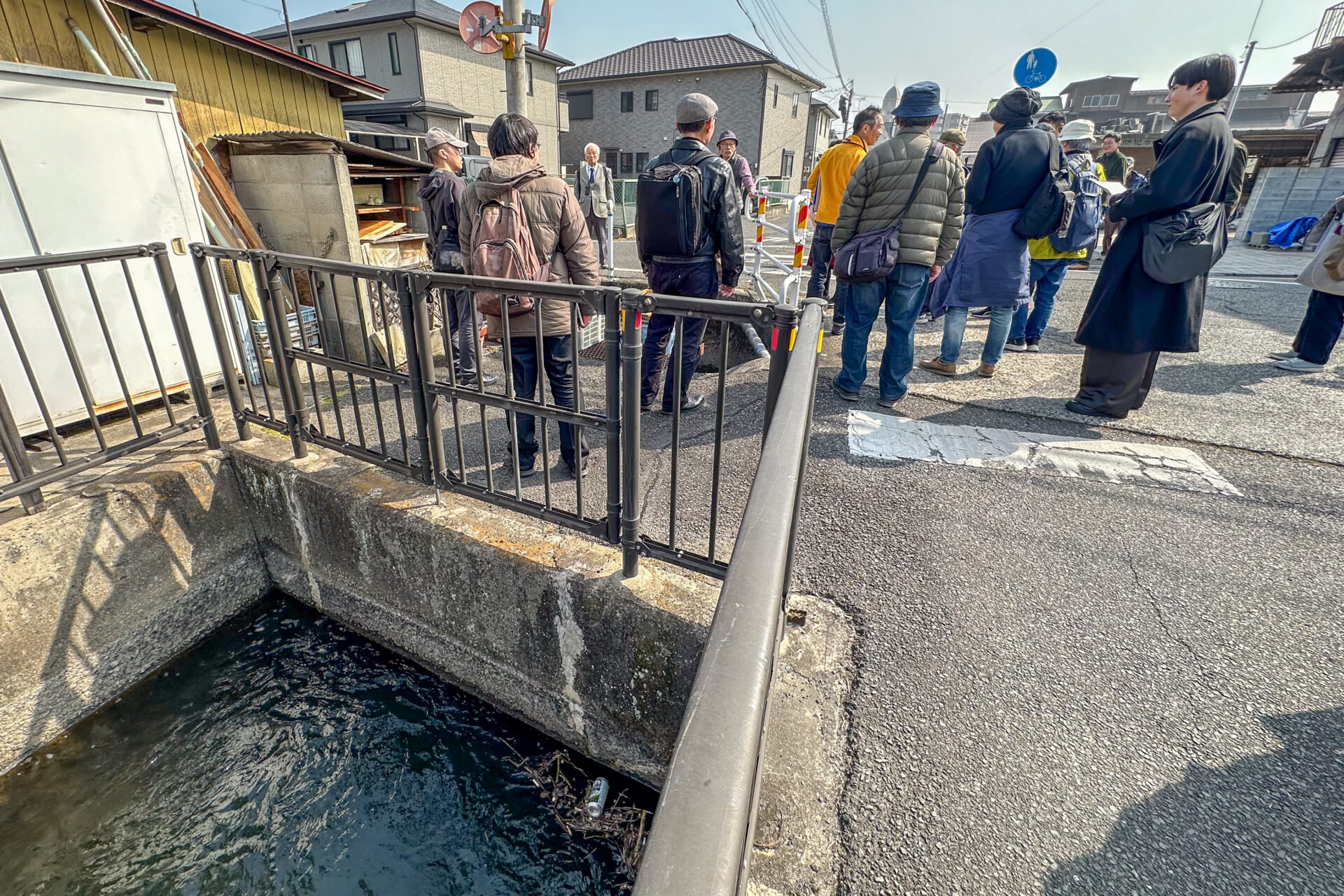
This aqueduct near the Kurabo Driving School may seem like the water is stopped here, but in fact, it is an overpass that goes underneath, resembling an underground passage.
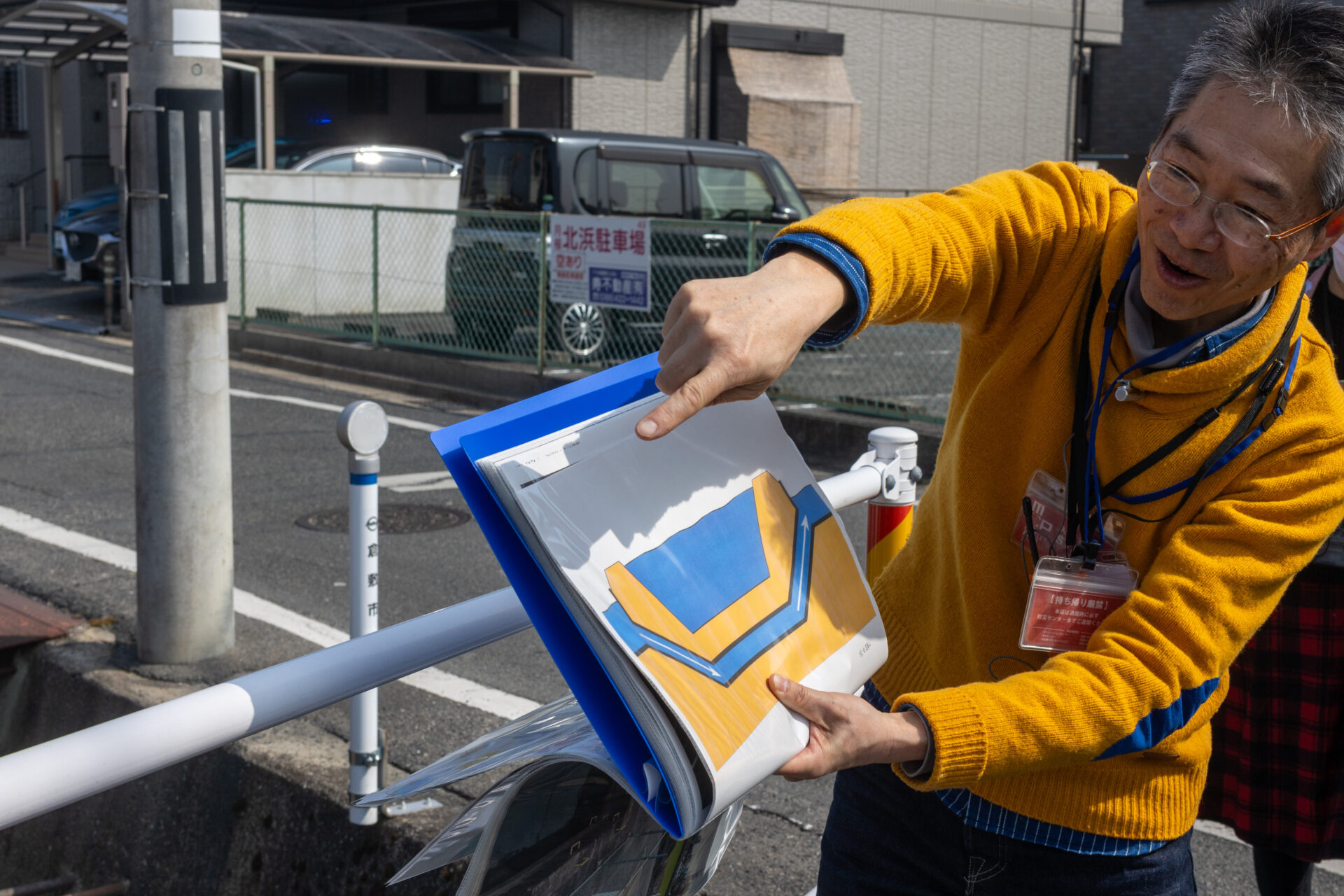
This structure of the aqueduct is called Fusekoshi, where the east-west flowing aqueduct and the north-south flowing aqueduct flow separately without mixing, demonstrating the wisdom of our predecessors who designed it to flow smoothly to different lands.
Dual Grave System (Honen-ji Temple)
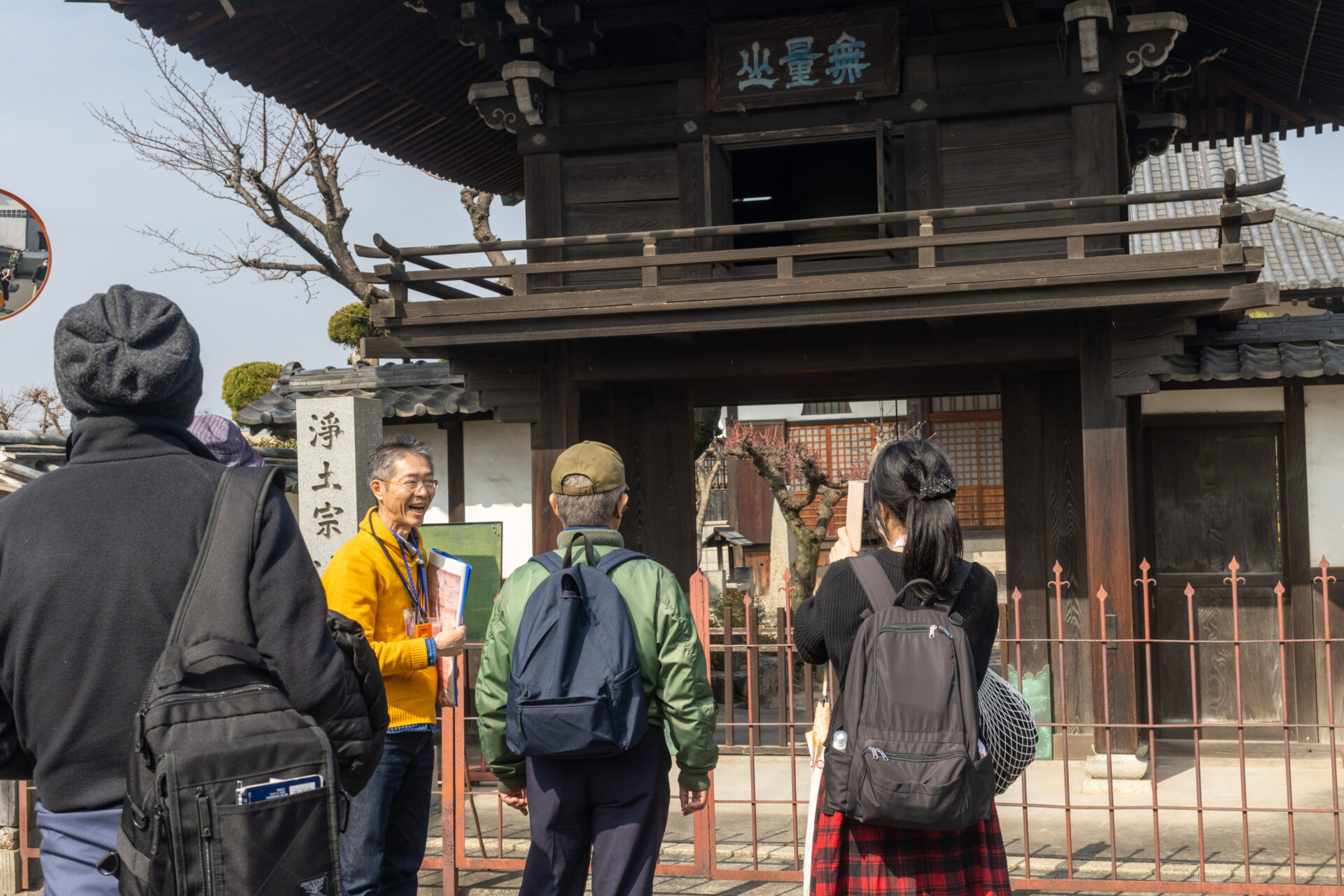
Honen-ji Temple, an ancient Jodo sect temple located in the center of Hamamura, is usually not open to the public, but we were allowed to enter the grounds for this occasion.
This temple was the family temple of the influential Asonuma clan in Hamamura during the Edo period, and the cemetery within the grounds contains impressive gravestones of generations.
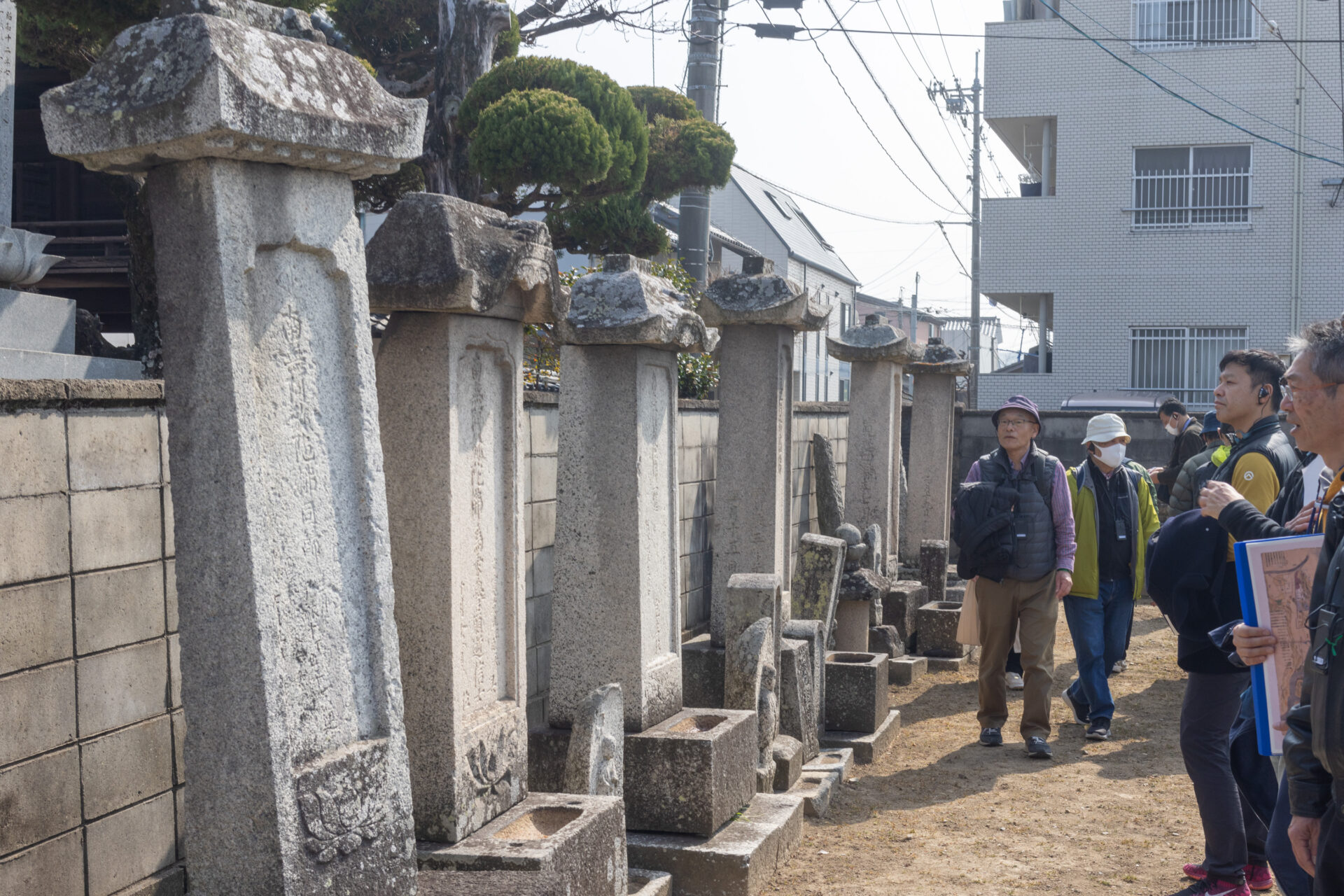
What particularly impressed me among these was the remains of the Dual Grave System seen in the cemetery.
Dual Grave System
This is a burial system where a separate place is created for the burial of the body and another for the gravestone, resulting in two graves for one deceased person, hence the name Dual Grave System.
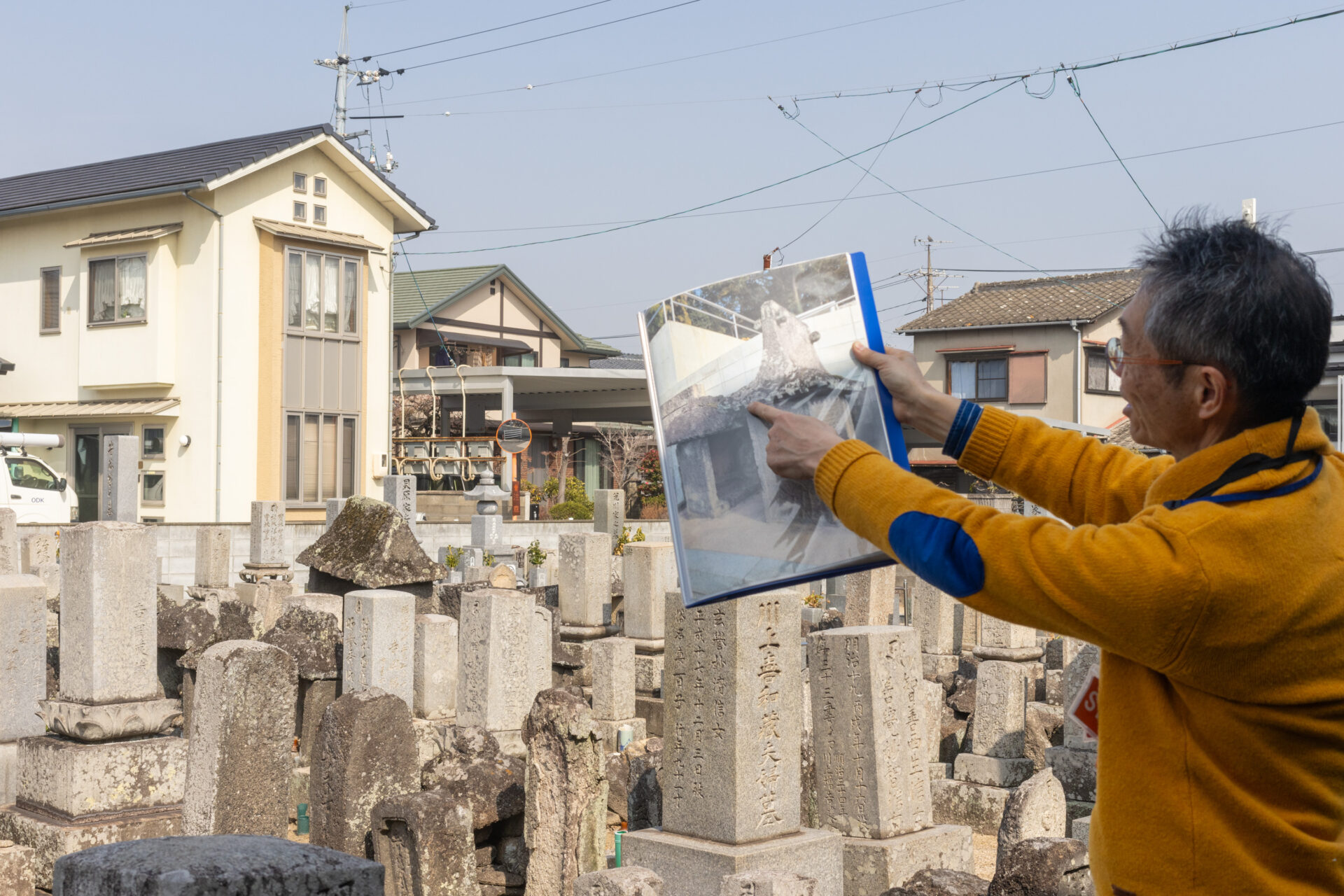
This custom, which can still be seen in the Shiwaku Islands (Kagawa Prefecture), was something I first learned about during a visit to the area.
From the Shiwaku Islands, Achi Shrine and Bichu Kokubun-ji Temple, among others, have produced the carpentry group "Shiwaku Daiku," which worked on many wooden buildings around Kurashiki during the Edo period. This may be connected to the dual grave system here.
Donation of Tamagaki (Kasuga Shrine)
The Tamagaki in the grounds of "Kasuga Shrine," located next to Kurashiki City Manju Elementary School, records donations from the prominent families of Hamamura, the Kusuto family and the Namba family.
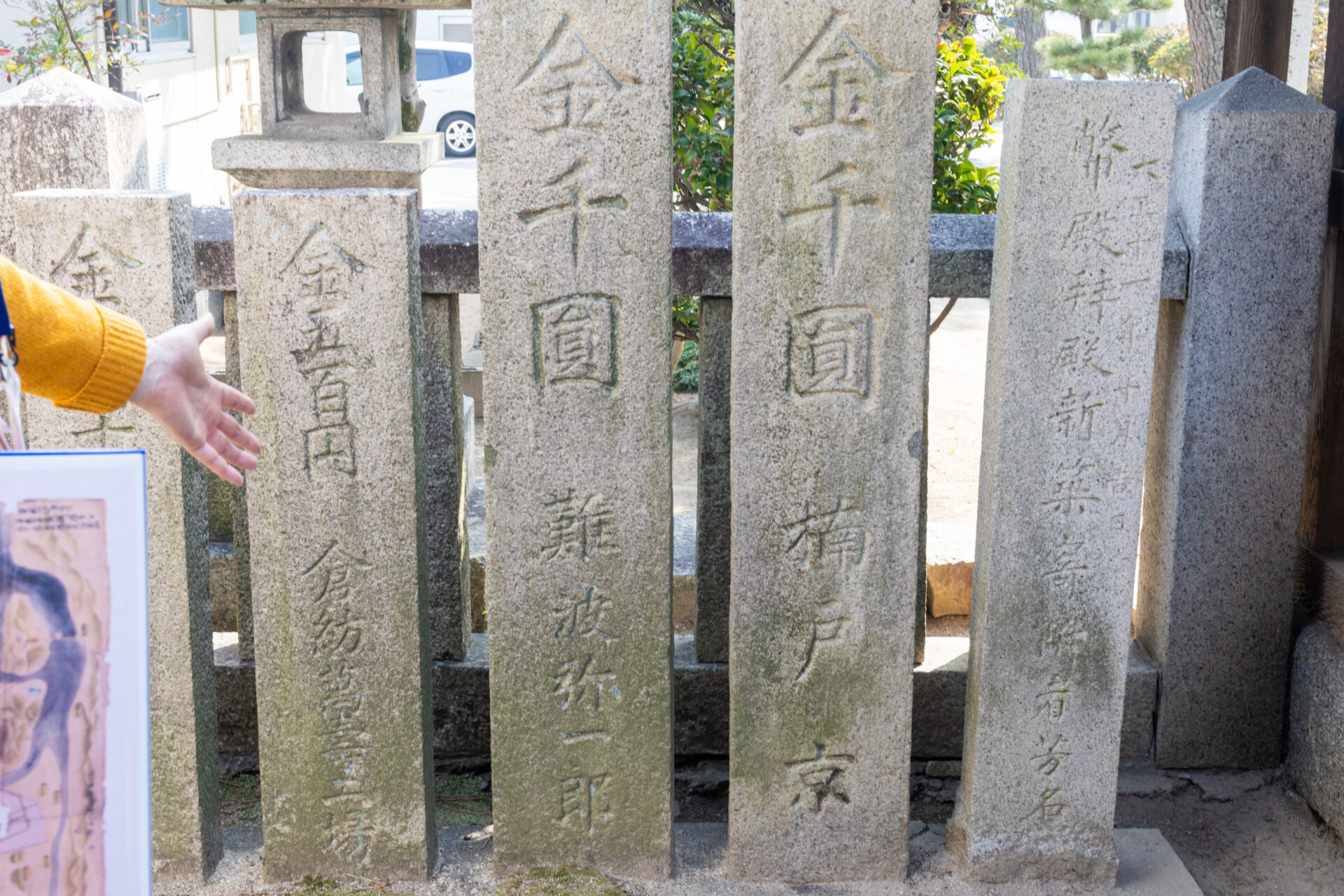
The Kusuto family is still active as a kimono merchant (Hashimaya) in Higashimachi, Kurashiki City, and since the territory of Hamamura extended to the area around present-day Higashimachi, Kurashiki City, they made significant donations to this shrine.
The Namba family is also a kimono merchant ( Jurokuya), and the fact that both families donated more than KURABO INDUSTRIES LTD. (formerly known as Kurashiki Seisakusho) indicates their prosperity at that time.
After the town and village mergers in the early Showa period, both the Kusuto and Namba families became parishioners of Achi Shrine, and both families are now open to the public.
Hamamichi Leading to Kurashiki Village
Finally, I took the Hamamichi road that connects Hamamura and Kurashiki Village on my way back.
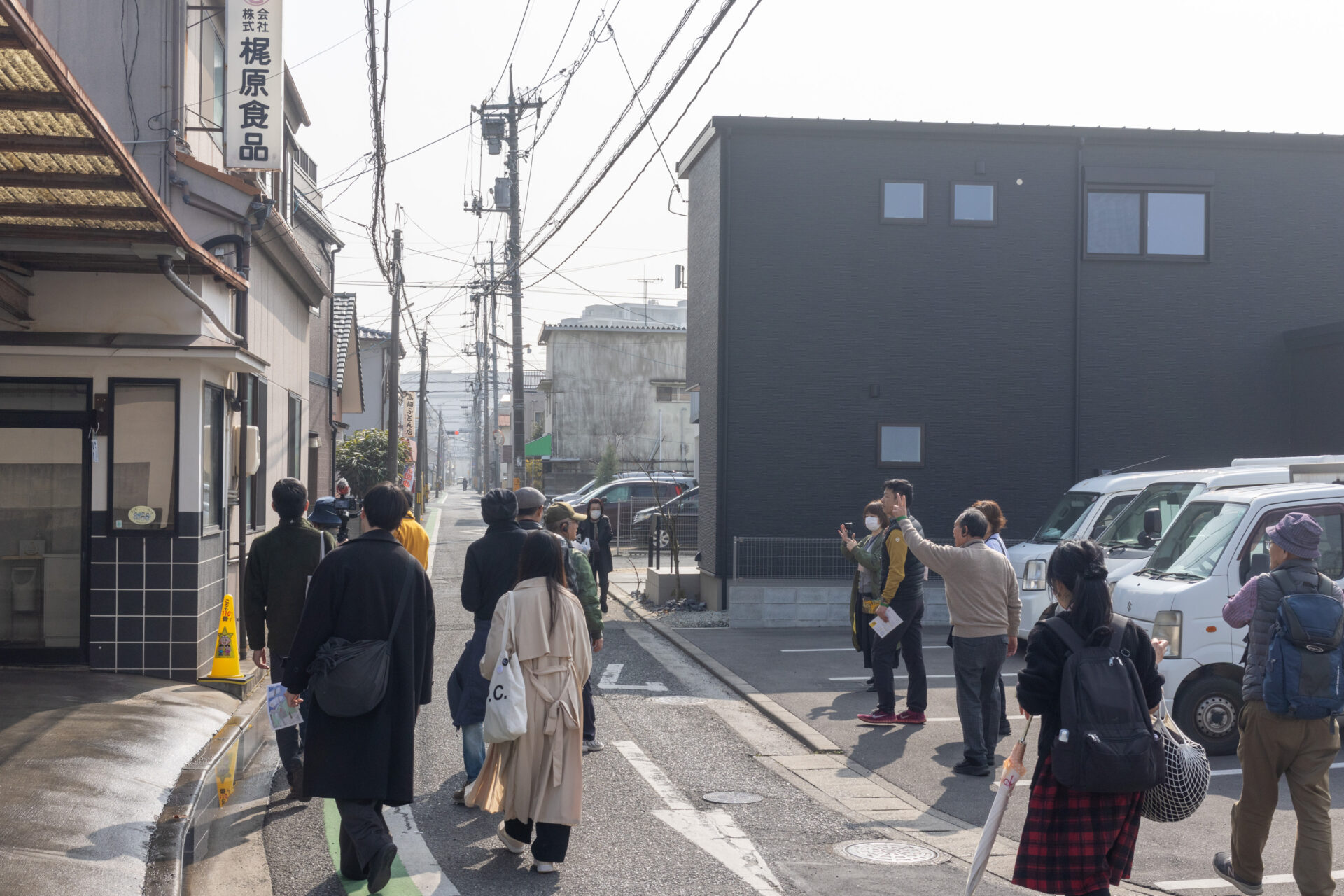
The Hamamichi stretches straight towards JR Kurashiki Station and leads to Kurashiki Village through the current shopping district.
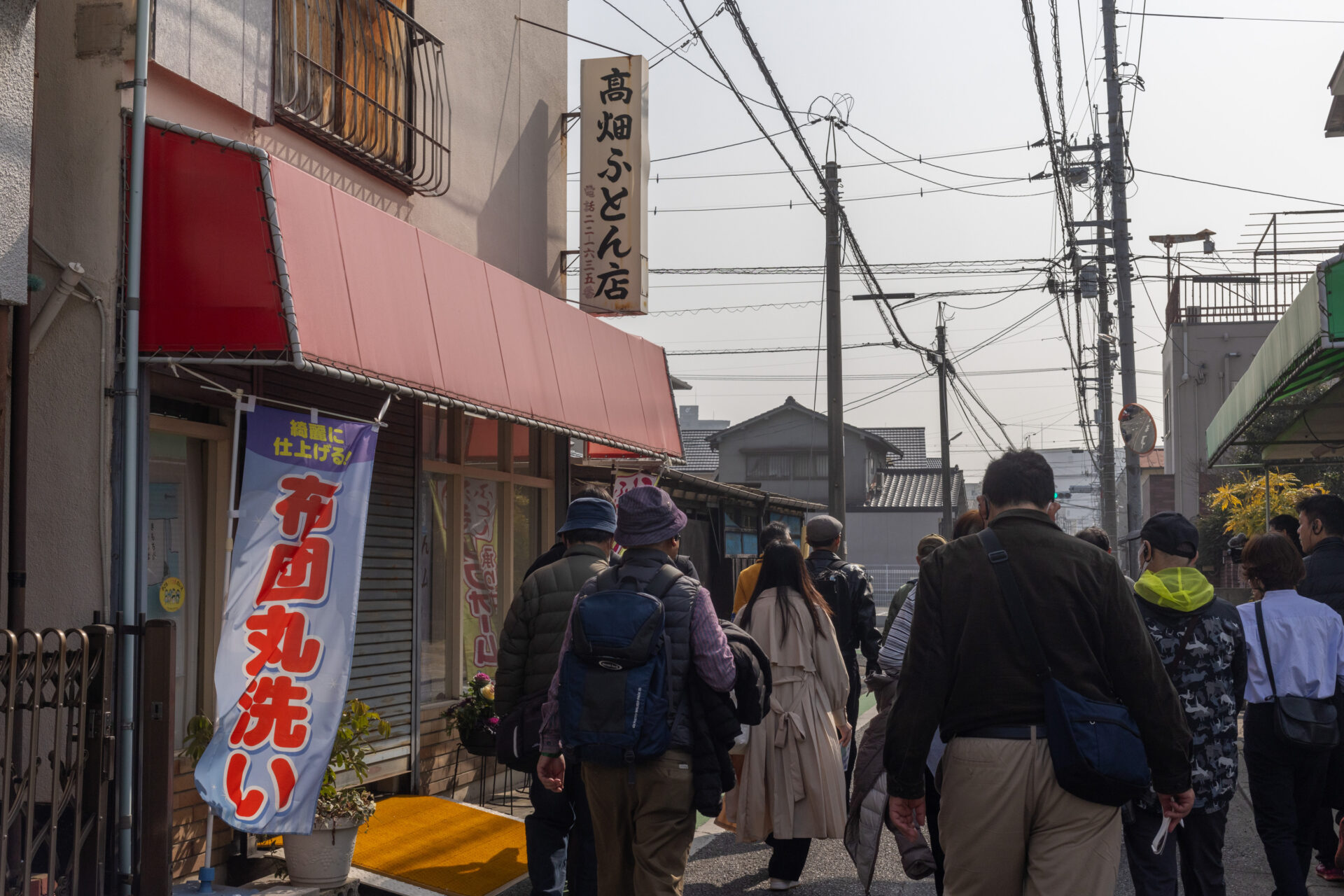
There are still shops along the road, but it was mentioned by someone from the neighborhood that during the Showa era, it felt more like a small shopping district.
Even now, shops are scattered throughout, and despite the recent neighborhood redevelopment, this area still retains a strong downtown atmosphere.
Conclusion
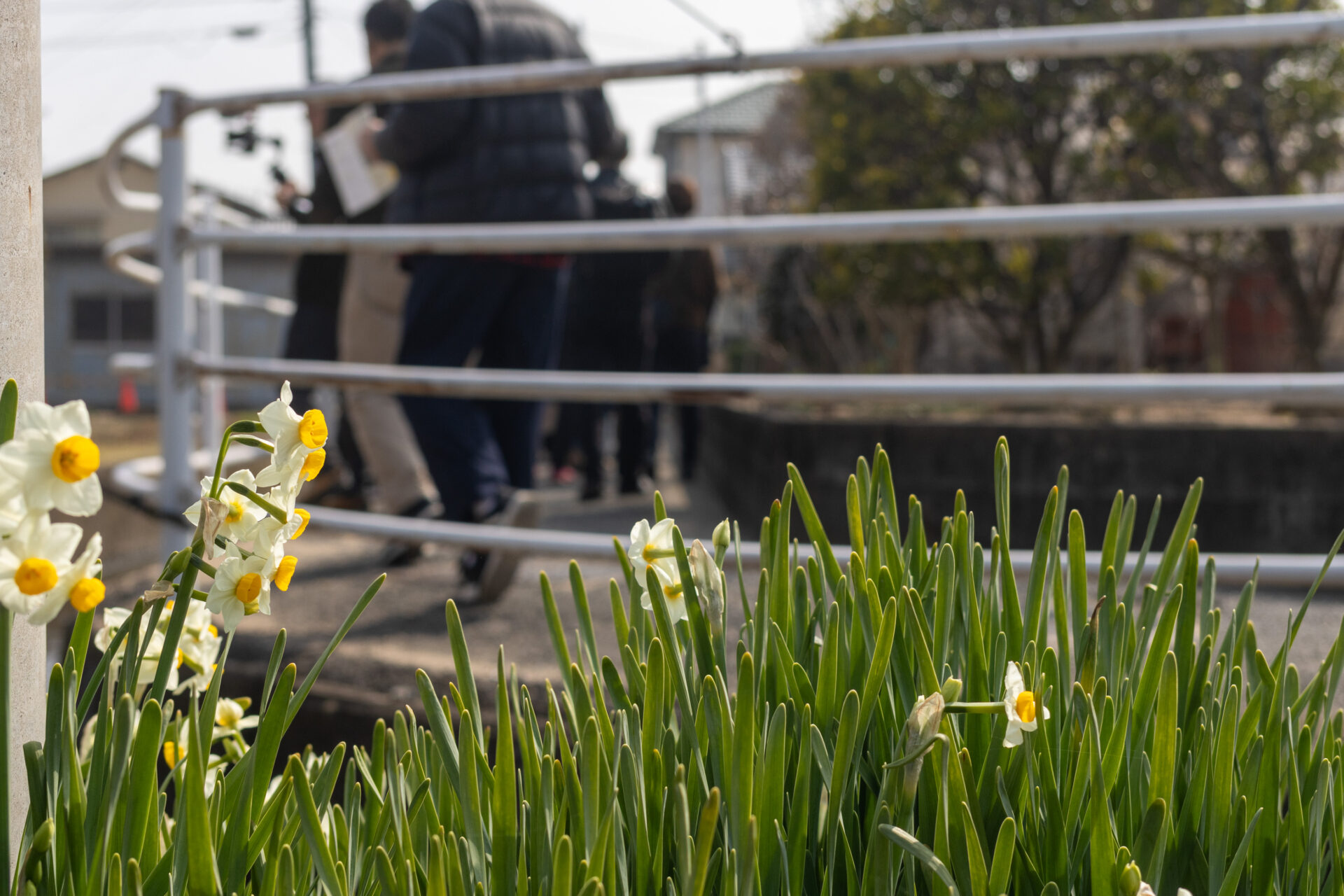
Focusing on the flow of water and the elevation changes in the terrain while comparing old maps with modern ones made me feel as if I were experiencing the world of "Buratomori" (NHK General) all over again.
Moreover, even the roads and waterways that I usually pass by without a second thought have reasons for their existence, and through this town walk, I began to vaguely understand how our predecessors advanced urban development.
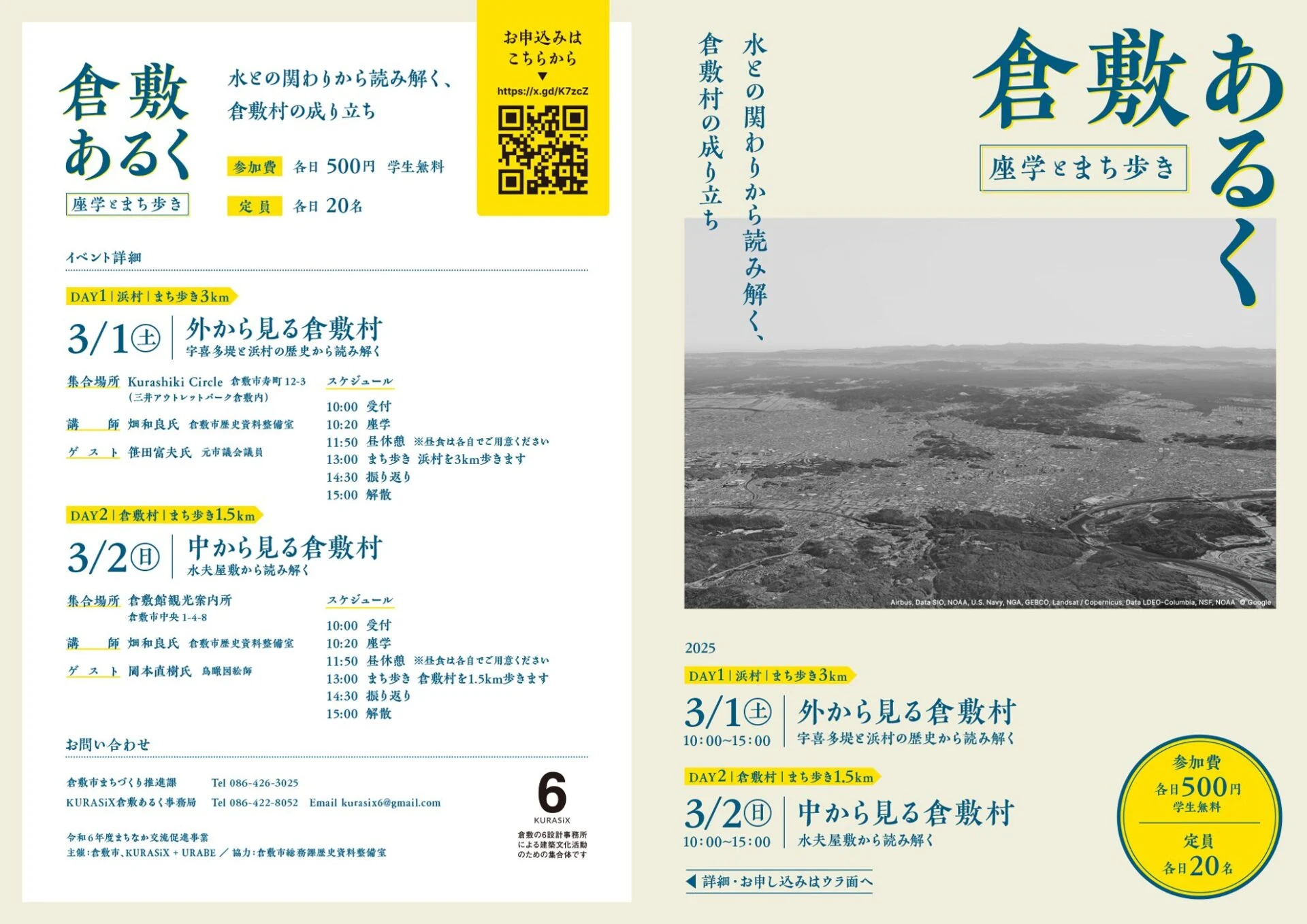
The leaflet used for this town walk is still being distributed at places like the Kurashikikan Tourist Information Office, so if you're interested, why not pick one up and take a walk around the town?
Additionally, I heard that they are considering future projects based on this town walk, so I look forward to that as well.
Thank you to everyone at KURASiX who organized this event, and to all the related parties, including the Kurashiki City Historical Materials Maintenance Office.
Kurashiki Walk: Understanding the Formation of Kurashiki Village through Its Relationship with Water
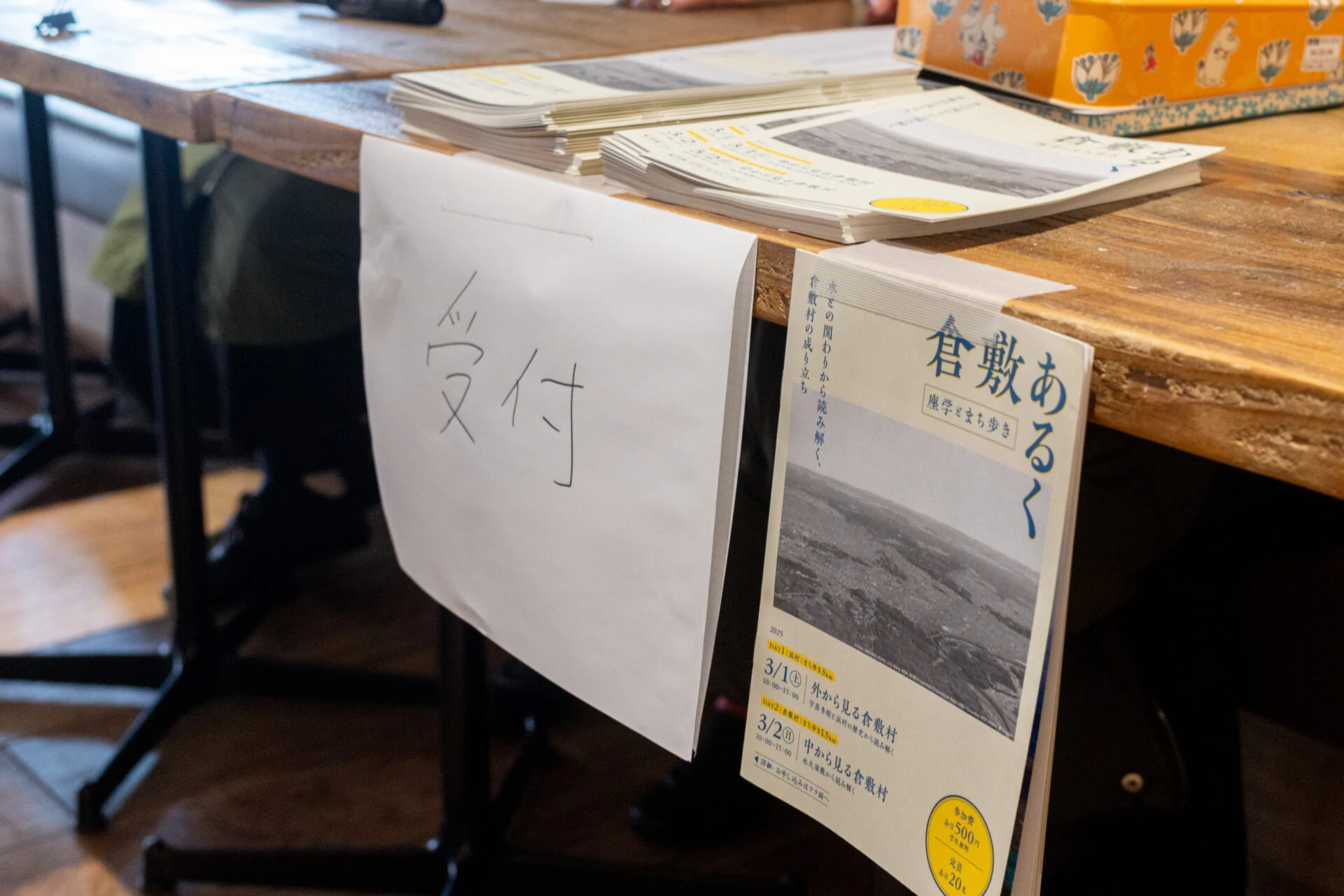
| Name | Kurashiki Walk: Understanding the Formation of Kurashiki Village through Its Relationship with Water |
|---|---|
| Date | March 1 (Saturday) and 2 (Sunday), 2025 Reception: 10:00 AM - Lecture: 10:20 AM - 11:50 AM Town walk: 1:00 PM - 2:30 PM Wrap-up and conclusion, dispersal at 3:00 PM (The times are the same for both days) |
| Location | Central Kurashiki City (Bikan Historical Area, Hamamachi, MITSUI OUTLET PARK Kurashiki) |
| Participation Fee (including tax) | 500 yen (free for students) |

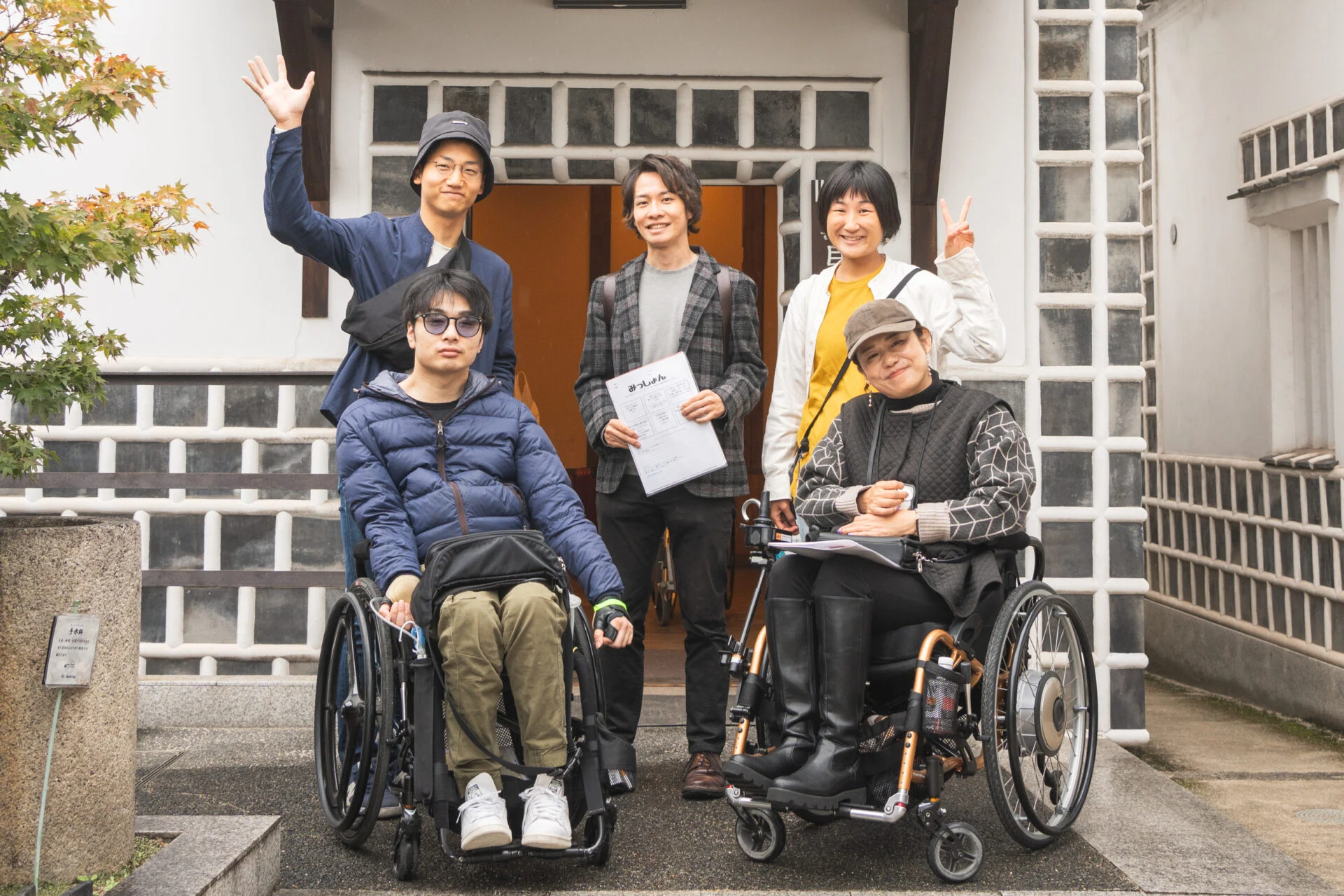









When we design buildings, we first thoroughly investigate the history of the site before starting the design.
This event was also planned while discussing the history of this land from the perspective of architects.