
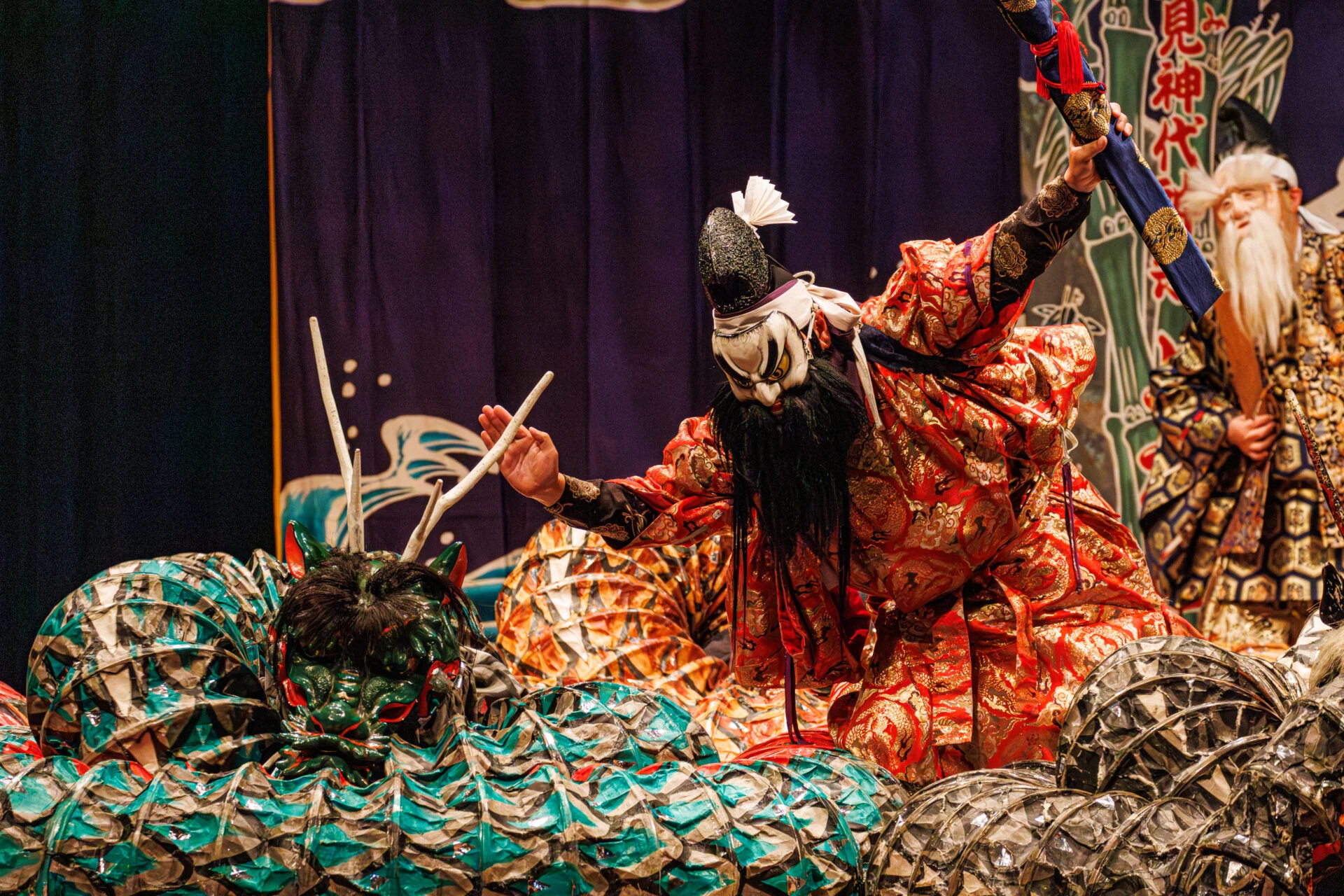
In the Takahashi River basin, the traditional performing art "Bichu Kagura," which has been passed down for over 200 years since the Edo period, continues to thrive. Currently, there are various Kagura shrines and clubs (groups that perform Bichu Kagura) in different regions, where Kagura is dedicated during local festivals.
To let more people know about the charm of Kagura, the "Bichu Kagura Appreciation Event," held annually, took place on May 24, 2026 (Sunday) at Geibunkan Hall in Kurashiki City.
This report covers the appreciation event, which was filled with highlights, including a special collaboration with the precious guest, Iwami Kagura.
About the Bichu Kagura Appreciation Event
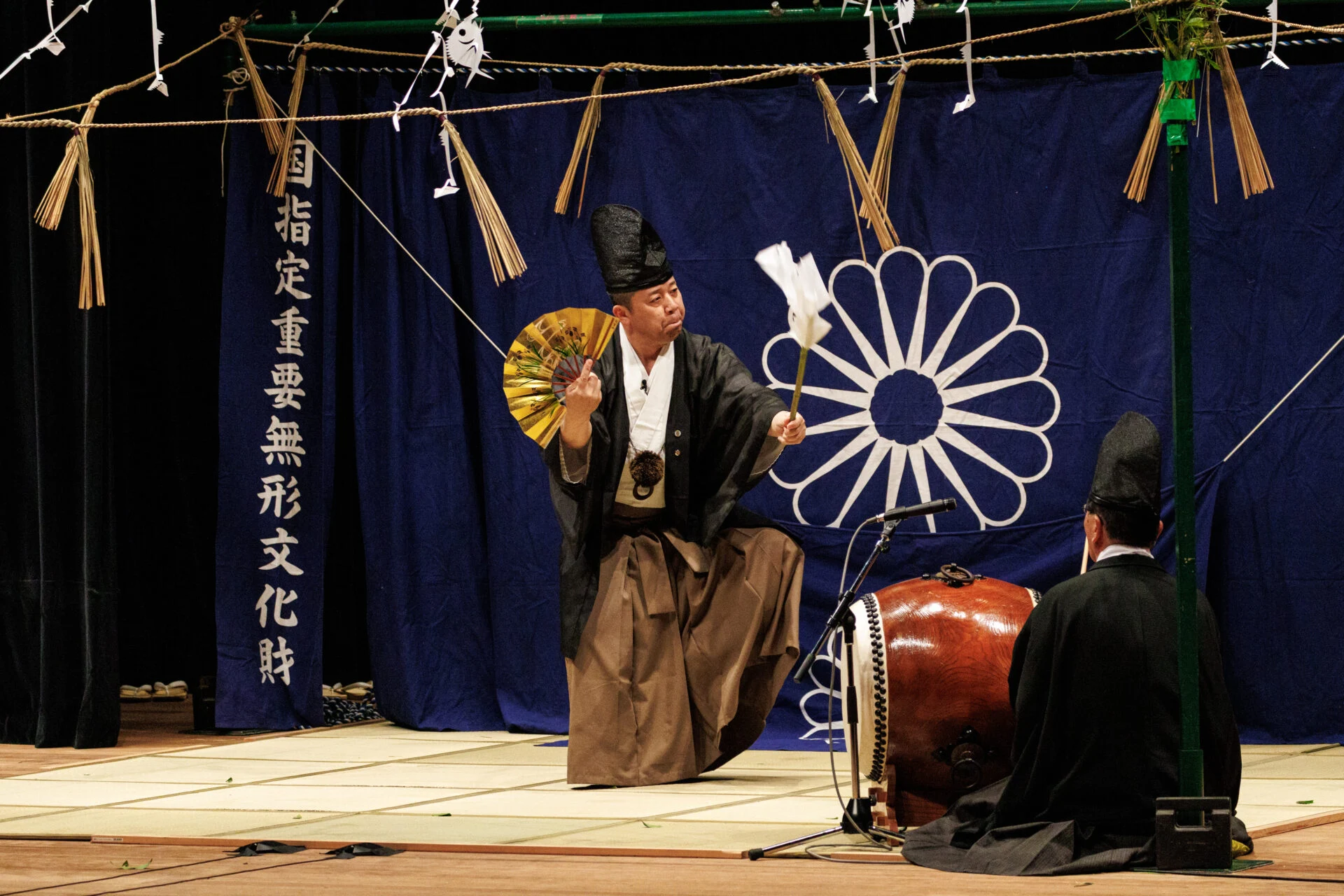
The Bichu Kagura Appreciation Event is held by the Bichu Kagura Preservation and Promotion Association, with performances taking place in Okayama in January and in Kurashiki in May each year.
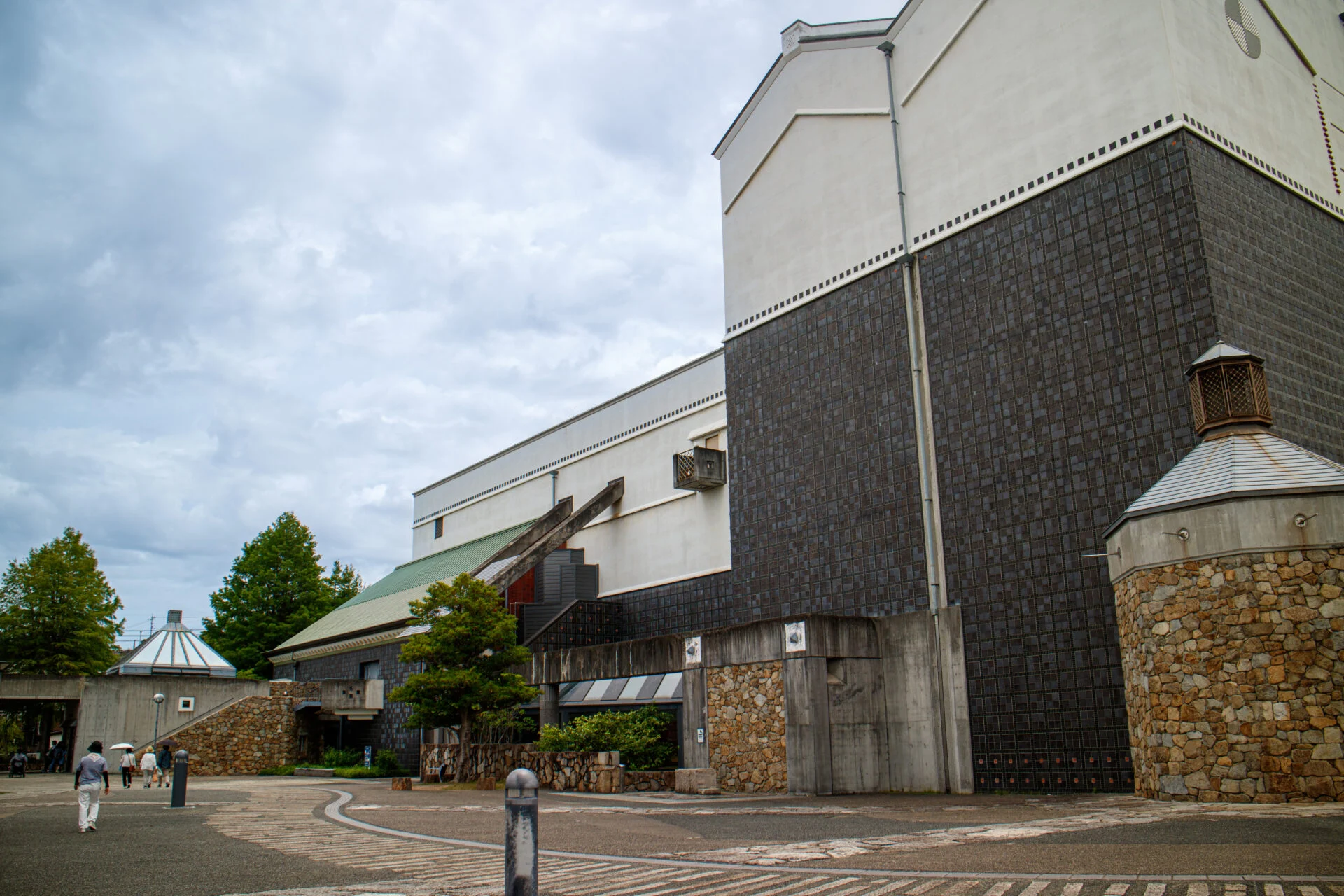
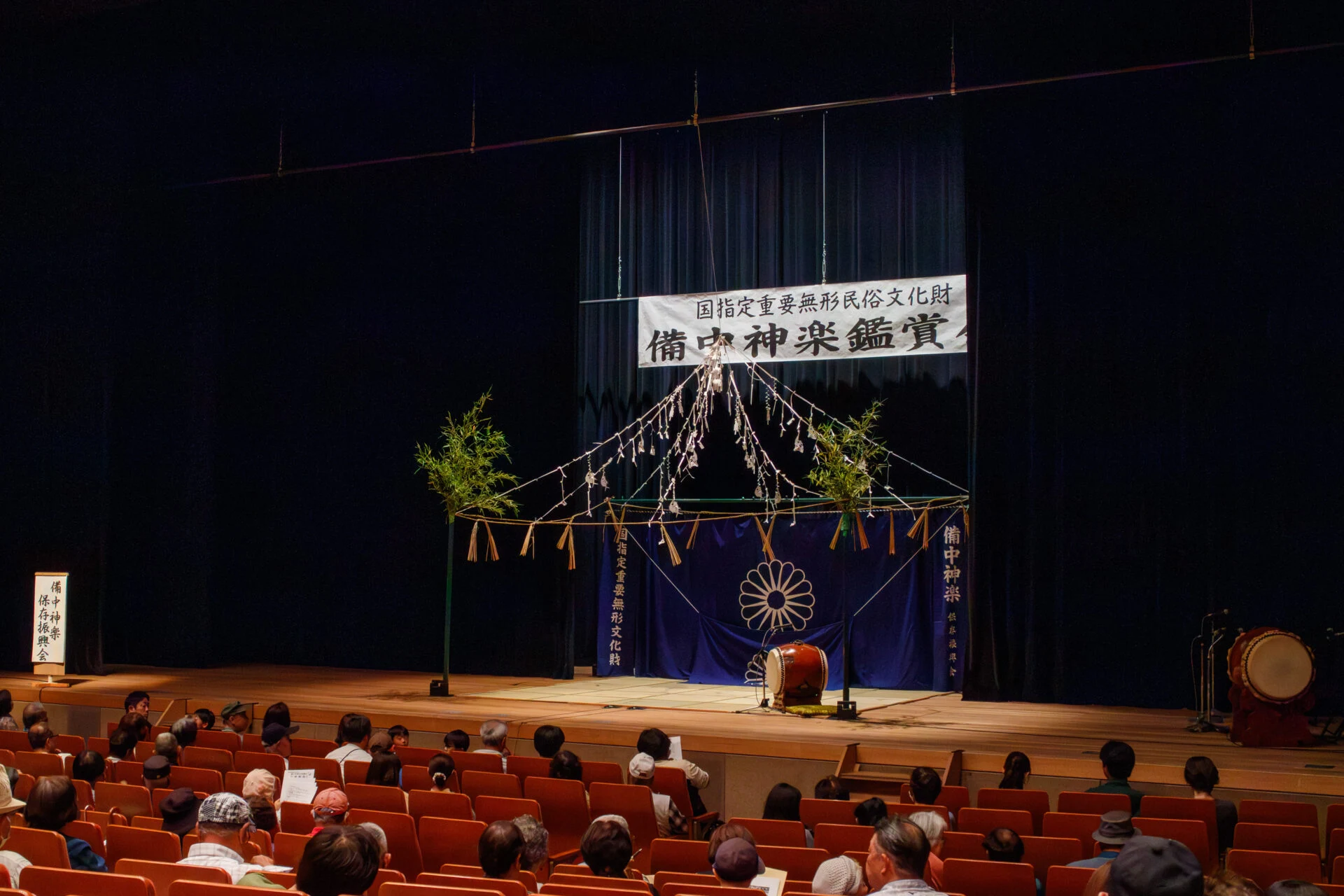
The 30th Kurashiki performance took place on May 24, 2026 (Sunday) at Geibunkan Hall in Kurashiki City. This performance marked the 30th anniversary, and the Iwami Kagura from Shimane Prefecture added splendor to the event as a supporting performance.
What is Bichu Kagura
Bichu Kagura is said to have its origins in the "Ara-god faith" that has been passed down in the Bichu region (western Okayama Prefecture) for a long time. In the "Kojin Kagura," which calms the raging gods of the land, traces of its sacred ritual can be seen in the Sakaki Dance and Sarutahiko Dance.
About 200 years ago, during the Edo period, a priest from present-day Takahashi City, Nariwa-cho, named Nishibayashi Kokkyō devised the modern, theatrical "Kagura of the Age of the Gods."
With the introduction of the Kagura of the Age of the Gods, which is based on the Izumo mythology, represented by the Defeat of the Great Serpent, the performance began to take on a stronger character as entertainment for the masses.
Additionally, in 1979, it was designated as an Important Intangible Folk Cultural Asset.
The Day's Events
The venue opened at noon, and the lobby of Geibunkan Hall in Kurashiki City had areas set up for enjoyment while waiting for the performance to start.
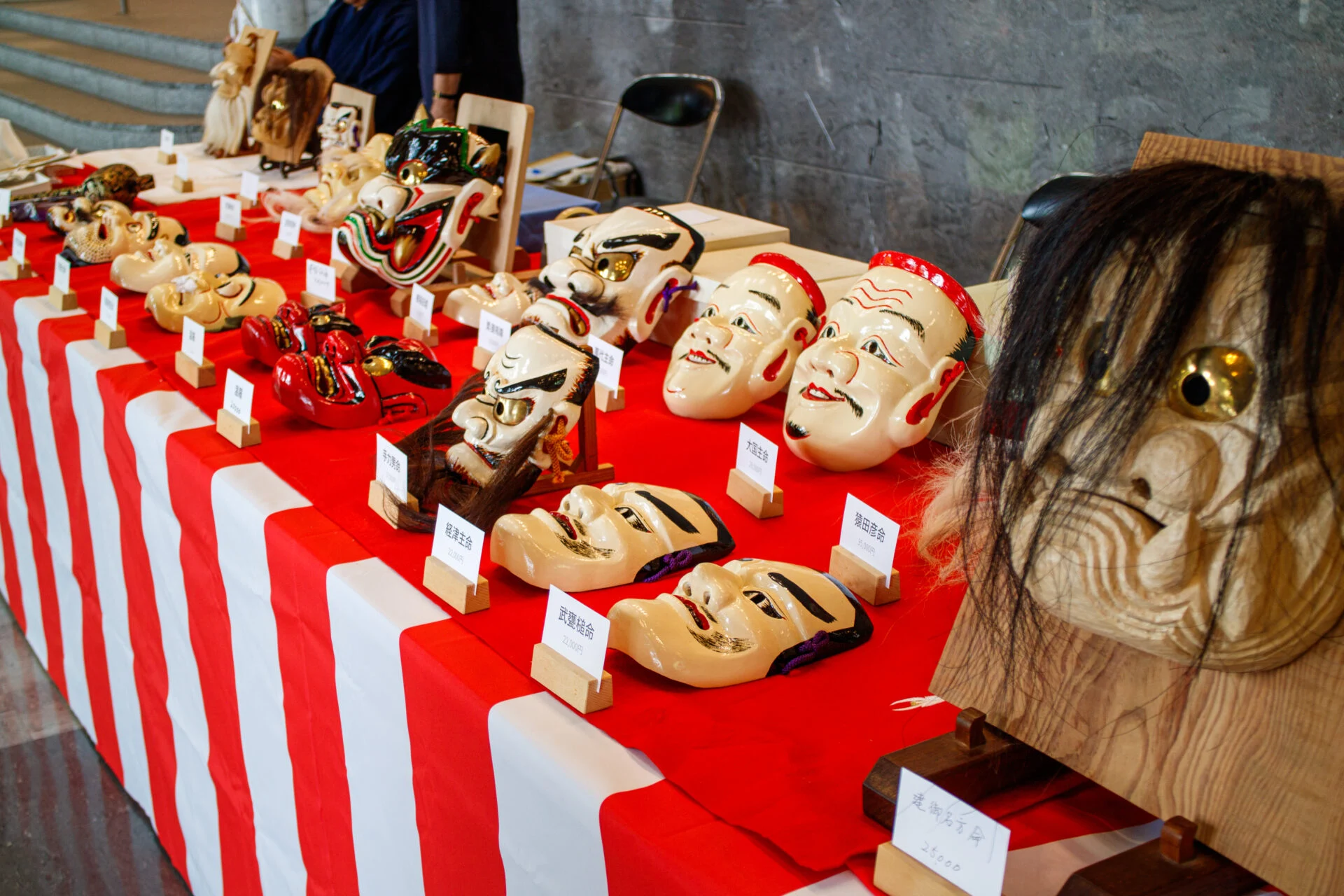
This is a demonstration area for the production of "Kagura masks" used in Bichu Kagura. Craftsmen are actually carving wood to create the masks.
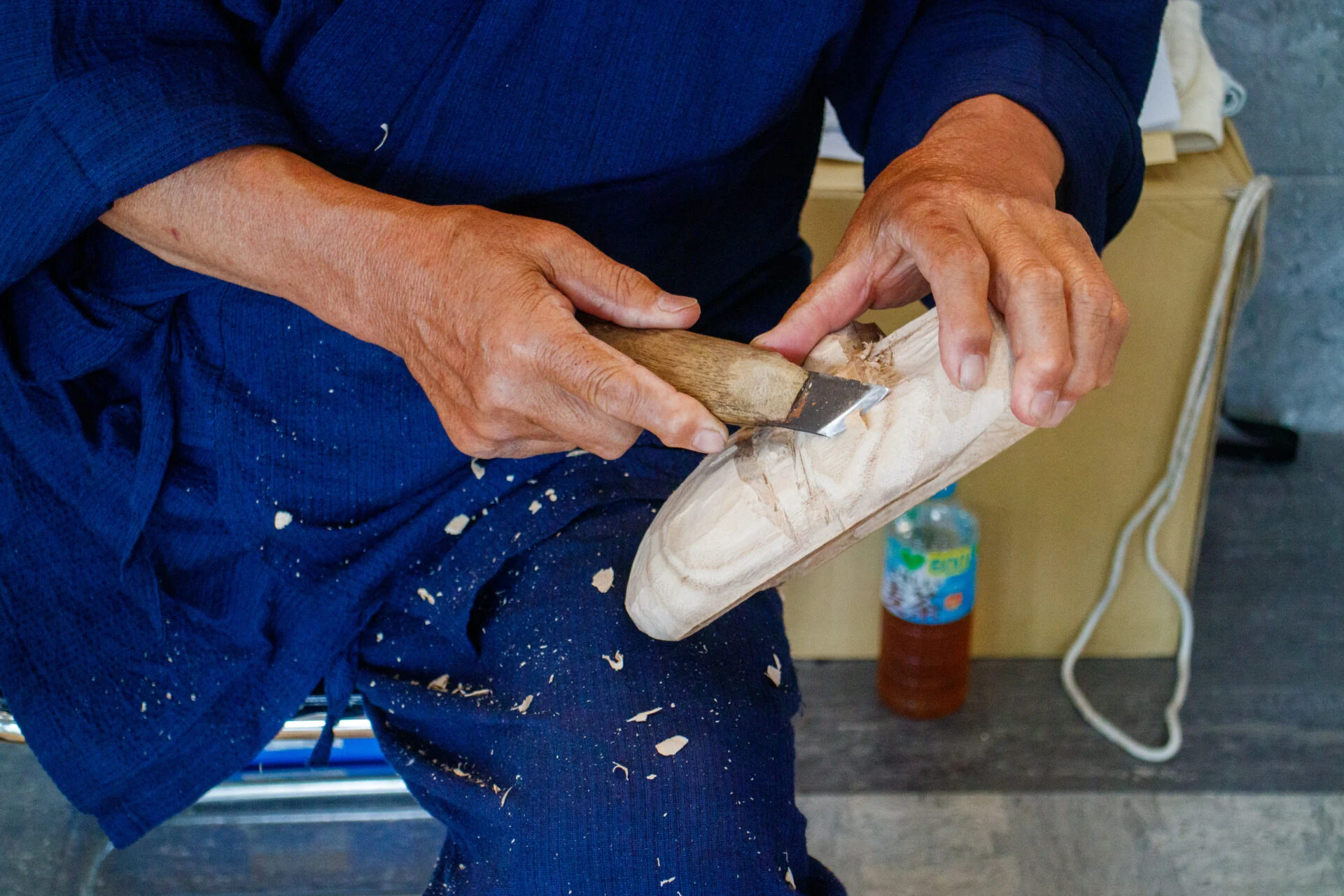
In the merchandise corner, "Bichu Kagura Mask Monaka" and bento boxes were on sale, among other items.
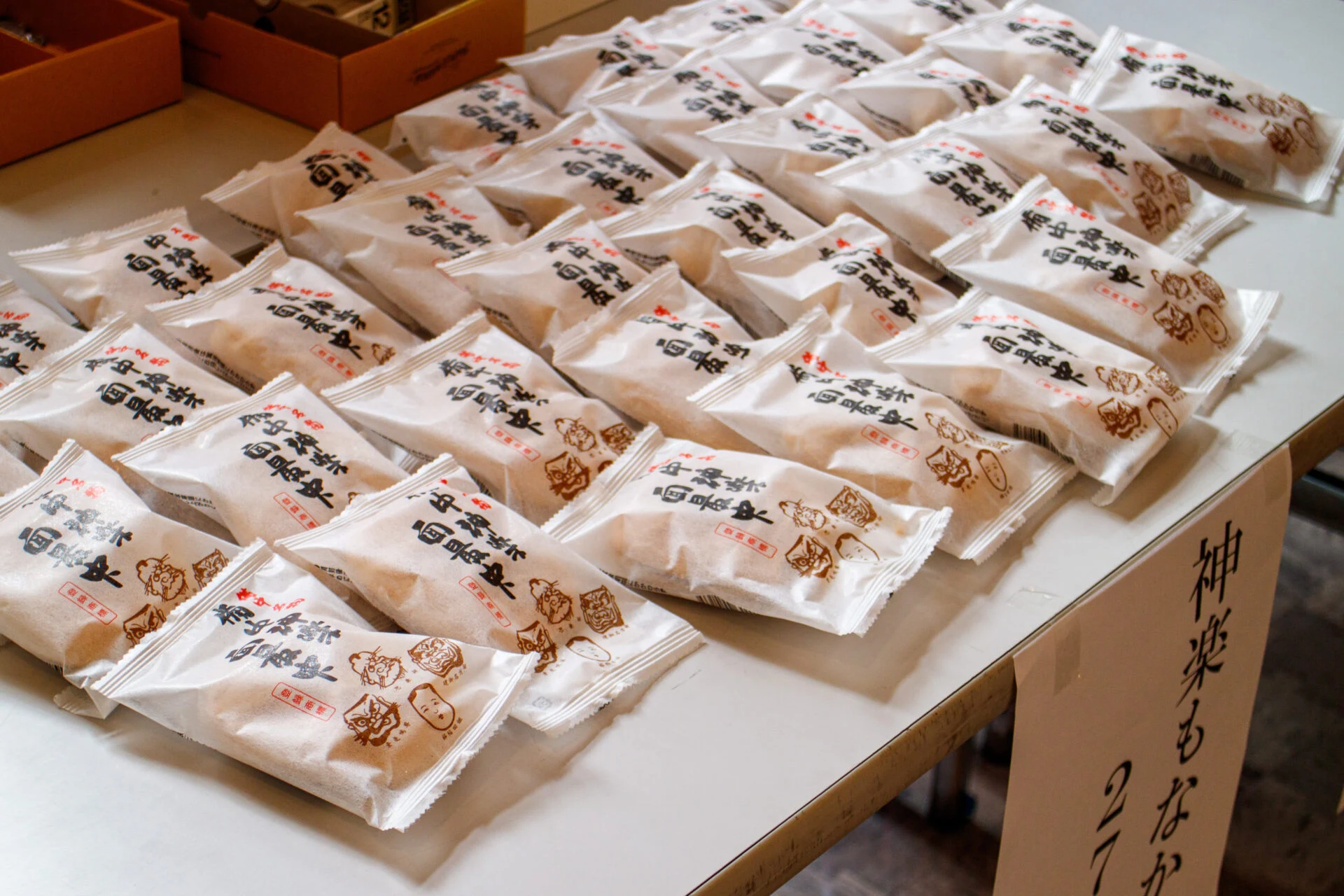
As the start time approached, we moved to the hall. Since it was open seating, everyone enjoyed the performance from their preferred seats.
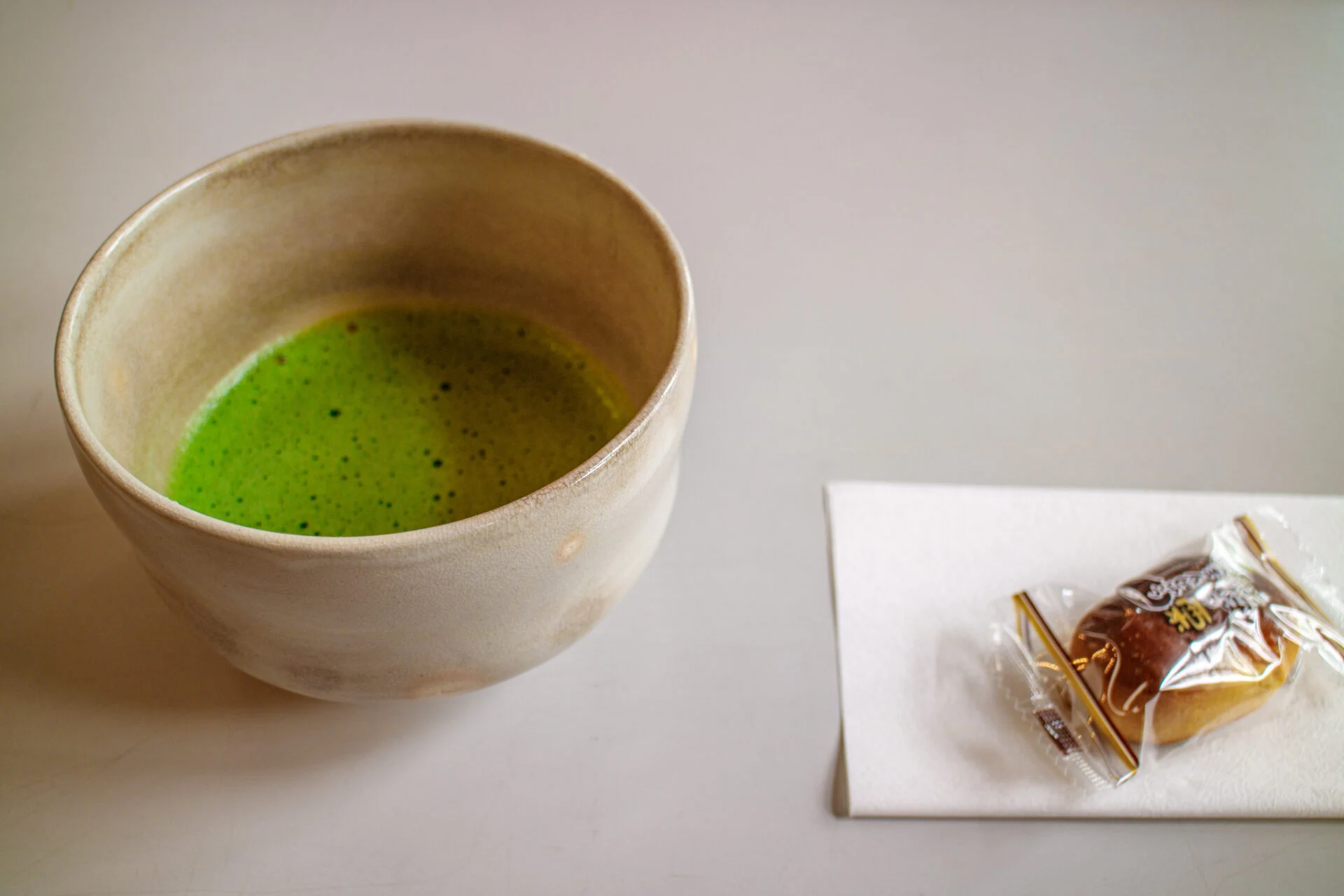
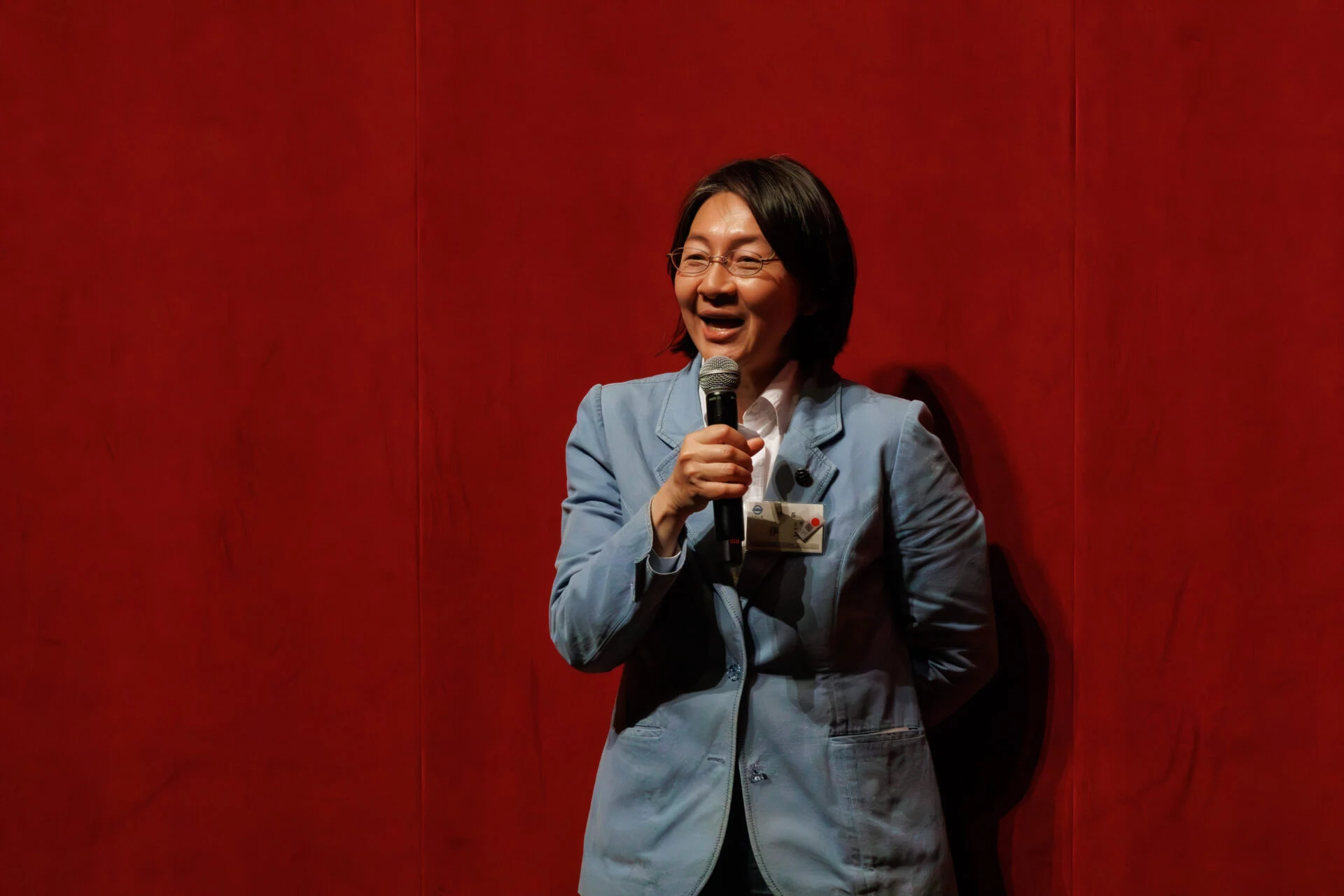
Kurashiki City Mayor Kaori Ito also attended. Together with a large audience, she enjoyed the Bichu Kagura performance and gave a greeting during the intermission.
"Dance" as a Sacred Ritual
At 12:30 PM, the Bichu Kagura Appreciation Event began.
The first performance was a "dance" dedicated as a sacred ritual to purify the space.
Sakaki Dance
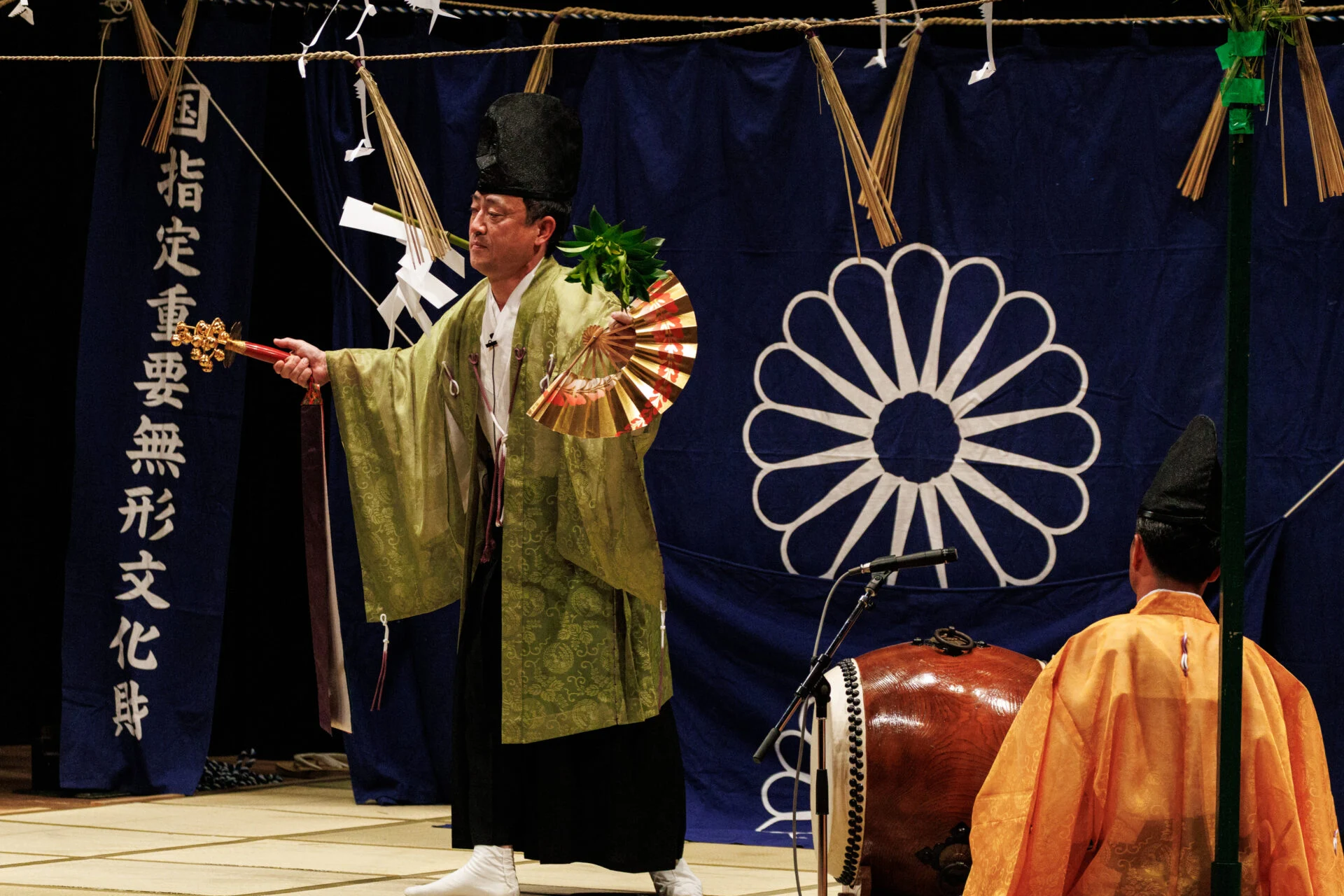
The "Sakaki Dance" (Sakakimai) is performed to purify everything.
The dancer, dressed in priestly garments, dances while chanting Kagura songs along with the drummers.
Sarutahiko Dance
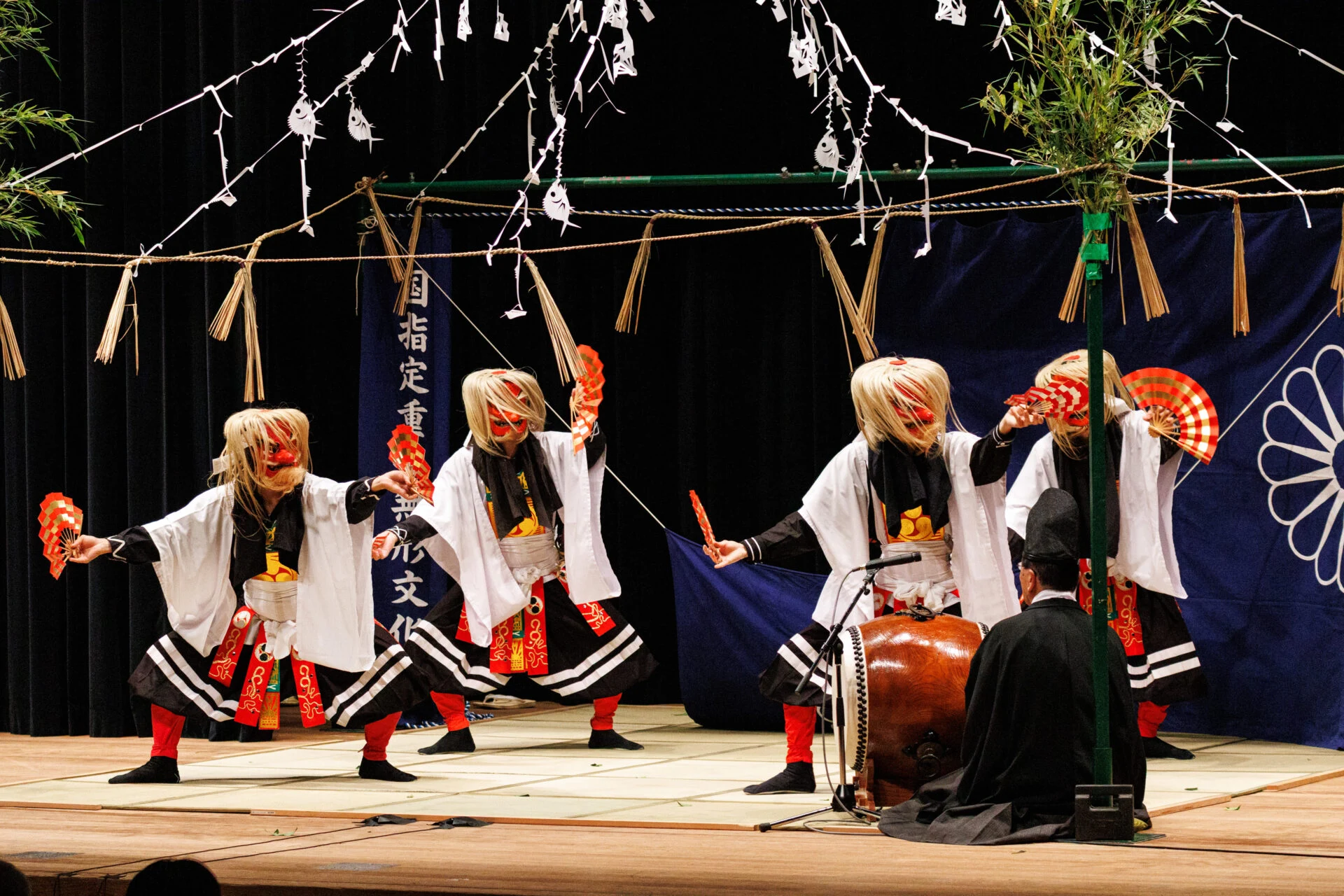
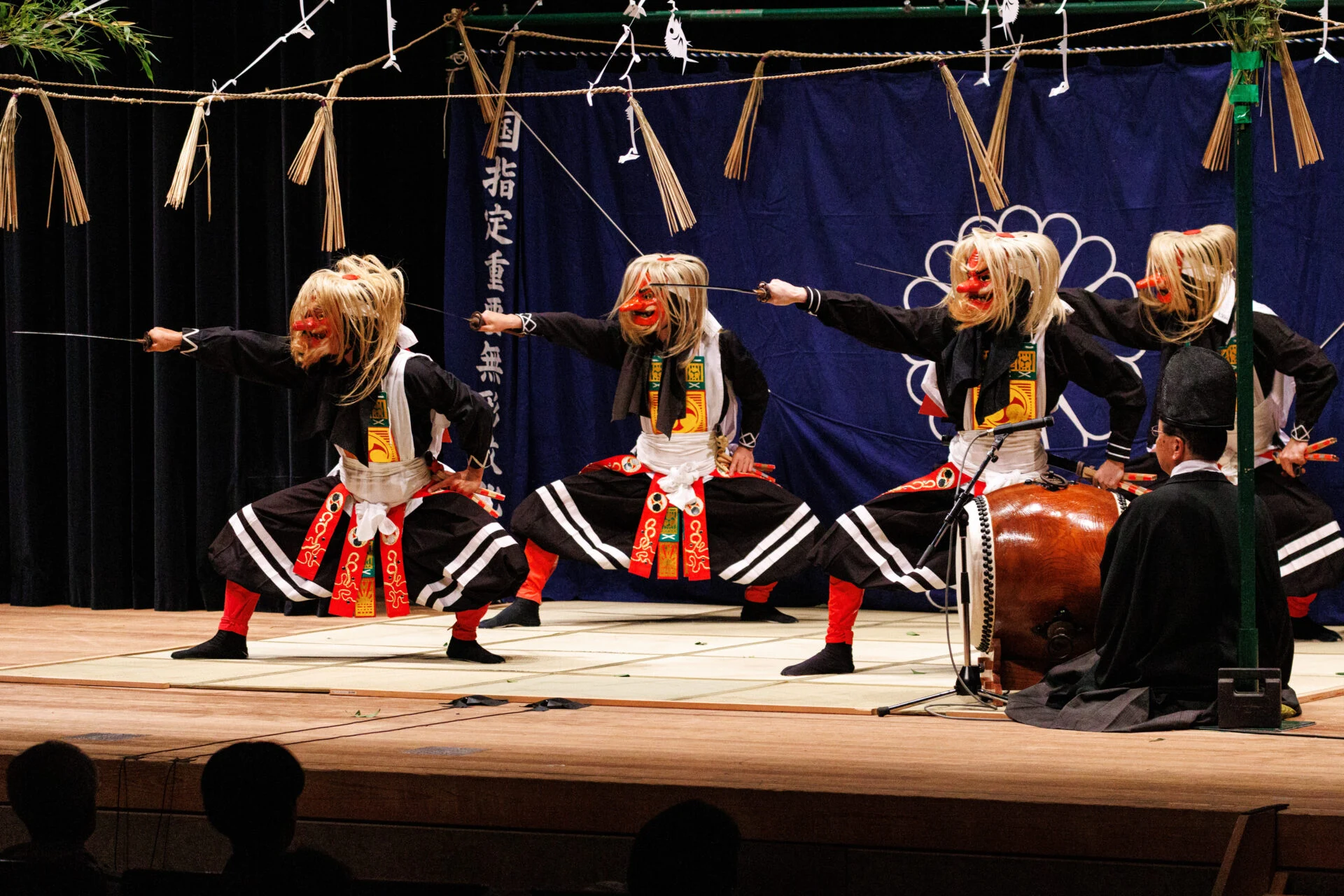
The "Sarutahiko Dance" is performed as a highlight.
Sarutahiko no Mikoto, wearing a high-nosed mask reminiscent of a tengu, dances vigorously with a fan, sword, and naginata (a type of polearm).
Sarutahiko no Mikoto is known as the "God of Opening the Way," who guided the heavenly descendant Ninigi no Mikoto, and the dance embodies the meaning of exorcising evil spirits from the entire Kagura.
The audience bursts into applause at the elegant swordsmanship displayed in perfect harmony.
The Theatrical "Kagura of the Age of the Gods"
Next was the performance of the representative "Kagura of the Age of the Gods" from Bichu Kagura.
This Kagura, devised by the Edo period priest Nishibayashi Kokkyō, enhances the theatricality and entertainment based on the Izumo mythology.
The Transfer of the Land
This is a myth recorded in the Kojiki and Nihon Shoki, dramatizing the episode of Okuninushi no Mikoto transferring the dominion of Ashihara no Nakatsukuni (the Japanese archipelago) to the gods of Takamagahara (the heavenly realm) (the Transfer of the Land).
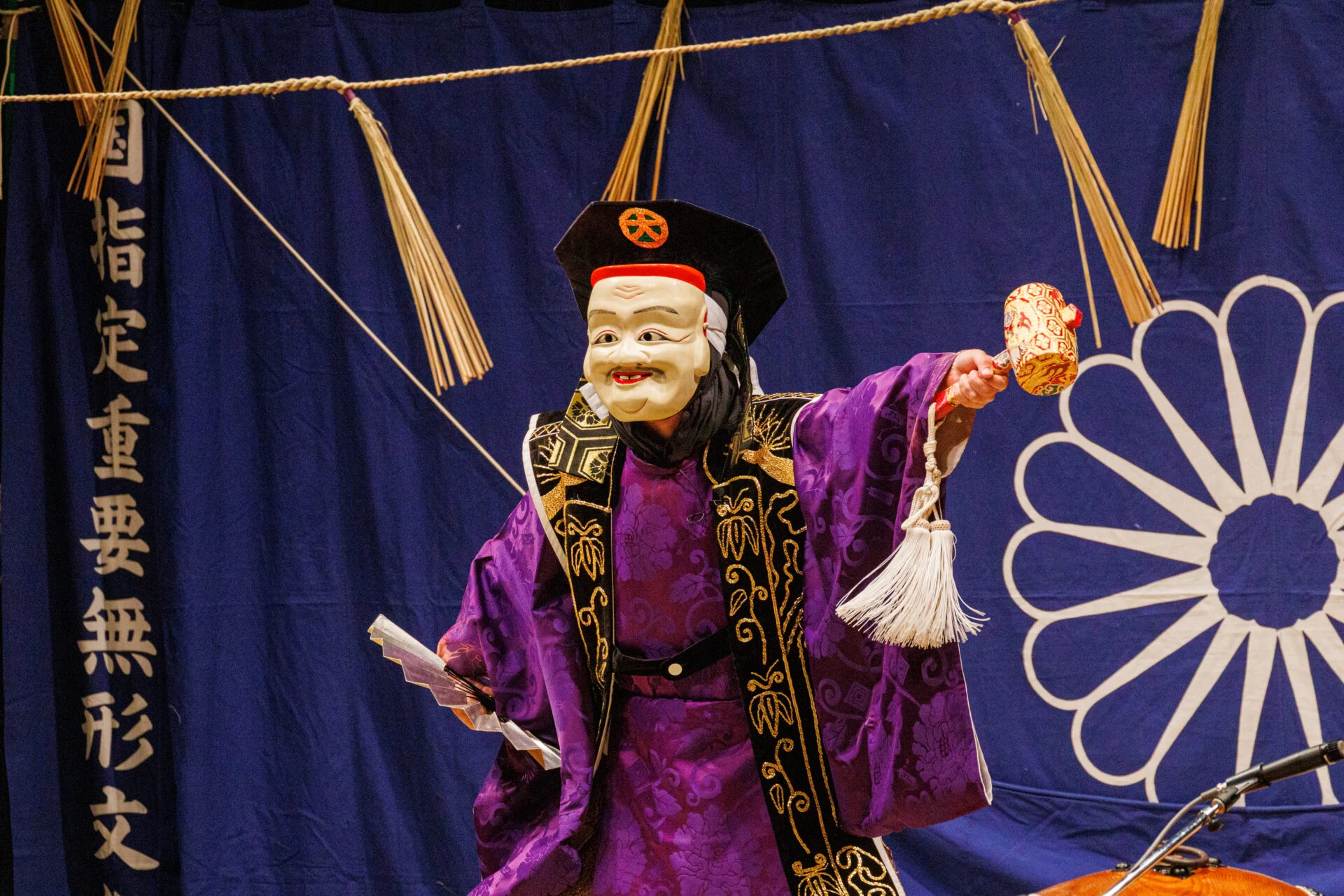
It is said that Okuninushi no Mikoto is enshrined at Izumo Taisha due to this episode.
The highlight of the first half is the scene where Okuninushi no Mikoto scatters "seeds of fortune" towards the audience. This is a type of mochi throwing, but since it was a performance in a hall, a few were thrown into the audience as part of the production (after the performance, seeds of fortune were distributed to viewers in the lobby).
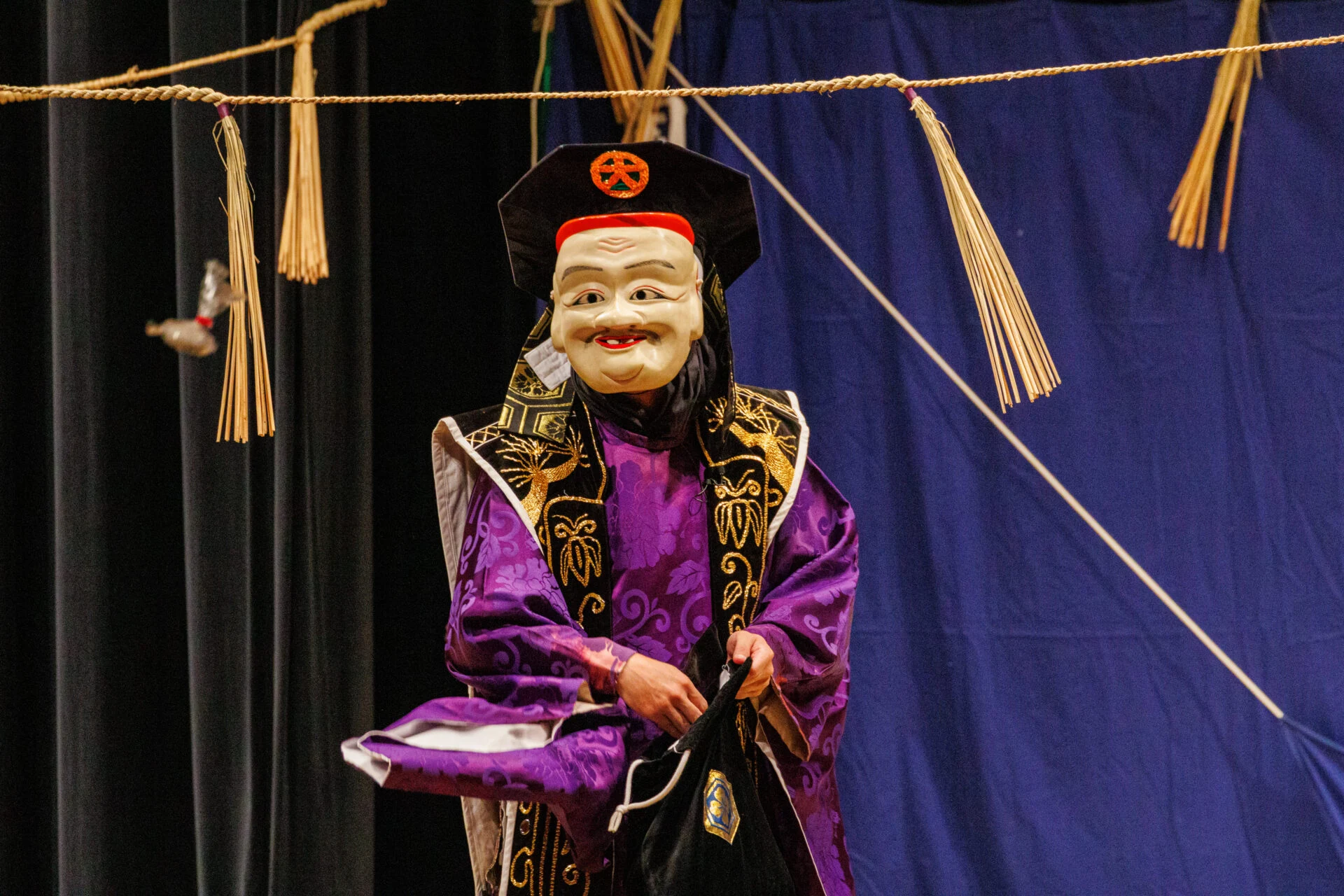
During shrine festivals, many people, from children to adults, gather around the seeds of fortune, creating a lively atmosphere.
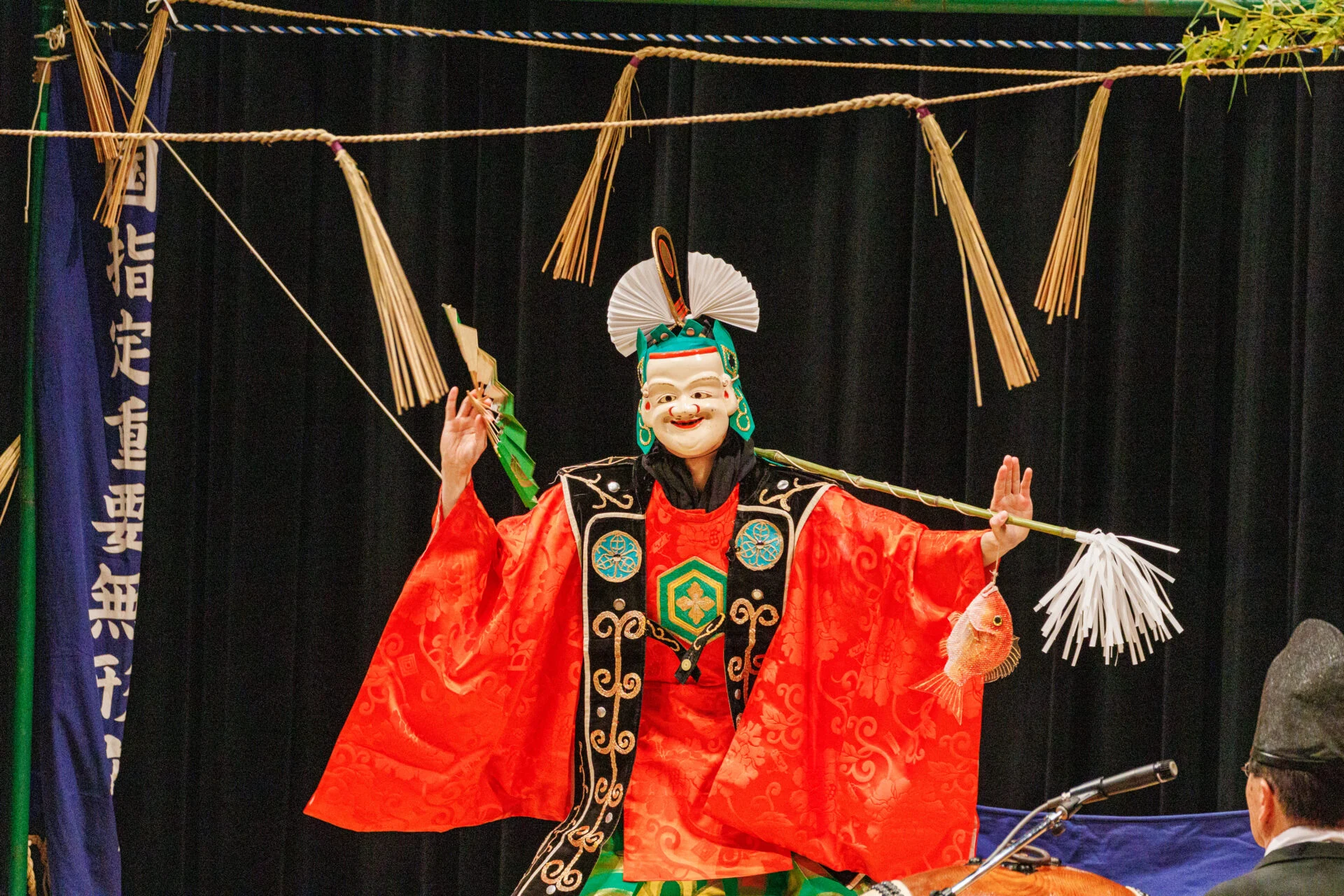
Okuninushi no Mikoto's son, Kotoshironushi no Mikoto, performs the "Taitai Tsuri." Kotoshironushi no Mikoto, who is beloved as Ebisu, is popular for his humorous gestures of catching sea bream.
Slaying the Great Serpent
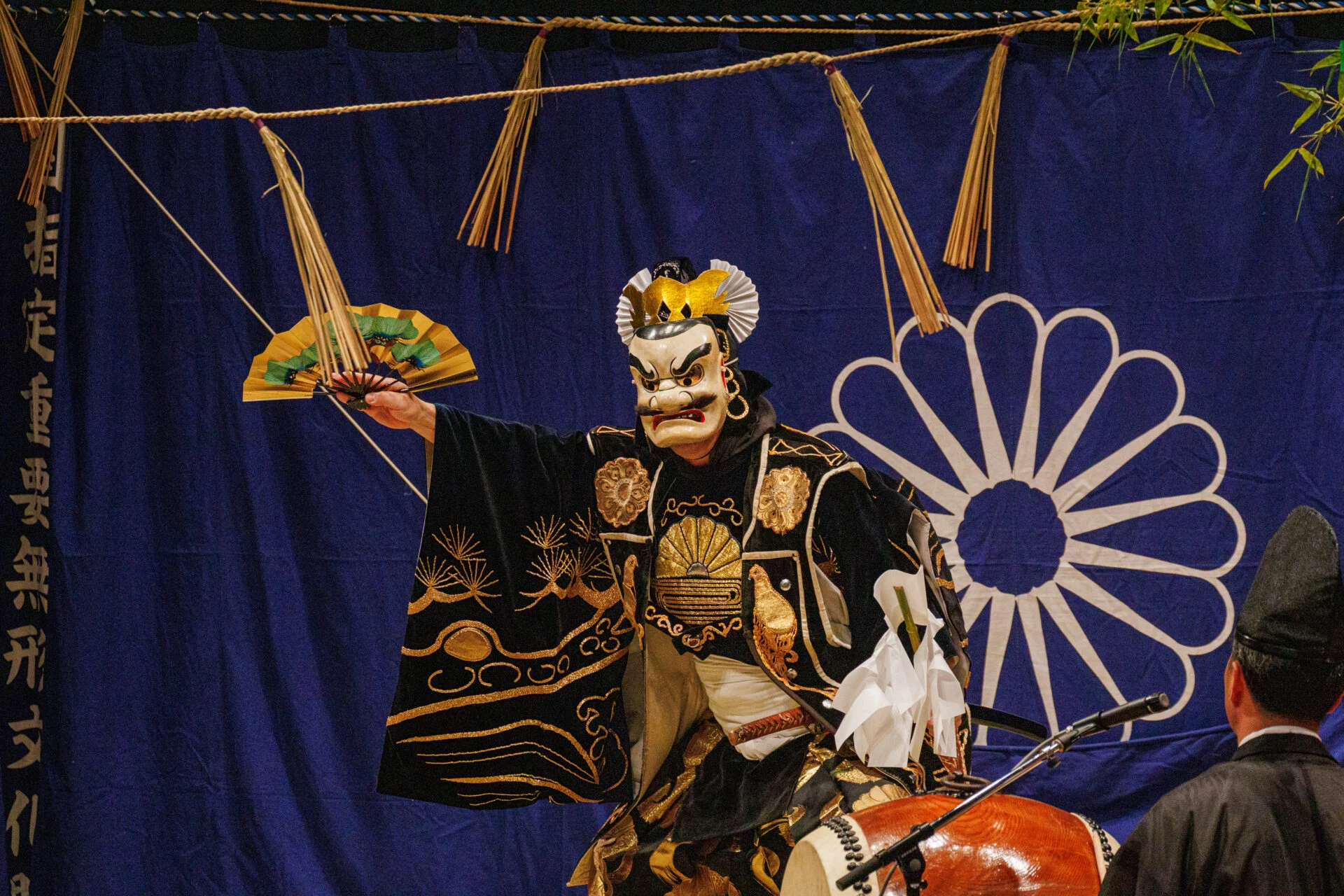
The climax of Bichu Kagura is the "Slaying the Great Serpent."
Susanoo no Mikoto, who was banished from Takamagahara for his misdeeds, slays the Yamata no Orochi to save Kushi Inada Hime, in a theatrically rich performance.
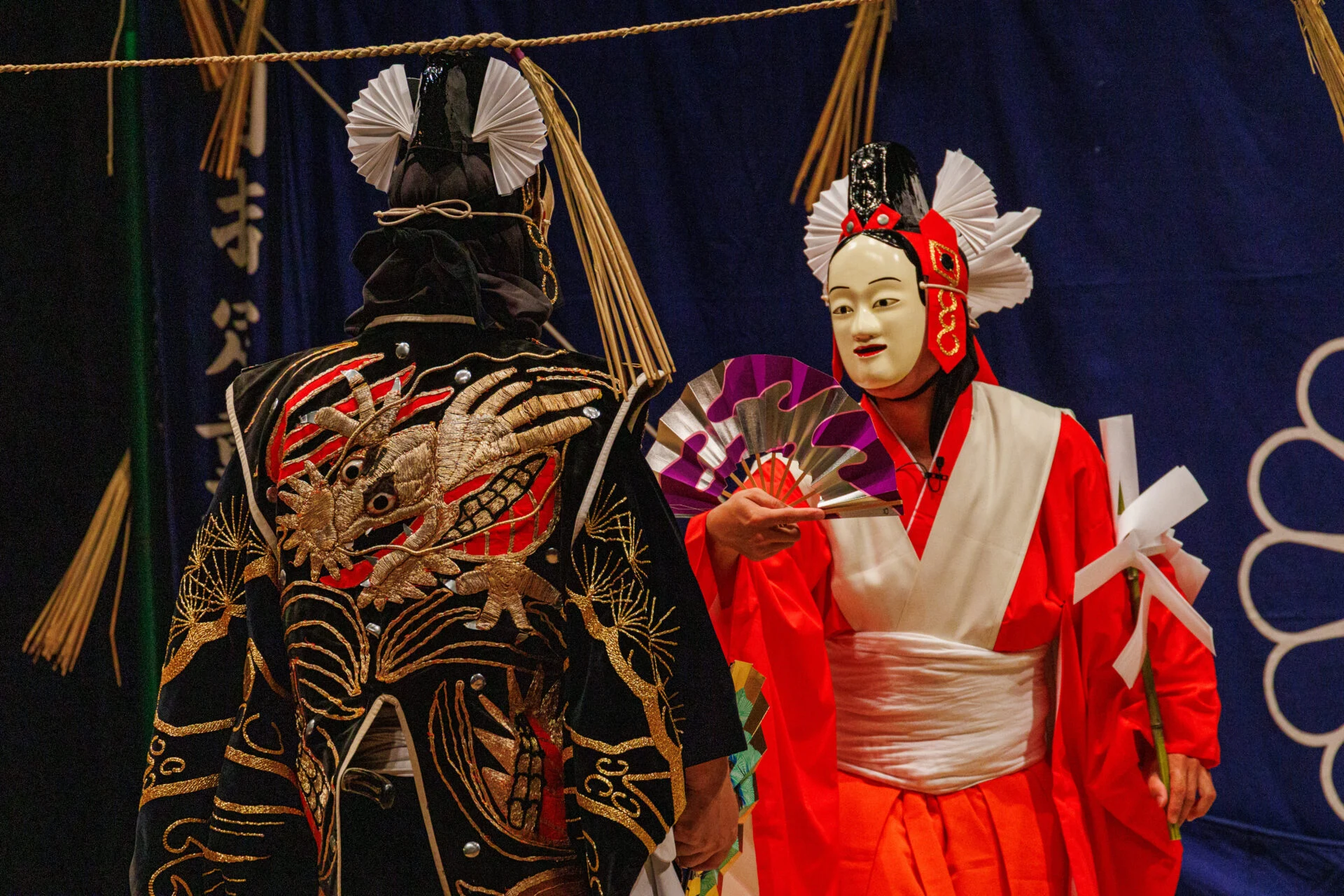
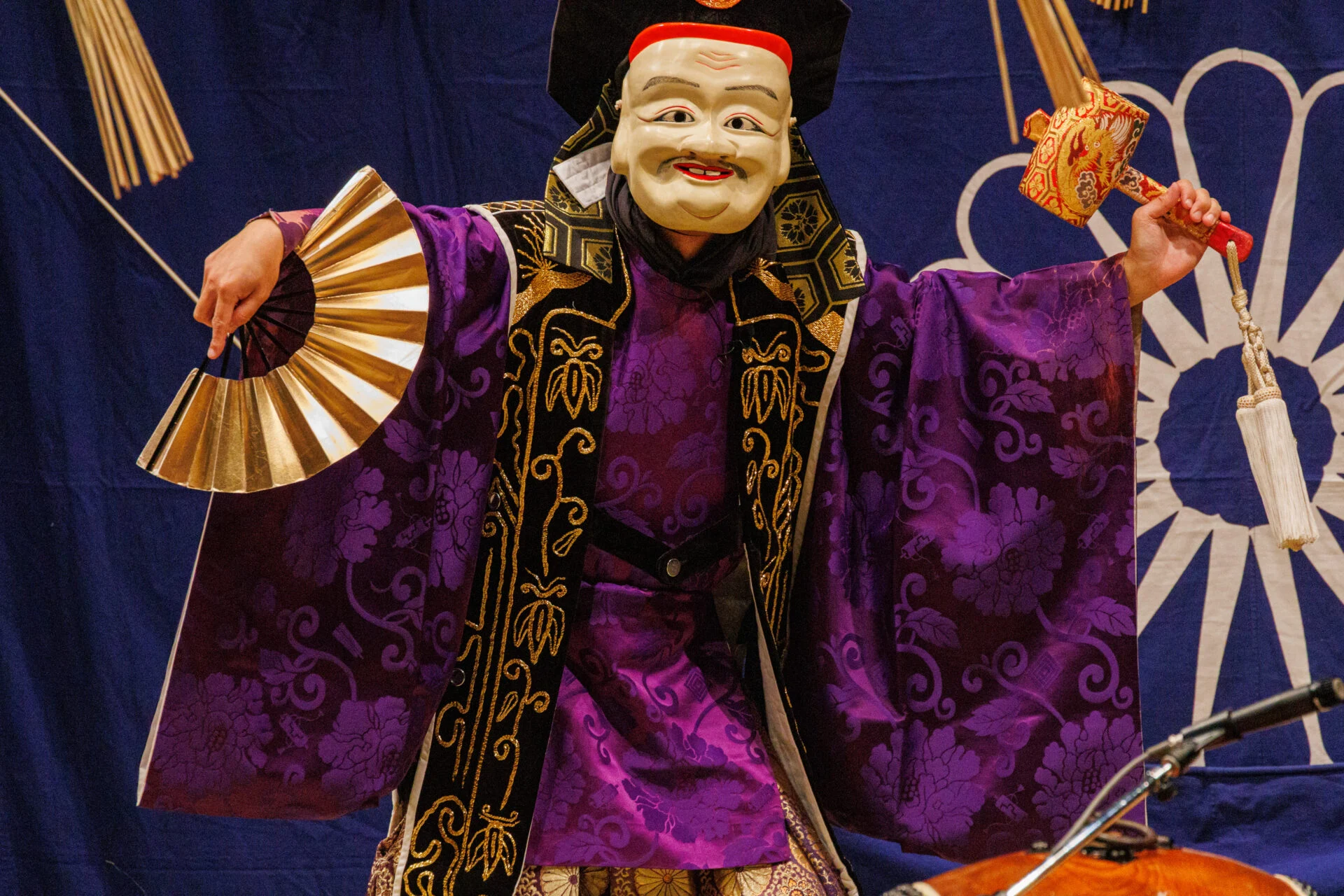
In the scene where they prepare the poison sake to give to the Yamata no Orochi, the popular sake-making deity and clown figure, Matsuo Myojin, appears. With a light-hearted narrative incorporating current events, he draws the audience into a whirlpool of laughter.
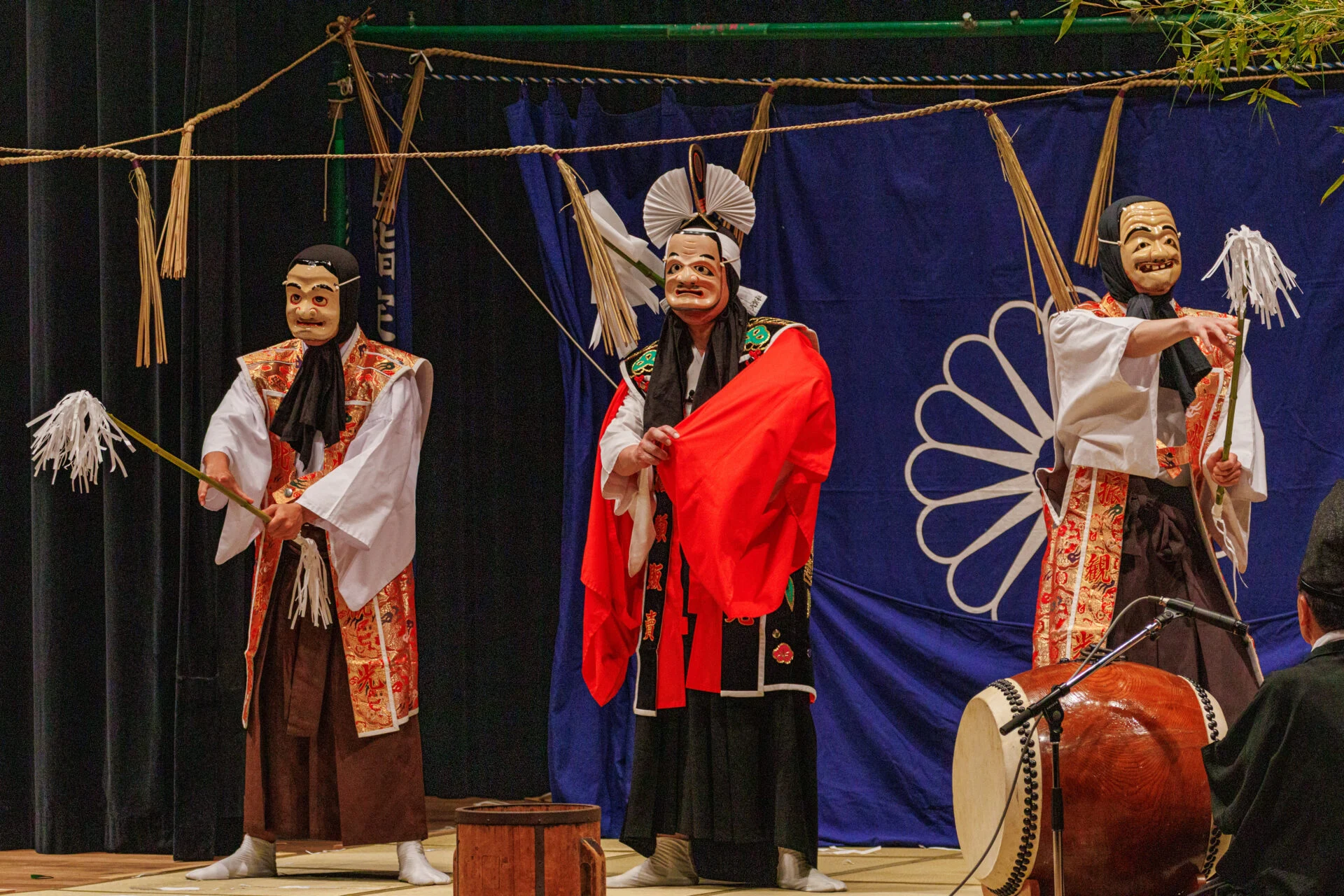
Matsuo Myojin is a deity that only appears in Bichu Kagura and does not appear in the Kojiki or Nihon Shoki, and the sake-making scene conveys that Kagura was a form of entertainment in the rural areas of Bichu.
Collaboration with Iwami Kagura
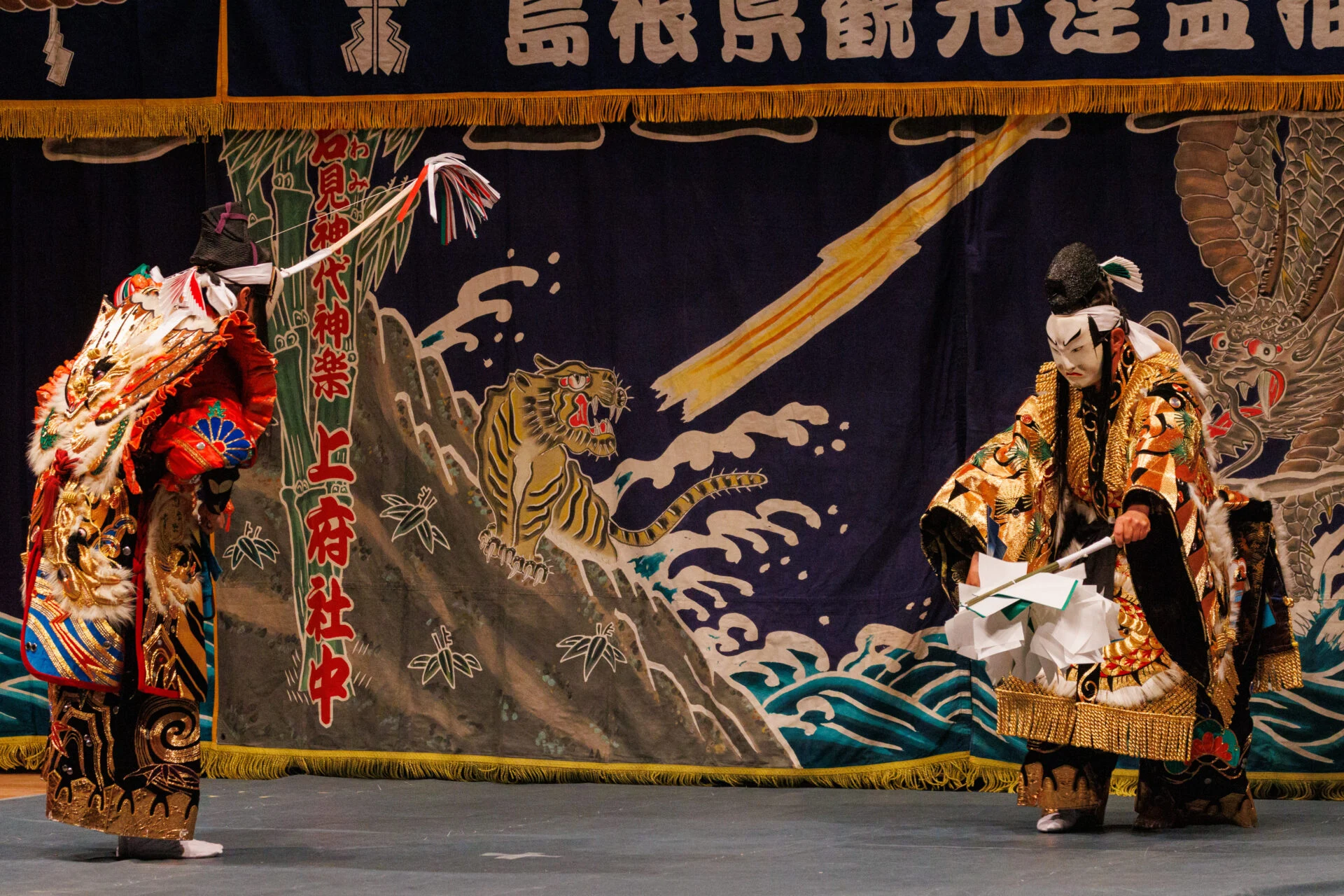
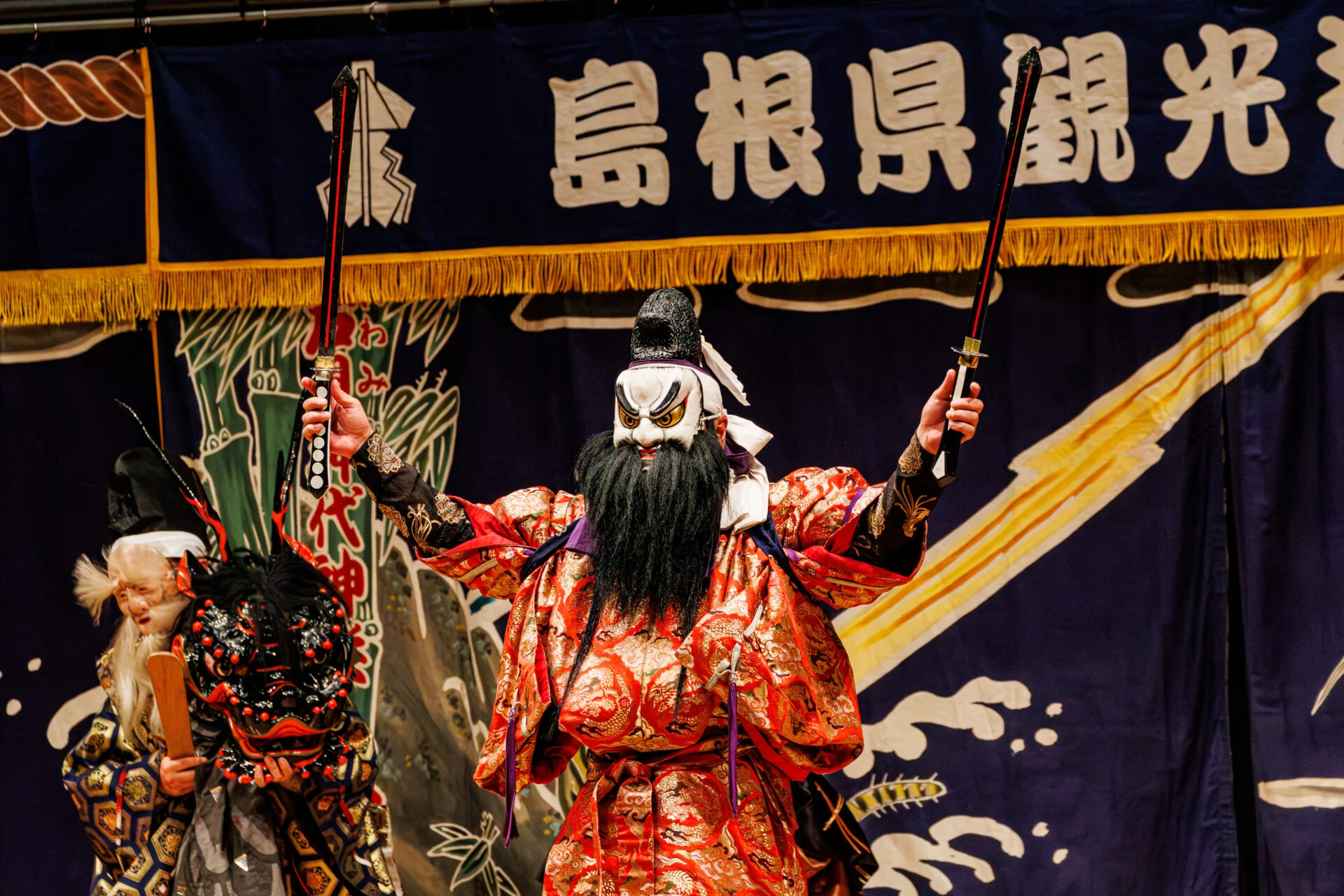
This time marks the 30th milestone, and as a guest performance, Iwami Jindai Kagura Kamikou Shachu from Hamada City, Shimane Prefecture, performed Iwami Kagura.
Like Bichu Kagura, Iwami Kagura was designated as an Important Intangible Folk Cultural Asset in 1979.
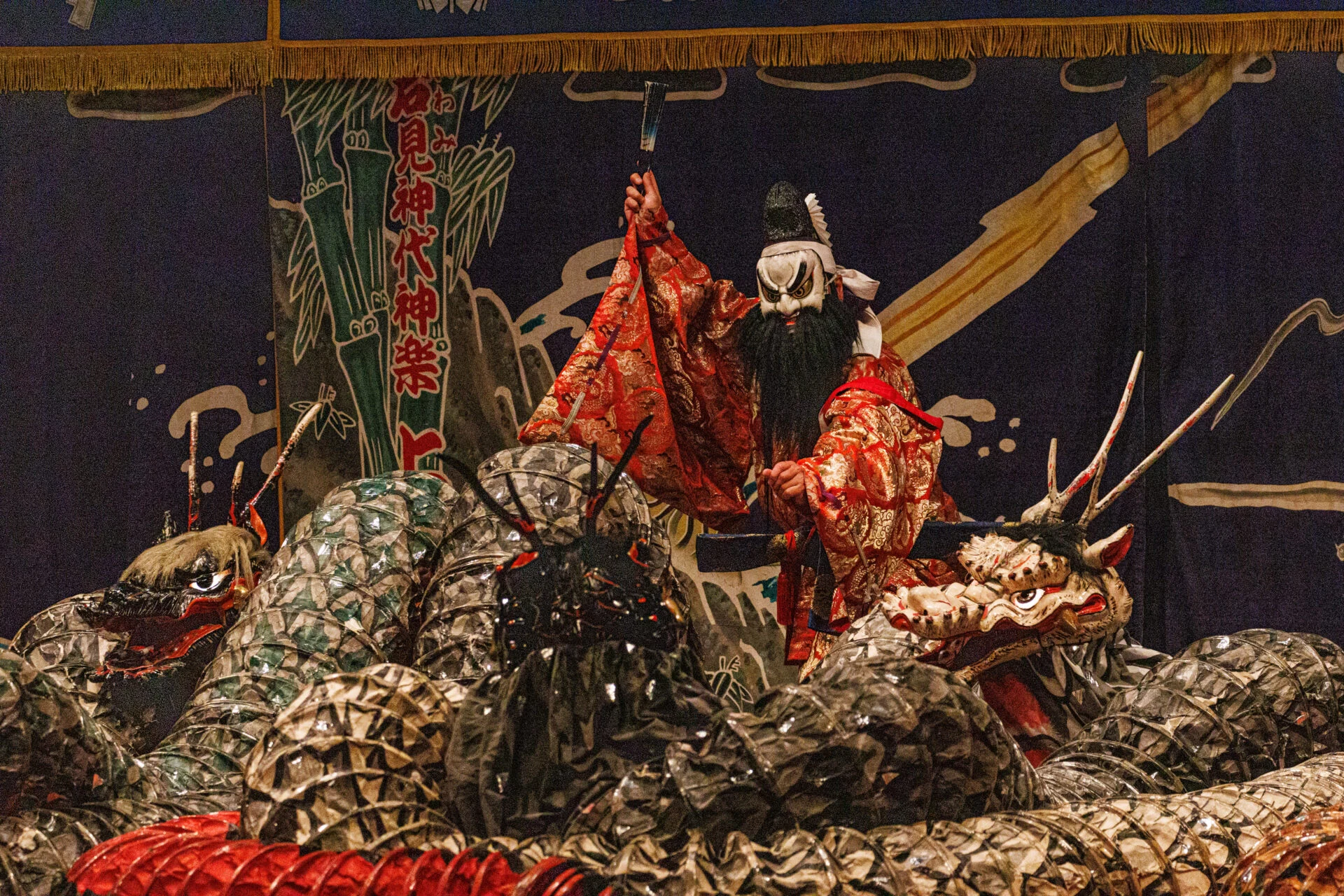
In the finale of the viewing event, the scene of slaying the great serpent featured a powerful performance by Susanoo no Mikoto and the great serpent, which moved around the stage, receiving loud applause from the audience.
Conclusion
I have known for some time that Bichu Kagura viewing events are held at Geibunkan Hall in Kurashiki City, but this was my first time participating in one. Watching Bichu Kagura in a hall has a different charm compared to lively festivals and events, allowing for a more focused viewing experience.
This time, with the guest performance of Iwami Kagura, it was interesting to compare the differences in costumes and music while watching.
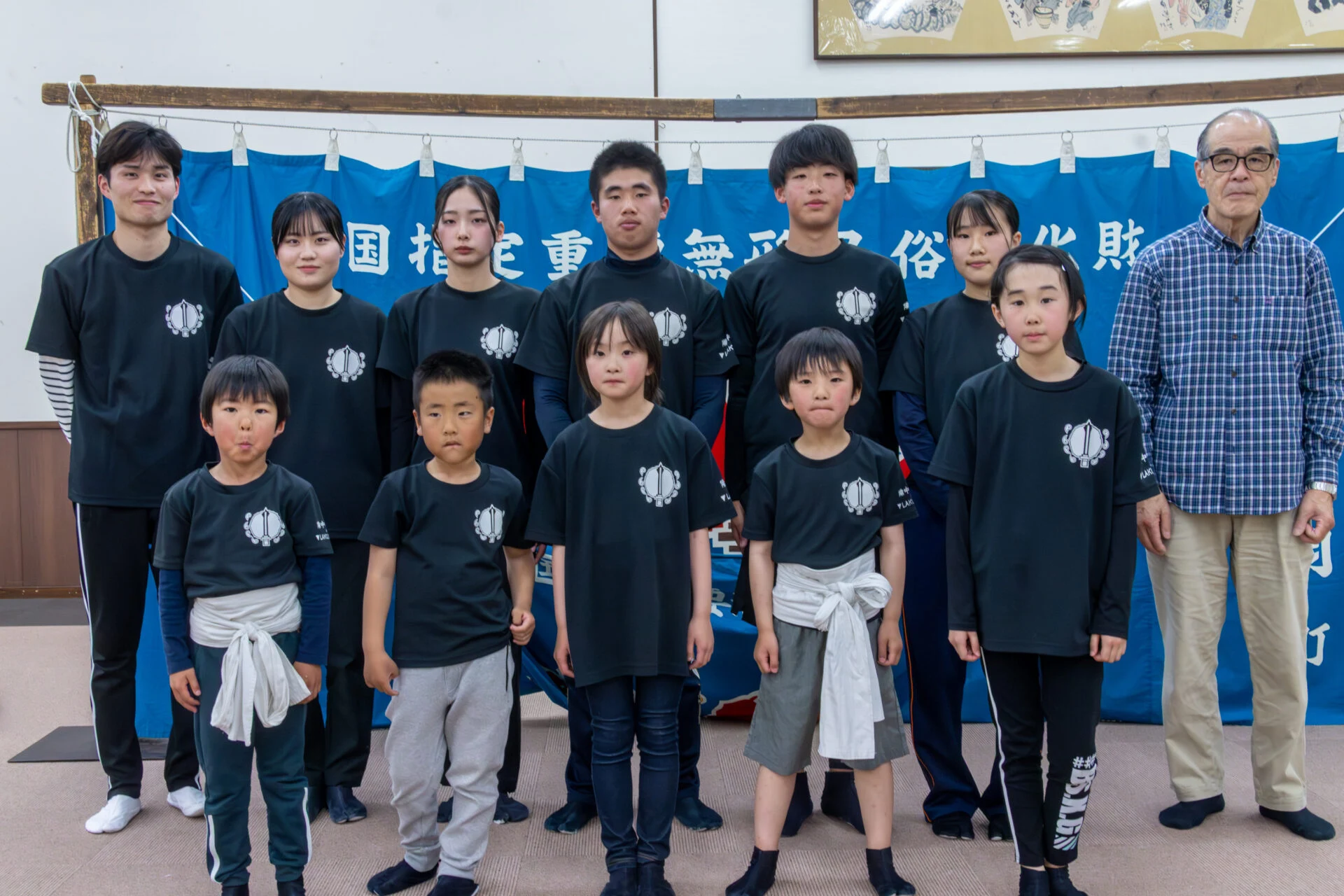
Additionally, it was impressive to see young performers actively participating in both Bichu Kagura and Iwami Kagura. Amidst the calls for attention to declining birth rates and depopulation in rural areas, I hope that the traditional performing arts of the region will be passed on to the next generation.
Data for the 30th Bichu Kagura Viewing Event in Kurashiki
| Name | 30th Bichu Kagura Viewing Event in Kurashiki |
|---|---|
| Date | May 24, 2026 (Sunday) 12:30 PM - 5:30 PM (Doors open at 12:00 PM) |
| Location | 1-18-1 Chuo, Kurashiki City, Okayama Prefecture, Geibunkan Hall |
| Participation Fee (including tax) | Advance: 1,500 yen At the door: 1,800 yen Free for middle school students and younger, and persons with disabilities (one accompanying person) |
| Homepage | Official Instagram of Bichu Kagura Kurashiki |










Yamane Kenichi / Author. Bichu Kagura (Okayama Bunko), Nippon Bunkyo Publishing, September 1972, 182 pages