You may have occasion to visit City Hall for various reasons, such as procedures for resident registration or My Number cards, or consultations about taxes and insurance.
For example, procedures at City Hall are essential during life events such as getting married, having a child, or moving.
City Hall supports the lives of Kurashiki City residents and the foundations of the city itself.
What thoughts do the staff who work behind the counter every day bring to their jobs?
We interviewed Soeda Keigo, a young staff member working at Kurashiki City Office.
The information presented here was accurate when this article was published in June 2026. Please note that it may differ from current information.
About Kurashiki City

Kurashiki City was established in 1967 through the merger of the former cities of Kurashiki, Kojima, and Tamashima.
It later merged with Shomura, Chayamachi, Funao, and Mabi, and continues to develop as a hub city in the eastern Seto Inland Sea region.
“Kurashiki City” as a local government

Here is a brief introduction to Kurashiki City as a local government.
Approximately 3,500 staff members work for Kurashiki City (as of April 2026).
When you think of City Hall work, you may picture administrative staff assisting people at the counter. However, staff members support residents’ lives and the foundations of the city across a wide range of fields—far more than can be covered in this article.
From technical staff who support the city’s infrastructure to public health nurses, childcare and education staff, firefighters, medical professionals, veterinarians, and environmental maintenance workers, employees in a wide range of occupations are working to develop the city.
Kurashiki City’s staff recruitment website provides detailed introductions to the occupations represented. Be sure to check it out if you’re interested.

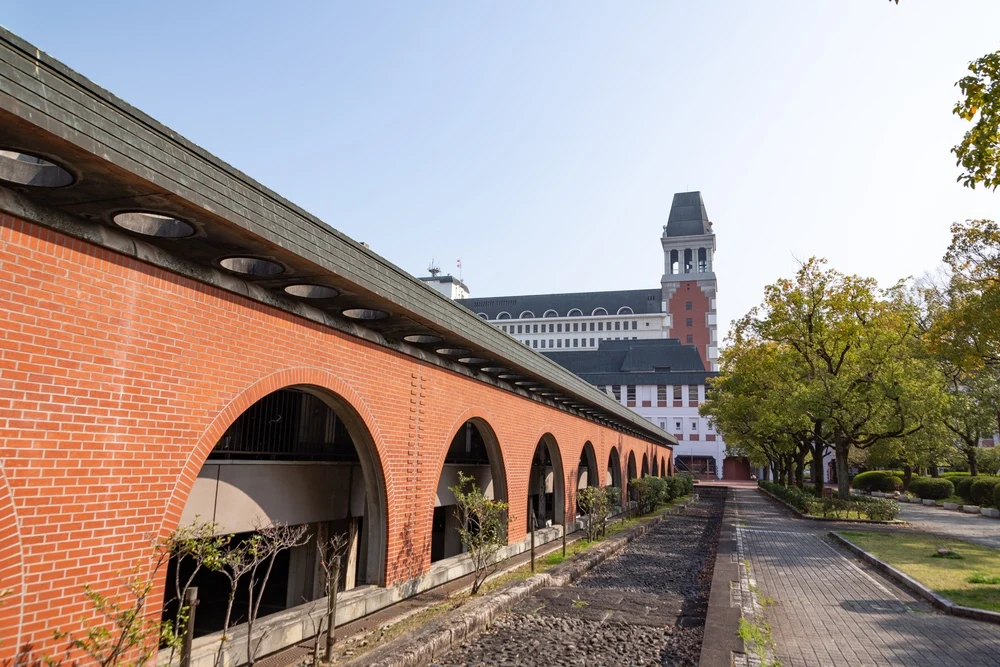
The current main building of Kurashiki City Office was designed by architect Shizutaro Urabe, who was from Kurashiki City, and was completed in 1980.
The building, known for its striking red brick, has become a symbol of Kurashiki City.
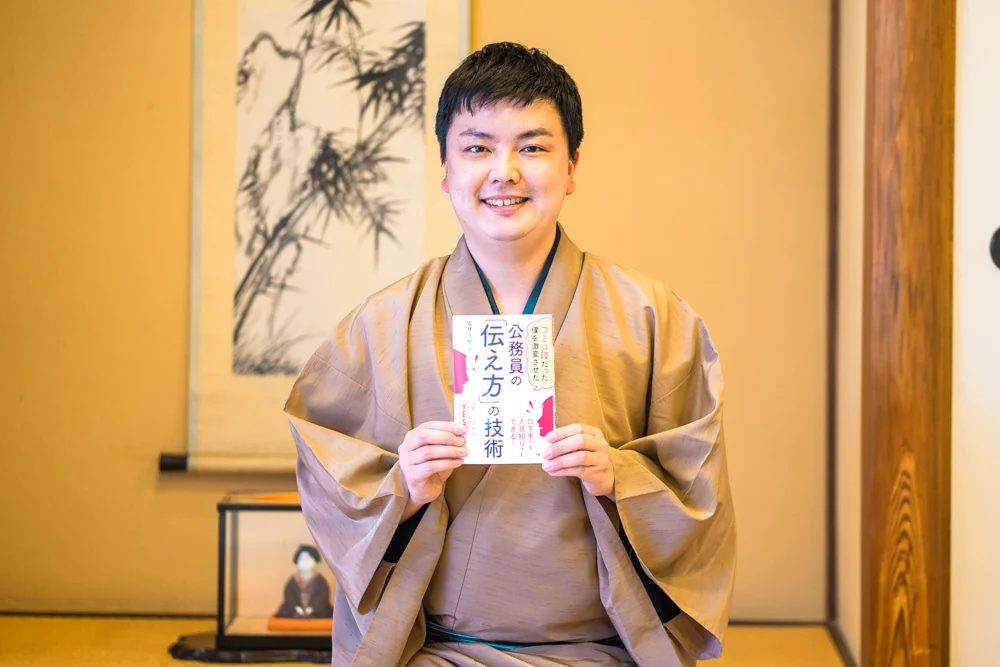
Soeda Keigo, working as a Kurashiki City employee

Our interviewee is Soeda Keigo, who works in the Housing Division of the Building Department. Born in 1997, he is from Fukuoka Prefecture.
Soeda moved to Okayama to attend university and, after graduating, worked as a technical employee for a private company in the road and traffic sector. His previous job involved transfers every three years, and he had also lived in Shikoku and the Sanin region.
Later, prompted by his marriage, he considered changing jobs and joined Kurashiki City Office in April 2025.
About Soeda’s work

The Housing Division of the Building Department, where Soeda works, has the following three sections:
- Management Section
Handles all aspects of managing and operating municipal housing - Policy Section
Handles housing policy matters other than municipal housing - Rent Collection Section
Handles matters related to rent for municipal housing
Soeda is a staff member in the Management Section, responsible for managing and operating municipal housing. His work mainly involves administrative tasks such as processing move-ins and move-outs, as well as assisting residents in person and by phone, but it covers a wide range of matters.
Unlike privately managed apartments and condominiums, municipal housing has detailed eligibility requirements, including income limits. Soeda’s duties include investigating whether applicants meet the eligibility requirements and whether current residents can continue living in their homes.
He carefully checks documents verifying eligibility that are sent by on-site managers, makes inquiries to police stations regarding the exclusion of organized crime groups, and registers support measures for victims of domestic violence. He works to ensure that eligibility requirements are properly applied so residents can live safely in municipal housing.

At the counter and over the phone, he also responds directly to residents’ concerns, including questions about municipal housing and requests for repairs such as water leaks.
Because the work concerns “housing,” which is essential to people’s lives, it takes more than simply following the rules: it requires listening sincerely and explaining things carefully. Managing and operating municipal housing may also require the ability to empathize with people.
Why he decided to move to Kurashiki City Office

In his previous job, Soeda worked for a business-to-business company in the road and traffic sector. When we asked why he moved from a private company to local government, he told us that he had reasons related to both work and his personal life.
What appealed to him professionally was being able to directly see how his work made a difference. He found it rewarding to support infrastructure in his previous job, too, but it was difficult to see how road users responded, and he found it hard to feel what his work ultimately contributed to.
By contrast, working at City Hall allows him to interact directly with residents, and his work directly helps someone. He was strongly drawn to the opportunity to help people in need directly, and decided to move to City Hall.
He also says that the fact that transfers are generally not required was a deciding factor in his personal life.
After getting married, he wanted to settle in Kurashiki City, his wife’s hometown, and build a stable life there; this was another reason he chose to apply to City Hall.
What Soeda sees as appealing about Kurashiki City Office as a workplace

Soeda says that, in a positive way, the workplace turned out to be different from what he had expected before joining.
Before working at Kurashiki City Office, he had imagined that many employees would be stiff and formal, and that the hierarchy would be strict. But after starting work, he found that “the staff are all considerate, and many are warm people who are ready to help.”
Perhaps because City Hall’s role is to support residents’ lives, many employees are willing to work together to help others. Soeda recalls that when he was struggling with a resident at the counter, his supervisor or a more experienced colleague, who had been listening to the situation behind him, quietly stepped in to help before he even asked.
According to Soeda, having many employees with a warm-hearted attitude—wanting to help others and feeling glad when people come to them for advice—also makes it easier to ask for help.
Soeda told us, “I’ve asked many people for advice and learned all sorts of things from them, so now I want to pass that on to the junior staff who come after me.”
A workplace where people try to solve problems as a team rather than leaving it to individuals will surely be reassuring and provide a strong sense of security for new employees joining in the future.
Soeda is now in his second year at Kurashiki City Office, in 2026. We asked him about what he finds rewarding in his current work and what he keeps in mind when assisting residents.
Kurashiki City data

| Name | Kurashiki City |
|---|---|
| Address | 640 Nishinakashinden, Kurashiki City, Okayama Prefecture |
| Contact | Kurashiki City Personnel Division 086-426-3141 |
| Website | Kurashiki City Website |




What would you like to know about Kurashiki?
Enter a word to search articles on this site